Results by title
593 books match the query 'Jews' and 130 start with t
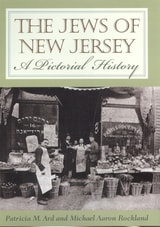
The Jews of New Jersey
A Pictorial HistoryPatricia M. Ard and Michael Aaron Rockland
Rutgers University Press, 2001
Jews have called New Jersey home since the late seventeenth century, and they currently make up almost 6 percent of the states residents. Yet, until now, no book has paid tribute to the richness of Jewish heritage in the Garden State. The Jews of New Jersey: A Pictorial History redresses this lack with a lively narrative and hundreds of archival and family photographsmany rarethat bring this history to life.
Patricia Ard and Michael Rockland focus on representative Jewish communities throughout the state, paying particular attention to the extraordinary stories of ordinary people. Through the joys and struggles of homemakers, storekeepers, factory workers, athletes, children, farmers, activists, religious leaders, and Holocaust survivors, the authors tell the stories of how these communities have evolved, thrived, and changed. They note the difficulties posed by intermarriage and assimilation and, at the same time, depict a burgeoning revival of Jewish orthodoxy and traditions.
The Jews of New Jersey will please both the historian and general reader. Its heartwarming stories and pictures truly make the point that it is through the joys, triumphs, and defeats of everyday people that history is made.
The Jews of Poland Between Two World Wars
Edited by Yisrael Gutman
Brandeis University Press, 1991
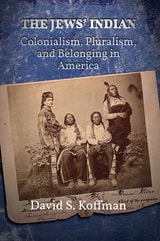
The Jews’ Indian
Colonialism, Pluralism, and Belonging in AmericaKoffman, David S
Rutgers University Press, 2019
Honorable Mention, 2021 Saul Viener Book Prize
The Jews’ Indian investigates the history of American Jewish relationships with Native Americans, both in the realm of cultural imagination and in face-to-face encounters. These two groups’ exchanges were numerous and diverse, proving at times harmonious when Jews’ and Natives people’s economic and social interests aligned, but discordant and fraught at other times. American Jews could be as exploitative of Native cultural, social, and political issues as other American settlers, and historian David Koffman argues that these interactions both unsettle and historicize the often triumphant consensus history of American Jewish life. Focusing on the ways Jewish class mobility and civic belonging were wrapped up in the dynamics of power and myth making that so severely impacted Native Americans, this books is provocative and timely, the first history to critically analyze Jewish participation in, and Jews’ grappling with the legacies of Native American history and the colonial project upon which America rests.

The Kingdoms of Israel and Judah in the Eighth and Seventh Centuries B.C.E.
Antoon Schoors
SBL Press, 2013
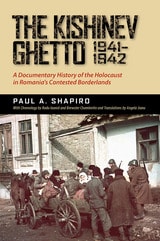
The Kishinev Ghetto, 1941–1942
A Documentary History of the Holocaust in Romania's Contested BorderlandsPaul A. Shapiro with chronology by Radu Ioanid and Brewster Chamberlin and translations by Angela Jianu
University of Alabama Press, 2015
The Kishinev Ghetto, 1941–1942 sheds new light on the little-known historical events surrounding the creation, administration, and liquidation of the Kishinev (Chisinau) ghetto during the first months following the Axis attack on the Soviet Union (Operation Barbarossa) in late June 1941. Mass killings during the combined Romanian-German drive toward Kishinev in Bessarabia, after a year of Soviet rule in this Romanian border province, were followed by the shooting of thousands of Jews on the streets of the city during the first days of reestablished Romanian administration. Survivors were driven into a ghetto, persecuted, and liquidated by year’s end. The Kishinev Ghetto, 1941–1942 is the first major study of these events.
Often overshadowed by events in Germany and Poland, the history of the Holocaust in Romania, including what took place in Bessarabia (corresponding in large part with the territory of the modern Republic of Moldova), was obscured during decades of communist rule by denial and by policies that blocked access to wartime documentation. This book is the result of a lengthy research project that began with Paul A. Shapiro’s missions to Romania for the United States Holocaust Memorial Museum to negotiate access to these documents.
The volume includes:
· A preface describing the origin of the project in the immediate aftermath of the Ceausescu regime in Romania.
· A hundred-page study setting the events of the book within the historical context of Eastern European antisemitism, Romanian-Soviet conflict over control of Bessarabia, and Romania’s alliance with Nazi Germany.
· A thoughtfully curated collection of archival documents linked to the study.
· A chronology of related historical events.
· Twenty-one black and white photographs and a map of the ghetto.
Students and scholars of Holocaust history, Judaic studies, twentieth-century Eastern European history, Romania, Moldova, and historical Bessarabia will want to own this important, revealing volume.
Published in association with the United States Holocaust Memorial Museum
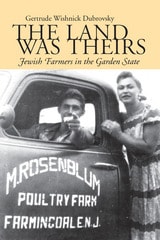
The Land Was Theirs
Jewish Farmers in the Garden StateGertrude W. Dubrovsky
University of Alabama Press, 1992
A historical account of Jewish agricultural colonies in New Jersey that examines how immigrants built farming communities in early America.
The Land Was Theirs is about Farmingdale, New Jersey, a community of Jewish farming communities in the United States established with the help of the Jewish Agricultural Society. The 50 year history of Farmingdale provides a perspective on the pressures, problems, and satisfactions of rural Jewish life as experienced in one community.
Beginning in 1919, the community grew around the small town of Farmingdale, when two Jewish families pooled their resources to establish a farm. The community evolved gradually as unrelated individuals with no previous farm experience settled and then created the institutions and organizations they needed to sustain their Jewish life. By 1945 Farmingdale was one of the leading egg-producing communities in the United States, and contributed in large measure to New Jersey’s reputation as the “egg basket of America.”
The Land Was Theirs draws from life-history interviews with 120 farmers, from the author’s personal experiences, and from a variety of private and community papers and documents. They are the pieces from which a full picture of a single Jewish farm community emerges.
The Last Happy Occasion
Alan Shapiro
University of Chicago Press, 1996
A refreshingly honest, lovingly crafted work, The Last Happy Occasion is a treasure map for anyone interested in exploring the intersections of life and art.
"The Last Happy Occasion is touching and intelligent, emotionally satisfying and eloquent testimony to the power of poetry to instruct, heal and inspire."—Emily Barton, New York Times Book Review
"Shapiro, not unlike Auden, doses his wordplay with a certain sly irony. . . . We come away from Shapiro's book with an intimate appreciation of the little subversions that poetry can work in one's life."—Jonathan Kirsch, Los Angeles Times
"He is an acute observer of moments, people, art and language. And he packs even seemingly simple stories with many layers of meaning. . . . He shows us the power and importance of transformative art in life."—Publishers Weekly, starred review
"The literary criticism is sharp, but what enthralls the reader more is Shapiro's humorous but honest perspective on his younger self, a perspective that is critical without being condescending."—Heller McAlpin, Newsday
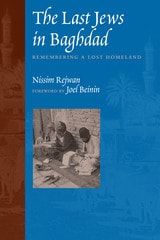
The Last Jews in Baghdad
Remembering a Lost HomelandBy Nissim Rejwan
University of Texas Press, 2004
Once upon a time, Baghdad was home to a flourishing Jewish community. More than a third of the city's people were Jews, and Jewish customs and holidays helped set the pattern of Baghdad's cultural and commercial life. On the city's streets and in the bazaars, Jews, Muslims, and Christians—all native-born Iraqis—intermingled, speaking virtually the same colloquial Arabic and sharing a common sense of national identity. And then, almost overnight it seemed, the state of Israel was born, and lines were drawn between Jews and Arabs. Over the next couple of years, nearly the entire Jewish population of Baghdad fled their Iraqi homeland, never to return.
In this beautifully written memoir, Nissim Rejwan recalls the lost Jewish community of Baghdad, in which he was a child and young man from the 1920s through 1951. He paints a minutely detailed picture of growing up in a barely middle-class family, dealing with a motley assortment of neighbors and landlords, struggling through the local schools, and finally discovering the pleasures of self-education and sexual awakening. Rejwan intertwines his personal story with the story of the cultural renaissance that was flowering in Baghdad during the years of his young manhood, describing how his work as a bookshop manager and a staff writer for the Iraq Times brought him friendships with many of the country's leading intellectual and literary figures. He rounds off his story by remembering how the political and cultural upheavals that accompanied the founding of Israel, as well as broad hints sent back by the first arrivals in the new state, left him with a deep ambivalence as he bid a last farewell to a homeland that had become hostile to its native Jews.
The Long Journey of Gracia Mendes
Marianna D. Birnbaum
Central European University Press, 2003
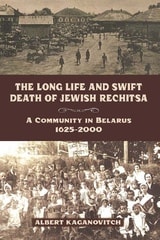
The Long Life and Swift Death of Jewish Rechitsa
A Community in Belarus, 1625–2000Albert Kaganovitch
University of Wisconsin Press, 2013
Based on extensive use of Soviet and Israeli archives, interviews, memoirs, and secondary sources, Kaganovitch’s acclaimed work, originally published in Russian, is presented here in a significantly revised English translation by the author. Details of demographic, social, economic, and cultural changes in Rechitsa’s evolution, presented over the sweep of centuries, reveal a microcosm of daily Jewish life in Rechitsa and similar communities. Kaganovitch looks closely at such critical developments as the spread of Chabad Hasidism, the impact of multiple political transformations and global changes, and the mass murder of Rechitsa’s remaining Jews by the German army in November to December 1941.
Kaganovitch also documents the evolving status of Jews in the postwar era, starting with the reconstitution of a Jewish community in Rechitsa not long after liberation in 1943 and continuing with economic, social, and political trends under Stalin, Khrushchev, and Brezhnev, and finally emigration from post-Soviet Belarus. The Long Life and Swift Death of Jewish Rechitsa is a major achievement.
Winner, Helen and Stan Vine Canadian Jewish Book Award for Scholarship, Koffler Centre of the Arts
The Lowercase Jew
Rodger Kamenetz
Northwestern University Press, 2003
The Man Who Swam into History
The (Mostly) True Story of My Jewish FamilyBy Robert A. Rosenstone
University of Texas Press, 2005
The story begins with a grandfather who heroically escaped from Russia by swimming the Pruth River to Romania—or did he? Then there are stories of another grandfather who kept a lifelong mistress; grandmothers who were ignored except in the kitchen; migrations legal and illegal from Eastern Europe to Canada to California; racketeers on one side of the family and Communists on the other; and a West Coast adolescence in the McCarthy years. All of these (mostly true) stories form a Jewish family's history, a tale of dislocation and assimilation. But in the hands of award-winning historian Robert Rosenstone, they become much more. The fragments of memory so beautifully preserved in The Man Who Swam into History add unforgettable, human characters to the now familiar story of the Jewish diaspora in the twentieth century.
This combination memoir/short story collection recounts the Rosenstone family's passage from Romania to America. Robert Rosenstone tells the story not as a single, linear narrative, but through "tales, sequences, windows, moments, and fragments resurrected from the lives of three generations in my two parental families, set in five countries on two continents over the period of almost a century." This more literary and personal approach allows Rosenstone's relatives to emerge as distinct personalities, voices who quarrel and gossip, share their dreams and fears, and maintain the ties of a loving, if eccentric, family. Among the genre of "coming to America" tales, The Man Who Swam into History is a work of unique vision, one that both records and reconstructs the past even as it continuously—and humorously—questions the truth of its own assertions.
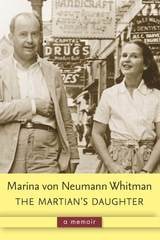
The Martian's Daughter
A MemoirMarina von Neumann Whitman
University of Michigan Press, 2013
One of the five Hungarian scientific geniuses dubbed "the Martians" by their colleagues, John von Neumann is often hailed as the greatest mathematician of the twentieth century and even as the greatest scientist after Einstein. He was a key figure in the Manhattan Project; the inventor of game theory; the pioneer developer of the modern stored-program electronic computer; and an adviser to the top echelons of the American military establishment. In The Martian's Daughter, Marina von Neumann Whitman reveals intimate details about the famed scientist and explores how the cosmopolitan environment in which she was immersed, the demanding expectations of her parents, and her own struggles to emerge from the shadow of a larger-than-life parent shaped her life and work.
Unfortunately, von Neumann did not live to see his daughter rise to become the first or highest-ranking woman in a variety of arenas. Whitman became a noted academic during the 1960s and '70s, casting her teaching and writing in the framework of globalization before the word had been invented; became the first woman ever to serve on the President's Council of Economic Advisers and participated actively in U.S. efforts to reshape the international monetary and financial system during the early 1970s; pioneered the role of women on the boards of leading multinational corporations; and became the highest-ranking female executive in the American auto industry in the 1980s. In her memoir, Whitman quotes from personal letters from her father and describes her interactions with such figures as Roger Smith of GM and President Nixon. She also details the difficulties she encountered as an early entrant into a world dominated by men and how she overcame the obstacles to, in her words, "have it all."
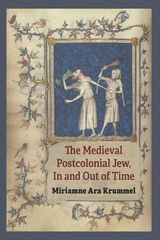
The Medieval Postcolonial Jew, In and Out of Time
Miriamne Ara Krummel
University of Michigan Press, 2022
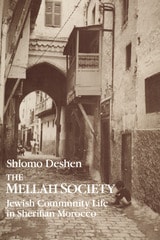
The Mellah Society
Jewish Community Life in Sherifian MoroccoShlomo Deshen
University of Chicago Press, 1989
Shlomo Deshen, author of several books on North African Jewish immigrants to Israel, here turns his attention to the past. Taking as his focus the tension between individualism and communal authority—symbolized by the walls of the mellahs, the Jewish quarters—he applies to traditional Moroccan Jewish society questions of concern to sociologists everywhere regarding political organization, economic activity, religion, and the family.
From such documents as private correspondence, archival photographs, and the legal commentaries of rabbis who served in the Jewish community courts, Deshen draws out details of daily life: disputes between spouses, businessmen, craftsmen, and inheritors; the ramifications of marriage contracts; and claims involving community taxes and extortions by Muslim potentates. Linking this material with recent historical and anthropological studies of the Maghreb, Deshen reconstructs a community about which little has been known and places it squarely within the context of traditional Moroccan society.
Individual chapters deal with relations between Muslims and Jews, the material conditions of Jewish life, and the nature of politics within the mellah. Deshen devotes particular attention to the nature of the Moroccan rabbinate, the sociology of the mellah synagogue, lay community leadership, and the historic role of the Sephardic heritage in Morocco after the expulsion from medieval Spain. His close study of the nature of the extended family in traditional Morocco corrects popular misconceptions.
Originally published in Israel in 1983, now translated and expanded by its author, The Mellah Society draws upon Middle Eastern and Jewish history, textual Judaic studies, and social anthropology to make an original contribution that will interest scholars of the Middle East and North Africa as well as anyone concerned with Jewish history and ethnicity.
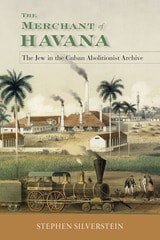
The Merchant of Havana
The Jew in the Cuban Abolitionist ArchiveStephen Silverstein
Vanderbilt University Press, 2016
As Cuba industrialized in the nineteenth century, an epochal realignment of the social order occurred. In this period of change, two seemingly disparate, yet nevertheless intertwined, ideological forces appeared: anti-Semitism and abolitionism. As the antislavery movement became organized in Cuba, the argument grew that Jews participated in the African slave trade and in New World slavery, and that this participation gave Jews extraordinary influence in the new Cuban economy and culture. What was remarkable about this anti-Semitism was the decidedly small Jewish population on the island in this era. This form of anti-Semitism, Silverstein reveals, sprang almost exclusively from mythological beliefs.
The Merchant of Venice
William Shakespeare
Arizona Center for Medieval and Renaissance Studies, 2021
Elise Thoron’s translation of Shakespeare’s searing The Merchant of Venice cuts straight to the heart of today’s fraught issues of social justice and systemic racism. Thoron’s clear, compelling contemporary verse translation retains the power of the original iambic pentameter while allowing readers and audiences to fully comprehend and directly experience the brutal dilemmas of Shakespeare’s Venice, where prejudice and privilege reign unchallenged. As the author of three acclaimed music-theater works on the Jewish experience and informed by her work directing cross-cultural projects in locations as different as Russia, Japan, Cuba, and New York City, Thoron brings to her Merchant an immediacy that speaks directly to the present reckoning with race in America.
This translation was written as part of the Oregon Shakespeare Festival’s Play On! project, which commissioned new translations of thirty-nine Shakespeare plays. These translations present the work of "The Bard" in language accessible to modern audiences while never losing the beauty of Shakespeare’s verse. These volumes make these works available for the first time in print—a new First Folio for a new era.
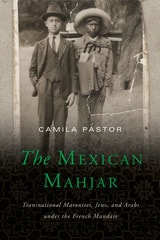
The Mexican Mahjar
Transnational Maronites, Jews, and Arabs under the French MandateBy Camila Pastor
University of Texas Press, 2017
Winner, Khayrallah Migration Studies Prize, Moise Khayrallah Center for Lebanese Diaspora Studies, 2018
Migration from the Middle East brought hundreds of thousands of people to the Americas in the late nineteenth and early twentieth centuries. By the time the Ottoman political system collapsed in 1918, over a third of the population of the Mashriq, i.e. the Levant, had made the transatlantic journey. This intense mobility was interrupted by World War I but resumed in the 1920s and continued through the late 1940s under the French Mandate. Many migrants returned to their homelands, but the rest concentrated in Brazil, Argentina, the United States, Haiti, and Mexico, building transnational lives.
The Mexican Mahjar provides the first global history of Middle Eastern migrations to Mexico. Making unprecedented use of French colonial archives and historical ethnography, Camila Pastor examines how French colonial control over Syria and Lebanon affected the migrants. Tracing issues of class, race, and gender through the decades of increased immigration to Mexico and looking at the narratives created by the Mahjaris (migrants) themselves in both their old and new homes, Pastor sheds new light on the creation of transnational networks at the intersection of Arab, French, and Mexican colonial modernisms. Revealing how migrants experienced mobility as conquest, diaspora, exile, or pilgrimage, The Mexican Mahjar tracks global history on an intimate scale.
The Middle East Remembered
Forged Identities, Competing Narratives, Contested SpacesJacob Lassner
University of Michigan Press, 2000
In the first of the book's three parts, Lassner examines what he calls the stratigraphy of the text--he makes sense of the unusual organization of medieval Islamic narrative. The second section investigates issues such as work on city planning and on the creation of imperial centers. The last portion studies the interplay between Jewish and Muslim memory and the trading of themes and ideas between the cultures.
Shorter studies in the volume have been revised, and the author weaves new and complementary essays around them. Earlier work has been transformed and made more available to the general public. The style is accessible, and technical and arcane usages have been kept to a minimum. Throughout there are flashes of the author's wry humor.
Jacob Lassner is Philip M. and Ethel Klutsnick Professor of Jewish Civilization, Northwestern University, and Professor of Middle East History, Tel Aviv University.
The Middle Maccabees
Archaeology, History, and the Rise of the Hasmonean KingdomAndrea M. Berlin
SBL Press, 2021
A focused, interdisciplinary examination of a tumultuous, history-making era
The Middle Maccabees lays out the charged, complicated beginnings of the independent Jewish state founded in the second century BCE. Contributors offer focused analyses of the archaeological, epigraphic, numismatic, and textual evidence, framed within a wider world of conflicts between the Ptolemies of Egypt, the Seleucids of Syria, and the Romans. The result is a holistic view of the Hasmonean rise to power that acknowledges broader political developments, evolving social responses, and the particularities of local history. Contributors include Uzi ‘Ad, Donald T. Ariel, Andrea M. Berlin, Efrat Bocher, Altay Coşkun, Benedikt Eckhardt, Gerald Finkielsztejn, Christelle Fischer-Bovet, Yuval Gadot, Erich Gruen, Sylvie Honigman, Jutta Jokiranta, Paul J. Kosmin, Uzi Leibner, Catharine Lorber, Duncan E. MacRae, Dvir Raviv, Helena Roth, Débora Sandhaus, Yiftah Shalev, Nitsan Shalom, Danny Syon, Yehiel Zelinger, and Ayala Zilberstein.
Features
- Up-to-date, generously illustrated essays analyzing the relevant archaeological remains
- A revised understanding of how local and imperial histories overlapped and intersected
- New analysis of the book of 1 Maccabees as a tool of Hasmonean strategic interest

The Mogul
Eddie Gottlieb, Philadelphia Sports Legend and Pro Basketball PioneerRich Westcott
Temple University Press, 2008
Drawing upon sixty-plus interviews and many archival sources, well-known Philadelphia sports historian Rich Westcott vividly portrays Gottlieb's role in a pivotal era in city sports, in the process offering histories of the SPHAs, Warriors, and Stars and the role of Jews and African Americans in the city's sporting history.
The Mortal Storm
Phyllis Bottome
Northwestern University Press, 1998
The Mortara Case and St. Thomas Aquinas's Defense of Jewish Parental Authority
with Original Documents from the Mortara Case: <i>Pro-memoria, Syllabus, Brevi cenni</i>Matthew Tapie
Catholic University of America Press, 2024
The Murder of the Jews in Latvia 1941-1945
Bernhard Press
Northwestern University Press, 2000
The Narrow Bridge
Beyond the HolocaustIsaac Neuman, with Michael Palencia-Roth
University of Illinois Press, 2000
As a boy studying Torah, Isaac Neuman learned to seek the spiritual lessons hidden in everyday life. Likewise, in this narrative of occupation and holocaust, he uncovers a core of human decency and spiritual strength that inhumanity, starvation, and even death failed to extinguish.
Unlike many Holocaust memoirs that focus on physical suffering and endurance, The Narrow Bridge follows a spiritual journey. Neuman describes the world of Polish Jewry before and during the Holocaust, recreating the strong religious and secular personalities of his childhood and early youth in Zdunska Wola, Poland: the outcast butcher, Haskel Traskalawski; the savvy criminal-turned-entrepreneur Nochem Ellia; the trusted Dr. Lemberg, liaison to the German occupation government; and Neuman's beloved teacher, Reb Mendel. Through their stories, Neuman reveals the workings of a community tested to the limits of faith and human dignity.
With his brother Yossel, Neuman was transported to the Poznan area, first to the Yunikowo work camp in May 1941, then on to St. Martin's Cemetery camp, where they removed gold jewelry and fillings from exhumed corpses. A string of concentration camps followed, each more oppressive than the last: Fürstenfelde, Auschwitz, Fünfteichen, Gross Rosen, Mauthausen, Wels, and Ebensee. In the midst of these horrors, the brothers kept their feet on the "narrow bridge" of life by holding to their faith, their memories, and each other. In the end, only Isaac survived.
The Narrow Bridge celebrates symbolic victories of faith over brute force. The execution of Zdunska Wola's Jewish spiritual and intellectual leaders is trumped by an act of breathtaking courage and conviction. A secret Passover Seder is cobbled together from hoarded bits of wax, piecemeal prayers, and matzoh baked in delousing ovens. A dying fellow inmate gives Neuman his warm coat as they both lie freezing on the ground.
Such rituals of faith and acts of kindness, combined with boyhood memories and a sense of spiritual responsibility, sustained Neuman through the Holocaust and helped him to reconstruct his life after the war. His story is a powerful testimony to an unquenchable faith and a spirit tried by fire.
The Narrow Bridge
Jewish Views on MulticulturalismBrettschneider, Marla
Rutgers University Press, 1996
Multiculturalism in the United States has been tricky for Jews. Remaining outside of the dominant Christian culture yet often excluded from multicultural agendas, Jews walk a precarious line––a narrow bridge––between dominance and marginality. Many Jews, aware of the shaky identity of Jewishness, are deeply involved in all levels of the multiculturalism debate. But there still exists a need for careful, reflective analysis of the importance and dangers of multiculturalism to the Jewish community. What is multiculturalism? What can it be to the Jews? What can the Jewish community learn from and contribute to the current debate?
Through a collection of essays by scholars and activists whose writing ranges from the personal to the philosophical, The Narrow Bridge examines multiculturalism within and beyond the Jewish community. How does classism work within the Jewish community? How can synagogues reach out to gays and lesbians? How have tensions between Jews and Blacks developed historically and what can we learn from that history? How can we include Jewish studies in multicultural curricula? This timely collection of provocative articles makes fine use of these and other questions, offering us a look at where Jews have stood, where they now stand, and what they can hope for in the complex arena of multiculturalism.
The New Jewish Leaders
Reshaping the American Jewish LandscapeEdited by Jack Wertheimer
Brandeis University Press, 2011
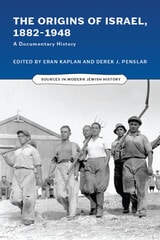
The Origins of Israel, 1882–1948
A Documentary HistoryEran Kaplan
University of Wisconsin Press, 2011
In 1880 the Jewish community in Palestine encompassed some 20,000 Orthodox Jews; within sixty-five years it was transformed into a secular proto-state with well-developed political, military, and economic institutions, a vigorous Hebrew-language culture, and some 600,000 inhabitants. The Origins of Israel, 1882–1948: A Documentary History chronicles the making of modern Israel before statehood, providing in English the texts of original sources (many translated from Hebrew and other languages) accompanied by extensive introductions and commentaries from the volume editors.
This sourcebook assembles a diverse array of 62 documents, many of them unabridged, to convey the ferment, dissent, energy, and anxiety that permeated the Zionist project from its inception to the creation of the modern nation of Israel. Focusing primarily on social, economic, and cultural history rather than Zionist thought and diplomacy, the texts are organized in themed chapters. They present the views of Zionists from many political and religious camps, factory workers, farm women, militants, intellectuals promoting the Hebrew language and arts—as well as views of ultra-Orthodox anti-Zionists. The volume includes important unabridged documents from the origins of the Arab-Israeli conflict that are often cited but are rarely read in full. The editors, Eran Kaplan and Derek J. Penslar, provide both primary texts and informative notes and commentary, giving readers the opportunity to encounter voices from history and make judgments for themselves about matters of world-historical significance.
Best Special Interest Books, selected by the Public Library Reviewers
Best Books for General Audiences, selected by the American Association of School Librarians
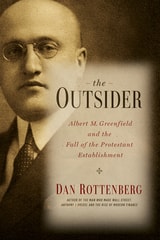
The Outsider
Albert M. Greenfield and the Fall of the Protestant EstablishmentDan Rottenberg
Temple University Press, 2018
In The Outsider, veteran journalist and best-selling author Dan Rottenberg deftly chronicles the astonishing rises, falls, and countless reinventions of this savvy businessman. Greenfield's power allowed him to cross social, religious, and ethnic boundaries with impunity. He alarmed Philadelphia's conservative business and social leaders-Christians and Jews alike-some of whom plotted his downfall.
In this engaging account of Greenfield's fascinating life, Rottenberg demonstrates the extent to which one uniquely brilliant and energetic man pushed the boundaries of society's limitations on individual potential. The Outsider provides a microcosmic look at three twentieth-century upheavals: the rise of Jews as a crucial American business force, the decline of America's Protestant establishment, and the transformation of American cities.
The Papacy, the Jews, and the Holocaust
Frank J. Coppa
Catholic University of America Press, 2006
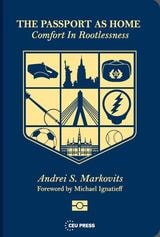
The Passport as Home
Comfort in RootlessnessAndrei S. Markovits
Central European University Press, 2021
A Scholar's Quest for Home and Identity
Experience the remarkable story of a Romanian-born, Hungarian-speaking Jewish professor. From Vienna to Columbia and Harvard, he navigates a life marked by rootlessness, seeking comfort and purpose. His journey unfolds against the backdrop of five decades, two continents, and significant political and cultural changes.
As we follow his pursuit of a home, we gain insight into the critical developments of post-1945 Europe and America. Markovits's emigration experiences, first from Romania to Vienna and later from Vienna to New York, shed light on the challenges he faced.
His journey offers a panoramic view of the forces shaping the latter half of the 20th century. Despite America's flaws, he finds it a beacon of academic excellence, intellectual openness, cultural diversity, and religious tolerance—qualities that Europe lacked.
Explore the complexities of identity, culture, and the universal search for belonging in this captivating narrative.
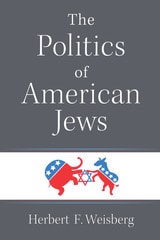
The Politics of American Jews
Herbert F. Weisberg
University of Michigan Press, 2019
Jewish voting is distinctive and paradoxical. Stereotypes about the voting habits of American Jews include that they vote at unusually high levels, that they’re liberal, that they vote for Democratic candidates without regard to their self-interest, and that Israel is their most important issue. Not only are all of those claims wrong, but they obscure aspects of Jews’ voting behavior that are much more interesting.
The Politics of American Jews uncovers new perspectives on Jews’ political choices by analyzing the unprecedented amount of survey data that is now available, including surveys that permit contrasting the voting of Jews with that of comparable non-Jews. The data suggest several mysteries about Jewish voting. While more Jews are Democrats than are liberals, there has not been a previous exploration of why more politically conservative Jews are not Republicans.
A fresh picture of Jews’ political behaviors shows that Jews are no longer politically monolithic. They vote on the basis of their self-interest and their values, but not all Jews share the same self-interest or the same values. While most Jews have incorporated being Democratic and liberal into their political DNA, growing divisions in their ranks suggest a mutation could occur.
The Postcolonial Jewish Question
Colonialism and the Politics of Difference in Postwar FranceMendel Kranz
University of Chicago Press, 2026
A history of how decolonization shaped Jewish political identity in late-twentieth-century France.
In The Postcolonial Jewish Question, Mendel Kranz shows how France’s colonial history fundamentally shaped contemporary debates among Jews in France about racism, discrimination, and minority politics during the late twentieth century. As the wider country confronted the legacies of the Holocaust and the decline of its colonial empire, Jewish thinkers questioned the boundaries of their own political identity and challenged prevailing paradigms of Western universalism. This book traces how prominent and lesser-known thinkers—including Albert Memmi, Emmanuel Levinas, Alain Finkielkraut, and Wladimir Rabi—as well as organizations like the Colloque des intellectuels juifs de langue française engaged with issues of oppression, nationhood, and communal identity, and the ways that colonialism and its afterlives shaped those discussions. Kranz reveals how the Jewish question itself changed shape through confrontations with postcolonial politics. In doing so, he calls for a reassessment of the parameters of the Jewish question amid colonialism’s enduring legacies in the present.
The Power of Dialogue between Israelis and Palestinians
Stories of Change from the School for PeaceSonnenschein, Nava
Rutgers University Press, 2019
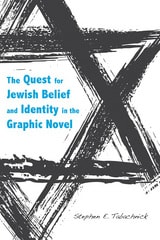
The Quest for Jewish Belief and Identity in the Graphic Novel
Stephen E. Tabachnick
University of Alabama Press, 2014
The creators of Superman (Jerry Siegel and Joe Shuster), Batman (Bob Kane and Bill Finger), and the Marvel superheroes (Stan Lee and Jack Kirby), were Jewish, as was the founding editor of Mad magazine (Harvey Kurtzman). They often adapted Jewish folktales (like the Golem) or religious stories (such as the origin of Moses) for their comics, depicting characters wrestling with supernatural people and events. Likewise, some of the most significant graphic novels by Jews or about Jewish subject matter deal with questions of religious belief and Jewish identity. Their characters wrestle with belief—or nonbelief—in God, as well as with their own relationship to the Jews, the historical role of the Jewish people, the politics of Israel, and other issues related to Jewish identity.
In The Quest for Jewish Belief and Identity in the Graphic Novel, Stephen E. Tabachnick delves into the vivid kaleidoscope of Jewish beliefs and identities, ranging from Orthodox belief to complete atheism, and a spectrum of feelings about identification with other Jews. He explores graphic novels at the highest echelon of the genre by more than thirty artists and writers, among them Harvey Pekar (American Splendor), Will Eisner (A Contract with God), Joann Sfar (The Rabbi’s Cat), Miriam Katin (We Are On Our Own), Art Spiegelman (Maus), J. T. Waldman (Megillat Esther), Aline Kominsky Crumb (Need More Love), James Sturm (The Golem’s Mighty Swing), Leela Corman (Unterzakhn), Ari Folman and David Polonsky (Waltz with Bashir), David Mairowitz and Robert Crumb’s biography of Kafka, and many more. He also examines the work of a select few non-Jewish artists, such as Robert Crumb and Basil Wolverton, both of whom have created graphic adaptations of parts of the Hebrew Bible.
Among the topics he discusses are graphic novel adaptations of the Bible; the Holocaust graphic novel; graphic novels about the Jews in Eastern and Western Europe and Africa, and the American Jewish immigrant experience; graphic novels about the lives of Jewish women; the Israel-centered graphic novel; and the Orthodox graphic novel. The book concludes with an extensive bibliography.
No study of Jewish literature and art today can be complete without a survey of the graphic novel, and scholars, students, and graphic novel fans alike will delight in Tabachnick’s guide to this world of thought, sensibility, and artfulness.
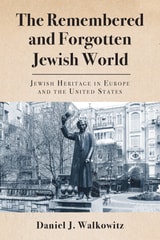
The Remembered and Forgotten Jewish World
Jewish Heritage in Europe and the United StatesDaniel J. Walkowitz
Rutgers University Press, 2018
The Remembered and Forgotten Jewish World investigates the politics of heritage tourism and collective memory. In an account that is part travelogue, part social history, and part family saga, acclaimed historian Daniel J. Walkowitz visits key Jewish museums and heritage sites from Berlin to Belgrade, from Krakow to Kiev, and from Warsaw to New York, to discover which stories of the Jewish experience are told and which are silenced. As he travels to thirteen different locations, participates in tours, displays, and public programs, and gleans insight from local historians, he juxtaposes the historical record with the stories presented in heritage tourism. What he finds raises provocative questions about the heritage tourism industry and its role in determining how we perceive Jewish history and identity. This book offers a unique perspective on the importance of collective memory and the dangers of collective forgetting.
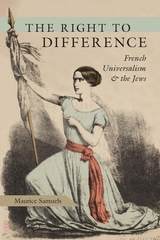
The Right to Difference
French Universalism and the JewsMaurice Samuels
University of Chicago Press, 2016
Samuels demonstrates that Jewish difference has always been essential to the elaboration of French universalism, whether as its foil or as proof of its reach. He traces the development of this discourse through key moments in French history, from debates over granting Jews civil rights during the Revolution, through the Dreyfus Affair and Vichy, and up to the rise of a “new antisemitism” in recent years. By recovering the forgotten history of a more open, pluralistic form of French universalism, Samuels points toward new ways of moving beyond current ethnic and religious dilemmas and argues for a more inclusive view of what constitutes political discourse in France.
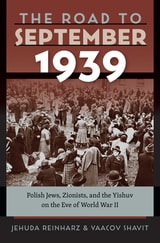
The Road to September 1939
Polish Jews, Zionists, and the Yishuv on the Eve of World War IIJehuda Reinharz and Yaacov Shavit
Brandeis University Press, 2018
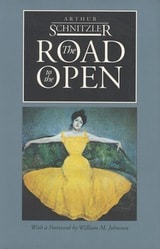
The Road to the Open
Arthur Schnitzler
Northwestern University Press, 1991
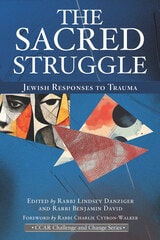
The Sacred Struggle
Jewish Responses to TraumaRabbi Lindsey Danziger and Rabbi Benjamin David
Central Conference of American Rabbis, 2025
much more.
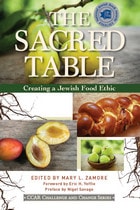
The Sacred Table
Creating a Jewish Food EthicRabbi Mary L. Zamore
Central Conference of American Rabbis, 2011
The Sacred Table: Creating a Jewish Food Ethic is an anthology of diverse essays on Jewish dietary practices. This volume presents the challenge of navigating through choices about eating, while seeking to create a rich dialogue about the intersection of Judaism and food. The definition of Kashrut, the historic Jewish approach to eating, is explored, broadened and, in some cases, argued with, in these essays. Kashrut is viewed not only as a ritual practice, but also as a multifaceted Jewish relationship with food and its production, integrating values such as ethics, community, and spirituality into our dietary practice.
The questions considered in The Sacred Table are broad reaching. Does Kashrut represent a facade of religiosity, hiding immorality and abuse, or is it, in its purest form, a summons to raise the ethical standards of food production? How does Kashrut enrich spiritual practice by teaching intentionality and gratitude? Can paying attention to our own eating practices raise our awareness of the hungry? Can Kashrut inspire us to eat healthfully? Can these laws draw us around the same table, thus creating community? In exploring the complexities of these questions, this book includes topics such as agricultural workers' rights, animal rights, food production, the environment, personal health, the spirituality of eating and fasting, and the challenges of eating together.
The Sacred Table celebrates the ideology of educated choice. The essays present a diverse range of voices, opinions, and options, highlighting the Jewish values that shape our food ethics. Whether for the individual, family, or community, this book supplies the basic how-tos of creating a meaningful Jewish food ethic and incorporating these choices into our personal and communal religious practices. These resources will be helpful if we are new to these ideas or if we are teaching or counseling others. Picture a beautiful buffet of choices from which you can shape your personal Kashrut. Read, educate yourself, build on those practices that you already follow, and eat well.
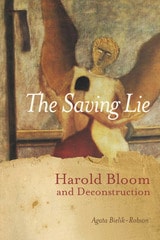
The Saving Lie
Harold Bloom and DeconstructionAgata Bielik-Robson
Northwestern University Press, 2011
Bloom is indeed a party of one, a truly strong poet of his own mode of religious-literary criticism, who, in a typically Emersonian manner, makes his own circumstances and sheds influences by incorporating them into his idiosyncratic theory.In this unprecedented full-length study on Harold Bloom, Agata Bielik-Robson explores the many facets of Bloom’s critical writings and career. In his work, she argues, Bloom draws on a variety of disparate traditions—Judaism, gnosis, Romanticism, American pragmatism, and Freudianism, but also, especially recently, Victorian aestheticism—that comprise a dialectical, difficult whole in a constant quarrel with itself. Yet, this is precisely the image of "life-in-antithesis," which constitutes Bloom’s highest speculative achievement, she observes. The Saving Lie brings all these "Blooms" together and, despite their own tendencies toward dissociation, lets them speak unisono: in one almost harmonious voice that will clearly utter the principles of a new speculative position—Bloom’s antithetical vitalism. This study of Bloom and his contributions will not soon be surpassed.

The Schlemiel as Metaphor, Revised and Enlarged Edition
Studies in Yiddish and American Jewish FictionSanford Pinsker
Southern Illinois University Press, 1991
The certainty that deep down we are all schlemiels is perhaps what makes America love an inept ball team or a Woody Allen who unburdens his neurotic heart in public.
In this unique, revised history of the schlemiel, Sanford Pinsker uses psychological, linguistic, and anecdotal approaches, as well as his considerable skills as a spritely storyteller, to trace the schlemiel from his beginnings in the Old Testament through his appearance in the nineteenth-century literature of Mendele Mocher Seforim and Sholom Aleichem to his final development as the beautiful loser in the works of Isaac Bashevis Singer, Bernard Malamud, Saul Bellow, Philip Roth, and Woody Allen. Horatio Alger might have once been a good emblem of the American sensibility, but today Woody Allen’s anxious, bespectacled punin (face) seems closer, and truer, to our national experience. His urban, end-of-the-century anxieties mirror—albeit in exaggeration—our own.
This expanded study of the schlemiel is especially relevant now, when scholarship of Yiddish and American Jewish literature is on the increase. By sketching the family tree of that durable anti-hero the schlemiel, Pinsker proves that Jewish humor is built upon the very foundations of the Jewish experience. Pinsker shows the evolution of the schlemiel from the comic butt of Yiddish jokes to a literary figure that speaks to the heart of our modern problems, and he demonstrates the way that Yiddish humor provides a sorely needed correction, a way of pulling down the vanities we all live by.
The Sephardic Jews of Bordeaux
Assimilation and Emancipation in Revolutionary and Napoleonic FranceFrances Malino
University of Alabama Press, 1978
This book focuses on a small community of French Jews, the first in Europe to encounter the requirements of an emerging nation-state and to be recognized by that state as full and equal citizens. The Sephardim of Bordeaux were typical of neither the majority of the Jews of France nor those of Western Europe. They had entered France as Catholics; only after more than a century of public adherence to Catholicism was their community officially recognized as Jewish. Nevertheless, their assimilation and conformity to the standards of French society as well as their commitment to a Judaism fashioned as much by contemporary political and economic concerns as by tradition reveal a legacy bequeathed to French Jewry and an important model for the development of the modern Jew.
Describing the tensions that existed between the Sephardic community of Bordeaux and the Ashkenazic Jews of France, the author also depicts their role in the relation of the Jews with Napoleon and the forming of the Grand Sanhedrin.
The Smell of Humans
A Memoir of the Holocaust in HungaryErno Szép
Central European University Press, 1994
The Social Groups behind the Pentateuch
Jaeyoung Jeon
SBL Press, 2021
A reexamination of the Pentateuch in light of the complex social, religious, and political conflicts of the Persian period
During the last several decades, scholars in pentateuchal studies have suggested new compositional models to replace the Documentary Hypothesis, yet no consensus has emerged. The ten essays in this collection advance the discussion by shifting the focus of pentateuchal studies from the literary stratification of different layers of the texts to the social, economic, religious, and political agendas behind them. Rather than limiting the focus of their studies to scribal and community groups within Persian Yehud, contributors look beyond Yehud to other Judahite communities in the diaspora, including Elephantine and the Samaritan community, establishing a proper academic context for setting the diverse voices of the Pentateuch as we now understand them. Contributors include Olivier Artus, Thomas B. Dozeman, Innocent Himbaza, Jürg Hutzli, Jaeyoung Jeon, Itamar Kislev, Ndikho Mtshiselwa, Dany Noquet, Katharina Pyschny, Thomas Römer, and Konrad Schmid.
The Song Is Over
A Jewish Girl in DresdenHenny Brenner
University of Alabama Press, 2010
The Sovereigns
A Jewish Family in the German CountrysideEric Lucas
Northwestern University Press, 2001
But anti-Semites, under the protection of the Nazi regime, began to settle old scores, and targeted the economically successful rural Jews. New laws stripped Jewish meat dealers of their rights, and Aryan competitors eagerly forced them aside. That was only the beginning. In the Holocaust that followed, some members of the family escaped. Others did not.
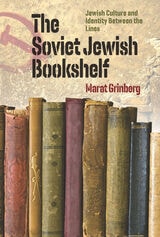
The Soviet Jewish Bookshelf
Jewish Culture and Identity Between the LinesMarat Grinberg
Brandeis University Press, 2022
In The Soviet Jewish Bookshelf, Marat Grinberg argues that in an environment where Judaism had been all but destroyed, and a public Jewish presence routinely delegitimized, reading uniquely provided many Soviet Jews with an entry to communal memory and identity. The bookshelf was both a depository of selective Jewish knowledge and often the only conspicuously Jewish presence in their homes. The typical Soviet Jewish bookshelf consisted of a few translated works from Hebrew and numerous translations from Yiddish and German as well as Russian books with both noticeable and subterranean Jewish content. Such volumes, officially published, and not intended solely for a Jewish audience, afforded an opportunity for Soviet Jews to indulge insubordinate feelings in a largely safe manner. Grinberg is interested in pinpointing and decoding the complex reading strategies and the specifically Jewish uses to which the books on the Soviet Jewish bookshelf were put. He reveals that not only Jews read them, but Jews read them in a specific way.
The Stranger within Your Gates
Converts and Conversion in Rabbinic LiteratureGary G. Porton
University of Chicago Press, 1994
The Stranger within Your Gates analyzes virtually every reference to converts in the full corpus of rabbinic literature. The intellectual dilemma that converts posed for classical Judaism played itself out in discussions of marriage, religious practice, inheritance of property, and much else. Reviewing the rabbinic literature text by text, Porton exposes the rabbis' frequently ambivalent and ambiguous views.
The Stranger within Your Gates is the only examination of conversion in rabbinic literature to draw upon the full scope of contemporary anthropological and sociological studies of conversion. It is also unique in its focus on the opinions of the community into which the convert enters, rather than on the testimony of the convert. By approaching data with new methods, Porton heightens our understanding of conversion and the nature of the People of Israel in rabbinic literature.