Results by title
914 books match the query 'Medieval' and 244 start with t
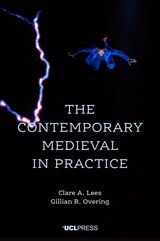
The Contemporary Medieval in Practice
Claire A. Lees and Gillian R. Overing
University College London, 2019
Speculative and nontraditional, The Contemporary Medieval in Practice adapts the conventional scholarly essay to reflect its interdisciplinary subject. Creative critical writing encourages the introduction of dialogue, poetry, and short essays within scholarly style, and this, the authors argue, makes it an ideal format for exploring innovative pathways from the contemporary to the medieval. Discussing urgent critical discourses and cultural practices, such as the study of the environment and the ethics of understanding bodies, identities, and histories, this short, accessible book focuses on early medieval British culture, or Anglo-Saxon studies, and its relation with, use of, and reworking in contemporary visual, poetic, and material culture after 1950.
The Correspondence of Johann Amerbach
Early Printing in its Social ContextSelected, Translated, Edited, and with Commentary by Barbara C. Halporn
University of Michigan Press, 2000
Between 1478 and 1513 Amerbach published more than a hundred substantial works. He is best known for his monumental editions of the works of early church fathers. Crucial to his success was the information network he kept through correspondence with scholars, teachers, printers, booksellers, library curators, and other members of the literate community. The letters reveal how books were made, by whom, and for whom. The Correspondence of Johann Amerbach allows us to see the tensions in the new alliance between commerce and the republic of letters. Filling out the scene more fully, letters between the Amerbach children and their parents tell of the daily life, expectations, and aspirations of an intellectual bourgeois family at the end of the fifteenth century.
Barbara C. Halporn is Head of the Collection Development Department, Widener Library, Harvard University.
The Crooked Stick
A History of the LongbowHugh D. H. Soar
Westholme Publishing, 2004
The Complete Story of a Legendary Weapon
"Spendidly enthusiastic. . . . Soar's book is indispensable."—Bernard Cornwell
"A fascinating study of a forgotten weapon. . . . For centuries the longbow dominated battle, affecting the fates of nations" —Wall Street Journal
"Bowyers, bowhunters, target archers and students of archery history should all find cause for celebration with Hugh Soar's concise but authoritative text." —Traditional BowhunterOn a clear July morning in 1346, a small force approached the walls of Caen for battle. The attackers rode to the field on horseback, banners and pennants fluttering in the light breeze. Behind them marched bowmen in tightly ranked units. At the sound of a crisp battle horn, they halted. A twinge of apprehension rippled through the thousands of Norman defenders as they looked down at the opposing army, for precision archery formation had long since disappeared as a military concept in medieval France. Here was not the expected rabble of unrated bucolics cowed by the might of France; confronting them was a quietly determined group of trained soldiers armed not with the familiar arbalest but with a new and strange weapon of great length. The defenders of Caen were about to meet the English war bow and its deadly battle shaft. For the next 100 years, this weapon, the "crooked stick," would command continental battlefields, etching its fearsome reputation at Crécy, Poitiers, Agincourt, and Verneuil, while establishing England as an international power for the first time.
Although the longbow is best known for its deployment during the Hundred Years' War, its origins lie with ancient Saxon seafighters and Welsh craftsmen, while today the bow is a vibrant part of the traditional archery scene. In The Crooked Stick: A History of the Longbow, historian Hugh D. H. Soar pulls together all of these strings, presenting the engaging story of this most charismatic standoff weapon. After a careful consideration of Neolithic bows and arrows, the author describes the bow's use in the medieval hunt and its associated customs. The longbow made its deepest mark in warfare, however, and the author follows the weapon's development and tactical deployment from the hand-bow of William the Conqueror's campaigns to the continental set-piece battles between England and France. Although soldiers reluctantly gave up the longbow for firearms, its recreational use became immensely popular, particularly during the Regency and Victorian periods. In the twentieth century it appeared as if the longbow would disappear into the fog of legend, but a new interest in traditional craft and expertise gained hold, and the pleasure of using this ancient instrument is now firmly part of archery around the world.
Through a remarkable command of manuscript and printed sources and a judicious use of material evidence, including his own important collection of rare longbows, Hugh Soar establishes the deep connections of this bow to England, Scotland, and Wales. Figures in the past like William Wallace, Edward III, and Henry V appear alongside detailed descriptions of bows, strings, arrows, and arrowheads, while the rise of institutions and craftsmen devoted to the longbow are presented to show how knowledge of this weapon was carried forward across the centuries. Today, those in the sport of archery and military historians will find that The Crooked Stick will enhance their own interests in a weapon of legendary status.
In addition to the illustrated text, the book contains appendices detailing the history and design of bracers, tabs and tips, quivers, and arrowheads associated with the longbow.
The Cult of the Saints
Its Rise and Function in Latin ChristianityPeter Brown
University of Chicago Press, 1982
"Brown has an international reputation for his fine style, a style he here turns on to illuminate the cult of the saints. Christianity was born without such a cult; it took rise and that rise needs chronicling. Brown has a gift for the memorable phrase and sees what the passersby have often overlooked. An eye-opener on an important but neglected phase of Western development."—The Christian Century
"Brilliantly original and highly sophisticated . . . . [The Cult of the Saints] is based on great learning in several disciplines, and the story is told with an exceptional appreciation for the broad social context. Students of many aspects of medieval culture, especially popular religion, will want to consult this work."—Bennett D. Hill, Library Journal
The Cult of the Saints
Its Rise and Function in Latin Christianity, Enlarged EditionPeter Brown
University of Chicago Press, 2014
In this groundbreaking work, Peter Brown explores how the worship of saints and their corporeal remains became central to religious life in Western Europe after the fall of the Roman Empire. During this period, earthly remnants served as a heavenly connection, and their veneration is a fascinating window into the cultural mood of a region in transition.
Brown challenges the long-held “two-tier” idea of religion that separated the religious practices of the sophisticated elites from those of the superstitious masses, instead arguing that the cult of the saints crossed boundaries and played a dynamic part in both the Christian faith and the larger world of late antiquity. He shows how men and women living in harsh and sometimes barbaric times relied upon the holy dead to obtain justice, forgiveness, and power, and how a single sainted hair could inspire great thinkers and great artists.
An essential text by one of the foremost scholars of European history, this expanded edition includes a new preface from Brown, which presents new ideas based on subsequent scholarship.
The Culture of Merit
Nobility, Royal Service, and the Making of Absolute Monarchy in France, 1600-1789Jay M. Smith
University of Michigan Press, 1996
Jay M. Smith argues that the early modern nobility instinctively drew a correlation between the meaning of merit and an image of the "sovereign's gaze." In the early seventeenth century, merit meant the qualities traditionally associated with aristocratic values: generosity, fidelity, and honor. Nobles sought to display those qualities before the appreciative gaze of the king himself. But the expansion of the monarchy forced the routinization of the sovereign's gaze, and Louis XIV began to affirm and reward new qualities--talent and application--besides those thought innately noble.
The contradictions implicit within the absolute monarchy's culture of merit are demonstrated by the eighteenth-century French army, which was dominated by the nobility, but also committed to efficiency and expertise. Smith shows that the army's continuous efforts to encourage and reward "merit" led to a clash of principles. The ever-growing emphasis on talent and discipline led reformers--the great majority of them noble--to attack the most egregious examples of privilege and favoritism in the army. Smith's analysis of the long-term evolution in conceptions of royal service suggests a new explanation for the shift in values signified by the French Revolution. The transition away from the "personal" gaze of the king toward the "public" gaze of the monarchy and nation foretold the triumph of a new culture of merit in which noble birth would have no meaning.
The Culture of Merit will interest historians and other social scientists concerned with issues of aristocratic identity, state formation, professionalization, and the changing political culture of pre-Revolutionary France.
Jay M. Smith is Assistant Professor of History, University of North Carolina, Chapel Hill.
The Culture of San Sepolcro during the Youth of Piero della Francesca
James R. Banker
University of Michigan Press, 2003
Piero della Francesca has remained an enigma because of the contradictions observed in his life and art. Banker's archival research has enabled him to clear away some of the obscurities. This book situates Piero in the earliest social and intellectual worlds within which he moved. Heretofore, writers on Piero have begun his putative formation in Florence in 1439. Banker demonstrates that the young painter's formation began prior to 1439, when he was surrounded by his family and the local artisans' community.
The Culture of San Sepolcro during the Youth of Piero della Francesca integrates social and art history in order to better understand the formation of a Renaissance artist. It will be vital to scholars and historians of the Italian Renaissance city states, as well as to art historians and those interested in the relationship of art and society.
James R. Banker is Professor of History, North Carolina State University.
The Daily Lives of the Anglo-Saxons
Carole Biggam
Arizona Center for Medieval and Renaissance Studies, 2017
Insights into the lives of any group of historical people are provided by three main types of evidence: their language, their literature and their material culture. The contributors to this volume draw on all three types of evidence in order to present new research into the lives of the Anglo-Saxons. The particular focus is on daily life – the ordinary rather than the extraordinary, the normal rather than the exceptional. Rather than attempting an overview, the essays address individual scenarios in greater depth, but with an emphasis on shared experience.
The following scholars have contributed essays to this collection:
Martha Bayless
University of Oregon
Carole P. Biggam
University of Glasgow
Paul Cavill
University of Nottingham
Amy W. Clark
University of California, Berkeley
James Graham-Campbell
University College London
Antonina Harbus
Macquarie University, Sydney
Carole Hough
University of Glasgow
Daria Izdebska
Liverpool Hope University
Karen Louise Jolly
University of Hawai‘i at Mānoa
Alexandra Lester-Makin
University of Manchester
Elisabeth Okasha
University College, Cork
Phyllis Portnoy
University of Manitoba
Jane Roberts
University of London
The Danger of Romance
Truth, Fantasy, and Arthurian FictionsKaren Sullivan
University of Chicago Press, 2018
Yet is it possible that romance is expressing a truth—and a truth unrecognized by realist genres? The Arthurian literature of the Middle Ages, Karen Sullivan argues, consistently ventriloquizes in its pages the criticisms that were being made of romance at the time, and implicitly defends itself against those criticisms. The Danger of Romance shows that the conviction that ordinary reality is the only reality is itself an assumption, and one that can blind those who hold it to the extraordinary phenomena that exist around them. It demonstrates that that which is rare, ephemeral, and inexplicable is no less real than that which is commonplace, long-lasting, and easily accounted for. If romance continues to appeal to audiences today, whether in its Arthurian prototype or in its more recent incarnations, it is because it confirms the perception—or even the hope—of a beauty and truth in the world that realist genres deny.
The Darker Side of the Renaissance
Literacy, Territoriality, and ColonizationWalter D. Mignolo
University of Michigan Press, 1995
The Deeds of Count Roger of Calabria and Sicily and of His Brother Duke Robert Guisc
Kenneth Baxter Wolf
University of Michigan Press, 2005
Geoffrey Malaterra's Deeds of Count Roger is the most important extant account of the Norman conquest of Muslim Silicy (1061-91). This volume includes a translation of the Latin original as well as an introduction, notes, and maps.
The Deeds of Count Roger fills a gap in the primary literature pertaining to the earliest phase of Latin Christian expansion at the expense of Islam, since the Norman conquests in Sicily were more or less contemporary with the First Crusade and the beginnings of the Spanish Reconquista. The account also illustrates the complexity of medieval historical writing, with Malaterra on the one hand praising the Normans for their military achievements and on the other subtly criticising the "lust for domination" that inspired them.
Kenneth Baxter Wolf is Professor of History at Pomona College.
The Deeds of Pope Innocent III
James M. Powell
Catholic University of America Press, 2004
The Desert Fathers
Helen Waddell
University of Michigan Press, 1956
The Discovery of Being and Thomas Aquinas
Christopher M. Cullen, SJ
Catholic University of America Press, 2019
The collection of essays within The Discovery of Being and Thomas Aquinas is divided into three major parts: the first set of essays concerns the foundation of metaphysics within Thomism; the second set exemplifies the use of metaphysics in fundamental philosophical issues within Thomism; and the third set employs metaphysics in central theological issues.
The Discovery of Being and Thomas Aquinas allows major scholars of the different types of Thomism to engage in a full-scale defense of their position, as well as expanding Thomistic metaphysics to the discipline of theology in important ways.
The Douce Apocalypse
Picturing the End of the World in the Middle AgesNigel Morgan
Bodleian Library Publishing, 2006
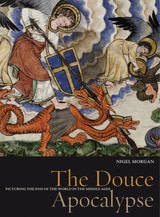
Now the manuscript—created sometime between 1250 and 1275—reaches an entirely new audience at the hands of noted scholar Nigel Morgan. The Douce Apocalypse explores the manuscript’s royal patronage, looks at its fascinating imagery, and examines its significance in light of contemporary prophecy. The commentary is accompanied by lush, full-color illustrations.
As Morgan relates, the Douce Apocalypse is especially enlightening because of its unfinished nature. A few of its images remain incomplete—and such absences give insight into the artist’s painstaking techniques of drawing, gilding, and painting. The second volume in the Treasures from the Bodleian Library series, The Douce Apocalypse will convey both the beauty of the original and the enduring fascination of its contents.
The Early Heidegger and Medieval Philosophy
Phenomenology for the GodforsakenS. J. McGrath
Catholic University of America Press, 2006
The Early Medieval Balkans
A Critical Survey from the Sixth to the Late Twelfth CenturyJohn V. A. Fine
University of Michigan Press, 1991
This book discusses the development of ethnic nationalism among Bulgars, Croatians, Serbians, and Macedonians.
The Early Middle Ages
Franca Ela Consolino
SBL Press, 2020
Examine the creative, profound dialogue between medieval women and biblical traditions
The latest volume in the Bible and Women series examines the relationship between women and the Bible’s reception during the early Middle Ages (500–1100 CE) in both the Greek East and the Latin West. Essays focus on interactions between women and the Bible through biblical precepts on women and for women, biblical women as the subjects of action or objects of discussion, and writings by women that refer to the Bible as a moral authority. The women discussed in the volume range from the well-known—including the nuns Kassia in Byzantium and Hrosvita in the West; the aristocrat Dhuoda, author of a moral guide for her son; Gisela, the sister of Charlemagne and abbess of Chelles; and her niece Rotrude—to those who remain anonymous. Contributions also explore how the Old and New Testaments exercised influence on emerging Islam.
Features:
- Analysis of images of the Virgin Mary as a means of tracing the spread of her cult and feast days from East to West
- Exploration of the significance of classical culture for medieval women who composed poems for a Christian audience
- Evaluation of art as a means of establishing devotional relationships not necessarily mediated by the voices of preachers or the reading of texts .
The Earth Is Our Book
Geographical Knowledge in the Latin West ca. 400-1000Natalia Lozovsky
University of Michigan Press, 2000
Tackling an impressive array of primary and secondary sources--including a variety of late antique and early medieval texts--Lozovsky examines early medieval geography as it existed in other fields of learning: theology, history, and natural science. She expounds on the use of published resources by examining the nature of geographical knowledge in the Middle Ages. She draws on unpublished sources--such as school commentaries--for the rich information they provide about geographical education during that period. For many scholars of medieval studies, early medieval geographical texts have more philological than geographical value. Lozovsky's work provides an insightful, alternative interpretation.
Those interested in history, medieval studies, ethnography, science, education, religion, Latin studies, and, of course, geography, will find this book a most fascinating read.
Natalia Lozovsky is an instructor in the Department of History, University of Colorado, Boulder.
The Edges of the Medieval World
Gerhard Jaritz
Central European University Press, 2009

The Elefánthy
The Hungarian Nobleman and His KindredErik Fügedi
Central European University Press, 1998
In an exploration of the life and customs of the Hungarian nobility, this book compares historical reality and legal literature on the example of one noble family--the Elefánthy kindred from northern Hungary (present-day Slovakia). The author begins by outlining the customary law regarding noble status, inheritance and marriage, as summarized in the famous code of Stephen Werbőczy (1514). He then compares these norms with the documentary evidence and establishes the fact that the legal literature differs in regard to social mobility and kindred solidarity.
With this frame of reference in mind, the fate of the Elefánthy family is traced through several generations, enabling the author to make some general statistical statements on inheritance, the rise and fall of various branches, marriage strategies, and the "survival skills" of the kindred. In his summary, the author outlines some of the major avenues for further research, including the peculiar Hungarian form of retainership (familiaritas), and the relationships between noble families and between the nobility and local communities.
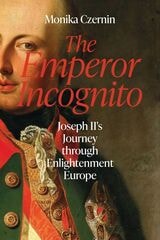
The Emperor Incognito
Joseph II's Journey through Enlightenment EuropeMonika Czernin
Haus Publishing, 2027
An emperor meets his people: the extraordinary journeys of Joseph II.
It is the end of the eighteenth century, and the European royal houses are beginning to falter. The young Habsburg emperor Joseph II realizes that reform is inevitable, and he eagerly soaks up Enlightenment ideas. Incognito, and without the usual pomp and entourage, he travels through his vast empire to see with his own eyes how his subjects live, suffer, and starve.
Along with princes and kings, he meets ordinary people and visits hospitals and factories in his search for new insights that will help him build a modern state. When he visits his sister Marie Antoinette in Versailles, he can see the French Revolution looming on the horizon. By the end of his journey, he had spent a quarter of his twenty-five-year reign on the road. With an introduction by Dominic Lieven and based on countless sources, Monika Czernin’s The Emperor Incognito tells the story of an extraordinary man in an age of great upheaval, who was far ahead of his time.
The Epic Catalogue
List Form and Reception from Beowulf to Paradise LostEva von Contzen
The Ohio State University Press, 2026
The Exposition of 1 John and An Exposition upon Matthew V-VII
William Tyndale
Catholic University of America Press, 2023
The Faces of Time
Portrayal of the Past in Old French and Latin Historical Narrative of the Anglo-Norman RegnumJean Blacker
University of Texas Press, 1994
The twelfth century witnessed the sudden appearance and virtual disappearance of an important literary genre—the Old French verse chronicle. These poetic histories of the British kings, which today are treated as fiction, were written contemporaneously with Latin prose narratives, which are regarded as historical accounts. In this pathfinding study, however, Jean Blacker asserts that twelfth-century authors and readers viewed both genres as factual history.
Blacker examines four Old French verse chronicles—Gaimar's Estoire des Engleis (c. 1135), Wace's Roman de Brut (c. 1155) and Roman de Rou (c. 1160–1174), and Benoît de Sainte-Maure's Chronique des Ducs de Normandie (c. 1174–1180) and four Latin narratives—William of Malmesbury's Gesta Regum (c. 1118–1143) and Historia Novella (c. 1140–1143), Orderic Vitalis's Historia Ecclesiastica (c. 1118–1140), and Geoffrey of Monmouth's Historia Regum Britanniae (c. 1138). She compares their similarity in three areas—the authors' stated intentions, their methods of characterization and narrative development, and the possible influences of patronage and audience expectation on the presentation of characters and events.
This exploration reveals remarkable similarity among the texts, including their idealization of historical and even legendary figures, such as King Arthur. It opens fruitful lines of inquiry into the role these writers played in the creation of the Anglo-Norman regnum and suggests that the Old French verse chronicles filled political, psychic, and aesthetic needs unaddressed by Latin historical writing of the period.
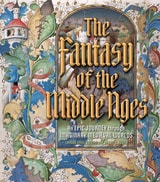
The Fantasy of the Middle Ages
An Epic Journey through Imaginary Medieval WorldsLarisa Grollemond
J. Paul Getty Trust, The, 2022
From the soaring castles of Sleeping Beauty to the bloody battles of Game of Thrones, from Middle-earth in The Lord of the Rings to mythical beasts in Dungeons & Dragons, and from Medieval Times to the Renaissance Faire, the Middle Ages have inspired artists, playwrights, filmmakers, gamers, and writers for centuries. Indeed, no other historical era has captured the imaginations of so many creators.
This volume aims to uncover the many reasons why the Middle Ages have proven so applicable to a variety of modern moments from the eighteenth through the twenty-first century. These “medieval” worlds are often the perfect ground for exploring contemporary cultural concerns and anxieties, saying much more about the time and place in which they were created than they do about the actual conditions of the medieval period. With over 140 color illustrations, from sources ranging from thirteenth-century illuminated manuscripts to contemporary films and video games, and a preface by Game of Thrones costume designer Michele Clapton, The Fantasy of the Middle Ages will surprise and delight both enthusiasts and scholars.
This title is published to accompany an exhibition on view at the J. Paul Getty Museum at the Getty Center from June 21 to September 11, 2022.
The Footsteps of Israel
Understanding Jews in Anglo-Saxon EnglandAndrew P. Scheil
University of Michigan Press, 2004

The Friend
Alan Bray
University of Chicago Press, 2003
There was a time, as made clear by this monument, when the English church not only revered such relations between men, but also blessed them. Taking this remarkable idea as its cue, The Friend explores the long and storied relationship between friendship and the traditional family of the church in England. This magisterial work extends from the year 1000, when Europe acquired a shape that became its enduring form, and pursues its account up to the eighteenth and nineteenth centuries. Spanning a vast array of fascinating examples, which range from memorial plaques and burial brasses to religious rites and theological imagery to classic works of philosophy and English literature, Bray shows how public uses of private affection were very common in premodern times. He debunks the now-familiar readings of friendship by historians of sexuality who project homoerotic desires onto their subjects when there were none. And perhaps most notably, he evaluates how the ethics of friendship have evolved over the centuries, from traditional emphases on loyalty to the Kantian idea of moral benevolence to the more private and sexualized idea of friendship that emerged during the modern era.
Finely nuanced and elegantly conceived, The Friend is a book rich in suggestive propositions as well as eye-opening details. It will be essential reading for anyone interested in the history of England and the importance of friendship in everyday life.
History Today’s Book of the Year, 2004
“Bray’s loving coupledom is something with a proper historical backbone, with substance and form, something you can trace over time, visible and archeologicable. . . . Bray made a great contribution in helping to bring this long history to light.”— James Davidson, London Review of Books
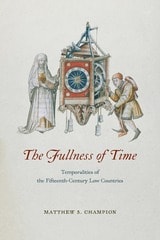
The Fullness of Time
Temporalities of the Fifteenth-Century Low CountriesMatthew S. Champion
University of Chicago Press, 2017
The Fullness of Time asks how the passage of time in the Low Countries was ordered by the rhythms of human action, from the musical life of a cathedral to the measurement of time by clocks and calendars, the work habits of a guildsman to the devotional practices of the laity and religious orders. Through a series of transdisciplinary case studies, it explores the multiple ways that objects, texts and music might themselves be said to engage with, imply, and unsettle time, shaping and forming the lives of the inhabitants of the fifteenth-century Low Countries. Champion reframes the ways historians have traditionally told the history of time, allowing us for the first time to understand the rich and varied interplay of temporalities in the period.
The Gallant Spaniard
Miguel de Cervantes; Translated by Philip Krummrich
Vanderbilt University Press, 2023
This edition, translated by Philip Krummrich, consists of a critical introduction and a full verse translation of the play with notes.

The Gateway to the Middle Ages
France and BritainEleanor Shipley Duckett
University of Michigan Press, 1988
The Gateway to the Middle Ages
ItalyEleanor Shipley Duckett
University of Michigan Press, 1988
The Gateway to the Middle Ages
MonasticismEleanor Shipley Duckett
University of Michigan Press, 1988
"Professor Duckett writes a history of this period that is as full of intellectual excitement as those centuries were of military excitement." -- Christian Century
"New light on the troubled origins of the medieval spirit." --New Republic
Eleanor Shipley Duckett was Professor Emerita of Latin Languages and Literature, Smith College.
The Gothic War
Justinian's Campaign to Reclaim ItalyTorsten Cumberland Jacobsen
Westholme Publishing, 2009
“Jacobsen brings to the story an intimate knowledge of Italy. The battles took place on terrain Jacobsen knows well. . . Recommended.”—Choice
“Jacobsen provides an operational history of Justinian’s campaign. Throughout he traces the military strategies and tactical intrigues of leaders such as the Roman general Belisarius and the Goth leader Totila.”—Publishers Weekly
“Jacobsen knows the sites he writes about, he has read Procopius diligently . . . and his military reconstruction can be faulted only in attributing to both sides rather better command and control than the ancient armies could generally manage. . . . Jacobsen has offered wargamers a tool they will appreciate.”—The Classical Review
A period of stability in the early sixth century A.D. gave the Eastern Roman emperor Justinian an opportunity to recapture parts of the Western Empire which had been lost to invading barbarians in the preceding centuries. The climactic conflict over Italy between 535 and 554—the Gothic War—decided the political future of Europe, holding in its balance the possibility that the Roman Empire might rise again. While large portions of the original territory of the ancient Roman Empire were recaptured, the Eastern Empire was incapable of retaining much of its hard-won advances, and soon the empire once again retracted. As a result of the Gothic War, Italy was invaded by the Lombards who began their important kingdom, the Franks began transforming Gaul into France, and without any major force remaining in North Africa, that territory was quickly overrun by the first wave of Muslim expansion in the ensuing century. Written as a general overview of this critical period, The Gothic War: Justinian’s Campaign to Reclaim Italy opens with a history of the conflict with Persia and the great Roman general Belisarius’s successful conquest of the Vandals in North Africa. After an account of the Ostrogothic tribe and their history, the campaigns of the long war for Italy are described in detail, including the three sieges of Rome, which turned the great city from a bustling metropolis into a desolate ruin. In addition to Belisarius, the Gothic War featured many of history’s most colorful antagonists, including Rome’s Narses the Eunuch, and the Goths’ ruthless and brilliant tactician, Totila. Two appendices provide information about the armies of the Romans and Ostrogoths, including their organization, weapons, and tactics, all of which changed over the course of the war.
The Governance of Friendship
Law and Gender in the DecameronMichael Sherberg
The Ohio State University Press, 2011
Through a series of close readings at all three levels of the text—the author’s statements, the frame narrative, and the stories themselves—Sherberg shows how Boccaccio exposes and explores gender tensions rooted in a notion of the patriarchal household, which finds its own rationale in the natural-law postulate of the inferiority of women. Relying on the writings of the great twentieth-century legal theorist Hans Kelsen, Sherberg demonstrates how through the complex architecture of the Decameron Boccaccio dismantles the logic of natural law, exposing it instead as a rhetoric used by men to justify their control of women.
The Governance of Friendship aims well to advance our understanding of Boccaccio as an intellectual: not only steeped in the key texts of his time, but also at the forefront of critical thinking about such issues as law and gender which will play out over the coming centuries and beyond.
The Green Ages
Medieval Innovations in SustainabilityAnnette Kehnel
Brandeis University Press, 2024
In The Green Ages, historian Annette Kehnel explores sustainability initiatives from the Middle Ages, highlighting communities that operated a barter trade system on the Monte Subiaco in Italy, sustainable fishing at Lake Constance, common lands in the United Kingdom, transient grazing among Alpine shepherds in the south of France, and bridges built by crowdfunding in Avignon. Kehnel takes these medieval examples and applies their practical lessons to the modern world to prove that we can live sustainably—we’ve done it before!
From the garden economy in the mythical-sounding City of Ladies to early microcredit banks, Kehnel uncovers a world at odds with our understanding of the typical medieval existence. Premodern history is full of inspiring examples and concepts ripe for rediscovery, and we urgently need them as today’s challenges—finite resources, the twilight of consumerism, and growing inequality—threaten what we have come to think of as a modern way of living sustainably. This is a stimulating and revelatory look at a past that has the power to change our future.
The Grinnell Beowulf
Timothy D. Arner
Arizona Center for Medieval and Renaissance Studies, 2000
The Harbour of all this Sea and Realm
Crusader to Venetian FamagustaMichael J.K. Walsh
Central European University Press, 2014
The Hellenistic, Roman, and Medieval Glass from Cosa
David Frederick Grose (R. T. Scott, editor)
University of Michigan Press, 2017
The research and analysis presented here are the work of the late David Frederick Grose, who began this project when no other city site excavations in Italy focused on ancient glass. He confirmed that the Roman glass industry began to emerge in the Julio-Claudian era, beginning in the principate of Augustus. His study traces the evolution of manufacturing techniques from core-formed vessels to free blown glass, and it documents changes in taste and style that were characteristic of the western glass industry throughout its long history.
At the time of Grose’s unexpected passing, his study was complete but not yet published. Nevertheless, the reputation of his work in this area has done much to establish the value and importance of excavating and researching Cosa’s glass. This volume, arranged and edited by R. T. Scott, makes Grose’s essential scholarship on the subject available for the first time.
The Hero's Place
Medieval Literary Traditions of Space and BelongingMolly Robinson Kelly
Catholic University of America Press, 2009
The Historical Construction of National Consciousness
Selected WritingsJeno Szucs
Central European University Press, 2022
A long essay entitled Three Historical Regions of Europe, appearing first in a samizdat volume in Budapest in 1980, instantly put its author into the forefront of the transnational debate on Central Europe, alongside such intellectual luminaries as Milan Kundera and Czesław Miłosz. The present volume offers English-language readers a rich selection of the depth and breadth of the legacy of Jenő Szűcs (1928–1988).
The selection documents Szűcs’s seminal contribution to many contemporary debates in historical anthropology, nationalism studies, and conceptual history. It contains his key texts on the history of national consciousness and patterns of collective identity, as well as medieval and early modern political thought. The works published here, most of them previously unavailable in English, provide a sophisticated analysis of a wide range of subjects from the myths of origins of Hungarians before Christianization to the political and religious ideology of the Dózsa peasant uprising in 1514, the medieval roots of civil society, or the revival of ethnic nationalism during the communist era. The volume, with an introduction by the editors locating Szűcs in a transnational context, offers a unique insight into the complex and sensitive debate on national identity in post-1945 East Central Europe.
The Idea of the Theater in Latin Christian Thought
Augustine to the Fourteenth CenturyDonnalee Dox
University of Michigan Press, 2004
---Margaret Knapp, Arizona State University
"...an elegantly concise survey of the way classical notions of theater have been interpreted in the Latin Middle Ages. Dox convincingly demonstrates that far from there being a single 'medieval' attitude towards theater, there was in fact much debate about how theater could be understood to function within Christian tradition, even in the so-called 'dark ages' of Western culture. This book makes an innovative contribution to studies of the history of the theater, seen in terms of the history of ideas, rather than of practice."
---Constant Mews, Director, Centre for the Study of Religion & Theology, University of Monash, Australia
"In the centuries between St. Augustine and Bartholomew of Bruges, Christian thought gradually moved from a brusque rejection of classical theater to a progressively nuanced and positive assessment of its value. In this lucidly written study, Donnalee Dox adds an important facet to our understanding of the Christian reaction to, and adaptation of, classical culture in the centuries between the Church Fathers and the rediscovery of Aristotle."
---Philipp W. Rosemann, University of Dallas
This book considers medieval texts that deal with ancient theater as documents of Latin Christianity's intellectual history. As an exercise in medieval historiography, this study also examines biases in modern scholarship that seek links between these texts and performance practices. The effort to bring these texts together and place them in their intellectual contexts reveals a much more nuanced and contested discourse on Greco-Roman theater and medieval theatrical practice than has been acknowledged. The book is arranged chronologically and shows the medieval foundations for the Early Modern integration of dramatic theory and theatrical performance.
The Idea of the Theater in Latin Christian Thought will be of interest to theater historians, intellectual historians, and those who work on points of contact between the European Middle Ages and Renaissance. The broad range of documents discussed (liturgical treatises, scholastic commentaries, philosophical tracts, and letters spanning many centuries) renders individual chapters useful to philosophers, aestheticians, and liturgists as well as to historians and historiographers. For theater historians, this study offers an alternative reading of familiar texts which may alter our understanding of the emergence of dramatic and theatrical traditions in the West. Because theater is rarely considered as a component of intellectual projects in the Middle Ages, this study opens a new topic in the writing of medieval intellectual history.
The Illuminated Chronicle
Chronicle of the Deeds of the Hungarians from the Fourteenth-Century Illuminated CodexJános M. Bak
Central European University Press, 2018
The Illuminated Chronicle was composed in 1358 in the international artistic style at the royal court of Louis I of Hungary. Its text, presented here in a new edition and translation, is the most complete record of Hungary's medieval historical tradition, going back to the eleventh century and including the mythical past of its people. The pictures in this manuscript—formerly known as the Vienna Chronicle—are not merely occasional illustrations added to some exemplars, but text and image are closely connected and mutually related to each other, to qualify it as a proper “illuminated chronicle”. The artistic value of the miniatures is quite high, and the characters are drawn with detail and with a knowledge of anatomy. Forty-two of the miniatures are included in the present volume. A full color facsimile will be accessible online.
The 147 pictures are an invaluable source of information on late medieval cultural history, costume, and court life. In a historiographical context, The Illuminated Chronicle is an attempt at the popularization of the national history and a systematic appeal to circles beyond the old monastic-clerical audience.
The Illuminated Chronicle (Chronica de gestis Hungarorum e codice picto saec. xiv.) is the ninth volume in the Central European Medieval Texts, a Latin–English bilingual series.
The Importance of Chaucer
John H. Fisher
Southern Illinois University Press, 1992
In this fresh and innovative approach, John H. Fisher eloquently explains Chaucer’s importance to Western culture.
English literature begins with Chaucer. The first writer to demonstrate that English was as effective a medium for literature as Latin or French, Chaucer introduced realism, satire, and humor into English writing. In examining Chaucer’s cultural importance, however, Fisher ventures beyond literary excellence, basing his cultural interpretation on inferences about Chaucer’s domestic life, about his possible experience in the inns of chancery and inns of court, and about the possibility that Henry V and the Lancastrian government sought deliberately to promote Chaucer’s poems as models of what could be accomplished in the vernacular.
Fisher’s willingness to boldly infer from the scant evidence available allows him to place Chaucer in the poet’s, and our, culture in a way he has not been placed before. By attributing to Chaucer innovations to which other writers have only alluded, and by reaching conclusions which others have been hesitant to approach, Fisher presents an interpretation at once controversial, engaging, and informative.
The Individual and the Cosmos in Renaissance Philosophy
Ernst Cassirer
University of Chicago Press, 2010
This provocative volume, one of the most important interpretive works on the philosophical thought of the Renaissance, has long been regarded as a classic in its field. Ernst Cassirer here examines the changes brewing in the early stages of the Renaissance, tracing the interdependence of philosophy, language, art, and science; the newfound recognition of individual consciousness; and the great thinkers of the period—from da Vinci and Galileo to Pico della Mirandola and Giordano Bruno. The Individual and the Cosmos in Renaissance Philosophy discusses the importance of fifteenth-century philosopher Nicholas Cusanus, the concepts of freedom and necessity, and the subject-object problem in Renaissance thought.
“This fluent translation of a scholarly and penetrating original leaves little impression of an attempt to show that a ‘spirit of the age’ or ‘spiritual essence of the time’ unifies and expresses itself in all aspects of society or culture.”—Philosophy
The Inner Lives of Medieval Inquisitors
Karen Sullivan
University of Chicago Press, 2011
There have been numerous studies in recent decades of the medieval inquisitions, most emphasizing larger social and political circumstances and neglecting the role of the inquisitors themselves. In this volume, Karen Sullivan sheds much-needed light on these individuals and reveals that they had choices—both the choice of whether to play a part in the orthodox repression of heresy and, more frequently, the choice of whether to approach heretics with zeal or with charity.
In successive chapters on key figures in the Middle Ages—Bernard of Clairvaux, Dominic Guzmán, Conrad of Marburg, Peter of Verona, Bernard Gui, Bernard Délicieux, and Nicholas Eymerich—Sullivan shows that it is possible to discern each inquisitor making personal, moral choices as to what course of action he would take. All medieval clerics recognized that the church should first attempt to correct heretics through repeated admonitions and that, if these admonitions failed, it should then move toward excluding them from society. Yet more charitable clerics preferred to wait for conversion, while zealous clerics preferred not to delay too long before sending heretics to the stake. By considering not the external prosecution of heretics during the Middles Ages, but the internal motivations of the preachers and inquisitors who pursued them, as represented in their writings and in those of their peers, The Inner Lives of Medieval Inquisitors explores how it is that the most idealistic of purposes can lead to the justification of such dark ends.
The Jesuit and the Incas
The Extraordinary Life of Padre Blas Valera, S.J.Sabine Hyland
University of Michigan Press, 2004
This is the tale of Father Blas Valera, the child of a native Incan woman and Spanish father, caught between the ancient world of the Incas and the conquistadors of Spain. Valera, a Jesuit in sixteenth-century Peru, believed in what to his superiors was pure heresy: that the Incan culture, religion, and language were equal to their Christian counterparts.
As punishment for his beliefs he was imprisoned, beaten, and, finally, exiled to Spain, where he died at the hands of English pirates in 1597.
Four centuries later, this Incan chronicler had been all but forgotten, until an Italian anthropologist discovered some startling documents in a private Neapolitan collection. The documents claimed, among other things, that Valera's death had been faked by the Jesuits; that he had returned to Peru; and, intriguingly, while there had taught his followers that the Incas used a secret phonetic quipu-a record-keeping device of the Inca empire-to record history.
Far from settling anything, the documents created an international sensation among scholars and led to bitter disputes over how they should be assessed. Are they forgeries, authentic documents, or something in between? If genuine, they will radically reform our view of Inca culture and Valera. The author insightfully examines the evidence, showing how fact and fiction intertwine, and brings the dimly understood history of this author-priest to light.
The Judgment of the Nations
Christopher Dawson
Catholic University of America Press, 2011
The Key to Natural Philosophy
Barbara Honorius Augustodunensis
Catholic University of America Press, 2026
The Key to The Name of the Rose
Including Translations of All Non-English PassagesAdele J. Haft, Jane G. White, and Robert J. White
University of Michigan Press, 1999