Results by title
1210 books match the query 'Mexico' and 223 start with t
The Crossroads of Class and Gender
Industrial Homework, Subcontracting, and Household Dynamics in Mexico CityLourdes Benería and Martha Roldán
University of Chicago Press, 1987
The Culture of Migration in Southern Mexico
By Jeffrey H. Cohen
University of Texas Press, 2004
Migration is a way of life for many individuals and even families in the Mexican state of Oaxaca. Some who leave their rural communities go only as far as the state capital, while others migrate to other parts of Mexico and to the United States. Most send money back to their communities, and many return to their homes after a few years. Migration offers Oaxacans economic opportunities that are not always available locally—but it also creates burdens for those who stay behind.
This book explores the complex constellation of factors that cause rural Oaxacans to migrate, the historical and contemporary patterns of their migration, the effects of migration on families and communities, and the economic, cultural, and social reasons why many Oaxacans choose not to migrate. Jeffrey Cohen draws on fieldwork and survey data from twelve communities in the central valleys of Oaxaca to give an encompassing view of the factors that drive migration and determine its outcomes. He demonstrates conclusively that, while migration is an effective way to make a living, no single model can explain the patterns of migration in southern Mexico.
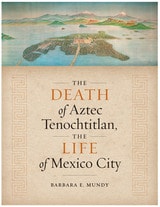
The Death of Aztec Tenochtitlan, the Life of Mexico City
By Barbara E. Mundy
University of Texas Press, 2015
Winner, Book Prize in Latin American Studies, Colonial Section of Latin American Studies Association (LASA), 2016
ALAA Book Award, Association for Latin American Art/Arvey Foundation, 2016
The capital of the Aztec empire, Tenochtitlan, was, in its era, one of the largest cities in the world. Built on an island in the middle of a shallow lake, its population numbered perhaps 150,000, with another 350,000 people in the urban network clustered around the lake shores. In 1521, at the height of Tenochtitlan’s power, which extended over much of Central Mexico, Hernando Cortés and his followers conquered the city. Cortés boasted to King Charles V of Spain that Tenochtitlan was “destroyed and razed to the ground.” But was it?
Drawing on period representations of the city in sculptures, texts, and maps, The Death of Aztec Tenochtitlan, the Life of Mexico City builds a convincing case that this global capital remained, through the sixteenth century, very much an Amerindian city. Barbara E. Mundy foregrounds the role the city’s indigenous peoples, the Nahua, played in shaping Mexico City through the construction of permanent architecture and engagement in ceremonial actions. She demonstrates that the Aztec ruling elites, who retained power even after the conquest, were instrumental in building and then rebuilding the city. Mundy shows how the Nahua entered into mutually advantageous alliances with the Franciscans to maintain the city's sacred nodes. She also focuses on the practical and symbolic role of the city’s extraordinary waterworks—the product of a massive ecological manipulation begun in the fifteenth century—to reveal how the Nahua struggled to maintain control of water resources in early Mexico City.
The Death of Ramón González
The Modern Agricultural DilemmaBy Angus Wright
University of Texas Press, 2005
The Death of Ramón González has become a benchmark book since its publication in 1990. It has been taught in undergraduate and graduate courses in every social science discipline, sustainable and alternative agriculture, environmental studies, ecology, ethnic studies, public health, and Mexican, Latin American, and environmental history. The book has also been used at the University of California-Santa Cruz as a model of interdisciplinary work and at the University of Iowa as a model of fine journalism, and has inspired numerous other books, theses, films, and investigative journalism pieces.
This revised edition of The Death of Ramón González updates the science and politics of pesticides and agricultural development. In a new afterword, Angus Wright reconsiders the book's central ideas within the context of globalization, trade liberalization, and NAFTA, showing that in many ways what he called "the modern agricultural dilemma" should now be thought of as a "twenty-first century dilemma" that involves far more than agriculture.
The Desert Grassland
Edited by Mitchel P. McClaran and Thomas R. Van Devender
University of Arizona Press, 1995
Leading experts in geography, biology, botany, zoology, and geoscience present new research on the desert grassland and review a vast amount of earlier work. They reveal that present-day grasses once grew in the ice-age forests that existed in these areas before the climate dried and the trees vanished and how the intensity and frequency of fire can influence the plant and animal species of the grassland. They also document how the influence of humans—from Amerindians to contemporary ranchers, public land managers, and real estate developers—has changed the relative abundance of woody and herbaceous species and how the introduction of new plants and domesticated animals to the area has also affected biodiversity. The book concludes with a review of the attempts, both failed and successful, to reestablish plants in desert grasslands affected by overgrazing, drought, and farm abandonment.
Meticulously researched and copiously illustrated, The Desert Grassland is a major contribution to ecological literature. For advanced lay readers as well as students and scholars of history, geography, and ecology, it will be a standard reference work for years to come.
The Desert Islands of Mexico’s Sea of Cortez
Stewart Aitchison
University of Arizona Press, 2010
The Desert Islands of Mexico’s Sea of Cortez is one of the few books devoted to the biogeography of this remarkable part of the world. The book explores the geologic origin of the gulf and its islands, presents some of the basics of island biogeography, details insular life—including residents of the intertidal zone —and provides a brief outlook for preserving this area. More than a simple guidebook, Aitchison’s writing will take both actual and armchair travelers through a gripping tale of natural history.
Like the rest of our fragile planet, the Sea of Cortez and its islands are threatened by humans. Overfishing has eliminated or greatly diminished many fish stocks, and dams on rivers that once flowed into the gulf prevent certain nutrients from reaching the sea. The tenuousness of this area makes the book’s extraordinary photographs and the firsthand descriptions by a well-known teacher, writer, and photographer all the more compelling.
The Devil's Book of Culture
History, Mushrooms, and Caves in Southern MexicoBy Benjamin Feinberg
University of Texas Press, 2003
Since the 1950s, the Sierra Mazateca of Oaxaca, Mexico, has drawn a strange assortment of visitors and pilgrims—schoolteachers and government workers, North American and European spelunkers exploring the region's vast cave system, and counterculturalists from hippies (John Lennon and other celebrities supposedly among them) to New Age seekers, all chasing a firsthand experience of transcendence and otherness through the ingestion of psychedelic mushrooms "in context" with a Mazatec shaman. Over time, this steady incursion of the outside world has significantly influenced the Mazatec sense of identity, giving rise to an ongoing discourse about what it means to be "us" and "them."
In this highly original ethnography, Benjamin Feinberg investigates how different understandings of Mazatec identity and culture emerge through talk that circulates within and among various groups, including Mazatec-speaking businessmen, curers, peasants, intellectuals, anthropologists, bureaucrats, cavers, and mushroom-seeking tourists. Specifically, he traces how these groups express their sense of culture and identity through narratives about three nearby yet strange discursive "worlds"—the "magic world" of psychedelic mushrooms and shamanic practices, the underground world of caves and its associated folklore of supernatural beings and magical wealth, and the world of the past or the past/present relationship. Feinberg's research refutes the notion of a static Mazatec identity now changed by contact with the outside world, showing instead that identity forms at the intersection of multiple transnational discourses.
The Discovery of New Mexico by the Franciscan Monk Friar Marcos de Niza in 1539
Adolph F. Bandelier; Translated and Edited by Madeleine Turrell Rodack
University of Arizona Press, 1980
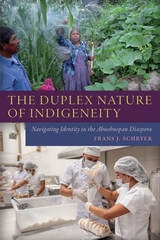
The Duplex Nature of Indigeneity
Navigating Identity in the Ahuehuepan DiasporaFrans J. Schryer
University Press of Colorado, 2025
Using a variety of sources, perspectives, and methods, Schryer takes a duplexity approach, which allows understanding the complexity of social reality and its complementary nature—it identifies fields, clusters, and layers as interconnected components of social life. The innovative methods consist of the combination of ethnographic description and an ethnohistorical census that provides information on every person going back to approximately 1850. That census is further examined with the use of inferential and non-inferential statistical techniques, archival research in locations not normally accessible to scholars, Facebook, phone interviews conducted over several years, and help from Nahuatl-speaking people whose perspectives on the findings generate additional information and insights.
Unique in this presentation, which dips into the lives of generations of people to draw insight on those who lay claim to transnational Indigeneity, Schryer’s work contributes to research and theoretical discussion in the field of migration and globalization studies through a close examination of one Indigenous community over the course of many years, utilizing a mix of qualitative and quantitative research methods in anthropology.
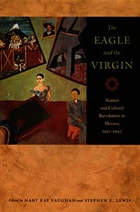
The Eagle and the Virgin
Nation and Cultural Revolution in Mexico, 1920–1940Mary Kay Vaughan and Stephen E. Lewis, eds.
Duke University Press, 2006
Contributors explore the nation-building efforts of the government, artists, entrepreneurs, and social movements; their contradictory, often conflicting intersection; and their inevitably transnational nature. Scholars of political and social history, communications, and art history describe the creation of national symbols, myths, histories, and heroes to inspire patriotism and transform workers and peasants into efficient, productive, gendered subjects. They analyze the aesthetics of nation building made visible in murals, music, and architecture; investigate state projects to promote health, anticlericalism, and education; and consider the role of mass communications, such as cinema and radio, and the impact of road building. They discuss how national identity was forged among social groups, specifically political Catholics, industrial workers, middle-class women, and indigenous communities. Most important, the volume weighs in on debates about the tension between the eagle (the modernizing secular state) and the Virgin of Guadalupe (the Catholic defense of faith and morality). It argues that despite bitter, violent conflict, the symbolic repertoire created to promote national identity and memory making eventually proved capacious enough to allow the eagle and the virgin to coexist peacefully.
Contributors. Adrian Bantjes, Katherine Bliss, María Teresa Fernández, Joy Elizabeth Hayes, Joanne Hershfield, Stephen E. Lewis, Claudio Lomnitz, Rick A. López, Sarah M. Lowe, Jean Meyer, James Oles, Patrice Olsen, Desmond Rochfort, Michael Snodgrass, Mary Kay Vaughan, Marco Velázquez, Wendy Waters, Adriana Zavala
The Edge of the Storm
A NovelBy Agustín Yáñez
University of Texas Press, 1963
This tale of a repressive priest and his small Mexican village during the eighteen months preceding the Revolution of 1910 is a great novel, one that exposes the struggle between human desire and paralyzing fear—fear of humanity, fear of nature, fear of the wrath of God. Agustín Yáñez probes the actions of people caught in life’s currents, enthralling his readers with mounting dramatic tension as he shows that no power can forge saints from the human masses, that any attempt to do so, in fact, often has exactly the opposite result.
Yáñez brings to his work a deep understanding of people—his people—and he illuminates a great truth—that no one, anywhere, seems very strange when we understand the environment that has produced him or her.
The Elusive Promise of Indigenous Development
Rights, Culture, StrategyKaren Engle
Duke University Press, 2010
Conceiving indigenous rights as cultural rights, Engle argues, has largely displaced or deferred many of the economic and political issues that initially motivated much indigenous advocacy. She contends that by asserting static, essentialized notions of indigenous culture, indigenous rights advocates have often made concessions that threaten to exclude many claimants, force others into norms of cultural cohesion, and limit indigenous economic, political, and territorial autonomy.
Engle explores one use of the right to culture outside the context of indigenous rights, through a discussion of a 1993 Colombian law granting collective land title to certain Afro-descendant communities. Following the aspirations for and disappointments in this law, Engle cautions advocates for marginalized communities against learning the wrong lessons from the recent struggles of indigenous peoples at the international level.
The Encomenderos of New Spain, 1521-1555
By Robert Himmerich y Valencia
University of Texas Press, 1991
While the Spanish conquistadors have been stereotyped as rapacious treasure seekers, many firstcomers to the New World realized that its greatest wealth lay in the native populations whose labor could be harnessed to build a new Spain. Hence, the early arrivals in Mexico sought encomiendas—"a grant of the Indians of a prescribed indigenous polity, who were to provide the grantee (the encomendero) tribute in the form of commoditiesand service in return for protection and religious instruction."
This study profiles the 506 known encomenderos in New Spain (present-day Mexico) during the years 1521-1555, using their life histories to chart the rise, florescence, and decline of the encomienda system. The first part draws general conclusions about the actual workings of the encomienda system. The second part provides concise biographies of the encomenderos themselves.
The End of Catholic Mexico
Causes and Consequences of the Mexican Reforma (1855–1861)David Gilbert
Vanderbilt University Press, 2024
Gilbert’s fresh account of this pivotal moment in Mexican history will be of interest to scholars of postindependence Mexico, Latin American religious history, nineteenth-century church history, and US historians of the antebellum republic.
The Enlightened Army
By David Toscana; translated by David William Foster
University of Texas Press, 2019
The Enormous Vogue of Things Mexican
Cultural Relations between the United States and Mexico, 1920-1935Helen Delpar
University of Alabama Press, 1995
A landmark study of cultural exchange across the U.S.-Mexico border.
The Enormous Vogue of Things Mexican: Cultural Relations between the United States and Mexico, 1920–1935 explores a remarkable period when Mexico captured the imagination of the United States and became a powerful source of artistic, intellectual, and cultural inspiration. Historian Helen Delpar examines the flourishing exchange between the two nations during the interwar years, revealing how artists, writers, educators, political activists, archaeologists, and travelers helped forge unprecedented connections across the border.
In the decades following the Mexican Revolution, Americans increasingly looked to Mexico as a place of cultural authenticity, creative innovation, and social experimentation. Mexican art, music, literature, archaeology, and revolutionary ideals attracted widespread attention in the United States, while Mexican intellectuals and artists actively engaged with audiences north of the border. Delpar traces the individuals, institutions, and cultural movements that fueled this phenomenon, demonstrating how a growing fascination with Mexico reshaped American perceptions of its southern neighbor.
The book examines the rise of the celebrated Mexican mural movement, expanding interest in Indigenous cultures, and the influence of Mexican themes on American literature, visual arts, music, and education. It also explores the political and social forces that encouraged cultural exchange, including enthusiasm among American liberals for the Mexican Revolution and broader movements toward cultural nationalism in both countries.
By focusing on cultural relationships rather than diplomatic or economic ties, Delpar offers a fresh perspective on the history of U.S.-Mexican relations. Richly researched and engagingly written, The Enormous Vogue of Things Mexican remains an essential work for readers interested in cultural history, Latin American studies, art history, borderlands studies, and the evolving relationship between two neighboring nations whose histories have long been intertwined.
The Evidence Is Life
Deaf Pilgrimages to Language and Community in Mexico CityAnne E. Pfister
Gallaudet University Press, 2025

The Fifth Sun
Mary Helen Lagasse
Northwestern University Press, 2004
Winner of the 3rd Annual Miguel Mármol Prize from Curbstone Press, Mary Helen Lagasse's The Fifth Sun is an inspiring story of an immigrant who struggles valiantly for a better life for herself and her family. A young Mexican woman, Mercedes, leaves her village to work as a housemaid in New Orleans. This fast-paced novel takes us through her adventures in New Orleans, her marriage, her struggle to raise her children, her deportation, and her attempt to re-cross the river and be reunited with her children.
The Fifth Sun
Aztec Gods, Aztec WorldBy Burr Cartwright Brundage
University of Texas Press, 1979
The ancient Aztecs dwelt at the center of a dazzling and complex cosmos. From this position they were acutely receptive to the demands of their gods. The Fifth Sun represents a dramatic overview of the Aztec conception of the universe and the gods who populated it—Quetzalcoatl, the Plumed Serpent; Tezcatlipoca, the Smoking Mirror; and Huitzilopochtli, the Southern Hummingbird. Burr Cartwright Brundage explores the myths behind these and others in the Aztec pantheon in a way that illuminates both the human and the divine in Aztec life.
The cult of human sacrifice is a pervasive theme in this study. It is a concept that permeated Aztec mythology and was the central preoccupation of the aggressive Aztec state. Another particularly interesting belief explored here is the “mask pool,” whereby gods could exchange regalia and, thus, identities.
This vivid and eminently readable study also covers the use of hallucinogens; cannibalism; the calendars of ancient Mexico; tlachtli, the life-and-death ball game; the flower wars; divine transfiguration; and the evolution of the war god of the Mexica. A splendid introduction to Aztec religion, The Fifth Sun also contains insights for specialists in ethnohistory, mythology, and religion.
The Fight to Save Juárez
Life in the Heart of Mexico's Drug WarBy Ricardo C. Ainslie
University of Texas Press, 2013
The city of Juárez is ground zero for the drug war that is raging across Mexico and has claimed close to 60,000 lives since 2007. Almost a quarter of the federal forces that former President Felipe Calderón deployed in the war were sent to Juárez, and nearly 20 percent of the country’s drug-related executions have taken place in the city, a city that can be as unforgiving as the hardest places on earth. It is here that the Mexican government came to turn the tide. Whatever happens in Juárez will have lasting repercussions for both Mexico and the United States.
Ricardo Ainslie went to Juárez to try to understand what was taking place behind the headlines of cartel executions and other acts of horrific brutality. In The Fight to Save Juárez, he takes us into the heart of Mexico’s bloodiest city through the lives of four people who experienced the drug war from very different perspectives—Mayor José Reyes Ferriz, a mid-level cartel player’s mistress, a human rights activist, and a photojournalist. Ainslie also interviewed top Mexican government strategists, including members of Calderón’s security cabinet, as well as individuals within U.S. law enforcement. The dual perspective of life on the ground in the drug war and the “big picture” views of officials who are responsible for the war’s strategy, creates a powerful, intimate portrait of an embattled city, its people, and the efforts to rescue Juárez from the abyss.
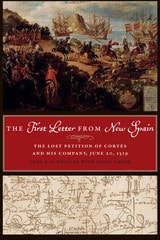
The First Letter from New Spain
The Lost Petition of Cortés and His Company, June 20, 1519By John Schwaller and Helen Nader
University of Texas Press, 2014
The founding of la Villa Rica de la Veracruz (the rich town of the True Cross) is prominently mentioned in histories of the conquest of Mexico, but scant primary documentation of the provocative act exists. During a research session at the Spanish archives, when John Schwaller discovered an early-sixteenth-century letter from Veracruz signed by the members of Cortés’s company, he knew he had found a trove of historical details. Providing an accessible, accurate translation of this pivotal correspondence, along with in-depth examinations of its context and significance, The First Letter from New Spain gives all readers access to the first document written from the mainland of North America by any European, and the only surviving original document from the first months of the conquest.
The timing of Cortés’s Good Friday landing, immediately before the initial assault on the Aztec Empire, enhances the significance of this work. Though the expedition was conducted under the authority of Diego Velázquez, governor of Cuba, the letter reflects an attempt to break ties with Velázquez and form a strategic alliance with Carlos V, the Holy Roman Emperor and King of Spain. Brimming with details about the events surrounding Veracruz’s inception and accompanied by mini-biographies of 318 signers of the document—socially competitive men who risked charges of treason by renouncing Velázquez—The First Letter from New Spain gives evidence of entrepreneurship and other overlooked traits that fueled the conquest.
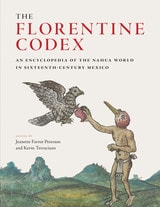
The Florentine Codex
An Encyclopedia of the Nahua World in Sixteenth-Century MexicoEdited by Jeanette Favrot Peterson and Kevin Terraciano
University of Texas Press, 2019
Honorable Mention, 2021 LASA Mexico Humanities Book Prize, Latin American Studies Association, Mexico Section
In the sixteenth century, the Franciscan friar Bernardino de Sahagún and a team of indigenous grammarians, scribes, and painters completed decades of work on an extraordinary encyclopedic project titled General History of the Things of New Spain, known as the Florentine Codex (1575–1577). Now housed in the Biblioteca Medicea Laurenziana in Florence and bound in three lavishly illustrated volumes, the codex is a remarkable product of cultural exchange in the early Americas.
In this edited volume, experts from multiple disciplines analyze the manuscript’s bilingual texts and more than 2,000 painted images and offer fascinating, new insights on its twelve books. The contributors examine the “three texts” of the codex—the original Nahuatl, its translation into Spanish, and its painted images. Together, these constitute complementary, as well as conflicting, voices of an extended dialogue that occurred in and around Mexico City. The volume chapters address a range of subjects, from Nahua sacred beliefs, moral discourse, and natural history to the Florentine artists’ models and the manuscript’s reception in Europe. The Florentine Codex ultimately yields new perspectives on the Nahua world several decades after the fall of the Aztec empire.
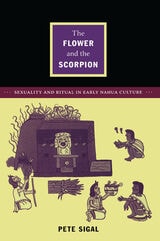
The Flower and the Scorpion
Sexuality and Ritual in Early Nahua CulturePete Sigal
Duke University Press, 2011
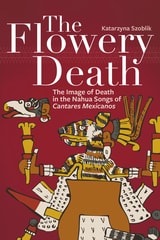
The Flowery Death
The Image of Death in the Nahua Songs of Cantares MexicanosKatarzyna Szoblik
University Press of Colorado, 2026
The Flowery Death is a groundbreaking exploration of xochimiquiztli, or “flowery death,” a central concept in the pre-Hispanic Nahua worldview. In the highly militarized societies of the Valley of Mexico, dying in honor of the gods—on the battlefield, in ritual sacrifice, or in childbirth—was not only a social expectation but also a path to spiritual glory. While this idea appears throughout colonial sources, previous studies have relied largely on the writings of Bernardino de Sahagún and other European chroniclers, whose perspectives often simplify or distort Indigenous understandings.
Drawing on the rich oral tradition preserved in the sixteenth-century manuscript Cantares Mexicanos, this book provides one of the first English translations of these songs since John Bierhorst’s 1985 translation. It combines paleographic fidelity, literal English translation, and detailed interpretation, revealing the metaphor- and symbol-rich meanings behind the songs. The book is divided into two interrelated parts: The first reconstructs the Nahua worldview, contextualizing war, death, and sacrifice through myths, chronicles, and visual sources; the second presents selected songs, offering readers the tools to understand their metaphors, historical references, and symbolic language, making the work both a scholarly reference and an accessible guide for students and enthusiasts.
By examining the cultural, religious, and social significance of xochimiquiztli, The Flowery Death provides fresh insights into Nahua ideology, gender roles, and collective memory. It is essential reading for anyone interested in Mesoamerican culture, early colonial history, and the power of Indigenous oral traditions.
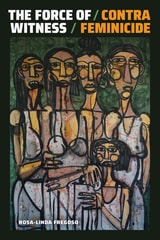
The Force of Witness
Contra FeminicideRosa-Linda Fregoso
Duke University Press, 2023
The Forgotten Peninsula
A Naturalist in Baja CaliforniaJoseph Wood Krutch
University of Arizona Press, 1986
"His superb writing style and the timelessness of his subject (the natural world and the interaction of human beings with it) make this every bit as enjoyable today as it was in the 1960's."—Books of the Southwest
"Well-written and fascinating."—Journal of Arid Environments
The Fragmented Novel in Mexico
The Politics of FormBy Carol Clark D'Lugo
University of Texas Press, 1997
From Mariano Azuela's 1915 novel Los de abajo to Rosamaría Roffiel's Amora of 1989, fragmented narrative has been one of the defining features of innovative Mexican fiction in the twentieth century. In this innovative study, Carol Clark D'Lugo examines fragmentation as a literary strategy that reflects the social and political fissures within modern Mexican society and introduces readers to a more participatory reading of texts.
D'Lugo traces defining moments in the development of Mexican fiction and the role fragmentation plays in each. Some of the topics she covers are nationalist literature of the 1930s and 1940s, self-referential novels of the 1950s that focus on the process of reading and writing, the works of Carlos Fuentes, novels of La Onda that came out of rebellious 1960s Mexican youth culture, gay and lesbian fiction, and recent women's writings.
With its sophisticated theoretical methodology that encompasses literature and society, this book serves as an admirable survey of the twentieth-century Mexican novel. It will be important reading for students of Latin American culture and history as well as literature.
The Geoarchaeology of a Terraced Landscape
From Aztec Matlatzinco to Modern CalixtlahuacaAleksander Borejsza, Isabel Rodríguez López, Charles D. Frederick, and Michael E. Smith
University of Utah Press, 2021
Working at a settlement in the Toluca Valley of central Mexico, the authors used fieldwalking, excavation, soil and artifact analyses, maps, aerial photos, land deeds, and litigation records to reconstruct the changing landscape through time. Exploiting the methodologies and techniques of several disciplines, they bring context to eight centuries of the region’s agrarian history, exploring the effects of the Aztec and Spanish Empires, reform, and revolution on the physical shape of the Mexican countryside and the livelihoods of its people. Accessible to specialists and nonspecialists alike, this well-illustrated and well-organized volume provides a step-by-step guide that can be applied to the study of terraced landscapes anywhere in the world.
The four authors share an interest in terraced landscapes and have worked together and on their own on a variety of archaeological projects in Mesoamerica, the Mediterranean, Poland, and the United Kingdom.
The Great Cacti
Ethnobotany and BiogeographyDavid Yetman
University of Arizona Press, 2007
Yetman has been fascinated by columnar cacti for most of his life and now brings years of study and reflection to a wide-ranging and handsomely illustrated book. Drawing on his close association with the Guarijíos, Mayos, and Seris of Mexico—peoples for whom such cacti have been indispensable to survival—he offers surprising evidence of the importance of these plants in human cultures. The Great Cacti reviews the more than one hundred species of columnar cacti, with detailed discussions of some 75 that have been the most beneficial to humans or are most spectacular. Focusing particularly on northwestern Mexico and the southwestern United States, Yetman examines the role of each species in human society, describing how cacti have provided food, shelter, medicine, even religiously significant hallucinogens.
Taking readers to the exotic sites where these cacti are found—from sea-level deserts to frigid Andean heights—Yetman shows that the great cacti have facilitated the development of native culture in hostile environments, yielding their products with no tending necessary. Enhanced by over 300 superb color photos, The Great Cacti is both a personal and scientific overview of sahuesos, soberbios, and other towering flora that flourish where few other plants grow—and that foster human life in otherwise impossible places.
The Gulf of California
Biodiversity and ConservationRichard C. Brusca
University of Arizona Press, 2010
Few places in the world can claim such a diversity of species as the Gulf of California (Sea of Cortez), with its 6,000 recorded animal species estimated to be half the number actually living in its waters. So rich are the Gulf's water that over a half-million tons of seafood are taken from them annually—and this figure does not count the wasted by-catch, which would triple or quadruple that tonnage. This timely book provides a benchmark for understanding the Gulf's extraordinary diversity, how it is threatened, and in what ways it is—or should be—protected.
In spite of its dazzling richness, most of the Gulf's coastline now harbors but a pale shadow of the diversity that existed just a half-century ago. Recommendations based on sound, careful science must guide Mexico in moving forward to protect the Gulf of California.
This edited volume contains contributions by twenty-four Gulf of California experts, from both sides of the U.S.-Mexico border. From the origins of the Gulf to its physical and chemical characteristics, from urgently needed conservation alternatives for fisheries and the entire Gulf ecosystem to information about its invertebrates, fishes, cetaceans, and sea turtles, this thought-provoking book provides new insights and clear paths to achieve sustainable use solidly based on robust science. The interdisciplinary, international cooperation involved in creating this much-needed collection provides a model for achieving success in answering critically important questions about a precious but rapidly disappearing ecological treasure.
The History of Capitalism in Mexico
Its Origins, 1521–1763By Enrique Semo
University of Texas Press, 1992
What lies at the center of the Mexican colonial experience? Should Mexican colonial society be construed as a theoretical monolith, capitalist from its inception, or was it essentially feudal, as traditional historiography viewed it? In this pathfinding study, Enrique Semo offers a fresh vision: that the conflicting social formations of capitalism, feudalism, and tributary despotism provided the basic dynamic of Mexico's social and economic development.
Responding to questions raised by contemporary Mexican society, Semo sees the origin of both backwardness and development not in climate, race, or a heterogeneous set of unrelated traits, but rather in the historical interaction of each social formation. In his analysis, Mexico's history is conceived as a succession of socioeconomic formations, each growing within the "womb" of its predecessor. Semo sees the task of economic history to analyze each of these formations and to construct models that will help us understand the laws of its evolution. His premise is that economic history contributes to our understanding of the present not by formulating universal laws, but by studying the laws of development and progression of concrete economic systems.
The History of Capitalism in Mexico opens with the Conquest and concludes with the onset of the profound socioeconomic transformation of the last fifty years of the colony, a period clearly representing the precapitalist phase of Mexican development. In the course of his discussion, Semo addresses the role of dependency—an important theoretical innovation—and introduces the concept of tributary despotism, relating it to the problems of Indian society and economy. He also provides a novel examination of the changing role of the church throughout Mexican colonial history. The result is a comprehensive picture, which offers a provocative alternative to the increasingly detailed and monographic approach that currently dominates the writing of history.
Originally published as Historia del capitalismo en México in 1973, this classic work is now available for the first time in English. It will be of interest to specialists in Mexican colonial history, as well as to general readers.
The House Cross of the Mayo Indians of Sonora, Mexico
N. Ross Crumrine
University of Arizona Press, 1965
The House on the Beach
A NovelBy Juan García Ponce
University of Texas Press, 1994
Like waves ebbing and flowing, love surges and subsides among four friends who share a vacation at the house on the beach. As they navigate the seas of love and friendship, jealousy and unfaithfulness, Elena, Marta, Eduardo, and Rafael are swept up in the opposing currents that flow between security and personal freedom, marriage and sexual liberation, family and work, provincial and city life, and traditional and unconventional gender roles.
This deceptively simple novel, published in Mexico in 1966 as La casa en la playa and here translated into English for the first time, is an important work by one of Mexico's, and indeed Latin America's, major writers of the twentieth century. Juan García Ponce helped Mexican arts and letters break out of the ossified styles and themes of the post-Revolutionary "Mexican School" with works that explore the conflict between individual desire and the demands of family and work. Written at a turning point in his career, The House on the Beach foreshadows his embrace of the erotic encounter as a means of undermining rigid, socially constructed personal identity. It supports feminist views and probes deeply into the contradictions, backwardness, and progress of modern Mexican society.
The Impossible Triangle
Mexico, Soviet Russia, and the United States in the 1920sDaniela Spenser
Duke University Press, 1999
Based on documents from the archives of several nations—including reports by former Mexican diplomats in Moscow that have never before been studied—the book analyzes the Mexican government’s motivation for establishing relations with the Soviet Union in the face of continued imperialist pressure and harsh opposition from the United States. After explaining how Mexico established diplomatic ties with the Soviet Union in 1924 in an attempt to broaden the spectrum of its alliances after several years of uneven relations with the United States, Spenser reveals the troubled nature of the relationship that ensued. Soviet policy toward Mexico was characterized by a series of profound contradictions, varying from neglect to strong involvement in Mexican politics and the belief that Mexico could become a center of world revolution. Working to resolve and explain these contradictions, Spenser explores how, despite U.S. objections to Mexico’s relations with the Soviet Union, Mexico continued its association with the Soviets until the United States adopted the Good Neighbor Policy and softened its stance toward Mexico’s revolutionary program after 1927.
With a foreword by Friedrich Katz and illustrated by illuminating photographs, The Impossible Triangle contributes to an understanding of the international dimension of the Mexican revolution. It will interest students and scholars of history, revolutionary theory, political science, diplomacy, and international relations.
The Inscriptions of Calakmul
Royal Marriage at a Maya City in Campeche, MexicoJoyce Marcus
University of Michigan Press, 1987
The Intimacy of Images
Saints, Death, and Devotion to La Santa Muerte in OaxacaMyriam Lamrani
University of Texas Press, 2024
2026 Edie Turner First Book Prize in Ethnographic Writing, Society for Humanistic Anthropology
La Santa Muerte becomes a lens for understanding how Oaxacans relate to saints, loved ones, and other “special dead.”
In Oaxaca, images of saints and loved ones, as well as of victims of political or criminal violence, are seemingly everywhere. While Oaxacans relate to all sorts of “special dead,” they are particularly devoted to La Santa Muerte (Saint Death), a female reaper-like figure whose popularity has risen in tandem with violence throughout Mexico.
The Intimacy of Images recontextualizes Oaxacans’ relationships with their “special dead” through the lens of La Santa Muerte, examining how devotees closely interact with what Lamrani terms “intimate images”: not only devotional effigies but also photographs, films, tattoos, and murals, and even dreams and visions. Though Mexicans have a well-known cultural familiarity with death, Lamrani argues that devotion to La Santa Muerte builds upon this intimacy even as it also participates in the production of terror and reflects political and criminal violence. Ultimately, Lamrani finds that these human-image interactions represent more than Catholic devotion; they reveal the secrets of Oaxacan political, religious, and social life, embody changing relationships to mortality and violence, and even offer insight into the practice of anthropology itself.
The Intimate Frontier
Friendship and Civil Society in Northern New SpainIgnacio Martínez
University of Arizona Press, 2019
Spaniards living in the isolated borderlands region of colonial Sonora were keen to develop an ideologically relevant and socially acceptable form of friendship with Indigenous people that could act as a functional substitute for civil law and governance, thereby regulating Native behavior. But as frontier society grew in complexity and sophistication, Indigenous and mixed-raced people also used the language of friendship and the performance of emotion for their respective purposes, in the process becoming skilled negotiators to meet their own best interests.
In northern New Spain, friendships were sincere and authentic when they had to be and cunningly malleable when the circumstances demanded it. The tenuous origins of civil society thus developed within this highly contentious social laboratory in which friendships (authentic and feigned) set the social and ideological parameters for conflict and cooperation. Far from the coffee houses of Restoration London or the lecture halls of the Republic of Letters, the civil society illuminated by Martínez stumbled forward amid the ambiguities and contradictions of colonialism and the obstacles posed by the isolation and violence of the Sonoran Desert.

The Jaguar and the Priest
An Ethnography of Tzeltal SoulsBy Pedro Pitarch
University of Texas Press, 2010
In contrast to western notions of the soul as the essence or most native part of a human being, the Tzeltal-speaking Indians of Chiapas, Mexico, regard the soul first and foremost as an Other. Made up of beings that personify the antithesis of their native selves—animals such as hummingbirds or jaguars, atmospheric phenomena like lightning bolts or rainbows, or spirits of European appearance such as Catholic priests or evangelical musicians—Tzeltal souls represent the maximum expression of that which is alien. And because their souls enfold that which is outside and Other, the Tzeltal contain within themselves the history of their relationship with Europeans from the beginning of the Spanish conquest to the present time. Thus, to understand the Indian self opens a window into the Tzeltal conception of culture and community, their notions of identity and alterity, and their interpretation of interethnic relations and types of historical memory.
In this pathfinding ethnography, which was originally published in Spanish in 1996 as Ch'ulel: una etnografía de las almas tzeltales and is now extensively rewritten and amplified in English, Pedro Pitarch offers a new understanding of indigenous concepts of the soul, personhood, and historical memory in highland Chiapas. Exploring numerous aspects of indigenous culture and history—medicine and shamanism, geography and cosmology, and politics and kinship among them—he engages in a radical rethinking of classic issues in Mesoamerican anthropology, such as ethnicity and alterity, community and tradition, and change and permanence.
The Journey of a Tzotzil-Maya Woman of Chiapas, Mexico
Pass Well over the EarthBy Christine Eber and “Antonia”
University of Texas Press, 2011
Most recent books about Chiapas, Mexico, focus on political conflicts and the indigenous movement for human rights at the macro level. None has explored those conflicts and struggles in-depth through an individual woman's life story. The Journey of a Tzotzil-Maya Woman of Chiapas, Mexico now offers that perspective in one woman's own words. Anthropologist Christine Eber met "Antonia" in 1986 and has followed her life's journey ever since. In this book, they recount Antonia's life story and also reflect on challenges and rewards they have experienced in working together, offering insight into the role of friendship in anthropological research, as well as into the transnational movement of solidarity with the indigenous people of Chiapas that began with the Zapatista uprising.
Antonia was born in 1962 in San Pedro Chenalhó, a Tzotzil-Maya township in highland Chiapas. Her story begins with memories of childhood and progresses to young adulthood, when Antonia began working with women in her community to form weaving cooperatives while also becoming involved in the Word of God, the progressive Catholic movement known elsewhere as Liberation Theology. In 1994, as a wife and mother of six children, she joined a support base for the Zapatista Army of National Liberation. Recounting her experiences in these three interwoven movements, Antonia offers a vivid and nuanced picture of working for social justice while trying to remain true to her people's traditions.
The Juarez Myth In Mexico
Charles A. Weeks
University of Alabama Press, 1987
Like many capitals the city of Mexico is a place of monuments-large monuments, small, ancient monuments, and new, representational monuments, and allegorical monuments—each bearing a message from the past. Among them is the Hemiciclo. It stands in a spacious, old, beautiful park, the Alameda Central, where the young and old of the city still promenade on Sundays and holidays as people do in the plazas throughout the country and, indeed, as people do in many parts of the world. Amid green trees and a great variety of flowers and shrubs and flanked by a semicircle of twelve doric columns of white Carrara marble stands the central pedestal of the Hemiciclo supporting the statues of three figures. One statue represents a former president of the republic, Benito Juarez, who appears solemn and grim as a Roman proconsul administering justice. Juarez the Lawgiver is seated, and surrounding him are two allegorical figures, also of marble, one representing Glory, who is placing a crown on Juarez’s head, and the other, the Republic, who stands behind, resting her sword on the ground to signify the end of a gigantic struggle. The letters of the pedestal read: “Al Benemerito Benito Juarez. La Patria.” Many years have passed since 1910, when the Mexican government built and dedicated the Hemiciclo after a design by the architect Guillermo Heredia.
Like many other such monuments it is the embodiment of a myth. In life Juarez offered little to the mythologizers-he was never able to boast a military career, he often impressed people as reserved or even impassive. he stood a little over five feet; with small hands and feet and dark staring eyes, a coppery complexion that helped disguise a large scar across his face, of Zapotec Indian parentage, he was no striking figure. He did, however, lead Mexican liberals in the I 850s and 1860s in their titanic struggle against formidable opposition, both foreign and domestic, and in the years since his death his worshipers have gathered at the Hemiciclo, at his tomb, or in many other places in Mexico sacred to his memory, usually on anniversaries of his birth or death. For them Juarez is, in agreement with the golden inscription on the central pedestal of the Hemiciclo, “Benemerito de la Patria” or even “Benemerito de las Americas.”
Development of a Juarez myth has had all the classic characteristics of myths and mythmaking, especially the subjective view or image of a reality, whether it be of an historical figure, as in the case of Juarez, an event, an institution, or even a geographical region. Image or meaning ascribed to what is assumed to be a reality constitutes one of the main elements of myth and when manipulated to promote a cause assumes a reality of its own. The apotheosis of Juarez projected a subjective view or image of the historical reality. In all myths, to be sure, the assumed reality is a feature useful to an individual or a group.
The Jumanos
Hunters and Traders of the South PlainsBy Nancy Parrott Hickerson
University of Texas Press, 1994
In the late sixteenth century, Spanish explorers described encounters with North American people they called "Jumanos." Although widespread contact with Jumanos is evident in accounts of exploration and colonization in New Mexico, Texas, and adjacent regions, their scattered distribution and scant documentation have led to long-standing disagreements: was "Jumano" simply a generic name loosely applied to a number of tribes, or were they an authentic, vanished people?
In the first full-length study of the Jumanos, anthropologist Nancy Hickerson proposes that they were indeed a distinctive tribe, their wide travel pattern linked over well-established itineraries. Drawing on extensive primary sources, Hickerson also explores their crucial role as traders in a network extending from the Rio Grande to the Caddoan tribes' confederacies of East Texas and Oklahoma.
Hickerson further concludes that the Jumanos eventually became agents for the Spanish colonies, drafted as mercenary fighters and intelligence-gatherers. Her findings reinterpret the cultural history of the South Plains region, bridging numerous gaps in the area's comprehensive history and in the chronicle of these elusive people.
The Keepers of Water and Earth
Mexican Rural Social Organization and IrrigationBy Kjell I. Enge and Scott Whiteford
University of Texas Press, 1989
Agrarian reforms transformed the Mexican countryside in the late twentieth century but without, in many cases, altering fundamental power relationships. This study of the Tehuacán Valley in the state of Puebla highlights different strategies to manipulate the local implementation of federal government programs. With their very differing successes in the struggle to regain and maintain control of land and water rights, these strategies raise important questions about the meaning of the phrase "locally controlled development."
Because Mexico is dependent on irrigation for 45 percent of its cash crop production, national policy has focused on developing vast government controlled and financed irrigation systems. In the Tehuacán Valley, however, the inhabitants have developed a complex irrigation system without government aid or supervision. Yet, in contrast to most parts of Mexico, water rights can be bought and sold as a commodity, leading to accumulation, stratification, and emergence of a regional elite whose power is based on ownership of land and water. The analysis provides an important contribution to the understanding of local control.
The findings of this study will be important to a wide audience involved in the study of irrigation, local agricultural systems, and the interplay between local power structures and the national government in developing countries. The book also presents unique material on gravity-fed, horizontal wells, known as qanat in the Middle East, which had been unknown in the literature on Latin America before this book.
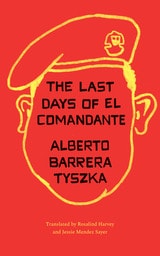
The Last Days of El Comandante
By Alberto Barrera Tyszka; translated by Rosalind Harvey and Jessie Mendez Sayer
University of Texas Press, 2020
2021 — Honorable Mention, Best Fiction Book Translation – International Latino Book Awards, Latino Literacy Now
Winner of the Tusquets Prize in 2015 and previously translated into French, German, Dutch, Polish, and Portuguese, Alberto Barrera Tyszka’s Patria o muerte is now available in English.
President Hugo Chávez’s cancer looms large over Venezuela in 2012, casting a shadow of uncertainty and creating an atmosphere of secrets, lies, and upheaval across the country. This literary thriller follows the connected lives of several Caracas neighbors consumed by the turmoil surrounding the Venezuelan president’s impending death.
Retired oncologist Miguel Sanabria, seeing the increasingly combustible world around him, feels on constant edge. He finds himself at odds with his wife, an extreme anti-Chavista, and his radical Chavista brother. These feelings grow when his nephew asks him to undertake the perilous task of hiding cell-phone footage of Chávez in Cuba. Fredy Lecuna, an unemployed journalist, takes a job writing a book about Chávez’s condition, which requires him to leave for Cuba while his landlord attempts to kick his wife and son out of their apartment. Nine-year-old María, long confined to an apartment with a neurotic mother intensely fearful of the city’s violence, finds her only contact with the outside world through a boy she messages online.
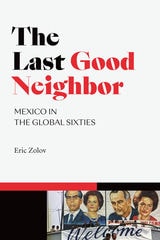
The Last Good Neighbor
Mexico in the Global SixtiesEric Zolov
Duke University Press, 2020
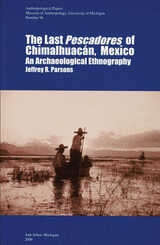
The Last Pescadores of Chimalhuacán, Mexico
An Archaeological EthnographyJeffrey R. Parsons
University of Michigan Press, 2006
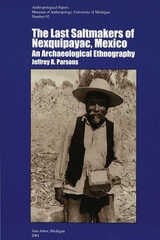
The Last Saltmakers of Nexquipayac, Mexico
An Archaeological EthnographyJeffrey R. Parsons
University of Michigan Press, 2001
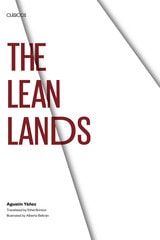
The Lean Lands
By Agustin Yáñez
University of Texas Press, 1968
What was it that flew over with such a terrifying roar? Was it, as many said, the devil, or was it that thing a few had heard of, a flying machine? And those electric lights at Jacob Gallo’s farm, were they witchcraft or were they science?
The theme of this harshly powerful novel is the impact of modern technology and ideas on a few isolated, tradition-bound hamlets in the aftermath of the Mexican Revolution of 1910. The old ways are represented by Epifanio Trujillo, the cacique of the region, now ailing and losing his grip on things; by ancient Madre Matiana, the region’s midwife, healer, counselor, and oracle; by penniless Rómulo and his wife Merced. “Progress” is represented by Don Epifanio’s bastard son Jacob, who acquired money and influence elsewhere during the Revolution and who now, against his father’s will, brings electricity, irrigation, fertilizers, and other modernities to the lean lands—together with armed henchmen. The conflict between the old and the new builds slowly and inexorably to a violent climax that will long remain in the reader’s memory.
The author has given psychological and historical depth to his story by alternating the passages of narrative and dialogue with others in which several of the major characters brood on the past, the present, and the future. For instance, Matiana, now in her eighties, touchingly remembers how she was married and widowed before she had reached her seventeenth birthday. This dual technique is superbly handled, so that people and events have both a vivid actuality and an inner richness of meaning. The impact of the narrative is intensified by the twenty-one striking illustrations by Alberto Beltrán.
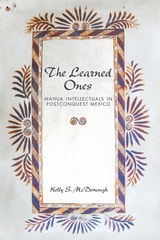
The Learned Ones
Nahua Intellectuals in Postconquest MexicoKelly S. McDonough
University of Arizona Press, 2014
Not so, according to author Kelly S. McDonough, at least not for native speakers of Nahuatl, one of the most widely spoken and best-documented indigenous languages of the Americas. This book focuses on how Nahuas have been deeply engaged with the written word ever since the introduction of the Roman alphabet in the early sixteenth century. Dipping into distinct time periods of the past five hundred years, this broad perspective allows McDonough to show the heterogeneity of Nahua knowledge and writing as Nahuas took up the pen as agents of their own discourses and agendas.
McDonough worked collaboratively with contemporary Nahua researchers and students, reconnecting the theorization of a population with the population itself. The Learned Ones describes the experience of reading historic text with native speakers today, some encountering Nahua intellectuals and their writing for the very first time. It intertwines the written word with oral traditions and embodied knowledge, aiming to retie the strand of alphabetic writing to the dynamic trajectory of Nahua intellectual work.

The Leverage of Labor
Managing the Cortés Haciendas in Tehuantepec, 1588–1688Lolita Gutiérrez Brockington
Duke University Press, 1989
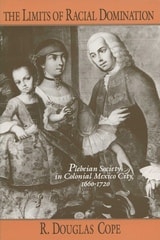
The Limits of Racial Domination
Plebeian Society in Colonial Mexico City, 1660–1720R. Douglas Cope
University of Wisconsin Press, 1994
In this distinguished contribution to Latin American colonial history, Douglas Cope draws upon a wide variety of sources—including Inquisition and court cases, notarial records and parish registers—to challenge the traditional view of castas (members of the caste system created by Spanish overlords) as rootless, alienated, and dominated by a desire to improve their racial status. On the contrary, the castas, Cope shows, were neither passive nor ruled by feelings of racial inferiority; indeed, they often modified or even rejected elite racial ideology. Castas also sought ways to manipulate their social "superiors" through astute use of the legal system. Cope shows that social control by the Spaniards rested less on institutions than on patron-client networks linking individual patricians and plebeians, which enabled the elite class to co-opt the more successful castas.
The book concludes with the most thorough account yet published of the Mexico City riot of 1692. This account illuminates both the shortcomings and strengths of the patron-client system. Spurred by a corn shortage and subsequent famine, a plebeian mob laid waste much of the central city. Cope demonstrates that the political situation was not substantially altered, however; the patronage system continued to control employment and plebeians were largely left to bargain and adapt, as before.
A revealing look at the economic lives of the urban poor in the colonial era, The Limits of Racial Domination examines a period in which critical social changes were occurring. The book should interest historians and ethnohistorians alike.