Results by title
527 books match the query 'Novel' and 157 start with t
The End of the World Book
A NovelAlistair McCartney
University of Wisconsin Press, 2008
This is no ordinary novel. An encyclopedia of memory—from A to Z—The End of the World Book deftly intertwines fiction, memoir, and cultural history, reimagining the story of the world and one man’s life as they both hurtle toward a frightening future. Alistair McCartney’s alphabetical guide to the apocalypse layers images like a prose poem, building from Aristotle to da Vinci, hip-hop to lederhosen, plagues to zippers, while barreling from antiquity to the present.
In this profound book about mortality, McCartney composes an irreverent archive of philosophical obsessions and homoerotic fixations, demonstrating the difficulty of separating what is real from what is imagined.
Finalist, Edmund White Award for Debut Fiction, The Publishing Triangle
Finalist, PEN USA Literary Award for Fiction
The Extinction of Menai
A NovelChuma Nwokolo
Ohio University Press, 2017
The Fisher King
A NovelAnthony Powell
University of Chicago Press, 2004
Ostensibly a novel about gossip on a cruise ship, The Fisher King is much more: a highly stylized narrative infused with Greek mythology, legend, and satire.

The Flat Woman
A NovelVanessa Saunders
University of Alabama Press, 2025
Asks who gets the right to call themselves a good person in a morally bankrupt world
In The Flat Woman, women exclusively are blamed for the climate crisis. Seagulls drop dead from the sky, and the government, instead of taking responsibility, scapegoats a group of female ecoterrorists. When a girl’s mother is incarcerated for climate crimes, she is forced to raise herself alone. As a young woman, she begins a romance with an environmental activist whose passion makes her question her own role in the world. By turns hilarious, deadly serious, and completely absurd, The Flat Woman asks who gets the right to call themselves a good person in a world ripe with disaster.
Driven by complex academic and moral questions, The Flat Woman is certain to appeal to fans of feminist and experimental literature, as well as fans of Margaret Atwood, Renee Gladman, Bhanu Kapil, Maggie Nelson, Kelly Link, and Anne Carson.
The Flood
A NovelCarol Ascher
Northwestern University Press, 1997
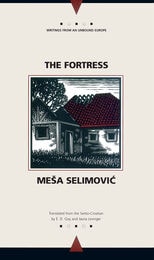
The Fortress
A NovelMesa Selimovic, translated from the Serbian by Edward Dennis Goy and Jasna Levinger-Goy
Northwestern University Press, 1999
Set in Bosnia in the late 1700s, the novel sometimes functions as an artful metaphor for the communist Yugoslavia of Selimovic's day. At other times, the author explores the nuances of Ottoman rule in the Balkans. Muslim Ahmet's sustaining marriage to a young Christian woman provides a multicultural tension that strongly resonates with contemporary readers and sensibilities.
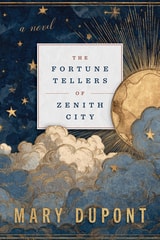
The Fortune Tellers of Zenith City
A NovelMary Dupont
University of Minnesota Press, 2027
A fraudulent fortune teller, a society divorcee, and a spirited prostitute caught up in a story of insanity, ambition, and murder in turn-of-the-century Duluth
Please don’t mistake this story for a murder mystery, May Martin warns us as she settles in to tell her tale. The mystery, she says, is that only one of us ended up dead.
The Fortune Tellers of Zenith City plunges readers into the shadows of Gilded Age Duluth, where the rising walls of Glensheen Mansion mask a city built on industry and rife with sin. May Martin, a dubious clairvoyant haunted by her past, finds her survival tethered to Agnes Petre, a true seer and wealthy divorcee. As May and Agnes forge a partnership in fortune telling to weather the conditions of the gritty port city, their malicious ex-husbands, John and Douglas, start romantic affairs with the carefree Ethelwynne Dean. These tangled relationships clash with brothel owner Madame Gain, a notorious criminal with debts to collect, the ruthless tycoons who rule the iron mines, and the working-class residents struggling beneath them. Beside the icy, foreboding depths of Lake Superior, these denizens must navigate a maze of lies, ambition, and even murder while keeping their own secrets hidden. And the greatest mystery isn’t the spirits they summon—it’s who will escape the impending storm.
With scrupulous attention to historical detail, Mary Dupont recreates the lost world of Duluth at the turn of the twentieth century, delivering chicanery, suspense, drama, and humor through May’s wary, witty perspective—with a thrilling twist at the end.
Retail e-book files for this title are screen-reader friendly with image accompanied by short alt text and/or extended description.
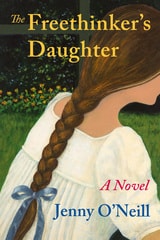
The Freethinker’s Daughter
A NovelJenny O'Neill
Ohio University Press, 2022
This historical and inspiring coming-of-age novel for young readers explores topics of both historical and contemporary relevance as it follows a harrowing year in the life of its intrepid teenaged narrator.
Lexington, Kentucky, 1833: Calendula “Cal” Farmer, a thirteen-year-old white girl, has been raised by her abolitionist, freethinking mother to reason for herself, consult her inner wisdom, and come to her own conclusions. But when a flash flood devastates her family’s home, Cal is unexpectedly thrust into domestic service in a wealthy family’s mansion. There, she encounters firsthand the physical, intellectual, and emotional brutalities of slavery. Later, a cholera outbreak kills a quarter of the population, including Cal’s mother, and Cal enters an orphanage, where she bravely begins another chapter in her young life.
Cal’s story is sure to captivate readers as she confronts the injustices and uncertainties of racism, class consciousness, epidemic disease, and personal loss with independent thinking, perseverance, and love.
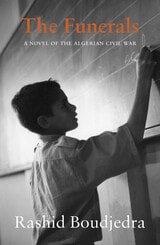
The Funerals
A Novel of the Algerian Civil WarRashid Boudjedra
Haus Publishing, 2015
Full of suspense and drama, The Funerals takes readers behind the madness of civil war and shows how in times like these, some might attack their victims to feel a little less alone—perhaps even a little more human.
The Ghost Dancers
A NovelAdrian C. Louis
University of Nevada Press, 2021
The Ghost of Bud Parrott
a novelJudson N Hout
Parkhurst Brothers, Inc., 2010
A teen’s life is complicated. Add an overworked dad, a distraught mom.
Enter an old man from the wrong side of the tracks.
He knows things. He’s there when you need him.
This happens to someone; it’s not a maybe thing. People get hurt. People die. There’s a dad who loves his kid but works all the time. When he doesn’t work, he drinks. When he drinks he’s out of control.
There’s a mom. She knows dad is overworked, a good man carrying too much responsibility.
The kid turns to the handy man to learn a man’s skills. In the old man from the wrong side of the tracks, the kid finds unusual skills and terrible—but true—lessons. He finds that his own safety comes at a cost to his unfortunate friend. He finds growing up comes at a cost to himself. This is the story of such a kid, told by himself after he has lived much of his life, come to terms with his parents’ weaknesses, and learned that seemingly insignificant people carry more pain than he can imagine, though he has already seen plenty.
The Gift
A NovelFlorence Noiville
Northwestern University Press, 2012
The narrator’s mother looms large in her psyche. Labeled “eccentric” or “Italian,” her mother in fact suffered from what was later found to be manic depression. Without understanding the disease, the family treated the unpredictable ups and downs of her condition as they struck. During periods of paralyzing depression she was hospitalized, and the family felt abandoned. During periods of manic productivity and overdrive, she was a dedicated pharmacist, an exemplary homemaker, and an unusually knowledgeable gardener.
This sparse novel draws the portrait of a grand and unforgettable lady, loving and unable to love at once. Her bequest is as much a material one as it is an emotional one, and, the author surmises as she glances at her own daughters, a genetic one.
The Goat Bridge
A NovelT. M. McNally
University of Michigan Press, 2005
As he drifts through the countryside, Stephen struggles to resolve the trauma and sorrow of losing his son, and soon the landscape begins to mirror his own inner battles. After a return trip to America fails to heal the rift between himself and the mother of his child, Stephen returns to Sarajevo, where he begins a project to document images of the Bosnian people—not war images, but personal portraits of an embattled nation. There he finds himself falling in love with a German journalist, who helps to heal his ailing body and to overcome his tragic loss.
The Goat Bridge is an unforgettable tale of memory and oblivion, a probing story of loss and redemption, of letting go and holding on, and of the universal human search for meaning. In the end, it is also a love story about finding the wisdom and courage to surrender to one’s own and another’s heart.
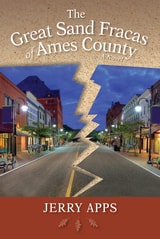
The Great Sand Fracas of Ames County
A NovelJerry Apps
University of Wisconsin Press, 2014
Soon the fracas over frac sand attracts some national attention, including that of Stony Field, the pen name of a nationally syndicated columnist. Will the village board vote to solve their budget problems with a cut of the mining profits? Will the mine create real jobs for local folks? Will Stony Field come to the village to lead protests against the mine? And will defenders of the Trail Marker Oak literally draw a battle line in the sand?
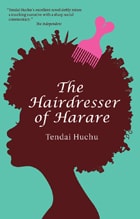
The Hairdresser of Harare
A NovelTendai Huchu
Ohio University Press, 2015
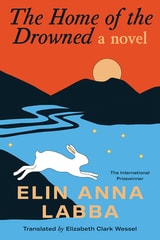
The Home of the Drowned
A NovelElin Anna Labba
University of Minnesota Press, 2026
The haunting, multigenerational saga of a family of Sámi women fighting the devastation of their way of life
Nothing is true, and everything is true; poetry will never hurt more than what has happened. Every summer, Iŋgá, her mother Rávdná, and her Aunt Ánne travel west to their village on the lake. But the summer Iŋgá is thirteen, they arrive to find their home and possessions have disappeared under water, the land flooded by a dam built to supply hydropower to a society that has continually stolen from them.
The Home of the Drowned follows these women’s fortunes over forty years—from 1942 to 1982—as the water their people have lived near for centuries is transformed into a menacing force that threatens all they hold dear. Defying the authorities, Rávdná decides to build a proper house on the lake to replace what was lost, becoming an unlikely activist even as her actions isolate her family from the rest of the community. Meanwhile, Ánne’s health is in decline, and a concerned Iŋgá merely longs to live like everyone else—an impossible wish when the Swedish state is relentlessly drowning her world.
Drawing on her own family’s history of forced relocation and violent colonial dispossession, Elin Anna Labba’s debut novel brings Sámi history to the fore through this intimate story. In poetic prose deftly translated by Elizabeth Clark Wessel, she reveals connections between land, water, and people that hauntingly reverberate with the question: what is it that makes a home?
Retail e-book files for this title are screen-reader friendly.
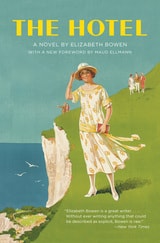
The Hotel
A NovelElizabeth Bowen
University of Chicago Press, 2012
Bowen’s first novel, The Hotel, is a wonderful introduction to her disarming, perceptive style. Following a group of British tourists vacationing on the Italian Riviera during the 1920s, The Hotel explores the social and emotional relationships that develop among the well-heeled residents of the eponymous establishment. When the young Miss Sydney falls under the sway of an older woman, Mrs. Kerr, a sapphic affair simmers right below the surface of Bowen’s writing, creating a rich story that often relies as much on what is left unsaid as what is written on the page. Bowen depicts an intense interpersonal drama with wit and suspense, while playing with and pushing the English language to its boundaries.
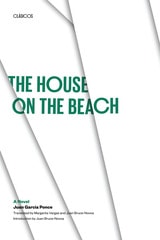
The House on the Beach
A NovelBy Juan García Ponce
University of Texas Press, 1994
Like waves ebbing and flowing, love surges and subsides among four friends who share a vacation at the house on the beach. As they navigate the seas of love and friendship, jealousy and unfaithfulness, Elena, Marta, Eduardo, and Rafael are swept up in the opposing currents that flow between security and personal freedom, marriage and sexual liberation, family and work, provincial and city life, and traditional and unconventional gender roles.
This deceptively simple novel, published in Mexico in 1966 as La casa en la playa and here translated into English for the first time, is an important work by one of Mexico's, and indeed Latin America's, major writers of the twentieth century. Juan García Ponce helped Mexican arts and letters break out of the ossified styles and themes of the post-Revolutionary "Mexican School" with works that explore the conflict between individual desire and the demands of family and work. Written at a turning point in his career, The House on the Beach foreshadows his embrace of the erotic encounter as a means of undermining rigid, socially constructed personal identity. It supports feminist views and probes deeply into the contradictions, backwardness, and progress of modern Mexican society.
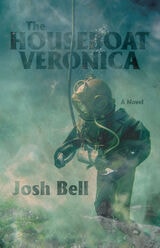
The Houseboat Veronica
A NovelJosh Bell
University of Alabama Press, 2024
A witch, a ward, and a houseboat adrift in time—where beauty and terror share the helm.
The mysterious houseboat Veronica motors across a postapocalyptic freshwater lake, inhabited by a black-haired witch and her young male ward. They explore an unfolding world of shape-shifting moons, vampire moths, and submerged witch cemeteries—a world where voluntary imprisonment holds its own appeal and the heart yearns for the delicate dance between blood and power, beauty and terror.
Neither a pirate nor a mere witch, she is an artist, a master of water and time who shapes reality with her baffling powers. This lyrical and compelling novel beckons readers to explore the enigmatic depths of its prose, inviting them to traverse the waters of wonder and bewilderment. Embrace the bewitching allure of The Houseboat Veronica and lose yourself in its enchanting embrace.
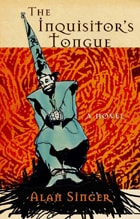
The Inquisitor's Tongue
A NovelAlan Singer
University of Alabama Press, 2012
Alan Singer’s riveting new novel, The Inquisitor’s Tongue, reimagines the Spanish Inquisition as a world in which spiritual horrors and acts of violence are the birth pangs of otherwise unimaginable identities.
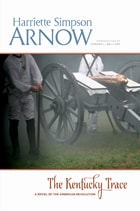
The Kentucky Trace
A Novel of the American RevolutionHarriette Simpson Arnow
Michigan State University Press, 2012
A gripping portrait of life in the hard-bitten wilderness of Revolutionary Kentucky, Harriette Simpson Arnow’s The Kentucky Trace follows surveyor William David Leslie Collins as he struggles to survive. Collins finds his fellow settlers to be almost as inscrutable as the weather—at times, they are allies, and at others, they are adversaries. Collins battles nature, bad luck, and the quickly shifting political tides to make his way in a changing world. Showcasing Arnow’s ear for dialogue and offering a wealth of historical detail, The Kentucky Trace is a masterful work of fiction by a preeminent Appalachian writer.
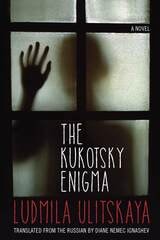
The Kukotsky Enigma
A NovelLudmila Ulitskaya; Translated from the Russian by Diane Nemec Ignashev
Northwestern University Press, 2016
Translated from the Russian by Diane Nemec Ignashev
The central character in Ludmila Ulitskaya’s celebrated novel The Kukotsky Enigma is a gynecologist contending with Stalin’s prohibition of abortions in 1936. But, in the tradition of Russia’s great family novels, the story encompasses the history of two families and unfolds in Moscow, St. Petersburg, and the ruins of ancient civilizations on the Black Sea. Their lives raise profound questions about family heritage and genetics, nurture and nature, and life and death. In his struggle to maintain his professional integrity and to keep his work from dividing his family, Kukotsky confronts the moral complexity of reproductive science. Winner of the 2001 Russian Booker Prize and the basis for a blockbuster television miniseries, The Kukotsky Enigma is an engrossing, searching novel by one of contemporary literature’s most brilliant writers.
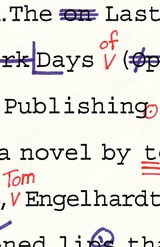
The Last Days of Publishing
A NovelThomas M. Engelhardt
University of Massachusetts Press, 2005
Koppes, who came of age in the sixties, is an editor slowly running off the rails. In the six episodes of The Last Days of Publishing, he refights the Vietnam War in a Chinese restaurant, discovers that the paleontological is political in a natural history museum, mixes it up with a flamboyant literary agent who went underground decades earlier, and encounters a hippie cultural oligarch on the forty-fifth floor of Multimedia's transnational entertainment headquarters.
Tom Engelhardt, himself a publishing veteran, has produced a tumultuous vision of the new world in which the word finds itself hustling for a living. By turns hilarious, sardonic, and poignant, his novel deftly captures the ways in which publishing, which has long put our world between covers but has seldom been memorialized in fiction, is being transformed.
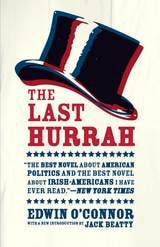
The Last Hurrah
A NovelEdwin O'Connor
University of Chicago Press, 2016
Not quite a roman á clef of notorious Boston mayor James Michael Curley, The Last Hurrah tells the story of Skeffington’s final campaign as witnessed through the eyes of his nephew, who learns a great deal about politics as he follows his uncle to fundraisers, wakes, and into smoke-filled rooms, ultimately coming—almost against his will—to admire the man. Adapted into a 1958 film starring Spencer Tracy and directed by John Ford (and which Curley tried to keep from being made), Edwin O’Connor’s opus reveals politics as it really is, and big cities as they really were. An expansive, humorous novel offering deep insight into the Irish-American experience and the ever-changing nature of the political machine, The Last Hurrah reveals political truths still true today: what the cameras capture is just the smiling face of the sometimes sordid business of giving the people what they want.
The Lemon Grove
A NovelAli Hosseini
Northwestern University Press, 2012
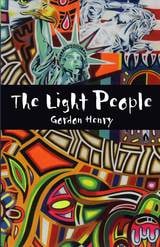
The Light People
A NovelGordon Henry
Michigan State University Press, 1994
The Light People is a multi-genre novel that includes a series of nested stories about a tribal community in Northern Minnesota. Major themes include Oskinaway’s search for his parents and the legal wrangling over the possession of a leg that has been removed from a tribal elder. Each story is linked to previous and successive stories to form a discourse on identity and cultural appropriation, all told with humor and wisdom.
Taking inspiration from traditional Anishinabe stories and drawing from his own family's storytelling tradition, Gordon Henry, Jr., has woven a tapestry of interlocking narratives in The Light People, a novel of surpassing emotional strength. His characters tell of their experiences, dreams, and visions in a multitude of literary styles and genres. Poetry, drama, legal testimony, letters, and essays combine with more conventional narrative techniques to create a multifaceted, deeply rooted, and vibrant portrait of the author's own tribal culture. Keenly aware of Eurocentric views of that culture, Henry offers a "corrective history" where humor and wisdom transcend the political.
In the contemporary Minnesota village of Four Bears, on the mythical Fineday Reservation, a young Chippewa boy named Oskinaway is trying to learn the whereabouts of his parents. His grandparents turn for help to a tribal elder, one of the light people, Jake Seed. Seed's assistant, a magician who performs at children's birthday parties, tells Oskinaway's family his story, which gives way to the stories of those he encounters. Narratives unfold into earlier narratives, spinning back in time and encompassing the intertwined lives of the Fineday Chippewas, eventually revealing the place of Oskinaway and his parents in a complex web of human relationships.
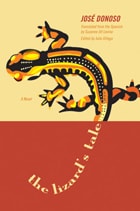
The Lizard's Tale
A NovelJosé Donoso, translated from the Spanish by Suzanne Levine
Northwestern University Press, 2011
José Donoso was the leading Chilean representative of the Latin American “Boom” of the sixties and seventies that included Gabriel García Márquez, Mario Vargas Llosa, and Manuel Puig, among others. Written as a draft in 1973, set aside, and forgotten, The Lizard’s Tale was discovered among Donoso’s papers at Princeton University by his daughter after his death. Edited for publication by critic and poet Julio Ortega, it was published posthumously in Spanish under the title Lagartija sin cola in 2007. Suzanne Jill Levine, who knew Donoso and translated two of his earlier works, brings the book to an English-language audience for the first time.
Defeated and hiding in his Barcelona apartment, painter Antonio Muñoz-Roa—Donoso’s alter ego—relates the story of his flight with Luisa, his cousin, lover, and benefactor, after his scandalous desertion from the “Informalist” movement (a witty reference to a contemporary Spanish art movement and possibly an allusion to the Boom as well), in which he had been a member of a certain standing. Frustrated, old, and alone, the artist looks back on his years in the small town of Dors, a place he unsuccessfully tried to rescue from the crushing advance of modernity, and on the decline of his own family, also threatened by the changing times. In Levine’s able hands, Donoso’s clear prose shines through, forming a compact, powerful, and still-relevant meditation on the commercialization of art and the very places we inhabit.

The Lost Lives of Lena Wu
A NovelAlvin Lu
University of Alabama Press, 2026
Centered around Lena Wu, a middle-aged Taiwanese immigrant and divorcee, the novel is a recursively structured interrogation of the contingencies between past and present; memory and self-understanding; and memoir and fiction.
The Lucky
(A Novel)H. Lee Barnes
University of Nevada Press, 2003
The Maestro, the Magistrate and the Mathematician
A NovelTendai Huchu
Ohio University Press, 2016
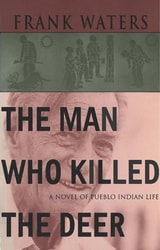
The Man Who Killed The Deer
A Novel of Pueblo Indian LifeFrank Waters
Ohio University Press, 1949
The story of Martiniano, The Man Who Killed the Deer, is a timeless story of Pueblo Indian sin and redemption, and of the conflict between Indian and white laws; written with a poetically charged beauty of style, a purity of conception, and a thorough understanding of Native American values.
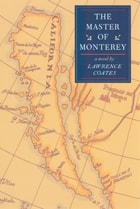
The Master Of Monterey
A NovelLawrence Coates
University of Nevada Press, 2003
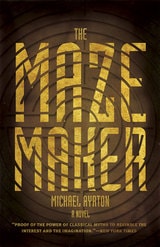
The Maze Maker
A NovelMichael Ayrton
University of Chicago Press, 2015
In this fictional autobiography of the father of Icarus, “Apollo’s creature,” a brilliant but flawed man, writer and sculptor Michael Ayrton harnesses the tales of the past to mold a myth for our times. We learn of Daedalus’s increasingly ambitious artifacts and inventions; his fascination with Minoan culture, commerce, and religion, and his efforts to adapt to them; how he comes to design the maze of the horned Minotaur; and how, when he decides that he must flee yet again, he builds two sets of wax wings—wings that will be instruments of his descent into the underworld, a place of both purgatory and rebirth.
A compelling mix of history, fable, lore, and meditations on the enigma of art, The Maze Maker will ensnare classicists, artists, and all lovers of story in its convolutions of life and legend. “I never understood the pattern of my life,” writes Daedalus, “so that I have blundered through it in a maze.”
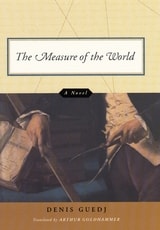
The Measure of the World
A NovelDenis Guedj
University of Chicago Press, 2001
The Measure of the World by Denis Guedj tells the story of this strange and wonderful effort. Not a traditional history of science, the book is a novelistic account of the measurement project that relies heavily on archival sources. A more "traditional" history could not possibly describe how a sober scientific enterprise could turn into a journey filled with adventures and experiences so bizarre as to be hardly credible. In the tumultuous days of revolutionary and postrevolutionary France, Méchain and Delambre were objects of suspicion as they traveled through the provinces, climbing steeples and deploying strange instrumentsthey were detained as spies, taken for charlatans or fleeing royalists, and arrested for debt. Their perilous labors lasted until 1799, when the meter was formally established.
Arthur Goldhammer's crisp translation of this wonderful novel retains the flavor of the original, and an appendix explaining Guedj's use of historical materials is included. A vivid re-creation of a fascinating and troubling period in history juxtaposed with the achievement of a complicated scientific undertaking, The Measure of the World is a marvelous book-not science fiction, but fiction about science.
Denis Guedj is the author of La évolution des savants and L'Empire des nombres, among other books. La Mesure du monde was awarded the Prix d'Institut in 1989. Arthur Goldhammer is an award-winning translator who has translated works by Emmanuel Le Roy Ladurie, Jacques Le Goff, and Jean Starobinski.
The Memory of Elephants
A NovelBoman Desai
University of Chicago Press, 2001
The Narrows
A NovelAnn Petry, introduction by Keith Clark
Northwestern University Press, 2017
The Ndola Muto Salon
A NovelFrieda Ekotto
Bucknell University Press, 2027
At the Ndola Muto Salon Douala, Cameroon, women slip behind closed doors to seek pleasure, refuge, and one another. When young Violette begins work there as a courtesan for women to support her family, she enters a world her mother cannot accept, where desire moves quietly but powerfully. Part sanctuary, part hidden house of pleasure, the salon becomes a mirror of empowerment, longing, and possibility beyond the restrictions of Cameroonian society. Within its walls, Violette encounters a constellation of women who shape her awakening: Lady Budu, the formidable owner; Caroline, who first opens her to joy; and the enigmatic Lady with Sexy Toes, who urges her to imagine a life of her own making. As these lives intertwine in this evocative novel, the salon reveals how tenderness between women can become an act of resistance, defying patriarchy, class, and convention in small but profound revolutions.
Published by Bucknell University Press. Distributed worldwide by Rutgers University Press.
The Ninth
A NovelFerenc Barnas
Northwestern University Press, 2009
Set in a sleepy village north of Budapest in 1968, this touching, unsettling novel paints a richly wrought portrait of mid-twentieth-century Hungary. The narrator is the ninth child of a family distinguished by its size, poverty, faith, and abundance of physical and psychological disabilities. His confusion is exacerbated by the strict, secretive Catholic household his parents keep in the face of a Communist system. These dual oppressions propel him toward an inevitable realization of his guilt and desire that speaks to his struggle with a fateful, seamless beauty.

The Novel and Neoliberalism
Nancy Armstrong and John Marx, special issue editors
Duke University Press, 2018
Contributors
Nancy Armstrong, Jane Elliott, Matthew Hart, Nathan Hensley, Nicholas Huber, Jeanne-Marie Jackson, John Marx, Tom McCarthy, Vaughn Rasberry, Deisdra Reber, Lily Saint, Emilio Sauri, Rachel Greenwald Smith, Paul Stasi
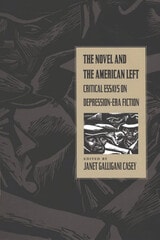
The Novel and the American Left
Critical Essays on Depression-Era FictionJanet Galligani Casey
University of Iowa Press, 2004
The first collection of critical essays to focus specifically on the fiction produced by American novelists of the Depression era, The Novel and the American Left contributes substantially to the newly emerging emphasis on twentieth-century American literary radicalism. Recent studies have recovered this body of work and redefined in historical and theoretical terms its vibrant contribution to American letters. Casey consolidates and expands this field of study by providing a more specific consideration of individual novels and novelists, many of which are reaching new contemporary audiences through reprints.
The Novel and the American Left focuses exclusively on left-leaning fiction of the Depression era, lending visibility and increased critical validity to these works and showing the various ways in which they contributed not only to theorizations of the Left but also to debates about the content and form of American fiction. In theoretical terms, the collection as a whole contributes to the larger reconceptualization of American modernity currently under way. More pragmatically, individual essays suggest specific authors, texts, and approaches to teachers and scholars seeking to broaden and/or complicate more traditional “American modernism” syllabi and research agendas.
The selected essays take up, among others, such “hard-core"” leftist writers as Mike Gold and Myra Page, who were associated with the Communist Party; the popular novels of James M. Cain and Kenneth Fearing, whose works were made into successful films; and critically acclaimed but nonetheless “lost” novelists such as Josephine Johnson, whose Now in November (Pulitzer Prize, 1936) anticipates and complicates the more popular agrarian mythos of Steinbeck’s The Grapes of Wrath.
This volume will be of interest not only to literary specialists but also to historians, social scientists, and those interested in American cultural studies.
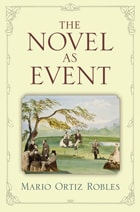
The Novel as Event
Mario Ortiz Robles
University of Michigan Press, 2010
"The Novel as Event brilliantly does two things: presents a strikingly new theory of the way novels have effect in the social world, and also presents original readings of five major Victorian novels as demonstrations of the way that theory may be exemplified in practice. No other book that I know of does either of these two things in at all the same way."
---J. Hillis Miller, University of California, Irvine
"I have no doubt that this book will become an important part of a renewed questioning of a certain unchallenged historicism prevalent in Victorian novel studies from the beginning."
---Kevin McLaughlin, Brown University
The Novel as Event is a timely reconsideration of the historical role of the Victorian novel from the perspective of its performativity. In a highly original application of the work of Jacques Derrida, Paul de Man, Pierre Bourdieu, Judith Butler, and other readers of J. L. Austin, Mario Ortiz Robles argues that the language of the novel is paramount and that the current emphasis on the representational and physical aspects of the novel tends to obscure this fact. He provides brilliant original readings of five major Victorian novels: Dickens's Our Mutual Friend, Brontë's Jane Eyre, George Eliot's Middlemarch, Thackeray's Vanity Fair, and Collins's The Woman in White, illustrating that it is impossible to fully grasp the cultural power of the novel, from its role in the cultivation of manners and the conduct of courtship to the consolidation of bourgeois ideology and the construction of the subject, without an adequate account of the performativity of its language. By considering the novel as a linguistic event, Ortiz Robles offers a new explanatory model for understanding how novels intervene materially in the reality they describe, and, in doing so, he seeks to reinvigorate critical debate on the historicity of the realist novel and current methods of cultural criticism. The Novel as Event serves as a well-timed corrective to the narrow historicist approach to the materiality of the novel that currently holds sway.
Mario Ortiz Robles is Assistant Professor of English at the University of Wisconsin, Madison.
Cover art: "Untitled page from Constance Sackville West Album." Courtesy of George Eastman House, International Museum of Photography and Film.

The Novel in Motion
An Approach to Modern FictionRichard Pearce
The Ohio State University Press, 1900
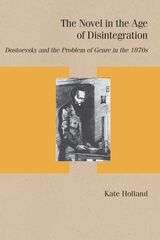
The Novel in the Age of Disintegration
Dostoevsky and the Problem of Genre in the 1870sKate Holland
Northwestern University Press, 2013
Scholars have long been fascinated by the creative struggles with genre manifested throughout Dostoevsky’s career. In The Novel in the Age of Disintegration, Kate Holland brings historical context to bear, showing that Dostoevsky wanted to use the form of the novel as a means of depicting disintegration brought on by various crises in Russian society in the 1860s. This required him to reinvent the genre. At the same time he sought to infuse his novels with the capacity to inspire belief in social and spiritual reintegration, so he returned to some older conventions of a society that was already becoming outmoded.
In thoughtful readings of Demons, The Adolescent, A Writer’s Diary, and The Brothers Karamazov, Holland delineates Dostoevsky’s struggle to adapt a genre to the reality of the present, with all its upheavals, while maintaining a utopian vision of Russia’s future mission.
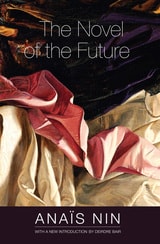
The Novel of the Future
Anaïs Nin
Ohio University Press, 2014
In The Novel of the Future, Anaïs Nin explores the act of creation—in film, art, and dance as well as literature—to chart a new direction for the young artist struggling against what she perceived as the sterility, formlessness, and spiritual bankruptcy afflicting much of mid-twentieth-century fiction. Nin offers, instead, an argument for and synthesis of the poetic novel and discusses her own efforts in this genre as well as its influence on the development of such writers as D. H. Lawrence, Henry Miller, Lawrence Durrell, Marguerite Young, and Djuna Barnes. In chapters devoted to the pursuit of the hidden self, the genesis of fiction, and the relationship between the diary and fiction, she addresses the materials, techniques, and nourishment of the arts, and the functions of art itself.
Originally published in 1968, The Novel of the Future remains a classic among both creative writers and literary scholars. This new Swallow Press edition includes an introduction by Nin biographer Deirdre Bair.
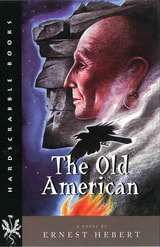
The Old American
A NovelErnest Hebert
Dartmouth College Press, 2001
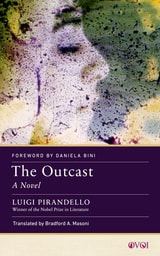
The Outcast
A NovelLuigi Pirandello
Rutgers University Press, 2023
The Outcast is an early masterwork from Nobel Prize–winning Italian author Luigi Pirandello that combines elements of Zolaesque naturalism with emerging modernist aesthetics. This fresh English translation, the first in nearly one hundred years, showcases Pirandello’s deft play with language and his use of irony.
This book was translated thanks to a grant awarded by the Italian Ministry of Foreign Affairs and International Cooperation.
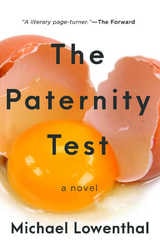
The Paternity Test
A NovelMichael Lowenthal
University of Wisconsin Press, 2018
Pat Faunce is a faltering romantic, a former poetry major who now writes textbooks. A decade into his relationship with Stu, an airline pilot from a fraught Jewish family, he fears he’s losing Stu to other men—and losing himself in their “no rules” arrangement. Yearning for a baby and a deeper commitment, he pressures Stu to move from Manhattan to Cape Cod, to the cottage where Pat spent boyhood summers.
As they struggle to adjust to their new life, they enlist a surrogate: Debora, a charismatic Brazilian immigrant, married to Danny, an American carpenter. Gradually, Pat and Debora bond, drawn together by the logistics of getting pregnant and away from their spouses. Pat gets caught between loyalties—to Stu and his family, to Debora, to his own potent desires—and wonders: is he fit to be a father?
In one of the first novels to explore the experience of gay men seeking a child through surrogacy, Michael Lowenthal writes passionately about marriages and mistakes, loyalty and betrayal, and about how our drive to create families can complicate the ones we already have. The Paternity Test is a provocative look at the new “family values.”
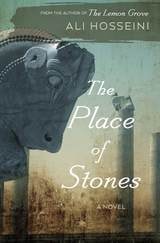
The Place of Stones
A NovelAli Hosseini
Northwestern University Press, 2017
The Place of Stones is Ali Hosseini’s newly translated first novel, his second book to appear in English. In it, he paints a vivid portrait of Sangriz, a village in the southern part of Iran where life has been disrupted by industrialization and the revolution of 1979.
Haydar and Jamal are best friends, and their families have always made their living from the land in the foothills of Iran’s Zagros Mountains. Haydar is a dreamer who searches the hills for an ancient treasure called the Black Globe. Jamal is in love with Haydar’s sister, Golandam, and he attempts to accommodate himself to modernization as a way to create a better life for the two of them. The rapacious conversion of farmland to brick factories draws the trio into escalating conflict with the village landlord.
As Jamal, Haydar, and their families confront land reform, industrialization, revolution, and war, their lives are pulled forcefully toward the explosive events that will change them all. In masterfully crafted prose that never sinks into sentimentality, The Place of Stones illuminates how a lost past continues to shape the present.
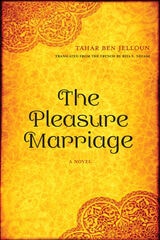
The Pleasure Marriage
A NovelTahar Ben Jelloun; Translated from the French by Rita S. Nezami
Northwestern University Press, 2021
Nabou returns to Fez as Amir’s second wife, weathering the jealous cruelty of Lalla Fatma, his first partner. Isolated within her new home, Nabou gives birth to twin sons, one black and one white, who come of age on the opposite sides of racial, social, and political chasms and who chart vastly different courses. The Pleasure Marriage showcases Ben Jelloun’s mastery of metaphor and lyrical narrative as he continues to take us into the worlds of Moroccan culture through his exquisite language and literary genius.
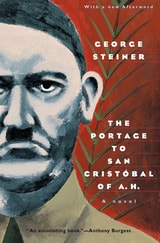
The Portage to San Cristobal of A. H.
A NovelGeorge Steiner
University of Chicago Press, 1999
"Two readings have convinced me that this is a fiction of extraordinary power and thoughtfulness. . . . [A] remarkable novel."—Bernard Bergonzi, Times Literary Supplement
"In this tour de force Mr. Steiner makes his reader re-examine, to whatever conclusions each may choose, a history from which we would prefer to avert our eyes."—Edmund Fuller, Wall Street Journal
"Portage largely avoids both the satisfactions of the traditional novel and the horrifying details of Holocaust literature. Instead, Steiner has taken as his model the political imaginings of an Orwell or Koestler. . . . He has produced a philosophic fantasy of remarkable intensity."—Otto Friedrich, Time