Results by title
1668 books match the query 'Popular culture' and 292 start with t
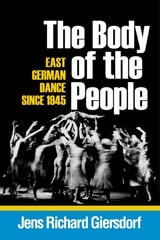
The Body of the People
East German Dance since 1945Jens Richard Giersdorf
University of Wisconsin Press, 2013
Giersdorf looks closely at uniquely East German dance forms—including mass exercise events, national folk dances, Marxist-Leninist visions staged by the dance ensemble of the armed forces, the vast amateur dance culture, East Germany’s version of Tanztheater, and socialist alternatives to rock ‘n’ roll—to demonstrate how dance was used both as a form of corporeal utopia and of embodied socialist propaganda and indoctrination. The Body of the People also explores the artists working in the shadow of official culture who used dance and movement to critique and resist state power, notably Charlotte von Mahlsdorf, Arila Siegert, and Fine Kwiatkowski. Giersdorf considers a myriad of embodied responses to the Communist state even after reunification, analyzing the embodiment of the fall of the Berlin Wall in the works of Jo Fabian and Sasha Waltz, and the diasporic traces of East German culture abroad, exemplified by the Chilean choreographer Patricio Bunster.
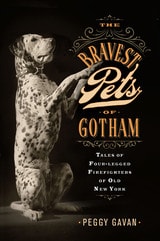
The Bravest Pets of Gotham
Tales of Four-Legged Firefighters of Old New YorkPeggy Gavan
Rutgers University Press, 2024
The Bravest Pets of Gotham takes readers on a fun historical tour of Old New York, sharing touching and comical stories about the bond between FDNY firefighters and their four-legged or feathered friends. The book contains more than one hundred astonishing, emotional, and sometimes hilariously absurd tales of the FDNY animal mascots whose extraordinary intelligence, acts of bravery, and funny antics deserve to be remembered. Some anecdotes depict fire companies that broke the one-pet rule and welcomed a veritable menagerie of animals into their firehouses, including goats, turtles, and even monkeys. Whether you are an animal lover, a history buff, or a fan of firefighting, The Bravest Pets of Gotham is full of stories that will thrill and amuse you.
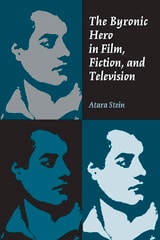
The Byronic Hero in Film, Fiction, and Television
Atara Stein
Southern Illinois University Press, 2004
The Byronic Hero in Film, Fiction, and Television bridges nineteenth- and twentieth-century studies in pursuit of an ambitious, antisocial, arrogant, and aggressively individualistic mode of hero from his inception in Byron’s Manfred, Childe Harold, and Cain, through his incarnations as the protagonists of Westerns, action films, space odysseys, vampire novels, neo-Gothic comics, and sci-fi television. Such a hero exhibits supernatural abilities, adherence to a personal moral code, ineptitude at human interaction (muddled even further by self-absorbed egotism), and an ingrained defiance of oppressive authority. He is typically an outlaw, most certainly an outcast or outsider, and more often than not, he is a he. Given his superhuman status, this hero offers no potential for sympathetic identification from his audience. At best, he provides an outlet for vicarious expressions of power and independence. While audiences may not seek to emulate the Byronic hero, Stein notes that he desires to emulate them; recent texts plot to “rehumanize” the hero or to voice through him approbation and admiration of ordinary human values and experiences.
Tracing the influence of Lord Byron’s Manfred as outcast hero on a pantheon of his contemporary progenies—including characters from Pale Rider, Unforgiven, The Terminator, Alien, The Crow, Sandman, Star Trek: The Next Generation,and Angel—Atara Stein tempers her academic acumen with the insights of a devoted aficionado in this first comprehensive study of the Romantic hero type and his modern kindred.
Atara Stein was a professor of English at California State University, Fullerton. Her articles on the development of the Byronic hero have appeared in Popular Culture Review, Romantic Circles Praxis Series, Genders, and Philological Quarterly.
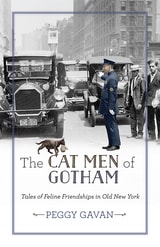
The Cat Men of Gotham
Tales of Feline Friendships in Old New YorkPeggy Gavan
Rutgers University Press, 2019
The nineteenth century was a rough time to be a stray cat in New York City. The city’s human residents dealt with feline overpopulation by gassing unwanted cats or tossing them in rivers. But a few lucky strays were found by a diverse array of men—including firemen, cops, athletes, and politicians—who rescued them from the streets and welcomed them into their homes and hearts.
This book tells the stories of these heroic cat men of Gotham and their beloved feline companions. Not only does it introduce us to some remarkable men, but we get to meet many extraordinary cats as well, from Chinese stowaways prowling the Chelsea Piers to the sole feline survivor of the USS Maine explosion. Among the forty-two profiles, we find many feline Cinderella stories, as humble alley cats achieved renown as sports team mascots, artists’ muses, and even presidential pets.
Sure to appeal to cat fanciers and history fans alike, The Cat Men of Gotham will give you a new appreciation for Old New York and the people and animals who made it their home. As it takes you on a journey through the streets of Manhattan and Brooklyn, it will amuse and astound you with tales of powerful men and their pussycats.
The Cat and the Human Imagination
Feline Images from Bast to GarfieldKatharine M. Rogers
University of Michigan Press, 2001
Western literature and visual art have reflected this change, developing from bare sketches to richly varied expressions of feline personality and human interaction with cats. Katharine M. Rogers seeks out the cats who make appearances in an impressive range of literary and artistic works, providing the first critical look at the symbolic functioning of cat characters in Poe's "The Black Cat," Dickens's Bleak House, and Zola's Therese Raquin, among other literary works. The historical and artistic range covered is impressive, creating a rich compendium that is the ideal book for the cat lover seeking a refreshingly substantial and scholarly work about this fascinating animal.
"This book is a classic-- something every cat-loving intellectual will have to own. (No one, of course, ever really owns a cat--but everyone should own this book.) It's the kind of book you want to quote from at the vet's, or cocktail parties, or whenever you get the urge to convert a dog lover to the true faith." --Emily Toth, Louisiana State University
Katharine M. Rogers is Professor Emerita of English, City University of New York. Her previous books include Feminism in Eighteenth-Century England and Frances Burney: The World of "Female Difficulties."
The Celebration of Death in Contemporary Culture
Dina Khapaeva
University of Michigan Press, 2017
This book links the mounting demand for images of violent death with dramatic changes in death-related social rituals. It offers a conceptual framework that connects observations of fictional worlds—including The Twilight Saga, The Vampire Diaries, and the Harry Potter series—with real-world sociocultural practices, analyzing the aesthetic, intellectual, and historical underpinnings of the cult of death. It also places the celebration of death in the context of a longstanding critique of humanism and investigates the role played by 20th-century French theory, posthumanism, transhumanism, and the animal rights movement in shaping the current antihumanist atmosphere.
This timely, thought-provoking book will appeal to scholars of culture, film, literature, anthropology, and American and Russian studies, as well as general readers seeking to understand a defining phenomenon of our age.
The Celebrity Monarch
Empress Elisabeth and the Modern Female PortraitOlivia Gruber Florek
University of Delaware Press, 2023

The Celebrity Persona Pandemic
P. David Marshall
University of Minnesota Press, 2017
The Celebrity Persona Pandemic explores how the construction of a public persona is fetishized in contemporary culture. As social media has progressively led to a greater focus on the production of the self, so this book looks at the most visible versions of persona through figures such as Stephen Colbert, Cate Blachett, and Justin Bieber, as well as fictional characters like Spock and Harry Potter. Ultimately, P. David Marshall closely studies how persona culture shapes our notions of value and significance, and dramatically shifts cultural politics.
Forerunners is a thought-in-process series of breakthrough digital works. Written between fresh ideas and finished books, Forerunners draws on scholarly work initiated in notable blogs, social media, conference plenaries, journal articles, and the synergy of academic exchange. This is gray literature publishing: where intense thinking, change, and speculation take place in scholarship.

The Challenge of Modernity
German Social and Cultural Studies, 1890-1960Adelheid von Saldern
University of Michigan Press, 2002
The essays contained in The Challenge of Modernity cover three distinct subject areas: the history of the Social Democratic labor movement, housing, and popular and mass culture. More specifically, von Saldern addresses the self-modernizing Social Democratic Party; Social Democrats' and Communists' opposing views of modernization; social rationalization in the private sphere (particularly with regard to women and hygiene); sport; the arrival of "trashy" literature, movies, and radio in Germany; and cultural conservatives' attempts to enhance a national and Volks-culture in opposition to mass-culture, Americanization, and the avant-garde. The variety of responses to the modernization process, as well as von Saldern's focus on social agents, makes this book unique.
Required reading for scholars of social, cultural, and gender history, The Challenge of Modernity will also find an audience among urban anthropologists, political scientists, and sociologists. Von Saldern's ability to combine a strong theoretical framework with concrete historical examples will also make this outstanding reading for undergraduate and graduate students seeking to familiarize themselves with the history of German society and culture.
Adelheid von Saldern is Professor of Modern History and Director, Historisches Seminar, Universität Hanover.
The Cinema of Economic Miracles
Visuality and Modernization in the Italian Art FilmAngelo Restivo
Duke University Press, 2002
Restivo studies numerous films of the period, focusing mainly on the works of Pier Paolo Pasolini and Michelangelo Antonioni. He finds that these auteurs’ films reworked the neorealist aesthetic developed in the 1940s and 1950s, explored issues brought to the fore by the subsequent consumer boom, and presaged developments central to both critical theory and the visual arts in the 1980s and 1990s. Drawing on the theories of Lacan, Zizek, Benjamin, Foucault, Jameson, and Deleuze, he shines new light on such films as Pasolini’s Accattone and Teorema, and Antonioni’s Red Desert and Blow-Up. Restivo’s model for understanding the relationship of the 1960s Italian art film to its cultural contexts also has implications that extend to the developing national cinemas of countries such as Brazil and Taiwan.
The Cinema of Economic Miracles will interest scholars and students in all areas of film studies, especially those studying theories of the image, national cinema theory, and Italian cinema, and to those engaged in poststructuralist theory, philosophy, and comparative literature.
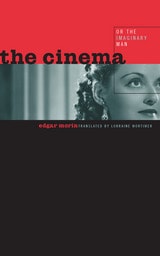
The Cinema, or The Imaginary Man
Edgar Morin
University of Minnesota Press, 2005

The City is Me
Rosane Araujo
Intellect Books, 2013
Proposing a new way of understanding the relationship between the city and personal identity, The City is Me argues that there is no longer a distance between the two. The result of extensive research about our notions of the city and the person throughout time, this volume explores the technology, research findings, and new ideas that have made it impossible to sustain conceptions of the city that are based on the criterion of a boundary. Showing how this shift mirrors the decentralization and fragmentation of personal identity in a globalized world, Rosane Araujo confronts the challenge of rethinking urbanism in a way that corresponds to the risk and uncertainty—but also to the possibilities—of today’s cities.
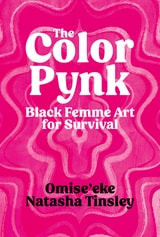
The Color Pynk
Black Femme Art for SurvivalOmise'eke Natasha Tinsley
University of Texas Press, 2022
2023 John Leo & Dana Heller Award for Best Single Work, Anthology, Multi-Authored, or Edited Book in LGBTQ Studies, Popular and American Culture Association (PACA) / Popular Culture Association (PCA)
2023 Honorable Mention, Harry Shaw and Katrina Hazzard-Donald Award for Outstanding Work in African-American Popular Culture Studies, Popular and American Culture Association (PACA) / Popular Culture Association (PCA)
2024 MPCA/ACA Best Single Work by One or More Authors, Midwest Popular Culture Association / Midwest American Culture Association (MPCA/ACA)
A celebration of the distinctive and politically defiant art of Black queer, cis-, and transfemmes, from the work of Janelle Monáe and Janet Mock to that of Indya Moore and Kelsey Lu.
The Color Pynk is a passionate exploration of Black femme poetics of survival. Sidelined by liberal feminists and invisible to mainstream civil rights movements, Black femmes spent the Trump years doing what they so often do best: creating politically engaged art, entertainment, and ideas. In the first full-length study of Black queer, cis-, and trans-femininity, Omise’eke Natasha Tinsley argues that this creative work offers a distinctive challenge to power structures that limit how we color, gender, and explore freedom.
Tinsley engages 2017–2020 Black femme cultural production that colorfully and provocatively imagines freedom in the stark white face of its impossibility. Looking to the music of Janelle Monáe and Kelsey Lu, Janet Mock’s writing for the television show Pose, the fashion of Indya Moore and (F)empower, and the films of Tourmaline and Juliana Huxtable, as well as poetry and novels, The Color Pynk conceptualizes Black femme as a set of consciously, continually rescripted cultural and aesthetic practices that disrupts conventional meanings of race, gender, and sexuality. There is an exuberant defiance in queer Black femininity, Tinsley finds—so that Black femmes continue to love themselves wildly in a world that resists their joy.
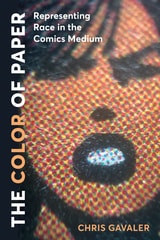
The Color of Paper
Representing Race in the Comics MediumChris Gavaler
The Ohio State University Press, 2026
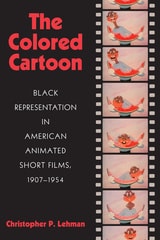
The Colored Cartoon
Black Presentation in American Animated Short Films, 1907-1954Christopher P. Lehman
University of Massachusetts Press, 2007
From the introduction of animated film in the early 1900s to the 1950s, ethnic humor was a staple of American-made cartoons. Yet as Christopher Lehman shows in this revealing study, the depiction of African Americans in particular became so inextricably linked to the cartoon medium as to influence its evolution through those five decades. He argues that what is in many ways most distinctive about American animation reflects white animators' visual interpretations of African American cultural expression.
The first American animators drew on popular black representations, many of which were caricatures rooted in the culture of southern slavery. During the 1920s, the advent of the sound-synchronized cartoon inspired animators to blend antebellum-era black stereotypes with the modern black cultural expressions of jazz musicians and Hollywood actors. When the film industry set out to desexualize movies through the imposition of the Hays Code in the early 1930s, it regulated the portrayal of African Americans largely by segregating black characters from others, especially white females. At the same time, animators found new ways to exploit the popularity of African American culture by creating animal characters like Bugs Bunny who exhibited characteristics associated with African Americans without being identifiably black.
By the 1950s, protests from civil rights activists and the growing popularity of white cartoon characters led animators away from much of the black representation on which they had built the medium. Even so, animated films today continue to portray African American characters and culture, and not necessarily in a favorable light.
Drawing on a wide range of sources, including interviews with former animators, archived scripts for cartoons, and the films themselves, Lehman illustrates the intimate and unmistakable connection between African Americans and animation.
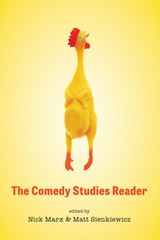
The Comedy Studies Reader
Edited by Nick Marx and Matt Sienkiewicz
University of Texas Press, 2018
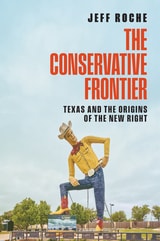
The Conservative Frontier
Texas and the Origins of the New RightJeff Roche
University of Texas Press, 2025
2026 Al Lowman Memorial Prize, Texas State Historical Association (TSHA)
2026 Bonney MacDonald Outstanding Book Award Winner, Center for the Study of the American West at West Texas A&M University (CSAW)
How West Texas business and culture molded the rise of conservatism in the United States.
Much of what we understand as modern American political conservatism was born in West Texas, where today it predominates. How did the people of such a vast region—larger than New England and encompassing big cities like Lubbock and Amarillo, as well as tiny towns from Anson to Dalhart—develop such a uniform political culture? And why and how did it go national?
Jeff Roche finds answers in the history of what he calls cowboy conservatism. Political power players matter in this story, but so do football coaches, newspaper editors, and a breakfast cereal tycoon who founded a capitalist utopia. The Conservative Frontier follows these and other figures as they promoted an ideology grounded in the entrepreneurial and proto-libertarian attitudes of nineteenth-century Texas ranchers, including a fierce devotion to both individualism and small-town notions of community responsibility. This political sensibility was in turn popularized by its association with the mythology and iconography of the cowboy as imagined in twentieth-century mass media. By the 1970s and the rise of Ronald Reagan, Roche shows, it was clear that the cowboy conservatism of West Texas had set the stage for the emergence of the New Right—the more professionalized and tech-savvy operation that dominated national conservative politics for the next quarter century.
The Construction of Minorities
Cases for Comparison Across Time and Around the WorldAndre Burguiere and Raymond Grew, Editors
University of Michigan Press, 2001

The Contours of America’s Cold War
Matthew Farish
University of Minnesota Press, 2010
Geographic knowledge generated for the Cold War was a form of power, Farish argues, and it was given an urgency in the panels, advisory boards, and study groups established to address the challenges of an atomic world. He investigates how the scales of the city, the continent, the region, the globe, and, by extension, outer space, were brought together as strategic spaces, categories that provided a cartographic orientation for the Cold War and influenced military deployments, diplomacy, espionage, and finance.
Farish analyzes the surprising range of knowledge production involved in the project of claiming and classifying American space. Backed by military and intelligence funding, physicists and policy makers, soldiers and social scientists came together to study and shape the United States and its place in a divided world.
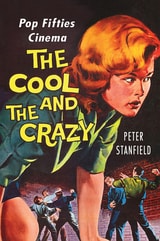
The Cool and the Crazy
Pop Fifties CinemaStanfield, Peter
Rutgers University Press, 2015
The Cosmopolitan Lyceum
Lecture Culture and the Globe in Nineteenth-Century AmericaTom F. Wright
University of Massachusetts Press, 2013
From the 1830s to the 1900s, a circuit of lecture halls known as the “lyceum movement” flourished across the United States. At its peak, up to a million people a week regularly attended talks in local venues, captivated by the words of visiting orators who spoke on an extensive range of topics. The movement was a major intellectual and cultural force of this nation-building period, forming the creative environment of writers and public figures such as Frederic Douglass, Ralph Waldo Emerson, Anna Dickinson, and Mark Twain.
The phenomenon of the lyceum has commonly been characterized as inward looking and nationalistic. Yet as this collection of essays reveals, nineteenth-century audiences were fascinated by information from around the globe, and lecturers frequently spoke to their fellow Americans of their connection to the world beyond the nation and helped them understand “exotic” ways of life. Never simple in its engagement with cosmopolitan ideas, the lyceum provided a powerful public encounter with international currents and crosscurrents, foreshadowing the problems and paradoxes that continue to resonate in our globalized world.
This book offers a major reassessment of this important cultural phenomenon, bringing together diverse scholars from history, rhetoric, and literary studies. The twelve essays use a range of approaches, cover a wide chronological timespan, and discuss a variety of performers both famous and obscure. In addition to the volume editor, contributors include Robert Arbour, Thomas Augst, Susan Branson, Virginia Garnett, Peter Gibian, Sara Lampert, Angela Ray, Evan Roberts, Paul Stob, Mary Zboray, and Ronald Zboray.
The Counterfeit Coin
Videogames and Fantasies of EmpowermentChristopher Goetz
Rutgers University Press, 2023

The Cowboy Hero & Its Audience
Popular Culture As Market Derived ArtAlf H. Walle
University of Wisconsin Press, 2000
Using the history of the cowboy story from 1820 to 1970 as an extended example, Alf H. Walle combines popular culture scholarship with marketing theory to provide a hybrid analysis. Wall examines major authors and genres of Western American literature and film; he also explores why certain respected authors were unable to significantly impact the cowboy story even though their innovations were embraced by later generations. Finally Wall provides a hybrid analysis combining business and popular culture theory in an overarching analysis.
The Cuban Hustle
Culture, Politics, Everyday LifeSujatha Fernandes
Duke University Press, 2020
The Cult Film Experience
Beyond All ReasonEdited by J. P. Telotte
University of Texas Press, 1991
"Play it again, Sam" is the motto of cult film enthusiasts, who will watch their favorite movie over and over, "beyond all reason." What is the appeal of cult movies? Why do fans turn up in droves at midnight movies or sit through the same three-hanky classics from Hollywood's golden era? These are some of the questions J. P. Telotte and twelve other noted film scholars consider in this groundbreaking study of the cult film.
The book identifies two basic types of cult films—older Hollywood movies, such as Casablanca, that have developed a cult following and "midnight movies," most notably The Rocky Horror Picture Show. Telotte, Bruce Kawin, and Timothy Corrigan offer thought-provoking discussions about why these two types of movies become cult films, the sort of audience they attract, and the needs they fulfill for that audience. Subsequent essays employ a variety of cultural, feminist, ideological, and poststructural strategies for exploring these films.
In a section on the classical cult film, the movie Casablanca receives extensive treatment. An essay by T. J. Ross considers Beat the Devil as a send-up of cult films, while another essay by Wade Jennings analyzes the cult star phenomenon as personified in Judy Garland.
"Midnight movie madness" is explored in essays on The Rocky Horror Picture Show, movie satires of the 1950s, science fiction double features, and horror thrillers.
Illustrated with scenes from favorite movies and written for both fans and scholars, The Cult Film Experience will appeal to a wider audience than the "usual suspects."
The Cultural Life of Intellectual Properties
Authorship, Appropriation, and the LawRosemary J. Coombe
Duke University Press, 1998
Although such artifacts are ubiquitous in contemporary culture, little attention has been paid to the impact of intellectual property law in everyday life or to how ownership of specific intellectual properties is determined and exercised. Drawing on a wide range of cases, disputes, and local struggles, Coombe examines these issues and dismantles the legal assumption that the meaning and value of a text or image is produced exclusively by an individual author or that authorship has a single point of origin. In the process, she examines controversies that include the service of turbanned Sikhs in the Royal Canadian Mounted Police and the use of the term Olympic in reference to the proposed gay Olympic Games. Other chapters discuss the appropriation of such celebrity images as the Marx brothers, Judy Garland, Dolly Parton, James Dean, and Luke Skywalker; the conflict over team names such as the Washington Redskins; and the opposition of indigenous peoples to stereotypical Native American insignia proffered by the entertainment industry. Ultimately, she makes a case for redefining the political in commodified cultural environments.
Significant for its insights into the political significance of current intellectual property law, this book also provides new perspectives on debates in cultural anthropology, cultural studies, and political theory. It will therefore interest both a wide scholarly and a general audience.
The Cultural Set Up of Comedy
Affective Politics in the United States Post 9/11Julie Webber
Intellect Books, 2013
The Cultural Turn in U. S. History
Past, Present, and FutureEdited by James W. Cook, Lawrence B. Glickman, and Michael O'Malley
University of Chicago Press, 2008
The Culture of Cursilería
Bad Taste, Kitsch, and Class in Modern SpainNoel Valis
Duke University Press, 2002
Valis finds evidence in literature, cultural objects, and popular customs to
argue that cursilería has its roots in a sense of cultural inadequacy felt by the lower middle classes in nineteenth- and early-twentieth-century Spain. The Spain of this era, popularly viewed as the European power most resistant to economic and social modernization, is characterized by Valis as suffering from nostalgia for a bygone, romanticized society that structured itself on strict class delineations. With the development of an economic middle class during the latter half of the nineteenth century, these designations began to break down, and individuals across all levels of the middle class exaggerated their own social status in an attempt to protect their cultural capital. While the resulting manifestations of cursilería were often provincial, indeed backward, the concept was—and still is—closely associated with a sense of home. Ultimately, Valis shows how cursilería embodied the disparity between old ways and new, and how in its awkward manners, airs of pretension, and graceless anxieties it represents Spain's uneasy surrender to the forces of modernity.
The Culture of Cursilería will interest students and scholars of Latin America, cultural studies, Spanish literature, and modernity.

The Culture of Property
The Crisis of Liberalism in Modern BritainJordanna Bailkin
University of Chicago Press, 2004
Drawing on court transcripts, gallery archives, exhibition reviews, private correspondence—and a striking series of cartoons and photographs—The Culture of Property traverses the history of gender, material culture, urban life, colonialism, Irish and Scottish nationalism, and British citizenship. This fascinating book challenges recent scholarship in museum studies in light of ongoing culture wars. It should be required reading for cultural policy makers, museum professionals, and anyone interested in the history of art and Britain.
The Culture of the Body
Genealogies of ModernityDalia Judovitz
University of Michigan Press, 2001
The Cultures of Celebrations
Edited by Ray B. Browne and Michael T. Marsden
University of Wisconsin Press, 1994
Topics include: feminine processions and masculine parades; political activism and quietism in Shi’a rituals; civic socializing in Puritan New England; the circus and American culture; the Wild West shows; beauty pageants; theme parks; Bourbon Street, New Orleans; and Stonehenge.
The Cut of His Coat
Men, Dress, and Consumer Culture in Britain, 1860–1914Brent Shannon
Ohio University Press, 2006
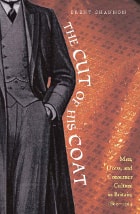
The English middle class in the late nineteenth century enjoyed an increase in the availability and variety of material goods. With that, the visual markers of class membership and manly behavior underwent a radical change. In The Cut of His Coat: Men, Dress, and Consumer Culture in Britain, 1860–1914, Brent Shannon examines familiar novels by authors such as George Eliot, Anthony Trollope, Thomas Hughes, and H. G. Wells, as well as previously unexamined etiquette manuals, period advertisements, and fashion monthlies, to trace how new ideologies emerged as mass-produced clothes, sartorial markers, and consumer culture began to change.
While Victorian literature traditionally portrayed women as having sole control of class representations through dress and manners, Shannon argues that middle-class men participated vigorously in fashion. Public displays of their newly acquired mannerisms, hairstyles, clothing, and consumer goods redefined masculinity and class status for the Victorian era and beyond.
The Cut of His Coat probes the Victorian disavowal of men’s interest in fashion and shopping to recover men’s significant role in the representation of class through self-presentation and consumer practices.
The DNA Mystique
The Gene as a Cultural IconDorothy Nelkin and M. Susan Lindee
University of Michigan Press, 2004
With a new introduction and conclusion, this edition will continue to be an engaging, accessible, and provocative text for the sociology, anthropology, and bioethics classroom, as well as stimulating reading for those generally interested in science and culture.
The Dadly Virtues
Adventures from the Worst Job You'll Ever LoveJonathan V. Last
Templeton Press, 2015
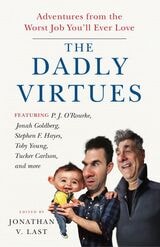
The Dadly Virtues is a tongue-in-cheek collection of encouragement and guidance for any stage of fatherhood, from pacifying babies to prepping for senior prom, from cutting the cord to getting the first, “Best Grandpa” t-shirt. P.J. O’Rourke sets the stage with the chapter, “What Do Men Get from Fatherhood? Besides What They Put In …” and then is followed by:
•Matthew Continetti’s, “Newborn Terror: The Moment You Realize that ‘Bundle of Joy’ Is a Euphemism for Something Very Different.”
•Stephen F. Hayes’ “Siblings: The Best Gift You’ll Ever Give Your Kids.”
•Jonah Goldberg’s “Get Your Kid a Dog: The Moral Case for Pets.”
•Tucker Carlson’s “In Praise of Adventure: How to Fill a Child’s Life with Excitement and Danger (without Getting Them Killed).”
•Michael Graham’s, “Dating: Enjoy the Movie and Please Keep the Impregnation to a Minimum.”
•Christopher Caldwell’s “College: It’s Not as Bad as You Think; It’s Worse.”
•Andrew Ferguson’s “Emerging Adults and Empty Nesters: Just When You Had Fatherhood All Figured Out.”
•Toby Young’s “The Dark Side: Bad Parenting and the Things We Think, but Do Not Say.”
•Joseph Epstein’s “Thanks, Grandpa: Grandfatherhood and the Spirit of the Age.”
•And more.
Father-to-be, two-time-dad, or granddad, each essay will make you laugh and, at the same time, reinforce your commitment to the virtuous—the dadly—life.
The Darker Side of the Renaissance
Literacy, Territoriality, and ColonizationWalter D. Mignolo
University of Michigan Press, 1995
The Defective Detective in the Pulps
Edited by Gary Hoppenstand and Ray B. Browne
University of Wisconsin Press, 1983
The Detective as Historian
History and Art in Historical Crime FictionEdited by Ray B. Browne and Lawrence A. Kreiser, Jr.; Preface by Robin W. Winks
University of Wisconsin Press, 2000
Topics include: Ellis Peter’s Brother Cadfael; Umberto Eco’s Name of the Rose; Susanna Gregory’s Doctor Matthew Bartholomew; Peter Heck’s Mark Twain as detective; Anne Perry and her Victorian-era world; Caleb Carr’s works; and Elizabeth Peter’s Egyptologist-adventurer tales.
The Detroit Genre
Race, Dispossession, and Resilience in American Literature and Film, 1967-2023Vincent Haddad
Lever Press, 2024
The book first establishes the concept of the “Detroit genre” that emerged in late 1960s and traces the tropes of this white-centric narrative genre in popular culture, touching on key texts including Blue Collar, Robocop, The Crow, It Follows, and Barbarian. The second part shows how Black writers, including Alice Randall, adrienne maree brown, Stephen Mack Jones, and Angela Flournoy, reclaimed and revised the Detroit genre by un-fixing Detroit narratives of dispossession, criminality, and industrial and social failure through formal experimentations on genre itself.
Where Detroit has typically been painted in the news as one of three things—the center of the automotive industry; crime-ridden and in ruins; or as a “blank canvas” with limitless potential of entrepreneurship—Vincent Haddad shows that the Detroit genre in literature and film can be far more powerful than news media in narrating Black dispossession as a pragmatic, even liberal consensus. The texts studied here condition forgetfulness about Detroit’s history or expose it to a full reckoning, direct attention toward or away from the city’s agents of injustice, fetishize resilience or model resistance, and foreclose or imagine a future of Black liberation. Appealing to scholars of popular literature, media, race, and American studies, The Detroit Genre is an accessible and engaging study of the city’s influence on a wide array of genres in pop culture.
The Dianshizhai Pictorial
Shanghai Urban Life, 1884–1898Ye Xiaoqing
University of Michigan Press, 2003
The Dragon's Tail
Americans Face the Atomic AgeRobert A. Jacobs
University of Massachusetts Press, 2010
When President Harry Truman introduced the atomic bomb to the world in 1945, he described it as a God-given harnessing of “the basic power of the universe.” Six days later a New York Times editorial framed the dilemma of the new Atomic Age for its readers: “Here the long pilgrimage of man on Earth turns towards darkness or towards light.” American nuclear scientists, aware of the dangers their work involved, referred to one of their most critical experiments as “tickling the dragon's tail.”
Even after Hiroshima and Nagasaki, most Americans may not have been sure what an atomic bomb was or how it worked. But they did sense that it had fundamentally changed the future of the human race. In this book, Robert Jacobs analyzes the early impact of nuclear weapons on American culture and society. He does so by examining a broad range of stories, or “nuclear narratives,” that sought to come to grips with the implications of the bomb's unprecedented and almost unimaginable power.
Beginning with what he calls the “primary nuclear narrative,” which depicted atomic power as a critical agent of social change that would either destroy the world or transform it for the better, Jacobs explores a variety of common themes and images related to the destructive power of the bomb, the effects of radiation, and ways of surviving nuclear war. He looks at civil defense pamphlets, magazines, novels, and films to recover the stories the U.S. government told its citizens and soldiers as well as those presented in popular culture.
According to Jacobs, this early period of Cold War nuclear culture—from 1945 to the banning of above-ground testing in 1963—was distinctive for two reasons: not only did atmospheric testing make Americans keenly aware of the presence of nuclear weapons in their lives, but radioactive fallout from the tests also made these weapons a serious threat to public health, separate from yet directly linked to the danger of nuclear war.
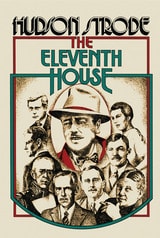
The Eleventh House
MemoirsHudson Strode, Introduction by Don Noble
University of Alabama Press, 1975
Why should Hudson Strode matter to readers today? Because his life was a masterclass in reinvention and a backstage pass to the Jazz Age’s wittiest salons. Strode wasn’t just a professor in Tuscaloosa; he was a cultural impresario who turned a modest Southern life into a global adventure. He taught generations of writers, staged Shakespeare with bravura, and wrote travel books that earned him a knighthood from the King of Sweden.
But the real allure? The gossip. Strode dined with Lady Astor, traded quips with H. L. Mencken, and sipped cocktails with Zelda and Scott Fitzgerald when they were the incandescent couple of the 1920s. He met Hemingway in Cuba, Robinson Jeffers in Carmel, and Isak Dinesen in Denmark—then wrote about them with candor and charm. His memoir brims with stories of literary giants, royal encounters, and the occasional eyebrow-raising escapade (ask him about the brothel in Birmingham).
For contemporary readers, The Eleventh House is both a captivating autobiography and a time capsule of ambition, art, and audacity. Strode’s world—where Southern gentility collided with European modernism and Jazz Age excess—feels startlingly relevant in an era obsessed with reinvention and celebrity culture. If you’ve ever wondered what it was like to gossip with the Fitzgeralds or watch the devil admire himself in a porch mirror, this memoir delivers.
Step inside Hudson Strode’s The Eleventh House. It’s witty, worldly, and just scandalous enough to keep you turning pages.

The Empire Strikes Out
Kurd Lasswitz, Hans Dominik, and the Development of German Science FictionWilliam B. Fischer
University of Wisconsin Press, 1984
The Empire's Old Clothes
What the Lone Ranger, Babar, and Other Innocent Heroes Do to Our MindsAriel Dorfman
Duke University Press, 2010
The End of Victory Culture
Cold War America and the Disillusioning of a GenerationThomas M. Engelhardt
University of Massachusetts Press, 2007
In a substantial new afterword to his classic account of the collapse of American triumphalism in the wake of World War II, Tom Engelhardt carries that story into the twenty-first century. He explores how, in the aftermath of September 11, 2001, the younger George Bush headed for the Wild West (Osama bin Laden, “Wanted, Dead or Alive”); how his administration brought “victory culture” roaring back as part of its Global War on Terror and its rush to invade Saddam Husseins's Iraq; and how, from its “Mission Accomplished” moment on, its various stories of triumph crashed and burned in that land.
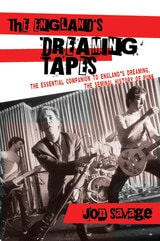
The England’s Dreaming Tapes
Jon Savage
University of Minnesota Press, 2010
Here is the story of a generation that changed the world in just a few months in 1976, as told by the scene's major figures: all four original Sex Pistols as well as Joe Strummer, Chrissie Hynde, Jordan, Siouxsie Sioux, Viv Albertine, Adam Ant, Lee Black Childers, Howard Devoto, Pete Shelley, Syl Sylvain, Debbie Wilson, Tony Wilson, Jah Wobble, and many others. Together, they offer a sweeping history of the late 1960s and the 1970s-not just the era's music, but also its radical politics, social issues, fashion, and culture.
An invaluable source of information about a movement that has become obscured by myth, these vivid, unvarnished interviews were conducted when punk was only a decade old. In many cases, this was the first time that the subjects had talked about the period. The interviews describe the founding of the Sex Pistols; 430 King's Road, site of the legendary boutique Sex, which helped establish the punk aesthetic; punk rock New York; the cultural landscapes of London and its suburbs; the writers who covered punk; and the Manchester music scene centered around Factory Records.
With The England's Dreaming Tapes, Savage gives us the first and final word on the music, fashion, and attitude that defined this influential and incendiary era.
The Essential Guide to Werewolf Literature
Brian J. Frost
University of Wisconsin Press, 2003
Frost’s analysis encompasses fanciful medieval beliefs, popular works by Victorian authors, scholarly treatises and medical papers, and short stories from pulp magazines of the 1930s and 1940s. Revealing the complex nature of the werewolf phenomenon and its tremendous and continuing influence, The Essential Guide to Werewolf Literature is destined to become a standard reference on the subject.
The Extraordinary Image
Orson Welles, Alfred Hitchcock, Stanley Kubrick, and the Reimagining of CinemaKolker, Robert P
Rutgers University Press, 2016
The Failure of Our Fathers
Family, Gender, and Power in Confederate AlabamaVictoria E. Ott
University of Alabama Press, 2023
An in-depth study of non-elite white families in Alabama—from the state’s creation through the end of the Civil War
The Failure of Our Fathers: Family, Gender, and Power in Confederate Alabama examines the evolving position of non-elite white families in Alabama during one of the most pivotal epochs in the state’s history. Drawing on a wide range of personal and public documents reflecting the state’s varied regions and economies, Victoria E. Ott uses gender and family as a lens to examine the yeomanry and poor whites, a constituency that she collectively defines as “common whites,” who identified with the Confederate cause.
Ott provides a nuanced examination of how these Alabamians fit within the antebellum era’s paternalistic social order, eventually identifying with and supporting the Confederate mission to leave the Union and create an independent, slaveholding state. But as the reality of the war slowly set in and the Confederacy began to fray, the increasing dangers families faced led Alabama’s common white men and women to find new avenues to power as a distinct socioeconomic class.
Ott argues that family provided the conceptual framework necessary to understand why common whites supported a war to protect slavery despite having little or no investment in the institution. Going to war meant protecting their families from outsiders who threatened to turn their worlds upside down. Despite class differences, common whites envisioned the Confederacy as a larger family and the state as paternal figures who promised to protect its loyal dependents throughout the conflict. Yet, as the war ravaged many Alabama communities, devotion to the Confederacy seemed less a priority as families faced continued separations, threats of death, and the potential for starvation. The construct of a familial structure that once created a sense of loyalty to the Confederacy now gave them cause to question its leadership. Ott shows how these domestic values rooted in highly gendered concepts ultimately redefined Alabama’s social structure and increased class distinctions after the war.
The Fallen Angel
Chastity, Class and Women's Reading, 1835–1880Sally Mitchell
University of Wisconsin Press, 1981
This book discusses the figure of the unchaste woman in a wide range of fiction written between 1835 and 1880; serious novels by Dickens, Mrs. Gaskell, Meredith, and George Eliot; popular novels that provided light reading for middle-class women (including books by Dinah Craik, Rhoda Broughton, and Ouida); sensational fiction; propaganda for social reform; and stories in cheap periodicals such as the Family Herald and the London Journal, which reached a different and far wider audience than either serious or popular novels.