Results by title
1761 books match the query 'Public Policy' and 335 start with t
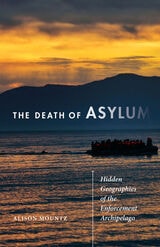
The Death of Asylum
Hidden Geographies of the Enforcement ArchipelagoAlison Mountz
University of Minnesota Press, 2020
Investigating the global system of detention centers that imprison asylum seekers and conceal persistent human rights violations
Remote detention centers confine tens of thousands of refugees, asylum seekers, and undocumented immigrants around the world, operating in a legal gray area that hides terrible human rights abuses from the international community. Built to temporarily house eight hundred migrants in transit, the immigrant “reception center” on the Italian island of Lampedusa has held thousands of North African refugees under inhumane conditions for weeks on end. Australia’s use of Christmas Island as a detention center for asylum seekers has enabled successive governments to imprison migrants from Asia and Africa, including the Sudanese human rights activist Abdul Aziz Muhamat, held there for five years.
In The Death of Asylum, Alison Mountz traces the global chain of remote sites used by states of the Global North to confine migrants fleeing violence and poverty, using cruel measures that, if unchecked, will lead to the death of asylum as an ethical ideal. Through unprecedented access to offshore detention centers and immigrant-processing facilities, Mountz illustrates how authorities in the United States, the European Union, and Australia have created a new and shadowy geopolitical formation allowing them to externalize their borders to distant islands where harsh treatment and deadly force deprive migrants of basic human rights.
Mountz details how states use the geographic inaccessibility of places like Christmas Island, almost a thousand miles off the Australian mainland, to isolate asylum seekers far from the scrutiny of humanitarian NGOs, human rights groups, journalists, and their own citizens. By focusing on borderlands and spaces of transit between regions, The Death of Asylum shows how remote detention centers effectively curtail the basic human right to seek asylum, forcing refugees to take more dangerous risks to escape war, famine, and oppression.
The Declining Significance of Race
Blacks and Changing American Institutions, Third EditionWilliam Julius Wilson
University of Chicago Press, 2012
When first published in 1980, The Declining Significance of Race immediately sparked controversy with its contentious thesis that race was becoming less of a deciding factor in the life chances of black Americans than class. This new edition of the seminal book includes a new afterword in which William Julius Wilson not only reflects on the debate surrounding the book, but also presents a provocative discussion of race, class, and social policy.
“The intellectual strength of this book lies in his capacity to integrate disparate findings from historical studies, social theory and research on contemporary trends into a complex and original synthesis that challenges widespread assumptions about the cause of black disadvantage and the way to remove it.”—Paul Starr, New York Times Book Review
“This publication is easily one of the most erudite and sober diagnoses of the American black situation. Students of race relations and anybody in a policy-making position cannot afford to bypass this study.”—Ernest Manheim, Sociology
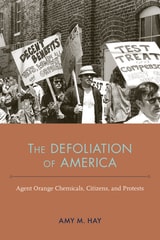
The Defoliation of America
Agent Orange Chemicals, Citizens, and ProtestsAmy M. Hay
University of Alabama Press, 2022
Examines the domestic and international use of phenoxy herbicides by the United States in the mid-twentieth century.
In The Defoliation of America: Agent Orange Chemicals, Citizens, and Protests, Amy M. Hay profiles the attitudes, understandings, and motivations of grassroots activists who rose to fight the use of phenoxy herbicides, or Agent Orange chemicals as they are commonly known, in various aspects of American life during the post-WWII era. Hay focuses her analysis on citizen responses to illuminate how regulatory policies were understood, challenged, and negotiated, contributing to a growing body of research on chemical regulatory policies, risk society, and hazardous chemicals. This volume uncovers new understandings about the authority of the state and its obligation to society, the role of scientific authority and expertise, and the protests made by various groups of citizens.
First introduced in 1946, phenoxy herbicides mimic hormones in broadleaf plants, causing them to “grow to death” while grass, grains, and other monocots remain unaffected. By the 1950s, millions of pounds of these chemicals were produced annually for use in brush control, weed eradication, forest management, and other agricultural applications. Pockets of skepticism and resistance began to appear by the late 1950s, and the trend intensified after 1962 when Rachel Carson’s Silent Spring directed mainstream attention to the harm modern chemicals were causing in the natural world. It wasn’t until the Vietnam War, however, when nearly 19 million gallons of Agent Orange and related herbicides were sprayed to clear the canopy and destroy crops in Southeast Asia, that the long-term damage associated with this group of chemicals began to attract widespread attention and alarm.
Using a wide array of sources and an interdisciplinary approach, Hay contributes to the robust fields of chemical toxicity, regulation, environmental management, and public health. This study of the scientists, health and environmental activists, and veterans who fought US chemical regulatory policies and practices reveals the mechanisms, obligations, and constraints of state and scientific authority in mid-twentieth-century America. Hay also shows how these disparate and mostly forgotten citizen groups challenged the political consensus and contested government and industry narratives of chemical safety.
The Democracy Owners' Manual
A Practical Guide to Changing the WorldShultz, Jim
Rutgers University Press, 2002
For citizens seeking to take an active role in the affairs of their community—whether improving local schools, forcing clean-up of a polluted river, or weighing in on the debate over economic globalization — the challenge of activism can be daunting. Civic activists need to understand both the issues involved and how to take effective public action, often against enormous odds. The Democracy Owners’ Manual is a unique, hands-on guide for people who want to change public policy at the local, state, or national level. A combination of policy and advocacy basics, the book offers a clear presentation of the issues and debates activists are likely to encounter as well as a lucid, example-rich guide to effective strategies and actions.
Newcomers to advocacy work will find Jim Shultz’s book an invaluable treasure chest of ideas and stimulating stories to help them tackle the issues they care about. Veterans of public advocacy and activism will find the book to be a valuable source for fresh ideas and an indispensable tool for teaching and training others in the art of social activism. The book also uniquely lends itself for university courses in political science, public administration, social work, public health, environmental studies, and other disciplines that touch on public policy and political change.
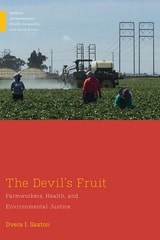
The Devil's Fruit
Farmworkers, Health, and Environmental JusticeDvera I. Saxton
Rutgers University Press, 2021
The Dilemma of Federal Mental Health Policy
Radical Reform or Incremental Change?Grob, Gerald N
Rutgers University Press, 2006
For nearly two centuries Americans have grappled with the question of how to serve individuals with severe disorders. During the second half of the twentieth century, mental health policy advocates reacted against institutional care, claiming that community care and treatment would improve the lives of people with mental disorders. Once the exclusive province of state governments, the federal government moved into this policy arena after World War II. Policies ranged from those focused on mental disorders, to those that focused more broadly on health and social welfare.
In this book, Gerald N. Grob and Howard H. Goldman trace how an ever-changing coalition of mental health experts, patients' rights activists, and politicians envisioned this community-based system of psychiatric services. The authors show how policies shifted emphasis from radical reform to incremental change. Many have benefited from this shift, but many are left without the care they require.
The Distributional Aspects of Social Security and Social Security Reform
Edited by Martin Feldstein and Jeffrey B. Liebman
University of Chicago Press, 2002
As this volume suggests, the distributional consequences of these proposals are substantially different and may disproportionately affect those groups who depend on social security to avoid poverty in old age. Together, these studies persuasively show that appropriately designed investment-based social security reforms can effectively reduce the long-term burden of an aging society on future taxpayers, increase the expected future income of retirees, and mitigate poverty rates among the elderly.
The Duty to Act
Tort Law, Power, and Public PolicyBy Marshall S. Shapo
University of Texas Press, 1977
A woman terrified by the threats of a jilted suitor is denied police protection. A workman collapses on the job and the employer is slow to help him. A bully in a bar begins to carry out threats of serious injury to a customer, after the bartender’s lackadaisical response. Springing from varied areas of human activity, such cases occupy an important area of the legal battleground called modern tort law. They also provide the basis for a fascinating legal analysis by Marshall S. Shapo.
Tort law is an important social mediator of events surrounding personal injuries. It impinges on many other areas of the law—those dealing with crime, constitutional protections against government officials and agencies, and property rights. Since litigated tort cases often involve brutal treatment or accidents inflicting severe physical harm, this area of the law generates much emotion and complex legal doctrine.
Shapo cuts through the emotion and the complexity to present a view of these problems that is both legally sound and intuitively appealing. His emphasis is on power relationships between private citizens and other individuals, as well as between private persons and governments and officials. He undertakes to define power in a meaningful way as it relates to many tort issues faced by ordinary citizens, and to make this definition precise by constant reference to concrete cases. His particular focus is on an age-old problem in tort law: the question of when a person has a duty to aid another in peril.
In analyzing a large number of cases in this category, Shapo develops an analysis that blends considerations of economic efficiency and humanitarian concern. Recognizing that economic considerations are significant in judicial analysis of these cases, he emphasizes elements that go beyond a simple concern with efficiency, especially the ability of one person to control another’s actions or exposure to risk.
These considerations of power and corresponding dependence provide the basis for Shapo’s study of the duties of both private citizens and governments to prevent injury to others. Calling on a broad range of legal precedents, he also refers to social science research dealing with the behavior of bystanders when fellow citizens are under attack.
Beyond his application of a power-based analysis to litigation traditionally based in tort doctrine, Shapo offers some speculative suggestions on the possible applicability of his views to several controversial areas of welfare law: medical care, municipal services, and educational standards.
This book was written with a view to readership by interested citizens as well as legal scholars, judges, and practicing attorneys.
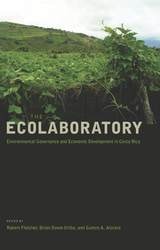
The Ecolaboratory
Environmental Governance and Economic Development in Costa RicaEdited by Robert Fletcher, Brian Dowd-Uribe, and Guntra A. Aistara
University of Arizona Press, 2020
This book explores these challenges, how Costa Rica is responding to them, and the lessons this holds for current and future trends regarding environmental governance and sustainable development. It provides the first comprehensive assessment of successes and challenges as they play out in a variety of sectors, including agricultural development, biodiversity conservation, water management, resource extraction, and climate change policy.
By framing Costa Rica as an “ecolaboratory,” the contributors in this volume examine the lessons learned and offer a path for the future of sustainable development research and policy in Central America and beyond.
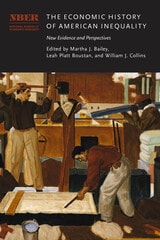
The Economic History of American Inequality
New Evidence and PerspectivesEdited by Martha J. Bailey, Leah Platt Boustan, and William J. Collins
University of Chicago Press, 2025
A meticulous examination of the history and roots of economic inequality within the United States.
This volume refines and extends the economic history literature on economic inequality in the United States. Economic inequality manifests itself on various dimensions, including access to resources and economic security, as well as access to education and opportunities for migration, marriage, and other important life decisions. Measuring inequality and studying its variation over time and in response to economic shocks such as recessions and wars deepen our understanding of how the economy operates and can inform the design of public policies. The studies in this compendium present comprehensive evidence on income distribution during the nineteenth and early twentieth centuries, drawing on new data on wages and prices. They also consider disparities in economic well-being that are reflected in outcomes other than wage and salary income, such as homeownership and marriage. The volume also presents new evidence on the effects of income inequality on social outcomes. It concludes with an intellectual history of “human capital,” a core concept in the economic analysis of the underpinnings of labor market inequality.
The Economics of Aging
Edited by David A. Wise
University of Chicago Press, 1988
The Economics of Aging presents results from an ongoing National Bureau of Economic Research project. Contributors consider the housing mobility and living arrangements of the elderly, their labor force participation and retirement, the economics of their health care, and their financial status. The goal of the research is to further our understanding both of the factors that determine the well-being of the elderly and of the consequences that follow from an increasingly older population with longer individual life spans. Each paper is accompanied by critical commentary.
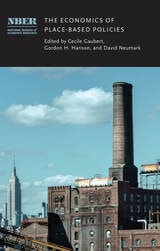
The Economics of Place-Based Policies
Edited by Cecile Gaubert, Gordon H. Hanson, and David Neumark
University of Chicago Press, 2026
A wide-ranging collection of research examining the intricate economics of place-based policies.
After decades of skepticism about place-based policies, recent initiatives such as Opportunity Zones and elements of the Inflation Reduction Act signal renewed policy interest in targeting economically distressed areas. This volume surveys empirical findings from the US and Europe on the effectiveness of these policies, explores new theoretical rationales for geographic targeting, and examines the institutional contexts that shape policy design and implementation. The contributors evaluate major place-based initiatives and consider nontraditional approaches to supporting regional economies, including large-scale industrial interventions, public employment reallocation, and economic development on Native American reservations.
This collection is not limited to empirical policy impact evaluations as it takes a broader-ranging perspective. The contributors present evaluation evidence while also emphasizing the features, implementation processes, and institutional settings that shape policy effectiveness. They address critical questions such as: What new insights from economic theory can inform the design of place-based policies? What lessons from past policies are reflected—or ignored—in current approaches? How does US policymaking compare with European practices, and what takeaways can be derived from the comparison of the two?
The Economics of Place-Based Policies provides policymakers with evidence-based guidance on the design of effective interventions while offering researchers a comprehensive foundation for future study of how public policy can address geographic economic disparities.
The Economics of Property-Casualty Insurance
Edited by David F. Bradford
University of Chicago Press, 1998
The first paper, on external financing and insurance cycles, contains a wealth of information on trends and patterns in the industry's financial structure. The last essay, which compares performance of stock and mutual insurance companies, takes a fresh look at the way a company's organizational structure affects its responses to different economic situations. Two papers focus on rate regulation in the auto insurance industry, and provide broad overviews of the structure and economics of the insurance industry as a whole. Also addressed are the system of regulating insurance companies in the United States, who insures the insurers, and the effects of tax law changes in the 1980s on the prices of insurance policies.

The Effortless Economy of Science?
Philip Mirowski
Duke University Press, 2004
Mirowski contends that neoclassical economists have persistently presumed and advanced an “effortless economy of science,” a misleading model of a self-sufficient and conceptually self-referential social structure that transcends market operations in pursuit of absolute truth. In the stunning essays collected here, he presents a radical critique of the ways that neoclassical economics is used to support, explain, and legitimate the current social practices underlying the funding and selection of “successful” science projects. He questions a host of theories, including the portraits of science put forth by Karl Popper, Michael Polanyi, and Thomas Kuhn. Among the many topics he examines are the social stabilization of quantitative measurement, the repressed history of econometrics, and the social construction of the laws of supply and demand and their putative opposite, the gift economy. In The Effortless Economy of Science? Mirowski moves beyond grand abstractions about science, truth, and democracy in order to begin to talk about the way science is lived and practiced today.
The End Of Capitalism (As We Knew It)
A Feminist Critique of Political EconomyJ. K. Gibson-Graham
University of Minnesota Press, 2006
“Paralyzing problems are banished by this dazzlingly lucid, creative, and practical rethinking of class and economic transformation.” —Meaghan Morris, Lingnan University, Hong Kong
“Profoundly imaginative.” —Eve Kosofsky Sedgwick, City University of New York “Filled with insights, it is clearly written and well supported with good examples of actual, deconstructive practices.” —International Journal of Urban and Regional Research
J. K. Gibson-Graham is the pen name of Katherine Gibson and Julie Graham, feminist economic geographers who work, respectively, at the Australian National University in Canberra and the University of Massachusetts Amherst.
The End of the Village
Planning the Urbanization of Rural ChinaNick R. Smith
University of Minnesota Press, 2021
How China’s expansive new era of urbanization threatens to undermine the foundations of rural life
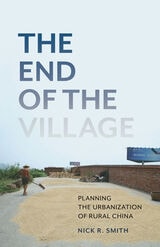
Since the beginning of the twenty-first century, China has vastly expanded its urbanization processes in an effort to reduce the inequalities between urban and rural areas. Centered on the mountainous region of Chongqing, which serves as an experimental site for the country’s new urban development policies, The End of the Village analyzes the radical expansion of urbanization and its consequences for China’s villagers. It reveals a fundamental rewriting of the nation’s social contract, as villages that once organized rural life and guaranteed rural livelihoods are replaced by an increasingly urbanized landscape dominated by state institutions.
Throughout this comprehensive study of China’s “urban–rural coordination” policy, Nick R. Smith traces the diminishing autonomy of the country’s rural populations and their subordination to larger urban networks and shared administrative structures. Outside Chongqing’s urban centers, competing forces are at work in reshaping the social, political, and spatial organization of its villages. While municipal planners and policy makers seek to extend state power structures beyond the boundaries of the city, village leaders and inhabitants try to maintain control over their communities’ uncertain futures through strategies such as collectivization, shareholding, real estate development, and migration.
As China seeks to rectify the development crises of previous decades through rapid urban growth, such drastic transformations threaten to displace existing ways of life for more than 600 million residents. Offering an unprecedented look at the country’s contentious shift in urban planning and policy, The End of the Village exposes the precarious future of rural life in China and suggests a critical reappraisal of how we think about urbanization.
The Enduring Legacy
Structured Inequality in America's Public SchoolsMark Ryan
University of Michigan Press, 2020
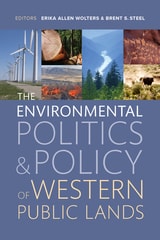
The Environmental Politics and Policy of Western Public Lands
Erika Allen Wolters
Oregon State University Press, 2020
While a number of scholars work on the politics and policy of public land management, there has been no central book on the topic since the publication of Charles Davis's Western Public Lands and Environmental Politics (Westview, 2001). In The Environmental Politics and Policy of Western Public Lands, Erika Allen Wolters and Brent Steel have assembled a stellar cast of scholars to consider long-standing issues and topics such as endangered species, land use, and water management while addressing more recent challenges to western public lands like renewable energy siting, fracking, Native American sovereignty, and land use rebellions. Chapters also address the impact of climate change on policy dimensions and scope.
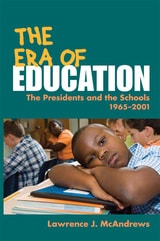
The Era of Education
The Presidents and the Schools, 1965-2001Lawrence J. McAndrews
University of Illinois Press, 2005
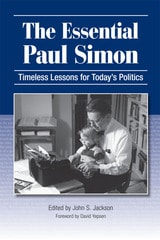
The Essential Paul Simon
Timeless Lessons for Today's PoliticsEdited by John S. Jackson. Foreword by David Yepsen
Southern Illinois University Press, 2012
While Simon covered a broad spectrum of topics in his written works, his mission throughout the years remained the same: to urge his constituents to study and understand issues that affected their daily lives and to make the complexities of politics accessible to the average citizen. An indispensable volume for voters and politicians alike, The Essential Paul Simon compiles some of the most thought-provoking writings from one of the keenest political minds in our nation’s history. Years after their publication, Simon’s eloquent and energetic conversations continue to provide witty, informative guidance through the maze of American politics and inspire the development of spirited public discussion and debate.
Certificate of Excellence from the Illinois State Historical Society, 2013
The European Union
From Jean Monnet to the EuroDean Kotlowski
Ohio University Press, 2000
This collection of essays, drawn from the lectures of the 1999 Baker Conference at Ohio University, explores Monnet's vision of an integrated Europe, its gradual implementation, and the social, economic, and international consequences. The scholarship focuses upon Monnet's life, personality, and legacy, the development of social policy within the European Union (EU), the economic and national security implications of the EU, and the continuation of an American presence in Europe through the North Atlantic Treaty Organization.
This significant collection fuses biography with comparative political economy and policy studies to help political scientists, sociologists, economists, international lawyers, and historians on both sides of the Atlantic understand important aspects of Europe's post–1945 development.
The Evolution of Agrarian Institutions
A Comparative Study of Post-Socialist Hungary and BulgariaMieke Meurs
University of Michigan Press, 2001
The Evolution of Retirement
An American Economic History, 1880-1990Dora L. Costa
University of Chicago Press, 1998

The Failure of Capitalist Production
Underlying Causes of the Great RecessionAndrew Kliman
Pluto Press, 2011
The recent financial crisis and Great Recession have been analysed endlessly in the mainstream and academia, but this is the first book to conclude, on the basis of in-depth analyses of official US data, that Marx’s crisis theory can explain these events.
Marx believed that the rate of profit has a tendency to fall, leading to economic crises and recessions. Many economists, Marxists among them, have dismissed this theory out of hand, but Andrew Kliman’s careful data analysis shows that the rate of profit did indeed decline after the post-World War II boom and that free-market policies failed to reverse the decline. The fall in profitability led to sluggish investment and economic growth, mounting debt problems, desperate attempts of governments to fight these problems by piling up even more debt – and ultimately to the Great Recession.
Kliman's conclusion is simple but shocking: short of socialist transformation, the only way to escape the ‘new normal’ of a stagnant, crisis-prone economy is to restore profitability through full-scale destruction of existing wealth, something not seen since the Depression of the 1930s.
The Failure of Corporate Law
Fundamental Flaws and Progressive PossibilitiesKent Greenfield
University of Chicago Press, 2007
When used in conjunction with corporations, the term “public” is misleading. Anyone can purchase shares of stock, but public corporations themselves are uninhibited by a sense of societal obligation or strict public oversight. In fact, managers of most large firms are prohibited by law from taking into account the interests of the public in decision making, if doing so hurts shareholders. But this has not always been the case, as until the beginning of the twentieth century, public corporations were deemed to have important civic responsibilities.
With The Failure of Corporate Law, Kent Greenfield hopes to return corporate law to a system in which the public has a greater say in how firms are governed. Greenfield maintains that the laws controlling firms should be much more protective of the public interest and of the corporation’s various stakeholders, such as employees. Only when the law of corporations is evaluated as a branch of public law—as with constitutional law or environmental law—will it be clear what types of changes can be made in corporate governance to improve the common good. Greenfield proposes changes in corporate governance that would enable corporations to meet the progressive goal of creating wealth for society as a whole rather than merely for shareholders and executives.
The Fair Trade Revolution
Edited by John Bowes
Pluto Press, 2011
Fair Trade is now mainstream, with large companies like Cadbury's and supermarkets such as Sainsbury's producing and stocking many Fair Trade products. The authors of this collection, many of whom were responsible for the initial success of Fair Trade, emphasise the importance of ensuring that farmers and other producers remain the main beneficiaries. Punchy chapters, illustrated with many real-world examples, cover all the important issues including the tensions between large and small operators, the impact of recession, environmental policy and the danger of large operators embracing Fair Trade more in word than in practice.
Written by the leading lights of the Fair Trade movement, including Harriet Lamb (Executive Director of the Fairtrade Foundation) and Bruce Crowther (Establisher of the world's first Fair Trade Town) this book will inspire activists and consumers to keep making the right choices.
The Fantasy Economy
Neoliberalism, Inequality, and the Education Reform MovementKraus, Neil
Temple University Press, 2023
The Fantasy Economy challenges the basic assumptions of the education reform movement of the last few decades. Kraus insists that education cannot control the labor market and unreliable corporate narratives fuel this misinformation. Moreover, misguided public policies, such as accountability and school choice, along with an emphasis on workforce development and STEM over broad-based liberal arts education, have only produced greater inequality.
Ultimately, The Fantasy Economy argues that education should be understood as a social necessity, not an engine of the neoliberal agenda. Kraus’ book advocates for a change in conventional thinking about economic opportunity and the purpose of education in a democracy.

The Federal Future of Europe
From the European Community to the European UnionDusan Sidjanski
University of Michigan Press, 2000
The author argues that federalism is the best antidote to the reemergence of nationalism in Europe. It is also the best guarantee for a peaceful community that balances the claims of national, regional, and local identity against the need for large-scale economies that springs from the forces of globalization, competition, and technical change. The Union preserves diversity within a flexible and innovating European system.
This major study of the development of the European project, informed by a thorough knowledge of the Community and Union over the years and by deep understanding of the relevant literatures in political science and political economy is important for all who study the European Union or work with it as officials and business people.
Dusan Sidjanski is founder and Professor Emeritus of the Department of Political Science, University of Geneva and Professor Emeritus, European Institute. He has authored numerous publications, most recently, The ECE in the Age of Change (United Nations Economic Commission for Europe, United Nations).
The Fire Ant Wars
Nature, Science, and Public Policy in Twentieth-Century AmericaJoshua Blu Buhs
University of Chicago Press, 2004
With political intrigue, environmental tragedy, and such figures as Rachel Carson and E. O. Wilson, The Fire Ant Wars is a grippingly perceptive tale of changing social attitudes and scientific practices. Tracing the political and scientific eradication campaigns, Joshua Buhs's bracing study uses the saga as a means to consider twentieth-century American concepts of nature and environmental stewardship. In telling the story, Buhs explores how human concepts of nature evolve and how these ideas affect the natural and social worlds.
Spotlighting a particular issue to discuss larger questions of science, public perceptions, and public policy—from pre-environmental awareness to the activist years of the early environmental movement—The Fire Ant Wars will appeal to historians of science, environmentalists, and biologists alike.

The Five Health Frontiers
A New Radical BlueprintChristopher Thomas
Pluto Press, 2022
Covid-19 has exposed the limits of a neoliberal public health orthodoxy. But instead of imagining radical change, the left is stuck in a rearguard action focused on defending the NHS from the wrecking ball of privatization.
Public health expert Christopher Thomas argues that we must emerge from Covid-19 on the offensive - with a bold, new vision for our health and care. He maps out five new frontiers for public health and imagines how we can move beyond safeguarding what we have to a radical expansion of the principles put forward by Aneurin Bevan, the founder of the NHS, over 70 years ago.
Beyond recalibrating our approach to healthcare services, his blueprint includes a fundamental redesign of our economy through Public Health Net Zero; a bold new universal public health service fit to address the real causes of ill health; and a major recalibration in the efforts against the epidemiological reality of an era of pandemics.
The Food We Eat, the Stories We Tell
Contemporary Appalachian TablesElizabeth S. D. Engelhardt
Ohio University Press, 2019
Blue Ridge tacos, kimchi with soup beans and cornbread, family stories hiding in cookbook marginalia, African American mountain gardens—this wide-ranging anthology considers all these and more. Diverse contributors show us that contemporary Appalachian tables and the stories they hold offer new ways into understanding past, present, and future American food practices. The poets, scholars, fiction writers, journalists, and food professionals in these pages show us that what we eat gives a beautifully full picture of Appalachia, where it’s been, and where it’s going.
Contributors: Courtney Balestier, Jessie Blackburn, Karida L. Brown, Danille Elise Christensen, Annette Saunooke Clapsaddle, Michael Croley, Elizabeth S. D. Engelhardt, Robert Gipe, Suronda Gonzalez, Emily Hilliard, Rebecca Gayle Howell, Abigail Huggins, Erica Abrams Locklear, Ronni Lundy, George Ella Lyon, Jeff Mann, Daniel S. Margolies, William Schumann, Lora E. Smith, Emily Wallace, Crystal Wilkinson
The Foreign Policy Disconnect
What Americans Want from Our Leaders but Don't GetBenjamin I. Page with Marshall M. Bouton
University of Chicago Press, 2006
With world affairs so troubled, what kind of foreign policy should the United States pursue? Benjamin Page and Marshall Bouton look for answers in a surprising place: among the American people. Drawing on a series of national surveys conducted between 1974 and 2004, Page and Bouton reveal that—contrary to conventional wisdom—Americans generally hold durable, coherent, and sensible opinions about foreign policy. Nonetheless, their opinions often stand in opposition to those of policymakers, usually because of different interests and values, rather than superior wisdom among the elite. The Foreign Policy Disconnect argues that these gaps between leaders and the public are harmful, and that by using public opinion as a guideline policymakers could craft a more effective, sustainable, and democratic foreign policy.
Page and Bouton support this argument by painting a uniquely comprehensive portrait of the military, diplomatic, and economic foreign policies Americans favor. They show, for example, that protecting American jobs is just as important to the public as security from attack, a goal the current administration seems to pursue single-mindedly. And contrary to some officials’ unilateral tendencies, the public consistently and overwhelmingly favors cooperative multilateral policy and participation in international treaties. Moreover, Americans’ foreign policy opinions are seldom divided along the usual lines: majorities of virtually all social, ideological, and partisan groups seek a policy that pursues the goals of security and justice through cooperative means. Written in a clear and engaging style, The Foreign Policy Disconnect calls, in an original voice, for a more democratic approach to creating such a policy.
The Forgotten Men
Serving a Life without Parole SentenceLeigey, Margaret E
Rutgers University Press, 2015
The Fragmented Politics of Urban Preservation
Beijing, Chicago, and ParisYue Zhang
University of Minnesota Press, 2013
While urban preservation is almost as old as cities themselves, it has become increasingly controversial in modern cities. In this book, Yue Zhang presents a cross-national comparative analysis of the politics of urban preservation. Based on comprehensive archival research and more than two hundred in-depth interviews in Beijing, Chicago, and Paris, Zhang finds that urban preservation provides a tool for diverse political and social actors to frame their propositions and advance their favored courses of action.
In cities from West to East, divergent political and economic interests have caused urban preservation to become contested. Exploring three of the world’s great cities, Zhang deftly navigates readers through each case study, illustrating the complexities of the politics of urban preservation in each city. In Beijing, urban preservation was integral to promoting economic growth and enhancing the city’s image during the lead-up to the 2008 Olympics; in Chicago, it is used to increase property values and revitalize neighborhoods; and in Paris, it offers a channel for national and municipal governments to compete for control over urban space.
Although urban preservation serves various purposes in these cities, Zhang explains how different types of political fragmentation have affected the implementation of preservation initiatives in predictable ways, thus generating distinct patterns of urban preservation. A comparative urban politics study of unusual breadth, The Fragmented Politics of Urban Preservation gives us insight into the complex policy process of urban preservation through which political institutions are intertwined with interests and inclinations, fundamentally shaping the direction of urban development, the physical forms of cities, and the lives of citizens.
The Future of Family Farms
Practical Farmers' Legacy Letters ProjectTeresa Opheim
University of Iowa Press, 2016
The Farm Legacy Letters project, developed by the member-driven nonprofit Practical Farmers of Iowa, is designed to help farmers and farmland owners think about their farm’s future and talk about it with their families. An essential complement to handbooks on business succession, this book gathers the letters and stories of midwestern families about the land they cherish—how they acquired it, what they treasure most about it, and their hopes for its future. Some of the writers descend from families who have owned a particular patch of the earth since the 1800s, while others became farmland owners more recently—one as recently as 2015. Some are no longer farmland owners at all, because—after careful thought about what mattered most to them—they sold their land to the next generation of farmers.
All of these writers hope that, by sharing their farmland legacies, they will encourage others to ponder and then write about the histories, accomplishments, challenges, and hopes for their farmland for the generations who come after they are gone.

The Game of Conservation
International Treaties to Protect the World’s Migratory AnimalsMark Cioc
Ohio University Press, 2009
The Game of Conservation is a brilliantly crafted and highly readable examination of nature protection around the world.
Twentieth-century nature conservation treaties often originated as attempts to regulate the pace of killing rather than as attempts to protect animal habitat. Some were prompted by major breakthroughs in firearm techniques, such as the invention of the elephant gun and grenade harpoons, but agricultural development was at least as important as hunting regulations in determining the fate of migratory species. The treaties had many defects, yet they also served the goal of conservation to good effect, often saving key species from complete extermination and sometimes keeping the population numbers at viable levels. It is because of these treaties that Africa is dotted with large national parks, that North America has an extensive network of bird refuges, and that there are any whales left in the oceans. All of these treaties are still in effect today, and all continue to influence nature-protection efforts around the globe.
Drawing on a wide variety of primary and secondary sources, Mark Cioc shows that a handful of treaties—all designed to protect the world’s most commercially important migratory species—have largely shaped the contours of global nature conservation over the past century. The scope of the book ranges from the African savannahs and the skies of North America to the frigid waters of the Antarctic.
The Geoarchaeology of a Terraced Landscape
From Aztec Matlatzinco to Modern CalixtlahuacaAleksander Borejsza, Isabel Rodríguez López, Charles D. Frederick, and Michael E. Smith
University of Utah Press, 2021
Working at a settlement in the Toluca Valley of central Mexico, the authors used fieldwalking, excavation, soil and artifact analyses, maps, aerial photos, land deeds, and litigation records to reconstruct the changing landscape through time. Exploiting the methodologies and techniques of several disciplines, they bring context to eight centuries of the region’s agrarian history, exploring the effects of the Aztec and Spanish Empires, reform, and revolution on the physical shape of the Mexican countryside and the livelihoods of its people. Accessible to specialists and nonspecialists alike, this well-illustrated and well-organized volume provides a step-by-step guide that can be applied to the study of terraced landscapes anywhere in the world.
The four authors share an interest in terraced landscapes and have worked together and on their own on a variety of archaeological projects in Mesoamerica, the Mediterranean, Poland, and the United Kingdom.
The Ghosts of Berlin
Confronting German History in the Urban LandscapeBrian Ladd
University of Chicago Press, 1997
"Written in a clear and elegant style, The Ghosts of Berlin is not just another colorless architectural history of the German capital. . . . Mr. Ladd's book is a superb guide to this process of urban self-definition, both past and present."—Katharina Thote, Wall Street Journal
"If a book can have the power to change a public debate, then The Ghosts of Berlin is such a book. Among the many new books about Berlin that I have read, Brian Ladd's is certainly the most impressive. . . . Ladd's approach also owes its success to the fact that he is a good storyteller. His history of Berlin's architectural successes and failures reads entertainingly like a detective novel."—Peter Schneider, New Republic
"[Ladd's] well-written and well-illustrated book amounts to a brief history of the city as well as a guide to its landscape."—Anthony Grafton, New York Review of Books
The Global Hunger Crisis
Tackling Food Insecurity in Developing CountriesMajda Bne Saad
Pluto Press, 2013
Millions across the world face the daily challenge to find enough food to survive. Hunger is on the rise globally, with more than 1.2 billion people suffering from food insecurity. Rising prices are further restricting food access.
In this deeply informative study, Majda Bne Saad identifies the causes for global hunger embedded in the current global political and economic system and highlights the key challenges facing food deficit countries. She shows how Western countries share the blame for global hunger through their support for subsidies to agricultural production and biofuels, which have created new challenges to food security worldwide.
Bne Saad argues that, as world population rises from 7 billion to 9.2 billion by 2050, there needs to be a ‘second green revolution’ to grow more food. She looks at the factors constraining low-income nations from achieving food security and considers policies which could generate income and enhance individuals' entitlement to food.
The Global Political Economy of Israel
Jonathan Nitzan and Shimshon Bichler
Pluto Press, 2002
Over the past century, Israel has been transformed from an agricultural colony, to a welfare-warfare state, to a globally integrated "market economy" characterised by great income disparities. What lies behind this transformation? In order to understand capitalist development, argue Bichler and Nitzan, we need to break the artificial separation between "economics" and "politics", and think of accumulation itself as "capitalisation of power". Applying this concept to Israel, they reveal the big picture that never makes it to the news. Diverse processes – such as regional conflicts and energy crises, ruling class formation and dominant ideology, militarism and dependency, inflation and recession, the politics of high-technology and the transnationalisation of ownership – are all woven into a single story. The result is a fascinating account of one of the world’s most volatile regions.
The Government-Citizen Disconnect
Suzanne Mettler
Russell Sage Foundation, 2018
Drawing from original survey data which probed Americans’ experiences of 21 federal social policies -- such as food stamps, Social Security, Medicaid, and the home mortgage interest deduction -- Mettler shows that 96 percent of adults have received benefits from at least one of them, and that the average person has utilized five. Overall usage rates transcend social, economic, and political divisions, and most Americans report positive experiences of their policy experiences. However, the fact that they have benefited from these policies has little positive effect on people’s attitudes toward government. Mettler finds that shared identities and group affiliations, as well as ideological forces, are more powerful and consistent influences. In particular, those who oppose welfare tend to extrapolate their unfavorable views of it to government in general. Deep antipathy toward the government has emerged as the result of a conservative movement that has waged a war on social welfare policies for over forty years, even as economic inequality and benefit use have increased.
Mettler finds that voting patterns exacerbate the government-citizen disconnect, as those holding positive views of federal programs and supporting expanded benefits have lower rates of political participation than those holding more hostile views of the government. As a result, the loudest political voice belongs to those who have benefited from policies but who give government little credit for their economic well-being, seeing their success more as a matter of their own deservingness. This contributes to the election of politicians who advocate cutting federal social programs. According to Mettler, the government-citizen disconnect frays the bonds of representative government and democracy.
The Government-Citizen Disconnect illuminates a paradox that increasingly shapes American politics. Mettler's examination of hostility toward government at a time when most Americans will at some point rely on the social benefits it provides helps us better understand the roots of today's fractious political climate.
The Great American Transit Disaster
A Century of Austerity, Auto-Centric Planning, and White FlightNicholas Dagen Bloom
University of Chicago Press, 2023
Many a scholar and policy analyst has lamented American dependence on cars and the corresponding lack of federal investment in public transportation throughout the latter decades of the twentieth century. But as Nicholas Dagen Bloom shows in The Great American Transit Disaster, our transit networks are so bad for a very simple reason: we wanted it this way.
Focusing on Baltimore, Atlanta, Chicago, Detroit, Boston, and San Francisco, Bloom provides overwhelming evidence that transit disinvestment was a choice rather than destiny. He pinpoints three major factors that led to the decline of public transit in the United States: municipal austerity policies that denied most transit agencies the funding to sustain high-quality service; the encouragement of auto-centric planning; and white flight from dense city centers to far-flung suburbs. As Bloom makes clear, these local public policy decisions were not the product of a nefarious auto industry or any other grand conspiracy—all were widely supported by voters, who effectively shut out options for transit-friendly futures. With this book, Bloom seeks not only to dispel our accepted transit myths but hopefully to lay new tracks for today’s conversations about public transportation funding.
The Great American Transit Disaster
A Century of Austerity, Auto-Centric Planning, and White FlightNicholas Dagen Bloom
University of Chicago Press, 2023
A potent re-examination of America’s history of public disinvestment in mass transit.
Many a scholar and policy analyst has lamented American dependence on cars and the corresponding lack of federal investment in public transportation throughout the latter decades of the twentieth century. But as Nicholas Dagen Bloom shows in The Great American Transit Disaster, our transit networks are so bad for a very simple reason: we wanted it this way.
Focusing on Baltimore, Atlanta, Chicago, Detroit, Boston, and San Francisco, Bloom provides overwhelming evidence that transit disinvestment was a choice rather than destiny. He pinpoints three major factors that led to the decline of public transit in the United States: municipal austerity policies that denied most transit agencies the funding to sustain high-quality service; the encouragement of auto-centric planning; and white flight from dense city centers to far-flung suburbs. As Bloom makes clear, these local public policy decisions were not the product of a nefarious auto industry or any other grand conspiracy—all were widely supported by voters, who effectively shut out options for transit-friendly futures. With this book, Bloom seeks not only to dispel our accepted transit myths but hopefully to lay new tracks for today’s conversations about public transportation funding.
The Great Broadening
How the Vast Expansion of the Policymaking Agenda Transformed American PoliticsBryan D. Jones, Sean M. Theriault, and Michelle Whyman
University of Chicago Press, 2019
With The Great Broadening, Bryan D. Jones, Sean M. Theriault, and Michelle Whyman examine in detail the causes, internal dynamics, and consequences of this extended burst of activity. They argue that the broadening of government responsibilities into new policy areas such as health care, civil rights, and gender issues and the increasing depth of existing government programs explain many of the changes in America politics since the 1970s. Increasing government attention to particular issues was motivated by activist groups. In turn, the beneficiaries of the government policies that resulted became supporters of the government’s activity, leading to the broad acceptance of its role. This broadening and deepening of government, however, produced a reaction as groups critical of its activities organized to resist and roll back its growth.
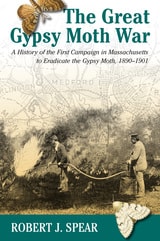
The Great Gypsy Moth War
A History of the First Campaign in Massachusetts to Eradicate the Gypsy Moth, 1890-1901Robert J. Spear
University of Massachusetts Press, 2005
During the Civil War, when the supply of cotton from southern fields was disrupted, the owners of northern textile mills looked elsewhere for raw fiber. One source was silk. Among those experimenting with silkworm production was a Frenchman named Etienne Leopold Trouvelot, who had settled outside of Boston. It was Trouvelot who imported the gypsy moths and inadvertently allowed them to escape. Soon the invasion was on and a counteroffensive was required.
Spear reveals the turbulent undercurrents in the eradication campaign when the enthusiasm of the entomologists in charge turned into desperation upon the discovery that their alien adversary was much tougher than they thought. Fighting a war they could not win and dared not lose, the leaders of the campaign resorted to political maneuvering, cheap tricks, and outright misrepresentation to maintain a façade of success, urging the Commonwealth to continue funding the war long after any chance of victory had faded.
More than just reviewing the important events of this historic episode, Spear tells the story in an engaging way, often through the first-hand accounts of those who were directly involved. Much of what Spear has written is new, the recounting is lively, and the information he presents shows that almost all of the previous beliefs about the campaign to eradicate the gypsy moths are myths. In the process, he also traces the rise of modern economic entomology and the birth of the pesticide industry.

The Great Society and Its Legacy
Twenty Years of U.S. Social PolicyMarshall Kaplan and Peggy Cuciti, eds.
Duke University Press, 1986
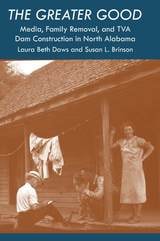
The Greater Good
Media, Family Removal, and TVA Dam Construction in North AlabamaLaura Beth Daws and Susan L. Brinson
University of Alabama Press, 2019
For poverty-stricken families in the Tennessee River Valley during the Great Depression, news of President Franklin D. Roosevelt’s New Deal plans to create the Tennessee Valley Authority—bringing the promise of jobs, soil conservation, and electricity—offered hope for a better life. The TVA dams would flood a considerable amount of land on the riverbanks, however, forcing many families to relocate. In exchange for this sacrifice for the “greater good,” these families were promised “fair market value” for their land. As the first geographic location to benefit from the electricity provided by TVA, the people of North Alabama had much to gain, but also much to lose.
In The Greater Good: Media, Family Removal, and TVA Dam Construction in North Alabama Laura Beth Daws and Susan L. Brinson describe the region’s preexisting conditions, analyze the effects of relocation, and argue that local newspapers had a significant impact in promoting the TVA’s agenda. The authors contend that it was principally through newspapers that local residents learned about the TVA and the process and reasons for relocation. Newspapers of the day encouraged regional cooperation by creating an overwhelmingly positive image of the TVA, emphasizing its economic benefits and disregarding many of the details of removal.
Using mostly primary research, the volume addresses two key questions: What happened to relocated families after they sacrificed their homes, lifestyles, and communities in the name of progress? And what role did mediated communication play in both the TVA’s family relocation process and the greater movement for the public to accept the TVA’s presence in their lives? The Greater Good offers a unique window into the larger impact of the New Deal in the South. Until now, most research on the TVA was focused on organizational development rather than on families, with little attention paid to the role of the media in garnering acceptance of a government-enforced relocation.
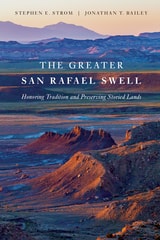
The Greater San Rafael Swell
Honoring Tradition and Preserving Storied LandsStephen E. Strom and Jonathan T. Bailey
University of Arizona Press, 2022
Natural and human history come together in The Greater San Rafael Swell, which spans much of Emery County in Utah. Authors Stephen Strom and Jonathan Bailey paint a multi-faceted picture of a singular place through photographs, along with descriptions of geology, paleontology, archaeology, history, and dozens of interviews with individuals who devoted more than two decades to developing a shared vision of the future of both the Swell and the County. At its core, the book relates the important story of how a coalition of ranchers, miners, off-road enthusiasts, conservationists, recreationists, and Native American tribal nations worked together for nearly 25 years to forge and pass the Emery County Public Lands Management Act in 2019.
This book chronicles hopeful stories for our times: how citizens of Emery and three other counties in the rural West worked to resolve perhaps the most volatile issue in the region – the future of public lands. Both their successes and the processes by which they found common ground serve as beacons in today’s uncertain landscape – beacons that can illuminate paths toward rebuilding our shared democracy from the ground up.
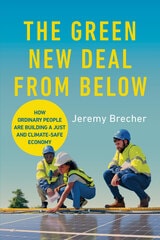
The Green New Deal from Below
How Ordinary People Are Building a Just and Climate-Safe EconomyJeremy Brecher
University of Illinois Press, 2024
A visionary program for national renewal, the Green New Deal aims to protect the earth’s climate while creating good jobs, reducing injustice, and eliminating poverty. Its core principle is to use the necessity for climate protection as a basis for realizing full employment and social justice.
Jeremy Brecher goes beyond the national headlines and introduces readers to the community, municipal, county, state, tribal, and industry efforts advancing the Green New Deal across the United States. Brecher illustrates how such programs from below do the valuable work of building constituencies and providing proofs of concept for new ideas and initiatives. Block by block, these activities have come together to form a Green New Deal built on a strong foundation of small-scale movements and grassroots energy.
A call for hope and a better tomorrow, The Green New Deal from Below offers a blueprint for reconstructing society on new principles to avoid catastrophic climate change.
The Green Revolution in the Global South
Science, Politics, and Unintended ConsequencesR. Douglas Hurt
University of Alabama Press, 2020
The Green Revolution was devised to increase agricultural production worldwide, particularly in the developing world. Agriculturalists employed anhydrous ammonia and other fertilizing agents, mechanical tilling, hybridized seeds, pesticides, herbicides, and a multitude of other techniques to increase yields and feed a mushrooming human population that would otherwise suffer starvation as the world’s food supply dwindled.
In The Green Revolution in the Global South: Science, Politics, and Unintended Consequences, R. Douglas Hurt demonstrates that the Green Revolution did not turn out as neatly as scientists predicted. When its methods and products were imported to places like Indonesia and Nigeria, or even replicated indigenously, the result was a tumultuous impact on a society’s functioning. A range of factors—including cultural practices, ethnic and religious barriers, cost and availability of new technologies, climate, rainfall and aridity, soil quality, the scale of landholdings, political policies and opportunism, the rise of industrial farms, civil unrest, indigenous diseases, and corruption—entered into the Green Revolution calculus, producing a series of unintended consequences that varied from place to place. As the Green Revolution played out over time, these consequences rippled throughout societies, affecting environments, economies, political structures, and countless human lives.
Analyzing change over time, almost decade by decade, Hurt shows that the Green Revolution was driven by the state as well as science. Rather than acknowledge the vast problems with the Green Revolution or explore other models, Hurt argues, scientists and political leaders doubled down and repeated the same missteps in the name of humanity and food security. In tracing the permutations of modern science’s impact on international agricultural systems, Hurt documents how, beyond increasing yields, the Green Revolution affected social orders, politics, and lifestyles in every place its methods were applied—usually far more than once.