Results by title
4743 books match the query 'Religion' and 1168 start with t
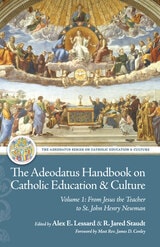
The Adeodatus Handbook on Catholic Education and Culture
Volume 1: From Jesus the Teacher to St. John Henry NewmanAlex E. Lessard
Catholic University of America Press, 2025
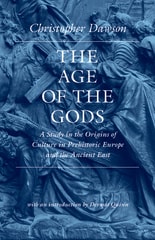
The Age of the Gods
Christopher Dawson
Catholic University of America Press, 2012
The Aggada of the Bavli and Its Cultural World
Geoffrey Herman
SBL Press, 2018
Essays that explore the rich engagement of the Talmud with its cultural world
The Babylonian Talmud (Bavli), the great compilation of Jewish law edited in the late Sasanian era (sixth–seventh century CE), also incorporates a great deal of aggada, that is, nonlegal material, including interpretations of the Bible, stories, folk sayings, and prayers. The Talmud’s aggadic traditions often echo conversations with the surrounding cultures of the Persians, Eastern Christians, Manichaeans, Mandaeans, and the ancient Babylonians, and others. The essays in this volume analyze Bavli aggada to reveal this rich engagement of the Talmud with its cultural world.
Features:
- A detailed analysis of the different conceptions of martyrdom in the Talmud as opposed to the Eastern Christian martyr accounts
- Illustration of the complex ways rabbinic Judaism absorbed Christian and Zoroastrian theological ideas
- Demonstration of the presence of Persian-Zoroastrian royal and mythological motifs in talmudic sources
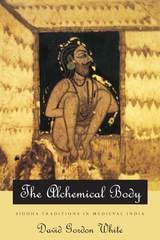
The Alchemical Body
Siddha Traditions in Medieval IndiaDavid Gordon White
University of Chicago Press, 1996
"White proves a skillful guide in disentangling historical and theoretical complexities that have thus far bedeviled the study of these influential aspects of medieval Indian culture."—Yoga World
"Anyone seriously interested in finding out more about authentic tantra, original hatha yoga, embodied liberation . . . sacred sexuality, paranormal abilities, healing, and of course alchemy will find White's extraordinary book as fascinating as any Tom Clancy thriller."—Georg Feuerstein, Yoga Journal

The Aliites
Race and Law in the Religions of Noble Drew AliSpencer Dew
University of Chicago Press, 2019
In The Aliites, Spencer Dew traces the history and impact of Ali’s radical fusion of law and faith. Dew uncovers the influence of Ali’s teachings, including the many movements they inspired. As Dew shows, Ali’s teachings demonstrate an implicit yet critical component of the American approach to law: that it should express our highest ideals for society, even if it is rarely perfect in practice. Examining this robustly creative yet largely overlooked lineage of African American religious thought, Dew provides a window onto religion, race, citizenship, and law in America.
The Altruism Reader
Selections from Writings on Love, Religion, and ScienceThomas Oord
Templeton Press, 2007
This anthology brings together, for the first time, leading essays and book chapters from theologians, philosophers, and scientists on their research on ethics, altruism, and love. Because the general consensus today is that scholarship in moral theory requires empirical research, the arguments of the leading scholars presented in this book will be fundamental to those examining issues in love, ethics, religion, and science.
The first half of The Altruism Reader offers essential selections from religious texts, leading contemporary scholars, and cutting-edge ethicists. Buddhism, Christianity, Hinduism, Islam, and Judaism are represented. Among the highly respected writers are Thomas Aquinas, the Dalai Lama, Thich Nhat Hanh, John Polkinghorne, Stephen Pope, Louis Fischer, Amira Shamma Abdin, Katharine Doob Sakenfeld, and Daniel Day Williams.
The book’s second half features primary readings on love and altruism from the sciences. Here the focus is on anthropology, psychology, sociology, biology, and neurology, with material written by Daniel C. Batson, David Sloan Wilson, Robert Wright, Stephen G. Post, Robert Axelrod, Richard Dawkins, Holmes Rolston III, and other renowned scientists and philosophers.
“Virtually all people act—and often talk—as if they have some clue about love. We speak about loving food, falling in love, loving God, feeling loved, and loving a type of music. We say that love hurts, love waits, love stinks, and love means never having to say you’re sorry. We use the word and its derivatives in a wide variety of ways . . . . My definition of love is this: To love is to act intentionally, in sympathetic response to others (including God), to promote well-being.” —Thomas Jay Oord
The Altruistic Species
Scientific, Philosophical, and Religious Perspectives of Human BenevolenceAndrew Michael Flescher
Templeton Press, 2008
What motivates altruism? How essential is the phenomenon of altruism to the human experience? Is altruism readily accessible to the ordinary person? In The Altruistic Species, Andrew Michael Flescher and Daniel L. Worthen explore these questions through the lenses of four disciplinary perspectives—biology, psychology, philosophy, and religion. In their investigation, they make an extended argument for the existence of altruism against competing theories that construe all ostensible cases of benevolence as self-interest in disguise. The authors consider theories of egoism; the role of genetics and evolutionary biology; the psychological that induce altruistic behavior; philosophical theories of altruism in normative ethics such as Kantian, utilitarian, and Aristotelian models of moral action; and accounts of love of the neighbor in Christianity and Buddhism. Additionally, they offer a new, comprehensive definition of altruism that includes the insights of each of these perspectives.
The Altruistic Species reinvigorates the debate over the prevalence of selfless motivation in human behavior—whether it is a rare or ubiquitous phenomenon—something considered exceptional or a capacity that members of any community could potentially develop. This noteworthy interdisciplinary examination of altruism balances science, virtue theory, and theology. It is ideal for ethics, human behavior, and evolutionary biology courses as an educational resource for other multidisciplinary studies and interested lay readers.
The Amazing Colossal Apostle
The Search for the Historical PaulRobert M. Price
Signature Books, 2012
As adults reading the New Testament, we catch glimpses of a very different kind of disciple—a wild ascetic whom Tertullian dubbed “the second apostle of Marcion and the apostle of the heretics.” What does scholarship tell us about the enigmatic thirteenth apostle who looms larger than life in the New Testament? The epistles give evidence of having been written at the end of the first century or early in the second—too late to have been Paul’s actual writings. So who wrote (and rewrote) them? F. C. Baur, a nineteenth-century theologian, pointed persuasively to Simon Magus as the secret identity of “Paul.” Robert M. Price, in this exciting journey of discovery, gives readers the background for a story we thought we knew.
The Ambuiguity of Being
Lonergan and the Problems of the SupernaturalJonathan R. Heaps
Catholic University of America Press, 2024
The American Constitution and Religion
Richard J. Regan
Catholic University of America Press, 2013
The Americas' First Sermons
The Nahuatl Sermonary of Fray Bernardino de SahagúnTranslation and Introduction study by Ben Leeming
University of Utah Press, 2025
The Americas’ First Sermons presents the first English translation and critical study of the complete set of sermons composed by Franciscan friar Bernardino de Sahagún and his Nahua students at the Imperial College of Santa Cruz in Tlatelolco, Mexico in 1540. The volume represents a crucial moment in the cultural exchange between European and Indigenous civilizations in sixteenth-century colonial Mexico.
With the collaboration of Mario Alberto Sánchez Aguilera, this edition offers unprecedented access to the collaboration between European friars and Nahua scholars in translating Christian concepts into Native languages. It captures Sahagún’s evolving methods across three phases (1530s–1560s) through his extensive annotations, bridging the divide between his ethnographic and doctrinal works. Unique in its analysis of both text and manuscript features—such as rare maguey paper—it highlights Indigenous intellectual contributions at the Colegio de Santa Cruz. This translation provides essential insights into early colonial religious negotiations and makes previously inaccessible material available to scholars across multiple disciplines.

The Amish Struggle with Modernity
Edited by Donald B. Kraybill and Marc A. Olshan
University Press of New England, 1994
The Analyst and the Mystic
Psychoanalytic Reflections on Religion and MysticismSudhir Kakar
University of Chicago Press, 1992
The Anarchy of Black Religion
A Mystic SongJ. Kameron Carter
Duke University Press, 2023
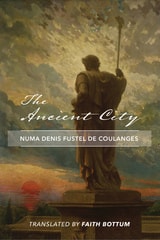
The Ancient City
Numa Denis Fustel de Coulanges
St. Augustine's Press, 2022
Fustel de Coulanges plunged deep into the world and language of the ancient Greeks and Romans. His presentation of religion as a factor in civilization equates to a vision of how and why the ancient city-state died. This is a non-partisan and spiritually unmotivated work of political-philosophical merit, in which from a perspective of Cartesian doubt Coulanges strips away layers of cultural façade until the most foundational and hidden stratospheres of Greek and Roman institutions are laid bare.
The Ancient City places ancient Greek and Roman cities in relation to each other, and the daily life in both are illustrated in detail. Morality and custom are rendered as living and breathing entities, and the dynamics of social life are displayed in a way that the tragic influence of Christianity is rendered obvious, yet not heartbreaking.
This new translation is an essential component to a well-rounded understanding of where the notion of the city and political ordering come from, the role of religion in politics, the development of law, and its reliance on custom and the eternal fabric of the family.
The Ancient Egyptian Netherworld Books
John Coleman Darnell
SBL Press, 2018
The first, complete English translation of the ancient Egyptian Netherworld Books
The ancient Egyptian Netherworld Books, important compositions that decorated the New Kingdom royal tombs in the Valley of the Kings, present humanity's oldest surviving attempts to provide a scientific map of the unseen realms beyond the visible cosmos and contain imagery and annotations that represent ancient Egyptian speculation (essentially philosophical and theological) about the events of the solar journey through the twelve hours of the night. The Netherworld Books describe one of the central mysteries of Egyptian religious belief—the union of the solar god Re with the underworldly god Osiris—and provide information on aspects of Egyptian theology and cosmography not present in the now more widely read Book of the Dead. Numerous illustrations provide overview images and individual scenes from each Netherworld Book, emphasizing the unity of text and image within the compositions. The major texts translated include the Book of Adoring Re in the West (the Litany of Re), the Book of the Hidden Chamber (Amduat), the Book of Gates, the Book of Caverns, the Books of the Creation of the Solar Disk, and the Books of the Solar-Osirian Unity.
Features:
- Accessible presentations of the main concepts of the Netherworld Books and the chief features of each text
- Notes and commentary address major theological themes within the texts as well as lexicographic and/or grammatical issues
- An overview of later uses of these compositions during the first millennium BCE
The Ancient Egyptian Pyramid Texts
James P. Allen
SBL Press, 2005
The Ancient Egyptian Pyramid Texts, Second Edition
James P. Allen
SBL Press, 2015
Completely revised and updated
James P. Allen provides a translation of the oldest corpus of ancient Egyptian religious texts from the six royal pyramids of the Fifth and Sixth Dynasties (ca. 2350–2150 BCE). Allen’s revisions take into account recent advances in the understanding of Egyptian grammar.
Features:
- Sequential translations based on all available sources, including texts newly discovered in the last decade
- Texts numbered according to the most widely used numbering system with new numbers from the latest 2013 concordance
- Translations reflect the primarily atemporal verbal system of Old Egyptian, which conveys the timeless quality that the text’s authors understood the texts to have
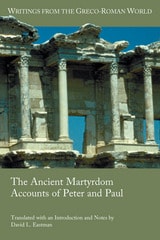
The Ancient Martyrdom Accounts of Peter and Paul
David L. Eastman
SBL Press, 2015
New English translations based upon the most up-to-date critical editions
This book for the first time collects the various ancient accounts of the martydoms of Peter and Paul, which number more than a dozen, along with more than forty references to the martyrdoms from early Christian literature. At last a more complete picture of the traditions about the deaths of Peter and Paul is able to emerge.
Features:
- Greek, Latin, and Syriac accounts from antiquity translated into English
- Introductions and notes for each text
- Original texts are produced on facing pages for specialists
The Ancient Order of Things
Essays on the Mormon TempleChristian Larsen
Signature Books, 2019
Christian Larsen has assembled a collection of essays that illuminate the role of the temple and its rocky relationship with controversial subjects such as race and marriage. Some temples were built, abandoned, and given new life; others were either constructed for temporary use or never built at all. The nature of LDS temple ordinances is such that what LDS members deem sacred, others dismiss as secret.
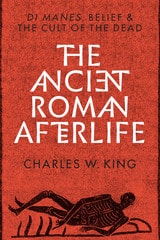
The Ancient Roman Afterlife
Di Manes, Belief, and the Cult of the DeadBy Charles W. King
University of Texas Press, 2020
In ancient Rome, it was believed some humans were transformed into special, empowered beings after death. These deified dead, known as the manes, watched over and protected their surviving family members, possibly even extending those relatives’ lives. But unlike the Greek hero-cult, the worship of dead emperors, or the Christian saints, the manes were incredibly inclusive—enrolling even those without social clout, such as women and the poor, among Rome's deities. The Roman afterlife promised posthumous power in the world of the living.
While the manes have often been glossed over in studies of Roman religion, this book brings their compelling story to the forefront, exploring their myriad forms and how their worship played out in the context of Roman religion’s daily practice. Exploring the place of the manes in Roman society, Charles King delves into Roman beliefs about their powers to sustain life and bring death to individuals or armies, examines the rituals the Romans performed to honor them, and reclaims the vital role the manes played in the ancient Roman afterlife.
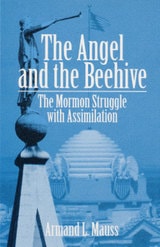
The Angel and Beehive
THE MORMON STRUGGLE WITH ASSIMILATIONArmand L. Mauss
University of Illinois Press, 1994
This retrenchment among Mormons is the main theme of Mauss's book, which analyzes the last forty years of Mormon history from a sociological perspective. At the official ecclesiastical level, Mauss finds, the retrenchment can be seen in the greatly increased centralization of bureaucratic control and in renewed emphases on obedience to modern prophets, on genealogy and vicarious temple work, and on traditional family life; retrenchment is also apparent in extensive formal religious indoctrination by full-time professionals and in increased sophistication and intensity of proselytizing.
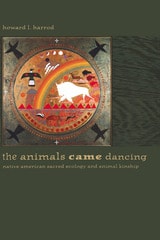
The Animals Came Dancing
Native American Sacred Ecology and Animal KinshipHoward L. Harrod
University of Arizona Press, 2000
Drawing on memories of Native Americans recorded by anthropologists, fur traders, missionaries, and other observers, Harrod examines cultural practices that flourished from the mid-eighteenth to the mid-nineteenth century. He reconstructs the complex rituals of Plains peoples, which included buffalo hunting ceremonies employing bundles or dancing, and rituals such as the Sun Dance for the renewal of animals. In a closing chapter, Harrod examines the meanings of Indian-animal relations for a contemporary society that values human dominance over the natural world—one in which domestic animals are removed from our consciousness as a source of food, wild animals are managed for humans to "experience," and hunting has become a form of recreation. His meticulous scholarship re-imagines a vanished way of life, while his keen insights give voice to a hunger among many contemporary people for the recovery of a ritual relationship between themselves and the natural sources of their lives.

The Annihilation of Inertia
Dostoevsky and MetaphysicsLiza Knapp
Northwestern University Press, 1996
The Antediluvian Librarians' Secrets for Success in Seminary and Theology School
Jane Lenz Elder, Duane Harbin, and David Schmersal. Designed and Illustrated by Rebecca Howdeshell.
Bridwell Press, 2022
In easy-to-digest segments, the book reveals the kind of strategies for being a graduate student that are seldom revealed in the classroom. Consisting of seven sections, The Antediluvian Librarians’ Secrets to Success offers guidance on such varied topics as reading strategically, asking questions, managing time, practicing self-care, staying organized, and tackling that first paper. It also offers lists for further reading and thoughtful pieces of advice. Although the authors are theological librarians, the recommendations they offer are just as practical for students beginning any graduate program in the humanities.
Deeply useful for anyone entering seminary or theology school both now and in the future, The Antediluvian Librarians’ Secrets to Success is the first work released from the new Bridwell Press.
The Anthropology of Christianity
Fenella Cannell, ed.
Duke University Press, 2006
The contributors examine the contours of Christianity among diverse groups: Catholics in India, the Philippines, and Bolivia, and Seventh-Day Adventists in Madagascar; the Swedish branch of Word of Life, a charismatic church based in the United States; and Protestants in Amazonia, Melanesia, and Indonesia. Highlighting the wide variation in what it means to be Christian, the contributors reveal vastly different understandings and valuations of conversion, orthodoxy, Scripture, the inspired word, ritual, gifts, and the concept of heaven. In the process they bring to light how local Christian practices and beliefs are affected by encounters with colonialism and modernity, by the opposition between Catholicism and Protestantism, and by the proximity of other religions and belief systems. Together the contributors show that it not sufficient for anthropologists to assume that they know in advance what the Christian experience is; each local variation must be encountered on its own terms.
Contributors. Cecilia Busby, Fenella Cannell, Simon Coleman, Peter Gow, Olivia Harris, Webb Keane, Eva Keller, David Mosse, Danilyn Rutherford, Christina Toren, Harvey Whitehouse

The Anti-Journalist
Karl Kraus and Jewish Self-Fashioning in Fin-de-Siècle EuropePaul Reitter
University of Chicago Press, 2008
The Anti-Semitic Moment
A Tour of France in 1898Pierre Birnbaum
University of Chicago Press, 2011
In 1898, the Dreyfus Affair plunged French society into a yearlong frenzy. In Paris and provincial villages throughout the country, angry crowds paraded through the streets, threatening to attack Jews and destroy Jewish-owned businesses. Anger about the imagined power of Jewish capital, as well as fears of treason and racial degeneration, made anti-Semitism a convenient banner behind which social and political factions could fall in line. Anti-Semitic feelings that had been simmering in France for decades came boiling to the surface.
Here Pierre Birnbaum guides readers on a tour of France during this crisis. He shows that in the midst of violence, Jewish citizens bravely and effectively defended themselves and were aided by a police force determined to maintain order. Birnbaum paints a vivid portrait of French Jewish culture at the time and explains why the French state remained strong in this time of widespread unrest.

The Anti-Witch
Jeanne Favret-Saada
HAU, 2015
Jeanne Favret-Saada is arguably one of France’s most brilliant anthropologists, and The Anti-Witch is nothing less than a masterpiece. A synthesis of ethnographic theory and psychoanalytic revelation, where the line between researcher and subject is blurred—if not erased—The Anti-Witch develops the contours of an anthropology of therapy, while deeply engaging with what it means to be caught in the logic of witchcraft. Through an intimate and provocative sharing of the ethnographic voice with Madame Flora, a “dewitcher,” Favret-Saada delivers a critical challenge to some of anthropology’s fundamental concepts.
Sure to be of interest to practitioners of psychoanalysis as well as to anthropologists, The Anti-Witch will bring a new generation of scholars into conversation with the work of a truly innovative thinker.
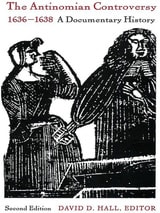
The Antinomian Controversy, 1636-1638
A Documentary HistoryDavid D. Hall, ed.
Duke University Press, 1990
This new edition of the 1968 volume, published now for the first time in paperback, includes an expanding bibliography and a new preface, treating in more detail the prime figures of Anne Hutchinson and her chief clerical supporter, John Cotton. Among the documents gathered here are transcripts of Anne Hutchinson’s trial, several of Cotton’s writings defending the Antinomian position, and John Winthrop’s account of the controversy. Hall’s increased focus on Hutchinson reveals the harshness and excesses with which the New England ministry tried to discredit her and reaffirms her place of prime importance in the history of American women.

The Apocalypse in Germany
Klaus Vondung & Translated by Stephen D. Ricks
University of Missouri Press, 2001
Originally published in German in 1988, The Apocalypse in Germany is now available for the first time in English. A fitting subject for the dawn of the new millennium, the apocalypse has intrigued humanity for the last two thousand years, serving as both a fascinating vision of redemption and a profound threat.
A cross-disciplinary study, The Apocalypse in Germany analyzes fundamental aspects of the apocalypse as a religious, political, and aesthetic phenomenon. Author Klaus Vondung draws from religious, philosophical, and political texts, as well as works of art and literature. Using classic Jewish and Christian apocalyptic texts as symbolic and historical paradigms, Vondung determines the structural characteristics and the typical images of the apocalyptic worldview. He clarifies the relationship between apocalyptic visions and utopian speculations and explores the question of whether modern apocalypses can be viewed as secularizations of the Judeo-Christian models.
Examining sources from the eighteenth century to the present, Vondung considers the origins of German nationalism, World War I, National Socialism, and the apocalyptic tendencies in Marxism as well as German literature—from the fin de siècle to postmodernism. His analysis of the existential dimension of the apocalypse explores the circumstances under which particular individuals become apocalyptic visionaries and explains why the apocalyptic tradition is so prevalent in Germany.
The Apocalypse in Germany offers an interdisciplinary perspective that will appeal to a broad audience. This book will also be of value to readers with an interest in German studies, as it clarifies the riddles of Germany's turbulent history and examines the profile of German culture, particularly in the past century.
The Apocalyptic Complex
Perspectives, Histories, PersistenceMatthias Riedl
Central European University Press, 2018
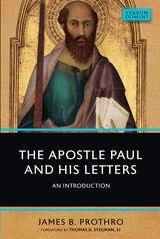
The Apostle Paul and His Letters
An IntroductionJames B. Prothro
Catholic University of America Press, 2022
The Apostolic Fathers
The Apostolic Fathers
Catholic University of America Press, 1947
The Apostolic Penitentiary in Local Contexts
Gerhard Jaritz
Central European University Press, 2007
The Arab Christ
Towards an Arab Christian Theology of ConvivialityMouchir Basile Aoun
Gingko, 2022
This work explores the Christian faith in the current intercultural context of Arab societies. It argues that Arab Christianity seeks to express the Christian faith through openness to Muslim otherness, existential conviviality, and fraternal solidarity. In order to safeguard not only the physical existence of these communities but also and above all the relevance and richness of their message of life, the theological reflection presented here takes on a three-part task. First, it faithfully describes the sociopolitical and sociocultural reality of the historical integration of Arab Christian communities. Second, it reinterprets the content of the Christ event with reference to the challenge of Muslim otherness. And finally, it offers a path for conversion that involves a form not only of evangelical practice, designed to foster bonds of fraternal solidarity between the inhabitants of the Arab world but also of shared spiritual quest for moral and political commitment.
The Archaeology of Protestant Landscapes
Revealing the Formation of Community Identity in the US SouthKimberly Pyszka
University of Alabama Press, 2023
How religious institutions used landscapes and architecture to express their religious and social ideologies
The Archaeology of Protestant Landscapes focuses on three religious institutions in the US South in the eighteenth and nineteenth centuries: St. Paul’s Parish Church in coastal South Carolina, St. Luke’s Episcopal Church in central Alabama, and Cane Hill College in Northwest Arkansas. Drawing from archaeological surveys and excavations, artifact analysis, archival research, geophysical testing, and architectural information on religious structures, Kimberly Pyszka offers case studies of these institutions, which were located in developing communities that varied socially, politically, and economically.
Pyszka uses these case studies to demonstrate that select religious institutions used and modified natural landscape features to create cultural landscapes to express their ideology, identity, goals, and social, religious, and political power. She notes that where those structures were constructed, how they sat on the landscape, their architectural style, and their overall visual appearance were well-considered decisions made by religious leaders to benefit their organizations, communities, and, sometimes, themselves.
Pyszka also uses these case studies to highlight the social roles that religious organizations played in the development of communities. She points to landscape decisions—specifically to how the architectural design of religious structures was used, intentionally or not, to unite people, often those of differing religious backgrounds—as contributing to the creation of a common identity among people living in new and still-growing settlements, aiding in community development. This book contributes to the growing body of work within historical archaeology on churches, churchyards, and cemeteries and to the increasing awareness among archaeologists of how these sites contribute to questions of identity, consumerism, trade, and colonialism.
The Archaeology of Regional Interaction
Religion, Warfare, and Exchange across the American Southwest and BeyondMichelle Hegmon
University Press of Colorado, 2000
The Archaeology of Regional Interaction surpasses most regional studies, which only focus on settlement patterns or exchange, and considers other forms of interaction, such as intermarriage and the spread of religious practices. Contributors focus especially on understanding the social processes that underlie archaeological evidence of interaction.
The essays in this volume examine what regional systems involve, in terms of political and economic relations, and how they can be identified. One essay by Steven LeBlanc provides a sweeping analysis of conflict, a form of regional interaction that has received relatively little attention in the Southwest until recently. A series of chapters devoted to expanding the coverage beyond the borders of the traditional Southwest examines the surrounding areas, including Nevada and Utah, northern Mexico, and the Plains.The volume also provides a unique treatment of religion - including manifestations such as Flower World Iconography, Medicine Societies, and ceremonial textiles - as a form of regional interrelation.
The Archaeology of the Kingdom of Judah
Yosef Garfinkel
SBL Press, 2025
The Art of Biblical Interpretation
Visual Portrayals of Scriptural NarrativesHeidi J. Hornik
SBL Press, 2021
A richly illustrated collection of essays on visual biblical interpretation
For centuries Christians have engaged their sacred texts as much through the visual as through the written word. Yet until recent decades, the academic disciplines of biblical studies and art history largely worked independently. This volume bridges that gap with the interdisciplinary work of biblical scholars and art historians. Focusing on the visualization of biblical characters from both the Old and New Testaments, essays illustrate the potential of such collaboration for a deeper understanding of the Bible and its visual reception. Contributions from Ian Boxall, James Clifton, David B. Gowler, Jonathan Homrighausen, Heidi J. Hornik, Jeff Jay, Christine E. Joynes, Yohana A. Junker, Meredith Munson, and Ela Nuțu foreground diverse cultural contexts and chronological periods for scholars and students of the Bible and art.

The Art of Medieval Technology
Images of Noah the ShipbuilderUnger, Richard W.
Rutgers University Press, 1991
The Art of Preaching
Siegfried Wenzel
Catholic University of America Press, 2013
The Art of Preaching
A Theological and Practical PrimerDaniel Cardo
Catholic University of America Press, 2021
The Art of Reciting the Qur'an
By Kristina Nelson
University of Texas Press, 1985
For the Muslim faithful, the familiar sound of the Qurʾanic recitation is the predominant and most immediate means of contact with the Word of God. Heard day and night, on the street, in taxis, in shops, in mosques, and in homes, the sound of recitation is far more than the pervasive background music of daily life in the Arab world. It is the core of religious devotion, the sanctioning spirit of much cultural and social life, and a valued art form in its own right. Participation in recitation, as reciter or listener, is itself an act of worship, for the sound is basic to a Muslim’s sense of religion and invokes a set of meanings transcending the particular occasion.
For the most part, Westerners have approached the Qurʾan much as scriptural scholars have studied the Bible, as a collection of written texts. The Art of Reciting the Qurʾan aims at redirecting that focus toward a deeper understanding of the Qurʾan as a fundamentally oral phenomenon. By examining Muslim attitudes toward the Qurʾan, the institutions that regulate its recitation, and performer-audience expectations and interaction, Kristina Nelson, a trained Arabist and musicologist, casts new light on the significance of Qurʾanic recitation within the world of Islam. Her landmark work is of importance to all scholars and students of the modern Middle East, as well as ethnomusicologists, anthropologists, linguists, folklorists, and religious scholars.
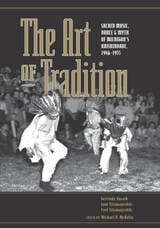
The Art of Tradition
Sacred Music, Dance & Myth of Michigan's Anishinaabe, 1946-1955Michael D. McNally
Michigan State University Press, 2009
The Art of Tradition documents the complexity of Native life and culture at a critical juncture in Native American history, where the rekindling of pride in Native cultures characteristic of the later twentieth century met the generation of elders who spent their early years speaking Native tongues but who came of age in boarding schools and amid strong pressures of assimilation. Because this period was deemed by most ethnographers of the time to be one of "acculturation," marking the end of traditional Native cultures, the authors' appreciation for the integrity of mid-century Native culture stands out markedly from other scholarship of the day. The songs, dance steps, and stories collected here are evidence of the artful work of maintaining and breathing new life into traditions, often in contexts that seem anything but traditional, by indigenous elders and artists. As the editor notes, there are no "Native informants" in this study, only collaborators whose lives are shown to be as resilient as the repertories they performed.
The Art of Visual Exegesis
Rhetoric, Texts, ImagesVernon K. Robbins
SBL Press, 2017
A critical study for those interested in the intersection of art and biblical interpretation
With a special focus on biblical texts and images, this book nurtures new developments in biblical studies and art history during the last two or three decades. Analysis and interpretation of specific works of art introduce guidelines for students and teachers who are interested in the relation of verbal presentation to visual production. The essays provide models for research in the humanities that move beyond traditional disciplinary boundaries erected in previous centuries. In particular, the volume merges recent developments in rhetorical interpretation and cognitive studies with art historical visual exegesis. Readers will master the tools necessary for integrating multiple approaches both to biblical and artistic interpretation.
Features
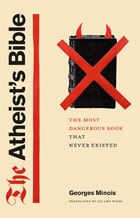
The Atheist's Bible
The Most Dangerous Book That Never ExistedGeorges Minois
University of Chicago Press, 2012
A comprehensive biography of the Treatise of the Three Impostors, a controversial nonexistent medieval book.
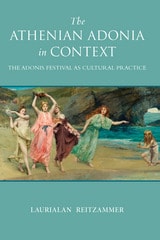
The Athenian Adonia in Context
The Adonis Festival as Cultural PracticeLaurialan Reitzammer
University of Wisconsin Press, 2018
Reitzammer uncovers correlations of the Adonia to Athenian wedding rituals and civic funeral oration and provides illuminating evidence that the festival was a significant cultural template for such diverse works as Aristophanes’ drama Lysistrata and Plato’s dialogue Phaedrus. Her fresh approach is a timely contribution to studies of the ways gender and sexuality intersect with religion and ritual in ancient Greece.
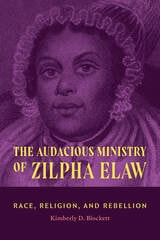
The Audacious Ministry of Zilpha Elaw
Race, Religion, and RebellionKimberly D. Blockett
Duke University Press, 2026
The Augustinian Person
Peter Burnell
Catholic University of America Press, 2005