Results by title
939 books match the query 'Religious aspects' and 189 start with t
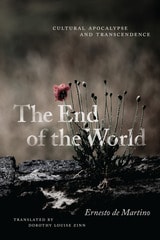
The End of the World
Cultural Apocalypse and TranscendenceErnesto de Martino
University of Chicago Press, 2023
A philosopher, historian of religions, and anthropologist, Ernesto de Martino (1908–1965) produced a body of work that prefigured many ideas and concerns that would later come to animate anthropology. In his writing, we can see the roots of ethnopsychiatry and medical anthropology, discussions of reflexivity and the role of the ethnographer, considerations of social inequality and hegemony from a Gramscian perspective, and an anticipation of the discipline’s “existential turn.” We also find an attentiveness to hope and possibility, despite the gloomy title of his posthumously published book La fine del mondo, or The End of the World. Examining apocalypse as an individual as well as a cultural phenomenon, treating subjects both classic and contemporary and both European and non-Western, ranging across ethnography, history, literature, psychiatry, and philosophy, de Martino probes how we relate to our world and how we might be better subjects and thinkers within it. This new translation offers English-language readers their first chance to engage with de Martino’s masterwork, which continues to appear prescient in the face of the frictions of globalization and environmental devastation.
The Enlightened Gene
Biology, Buddhism, and the Convergence that Explains the WorldArri Eisen and Yungdrung Konchok
University Press of New England, 2017
The Entablo Manuscript
Water Rituals and Khipu Boards of San Pedro de Casta, PeruSarah Bennison
University of Texas Press, 2022
A unique study of an Andean community’s water rituals and the extraordinary document describing how they should be performed
In the dry season in the Andes, water from springs, lakes, reservoirs, and melting glaciers feeds irrigation canals that have sustained communities for thousands of years. Managing and maintaining these water infrastructures is essential, and in 1921, in the village of San Pedro de Casta, Peru, local authorities recorded their ritual canal-cleaning duties in a Spanish-language document called the Entablo. It is only the second book (along with the Huarochirí Manuscript) ever seen by scholars in which an Andean community explains its customs and ritual laws in its own words.
Sarah Bennison offers a critical introduction to the Entablo, a Spanish transcription of the document, and an English translation. Among its other revelations, the Entablo delves into the use of khipu boards, devices that meld the traditional knotted strings known as khipus with a written alphabet. Only in the Entablo do we learn that there were multiple khipu boards associated with a single canal-cleaning ritual, or that there were separate khipu records for men and women. The Entablo manuscript furnishes unparalleled insights into Andean rituals, religion, and community history at a historical moment when rural highland communities were changing rapidly.
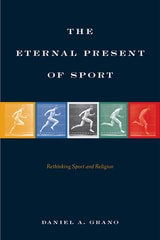
The Eternal Present of Sport
Rethinking Sport and ReligionDaniel A. Grano
Temple University Press, 2017
Grano asserts that it is precisely through sport’s highest religious ideals that controversies are taking shape and constituting points of political and social rupture. He examines issues of transcendence, “legacy”—e.g., “greatest ever,” or “all-time”—and “witnessing” through instant replay, which undermine institutional authority. Grano also reflects on elite athletes representing especially powerful embodiments of religious and social conflict, including around issues related to gender, sexuality, ability doping, traumatic brain injury, and institutional greed.
Elite sport is in a period of profound crisis. It is through the ideals Grano analyzes that we can imagine a radically alternative future for elite sport.
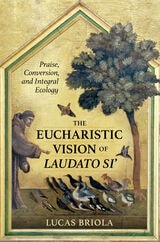
The Eucharistic Vision of Laudato Si
Praise, Conversion, and Integral EcologyLucas Briola
Catholic University of America Press, 2022
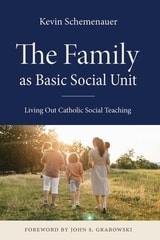
The Family as Basic Social Unit
Living Out Catholic Social TeachingKevin Schemenauer
Catholic University of America Press, 2024

The Fear of Barbarians
Beyond the Clash of CivilizationsTzvetan Todorov
University of Chicago Press, 2010
The relationship between Western democracies and Islam, rarely entirely comfortable, has in recent years become increasingly tense. A growing immigrant population and worries about cultural and political assimilation—exacerbated by terrorist attacks in the United States, Europe, and around the world—have provoked reams of commentary from all parts of the political spectrum, a frustrating majority of it hyperbolic or even hysterical.
In The Fear of Barbarians, the celebrated intellectual Tzvetan Todorov offers a corrective: a reasoned and often highly personal analysis of the problem, rooted in Enlightenment values yet open to the claims of cultural difference. Drawing on history, anthropology, and politics, and bringing to bear examples ranging from the murder of Theo van Gogh to the French ban on headscarves, Todorov argues that the West must overcome its fear of Islam if it is to avoid betraying the values it claims to protect. True freedom, Todorov explains, requires us to strike a delicate balance between protecting and imposing cultural values, acknowledging the primacy of the law, and yet strenuously protecting minority views that do not interfere with its aims. Adding force to Todorov's arguments is his own experience as a native of communist Bulgaria: his admiration of French civic identity—and Western freedom—is vigorous but non-nativist, an inclusive vision whose very flexibility is its core strength.
The record of a penetrating mind grappling with a complicated, multifaceted problem, The Fear of Barbarians is a powerful, important book—a call, not to arms, but to thought.
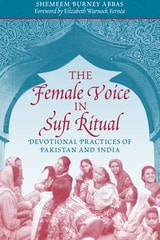
The Female Voice in Sufi Ritual
Devotional Practices of Pakistan and IndiaBy Shemeem Burney Abbas
University of Texas Press, 2002
The female voice plays a more central role in Sufi ritual, especially in the singing of devotional poetry, than in almost any other area of Muslim culture. Female singers perform sufiana-kalam, or mystical poetry, at Sufi shrines and in concerts, folk festivals, and domestic life, while male singers assume the female voice when singing the myths of heroines in qawwali and sufiana-kalam. Yet, despite the centrality of the female voice in Sufi practice throughout South Asia and the Middle East, it has received little scholarly attention and is largely unknown in the West.
This book presents the first in-depth study of the female voice in Sufi practice in the subcontinent of Pakistan and India. Shemeem Burney Abbas investigates the rituals at the Sufi shrines and looks at women's participation in them, as well as male performers' use of the female voice. The strengths of the book are her use of interviews with both prominent and grassroots female and male musicians and her transliteration of audio- and videotaped performances. Through them, she draws vital connections between oral culture and the written Sufi poetry that the musicians sing for their audiences. This research clarifies why the female voice is so important in Sufi practice and underscores the many contributions of women to Sufism and its rituals.
The Feminine in Jungian Psychology and in Christian Theology
Ann Belford Ulanov
Northwestern University Press, 1971
Jung focuses on the human person and sees as central its mixture of masculine and feminine elements. In a time when so much is asserted and written about women in society—their rights, roles, identities, needs, and contributions—it is especially significant that Jung asserts the existence of the feminine as a key element, not only in women but in men as well. No less contested are the roles and identities of Christians. Ulanov brings into focus the deep and fascinating connections between theology and psychology.
The First Urban Churches 1
Methodological FoundationsJames R. Harrison
SBL Press, 2015
A fresh look at early urban churches
This collection of essays examines the urban context of early Christian churches in the first-century Roman world. A city-by-city investigation of the early churches in the New Testament clarifies the challenges, threats, and opportunities that urban living provided for early Christians. Readers will come away with a better understanding of how scholars assemble an accurate picture of the cities in which the first Christians flourished.
Features:
- Analysis of urban evidence of the inscriptions, papyri, archaeological remains, coins, and iconography
- Discussion of how to use different types of evidence responsibly
- Outline of what constitutes proper methodological use for establishing a nuanced, informed portrait of ancient urban life
The First Urban Churches 2
Roman CorinthJames R. Harrison
SBL Press, 2016
Investigate the challenges, threats, and opportunities experienced by the early church
Volume two of The First Urban Churches focuses on the urban context of Christian churches in first-century Roman Corinth. An investigation of the material evidence of Corinth helps readers today understand properly the challenges, threats, and opportunities that the early Corinthian believers faced in the city. The essays demonstrate decisively the difference that such an approach makes in grappling with the meaning and context of the Corinthian epistles in the New Testament.
Features:
- Analysis of urban evidence of the inscriptions, papyri, archaeological remains, coins, and iconography
- Proposed reeconstructions of the past and its social, religious, and political significance
- A nuanced, informed portrait of ancient urban life in Corinth
The First Urban Churches 3
EphesusJames R. Harrison
SBL Press, 2018
Investigate the challenges, threats, and opportunities experienced by the early church in Ephesus
The third installment of The First Urban Churches focuses on the urban context of Christian churches in first-century Ephesus. As with previous volumes, contributors illustrate how an investigation of the material evidence will help readers understand properly the challenges, threats, and opportunities that the early Ephesian believers faced in that city. Brad Bitner, James R. Harrison, Michael Haxby, Fredrick J. Long, Guy M. Rogers, Michael Theophilos, Paul Trebilco, and Stephan Witetschek demonstrate decisively the difference that such an approach makes in grappling with the meaning and context of the New Testament writings, particularly Ephesians, Acts, and Revelation.
Features
- Analysis of urban evidence of the inscriptions, papyri, archaeological remains, coins, and iconography
- Proposed reconstructions of the past and its social, religious and political significance
- A nuanced, informed portrait of ancient urban life in Ephesus
The First Urban Churches 4
Roman PhilippiJames R. Harrison
SBL Press, 2018
Investigate the challenges and opportunities experienced by the early church
This fourth installment of The First Urban Churches, edited by James R. Harrison and L. L. Welborn, focuses on the urban context of Christian churches in first-century Roman Philippi. The international team of New Testament and classical scholars contributing to the volume present essays that use inscriptions, papyri, archaeological remains, coins, and iconography to examine the rivalries, imperial context, and ecclesial setting of the Philippian church.
Features:
- Analysis of the material and epigraphic evidence relating to first- and second-century CE Roman Philippi
- Examination of important passages from Philippians within their ancient urban context
- Investigation of the social composition and membership of the Philippian church from the archaeological and documentary evidence
The First Urban Churches 5
Colossae, Hierapolis, and LaodiceaJames R. Harrison
SBL Press, 2019
A fresh examination of early Christianity by an international team of New Testament and classical scholars
Volume 5 of The First Urban Churches investigates the urban context of Christian churches in first-century Roman Colossae, Hierapolis, and Laodicea. Building on the methodologies introduced in the first volume and supplementing the in-depth studies of Corinth, Ephesus, and Philippi (vols. 2-4), essays in this volume challenge readers to reexamine preconceived understandings of the early church and to grapple with the meaning and context of Christianity in its first-century Roman colonial context.
Features:
- Analysis of urban evidence found in inscriptions, papyri, archaeological remains, coins, and iconography
- Proposed reconstructions of the past and its social, religious, and political significance
- A nuanced, informed portrait of ancient urban life in the cities of the Lycus Valley
The First Urban Churches 6
Rome and OstiaJames R. Harrison
SBL Press, 2021
An examination of early Roman Christianity by New Testament and classical scholars
Building on the methodologies introduced in the first volume of The First Urban Churches and supplementing the in-depth studies of Corinth, Ephesus, Philippi, Colossae, Hierapolis, and Laodicea (vols. 2–5), essays in this volume challenge readers to reexamine what we know about the early church within Rome and the port city of Ostia. In the introductory section of the book, James R. Harrison discusses the material and documentary evidence of both cities, which sets the stage for the essays that follow. In the second section, Mary Jane Cuyler, James R. Harrison, Richard Last, Annelies Moeser, Thomas A. Robinson, Michael P. Theophilos, and L. L. Welborn examine a range of topics, including the Ostian Synagogue, Romans 1:2–4 against the backdrop of Julio-Claudian adoption and apotheosis traditions, and the epistle of 1 Clement. In the final section of this volume, Jutta Dresken-Welland and Mark Reasoner engage Peter Lampe’s magnum opus From Paul to Valentinus; Lampe wraps up the section and the volume with a response. Throughout, readers are provided with a rich demonstration of how the material evidence of the city of Rome illuminates the emergence of Roman Christianity, especially in the first century CE.
The First Urban Churches 7
ThessalonicaJames R. Harrison
SBL Press, 2022
The First Urban Churches 7 includes essays focused on the development of early Christianity from the mid-first century through the sixth century CE in the ancient Macedonian city of Thessalonica. An international group of contributors traces the emergence of Thessalonica’s house churches through a close study of the archaeological remains, inscriptions, coins, iconography, and Paul’s two letters to the Thessalonians. After a detailed introduction to the city, including the first comprehensive epigraphic profile of Thessalonica from the Hellenistic age to the Roman Empire, topics discussed include the Roman emperor’s divine honors, coins and inscriptions as sources of imperial propaganda, Thessalonian family bonds, Paul’s apostolic self-image, the role of music at Thessalonica and in early Christianity, and Paul’s response to the Thessalonian Jewish community. Contributors include D. Clint Burnett, Alan H. Cadwallader, Rosemary Canavan, James R. Harrison, Julien M. Ogereau, Isaac T. Soon, Angela Standhartinger, Michael P. Theophilos, and Joel R. White.
The First Urban Churches 8
Galatia and LycaoniaJames R. Harrison
SBL Press, 2025
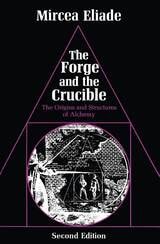
The Forge and the Crucible
The Origins and Structure of AlchemyMircea Eliade
University of Chicago Press, 1979
The new edition of The Forge and the Crucible contains an updated appendix, in which Eliade lists works on Chinese alchemy published in the past few years. He also discusses the importance of alchemy in Newton's scientific evolution.
The Formation of Affectivity
A Christian ApproachFrancisco Insa
St. Augustine's Press, 2023
The present book aims to respond to this need by addressing the consonance and individuality in human nature, and the ways in which ordering in personality and psychology are
not inhibiting, but potentially liberating and influential. Francisco Insa draws from his medical and theological background, which includes both clinical and pastoral experience, to address all those responsible for the formation of others––including parents, teachers, priests, spiritual directors––and enables them to confront their roles as formators with greater insight and confidence. Insa's guidance through the human personality and its various expressions, the education of the character, growth in maturity, the particularity of each stage of the life cycle, sexuality and celibacy, chastity in the context of post-modern life, and mental illnesses is a landmark presentation of scientific rigor matched with practical application. As often as one says, "My situation is unique,"; the author here responds: "Yes, but special even more than you can express"; Insa is forthright about what can never be lost in human beings, but only recovered when the head and heart are aligned and formed properly.
For as much as this book may help the reader understand himself, it will also render him better understood by others. The Christian approach to the formation of affectivity, as Insa shows, is indispensable to deep and enduring human development, and it is often the only way to identify and mediate interior dissonance and confusion.
The Forsaken Son
Child Murder and Atonement in Modern American FictionJoshua Pederson
Northwestern University Press, 2015
The Forsaken Son engages the provocative coincidence of the vocabularies of infanticide and Christianity, specifically atonement theology, in six modern American novels: Flannery O’Connor’s The Violent Bear It Away, the first two installments of John Updike’s Rabbit tetralogy, Toni Morrison’s Beloved, Joyce Carol Oates’s My Sister, My Love, and Cormac McCarthy’s Outer Dark.
Christian atonement theology explains why God lets His son be crucified. Yet in recent years, as an increasing number of scholars have come to reject that explanation, the cross reverts from saving grace to trauma—or even crime. More bluntly, without atonement, the cross may be a filicide, in which God forces his son to die for no apparent reason. Pederson argues that the novels about child murder mentioned above likewise give voice to modern skepticism about traditional atonement theology.
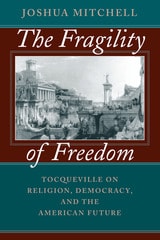
The Fragility of Freedom
Tocqueville on Religion, Democracy, and the American FutureJoshua Mitchell
University of Chicago Press, 1995
Focusing on Democracy in America, The Fragility of Freedom examines Tocqueville's key works and argues that his analysis of democracy is ultimately rooted in an Augustinian view of human psychology. As much a work of political philosophy as of religion, The Fragility of Freedom argues for the importance of a political theology that recognizes moderation.
"An intelligent and sharply drawn portrait of a conservative Toqueville."—Anne C. Rose, Journal of American History
"I recommend this book as one of a very few to approach seriously the sources of Tocqueville's intellectual and moral greatness."—Peter Augustine Lawler, Journal of Politics
"Mitchell ably places Democracy in America in the long conversation of Western political and theological thought."—Wilfred M. McClay, First Things
"Learned and thought-provoking."—Peter Berkowitz, New Republic
The French Revolution Confronts Pius VI
Volume 1: His Writings to Louis XVI, French Cardinals, Bishops, the National Assembly, and the People of France with Special Emphasis on the Civil Constitution of the ClergyJeffrey J. Langan
St. Augustine's Press, 2020
The writings of Pope Pius VI, head of the Catholic Church during the most destructive period of the French Revolution, were compiled in two volumes by M.N.S. Guillon and published in 1798 and 1800. But during the Revolution, the reign of Napoleon, and the various revolutionary movements of the 19th century, there were extraordinary efforts to destroy writings that critiqued the revolutionary ideology. Many books and treatises, if they survived the revolution or the sacking from Napoleon’s armies. To this day, no public copy of Guillon’s work exists in Paris.
Now, for the first time in English, these works comprising the letters, briefs, and other writings of Pius VI on the French Revolution are available. Volume I treats the first shock of the Revolution and the efforts of the Pope in 1790 and 1791 to oppose the Civil Constitution of the Clergy (which famous revolutionary and shrewd diplomat Talleyrand referred to as “the greatest fault of the National Assembly”). Volume II will be published later, and deals with the aftermath of the Civil Constitution through Pius’s death in exile). Editor and translator Jeffrey Langan presents the materials leading up to and directly connected with these decrees, in which the National Assembly attempted to set up a Catholic Church that would be completely submissive to the demands of the Assembly. Volume I also covers Pius’s efforts to deal with the immediate aftermath of the Constitution after the National Assembly implemented it, including his encyclical, Quod Aliquantum.
The letters will show how Pius chose to oppose the Civil Constitution. He did so not by a public campaign, for he had no real temporal power to oppose the violence, but by attempting to work personally with Louis XVI and various archbishops in France to articulate what were the points on which he could concede (matters dealing with the political structures of France) and what were the essential points in which he could not concede (matters dealing with the organization of dioceses and appointment of bishops).
Since the 1980s, with the writings and school that developed around François Furet, as well as Simon Schama’s Citizens, a new debate over the French Revolution has ensued, bringing forth a more objective account of the Revolution, one that avoids an excessively Marxist lens and that brings to light some of its defects and more gruesome parts – the destruction and theft of Church property, and the sadistic methods of torture and killing of priests, nuns, aristocrats, and fellow-revolutionaries.
An examination of the writings of Pius VI will not only help set the historical record straight for English-speaking students of the Revolution, it will also aid them to better understand the principles that the Catholic Church employs when confronted with chaotic political change. They will see that the Church has a principled approach to distinguishing, while not separating, the power of the Church and the power of the state. They will also see, as Talleyrand himself also saw, that one of the essential elements that makes the Church the Church is the right to appoint bishops and to discipline its own bishops. The Church herself recognizes that she cannot long survive without this principle that guarantees her unity.
Pius VI’s efforts were able to keep the Catholic Church intact (though badly bruised) so that she could reconstitute herself and build up a vibrant life in 19th-century France. (He did this in the face of the Church’s prestige having sunk to historic lows; some elites in Europe thought there would be no successor to Pius and jokingly referred to him as “Pius the Last.”) He began a process that led to the restoration of the prestige of the Papacy throughout the world, and he initiated a two-century process that led to the Church finally being able to select bishops without any interference from secular authorities. This had been at least a 1,000-year problem in the history of the Church. By 1990, only two countries of the world, China and Vietnam, were interfering in any significant way in the process that the Church used to select bishops.
Pius VI’s papacy, especially during the years of the French Revolution, was a pivotal point for the French Revolution and for the interaction between Church and state in Western history. All freedom-loving people will be happy to read his distinc-tions between the secular power and the spiritual power. His papacy also was important for the internal developments that the Church would make over the next 200 years with respect to its self-understanding of the Papacy and the role of the bishop.
The Fullness of Time
Temporalities of the Fifteenth-Century Low CountriesMatthew S. Champion
University of Chicago Press, 2017
The Fullness of Time asks how the passage of time in the Low Countries was ordered by the rhythms of human action, from the musical life of a cathedral to the measurement of time by clocks and calendars, the work habits of a guildsman to the devotional practices of the laity and religious orders. Through a series of transdisciplinary case studies, it explores the multiple ways that objects, texts and music might themselves be said to engage with, imply, and unsettle time, shaping and forming the lives of the inhabitants of the fifteenth-century Low Countries. Champion reframes the ways historians have traditionally told the history of time, allowing us for the first time to understand the rich and varied interplay of temporalities in the period.
The Garden of God
Pope Benedict XVI
Catholic University of America Press, 2014
The Gender of Piety
Family, Faith, and Colonial Rule in Matabeleland, ZimbabweWendy Urban-Mead
Ohio University Press, 2015
The Gender of Piety is an intimate history of the Brethren in Christ Church in Zimbabwe, or BICC, as related through six individual life histories that extend from the early colonial years through the first decade after independence. Taken together, these six lives show how men and women of the BICC experienced and sequenced their piety in different ways. Women usually remained tied to the church throughout their lives, while men often had a more strained relationship with it. Church doctrine was not always flexible enough to accommodate expected masculine gender roles, particularly male membership in political and economic institutions or participation in important male communal practices.
The study is based on more than fifteen years of extensive oral history research supported by archival work in Zimbabwe, the United Kingdom, and the United States. The oral accounts make it clear, official versions to the contrary, that the church was led by spiritually powerful women and that maleness and mission-church notions of piety were often incompatible.
The life-history approach illustrates how the tension of gender roles both within and without the church manifested itself in sometimes unexpected ways: for example, how a single family could produce both a legendary woman pastor credited with mediating multiple miracles and a man—her son—who joined the armed wing of the Zimbabwe African People’s Union nationalist political party and fought in Zimbabwe’s liberation war in the 1970s. Investigating the lives of men and women in equal measure, The Gender of Piety uses a gendered interpretive lens to analyze the complex relationship between the church and broader social change in this region of southern Africa.
The Gods of Revolution
Christopher Dawson
Catholic University of America Press, 2015
The Good Road
A K’iche’ Revolutionary TheopoliticsCarlota McAllister
Duke University Press, 2026
The Gospel of Happiness
How Secular Psychology Points to the Wisdom of Christian PracticeChristopher Kaczor
St. Augustine's Press, 2019
Just as Aristotelian metaphysics provided a new basis for the natural theology of Aquinas’s time, so too, positive psychology provides a basis for a natural moral theology in our own time. this book marshals the empirically verifiable findings of positive psychology that show the wisdom of the Christian tradition. Christian warnings about the dangers of greed, coveting a neighbor’s goods (social comparison), and pride find an empirical verification. Likewise, positive psychology vindicates the wisdom of Christian teaching on the importance of forgiveness, of gratitude, of humility, and of serving one’s neighbor. moreover, positive psychology also can be a service to Christian believers by helping them in their struggles with willpower, by providing new motivations for prayer, and by helping them identify their signature strengths. Finally, this book argues, in a variety of ways, that it is folly to think that even the best of psychology can serve as a replacement for Christianity.
The Gospel of John Marrant
Conjuring Christianity in the Black AtlanticAlphonso F. Saville IV
Duke University Press, 2024
The Gospel of Sustainability
Media, Market and LOHASMonica M. Emerich
University of Illinois Press, 2014
The Gospel of the Working Class
Labor's Southern Prophets in New Deal AmericaErik S. Gellman and Jarod Roll
University of Illinois Press, 2011
In this exceptional dual biography and cultural history, Erik S. Gellman and Jarod Roll trace the influence of two southern activist preachers, one black and one white, who used their ministry to organize the working class in the 1930s and 1940s across lines of gender, race, and geography. Owen Whitfield and Claude Williams, along with their wives Zella Whitfield and Joyce Williams, drew on their bedrock religious beliefs to stir ordinary men and women to demand social and economic justice in the eras of the Great Depression, New Deal, and Second World War.
The Gridiron Gospel
Faith and College Football in Twentieth-Century AmericaHunter M. Hampton
University of Illinois Press, 2025
The Head Beneath the Altar
Hindu Mythology and the Critique of SacrificeBrian Collins
Michigan State University Press, 2014

The Historian and Believer
The Morality of Historical Knowledge and Christian BeliefVan A. Harvey
University of Illinois Press, 1952
theology--available again!
"As a critic of the contemporary
theological scene, Van Harvey has few, if any, competitors. This is nowhere
clearer than in The Historian and the Believer . . . the classic
discussion of its topic. Rich in insight and penetrating in argument,
it is one book that belongs in the library of every theologian and seminarian."
-- Schubert M. Ogden, author of Doing Theology Today
Is it possible to be both
a historian and a Christian? Van Harvey's classic The Historian and
the Believer posed that question when it was first published.
In this printing, the author
has provided a new introduction in which he reflects on how he would reframe
his original argument in order to bring out more fully the basic theological
intention underlying his view that Christian faith cannot rest on dubious
historical claims.
From reviews of the first
edition:
"Probably the most interesting
piece of American theological writing to appear this year." -- John
Reumann, Union Seminary Quarterly Review
The Idea of the Theater in Latin Christian Thought
Augustine to the Fourteenth CenturyDonnalee Dox
University of Michigan Press, 2004
---Margaret Knapp, Arizona State University
"...an elegantly concise survey of the way classical notions of theater have been interpreted in the Latin Middle Ages. Dox convincingly demonstrates that far from there being a single 'medieval' attitude towards theater, there was in fact much debate about how theater could be understood to function within Christian tradition, even in the so-called 'dark ages' of Western culture. This book makes an innovative contribution to studies of the history of the theater, seen in terms of the history of ideas, rather than of practice."
---Constant Mews, Director, Centre for the Study of Religion & Theology, University of Monash, Australia
"In the centuries between St. Augustine and Bartholomew of Bruges, Christian thought gradually moved from a brusque rejection of classical theater to a progressively nuanced and positive assessment of its value. In this lucidly written study, Donnalee Dox adds an important facet to our understanding of the Christian reaction to, and adaptation of, classical culture in the centuries between the Church Fathers and the rediscovery of Aristotle."
---Philipp W. Rosemann, University of Dallas
This book considers medieval texts that deal with ancient theater as documents of Latin Christianity's intellectual history. As an exercise in medieval historiography, this study also examines biases in modern scholarship that seek links between these texts and performance practices. The effort to bring these texts together and place them in their intellectual contexts reveals a much more nuanced and contested discourse on Greco-Roman theater and medieval theatrical practice than has been acknowledged. The book is arranged chronologically and shows the medieval foundations for the Early Modern integration of dramatic theory and theatrical performance.
The Idea of the Theater in Latin Christian Thought will be of interest to theater historians, intellectual historians, and those who work on points of contact between the European Middle Ages and Renaissance. The broad range of documents discussed (liturgical treatises, scholastic commentaries, philosophical tracts, and letters spanning many centuries) renders individual chapters useful to philosophers, aestheticians, and liturgists as well as to historians and historiographers. For theater historians, this study offers an alternative reading of familiar texts which may alter our understanding of the emergence of dramatic and theatrical traditions in the West. Because theater is rarely considered as a component of intellectual projects in the Middle Ages, this study opens a new topic in the writing of medieval intellectual history.
The Indiscrete Image
Infinitude and Creation of the HumanThomas A. Carlson
University of Chicago Press, 2008
Framed in response to Martin Heidegger’s influential account of the relation between technological modernity and theological tradition, The Indiscrete Image builds an understanding of creativity as conditioned by insurmountable unknowing and incalculable possibility through alternative readings of Christian theological tradition and technological culture—and the surprising resonance between these two. Carlson concludes that the always ongoing work of world creation, tied essentially to human self-creation, implies neither an idol’s closure nor an icon’s transcendence, but the “indiscrete image” whose love makes possible—by keeping open—both the human and its world.
The Indissolubility of Marriage and the Council of Trent
E. Christian Brugger
Catholic University of America Press, 2017
The Inner Life of Race
Souls, Bodies, and the History of Racial PowerLeerom Medovoi
Duke University Press, 2024
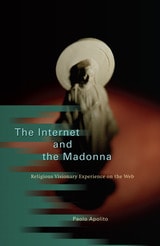
The Internet and the Madonna
Religious Visionary Experience on the WebPaolo Apolito
University of Chicago Press, 2005
But how has this potent new mix of technology and religiosity changed the way Catholics view their faith? And what challenges do the autonomous qualities of the Internet pose to the broader authority of Catholicism? Does the democratic nature of access to digital technologies constitute a return to a more archaic and mystical form of Catholicism that predates the modernizing reforms of the Second Vatican Council?
In working through these questions, Apolito considers visions of Mary on the Web over the past two decades, revealing a great deal about religion as it is now experienced through new information technologies. The Internet, he explains, has made possible a decentralized community of the devoted, even as it has absorbed God into the shifts and complexities of electronic circuitry. And this profound development in religious life will only accelerate as use of the Internet spreads around the world.
An indispensable guide to the future of Catholicism, The Internet and the Madonna offers a compelling glimpse into the spiritual life of the connected soul.
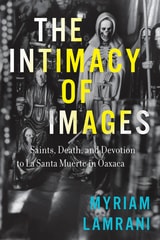
The Intimacy of Images
Saints, Death, and Devotion to La Santa Muerte in OaxacaMyriam Lamrani
University of Texas Press, 2024
2026 Edie Turner First Book Prize in Ethnographic Writing, Society for Humanistic Anthropology
La Santa Muerte becomes a lens for understanding how Oaxacans relate to saints, loved ones, and other “special dead.”
In Oaxaca, images of saints and loved ones, as well as of victims of political or criminal violence, are seemingly everywhere. While Oaxacans relate to all sorts of “special dead,” they are particularly devoted to La Santa Muerte (Saint Death), a female reaper-like figure whose popularity has risen in tandem with violence throughout Mexico.
The Intimacy of Images recontextualizes Oaxacans’ relationships with their “special dead” through the lens of La Santa Muerte, examining how devotees closely interact with what Lamrani terms “intimate images”: not only devotional effigies but also photographs, films, tattoos, and murals, and even dreams and visions. Though Mexicans have a well-known cultural familiarity with death, Lamrani argues that devotion to La Santa Muerte builds upon this intimacy even as it also participates in the production of terror and reflects political and criminal violence. Ultimately, Lamrani finds that these human-image interactions represent more than Catholic devotion; they reveal the secrets of Oaxacan political, religious, and social life, embody changing relationships to mortality and violence, and even offer insight into the practice of anthropology itself.
The Invention of Sodomy in Christian Theology
Mark D. Jordan
University of Chicago Press, 1997
"A crucial contribution to our understanding of the tortured and tortuous relationship between men who love men, and the Christian religion—indeed, between our kind and Western society as a whole. . . . The true power of Jordan's study is that it gives back to gay and lesbian people our place in history and that it places before modern theologians and church leaders a detailed history of fear, inconsistency, hatred and oppression that must be faced both intellectually and pastorally."—Michael B. Kelly, Screaming Hyena
"[A] detailed and disturbing tour through the back roads of medieval Christian thought."—Dennis O'Brien, Commonweal
"Being gay and being Catholic are not necessarily incompatible modes of life, Jordan argues. . . . Compelling and deeply learned."—Virginia Quarterly Review
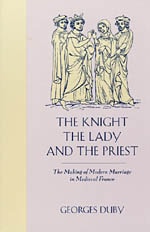
The Knight, the Lady and the Priest
The Making of Modern Marriage in Medieval FranceGeorges Duby
University of Chicago Press, 1993
"It is typical of Duby's modest spirit and his book-long concern with the ancient status of beleaguered wives that he ends his study with a plea: 'We must not forget the women. Much has already been said about them. But how much do we really know?' Not everything, certainly, but far more than we did before the author began these charmingly erudite investigations."—Ken Turan, Time
"It is refreshing to find a historian who is always conscious that we simply do not know what or how people thought 1000 years ago. . . . Duby explains the complicated machinations of the medieval churchman and the paterfamilias in a scholarly but lively style."—Sarah Lawson, New Statesman
"Duby has written an extraordinarily rich book—a panoramic view of medieval marriage and the relations between men and women, full of arresting insights and human detail. . . . It is the work of a master historian at the peak of his powers on a subject of central relevance, compulsive and essential reading."—P. Stafford, British History
Georges Duby (1919-1996) was a member of the Académie française and for many years held the distinguished chair in medieval history at the Collège de France. His books include The Three Orders; The Age of Cathedrals; The Knight, the Lady, and the Priest; Love and Marriage in the Middle Ages; and History Continues, all published by the University of Chicago Press.
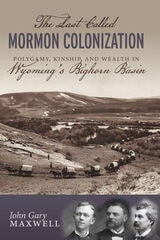
The Last Called Mormon Colonization
Polygamy, Kinship, and Wealth in Wyoming's Bighorn BasinJohn Gary Maxwell
University of Utah Press, 2021
The LDS Church officially abandoned polygamy in 1890, but evidence that the practice was still tolerated (if not officially sanctioned) by the church circulated widely, resulting in intense investigations by the U.S. Senate. In 1896 Abraham Owen Woodruff, a rising star in LDS leadership and an ardent believer in polygamy, was appointed to head the LDS Colonization Company. Maxwell explores whether under Woodruff’s leadership the Bighorn Basin colony was intended as a means to insure the secret survival of polygamy and if his untimely death in 1904, together with the excommunication of two equally dedicated proponents of polygamy—Apostles John Whitaker Taylor and Matthias Foss Cowley—led to its collapse.
Maxwell also details how Mormon settlers in Wyoming struggled with finance, irrigation, and farming and how they brought the same violence to indigenous peoples over land and other rights as did non-Mormons.
The 1900 Bighorn Basin colonization provides an early twentieth-century example of a Mormon syndicate operating at the intersection of religious conformity, polygamy, nepotism, kinship, corporate business ventures, wealth, and high priesthood status. Maxwell offers evidence that although in many ways the Bighorn Basin colonization failed, Owen Woodruff’s prophecy remains unbroken: “No year will ever pass, from now until the coming of the Savior, when children will not be born in plural marriage.”
The Law and the Prophets
Black Consciousness in South Africa, 1968–1977Daniel Magaziner
Ohio University Press, 2010
“No nation can win a battle without faith,” Steve Biko wrote, and as Daniel R. Magaziner demonstrates in The Law and the Prophets, the combination of ideological and theological exploration proved a potent force.
The 1970s are a decade virtually lost to South African historiography. This span of years bridged the banning and exile of the country’s best-known antiapartheid leaders in the early 1960s and the furious protests that erupted after the Soweto uprisings of June 16, 1976. Scholars thus know that something happened—yet they have only recently begun to explore how and why.
The Law and the Prophets is an intellectual history of the resistance movement between 1968 and 1977; it follows the formation, early trials, and ultimate dissolution of the Black Consciousness movement. It differs from previous antiapartheid historiography, however, in that it focuses more on ideas than on people and organizations. Its singular contribution is an exploration of the theological turn that South African politics took during this time. Magaziner argues that only by understanding how ideas about race, faith, and selfhood developed and were transformed in this period might we begin to understand the dramatic changes that took place.
The Law of Love
From Autonomy to CommunionStephen F. Brett, SSJ
University of Scranton Press, 2010
With an interdisciplinary combination of philosophy, theology, and family law, The Law of Love explores the impact of secular conceptions of autonomy on sexuality and family. Drawing from the thought of Aristotle, Cicero, Augustine, Aquinas, and the modern theologian Servais Pinckaers, Stephen F. Brett argues that the divorce of freedom from virtue has caused cultural relativism, and that a potent and healthy mix of temperance, chastity, and modesty is the antidote. Styled accessibly and quite cleverly with a broader audience in mind, The Law of Love will appeal to intellectuals of all faiths who are interested in facing the ambiguities and problems of contemporary life in a secularized society.

The Lion and the Cross
Early Christianity in Victorian NovelsRoyal W. Rhodes
The Ohio State University Press, 1900

The Literary Kierkegaard
Eric Ziolkowski
Northwestern University Press, 2011
Yet Kierkegaard signals the essentially literary as opposed to strictly theological or philosophical nature of his writings. Ziolkowski first considers the notions of aesthetics and the aesthetic as Kierkegaard adapted them, and then his posture as a poet, as interrelated contexts of his selfconception as “a weed in literature.” After next taking account of the history of the critical recognition of Kierkegaard as a literary artist, he looks at an important characteristic of his literary craft that has received relatively little attention: the manner by which he and his pseudonyms read and quote other authors. Ziolkowski then explores the connections between the philosopher’s writings and those of other literary masters by whom he was directly influenced, such as Aristophanes, Cervantes, and Shakespeare; or of those who, while they did not directly influence him, gave paradigmatic expression to some of the same aspects of aesthetic, ethical, and religious existence that Kierkegaard and his pseudonyms portray. Ziolkowski’s seminal study will be of interest to Kierkegaard scholars, philosophers, and comparative literature scholars alike.
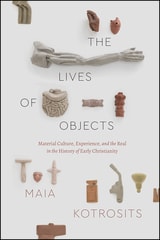
The Lives of Objects
Material Culture, Experience, and the Real in the History of Early ChristianityMaia Kotrosits
University of Chicago Press, 2020
Maia Kotrosits offers a fresh perspective on objects, looking beyond physical material to consider how collective imagination shapes the formation of objects and the experience of reality. Bringing a psychoanalytic approach to the analysis of material culture, she examines objects of attachment—relationships, ideas, and beliefs that live on in the psyche—and illustrates how people across time have anchored value systems to the materiality of life. Engaging with classical studies, history, anthropology, and literary, gender, and queer studies, Kotrosits shows how these disciplines address historical knowledge and how an expanded definition of materiality can help us make connections between antiquity and the contemporary world.
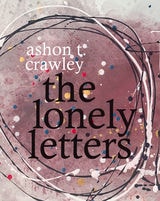
The Lonely Letters
Ashon T. Crawley
Duke University Press, 2020

The Long Arm of Papal Authority
Late Medieval Christian Peripheries and Their Communications with the Holy SeeGerhard Jaritz
Central European University Press, 2005