Results by title
3064 books match the query 'Social conditions' and 510 start with t
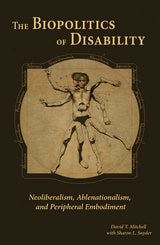
The Biopolitics of Disability
Neoliberalism, Ablenationalism, and Peripheral EmbodimentDavid T. Mitchell with Sharon L. Snyder
University of Michigan Press, 2015

The Black Body
Anna Maria Gehnyei (Karima 2G)
Rutgers University Press, 2025
Best Translation of a Literary Work Published in 2025 from the American Association of Italian Studies
In her memoir, Anna Maria Gehnyei, better known as singer, rapper, and producer Karima 2G, reveals the challenges she faced as the child of Liberian immigrants, born and raised in Rome but perpetually viewed by her fellow Italians as a foreigner.
The daughter of the first Kpelle man to ever leave his native village and emigrate to Europe, Anna is proud of her heritage but only knows Liberia as a mystical, faraway land that appears in her parents’ stories. Though Italy is the only homeland she knows, she is merely classed as a resident, not a permanent citizen. At school and in the streets of Rome, she is treated to a mixture of patronizing condescension and xenophobic hostility. But Anna refuses to be bullied into mute submission, finding her voice as a performer and activist who demands recognition for Italy’s growing immigrant population.
The Black Ceiling
How Race Still Matters in the Elite WorkplaceKevin Woodson
University of Chicago Press, 2023
America’s elite law firms, investment banks, and management consulting firms are known for grueling hours, low odds of promotion, and personnel practices that push out any employees who don’t advance. While most people who begin their careers in these institutions leave within several years, work there is especially difficult for Black professionals, who exit more quickly and receive far fewer promotions than their White counterparts, hitting a “Black ceiling.”
Sociologist and law professor Kevin Woodson knows firsthand what life at a top law firm feels like as a Black man. Examining the experiences of more than one hundred Black professionals at prestigious firms, Woodson discovers that their biggest obstacle in the workplace isn’t explicit bias but racial discomfort, or the unease Black employees feel in workplaces that are steeped in Whiteness. He identifies two types of racial discomfort: social alienation, the isolation stemming from the cultural exclusion Black professionals experience in White spaces, and stigma anxiety, the trepidation they feel over the risk of discriminatory treatment. While racial discomfort is caused by America’s segregated social structures, it can exist even in the absence of racial discrimination, which highlights the inadequacy of the unconscious bias training now prevalent in corporate workplaces. Firms must do more than prevent discrimination, Woodson explains, outlining the steps that firms and Black professionals can take to ease racial discomfort.
Offering a new perspective on a pressing social issue, The Black Ceiling is a vital resource for leaders at preeminent firms, Black professionals and students, managers within mostly White organizations, and anyone committed to cultivating diverse workplaces.
The Black Intellectual Tradition
African American Thought in the Twentieth CenturyEdited by Derrick P. Alridge, Cornelius L. Bynum, and James B. Stewart
University of Illinois Press, 2021
From 1900 to the present, people of African descent living in the United States have drawn on homegrown and diasporic minds to create a Black intellectual tradition engaged with ideas on race, racial oppression, and the world. This volume presents essays on the diverse thought behind the fight for racial justice as developed by African American artists and intellectuals; performers and protest activists; institutions and organizations; and educators and religious leaders. By including both women’s and men’s perspectives from the U.S. and the Diaspora, the essays explore the full landscape of the Black intellectual tradition. Throughout, contributors engage with important ideas ranging from the consideration of gender within the tradition, to intellectual products generated outside the intelligentsia, to the ongoing relationship between thought and concrete effort in the quest for liberation.
Expansive in scope and interdisciplinary in practice, The Black Intellectual Tradition delves into the ideas that animated a people’s striving for full participation in American life.
Contributors: Derrick P. Alridge, Keisha N. Blain, Cornelius L. Bynum, Jeffrey Lamar Coleman, Pero Gaglo Dagbovie, Stephanie Y. Evans, Aaron David Gresson III, Claudrena N. Harold, Leonard Harris, Maurice J. Hobson, La TaSha B. Levy, Layli Maparyan, Zebulon V. Miletsky, R. Baxter Miller, Edward Onaci, Venetria K. Patton, James B. Stewart, and Nikki M. Taylor

The Black Public Sphere
Edited by The Black Public Sphere Collective
University of Chicago Press, 1995
To think about the black public sphere we have to be willing to rethink the relationship between markets and freedom, commodity and identity, property and pleasure. This book provides more sophisticated approaches to matters historically consigned to inadequate rubrics—"the Negro problem," "subcultures," "minorities," "inner city," and "multicultural." While these rubrics constrict and stereotype, the analytic potential of the black public sphere is that it facilitates new ways to discuss democratic values and citizenship.
The Black and White Rainbow
Reconciliation, Opposition, and Nation-Building in Democratic South AfricaCarolyn E. Holmes
University of Michigan Press, 2020
Based on ethnographic and interview-based fieldwork conducted in 2012–13, The Black and White Rainbow: Reconciliation, Opposition, and Nation-Building in Democratic South Africa explores various themes of nation- and democracy-building, including the emotional and banal content of symbols of the post-apartheid state, the ways that gender and race condition nascent nationalism, the public performance of nationalism and other group-based identities, integration and sharing of space, language diversity, and the role of democratic functioning including party politics and modes of opposition. Each of these thematic chapters aims to explicate a feature of the multifaceted nature of identity-building, and link the South African case to broader literatures on both nationalism and democracy.
The Blind African Slave
Memoirs of Boyrereau Brinch, Nicknamed Jeffrey BraceJeffrey Brace, as told to Benjamin F. Prentiss, Esq.
University of Wisconsin Press, 2005
The Blood of Guatemala
A History of Race and NationGreg Grandin
Duke University Press, 2000
Focusing on Mayan elites in the community of Quetzaltenango, Grandin shows how their efforts to maintain authority over the indigenous population and secure political power in relation to non-Indians played a crucial role in the formation of the Guatemalan nation. To explore the close connection between nationalism, state power, ethnic identity, and political violence, Grandin draws on sources as diverse as photographs, public rituals, oral testimony, literature, and a collection of previously untapped documents written during the nineteenth century. He explains how the cultural anxiety brought about by Guatemala’s transition to coffee capitalism during this period led Mayan patriarchs to develop understandings of race and nation that were contrary to Ladino notions of assimilation and progress. This alternative national vision, however, could not take hold in a country plagued by class and ethnic divisions. In the years prior to the 1954 coup, class conflict became impossible to contain as the elites violently opposed land claims made by indigenous peasants.
This “history of power” reconsiders the way scholars understand the history of Guatemala and will be relevant to those studying nation building and indigenous communities across Latin America.
The Boat People and Achievement in America
A Study of Family Life, Hard Work, and Cultural ValuesNathan Caplan, John K. Whitmore, and Marcella H. Choy
University of Michigan Press, 1989
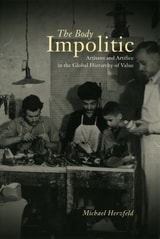
The Body Impolitic
Artisans and Artifice in the Global Hierarchy of ValueMichael Herzfeld
University of Chicago Press, 2003
Michael Herzfeld takes us inside a rich variety of small-town Cretan artisans' workshops to show how apprentices are systematically thwarted into learning by stealth and guile. This harsh training reinforces a stereotype of artisans as rude and uncultured. Moreover, the same stereotypes that marginalize artisans locally also operate to marginalize Cretans within the Greek nation and Greece itself within the international community. What Herzfeld identifies as "the global hierarchy of value" thus frames the nation's ancient monuments and traditional handicrafts as evidence of incurable "backwardness."
Herzfeld's sensitive observations offer an intimately grounded way of understanding the effects of globalization and of one of its most visible offshoots, the heritage industry, on the lives of ordinary people in many parts of the world today.
The Body in Late-Capitalist USA
Donald M. Lowe
Duke University Press, 1995
Moving beyond studies of representations and images of the body, Lowe focuses on the intersection of body practices, language, and the Social to describe concretely the reality of a lived body. His strongly synthetic work brings together Marxist critique, semiotics, Foucaultian discourse analysis, and systems and communications theory to examine those practices that construct the body under late capitalism: habits of work and consumption, the ways we give birth and raise children, socialization, mental and physical healing, reconstructions and contestations of sexuality and gender. Lowe draws upon a wide range of sources, including government and labor studies and statistics, diagnostic and statistical manuals on mental illness, computer manuals, self-help books, and guides to work-related stress disorders, to illustrate the transformation of the body into a nexus of exchange value in postmodern society.
The Book of Politics
China in TheoryMichael Dutton
Duke University Press, 2024
The Border and Its Bodies
The Embodiment of Risk Along the U.S.-México LineEdited by Thomas E. Sheridan and Randall H. McGuire
University of Arizona Press, 2019
The increasingly militarized U.S.-México border is an intensely physical place, affecting the bodies of all who encounter it. The essays in this volume explore how crossing becomes embodied in individuals, how that embodiment transcends the crossing of the line, and how it varies depending on subject positions and identity categories, especially race, class, and citizenship.
Timely and wide-ranging, this book brings into focus the traumatic and real impact the border can have on those who attempt to cross it, and it offers new perspectives on the effects for rural communities and ranchers. An intimate and profoundly human look at migration, The Border and Its Bodies reminds us of the elemental fact that the border touches us all.
Contributors
Bruce E. Anderson
Jared Beatrice
Rebecca Crocker
Jason De León
Linda Green
Randall H. McGuire
Shaylih Muehlmann
Robin Reineke
Olivia T. Ruiz Marrujo
David Seibert
Thomas E. Sheridan
Angela Soler
Ruth M. Van Dyke
The Borders of Dominicanidad
Race, Nation, and Archives of ContradictionLorgia García Peña
Duke University Press, 2016
The Boston Renaissance
Race, Space, and Economic Change in an American MetropolisBarry Bluestone
Russell Sage Foundation, 2000

The Bottom Rung
African American Family Life on Southern FarmsStewart E. Tolnay
University of Illinois Press, 1999
Tracing patterns of marriage and childbearing among both whites and blacks during the first decades of this century, Stewart Tolnay pursues questions about how black southern farm families were formed and dissolved, how they educated their children or put them to work in the fields, and how they migrated in search of opportunity. Further, he considers the possible legacy of these experiences for family life in contemporary urban environments.
Making revealing and innovative use of public records from the early part of the twentieth century, Tolnay challenges the widely held idea that southern migrants to northern cities carried with them a dysfunctional family culture. He demonstrates the powerful impact of economic conditions on family life and views patterns of marriage and childbearing as responsive to prevailing social, economic, and political conditions. In a provocative extension of this perspective, Tolnay argues that current high levels of single-parenthood among urban African American families likewise reflect rational responses to the socio-economic environment and government policies.
By placing post-World War II demographic developments in a wider historical perspective, The Bottom Rung sheds new light on recent discussions of the difficulties faced by the modern black urban family. The text is enhanced by Dorothea Lange's and Russell Lee's poignant photographs.
The Brazil Reader
History, Culture, PoliticsRobert M. Levine and John J. Crocitti, eds.
Duke University Press, 1999
Complementing traditional views with fresh ones, The Brazil Reader’s historical selections range from early colonization to the present day, with sections on imperial and republican Brazil, the days of slavery, the Vargas years, and the more recent return to democracy. They include letters, photographs, interviews, legal documents, visual art, music, poetry, fiction, reminiscences, and scholarly analyses. They also include observations by ordinary residents, both urban and rural, as well as foreign visitors and experts on Brazil. Probing beneath the surface of Brazilian reality—past and present—The Reader looks at social behavior, women’s lives, architecture, literature, sexuality, popular culture, and strategies for coping with the travails of life in a country where the affluent live in walled compounds to separate themselves from the millions of Brazilians hard-pressed to find food and shelter. Contributing to a full geographic account—from the Amazon to the Northeast and the Central-South—of this country’s singular multiplicity, many pieces have been written expressly for this volume or were translated for it, having never previously been published in English.
This second book in The Latin America Readers series will interest students, specialists, travelers for both business and leisure, and those desiring an in-depth introduction to Brazilian life and culture.
The Broken Hoe
Cultural Reconfiguration in Biase Southeast NigeriaDavid Uru Iyam
University of Chicago Press, 1995
The Biase today face social and economic pressures that seriously strain their ability to cope with the realities of modern Nigeria. Iyam, an anthropologist and a Biase, examines the relationship between culture and development as played out in projects in local communities.
Western technologies and beliefs alone cannot ensure economic growth and modernization, Iyam shows, and should not necessarily be imposed on poor rural groups who may not be prepared to incorporate them; neither, however, is it possible to recover indigenous coping strategies given the complexities of the postcolonial world. A successful development strategy, Iyam argues, needs to strengthen local managerial capacity, and he offers suggestions as to how this can be done in a range of cultural and social settings.
The Burma Delta
Economic Development and Social Change on an Asian Rice Frontier, 1852–1941Michael Adas
University of Wisconsin Press, 2011
In the decades following its annexation to the Indian Empire in 1852, Lower Burma (the Irrawaddy-Sittang delta region) was transformed from an underdeveloped and sparsely populated backwater of the Konbaung Empire into the world’s largest exporter of rice. This seminal and far-reaching work focuses on two major aspects of that transformation: the growth of the agrarian sector of the rice industry of Lower Burma and the history of the plural society that evolved largely in response to rapid economic expansion.
The Center of a Great Empire
The Ohio Country in the Early RepublicAndrew R. L. Cayton
Ohio University Press, 2005
“The people who lived in what became the seventeenth state in the American Union in 1803 were not only at the center of a great empire, they were at the center of the most important historical developments in the revolutionary Atlantic World.”
—From the introduction
Nowhere did the revolutions in politics, commerce, and society in the late eighteenth and early nineteenth centuries occur more quickly or more thoroughly than in the Ohio country. A forested borderland dominated by American Indians in 1780, Ohio was a landscape of farms and towns inhabited by people from all over the world by 1830. The Center of a Great Empire: The Ohio Country in the Early Republic chronicles this dramatic and all-encompassing change.
Andrew R. L. Cayton and Stuart D. Hobbs have assembled an impressive collection of articles by established and rising scholars. They address the conquest of Native Americans, the emergence of a democratic political culture, the origins of capitalism, the formation of public culture, the growth of evangelical Protestantism, the ambiguous status of African Americans, and social life in a place that most regarded as the cutting edge of human history.
For The Center of a Great Empire, distinguished historians of the American nation in its first decades question conventional wisdom. They emphasize contingency rather than inevitability and contention rather than progress. Downplaying the frontier character of Ohio, they offer new interpretations and open new paths of inquiry through investigations of race, education, politics, religion, family, commerce, colonialism, and conquest. As it underscores key themes in the history of the United States, The Center of a Great Empire pursues issues that have fascinated people for two centuries.
The Challenge of Modernity
German Social and Cultural Studies, 1890-1960Adelheid von Saldern
University of Michigan Press, 2002
The essays contained in The Challenge of Modernity cover three distinct subject areas: the history of the Social Democratic labor movement, housing, and popular and mass culture. More specifically, von Saldern addresses the self-modernizing Social Democratic Party; Social Democrats' and Communists' opposing views of modernization; social rationalization in the private sphere (particularly with regard to women and hygiene); sport; the arrival of "trashy" literature, movies, and radio in Germany; and cultural conservatives' attempts to enhance a national and Volks-culture in opposition to mass-culture, Americanization, and the avant-garde. The variety of responses to the modernization process, as well as von Saldern's focus on social agents, makes this book unique.
Required reading for scholars of social, cultural, and gender history, The Challenge of Modernity will also find an audience among urban anthropologists, political scientists, and sociologists. Von Saldern's ability to combine a strong theoretical framework with concrete historical examples will also make this outstanding reading for undergraduate and graduate students seeking to familiarize themselves with the history of German society and culture.
Adelheid von Saldern is Professor of Modern History and Director, Historisches Seminar, Universität Hanover.
The Changing Face of World Cities
Young Adult Children of Immigrants in Europe and the United StatesMaurice Crul
Russell Sage Foundation, 2013
The Changing Terrain of Race and Ethnicity
Maria Krysan
Russell Sage Foundation, 2004
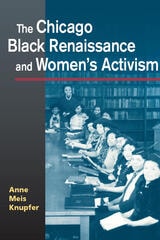
The Chicago Black Renaissance and Women's Activism
Anne Meis Knupfer
University of Illinois Press, 2006
The book examines various groups of black female activists, including writers and actresses, social workers, artists, school teachers, and women's club members to document the impact of social class, gender, nativity, educational attainment, and professional affiliations on their activism. Together, these women worked to sponsor black history and literature, to protest overcrowded schools, and to act as a force for improved South Side housing and employment opportunities. Knupfer also reveals the crucial role these women played in founding and sustaining black cultural institutions, such as the first African American art museum in the country; the first African American library in Chicago; and various African American literary journals and newspapers. As a point of contrast, Knupfer also examines the overlooked activism of working-class and poor women in the Ida B. Wells and Altgeld Gardens housing projects.
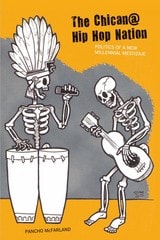
The Chican@ Hip Hop Nation
Politics of a New Millennial MestizajePancho McFarland
Michigan State University Press, 2013
The Chicana Motherwork Anthology
Edited by Cecilia Caballero, Yvette Martínez-Vu, Judith Pérez-Torres, Michelle Téllez, Christine Vega; Foreword by Ana Castillo
University of Arizona Press, 2019
The volume is organized in four parts: (1) separation, migration, state violence, and detention; (2) Chicana/Latina/WOC mother-activists; (3) intergenerational mothering; and (4) loss, reproductive justice, and holistic pregnancy. Contributors offer a just framework for Chicana and Women of Color mother-scholars, activists, and allies to thrive within and outside of the academy. They describe a new interpretation of motherwork that addresses the layers of care work needed for collective resistance to structural oppression and inequality.
This anthology is a call to action for justice. Contributions are both theoretical and epistemological, and they offer an understanding of motherwork through Chicana and Women of Color experiences.
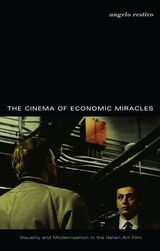
The Cinema of Economic Miracles
Visuality and Modernization in the Italian Art FilmAngelo Restivo
Duke University Press, 2002
Restivo studies numerous films of the period, focusing mainly on the works of Pier Paolo Pasolini and Michelangelo Antonioni. He finds that these auteurs’ films reworked the neorealist aesthetic developed in the 1940s and 1950s, explored issues brought to the fore by the subsequent consumer boom, and presaged developments central to both critical theory and the visual arts in the 1980s and 1990s. Drawing on the theories of Lacan, Zizek, Benjamin, Foucault, Jameson, and Deleuze, he shines new light on such films as Pasolini’s Accattone and Teorema, and Antonioni’s Red Desert and Blow-Up. Restivo’s model for understanding the relationship of the 1960s Italian art film to its cultural contexts also has implications that extend to the developing national cinemas of countries such as Brazil and Taiwan.
The Cinema of Economic Miracles will interest scholars and students in all areas of film studies, especially those studying theories of the image, national cinema theory, and Italian cinema, and to those engaged in poststructuralist theory, philosophy, and comparative literature.
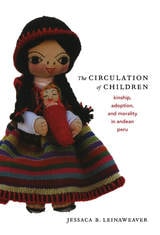
The Circulation of Children
Kinship, Adoption, and Morality in Andean PeruJessaca B. Leinaweaver
Duke University Press, 2008
Leinaweaver provides insight into the emotional and material factors that bring together and separate indigenous Andean families in the highland city of Ayacucho. She describes how child circulation is intimately linked to survival in the city, which has had to withstand colonialism, economic isolation, and the devastating civil war unleashed by the Shining Path. Leinaweaver examines the practice from the perspective of parents who send their children to live in other households, the adults who receive them, and the children themselves. She relates child circulation to international laws and norms regarding children’s rights, adoptions, and orphans, and to Peru’s history of racial conflict and violence. Given that history, Leinaweaver maintains that it is not surprising that child circulation, a practice associated with Peru’s impoverished indigenous community, is alternately ignored, tolerated, or condemned by the state.
The City after Property
Abandonment and Repair in Postindustrial DetroitSara Safransky
Duke University Press, 2023
The City at Its Limits
Taboo, Transgression, and Urban Renewal in LimaDaniella Gandolfo
University of Chicago Press, 2009
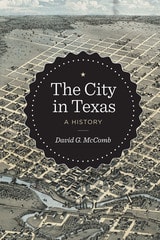
The City in Texas
A HistoryBy David McComb
University of Texas Press, 2015
Texans love the idea of wide-open spaces and, before World War II, the majority of the state’s people did live and work on the land. Between 1940 and 1950, however, the balance shifted from rural to urban, and today 88 percent of Texans live in cities and embrace the amenities of urban culture. The rise of Texas cities is a fascinating story that has not been previously told. Yet it is essential for understanding both the state’s history and its contemporary character.
In The City in Texas, acclaimed historian David G. McComb chronicles the evolution of urban Texas from the Spanish Conquest to the present. Writing in lively, sometimes humorous and provocative prose, he describes how commerce and politics were the early engines of city growth, followed by post–Civil War cattle shipping, oil discovery, lumbering, and military needs. McComb emphasizes that the most transformative agent in city development was the railroad. This technology—accompanied by telegraphs that accelerated the spread of information and mechanical clocks that altered concepts of time—revolutionized transportation, enforced corporate organization, dictated town location, organized space and architecture, and influenced thought. McComb also thoroughly explores the post–World War II growth of San Antonio, Dallas, Fort Worth, Austin, and Houston as incubators for businesses, educational and cultural institutions, and health care centers.
The City on the Hill From Below
The Crisis of Prophetic Black PoliticsAuthored by Stephen Marshall
Temple University Press, 2012
Within the discipline of American political science and the field of political theory, African American prophetic political critique as a form of political theorizing has been largely neglected. Stephen Marshall, in The City on the Hill from Below, interrogates the political thought of David Walker, Frederick Douglass, W. E. B. DuBois, James Baldwin, and Toni Morrison to reveal a vital tradition of American political theorizing and engagement with an American political imaginary forged by the City on the Hill.
Originally articulated to describe colonial settlement, state formation, and national consolidation, the image of the City on the Hill has been transformed into one richly suited to assessing and transforming American political evil. The City on the Hill from Below shows how African American political thinkers appropriated and revised languages of biblical prophecy and American republicanism.
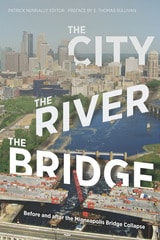
The City, the River, the Bridge
Before and after the Minneapolis Bridge CollapsePatrick Nunnally
University of Minnesota Press, 2011
The City, the River, the Bridge represents another set of responses to the disaster. Stemming from a 2008 University of Minnesota symposium on the bridge collapse and the building of a new bridge, it addresses the ramifications of the disaster from the perspectives of history, engineering, architecture, water science, community-based journalism, and geography. Contributors examine the factors that led to the collapse, the lessons learned from the disaster and the response, the policy and planning changes that have occurred or are likely to occur, and the impact on the city and the Mississippi River. The City, the River, the Bridge demonstrates the University's commitment to issues that concern the community and shares insights on public questions of city building, infrastructure, and design policy.
Contributors: John O. Anfinson; Roberto Ballarini; Heather Dorsey; Thomas Fisher; Minmao Liao; Judith A. Martin; Roger Miller; Mark Pedelty; Deborah L. Swackhamer; Melissa Thompson.
The Clerk's Tale
Young Men and Moral Life in Nineteenth-Century AmericaThomas Augst
University of Chicago Press, 2003
Thomas Augst follows clerks as they made their way through the boarding houses, parlors, and offices of the big city. Tracing the course of their everyday lives, Augst shows how these young men used acts of reading and writing to navigate the anonymous world of market culture and claim identities for themselves within it. Clerks, he reveals, calculated their prospects in diaries, composed detailed letters to friends and family, attended lectures by key thinkers of the day, joined libraries where they consumed fiction, all while wrestling with the boredom of their work. What results, then, is a poignant look at the literary practices of ordinary people and an affecting meditation on the moral lives of men in antebellum America.
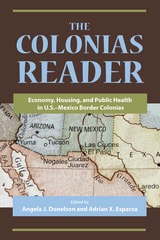
The Colonias Reader
Economy, Housing and Public Health in U.S.-Mexico Border ColoniasEdited by Angela J. Donelson and Adrian X. Esparza
University of Arizona Press, 2010
The Colonias Reader is the first book to present such a broad overview of these communities, offering a glimpse into life in the colonias and the circumstances that allow them to continue to exist—and even grow—in persistent poverty. The contributors document the depth of existing problems in each state and describe how government agencies, nongovernmental organizations, and community activists have mobilized resources to overcome obstacles to progress.
More than reporting problems and documenting programs, the book provides conceptual frameworks that tie poverty to institutional and class-based conflicts, and even challenges the very basis of colonia designations. Most of these contributions move beyond portraying border residents as hapless victims of discrimination and racism, showing instead their devotion to improving their own living conditions through grassroots organizing and community leadership.
These contributions show that, despite varying degrees of success, all colonia residents aspire to a livable wage, safe and decent housing, and basic health care. The Colonias Reader showcases many situations in which these people have organized to fulfill these ambitions and provides new insight into life along the border.
The Colonizing Self
Or, Home and Homelessness in Israel/PalestineHagar Kotef
Duke University Press, 2020
The Color Black
Enslavement and Erasure in IranBeeta Baghoolizadeh
Duke University Press, 2024

The Color Line and the Quality of Life in America
Reynolds Farley
Russell Sage Foundation, 1987

The Color of Love
Racial Features, Stigma, and Socialization in Black Brazilian FamiliesBy Elizabeth Hordge-Freeman
University of Texas Press, 2015
Winner, Section on the Sociology of Emotions Outstanding Recent Contribution (Book) Award, American Sociological Association, 2016
Charles Horton Cooley Award for Recent Book, Society for the Study of Symbolic Interaction, 2017
Best Publication Award, Section on Body and Embodiment, American Sociological Association (ASA), 2018
The Color Of Love reveals the power of racial hierarchies to infiltrate our most intimate relationships. Delving far deeper than previous sociologists have into the black Brazilian experience, Elizabeth Hordge-Freeman examines the relationship between racialization and the emotional life of a family. Based on interviews and a sixteen-month ethnography of ten working-class Brazilian families, this provocative work sheds light on how families simultaneously resist and reproduce racial hierarchies. Examining race and gender, Hordge-Freeman illustrates the privileges of whiteness by revealing how those with “blacker” features often experience material and emotional hardships. From parental ties, to sibling interactions, to extended family and romantic relationships, the chapters chart new territory by revealing the connection between proximity to whiteness and the distribution of affection within families.
Hordge-Freeman also explores how black Brazilian families, particularly mothers, rely on diverse strategies that reproduce, negotiate, and resist racism. She frames efforts to modify racial features as sometimes reflecting internalized racism, and at other times as responding to material and emotional considerations. Contextualizing their strategies within broader narratives of the African diaspora, she examines how Salvador’s inhabitants perceive the history of the slave trade itself in a city that is referred to as the “blackest” in Brazil. She argues that racial hierarchies may orchestrate family relationships in ways that reflect and reproduce racial inequality, but black Brazilian families actively negotiate these hierarchies to assert their citizenship and humanity.
The Color of Night
Race, Railroaders, and Murder in the Wartime WestMax Geier
Oregon State University Press, 2015
In this deeply researched and detailed account, Geier explores how race, gender, and class affected the attitudes of local town-folk, law officers, and courtroom jurors toward Black trainmen on the West Coast, at a time when militarization skewed perceptions of virtue, status, and authority. He delves into the working conditions and experiences of unionized Black trainmen in their “home and away” lives in Los Angeles and Portland, while illuminating the different ways that they, and other residents of Oregon and southern California, responded to news of “Oregon’s murdered war bride.” Reporters, civil rights activists, and curiosity seekers transformed the trial and appeals process into a public melodrama.
The investigation, trial, and conviction of Robert Folkes galvanized civil rights activists, labor organizers, and community leaders into challenging the flawed judicial process and ultimately the death penalty in Oregon, serving as a catalyst for civil rights activism that bridged rural and urban divides. The Color of Night will appeal to “true crime” aficionados, and to anyone interested in the history of race and labor relations, working conditions, community priorities, and attitudes toward the death penalty in the first half of the 20th century.
The Color of Opportunity
Pathways to Family, Welfare, and WorkHaya Stier and Marta Tienda
University of Chicago Press, 2000
The culmination of a six-year collaboration analyzing the Urban Poverty and Family Life Survey of Chicago, The Color of Opportunity is the first major work to compare Chicago's inner city minorities with national populations of like race and ethnicity from a life course perspective. The authors find that blacks, whites, Mexicans, and Puerto Ricans living in poor neighborhoods differ in their experiences with early material deprivation and the lifetime disadvantages that accumulate—but they do not differ much from the urban poor in their family formation, welfare participation, or labor force attachment. Stier and Tienda find little evidence for ghetto-specific behavior, but they document the myriad ways color still restricts economic opportunity.
The Color of Opportunity stands as a much-needed corrective to increasingly negative views of poor people of color, especially the poor who live in deprived neighborhoods. It makes a key and lasting contribution to ongoing debates about the origins and nature of urban poverty.
The Color of Strangers, the Color of Friends
Alan Peshkin
University of Chicago Press, 1991
"Peshkin strikes a hopeful chord, revealing what social encounters among ethnic groups—at their best—can be like in America."—Education Digest
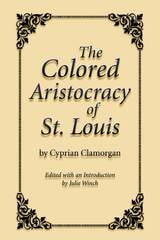
The Colored Aristocracy of St. Louis
Cyprian Clamorgan, Edited & Intro by Julie Winch
University of Missouri Press, 2018
In 1858, Cyprian Clamorgan wrote a brief but immensely readable book entitled The Colored Aristocracy of St. Louis. The grandson of a white voyageur and a mulatto woman, he was himself a member of the "colored aristocracy." In a setting where the vast majority of African Americans were slaves, and where those who were free generally lived in abject poverty, Clamorgan's "aristocrats" were exceptional people. Wealthy, educated, and articulate, these men and women occupied a "middle ground." Their material advantages removed them from the mass of African Americans, but their race barred them from membership in white society.
The Colored Aristocracy of St. Louis is both a serious analysis of the social and legal disabilities under which African Americans of all classes labored and a settling of old scores. Somewhat malicious, Clamorgan enjoyed pointing out the foibles of his friends and enemies, but his book had a serious message as well. "He endeavored to convince white Americans that race was not an absolute, that the black community was not a monolith, that class, education, and especially wealth, should count for something."
Despite its fascinating insights into antebellum St. Louis, Clamorgan's book has been virtually ignored since its initial publication. Using deeds, church records, court cases, and other primary sources, Winch reacquaints readers with this important book and establishes its place in the context of African American history. This annotated edition of The Colored Aristocracy of St. Louis includes an introductory essay on African Americans in St. Louis before the Civil War, as well as an account of the lives of the author and the members of his remarkable family—a family that was truly at the heart of the city's "colored aristocracy" for four generations.
A witty and perceptive commentary on race and class, The Colored Aristocracy of St. Louis is a remarkable story about a largely forgotten segment of nineteenth-century society. Scholars and general readers alike will appreciate Clamorgan's insights into one of antebellum America's most important communities.
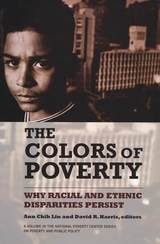
The Colors of Poverty
Why Racial and Ethnic Disparities PersistAnn Chih Lin
Russell Sage Foundation, 2008
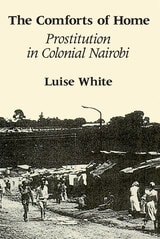
The Comforts of Home
Prostitution in Colonial NairobiLuise White
University of Chicago Press, 1990
"White's book . . . takes a unique approach to a largely unexplored aspect of African History. It enhances our understanding of African social history, political economy, and gender studies. It is a book that deserves to be widely read."—Elizabeth Schmidt, American Historical Review

The Community Apart
A Case Study of a Canadian Indian Reserve CommunityYngve Georg Lithman
University of Manitoba Press, 1984

The Complete Works of Robert Browning, Volume IX
With Variant Readings and AnnotationsRobert Browning
Ohio University Press, 1990
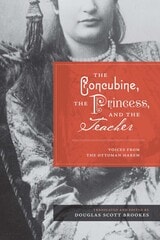
The Concubine, the Princess, and the Teacher
Voices from the Ottoman HaremTranslated and edited by Douglas Scott Brookes
University of Texas Press, 2008
In the Western imagination, the Middle Eastern harem was a place of sex, debauchery, slavery, miscegenation, power, riches, and sheer abandon. But for the women and children who actually inhabited this realm of the imperial palace, the reality was vastly different. In this collection of translated memoirs, three women who lived in the Ottoman imperial harem in Istanbul between 1876 and 1924 offer a fascinating glimpse "behind the veil" into the lives of Muslim palace women of the late nineteenth and early twentieth centuries.
The memoirists are Filizten, concubine to Sultan Murad V; Princess Ayse, daughter of Sultan Abdulhamid II; and Safiye, a schoolteacher who instructed the grandchildren and harem ladies of Sultan Mehmed V. Their recollections of the Ottoman harem reveal the rigid protocol and hierarchy that governed the lives of the imperial family and concubines, as well as the hundreds of slave women and black eunuchs in service to them. The memoirists show that, far from being a place of debauchery, the harem was a family home in which polite and refined behavior prevailed. Douglas Brookes explains the social structure of the nineteenth-century Ottoman palace harem in his introduction.
These three memoirs, written across a half century and by women of differing social classes, offer a fuller and richer portrait of the Ottoman imperial harem than has ever before been available in English.
The Confederate Belle
Giselle Roberts
University of Missouri Press, 2003
The Conquest of Cool
Business Culture, Counterculture, and the Rise of Hip ConsumerismThomas Frank
University of Chicago Press, 1997
"[Thomas Frank is] perhaps the most provocative young cultural critic of the moment."—Gerald Marzorati, New York Times Book Review
"An indispensable survival guide for any modern consumer."—Publishers Weekly, starred review
"Frank makes an ironclad case not only that the advertising industry cunningly turned the countercultural rhetoric of revolution into a rallying cry to buy more stuff, but that the process itself actually predated any actual counterculture to exploit."—Geoff Pevere, Toronto Globe and Mail
"The Conquest of Cool helps us understand why, throughout the last third of the twentieth century, Americans have increasingly confused gentility with conformity, irony with protest, and an extended middle finger with a populist manifesto. . . . His voice is an exciting addition to the soporific public discourse of the late twentieth century."—T. J. Jackson Lears, In These Times
"An invaluable argument for anyone who has ever scoffed at hand-me-down counterculture from the '60s. A spirited and exhaustive analysis of the era's advertising."—Brad Wieners, Wired Magazine
"Tom Frank is . . . not only old-fashioned, he's anti-fashion, with a place in his heart for that ultimate social faux pas, leftist politics."—Roger Trilling, Details