Results by title
870 books match the query 'Sports & Recreation' and 174 start with t

The End of Autumn
Reflections on My Life in FootballMichael Oriard
University of Illinois Press, 2009
After graduating, he signed with the Kansas City Chiefs and head coach Hank Stram. There he learned what it meant to be "owned." He rediscovered the game as it was played by grown men with families who were still treated like children and who dreaded nothing more than the end of their football careers. And without their fully realizing the consequences, every hard tackle inflicted its injury, some gradually growing into chronic conditions, some suddenly cutting a player's career short and ushering him off the field to be soon forgotten.
In this thoughtful narrative, Oriard describes the dreams of glory, the game day anxieties, the brutal training camps and harsh practices, his starry-eyed experience at Notre Dame, and the cold-blooded business of professional football. Told from the inside, the book leaves aside the hype and the pathos of the game to present a direct and honest account of the personal rewards but also the costs players paid to make others rich and entertained.
Originally published in 1982, The End of Autumn recounts the experiences of an ordinary player in a bygone era--before ESPN, before the Bowl Championship Series, before free agency and million-dollar salaries for NFL players. In a new afterword, Oriard reflects on the process of writing the book and how the game has changed in the thirty years since his "retirement" from football at the age of twenty-six.
The Eternal Present of Sport
Rethinking Sport and ReligionDaniel A. Grano
Temple University Press, 2017
Grano asserts that it is precisely through sport’s highest religious ideals that controversies are taking shape and constituting points of political and social rupture. He examines issues of transcendence, “legacy”—e.g., “greatest ever,” or “all-time”—and “witnessing” through instant replay, which undermine institutional authority. Grano also reflects on elite athletes representing especially powerful embodiments of religious and social conflict, including around issues related to gender, sexuality, ability doping, traumatic brain injury, and institutional greed.
Elite sport is in a period of profound crisis. It is through the ideals Grano analyzes that we can imagine a radically alternative future for elite sport.
The Evolution of a Cricket Fan
My Shapeshifting JourneySamir Chopra
Temple University Press, 2021
Samir Chopra is an immigrant, a “voluntary exile,” who discovers he can tell the story of his life through cricket, a game that has long been an influence—really, an obsession—for him. In so doing, he reveals how his changing views on the sport mirror his journey of self-discovery. In The Evolution of a Cricket Fan, Chopra is thus able to reflect on his changing perceptions of self, and of the nations and cultures that have shaped his identity, politics, displacement, and fandom.
Chopra’s passion for the sport began as a child, when he rooted for Pakistan and against his native India. When he migrated, he became a fan of the Indian team that gave him a sense of home among the various cultures he encountered in North America and Australia. This “shapeshifting” exposes the rift between the Old and the New world, which Chopra acknowledges is “cricket’s greatest modern crisis.” But it also illuminates the identity dilemmas of post-colonial immigrants in the Indian diaspora.
Chopra’s thoughts about the sport and its global influence are not those of a player. He provides access to the inner world of the global cricket fan navigating the world that colonial empire wrought and that cricket continues to connect and animate. He observes that the Indian cricket team carries many burdens—not only must they win cricket matches, but their style of play must generate a pride that assuages generations of wounds inflicted by history. And Chopra must navigate where he stands in that history.
The Evolution of a Cricket Fan shows Chopra’s own wins and losses as his life takes new directions and his fandom changes allegiances.

The Fast Track
Inside the Surging Business of Women's SportsJane McManus
Temple University Press, 2025
Veteran sports journalist and academic Jane McManus examines both this upward trend and the forces that have held women’s sports back since the early 1970s when Title IX became law (and Billie Jean King soundly defeated Bobby Riggs). As the fervor for Caitlin Clark during the 2024 NCAA Women’s Basketball championship illustrates, there is big money to be made from broadcasting, merchandising, and investing in women’s sports.
The Fast Track chronicles how pioneering sponsorships, broadcast opportunities, and surges in ratings contradict the myths about disinterest. Interviews counter the resistance toward women’s leagues, reveal how women are covered in the media, and consider the possibilities for further investment. McManus also addresses racial inclusivity, transgender athletes, women’s health issues, and equal pay.
An essential road map to capitalize on untapped potential, The Fast Track provides a snapshot of where women’s sports as an industry and investment stand at this moment in time.
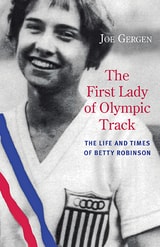
The First Lady of Olympic Track
The Life and Times of Betty RobinsonJoe Gergen
Northwestern University Press, 2014
The 1928 Olympic Games in Amsterdam were the first in which women—over the objections of many, including Pope Pius XI and the founder of the modern Olympics, Baron Pierre de Coubertin—were allowed to run in the marquee track events.
Equally remarkable is the story behind the first female gold medal winner in the 100-meter dash, sixteen-year-old American Betty Robinson. A prodigy running in just her fourth organized meet, Robinson stunned the world, earning special praise from the president of the 1928 American Olympic Committee, General Douglas MacArthur. But Robinson’s triumph soon became tragedy when in 1931 she was involved in a life-threatening plane crash. Unable to assume a sprinter’s crouch, she nevertheless joined fellow pioneer Jesse Owens at the infamous 1936 Berlin Olympics, and achieved further glory on the relay team. Journalist Joe Gergen’s The First Lady of Olympic Track rescues an exceptional figure from obscurity.
The Gap Years
Climbing, Skiing, and the Journey BackTom French
Brandeis University Press, 2026
At the end of 2019, Tom French retired from a four-decade career in business, determined to return to interests that had defined his youth and see what meaning they still held. One of these interests was mountaineering. Another was adventure travel, with a particular focus on Nepal. A third was cross-country ski racing. Having taken “gap years” between school and university, and again before he started work, he decided to take a gap year before settling into the expectations of retirement. One year turned into three as he rebuilt his athletic strength, competed in cross-country ski marathons, and climbed some of the world’s highest mountains, including two expeditions to Mount Everest. On the first Everest climb, a cyclone forced him to turn around high on the mountain and descend the treacherous Lhotse Face in a blizzard. On the second, he approached the mountain through the remote Makalu Barun region, the first climber ever to do so, and climbed to the summit on a moonlit night.
But this is a book about much more than Everest. It is about beauty and joy found in wild places, about cross-country ski racing and mountaineering more broadly, and—most of all—about a journey to find meaning in life and reconnect with the passions of youth.
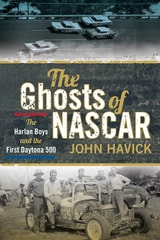
The Ghosts of NASCAR
The Harlan Boys and the First Daytona 500John Havick
University of Iowa Press, 2013
The Gold in the Rings
The People and Events That Transformed the Olympic GamesStephen R. Wenn and Robert K. Barney
University of Illinois Press, 2019
Entertaining and expert, The Gold in the Rings maps the Olympics' course from paragon of purity to billion-dollar profits.
The Great Encyclopedia of Nineteenth-Century Major League Baseball
David Nemec
University of Alabama Press, 2006
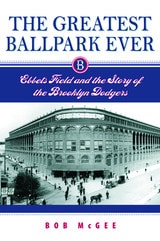
The Greatest Ballpark Ever
Ebbets Field and the Story of the Brooklyn DodgersMcGee, Bob
Rutgers University Press, 2005
In this lively story of sports, politics, and the talented, hilarious, and charming characters associated with the Brooklyn Dodgers, Bob McGee chronicles the ballpark's vibrant history from the drawing board to the wrecking ball, beginning with Charley Ebbets and the heralded opening in 1913, on through the eras that followed. McGee weaves a story about how Ebbets Field's architectural details, notable flaws, and striking facade brought Brooklyn and its team together in ways that allowed each to define the other.
Drawing on original interviews and letters, as well as published and archival sources, The Greatest Ballpark Ever explores the struggle of Charley Ebbets to build Ebbets Field, the days of Wilbert Robinson's early pennant winners, the eras of the Daffiness Boys, Larry MacPhail, and Branch Rickey, the tumultuous field leadership of Leo the Lip, the fiery triumph of Jackie Robinson, the golden days of the Boys of Summer, and Walter O'Malley's ignominious departure.
With humor and passion, The Greatest Ballpark Ever lets readers relive a day in the raucous ballpark with its quirky angles and its bent right-field wall, with the characters and events that have become part of the nation's folklore.
The Greatest Sport of All
An Inside Look at Another Year in BoxingThomas Hauser
University of Arkansas Press, 2007
The Gridiron Gospel
Faith and College Football in Twentieth-Century AmericaHunter M. Hampton
University of Illinois Press, 2025
The Hayduke Trail
A Guide to the Backcountry Hiking Trail on the Colorado PlateauJoe Mitchell
University of Utah Press, 2005
Joe Mitchell and Mike Coronella pioneered Hayduke after concluding that a long trail—such as the Appalachian or Pacific Crest— was possible on the Plateau, thus introducing more people to these unique and threatened public lands. The Hayduke Trail includes detailed maps of the entire route, suggested cache points, and a wealth of description and tips for tackling this intense undertaking.
Hiking the entire route requires at least three months, though like other long trails it can be broken into smaller segments. The guide, featured in the March 2005 issue of National Geographic Adventure Magazine, is designed for experienced desert trekkers seeking a thorough-hiking experience on a well-tested route.
The Hidden Game of Baseball
A Revolutionary Approach to Baseball and Its StatisticsJohn Thorn, Pete Palmer, with David Reuther
University of Chicago Press, 2015
The new gospel promulgated by Thorn and Palmer opened the door for a flood of new questions, such as how a ballpark’s layout helps or hinders offense or whether a strikeout really is worse than another kind of out. Taking questions like these seriously—and backing up the answers with data—launched a new era, showing fans, journalists, scouts, executives, and even players themselves a new, better way to look at the game.
This brand-new edition retains the body of the original, with its rich, accessible analysis rooted in a deep love of baseball, while adding a new introduction by the authors tracing the book’s influence over the years. A foreword by ESPN’s lead baseball analyst, Keith Law, details The Hidden Game’s central role in the transformation of baseball coverage and team management and shows how teams continue to reap the benefits of Thorn and Palmer’s insights today. Thirty years after its original publication, The Hidden Game is still bringing the high heat—a true classic of baseball literature.
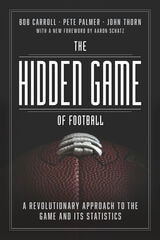
The Hidden Game of Football
A Revolutionary Approach to the Game and Its StatisticsBob Carroll, Pete Palmer, and John Thorn
University of Chicago Press, 2023
Data analytics have revolutionized football. With play sheets informed by advanced statistical analysis, today’s coaches pass more, kick less, and go for more two-point or fourth-down conversions than ever before. In 1988, sportswriters Bob Carroll, Pete Palmer, and John Thorn proposed just this style of play in The Hidden Game of Football, but at the time baffled readers scoffed at such a heartless approach to the game. Football was the ultimate team sport and unlike baseball could not be reduced to pure probabilities. Nevertheless, the book developed a cult following among analysts who, inspired by its unorthodox methods, went on to develop the core metrics of football analytics used today: win probability, expected points, QBR, and more. With a new preface by Thorn and Palmer and a new foreword by Football Outsiders’s Aaron Schatz, The Hidden Game of Football remains an essential resource for armchair coaches, fantasy managers, and fans of all stripes.
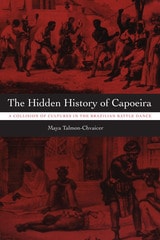
The Hidden History of Capoeira
A Collision of Cultures in the Brazilian Battle DanceBy Maya Talmon-Chvaicer
University of Texas Press, 2007
Capoeira, a Brazilian battle dance and national sport, has become popular all over the world. First brought to Brazil by African slaves and first documented in the late eighteenth century, capoeira has undergone many transformations as it has diffused throughout Brazilian society and beyond, taking on a multiplicity of meanings for those who participate in it and for the societies in which it is practiced. In this book, Maya Talmon-Chvaicer combines cultural history with anthropological research to offer an in-depth study of the development and meaning of capoeira, starting with the African cultures in which it originated and continuing up to the present day.
Using a wealth of primary sources, Talmon-Chvaicer analyzes the outlooks on life, symbols, and rituals of the three major cultures that inspired capoeira—the Congolese (the historic area known today as Congo-Angola), the Yoruban, and the Catholic Portuguese cultures. As she traces the evolution of capoeira through successive historical eras, Talmon-Chvaicer maintains a dual perspective, depicting capoeira as it was experienced, observed, and understood by both Europeans and Africans, as well as by their descendants. This dual perspective uncovers many covert aspects of capoeira that have been repressed by the dominant Brazilian culture.
This rich study reclaims the African origins and meanings of capoeira, while also acknowledging the many ways in which Catholic-Christian culture has contributed to it. The book will be fascinating reading not only for scholars but also for capoeira participants who may not know the deeper spiritual meanings of the customs, amulets, and rituals of this jogo da vida, "game of life."
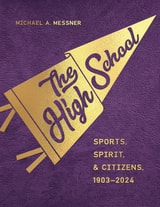
The High School
Sports, Spirit, and Citizens, 1903-2024Michael A. Messner
Rutgers University Press, 2025
In The High School, acclaimed sociologist Michael A. Messner reads through 120 years of El Gabilan, the yearbook from his own alma mater, Salinas High School in California, where his father taught and coached. Treating the yearbooks as a historical archive, Messner makes surprising discoveries about the school he thought he knew so well. For example, over fifty years before Title IX, the earliest yearbooks gave equal spotlights to boys’ and girls’ athletics, while the cheerleaders were all boys.
Tracing American life and culture from 1903 to 2024, Messner illuminates shifts in social practices at his high school that reflect broader changes in American culture across the twentieth century. The High School spotlights how the meanings and iconography of certain activities have changed radically over the decades, even as the “sports spirit complex”—involving athletes, cheerleaders, band members, and community boosters—has remained a central part of the high school experience. By exploring evolving sports cultures, socioeconomic conditions, racial demographics, and gender norms, Messner offers a fresh perspective on a defining feature of American teenage life.
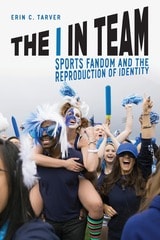
The I in Team
Sports Fandom and the Reproduction of IdentityErin C. Tarver
University of Chicago Press, 2017
Why in the world, Tarver asks, would anyone care about how well a total stranger can throw a ball, or hit one with a bat, or toss one through a hoop? Because such activities and the massive public events that surround them form some of the most meaningful ritual identity practices we have today. They are a primary way we—as individuals and a collective—decide both who we are who we are not. And as such, they are also one of the key ways that various social structures—such as race and gender hierarchies—are sustained, lending a dark side to the joys of being a sports fan. Drawing on everything from philosophy to sociology to sports history, she offers a profound exploration of the significance of sports in contemporary life, showing us just how high the stakes of the game are.
The Jersey Shore Uncovered
A Revealing Season on the BeachGenovese, Peter
Rutgers University Press, 2003
This is not your typical Jersey Shore book.
Yes, you'll find the obvious-beaches and boardwalks, lifeguards and lighthouses, fishing and food. But Peter Genovese will also take you off the beaten track for an insider's look at this famous (and infamous) 127-mile stretch from Sandy Hook to Cape May.
Birders, tiki hut builders, beach cleaners, wheel-of-chance operators, she-crab soup makers-they're all here. You'll check out an Airstream-only trailer park and visit a Point Pleasant Beach house where the music of Frank Sinatra plays nearly 24/7. Genovese will introduce you to the owner of the Stone Pony and to participants at the grueling Atlantic City Around-the-Island Swim as they describe their battles with tides, exhaustion, and face-stinging jellyfish. All of that, plus you'll find out why Ocean Grove residents write their names on their flowerpots.
Beach reading just doesn't get any better than this.
Spend a summer with Peter Genovese as he chronicles a typical wild and wacky, kitschy and classy season along the New Jersey coastline.
Lifeguards, surfers, beachgoers, birders, ice cream vendors, seashell sellers, banner pilots-they're all here. You'll be on the scene when Atlantic City's mayor officially begins summer by "unlocking the ocean," get a whiff of the state barbeque championship, watch the nation's longest-running all-women lifeguard competition, and even spend a weekend, Survivor-style, on a Barnegat Bay island.
The Ocean City Baby Parade, Clownfest, the state's hottest bikini contest, and the World Series of Surf Fishing are all covered. You'll also meet the folks at the Diamondback Terrapin Conservation Project, the Cape May Migratory Bird Refuge, and the Marine Mammal Stranding Center.
Genovese introduces you to Little Miss Chaos and the King of Corn, the Jersey Shore Hot Dog Queen, and Lucky Leo. You'll go on patrol with the New Jersey State Marine Police, meet the man behind Big Mike's E-Z Bail Bonds, and find salvation at the Boardwalk Chapel.
The Jersey Shore Uncovered flawlessly depicts the timeless allure of New Jersey beach culture. Along with his stories, Genovese brings readers hundreds of color and black-and-white photos that brilliantly capture exactly what makes this 127-mile stretch of shoreline unique. Whether you've never been to a New Jersey beach or you're a Jersey native who spends your summers "down the Shore," you're certain to learn a thing or two from this book. So get settled in your beach chair, put on some suntan lotion, and enjoy.
The Kings of Casino Park
Black Baseball in the Lost Season of 1932Thomas Aiello
University of Alabama Press, 2011
The Last Gladiator
William Muldoon and the Making of American SportsScott Beekman
University of Texas Press, 2025
2026 Honorable Mention in Monographs, North American Society for Sport History (NASSH)
The incredible career of the forgotten but foundational pro wrestler who shaped American sports culture.
William Muldoon was an infamous athlete whose prowess, savvy, and chicanery across his six-decade career led him to wealth, cultural importance, and political power. Muldoon, the child of poor Irish immigrants, began wrestling in the 1870s and quickly became one of the most famous athletes of the post–Civil War era. He started acting and modeling as his popularity grew, making him one of the first sports stars to achieve crossover success. After a triumphant stint rehabilitating fallen boxing heavyweight champion John L. Sullivan in 1889, he retired from the ring and began a new career as a fitness impresario, founding an elite gymnasium and remaking himself as a health authority in the press. He became trainer to the rich, famous, and politically powerful, which led to his appointment as chair of the New York State Athletic Commission in the 1920s. From this position, Muldoon exerted his influence over the rules of boxing and wrestling and weaponized his power to maintain segregation in sport.
The Last Gladiator is a deep, insightful dive into Muldoon’s life and impact, demonstrating the significance of this often-controversial figure in the development of American sports, professional wrestling, and physical and popular culture.

The Last Layer of the Ocean
Kayaking through Love and Loss on Alaska's Wild CoastMary Emerick
Oregon State University Press, 2021
The year Emerick turned 38, the suicide of a stranger compelled her to uproot her life and strike out for Alaska, taking a chance on love and home. She learned how to travel in a small yellow kayak along the rugged coast, contending with gales, high seas, and bears. She pondered the different meanings of home from the perspectives of people who were born along Alaska’s coast, the first peoples who had been there for generations, newcomers who chose this place for themselves, and the many who would eventually, inevitably leave. When she married a man from another island, convinced that love would stick, she soon learned that marriage is just as difficult to navigate as the ocean.
Divided into sections detailing the main kayaking strokes, with each stroke serving as metaphor for the lives we all pass through and the tools needed to stay afloat, this eloquent memoir speaks to the human need for connection—connection to place and to our fellow travelers casting their bubbles of light in the depths.
The Last of the Market Hunters
Dale Hamm with David Bakke
Southern Illinois University Press, 1996
Duck hunting has changed greatly since the days of unlimited duck kills, as the limit of fifty ducks a day established in 1902 has fallen to the present three. A legitimate hunter now, Dale Hamm learned the art of market hunting—taking waterfowl out of season and selling them to restaurants—from his father during the l920s. During the l930s and l940s, he kept his family alive by market hunting. At the peak of his career, Hamm poached every private hunting club along the Illinois River from Havana to Beardstown.
After market hunting died out, Hamm became a legendary and almost respected—albeit controversial—character on the Illinois backwaters. He was eventually invited to hunt on the same clubs from which he had once been chased at the point of a shotgun. He hunted with judges, sheriffs, and the head of undercover operations for the Illinois Department of Conservation, all of whom knew of his reputation. He passed on to these hunting partners a lifetime of outdoor knowledge gained from slogging through mud, falling through ice, hunting ducks at three o’clock in the morning, dodging game wardens, and running the world’s only floating tavern.
"I always said if anyone ever cut open one of us Hamms, all they’d find was duck or fish," Hamm once said of his family. Now in his eighties, Hamm still carries a pellet from a shotgun in his chin to remind him of a shotgun blast that ricocheted off the water and into his face. Bakke notes that it is appropriate that a man who spent his life with a shotgun in his hands should carry a bit of buckshot wherever he goes.
Everyone who ever met Dale Hamm has a story about him. His own story is that of a one-of-a-kind character who, in his later years, used his considerable outdoor savvy to conserve the natural resources he once savaged. "His time and kind are gone," Bakke notes, "and there will never be another like him."
This book will be of interest to anyone who has ever been hunting—or who enjoys reading about colorful people and times that exist no more.
The Main Event
Boxing in Nevada from the Mining Camps to the Las Vegas StripRichard O. Davies
University of Nevada Press, 2014
As the twentieth century dawned, bare-knuckle prizefighting was transforming into the popular sport of boxing, yet simultaneously it was banned as immoral in many locales. Nevada was the first state to legalize it, in 1897, solely to stage the Corbett-Fitzsimmons world heavyweight championship in Carson City. Davies shows that the history of boxing in Nevada is integral to the growth of the sport in America. Promoters such as Tex Rickard brought in fighters like Jack Dempsey to the mining towns of Goldfield and Tonopah and presented the Johnson-Jeffries “Fight of the Century” in Reno in 1910. Prizefights sold tickets, hotel rooms, drinks, meals, and bets on the outcomes. It was boxing\--before gambling, prostitution, and easy divorce\--that first got Nevada called “America’s Disgrace” and the “Sin State.” The Main Event explores how boxing’s growth in Nevada relates to the state’s role as a social and cultural outlier. Starting in the Rat Pack era, organized gambling’s moguls built arenas outside the Vegas casinos to stage championships\--more than two hundred from 1960 to the present. Tourists and players came to see and bet on historic bouts featuring Sonny Liston, Muhammad Ali, George Foreman, Sugar Ray Leonard, Mike Tyson, and other legends of the ring.
From the celebrated referee Mills Lane to the challenge posed by mixed martial arts in contemporary Las Vegas, the story of boxing in Nevada is a prism for viewing the sport. Davies utilizes primary and secondary sources to analyze how boxing in the Silver State intersects with its tourist economy and libertarian values, paying special attention to issues of race, class, and gender. Written in an engaging style that shifts easily between narrative and analysis, The Main Event will be essential reading for sports fans and historians everywhere.
The Mechanical Horse
How the Bicycle Reshaped American LifeBy Margaret Guroff
University of Texas Press, 2016
With cities across the country adding miles of bike lanes and building bike-share stations, bicycling is enjoying a new surge of popularity in America. It seems that every generation or two, Americans rediscover the freedom of movement, convenience, and relative affordability of the bicycle. The earliest two-wheeler, the draisine, arrived in Philadelphia in 1819 and astonished onlookers with the possibility of propelling themselves “like lightning.” Two centuries later, the bicycle is still the fastest way to cover ground on gridlocked city streets.
Filled with lively stories, The Mechanical Horse reveals how the bicycle transformed American life. As bicycling caught on in the nineteenth century, many of the country’s rough, rutted roads were paved for the first time, laying a foundation for the interstate highway system. Cyclists were among the first to see the possibilities of self-directed, long-distance travel, and some of them (including a fellow named Henry Ford) went on to develop the automobile. Women shed their cumbersome Victorian dresses—as well as their restricted gender roles—so they could ride. And doctors recognized that aerobic exercise actually benefits the body, which helped to modernize medicine. Margaret Guroff demonstrates that the bicycle’s story is really the story of a more mobile America—one in which physical mobility has opened wider horizons of thought and new opportunities for people in all avenues of life.
The Mogul
Eddie Gottlieb, Philadelphia Sports Legend and Pro Basketball PioneerRich Westcott
Temple University Press, 2008
Drawing upon sixty-plus interviews and many archival sources, well-known Philadelphia sports historian Rich Westcott vividly portrays Gottlieb's role in a pivotal era in city sports, in the process offering histories of the SPHAs, Warriors, and Stars and the role of Jews and African Americans in the city's sporting history.
The Money Pitch
Baseball Free Agency and Salary ArbitrationRoger I. Abrams
Temple University Press, 2000
Why are baseball players paid so much money? In this insightful book, legal scholar and salary arbitrator Roger Abrams tells the story of how a few thousand very talented young men obtain their extraordinary riches. Juggling personal experience and business economics, game theory and baseball history, he explains how agents negotiate compensation, how salary arbitration works, and how the free agency "auction" operates. In addition, he looks at the context in which these systems operate: the players' collective bargaining agreement, the distribution of quality players among the clubs, even the costs of other forms of entertainment with which baseball competes.
Throughout, Dean Abrams illustrates his explanations with stories and quotations -- even an occasional statistic, though following the dictum of star pitcher, club owner, and sporting goods tycoon Albert Spalding, he has kept the book as free of these as possible. He explains supply and demand by the cost of a bar of soap for Christy Mathewson's shower. He illustrates salary negotiation with an imaginary case based on Roy Hobbs, star of The National. He leads the reader through the breath-taking successes of agent Scott Boras to explain the intricacies of free agent negotiating.
Although studies have shown that increases in admissions prices precede rather than follow the rise in player salaries, fans are understandably bemused by skyrocketing salaries. Dean Abrams does not shy away from the question of whether it is "fair" for an athlete to earn more than $10,000,000 a year. He looks at issues of player (and team) loyalty and player attitudes, both today and historically, and at what increased salaries have meant for the national pastime, financially and in the eyes of its fans. The Money Pitch concludes that "the money pitch is a story of good fortune, good timing, and great leadership, all resulting from playing a child's game -- a story that is uniquely American."
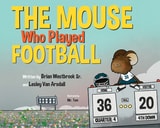
The Mouse Who Played Football
Written by Brian Westbrook Sr. and Lesley Van Arsdall
Temple University Press, 2022
Some folks think Brian the mouse is too small. He may be a tough little fella, but they are not sure Brian has what it takes. The Mouse Who Played Football, by former Philadelphia Eagles running back Brian Westbrook Sr. and sports reporter Lesley Van Arsdall, shows how Brian the mouse proves everyone wrong with unyielding confidence that his small size can be his strength.
This charming children’s book, featuring appealing and dynamic illustrations by Mr. Tom, demonstrates how Brian the mouse overcomes what others see as a “big problem.” His determination—as well as speed and toughness on the gridiron—helps him become a star player in high school, college, and eventually, the MFL, the Mouse Football League.
The Mouse Who Played Football, based on Westbrook’s own experiences,is an inspiring story that encourages young readers to believe in themselves and make their unique differences their strengths.
The Myth of the Amateur
A History of College Athletic ScholarshipsBy Ronald A. Smith
University of Texas Press, 2021
In this in-depth look at the heated debates over paying college athletes, Ronald A. Smith starts at the beginning: the first intercollegiate athletics competition—a crew regatta between Harvard and Yale—in 1852, when both teams received an all-expenses-paid vacation from a railroad magnate. This striking opening sets Smith on the path of a story filled with paradoxes and hypocrisies that plays out on the field, in meeting rooms, and in courtrooms—and that ultimately reveals that any insistence on amateurism is invalid, because these athletes have always been paid, one way or another.
From that first contest to athletes’ attempts to unionize and California’s 2019 Fair Pay to Play Act, Smith shows that, throughout the decades, undercover payments, hiring professional coaches, and breaking the NCAA’s rules on athletic scholarships have always been part of the game. He explores how the regulation of male and female student-athletes has shifted; how class, race, and gender played a role in these transitions; and how the case for amateurism evolved from a moral argument to one concerned with financially and legally protecting college sports and the NCAA. Timely and thought-provoking, The Myth of the Amateur is essential reading for college sports fans and scholars.
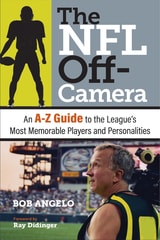
The NFL Off-Camera
An A–Z Guide to the League's Most Memorable Players and PersonalitiesBob Angelo
Temple University Press, 2023
Angelo effuses about his meeting with the larger-than-life Jim Brown and appreciates the trash talking John Randle. He poignantly reflects on “Bullet” Bob Hayes, the world's fastest man who “could not outrun his demons,” and showcases the mercurial Duane Thomas and the free-wheeling Tony Siragusa. The NFL Off-Camera reveals why Angelo sparred with Hall-of-Fame player turned broadcaster Frank Gifford and demonstrates why Super Bowl champion head coach Sean Payton is his “least favorite person in pro football.”
From Jared Allen to Jim Zorn, The NFL Off-Camera explores nearly 100 of the game’s outsized personalities and debunks some of football's most enduring myths. Angelo’s original, unfiltered look at Pro Football is as hard-hitting and exciting as any one of his NFL Films.
The NFL
Critical and Cultural PerspectivesThomas Oates
Temple University Press, 2015
The National Football League is one of the most significant cultural engines in contemporary American life. Yet despite intense and near ubiquitous media coverage, commentators rarely turn a critical lens on the league to ask what material and social forces have contributed to its success, and how the NFL has influenced public life in the United States.
The editors of and contributors to The NFL examine the league as a culturally, economically, and politically powerful presence in American life. The essays, by established and up-and-coming scholars, explore how the NFL is packaged for commercial consumption, the league's influence on American identity, and its relationship to state and cultural militarism.
The NFL is the first collection of critical essays to focus attention on the NFL as a cultural force. It boldly moves beyond popular celebrations of the sport and toward a fuller understanding of football's role in shaping contemporary sport, media, and everyday life.
Contributors include: David L. Andrews, Aaron Baker, Michael Butterworth, Jacob Dittmer, Dan Grano, Samantha King, Kyle Kusz, Toby Miller, Ronald L. Mower, Dylan Mulvin, Oliver J.C. Rick, Katie Rodgers, and the editors.

The Nazi Olympics
Richard D. Mandell
University of Illinois Press, 1987
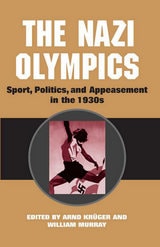
The Nazi Olympics
Sport, Politics, and Appeasement in the 1930sEdited by Arnd Krüger and William Murray
University of Illinois Press, 2003
The 1936 Olympic Games played a key role in the development of both Hitler’s Third Reich and international sporting competition. The Nazi Olympics gathers essays by modern scholars from prominent participating countries and lays out the issues--sporting as well as political--surrounding the involvement of individual nations.
The volume opens with an analysis of Germany’s preparations for the Games and the attempts by the Nazi regime to allay the international concerns about Hitler’s racist ideals and expansionist ambitions. Essays follow on the United States, Great Britain, and France--top-tier Olympian nations with misgivings about participation--as well as Germany's future Axis partners Italy and Japan. Other contributions examine the issues involved for Finland, Sweden, Norway, Denmark, and the Netherlands. Throughout, the authors reveal the high political stakes surrounding the Games and how the Nazi Olympics distilled critical geopolitical issues of the time into a spectacle of sport.

The New American Sport History
Recent Approaches and PerspectivesEdited by S. W. Pope
University of Illinois Press, 1996
In this collection, sixteen scholars explore topics as diverse as the historical debate over black athletic superiority, the selling of sport in society, the eroticism of athletic activity, sexual fears of women athletes, and the marketing of the marathon.
In line with the changing nature of sport history as a field of study, the essays focus less on traditional topics and more on themes of class, gender, race, ethnicity, and national identity, which also define the larger parameters of social and cultural history. It is the first anthology to situation sport history within the broader fields of social history and cultural studies.
Contributors are Melvin L. Adelman, William J. Baker, Pamela L. Cooper, Mark Dyreson, Gerald R. Gems, Elliott J. Gorn, Allen Guttmann, Stephen H. Hardy, Peter Levine, Donald J. Mrozek, Michael Oriard, S. W. Pope, Benjamin G. Rader, Steven A. Riess, Nancy L. Struna, and David K. Wiggins.
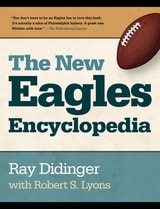
The New Eagles Encyclopedia
Ray Didinger
Temple University Press, 2014
Didinger presents a year-by-year history of the franchise from its inception in 1933 through the 2013 season. There are profiles of more than 100 players, past and present, as well as every head coach and owner along with dozens of new photographs and stats, stats, and more stats.
The New Eagles Encyclopedia includes:
* More player profiles including new entries on Nick Foles, LeSean McCoy and Michael Vick.
* The end of the Andy Reid era and the arrival of Chip Kelly.
* Expanded chapters on Eagles in the Hall of Fame and other milestone moments.
* Summaries of every post-season game.
* A new chapter on the Eagles-Cowboys rivalry.
An essential addition to every fan's bookshelf, The New Eagles Encyclopedia is the definitive information source on the Philadelphia Eagles.
This book is not sanctioned by the NFL or its teams.

The New Hiking the Monadnock Region
44 Nature Walks and Day-Hikes in the Heart of New EnglandJoe Adamowicz
University Press of New England, 2007

The North Country Trail
The Best Walks, Hikes, and Backpacking Trips on America’s Longest National Scenic TrailRon Strickland with the North Country Trail Association
University of Michigan Press, 2013
The North Country Trail is the longest of America’s eleven congressionally designated National Scenic Trails. Winding through seven states—New York, Pennsylvania, Ohio, Michigan, Wisconsin, Minnesota, and North Dakota—the NCT’s 4,600 miles attract more than one million visitors annually. These hikers are treated to a smorgasbord of Upper Midwest hiking featuring everything from urban strolls to backcountry adventure through mountains, rivers, prairies, and shoreline. This book is the definitive guide for NCT hikers—whether first-timers, seasoned backpackers, or any level in between—who wish to maximize their experience on this splendid trail.
In addition to a full overview of the trail’s tread in each state, the guide describes in detail forty of the NCT’s premier segments, with helpful information including easy-to-read trail descriptions, physical and navigation difficulties, trail highlights, hiking tips, and precise maps incorporating the latest GPS technology.
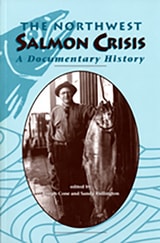
The Northwest Salmon Crisis
A Documentary HistoryJoseph Cone
Oregon State University Press, 1996
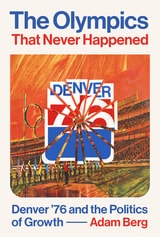
The Olympics that Never Happened
Denver '76 and the Politics of GrowthAdam Berg
University of Texas Press, 2023
A look back at how powerful politicians, business leaders, and a diverse cast of activists used a thwarted Olympics to shape the state of Colorado and the city of Denver.
If you don’t recall the 1976 Denver Olympic Games, it’s because they never happened. The Mile-High City won the right to host the winter games and then was forced by Colorado citizens to back away from its successful Olympic bid through a statewide ballot initiative. Adam Berg details the powerful Colorado regime that gained the games for Denver and the grassroots activism that brought down its Olympic dreams, and he explores the legacy of this milestone moment for the games and politics in the United States.
The ink was hardly dry on Denver’s host agreement when Mexican American and African American urbanites, white middle-class environmentalists, and fiscally concerned local politicians realized opposition to the Olympics provided them new political openings. The Olympics quickly became a platform for taking stands on a range of issues, from conservation to urban livability to the very idea of growth, which for decades had been unquestioned in Colorado. The Olympics That Never Happened argues that hostility to the Olympics galvanized and empowered diverse citizens in a major US city, with long-term ramifications for Colorado and political activism elsewhere. The Olympics themselves were changed forever, compelling organizers to take seriously competing interests from subgroups within their communities.
The Olympics
A History of the Modern GamesAllen Guttmann
University of Illinois Press, 1992
This second edition of Guttmann's critically acclaimed history discusses the intended and actual effects of the modern Olympic Games from 1896 to 2000. The glories and fiascoes, the triumphs and tragedies--Guttmann weaves them all into a vivid and entertaining social history. As Guttmann shows, politics has always been one of the Olympics' major events. He also delves into the colorful history of the athletics, from the Paris marathon course that invited French runners to take shortcuts to the odyssey of Egyptian gym teacher Youssef Nagui Assad, who made three different Olympic teams only to be recalled home each time due to boycotts. Guttmann also provides insight into the byzantine maneuvering involved in site selection, as well as little known facts about the Games' history and figures like longtime Olympics czar Avery Brundage.
The Original Laws of Cricket
The Bodleian Library
Bodleian Library Publishing, 2008
This series of books from the Bodleian Library reproduces the original rules of classic sports, complete with commentary about their historical evolution and adaptation—in attractive, collectible formats. They are informative and often witty companions to the world of sport, bringing the past and present together.
Of all the rules governing sports, the laws of cricket are among the oldest. The first written rules of 1744 survive solely on the border of a piece of linen at the Museum of The Marylebone Cricket Club, the home of cricket. The Original Laws of Cricket reprints the complete text of this original and explores how these early laws shaped the development of the game and in turn how the social dimensions of the game changed the laws.
The Original Rules of Golf
Edited by the Bodleian Library
Bodleian Library Publishing, 2009
More than 25 million people in the United States alone play golf each year. A game born on the stark, wind-swept landscape of Scotland in the fifteenth century, golf has grown over the centuries into a global phenomenon. It is a sport not only enjoyed by professionals and the spectators of international tournaments, but one enthusiastically enjoyed by amateurs everywhere who socialize with friends and colleagues on their local courses. Yet despite golf’s widespread popularity, few of us truly know its rules, which have grown more complicated and confounding as the game has grown in popularity. Extremely simple by comparison, the very first rules of the game are presented here in a charming, collectible format.
The first known rules of golf were drawn up in 1744 in Edinburgh for the world’s first open golf competition, hosted by the Gentleman Golfers of Edinburgh, who later became the Honourable Company of Edinburgh Golfers. Local golf clubs then adapted the Edinburgh rules for their own use—until 1897 when the Royal and Ancient Golf Club of St. Andrews assumed oversight of the rules, and published the first national set of golf rules. The original Edinburgh and St. Andrews rules are both reprinted here alongside delightful images of the game throughout the centuries. In addition, well-known golf writer Dale Concannon provides a thorough introduction that examines the history of the rules of golf from their first codification in Edinburgh to the present day.
A must-have for anyone who delights in the spirit of the game, The Original Rules of Golf will find fans among golfers and armchair spectators everywhere.
The Original Rules of Rugby
The Bodleian Library
Bodleian Library Publishing, 2007
Rugby has rules, seriously? Believe it or not, it does. The Original Rules of Rugby brings together the original rules of the game drawn up at Rugby School in 1845 and the first rules of the Rugby Football Union in 1871. The book shows the complex evolution of rugby football and the intriguing history behind its shifting rules.
The Original Rules of Tennis
Edited by The Bodleian Library
Bodleian Library Publishing, 2010
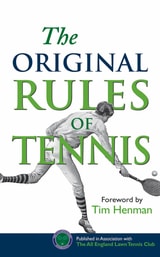
The pristine grass and white uniforms of Wimbledon and the aggressive hard courts of the U.S. Open have inspired tens of thousands of amateur tennis players in North America. Millions of people watch the tournaments each year on television and the stars of recent decades are household names, but relatively few people know the history of the game. In the Middle Ages and the Renaissance it was a “jeu de paume,” a game played at French and English royal courts with hands rather than rackets. The modern game, however, dates from 1874, when Major Walter Clopton Wingfield developed a variation on the game for the amusement of his house guests in Wales. After he laid out the basic rules, the game spread quickly—the first championship at Wimbledon was held in 1877, followed soon after by the first American tournament in 1880.
Published in association with the All England Lawn Tennis Club—better known as Wimbledon—this attractive, collectible book examines the history of the rules of tennis from their first codification to the present day. Included is a fascinating introduction by John Barrett, the BBC’s now retired “voice of tennis” who played in twenty-one consecutive Wimbledon Championships, that looks at the circumstances of the composition of the first rules, their scope, and evolution. The Original Rules of Tennis is a must for spectators and players alike.
The Ottoman World of Sports
Refashioning Bodies, Men, and Communities in Late Imperial IstanbulMurat C. Yildiz
University of Texas Press, 2025
2026 co-winner of the Ottoman and Turkish Studies Association Book Prize
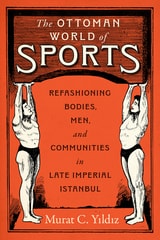
A revision of the history of modern sports in late Ottoman Istanbul, showing how Muslims, Christians, and Jews created a shared sports culture that was simultaneously global, imperial, and local.
The history of sports in Turkey is deeply contested. Over the decades, journalists, pundits, non-professional historians, sports scholars, and everyday people have offered competing narratives about the origins of modern sports in the late Ottoman Empire.
The Ottoman World of Sports tells the story of how Istanbul’s Muslims, Christians, and Jews—gymnastics teachers, football coaches, weightlifters, journalists, athletes, and fans—created a gendered and class-stratified civic project that promoted athletics as a source of fun, beauty, and moral education. Influenced by the emerging global vogue for organized sports, all boys from the expanding middle class of the late nineteenth- and early twentieth-century imperial capital were expected to exercise and compete on the playing field in order to develop into moral men. Yet even as the embrace of modern athletics transcended ethnoreligious divisions, it did not erase them. Drawing on a wide range of archival research in multiple languages, historian Murat Cihan Yıldız shows that sportsmen created new communal boundaries in team affiliations, fandom, and sports media. Adeptly reconstructing Istanbul’s imperial culture as it was experienced more than a century ago, The Ottoman World of Sports recovers a lived imperial culture whose defining features were shaped by its multiethnic, multireligious, and multilingual sportsmen.

The Passion of Tiger Woods
An Anthropologist Reports on Golf, Race, and Celebrity ScandalOrin Starn
Duke University Press, 2012
The Persistence of Violence
Colombian Popular CultureToby Miller
Rutgers University Press, 2020

The Philly Fan's Code
The 50 Toughest, Craziest, Most Legendary Philadelphia Athletes of the Last 50 YearsMike Tanier
Temple University Press, 2011
Face it: Philadelphia athletes are often as tough as their fans are passionate. How else to explain the rabid appeal of the bone-crunching Broad Street Bullies? Chuck Bednarik was one of the looniest tunes in Philadelphia sports history, but fuggedabout him. In The Philly Fan's Code, New York Times sportswriter Mike Tanier provides fun and opinionated essays that evaluate the 50 greatest, toughest, and most eccentric legends of Philly sports since Concrete Charlie hung up his cleats.
Using his own "rubric" to calculate the impact of each athlete, Tanier ranks well-adjusted players like Mark Howe alongside both unpredictable athletes like Brad Lidge—who followed an almost perfect season with a 162-game catastrophe—and quirky ones, such as Wilt Chamberlain, who may be better known for bragging about his sexual conquests than for scoring 100 points in a game. And let's not forget our visitor from Planet Lovetron… Then there are the real wild cards-players like Terrell Owens, who does sit-ups in his driveway and whose impact—for better or worse— outlasted the few actual games he played for the Eagles. As for Tanier's choice for the No. 1 toughest, craziest, most legendary player, well, you'll have to read the book to see if you agree. Whether you do or don't, The Philly Fan's Code will provide hours of debates and memories of who our toughest sports heroes were—or weren't.
The Pittsburgh Pirates
Frederick G. Lieb. Foreword by Richard "Pete" Peterson
Southern Illinois University Press, 2003
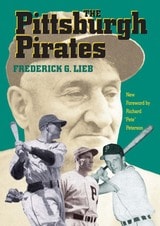
An admirer of Pirate president Barney Dreyfuss, prolific baseball writer Frederick G. Lieb consorted with the club’s biggest stars, christened the legendary Dreyfuss “the first-division man,” and produced The Pittsburgh Pirates, one of the fifteen celebrated histories of major league teams commissioned by G. P. Putnam’s Sons in the 1940s and 1950s. Originally published in 1948, Lieb’s history ranges from the ball club’s earliest professional days in the late nineteenth century as the Pittsburgh Alleghenies to its spring training session in preparation for the 1948 season, a span that included six National League pennants and two World Series championships, as well as a loss to the Boston Red Sox, then the Pilgrims, at the inaugural World Series a century ago.
“This reprint of Fred Lieb’s The Pittsburgh Pirates is an invitation for baseball readers to enjoy Lieb’s wonderful stories of the great Pirate teams of the first half of the twentieth century,” writes Richard “Pete” Peterson in the new foreword to this edition. “Lieb’s book is rich with accounts of World Series triumphs and disappointments, of epic encounters on the playing field, like that between Wagner and Cobb, of mutinies in the clubhouse, of courageous comebacks, and of devastating defeats, including the infamous ‘homer in the gloaming.’”
In Lieb’s personable and anecdotal prose, honed over the course of his sustained sportswriting career, the book conveys “baseball drama of the highest order,” including the pre-Dreyfuss days of Captain Kerr, Ned Hanlon, and Connie Mack; Dreyfuss’s dynasty in the early twentieth century; the dramatic World Series triumphs of 1909 and 1925; the end of the Dreyfuss era and the sale of the club to a syndicate headed by John Galbreath and Bing Crosby; and the purchase of Hank Greenberg and the emergence of slugger Ralph Kiner. Aided by twenty-five black-and-white photographs, this rare history revisits the glories and stories of “fabulous old Pirates” such as Honus Wagner, Tommy Leach, Fred Clarke, Babe Adams, Max Carey, Kiki Cuyler, Pie Traynor, Paul and Lloyd Waner, and Arky Vaughan.
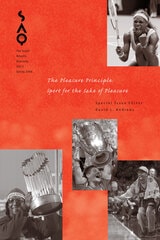
The Pleasure Principle
Sport for the Sake of Pleasure, Volume 105David L. Andrews, ed.
Duke University Press, 0
Ranging from the humorous to the ironic, from the personal to the theoretical, and from sports as dissimilar as baseball and rugby, gambling and karate, this issue explains fandom itself and explores the intersections of sport and politics, sport and class, and sport and identity. One timely essay addresses the use of Native American imagery and nicknames and the recent NCAA ban on these references. Another classifies gambling as a popular American sport, one that in 2003 attracted three times as many attendees as all Major League Baseball franchises combined. Another essay delves into the history of the golfing mecca of Pinehurst, North Carolina, discussing the resort’s roots in the age of Jim Crow. Among the other topics addressed in this issue are how soccer fandom and commodity culture can be one and the same; why Liverpool’s 2005 victory in the European Champion’s League proves that God is red; and why the Olympic Games can represent performative nationalism.
Contributors. David L. Andrews, Amy Bass, Norman K. Denzin, Grant Farred, Keya Ganguly, John Hartley, Jane Juffer, Liz Moor, Jeffrey T. Nealon, Annie Paul, George Ritzer, Jim Shepard, Orin Starn, Kenneth Surin