Results by title
389 books match the query 'State' and 83 start with t
The Sagebrush State, 4th Ed
Nevada’s History, Government, and PoliticsMichael W. Bowers
University of Nevada Press, 2013

The Sagebrush State, 5th Edition
Nevada's History, Government, and PoliticsMichael W. Bowers
University of Nevada Press, 2018
This comprehensive and insightful explanation discusses how Nevada’s history has shaped its political culture, and how its government operates today. The Sagebrush State serves as a highly readable and accessible text for the study of Nevada’s political history and constitution, which is a graduation requirement at the state’s colleges and universities. The fifth edition is updated through 2017 and includes the full text of the state constitution with extensive annotations of all amendments to the original 1864 document.

The Sagebrush State, 6th Edition
Nevada's History, Government, and PoliticsMichael W. Bowers
University of Nevada Press, 2021

The Sagebrush State, 7th Edition
Nevada's History, Government, and PoliticsMichael W. Bowers
University of Nevada Press, 2025
A dynamic study of Nevada’s government and politics from the state’s inception to the present day.
Starting with Michael W. Bowers’s first edition published in 1996, this concise volume explains the unique dynamics of Nevada’s formation and its political and economic development. David F. Damore continues this legacy in the book’s seventh edition by describing how even today, Nevada is unlike the other states in its politics and culture: economically conservative and averse to strong state government, yet socially libertarian and home to widespread gaming anchored by a 24/7 industry. Nevada has the highest percentage of federally owned lands and one of the highest rates of urbanization in the United States, yet it has often been dominated by rural legislators.
This comprehensive and insightful volume examines how Nevada’s history and founding have shaped its political culture and how its government operates today. The Sagebrush State serves as a highly readable and accessible text for the study of Nevada’s political history and constitution. The seventh edition is updated through 2023 and includes the results of the 2022 elections, policies advanced during the 2023 legislative session, and Nevada’s continuing recovery from the impacts of the COVID-19 recession. The full text of the state constitution with extensive annotations of all amendments to the original 1864 document is provided as an appendix.
The Saints and the State
The Mormon Troubles in IllinoisJames Simeone
Ohio University Press, 2021
A compelling history of the 1846 Mormon expulsion from Illinois that exemplifies the limits of American democracy and religious tolerance.
When members of the Church of Jesus Christ of Latter-day Saints (known as Mormons) settled in Illinois in 1839, they had been persecuted for their beliefs from Ohio to Missouri. Illinoisans viewed themselves as religiously tolerant egalitarians and initially welcomed the Mormons to their state. However, non-Mormon locals who valued competitive individualism perceived the saints‘ western Illinois settlement, Nauvoo, as a theocracy with too much political power. Amid escalating tensions in 1844, anti-Mormon vigilantes assassinated church founder Joseph Smith and his brother Hyrum. Two years later, the state expelled the saints. Illinois rejected the Mormons not for their religion, but rather for their effort to create a self-governing state in Nauvoo.
Mormons put the essential aspirations of American liberal democracy to the test in Illinois. The saints’ inward group focus and their decision to live together in Nauvoo highlight the challenges strong group consciousness and attachment pose to democratic governance. The Saints and the State narrates this tragic story as an epic failure of governance and shows how the conflicting demands of fairness to the Mormons and accountability to Illinois’s majority became incompatible.
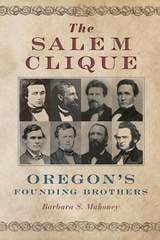
The Salem Clique
Oregon's Founding BrothersBarbara S. Mahoney
Oregon State University Press, 2017
While not in agreement with some of the more extreme contemporary accusations against the Clique, many historians have concluded that its members were vicious men who were able, because of their command of the Democratic party, to impose their hegemony on the Oregon Territory’s inhabitants. Other scholars have seen them as merely another instance of the contentious politics of the period.
Although the Salem Clique has been given considerable prominence in nearly every account of Oregon’s Territorial period, there has not been a detailed study of its role until now. What sort of people were these men? What was their impact on the issues, events, and movements of the period? What role did they play in the years after Oregon became a state? In The Salem Clique, Historian Barbara Mahoney sets out to answer these and many other questions in this comprehensive and deeply researched history.

The Sanitation of Brazil
Nation, State, and Public Health, 1889-1930Gilberto Hochman
University of Illinois Press, 2016
The Scandal of the State
Women, Law, and Citizenship in Postcolonial IndiaRajeswari Sunder Rajan
Duke University Press, 2003
The Scandal of the State develops through a series of compelling case studies, each of which centers around an incident exposing the contradictory position of the Indian state vis-à-vis its female citizens and, ultimately, the inadequacy of its commitment to women’s rights. Sunder Rajan focuses on the custody battle over a Muslim child bride, the compulsory sterilization of mentally retarded women in state institutional care, female infanticide in Tamilnadu, prostitution as labor rather than crime, and the surrender of the female outlaw Phoolan Devi. She also looks at the ways the Uniform Civil Code presented many women with a stark choice between allegiance to their religion and community or the secular assertion of individual rights. Rich with theoretical acumen and activist passion, The Scandal of the State is a powerful critique of the mutual dependence of women and the state on one another in the specific context of a postcolonial modernity.

The Secrets of the Hopewell Box
Stolen Elections, Southern Politics, and a City's Coming of AgeJames D. Squires
Vanderbilt University Press, 1996
—Kirkus Reviews
"His richly textured narrative charts the Nashville machine's rupture with the state's top political boss, Edward Crump of Memphis, and traces the sweeping reforms that shattered rural white control of the state legislature. Squires dramatically reenacts the downfall of Nashville lawyer Tommy Osborn, convicted of jury tampering in 1964 after defending Teamsters boss Jimmy Hoffa. He follows Nashville's transformation into a crucible of the civil rights movement in this stirring chronicle of the South's coming-of-age."
—Publishers Weekly
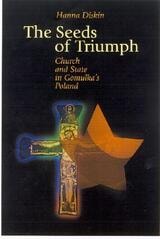
The Seeds of Triumph
Church and State in Gomulka's PolandHannah Diskin
Central European University Press, 2001
The Roman Catholic Church has played a unique role in the history of Poland in the twentieth century: the people and the Church drew closer and closer together during Nazi rule, the Stalinist period and the somewhat milder, though strongly anti-religious and repressive Gomulka regime (1956-1970). The power struggle between the Church and the communist government did in fact play a role in shaping world politics, the Polish Church having been the force behind the opposition movement in Poland. Against this background, a Polish pope appeared and made a major contribution to the collapse of communism.
The Seeds of Triumph, the most comprehensive recent book on the opposition of Church and State in post-war Poland, compares the characteristics and consequences of this relationship during three different periods: the first and second periods of Gomulka's rule, and the Stalinist era between the two Gomulka periods. It examines the balance of power, studying to what degree the Church and other factors in the political environment influenced governmental policy-making. The author disproves the common stereotype, held at the time, that domestic conditions played only a marginal role. In examining the regime's policies, she covers the legal background, the general policy characteristics, the specific policies implemented during the period, and the role of the individual actors, most notably the pivotal role of the two main protagonists, Cardinal Wyszynski and Wladislaw Gomulka.
In her landmark study, Diskin makes a significant contribution to the study of authoritarian systems and greatly enhances our understanding of the centrality of the Church in recent Polish history.

The Sociology of the State
Bertrand Badie and Pierre Birnbaum
University of Chicago Press, 1983
The book opens with a review of the principal evolutionary theories concerning the origin of the institution proposed by such thinkers as Marx, Durkheim, and Weber. Rejecting these views, the authors set forward and defend their thesis that the state was an "invention" rather than a necessary consequence of any other process. Once invented, the state was disseminated outside its Western European birthplace either through imposition or imitation. The study concludes with concrete analyses of the differences in actual state institutions in France, Prussia, Great Britain, the United States, and Switzerland.

The State and the City
Ted Robert Gurr and Desmond King
University of Chicago Press, 1987
Gurr and King's analysis assumes modern states have their own interests, institutional momentum, and the capacity to act with relative autonomy. Their historically based analysis begins with an account of the evolution of the Western state's interest in the viability of cities since the industrial revolution. Their agument extends to the local level, examining the nature of the local state and its autonomy from national political and economic forces.
Using cross-national evidence, Gurr and King examine specific problems of urban policy in the United States and Britain. In the United States, for example, they show how the dramatic increases in federal assistance to cities in the 1930s and the 1960s were made in response to urban crises, which simultaneously threatened national interests and offered opportunities for federal expansion of power. As a result, national and local states now play significant material and regulatory roles that can have as much impact on cities as all private economic activities.
A comparative analysis of thirteen American cities reflects the range and impact of the state's activities at the urban level. Boston, they argue, has become the archetypical postindustrial public city: half of its population and personal income are directly dependent on government spending. While Gurr and King are careful to delineate the limits to the extent and effectiveness of state intervention, they conclude that these limits are much broader than formerly thought. Ultimately, their evidence suggests that the continued decline of most of the old industrial cities is the result of public decisions to allow their economic fate to be determined in the private sector.

The State and the Stork
The Population Debate and Policy Making in US HistoryDerek S. Hoff
University of Chicago Press, 2012
From the founders’ fears that crowded cities would produce corruption, luxury, and vice to the zero population growth movement of the late 1960s to today’s widespread fears of an aging crisis as the Baby Boomers retire, the American population debate has always concerned much more than racial composition or resource exhaustion, the aspects of the debate usually emphasized by historians. In The State and the Stork, Derek Hoff draws on his extraordinary knowledge of the intersections between population and economic debates throughout American history to explain the many surprising ways that population anxieties have provoked unexpected policies and political developments—including the recent conservative revival. At once a fascinating history and a revelatory look at the deep origins of a crucial national conversation, The State and the Stork could not be timelier.
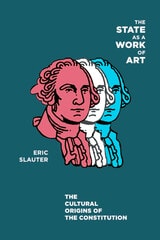
The State as a Work of Art
The Cultural Origins of the ConstitutionEric Slauter
University of Chicago Press, 2009
The founding of the United States after the American Revolution was so deliberate, so inspired, and so monumental in scope that the key actors considered this new government to be a work of art framed from natural rights. Recognizing the artificial nature of the state, these early politicians believed the culture of a people should inform the development of their governing rules and bodies. Eric Slauter explores these central ideas in this extensive and novel account of the origins and meanings of the Constitution of the United States. Slauter uncovers the hidden cultural histories upon which the document rests, highlights the voices of ordinary people, and considers how the artifice of the state was challenged in its effort to sustain inalienable natural rights alongside slavery and to achieve political secularization at a moment of growing religious expression.
A complement to classic studies of the Constitution’s economic, ideological, and political origins, The State as a Work of Art sheds new light on the origins of the Constitution and on ongoing debates over its interpretation.

The State of Education in Arkansas
Harry Anthony Patrinos
University of Arkansas Press, 2026
For generations, Arkansas has wrestled with a stubborn reality: Despite flashes of progress, its education system has struggled to deliver consistent, equitable, high‑quality learning for all students. Now the state stands at a pivotal moment in its educational history, confronting sweeping reforms whose impact will shape generations.
The State of Education in Arkansas draws on original empirical research, statewide longitudinal data, and decades of national evidence to trace the evolution of Arkansas’s educational landscape, including major policy changes like the LEARNS and ACCESS Acts, higher teacher pay, science-of-reading mandates, universal early literacy, and responses to pandemic-era learning losses. This volume makes the case forcefully that Arkansas now possesses the rare combination of political alignment, financial investment, and policy coherence necessary to make real gains, but that outcomes will ultimately depend on disciplined implementation and attention to equity. The stakes—for students, families, and the state’s long-term economic future—could not be higher.

The State of Europe
Transformation of Statehood from a European PerspectiveEdited by Sonja Puntscher Riekmann, Monika Mokre, and Michael Latzer
Campus Verlag, 2004

The State of Islam
Culture and Cold War Politics in PakistanSaadia Toor
Pluto Press, 2011
The State of Islam tells the story of Pakistan through the lens of the Cold War, and more recently the War on Terror, to shed light on the domestic and international processes behind the global rise of militant Islam.
Unlike existing scholarship on nationalism, Islam and the state in Pakistan, which tends to privilege events in a narrowly-defined ‘political’ realm, Saadia Toor highlights the significance of cultural politics in Pakistan from its origins to the contemporary period. This extra dimension allows Toor to explain how the struggle between Marxists and liberal nationalists was influenced and eventually engulfed by the agenda of the religious right.
Timely and unique, this book is a must for anyone who wants to understand the roots of modern Pakistan and the likely outcome of current power struggles in the country.

The State of Nature
Ecology, Community, and American Social Thought, 1900-1950Gregg Mitman
University of Chicago Press, 1992
Reacting against the view of nature "red in tooth and claw," ecologists and behavioral biologists such as Warder Clyde Allee, Alfred Emerson, and their colleagues developed research programs they hoped would validate and promote an image of human society as essentially cooperative rather than competitive. Mitman argues that Allee's religious training and pacifist convictions shaped his pioneering studies of animal communities in a way that could be generalized to denounce the view that war is in our genes.
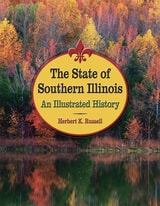
The State of Southern Illinois
An Illustrated HistoryHerbert K. Russell
Southern Illinois University Press, 2012
Superior Achievement, Illinois State Historical Society, 2013
In The State of Southern Illinois: An Illustrated History, Herbert K. Russell offers fresh interpretations of a number of important aspects of Southern Illinois history. Focusing on the area known as “Egypt,” the region south of U.S. Route 50 from Salem south to Cairo, he begins his book with the earliest geologic formations and follows Southern Illinois’s history into the twenty-first century. The volume is richly illustrated with maps and photographs, mostly in color, that highlight the informative and straightforward text.
Perhaps most notable is the author’s use of dozens of heretofore neglected sources to dispel the myth that Southern Illinois is merely an extension of Dixie. He corrects the popular impressions that slavery was introduced by early settlers from the South and that a majority of Southern Illinoisans wished to secede. Furthermore, he presents the first in-depth discussion of twelve pre–Civil War, free black communities located in the region. He also identifies the roles coal mining, labor violence, gangsters, and the media played in establishing the area’s image. He concludes optimistically, unveiling a twenty-first-century Southern Illinois filled with myriad attractions and opportunities for citizens and tourists alike.
The State of Southern Illinois is the most accurate all-encompassing volume of history on this unique area that often regards itself as a state within a state. It offers an entirely new perspective on race relations, provides insightful information on the cultural divide between north and south in Illinois, and pays tribute to an often neglected and misunderstood region of this multidimensional state, all against a stunning visual backdrop.

The State of the African American Male
Eboni M. Zamani-Gallaher
Michigan State University Press, 2010
The circumstances affecting many African American males in schools and society remain complex and problematic. In spite of modest gains in school achievement and graduation rates, conditions that impede the progress of African American males persist: high rates of school violence and suspensions, overrepresentation in special education classes, poor access to higher education, high incidence of crime and incarceration, gender and masculine identity issues, and HIV/AIDS and other health crises.
The essays gathered here focus on these issues as they exist for males in grades K-12 and postsecondary education in Michigan. However, the authors intend their analyses and policy recommendations to apply to African American males nationally.
Although it recognizes the current difficulties of this population overall, this is an optimistic volume, with a goal of creating policies and norms that help African American males achieve their educational and social potential. In this era of widespread change for all members of American society-regardless of race-this book is a must-read for educators and policymakers alike.

The State of the American Mind
16 Leading Critics on the New Anti-IntellectualismMark Bauerlein
Templeton Press, 2015
That was over twenty years ago. Since then, the United States has experienced unprecedented wealth, more youth enrolling in higher education than ever before, and technology advancements far beyond what many in the 1980s dreamed possible. And yet, the state of the American mind seems to have deteriorated further. Benjamin Franklin’s “self-made man” has become a man dependent on the state. Independence has turned into self-absorption. Liberty has been curtailed in the defense of multiculturalism.
In order to fully grasp the underpinnings of this shift away from the self-reliant, well-informed American, editors Mark Bauerlein and Adam Bellow have brought together a group of cultural and educational experts to discuss the root causes of the decline of the American mind. The writers of these fifteen original essays include E. D. Hirsch, Nicholas Eberstadt, and Dennis Prager, as well as Daniel Dreisbach, Gerald Graff, Richard Arum, Robert Whitaker, David T. Z. Mindich, Maggie Jackson, Jean Twenge, Jonathan Kay, Ilya Somin, Steve Wasserman, Greg Lukianoff, and R. R. Reno. Their essays are compiled into three main categories:
- States of Mind: Indicators of Intellectual and Cognitive Decline
- These essays broach specific mental deficiencies among the population, including lagging cultural IQ, low Biblical literacy, poor writing skills, and over-medication.
- Personal and Cognitive Habits/Interests
- These essays turn to specific mental behaviors and interests, including avoidance of the news, short attention spans, narcissism, and conspiracy obsessions.
- National Consequences
- These essays examine broader trends affecting populations and institutions, including rates of entitlement claims, voting habits, and a low-performing higher education system.
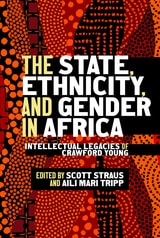
The State, Ethnicity, and Gender in Africa
Intellectual Legacies of Crawford YoungEdited by Scott Straus and Aili Mari Tripp
University of Wisconsin Press, 2024
Written in honor of Crawford Young, a foundational figure in the study of African politics, the essays reflect the breadth and intellectual legacy of this towering scholar and illustrate the vast impact Young had, and continues to have, on the field. The book’s themes build from his seminal publications, and the essays were written by leading scholars who were trained by Young.
The State, Popular Mobilisation and Gold Mining in Mongolia
Shaping ‘Neo-Liberal’ PoliciesDulam Bumochir
University College London, 2020

The Transformation of Family Law
State, Law, and Family in the United States and Western EuropeMary Ann Glendon
University of Chicago Press, 1989
"Glendon is generally acknowledged to be the premier comparative law scholar in the area of family law. This volume, which offers an analytical survey of the changes in family law over the past twenty-five years, will burnish that reputation. Essential reading for anyone interested in evaluating the major changes that occurred in the law of the family. . . . [And] of serious interest to those in the social sciences as well."—James B. Boskey, Law Books in Review
"Poses important questions and supplies rich detail."—Barbara Bennett Woodhouse, Texas Law Review
"An impressive scholarly documentation of the legal changes that comprise the development of a conjugally-centered family system."—Debra Friedman, Contemporary Sociology
"She has painted a portrait of the family in which we recognize not only ourselves but also unremembered ideological forefathers. . . . It sends our thoughts out into unexpected adventures."—Inga Markovits, Michigan Law Review

The WPA Guide to 1930s Alabama
Harvey H. Jackson, III
University of Alabama Press, 2000
A fascinating time capsule, this classic guide captures Alabama at a critical moment in its history between the Great Depression and World War II and its aftermath.
The WPA guide to Alabama provides a unique snapshot of 1930s Alabama life and culture. Like the other state guides in the WPA's American Guide Series, it features essays on history, economy, people, folkways, education, and other characteristics of the state, as well as general information about the towns and cities. Fifteen suggested automobile tours encourage visitors and residents to explore every corner of the state, from the Gulf Coast to the Black Belt and the Tennessee Valley, from bayous to farmlands to mountain gorges.
When it was first published in 1941, the guide went far to dispel the myth of an Alabama consisting only of cotton fields, magnolias, and plantation houses by highlighting the vibrant university life in Tuscaloosa, the modern industrial activity in Birmingham, the informality of politics in Montgomery, the cultural diversity in Alabama's port city, Mobile, and the small town life in Huntsville before it became home to the space industry. The book includes a calendar of annual events, census data, and a wealth of information useful to the traveling public of the time and enlightening to readers today. The guide lists radio stations, buses, railroads, and highways as they existed before the advent of television, interstates, and malls.
Harvey Jackson's fascinating introduction assesses the guide as a historical document and recounts the involved and sometimes controversial process by which it was researched and written. Project directors struggled to make the guide palatable to its public while still addressing such issues as poverty and race relations and recognizing the state's diversity and its rich folk culture. The result makes for compelling reading for general readers and historians alike.

Theater of State
A Dramaturgy of the United NationsJames R. Ball III
Northwestern University Press, 2020
This study of the lived experience of spectacular politics on the world stage draws on theories of theater, performance, and politics to offer new ways of approaching issues of war, cosmopolitanism, international justice, governance, and activism. Situated at the nexus of two disciplines, performance studies and political science, this volume encourages conversations between the two so that each might offer lessons to the other.

Three Capitals
St. Stephens, Huntsville, and Cahawba, 1818-1826William H. Brantley Jr
University of Alabama Press, 1976
"Three Capitals is an in-depth study of Alabama's first three seats of government--St. Stephens, Huntsville, and Cahawba.... The University of Alabama Press has reprinted the book in a handsome new edition with a pertinent introduction by Malcolm C. McMillan. Brantley's study is a tribute to the accomplishments of an amateur historian and contains a wealth of useful information."
--Bulletin of the History of the Early American Republic

To the Promised Land
A History of Government and Politics in OregonTom Marsh
Oregon State University Press, 2012
From Jason Lee’s first letter urging Congress to take possession of the Oregon Country to John Kitzhaber’s precedent-setting third term as governor, from the land frauds of the early 20th century to the state’s land-use planning goals, from the Beach Bill to the Bottle Bill, this book tells Oregon’s story.
Featuring interesting trivia, historical photographs, and biographical sketches of key politicians, To the Promised Land is an essential volume for readers interested in Oregon’s history.
Toward One Oregon
Rural-Urban Interdependence and the Evolution of a StateMichael Hibbard
Oregon State University Press, 2011
Twelve Ways to Save Democracy in Wisconsin
Matthew Rothschild
University of Wisconsin Press, 2021
From tightening campaign finance laws and banning gerrymandering to rooting out structural racism and moving toward economic equality, each chapter focuses on one of the dozen reforms that are required to heal democracy within the state. Rothschild provides an in-depth rationale for each, dismantling the counterarguments against them and exploring the complexities involved in implementing them. He offers concrete proposals and action items for grassroots organizers and concerned community advocates to restore constituent control of state politics. This pocket-sized handbook is essential for politically aware citizens as well as journalists and watchdogs who see Wisconsin as a crucial battleground state and political bellwether for the nation.

Twilight of the American State
Pierre Schlag
University of Michigan Press, 2023
Finalist: 2024 Order of the Coif Book Award | March 3, 2025
The sudden emergence of the Trump nation surprised nearly everyone, including journalists, pundits, political consultants, and academics. When Trump won in 2016, his ascendancy was widely viewed as a fluke. Yet time showed it was instead the rise of a movement—angry, militant, revanchist, and unabashedly authoritarian.
How did this happen? Twilight of the American State offers a sweeping exploration of how law and legal institutions helped prepare the grounds for this rebellious movement. The controversial argument is that, viewed as a legal matter, the American state is not just a liberal democracy, as most Americans believe. Rather, the American state is composed of an uneasy and unstable combination of different versions of the state—liberal democratic, administered, neoliberal, and dissociative. Each of these versions arose through its own law and legal institutions. Each emerged at different times historically. Each was prompted by deficits in the prior versions. Each has survived displacement by succeeding versions. All remain active in the contemporary moment—creating the political-legal dysfunction America confronts today.
Pierre Schlag maps out a big picture view of the tribulations of the American state. The book abjures conventional academic frameworks, sets aside prescriptions for quick fixes, dispenses with lamentations about polarization, and bypasses historical celebrations of the American Spirit.
Twin States, Different Paths
The Politics of New Hampshire and VermontBrian L. Porto
University of Massachusetts Press, 2026
A cultural and policy history that explains why two neighboring states developed divergent attitudes toward government and culture
At first glance, New Hampshire and Vermont seem like mirror images. Separated only by the Connecticut River, the oft-termed “Twin States” share a common history, relatively small populations, and heavily mountainous and forested landscapes dotted with small towns. Yet despite their similarities, they have evolved strikingly different political cultures, with Vermont prizing cooperation and community and New Hampshire celebrating independence and freedom from government. Perhaps nowhere is this divergence in political visions more pronounced than in their respective state mottos: Vermont’s communal "Freedom and Unity" and New Hampshire’s libertarian “Live Free or Die.”
Twin States, Different Paths explores these contrasting political cultures. Brian Porto traces these differences back to the land itself: to the geology and geography that shaped early settlement, patterns of land use, and the distinct ways people built their communities. From these origins emerged two enduring civic philosophies—New Hampshire’s devotion to low taxes and limited government, and Vermont’s emphasis on equality and shared responsibility. Bringing historical and cultural analysis together with contemporary case studies, Porto examines how these traditions influence each state’s approach to today’s policy challenges, including affordable housing and public-school funding. The result is a clear, balanced portrait of how deeply rooted attitudes toward freedom, unity, and governance continue to shape public life in both states.
Written with scholarly rigor yet in an engaging and accessible style, Twin States, Different Paths fills a notable gap in the study of New England politics. It offers insights not only for scholars and students of political culture, history, and public policy, but also for general readers, policymakers, and residents who wish to understand how two neighbors—so similar in geography and spirit—continue to follow such different paths in defining the role of government and community.
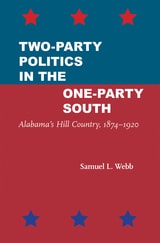
Two-Party Politics in the One-Party South
Alabama's Hill Country, 1874–1920Samuel L. Webb
University of Alabama Press, 1997
A challenge to the long-held view that the only important and influential politicians in post-Reconstruction Deep South states were Democrats.
In this insightful and exhaustively researched volume, Samuel L. Webb presents new evidence that, contrary to popular belief, voters in at least one Deep South state did not flee en masse from the Republican party after Reconstruction. As Webb demonstrates conclusively, the party gained strength among white voters in Upcountry areas of northern Alabama between 1896 and 1920. Not only did GOP presidential candidates win more than a dozen area counties but Republican congressional candidates made progress in Democratic strongholds, and local GOP officials gained control of several county courthouses.
Nor were these new Republicans simply the descendants of anti-Confederate families, as some historians have claimed. Rather, they were former independents, Greenbackers, and Populists, who, in keeping with the 1890s Populist movement, were reacting against what they perceived as the control of the Democratic party by "moneyed elites" and planter landlords. Webb also breaks with previous historical opinion by showing that ex-Populists in the Hill Country, who had been radical reformers during the 1890s, remained reform minded after 1900.
Webb's ground-breaking reassessment of Alabama state politics from Reconstruction to the 1920s describes a people whose political culture had strong roots in the democratic and egalitarian Jacksonian ideology that dominated north Alabama in the antebellum period. These people carried forward elements of Jacksonianism into the late 19th century, with its tenets continuing to influence them well into the early 20th century.