Results by title
454 books match the query 'Study and teaching (Higher)' and 88 start with t
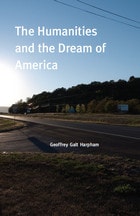
The Humanities and the Dream of America
Geoffrey Galt Harpham
University of Chicago Press, 2011
In this bracing and original book, Geoffrey Galt Harpham argues that today’s humanities are an invention of the American academy in the years following World War II, when they were first conceived as an expression of American culture and an instrument of American national interests. The humanities portray a “dream of America” in two senses: they represent an aspiration of Americans since the first days of the Republic for a state so secure and prosperous that people could enjoy and appreciate culture for its own sake; and they embody in academic terms an idealized conception of the American national character. Although they are struggling to retain their status in America, the concept of the humanities has spread to other parts of the world and remains one of America's most distinctive and valuable contributions to higher education.
The Humanities and the Dream of America explores a number of linked problems that have emerged in recent years: the role, at once inspiring and disturbing, played by philology in the formation of the humanities; the reasons for the humanities’ perpetual state of “crisis”; the shaping role of philanthropy in the humanities; and the new possibilities for literary study offered by the subject of pleasure. Framed by essays that draw on Harpham’s pedagogical experiences abroad and as a lecturer at the U.S. Air Force Academy, as well as his vantage as director of the National Humanities Center, this book provides an essential perspective on the history, ideology, and future of this important topic.
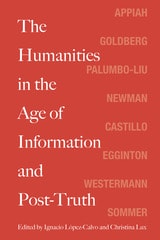
The Humanities in the Age of Information and Post-Truth
Edited by Ignacio López-Calvo and Christina Lux
Northwestern University Press, 2019
While the reader may suspect that these types of lucubration are a desperate reaction to decreased public funding for the humanities worldwide, a decreased enrollment of students, or anxiety over the future of our profession, there is in this volume a coherent argument for the continued need, perhaps more now than ever, to invest in humanities education if we are to have informed and socially conscious citizens rather than just willing consumers and obedient workers. Furthermore, the essays prove that the humanities and the arts are, after all, not a luxury but an integral part of a complete scholarly education.
The Inclusive Work of Global Rhetorics
Moushumi Biswas
Utah State University Press, 2026
Envisioning the next step in the ongoing scholarly movement advocating inclusion of global rhetorics in the composition curriculum, The Inclusive Work of Global Rhetorics demonstrates that the question of why or whether to incorporate tenets of global/non-Western rhetorics into writing is long past. The focus has shifted to how to make this change—and to the best practices of such inclusion.
This book showcases the latest scholarship on rethinking the borders of traditional rhetorical studies, which are typically drawn within Greco-Roman and Euro-American confines, with the objective of incorporating non-Eurocentric rhetorical tenets into rhetoric and composition. This work fosters a spirit of inclusivity in the writing classroom by incorporating the many ways of rhetorical thinking gleaned from global/non-Western communication practices while also reflecting on their situatedness and intersectionalities.
Sitting at the crossroads of theory, methodology, and pedagogy, The Inclusive Work of Global Rhetoric puts in perspective a landmark moment in rhetorical studies, a time when it has become imperative to acknowledge the proliferation of non-Western rhetorical traditions in rhetorical practices and communication. Providing heuristics for creating inclusive composition/rhetoric pedagogy, this book serves students, teachers, scholars, and researchers of rhetoric, writing, and communication as both a classroom guide and a reference at the undergraduate and graduate level
The Latin American Literary Boom and U.S. Nationalism during the Cold War
Deborah Cohn
Vanderbilt University Press, 2012
The high level of interest in Latin America paradoxically led the U.S. government to restrict these authors' physical presence in the United States through the McCarranWalter Act's immigration blacklist, even as cultural organizations cultivated the exchange of ideas with writers and sought to market translations of their work for the U.S. market.
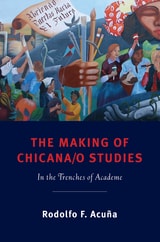
The Making of Chicana/o Studies
In the Trenches of AcademeAcuña, Rodolfo F
Rutgers University Press, 2011
The Making of Chicana/o Studies traces the philosophy and historical development of the field of Chicana/o studies from precursor movements to the Civil Rights era to today, focusing its lens on the political machinations in higher education that sought to destroy the discipline. As a renowned leader, activist, scholar, and founding member of the movement to establish this curriculum in the California State University system, which serves as a model for the rest of the country, Rodolfo F. Acuña has, for more than forty years, battled the trend in academia to deprive this group of its academic presence.
The book assesses the development of Chicana/o studies (an area of studies that has even more value today than at its inception)--myths about its epistemological foundations have remained uncontested. Acuña sets the record straight, challenging those in the academy who would fold the discipline into Latino studies, shadow it under the dubious umbrella of ethnic studies, or eliminate it altogether.
Building the largest Chicana/o studies program in the nation was no easy feat, especially in an atmosphere of academic contention. In this remarkable account, Acuña reveals how California State University, Northridge, was instrumental in developing an area of study that offers more than 166 sections per semester, taught by 26 tenured and 45 part-time instructors. He provides vignettes of successful programs across the country and offers contemporary educators and students a game plan--the mechanics for creating a successful Chicana/o studies discipline--and a comprehensive index of current Chicana/o studies programs nationwide.
Latinas/os, of which Mexican Americans are nearly seventy percent, comprise a complex sector of society projected to be just shy of thirty percent of the nation's population by 2050. The Making of Chicana/o Studies identifies what went wrong in the history of Chicana/o studies and offers tangible solutions for the future.

The Medical Library Association Essential Guide to Becoming an Expert Searcher
Terry Ann Jankowski
American Library Association, 2008
The Memoir of Ednah Shepard Thomas
Ednah Shepard Thomas
University Press of Colorado, 2017
The Nahua
Language and Culture from the 16th Century to the PresentGalen Brokaw
University Press of Colorado, 2024
During the colonial period, Nahuatl became a means of empowerment, oppression, and indoctrination. In modern times, Nahuatl continues to serve as an ideological lightning rod for both the Mexican government and Indigenous communities. Contributors to this volume focus on Nahua intellectual production from the sixteenth century to the present; contact and the negotiation of meaning; adaptations of Christian lore that show how representations of creation, hell, and the Passion of Christ reflected Nahua perceptions and understandings; Nahua cultural expressions, including poetry, healing rituals, and even running; language and geography; Nahuatl place-names; and the transformation of Nahuatl speakers from antiquity to the present.
Showcasing how Nahuatl’s cultural resilience permanently shaped the region’s social geography, The Nahua engages the field’s interest in the nonhomogenous character of the language, with regional and subregional dialects and pronunciations that reflect the history of pre-Columbian migrations and modern-era influences. Bridging the study of Nahuatl as a “historical” Indigenous language tradition with the study of modern-day speakers and their experiences, this work is of significance to students, scholars, and speakers of the languages as well as those studying colonial New Spain, Indigenous resilience, or Indigenous linguistics.
The New Instruction Librarian
A Workbook for Trainers and LearnersCandice Benjes-Small
American Library Association, 2016
The One-Shot Library Instruction Survival Guide
Heidi E. Buchanan
American Library Association, 2017
The One-Shot Library Instruction Survival Guide
Heidi E. Buchanan
American Library Association, 2021
When done well, one-shot library instruction allows you to build solid relationships with faculty while also making positive first impressions with students. Good pedagogy, collaboration with faculty, assessment, and reflection are all imminently possible in the one-shot. So is incorporating the big ideas of the ACRL Framework. This new edition of a trusted resource will guide you in active, student-centered one-shots that connect to courses’ learning outcomes. Demonstrated using vignettes that share teaching experiences drawn from librarians and instructors in the field, you’ll get succinct, hands-on advice on such topics as
- why threshold concepts are well suited to one-shot instruction;
- online instruction-specific engagement strategies and talking points;
- a one-shot version of curriculum mapping to help you prioritize;
- quick and easy activities to work into sessions;
- how to mix and match the three types of instruction best suited to one-shots;
- losing the list, ditching the script, and other strategies for student-centered teaching;
- common classroom management mishaps and what to do about them;
- talking points for the instruction interview;
- how and when to say no; and
- 5 ways to use assessment to improve your instructional style.
The Personal Librarian
Richard Moniz
American Library Association, 2022
The Politics of Research
Edited by E. Ann Kaplan and George Levine
Rutgers University Press, 1997
The Power of Writing
Dartmouth '66 in the Twenty-First CenturyEdited by Christiane Donahue and Kelly Blewett
Dartmouth College Press, 2015
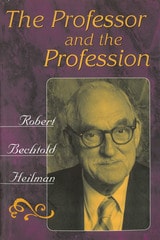
The Professor and the Profession
Robert Bechtold Heilman
University of Missouri Press, 1999
Robert Bechtold Heilman is one of the last survivors of a remarkable generation of American critics that included such literary giants as Cleanth Brooks, Allen Tate, and Edmund Wilson, men to whom literary criticism was not a profession or an academic necessity but a calling. In a distinguished career that has spanned nearly six decades, Heilman has influenced generations of scholars and critics through his exquisitely written commentaries on subjects ranging from William Shakespeare to Thomas Hardy.
In The Professor and the Profession, Heilman looks back over his life and times from his perspective as both an academic and an American. Differing in theme and subject matter, the essays included in this collection are ultimately unified by the author himself. Whether the topic is football, Robert Penn Warren, or education, Heilman's generous and intelligent voice emerges on every page. Yet this collection is more than one academic's personal reminiscences; it is a reflection upon American literary history itself.
In the first section of essays, "The Self Displayed," Heilman reveals how he developed from a small-town boy into a distinguished critic and teacher, touching upon his participation in baseball and love of football along the way. "Writers Portrayed" and "Literary Types and Problems Inspected," the following sections, offer his opinions on the past and on the current state of American literary criticism, including personal portraits of such renowned friends as Eric Voegelin, Robert Penn Warren, Theodore Roethke, and Malcolm Cowley. The final section, "Education Examined," is an enlightening inquiry into the development of American universities in the twentieth century.
A fascinating chronicle of a significant academic life, The Professor and the Profession will appeal to a broad array of scholars, from young academics wanting to know where they came from to those of Heilman's generation who can appreciate this personal reminiscence into the world of letters.
The Radical Case for Teaching Skim Reading in First-Year Writing
Ellen C. Carillo
Utah State University Press, 2025
Data from studies of the lived experiences of undergraduates indicate that students do not need deep reading practices in the majority of their classes across the disciplines and, moreover, that students succeed in their classes by skim reading. Rather than imagining an idealized set of circumstances that allow for sustained deep reading, as does a great deal of the scholarship on reading in writing studies, The Radical Case for Teaching Skim Reading in First-Year Writing argues for teaching students reading practices that will support their success in their college writing assignments rather than those strategies the field believes should support their success.
In our information landscape and our fragile democracy, encouraging skimming as opposed to deep reading may seem like a gamble—this very tendency toward the quick rather than the critical has undoubtedly contributed to the current crisis of mass misinformation. However, teaching students to use skim reading as a strategic tool for purposeful engagement and efficient yet thoughtful information filtering better equips them to navigate the rapidly changing information landscape and manage the fast-paced flow of content from diverse media sources.
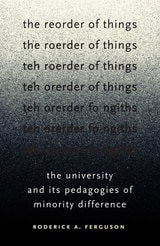
The Reorder of Things
The University and Its Pedagogies of Minority DifferenceRoderick A. Ferguson
University of Minnesota Press, 2012
In the 1960s and 1970s, minority and women students at colleges and universities across the United States organized protest movements to end racial and gender inequality on campus. African American, Chicano, Asia American, American Indian, women, and queer activists demanded the creation of departments that reflected their histories and experiences, resulting in the formation of interdisciplinary studies programs that hoped to transform both the university and the wider society beyond the campus.
In The Reorder of Things, however, Roderick A. Ferguson traces and assesses the ways in which the rise of interdisciplines—departments of race, gender, and ethnicity; fields such as queer studies—were not simply a challenge to contemporary power as manifest in academia, the state, and global capitalism but were, rather, constitutive of it. Ferguson delineates precisely how minority culture and difference as affirmed by legacies of the student movements were appropriated and institutionalized by established networks of power.
Critically examining liberationist social movements and the cultural products that have been informed by them, including works by Adrian Piper, Toni Cade Bambara, Jhumpa Lahiri, and Zadie Smith, The Reorder of Things argues for the need to recognize the vulnerabilities of cultural studies to co-option by state power and to develop modes of debate and analysis that may be in the institution but are, unequivocally, not of it.

The Sustainable Library's Cookbook
Raymond Pun
Assoc of College & Research Libraries, 2019
The Vocation of a Teacher
Rhetorical Occasions, 1967-1988Wayne C. Booth
University of Chicago Press, 1989
"[Booth] is unusually adept at addressing a wide variety of audiences. From deep in the heart of this academic jungle, he shows a clear eye and a firm step."—Alison Friesinger Hill, New York Times Book Review
"A cause for celebration. . . . What an uncommon man is Wayne Booth. What an uncommon book he has provided for our reflection."—James Squire, Educational Leadership
"This book stands as a vigorous reminder of the traditional virtues of the scholar-teacher."—Brian Cox, Times Literary Supplement
The Writing Studio Sampler
Stories about ChangeMark Sutton
University Press of Colorado, 2018
Threshold Conscripts
Rhetoric and Composition Teaching AssistantshipsWilliam J. Macauley
University Press of Colorado, 2023
Toward More Sustainable Metaphors of Writing Program Administration
edited by Lydia Wilkes, Lilian W. Mina, and Patti Poblete afterword by Douglas Hesse
Utah State University Press, 2022
This volume presents twelve chapters that reclaim and revise established metaphors; offer new metaphors based on sustainable, relational, or emotional labor practices and phenomena; and reveal the improvisational, artisanal nature of WPA work. Chapters resonate across three sections. The first section focuses on organic relationships captured in phrases like “putting out fires” and "seeing forests for the trees” alongside unexpected comparisons to ground and light. The second describes institutional landscapes featuring generative juxtapositions such as the WPA as a labor activist or a mapper of emotional geography. And the third discusses performance crafts like improv comedy and artisanal making.
Toward More Sustainable Metaphors of Writing Program Administration offers new and revised ways of thinking and acting for WPAs, who are constantly negotiating the paradoxical demands of their work and continually striving to act ethically in conflicted, and even fraught, situations. It will inspire practicing, aspiring, and former WPAs working in a time of transformation by highlighting more sustainable ways of enacting WPA identity.
Contributors: Jacob Babb, John Belk, Katherine Daily O'Meara, Ryan J. Dippre, Douglas Hesse, Andrew Hollinger, Rona Kaufman, Cynthia D. Mwenja, Manny Piña, Scott Rogers, Robyn Tasaka, Alexis Teagarden, Christy I. Wenger, Lydia Wilkes
Toward Translingual Realities in Composition
(Re)Working Local Language Representations and PracticesNancy Bou Ayash
Utah State University Press, 2019
Translingualism work has concentrated on critiquing monolingual and multilingual notions of language, but it is only beginning to examine translingual enactments in writing programs and classrooms. Focusing on language representations and practices at both the macro and micro levels, author Nancy Bou Ayash places the study and teaching of university-level writing in the context of the globalization and pluralization of English(es) and other languages. Individual chapters feature various studies that Bou Ayash brings together to address how students act as agents in marshaling their language practices and resources and shows a deliberate translingual intervention that complicates and enriches students’ assumptions about language and writing. Her findings about writing programs, instructors, and students are detailed, multidimensional, and complex.
A substantial contribution to growing translingual scholarship in the field of composition studies, Toward Translingual Realities in Composition offers insights into how writing teacher-scholars and writing program administrators can more productively intervene in local postmonolingual tensions and contradictions at the level of language representations and practices through actively and persistently reworking the design and enactment of their curricula, pedagogies, assessments, teacher training programs, and campus-wide partnerships.
Toward a Grammar of Passages
Richard M. Coe
Southern Illinois University Press, 1988
Richard M. Coe has developed such a “grammar,” one which uses a simple graphic instrument to analyze the meaningful relationships between sentences in a passage and to clarify the function of structure in discourse. Working in the tradition of Christensen’s generative rhetoric, Coe presents a two-dimensional graphic matrix that effectively analyzes the logical relations between statements by mapping coordinate, subordinate, and superordinate relationships.
Coe demonstrates the power of his discourse matrix by applying it to a variety of significant problems, such as how to demonstrate discourse differences between cultures (especially between Chinese and English), how to explain precisely what is “bad” about the structure of passages that do not work, and how best to teach structure. This new view of the structure of passages helps to articulate crucial questions about the relations between form and function, language, thought and culture, cognitive and social processes.
Toward an Anti-Capitalist Composition
James Rushing Daniel
Utah State University Press, 2022
Drawing on an array of philosophers, political theorists, and activists, Daniel outlines an anti-capitalist approach informed by the common, a concept theorized by Pierre Dardot and Christian Laval as a solidaristic response to capitalism rooted in inventive political action. Rather than relying upon claims of membership or ownership, the common supports radical, collective acts of remaking that comprehensively reject capitalist logics. Applying this approach to collaborative writing, student debt, working culture, and digital writing, Daniel demonstrates how the writing classroom may be oriented toward capitalist harms and prepare students to critique and resist them. He likewise employs the common to theorize how anti-capitalist interventions beyond the classroom could challenge institutional privatization and oppose the adjunctification of the professoriate.
Arguing that composition scholars have long neglected marketization and corporate power, Toward an Anti-Capitalist Composition extends a case for adopting a resolute anti-capitalist stance in the field and for remaking the university as a site of common work.

Tracing the Impact of First-Year Writing
Identity, Process, and Transfer at a Public UniversityLaura Wilder
Utah State University Press, 2024
In contrast to previous longitudinal studies of college writers undertaken at institutions with high prestige and resources, Tracing the Impact of First-Year Writing explores the role of writing at a regional public university and documents how students’ experiences with writing can be highly divergent across the curriculum and unequal across campuses. Additionally, this book includes the voices of students who do not identify as capable writers and have strongly negative emotional reactions to writing and writing instruction and adds empirical support to innovative calls in the field to transform the first-year writing course into one that inspires students to reflectively consider writing itself.
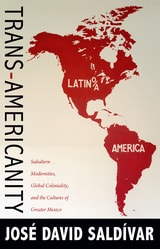
Trans-Americanity
Subaltern Modernities, Global Coloniality, and the Cultures of Greater MexicoJosé David Saldívar
Duke University Press, 2012
Transfer Student Success
Academic Library Outreach and EngagementNancy Fawley
American Library Association, 2021
Transformations
Change Work across Writing Programs, Pedagogies, and PracticesHolly Hassel
Utah State University Press, 2021
The collection includes chapters from multiple award-winning writing programs, including the recipients of the Two-Year College Association’s Outstanding Programs in English Award and the Conference on College Composition and Communication’s Writing Program Certificate of Excellence. These authors offer perspectives that demonstrate the deep work of transformation in writing programs and practices writ large, confirm the ways in which writing programs are connected to and situated within larger institutional and disciplinary contexts, and outline successful methods for navigating these contexts in order to transform the work.
In using the prism of transformation as the organizing principle for the collection, Transformations offers a range of strategies for adapting writing programs so that they meet the needs of students and teachers in service of creating equitable, ethical literacy instruction in a range of postsecondary contexts.
Contributors: Leah Anderst, Cynthia Baer, Ruth Benander, Mwangi Alex Chege, Jaclyn Fiscus-Cannaday, Joanne Giordano, Rachel Hall Buck, Sarah Henderson Lee, Allison Hutchinson, Lynee Lewis Gaillet, Jennifer Maloy, Neil Meyer, Susan Miller-Cochran, Ruth Osorio, Lori Ostergaard, Shyam Pandey, Cassie Phillips, Brenda Refaei, Heather Robinson, Shelley Rodrigo, Julia Romberger, Tiffany Rousculp, Megan Schoen, Paulette Stevenson
Transforming Ethos
Place and the Material in Rhetoric and WritingRosanne Carlo
Utah State University Press, 2020
Through case studies of professional and student writings as well as narrative reflections Transforming Ethos imagines the ethos appeal as not only connected to style and voice but also a process of habituation, related to practices of everyday interaction in places and with things. Carlo addresses how ethos aids in creating identification, transcending divisions between the self and other. She shows that when writers tell their experiences, they create and reveal the ethos appeal, and this type of narrative/multimodal writing is central to scholarship in rhetoric and composition as well as the teaching of writing. In addition, Carlo considers how composition is becoming compromised by professionalization—particularly through the idea of “transfer”—which is overtaking the critical work of self-development with others that a writing classroom should encourage in college students.
Transforming Ethos cements ethos as an essential term for the modern practice and teaching of rhetoric and places it at the heart of writing studies. This book will be significant for students and scholars in rhetoric and composition, as well as those interested in higher education more broadly.
Transforming History
A Guide to Effective, Inclusive, and Evidence-Based TeachingMary Jo Festle
University of Wisconsin Press, 2020
Instructors will improve their own conceptual understandings of teaching and learning issues, as well as receive guidance on designing courses and implementing pedagogies consistent with what research tells us about how students learn. The book offers practical illustrations of assignments, goals, questions, grading rubrics, unit plans, and formats for peer observation that are adaptable for courses on any subject and of any size. Transforming History is a critical guide for higher and secondary education faculty—neophytes and longtime professionals alike—working to improve student learning.
Transforming Information Literacy Programs
Intersecting Frontiers of Self, Library Culture, and Campus CommunityCarroll Wetzel Wilkinson
Assoc of College & Research Libraries, 2012
Transiciones
Pathways of Latinas and Latinos Writing in High School and CollegeTodd Ruecker
Utah State University Press, 2015
Transiciones is a thorough ethnography of seven Latino students in transition between high school and community college or university. Data gathered over two years of interviews with the students, their high school English teachers, and their writing teachers and administrators at postsecondary institutions reveal a rich picture of the conflicted experience of these students as they attempted to balance the demands of schooling with a variety of personal responsibilities.
Todd Ruecker explores the disconnect between students’ writing experiences in high school and higher education and examines the integral role that writing plays in college. Considering the almost universal requirement that students take a writing class in their critical first year of college, he contends that it is essential for composition researchers and teachers to gain a fuller understanding of the role they play in supporting and hindering Latina and Latino students’ transition to college.
Arguing for situating writing programs in larger discussions of high school/college alignment, student engagement, and retention, Transiciones raises the profile of what writing programs can do while calling composition teachers, administrators, and scholars to engage in more collaboration across the institution, across institutions, and across disciplines to make the transition from high school to college writing more successful for this important group of students.
Translingual Dispositions
The Affordances of Globalized Approaches to the Teaching of WritingAllana Frost
University Press of Colorado, 2020
Translingual Pedagogical Perspectives
Engaging Domestic and International Students in the Composition ClassroomJulia Kiernan
Utah State University Press, 2021
The book showcases concrete and adaptable writing assignments from a variety of learning environments in postsecondary, English-medium writing classrooms, writing centers, and writing programs populated by monolingual and multilingual students. By providing descriptive and reflective examples of how understanding translanguaging can influence pedagogy, Translingual Pedagogical Perspectives fills the gap between theoretical inquiry surrounding translanguaging and existing translingual pedagogical models for writing classrooms and programs.
Additional appendixes provide a variety of readings, exercises, larger assignments, and other entry points, making Translingual Pedagogical Perspectives useful for instructors and graduate students interested in engaging translingual theories in their classrooms.
Contributors: Daniel V. Bommarito, Mark Brantner, Tania Cepero Lopez, Emily Cooney, Norah Fahim, Ming Fang, Gregg Fields, Mathew Gomes, Thomas Lavalle, Esther Milu, Brice Nordquist, Ghanashyam Sharma, Naomi Silver, Bonnie Vidrine-Isbell, Xiqiao Wang, Dan Zhu
Transnational Writing Program Administration
David S. Martins
Utah State University Press, 2014
While local conditions remain at the forefront of writing program administration, transnational activities are slowly and thoroughly shifting the questions we ask about writing curricula, the space and place in which writing happens, and the cultural and linguistic issues at the heart of the relationships forged in literacy work. Transnational Writing Program Administration challenges taken-for-granted assumptions regarding program identity, curriculum and pedagogical effectiveness, logistics and quality assurance, faculty and student demographics, innovative partnerships and research, and the infrastructure needed to support writing instruction in higher education.
Well-known scholars and new voices in the field extend the theoretical underpinnings of writing program administration to consider programs, activities, and institutions involving students and faculty from two or more countries working together and highlight the situated practices of such efforts. The collection brings translingual graduate students at the forefront of writing studies together with established administrators, teachers, and researchers and intends to enrich the efforts of WPAs by examining the practices and theories that impact our ability to conceive of writing program administration as transnational.
This collection will enable writing program administrators to take the emerging locations of writing instruction seriously, to address the role of language difference in writing, and to engage critically with the key notions and approaches to writing program administration that reveal its transnationality.
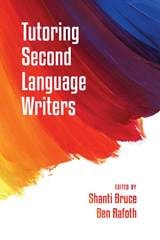
Tutoring Second Language Writers
Shanti Bruce
Utah State University Press, 2015
Tutoring Second Language Writers, a complete update of Bruce and Rafoth’s 2009 ESL Writers, is a guide for writing center tutors that addresses the growing need for tutors who are better prepared to work with the increasingly international population of students seeking guidance at the writing center.
Drawing upon philosopher John Dewey’s belief in reflective thinking as a way to help build new knowledge, the book is divided into four parts. Part 1: Actions and Identities is about creating a proactive stance toward language difference, thinking critically about labels, and the mixed feelings students may have about learning English. Part 2: Research Opportunities demonstrates writing center research projects and illustrates methods tutors can use to investigate their questions about writing center work. Part 3: Words and Passages offers four personal stories of inquiry and discovery, and Part 4: Academic Expectations describes some of the challenges tutors face when they try to help writers meet readers’ specific expectations.
Advancing the conversations tutors have with one another and their directors about tutoring second language writers and writing, Tutoring Second Language Writers engages readers with current ideas and issues that highlight the excitement and challenge of working with those who speak English as a second or additional language.
Contributors include Jocelyn Amevuvor, Rebecca Day Babcock, Valerie M. Balester, Shanti Bruce, Frankie Condon, Michelle Cox, Jennifer Craig, Kevin Dvorak, Paula Gillespie, Glenn Hutchinson, Pei-Hsun Emma Liu, Bobbi Olson, Pimyupa W. Praphan, Ben Rafoth, Jose L. Reyes Medina, Guiboke Seong, and Elizabeth (Adelay) Witherite.
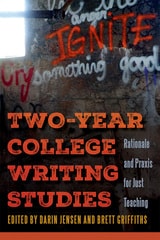
Two-Year College Writing Studies
Rationale and Praxis for Just TeachingDarin Jensen
Utah State University Press, 2023
Contributors draw on theories of identity, rhetorical third space, and linguistics to articulate a praxis of just teaching. They describe existing institutional challenges and opportunities that foster equity and offer cautionary tales of educational systems dismantled for short-term economic and political gains. Two-year college writing studies—when properly resourced—holds the potential to foster (or undermine) democratic ideals of civic literacy and uplift. Chapters in this volume offer case study examples of changes in departmental practices for reflection, interaction, and assessment that empower faculty to break free and engage directly with institutional, regional, state, and national constraints.
By making these resilient practices visible, Two-Year College Writing Studies amplifies the voices and validates the experiences of instructors engaging in this work. It will serve generalists, specialists, and academics interested in the subdiscipline of student success pedagogies and the political histories of two-year colleges and be useful for instructors new to the field, as professional development for veteran instructors, and as an introduction for graduate students entering two-year college writing studies programs.