Results by title
18284 books match the query 'United States' and 3764 start with t
Taking The Field
Women, Men, and SportsMichael A. Messner
University of Minnesota Press, 2002

Taking Time
Mindy Fried
Temple University Press, 1998
This timely book provides an inside look at life in a major U.S. corporation, focusing on the impact of workplace culture on the use of parental leave and those who use it. Fried begins by describing why parental leave is critical to making parenting the job of both parents in two-parent families. She examines the varied experiences of different levels of workers in how parental leave policy is used.
The author tells a rich and textured tale of day-to-day life in the skyscraper offices of a large corporation. How people dress, what their offices look like, which cafeteria they eat in, how the supervisors and supervised talk -- all these things are part of the fabric of corporate culture that Fried describes.
Most of us live in work cultures that value overtime. Fried argues that, as a "time policy" parental leave clashes with the powerful norm that corporate employees must work long and hard. Taking time for parenting -- a job that is devalued in our culture -- may be perceived as "taking time away" from the company, and, in particular, from the company's productivity.
Taking Trade to the Streets
The Lost History of Public Efforts to Shape GlobalizationSusan Ariel Aaronson
University of Michigan Press, 2002
Taking the Land to Make the City
A Bicoastal History of North AmericaBy Mary P. Ryan
University of Texas Press, 2019
The history of the United States is often told as a movement westward, beginning at the Atlantic coast and following farmers across the continent. But cities played an equally important role in the country’s formation. Towns sprung up along the Pacific as well as the Atlantic, as Spaniards and Englishmen took Indian land and converted it into private property. In this reworking of early American history, Mary P. Ryan shows how cities—specifically San Francisco and Baltimore—were essential parties to the creation of the republics of the United States and Mexico.
Baltimore and San Francisco share common roots as early trading centers whose coastal locations immersed them in an international circulation of goods and ideas. Ryan traces their beginnings back to the first human habitation of each area, showing how the juggernaut toward capitalism and nation-building could not commence until Europeans had taken the land for city building. She then recounts how Mexican ayuntamientos and Anglo American city councils pioneered a prescient form of municipal sovereignty that served as both a crucible for democracy and a handmaid of capitalism. Moving into the nineteenth century, Ryan shows how the citizens of Baltimore and San Francisco molded landscape forms associated with the modern city: the gridded downtown, rudimentary streetcar suburbs, and outlying great parks. This history culminates in the era of the Civil War when the economic engines of cities helped forge the East and the West into one nation.
Taking the Naturalistic Turn, Or How Real Philosophy of Science Is Done
Edited Organized and Moderated by Werner Callebaut
University of Chicago Press, 1993
This innovative book presents candid, informal debates among scholars who examine the benefits and problems of studying science in the same way that scientists study the natural world. Callebaut achieves the effect of face-to-face engagement through separate interviews with participants.
Contributors include William Bechtel, Robert Brandon, Richard M. Burian, Donald T. Campbell, Patricia Churchland, Jon Elster, Ronald N. Giere, David L. Hull, Philip Kitcher, Karin Knorr Cetina, Bruno Latour, Richard Levins, Richard C. Lewontin, Elisabeth Lloyd, Helen Longino, Thomas Nickles, Henry C. Plotkin, Robert J. Richards, Alexander Rosenberg, Michael Ruse, Dudley Shapere, Elliott Sober, Ryan Tweney, and William Wimsatt.
"Why can't we have both theoretical ecology and natural histories, lovingly done?"—Philip Kitcher
"Don't underestimate the arrogance of philosophers!"—Elisabeth Lloyd

Taking the Risk Out of Democracy
Corporate Propaganda versus Freedom and LibertyAlex Carey
University of Illinois Press, 1995
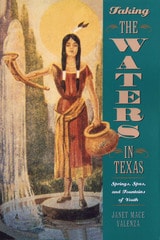
Taking the Waters in Texas
Springs, Spas, and Fountains of YouthBy Janet Mace Valenza
University of Texas Press, 2000
"It is well known that Southern Texas possesses a greater variety of Mineral Waters than any other country on the globe" enthused a promotion for one of Texas' many watering spas of the nineteenth century. Though most are closed and nearly forgotten today, Texas spas and resorts once drew thousands of visitors from across the country, seeking healing of body and spirit in the rejuvenating mineral waters.
This book offers the first comprehensive history of Texas' healing springs. Janet Valenza tracks the rise, popularity, and decline of the "water cure" from the 1830s to the present day. She follows the development of major spas and resorts, such as Mineral Wells and Indian Hot Springs near El Paso, as well as of smaller, family-run springs. She also describes how mineral waters influenced patterns of settlement, transportation routes, commerce, and people's attitudes toward the land. Period photos and quotes from those seeking cures offer vivid glimpses into the daily life at the springs, which Valenza lists and describes county-by-county in the appendix.
Tales From Jackpine Bob
Bob Cary
University of Minnesota Press, 2003
Bob Cary’s entertaining stories of life in the outdoors will touch your heart and make you laugh. Despite Bob’s many years as an expert woodsman, when he relates an adventure or a misadventure, the joke is always on him. Whether you read Tales from Jackpine Bob by firelight or lamplight, you’ll enjoy Bob’s warm humor and buoyant spirit.

Tales Never Told Around Campfire
True Tales Of Frontier AmericaMark Dugan
Ohio University Press, 1992
Tales and Songs of Southern Illinois
Collected by Charles Neely
Southern Illinois University Press, 1998
First published in 1938, this lively collection of over 150 tales and songs runs the gamut from joy to woe, from horror to humor. In forming the collection, Charles Neely required only that the tales and songs—whether home grown or transplanted from the great body of world lore— had taken root somehow in the area of southern Illinois known as Egypt.
Notable tales include "Bones in the Well," "A Visit from Jesse James," "The Flight of the Naked Teamsters," "The Dug Hill Boger," and "How Death Came to Ireland"; among the songs and ballads are "Barbara Allen," "Hog and Hominy," "The Drunkard’s Lone Child," "The Belleville Convent Fire," "Shawneetown Flood," and "The Death of Charlie Burger."
Tales and Towns of Northern New Jersey
Beck, Henry
Rutgers University Press, 1967
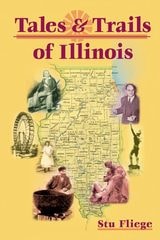
Tales and Trails of Illinois
Stu Fliege
University of Illinois Press, 2002
Stu Fliege highlights historical events, such as the Herrin Massacre and Chicago’s Iroquois Theatre fire, and covers the diverse terrain of Illinois’s natural and constructed wonders, from Lusk Creek Canyon to Robert Allerton Park. Readers will meet a colorful cast of characters including pioneers, squatters, miners, gangsters, and utopian leaders. They’ll travel back in time to when salt production was the state’s main industry and learn of the Illinois ingenuity that spawned inventions including barbed wire, the steel plow, and the Ferris wheel. From Oquawka’s elephant memorial to Murphysboro’s mysterious mud monster, the book also offers quirky facts and spooky stories that aren’t found in the average history book.
Liberally illustrated and clearly written, Tales and Trails of Illinois is a helpful learning tool for Illinoisans of all ages, perfect for families, history buffs, libraries, and the classroom.
Tales from an Uncertain World
What Other Assorted Disasters Can Teach Us About Climate ChangeL. S. Gardiner
University of Iowa Press, 2018
So far, humanity hasn’t done very well in addressing the ongoing climate catastrophe. Veteran science educator L. S. Gardiner believes we can learn to do better by understanding how we’ve dealt with other types of environmental risks in the past and why we are dragging our feet in addressing this most urgent emergency. Weaving scientific facts and research together with humor and emotion, Gardiner explores human responses to erosion, earthquakes, fires, invasive species, marine degradation, volcanic eruptions, and floods in order to illuminate why we find it so challenging to deal with climate change. Insight emerges from unexpected places—a mermaid exhibit, a Magic 8 Ball, and midcentury cartoons about a future that never came to be.
Instead of focusing on the economics and geopolitics of the debate over climate change, this book brings large-scale disaster to a human scale, emphasizing the role of the individual. We humans do have the capacity to deal with disasters. When we face threatening changes, we don’t just stand there pretending it isn’t so, we do something. But because we’re human, our responses aren’t always the right ones the first time—yet we can learn to do better. This book is essential reading for all who want to know how we can draw on our strengths to survive the climate catastrophe and forge a new relationship with nature.
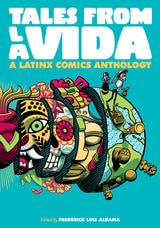
Tales from la Vida
A Latinx Comics AnthologyEdited by Frederick Luis Aldama
The Ohio State University Press, 2018
In the Latinx comics community, there is much to celebrate today, with more Latinx comic book artists than ever before. The resplendent visual-verbal storyworlds of these artists reach into and radically transform so many visual and storytelling genres. Tales from la Vida celebrates this space by bringing together more than eighty contributions by extraordinary Latinx creators. Their short visual-verbal narratives spring from autobiographical experience as situated within the language, culture, and history that inform Latinx identity and life. Tales from la Vida showcases the huge variety of styles and worldviews of today’s Latinx comic book and visual creators.
Whether it’s detailing the complexities of growing up—mono- or multilingual, bicultural, straight, queer, or feminist Latinx—or focusing on aspects of pop culture, these graphic vignettes demonstrate the expansive complexity of Latinx identities. Taken individually and together, these creators—including such legendary artists as Jaime and Gilbert Hernandez, Roberta Gregory, and Kat Fajardo, to name a few—and their works show the world that when it comes to Latinx comics, there are no limits to matters of content and form. As we travel from one story to the next and experience the unique ways that each creator chooses to craft his or her story, our hearts and minds wake to the complex ways that Latinxs live within and actively transform the world.
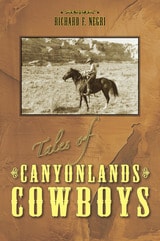
Tales of Canyonlands Cowboys
Richard Negri
Utah State University Press, 1997
Before Canyonlands was a national park, before tourists discovered the wildness and wonder of the Maze and the Land of Standing Rocks, before the San Rafael Desert became a hive of the mineral exploration, the lands west of the Colorado and Green Rivers to the San Rafael Swell and from the Book Cliffs and San Rafael River south to the dirty Devil River and the Henry Mountains were pastures for the stock of hardscrabble cowboys and sheep ranchers.
Often based in the nearby villages of Green River or Hanksville, sometimes residing on remote ranches, such as the famous Robbers Roost Ranch or the Chaffin Ranch at the mouth of the San Rafael, the cowboys and ranchers spent much of their time camped out on the range with their stock. They herded under the Ledge, along the river south across Elaterite Basin, Ernie Country, and Waterhole Flat, and above on the flats, mesas, and head canyons running from the west.
They named many of the places, opened many of the trails, and were there to meet and guide the first petroleum explorers, archaeologists, and tourists. And they bristled at government management of the public lands, which they had grown accustomed to considering their own.
Richard Negri interviewed members of the last generation of those cowboys for stories of their early days in canyon country. Their tales provide an oral history of the first non-Indians to roam and reside in the Maze District of Canyonlands National Park and much of the surrounding wild and remote country.
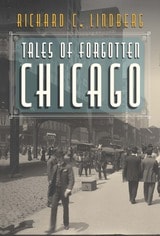
Tales of Forgotten Chicago
Richard C. Lindberg
Southern Illinois University Press, 2020
Tales of Forgotten Chicago contains twenty-one fascinating, little-known stories about a great city and its people. Richard C. Lindberg has dug deeply to reveal lost historical events and hidden gems from Chicago’s past.
Spanning the Civil War through the 1960s, the volume showcases forgotten crimes, punishments, and consequences: poisoned soup that nearly killed three hundred leading citizens, politicians, and business and religious leaders; a woman in showbiz and her street-thug husband whose checkered lives inspired a 1955 James Cagney movie; and the first police woman in Chicago, hired as a result of the senseless killing of a young factory girl in a racially tinged case of the 1880s.
Also included are tales of industry and invention, such as America’s first automobile race, the haunting of a wealthy Gilded Age manufacturer’s mansion, and the identity of the telephone’s rightful inventor. Chapters on the history of early city landmarks spotlight the fight to save Lakefront Park and how “Lucky” Charlie Weeghman’s north side baseball park became Wrigley Field. Other chapters explore civic, cultural, and political happenings: the great Railroad Fairs of 1948 and 1949; Richard J. Daley’s revival of the St. Patrick’s Day parade; political disrupter Lar “America First” Daly; and the founding of the Special Olympics in Chicago by Anne Burke and others. Finally, some are just wonderful tales, such asa touching story about the sinking of Chicago's beloved Christmas tree ship.
Engrossing and imaginative, this collection opens new windows into the past of the Windy City.
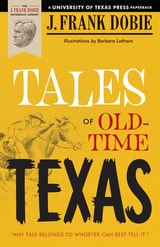
Tales of Old-Time Texas
By J. Frank Dobie
University of Texas Press, 1955
It is for good reason that J. Frank Dobie is known as the Southwest's master storyteller. With his eye for color and detail, his ear for the rhythm of language and song, and his heart open to the simple truth of folk wisdom and ways, he movingly and unpretentiously spins the tales of our collective heritages. This he does in Tales of Old-Time Texas, a heartwarming array of twenty-eight stories filled with vivid characters, exciting historical episodes, and traditional themes. As Dobie himself says: "Any tale belongs to whoever can best tell it." Here, then, is a collection of the best Texas tales—by the Texan who can best tell them.
Dobie's recollections include such classics in Lone Star State lore as the tale of Jim Bowie's knife, the legend of the Texas bluebonnet, the story of the Wild Woman of the Navidad, and the account of the headless horseman of the mustangs. Other stories in this outstanding collection regale us with odd and interesting characters and events: the stranger of Sabine Pass, the Apache secret of the Guadalupes, the planter who gambled away his bride, and the Robinhooding of Sam Bass. These stories, and many more, make Tales of Old-Time Texas a beloved classic certain to endure for generations.
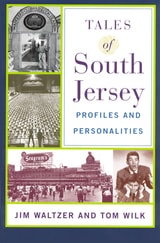
Tales of South Jersey
Profiles and PersonalitiesWaltzer, Jim
Rutgers University Press, 2001
There's much more to southern New Jersey than the Pine Barrens and the Jersey Devil, and this collection by journalists Jim Waltzer and Tom Wilk tells readers all about it. Oceanside and bayside towns offer a box seat from which to observe the regions rich history and the summery lore of the wonders of nature. Landlocked towns boast their own homespun and hell-raising traditions and idiosyncrasies.
Waltzer and Wilk have compiled almost fifty stories about the state's southernmost counties. Although the focus is on Atlantic City and its remarkable people, outsize structures, and quirky events, the storytelling ranges across the wider region to provide an insiders look at history as it was being made. You'll encounter gangsters and gamblers, baseball hitters and hurricanes, famous piers and hotels, landmark theaters and eateries, splashy events and unheralded oddities ¾ in sum, a cross-section of the regions character and characters.
The authors divide their book into six sections: entertainment, famous and infamous events, innovations and innovators, leisure and recreation, room and board, and sports legends. Within each section are the rich and varied stories Waltzer and Wilk have collected for New Jerseyans reading pleasure.
Tales of Wayward Girls and Immoral Women
Case Records and the Professionalization of Social WorkKaren W. Tice
University of Illinois Press, 1998
"An original and important study, this is the first major work I know of to carry out a contextual analysis of case records and to discuss the role case records have played in the development of social work." -- Leslie Leighninger, author of Social Work, Social Welfare, and American Society

Tales of an American Hobo
Charles Elmer Fox
University of Iowa Press, 1989
"Reefer Charlie" Fox rode the rails from 1928 to 1939; from 1939 to 1965 he hitched rides in automobiles and traveled by foot. From Indiana to British Columbia, from Arkansas to Texas, from Utah to Mexico, he was part of the grand hobo tradition that has all but passed away from American life.
He camped in hobo jungles, slept under bridges and in sand houses at railroad yards, ate rattlesnake meat, fresh California grapes, and fish speared by the Indians of the Northwest. He quickly learned both the beauty and the dangers of his chosen way of life. One lesson learned early on was that there are distinct differences among hoboes, tramps, and bums. As the all-time king of hoboes, Jeff Davis, used to say, "Hoboes will work, tramps won't, and bums can't."
Tales of an American Hobo is a lasting legacy to conventional society, teaching about a bygone era of American history and a rare breed of humanity who chose to live by the rails and on the road.
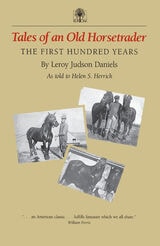
Tales of an Old Horsetrader
The First Hundred YearsLeroy Judson Daniels
University of Iowa Press, 1987
Leroy Daniels was born in 1882 near Adair, Iowa. When he was ten, his father gave him a pony and a checkbook and sent him out to buy cattle. By the time he was sixteen, he was alone on a ranch in Montana with a herd of seventy wild horses to break. At twenty-one, he was trading horses in the Chicago stockyards, where he told Henry Ford that a horse was better than a car any day. At one hundred, he retired to tell his memoirs.
The years in between are well worth reading about. Lee Daniels followed a plow all day long, worked coal to make ends meet, raised and traded and sold all manner of four-legged stock. But horses were always part of his life. Daniels traded them in Chicago for decades, sold them to Italy, England, France, and Belgium during World War I, inspected them for the army once the U.S. joined the Allies, bought them for eighty dollars in the morning and sold them for thousands by noon. He handled show horses, work horses, and trick horses, traveled the country over to fill his show barn with the best of them, befriended, understood, and loved them.
These pages tell the tale of a unique and vigorous American whose every word reveals his love of this land and its animals. If you weren't lucky enough to live like Lee Daniels, reading about his life is the next best thing.
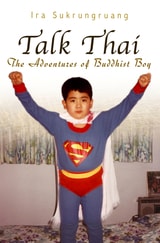
Talk Thai
The Adventures of Buddhist BoyIra Sukrungruang
University of Missouri Press, 2011
When Ira Sukrungruang was born to Thai parents newly arrived in the U.S., they picked his Jewish moniker out of a book of “American” names. In this lively, entertaining, and often hilarious memoir, he relates the early life of a first-generation Thai-American and his constant, often bumbling attempts to reconcile cultural and familial expectations with the trials of growing up in 1980s America.
Young Ira may have lived in Oak Lawn, Illinois, but inside the family’s bi-level home was “Thailand with American conveniences.” They ate Thai food, spoke the Thai language, and observed Thai customs. His bedtime stories were tales of Buddha and monkey-faced demons. On the first day of school his mother reminded him that he had a Siamese warrior’s eyes—despite his thick glasses—as Aunty Sue packed his Muppets lunch box with fried rice. But when his schoolmates played tag he was always It, and as he grew, he faced the constant challenge of reconciling American life with a cardinal family rule: “Remember, you are Thai.”
Inside the Thai Buddhist temple of Chicago, another “simulated Thailand,” are more rules, rules different from those of the Southside streets, and we see mainstream Western religion—“god people”—through the Sukrungruang family’s eyes. Within the family circle, we meet a mother who started packing for her return to Thailand the moment she arrived; her best friend, Aunty Sue, Ira’s second mother, who lives with and cooks for the family; and a wayward father whose dreams never quite pan out.
Talk Thai is a richly told account that takes us into an immigrant’s world. Here is a story imbued with Thai spices and the sensibilities of an American upbringing, a story in which Ira practices English by reciting lines from TV sitcoms and struggles with the feeling of not belonging in either of his two worlds. For readers who delight in the writings of Amy Tan, Gish Jen, and other Asian-Americans, Talk Thai provides generous portions of a still-mysterious culture while telling the story of an American boyhood with humor, playfulness, and uncompromising honesty.
Talk about Sex
How Sex Ed Battles Helped Ignite the RightJanice M. Irvine
Temple University Press, 2023
“Must reading for scholars, sexuality researchers, activists, and public policy and public health planners engaged in efforts to promote education on sex, sexually transmitted diseases, and HIV infection prevention for adolescents in schools.”—JAMA
Talk about Sex is a rich social history about the political transformations, cultural dynamics, and emotional rhetorical strategies that helped the right wing manufacture controversies on the local and national levels in the United States. Although the emergence of a politicized Christian Right is commonly dated at the mid-seventies, with the founding of groups like the Moral Majority, Talk about Sex tells the story of a powerful right-wing Christian presence in politics a full decade earlier. These activists used inflammatory sexual rhetoric—oftentimes deceptive and provocative—to capture the terms of public debate, galvanize voters, and reshape the culture according to their own vision.
This 20th Anniversary Edition includes a new preface and epilogue by the author that examines current controversies over public education on sexuality, gender, and race.
Demonstrating how the right wing draws on the cultural power of sexual shame and fear to build a political movement, Talk about Sex explores the complex entanglements of sexual knowledge, politics, and discourses.
Talk of Love
How Culture MattersAnn Swidler
University of Chicago Press, 2001
Talking Art
The Culture of Practice and the Practice of Culture in MFA EducationGary Alan Fine
University of Chicago Press, 2018
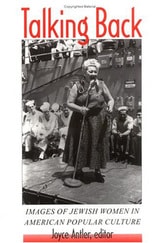
Talking Back
Images of Jewish Women in American Popular CultureEdited by Joyce Antler
Brandeis University Press, 1998
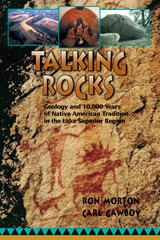
Talking Rocks
Geology and 10,000 Years of Native American Tradition in the Lake Superior RegionRon Morton
University of Minnesota Press, 2003
Join the conversation as an earth scientist and a Native American elder—wise men from two cultures—explore the natural history of the Lake Superior region, examining both the science and the spirit of the land.
As the geologist carefully presents a modern scientific perspective, the storyteller eloquently recounts a traditional Native American understanding, passed on through tales, myths, and symbols that illustrate how intimately his people have known and honored the earth and its history for over a hundred centuries.
Talking Rocks is not only a story of geological history told from two perspectives, it is also a chronicle of two people from very different cultural and scientific heritages learning to understand and appreciate each other’s distinct yet complementary ways of viewing the land we share.
Talking Together
Public Deliberation and Political Participation in AmericaLawrence R. Jacobs, Fay Lomax Cook, and Michael X. Delli Carpini
University of Chicago Press, 2009
Challenging the conventional wisdom that Americans are less engaged than ever in national life and the democratic process, Talking Together paints the most comprehensive portrait available of public deliberation in the United States and explains why it is important to America’s future.
The authors’ original and extensive research reveals how, when, and why citizens talk to each other about the issues of the day. They find that—in settings ranging from one-on-one conversations to e-mail exchanges to larger and more formal gatherings—a surprising two-thirds of Americans regularly participate in public discussions about such pressing issues as the Iraq War, economic development, and race relations. Pinpointing the real benefits of public discourse while considering arguments that question its importance, Talking Together presents an authoritative and clear-eyed assessment of deliberation’s function in American governance. In the process, it offers concrete recommendations for increasing the power of talk to foster political action.
Talking about Race
Community Dialogues and the Politics of DifferenceKatherine Cramer Walsh
University of Chicago Press, 2007
It is a perennial question: how should Americans deal with racial and ethnic diversity? More than 400 communities across the country have attempted to answer it by organizing discussions among diverse volunteers in an attempt to improve race relations. In Talking about Race, Katherine Cramer Walsh takes an eye-opening look at this strategy to reveal the reasons behind the method and the effects it has in the cities and towns that undertake it.
With extensive observations of community dialogues, interviews with the discussants, and sophisticated analysis of national data, Walsh shows that while meeting organizers usually aim to establish common ground, participants tend to leave their discussions with a heightened awareness of differences in perspective and experience. Drawing readers into these intense conversations between ordinary Americans working to deal with diversity and figure out the meaning of citizenship in our society, she challenges many preconceptions about intergroup relations and organized public talk. Finally disputing the conventional wisdom that unity is the only way forward, Walsh prescribes a practical politics of difference that compels us to reassess the place of face-to-face discussion in civic life and the critical role of conflict in deliberative democracy.
Talking to Strangers
Anxieties of Citizenship since Brown v. Board of EducationDanielle Allen
University of Chicago Press, 2004
Returning to the landmark Brown v. Board of Education decision of 1954 and to the famous photograph of Elizabeth Eckford, one of the Little Rock Nine, being cursed by fellow "citizen" Hazel Bryan, Allen argues that we have yet to complete the transition to political friendship that this moment offered. By combining brief readings of philosophers and political theorists with personal reflections on race politics in Chicago, Allen proposes strikingly practical techniques of citizenship. These tools of political friendship, Allen contends, can help us become more trustworthy to others and overcome the fossilized distrust among us.
Sacrifice is the key concept that bridges citizenship and trust, according to Allen. She uncovers the ordinary, daily sacrifices citizens make to keep democracy working—and offers methods for recognizing and reciprocating those sacrifices. Trenchant, incisive, and ultimately hopeful, Talking to Strangers is nothing less than a manifesto for a revitalized democratic citizenry.
Tall Tale America
A Legendary History of our Humorous HeroesWalter Blair
University of Chicago Press, 1987
Tamarack River Ghost
A NovelJerry Apps
University of Wisconsin Press, 2012
Josh’s big story is that a corporation that plans to establish an enormous hog farm has bought a lot of land along the Tamarack River in bucolic Ames County. Some of the local residents and officials are excited about the jobs and tax revenues that the big farm will bring, while others worry about truck traffic, porcine aromas, and manure runoff polluting the river. And how would the arrival of a large agribusiness affect life and traditions in this tightly knit rural community of family farmers? Josh strives to provide impartial agricultural reporting, even as his newspaper is replaced by a new Internet-only version owned by a former New York investment banker. And it seems that there may be another force in play: the vengeful ghost of a drowned logger who locals say haunts the valley of the Tamarack River.
Taming Alabama
Lawyers and Reformers, 1804-1929Paul M. Pruitt, Jr. introduction by G. Ward Hubbs
University of Alabama Press, 2010
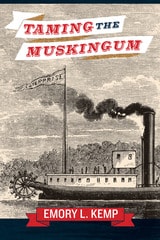
Taming the Muskingum
EMORY L. KEMP
West Virginia University Press, 2014
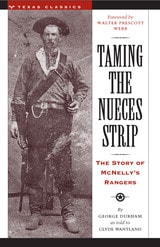
Taming the Nueces Strip
The Story of McNelly's RangersBy George Durham as told to Clyde Wantland
University of Texas Press, 1962
Only an extraordinary Texas Ranger could have cleaned up bandit-plagued Southwest Texas, between the Nueces River and the Rio Grande, in the years following the Civil War. Thousands of raiders on horseback, some of them Anglo-Americans, regularly crossed the river from Mexico to pillage, murder, and rape. Their main objective? To steal cattle, which they herded back across the Rio Grande to sell. Honest citizens found it almost impossible to live in the Nueces Strip.
In desperation, the governor of Texas called on an extraordinary man, Captain Leander M. McNelly, to take command of a Ranger company and stop these border bandits. One of McNelly's recruits for this task was George Durham, a Georgia farmboy in his teens when he joined the "Little McNellys," as the Captain's band called themselves. More than half a century later, it was George Durham, the last surviving "McNelly Ranger," who recounted the exciting tale of taming the Nueces Strip to San Antonio writer Clyde Wantland.
In Durham's account, those long-ago days are brought vividly back to life. Once again the daring McNelly leads his courageous band across Southwest Texas to victories against incredible odds. With a boldness that overcame their dismayingly small number, the McNellys succeeded in bringing law and order to the untamed Nueces Strip—succeeded so well that they antagonized certain "upright" citizens who had been pocketing surreptitious dollars from the bandits' operations.
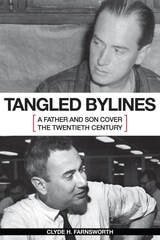
Tangled Bylines
A Father and Son Cover the Twentieth CenturyClyde H. Farnsworth
University of Missouri Press, 2017
Tangled Loyalties
Conflict of Interest in Legal PracticeSusan P. Shapiro
University of Michigan Press, 2002
This unique, empirical study examines the actual attitudes and perceptions of legal practitioners. The author discusses the realities of the profession--what lawyers face day to day, how they deal with conflicts of interest, and how those experiences vary from LaSalle Street to Wall Street to Main Street, from megafirms to solo practices. In describing how conflicts arise in their daily work, Shapiro sheds light on the nature of legal work--on clients, colleagues, law firm power and politics, economics, markets, malpractice insurance, careers, ethics, values, business judgments, and lawyers' most anguishing moments. In short, we learn what it means to be a lawyer at the end of the twentieth century.
Tangled Loyalties also looks at how these conflicts in law affect other fiduciaries--accountants, doctors, psychotherapists, journalists, and academics--and the way in which they respond to competing interests and the honoring of those interests.
Tangled Loyalties will appeal to readers interested in the legal and other professions, social institutions and relations, and issues of trust, ethics, social control and regulation.
Susan P. Shapiro is Senior Research Fellow, American Bar Foundation.
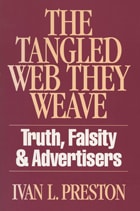
Tangled Web They Weave
Truth, Falsity, & AdvertisersIvan L. Preston
University of Wisconsin Press, 1996

Tania León's Stride
A Polyrhythmic LifeAlejandro L. Madrid
University of Illinois Press, 2021
Nuanced and multifaceted, Tania León's Stride looks at the life, legacy, and milieu that created and sustained one of the most important figures in American classical music.

Targeting Investments in Children
Fighting Poverty When Resources Are LimitedEdited by Phillip B. Levine and David J. Zimmerman
University of Chicago Press, 2010
A substantial number of American children experience poverty: about 17 percent of those under the age of eighteen meet the government’s definition, and the proportion is even greater within minority groups. Childhood poverty can have lifelong effects, resulting in poor educational, labor market, and physical and mental health outcomes for adults. These problems have long been recognized, and there are numerous programs designed to alleviate or even eliminate poverty; as these programs compete for scarce resources, it is important to develop a clear view of their impact as tools for poverty alleviation.
Targeting Investments in Children tackles the problem of evaluating these programs by examining them using a common metric: their impact on earnings in adulthood. The volume’s contributors explore a variety of issues, such as the effect of interventions targeted at children of different ages, and study a range of programs, including child care, after-school care, and drug prevention. The results will be invaluable to educational leaders and researchers as well as policy makers.
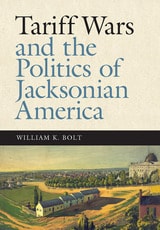
Tariff Wars and the Politics of Jacksonian America
William K. Bolt
Vanderbilt University Press, 2016
The spreading of democracy caused by the tariff evoked bitter sectional controversy among Americans. Northerners claimed they needed a tariff to protect their industries and also their wages. Southerners alleged the tariff forced them to buy goods at increased prices. Having lost the argument against the tariff on its merits, in the 1820s, southerners began to argue the Constitution did not allow Congress to enact a protective tariff. In this fight, we see increased tensions between northerners and southerners in the decades before the Civil War began.
As Tariff Wars reveals, this struggle spawned a controversy that placed the nation on a path that would lead to the early morning hours of Charleston Harbor in April of 1861.
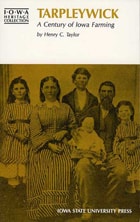
Tarpleywick
A Century of Iowa FarmingHenry C. Taylor
University of Iowa Press, 0
(Tarpleywick description) “When Tarpley Early Taylor came of age on August 2, 1858, his father gave him a horse, a saddle, and a bridle and wished him well…His first independent move was to go on horseback to Louisiana, Missouri, to visit his maternal grandparents, the Zumwalts. He stayed with them for some time, probably through the winter…We do not know what he did from the spring of 1859 to the spring of 1860 except that he had been earning money and saving it. We do know that he had returned to Van Buren County by Juy 24, 1860, because on that date he paid $800 for sixty acres of land a mile south of his father’s house…This was the beginning of Tarpleywick.” Born in Iowa in 1873, he was 96 years old when he died in May 1969. Taylor received his undergraduate training from Drake University and Iowa State University, his M.S. degree from Iowa State, and his Ph.D. degree from the University of Wisconsin. He was the first professor of agricultural economics in a land grant institution, the author of the first American textbook dealing with the principles of agricultural economics, the organizer and first Chief of the Bureau of Agricultural Economics in the USDA, and the first Managing Director of the Farm Foundation.
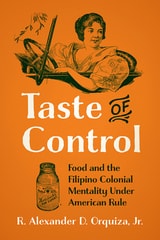
Taste of Control
Food and the Filipino Colonial Mentality under American RuleR. Alexander D. Orquiza, Jr.
Rutgers University Press, 2020
Winner of the 2021 Gourmand Awards, Asian Section & Culinary History Section
Filipino cuisine is a delicious fusion of foreign influences, adopted and transformed into its own unique flavor. But to the Americans who came to colonize the islands in the 1890s, it was considered inferior and lacking in nutrition. Changing the food of the Philippines was part of a war on culture led by Americans as they attempted to shape the islands into a reflection of their home country.
Taste of Control tells what happened when American colonizers began to influence what Filipinos ate, how they cooked, and how they perceived their national cuisine. Food historian René Alexander D. Orquiza, Jr. turns to a variety of rare archival sources to track these changing attitudes, including the letters written by American soldiers, the cosmopolitan menus prepared by Manila restaurants, and the textbooks used in local home economics classes. He also uncovers pockets of resistance to the colonial project, as Filipino cookbooks provided a defense of the nation’s traditional cuisine and culture.
Through the topic of food, Taste of Control explores how, despite lasting less than fifty years, the American colonial occupation of the Philippines left psychological scars that have not yet completely healed, leading many Filipinos to believe that their traditional cooking practices, crops, and tastes were inferior. We are what we eat, and this book reveals how food culture served as a battleground over Filipino identity.
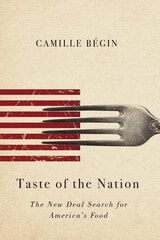
Taste of the Nation
The New Deal Search for America's FoodCamille Bégin
University of Illinois Press, 2016
Camille Begin shapes a cultural and sensory history of New Deal-era eating from the FWP archives. From "ravioli, the diminutive derbies of pastries, the crowns stuffed with a well-seasoned paste" to barbeque seasoning that integrated "salt, black pepper, dried red chili powder, garlic, oregano, cumin seed, and cayenne pepper" while "tomatoes, green chili peppers, onions, and olive oil made up the sauce", Begin describes in mouth-watering detail how Americans tasted their food. They did so in ways that varied, and varied widely, depending on race, ethnicity, class, and region. Begin explores how likes and dislikes, cravings and disgust operated within local sensory economies that she culls from the FWP’s vivid descriptions, visual cues, culinary expectations, recipes and accounts of restaurant meals. She illustrates how nostalgia, prescriptive gender ideals, and racial stereotypes shaped how the FWP was able to frame regional food cultures as "American."
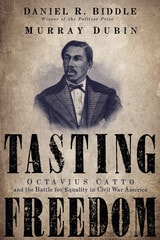
Tasting Freedom
Octavius Catto and the Battle for Equality in Civil War AmericaDaniel R. Biddle
Temple University Press, 2017
Octavius Valentine Catto was an orator who shared stages with Frederick Douglass, a second baseman on Philadelphia’s best black baseball team, a teacher at the city’s finest black school and an activist who fought in the state capital and on the streets for equal rights. With his racially-charged murder, the nation lost a civil rights pioneer—one who risked his life a century before Selma and Birmingham.
In Tasting Freedom Murray Dubin and Pulitzer Prize winner Dan Biddle painstakingly chronicle the life of this charismatic black leader—a “free” black whose freedom was in name only. Born in the American south, where slavery permeated everyday life, he moved north where he joined the fight to be truly free—free to vote, go to school, ride on streetcars, play baseball and even participate in July 4th celebrations.
Catto electrified a biracial audience in 1864 when he proclaimed, “There must come a change,” calling on free men and women to act and educate the newly freed slaves. With a group of other African Americans who called themselves a “band of brothers,” they challenged one injustice after another. Tasting Freedom presents the little-known stories of Catto and the men and women who struggled to change America.
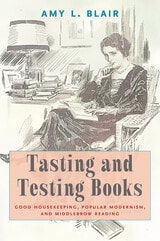
Tasting and Testing Books
Good Housekeeping, Popular Modernism, and Middlebrow ReadingAmy L. Blair
University of Massachusetts Press, 2024
A CHOICE 2025 Outstanding Academic Title
Honorable Mention, 2023-2024 Research Society of American Periodicals Book Prize
In its February 1926 issue, Good Housekeeping magazine introduced a column for its approximately one million subscribers called “Tasting and Testing Books.” The column’s author, Emily Newell Blair, would go on to produce ninety-one reading advice columns for the magazine between 1926 and 1934. During this period, Good Housekeeping became the most widely circulated periodical in the United States, doubling its circulation to over two million copies. Much of its popularity stemmed from its intensive promotion of its Seal of Approval for a variety of products, which brought consumers to it for utilitarian purposes. With her focus on regular books, Blair distinguished herself from highbrow literary critics, many of whom have been objects of study as High Modernists. She offered advice to help middle-class women readers make their own choices about the best books in which to invest time and money, rather than dictating what they should or should not read. She aligns herself with the average subscriber, outside the book publishing and reviewer industries, focusing on books that would now be termed middlebrow reading.
Blair’s time at Good Housekeeping covers the era from the heights of the “Roaring Twenties” to the depths of the Great Depression, and her recommendations offer a window into the uses of middlebrow reading during this period of dramatic economic and social shifts. Tasting and Testing Books argues that the consumer-first message of Good Housekeeping infused Blair’s advice column and validated a new attitude of proudly middlebrow pleasure reading in the mid-twentieth century. These columns shed new light on the reading lives of too-often overlooked women, often living outside of urban centers and away from elite literary circles, and present Emily Newell Blair, who strongly identified with her readers as a truly democratic tastemaker.
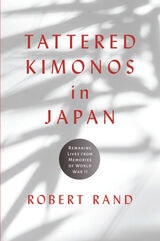
Tattered Kimonos in Japan
Remaking Lives from Memories of World War IIRobert Rand
University of Alabama Press, 2024
Examines Japan’s war generation—Japanese men and women who survived World War Two and rebuilt their lives from memories of that conflict.
Since John Hersey’s Hiroshima—the classic account, published in 1946, of the aftermath of the atomic bombing of that city—very few books have examined the meaning and impact of World War II through the eyes of Japanese men and women who survived that conflict. Tattered Kimonos in Japan does just that: It is an intimate journey into contemporary Japan from the perspective of the generation of Japanese soldiers and civilians who survived World War II, by a writer whose American father and Japanese father-in-law fought on opposite sides of the conflict.
The author, a former NPR senior editor, is Jewish, and he approaches the subject with the sensibilities of having grown up in a community of Holocaust survivors. Mindful of the power of victimhood, memory, and shared suffering, he travels across Japan, including Hiroshima and Nagasaki, meeting a compelling group of men and women whose lives, even now, are defined by the trauma of war, and by lingering questions of responsibility and repentance for Japan’s wartime aggression.
The image of a tattered kimono from Hiroshima is the thread that drives the narrative arc of this emotional story about a writer’s encounter with history, inside the Japan of his father’s generation, on the other side of his father’s war. This is a book about history with elements of family memoir. It offers a fresh and truly unique perspective for readers interested in World War II, Japan, or Judaica; readers seeking cross-cultural journeys; and readers intrigued by Japanese culture, particularly the kimono.
Tavern League
Portraits of Wisconsin BarsCarl Corey
Wisconsin Historical Society Press, 2011
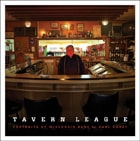
In Tavern League, photographer Carl Corey documents a unique and important segment of the Wisconsin community. Our bars are unique micro-communities, offering patrons a sense of belonging. Many of these bars are the only public gathering place in the rural communities they serve. These simple taverns offer the individual the valuable opportunity for face to face conversation and camaraderie, particularly as people become more physically isolated through the accelerated use of the internet’s social networking, mobile texting, gaming, and the rapid-fire of email.
This collection of 60 pictures captures the Wisconsin tavern as it is today. Carl Corey’s view is both familiar and undeniably unique, his pictures resonant with anyone who has set foot in a Wisconsin tavern. As the Milwaukee Journal Sentinel’s Mary Louise Schumacher has written, “Carl Corey’s photographs . . . document iconic American places that are taken for granted. . . . They are comforting images, places we know, but also eerie and remote, presented with a sense of romance and nostalgia that suggests they are already past.”
Taxation in the Global Economy
Edited by Assaf Razin and Joel Slemrod
University of Chicago Press, 1990
Assaf Razin and Joel Slemrod gathered experts from two traditionally distinct specialties, taxation and international economics, to lay the groundwork for understanding these issues, which will require the attention of scholars and policymakers for years to come.
Contributors describe the basic provisions of the U.S. tax code with respect to international transactions, highlighting the changes contained in the U.S. Tax Reform Act of 1986; explore the ways that tax systems influence the decisions of multinationals; examine the effect of taxation on trade patterns and capital flows; and discuss the implications of the opening world economy for the design of optimal international tax policy. The papers will prove valuable not only to scholars and students, but to government economists and international tax lawyers as well.