Results by title
2284 books match the query 'Women' and 370 start with t
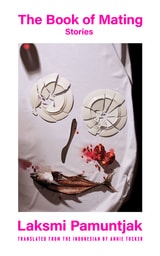
The Book of Mating
StoriesLaksmi Pamuntjak, Annie Tucker
Northwestern University Press, 2027
Winner of the Humanities in Translation Prize
The Book of Mating is a masterfully translated collection of stories in which Indonesian women explore the full spectrum of mating: marital, sexual, and spiritual; forced and free; transcendent, ruinous, and mundane. Laksmi Pamuntjak portrays both the constraints and opportunities facing women caught between the enduring restrictions of local norms and hierarchies and the tantalizing promises of globalized modern life, between internalized myths and social realities.
An experimental melding of Pamuntjak’s creative, journalistic, and activist work, these stories read as urgent dispatches from the Indonesian archipelago and diaspora—and as universal narratives of women’s lived experiences. Annie Tucker’s nuanced translation takes us from the prison island of Buru and the Bogor Botanical Gardens to Paris’s Left Bank, offering a polyphonic testament to the universal fight for women’s autonomy over their bodies and their lives.
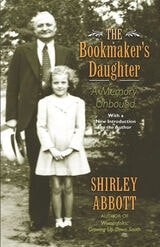
The Bookmaker's Daughter
A Memory UnboundShirley Abbott
University of Arkansas Press, 2006
This deeply felt memoir is a journey through family history, feminist insight, and southern mythology. In it a daughter reflects on the complicated and volatile love she and her father shared. Shirley Jean Abbott grew up in Hot Springs, Arkansas, in the 1940s and 50s and was the beloved daughter of Alfred Bemont Abbott, affectionately known as “Hat.” Hat wasn’t a bookmaker in the literary sense, even though he allowed Shirley’s mother to believe as much while they were dating. Rather, his craft was gambling, and his business was horse racing.
Despite the corruption, which put food on the table and rabbit coats in the closet, Abbott remembers the kind and attentive father who spent nights reading to her. He alone is responsible for opening the door to a world of language and literature for her. And she ran with it. Against her father’s wishes, after graduation she headed for New York City. In the end, the girl he had nurtured into an independent and intelligent young woman had outgrown the small town where she grew up. The Bookmaker’s Daughter was originally published by Ticknor and Fields in 1992 and was a Book of the Month Club selection.

The Business of Charity
The Woman's Exchange Movement, 1832-1900Kathleen Waters Sander
University of Illinois Press, 1998
In the nineteenth century, Woman's Exchanges formed a vast national network that created economic alternatives for financially vulnerable women in a world that permitted few respectable employment options. Many remain in business.
Kathleen Waters Sander delves into the history of Woman's Exchanges and looks at the women who led the organizations—and those who used them to stave off poverty. One of the nation's oldest continuously operating voluntary movements, Exchanges like the Philadelphia Ladies' Depository and the Dorcas Society were fashionable, popular shops where women who had fallen on hard times could sustain themselves. By selling their handiwork on consignment, they not only earned money but avoided the stigma of seeking public employment. As Sander shows, Exchanges evolved into an important forum for entrepreneurial growth. They also provide an example of how women used the voluntary sector, which had so successfully served as a conduit for their political and social reforms, to advance opportunities for economic independence.
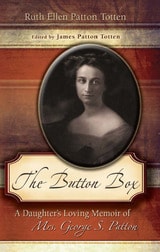
The Button Box
A Daughter's Loving Memoir of Mrs. George S. PattonRuth Ellen Patton Totten, Edited by James Patton Totten, Foreward by Carlo W. D'Este
University of Missouri Press, 2005
"There was never a moment in our lives that we were not reminded that our father was the finest, bravest, most gallant, and best-looking man who ever lived and that he was destined for unimaginable glory. This we took for granted. Being our father’s children was a special influence in all our lives, but the greatest, most pervasive, and most interesting influence in my life was Ma."
The Button Box is the loving memoir of Beatrice Ayer Patton (1886–1953), the wife of one of the greatest military figures in history, General George S. Patton, Jr. Written by the Pattons’ daughter, Ruth Ellen, the book covers Beatrice’s life from her youth in a wealthy New England family until her death, with an emphasis on her years of marriage to George Patton. A supportive and loving wife, Beatrice was accomplished in her own right as an equestrian, musician, lecturer, sailor, and internationally published author. Courageous and adventurous, Beatrice played a significant role in her husband’s life. Without her, General Patton might never have reached his own level of success.
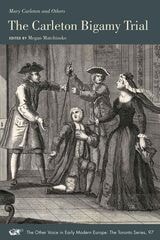
The Carleton Bigamy Trial
Mary Carleton
Iter Press, 2023
Mary Carleton was an ordinary woman from Canterbury who entered historical records when she was accused of bigamy. The seven pamphlets in this edition focus on the bigamy trial of Mary Carleton, in which the accused eloquently defends herself and is ultimately acquitted. Written in the early years of the English Restoration, they demonstrate that narratives presenting what “she said” and what “he said” can reveal, forcefully and painfully, how truth can be fragmented in the different arenas of law, love, and politics. Through their disparate accounts of a marriage gone wrong, these pamphlets reinforce the social status quo even while they radically shatter the very foundations that give it heft. In asking readers to question absolutes, they unmask the precarious relationship between words and the world.
The Changing Face of Representation
The Gender of U.S. Senators and Constituent CommunicationsKim L. Fridkin and Patrick J. Kenney
University of Michigan Press, 2015
As the number of women in the U.S. Senate grows, so does the number of citizens represented by women senators. At the same time, gender remains a key factor in senators’ communications to constituents as well as in news media portrayals of senators. Focusing on 32 male and female senators during the 2006 congressional election year, Kim L. Fridkin and Patrick J. Kenney examine in detail senators’ official websites, several thousand press releases and local news stories, and surveys of 18,000 citizens to discern constituents’ attitudes about their senators.
The authors conclude that gender role expectations and stereotypes do indeed constrain representational and campaign messages and influence news coverage of both candidates and elected senators. Further, while citizens appear to be less influenced by entrenched stereotypes, they pay more attention to female senators’ messages and become more knowledgeable about them, in comparison to male senators.
The Choctaw Civil War
Women, Justice, and Sovereignty in the Native SouthMatthew J. Sparacio
University of Alabama Press, 2026
Reexamines the contested geopolitical landscape of the lower Mississippi River Valley in 1740s, centering Choctaw perspectives
Matthew J. Sparacio’s comprehensive history, The Choctaw Civil War: Women, Justice, and Sovereignty in the Native South, delivers a rich portrait of eighteenth-century Choctaw life and recasts the Native South as a region shaped by Choctaw decisions.
In the 1730s and 1740s, the Choctaw Nation leveraged competing European imperial agendas while establishing reciprocal diplomatic ties with other tribes, including their neighboring “brothers,” the Chickasaws. Choctaws drew strength from their multifaceted understanding of sovereignty: connections to land, contributions to society through work, generosity, respect, kinship obligations, and justice. A series of attacks on Choctaw women, however, tested the limits of justice and obligation within and between Choctaw communities. Mounting pressures from both Louisiana and South Carolina added to this factionalism, ultimately leading to civil war.
Relying on Chahta anumpa (“Choctaw language”) training and tribal histories, gender theory, and ethnohistorical methods, Sparacio highlights women’s contributions to Choctaw society and governance. Intense eighteenth-century debates over justice, kinship, and responsibility created several Choctaw movements for justice that still inspire efforts in Oklahoma and Mississippi to end the Missing and Murdered Indigenous Persons’ crisis. Tribal and bodily sovereignty shaped the Native South and will shape its future.
The Choctaw Civil War is a major reinterpretation of Choctaw history and the colonial South. This will be a must-read for historians, scholars of the Native South, and anyone interested in sovereignty movements today.
The Cinema of Barbara Stanwyck
Twenty-Six Short Essays on a Working StarCatherine Russell
University of Illinois Press, 2023
Original and rich, The Cinema of Barbara Stanwyck is an essential and entertaining reexamination of an enduring Hollywood star.
The Cinema of Naruse Mikio
Women and Japanese ModernityCatherine Russell
Duke University Press, 2008
Naruse was a studio-based director, a company man renowned for bringing films in on budget and on time. During his long career, he directed movies in different styles of melodrama while displaying a remarkable continuity of tone. His films were based on a variety of Japanese literary sources and original scripts; almost all of them were set in contemporary Japan. Many were “women’s films.” They had female protagonists, and they depicted women’s passions, disappointments, routines, and living conditions. While neither Naruse or his audiences identified themselves as “feminist,” his films repeatedly foreground, if not challenge, the rigid gender norms of Japanese society. Given the complex historical and critical issues surrounding Naruse’s cinema, a comprehensive study of the director demands an innovative and interdisciplinary approach. Russell draws on the critical reception of Naruse in Japan in addition to the cultural theories of Harry Harootunian, Miriam Hansen, and Walter Benjamin. She shows that Naruse’s movies were key texts of Japanese modernity, both in the ways that they portrayed the changing roles of Japanese women in the public sphere and in their depiction of an urban, industrialized, mass-media-saturated society.
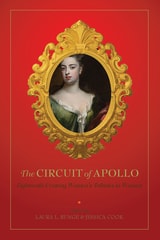
The Circuit of Apollo
Eighteenth-Century Women’s Tributes to WomenLaura Runge
University of Delaware Press, 2019
Published by University of Delaware Press. Distributed worldwide by Rutgers University Press.
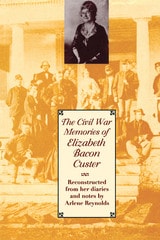
The Civil War Memories of Elizabeth Bacon Custer
Reconstructed From Her Diaries and NotesBy Elizabeth Bacon Custer
University of Texas Press, 1994
In her first year of marriage (1864-1865) to General George Armstrong Custer, Libbie Custer witnessed the Civil War firsthand. Her experiences of danger, hardship, and excitement made ideal material for a book, one that she worked on for years in later life but ultimately never published.
In this volume, Arlene Reynolds has produced a readable narrative of Libbie Custer's life during the war years by chronologically reconstructing Libbie's original, unpublished notes and diaries found in the archives of the Little Big Horn Battlefield National Monument. In these reminiscences, Libbie Custer adds striking, eloquent details to the Civil War story as she describes her life both in camp and in Washington. Her stories of incidents such as fording a swollen river sidesaddle on horseback, dancing at the Inaugural Ball near President Lincoln, and watching the massive review of the Army of the Potomac after the surrender have the engrossing quality of a well-written novel.
For general readers and students of women's history, this book tells a fascinating story of a sheltered girl's maturation into a courageous woman in the crucible of war. And for both devotees and detractors of her husband, it offers an intimate glimpse into his youth, West Point years, and early military service.
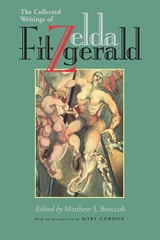
The Collected Writings of Zelda Fitzgerald
Zelda Fitzgerald
University of Alabama Press, 1997
The voice behind the legend—Zelda Fitzgerald in her own words.
Zelda Sayre Fitzgerald has long been perceived as the tragic "other half" of the Scott and Zelda legend. Born in Montgomery, Alabama, the high-spirited tomboy turned flapper was talented in dance, painting, and writing but lived in the shadow of her husband's success. Her writing can be experienced on its own terms in Matthew Bruccoli's meticulously edited The Collected Writings of Zelda Fitzgerald.
The collection includes Zelda's only published novel, Save Me the Waltz, an autobiographical account of the Fitzgeralds' adventures in Paris and on the Riviera; her celebrated farce, Scandalabra; eleven short stories; twelve articles; and a selection of letters to her husband, written over the span of their marriage, that reveals the couple's loving and turbulent relationship.
Zelda Sayre Fitzgerald has long been an American cultural icon. The Collected Writings affirms her place as a writer and as a symbol not only of the Lost Generation but of all generations as she struggled to define herself through her art.
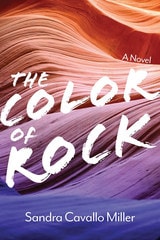
The Color of Rock
A NovelSandra Cavallo Miller
University of Nevada Press, 2019
A young physician, Dr. Abby Wilmore, attempts to escape her past by starting over at the Grand Canyon Clinic. Silently battling her own health issues, Abby struggles with adjusting to the demands of this unique rural location. She encounters everything from squirrel bites to suicides to an office plagued by strong personalities. While tending to unprepared tourists, underserved locals, and her own mental trials, Abby finds herself entangled in an unexpected romance and trapped amidst a danger even more treacherous than the foreboding desert landscape.
Sandra Cavallo Miller’s debut novel transports readers to the beautiful depths of Arizona and weaves an adventurous and heartwarming tale of the courage and strength it takes to overcome personal demons and to find love.
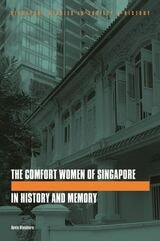
The Comfort Women of Singapore in History and Memory
Kevin Blackburn
National University of Singapore Press, 2022
A balanced, sensitive study of the history of comfort women in Singapore during World War II.
“Comfort women” or ianfu is the euphemism used by the Japanese military for the women they compelled to do sex work in the Second World War, and has become the term generally used in English to discuss the subject. The role of comfort women in the Japanese empire during World War II remains an important and emotional topic around the world. Most scholarship concentrates on Korean comfort women, with less on their counterparts in Japan, China, and Taiwan, and even less on Southeast Asia. That gap persists despite widespread knowledge of the elaborate series of comfort stations, or comfort houses, that were organized by the Japanese administration across Singapore during the Occupation from 1942 to 1945. So why, the author asks, did no former comfort women from Singapore come forward and tell their stories when others across Asia began to do publicly in the 1990s?
To understand this silence, this book offers a detailed examination of the sex industry serving the Japanese military during the wartime occupation of Singapore: the comfort stations, managers, procuresses, girls, and women who either volunteered or were forced into service and in many cases sexual slavery. Kevin Blackburn then turns from history to the public presence of the comfort women in Singapore’s memory, including newspapers, novels, plays, television, and touristic heritage sites, showing how comfort women became known in Singapore during the 1990s and 2000s. Bringing great care, balance, and sensitivity to a difficult subject, Blackburn helps to fill an important gap in our understanding of this period.
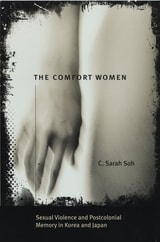
The Comfort Women
Sexual Violence and Postcolonial Memory in Korea and JapanC. Sarah Soh
University of Chicago Press, 2008
A powerful debunking of simplistic views of a wartime tragedy
In an era marked by atrocities perpetrated on a grand scale, the tragedy of the so-called comfort women—mostly Korean women forced into prostitution by the Japanese army—endures as one of the darkest events of World War II. These women have usually been labeled victims of a war crime, a simplistic view that makes it easy to pin blame on the policies of imperial Japan and therefore easier to consign the episode to a war-torn past. In this revelatory study, C. Sarah Soh provocatively disputes this master narrative.
Soh reveals that the forces of Japanese colonialism and Korean patriarchy together shaped the fate of Korean comfort women—a double bind made strikingly apparent in the cases of women cast into sexual slavery after fleeing abuse at home. Other victims were press-ganged into prostitution, sometimes with the help of Korean procurers. Drawing on historical research and interviews with survivors, Soh tells the stories of these women from girlhood through their subjugation and beyond to their efforts to overcome the traumas of their past. Finally, Soh examines the array of factors— from South Korean nationalist politics to the aims of the international women’s human rights movement—that have contributed to the incomplete view of the tragedy that still dominates today.
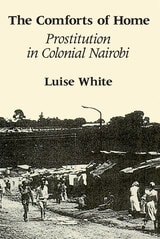
The Comforts of Home
Prostitution in Colonial NairobiLuise White
University of Chicago Press, 1990
"White's book . . . takes a unique approach to a largely unexplored aspect of African History. It enhances our understanding of African social history, political economy, and gender studies. It is a book that deserves to be widely read."—Elizabeth Schmidt, American Historical Review
The Complementarity of Women and Men
Philosophy, Theology, Psychology, and ArtPaul C. Vitz
Catholic University of America Press, 2021
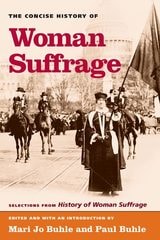
The Concise History of Woman Suffrage
Selections from History of Woman Suffrage, by Elizabeth Cady Stanton, Susan B. Anthony, Matilda Joslyn Gage, and the National American Woman Suffrage AssociationEdited and with an Introduction by Mari Jo Buhle and Paul Buhle
University of Illinois Press, 2005
In their Concise History of Woman Suffrage, Mari Jo Buhle and Paul Buhle have revitalized this classic text by carefully selecting from among its best material. The eighty-two chosen documents, now including interpretative introductory material by the editors, give researchers easy access to material that the original work's arrangement often caused readers to ignore or to overlook.
The volume contains the work of many reform agitators, among them Angelina Grimké, Lucy Stone, Carrie Chapman Catt, Charlotte Perkins Gilman, Anna Howard Shaw, Jane Addams, Sojourner Truth, and Victoria Woodhull, as well as Elizabeth Cady Stanton, Susan B. Anthony, Matilda Joslyn Gage, and Ida Husted Harper.
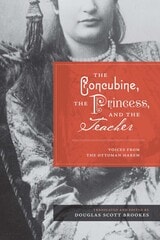
The Concubine, the Princess, and the Teacher
Voices from the Ottoman HaremTranslated and edited by Douglas Scott Brookes
University of Texas Press, 2008
In the Western imagination, the Middle Eastern harem was a place of sex, debauchery, slavery, miscegenation, power, riches, and sheer abandon. But for the women and children who actually inhabited this realm of the imperial palace, the reality was vastly different. In this collection of translated memoirs, three women who lived in the Ottoman imperial harem in Istanbul between 1876 and 1924 offer a fascinating glimpse "behind the veil" into the lives of Muslim palace women of the late nineteenth and early twentieth centuries.
The memoirists are Filizten, concubine to Sultan Murad V; Princess Ayse, daughter of Sultan Abdulhamid II; and Safiye, a schoolteacher who instructed the grandchildren and harem ladies of Sultan Mehmed V. Their recollections of the Ottoman harem reveal the rigid protocol and hierarchy that governed the lives of the imperial family and concubines, as well as the hundreds of slave women and black eunuchs in service to them. The memoirists show that, far from being a place of debauchery, the harem was a family home in which polite and refined behavior prevailed. Douglas Brookes explains the social structure of the nineteenth-century Ottoman palace harem in his introduction.
These three memoirs, written across a half century and by women of differing social classes, offer a fuller and richer portrait of the Ottoman imperial harem than has ever before been available in English.
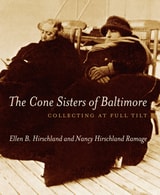
The Cone Sisters of Baltimore
Collecting at Full TiltEllen B. Hirschland
Northwestern University Press, 2008
This richly illustrated biography documents their lives from a unique perspective: that of their great-niece, who wrote this book with her daughter. Ellen B. Hirschland and Nancy Hirschland Ramage delve into Claribel’s and Etta’s world, following the sisters through letters and personal stories as they travel to meet some of the artists whose works would turn their adjoining apartments into a gallery. They bought art by Manet, Gauguin, and Cézanne, as well as of Picasso and Matisse, whom they came to know well. The sisters’ experiences in Paris from 1901 through the 1920s provide an exceptional view of the bright artistic ferment in the city at that time. They were two Victorian women from Baltimore buying avant-garde masterpieces, attending salons with friends Gertrude and Leo Stein, and building a collection that would initially enrage the conservative people around them. Only with time would their keen eyes and unwavering taste prove them right.
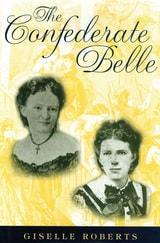
The Confederate Belle
Giselle Roberts
University of Missouri Press, 2003
The Contest for Knowledge
Debates over Women's Learning in Eighteenth-Century ItalyMaria Gaetana Agnesi, Diamante Medaglia Faini, Aretafila Savini de' Rossi, and the Accademia de' Ricovrati
University of Chicago Press, 2005
The Contest for Knowledge reveals how these four women used the methods and themes of their male counterparts to add their voices to the vigorous and prolific debate over the education of women during the eighteenth century. In the texts gathered here, the women discuss the issues they themselves thought most urgent for the equality of women in Italian society specifically and in European culture more broadly. Their thoughts on this important subject reveal how crucial the eighteenth century was in the long history of debates about women in the academy.
The Cost of Being a Girl
Working Teens and the Origins of the Gender Wage GapYasemin Besen-Cassino
Temple University Press, 2017
The gender wage gap is one of the most persistent problems of labor markets and women’s lives.
Most approaches to explaining the gap focus on adult employment despite the fact that many Americans begin working well before their education is completed. In her critical and compelling new book, The Cost of Being a Girl, Yasemin Besen-Cassino examines the origins of the gender wage gap by looking at the teenage labor force, where comparisons between boys and girls ought to show no difference, but do.
Besen-Cassino’s findings are disturbing. Because of discrimination in the market, most teenage girls who start part-time work as babysitters and in other freelance jobs fail to make the same wages as teenage boys who move into employee-type jobs. The “cost” of being a girl is also psychological; when teenage girls work retail jobs in the apparel industry, they have lower wages and body image issues in the long run.
Through in-depth interviews and surveys with workers and employees, The Cost of Being a Girl puts this alarming social problem—which extends to race and class inequality—in to bold relief. Besen-Cassino emphasizes that early inequalities in the workplace ultimately translate into greater inequalities in the overall labor force.

The Country of the Pointed Firs and Other Stories
Sarah Orne Jewett
University of New Hampshire Press, 1997
The Country of the Pointed Firs (1896) is Sarah Orne Jewett's most popular book. In its elegantly constructed sketches, a worldly, anonymous writer spends the summer in a tiny Maine fishing village where she hopes to find peace and solitude. As she gains the acceptance and trust of her hosts, the community's power and complexity are slowly revealed. While its episodes portray the difficulty and loneliness of rural life, they also display its dignity and strength, particularly as expressed in the bonds between women: mothers, daughters, and friends.
This centennial edition contains a facsimile of the original text, thereby restoring the novel to Jewett's own version, which had been considerably altered in other published versions, plus four related stories. Further enhancing the importance of this volume is editor Sarah Way Sherman's introduction, which includes a sketch of Jewett's life and professional development, a commentary on textual accuracy, and a discussion of the book's themes and techniques as well as its historical context.
The Courtship of Eva Eldridge
A Story of Bigamy in the Marriage Mad FiftiesDiane Simmons
University of Iowa Press, 2016
Everyone got married in the 1950s, then moved to the suburbs to have the children of the soon-to-be-famous baby boom. For Americans who had survived the Great Depression and World War II, prosperous married life was a triumph. The unwed were objects of pity, scorn, even suspicion. And so in the 1950s, Eva Eldridge, no longer so young and marginally employed, was the perfect target for handsome Vick, who promised everything: storybook romance, marital respectability, and the lively social life she loved. When he disappeared not long after their honeymoon, she was devastated.
Eva hadn’t always been so vulnerable. Growing up pretty and popular in rural Oregon, she expected to marry young and live a life much like that of her parents, farming and rearing children. But then the United States threw its weight into World War II and as men headed to battle, the government started recruiting women to work in their places. Eva, like many other young women, found that life in the city with plenty of money, personal freedom, and lots of soldiers and sailors eager to pay court was more exhilarating than life down on the farm. After the war, she was ambivalent about getting married and settling down—at least until Vick arrived.
Refusing to believe her brand-new husband had abandoned her, Eva set about tracking down a man who, she now believed, was more damaged by wartime trauma than she had known. But instead of a wounded hero, she found a long string of women much like herself—hard-working, intelligent women who had loved and married Vick and now had no idea where—or even who—he was.
Drawing on a trove of some eight hundred letters and papers, Diane Simmons tells the story of Eva’s poignant struggle to get her dream husband back, as well as the stories of the women who had stood at the altar with Vick before and after her. Eva’s remarkable life illuminates women’s struggle for happiness at a time when marriage—and the perfect husband—meant everything.
The Crimes of Womanhood
Defining Femininity in a Court of LawA. Cheree Carlson
University of Illinois Press, 2014
Carlson analyzes the situations of several women of varying historical stature, from the insanity trials of Mary Todd Lincoln and Lizzie Borden's trial for the brutal slaying of her father and stepmother, to lesser-known trials involving insanity, infidelity, murder, abortion, and interracial marriage. The insanity trial of Elizabeth Parsons Ware Packard, the wife of a minister, resulted from her attempts to change her own religion, while a jury acquitted Mary Harris for killing her married lover, suggesting that loss of virginity to an adulterous man was justifiable grounds for homicide. The popular conception of abortion as a "woman's crime" came to the fore in the case of Ann Loman (also known as Madame Restell), who performed abortions in New York both before and after it became a crime. Finally, Alice Rhinelander was sued for fraud by her new husband Leonard for "passing" as white, but the jury was more moved by the notion of Alice being betrayed as a woman by her litigious husband than by the supposed defrauding of Leonard as a white male. Alice won the case, but the image of womanhood as in need of sympathy and protection won out as well.
At the heart of these cases, Carlson reveals clearly just how narrow was the line that women had to walk, since the same womanly virtues that were expected of them--passivity, frailty, and purity--could be turned against them at any time. These trials of popular status are especially significant because they reflect the attitudes of the broad audience, indicate which forms of knowledge are easily manipulated, and allow us to analyze how the verdict is argued outside the courtroom in the public and press. With gripping retellings and incisive analysis of these scandalous criminal and civil cases, this book will appeal to historians, rhetoricians, feminist researchers, and anyone who enjoys courtroom drama.
The Crossroads of Class and Gender
Industrial Homework, Subcontracting, and Household Dynamics in Mexico CityLourdes Benería and Martha Roldán
University of Chicago Press, 1987
The Crux
Charlotte Perkins Gilman
Duke University Press, 2003
Dana Seitler’s introduction provides historical context, revealing The Crux as an allegory for social and political anxieties—including the rampant insecurities over contagion and disease—in the United States at the beginning of the twentieth century. Seitler highlights the importance of The Crux to understandings of Gilman’s body of work specifically and early feminism more generally. She shows how the novel complicates critical history by illustrating the biological argument undergirding Gilman’s feminism. Indeed, The Crux demonstrates how popular conceptions of eugenic science were attractive to feminist authors and intellectuals because they suggested that ideologies of national progress and U.S. expansionism depended as much on women and motherhood as on masculine contest.
The Culture of Sensibility
Sex and Society in Eighteenth-Century BritainG. J. Barker-Benfield
University of Chicago Press, 1992
The Cunning of Gender Violence
Geopolitics and FeminismLila Abu-Lughod, Rema Hammami, and Nadera Shalhoub-Kevorkian, editors
Duke University Press, 2023
Contributors. Lila Abu-Lughod, Nina Berman, Inderpal Grewal, Rema Hammami, Janet R. Jakobsen, Shenila Khoja-Moolji, Vasuki Nesiah, Samira Shackle, Sima Shakhsari, Nadera Shalhoub-Kevorkian, Dina M Siddiqi, Shahla Talebi, Leti Volpp, Rafia Zakaria
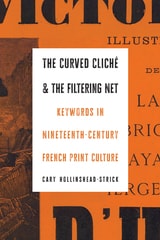
The Curved Cliché and the Filtering Net
Keywords in Nineteenth-Century French Print CultureCary Hollinshead-Strick
Northwestern University Press, 2027
Tracing multivalent words of nineteenth-century French print culture
The production of printed text changed radically over the course of the nineteenth century: Everything from the material used to make paper to the gender of the people assembling books shifted. Examining ten key terms as they took on new meanings in the world of print, Cary Hollinshead-Strick shows how the words, borrowed to name technical transformations, reveal the social expectations surrounding the birth of industrial print culture. Through these homonyms she connects papermaking to both Renaissance ceramics and fin-de-siècle japonisme, reveals the politics behind typos and the reasons women went to work in Parisian suburbs, shows how newspaper formats mapped onto rural and urban forms of entertainment and food, and explores the fantasy that information itself could be gathered and distributed in reliable, comprehensive ways.
By lingering over the resonances set in motion when ordinary words like canard and filet became terms for modern media formats, this book situates communication practices in the social, economic, and political environments that gave rise to them. This innovative approach not only elucidates nineteenth-century French print culture’s influence on the literature of the period but also invites us to consider the relationships between contemporary forms of information, media, labor, and language.
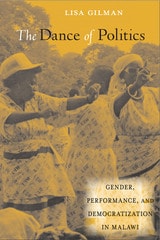
The Dance of Politics
Gender, Performance, and Democratization in MalawiLisa Gilman
Temple University Press, 2011
Election campaigns, political events, and national celebration days in Malawi usually feature groups of women who dance and perform songs of praise for politicians and political parties. These lively performances help to attract and energize throngs of prospective voters. However, as Lisa Gilman explains, “praise performing” is one of the only ways that women are allowed to participate in a male-dominated political system.
Although political performances by women are not unique to Malawi, the case in Malawi is complicated by the fact that until 1994 all Malawianwomen were required to perform on behalf of the long-reigning political party and its self-declared “President for Life,” Dr. Hastings Kamuzu Banda+. This is the first book to examine the present-day situation, where issues of gender, economics and politics collide in surprising ways. Along with its solid grounding in the relevant literature, The Dance of Politics draws strength from Gilman’s first-hand observations and her interviews with a range of participants in the political process, from dancers to politicians.
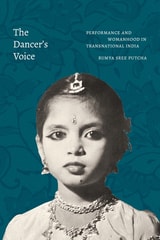
The Dancer's Voice
Performance and Womanhood in Transnational IndiaRumya Sree Putcha
Duke University Press, 2023
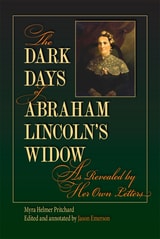
The Dark Days of Abraham Lincoln's Widow, as Revealed by Her Own Letters
Myra Helmer Pritchard, edited and annotated by Jason Emerson
Southern Illinois University Press, 2011
Written in 1927 but barred from timely publication by the Lincoln family, The Dark Days of Abraham Lincoln's Widow, as Revealed by Her Own Letters is based on nearly two dozen intimate letters written between Mary Lincoln and her close friend Myra Bradwell mainly during the former's 1875 incarceration in an insane asylum. By the 1920s most accounts of Mrs. Lincoln focused on her negative qualities and dismissed her as "crazy." Bradwell's granddaughter Myra Helmer Pritchard wrote this distinctly sympathetic manuscript at the behest of her mother, who wished to vindicate Mary Lincoln in the public eye by printing the private correspondence. Pritchard fervently defends Mrs. Lincoln's conduct and sanity, arguing that she was not insane but rather the victim of an overzealous son who had his mother committed.
The manuscript and letters were thought to have been destroyed, but fortunately the Lincolns' family lawyer stored copies in a trunk, where historian Jason Emerson discovered them in 2005. While leaving the manuscript intact, Emerson has enhanced it with an introduction and detailed annotations. He fills in factual gaps; provides background on names, places, and dates; and analyzes Pritchard's interpretations, making clear where she was right and where her passion to protect Mrs. Lincoln led to less than meticulous research and incorrect conclusions. This volume features an easy-to-follow format that showcases Pritchard's text on the left-hand pages and Emerson's insightful annotations on the right-hand pages.
Following one of the most revered and reviled, famous and infamous of the First Ladies, this book provides a unique perspective of Mrs. Lincoln's post-White House years, with an emphasis on her commitment to a sanitarium. Emerson's contributions make this volume a valuable addition to the study of the Lincoln family. This fascinating work gives today's Lincoln enthusiasts the chance to read this intriguing interpretation of the former First Lady that predates nearly every other book written about her.
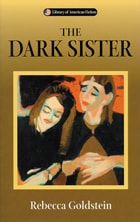
The Dark Sister
Rebecca Goldstein
University of Wisconsin Press, 2004
If you like the fiction of Henry James, the psychology of his brother William, and have a taste for Gothic mysteries you will enjoy The Dark Sister. The novel is a curious mixture of the Victorian repressiveness about sex, intricate stories within stories, and Jewish humor.
With a new afterword
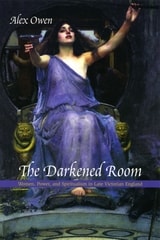
The Darkened Room
Women, Power, and Spiritualism in Late Victorian EnglandAlex Owen
University of Chicago Press, 2004
The hugely popular spiritualist movement, which maintained that women were uniquely qualified to commune with spirits of the dead, offered female mediums a new independence, authority, and potential to undermine conventional class and gender relations in the home and in society.
Using previously unexamined sources and an innovative approach, Alex Owen invokes the Victorian world of darkened séance rooms, theatrical apparitions, and moving episodes of happiness lost and regained. She charts the struggles between spiritualists and the medical and legal establishments over the issue of female mediumship, and provides new insights into the gendered dynamics of Victorian society.

The Diaries of Carol Lynn Pearson—Mormon Author, Feminist, and Activist
Volume 1: 1956–1990Pearson, Carol Lynn
Signature Books, 2025
“I feel somehow that of all the writing I am doing, my diary is the most important.” So wrote the beloved and bestselling author, poet, and playwright Carol Lynn Pearson in her 1979 diary. Several years before, she recorded, “I feel the imperative of history. . . . Add that to my being a household word to many and I cannot escape the feeling that in many years there might be a number of people interested in these pages.” That time has now come.
Unbeknownst to almost everyone but herself, Pearson kept a near-daily diary since she was a teenager, recording her remarkable story in the context of twentieth- and twenty-first-century Mormon America. In this first of a four-volume series, Pearson chronicles her love for her church but also her troubling experiences and concerns with its patriarchy, historic doctrine of polygamy, omission of a feminine divine, and homophobia. Readers will rejoice with her as her first book of poetry, Beginnings, sells an astonishing 150,000+ copies and puts her on the map in the 1960s, empathize with her as she watches her church help kill the Equal Rights Amendment in the 1970s, and mourn with her as her mixed-orientation marriage ends and she cares for her former husband in her home as he dies of AIDS in the 1980s. The sensitive-girl-turned-strong-woman who emerges in these diaries insists that we move from patriarchy into partnership, change our destructive policies towards Queer people, and invite God the Mother back into our heavenly family.

The Diaries of Carol Lynn Pearson—Mormon Author, Feminist, and Activist
Volume 2: 1990–2002Pearson, Carol Lynn
Signature Books, 2026
Of these years of her life, poet, writer, and feminist Carol Lynn Pearson says, “The plot thickens, as all good plots do. My life and your life—if we are brave enough—move into areas that we had not anticipated. We feel sometimes that we want to run back to safer ground, but life has decided otherwise and so we take those next steps. Volume two of my diaries gives us a closeup of the years 1990 to 2002, bringing us an abundance of both joy and distress.”
Throughout the 1990s, Pearson records and laments her church’s efforts to punish scholars and activists while celebrating the success of her books and one-woman play, Mother Wove the Morning. Along the way, she comforts the suffering, endures terrible personal loss, and witnesses the fall of the Twin Towers on 9/11. “Bless everyone who fights for what is right,” she writes. Few have fought harder than Carol Lynn Pearson.
The Diaries of Carol Lynn Pearson—Mormon Author, Feminist, and Activist
Volume 3: 2003–2014Pearson, Carol Lynn
Signature Books, 2026
Proposition 8, the 2008 California ballot initiative that overturned the state’s legalization of same-sex marriage, looms large in volume 3 of Carol Lynn Pearson’s diaries. The intense lobbying in favor of the measure by the Church of Jesus Christ of Latter-day Saints caused widespread protests against the church and rifts within congregations, families, and friendships that felt like they might never heal. Pearson documented it all.
When she learned through friends close to church leaders that members of the First Presidency and Quorum of Twelve Apostles were shocked by the backlash, she wondered, “How do 15 prophets, seers, and revelators not see this coming when the rest of us did?”
A lifelong feminist, Pearson’s diaries also reveal her concerns for gender equality. She chronicles her observations of Ordain Women, a movement by a group of Latter-day Saint feminists who lobbied to change the church’s all-male priesthood. At the end of this volume, Pearson takes on yet another issue: the ongoing Mormon doctrine that polygamy is practiced in the eternities. Pearson heard from thousands of women who feared that they would be forced to share their husbands in the afterlife. The pain of these women propelled her forward into her next book project, challenging the doctrine of “eternal polygamy.”
Even as she faced her own struggles, Pearson buoyed up those around her. She took phone calls, answered letters, and comforted visitors who were hurting because of the church’s policies. She was, for many, a symbol of hope.
The Diaries of Carol Lynn Pearson—Mormon Author, Feminist, and Activist
Volume 4: 2014–2024Pearson, Carol Lynn
Signature Books, 2026
This fourth and final volume of The Diaries of Carol Lynn Pearson is full of contradictions as it covers turbulent world events and intimate details in her life. Pearson remains a beacon of light and hope for many, even as she struggles with her own sorrows.
She embarks on a new project that consumes her: the Latter-day Saint doctrine that polygamy will exist in the afterlife. Pearson also continues to document contemporaneous events in the modern history of the Church of Jesus Christ of Latter-day Saints, including the church’s November 2015 policy that discriminated against LGBTQ+ members and their children. She has both a grassroots perspective as a member of a California congregation and special insight into the decisions of LDS leadership, thanks to friends who keep her informed of what’s happening at the highest levels of the church.
Through it all, Pearson mourns when she says goodbye to longtime friends who die. In July 2026, after she completed her diary project, death finally came for Carol Lynn Pearson after 86 years. Her unique voice cannot be replicated.
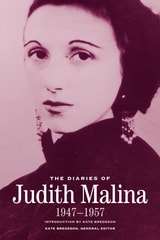
The Diaries of Judith Malina
1947-1957Judith Malina, Kate Bredeson
Northwestern University Press, 2026
Judith Malina’s newly restored diaries from a critical early decade in her personal, artistic, and political development
Judith Malina’s diaries from 1947 to 1957 are brought back into print in this volume, which charts her cofounding of The Living Theatre with husband and lifelong artistic partner Julian Beck. In these diaries, she narrates her developing political commitments and her expansive collaborations and personal relationships, as well as a moving account of her time in prison with activist Dorothy Day. This new edition features Kate Bredeson’s comprehensive introduction, which offers a detailed examination of Malina’s life and work in this period, along with additional historical context of these years and never-before-published photographs from Malina’s personal archives.
The Diaries of Judith Malina is a four-volume set that publishes for the first time together the edited diaries of radical theater director, actor, and activist Judith Malina from 1947 to 1971, the most influential period of her remarkable and storied career. A committed anarchist and pacifist, Malina made theater as a way to stoke revolutionary action. Her diaries showcase her political and social observations, cultural commentary, self-reflection, and wit. This expertly prepared set invites us to recognize Malina for her accomplishments not only as an artist and an activist but as one of the great literary diarists.
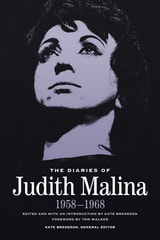
The Diaries of Judith Malina
1958-1968Judith Malina, Kate Bredeson, Tom Walker
Northwestern University Press, 2026
A previously unpublished volume of diaries recording Judith Malina’s extraordinary life and career in a moment of cultural revolution
Judith Malina’s diaries from the pivotal years of 1958 to 1968 are presented here in print for the first time. Meticulously edited and with an essential introduction by Kate Bredeson that offers a detailed discussion of Malina’s life and works during this period, the volume includes additional historical context and never-before-published photographs from Malina’s personal archives, as well as an illuminating foreword by Living Theatre archivist and longtime company member Tom Walker. This decade covers some of the most important years of Malina’s life and in the history of The Living Theatre, from career-defining productions of The Connection and The Brig to the company’s self-imposed European exile, when they created their signature works, including Paradise Now, Antigone, and Frankenstein.
The Diaries of Judith Malina is a four-volume set that publishes for the first time together the edited diaries of radical theater director, actor, and activist Judith Malina from 1947 to 1971, the most influential period of her remarkable and storied career. A committed anarchist and pacifist, Malina made theater as a way to engage in revolutionary action. Her diaries showcase her political and social observations, cultural commentary, self-reflection, and wit. This expertly prepared set invites us to recognize Malina for her accomplishments not only as an artist and an activist but as one of the great literary diarists.

The Diaries of Judith Malina
1968-1969Judith Malina, Kate Bredeson
Northwestern University Press, 2026
A newly restored edition of Judith Malina’s legendary diaries narrating a key moment of social, political, and cultural upheaval
Originally published by Judith Malina as The Enormous Despair, this slim, gripping collection of diaries from a pivotal period between 1968 and 1969 follows The Living Theatre’s return to the United States after their years of self-exile in Europe, their increasing notoriety and frequent arrests, and their cross-country touring. In these pages, Malina wrestles with the company’s artistic and political efforts during a moment of societal crisis and grapples with their future. Kate Bredeson’s introduction contextualizes Malina’s life and work in this period, while additional historical context and never-before-published photographs add new detail and depth to a stirring account of American social and political history.
The Diaries of Judith Malina is a four-volume set that publishes for the first time together the edited diaries of radical theater director, actor, and activist Judith Malina from 1947 to 1971, the most influential period of her remarkable and storied career. A committed anarchist and pacifist, Malina made theater as a way to engage in revolutionary action. Her diaries showcase her political and social observations, her cultural commentary, her self-reflection, and her wit. This expertly prepared set invites us to recognize Malina for her accomplishments not only as an artist and an activist but as one of the great literary diarists.
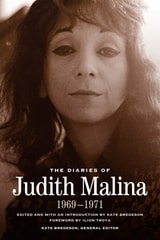
The Diaries of Judith Malina
1969-1971Judith Malina, Kate Bredeson, Ilion Troya
Northwestern University Press, 2026
Judith Malina’s never-before-published diaries describing a period of profound personal and professional transformation
The years 1969 to 1971 saw The Living Theatre’s greatest rupture, reckoning with its desire to leave its defining productions from the 1960s behind and move forward with new artistic works and practices. In these previously unpublished diaries, Judith Malina recounts these pivotal years, describing her transformative time in Brazil, including her experiences of daily life in jail while awaiting trial with her company members. This meticulously edited volume includes Kate Bredeson’s introduction, examining Malina’s life and work in this period, as well as additional historical context and never-before-published photographs. Living Theatre member Ilion Troya offers a foreword that provides new context for understanding the volume’s historical significance.
The Diaries of Judith Malina is a four-volume set that publishes for the first time together the edited diaries of radical theater director, actor, and activist Judith Malina from 1947 to 1971, the most influential period of her remarkable and storied career. A committed anarchist and pacifist, Malina made theater as a way to engage in revolutionary action. Her diaries showcase her political and social observations, cultural commentary, self-reflection, and wit. This expertly prepared set invites us to recognize Malina for her accomplishments not only as an artist and an activist but as one of the great literary diarists.
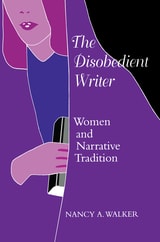
The Disobedient Writer
Women and Narrative TraditionBy Nancy A. Walker
University of Texas Press, 1995
For centuries, women who aspired to write had to enter a largely male literary tradition that offered few, if any, literary forms in which to express their perspectives on lived experience. Since the nineteenth century, however, women writers and readers have been producing "disobedient" counter-narratives that, while clearly making reference to the original texts, overturn their basic assumptions.
This book looks at both canonical and non-canonical works, over a variety of fiction and nonfiction genres, that offer counter-readings of familiar Western narratives. Nancy Walker begins by probing women's revisions of two narrative traditions pervasive in Western culture: the biblical story of Adam and Eve, and the traditional fairy tales that have served as paradigms of women's behavior and expectations. She goes on to examine the works of a wide range of writers, from contemporaries Marilynne Robinson, Ursula Le Guin, Anne Sexton, Fay Weldon, Angela Carter, and Margaret Atwood to precursors Caroline Kirkland, Fanny Fern, Mary De Morgan, Mary Louisa Molesworth, Edith Nesbit, and Evelyn Sharp.
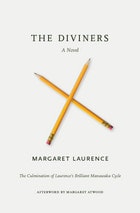
The Diviners
Margaret Laurence
University of Chicago Press, 1993
"Mrs. Laurence's [novel] is both poetic and muscular, and her heroine is certainly one of the more humane, unglorified, unpolemical, believable women to have appeared in recent fiction."—The New Yorker
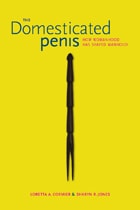
The Domesticated Penis
How Womanhood Has Shaped ManhoodLoretta A. Cormier
University of Alabama Press, 2015
The Domesticated Penis challenges long-held assumptions that, in the development of Homo sapiens, form follows function alone. In this fascinating exploration, Loretta A. Cormier and Sharyn R. Jones explain the critical contribution that conscious female selection has made to the attributes of the modern male phallus.
Synthesizing a wealth of robust scholarship from the fields of archaeology, cultural anthropology, evolutionary theory, and primatology, the authors successfully dismantle the orthodox view that each part of the human anatomy has followed a vector of development along which only changes and mutations that increased functional utility were retained and extended. Their research animates our understanding of human morphology with insights about how choices early females made shaped the male reproductive anatomy.
In crisp and droll prose, Cormier’s and Jones’s rigorous scholarship incorporates engaging examples and lore about the human phallus in a variety of foraging, agrarian, and contemporary cultures. By detailing how female selection in mating led directly to a matrix of anatomical attributes in the male, their findings illuminate how the penis also acquired a matrix of attributes of the imagination and mythical powers—powers to be assuaged, channeled, or deployed for building productive societies.
These analyses offer a highly persuasive alternative to moribund biological and behavioral assumptions about prehistoric alpha males as well as the distortions such assumptions give rise to in contemporary popular culture. In this anthropological tour de force, Cormier and Jones transcend reductive gender stereotypes and bring to our concepts of evolutional biomechanics an invigorating new balance and nuance.
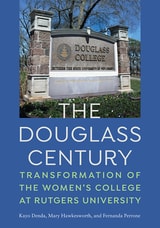
The Douglass Century
Transformation of the Women’s College at Rutgers UniversityDenda, Kayo
Rutgers University Press, 2018
The Douglass Century celebrates the college’s longevity and diversity as distinctive accomplishments, and analyzes the contributions of Douglass administrators, alumnae, and students to its survival, while also investigating multiple challenges that threatened its existence. This book demonstrates how changing historical circumstances altered the possibilities for women and the content of higher education, comparing the Jazz Age, American the Great Depression, the Second World War, the post-war Civil Rights era, and the resurgence of feminism in the 1970s and 1980s. Concluding in the present day, the authors highlight the college’s ongoing commitment to Mabel Smith Douglass’ founding vision, “to bring about an intellectual quickening, a cultural broadening in connection with specific training so that women may go out into the world fitted…for leadership…in the economic, political, and intellectual life of this nation.” In addition to providing a comprehensive history of the college, the book brings its subjects to life with eighty full-color images from the Special Collections and University Archives, Rutgers University Libraries.
The Early Middle Ages
Franca Ela Consolino
SBL Press, 2020
Examine the creative, profound dialogue between medieval women and biblical traditions
The latest volume in the Bible and Women series examines the relationship between women and the Bible’s reception during the early Middle Ages (500–1100 CE) in both the Greek East and the Latin West. Essays focus on interactions between women and the Bible through biblical precepts on women and for women, biblical women as the subjects of action or objects of discussion, and writings by women that refer to the Bible as a moral authority. The women discussed in the volume range from the well-known—including the nuns Kassia in Byzantium and Hrosvita in the West; the aristocrat Dhuoda, author of a moral guide for her son; Gisela, the sister of Charlemagne and abbess of Chelles; and her niece Rotrude—to those who remain anonymous. Contributions also explore how the Old and New Testaments exercised influence on emerging Islam.
Features:
- Analysis of images of the Virgin Mary as a means of tracing the spread of her cult and feast days from East to West
- Exploration of the significance of classical culture for medieval women who composed poems for a Christian audience
- Evaluation of art as a means of establishing devotional relationships not necessarily mediated by the voices of preachers or the reading of texts .
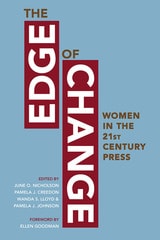
The Edge of Change
Women in the Twenty-First-Century PressEdited by June O. Nicholson, Pamela J. Creedon, Wanda S. Lloyd, and Pamela J. Jo: Foreword by Ellen Goodman
University of Illinois Press, 2008
Prominent female voices in journalism provide critical perspectives on the challenges women face in today's news organizations, such as connecting with diverse audiences, educating readers about international issues and cultures, maintaining credibility, negotiating media consolidation and corporate pressures, and overcoming the persistent barriers to professional advancement. A powerful and complex assessment of how women are transforming the news industry, The Edge of Change explores how the news industry might implement further reforms aimed at creating a more inclusive journalistic community.
Contributors are Catalina Camia, Kathleen Carroll, Pamela J. Creedon, Paula Lynn Ellis, Helen E. Fisher, Dorothy Butler Gilliam, Ellen Goodman, Sharon Grigsby, Carol Guzy, Kirsten Scharnberg Hampton, Cathy Henkel, Pamela J. Johnson, Jane Kirtley, Jan Leach, Caroline Little, Wanda S. Lloyd, Arlene Notoro Morgan, June O. Nicholson, Geneva Overholser, Marty Petty, Deb Price, Donna M. Reed, Sandra Mims Rowe, Peggy Simpson, Margaret Sullivan, Julia Wallace, and Keven Ann Willey.