Results by title
2194 books match the query 'Women's Studies' and 323 start with t
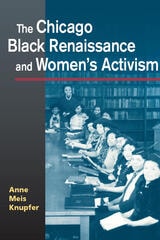
The Chicago Black Renaissance and Women's Activism
Anne Meis Knupfer
University of Illinois Press, 2006
The book examines various groups of black female activists, including writers and actresses, social workers, artists, school teachers, and women's club members to document the impact of social class, gender, nativity, educational attainment, and professional affiliations on their activism. Together, these women worked to sponsor black history and literature, to protest overcrowded schools, and to act as a force for improved South Side housing and employment opportunities. Knupfer also reveals the crucial role these women played in founding and sustaining black cultural institutions, such as the first African American art museum in the country; the first African American library in Chicago; and various African American literary journals and newspapers. As a point of contrast, Knupfer also examines the overlooked activism of working-class and poor women in the Ida B. Wells and Altgeld Gardens housing projects.
The Chicana Motherwork Anthology
Edited by Cecilia Caballero, Yvette Martínez-Vu, Judith Pérez-Torres, Michelle Téllez, Christine Vega; Foreword by Ana Castillo
University of Arizona Press, 2019
The volume is organized in four parts: (1) separation, migration, state violence, and detention; (2) Chicana/Latina/WOC mother-activists; (3) intergenerational mothering; and (4) loss, reproductive justice, and holistic pregnancy. Contributors offer a just framework for Chicana and Women of Color mother-scholars, activists, and allies to thrive within and outside of the academy. They describe a new interpretation of motherwork that addresses the layers of care work needed for collective resistance to structural oppression and inequality.
This anthology is a call to action for justice. Contributions are both theoretical and epistemological, and they offer an understanding of motherwork through Chicana and Women of Color experiences.
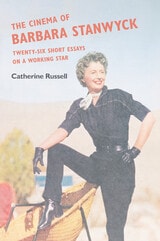
The Cinema of Barbara Stanwyck
Twenty-Six Short Essays on a Working StarCatherine Russell
University of Illinois Press, 2023
Original and rich, The Cinema of Barbara Stanwyck is an essential and entertaining reexamination of an enduring Hollywood star.
The Cinematic Life of the Gene
Jackie Stacey
Duke University Press, 2010
Stacey examines the body-horror movies Alien: Resurrection and Species in light of Jean Baudrillard’s apocalyptic proclamations about cloning and “the hell of the same,” and she considers the art-house thrillers Gattaca and Code 46 in relation to ideas about imitation, including feminist theories of masquerade, postcolonial conceptualizations of mimicry, and queer notions of impersonation. Turning to Teknolust and Genetic Admiration, independent films by feminist directors, she extends Walter Benjamin’s theory of aura to draw an analogy between the replication of biological information and the reproducibility of the art object. Stacey suggests new ways to think about those who are not what they appear to be, the problem of determining identity in a world of artificiality, and the loss of singularity amid unchecked replication.
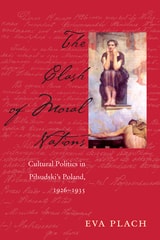
The Clash of Moral Nations
Cultural Politics in Pilsudski’s Poland, 1926–1935Eva Plach
Ohio University Press, 2006
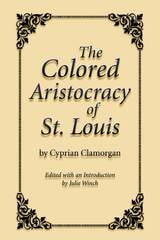
The Colored Aristocracy of St. Louis
Cyprian Clamorgan, Edited & Intro by Julie Winch
University of Missouri Press, 2018
In 1858, Cyprian Clamorgan wrote a brief but immensely readable book entitled The Colored Aristocracy of St. Louis. The grandson of a white voyageur and a mulatto woman, he was himself a member of the "colored aristocracy." In a setting where the vast majority of African Americans were slaves, and where those who were free generally lived in abject poverty, Clamorgan's "aristocrats" were exceptional people. Wealthy, educated, and articulate, these men and women occupied a "middle ground." Their material advantages removed them from the mass of African Americans, but their race barred them from membership in white society.
The Colored Aristocracy of St. Louis is both a serious analysis of the social and legal disabilities under which African Americans of all classes labored and a settling of old scores. Somewhat malicious, Clamorgan enjoyed pointing out the foibles of his friends and enemies, but his book had a serious message as well. "He endeavored to convince white Americans that race was not an absolute, that the black community was not a monolith, that class, education, and especially wealth, should count for something."
Despite its fascinating insights into antebellum St. Louis, Clamorgan's book has been virtually ignored since its initial publication. Using deeds, church records, court cases, and other primary sources, Winch reacquaints readers with this important book and establishes its place in the context of African American history. This annotated edition of The Colored Aristocracy of St. Louis includes an introductory essay on African Americans in St. Louis before the Civil War, as well as an account of the lives of the author and the members of his remarkable family—a family that was truly at the heart of the city's "colored aristocracy" for four generations.
A witty and perceptive commentary on race and class, The Colored Aristocracy of St. Louis is a remarkable story about a largely forgotten segment of nineteenth-century society. Scholars and general readers alike will appreciate Clamorgan's insights into one of antebellum America's most important communities.
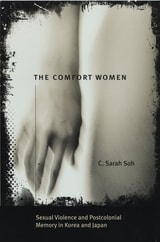
The Comfort Women
Sexual Violence and Postcolonial Memory in Korea and JapanC. Sarah Soh
University of Chicago Press, 2008
A powerful debunking of simplistic views of a wartime tragedy
In an era marked by atrocities perpetrated on a grand scale, the tragedy of the so-called comfort women—mostly Korean women forced into prostitution by the Japanese army—endures as one of the darkest events of World War II. These women have usually been labeled victims of a war crime, a simplistic view that makes it easy to pin blame on the policies of imperial Japan and therefore easier to consign the episode to a war-torn past. In this revelatory study, C. Sarah Soh provocatively disputes this master narrative.
Soh reveals that the forces of Japanese colonialism and Korean patriarchy together shaped the fate of Korean comfort women—a double bind made strikingly apparent in the cases of women cast into sexual slavery after fleeing abuse at home. Other victims were press-ganged into prostitution, sometimes with the help of Korean procurers. Drawing on historical research and interviews with survivors, Soh tells the stories of these women from girlhood through their subjugation and beyond to their efforts to overcome the traumas of their past. Finally, Soh examines the array of factors— from South Korean nationalist politics to the aims of the international women’s human rights movement—that have contributed to the incomplete view of the tragedy that still dominates today.
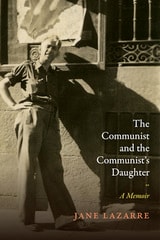
The Communist and the Communist's Daughter
A MemoirJane Lazarre
Duke University Press, 2017
Soon after immigrating to the United States as a young man, Lazarre began a long career as a radical activist, being convicted of sedition, holding leadership positions in the American Communist Party, fighting in the Spanish Civil War, organizing labor unions, testifying in front of the House Un-American Activities Committee, and resisting the FBI’s efforts to recruit him as an informant. Through periods of heroism and deep despair Lazarre never abandoned his ideals or his sustained faith in the fundamental goodness of people.
This is also the story of Jane as she grew up, married an African American civil rights activist, and became a mother and a writer while coming to terms with her father’s legacy. She recounts her arguments with her father over ideology, but also his profound influence on her life. Throughout this poignant and beautifully written work, Jane examines memory, grief, love, and conscience while detailing the sacrifices, humanity, and unwavering convictions of a man who worked tirelessly to create a brighter future for us all.
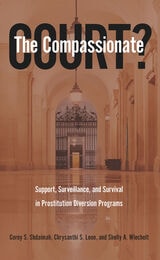
The Compassionate Court?
Support, Surveillance, and Survival in Prostitution Diversion ProgramsCorey S. Shdaimah, Chrysanthi S. Leon, and Shelly A. Wiechelt
Temple University Press, 2023
The authors of The Compassionate Court? provide case studies of such programs and draw upon interviews and observations conducted over a decade to reveal how participants and professionals perceive court-affiliated PDPs, clients, and staff. Considering the motivations, vision, and goals of these programs as well as their limitations—the inequity and disempowerment of their participants—the authors also present their own changing perspectives on prostitution courts, diversion programs, and criminalization of sex work.
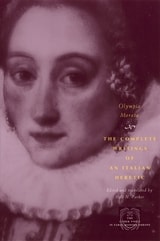
The Complete Writings of an Italian Heretic
Olympia Morata
University of Chicago Press, 2003
A brilliant scholar and one of the finest writers of her day, Olympia Morata (1526-1555) was attacked by some as a "Calvinist Amazon" but praised by others as an inspiration to all learned women. This book publishes, for the first time, all her known writings—orations, dialogues, letters, and poems—in an accessible English translation.
Raised in the court of Ferrara in Italy, Morata was educated alongside the daughters of the nobility. As a youth she gave public lectures on Cicero, wrote commentaries on Homer, and composed poems, dialogues, and orations in both Latin and Greek. She also became a prominent Protestant evangelical, studying the Bible extensively and corresponding with many of the leading theologians of the Reformation. After fleeing to Germany in search of religious freedom, Morata tutored students in Greek and composed what many at the time felt were her finest works—a series of translations of the Psalms into Greek hexameters and sapphics.
Feminists and historians will welcome these collected writings from one of the most important female humanists of the sixteenth century.
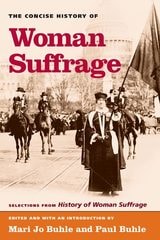
The Concise History of Woman Suffrage
Selections from History of Woman Suffrage, by Elizabeth Cady Stanton, Susan B. Anthony, Matilda Joslyn Gage, and the National American Woman Suffrage AssociationEdited and with an Introduction by Mari Jo Buhle and Paul Buhle
University of Illinois Press, 2005
In their Concise History of Woman Suffrage, Mari Jo Buhle and Paul Buhle have revitalized this classic text by carefully selecting from among its best material. The eighty-two chosen documents, now including interpretative introductory material by the editors, give researchers easy access to material that the original work's arrangement often caused readers to ignore or to overlook.
The volume contains the work of many reform agitators, among them Angelina Grimké, Lucy Stone, Carrie Chapman Catt, Charlotte Perkins Gilman, Anna Howard Shaw, Jane Addams, Sojourner Truth, and Victoria Woodhull, as well as Elizabeth Cady Stanton, Susan B. Anthony, Matilda Joslyn Gage, and Ida Husted Harper.
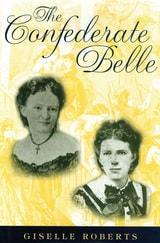
The Confederate Belle
Giselle Roberts
University of Missouri Press, 2003
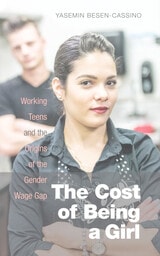
The Cost of Being a Girl
Working Teens and the Origins of the Gender Wage GapYasemin Besen-Cassino
Temple University Press, 2017
The gender wage gap is one of the most persistent problems of labor markets and women’s lives.
Most approaches to explaining the gap focus on adult employment despite the fact that many Americans begin working well before their education is completed. In her critical and compelling new book, The Cost of Being a Girl, Yasemin Besen-Cassino examines the origins of the gender wage gap by looking at the teenage labor force, where comparisons between boys and girls ought to show no difference, but do.
Besen-Cassino’s findings are disturbing. Because of discrimination in the market, most teenage girls who start part-time work as babysitters and in other freelance jobs fail to make the same wages as teenage boys who move into employee-type jobs. The “cost” of being a girl is also psychological; when teenage girls work retail jobs in the apparel industry, they have lower wages and body image issues in the long run.
Through in-depth interviews and surveys with workers and employees, The Cost of Being a Girl puts this alarming social problem—which extends to race and class inequality—in to bold relief. Besen-Cassino emphasizes that early inequalities in the workplace ultimately translate into greater inequalities in the overall labor force.
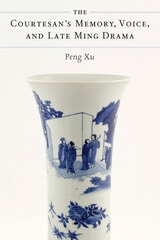
The Courtesan's Memory, Voice, and Late Ming Drama
Peng Xu
University of Michigan Press, 2025
This study profoundly remaps the textbook narratives of gender bias, challenges modern prejudices prevalent in the literary history of Chinese drama, and reveals how theatrical conditions and writing styles shifted to accommodate courtesan performances. Utilizing a wide range of sources such as scripts, city guides, biographies, diaries, letters, wood-block illustrations, and paintings, this study distinguishes itself from earlier studies of Chinese courtesans by not thematizing courtesans for their allegorical values, but rather pinpointing their agency in shaping the features of Chinese theater and recognizing courtesans as a source of creativity and development in the medium. Xu’s focus on courtesan performance culture allows for fresh readings of canonical Chinese plays, opening up new ways of understanding the history of Chinese drama written by women, thus deviating from standard historiography based solely on the writings of men.
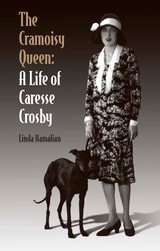
The Cramoisy Queen
A Life of Caresse CrosbyLinda Hamalian
Southern Illinois University Press, 2009
Caresse Crosby rejected the culturally prescribed roles for women of her era and background in search of an independent, creative, and socially responsible life. Poet, memoirist, advocate of women’s rights and the peace movement, Crosby published and promoted modern writers and artists such as Hart Crane, Dorothy Parker, Salvador Dalí, and Romare Bearden. She also earned a place in the world of fashion by patenting one of the earliest versions of the brassiere.
Behind her public success was a chaotic life: three marriages, two divorces, the suicide of her husband Harry Crosby, strained relationships with her children, and legal confrontations over efforts to establish a center for world peace. As the first biographer to consider both the literary and social contexts of Crosby’s life, Linda Hamalian details Crosby’s professional accomplishments and her personal struggles. The Cramoisy Queen: A Life of Caresse Crosby also measures the impact of small presses on modernist literature and draws connections between key writers and artists of the era.
In addition to securing a place for Crosby in modern literary and cultural history, The Cramoisy Queen: A Life of Caresse Crosby contributes to the field of textual studies, specifically the complexities of integrating autobiography and correspondence into biography. Enhanced by thirty-two illustrations, the volume appeals to a wide range of readers, including literary critics, cultural historians, biographers, and gender studies specialists.
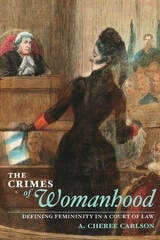
The Crimes of Womanhood
Defining Femininity in a Court of LawA. Cheree Carlson
University of Illinois Press, 2014
Carlson analyzes the situations of several women of varying historical stature, from the insanity trials of Mary Todd Lincoln and Lizzie Borden's trial for the brutal slaying of her father and stepmother, to lesser-known trials involving insanity, infidelity, murder, abortion, and interracial marriage. The insanity trial of Elizabeth Parsons Ware Packard, the wife of a minister, resulted from her attempts to change her own religion, while a jury acquitted Mary Harris for killing her married lover, suggesting that loss of virginity to an adulterous man was justifiable grounds for homicide. The popular conception of abortion as a "woman's crime" came to the fore in the case of Ann Loman (also known as Madame Restell), who performed abortions in New York both before and after it became a crime. Finally, Alice Rhinelander was sued for fraud by her new husband Leonard for "passing" as white, but the jury was more moved by the notion of Alice being betrayed as a woman by her litigious husband than by the supposed defrauding of Leonard as a white male. Alice won the case, but the image of womanhood as in need of sympathy and protection won out as well.
At the heart of these cases, Carlson reveals clearly just how narrow was the line that women had to walk, since the same womanly virtues that were expected of them--passivity, frailty, and purity--could be turned against them at any time. These trials of popular status are especially significant because they reflect the attitudes of the broad audience, indicate which forms of knowledge are easily manipulated, and allow us to analyze how the verdict is argued outside the courtroom in the public and press. With gripping retellings and incisive analysis of these scandalous criminal and civil cases, this book will appeal to historians, rhetoricians, feminist researchers, and anyone who enjoys courtroom drama.
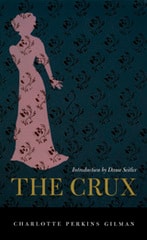
The Crux
Charlotte Perkins Gilman
Duke University Press, 2003
Dana Seitler’s introduction provides historical context, revealing The Crux as an allegory for social and political anxieties—including the rampant insecurities over contagion and disease—in the United States at the beginning of the twentieth century. Seitler highlights the importance of The Crux to understandings of Gilman’s body of work specifically and early feminism more generally. She shows how the novel complicates critical history by illustrating the biological argument undergirding Gilman’s feminism. Indeed, The Crux demonstrates how popular conceptions of eugenic science were attractive to feminist authors and intellectuals because they suggested that ideologies of national progress and U.S. expansionism depended as much on women and motherhood as on masculine contest.
The Culture of the Body
Genealogies of ModernityDalia Judovitz
University of Michigan Press, 2001
The Curse
A CULTURAL HISTORY OF MENSTRUATIONJanice Delaney, Mary Jane Lupton, and Emily Toth
University of Illinois Press, 1988
"In its hard headed, richly documented concreteness, it is worth a thousand polemics."
-- New York Times, from a review of the first edition
"The Curse deserves a place in every women's studies library collection."
-- Sharon Golub, editor of Lifting the curse of Menstruation
"A stimulating and useful book, both for the scholarly and the general reader."
-- Paula A. Treichler, co-author of A Feminist Dictionary
The Daughter as Reader
Encounters between Literature and LifePaula Marantz Cohen
University of Michigan Press, 1996
The Daughter's Dilemma
Family Process and the Nineteenth-Century Domestic NovelPaula Marantz Cohen
University of Michigan Press, 1993
The Difference Women Make
The Policy Impact of Women in CongressMichele L. Swers
University of Chicago Press, 2002
Swers combines quantitative analyses of bills with interviews with legislators and their staff to compare legislative activity on women's issues by male and female members of the House of Representatives during the 103rd (1993-94) and 104th (1995-96) Congresses. Tracking representatives' commitment to women's issues throughout the legislative process, from the introduction of bills through committee consideration to final floor votes, Swers examines how the prevailing political context and members' positions within Congress affect whether and how aggressively they pursue women's issues.
Anyone studying congressional behavior, the role of women, or the representation of social identities in Congress will benefit from Swers's balanced and nuanced analysis.
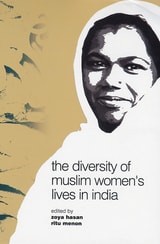
The Diversity of Muslim Women's Lives in India
Hasan, Zoya
Rutgers University Press, 2005
To what extent does Muslim personal law, such as polygamy and triple talaq (the allowance for men to instantly divorce their wives), affect the lives of Muslim women? Are these factors more or less important than other lifestyle issues such as socioeconomic status?
Over the past several decades, the most influential approaches to the study of Muslim women and nearly all the significant campaigns for their rights have focused on religious practices and the urgency to reform Islamic laws. Such focused views, however, give the false sense that religion is the main, if not the only, aspect of Muslim women’s lives.
In order to broaden the lens through which this demographic is typically seen, a group of researchers in India carried out a large and unprecedented study of one of the most disadvantaged sections of Indian society. The editors of The Diversity of Muslim Women’s Lives in India bring together this research in a comprehensive collection of informative and revealing case studies. The essays examine Muslim identity, not only in terms of religious doctrine, but as a heterogeneous set of characteristics produced at the intersections of class, religion, and gender.
Addressing issues of law, politics, education, race, and other neglected secular subjects, this volume is essential reading for policy-makers, social activists, and scholars.
The Domesticated Penis
How Womanhood Has Shaped ManhoodLoretta A. Cormier
University of Alabama Press, 2015
The Domesticated Penis challenges long-held assumptions that, in the development of Homo sapiens, form follows function alone. In this fascinating exploration, Loretta A. Cormier and Sharyn R. Jones explain the critical contribution that conscious female selection has made to the attributes of the modern male phallus.
Synthesizing a wealth of robust scholarship from the fields of archaeology, cultural anthropology, evolutionary theory, and primatology, the authors successfully dismantle the orthodox view that each part of the human anatomy has followed a vector of development along which only changes and mutations that increased functional utility were retained and extended. Their research animates our understanding of human morphology with insights about how choices early females made shaped the male reproductive anatomy.
In crisp and droll prose, Cormier’s and Jones’s rigorous scholarship incorporates engaging examples and lore about the human phallus in a variety of foraging, agrarian, and contemporary cultures. By detailing how female selection in mating led directly to a matrix of anatomical attributes in the male, their findings illuminate how the penis also acquired a matrix of attributes of the imagination and mythical powers—powers to be assuaged, channeled, or deployed for building productive societies.
These analyses offer a highly persuasive alternative to moribund biological and behavioral assumptions about prehistoric alpha males as well as the distortions such assumptions give rise to in contemporary popular culture. In this anthropological tour de force, Cormier and Jones transcend reductive gender stereotypes and bring to our concepts of evolutional biomechanics an invigorating new balance and nuance.
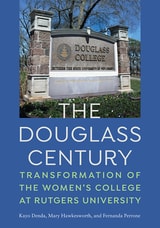
The Douglass Century
Transformation of the Women’s College at Rutgers UniversityDenda, Kayo
Rutgers University Press, 2018
The Douglass Century celebrates the college’s longevity and diversity as distinctive accomplishments, and analyzes the contributions of Douglass administrators, alumnae, and students to its survival, while also investigating multiple challenges that threatened its existence. This book demonstrates how changing historical circumstances altered the possibilities for women and the content of higher education, comparing the Jazz Age, American the Great Depression, the Second World War, the post-war Civil Rights era, and the resurgence of feminism in the 1970s and 1980s. Concluding in the present day, the authors highlight the college’s ongoing commitment to Mabel Smith Douglass’ founding vision, “to bring about an intellectual quickening, a cultural broadening in connection with specific training so that women may go out into the world fitted…for leadership…in the economic, political, and intellectual life of this nation.” In addition to providing a comprehensive history of the college, the book brings its subjects to life with eighty full-color images from the Special Collections and University Archives, Rutgers University Libraries.
The Economization of Life
M. Murphy
Duke University Press, 2017
The Economy of Prostitution in the Roman World
A Study of Social History and the BrothelThomas A. J. McGinn
University of Michigan Press, 2004
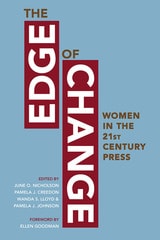
The Edge of Change
Women in the Twenty-First-Century PressEdited by June O. Nicholson, Pamela J. Creedon, Wanda S. Lloyd, and Pamela J. Jo: Foreword by Ellen Goodman
University of Illinois Press, 2008
Prominent female voices in journalism provide critical perspectives on the challenges women face in today's news organizations, such as connecting with diverse audiences, educating readers about international issues and cultures, maintaining credibility, negotiating media consolidation and corporate pressures, and overcoming the persistent barriers to professional advancement. A powerful and complex assessment of how women are transforming the news industry, The Edge of Change explores how the news industry might implement further reforms aimed at creating a more inclusive journalistic community.
Contributors are Catalina Camia, Kathleen Carroll, Pamela J. Creedon, Paula Lynn Ellis, Helen E. Fisher, Dorothy Butler Gilliam, Ellen Goodman, Sharon Grigsby, Carol Guzy, Kirsten Scharnberg Hampton, Cathy Henkel, Pamela J. Johnson, Jane Kirtley, Jan Leach, Caroline Little, Wanda S. Lloyd, Arlene Notoro Morgan, June O. Nicholson, Geneva Overholser, Marty Petty, Deb Price, Donna M. Reed, Sandra Mims Rowe, Peggy Simpson, Margaret Sullivan, Julia Wallace, and Keven Ann Willey.
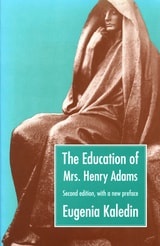
The Education of Mrs. Henry Adams
Eugenia Kaledin
University of Massachusetts Press, 1994
Marian Hooper Adams—Clover, as her friends called her—was an accomplished photographer and a witty, irreverent free spirit who moved easily within the cultural circles of nineteenth-century Boston. Why, then, in 1882, at the age of forty-two, did she swallow a lethal dose of potassium cyanide? And why did her husband of thirteen years fail even to mention her in his autobiography, The Education of Henry Adams?
These and other questions are explored in this first paperback edition of Eugenia Kaledin's pathbreaking biography. The book recreates the intense intellectual, cultural, and moral life of Boston and New England before, during, and after the Civil War and helps us to understand what could drive such a gifted, intelligent, and privileged woman to take her own life. Included is a portfolio of Adams's photographs of her husband and his famous circle.
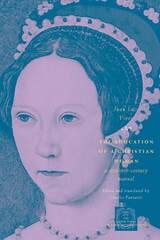
The Education of a Christian Woman
A Sixteenth-Century ManualJuan Luis Vives
University of Chicago Press, 2000
Praised by Erasmus and Thomas More, Vives advocated education for all women, regardless of social class and ability. From childhood through adolescence to marriage and widowhood, this manual offers practical advice as well as philosophical meditation and was recognized soon after publication in 1524 as the most authoritative pronouncement on the universal education of women. Arguing that women were intellectually equal if not superior to men, Vives stressed intellectual companionship in marriage over procreation, and moved beyond the private sphere to show how women's progress was essential for the good of society and state.
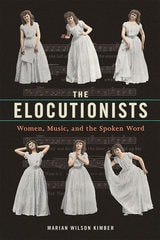
The Elocutionists
Women, Music, and the Spoken WordMarian Wilson Kimber
University of Illinois Press, 2017
Marian Wilson Kimber restores elocution with music to its rightful place in performance history. Gazing through the lenses of gender and genre, Wilson Kimber argues that these female artists transgressed the previous boundaries between private and public domains. Their performances advocated for female agency while also contributing to a new social construction of gender. Elocutionists, proud purveyors of wholesome entertainment, pointedly contrasted their "acceptable" feminine attributes against those of morally suspect actresses. As Wilson Kimber shows, their influence far outlived their heyday. Women, the primary composers of melodramatic compositions, did nothing less than create a tradition that helped shape the history of American music.

The End of International Adoption?
An Unraveling Reproductive Market and the Politics of Healthy BabiesEstye Fenton
Rutgers University Press, 2019

The Entangling Net
Alaska's Commercial Fishing Women Tell Their LivesLeslie Leyland Fields
University of Illinois Press, 1997
of courage." -- John van Amerongen, editor, Alaska Fisherman's
Journal
"These little-known tales
of women working in Alaska's commercial fishing industry make for great
reading. . . . Readers will be amazed by their stories." -- Laine
Welch, Alaska Fish Radio
"A richly textured story,
a multi-genre text that invites readers to witness women's conversation
with America's last frontier, Alaska." -- Patricia Foster, University
of Iowa
Why do women choose an occupation
that has been ranked the most dangerous in the nation? What do women give
up--and get in return--when they take on the tasks of fishermen? The
Entangling Net explores these issues through the stories of twenty
women who have chosen to work in this extremely risky, male-dominated
profession.
Leslie Leyland Fields lyrically
weaves their stories with her own experiences as a fishing woman. She
tells of long, exhausting days in skiffs, catching fish in brutally cold
weather on waters that are often violent. Her words and those of the women
she interviews convey the paradoxical relationship the women have with
commercial fishing: they face extraordinarily difficult working conditions
made more difficult and dangerous by male crews and skippers who don't
welcome women, yet they feel impelled by the challenge of the work to
return to their jobs season after season.
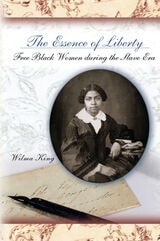
The Essence of Liberty
Free Black Women During the Slave EraWilma King
University of Missouri Press, 2006
The Essence of Liberty blends social, political, and economic history to analyze black women’s experience in both the North and the South, from the colonial period through emancipation. Focusing on class and familial relationships, King examines the myriad sources of freedom for black women to show the many factors that, along with time spent in slavery before emancipation, shaped the meaning of freedom. Her book also raises questions about whether free women were bound to or liberated from gender conventions of their day.
Drawing on a wealth of untapped primary sources—not only legal documents and newspapers but also the diaries, letters, and autobiographical writings of free women—King opens a new window on the world of black women. She examines how they became free, educated themselves, found jobs, maintained self-esteem, and developed social consciousness—even participating in the abolitionist movement. She considers the stance of southern free women toward their enslaved contemporaries and the interactions between previously free and newly freed women after slavery ended. She also looks closely at women’s spirituality, disclosing the dilemma some women faced when they took a stand against men—even black men—in order to follow their spiritual callings.
Throughout this engaging history, King underscores the pernicious constraints that racism placed on the lives of free blacks in spite of the fact that they were not enslaved. The Essence of Liberty shows the importance of studying these women on their own terms, revealing that the essence of freedom is more complex than the mere absence of shackles.
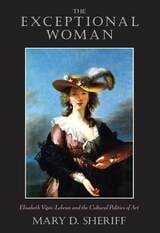
The Exceptional Woman
Elisabeth Vigee-Lebrun and the Cultural Politics of ArtMary D. Sheriff
University of Chicago Press, 1996
In The Exceptional Woman, Mary D. Sheriff uses Vigée-Lebrun's career to explore the contradictory position of "woman-artist" in the moral, philosophical, professional, and medical debates about women in eighteenth-century France. Paying particular attention to painted and textual self-portraits, Sheriff shows how Vigée-Lebrun's images and memoirs undermined the assumptions about "woman" and the strictures imposed on women.
Engaging ancien-régime philosophy, as well as modern feminism, psychoanalysis, literary theory, and art criticism, Sheriff's interpretations of Vigée-Lebrun's paintings challenge us to rethink the work and the world of this controversial woman artist.
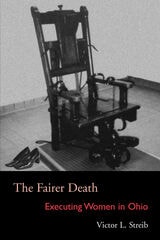
The Fairer Death
Executing Women in OhioVictor L. Streib
Ohio University Press, 2006
Women on death row are such a rarity that, once condemned, they may be ignored and forgotten. Ohio, a typical, middle-of-the-road death penalty state, provides a telling example of this phenomenon. The Fairer Death: Executing Women in Ohio explores Ohio’s experience with the death penalty for women and reflects on what this experience reveals about the death penalty for women throughout the nation.
Victor Streib’s analysis of two centuries of Ohio death penalty legislation and adjudication reveals no obvious exclusion of women or even any recognition of an issue of sex bias. In this respect, Ohio’s justice system exemplifies the subtle and insidious nature of this cultural disparity.
Professor Streib provides detailed descriptions of the cases of the four women actually executed by Ohio since its founding and of the cases of the eleven women sentenced to death in Ohio in the current death penalty era (1973–2005). Some of these cases had a profound impact on death penalty law, but most were routine and drew little attention. A generation later, reversals and commutations have left only one woman on Ohio’s death row.
Although Streib focuses specifically on Ohio, the underlying premise is that Ohio is, in many ways, a typical death penalty state. The Fairer Death provides insight into our national experience, provoking questions about the rationale for the death penalty and the many disparities in its administration.
The Farm
Life Inside a Women's PrisonAndi Rierden
University of Massachusetts Press, 1997
Written by a journalist, this book depicts the day-to-day struggles and concerns of inmates a the Connecticut Correctional Institution in Niantic (renamed the Janet S. York correctional Institution), the state's only prison for women. Build in 1917 as a work farm for prostitutes, unwed mothers, and other women of allegedly immoral character, “the Farm,” as it is still called, has long served as a barometer of prevailing social attitudes toward women.
In the summer of 1992, Andi Rierden obtained permission from the warden at Niantic to conduct research on life inside the institution. During the next three and a half years, she spent more than fifteen hundred hours among the women, recording interviews, strolling the grounds with inmates and corrections officers, sharing meals, attending classes and group counseling sessions, and tracking former inmates after their release.
The stories these women tell shed light ton a wide range of issues, from the effects of more stringent drug laws and sentences to the rise of violence among inmates. In the process it becomes clear that the ideal of rehabilitation has been largely abandoned and replaced by a belief in punishment and retribution.

The Fast Track
Inside the Surging Business of Women's SportsJane McManus
Temple University Press, 2025
Veteran sports journalist and academic Jane McManus examines both this upward trend and the forces that have held women’s sports back since the early 1970s when Title IX became law (and Billie Jean King soundly defeated Bobby Riggs). As the fervor for Caitlin Clark during the 2024 NCAA Women’s Basketball championship illustrates, there is big money to be made from broadcasting, merchandising, and investing in women’s sports.
The Fast Track chronicles how pioneering sponsorships, broadcast opportunities, and surges in ratings contradict the myths about disinterest. Interviews counter the resistance toward women’s leagues, reveal how women are covered in the media, and consider the possibilities for further investment. McManus also addresses racial inclusivity, transgender athletes, women’s health issues, and equal pay.
An essential road map to capitalize on untapped potential, The Fast Track provides a snapshot of where women’s sports as an industry and investment stand at this moment in time.
The Female Complaint
The Unfinished Business of Sentimentality in American CultureLauren Berlant
Duke University Press, 2008
Pairing literary criticism and historical analysis, Berlant explores the territory of this intimate public sphere through close readings of U.S. women’s literary works and their stage and film adaptations. Her interpretation of Uncle Tom’s Cabin and its literary descendants reaches from Harriet Beecher Stowe to Toni Morrison’s Beloved, touching on Shirley Temple, James Baldwin, and The Bridges of Madison County along the way. Berlant illuminates different permutations of the women’s intimate public through her readings of Edna Ferber’s Show Boat; Fannie Hurst’s Imitation of Life; Olive Higgins Prouty’s feminist melodrama Now, Voyager; Dorothy Parker’s poetry, prose, and Academy Award–winning screenplay for A Star Is Born; the Fay Weldon novel and Roseanne Barr film The Life and Loves of a She-Devil; and the queer, avant-garde film Showboat 1988–The Remake. The Female Complaint is a major contribution from a leading Americanist.
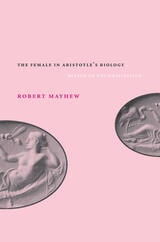
The Female in Aristotle's Biology
Reason or RationalizationRobert Mayhew
University of Chicago Press, 2004
Mayhew points out that the tools of modern science and scientific experimentation were not available to the Greeks during Aristotle's time and that, consequently, Aristotle had relied not only on empirical observations when writing about living organisms but also on a fair amount of speculation. Further, he argues that Aristotle's remarks about females in his biological writings did not tend to promote the inferior status of ancient Greek women.
Written with passion and precision, The Female in Aristotle's Biology will be of enormous value to students of philosophy, the history of science, and classical literature.
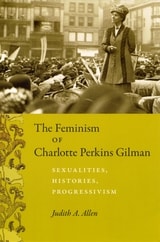
The Feminism of Charlotte Perkins Gilman
Sexualities, Histories, ProgressivismJudith A. Allen
University of Chicago Press, 2009
Famous for her short fiction—most notably “The Yellow Wallpaper”—Charlotte Perkins Gilman also produced a vast body of nonfiction in tandem with her work as a Progressive-era feminist reformer. Rooted in groundbreaking research on Gilman’s extensive correspondence, publications, and speeches, this keenly argued intellectual biography reconstructs her controversial output and the heady context in which she produced it.
Judith Allen provides the first comprehensive assessment of Gilman’s complicated feminism by exploring the renowned writer’s theories of sexuality and evolutionary analyses of androcentric—or male-dominated—culture. These ideas, Allen shows, informed Gilman’s many contributions to the suffrage movement, the fight to abolish regulated prostitution, and efforts to legalize birth control. Restoring a previously overlooked public intellectual to her preeminent place in Progressive-era politics and the history of feminism at home and abroad, Allen’s landmark study provides the fullest account available of Gilman’s consequential life and profoundly influential work.
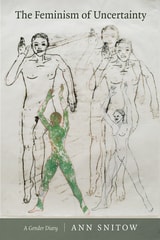
The Feminism of Uncertainty
A Gender DiaryAnn Snitow
Duke University Press, 2015
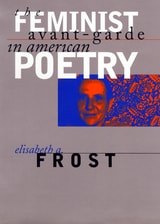
The Feminist Avant-Garde In American Poetry
Elisabeth A. Frost
University of Iowa Press, 2005
The Feminist Avant-Garde in American Poetry offers a historical and theoretical account of avant-garde women poets in America from the 1910s through the 1990s and asserts an alternative tradition to the predominantly male-dominated avant-garde movements. Elisabeth Frost argues that this alternative lineage distinguishes itself by its feminism and its ambivalence toward existing avant-garde projects; she also thoroughly explores feminist avant-garde poets' debts and contributions to their male counterparts.
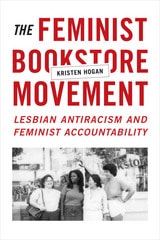
The Feminist Bookstore Movement
Lesbian Antiracism and Feminist AccountabilityKristen Hogan
Duke University Press, 2016
The Feminist Memoir Project
Voices from Women's LiberationDuPlessis, Rachel B
Rutgers University Press, 2007
What made these particular women rebel? And what experiences, ideas, feelings, and beliefs shaped their activism? How did they maintain the will and energy to keep such a struggle going for so long, and continuing still?
Memoirs and responses by Kate Millett, Vivian Gornick, Michele Wallace, Alix Kates Shulman, Joan Nestle, Jo Freeman, Yvonne Rainer, Barbara Smith, Ellen Willis, Eve Ensler, Shirley Geok-lin Lim, Roxanne Dunbar, Naomi Weisstein, Alice Wolfson and many more embody the excitement that fueled the movement and the conflicts that threatened it from within. Their stories trace the ways the world has changed.

The Feminization of Famine
Expressions of the Inexpressible?Margaret Kelleher
Duke University Press, 1997
Kelleher begins with a critical reading of the novels and short stories written about the Irish famine over the last 150 years, from the novels of William Carleton and Anthony Trollope to the writings of Liam O’Flaherty and John Banville. She then moves on to unveil a lesser-known body of literature—works written by women. This literature is read in the context of a rich variety of other sources, including eye-witness accounts, memoirs, journalistic accounts, and famine historiography. Concluding with a reading of the twentieth-century accounts of the famine in Bengal, this book reveals how gendered representations have played a crucial role in defining notions of famine.
The Femme Fatale
Julie Grossman
Rutgers University Press, 2020
This book offers readers a concise look at over a century of femmes fatales on both the silver screen and the TV screen. Starting with ethnically exoticized silent film vamps like Theda Bara and Pola Negri, it examines classic film noir femmes fatales like Barbara Stanwyck in Double Indemnity, as well as postmodern revisions of the archetype in films like Basic Instinct and Memento. Finally, it explores how contemporary film and television creators like Fleabag and Killing Eve’s Phoebe Waller-Bridge have appropriated the femme fatale in sympathetic and surprising ways.
Analyzing not only the films themselves, but also studio press kits and reviews, The Femme Fatale considers how discourses about the pleasures and dangers of female performance are projected onto the figure of the femme fatale. Ultimately, it is a celebration of how “bad girl” roles have provided some of Hollywood’s most talented actresses opportunities to fully express their on-screen charisma.
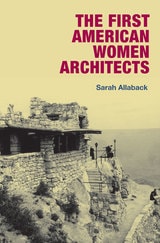
The First American Women Architects
Sarah Allaback
University of Illinois Press, 2007
Organized alphabetically as a reference guide, this volume provides a biographical sketch of each architect's life, education, and professional career, and a list of known works and sources for further research. Many of these remarkable women have never before appeared in any other history, making The First American Women Architects a unique and invaluable reference for students and scholars interested in women's history and architecture. As an instructive record of the legacy of women in architectural history, this book will also serve as a stimulating indicator of the broadening potential for women and other minorities within the field of architecture.
The Forbidden Modern
Civilization and VeilingNilufer Gole
University of Michigan Press, 1997
The Force of Witness
Contra FeminicideRosa-Linda Fregoso
Duke University Press, 2023