Results by title
3390 books match the query 'Fiction' and 1041 start with t
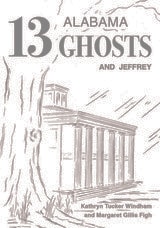
Thirteen Alabama Ghosts and Jeffrey
Commemorative EditionKathryn Tucker Windham
University of Alabama Press, 1969
Step into Alabama’s haunted history—one story at a time.
One of the best-known and widely shared books about the South, Thirteen Alabama Ghosts and Jeffrey has haunted the imaginations of generations of delighted young readers since it was first published in 1969. Written by nationally acclaimed folklorists Kathryn Tucker Windham and Margaret Gillis Figh, the book recounts Alabama’s thirteen most ghoulish and eerie ghost legends.
Curated with loving expertise, these thirteen tales showcase both Windham and Figh’s masterful selection of stories and their artful and suspenseful writing style. In crafting stories treasured by children and adults alike, the authors tell much more than ghost tales. Embedded in each is a wealth of fact and folklore about Alabama history and the old South. “I don’t care whether you believe in ghosts,” Windham was fond of saying. “The good ghost stories do not require that you believe in ghosts.”
Millions of readers cherish memories of being chilled as teachers and parents read them unforgettable stories like “The Unquiet Ghost at Gaineswood,” about the ghost of Evelyn Carter, who fills this Demopolis antebellum mansion with midnight musical lamentations because her body wasn’t returned to her native Virginia, and “The Phantom Steamboat of the Tombigbee,” about the wreck of the steamboat Eliza Battle, which caught fire on the way to Mobile and sank one February night in 1858. People who live along the river say the flaming steamboat wreck still rises on cold nights, its cotton cargo blazing across the waves while its terrified survivors cry for help from the icy water.
The title’s “Jeffrey” refers to a friendly ghost who resides in the Windham home and who served as Windham’s unofficial collaborator in this work and the subsequent books in this popular series, all of which are now available in high-quality reproductions of their spooky originals.
Thirteen Cents
A NovelK. Sello Duiker
Ohio University Press, 2013
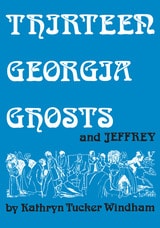
Thirteen Georgia Ghosts and Jeffrey
Commemorative EditionKathryn Tucker Windham
University of Alabama Press, 1987
Haunting tales from Georgia—where history lingers in every shadow.
Petrifying the Peach State, hosts of haints have beset the state of Georgia throughout its storied history. In Thirteen Georgia Ghosts and Jeffrey, best-selling folklorist Kathryn Tucker Windham, along with her trusty spectral companion Jeffrey, introduce thirteen of Georgia’s most famous ghost stories.
Windham won hearts across the nation in her regular radio broadcasts and many public appearances. The South’s most prolific raconteur of revenants, Windham, giving new meaning to the phrase “ghost-writer,” does more than tell ghost stories—she captures the true spirit of the place.
Evoking Georgia’s colonial era, “The Eternal Dinner Party” explains why the sounds of an elegant dinner soirée still waft from the grove of Savannah’s Bonaventure estate. At the onset of the Revolution, the Tattnall family abandoned Bonaventure and slipped away to England. Young Josiah Tattnall eventually returned to fight in the Revolution, restored Bonaventure, and later became Georgia’s governor. One holiday eve, when the mansion was bedecked with magnolia and holly and crowded with visitors, a fire too large to control swept through the old house. Tattnall, exhibiting his cool head and impeccable manners, ordered the massive dinner table carried out to the garden where he enjoined his holiday revelers to continue their stately meal. The melancholy strains of Tattnall’s dinner guests still echo through Bonaventure’s ancient oaks on moonlight nights.
In “The Ghost of Andersonville,” Windham takes visitors near the woebegone Confederate prisoner-of-war camp. A plaque there still recounts the tale of Swiss immigrant and Confederate captain Henry Wirz. Convicted—many thought wrongly—of war crimes, Wirz’s restless ghost still perambulates the highways of south Georgia. Writing for the Georgia Historical Commission, Miss Bessie Lewis quips in her preface to this beloved collection, “Who should be better able to tell of happenings long past than the ghosts of those who had a part in them?”
A perennial favorite, this commemorative edition restores Thirteen Georgia Ghosts and Jeffrey to the ghastly grandeur of its original 1973 edition.
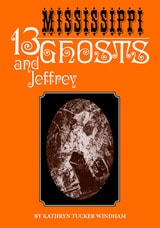
Thirteen Mississippi Ghosts and Jeffrey
Commemorative EditionKathryn Tucker Windham
University of Alabama Press, 2015
A deluxe, commemorative edition of famed southern author and folklorist Kathryn Tucker Windham’s introduction to Mississippi’s thirteen most famous haunted houses and ghostly visitations.
For as long as Mississippi has existed (and then some), flocks of phantoms have haunted the mortal inhabitants of the Magnolia State. In Thirteen Mississippi Ghosts and Jeffrey, best-selling folklorist Kathryn Tucker Windham, along with her trusty spectral companion Jeffrey, introduces thirteen of the state’s most famous ghost stories.
Although stories about Mississippi’s spirits seemingly outnumber the ghosts themselves, Windham observes that “Southern ghost tales are disappearing because people no longer sit around on the porch on summer nights and tell stories. The old folks who grew up with these stories are dying now, and the stories are dying with them.”
Fortunately for us, Windham was a writer dedicated to preserving these tales in print. The veteran author spent many years tracking down these stories and chronicling the best ones. From the ghost of Mrs. McEwen still wearing her beloved cameo pin and keeping a watchful eye over Featherston Place, her home in Holly Springs, where, she swore, she would stay forever, to the ghostly visage fixed permanently on the bedroom window pane of Catherine McGehee, who searched the horizon ardently for her unrequited love to come to her as promised at Cold Spring Plantation in Pinckneyville, Windham’s stories cover the breadth and depth of Mississippi—at times more moonlight than magnolia.
An enduring classic, this commemorative edition restores Thirteen Mississippi Ghosts and Jeffrey to the ghastly grandeur of its original 1974 edition.
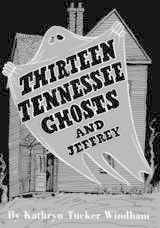
Thirteen Tennessee Ghosts and Jeffrey
Commemorative EditionKathryn Tucker Windham
University of Alabama Press, 2016
A deluxe, commemorative edition of famed southern author and folklorist Kathryn Tucker Windham’s introduction to the Volunteer State’s most enduring ghost stories.
In Thirteen Tennessee Ghosts and Jeffrey, beloved and best-selling folklorist Kathryn Tucker Windham presents a spine-tingling collection of Tennessee’s eeriest ghost tales. Accompanied by her faithful companion, Jeffrey, a friendly spirit who resided in her home, Windham traveled from the mysterious muds of Memphis to the haunted hollow’s of east Tennessee to collect the spookiest collection of Volunteer State revenants ever written.
In these perennial favorites, Windham captures the gentle folk humor of native Tennesseans as well as fascinating facts about the state’s rich history. In “The Dark Legend,” Windham recounts the story of explorer Merriwether Lewis, who met an untimely end on the Natchez Trace 1809 and whose spirit, it is said, still treads through Tennessee’s forests. Windham also visits central Tennessee’s Chapel Hill, where people who know the town say those who stand on the train tracks on dark, lonely nights can often see a disembodied light floating along the tracks. Neighbors say it’s the ghost of a headless flagman who returns to cavort with night-time guests.
High in Tennessee’s Appalachian mountains, Windham encounters Martin, the phantom fiddler of Johnson County. Legend has it that in life Martin’s musical skills so mesmerized the snakes of the Stone Mountains that they would slither from their dens to listen tamely to his fiddling. Intrepid visitors to the rocky tops of northeast Tennessee’s mountains say you can still hear Martin’s ghost fiddling in the hollows.
This handsome, new commemorative hardback edition returns Windham’s suspenseful classic to its original keepsake quality and includes a new afterword by the author’s children.

This Day in History
Anthony Varallo
University of Iowa Press, 2005
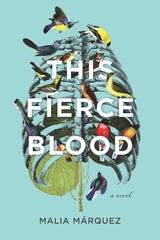
This Fierce Blood
A NovelMalia Márquez
Acre Books, 2021
In rural late-nineteenth-century New England, Wilhelmina Sylte is a settler starting a family with her Norwegian immigrant husband. When she forms an inexplicable connection with a mountain lion and her cubs living near their farm, Mina grapples with divided loyalties and the mysterious bond she shares with the animals.
In 1927 in southern Colorado, Josepa is accused of witchcraft by a local priest for using the healing practices passed down from her Native mother. Fighting for her family’s reputation and way of life, Sepa finds strength in worldly and otherworldly sources.
When Magdalena, an ecologist, inherits her great-grandmother Wilhelmina’s Vermont property, she and her astrophysicist husband decide to turn the old farm into a summer science camp for teens. As Magda struggles with both personal and professional responsibilities, the boundary between science and myth begins to blur.
Rich in historical and cultural detail, This Fierce Blood combines magical realism with themes of maternal ancestral inheritance, and also explores the ways Hispano/Indigenous traditions both conflicted and wove together, shaping the distinctive character of the American Southwest. Readers of Téa Obreht and Ruth Ozeki will find much to admire in this debut novel.

This Here Is Devil's Work
A NovelCurtis Bradley Vickers
University of Nevada Press, 2021
A twelve-year veteran of the fireline, Morgan believes he knows what his teenage half-brother (Jeremy) needs to do to shrug off boyhood: spend a single season fighting forest fires to earn money for auto mechanic school. But when Jeremy joins the Ruby Mountain Hotshots and earns the respect and admiration of their fire boss (Bailey), Morgan must battle his own demons before they destroy him.
Meanwhile, life hasn’t been easy on Jacklynn—she longs to escape the small town in Montana where she has lived her whole life and reunite with her daughter and grandson in Tucson. Jacklynn wants to make up for a lifetime of missteps by protecting the boy and making sure her daughter stays on course. On the same day that an attractive stranger waltzes into her life, an opportunity for life-changing money presents itself in the form of a dozen pregnant heifers. The only trouble is, they aren’t hers—not yet, anyway.
Morgan and Jacklynn’s paths cross when lightning ignites a blaze in the untamed Montana wilderness, and their choices force each other into
the fury.
Set against the backdrop of wildfires raging across the West and the firefighters who continue to put their lives on the line, This Here Is Devil’s Work explores how love and loneliness can sour, and how they can eventually lead to desperate and self-destructive acts even for those people we consider heroic.
This Is Not Your Country
StoriesAmin Ahmad
BkMk Press, 2021
Stories in This Is Not Your Country have appeared in such places as The Missouri Review, Slice, and Asian American Literary Review.
This Is Not the Tropics
StoriesLadette Randolph
University of Wisconsin Press, 2005
The stories collected in This Is Not the Tropics come from the geographic center of a divided nation, and its protagonists evoke a split personality—one half submerged in America’s own diehard mythology, the other half searching to escape tradition. Together they form a portrait of the Plains that is both quirky and poignant. While the themes in this collection are familiar—love and betrayal, loneliness and regret, the needs of the individual versus the needs of the community—the tales themselves are startling and new. Whether it is the story of an eccentric out-of-work accordion player; a woman ending a long marriage against the backdrop of a visit from her failing mother; a young girl who wishes to solve a mystery until real mystery enters her life; or all of the men in a small Nebraska town who annually compete in a hilariously earnest beauty pageant, these are tales that speak of the lives lived in the small towns, the prairie cities, and on the dirt roads off blue highways in the middle of nowhere and everywhere.
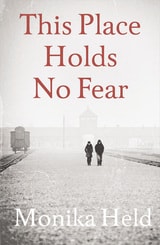
This Place Holds No Fear
Monika Held
Haus Publishing, 2014
In this moving novel, Monika Held draws on first-hand reports by Auschwitz survivors to paint an emotive picture of life and love governed by trauma. Throughout, Heiner’s suffering is omnipresent, and Lena’s struggle to hold her own in a relationship dominated by his past is deeply moving. His stories are horrific and disturbing, but they are a part of his identity; he cannot survive without them. And slowly, Lena learns to cherish her own past despite its apparent insignificance.
With its sensitive treatment of two people struggling to confront the Holocaust’s atrocities from very different vantage points, This Place Holds No Fear is a powerful novel of finding love after experiencing unimaginable loss.
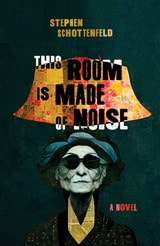
This Room Is Made of Noise
Stephen Schottenfeld
University of Wisconsin Press, 2023
Feeling both delighted by and guilty about his good fortune, Don returns most of the money to the original owner, Millie Prall. He also offers to make a few repairs around her deteriorating house—making it easier and safer for her to navigate the space in the wake of her husband's death. As Millie’s dementia worsens, Don finds his life more and more enmeshed with hers, driving her to medical appointments, shopping for her groceries, cooking her meals, handling her finances, and increasingly overseeing her care—while simultaneously trying to repair his relationships with his father, his ex-wife, and his stepkids.
In this quietly mesmerizing novel, no one, including the protagonist, is ever entirely sure of their motivations. Existing in the liminal spaces between altruism and greed, This Room Is Made of Noise deftly explores the shades of gray that lie between our desires and our demons.
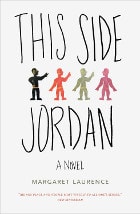
This Side Jordan
A NovelMargaret Laurence
University of Chicago Press, 2011
Best known for her novels about the Canadian prairie, Margaret Laurence began her career writing about West Africa. Based on her experience living with her husband on the Gold Coast (now Ghana) in the years just before independence, This Side Jordan confronts issues of race relations, sexism, and colonial exploitation.
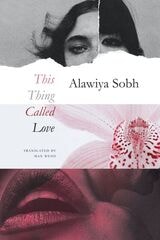
This Thing Called Love
Alawiya Sobh
Seagull Books, 2023
Just before the outbreak of the July 2006 war in Lebanon, a middle-aged woman named Nahla has gone missing. Distraught, besieged, and without any leads, Nahla’s dearest friends—Suad, Azizeh, Hoda, Nadine, and the narrator Alawiya—band together to console one another. They reminisce about the better days of their youth, lifetimes of romantic turmoil, the trouble with love, and their inescapable confrontation with death. Unsure whether Nahla has been killed in the fighting, fled the country, or disappeared into the oblivion of Alzheimer’s, Alawiya pieces together Nahla’s intimate past, simultaneously illuminating the jagged history of modern Lebanon. Through searching discussions with Nahla’s closest confidante Suad, tenacious investigation, and an imaginative effort to reconstruct the life of another, Alawiya might just find a way to bring Nahla back.
In This Thing Called Love, celebrated Lebanese novelist Alawiya Sobh takes the war between Israel and Hizballah as the backdrop for a heart-wrenching story about love, loss, sex, friendship between women, and the universal struggle to come to terms with mortality.
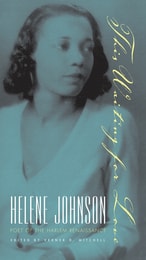
This Waiting for Love
Helene Johnson, Poet of the Harlem RenaissanceVerner D. Mitchell
University of Massachusetts Press, 2000
This volume brings together all of the known poetry and a selection of correspondence by an enormously talented but underappreciated poet of the Harlem Renaissance. Cousin of novelist Dorothy West and friend of Zora Neale Hurston, Helene Johnson (1905–1995) first gained literary prominence when James Weldon Johnson and Robert Frost selected three of her poems for prizes in a 1926 competition. During the late 1920s and early 1930s her poetry appeared in various small magazines, such as the Saturday Evening Quill, Palms, Opportunity, and Harlem. In 1933 Johnson married, and two years later her last published poem, “Let Me Sing My Song,” appeared in Challenge, the journal West had founded to revive the spirit of the Harlem Renaissance.
In his well-researched introduction, Verner D. Mitchell reconstructs Johnson's life, the details of which have long been veiled from public view, and places her in the context of a vital literary tradition. In addition to discussing her relationship with West, Hurston, and other black women writers, he explores the distinctive, at times radical, qualities of her work. Ever willing to defy the genteel conventions that governed women's writing, Johnson wrote poems on erotic themes and engaged the aesthetic, gender, and racial politics of her time.
Cheryl A. Wall's foreword also celebrates Johnson's talent, particularly the ease with which she moved among various verse forms—from the rigor of the sonnet to the improvisational creativity of free black vernacular. “An unexpected and most welcome gift,” This Waiting for Love, Wall writes, is “an enduring tribute” to “the vibrant poetry of Helene Johnson.”

Thomas Mann’s Overcoat
István Vörös
Seagull Books, 2024
In this captivating and whimsical novel, the German novelist and critic Thomas Mann is visiting his tailor, Klaus, to be measured for a new overcoat, but his mind is full of thoughts of his new novel and meditations on the state of Europe after World War I. His tailor, though, entraps him in wily dialogue with mysterious claims about angels threading a strand of their hair through all of God’s creations. Mann becomes further entangled with this provocative artisan through a mysterious dream in which he is asked to draft a contract for the Rights of Devils.
At the same time, the impoverished mother of five-year-old Marci Tamás, living in a tiny Hungarian village, struggles to find the little boy a winter coat. Marci has stopped growing, so the coat she finds—belonging to a former circus dwarf—should suffice for life. Only the coat has a life of its own, as Marci soon finds out. That’s not all: he discovers a mysterious little white elephant in the family courtyard, which no one else can see. Determined to save the family’s three piglets from being slaughtered, he enlists this strange creature in a daring collective escape.
Written by one of Hungary’s most audacious literary voices, Thomas Mann’s Overcoat is at once a homage to the great German novelist as well as an Ars Poetica that embraces excess, whimsy, and folk poetry and refuses the strictures of realism.
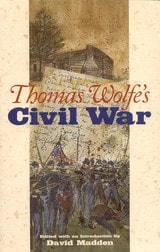
Thomas Wolfe's Civil War
Thomas Wolfe
University of Alabama Press, 2004
An anthology of Thomas Wolfe’s short stories, novel excerpts, and plays illuminating the Civil War
This collection of Thomas Wolfe’s writings demonstrates the centrality of the Civil War to Wolfe’s literary concerns and identity. From Look Homeward, Angel to The Hill Beyond and The Web and the Rock, Wolfe perpetually returned to the themes of loss, dissolution, sorrow, and romance engendered in the minds of many southerners by the Civil War and its lingering aftermath. His characters reflect time and again on Civil War heroes and dwell on ghostlike memories handed down by their mothers, fathers, and grandfathers. Wolfe and his protagonists compare their contemporary southern landscape to visions they have conjured of its appearance before and during the war, thereby merging the past with the present in an intense way. Ultimately, Wolfe’s prose style—incantatory and rhapsodic—is designed to evoke the national tragedy on an emotional level.
Selections of Wolfe’s writings in this collection include short stories ("Chickamauga," "Four Lost Men," "The Plumed Knight"), excerpts from his novels (O Lost, the restored version of Look Homeward, Angel, The Hills Beyond, and Of Time and the River) and a play, Mannerhouse, edited and introduced by David Madden. Madden, who makes the provocative claim that everything a southern writer writes derives from the Civil War experience, also highlights many issues essential to understanding Wolfe’s absorption with the Civil War.
Three Chestnut Horses
Margita Figuli
Central European University Press, 2014

Three Novellas
Thomas Bernhard
University of Chicago Press, 2003
Uninitiated readers should consider Three Novellas a passport to the absurd, dark, and uncommonly comic world of Bernhard. Two of the three novellas here have never before been published in English, and all of them show an early preoccupation with the themes of illness and madness, isolation, and tragic friendships that would obsess Bernhard throughout his career. Amras, one of his earliest works, tells the story of two brothers, one epileptic, who have survived a family suicide pact and are now living in a ruined tower, struggling with madness, trying either to come fully back to life or finally to die. In Playing Watten, the narrator, a doctor who lost his practice due to morphine abuse, describes a visit paid him by a truck driver who wanted the doctor to return to his habit of playing a game of cards (watten) every Wednesday—a habit that the doctor had interrupted when one of the players killed himself. The last novella, Walking, records the conversations of the narrator and his friend Oehler while they walk, discussing anything that comes to mind but always circling back to their mutual friend Karrer, who has gone irrevocably mad. Perhaps the most overtly philosophical work in Bernhard's highly philosophical oeuvre, Walking provides a penetrating meditation on the impossibility of truly thinking.
Three Novellas offers a superb introduction to the fiction of perhaps the greatest unsung hero of twentieth-century literature. Rarely have the words suffocating, intense, and obsessive been meant so positively.

Three Novellas
Earla A. Wilputte
Michigan State University Press, 0
The three novellas presented here—The Ditress'd Orphan, The City Jilt, and The Double Marriage—were published separately in 1726, but were originally intended for a single volume. Haywood was a dangerous entity in the eighteenth century: a writing woman, writing for women. Like many female authors before her, Haywood was labeled and condemned by men as unfeminine, licentious, immodest and usurping. She dared to wield that masculine instrument, the pen, and speak her mind in public like a man.

Three Sons
Franz Kafka and the Fiction of J. M. Coetzee, Philip Roth, and W. G. SebaldDaniel L. Medin
Northwestern University Press, 2010

Three Spiritualist Novels
Elizabeth Stuart Phelps
University of Illinois Press, 2000
Articulating an alternative to conservative church doctrine, Phelps assured her readers--many of them women bereft of their loved ones by the Civil War--that Spiritualist ideas about the afterlife were not fundamentally at odds with Scripture. Like the protagonist of The Gates Ajar, these readers wanted to believe "something actual, something pleasant" about the world to come, not "glittering generalities" about a "dreadful Heaven" where their loved ones were too busy singing and worshiping to have any thought of those left behind.
All three of the novels collected here--The Gates Ajar (1868), Beyond the Gates (1883), and The Gates Between (1887)--describe heaven as a perfected version of earthly life and the afterlife as a chance to make up for opportunities squandered on Earth. A grieving sister finds consolation in the Spiritualist idea of a continued connection with her beloved brother; a dying woman finds her soulmate in the afterlife; an erring husband makes amends across the line between the living and the dead.
Tremendously popular in Phelps's lifetime, these novels offer a way of reconciling human beings to earthly loss and sorrow, assuring readers of an afterlife both restorative and compensatory. They also provide an intriguing look at a phenomenon that preoccupied nineteenth-century America and continues to fascinate us in the twenty-first century.

Thrill-Bent
Jan Richman
Tupelo Press, 2013
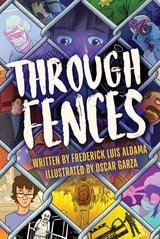
Through Fences
Written by Frederick Luis Aldama and Illustrated by Oscar Garza
The Ohio State University Press, 2024
Honor-winner, 2025 Texas Institute of Letters Jean Flynn Award for Best Young Adult Book
Longlisted, REFORMA National Book Award 2024
Through Fences follows the ups and downs of Latino kids and young adults in the US–Mexico borderlands: San Ysidro, Calexico, McAllen, and back and forth across the border. A young girl's journey north goes wrong, and now she is in a forbidding new place, away from her parents and brother, where she doesn't understand what the adults in green are saying even as she tries to obey their rules. Rocky, one of the few white kids in town, stands by and watches as Miguel is jumped by two of his friends. Maggie and her parents are separated at the border in a tragic accident. Alberto's son doesn't understand his Mexican father's hatred for illegals or his work as a border patrol agent. Alicia is a TikTok influencer who doesn't want to grow up to be a hospital cleaning lady like her mother, but COVID complicates things. Whatever their challenges, the kids, teens, tweens, and adults in these pages are just trying to survive their everyday lives. Vibrantly illustrated by Oscar Garza, each of these short stories brings a different perspective on the perils of living on the border while brown.
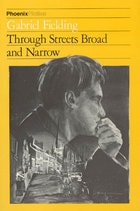
Through Streets Broad and Narrow
Gabriel Fielding
University of Chicago Press, 1986
"A powerful and beautifully written novel, "Streets" can either stand by itself or solidly in company with In the Time of Greenbloom. . . . [Fielding's] touch is as sure and controlled as his invention is unlimited, and the resultant work seems various and beautiful and new. The major objection to the book is not its ending, but that it ends. It is too good to give up, too vital and dynamic to leave."—Margaret Marble, Los Angeles Times
"A prismatic study of a finely gifted man in the elaborate tangles of his growth in a complex and wonderfully drawn environment."—Newsweek
"Fielding writes a torrential prose, and his imagist phrases, fabulous incidents, antic characters and peripheral violence whip the story forward."—Time
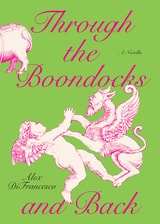
Through the Boondocks and Back
A NovellaAlex DiFrancesco
Northwestern University Press, 2027
A queer, rollicking retelling of The Odyssey
Zane Viaggio’s life has been fraught since leaving New York City for Cleveland. Uprooted and missing his life in the city, he escapes into parties and pills. When he wakes up vomiting several days in a row, he’s convinced by his three drag queen roommates and his best trans-femme friend to get a pregnancy test, learning that not only is he pregnant, but pregnant in an Ohio that has just outlawed abortion. Zane must then embark on an epic journey around Lake Erie and its surrounding towns on a stolen jet ski to find the man who impregnated him, get the money to go back to New York City for an abortion, and get his life back to normal. In this queer and trans retelling of The Odyssey, Zane encounters all sorts of strange and challenging characters—including one-eyed cats, force-femmed prophets, and his own chosen family—who help him discover that, perhaps, finding home is the greatest journey of all.

Thunderclouds in the Forecast
A NovelClarence Major
Northwestern University Press, 2021
When Ray’s train is delayed in Lorena, a Gold Rush outpost turned college town, he meets Alice. Together they embark on a romance that tempts him to stay. By the time Ray arrives in San Francisco, Scotty has abandoned his bartending job, his rented room, and his scant belongings and skipped town with a married woman from Lorena. Now Ray has more than one reason to return.
A preeminent American writer who thrives on reinvention, Major returns with an unforgettable exploration of life on the brink of sweeping change. With spare prose and subtle poignancy, Thunderclouds in the Forecast probes love, loyalty, and belonging. As Toni Morrison wrote, “Clarence Major has a remarkable mind and the talent to match.”
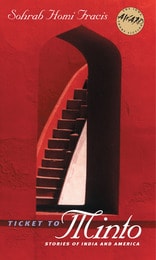
Ticket to Minto
Stories of India and AmericaHomi Sohrab Fracis
University of Iowa Press, 2001
Ticket to Minto, Sohrab Homi Fracis's premier fiction collection, offers readers a passage to an unfamiliar destination-a world suspended between East and West, India and America, home and away.
With piercing insight, Fracis expertly reveals the underlying differences between immersion in India's culture-Hindu, Muslim, or Parsi-and life as an Indian in America. Alternating between East and West, the stories in Ticket to Minto serve as companion pieces, interrelated across continents in both theme and content. A middle-aged man's search for love in Bombay is contrasted with an Indian American family's hopes for the marriage of their westernized daughter. A university student rushes to save the life of a servant in his homeland only to find his own life threatened while attending graduate school in America.
Poignant and daring, Ticket to Minto underlines the harsh realization that the immigrant never truly arrives but is in constant limbo between two worlds. As one character relates, "There's a part of me that's American and a part that's Indian. I'm clear about that and comfortable with it, except that sometimes people want me to be just the one or the other."
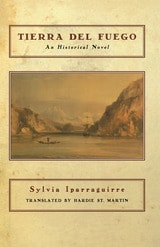
Tierra del Fuego
Sylvia Iparraguirre
Northwestern University Press, 2000
Tierra del Fuego has already won two major awards for the Spanish edition: The Sor Juana Inés de la Cruz Award for the best work of fiction written by a woman and The Best Book of the Year Award at the Buenos Aires Book Fair.

Tieta
Jorge Amado; translated by Barbara Shelby Merello
University of Wisconsin Press, 2003
—New York Times

Tight Spaces
Kesho Scott
University of Iowa Press, 1999
Time Commences in Xibalbá
Luis de Lión; Translated by Nathan C. Henne
University of Arizona Press, 2012

Time Gifts
Zoran Zivkovic
Northwestern University Press, 2000
Time for Frankie Coolin
A NovelBill Granger
University of Chicago Press, 2014
Time for Frankie Coolin tells the story of a plasterer turned landlord in Chicago who, in the late 1970s, buys abandoned buildings and makes them just habitable enough that he can charge minimal rent to his mostly black tenants. Frankie—both a tough guy in the trades and a family man—has done well by his wife and kids, moving them to a house in the suburbs. But a casual favor for his wife’s cousin—allowing the man to store some crates in an empty building—and a random act of arson set in motion a cascade of crises, including a menacing pair of G-men and the looming threat of prison if Frankie doesn’t talk. But since talking has never been one of Frankie’s strengths, he copes as he always has: by trying to tough it out on his own.
Calling to mind such gritty poets of the urban scene as George V. Higgins and Nelson Algren, Time for Frankie Coolin is both a psychological thriller and a ’70s Chicago period piece that shines a surprisingly sympathetic light on the often ignored stories of the people who lived, worked, and died at the city’s margins.
Time of the Rabies
A NovellaRobert Laxalt
University of Nevada Press, 2000
Time, Forward!
Valentin Kataev
Northwestern University Press, 1995

Timira
A NovelWu Ming Wu Ming 2
Rutgers University Press, 2027
Isabella Marincola lived between two cultures. The child of an Italian military officer father and a Somali mother, she was never fully part of either culture. In Somalia, she was seen as a child of the ruling colonizers, while in Italy her darker skin made her an object of both fascination and contempt. Even as she worked as an actress and model in postwar Italy, she was valued for her exotically beautiful body, not her keen mind or her captivating voice.
Titled after Isabella’s Somali name, Timira is a unique combination of novel, archival sources, and oral history. It finally gives her a chance to articulate her experiences of being a Black Italian woman in different epochs of Italian history, from Fascism to the 1990s, in all of which italianità was assumed to be exclusively white.
Cowritten by her son Antar Mohamed Marincola and a founding member of the Wu Ming writers’ collective, it is based on a series of writings and interviews Isabella gave towards the end of her long, eventful life. A compelling novel rooted in truth, Timira reflects on Italy’s colonial legacy and ingrained racism, while telling the story of a courageous woman and her struggles to assert herself in a nation unprepared to accommodate its Black citizens.
To Be Marquette
Sharon Dilworth
Carnegie Mellon University Press, 2024
Arriving in Marquette for her freshman year at Northern Michigan University, Molly enrolls in Dr. Robinson’s ecology studies class, hoping to learn more about the natural world and how to protect the planet from human impact. She befriends her classmates, Dr. Robinson’s Crusoes, who share her love of hiking, camping, and building bonfires on the shores of Lake Superior.
Together, Molly and the Crusoes protest the development of Project ELF, a Navy program that is installing a series of extremely low-frequency transmitters across the Great Lakes. The US government claims Project ELF will help the country defend itself in the event of a nuclear invasion, but Upper Peninsula residents fear the communications lines will disrupt the natural environment that they hold sacred.
Initially preoccupied with the contingencies of freshman year—roommate problems, dormitory life, and dating—Molly begins to sense that the Project ELF protests may mask a more problematic dynamic between the students and faculty. As she struggles to find her purpose, Molly uncovers layers of lies and misunderstandings about campus life, Project ELF, and her time in Marquette that make her question her place in the community.
As in other notable campus novels, like Donna Tartt’s The Secret History or Elif Batuman’s The Idiot, Sharon Dilworth’s To Be Marquette portrays an undergraduate narrator groping for meaning in a world where personal transformation takes place alongside conflicting cultural paradigms.
To Build a Ship
Don Berry
Oregon State University Press, 2004
In To Build a Ship, Don Berry explores the extent to which a man can betray himself and his morality for a dream or an obsession. It's the story of a handful of settlers who take up land in the fertile Tillamook Bay Valley in the early 1850s -- defiant dreamers battling the wilderness. With impenetrable mountains at their backs and the open sea as their sole road to trade, they are suddenly isolated from the outside world when the only captain willing to enter their harbor dies. With the survival of their new settlement threatened, they decide to build their own schooner.
At first the challenge brings out the best in the men, but soon the tensions inherent in this monumental task engulf them. Obstacles accumulate and complications mount: a death, a murder trial, trouble with restive Indians, and finally a travesty of justice. Excitement, shock, and gripping drama mark this story of men pushed to the point of madness as they see the Morning Star of Tillamook slowly take shape on the wild Pacific shore.
Don Berry's three novels about the Oregon Territory — Trask, Moontrap, and To Build a Ship — are as rich and compelling today as when they were first published more than 40 years ago. The new OSU Press editions of these books include an introduction by Jeff Baker, former book critic for The Oregonian.
To Live and Die
Collected Stories of the Civil War, 1861–1876Kathleen Diffley, ed.
Duke University Press, 2002
The authors, who include Louisa May Alcott and Mark Twain, depict the horrors of the battlefield, the suffering in prison camps and field hospitals, and the privations of the home front. In these pages, bushwhackers carry the war to out-of-the-way homesteads, spies work households from the inside, journeying paymasters rely on the kindness of border women, and soldiers turn out to be girls. The stories are populated with nurses, officers, speculators, preachers, slaves, and black troops, and they take place in cities, along the frontier, and on battlefields from Shiloh to Gettysburg.
The book opens with a prewar vigilante attack on the Underground Railroad and a Kansas parson in Henry King’s “The Cabin at Pharoah’s Ford” and concludes with an ex-slave recalling the loss of her remaining son in Twain’s “A True Story.” In between are stories written by both women and men that were published in magazines from the South and West as well as the culturally dominant Northeast. Wartime wood engravings highlight the text. Kathleen Diffley’s introduction provides literary and historical background, and her commentary introduces readers to magazine authors as well as the deepening disruptions of a country at war.
Just as they did for nineteenth-century readers, these stories will bring the war home to contemporary readers, giving shape to a crisis that rocked the nation then and continues to haunt it now.

To Make My Bread
Grace Lumpkin
University of Illinois Press, 1959
new South, To Make My Bread revolves around a family of Appalachian
mountaineers—small farmers, hunters, and moonshiners—driven
by economic conditions to the milltown and transformed into millhands,
strikers, and rebels against the established order. Recognized as one
of the major works on the Gastonia textile strike, Grace Lumpkin's novel
is also important for anyone interested in cultural or feminist history
as it deals with early generations of women radicals committed to addressing
the difficult connections of class and race. Suzanne Sowinska's introduction
looks at Lumpkin's volatile career and this book's critical reception.
Originally published in 1932
"[The book's] meaning
rises out of people in dramatic conflict with other people and with the
conditions of their life. . . . [Lumpkin] treats her theme with a craftsman's
and a psychologist's respect. The novel springs naturally from its author's
immersion in and personal knowledge of her absorbing subject material."
-- The New York Times
"Unpretentious . . .
written in a simple and matter-of-fact prose, and yet reading it has been
a more real, more satisfying experience than that which almost any other
recent work of fiction has given me. I cannot imagine how anyone could
read it and not be moved by it." -- The Nation
"A beautiful and sincere
novel, outstanding." -- The New Republic
The late
To Zenzi
Robert L. Shuster
New Issues Poetry and Prose, 2021
Shuttling between the insanity of the Führer’s bunker and the chaotic streets, Tobias must contend with a scheming Martin Bormann, a deceitful deserter, the Russian onslaught, and his own compounding despair—all while falling for Zenzi, a girl of Jewish descent (a mischling) who relays secret news of death camps and convinces Tobias to make a treacherous escape to the Americans.
With thrilling risks in plotting and prose, with moments of pathos and absurdity, Shuster richly conjures a mad, tragic world.
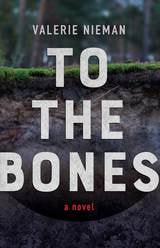
To the Bones
VALERIE NIEMAN
West Virginia University Press, 2019
2020 Killer Nashville Silver Falchion Award finalist
Darrick MacBrehon, a government auditor, wakes among the dead. Bloodied and disoriented from a gaping head wound, the man who staggers out of the mine crack in Redbird, West Virginia, is much more powerful—and dangerous—than the one thrown in. An orphan with an unknown past, he must now figure out how to have a future.
Hard-as-nails Lourana Taylor works as a sweepstakes operator and spends her time searching for any clues that might lead to Dreama, her missing daughter. Could this stranger’s tale of a pit of bones be connected? With help from disgraced deputy Marco DeLucca and Zadie Person, a local journalist investigating an acid mine spill, Darrick and Lourana push against everyone who tries to block the truth. Along the way, the bonds of love and friendship are tested, and bodies pile up on both sides.
In a town where the river flows orange and the founding—and controlling—family is rumored to “strip a man to the bones,” the conspiracy that bleeds Redbird runs as deep as the coal veins that feed it.
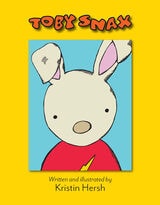
Toby Snax
Written and illustrated by Kristin Hersh
University of Texas Press, 2016
Toby Snax is a little bunny who’s reluctant to experience things away from home. When Mama asks him to join her on a trip, he needs a bit of encouragement. So Mama tells Toby about the wondrous things that await him out in the wide world, helping him to look forward to new adventures.
This charming, gentle book will resonate with any child who’s nervous about trying new things. The acclaimed musician Kristin Hersh created Toby Snax to encourage her son, Bodhi, to embrace the experiences of touring the world together while she performed both solo and with her bands 50 Foot Wave and Throwing Muses. The first edition of the book sold out immediately and has become highly collectible. This new edition makes Toby Snax available again for all fans of Hersh’s evocative storytelling, as well as children—or even adults—who need a little reassurance that the world is full of wonders.
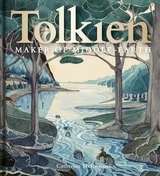
Tolkien
Maker of Middle-earthEdited by Catherine McIlwaine
Bodleian Library Publishing, 2018
Tolkien: Maker of Middle-earth explores the huge creative endeavor behind Tolkien’s enduring popularity. Lavishly illustrated with three hundred images of his manuscripts, drawings, maps, and letters, the book traces the creative process behind his most famous literary works—The Hobbit, The Lord of the Rings, and The Silmarillion—and reproduces personal photographs and private papers, many of which have never been seen before in print.
Six essays introduce the reader to the person of J. R. R. Tolkien and to main themes in his life and work, including the influence of northern languages and legends on the creation of his own legendarium; his concept of “Faërie” as an enchanted literary realm; the central importance of his invented languages in his fantasy writing; his visual imagination and its emergence in his artwork; and the encouragement he derived from his close friend C. S. Lewis and their literary group the Inklings.
The book brings together the largest collection of original Tolkien material ever assembled in a single volume. Drawing on the extensive archives of the Tolkien collections at the Bodleian Libraries, Oxford, which stretch to more than five hundred boxes, and Marquette University, Milwaukee, as well as private collections, this hugely ambitious and exquisitely produced book draws together the worlds of J. R. R. Tolkien – scholarly, literary, creative, and domestic—offering a rich and detailed understanding and appreciation of this extraordinary author.
This landmark publication, produced on the occasion of a major exhibition at the Bodleian Libraries in Oxford in 2018 and at the Morgan Library in New York in 2019, is set to become a standard work in the literature on J. R. R. Tolkien.
Tomb(e)
Hélène Cixous
Seagull Books, 2014
Tomorrowing
Terry Bisson
Duke University Press, 2024
Tongues of Flame
Mary Ward Brown
University of Alabama Press, 1993
Winner of the PEN/Hemingway Foundation Award
These beautifully crafted stories depict the changing relationships between black and white southerners, the impact of the civil rights movement, and the emergence of the New South.
Mary Ward Brown is a storyteller in the tradition of such powerful 20th-century writers as William Faulkner, Harper Lee, Flannery O'Connor, and Eudora Welty-writers who have explored and dramatized the tension between the inherited social structure of the South and its contemporary dissolution. With Tongues of Flame, her first collection of short stories, Brown bares the awkward, sometimes hopeful, and often tragic suffering of people caught in changing times within a timeless setting.
Here we meet such memorable characters as a dying black woman who seeks the advice of a now-alcoholic white doctor whom she knew in better years; a young woman, jilted at the altar, driven crazy by an illuminated cross erected by the church opposite her house; and a 95-year-old woman buying a tombstone for her long-deceased husband only to discover that he had been adulterous throughout their marriage. Brown constructs her characters in a disarmingly plain style while breathing life into them with compassion and honesty as they confront the large moments of their lives.
First published by E. P. Dutton in 1986 to immediate critical acclaim, Tongues of Flame won the 1987 PEN/Ernest Hemingway Foundation Award. The judges commended Brown for "seeing life whole, without prejudice, without sentimentality, without histrionics. Her voice may be quiet-sometimes she speaks in a whisper-but her words are, nevertheless, always forceful, clear, and ultimately lasting." With this new publication of Tongues of Flame and its inclusion in the University of Alabama Press's Deep South Books series, a whole new generation of readers may once more discover Mary Ward Brown's profound stories of pain, loss, and hope.
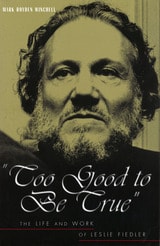
Too Good to Be True
The Life and Work of Leslie FiedlerMark Royden Winchell
University of Missouri Press, 2002
Toward Another Kingdom
Two Dramas of the Darker Yearstraub
St. Augustine's Press, 2022
Marcel's dramas require characters to respond authentically and from their true selves. He thereby offers the vision of how individual compromises may build up to break the world and condemn, or, conversely, contribute to the discovery and meaning of relation and redemption. Traub's new translation will interest the player as much as the scholar, and Marcel's aptitude for theatrical writing is proven once again. His intellectual sensitivity creates characters that beckon performance, which is an added dimension to the presentation of the human condition.