Results by title
8113 books match the query 'Literary Criticism' and 1818 start with t
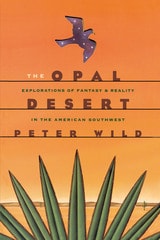
The Opal Desert
Explorations of Fantasy and Reality in the American SouthwestBy Peter Wild
University of Texas Press, 1999
The opalescent deserts of the American Southwest have become romantic icons in the public imagination through the words of writers, the images of artists and photographers, and the visual storytelling of filmmakers. In this spirited, personal, beautifully written book, Peter Wild explores the lives and works of sixteen writers whose words have shaped our visions of the opal desert.
Wild begins with Cabeza de Vaca, whose Relación of his desert wanderings sent treasure-hungry Spaniards searching for cities of gold. He goes on to discuss the works of both widely read and lesser-known nineteenth- and twentieth-century authors, including such luminaries as Mary Austin, Joseph Wood Krutch, Edward Abbey, Ann Zwinger, and Charles Bowden. He links all the writers as explorers of one kind or another, searching for tangible or intangible treasures, some finding and some losing their dreams in the opal desert.
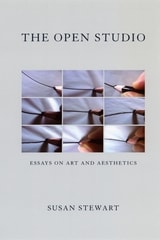
The Open Studio
Essays on Art and AestheticsSusan Stewart
University of Chicago Press, 2004
Gathering most of Stewart's writing on contemporary art—long and short pieces first published in small magazines, museum and gallery publications, and edited collections—The Open Studio illuminates work ranging from the installation art of Ann Hamilton to the sculptures and watercolors of Thomas Schütte, the prints and animations of William Kentridge to the films of Tacita Dean. Stewart's essays are often the record of studio conversations with living artists and curators, and of the afterlife of those experiences in the solitude of her own study. Considering a wide variety of art forms, Stewart finds pathbreaking ways to explore them. Whether she is following central traditions of painting, drawing, sculpture, film, photography, and printmaking or exploring the less well-known realms of portrait miniatures, collecting practices, doll-making, music boxes, and gardening, Stewart speaks to the creative process in general and to the relation between art and ethics.
The Open Studio will be read eagerly by scholars of art, poetry, and visual theory; by historians interested in the links between contemporary and classic literature and art; and by teachers, students, and practitioners of the visual arts.
The Opening of the American Mind
Ten Years of The PointThe Point
University of Chicago Press, 2020
Featuring award-winning and highly acclaimed essays from The Point’s first ten years, The Opening of the American Mind traces the path of American intellect from the magazine’s inception in 2009, when Barack Obama was ascending the steps of the White House, to the brink of the 2020 election. The essays, chosen both for the way they capture their time and transcend it, are assembled into five sections that address cycles of cultural frustrations, social movements, and the aftermath of the 2016 election, and provide lively, forward-looking considerations of how we might expand our imaginations into the future. Spanning the era of Obama and Trump, Occupy Wall Street and Black Lives Matter, #MeToo and renewed attention to reparations, this anthology offers critical reflections on some of the decade’s most influential events and stands as a testament to the significance of open exchange. The intellectual dialogue provided by The Point has never been more urgently needed, and this collection will bring the magazine’s vital work to an even broader readership.
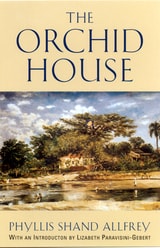
The Orchid House
Allfrey, Phyllis Shand
Rutgers University Press, 1996
The Order of Forms
Realism, Formalism, and Social SpaceAnna Kornbluh
University of Chicago Press, 2019
Kornbluh offers a powerful argument that political formalism, by valuing forms of sociability like the city and the state in and of themselves, provides a better understanding of literary form and its political possibilities than approaches that view form as a constraint. To make this argument, she takes up the case of literary realism, showing how novels by Dickens, Brontë, Hardy, and Carroll engage mathematical formalism as part of their political imagining. Realism, she shows, is best understood as an exercise in social modeling—more like formalist mathematics than social documentation. By modeling society, the realist novel focuses on what it considers the most elementary features of social relations and generates unique political insights. Proposing both this new theory of realism and the idea of political formalism, this inspired, eye-opening book will have far-reaching implications in literary studies.
The Oresteia
Agamemnon, Libation Bearers, and The Holy GoddessesAeschylus, A verse translation by David Mulroy, with introduction and notes
University of Wisconsin Press, 2018
This drama of the House of Atreus catches everyone in a bloody net. Queen Clytaemestra of Argos murders her husband Agamemnon. Their son Orestes avenges his father by killing his mother. The Furies, hideous deities who punish the murder of blood kin, pursue Orestes. Into this horrific cycle steps Athena, goddess of wisdom, who establishes the rule of law to replace fatal vengeance. Orestes is tried in court before a jury of Athenians and found not guilty. Athena transforms the Furies into benevolent goddesses and extols the virtue of mercy.
An important historical document as well as gripping entertainment, the Oresteia conveys beliefs and values of the ancient Athenians as they established the world's first great democracy. Aeschylus (525/4–456/5 B.C.E.) was the first of the three great tragic dramatists of ancient Greece, forerunner of Sophocles and Euripides. In this trilogy he created a new dramatic form with characters and plot, infused with spellbinding emotion. David Mulroy's fluid, accessible English translation with its rhyming choral songs does full justice to the meaning and theatricality of the ancient Greek. In an introduction and appendixes, he provides cultural background for modern readers, actors, and students.
The Orient of Style
Modernist Allegories of ConversionBeryl Schlossman
Duke University Press, 1991
Toward the end of Remembrance of Things Past, the narrator describes the act of creating a work of art as a conversion of sensation into a spiritual equivalent. By means of such allegories of “conversion,” Schlossman shows, the modernist artist disappeared within the work of art and left behind the trace of his sublime vocation, a vocation in which he was transformed, in Schlossman’s words, “into a kind of priest kneeling at the altar of beauty before the masked divinity of representation.”
The author shows how allegory—the representation of the symbolic as something real—was adapted by modernist writers to reflect subjectivity while masking an authorial origin. She reveals how modernist allegory arose, as Walter Benjamin suggests, at the crossroads of history, sociology, economics, urban architecture, and art—providing a kind of map of capitalism—and was produced through the eyes of a melancholic gazing at a “monument of absence.”

The Original Frankenstein
Mary Shelley (with Percy Shelley)
Bodleian Library Publishing, 2008
The Origins of Cool in Postwar America
Joel Dinerstein
University of Chicago Press, 2017
Through eye-opening portraits of iconic figures, Dinerstein illuminates the cultural connections and artistic innovations among Lester Young, Humphrey Bogart, Robert Mitchum, Billie Holiday, Frank Sinatra, Jack Kerouac, Albert Camus, Marlon Brando, and James Dean, among others. We eavesdrop on conversations among Jean-Paul Sartre, Simone de Beauvoir, and Miles Davis, and on a forgotten debate between Lorraine Hansberry and Norman Mailer over the "white Negro" and black cool. We come to understand how the cool worlds of Beat writers and Method actors emerged from the intersections of film noir, jazz, and existentialism. Out of this mix, Dinerstein sketches nuanced definitions of cool that unite concepts from African-American and Euro-American culture: the stylish stoicism of the ethical rebel loner; the relaxed intensity of the improvising jazz musician; the effortless, physical grace of the Method actor. To be cool is not to be hip and to be hot is definitely not to be cool.
This is the first work to trace the history of cool during the Cold War by exploring the intersections of film noir, jazz, existential literature, Method acting, blues, and rock and roll. Dinerstein reveals that they came together to create something completely new—and that something is cool.
The Origins of Free Verse
H. T. Kirby-Smith
University of Michigan Press, 1998
Though free verse became a dominant poetic mode only in the twentieth century, Kirby-Smith finds its roots in seventeenth-century England. Beginning his study with writers such as John Milton--who was considered by T. S. Eliot to be the greatest writer of free verse in English--the author places recent and divisive topics in poetics in context, showing them to be attenuated remnants of issues first broached hundreds of years ago.
The book seeks to establish a consensus on the nature of free verse, with reference to critics and poets including Pound, Eliot, Williams, Amy Lowell, Yvor Winters, and Hugh Kenner. Good free verse, argues Kirby-Smith, arises as a reaction to a well-established set of conventions. Likewise, The Origins of Free Verse goes against the conventions of existing poetic scholarship, offering an encompassing yet fresh--and controversial--literary history of free verse.
"At moments, this study is revelatory. . . . In its range and detail it offers a way of thinking about the history of English-language prosody which recognizes the importance of the poet's individual choices and undercuts our century's vanity. . . . Poetry is a learned art, and Kirby-Smith brings both insight and much learning to reading it." --Times Literary Supplement
"The best study of free verse I have seen. . . . The Origins of Free Verse is a book that all students of prosody will want to read. " --Harvard Review
". . . a witty and polemical account of the emergence and development of free verse." --Choice
H. T. Kirby-Smith is Professor of English, University of North Carolina at Greensboro.
The Origins of Russian Literary Theory
Folklore, Philology, FormJessica Merrill
Northwestern University Press, 2022
The Origins of Russian Literary Theory reconstructs lost Formalist theories of authorship, of the psychology of narrative structure, and of the social spread of poetic innovations. According to these theories, literary form is always a product of human psychology and cultural history. By recontextualizing Russian Formalism within this philological paradigm, the book highlights the aspects of Formalism’s legacy that speak to the priorities of twenty-first-century literary studies.
The Orphaned Imagination
Melancholy and Commodity Culture in English RomanticismGuinn Batten
Duke University Press, 1998
Building on the theoretical insights of Slavoj Zizek, Judith Butler, Julia Kristeva, and Eve Kosofsky Sedgwick, Batten interweaves the discourses of psychoanalysis, economics, biography, sexuality, melancholy, value, and exchange to question accepted ideas of how Romantic poetry works. She asserts that poetic labor is in fact paradigmatic of the kinds of production—and the kinds of desire—that capitalist culture renders invisible. If symbolic exchange, in cash or in words, requires the surrender of a beloved object, if healthy mourning requires an orphan to “work through” emotional loss through the consolation of art or a love for the living, then the rebellious Romantic poet, Batten contends, possessed unique insight into the alternative authority of a poetic language that renounced a culture of denial. Batten urges that scholars move beyond critical approaches condemning allegedly regressive forms of pleasure, recognizing that they, too, are haunted by melancholic attachments to dead poets as they conduct their work.
The Orphaned Imagination will interest anyone concerned with the claims of the English Romantic poets to a distinctive, valuable form of knowledge and those who may wonder about the power of contemporary theory to illuminate a traditional field.

The Orwell Mystique
A Study in Male IdeologyDaphne Patai
University of Massachusetts Press, 1984
The Orwell Mystique: A Study in Male Ideology is a pioneering work of feminist literary criticism that subjects the life and writing of George Orwell (1903–1950) to a sustained and rigorous feminist analysis. Published in 1984—the same year as the famous date in Orwell's most celebrated dystopian novel—the book examines all of Orwell's major novels, essays, and journalism and argues that his widely celebrated reputation for moral authority and plain-speaking democratic decency is fundamentally undercut by a pervasive and condescending attitude toward women.
Author Daphne Patai contends that Orwell's work is saturated with a male ideology so deeply embedded as to be largely invisible to mainstream criticism, which had long treated Orwell as an exemplar of intellectual honesty and political courage while overlooking the gender assumptions that structure his writing. Drawing on feminist theory and close textual analysis, Patai systematically traces the ways in which Orwell's androcentrism—his tendency to place men and male experience at the center of human life—shapes not only his fiction but also his essays, autobiographical writings, and political commentary.
The book is organized around a series of thematic and textual investigations. An introductory chapter establishes what Patai calls “the Orwell myth”—the cultural phenomenon by which Orwell's personal authority as a moral and political guide has been constructed and sustained. Subsequent chapters examine specific dimensions of Orwell's work and biography, including his experience of empire and the masculine codes embedded in his writings about colonialism; his treatments of vagabondage, manual labor, and working-class masculinity (notably in works such as Down and Out in Paris and London and The Road to Wigan Pier); and the androcentrism running through Nineteen Eighty-Four, in which Patai argues that the novel's treatment of women, sexuality, and the body reflects deeply patriarchal assumptions. The book also addresses Orwell's essays and journalism, situating his gender ideology within the broader context of mid-twentieth-century British patriarchal culture.
At the time of its publication, The Orwell Mystique was one of the first book-length feminist examinations of Orwell, and it generated significant scholarly debate. It remains an important and frequently cited work in both Orwell studies and feminist literary criticism.
The Other Emerson
Branka Arsic
University of Minnesota Press, 2010
Considering Emerson first and foremost as a daring and original thinker, The Other Emerson focuses on three Emersonian subjects-subjectivity, the political, and the nature of philosophy-and range in topic from Emerson's relationships to slavery and mourning to his place in the development of Romanticism as reread by contemporary systems theory. It is Emerson's appreciation of truth's instability that link him to the European philosophical tradition.
Contributors: Eduardo Cadava, Princeton U; Sharon Cameron, Johns Hopkins U; Russell B. Goodman, U of New Mexico; Paul Grimstad, Yale U; Eric Keenaghan, U at Albany, SUNY; Gregg Lambert, Syracuse U; Sandra Laugier, Université de Picardie Jules Verne; Donald Pease, Dartmouth College.
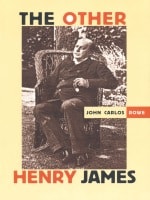
The Other Henry James
John Carlos Rowe
Duke University Press, 1998
Rowe traces a particular development in James’s work, showing how in his early writings James criticized women’s rights, same-sex relations, and other social and political trends now identified with modern culture; how he ambivalently explored these aspects of modernity in his writings of the 1880s; and, later, how he increasingly identified with such modernity in his heretofore largely ignored or marginally treated fiction of the 1890s. Building on recent scholarship that has shown James to be more anxious about gender roles, more conflicted, and more marginal a figure than previously thought, Rowe argues that James—through his treatment of women, children, and gays—indicts the values and conventions of the bourgeoisie. He shows how James confronts social changes in gender roles, sexual preferences, national affiliations, and racial and ethnic identifications in such important novels as The American, The Tragic Muse, What Maisie Knew, and In the Cage, and in such neglected short fiction as “The Last of the Valerii,” “The Death of the Lion,” and “The Middle Years.”
Positioning James’s work within an interpretive context that pits the social and political anxieties of his day against the imperatives of an aesthetic ideology, The Other Henry James will engage scholars, students, and teachers of American literature and culture, gay literature, and queer theory.
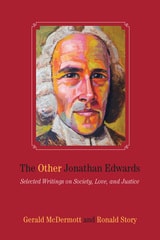
The Other Jonathan Edwards
Selected Writings on Society, Love, and JusticeGerald McDermott
University of Massachusetts Press, 2015
Widely regarded as perhaps America's greatest theologian, Jonathan Edwards still suffers the stereotype of hellfire preacher obsessed with God's wrath. In this anthology, Gerald McDermott and Ronald Story seek to correct that common view by showing that Edwards was also a compassionate, socially conscious minister of the first order.
Through a selection of sermons and primary writings, McDermott and Story reveal an Edwards who preached love toward all humanity regardless of belief or appearance; who demanded private and public charity to the poor; who criticized hard-hearted business dealings as impious and socially destructive; and who condemned envy and status-seeking as anti-Christian and anti-community. This “other” Jonathan Edwards preached about grace and the love of God but also about responsive constitutional government, the iniquities of hypocrisy and corruption, and the nature of wise leadership. He acknowledged the need for national defense but left room for popular revolt from tyranny. He anticipated a millennial age of peace and prosperity and believed that people should live in the world as they would live through grace in heaven.
Jonathan Edwards was, in sum, a worldly as well as spiritual reformer who resisted the materialistic, acquisitive, and individualistic currents of American culture. For these reasons, McDermott and Story think he may have lessons to teach us today.
The Other Presences
Reading Literature Other-Wise after the Transnational Turn in American StudiesFlorian Tatschner
Dartmouth College Press, 2019
The Other Renaissance
Italian Humanism between Hegel and HeideggerRocco Rubini
University of Chicago Press, 2014
Bookended by Giambattista Vico and Antonio Gramsci, this strand of Renaissance-influenced philosophy rose in reaction to the major revolutions of the time in Italy, such as national unity, fascism, and democracy. Exploring the ways its thinkers critically assimilated the thought of their northern counterparts, Rubini uncovers new possibilities in our intellectual history: that antihumanism could have been forestalled, and that our postmodern condition could have been entirely different. In doing so, he offers an important new way of thinking about the origins of modernity, one that renews a trust in human dignity and the Western legacy as a whole.
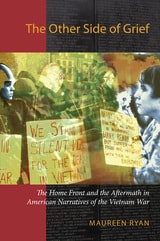
The Other Side of Grief
The Home Front and the Aftermath in American Narratives of the Vietnam WarMaureen Ryan
University of Massachusetts Press, 2008
The lingering aftereffects of the Vietnam War resonate to this day throughout American society: in foreign policy, in attitudes about the military and war generally, and in the contemporary lives of members of the so-called baby boom generation who came of age during the 1960s and early 1970s. While the best-known personal accounts of the war tend to center on the experience of combat, Maureen Ryan's The Other Side of Grief examines the often overlooked narratives—novels, short stories, memoirs, and films—that document the war's impact on the home front.
In analyzing the accounts of Vietnam veterans, women as well as men, Ryan focuses on the process of readjustment, on how the war continued to insinuate itself into their lives, their families, and their communities long after they returned home. She looks at the writings of women whose husbands, lovers, brothers, and sons served in Vietnam and whose own lives were transformed as a result. She also appraises the experiences of the POWs who came to be embraced as the war's only heroes; the ordeal of Vietnamese refugees who fled their “American War” to new lives in the United States; and the influential movement created by those who committed themselves to protesting the war.
The end result of Ryan's investigations is a cogent synthesis of the vast narrative literature generated by the Vietnam War and its aftermath. Together those stories powerfully demonstrate how deeply the legacies of the war penetrated American culture and continue to reverberate still.
The Outward Mind
Materialist Aesthetics in Victorian Science and LiteratureBenjamin Morgan
University of Chicago Press, 2017
The Oven
An Anti-LectureIlan Stavans
University of Massachusetts Press, 2018
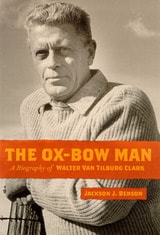
The Ox-Bow Man
A Biography Of Walter Van Tilburg ClarkJackson J. Benson
University of Nevada Press, 2006
Walter Van Tilburg Clark, author of the classic novel The Ox-Bow Incident, was one of the West’s most important literary figures, a writer who contributed mightily to the tradition of viewing the West realistically and not through the veil of myth and romance. As a comparatively young man, he published three novels and a collection of short stories, then remained almost silent for the rest of his life, the victim of a paralyzing case of writer’s block. Now Jackson J. Benson, one of the country’s foremost literary biographers, has produced the first full-length biography of this brilliant, enigmatic, and ultimately tragic figure. Based on widely scattered sources—personal papers and correspondence; interviews with family members, friends, and others; and Clark’s unpublished stories and poems—Benson’s biography focuses on Clark’s intellectual and literary life as a writer, teacher, and westerner. Benson masterfully balances his engaging account of the experiences, people, and settings of Clark’s life with a penetrating examination of his complex psyche and the crippling perfectionism that virtually ended Clark’s career, as well as offering up a thoughtful assessment of Clark’s place in Western writing. In these pages, Clark lives again, a warm, complex, and ultimately anguished human being. Benson’s remarkably astute and sensitive biography is destined to be the book that readers and researchers consult first for information about this major western writer.
The Oyster and the Eagle
Selected Aphorisms and Parables of MultatuliE. M. Multatuli
University of Massachusetts Press, 1974

The Panza Monologues
Written, Compiled, and Collected by Virginia Grise and Irma Mayorga
University of Texas Press, 2014
The Panza Monologues is an original solo performance piece based on women's stories about their panzas—tú sabes—that roll of belly we all try to hide. Written, compiled, and collected by Virginia Grise and Irma Mayorga and fashioned into a tour-de-force solo performance, The Panza Monologues features the words of Chicanas speaking with humor and candor. Their stories boldly place the panza front and center as a symbol that reveals the lurking truths about women's thoughts, lives, loves, abuses, and living conditions.
This second edition of The Panza Monologues presents the performance script in its entirety, as well as a rich supporting cast of dramaturgical and pedagogical materials. These include a narrative history of the play’s development by the playwrights; critical materials that enhance and expand upon the script’s themes and ideas (a short introduction to San Antonio, where the play was developed; playwright autogeographies; and a manifesto on women of color making theater); and a selection of pedagogical and creative ideas, including guidelines and advice for staging a production of the play and for teaching it in the classroom, community-making activities (screenings, hosting “Panza Parties,” community/group discussions), and creative writing activities connected to the play.
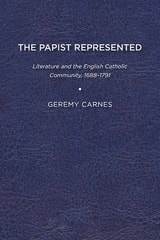
The Papist Represented
Literature and the English Catholic Community, 1688-1791Geremy Carnes
University of Delaware Press, 2017
The Papist Represented reincorporates the history of the English Catholic community into the field of eighteenth-century literary studies. It examines the intersections of literary, religious, and cultural history as they pertain to the slow acceptance by both Protestants and Catholics of the latter group’s permanent minority status. By focusing on the Catholic community’s perspectives and activities, it deepens and complicates our understanding of the cultural processes that contributed to the significant progress of the Catholic emancipation movement over the course of the century. At the same time, it reveals that this community’s anxieties and desires (and the anxieties and desires it provoked in Protestants) fuel some of the most popular and experimental literary works of the century, in forms and modes including closet drama, elegy, the novel, and the Gothic. By returning the Catholic community to eighteenth-century literary history, The Papist Represented challenges the assumption that eighteenth-century literature was a fundamentally Protestant enterprise.
Published by University of Delaware Press. Distributed worldwide by Rutgers University Press.
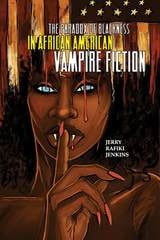
The Paradox of Blackness in African American Vampire Fiction
Jerry Rafiki Jenkins
The Ohio State University Press, 2019
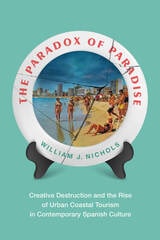
The Paradox of Paradise
Creative Destruction and the Rise of Urban Coastal Tourism in Contemporary Spanish CultureWilliam J. Nichols
Vanderbilt University Press, 2023
In addition to inserting the coasts into the scope of Iberian urban studies (typically dominated by studies of Madrid and Barcelona), this project breaks new ground by bringing to the fore unexplored cultural artifacts vital to the narrative of development along the coasts in Spain—in particular the ubiquitous tourist postcard, which advances not only the post-Franco economic miracle, but does so by highlighting the transformation of the actual Spanish landscape along its coasts.
The Paradox of Paradise features more than twenty-five striking images of coastal Spain in the throes of its own coming of age. Author William J. Nichols has unlocked a strange, self-conscious archive that tells us as much about our own age of advertising as it does about the hotels and resorts and people on display.
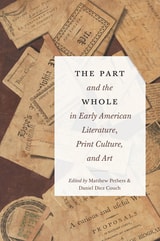
The Part and the Whole in Early American Literature, Print Culture, and Art
Matthew Pethers
Bucknell University Press, 2024
The essays in this pathbreaking collection consider the significance of varied early American fragmentary genres and practices—from diaries and poetry, to almanacs and commonplace books, to sermons and lists, to Indigenous ruins and other material shards and fragments—often overlooked by critics in a scholarly privileging of the “whole.” Contributors from literary studies, book history, and visual culture discuss a host of canonical and non-canonical figures, from Edward Taylor and Washington Irving to Mary Rowlandson and Sarah Kemble Knight, offering insight into the many intellectual, ideological, and material variations of “form” that populated the early American cultural landscape. As these essays reveal, the casting of the fragmentary as aesthetically eccentric or incomplete was a way of reckoning with concerns about the related fragmentation of nation, society, and self. For a contemporary audience, they offer new ways to think about the inevitable gaps and absences in our cultural and historical archive.
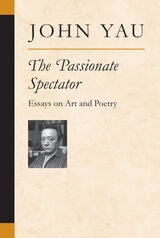
The Passionate Spectator
Essays on Art and PoetryJohn Yau
University of Michigan Press, 2006
Yau’s diverse critical sensibilities permeate The Passionate Spectator as he moves seamlessly between the visual and literary arts. Highlights of this collection include an essay on the poet as art critic, a study of the relationship between Kevin Young’s poetry and the paintings of Jean-Michel Basquiat, and an imaginative piece in which Yau speculates about what Jorge Luis Borges would have created had he been a visual artist. In the title essay, Yau lays out the duty of the spectator—a duty shared by viewer, reader, critic, and artist: “it is up to us to experience art, to engage and believe in its power.”
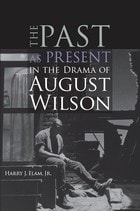
The Past as Present in the Drama of August Wilson
Harry J. Elam, Jr.
University of Michigan Press, 2004
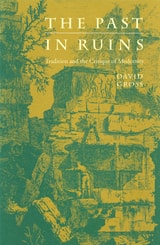
The Past in Ruins
Tradition and the Critique of ModernityDavid Gross
University of Massachusetts Press, 1992
What is the fate of tradition in the modern world? Once a viral source of social cohesion and continuity, many traditions in the West today seem to have been undermined or to have disappeared altogether. Some observers regard this erosion of past values and practices as a disaster, the root cause of contemporary spiritual and social decay. Others see the same phenomenon as emancipatory, making possible new ways of living and new modes of cultural expression.
The Past in Ruins engages and extends this debate beyond these two perspectives. Neither a nostalgic lament for a “world we have lost” nor a celebration of the decline of tradition, the book offers a description of what has disappeared and why, an appraisal of what has survived and how, and a discussion of what to do with tradition now that it no longer serves the integrative function it once did.
In David Gross’s view, the collapse of tradition, though real, can easily be exaggerated. Many traditions have survived at the margins of social life; others have been reconstituted in new forms, or have persisted as “fragments” or “residues.” Yet, though vestiges of tradition remain, they have come to represent something strange or “other.” According to Gross, it is precisely this quality of otherness that makes tradition especially valuable, for today tradition can do what it has rarely done before. It can disturb and unsettle, it can force us to rethink the “givens” of modern life, and it can reconnect us with many of the past’s “lost” or undeveloped possibilities.
The Past, Present, and Future of Early Modern Digital Studies
Iter at 25Edited by Laura Estill and Ray Siemens
Iter Press, 2025
Early modern digital studies is a thriving field that draws in strands from publishing, textual studies, digital humanities, and more. Yet it is also rapidly changing. This volume shows that early modern digital studies must be reconsidered from different perspectives as new projects and tools emerge, change, or disappear, and as we make advances into better understanding the past. The chapters in this volume explore how and what we publish (digitally and otherwise), how we value, evaluate, and sustain those publications and digital projects, and how these projects enable us to ask new research questions about early modern literature and culture. This collection does not seek to be a definitive or final state-of-the-field, but rather, a celebration of existing scholarship and an invitation to further scholarship about our ever-evolving practices.
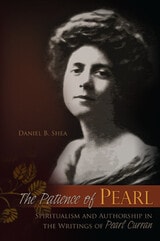
The Patience of Pearl
Spiritualism and Authorship in the Writings of Pearl CurranDaniel B. Shea
University of Missouri Press, 2012
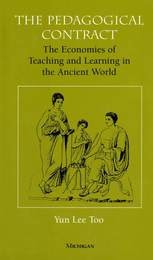
The Pedagogical Contract
The Economies of Teaching and Learning in the Ancient WorldYun Lee Too
University of Michigan Press, 2000
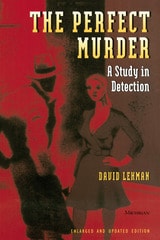
The Perfect Murder
A Study in DetectionDavid Lehman
University of Michigan Press, 2000
As Lehman shows, the detective story draws deeply from ancient storytelling traditions. The mystery's conventions--the locked room, the clue "hidden" in plain sight, the diabolical double, the villainous least likely subject--work on us as childhood fairy tales do; they prey upon our darkest fears, taking us to the brink of the unbearable before restoring a comforting sense of order. The myth of Oedipus, for example, contains the essential elements of a whodunit, with the twist that the murderer the detective pursues is himself.
With their wisecracking gumshoe heroes, Dashiell Hammett and Raymond Chandler fashioned an existential romance out of the detective novel. More recent writers such as Ross MacDonald, P. D. James, and Ruth Rendell have raised the genre to a new level of psychological sophistication. Yet the form evolves still, and Lehman guides us to the epistemological riddles of Jorge Luis Borges and Umberto Eco, who challenge the notion of a knowable truth. Originally published in 1989, this new edition features an additional chapter on the mystery novels of the 1990s.
"A lively study of the development and varieties of the detective story since Poe, its relations with other forms high and low, and the latter-day appropriation of its techniques by such writers as Borges and Eco. . . . A thoroughly intelligent and readable book." --Richard Wilbur, Pulitzer-Prize winning poet
David Lehman is the series editor of both the The Best American Poetry, published by Scribner, and the Poets on Poetry series published by the University of Michigan Press. He is a former Guggenheim Fellow in poetry, a vice president of the National Book Critics Circle, and the author of several books of criticism and collections of poems.

The Performing Self
Compositions and Decompositions in the Languages of Contemporary LifePoirier, Richard
Rutgers University Press, 1992
.
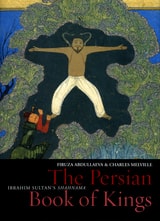
The Persian Book of Kings
Ibrahim Sultan's "Shahnama"Firuza Abdullaeva and Charles Melville
Bodleian Library Publishing, 2008
The Shahnama positions Iran at the heart of human civilization, and its sprawling and compelling narrative stretches from the beginning of time to the seventh-century takeover of the Persian Empire by Muslim Arabs. Ibrahim Sultan, governor of Shiraz in southern Iran from 1415 to 1435, commissioned an edition of the Shahnama that contained a lavish assortment of intricate original paintings. This version is now in the collection of the Bodleian Library, and The Persian Book of Kings explores this rare text in extensive detail.
The authors investigate the life of the poet Firdausi, unpack the literary context of the poem and its illuminations, and examine the royal court of Ibrahim Sultan for whom the manuscript was commissioned. The richly colored miniatures and illuminations spread through the text are given full exploration in this study, with examinations of both the artists’ techniques that influenced generations of illustrators and the artworks’ meanings. The book also features a helpful glossary of Persian terms and a list of the numerous characters that appear in the epic.
A gorgeously produced study of one of the great literary works of human history, The Persian Book of Kings offers a fascinating look at the myths and legends of an ancient culture.
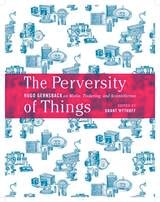
The Perversity of Things
Hugo Gernsback on Media, Tinkering, and ScientifictionHugo Gernsback
University of Minnesota Press, 2016
In 1905, a young Jewish immigrant from Luxembourg founded an electrical supply shop in New York. This inventor, writer, and publisher Hugo Gernsback would later become famous for launching the first science fiction magazine, Amazing Stories, in 1926. But while science fiction’s annual Hugo Awards were named in his honor, there has been surprisingly little understanding of how the genre began among a community of tinkerers all drawn to Gernsback’s vision of comprehending the future of media through making. In The Perversity of Things, Grant Wythoff makes available texts by Hugo Gernsback that were foundational both for science fiction and the emergence of media studies.
Wythoff argues that Gernsback developed a means of describing and assessing the cultural impact of emerging media long before media studies became an academic discipline. From editorials and blueprints to media histories, critical essays, and short fiction, Wythoff has collected a wide range of Gernsback’s writings that have been out of print since their magazine debut in the early 1900s. These articles cover such topics as television; the regulation of wireless/radio; war and technology; speculative futures; media-archaeological curiosities like the dynamophone and hypnobioscope; and more. All together, this collection shows how Gernsback’s publications evolved from an electrical parts catalog to a full-fledged literary genre.
The Perversity of Things aims to reverse the widespread misunderstanding of Gernsback within the history of science fiction criticism. Through painstaking research and extensive annotations and commentary, Wythoff reintroduces us to Gernsback and the origins of science fiction.
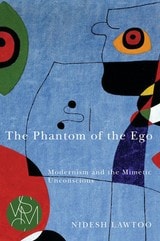
The Phantom of the Ego
Modernism and the Mimetic UnconsciousNidesh Lawtoo
Michigan State University Press, 2013
The Phantom of the Ego is the first comparative study that shows how the modernist account of the unconscious anticipates contemporary discoveries about the importance of mimesis in the formation of subjectivity. Rather than beginning with Sigmund Freud as the father of modernism, Nidesh Lawtoo starts with Friedrich Nietzsche’s antimetaphysical diagnostic of the ego, his realization that mimetic reflexes—from sympathy to hypnosis, to contagion, to crowd behavior—move the soul, and his insistence that psychology informs philosophical reflection. Through a transdisciplinary, comparative reading of landmark modernist authors like Nietzsche, Joseph Conrad, D. H. Lawrence, and Georges Bataille, Lawtoo shows that, before being a timely empirical discovery, the “mimetic unconscious” emerged from an untimely current in literary and philosophical modernism. This book traces the psychological, ethical, political, and cultural implications of the realization that the modern ego is born out of the spirit of imitation; it is thus, strictly speaking, not an ego, but what Nietzsche calls, “a phantom of the ego.” The Phantom of the Ego opens up a Nietzschean back door to the unconscious that has mimesis rather than dreams as its via regia, and argues that the modernist account of the “mimetic unconscious” makes our understanding of the psyche new.

The Philadelphia Connection
Conversations with PlaywrightsB. J. Burton
Intellect Books, 2015
The Philosopher and the Storyteller
Eric Voegelin and Twentieth-Century LiteratureCharles R. Embry
University of Missouri Press, 2018
Throughout his philosophical career, Eric Voegelin had much to say about literature in both his published work and his private letters. Many of his most trenchant comments regarding the analysis of literature appear in his correspondence with critic Robert Heilman, and, through his familiarity with that exchange, Charles Embry has gained extraordinary insight into Voegelin’s literary views.
The Philosopher and the Storyteller is the first book-length study of the literary dimensions of Voegelin’s philosophy—and the first to use his philosophy to read specific novels. Bringing to bear a thorough familiarity with both Voegelin and great literature, Embry shows that novels—like myths, philosophy, and religious texts—participate in the human search for the truth of existence, and that reading literature within a Voegelinian framework exposes the existential and philosophical dimensions of those works.
Embry focuses on two key elements of Voegelin’s philosophy as important for reading literature: metaxy, the in-between of human consciousness, and metalepsis, human participation in the community of being. He shows how Voegelin’s philosophy in general is rooted in literary-symbolic interpretation and, therefore, provides a foundation for the interpretation of literature. And finally he explores Voegelin’s insistence that the soundness of literary criticism lies in the consciousness of the reader.
Embry then offers Voegelinian readings that vividly illustrate the principles of this approach. First he considers Graham Swift’s Waterland as an example of the human search for meaning in the modern world, then he explores the deformation and recovery of reality in Heimito von Doderer’s long and complex novel The Demons, and finally he examines how Flannery O’Connor’s The Violent Bear It Away mythically expresses the flux of divine presence in what Voegelin calls the Time of the Tale.
The Philosopher and the Storyteller unites fiction and philosophy in the common quest to understand our nature, our world, and our cosmos. A groundbreaking exploration of the connection between Voegelin and twentieth-century literature, this book opens a new window on the philosopher’s thought and will motivate readers to study other novels in light of this approach.
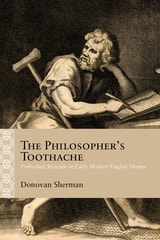
The Philosopher's Toothache
Embodied Stoicism in Early Modern English DramaDonovan Sherman
Northwestern University Press, 2022
Informed by work in both classical philosophy and performance studies, Donovan Sherman argues that Stoicism infused the complex theatrical culture of early modern England. Plays written and performed during this period gave life to Stoic exercises that instructed audiences to cultivate their virtue, self-awareness, and creativity. By foregrounding Stoicism’s embodied nature, Sherman recovers a vital dimension too often lost in reductive portrayals of the Stoics by early modern writers and contemporary scholars alike. The Philosopher’s Toothache features readings of dramatic works by William Shakespeare, Cyril Tourneur, and John Marston alongside considerations of early modern adaptations of classical Stoics (Seneca, Epictetus, and Marcus Aurelius) and Neo-Stoics such as Justus Lipsius. These plays model Stoic virtues like unpredictability, indifference, vulnerability, and dependence—attributes often framed as negative but that can also rekindle a sense of responsible public action.
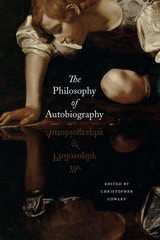
The Philosophy of Autobiography
Edited by Christopher Cowley
University of Chicago Press, 2015
Cowley and his contributors show that while philosophers have seemed uninterested in autobiography, they have actually long been preoccupied with many of its conceptual elements, issues such as the nature of the self, the problems of interpretation and understanding, the paradoxes of self-deception, and the meaning and narrative structure of human life. But rarely have philosophers brought these together into an overarching question about what it means to tell one’s life story or understand another’s. Tackling these questions, the contributors explore the relationship between autobiography and literature; between story-telling, knowledge, and agency; and between the past and the present, along the way engaging such issues as autobiographical ethics and the duty of writing. The result bridges long-standing debates and illuminates fascinating new philosophical and literary issues.
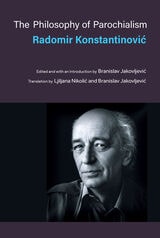
The Philosophy of Parochialism
Radomir Konstantinovic, Edited and with an Introduction by Branislav Jakovljevic, Translation by Ljiljana Nikolic and Branislav Jakovljevic
University of Michigan Press, 2021
The Philosophy of Parochialism is Radomir Konstantinović’s (1928–2011) most celebrated and reviled book. First published in Belgrade as Filosofija palanke in 1969, it attracted keen attention and controversy through its unsparing critique of Serbian and any other nationalism in Yugoslavia and beyond. The book was prophetic, seeming to anticipate not only the bloody disintegration of Yugoslavia in the 1990s, but also the totalitarian turn in politics across the globe in the first decades of the new century. With this translation, English-speaking audiences can at last discover one of the most original writers of eastern European late modernism, and gain an important and original perspective into contemporary politics and culture in the West and beyond. This is a book that seems to age in reverse, as its meanings become deeper and more universal with the passage of time.
Konstantinović’sbookresists easy classification, mixing classical, Montaigne-like essay, prose poetry, novel, and literary history. The word “philosophy” in the book’s title refers to the solitary activity of reflection and critical thinking, and is also paradoxical: according to the author, a defining characteristic of parochialism is precisely its intolerance toward this kind of self-reflexivity. In Konstantinović’s analysis, parochialism is not a simply a characteristic of a geographical region or a cultural, political, and historical formation—these are all just manifestations of the parochial spirit as the spirit of insularity. His book illuminates the current moment, in which insularity undergirds not only ethnic and national divisions, but also dictates the very structure of everyday life, and where individuals can easily find themselves locked in an echo chamber of social media. The Philosophy of Parochialism can help us understand better not only the dead ends of ethnic nationalism and other atavistic ideologies, but also of those cultural forces such as digital technologies that have been built on the promise of overcoming those ideologies.
The Philosophy of Vegetarianism
Daniel A. Dombrowski
University of Massachusetts Press, 1984
Daniel A. Dombrowski uses the tools and insights of these contemporary debates in order to better understand the strengths and weaknesses of ancient philosophical vegetarianism. He also uses the wisdom of the Greek vegetarians as an Archimedean point from which to critique both the opponents and the defenders of contemporary philosophical vegetarianism. The book includes an annotated bibliography of the current debates in this burgeoning field of scholarship.
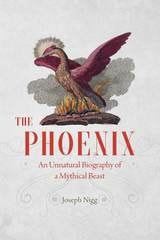
The Phoenix
An Unnatural Biography of a Mythical BeastJoseph Nigg
University of Chicago Press, 2016
Beginning in ancient Egypt and traveling around the globe and through the centuries, Nigg’s vast and sweeping narrative takes readers on a brilliant tour of the cross-cultural lore of this famous, yet little-known, immortal bird. Seeking both the similarities and the differences in the phoenix’s many myths and representations, Nigg describes its countless permutations over millennia, including legends of the Chinese “phoenix,” which was considered one of the sacred creatures that presided over China’s destiny; classical Greece and Rome, where it can be found in the writings of Herodotus and Ovid; nascent and medieval Christianity, in which it came to embody the resurrection; and in Europe during the Renaissance, when it was a popular emblem of royals. Nigg examines the various phoenix traditions, the beliefs and tales associated with them, their symbolic and metaphoric use, the skepticism and speculation they’ve raised, and their appearance in religion, bestiaries, and even contemporary popular culture, in which the ageless bird of renewal is employed as a mascot and logo, including for our own University of Chicago.
Never bested by hardship or defeated by death, the phoenix is the ultimate icon of hope and rebirth. And in The Phoenix: An Unnatural Biography of a Mythical Beast, it finally has its due—a complete chronicle worthy of such a fantastic and phantasmal creature. This entertaining and informative look at the
life and transformation of the phoenix will be the authoritative source for anyone fascinated by folklore and mythology, re-igniting our curiosity about one of myth’s greatest beasts.
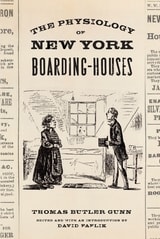
The Physiology of New York Boarding-Houses
Faflik, David
Rutgers University Press, 2008
In his introduction, David Faflik considers what made Gunn's book a compelling read in the past and how today it can elucidate our understanding of the formation and evolution of urban American life and letters.
The Pink Guitar
Writing as Feminist PracticeRachel Blau DuPlessis
University of Alabama Press, 2006
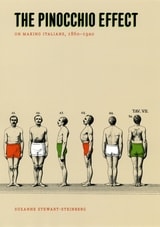
The Pinocchio Effect
On Making Italians, 1860-1920Suzanne Stewart-Steinberg
University of Chicago Press, 2007
Taking as her guiding metaphor the character of Pinocchio—a national icon made famous in 1881 by the eponymous children’s book—Susan Stewart-Steinberg argues that just like the renowned puppet, modern Italians were caught in a complex interplay between freely chosen submission and submission demanded by an outside force. In doing so, she explores all the ways that identity was constructed through newly formed attachments, voluntary and otherwise, to the young nation. Featuring deft readings of the period’s most important Italian cultural and social thinkers—including the theorist of mass psychology Scipio Sighele, the authors Matilde Serao and Edmondo De Amicis, the criminologist Cesare Lombroso, and the pedagogue Maria Montessori—Stewart-Steinberg’s richly multidisciplinary book will set a new standard in Italian studies.
The Piracy Crusade
How the Music Industry's War on Sharing Destroys Markets and Erodes Civil LibertiesAram Sinnreich
University of Massachusetts Press, 2013
In the decade and a half since Napster first emerged, forever changing the face of digital culture, the claim that “internet pirates killed the music industry” has become so ubiquitous that it is treated as common knowledge. Piracy is a scourge on legitimate businesses and hard-working artists, we are told, a “cybercrime” similar to identity fraud or even terrorism.
In The Piracy Crusade, Aram Sinnreich critiques the notion of “piracy” as a myth perpetuated by today's cultural cartels—the handful of companies that dominate the film, software, and especially music industries. As digital networks have permeated our social environment, they have offered vast numbers of people the opportunity to experiment with innovative cultural and entrepreneurial ideas predicated on the belief that information should be shared widely. This has left the media cartels, whose power has historically resided in their ability to restrict the flow of cultural information, with difficult choices: adapt to this new environment, fight the changes tooth and nail, or accept obsolescence. Their decision to fight has resulted in ever stronger copyright laws and the aggressive pursuit of accused infringers.
Yet the most dangerous legacy of this “piracy crusade” is not the damage inflicted on promising start-ups or on well-intentioned civilians caught in the crosshairs of file-sharing litigation. Far more troubling, Sinnreich argues, are the broader implications of copyright laws and global treaties that sacrifice free speech and privacy in the name of combating the phantom of piracy—policies that threaten to undermine the foundations of democratic society.