Results by title
18284 books match the query 'United States' and 3764 start with t

The Diaries of Judith Malina
1968-1969Judith Malina, Kate Bredeson
Northwestern University Press, 2026
A newly restored edition of Judith Malina’s legendary diaries narrating a key moment of social, political, and cultural upheaval
Originally published by Judith Malina as The Enormous Despair, this slim, gripping collection of diaries from a pivotal period between 1968 and 1969 follows The Living Theatre’s return to the United States after their years of self-exile in Europe, their increasing notoriety and frequent arrests, and their cross-country touring. In these pages, Malina wrestles with the company’s artistic and political efforts during a moment of societal crisis and grapples with their future. Kate Bredeson’s introduction contextualizes Malina’s life and work in this period, while additional historical context and never-before-published photographs add new detail and depth to a stirring account of American social and political history.
The Diaries of Judith Malina is a four-volume set that publishes for the first time together the edited diaries of radical theater director, actor, and activist Judith Malina from 1947 to 1971, the most influential period of her remarkable and storied career. A committed anarchist and pacifist, Malina made theater as a way to engage in revolutionary action. Her diaries showcase her political and social observations, her cultural commentary, her self-reflection, and her wit. This expertly prepared set invites us to recognize Malina for her accomplishments not only as an artist and an activist but as one of the great literary diarists.
The Diaries of Judith Malina
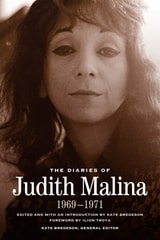
1969-1971Judith Malina, Kate Bredeson, Ilion Troya
Northwestern University Press, 2026
Judith Malina’s never-before-published diaries describing a period of profound personal and professional transformation
The years 1969 to 1971 saw The Living Theatre’s greatest rupture, reckoning with its desire to leave its defining productions from the 1960s behind and move forward with new artistic works and practices. In these previously unpublished diaries, Judith Malina recounts these pivotal years, describing her transformative time in Brazil, including her experiences of daily life in jail while awaiting trial with her company members. This meticulously edited volume includes Kate Bredeson’s introduction, examining Malina’s life and work in this period, as well as additional historical context and never-before-published photographs. Living Theatre member Ilion Troya offers a foreword that provides new context for understanding the volume’s historical significance.
The Diaries of Judith Malina is a four-volume set that publishes for the first time together the edited diaries of radical theater director, actor, and activist Judith Malina from 1947 to 1971, the most influential period of her remarkable and storied career. A committed anarchist and pacifist, Malina made theater as a way to engage in revolutionary action. Her diaries showcase her political and social observations, cultural commentary, self-reflection, and wit. This expertly prepared set invites us to recognize Malina for her accomplishments not only as an artist and an activist but as one of the great literary diarists.
The Diary of Calvin Fletcher, Volume 1
1817-1838Gayle Thornbrough
Indiana Historical Society Press, 1972
The Diary of Calvin Fletcher, Volume 2
1838-1843Gayle Thornbrough
Indiana Historical Society Press, 1973
The Diary of Calvin Fletcher, Volume 3
1844-1847Gayle Thornbrough
Indiana Historical Society Press, 1974
The Diary of Calvin Fletcher, Volume 4
1848-1852Gayle Thornbrough
Indiana Historical Society Press, 1975
The Diary of Calvin Fletcher, Volume 5
1853-1856Gayle Thornbrough
Indiana Historical Society Press, 1977
The Diary of Calvin Fletcher, Volume 6
1857-1860Gayle Thornbrough
Indiana Historical Society Press, 1978
The Diary of Calvin Fletcher, Volume 7
1861-1862Gayle Thornbrough
Indiana Historical Society Press, 1980
The Diary of Calvin Fletcher, Volume 8
1863-1864Gayle Thornbrough
Indiana Historical Society Press, 1981
The Diary of Calvin Fletcher, Volume 9
1865-1866Gayle Thornbrough
Indiana Historical Society Press, 1983
The Dictator Next Door
The Good Neighbor Policy and the Trujillo Regime in the Dominican Republic, 1930-1945Eric Paul Roorda
Duke University Press, 1998
Although Trujillo’s dictatorship was enabled by prior U.S. occupation of the Dominican Republic, the brutality of his regime and the reliance on violence and vanity to sustain his rule was an untenable offense to many in the U.S. diplomatic community, as well as to certain legislators, journalists, and bankers. Many U.S. military officers and congressmen, however—impressed by the civil order and extensive infrastructure the dictator established—comprised an increasingly powerful Dominican lobby. What emerges is a picture of Trujillo at the center of a crowded stage of international actors and a U.S. government that, despite events such as Trujillo’s 1937 massacre of 12,000 Haitians, was determined to foster alliances with any government that would oppose its enemies as the world moved toward war.
Using previously untapped records, privately held papers, and unpublished photographs, Roorda demonstrates how caution, confusion, and conflicting goals marked U.S. relations with Trujillo and set the tone for the ambivalent Cold War relations that prevailed until Trujillo’s assassination in 1961. The Dictator Next Door will interest Latin Americanists, historians, political scientists, and specialists in international relations and diplomacy.
The Die Is Cast
Arkansas Goes to War, 1861Mark K. Christ
Butler Center for Arkansas Studies, 2010

The Difference Aesthetics Makes
On the Humanities “After Man”Kandice Chuh
Duke University Press, 2019
The Difference Women Make
The Policy Impact of Women in CongressMichele L. Swers
University of Chicago Press, 2002
Swers combines quantitative analyses of bills with interviews with legislators and their staff to compare legislative activity on women's issues by male and female members of the House of Representatives during the 103rd (1993-94) and 104th (1995-96) Congresses. Tracking representatives' commitment to women's issues throughout the legislative process, from the introduction of bills through committee consideration to final floor votes, Swers examines how the prevailing political context and members' positions within Congress affect whether and how aggressively they pursue women's issues.
Anyone studying congressional behavior, the role of women, or the representation of social identities in Congress will benefit from Swers's balanced and nuanced analysis.
The Digital Is Kid Stuff
Making Creative Laborers for a Precarious EconomyJosef Nguyen
University of Minnesota Press, 2021
How popular debates about the so-called digital generation mediate anxieties about labor and life in twenty-first-century America
“The children are our future” goes the adage, a proclamation that simultaneously declares both anxiety as well as hope about youth as the next generation. In The Digital Is Kid Stuff, Josef Nguyen interrogates this ambivalence within discussions about today’s “digital generation” and the future of creativity, an ambivalence that toggles between the techno-pessimism that warns against the harm to children of too much screen time and a techno-utopianism that foresees these “digital natives” leading the way to innovation, economic growth, increased democratization, and national prosperity.
Nguyen engages cultural histories of childhood, youth, and creativity through chapters that are each anchored to a particular digital media object or practice. Nguyen narrates the developmental arc of a future creative laborer: from a young kid playing the island fictions of Minecraft, to an older child learning do-it-yourself skills while reading Make magazine, to a teenager posting selfies on Instagram, to a young adult creative laborer imagining technological innovations using design fiction.
Focusing on the constructions and valorizations of creativity, entrepreneurialism, and technological savvy, Nguyen argues that contemporary culture operates to assuage profound anxieties about—and to defuse valid critiques of—both emerging digital technologies and the precarity of employment for “creative laborers” in twenty-first-century neoliberal America.
The Dimensions of Federalism
State Governments and Pollution Control PoliciesWilliam R. Lowry
Duke University Press, 1991
The Dimensions of Tolerance
What Americans Believe About Civil LibertiesHerbert McClosky
Russell Sage Foundation, 1983
The Diplomacy of Involvement
American Economic Expansion across the Pacific, 1784-1900David M. Pletcher
University of Missouri Press, 2001
Like its predecessor, this important new work is focused on the connection between trade and investment on the one hand and U.S. foreign policy on the other. David Pletcher describes the trade of the United States with the Far East, the islands of the Pacific, and the northwest coast of North America from 1784 (the year of the first American trading expedition to China) to 1844 (the year of the first trade treaty with China, followed immediately by the U.S. acquisition of Oregon and California). He then traces the growth of trade and investment in Alaska, Hawaii, and the South Pacific from 1844 to 1890 and proceeds to do the same for China, Japan, and Korea. In the ensuing chapters, Pletcher covers the 1890s, including the annexation of Hawaii, the Sino-Japanese War, the acquisition of the Philippines, and the Open Door policy in China.
He concludes that the American expansion across the Pacific and into the Far East was not a deliberate, consistent drive for economic hegemony but a halting, experimental, improvised movement, carried out against determined opposition and indifference and dotted with setbacks and failures. Providing his own judgments about the wisdom and effectiveness of America's new endeavors, Pletcher summarizes the problems and handicaps involved, demonstrating that errors of the twentieth century were at least partly the result of poor preparation in the 1880s and 1890s.
Touching on every place where Americans undertook significant economic activity, The Diplomacy of Involvement will be an important aid for seasoned scholars, as well as an excellent introduction for the novice.
The Diplomacy of Trade and Investment
American Economic Expansion in the Hemisphere, 1865-1900David M. Pletcher
University of Missouri Press, 1998
The move to encourage trade with Canada and Mexico during the 1990s, culminating with the negotiation of the North American Free Trade Agreement (NAFTA), has had a long background extending as far back as the late eighteenth century. American trade with both Canada and Latin America rapidly increased during the last third of the nineteenth century as a result of burgeoning industry and agriculture in the United States. The Diplomacy of Trade and Investment is the first detailed examination of the economic and political forces behind this rapid growth and their effect on government policy.
Based on a thorough examination of government documents, congressional debates and reports, private papers of government and business leaders, and newspapers, David M. Pletcher begins this monumental study with a comprehensive survey of U.S. trade following the Civil War. He goes on to outline the problems of building a coherent trade policy toward Canada, Mexico, Central America, the Caribbean, and South America. The study concludes by analyzing a series of abortive trade reform efforts and examining the effects of the Spanish-American War.
Pletcher rejects the long-held belief that American business and government engaged in a deliberate, consistent drive for economic hegemony in the hemisphere during the late 1800s. Instead he finds that the American government improvised and experimented with ways to further trade expansion. But American businessmen were often more interested in domestic trade than in trade with foreign markets. In fact, many of them resisted efforts to lower the American tariff or otherwise encourage American trade abroad.
The combination of traditionalist and revisionist insight with Pletcher's own deep knowledge and research provides the reader with a comprehensive new interpretation of hemispheric trade expansion at the end of the nineteenth century.
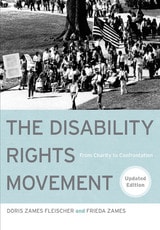
The Disability Rights Movement
From Charity to ConfrontationDoris Fleischer
Temple University Press, 2011
In this updated edition, Doris Zames Fleischer and Frieda Zames expand their encyclopedic history of the struggle for disability rights in the United States, to include the past ten years of disability rights activism.The book includes a new chapter on the evolving impact of the Americans with Disabilities Act, the continuing struggle for cross-disability civil and human rights, and the changing perceptions of disability.
The authors provide a probing analysis of such topics as deinstitutionalization, housing, health care, assisted suicide, employment, education, new technologies, disabled veterans, and disability culture.
Based on interviews with over one hundred activists, The Disability Rights Movement tells a complex and compelling story of an ongoing movement that seeks to create an equitable and diverse society, inclusive of people with disabilities.
The Disappearances
A Story of Exploration, Murder, and Mystery in the American WestScott Thybony
University of Utah Press, 2016
Intrigued by this unusual string of coincidental disappearances, Scott Thybony set out to learn what happened. His investigations took him from Island in the Sky to Skeleton Mesa, from Texas to Tucson, and from the Green River to the Red. He traced the journey of Lucy Garrett from the murder of her father to her dramatic courtroom testimony. Using the pages of an old journal he followed the route of Dan Thrapp as he crossed an expanse of wildly rugged country with a pair of outlaws. Thrapp’s story of survival in an unforgiving land is a poignant counterpoint to the fate of the artist Everett Ruess, which the New York Times has called “one of the most enduring mysteries of the modern West.” Thybony draws on extensive research and a lifetime of exploration to create a riveting story of these three lives.

The Disaster Planning Handbook for Libraries
Mary Grace Flaherty
American Library Association, 2021
Your library is a vital information hub and resource provider every single day, and that’s doubly true when calamity strikes. In fact, your library’s role as an “essential community function” during disasters is now encoded in U.S. law. Engaging as a partner in planning and preparedness will build much-needed community support should disaster strike, and even a basic plan will also save you time and stress later on. No matter where your library is in the disaster planning cycle, this handbook will make the process clearer and less daunting. You’ll get tools, activities, easy-to-adapt templates, and hands-on guidance on such topics as
- the six phases of disaster response;
- 15 first-hand accounts of library disaster planning or responses, helping you identify the library services most needed during a disaster;
- three essential factors that will shape the form of your disaster plan;
- preparing for hurricanes, tornadoes, fires, floods, and earthquakes;
- ideas for connecting with your community’s emergency response teams;
- federal government planning resources;
- pointers on working with state and local governments;
- a sample Memorandum of Understanding to outline mutual support for a speedier recovery;
- recommended courses and training, many of which are free;
- targeted advice for archives and special collections;
- sample building inspection checklists; and
- recommended games to help children and families prepare.

The Discovery of New Mexico by the Franciscan Monk Friar Marcos de Niza in 1539
Adolph F. Bandelier; Translated and Edited by Madeleine Turrell Rodack
University of Arizona Press, 1980
The Disenfranchisement of Ex-Felons
Elizabeth A. Hull, foreword by Representative John Conyers, Jr.
Temple University Press, 2006
The Disenfranchisement of Ex-Felons provides a comprehensive overview of the history, nature, and far-reaching sociological and political consequences of denying ex-felons the right to vote. Readers learn state practices in Florida and Ohio during the 2000 and 2004 presidential elections; arguments that have been used in court houses, legislatures, and the press to justify such practices; and attempts to reverse legislation through state and federal governments. In a timely appendix to the 2004 election, Elizabeth Hull makes her case that the battle for civil rights will not be won unless ex-felons, who have fulfilled their obligations to society, are restored the same rights afforded all other American citizens.
The Dismantling of the Good Neighbor Policy
By Bryce Wood
University of Texas Press, 1985
The Good Neighbor Policy was unique: a great power obligated itself not to use force in its dealings with twenty smaller powers and not to interfere in their domestic politics. It was a policy that lasted, with some perturbations, for twenty years: instituted by President Roosevelt in 1933 and carried out effectively from 1933 to 1943 by word and action, maintained during the Second World War largely as a result of British concern for continuance of Argentine beef exports, codified in the Charter of the Organization of American States in 1948, and reasserted by Truman and Acheson in 1950–51, it was covertly repudiated in Guatemala in 1954 by Eisenhower and the Dulles brothers, and not so secretly by Kennedy in the disastrous Bay of Pigs invasion of 1961. Openly shattered in the Dominican Republic by Johnson in 1965, it has since been completely abandoned in favor of the usual relationships between large and small powers.
Working with documents from the Public Records Office in London and the National Archives, with recently released materials from the U.S. Department of State, and with secondary sources, Bryce Wood describes the temptations laid before the leaders of one powerful state by its occasionally recalcitrant neighbors, and the ways of reacting that were found. Having told half the story in his The Making of the Good Neighbor Policy, Wood now concludes it in the present volume. One of the chief casualties is shown to be the Organization of American States, which since 1954 has found itself badly crippled in its work to promote harmony and continued cooperation among the member states.
The Disney Animation Renaissance
Behind the Glass at the Florida StudioMary E. Lescher
University of Illinois Press, 2023
A ground-level look at the entertainment giant, The Disney Animation Renaissance profiles the people and purpose behind a little-known studio during a historic era.
The Distributional Aspects of Social Security and Social Security Reform
Edited by Martin Feldstein and Jeffrey B. Liebman
University of Chicago Press, 2002
As this volume suggests, the distributional consequences of these proposals are substantially different and may disproportionately affect those groups who depend on social security to avoid poverty in old age. Together, these studies persuasively show that appropriately designed investment-based social security reforms can effectively reduce the long-term burden of an aging society on future taxpayers, increase the expected future income of retirees, and mitigate poverty rates among the elderly.
The Diversity Bargain
And Other Dilemmas of Race, Admissions, and Meritocracy at Elite UniversitiesNatasha Warikoo
University of Chicago Press, 2016
What Warikoo uncovers—talking with both white students and students of color at Harvard, Brown, and Oxford—is absolutely illuminating; and some of it is positively shocking. As she shows, many elite white students understand the value of diversity abstractly, but they ignore the real problems that racial inequality causes and that diversity programs are meant to solve. They stand in fear of being labeled a racist, but they are quick to call foul should a diversity program appear at all to hamper their own chances for advancement. The most troubling result of this ambivalence is what she calls the “diversity bargain,” in which white students reluctantly agree with affirmative action as long as it benefits them by providing a diverse learning environment—racial diversity, in this way, is a commodity, a selling point on a brochure. And as Warikoo shows, universities play a big part in creating these situations. The way they talk about race on campus and the kinds of diversity programs they offer have a huge impact on student attitudes, shaping them either toward ambivalence or, in better cases, toward more productive and considerate understandings of racial difference.
Ultimately, this book demonstrates just how slippery the notions of race, merit, and privilege can be. In doing so, it asks important questions not just about college admissions but what the elite students who have succeeded at it—who will be the world’s future leaders—will do with the social inequalities of the wider world.
The Diversity Challenge
Social Identity and Intergroup Relations on the College CampusJames Sidanius
Russell Sage Foundation, 2008
The Diversity Paradox
Immigration and the Color Line in Twenty-First Century AmericaJennifer Lee
Russell Sage Foundation, 2010
The Divided City and Its New Cinemas, 1920-1980
Amy Murphy
University of Illinois Press, 2026
The Divided Mind of Protestant America, 1880-1930
Ferenc M. Szasz
University of Alabama Press, 1982
The Divided Mind of Protestant America is a documented overview of American Protestantism in American culture from beginning to end. It discusses liberal-fundamentalist tensions in America and the role of mainline Protestantism, evangelicalism, and fundamentalism in American culture.
The Divided North
Black and White Families in the Age of SlaveryCarol Gardner
University of Massachusetts Press, 2025
Winner, 2026 New England Historical Association James P. Hanlan Book Prize
Finalist, 2026 New England Society Book Award in Nonfiction
Reuben Ruby and Nathaniel Gordon II were born eleven months apart in 1798 and 1799 and spent much of their boyhoods roaming the noisy, bustling waterfront of Portland, Maine. They lived just blocks from one another, attended school together, and went to the same church with their families. But they were worlds apart, separated by family, culture, and race. Reuben Ruby was Black and Nathaniel Gordon was White.
The Rubys became prominent antislavery activists, equal rights advocates, and operatives on the Underground Railroad. Their neighbors, the Gordons, became well-to-do ship masters, owners, and merchants: among them, the most notorious American slave ship captain of the century, Nathaniel Gordon III. As activists, sea captains, businessmen, prospectors, and politicians, members of these two families traveled to New York, California, Texas, Louisiana, Africa, Haiti, and Brazil, where their experiences were shaped by their racial identities. At home in the “Free North,” they faced social and political divisions nearly as sharp as those they encountered elsewhere.
To understand the issues that divided nineteenth-century America—and, in many ways, still divide the nation—few have looked to the far North. In this compelling narrative history and intimate dual-family biography, Carol Gardner traces the Rubys and Gordons as they navigate the turbulent 1800s. As families and individuals, they demonstrate that the North was a critical proving ground for American notions of freedom and equality, as telling as any town, plantation, or battlefield in the South. Their experiences help reveal what it meant to live in a free state during the age of slavery, with all the promise, disappointment, irony, and hope that the notion entailed.
The Divided States
Unraveling National Identities in the Twenty-First CenturyEdited by Laura J. Beard and Ricia Anne Chansky
University of Wisconsin Press, 2023
Working across auto/biography studies, American studies, and human geography—all of which deal with the current interest in competing narratives, “alternative facts,” and accountability—the essays engage in and contribute to critical conversations in classrooms, scholarship, and the public sphere. The authors draw from a variety of fields, including anthropology; class analysis; critical race theory; diasporic, refugee, and immigration studies; disability studies; gender studies; graphic and comix studies; Indigenous studies; linguistics; literary studies; sociology; and visual culture. And the genres under scrutiny include diary, epistolary communication, digital narratives, graphic narratives, literary narratives, medical narratives, memoir, oral history, and testimony.
This fresh and theoretically engaged volume will be relevant to anyone interested in the multiplicity of voices that make up the US national narrative.

The Dividends of Dissent
How Conflict and Culture Work in Lesbian and Gay Marches on WashingtonAmin Ghaziani
University of Chicago Press, 2008
Amin Ghaziani ably puts these demonstrations into their cultural context, chronicling gay and lesbian life at the time and the political currents that prompted the protests. He then turns to each march in detail, focusing on the role that internal dissent played in its organization. Ultimately, Ghaziani concludes that infighting can contribute positively to the development of social movements, and that the debates over the marches helped define what it means to be gay in the United States.
The Divine Institution
White Evangelicalism's Politics of the FamilySophie Bjork-James
Rutgers University Press, 2021
Winner of the Anne Bolin & Gil Herdt Book Prize from the Human Sexuality and Anthropology Interest Group (HSAIG)
The Divine Institution provides an account of how a theology of the family came to dominate a white evangelical tradition in the post-civil rights movement United States, providing a theological corollary to Religious Right politics.
This tradition inherently enforces racial inequality in that it draws moral, religious, and political attention away from problems of racial and economic structural oppression, explaining all social problems as a failure of the individual to achieve the strong gender and sexual identities that ground the nuclear family. The consequences of this theology are both personal suffering for individuals who cannot measure up to prescribed gender and sexual roles, and political support for conservative government policies. Exposure to experiences that undermine the idea that an emphasis on the family is the solution to all social problems is causing a younger generation of white evangelicals to shift away from this narrow theological emphasis and toward a more social justice-oriented theology. The material and political effects of this shift remain to be seen.
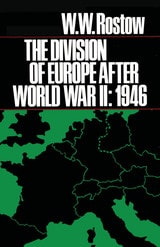
The Division of Europe after World War II
1946By W. W. Rostow
University of Texas Press, 1981
Should the negotiation of the post–World War II peace treaties in Europe have been pursued separately or should they have been approached within the framework of a general European settlement? The debate on this fundamental foreign policy issue, which has left only faint tracks in the documentary record, is fully explored here for the first time.
W. W. Rostow, in his second book in the Ideas and Action Series, describes a meeting that took place on the eve of the departure of Secretary of State James Byrnes for Paris to participate in treaty negotiations. The meeting was probably the only occasion during 1946 when the peace treaty issue as a whole was explicitly addressed at a high level with lucid alternatives on the table. The plan laid before Secretary of State Byrnes by his senior subordinates, Under Secretary Dean Acheson and Assistant Secretary for Economic Affairs Will Clayton, aimed to halt the movement toward the split of Europe and the emergence of hostile blocs. It outlined an all-European settlement, including economic and security institutions linked to the United Nations. Only one part of the proposal gained Byrnes's support and came to life: the United Nations Economic Commission for Europe in Geneva. But the Acheson-Clayton proposal foreshadowed the Marshall Plan.
The book's larger theme is the process by which the Cold War came about. Rostow's interpretation differs from either conventional or revisionist views, emphasizing as it does the process of incremental deterioration that occurred in 1946 and the role of uncertainty and weakness in American policy.
This second volume in the Ideas and Action Series will interest general readers as well as those with a particular interest in World War II. It should be of special value to political scientists, economists, military historians, and policy makers, and may serve as a case study in a variety of courses.
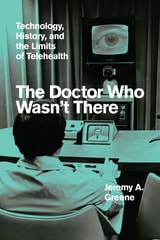
The Doctor Who Wasn't There
Technology, History, and the Limits of TelehealthJeremy A. Greene
University of Chicago Press, 2022
The Doctor Who Wasn’t There traces the long arc of enthusiasm for—and skepticism of—electronic media in health and medicine. Over the past century, a series of new technologies promised to democratize access to healthcare. From the humble telephone to the connected smartphone, from FM radio to wireless wearables, from cable television to the “electronic brains” of networked mainframe computers: each new platform has promised a radical reformation of the healthcare landscape. With equal attention to the history of technology, the history of medicine, and the politics and economies of American healthcare, physician and historian Jeremy A. Greene explores the role that electronic media play, for better and for worse, in the past, present, and future of our health.
Today’s telehealth devices are far more sophisticated than the hook-and-ringer telephones of the 1920s, the radios that broadcasted health data in the 1940s, the closed-circuit televisions that enabled telemedicine in the 1950s, or the online systems that created electronic medical records in the 1960s. But the ethical, economic, and logistical concerns they raise are prefigured in the past, as are the gaps between what was promised and what was delivered. Each of these platforms also produced subtle transformations in health and healthcare that we have learned to forget, displaced by promises of ever newer forms of communication that took their place.
Illuminating the social and technical contexts in which electronic medicine has been conceived and put into practice, Greene’s history shows the urgent stakes, then and now, for those who would seek in new media the means to build a more equitable future for American healthcare.

The Documentary Heritage Of Ohio
Phillip R. Shriver
Ohio University Press, 2010
Key to the successful teaching and learning of history is its personalization. In presenting documents that help Ohio’s rich history come alive in the minds of its readers, this book has purposely sought to provide eyewitness, first-person narratives that will make the reader want to turn the page and keep on reading. At the same time, mindful of the significance of guideposts basic to our understanding of the development of the state, care has been taken to include those documents such as constitutions, laws, and ordinances that have truly made a difference in the shaping of our institutions and the lives of our people.
With informative and accessible introductions to each document, editors Shriver and Wunderlin have produced a book of record that reveals the sources of Ohio’s heritage. The Documentary Heritage of Ohio is the second volume in the Ohio Bicentennial Series and a must for all libraries, schools, and the bookshelves of any who wish to appreciate the state’s historic accomplishments and rich heritage not only for the bicentennial of statehood in 2003 but for many years to come.
The Documentary History of the Ratification of the Constitution Volume 26
Ratification of the Constitution by the States, Rhode Island, No. 3John P. Kaminski
Wisconsin Historical Society Press, 2013
Pulitzer Prize-winning historian Michael Kammen has noted that The Documentary History of the Ratification of the Constitution series "will be of enduring value centuries hence" and described it as "one of the most interesting documentary publications we have ever had." The American Bar Association Journal has stated, "Each new volume now fills another vital part of the mosaic of national history."
The Documentary History of the Ratification of the Constitution, Volume 25
Ratification of the Constitution by the States: Rhode Island, No. 2John P. Kaminski
Wisconsin Historical Society Press, 2012
Pulitzer Prize-winning historian Michael Kammen has noted that The Documentary History of the Ratification of the Constitution series "will be of enduring value centuries hence" and described it as "one of the most interesting documentary publications we have ever had." The American Bar Association Journal has stated, "Each new volume now fills another vital part of the mosaic of national history."
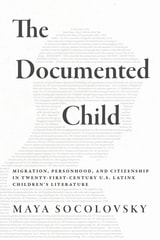
The Documented Child
Migration, Personhood, and Citizenship in Twenty-First-Century U.S. Latinx Children's LiteratureMaya Socolovsky
University of Arizona Press, 2025
Immigration is at once a personal, immediate, and urgent issue that plays a central role in the United States’ perception of itself. In The Documented Child, scholar Maya Socolovsky demonstrates how the portrayal of Latinx children has shifted over the first two decades of the twenty-first century in literary texts aimed at children and young adults and looks at how these shifts map onto broader changes in immigration policy and discourse.
Through a critical inquiry into picture books and middle-grade and young adult literature, Socolovsky argues that the literary documentations of—and for—U.S. Latinx children have shifted over the decades, from an emphasis on hybrid transnationalism to that of a more American-oriented self. Socolovsky delves into texts written from 1997 to 2020, a period marked by tremendous changes in U.S. immigration policies, amplified discourses around nationhood, and an increasingly militarized border. The author shows how children’s and young adult books have shifted their depictions of the border, personal and national identity, and sovereignty.
For students, scholars, and educators of Latinx studies and children’s literature, this work shows how the creators of children’s literature reflect new strategies for representing the undocumented Latinx child protagonist. While earlier books document the child as a transnational (sometimes global) subject, later books document her as both a transnational and U.S. national subject. The Documented Child explores this change as a necessary survival strategy, reflecting current awareness that cultural hybridity and transnational identity are not sufficient stand-ins for the stability and security of legal personhood.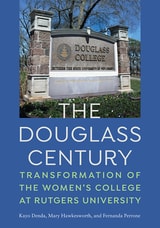
The Douglass Century
Transformation of the Women’s College at Rutgers UniversityDenda, Kayo
Rutgers University Press, 2018
The Douglass Century celebrates the college’s longevity and diversity as distinctive accomplishments, and analyzes the contributions of Douglass administrators, alumnae, and students to its survival, while also investigating multiple challenges that threatened its existence. This book demonstrates how changing historical circumstances altered the possibilities for women and the content of higher education, comparing the Jazz Age, American the Great Depression, the Second World War, the post-war Civil Rights era, and the resurgence of feminism in the 1970s and 1980s. Concluding in the present day, the authors highlight the college’s ongoing commitment to Mabel Smith Douglass’ founding vision, “to bring about an intellectual quickening, a cultural broadening in connection with specific training so that women may go out into the world fitted…for leadership…in the economic, political, and intellectual life of this nation.” In addition to providing a comprehensive history of the college, the book brings its subjects to life with eighty full-color images from the Special Collections and University Archives, Rutgers University Libraries.
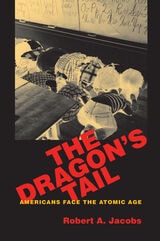
The Dragon's Tail
Americans Face the Atomic AgeRobert A. Jacobs
University of Massachusetts Press, 2010
When President Harry Truman introduced the atomic bomb to the world in 1945, he described it as a God-given harnessing of “the basic power of the universe.” Six days later a New York Times editorial framed the dilemma of the new Atomic Age for its readers: “Here the long pilgrimage of man on Earth turns towards darkness or towards light.” American nuclear scientists, aware of the dangers their work involved, referred to one of their most critical experiments as “tickling the dragon's tail.”
Even after Hiroshima and Nagasaki, most Americans may not have been sure what an atomic bomb was or how it worked. But they did sense that it had fundamentally changed the future of the human race. In this book, Robert Jacobs analyzes the early impact of nuclear weapons on American culture and society. He does so by examining a broad range of stories, or “nuclear narratives,” that sought to come to grips with the implications of the bomb's unprecedented and almost unimaginable power.
Beginning with what he calls the “primary nuclear narrative,” which depicted atomic power as a critical agent of social change that would either destroy the world or transform it for the better, Jacobs explores a variety of common themes and images related to the destructive power of the bomb, the effects of radiation, and ways of surviving nuclear war. He looks at civil defense pamphlets, magazines, novels, and films to recover the stories the U.S. government told its citizens and soldiers as well as those presented in popular culture.
According to Jacobs, this early period of Cold War nuclear culture—from 1945 to the banning of above-ground testing in 1963—was distinctive for two reasons: not only did atmospheric testing make Americans keenly aware of the presence of nuclear weapons in their lives, but radioactive fallout from the tests also made these weapons a serious threat to public health, separate from yet directly linked to the danger of nuclear war.
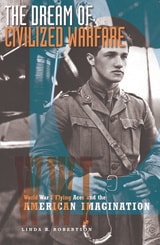
The Dream of Civilized Warfare
World War I Flying Aces and the American ImaginationLinda R. Robertson
University of Minnesota Press, 2005
Analyzes the link between “civilized warfare” and the American self-image
Linda R. Robertson argues that the development of the United States as a global military power arose from the influence of an image of air combat carefully constructed during World War I to mask the sordid realities of modern ground warfare. The Dream of Civilized Warfare carries this trajectory to its logical end, tracing the long history of the American desire to exert the nation’s will throughout the world without having to risk the lives of ground soldiers—a theme that continues to reverberate in public discussions, media portrayals, and policy decisions today.
Histories of American air power usually focus on World War II, when the air force became the foundation for the military strength of the United States. The equally fascinating story of World War I air combat is often relegated to a footnote, but it was the earlier war that first inspired the vision of the United States attaining dominance in world affairs through a massive air force. In The Dream of Civilized Warfare, Robertson presents the compelling story of the creation of the first American air force—and how, through the propaganda of the flying ace, a vision of “clean” or civilized combat was sold to politicians and the public. During World War I, air combat came to epitomize American ingenuity, technological superiority, adventure, leadership, and teamwork. Robertson reveals how the romantic and chivalric imagery associated with flying aces was a product of intentional propaganda and popular culture. Examining aviation history, military battles, films, literature, and political events, she looks at how the American public’s imagination was shaped—how flying aces offered not only a symbol of warfare in stark contrast to the muddy, brutal world of the trenches, but also a distraction to an American public resistant to both intervention in a European conflict and the new practice of conscription.
The Dream of a Common Movement
Selected Writings of Urvashi VaidUrvashi Vaid. Edited by Jyotsna Vaid and Amy Hoffman
Duke University Press, 2025
The Dred Scott Case
Historical and Contemporary Perspectives on Race and LawDavid Thomas Konig
Ohio University Press, 2010
In 1846 two slaves, Dred and Harriet Scott, filed petitions for their freedom in the Old Courthouse in St. Louis, Missouri. As the first true civil rights case decided by the U.S. Supreme Court, Dred Scott v. Sandford raised issues that have not been fully resolved despite three amendments to the Constitution and more than a century and a half of litigation.
The Dred Scott Case: Historical and Contemporary Perspectives on Race and Law presents original research and the reflections of the nation’s leading scholars who gathered in St. Louis to mark the 150th anniversary of what was arguably the most infamous decision of the U.S. Supreme Court. The decision, which held that African Americans “had no rights” under the Constitution and that Congress had no authority to alter that, galvanized Americans and thrust the issue of race and law to the center of American politics. This collection of essays revisits the history of the case and its aftermath in American life and law. In a final section, the present-day justices of the Missouri Supreme Court offer their reflections on the process of judging and provide perspective on the misdeeds of their nineteenth-century predecessors who denied the Scotts their freedom.
Contributors: Austin Allen, Adam Arenson, John Baugh, Hon. Duane Benton, Christopher Alan Bracey, Alfred L. Brophy, Paul Finkelman, Louis Gerteis, Mark Graber, Daniel W. Hamilton, Cecil J. Hunt II, David Thomas Konig, Leland Ware, Hon. Michael A. Wolff
The Dressing Room
Backstage Lives and American FilmDesirée J. Garcia
Rutgers University Press, 2025
A recurrent and popular setting in American cinema, the dressing room has captured the imaginations of filmmakers and audiences for over a century. In The Dressing Room: Backstage Lives and American Film, the only book-length study of the space, author Desirée J. Garcia explores how dressing rooms are dynamic realms in which a diverse cast of performers are made and exposed. Garcia analyzes the backstage film, which spans film history, modes, and genre, to show how dressing rooms have been a useful space for filmmakers to examine the performativity of American life. From the Black maid to the wife and mother to the leading man, dressing rooms navigate, shape, and challenge society’s norms. The stakes are high in dressing rooms, Garcia argues, because they rehearse larger questions about identity and its performance, negotiating who can succeed and who cannot and on what terms.
The Driftless Reader
Edited by Curt Meine and Keefe Keeley
University of Wisconsin Press, 2017
The Driftless Reader gathers writings that highlight the unique natural and cultural history, landscape, and literature of this region that encompasses southwestern Wisconsin and adjacent Minnesota, Iowa, and Illinois. The more than eighty selected texts include writings by Black Hawk, Mark Twain, Laura Ingalls Wilder, Frank Lloyd Wright, Aldo Leopold, David Rhodes, and many other Native people, explorers, scientists, historians, farmers, songwriters, journalists, and poets. Paintings, photographs, maps, and other images complement the texts, providing a deeper appreciation of this region's layered natural and human history.
Highlights include excerpts and art from:
Carol Ryrie Brink
William Cronon
John T. Curtis
August Derleth
Richard Eberhart
Fabu
Hamlin Garland
Pedro Guerrero
Hoowaneka (Little Elk)
Juliet Kinzie
Patty Loew
Ben Logan
Truman Lowe
Jacques Marquette
Ken McCullough
Edna Meudt
Mountain Wolf Woman
Zebulon Pike
Henry Schoolcraft
Clifford D. Simak
Wallace Stegner
Pearl Swiggum
Frank Utpatel
Mark Wunderlich