Results by title
22279 books match the query 'Social Science' and 4007 start with t
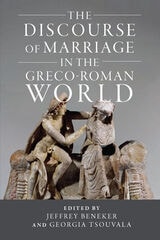
The Discourse of Marriage in the Greco-Roman World
Edited by Jeffrey Beneker and Georgia Tsouvala
University of Wisconsin Press, 2022
Through aesthetically informed and sensitive modes of analysis, these contributors examine a wealth of representations—including violence in weddings and spousal devotion after death. The Discourse of Marriage in the Greco-Roman World demonstrates the varying conceptions of an institution that was central to ancient social and political life—and remains prominent in the modern world. This volume will contribute to scholars' understanding of the era and fascinate anyone interested in historic depictions of marriage and the role and status of women in the late Hellenistic and early Imperial periods.

The Discourse of Police Interviews
Edited by Marianne Mason and Frances Rock
University of Chicago Press, 2020
The first book to focus exclusively on the discourses of police interviewing, The Discourse of Police Interviews examines leading debates, approaches, and topics in contemporary police interview research. Among other topics, the book explores the sociolegal, psychological, and discursive framework of popular police interview techniques employed in the United States and the United Kingdom, such as PEACE and Reid, and the discursive practices of institutional representatives like police officers and interpreters that can influence the construction and quality of linguistic evidence. Together, the contributions situate the police interview as part of a complex, and multistage, criminal justice process. The book will be of interest to both scholars and practitioners in a variety of fields, such as linguistic anthropology, interpreting studies, criminology, law, and sociology.
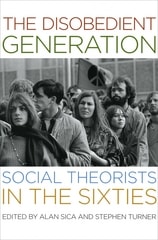
The Disobedient Generation
Social Theorists in the SixtiesEdited by Alan Sica and Stephen Turner
University of Chicago Press, 2005
The Disobedient Generation collects newly written autobiographies by an international cross-section of well-known sociologists, all of them "children of the '60s." It illuminates the human experience of living through that decade as apprentice scholars and activists, encountering the issues of class, race, the Establishment, the decline of traditional religion, feminism, war, and the sexual revolution. In each case the interlinked crises of young adulthood, rapid change, and nascent professional careers shaped this generation's private and public selves. This is an intensely personal collective portrait of a generation in a time of struggle.

The Disturbing Profane
Hip Hop, Blackness, and the SacredJoseph R. Winters
Duke University Press, 2025
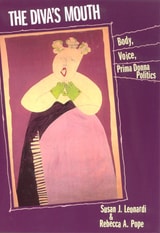
The Diva's Mouth
Body, Voice, and Prima Donna PoliticsLeonardi, Susan J.
Rutgers University Press, 1996
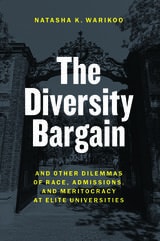
The Diversity Bargain
And Other Dilemmas of Race, Admissions, and Meritocracy at Elite UniversitiesNatasha Warikoo
University of Chicago Press, 2016
What Warikoo uncovers—talking with both white students and students of color at Harvard, Brown, and Oxford—is absolutely illuminating; and some of it is positively shocking. As she shows, many elite white students understand the value of diversity abstractly, but they ignore the real problems that racial inequality causes and that diversity programs are meant to solve. They stand in fear of being labeled a racist, but they are quick to call foul should a diversity program appear at all to hamper their own chances for advancement. The most troubling result of this ambivalence is what she calls the “diversity bargain,” in which white students reluctantly agree with affirmative action as long as it benefits them by providing a diverse learning environment—racial diversity, in this way, is a commodity, a selling point on a brochure. And as Warikoo shows, universities play a big part in creating these situations. The way they talk about race on campus and the kinds of diversity programs they offer have a huge impact on student attitudes, shaping them either toward ambivalence or, in better cases, toward more productive and considerate understandings of racial difference.
Ultimately, this book demonstrates just how slippery the notions of race, merit, and privilege can be. In doing so, it asks important questions not just about college admissions but what the elite students who have succeeded at it—who will be the world’s future leaders—will do with the social inequalities of the wider world.
The Diversity Challenge
Social Identity and Intergroup Relations on the College CampusJames Sidanius
Russell Sage Foundation, 2008

The Diversity Paradox
Immigration and the Color Line in Twenty-First Century AmericaJennifer Lee
Russell Sage Foundation, 2010
The Diversity of Muslim Women's Lives in India
Hasan, Zoya
Rutgers University Press, 2005
To what extent does Muslim personal law, such as polygamy and triple talaq (the allowance for men to instantly divorce their wives), affect the lives of Muslim women? Are these factors more or less important than other lifestyle issues such as socioeconomic status?
Over the past several decades, the most influential approaches to the study of Muslim women and nearly all the significant campaigns for their rights have focused on religious practices and the urgency to reform Islamic laws. Such focused views, however, give the false sense that religion is the main, if not the only, aspect of Muslim women’s lives.
In order to broaden the lens through which this demographic is typically seen, a group of researchers in India carried out a large and unprecedented study of one of the most disadvantaged sections of Indian society. The editors of The Diversity of Muslim Women’s Lives in India bring together this research in a comprehensive collection of informative and revealing case studies. The essays examine Muslim identity, not only in terms of religious doctrine, but as a heterogeneous set of characteristics produced at the intersections of class, religion, and gender.
Addressing issues of law, politics, education, race, and other neglected secular subjects, this volume is essential reading for policy-makers, social activists, and scholars.

The Dividends of Dissent
How Conflict and Culture Work in Lesbian and Gay Marches on WashingtonAmin Ghaziani
University of Chicago Press, 2008
Amin Ghaziani ably puts these demonstrations into their cultural context, chronicling gay and lesbian life at the time and the political currents that prompted the protests. He then turns to each march in detail, focusing on the role that internal dissent played in its organization. Ultimately, Ghaziani concludes that infighting can contribute positively to the development of social movements, and that the debates over the marches helped define what it means to be gay in the United States.

The Divine Institution
White Evangelicalism's Politics of the FamilySophie Bjork-James
Rutgers University Press, 2021
Winner of the Anne Bolin & Gil Herdt Book Prize from the Human Sexuality and Anthropology Interest Group (HSAIG)
The Divine Institution provides an account of how a theology of the family came to dominate a white evangelical tradition in the post-civil rights movement United States, providing a theological corollary to Religious Right politics.
This tradition inherently enforces racial inequality in that it draws moral, religious, and political attention away from problems of racial and economic structural oppression, explaining all social problems as a failure of the individual to achieve the strong gender and sexual identities that ground the nuclear family. The consequences of this theology are both personal suffering for individuals who cannot measure up to prescribed gender and sexual roles, and political support for conservative government policies. Exposure to experiences that undermine the idea that an emphasis on the family is the solution to all social problems is causing a younger generation of white evangelicals to shift away from this narrow theological emphasis and toward a more social justice-oriented theology. The material and political effects of this shift remain to be seen.
The Doctor Who Would Be King
Guillaume Lachenal
Duke University Press, 2022
The Documented Child
Migration, Personhood, and Citizenship in Twenty-First-Century U.S. Latinx Children's LiteratureMaya Socolovsky
University of Arizona Press, 2025
Immigration is at once a personal, immediate, and urgent issue that plays a central role in the United States’ perception of itself. In The Documented Child, scholar Maya Socolovsky demonstrates how the portrayal of Latinx children has shifted over the first two decades of the twenty-first century in literary texts aimed at children and young adults and looks at how these shifts map onto broader changes in immigration policy and discourse.
Through a critical inquiry into picture books and middle-grade and young adult literature, Socolovsky argues that the literary documentations of—and for—U.S. Latinx children have shifted over the decades, from an emphasis on hybrid transnationalism to that of a more American-oriented self. Socolovsky delves into texts written from 1997 to 2020, a period marked by tremendous changes in U.S. immigration policies, amplified discourses around nationhood, and an increasingly militarized border. The author shows how children’s and young adult books have shifted their depictions of the border, personal and national identity, and sovereignty.
For students, scholars, and educators of Latinx studies and children’s literature, this work shows how the creators of children’s literature reflect new strategies for representing the undocumented Latinx child protagonist. While earlier books document the child as a transnational (sometimes global) subject, later books document her as both a transnational and U.S. national subject. The Documented Child explores this change as a necessary survival strategy, reflecting current awareness that cultural hybridity and transnational identity are not sufficient stand-ins for the stability and security of legal personhood.
The Dog's Children
Anishinaabe Texts told by Angeline WilliamsLeonard Bloomfield
University of Manitoba Press, 1991
The Domesticated Penis
How Womanhood Has Shaped ManhoodLoretta A. Cormier
University of Alabama Press, 2015
The Domesticated Penis challenges long-held assumptions that, in the development of Homo sapiens, form follows function alone. In this fascinating exploration, Loretta A. Cormier and Sharyn R. Jones explain the critical contribution that conscious female selection has made to the attributes of the modern male phallus.
Synthesizing a wealth of robust scholarship from the fields of archaeology, cultural anthropology, evolutionary theory, and primatology, the authors successfully dismantle the orthodox view that each part of the human anatomy has followed a vector of development along which only changes and mutations that increased functional utility were retained and extended. Their research animates our understanding of human morphology with insights about how choices early females made shaped the male reproductive anatomy.
In crisp and droll prose, Cormier’s and Jones’s rigorous scholarship incorporates engaging examples and lore about the human phallus in a variety of foraging, agrarian, and contemporary cultures. By detailing how female selection in mating led directly to a matrix of anatomical attributes in the male, their findings illuminate how the penis also acquired a matrix of attributes of the imagination and mythical powers—powers to be assuaged, channeled, or deployed for building productive societies.
These analyses offer a highly persuasive alternative to moribund biological and behavioral assumptions about prehistoric alpha males as well as the distortions such assumptions give rise to in contemporary popular culture. In this anthropological tour de force, Cormier and Jones transcend reductive gender stereotypes and bring to our concepts of evolutional biomechanics an invigorating new balance and nuance.
The Dominican Racial Imaginary
Surveying the Landscape of Race and Nation in HispaniolaRicourt, Milagros
Rutgers University Press, 2016
This book begins with a simple question: why do so many Dominicans deny the African components of their DNA, culture, and history?
The Dominion of the Dead
Robert Pogue Harrison
University of Chicago Press, 2003
This elegantly conceived work devotes particular attention to the practice of burial. Harrison contends that we bury our dead to humanize the lands where we build our present and imagine our future. As long as the dead are interred in graves and tombs, they never truly depart from this world, but remain, if only symbolically, among the living. Spanning a broad range of examples, from the graves of our first human ancestors to the empty tomb of the Gospels to the Vietnam Veterans Memorial, Harrison also considers the authority of predecessors in both modern and premodern societies. Through inspired readings of major writers and thinkers such as Vico, Virgil, Dante, Pater, Nietzsche, Heidegger, and Rilke, he argues that the buried dead form an essential foundation where future generations can retrieve their past, while burial grounds provide an important bedrock where past generations can preserve their legacy for the unborn.
The Dominion of the Dead is a profound meditation on how the thought of death shapes the communion of the living. A work of enormous scope, intellect, and imagination, this book will speak to all who have suffered grief and loss.
The Door of No Return
Being-As-BlackMichael E. Sawyer
Temple University Press, 2026
Using critical theory and philosophy, Sawyer decouples Black identity and Black philosophy from White and Western frames by building on Toni Morrison’s ideas of Black Thought and encouraging an understanding of Black Self-Consciousness and Black Self-Identity on Black terms. The Door of No Return uses music, literature, visual art, and a variety of physical disciplines to imagine a world that differs from one that confounds the positive formation of Black Self-Consciousness under the coercive regime of white supremacy and Anti-Black racism.
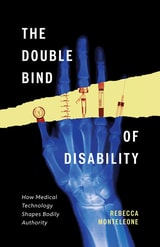
The Double Bind of Disability
How Medical Technology Shapes Bodily AuthorityRebecca Monteleone
University of Minnesota Press, 2025
Exposing the ableism underlying medical innovation
As medical advancements continue to shape the detection, diagnosis, and treatment of disability and illness, technology is often presented as a pathway to autonomy. Challenging this assumption, Rebecca Monteleone shows how medical technologies contribute to a cruel double bind, forcing disabled people to be accountable for adapting to a world built by and for nondisabled people while dismissing their lived experiences in favor of medical expertise. Far more complex than simple progress, these technologies are more oppressive than liberating when they place the burden of care on individuals and perpetuate societal ableism that demands that bodies look, move, and function in certain ways.
The Double Bind of Disability examines the complex relationship between medical technologies and their users, highlighting tensions between personal responsibility and medical authority. Sharing the perspectives and experiences of users of three medical technologies (prenatal genetic screening, deep brain stimulation, and do-it-yourself artificial pancreas systems), Monteleone analyzes how users navigate the constraints of these systems and also imagine a new, more liberatory approach to healthcare.
Asserting a bold vision, Monteleone describes a future where medical interventions take seriously the lived expertise of disabled people to address ableist infrastructures rather than require the modification of nonnormative bodyminds. She calls for a radical reimagining of medical technology that moves beyond individualistic frameworks to embrace collective experience and embodied knowing.
Retail e-book files for this title are screen-reader friendly.
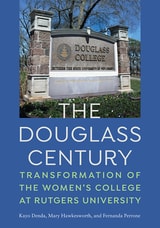
The Douglass Century
Transformation of the Women’s College at Rutgers UniversityDenda, Kayo
Rutgers University Press, 2018
The Douglass Century celebrates the college’s longevity and diversity as distinctive accomplishments, and analyzes the contributions of Douglass administrators, alumnae, and students to its survival, while also investigating multiple challenges that threatened its existence. This book demonstrates how changing historical circumstances altered the possibilities for women and the content of higher education, comparing the Jazz Age, American the Great Depression, the Second World War, the post-war Civil Rights era, and the resurgence of feminism in the 1970s and 1980s. Concluding in the present day, the authors highlight the college’s ongoing commitment to Mabel Smith Douglass’ founding vision, “to bring about an intellectual quickening, a cultural broadening in connection with specific training so that women may go out into the world fitted…for leadership…in the economic, political, and intellectual life of this nation.” In addition to providing a comprehensive history of the college, the book brings its subjects to life with eighty full-color images from the Special Collections and University Archives, Rutgers University Libraries.
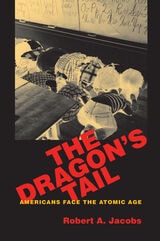
The Dragon's Tail
Americans Face the Atomic AgeRobert A. Jacobs
University of Massachusetts Press, 2010
When President Harry Truman introduced the atomic bomb to the world in 1945, he described it as a God-given harnessing of “the basic power of the universe.” Six days later a New York Times editorial framed the dilemma of the new Atomic Age for its readers: “Here the long pilgrimage of man on Earth turns towards darkness or towards light.” American nuclear scientists, aware of the dangers their work involved, referred to one of their most critical experiments as “tickling the dragon's tail.”
Even after Hiroshima and Nagasaki, most Americans may not have been sure what an atomic bomb was or how it worked. But they did sense that it had fundamentally changed the future of the human race. In this book, Robert Jacobs analyzes the early impact of nuclear weapons on American culture and society. He does so by examining a broad range of stories, or “nuclear narratives,” that sought to come to grips with the implications of the bomb's unprecedented and almost unimaginable power.
Beginning with what he calls the “primary nuclear narrative,” which depicted atomic power as a critical agent of social change that would either destroy the world or transform it for the better, Jacobs explores a variety of common themes and images related to the destructive power of the bomb, the effects of radiation, and ways of surviving nuclear war. He looks at civil defense pamphlets, magazines, novels, and films to recover the stories the U.S. government told its citizens and soldiers as well as those presented in popular culture.
According to Jacobs, this early period of Cold War nuclear culture—from 1945 to the banning of above-ground testing in 1963—was distinctive for two reasons: not only did atmospheric testing make Americans keenly aware of the presence of nuclear weapons in their lives, but radioactive fallout from the tests also made these weapons a serious threat to public health, separate from yet directly linked to the danger of nuclear war.
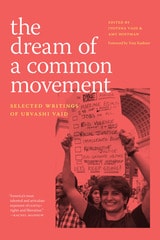
The Dream of a Common Movement
Selected Writings of Urvashi VaidUrvashi Vaid. Edited by Jyotsna Vaid and Amy Hoffman
Duke University Press, 2025

The Dred Scott Case
Historical and Contemporary Perspectives on Race and LawDavid Thomas Konig
Ohio University Press, 2010
In 1846 two slaves, Dred and Harriet Scott, filed petitions for their freedom in the Old Courthouse in St. Louis, Missouri. As the first true civil rights case decided by the U.S. Supreme Court, Dred Scott v. Sandford raised issues that have not been fully resolved despite three amendments to the Constitution and more than a century and a half of litigation.
The Dred Scott Case: Historical and Contemporary Perspectives on Race and Law presents original research and the reflections of the nation’s leading scholars who gathered in St. Louis to mark the 150th anniversary of what was arguably the most infamous decision of the U.S. Supreme Court. The decision, which held that African Americans “had no rights” under the Constitution and that Congress had no authority to alter that, galvanized Americans and thrust the issue of race and law to the center of American politics. This collection of essays revisits the history of the case and its aftermath in American life and law. In a final section, the present-day justices of the Missouri Supreme Court offer their reflections on the process of judging and provide perspective on the misdeeds of their nineteenth-century predecessors who denied the Scotts their freedom.
Contributors: Austin Allen, Adam Arenson, John Baugh, Hon. Duane Benton, Christopher Alan Bracey, Alfred L. Brophy, Paul Finkelman, Louis Gerteis, Mark Graber, Daniel W. Hamilton, Cecil J. Hunt II, David Thomas Konig, Leland Ware, Hon. Michael A. Wolff
The Dressing Room
Backstage Lives and American FilmDesirée J. Garcia
Rutgers University Press, 2025
A recurrent and popular setting in American cinema, the dressing room has captured the imaginations of filmmakers and audiences for over a century. In The Dressing Room: Backstage Lives and American Film, the only book-length study of the space, author Desirée J. Garcia explores how dressing rooms are dynamic realms in which a diverse cast of performers are made and exposed. Garcia analyzes the backstage film, which spans film history, modes, and genre, to show how dressing rooms have been a useful space for filmmakers to examine the performativity of American life. From the Black maid to the wife and mother to the leading man, dressing rooms navigate, shape, and challenge society’s norms. The stakes are high in dressing rooms, Garcia argues, because they rehearse larger questions about identity and its performance, negotiating who can succeed and who cannot and on what terms.
The Driftless Reader
Edited by Curt Meine and Keefe Keeley
University of Wisconsin Press, 2017
The Driftless Reader gathers writings that highlight the unique natural and cultural history, landscape, and literature of this region that encompasses southwestern Wisconsin and adjacent Minnesota, Iowa, and Illinois. The more than eighty selected texts include writings by Black Hawk, Mark Twain, Laura Ingalls Wilder, Frank Lloyd Wright, Aldo Leopold, David Rhodes, and many other Native people, explorers, scientists, historians, farmers, songwriters, journalists, and poets. Paintings, photographs, maps, and other images complement the texts, providing a deeper appreciation of this region's layered natural and human history.
Highlights include excerpts and art from:
Carol Ryrie Brink
William Cronon
John T. Curtis
August Derleth
Richard Eberhart
Fabu
Hamlin Garland
Pedro Guerrero
Hoowaneka (Little Elk)
Juliet Kinzie
Patty Loew
Ben Logan
Truman Lowe
Jacques Marquette
Ken McCullough
Edna Meudt
Mountain Wolf Woman
Zebulon Pike
Henry Schoolcraft
Clifford D. Simak
Wallace Stegner
Pearl Swiggum
Frank Utpatel
Mark Wunderlich
The Dropout
Causes & CuresLucius F. Cervantes
University of Michigan Press, 1965

The Du Boisian Challenge
Rethinking Sociological MethodologyJosé Itzigsohn, Ricarda Hammer, and Michael Rodríguez-Muñiz, editors
Duke University Press, 2027
The Du Boisian Challenge
Rethinking Sociological MethodologyJosé Itzigsohn, Ricarda Hammer, and Michael Rodríguez-Muñiz, editors
Duke University Press, 2027
The Du Boisian Challenge
Rethinking Sociological MethodologyJosé Itzigsohn, Ricarda Hammer, and Michael Rodríguez-Muñiz, editors
Duke University Press, 2027
The Duplex Nature of Indigeneity
Navigating Identity in the Ahuehuepan DiasporaFrans J. Schryer
University Press of Colorado, 2025
Using a variety of sources, perspectives, and methods, Schryer takes a duplexity approach, which allows understanding the complexity of social reality and its complementary nature—it identifies fields, clusters, and layers as interconnected components of social life. The innovative methods consist of the combination of ethnographic description and an ethnohistorical census that provides information on every person going back to approximately 1850. That census is further examined with the use of inferential and non-inferential statistical techniques, archival research in locations not normally accessible to scholars, Facebook, phone interviews conducted over several years, and help from Nahuatl-speaking people whose perspectives on the findings generate additional information and insights.
Unique in this presentation, which dips into the lives of generations of people to draw insight on those who lay claim to transnational Indigeneity, Schryer’s work contributes to research and theoretical discussion in the field of migration and globalization studies through a close examination of one Indigenous community over the course of many years, utilizing a mix of qualitative and quantitative research methods in anthropology.
The Durango South Project
Archaeological Salvage of Two Basketmaker III Sites in the Durango DistrictEdited by John D. Gooding
University of Arizona Press, 1980

The Dutch Atlantic
Slavery, Abolition and EmancipationKwame Nimako and Glenn Willemsen
Pluto Press, 2011
The Dutch Atlantic interrogates the Dutch involvement in Atlantic slavery and assesses the historical consequences of this for contemporary European society.
Kwame Nimako and Glenn Willemsen show how the slave trade and slavery intertwined economic, social and cultural elements, including nation-state formation in the Netherlands and across Europe. They explore the mobilisation of European populations in the implementation of policies that facilitated Atlantic slavery and examine how European countries created and expanded laws that perpetuated colonisation.
Addressing key themes such as the incorporation of the formerly enslaved into post-slavery states and contemporary collective efforts to forget and/or remember slavery and its legacy in the Netherlands, this is an essential text for students of European history and postcolonial studies.

The Dying Patient
Orville G., Jr. Brim
Russell Sage Foundation, 1970

The Dynamics of News and Indigenous Policy in Australia
Kerry McCallum and Lisa Waller
Intellect Books, 2017
Kerry McCallum and Lisa Waller critically examine how Indigenous health, bilingual education, and controversial legislation are portrayed through public media, and they look closely at how Indigenous people are both being excluded from policy and media discussion, as well as using the media to their advantage.

The Eagle Has Eyes
The FBI Surveillance of César Estrada Chávez of the United Farm Workers Union of America, 1965–1975José Angel Gutiérrez
Michigan State University Press, 2019
The Eagle Returns
The Legal History of the Grand Traverse Band of Ottawa and Chippewa IndiansMatthew L.M. Fletcher
Michigan State University Press, 2012
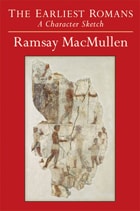
The Earliest Romans
A Character SketchRamsay MacMullen
University of Michigan Press, 2013
"A vibrant account that puts flesh on the bare bones of early Roman history."
---Celia Schultz, University of Michigan
The ancient Romans' story down to 264 B.C. can be made credible by stripping away their later myths and inventions to show how their national character shaped their destiny.
After many generations of scholarly study, consensus is clear: the account in writers like Livy is not to be trusted because their aims were different from ours in history-writing. They wanted their work to be both improving and diverting. It should grow out of the real past, yes, but if that reality couldn't be recovered, or was uncertain, their art did not forbid invention. It more than tolerated dramatic incidents, passions, heroes, heroines, and villains. If, however, all this resulting ancient fiction and adornment are pruned away, a national character can be seen in the remaining bits and pieces of credible information, to explain the familiar story at least in its outlines.
To doubt the written sources has long been acceptable, but this or that detail or narrative section must always be left for salvage by special pleading. To press home the logic of doubt is new. To reach beyond the written sources for a better support in excavated evidence is no novelty; but it is a novelty, to find in archeology the principal substance of the narrative---which is the choice in this book. To use this in turn for the discovery of an ethnic personality, a Roman national character, is key and also novel.
What is repeatedly illustrated and emphasized here is the distance traveled by the art or craft of understanding the past---"history" in that sense---over the course of the last couple of centuries. The art cannot be learned, because it cannot be found, through studying Livy and Company. Readers who care about either of the two disciplines contrasted, Classics and History, may find this argument of interest.
"Like Thucydides of the hyperactive Athenians and de Tocqueville of the nation-building Americans, MacMullen here draws a character sketch of the early Romans---the men who built Rome, conquered Italy, and created an empire. Based on profound familiarity with history, evidence, and their better-known descendants, attention to what they did and failed to do, remarkable insight, empathy, constructive imagination, and not without humor, he reconstructs the homo Romanus and thus helps us imagine what he was like, and understand why he achieved what he did. This little book is informative, full of important ideas, and delightful to read."
---Kurt Raaflaub, Brown University
Jacket image: Marcus Fabius and Quintus Tannius. Fresco. Musei Capitolini, Rome, Italy. Courtesy of Scala / Art Resource, NY..
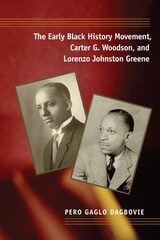
The Early Black History Movement, Carter G. Woodson, and Lorenzo Johnston Greene
Pero Gaglo Dagbovie
University of Illinois Press, 2007
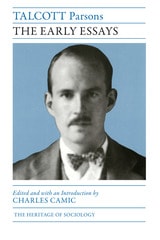
The Early Essays
Talcott Parsons
University of Chicago Press, 1991
In his superb introductory essay, Camic situates Parsons's early writings in their sociointellectual and biographical context. Drawing upon extensive historical research, he identifies three overlapping but relatively distinct thematic phases in the early development of Paron's ideas: that on capitalist society and its origins, that one the historical development of the theory of action, and that on the foundations of analytical sociology. Camic correlates the emergence of these phases to Parsons's experiences at Amherst College in the early 1920s, in London and Heidelberg during the mid-1920s, and at Harvard University in the important period from the late 1920s to the mid-1930s. Reproducing in full each of twenty-one selections, this volume charts the changes and continues in the early development of some of Parsons's most fundamental ideas.
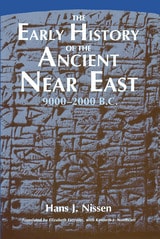
The Early History of the Ancient Near East, 9000-2000 B.C.
Hans J. Nissen
University of Chicago Press, 1988
With a unique combination of material culture analysis written data, Nissan traces the emergence of the earliest isolated settlements, the growth of a network of towns, the emergence of city states, and finally the appearance of territorial states. From his synthesis of the prehistoric and literate periods comes a unified picture of the development of Mesopotamian economy, society, and culture. Lavishly illustrated, The Early History of the Ancient Near East, 9000-2000 B.C. is an authoritative work by one of the most insightful observers of the evolution and character of Mesopotamian civilization.

The Early Works of John Dewey, Volume 1, 1882 - 1898
Early Essays and Leibniz's New Essays, 1882-1888John Dewey. Edited by Jo Ann Boydston
Southern Illinois University Press, 2008
Volume 1 of “The Early Works of John Dewey, 1882–1898” is entitled “Early Essays and Leibniz’s New Essays Concerning the Human Understanding, 1882–1888.” Included here are all Dewey’s earliest writings, from his first published article through his book on Leibniz.
The materials in this volume provide a chronological record of Dewey’s early development—beginning with the article he sent to the Journal of Speculative Philosophy in 1881 while he was a high-school teacher in Oil City, Pennsylvania, and closing with his widely-acclaimed work on Leibniz in the Grigg’s Series of German Philosophical Classics, written when he was an Assistant Professor at the University of Michigan. During these years between 1882 and 1888, Dewey’s life course was established: he decided to follow a career in philosophy, completed doctoral studies at Johns Hopkins University, became an Instructor at the University of Michigan, was promoted to Assistant Professor, and accepted a position as Chairman of the Department of Philosophy at the University of Minnesota. With the publication of Psychology, he became well known among scholars in this country; a series of articles in the British journal Mind brought him prominence in British philosophical circles. His articles were abstracted in the Revue philosophique.
None of the articles collected in this volume was reprinted during the author’s lifetime. For the first time, it is now possible for Dewey scholars to study consecutively in one publication all the essays which originally appeared in many periodicals.
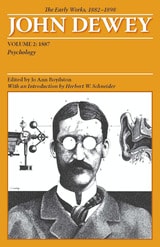
The Early Works of John Dewey, Volume 2, 1882 - 1898
Psychology, 1887John Dewey. Edited by Jo Ann Boydston
Southern Illinois University Press, 2008
With an original publication date of 1887, Psychology us Volume 2 of "The Early Works." It appears first in the series to introduce scholars and general readers to the use of modern textual criticism in a work outside the literary field. Designed as a "scholar's reading edition," the volumes presents the text of Dewey's work as the author intended, clear of editorial footnotes. All apparatus is conveniently arranged in appendix form. As evidence of its wide adoption and use as a college textbook, Psychology had a publishing history of twenty-six printings. For two of the reprintings, Dewey made extensive revisions in content to incorporate developments in the field of psychology as well as in his own thinking. The textual appendices include a thorough tabulation of these changes and detailed evidence for editorial decisions.
In recognition of the high quality and scholarly standards of the textual editing, this edition of Psychology is the first nonliterary work awarded the Seal of the Modern Language Association Center for Editions of American Authors. By applying to the work of a philosopher the procedures used in modern textual editions of American writers such as Hawthorne, the Southern Illinois University Dewey edition is establishing a pattern for future collected editions of the writings of American philosophers.
At the time Dewey wrote Psychology, the relation between psychology and philosophy was in dispute, and he attempted to incorporate the new physiological psychology represented by G. Stanley Hall into the philosophical system and ethics of George Sylvester Morris. He wrote in May, 1886, that he wanted his textbook in psychology to be one "with the greatest possible unity of principle, so that without ceasing to be a psychology, it shall be an introduction to philosophy in general." His goal, expressed in these terms, foreshadowed the direction of his work in the years that followed, with its continuing emphasis on the interrelations among the various disciplines rather than on separate specializations. In his long and fruitful professional career, this was to be his only attempt to treat the whole field of psychology systematically. Although he maintained a lively interest in psychology, that interest was expressed in connection with his writing in other areas such as ethics, education, logic, social philosophy and aesthetics.
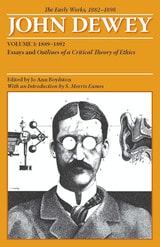
The Early Works of John Dewey, Volume 3, 1882 - 1898
Essays and Outlines of a Critical Theory of Ethics, 1889-1892John Dewey. Edited by Jo Ann Boydston
Southern Illinois University Press, 2008
This third volume in the definitive edition of Dewey’s early work opens with his tribute to George Sylvester Morris, the former teacher who had brought Dewey to the University of Michigan. Morris’s death in 1889 left vacant the Department of Philosophy chairmanship and led to Dewey’s returning to fill that post after a year’s stay at Minnesota.
Appearing here, among all his writings from 1889 through 1892, are Dewey’s earliest comprehensive statements on logic and his first book on ethics. Dewey’s marked copy of the galley-proof for his important article “The Present Position of Logical Theory,” recently discovered among the papers of the Open Court Publishing Company, is used as the basis for the text, making available for the first time his final changes and corrections.
The textual studies that make The Early Works unique among American philosophical editions are reported in detail. One of these, “A Note on Applied Psychology,” documents the fact that Dewey did not co-author this book frequently attributed to him. Six brief unsigned articles written in 1891 for a University of Michigan student publication, the Inlander, have been identified as Dewey’s and are also included in this volume. In both style and content, these articles reflect Dewey’s conviction that philosophy should be used as a means of illuminating the contemporary scene; thus they add a new dimension to present knowledge of his early writing.
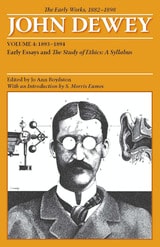
The Early Works of John Dewey, Volume 4, 1882 - 1898
Early Essays and The Study of Ethics, A Syllabus, 1893-1894John Dewey. Edited by Jo Ann Boydston
Southern Illinois University Press, 2008
Volume 4 of’ “The Early Works” series covers the period of Dewey’s last year and one-half at the University of Michigan and his first half-year at the University of Chicago. In addition to sixteen articles the present volume contains Dewey’s reviews of six books and three articles, verbatim reports of three oral statements made by Dewey, and a full-length book, The Study of Ethics.
Like its predecessors in this series, this volume presents a “clear text,” free of interpretive or reference material. Apparatus, including references, corrections, and emendations, is confined to appendix material. Fredson Bowers, the Consulting Textual Editor, has provided an essay on the textual principles and procedures, and Wayne A. R. Leys, Professor of Philosophy at Southern Illinois University, has written an Introduction discussing the relationship between Dewey’s writings of this period and his later work. That Dewey’s scholarship and writing was at an especially high level during 1893 and 1894 may be considered an index to the significance of this two-year period.
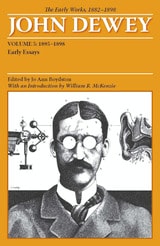
The Early Works of John Dewey, Volume 5, 1882 - 1898
Early Essays, 1895-1898John Dewey. Edited by Jo Ann Boydston
Southern Illinois University Press, 2008
This fifth and concluding volume of “The Early Works of John Dewey” is the only one of the series made up entirely of essays. The appearance during the four-year period, 1895–98, of thirty-eight items amply indicates that Dewey continued to maintain a high level of published output. These were the years of Dewey’s most extensive work and involvement at the University of Chicago.
Like its predecessors in this series, this volume presents a “clear text,” free of interpretive or reference material. Apparatus, including references, corrections, and emendations, is confined to appendix material. Fredson Bowers, the Consulting Textual Editor, has provided an essay on the textual principles and procedures, and William P. McKenzie, Professor of Philosophy and Education at Southern Illinois University, has written an introduction identifying the thread connecting the apparently diffuse material in the many articles of this volume—Dewey’s attempt to unite philosophy with psychology and sociology and with education.
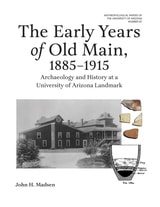
The Early Years of Old Main, 1885–1915
Archaeology and History at a University of Arizona LandmarkJohn H. Madsen
University of Arizona Press, 2026
The Early Years of Old Main, 1885–1915 details the archaeological discoveries revealed during the 2012–14 renovation of Old Main, which, due to its age and historic records, is on the National Register of Historic Places.
Thanks to detailed excavation work by a team of archaeologists, this work documents eight historic features of the building, ranging from equipment pads to drainage systems. Drawing on archaeological monitoring, artifact analysis, archival records, architectural drawings, and historic photographs, the narrative reconstructs how Old Main functioned during the university’s first decades and how its physical spaces supported early scientific instruction in mining, metallurgy, and agriculture.
More than a technical report, this volume offers a tangible glimpse into the material foundations of higher education in territorial and early statehood Arizona. Madsen’s careful documentation preserves knowledge of features that could not be saved during renovation and places them in the broader context of Old Main’s architectural evolution and its central role on campus. The result is an important resource for historians, archaeologists, preservationists, and anyone who values the University of Arizona’s heritage—demonstrating that even the most familiar buildings can still hold untold stories beneath their floors and landscapes.
The Earthly Community
Achille Mbembe. Translated by Steven Corcoran.
Duke University Press, 2027
The Earthly Community
Achille Mbembe. Translated by Steven Corcoran.
Duke University Press, 2027
The East Florida Expeditions of Clarence Bloomfield Moore
Clarence Bloomfield Moore, edited by Jeffrey M. Mitchem
University of Alabama Press, 1999
A Dan Josselyn Memorial Publication
This comprehensive compilation of Moore's archaeological publications on eastern Florida will prove an invaluable primary resource for Florida archaeologists.
Clarence B. Moore (1852-1936), a wealthy Philadelphia socialite, paper company heir, and photographer made the archaeology of the Southeast his passion beginning in the 1870s. This volume collects 17 of Moore's publications on East Florida, originally published between 1892 and 1903. These invaluable and copiously illustrated works document the results of Moore's numerous archaeological expeditions along Florida's eastern coastline from the Georgia border to Lake Okeechobee and focus primarily on sites along the St. Johns River and its tributaries. Moore's archaeological work in East Florida was arguably his best and most thorough research from a modern perspective.
Jeffrey Mitchem's introduction to this volume describes and analyzes Moore's work in East Florida, summarizes what we know about the sites Moore investigated, and surveys subsequent archaeological work conducted in this area since Moore's expeditions. Mitchem's introduction highlights the significance of Moore's work on the shell heaps along the St. Johns River. It led to the earliest recorded instance of a researcher noting the changes in pottery styles in the region, a major key to establishing chronologies.In 1894, Moore wrote of his hope "that the archaeology of Florida may be redeemed from the obscurity that has hitherto characterized it." Over a century later, this Press has aimed to fulfill Moore's wish by reprinting this and other collections of his archaeological publications.

The East Is Black
Cold War China in the Black Radical ImaginationRobeson Taj Frazier
Duke University Press, 2015