Results by title
18284 books match the query 'United States' and 3764 start with t

The Drums of the 47th
Robert J. Burdette
University of Illinois Press, 2000
From Peoria to Corinth, from Corinth to Vicksburg, up the Red River country, down to Mobile and Fort Blakely, and back to Tupelo and Selma, the 47th marched three thousand miles during Burdette's tour, from March 1862 to December 1864.
In a literate voice rare in war memoirs, Burdette speaks of comradeship built and tested, the noise and confusion of the battlefield, the conflicting feelings of witnessing a military execution. Both nostalgic and piercingly immediate, his remembrances evoke the sights, sounds, smells, and above all the inner feelings stirred up by war, from exuberance to terror and from patriotic fervor to compassion for a fallen enemy.
Originally published--on the eve of another great conflict--in 1914, The Drums of the 47th is a moving depiction of the inner life of the common soldier. Like Stephen Crane's The Red Badge of Courage, Burdette's book puts a human face on the war and his words speak to all who have served or imagined serving under fire. The introduction by John E. Hallwas provides a biographical sketch of Burdette and a commentary on his engaging Civil War memoir.
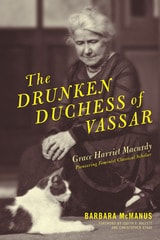
The Drunken Duchess of Vassar
Grace Harriet Macurdy, Pioneering Feminist Classical ScholarBarbara McManus
The Ohio State University Press, 2017
In this biography, Barbara McManus recovers the intriguing life story of Grace Harriet Macurdy (1866–1946), Professor of Greek at Vassar College and the first woman classicist to focus her scholarship on the lives of ancient Greco-Roman women. Fondly known as “the Drunken Duchess,” although she never drank alcohol, Macurdy came from a poor family with no social, economic, or educational advantages. Moreover, she struggled with disability for decades after becoming almost totally deaf in her early fifties. Yet she became an internationally known Greek scholar with a long list of publications and close friends as renowned as Gilbert Murray and John Masefield.
Through Macurdy’s eyes and experiences, McManus examines significant issues and developments from the late nineteenth to the mid-twentieth century, such as the opening of higher education to women, the erosion of gender and class barriers in the professions, the delicate balancing act between personal and professional life required of women, the marginalized role of women’s colleges in academic politics, and changes in the discipline and profession of Classics in response to the emerging role of women and new social conditions.
The Dukes of Durham, 1865-1929
Robert F. Durden
Duke University Press, 1987
In the years after the Civil War, Washington Duke proved to be an unusually able industrialist and a conscientious, Methodist philanthropist. He was, in fact, a major Southern pioneer in both industry and philanthropy. His two sons by a second marriage were remarkably devoted to each other as well as to their father. Both sons also reflected traits of thier father. While Benjamin N. Duke and James B. Duke had life-long involvement with the business world—first in tobacco, then textiles, and finally electric power—as well as with philanthropy, they actually developed complementary specializations. Benjamin N. Duke, the older of the two, served as the family's primary agent for philanthropy from his early manhood in the late 1800's until he gradually became semi-invalid after 1915. James B. Duke, on the other hand, early displayed a marked talent, even a genius, for business. Toward the end of his life, with the establishment of The Duke Endowment late in 1924, he emerged as one of the nation's major philanthropists, ranking alongside Andrew Carnegie and John D. Rockefeller. A central theme of this book is, however, that the Endowment, despite its magnitude and far-reaching scope, was essentially the institutionalization and culmination of a pattern of family philanthropy that emerged in the 1890's and for which the older brother, Benjamin N. Duke, had always been the primary agent. Thus, the story of James B. Duke, who was and has remained much the more well-known of the two brothers, cannot properly be told out of the family context from which he emerged and in which occurred most of the important phases of his life.
Washington Duke, as a small, land-owning yeoman farmer, was typical of the great majority class not only in antebellum North Carolina but in the South as a whole. Only after the war, when he and his sons emerged as large-scale industrialists and philanthropists, did the Dukes become atypical. Their story is, then, both agricultural and industrial, both Southern and national. Born North Carolinians, they moved onto a national, even global, stage. Yet all the while they kept deep roots, as well as vast investments of capital, in the Old North State, and they poured many millions into philanthropy, largely in the two Carolinas. Based largely on manuscript sources, many of them hitherto unused, this is the first study of the Duke family. The "New South," as recent historians have told us, may not have been so new—but it was certainly different in important ways, and the Dukes loomed large among those who helped to make it so.
The Duplex Nature of Indigeneity
Navigating Identity in the Ahuehuepan DiasporaFrans J. Schryer
University Press of Colorado, 2025
Using a variety of sources, perspectives, and methods, Schryer takes a duplexity approach, which allows understanding the complexity of social reality and its complementary nature—it identifies fields, clusters, and layers as interconnected components of social life. The innovative methods consist of the combination of ethnographic description and an ethnohistorical census that provides information on every person going back to approximately 1850. That census is further examined with the use of inferential and non-inferential statistical techniques, archival research in locations not normally accessible to scholars, Facebook, phone interviews conducted over several years, and help from Nahuatl-speaking people whose perspectives on the findings generate additional information and insights.
Unique in this presentation, which dips into the lives of generations of people to draw insight on those who lay claim to transnational Indigeneity, Schryer’s work contributes to research and theoretical discussion in the field of migration and globalization studies through a close examination of one Indigenous community over the course of many years, utilizing a mix of qualitative and quantitative research methods in anthropology.
The Dying President
Franklin D. Roosevelt, 1944-1945Robert H. Ferrell
University of Missouri Press, 1998
In this authoritative account, Robert H. Ferrell shows how the treatment of President Franklin D. Roosevelt's illness in 1944- 1945 was managed by none other than the president himself. Although this powerful American president knew that he suffered from cardiovascular disease, he went to great lengths to hide that fact—both from his physician and from the public. Why Roosevelt disguised the nature of his illness may be impossible to discern fully. He was a secretive man who liked to assign only parts of tasks to his assistants so that he, the president, would be the only one who knew the whole story. The presidency was his life, and he did not wish to give it up.
The president's duplicity, though not easily measurable, had a critical effect on his performance. Placed on a four-hour-a-day schedule by his physicians, Roosevelt could apply very little time to his presidential duties. He took long vacations in South Carolina, Warm Springs, the Catoctin Mountains, and Hyde Park, as well as lengthy journeys to Hawaii, Canada, and Yalta. Important decisions were delayed or poorly made. America's policy toward Germany was temporarily abandoned in favor of the so-called Morgenthau Plan, which proposed the "pastoralization" of Germany, turning the industrial heart of Europe into farmland. Roosevelt nearly ruined the choice of Senator Harry S. Truman as his running mate in 1944 by wavering in the days prior to the party's national convention. He negotiated an agreement with Winston Churchill on sharing postwar development of nuclear weapons but failed to let the State Department know. And, in perhaps the most profoundly unwise decision, Roosevelt accepted a fourth term when he could not possibly survive it.
In his final year, a year in which he faced crucial responsibility regarding World War II and American foreign policy, Franklin D. Roosevelt failed to serve the nation as a healthy president would have. Reading like a mystery story, The Dying President clears up many of the myths and misunderstandings that have surrounded Roosevelt's last year, finally revealing the truth about this missing chapter in FDR's life.

The Dying Sahara
US Imperialism and Terror in AfricaJeremy Keenan
Pluto Press, 2013
In The Dark Sahara (Pluto, 2009), Jeremy Keenan exposed the collusion between the US and Algeria in fabricating terrorism to justify a new ‘Saharan front’ in Washington’s War on Terror. Now, in The Dying Sahara, he reveals how the designation of the region as a ‘Terror Zone’ has destroyed the lives and livelihoods of thousands of innocent people.
Beginning in 2004, with what local people called the US ‘invasion’ of the Sahel, The Dying Sahara shows how repressive, authoritarian regimes - cashing in on US terrorism ‘rents’ - provoked Tuareg rebellions in both Niger and Mali. Further, he argues that US activity has unleashed a new, narco-trafficking branch of Al-Qaeda.
Keenan's chillingly detailed research shows that the US and its new combatant African command (AFRICOM) have created instability in a region the size of western Europe.

The Dynamics of Business-Government Relations
Industry and Exports, 1893-1921William H. Becker
University of Chicago Press, 1982
The Eagle Has Eyes
The FBI Surveillance of César Estrada Chávez of the United Farm Workers Union of America, 1965–1975José Angel Gutiérrez
Michigan State University Press, 2019
The Eagle's Nest
Natural History and American Ideas, 1812-1842Charlotte M. Porter
University of Alabama Press, 1986

The Eagles Encyclopedia
Champions EditionRay Didinger
Temple University Press, 2018
Ray Didinger, like every die-hard Eagles fan, has been waiting since the 1960 NFL Title for the Birds to win the Super Bowl. In this “Champions Edition” of The Eagles Encyclopedia, beloved Eagles commentator Didinger celebrates his team and their remarkable, against-all-odds season that ended at Super Bowl LII, where they claimed victory over the Patriots in Minnesota.
Didinger updates his best-selling book The Eagles Encyclopedia with the departure of Coach Chip Kelly and the dawn of the Doug Pederson era. He provides a new chapter on the 2017–18 season and postseason. And he includes dozens of new player, coach, and front-office profiles as well as Hall of Fame updates on 2018 inductees Brian Dawkins and Terrell Owens.
But wait, there’s more!
- An all-new 16-page color insert highlights key moments on the road to the Super Bowl
- Iconic photos old and new, from Concrete Charlie Bednarik’s tackle of Frank Gifford to Nick Foles and the Philly Special
- More than 100 new photos from the recent season as well as from earlier periods in the Eagles’ storied history
TheEagles Encyclopedia: Champions Edition is more than a keepsake of a championship season. It is a book about a city and a team and the emotion that binds them.
The Eagles Encyclopedia
Champions IIRay Didinger with Robert S. Lyons
Temple University Press, 2025
Quarterback Jalen Hurts described the city’s love for the Eagles as “a Philly thing,” and no one understands that better than Didinger, who has followed the team since the 1950s. In Champions II, he brings that history up to date by writing about the Tush Push, Saquon Barkley’s reverse hurdle, and other milestones of the 2024 season.
This new edition includes:
- More than 60 new photographs plus a 16-page color insert.
- Dozens of new player, coach and front-office profiles.
- Tributes to the team's newest Hall of Fame inductees: Eric Allen, Dick Vermeil and Harold Carmichael.
- An expanded chapter on the Eagles–Cowboys rivalry.
- An updated statistics and records section.
The Eagles Encyclopedia: Champions II is a must have for any E-A-G-L-E-S fan who wants to relive the Big Game and all the drama that led up to it.
The Early Black History Movement, Carter G. Woodson, and Lorenzo Johnston Greene
Pero Gaglo Dagbovie
University of Illinois Press, 2007
The Early Years of Old Main, 1885–1915
Archaeology and History at a University of Arizona LandmarkJohn H. Madsen
University of Arizona Press, 2026
The Early Years of Old Main, 1885–1915 details the archaeological discoveries revealed during the 2012–14 renovation of Old Main, which, due to its age and historic records, is on the National Register of Historic Places.
Thanks to detailed excavation work by a team of archaeologists, this work documents eight historic features of the building, ranging from equipment pads to drainage systems. Drawing on archaeological monitoring, artifact analysis, archival records, architectural drawings, and historic photographs, the narrative reconstructs how Old Main functioned during the university’s first decades and how its physical spaces supported early scientific instruction in mining, metallurgy, and agriculture.
More than a technical report, this volume offers a tangible glimpse into the material foundations of higher education in territorial and early statehood Arizona. Madsen’s careful documentation preserves knowledge of features that could not be saved during renovation and places them in the broader context of Old Main’s architectural evolution and its central role on campus. The result is an important resource for historians, archaeologists, preservationists, and anyone who values the University of Arizona’s heritage—demonstrating that even the most familiar buildings can still hold untold stories beneath their floors and landscapes.
The Earth Will Appear as the Garden of Eden
Essays on Mormon Environmental HistoryJedediah S. Rogers and Matthew C. Godfrey
University of Utah Press, 2018
Since Joseph Smith’s revelations, Mormons have interacted with nature in significant ways—whether perceiving it as a place to find God, uncorrupted spaces in which to build communities to usher in the Second Coming, wildness needing domestication and control, or a world brimming with natural resources to ensure economic well-being. The essays in this volume—written by leading scholars in both environmental history and Mormon history—explore how nature has influenced Mormon beliefs and how these beliefs inform Mormons’ encounters with nature. Introducing overarching environmental ideas, contributors examine specific aspects of nature and Mormon theology to glean new insights into the Mormon experience.
The Earthquake Observers
Disaster Science from Lisbon to RichterDeborah R. Coen
University of Chicago Press, 2012
In The Earthquake Observers, Deborah R. Coen acquaints readers not only with the century’s most eloquent seismic commentators, including Alexander von Humboldt, Charles Darwin, Mark Twain, Charles Dickens, Karl Kraus, Ernst Mach, John Muir, and William James, but also with countless other citizen-observers, many of whom were women. Coen explains how observing networks transformed an instant of panic and confusion into a field for scientific research, turning earthquakes into natural experiments at the nexus of the physical and human sciences. Seismology abandoned this project of citizen science with the introduction of the Richter Scale in the 1930s, only to revive it in the twenty-first century in the face of new hazards and uncertainties. The Earthquake Observers tells the history of this interrupted dialogue between scientists and citizens about living with environmental risk.
The East Florida Expeditions of Clarence Bloomfield Moore
Clarence Bloomfield Moore, edited by Jeffrey M. Mitchem
University of Alabama Press, 1999
A Dan Josselyn Memorial Publication
This comprehensive compilation of Moore's archaeological publications on eastern Florida will prove an invaluable primary resource for Florida archaeologists.
Clarence B. Moore (1852-1936), a wealthy Philadelphia socialite, paper company heir, and photographer made the archaeology of the Southeast his passion beginning in the 1870s. This volume collects 17 of Moore's publications on East Florida, originally published between 1892 and 1903. These invaluable and copiously illustrated works document the results of Moore's numerous archaeological expeditions along Florida's eastern coastline from the Georgia border to Lake Okeechobee and focus primarily on sites along the St. Johns River and its tributaries. Moore's archaeological work in East Florida was arguably his best and most thorough research from a modern perspective.
Jeffrey Mitchem's introduction to this volume describes and analyzes Moore's work in East Florida, summarizes what we know about the sites Moore investigated, and surveys subsequent archaeological work conducted in this area since Moore's expeditions. Mitchem's introduction highlights the significance of Moore's work on the shell heaps along the St. Johns River. It led to the earliest recorded instance of a researcher noting the changes in pottery styles in the region, a major key to establishing chronologies.In 1894, Moore wrote of his hope "that the archaeology of Florida may be redeemed from the obscurity that has hitherto characterized it." Over a century later, this Press has aimed to fulfill Moore's wish by reprinting this and other collections of his archaeological publications.
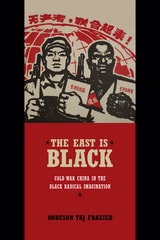
The East Is Black
Cold War China in the Black Radical ImaginationRobeson Taj Frazier
Duke University Press, 2015
The Eastern Establishment and the Western Experience
The West of Frederic Remington, Theodore Roosevelt, and Owen WisterBy G. Edward White
University of Texas Press, 1989
First published in 1968, The Eastern Establishment and the Western Experience has become a classic in the field of American studies.
G. Edward White traces the origins of “the West of the imagination” to the adolescent experiences of Frederic Remington, Theodore Roosevelt, and Owen Wister—three Easterners from upper-class backgrounds who went West in the 1880s in search of an alternative way of life.
Each of the three men came to identify with a somewhat idealized “Wild West” that embodied the virtues of individualism, self-reliance, and rugged masculinity. When they returned East, they popularized this image of the West through art, literature, politics, and even their public personae. Moreover, these Western virtues soon became and have remained American virtues—a patriotic ideal that links Easterners with Westerners.
With a multidisciplinary blend of history, biography, sociology, psychology, and literary criticism, The Eastern Establishment and the Western Experience will appeal to a wide audience. The author has written a new preface, offering additional perspectives on the mythology of the West and its effect on the American character.
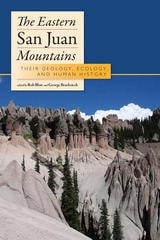
The Eastern San Juan Mountains
Their Ecology, Geology, and Human HistoryRob Blair
University Press of Colorado, 2011
A natural division between the eastern and western slopes of the San Juans is the north-south line that runs approximately through Lake City, south of the crossing of the Piedra River by US Highway 160. In this super guidebook, twenty-seven contributors--all experts in their fields--artfully bring the geology, hydrology, animal and plant life, human histories, and travel routes of these eastern slopes to life. Designed to inform researchers, educators, and students about the region's complex systems, The Eastern San Juan Mountains also serves as an informative guidebook to accompany visitors along their travels on the Silver Thread National Scenic Byway, which stretches between South Fork and Lake City.
The Eastern San Juan Mountains deserves a place next to The Western San Juan Mountains on the bookshelf of every naturalist, researcher, resident, educator, student, and tourist seeking a greater understanding of this marvelous place and its history.
The Echoes of L'Arbre Croche
Donald A. Johnston
University of Michigan Press, 2009
The year is 1915, and Benjamin Corvet, founder of the ship-owning firm Corvet, Sherrill and Spearman, suddenly disappears, sparking events and questions that baffle even those who are close to him.
Constance Sherrill, an attractive, sheltered young woman, feels strangely responsible for what may have happened to him---her father's best friend and coworker. Alan Conrad arrives in Chicago searching for his identity and an unknown benefactor and is swept into a maelstrom of mystery and intrigue that tests his intelligence and athleticism to the fullest. Henry Spearman, the firm's junior partner, is the most eligible bachelor along Chicago's Lake Shore Drive as a result of his catapult from ships' ranks to successful owner.
When a ship sinks off the coast of Beaver Island in Michigan, the intertwining lives of these characters unlock the mystery of the disappearance of another ship twenty years earlier, in a riveting whodunit set on the stormy waters of the Great Lakes.
Donald A. Johnston was born and raised in Detroit, served in World War II as a U.S. Navy Reserve officer, and was decorated for service in the Philippines and in the invasions of Iwo Jima and Okinawa. His career includes forty years in the insurance business. An ardent sailing enthusiast, he has cruised the Great Lakes extensively and has sailed winners in class boats and in offshore competition.
Jacket photograph © Yuriz / iStockphoto.com
The Ecological City
Preserving and Restoring Urban BiodiversityRutherford H. Platt
University of Massachusetts Press, 1994
Interdisciplinary in content as well as approach, this collection of original essays takes a fresh look at the ecology of urban communities. Written by experts from a variety of professions—academic researchers, private and public program managers, and citizen activists—the book explores issues of geography, ecology, landscape architecture, urban forestry, law, and environmental education. Contributions include broad overviews of common problems a well as detailed case studies of specific programs.
Although several contributors are natural scientists, the book focuses on matters of public policy and public-private collaboration. The aim is not only to assess the impact of increasing urbanization on biodiversity, but also to propose new ways of preserving and restoring the balance between the natural and the built environment through planning and design.
The Ecology of Modernism
American Environments and Avant-Garde PoeticsJoshua Schuster
University of Alabama Press, 2015
In his opening passage, Schuster boldly invokes lines from Walt Whitman’s “Crossing Brooklyn Ferry,” which echo as a paean to pollution: “Burn high your fires, foundry chimneys! cast black shadows at nightfall!” Schuster labels this theme “regeneration through pollution” and demonstrates how this motif recurs in modernist compositions. This tolerance for, if not actual exultation of, the by-products of industrialization hindered modernist American artists, writers, and musicians from embracing environmentalist agendas.
Schuster provides specific case studies focusing on Marianne Moore and her connection of fables with animal rights; Gertrude Stein and concepts of nature in her avant-garde poetics; early blues music and poetry and the issue of how environmental disasters (floods, droughts, pestilence) affected black farmers and artists in the American South; and John Cage, who extends the modernist avant-garde project formally but critiques it at the same time for failing to engage with ecology. A fascinating afterword about the role of oil in modernist literary production rounds out this work.
Schuster masterfully shines a light on the modernist interval between the writings of bucolic and nature-extolling Romantics and the emergence of a self-conscious green movement in the 1960s. This rewarding work shows that the reticence of modernist poets in the face of resource depletion, pollution, animal rights, and other ecological traumas is highly significant.
The Economic Analysis of Substance Use and Abuse
An Integration of Econometric and Behavioral Economic ResearchEdited by Frank J. Chaloupka, Michael Grossman, Warren K. Bickel, and Henry Saffer
University of Chicago Press, 1999
The Economic Analysis of Substance Use and Abuse brings these distinctive fields of study together and presents for the first time an integrated assessment of their data and results. Unique and innovative, this multidisciplinary volume will serve as an important resource in the current debates concerning alcohol and drug use and abuse and the impacts of legalizing illicit drugs.
The Economic Effects of Aging in the United States and Japan
Edited by Michael D. Hurd and Naohiro Yashiro
University of Chicago Press, 1997
The most obvious effects will be on social programs such as public pension systems and the provision for medical needs of the elderly. But, the contributors demonstrate, aging will also affect markets for labor, capital, housing, and health care services. It will affect firms through their participation in the demand side of the labor market and through their provisions for pensions. And aging will influence saving rates, the rate of return on assets, the balance of payments, and, most likely, economic growth.
This volume will interest scholars and policy makers concerned with the economics of aging.
The Economic History of American Inequality
New Evidence and PerspectivesEdited by Martha J. Bailey, Leah Platt Boustan, and William J. Collins
University of Chicago Press, 2025
A meticulous examination of the history and roots of economic inequality within the United States.
This volume refines and extends the economic history literature on economic inequality in the United States. Economic inequality manifests itself on various dimensions, including access to resources and economic security, as well as access to education and opportunities for migration, marriage, and other important life decisions. Measuring inequality and studying its variation over time and in response to economic shocks such as recessions and wars deepen our understanding of how the economy operates and can inform the design of public policies. The studies in this compendium present comprehensive evidence on income distribution during the nineteenth and early twentieth centuries, drawing on new data on wages and prices. They also consider disparities in economic well-being that are reflected in outcomes other than wage and salary income, such as homeownership and marriage. The volume also presents new evidence on the effects of income inequality on social outcomes. It concludes with an intellectual history of “human capital,” a core concept in the economic analysis of the underpinnings of labor market inequality.
The Economic Other
Inequality in the American Political ImaginationMeghan Condon and Amber Wichowsky
University of Chicago Press, 2020
Through an astute blend of experiments, surveys, and descriptions people offer in their own words, The Economic Other reveals that when less-advantaged Americans compare with the rich, they become more accurate about their own status and want more from government. But American society is structured to prevent upward comparison. In an increasingly divided, anxious nation, opportunities to interact with the country’s richest are shrinking, and people prefer to compare to those below to feel secure. Even when comparison with the rich does occur, many lose confidence in their power to effect change.
Laying bare how social comparisons drive political attitudes, The Economic Other is an essential look at the stubborn plight of inequality and the measures needed to solve it.
The Economic Sociology of Immigration
Essays on Networks, Ethnicity, and EntrepreneurshipAlejandro Portes
Russell Sage Foundation, 1995
The Economics of Aging
Edited by David A. Wise
University of Chicago Press, 1988
The Economics of Aging presents results from an ongoing National Bureau of Economic Research project. Contributors consider the housing mobility and living arrangements of the elderly, their labor force participation and retirement, the economics of their health care, and their financial status. The goal of the research is to further our understanding both of the factors that determine the well-being of the elderly and of the consequences that follow from an increasingly older population with longer individual life spans. Each paper is accompanied by critical commentary.
The Economics of Art Museums
Edited and with an Introduction by Martin Feldstein
University of Chicago Press, 1991
This volume brings together nontechnical essays on these issues by economists associated with the NBER and personal statements by leaders of America's major national art museums and related foundations. It can be read not only by economists but also by museum officials and trustees. Museum directors generally come to their responsibilities with a background in art history and curatorial work but without experience in thinking about the management and public policy aspects of museum administration. Trustees who serve on museum boards generally have a background in business or law but have not previously tried to apply their experience to the unusual economic problems of museums. The background papers, the panelists' remarks, and the summary of the discussion will help them to approach their responsibilities with a better understanding of the problems and possibilities of the museum.
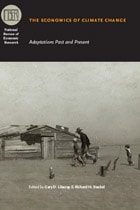
The Economics of Climate Change
Adaptations Past and PresentEdited by Gary D. Libecap and Richard H. Steckel
University of Chicago Press, 2011
While debates over the consequences of climate change are often pessimistic, historical data from the past two centuries indicate many viable opportunities for responding to potential changes. This volume takes a close look at the ways in which economies—particularly that of the United States—have adjusted to the challenges climate change poses, including institutional features that help insulate the economy from shocks, new crop varieties, irrigation, flood control, and ways of extending cultivation to new geographic areas. These innovations indicate that people and economies have considerable capacity to acclimate, especially when private gains complement public benefits. Options for adjusting to climate change abound, and with improved communication and the emergence of new information and technologies, the potential for adaptation will be even greater in the future.
The Economics of Discrimination
Gary S. Becker
University of Chicago Press, 1971
Mr. Becker's work confronts the economic effects of discrimination in the market place because of race, religion, sex, color, social class, personality, or other non-pecuniary considerations. He demonstrates that discrimination in the market place by any group reduces their own real incomes as well as those of the minority.
The original edition of The Economics of Discrimination was warmly received by economists, sociologists, and psychologists alike for focusing the discerning eye of economic analysis upon a vital social problem—discrimination in the market place.
"This is an unusual book; not only is it filled with ingenious theorizing but the implications of the theory are boldly confronted with facts. . . . The intimate relation of the theory and observation has resulted in a book of great vitality on a subject whose interest and importance are obvious."—M.W. Reder, American Economic Review
"The author's solution to the problem of measuring the motive behind actual discrimination is something of a tour de force. . . . Sociologists in the field of race relations will wish to read this book."—Karl Schuessler, American Sociological Review
The Economics of Place-Based Policies
Edited by Cecile Gaubert, Gordon H. Hanson, and David Neumark
University of Chicago Press, 2026
A wide-ranging collection of research examining the intricate economics of place-based policies.
After decades of skepticism about place-based policies, recent initiatives such as Opportunity Zones and elements of the Inflation Reduction Act signal renewed policy interest in targeting economically distressed areas. This volume surveys empirical findings from the US and Europe on the effectiveness of these policies, explores new theoretical rationales for geographic targeting, and examines the institutional contexts that shape policy design and implementation. The contributors evaluate major place-based initiatives and consider nontraditional approaches to supporting regional economies, including large-scale industrial interventions, public employment reallocation, and economic development on Native American reservations.
This collection is not limited to empirical policy impact evaluations as it takes a broader-ranging perspective. The contributors present evaluation evidence while also emphasizing the features, implementation processes, and institutional settings that shape policy effectiveness. They address critical questions such as: What new insights from economic theory can inform the design of place-based policies? What lessons from past policies are reflected—or ignored—in current approaches? How does US policymaking compare with European practices, and what takeaways can be derived from the comparison of the two?
The Economics of Place-Based Policies provides policymakers with evidence-based guidance on the design of effective interventions while offering researchers a comprehensive foundation for future study of how public policy can address geographic economic disparities.

The Economics of Privacy
Edited by Avi Goldfarb and Catherine E. Tucker
University of Chicago Press, 2024
A foundational new collection examining the mechanics of privacy in the digital age.
The falling costs of collecting, storing, and processing data have allowed firms and governments to improve their products and services, but have also created databases with detailed individual-level data that raise privacy concerns. This volume summarizes the research on the economics of privacy and identifies open questions on the value of privacy, the roles of property rights and markets for privacy and data, the relationship between privacy and inequality, and the political economy of privacy regulation.
Several themes emerge across the chapters. One is that it may not be possible to solve privacy concerns by creating a market for the right to privacy, even if property rights are well-defined and transaction costs are low. Another is that it is difficult to measure and value the benefits of privacy, particularly when individuals have an intrinsic preference for privacy. Most previous attempts at valuation have focused only on quantifiable economic outcomes, such as innovation. Finally, defining privacy through an economic lens is challenging. The broader academic and legal literature includes many distinct definitions of privacy, and different definitions may be appropriate in different contexts. The chapters explore a variety of frameworks for examining these questions and provide a range of new perspectives on the role of economics research in understanding the benefits and costs of privacy and of data flows. As the digital economy continues to expand the scope of economic theory and research, The Economics of Privacy provides the most comprehensive survey to date of this field and its next steps.
The Economics of Property-Casualty Insurance
Edited by David F. Bradford
University of Chicago Press, 1998
The first paper, on external financing and insurance cycles, contains a wealth of information on trends and patterns in the industry's financial structure. The last essay, which compares performance of stock and mutual insurance companies, takes a fresh look at the way a company's organizational structure affects its responses to different economic situations. Two papers focus on rate regulation in the auto insurance industry, and provide broad overviews of the structure and economics of the insurance industry as a whole. Also addressed are the system of regulating insurance companies in the United States, who insures the insurers, and the effects of tax law changes in the 1980s on the prices of insurance policies.
The Economics of School Choice
Edited by Caroline M. Hoxby
University of Chicago Press, 2003
Combining the results of empirical research with analyses of the basic economic forces underlying local education markets, The Economics of School Choice presents evidence concerning the impact of school choice on student achievement, school productivity, teachers, and special education. It also tackles difficult questions such as whether school choice affects where people decide to live and how choice can be integrated into a system of school financing that gives children from different backgrounds equal access to resources. Contributors discuss the latest findings on Florida's school choice program as well as voucher programs and charter schools in several other states.
The resulting volume not only reveals the promise of school choice, but examines its pitfalls as well, showing how programs can be designed that exploit the idea's potential but avoid its worst effects. With school choice programs gradually becoming both more possible and more popular, this book stands out as an essential exploration of the effects such programs will have, and a necessary resource for anyone interested in the idea of school choice.
The Economics of Trade Unions
Albert Rees
University of Chicago Press, 1989
The Economization of Life
M. Murphy
Duke University Press, 2017
The Economy of British West Florida, 1763-1783
Robin F. A. Fabel
University of Alabama Press, 1988
The untold economic story of Britain’s Gulf Coast frontier.
This is the first book-length investigation of the economy of British West Florida and the extent to which it was economically viable given that it had been an economic failure for Spain. In it, author Robin Fabel explores both the territory's economy and history but also analyzes previously neglected but key aspects of British West Florida, including the maritime life of the province, the institution of slavery, and the potentially great immigration scheme sponsored by the Company of Military Adventures.
The British divided Florida into two colonies: East Florida and West Florida. West Florida comprised the area between the Apalachicola, Chattahoochee, and Mississippi rivers, and from the Gulf of Mexico north to thirty-two degrees twenty-eight minutes north latitude, roughly the latitude of modern-day Jackson, MS and Montgomery, AL. In the geographic center of the colony were Mobile, Alabama and Pensacola, Floriday. British West Florida included parts of the states of Alabama, Florida, Louisiana, and Mississippi and existed from 1763 until 1783 at the end of the American Revolutionary War.
Fabel contrasts the founding of Georgia, where slaves were initially excluded, with West Florida, where the slave trade became important economically. The British believed that only enslaved Blacks could labor successfully in the hot climate. Fabel gives an account of how owners employed enslaved people, how rare it was for slaves to be emancipated, and the passage of slave laws for West Florida. Fabel also explores British West Florida’s trade with Native Americans and the Caribbean islands, as well as the colony's relationships with neighboring Spanish and French communities.
Fabel's work offers an engaging and accessible account of the history of an expansive region of colonial North America during a fluid period of colonial history before American independence.
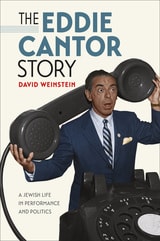
The Eddie Cantor Story
A Jewish Life in Performance and PoliticsDavid Weinstein
Brandeis University Press, 2017
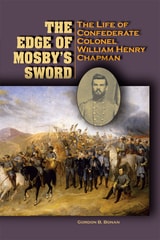
The Edge of Mosby’s Sword
The Life of Confederate Colonel William Henry ChapmanGordon B. Bonan
Southern Illinois University Press, 2009
The Edge of Mosby’s Sword is the first scholarly volume to delve into the story of one of John Singleton Mosby’s most trusted and respected officers, Colonel William Henry Chapman. Presenting both military and personal perspectives of Chapman’s life, Gordon B. Bonan offers an in-depth understanding of a man transformed by the shattering of his nation. This painstakingly researched account exposes a soldier and patriot whose convictions compelled him to battle fiercely for Southern independence; whose quest for greatness soured when faced with the brutal realities of warfare; and who sought to heal his wounded nation when the guns of war were silenced.
Born into a wealthy slave-owning family, Chapman was a student of the fiery secessionist rhetoric of antebellum Virginia who eagerly sought glory and adventure on the battlefields of the Civil War. Bonan traces Chapman’s evolution from an impassioned student at the University of Virginia to an experienced warrior and leader, providing new insight into the officer’s numerous military accomplishments. Explored here are Chapman’s previously overlooked endeavors as a student warrior, leader of the Dixie Artillery, and as second-in-command to Mosby, including his participation in the capture of Harpers Ferry, the battering of Union forces at Second Manassas, and his ferocious raids during the 1864 Shenandoah Valley campaign. Bonan reveals fresh perspectives on the intrepid maneuvers of Mosby’s Rangers, the hardships of war, and Chapman’s crucial role as the right hand of the “Gray Ghost.” But while Mosby recognized him for his bravery and daring, the fame Chapman sought always eluded him. Instead, with his honors and successes came disillusionment and sorrow, as he watched comrades and civilians alike succumb to the terrible toll of the war.
The end of the struggle between North and South saw Chapman accept defeat with dignity, leading the Rangers to their official surrender and parole at Winchester. With the horrors of the war behind him, he quickly moved to embrace the rebuilding of his country, joining the Republican party and beginning a forty-two-year career at the IRS enforcing Federal law throughout the South. In the end, Chapman’s life is a study in contradictions: nationalism and reconciliation; slavery and liberty; vengeance and chivalry.
The Editor Function
Literary Publishing in Postwar AmericaAbram Foley
University of Minnesota Press, 2021
Offering the everyday tasks of literary editors as inspired sources of postwar literary history
Michel Foucault famously theorized “the author function” in his 1969 essay “What Is an Author?” proposing that the existence of the author limits textual meaning. Abram Foley shows a similar critique at work in the labor of several postwar editors who sought to question and undo the corporate “editorial/industrial complex.” Marking an end to the powerful trope of the editor as gatekeeper, The Editor Function demonstrates how practices of editing and publishing constitute their own kinds of thought, calling on us to rethink what we read and how.
The Editor Function follows avant-garde American literary editors and the publishing practices they developed to compete against the postwar corporate consolidation of the publishing industry. Foley studies editing and publishing through archival readings and small press and literary journal publishing lists as unique sites for literary inquiry. Pairing histories and analyses of well- and lesser-known figures and publishing formations, from Cid Corman’s Origin and Nathaniel Mackey’s Hambone to Dalkey Archive Press and Semiotext(e), Foley offers the first in-depth engagement with major publishing initiatives in the postwar United States.
The Editor Function proposes that from the seemingly mundane tasks of these editors—routine editorial correspondence, line editing, list formation—emerge visions of new, better worlds and new textual and conceptual spaces for collective action.
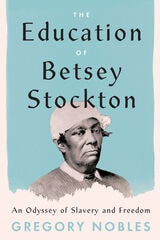
The Education of Betsey Stockton
An Odyssey of Slavery and FreedomGregory Nobles
University of Chicago Press, 2022
The life of Betsey Stockton (ca. 1798–1865) is a remarkable story of a Black woman’s journey from slavery to emancipation, from antebellum New Jersey to the Hawai‘ian Islands, and from her own self-education to a lifetime of teaching others—all told against the backdrop of the early United States’ pervasive racism. It’s a compelling chronicle of a critical time in American history and a testament to the courage and commitment of a woman whose persistence grew into a potent form of resistance.
When Betsey Stockton was a child, she was “given, as a slave” to the household of Rev. Ashbel Green, a prominent pastor and later the president of what is now Princeton University. Although she never went to school, she devoured the books in Green’s library. After being emancipated, she used that education to benefit other people of color, first in Hawai‘i as a missionary, then Philadelphia, and, for the last three decades of her life, Princeton—a college town with a genteel veneer that never fully hid its racial hostility. Betsey Stockton became a revered figure in Princeton’s sizeable Black population, a founder of religious and educational institutions, and a leader engaged in the day-to-day business of building communities.
In this first book-length telling of Betsey Stockton’s story, Gregory Nobles illuminates both a woman and her world, following her around the globe, and showing how a determined individual could challenge her society’s racial obstacles from the ground up. It’s at once a revealing lesson on the struggles of Stockton’s times and a fresh inspiration for our own.
The Education of Historians for Twenty-first Century
Thomas Bender, Philip M. Katz, Colin Palmer, and the Committee on Graduate Education (AHA)
University of Illinois Press, 2004
An examination and analysis of history education in American colleges and universities
In 1958, the American Historical Association began a study to determine the status and condition of history education in U.S. colleges and universities. Published in 1962 and addressing such issues as the supply and demand for teachers, student recruitment, and training for advanced degrees, that report set a lasting benchmark against which to judge the study of history thereafter. Now, more than forty years later, the AHA has commissioned a new report. The Education of Historians for the Twenty-first Century documents this important new study's remarkable conclusions.
Both the American academy and the study of history have been dramatically transformed since the original study, but doctoral programs in history have barely changed. This report from the AHA explains why and offers concrete, practical recommendations for improving the state of graduate education. The Education of Historians for the
Twenty-first Century stands as the first investigation of graduate training for historians in more than four decades and the best available study of doctoral education in any major academic discipline.
Prepared for the AHA by the Committee on Graduate Education, the report represents the combined efforts of a cross-section of the entire historical profession. It draws upon a detailed review of the existing studies and data on graduate education and builds upon this foundation with an exhaustive survey of history doctoral programs. This included actual visits to history departments across the country and consultations with scores of individual historians, graduate students, deans, academic and non-academic employers of historians, as well as other stakeholders in graduate education.
As the ethnic and gender composition of both graduate students and faculty has changed, methodologies have been refined and the domains of historical inquiry expanded. By addressing these revolutionary intellectual and demographic changes in the historical profession, The Education of Historians for the Twenty-first Century breaks important new ground. Combining a detailed historical snapshot of the profession with a rigorous analysis of these intellectual changes, this volume is ideally positioned as the definitive guide to strategic planning for history departments. It includes practical recommendations for handling institutional challenges as well as advice for everyone involved in the advanced training of historians, from department chairs to their students, and from university administrators to the AHA itself.
Although focused on history, there are lessons here for any department. The Education of Historians for the Twenty-first Century is a model for in-depth analysis of doctoral education, with recommendations and analyses that have implications for the entire academy. This volume is required reading for historians, graduate students, university administrators, or anyone interested in the future of higher education.
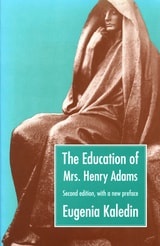
The Education of Mrs. Henry Adams
Eugenia Kaledin
University of Massachusetts Press, 1994
Marian Hooper Adams—Clover, as her friends called her—was an accomplished photographer and a witty, irreverent free spirit who moved easily within the cultural circles of nineteenth-century Boston. Why, then, in 1882, at the age of forty-two, did she swallow a lethal dose of potassium cyanide? And why did her husband of thirteen years fail even to mention her in his autobiography, The Education of Henry Adams?
These and other questions are explored in this first paperback edition of Eugenia Kaledin's pathbreaking biography. The book recreates the intense intellectual, cultural, and moral life of Boston and New England before, during, and after the Civil War and helps us to understand what could drive such a gifted, intelligent, and privileged woman to take her own life. Included is a portfolio of Adams's photographs of her husband and his famous circle.
The Education of Phillips Brooks
John F. Woolverton
University of Illinois Press, 1995
The Education of Phillips Brooks probes the formative years of one of the best-known figures of Victorian America's "Gilded Age". Rigorously researched, bringing as yet untapped archival material into play, John F. Woolverton's book is an extremely readable and fascinating look at a gifted, persuasive clergyman and public figure. The sermon Brooks delivered at his Holy Trinity Church in Philadelphia while Abraham Lincoln's body lay in state overnight in Independence Hall was published, making him nationally famous overnight. He also is known for penning the lyrics to "O Little Town of Bethlehem". Although Brooks was not a major theologian, he was nurtured in an atmosphere of serious religious thought. In the crisis era of pre-Civil War America, he sought a religious and cultural ideal in the "perfect manhood" of Jesus Christ and consequently "won a name" for himself, as his slightly envious cousin, Henry Adams, once remarked. Woolverton places Brooks in his cultural context and shows how this religious leader was shaped psychologically and by his times and how those factors helped him forge a spiritual ideal for a troubled nation.
The Education of a Radical
An American Revolutionary in Sandinista NicaraguaBy Michael Johns
University of Texas Press, 2012
“I went to Nicaragua with nothing but a tourist visa, $1,500 in cash, the name of someone at the Agrarian Reform Ministry, and the idea of being a revolutionary intellectual. . . . The idea took hold in a simple character flaw: wanting to believe that I knew better than everyone else.” —From the preface
When Michael Johns joined a Sandinista militia in 1983, a fellow revolutionary dubbed him a rábano, a radish: red on the outside but white on the inside. Now, more than twenty-five years later, Johns appreciates the wisdom of that label as he revisits the questions of identity he tried to resolve by working with the Sandinistas at that point in his life. In The Education of a Radical, Johns recounts his immersion in Marxism and the Nicaraguan sojourn it led to, with a painful maturation process along the way.
His conversion began in college, where he joined a student group called the Latin American Solidarity Association and traveled to Chiapas, Mexico, for research on his senior thesis. Overwhelmed by the poverty he witnessed (and fascinated by a new friend named Maricela who was trying to turn peasants into revolutionaries and who carried a heavily highlighted copy of Late Capitalism), he experienced an ideological transformation. When a Marxist professor later encouraged him to travel to Nicaragua, the real internal battle began for him, a battle that was intensified by the U.S. invasion of Grenada and its effect on the Sandinistas, who believed they were the next target for an imminent American invasion. Before he knew it, Johns was digging trenches and learning how to use an AK-47. His intellectual ideals came face-to-face with revolutionary facts, and the results would perplex him for years to come.
Bringing to life a vivid portrait of the sometimes painful process of reconciling reality with romanticized principles, The Education of a Radical encapsulates a trove of truths about humanity, economics, and politics in one man’s memorable journey.
The Education of a WASP
Lois M. Stalvey
University of Wisconsin Press, 1989
Brimming with honestly and passion, The Education of a WASP chronicles one white woman's discovery of racism in 1960s America. First published in 1970 and highly acclaimed by reviewers, Lois Stalvey's account is as timely now as it was then. Nearly twenty years later, with ugly racial incidents occurring on college campuses, in neighborhoods, and in workplaces everywhere, her account of personal encounters with racism remains deeply disturbing. Educators and general readers interested in the subtleties of racism will find the story poignant, revealing, and profoundly moving.
“Delightful and horrible, a singular book.” —Choice
“An extraordinarily honest and revealing book that poses the issue: loyalty to one’s ethnic group or loyalty to conscience.” —Publishers Weekly
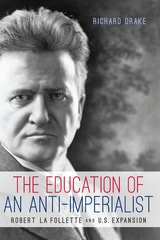
The Education of an Anti-Imperialist
Robert La Follette and U.S. ExpansionRichard Drake
University of Wisconsin Press, 2013
“An excellent book. . . . As Drake fully documents, La Follette's warnings about [World War I] profiteers and the lust for power were fully justified. Then as now, the American people were lied to by the government and media and manipulated into the stink and blood of war."—Mark Taylor, The Daily Call
“Scholars will . . . value the insights into La Follette's foreign policy education.”—The Historian
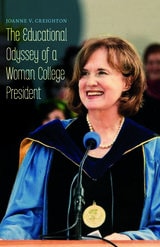
The Educational Odyssey of a Woman College President
Joanne V. Creighton
University of Massachusetts Press, 2018
In her autobiography, The Educational Odyssey of a Woman College President, Creighton situates her tenure at Mount Holyoke within a life and career that have traversed breathtaking changes in higher education and social life. Having held multiple roles in academia spanning undergraduate, professor, and president, Creighton served at small colleges and large public universities and experienced the dramatic changes facing women across the academy. From her girlhood in Wisconsin to the presidency of a storied women's college, she bears witness to the forces that have reshaped higher education for women and continues to advocate for the liberal arts and sciences.
The Effective Republic
Administration and Constitution in the Thought of Alexander HamiltonHarvey Flaumenhaft
Duke University Press, 1992
Although Hamilton exterted an extraordinary influence on American institutions, his contribution and the thinking behind it often have been obscured and misconstrued by piecemeal approaches to his voluminous writings. Here, Flaumenhaft draws upon more than two dozen volumes of Hamilton’s papers to produce a comprehensive account of his thought on the principles of politics—the account which Hamilton himself hoped to give in a multivolume treatise, but died before producing.
Beginning with a discussion of the place of general principles in Hamilton’s thought, The Effective Republic proceeds to his views on popular representation as a safeguard of individual liberty. Flaumenhaft then elaborates on Hamilton’s thinking about efficacious administration, especially how the President and Senate meet the requirements of unity and duration in a republic, and on the importance of an independent judiciary for constitutional integrity. What emerges clearly as Hamilton’s chief concern is the need to make government not only safe but effective—hindered from doing harm by its popular base, but also, through the differentiation of administrative powers and tasks, capable of doing good.
Interpreting, linking, and, and arranging Hamilton’s words, Flaumenhaft allows Hamilton to speak for himself, to explain his benificiaries his vision of what the republican experiment needed in order to succeed.