Results by title
8812 books match the query 'Political Science' and 1911 start with t
The Point is to Change the World
Selected Writings of AndaiyeAlissa Andaiye
Pluto Press, 2020
Through essays, letters and journal entries, Andaiye's thinking on the intersections of gender, race, class and power are profoundly articulated, Caribbean histories emerge, and stories from a life lived at the barricades are revealed. We learn about the early years of the Working People's Alliance, the meaning and impact of the murder of Walter Rodney and the fall of the Grenada Revolution. Throughout, we bear witness to Andaiye's acute understanding of politics rooted in communities and the daily lives of so-called ordinary people.
Featuring forewords by Clem Seecharan and Robin DG Kelley, these texts will become vital tools in our own struggles to 'overturn the power relations which are embedded in every unequal facet of our lives'.

The Polarizers
Postwar Architects of Our Partisan EraSam Rosenfeld
University of Chicago Press, 2017
In The Polarizers, Sam Rosenfeld details why bipartisanship was seen as a problem in the postwar period and how polarization was then cast as the solution. Republicans and Democrats feared that they were becoming too similar, and that a mushy consensus imperiled their agendas and even American democracy itself. Thus began a deliberate move to match ideology with party label—with the toxic results we now endure. Rosenfeld reveals the specific politicians, intellectuals, and operatives who worked together to heighten partisan discord, showing that our system today is not (solely) a product of gradual structural shifts but of deliberate actions motivated by specific agendas. Rosenfeld reveals that the story of Washington’s transformation is both significantly institutional and driven by grassroots influences on both the left and the right.
The Polarizers brilliantly challenges and overturns our conventional narrative about partisanship, but perhaps most importantly, it points us toward a new consensus: if we deliberately created today’s dysfunctional environment, we can deliberately change it.

The Political Animal
Special Issue of SubStance, Issue 117, 37:3 (2008)Chris Danta
University of Wisconsin Press, 2008
In the variegated history of the philosophical definitions of man, one has survived since it has been given the status of the self-evident. The definition in question comes from Aristotle’s Politics: “the human is a political animal” (1253a3). There is something indisputable about this characterization: humans are, indeed, the most social of animals – they are denizens of the polis with its institutions and laws, its rulers, judges and generals. It would be difficult to contend that any other animal has recourse to the political as much as the human.
Aristotle’s Politics need not be surrendered to the strictures of humanism. It remains amenable to the new schema for the political animal that we are sketching here. Each article collected in this issue responds – in its own way and by establishing its own protocols – to the exigency of the animal as it was formulated in Aristotle’s Politics. Each article is an act of response, a moment of interruption.
The Political Brain
The Emergence of NeuropoliticsMatt Qvortrup
Central European University Press, 2024
We have politics on our mind—or, rather, we have politics in different parts of our brains. In this path-breaking study, Matt Qvortrup takes the reader on a whistle stop tour through the fascinating, and sometimes frightening, world of neuropolitics; the discipline that combines neuroscience and politics, and is even being used to win elections.
Putting the 'science' back into political science, The Political Brain shows how fMRI-scans can identify differences between Liberals and Conservatives, can predict our behaviour with sometimes greater accuracy than surveys, and can explain the biology of uprisings, revolutions, and wars.
Not merely a study of empirical evidence, the book shows how the philosophical theories of, among others, Plato, Aristotle, and Spinoza can be supported by brain scans. Along the way, it also provides an overview of the state-of-the-art knowledge of the organ that shapes our politics. The book shows that if we rely on evolutionary primitive parts of the midbrain—those engaged when we succumb to polarised politics—we stand in danger of squandering the gains we made through the last eight million years.
The Political Centrist
John Lawrence Hill
Vanderbilt University Press, 2009
Centrists reject each of these fragmented and polarized approaches to politics. We believe that government has a role to play in structuring social and economic opportunities and in reinforcing basic moral norms, yet we are deeply troubled by ever-expanding government. We reject libertarianism, left-liberalism, and the various schools of conservatism as a model for government.
Part I of The Political Centrist briefly traces the trajectory of the liberal and conservative traditions. It argues that modern liberalism is an unprincipled fusion of classical liberal and socialist ideals while modern conservatism is an untenable hybrid of economic liberalism and social conservatism. Part II offers a centrist approach to many of the most contentious contemporary political and social issues. Those include:
-- abortion
-- affirmative action
-- the death penalty
-- gay marriage
-- illegal immigration
-- judicial activism
-- the relationship of religion and politics
-- the role of government in the economy

The Political Consequences of Motherhood
Jill S. Greenlee
University of Michigan Press, 2015
From civically and politically engaged women linking their identity as “mothers” to their fight for prohibition, public sanitation, and protective labor laws to the general call to arms of “mama grizzlies” issued by Sarah Palin in 2010, American political activists and candidates have used motherhood to rally women’s interest, support, and participation throughout American history. Politicized motherhood persists, and motherhood continues to inspire women’s participation and direct their concerns.
In The Political Consequences of Motherhood, Jill S. Greenlee investigates the complex relationship between motherhood and women’s political attitudes. Combining a historical overview of the ways motherhood has been used for political purposes with recent political opinion surveys and individual-level analysis, she explains how and when motherhood shapes women’s thoughts and preferences. Greenlee argues that two mechanisms account for the durability of motherhood politics. First, women experience attitudinal shifts when they become mothers. Second, “mother” is a broad-based identity, widely shared and ideologically unconstrained, that lends itself to appeals across the political spectrum to build support for candidates and policy issues.
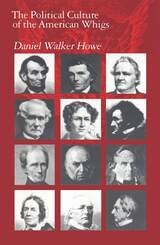
The Political Culture of the American Whigs
Daniel Walker Howe
University of Chicago Press, 1984
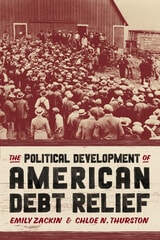
The Political Development of American Debt Relief
Emily Zackin and Chloe N. Thurston
University of Chicago Press, 2024
A political history of the rise and fall of American debt relief.
Americans have a long history with debt. They also have a long history of mobilizing for debt relief. Throughout the nineteenth century, indebted citizens demanded government protection from their financial burdens, challenging readings of the Constitution that exalted property rights at the expense of the vulnerable. Their appeals shaped the country’s periodic experiments with state debt relief and federal bankruptcy law, constituting a pre-industrial safety net. Yet, the twentieth century saw the erosion of debtor politics and the eventual retrenchment of bankruptcy protections.
The Political Development of American Debt Relief traces how geographic, sectoral, and racial politics shaped debtor activism over time, enhancing our understanding of state-building, constitutionalism, and social policy.
The Political Development of American Debt Relief
Emily Zackin and Chloe N. Thurston
University of Chicago Press, 2024
This is an auto-narrated audiobook version of this book.
A political history of the rise and fall of American debt relief.
Americans have a long history with debt. They also have a long history of mobilizing for debt relief. Throughout the nineteenth century, indebted citizens demanded government protection from their financial burdens, challenging readings of the Constitution that exalted property rights at the expense of the vulnerable. Their appeals shaped the country’s periodic experiments with state debt relief and federal bankruptcy law, constituting a pre-industrial safety net. Yet, the twentieth century saw the erosion of debtor politics and the eventual retrenchment of bankruptcy protections.
The Political Development of American Debt Relief traces how geographic, sectoral, and racial politics shaped debtor activism over time, enhancing our understanding of state-building, constitutionalism, and social policy.
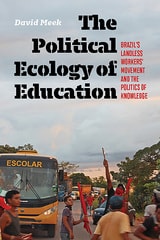
The Political Ecology of Education
Brazil's Landless Workers' Movement and the Politics of KnowledgeDavid Meek
West Virginia University Press, 2020
The Political Ecology of Education examines the opportunities for and constraints on advancing food sovereignty in the 17 de Abril settlement, a community born out of a massacre of landless Brazilian workers in 1996. Based on immersive fieldwork over the course of seven years, David Meek makes the provocative argument that critical forms of food systems education are integral to agrarian social movements’ survival. While the need for critical approaches is especially immediate in the Amazon, Meek’s study speaks to the burgeoning attention to food systems education at various educational levels worldwide, from primary to postgraduate programs. His book calls us to rethink the politics of the possible within these pedagogies.
The Political Economy of Artificial Intelligence
Edited by Ajay Agrawal, Joshua Gans, Avi Goldfarb, and Catherine E. Tucker
University of Chicago Press, 2026
An authoritative look at how artificial intelligence both shapes and is shaped by the political and economic forces of the modern world.
As the effects of artificial intelligence are felt across economies and societies, many of its ramifications are still emerging. This volume brings together economists and political scientists to examine how AI intersects with regulation, military power, and political identity—offering analytical frameworks and identifying key open questions for future research.
The contributions address topics such as the allocation of property rights for AI inputs, trade-offs among alternative regulatory regimes, and the role of interest groups in shaping the technology’s trajectory. They explore how AI-related capabilities influence military effectiveness, resource allocation, and bargaining power among nations, and consider AI’s effects on political preferences, from the influence of AI-curated information on polarization to the implications of targeted political advertising and personalized education for national identity formation. The volume highlights key trade-offs that arise in AI’s political economy, and points toward empirical strategies and theoretical models that can advance understanding in this emerging field.
Drawing on diverse disciplinary perspectives, the collection provides a foundation for rigorous inquiry into how AI both shapes and is shaped by political and economic forces.
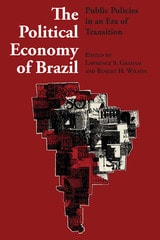
The Political Economy of Brazil
Public Policies in an Era of TransitionEdited by Lawrence S. Graham and Robert H. Wilson
University of Texas Press, 1992
The transition from authoritarian to democratic government in Brazil unleashed profound changes in government and society that cannot be adequately understood from any single theoretical perspective. The great need, say Graham and Wilson, is a holistic vision of what occurred in Brazil, one that opens political and economic analysis to new vistas. This need is answered in The Political Economy of Brazil, a groundbreaking study of late twentieth-century Brazilian issues from a policy perspective.
The book was an outgrowth of a year-long policy research project undertaken jointly by the Lyndon B. Johnson School of Public Affairs and the Teresa Lozano Long Institute of Latin American Studies, both at the University of Texas at Austin. In this book, several noted scholars focus on specific issues central to an understanding of the political and economic choices that were under debate in Brazil. Their findings reveal that for Brazil the break with the past—the authoritarian regime—could not be complete due to economic choices made in the 1960s and 1970s, and also the way in which economic resources committed at that time locked the government into a relatively limited number of options in balancing external and internal pressures.
These conclusions will be important for everyone working in Latin American and Third World development.

The Political Economy of Development
The World Bank, Neoliberalism and Development ResearchEdited by Kate Bayliss, Ben Fine, and Elisa Van Waeyenberge
Pluto Press, 2011
Any student, academic or practitioner wanting to succeed in development studies, radical or mainstream, must understand the World Bank's role and the evolution of its thinking and activities. The Political Economy of Development provides tools for gaining this understanding and applies them across a range of topics.
The research, practice and scholarship of development are always set against the backdrop of the World Bank, whose formidable presence shapes both development practice and thinking. This book brings together academics that specialise in different subject areas of development and reviews their findings in the context of the World Bank as knowledge bank, policy-maker and financial institution. The volume offers a compelling contribution to our understanding of development studies and of development itself.
The Political Economy of Development is an invaluable critical resource for students, policy-makers and activists in development studies.
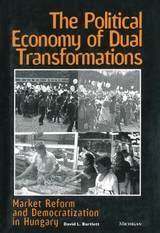
The Political Economy of Dual Transformations
Market Reform and Democratization in HungaryDavid L. Bartlett
University of Michigan Press, 1997
The Political Economy of Expertise
Information and Efficiency in American National PoliticsKevin M. Esterling
University of Michigan Press, 2004
More than mere touts for the interests of Washington insiders, these groups encourage Congress to enact policies that are likely to succeed while avoiding those that have too great of a risk of failure. The surprising result is greater legislative efficiency. The Political Economy of Expertise illustrates that this system actually favors effective and informed decision making, thereby increasing the likelihood that new policies will benefit the American public.

The Political Economy of Health in Africa
Mis Af#60Toyin Falola
Ohio University Press, 1992
The Political Economy of Israel's Occupation
Repression Beyond ExploitationShir Hever
Pluto Press, 2010
The Israeli occupation of the Palestinian territories since 1967 has many important economic aspects that are often overlooked. In this highly original book, Shir Hever shows that understanding the economic dimensions of the occupation is crucial to unravelling the Israeli-Palestinian conflict.
Hever rejects the premise that Israel keeps control over Palestinian territories for material gain, and also the premise that Israel is merely defending itself from Palestinian aggression. Instead, he argues that the occupation has reached an impasse, with the Palestinian resistance making exploitation of the Palestinians by Israeli business interests difficult, but the Israeli authorities reluctant to give up control.
With traditional economic analysis failing to explain this turn of events, this book will be invaluable for students, activists and journalists struggling to make sense of the complex issues surrounding Israel's occupation.
The Political Economy of Latin America in the Postwar Period
Edited by Laura Randall
University of Texas Press, 1998
The historic and increasing interdependence of the Latin American and U.S. economies makes an understanding of the political economies of Latin American nations particularly timely and important. After World War II, many nations initially implemented import substituting industrialization policies. Their outcomes, and the shift in policies, are related to the domestic policies and world economic conditions that led to government deficits, inflation, foreign borrowing, debt renegotiation, and renewed emphasis on common markets and other devices to stimulate trade and investment.
In The Political Economy of Latin America in the Postwar Period, important policy measures are evaluated, such as indexation of prices and contracts; special provisions for financing the government through the Central Bank; stabilization; and deregulation of the economy.
The introduction presents trends in Latin American growth and the factors that influence them. This is followed by parallel studies of the economic development of Argentina, Brazil, Chile, Cuba, Ecuador, Mexico, and Peru from 1945 to the mid-1990s. Noted experts bring their considerable experience to analyzing the content and impact of the economic theories that guided policymaking and their effects on output, income, and quality of life.
The Political Economy of NGOs
State Formation in Sri Lanka and BangladeshJude L. Fernando
Pluto Press, 2011
Jude L. Fernando explores the paradoxical relationship between NGOs and capitalism, showing that supposedly progressive organisations often promote essentially the same policies and ideas as existing governments.
The book examines how a diverse group of NGOs have shaped state formation in Bangladesh and Sri Lanka. It argues that, rather than influencing state formation for the better, NGOs have been integrated into the capitalist system and their language adopted to give traditional exploitative social relations a transformative appearance.
This enlightening study will give pause to those who see NGOs as drivers of true social change and will encourage students of development studies to make a deeper analysis of state formation.
The Political Economy of Protest and Patience
East European and Latin American Trasformations ComparedBéla Greskovits
Central European University Press, 1998
Despite gloomy prophecies, democracy and the market economy seem to be taking root throughout Central and Eastern Europe, although set against a background of a recession deeper and longer than that of the Great Depression. How is this possible? Why did Eastern Europeans protest less about the brutal social consequences of systemic change than the people of Latin America a decade earlier? Why has the region-wide authoritarian or populist turnabout not occurred? Why has democracy in these countries proved to be crisis-proof? In what ways has economic crisis impacted on the politics of the region?
In addressing these questions, Béla Greskovits uses a comparative analysis of the structures, institutions, cultures, and actors shaping both the Eastern European and the Latin American transformations. He argues that structural, institutional, and cultural factors have put a brake on destabilizing collective actions and have paved the way for the emergence of the enduring, low-level equilibrium between incomplete democracy and imperfect market economy which seems set to characterize the Central and Eastern European experience for the foreseeable future.
The Political Economy of Regional Peacemaking
Edited by Steven E. Lobell and Norrin M. Ripsman
University of Michigan Press, 2016
The chapters that follow are grouped in three sections, corresponding to the three stages of peacemaking: reduction or management of regional conflict; peacemaking or progress toward a peace treaty; and maintenance of bilateral peace and the regionalization of the peace settlement. In each chapter, the contributors consider the five key questions from a variety of methodological, historical, cultural, and empirical perspectives, drawing data from the Pacific, the Middle East, Europe, Asia, and Latin America. The conclusion expands on several themes found in the chapters and proposes an agenda for future research.
The Political Economy of Third World Intervention
Mines, Money, and U.S. Policy in the Congo CrisisDavid N. Gibbs
University of Chicago Press, 1991
In The Political Economy of Third World Intervention, David Gibbs explores the factors that motivate intervention, especially the influence of business interests. He challenges conventional views of international relations, eschewing both the popular "realist" view that the state is influenced by diverse national interests and the "dependency" approach that stresses conflicts between industrialized countries and the Third World. Instead, Gibbs proposes a new theoretical model of "business conflict" which stresses divisions between different business interests and shows how such divisions can influence foreign policy and interventionism. Moreover, he focuses on the conflicts among the core countries, highlighting friction among private interests within these countries.
Drawing on U.S. government documents—including a wealth of newly declassified materials—he applies his new model to a detailed case study of the Congo Crisis of the 1960s. Gibbs demonstrates that the Crisis is more accurately characterized by competition among Western interests for access to the Congo's mineral wealth, than by Cold War competition, as has been previously argued.
Offering a fresh perspective for understanding the roots of any international conflict, this remarkably accessible volume will be of special interest to students of international political economy, comparative politics, and business-government relations.
"This book is an extremely important contribution to the study of international relations theory; Gibbs' treatment of the Congo case is superb. He effectively takes the "statists" to task and presents a compelling new way of analyzing external interventions in the Third World."—Michael G. Schatzberg, University of Wisconsin
"David Gibbs makes an original and important contribution to our understanding of the influence of business interests in the making of U.S. foreign policy. His business conflict model provides a synthetic theoretical framework for the analysis of business-government relations, one which yields fresh insights, overcomes inconsistencies in other approaches, and opens new ground for important research. . . . [Gibbs] provides a sophisticated analysis of the conflicts within the U.S. business community and identifies the complex ways in which they interacted with agencies within the government to form U.S. foreign policy toward the Congo. . . . This is a well-crafted analysis of a critical case of U.S. postwar intervention which should be of general interest to scholars and others concerned with the domestic bases of foreign policy."—Thomas J. Biersteker, Director, School of International Relations, University of Southern California
The Political Economy of Turkey
Zulkuf Aydin
Pluto Press, 2005
The Political Economy of the Brazilian State, 1889–1930
By Steven Topik
University of Texas Press, 1987
In this first overview of the Brazilian republican state based on extensive primary source material, Steven Topik demonstrates that well before the disruption of the export economy in 1929, the Brazilian state was one of the most interventionist in Latin America. This study counters the previous general belief that before 1930 Brazil was dominated by an export oligarchy comprised of European and North American capitalists and that only later did the state become prominent in the country’s economic development.
Topik examines the state’s performance during the First Republic (1889–1930) in four sectors—finance, the coffee trade, railroads, and industry. By looking at the controversies in these areas, he explains how domestic interclass and international struggles shaped policy and notes the degree to which the state acted relatively independently of civil society.
Topik’s primary concern is the actions of state officials and whether their decisions reflected the demands of the ruling class. He shows that conflicting interests of fractions of the ruling class and foreign investors gradually led to far greater state participation than any of the participants originally desired, and that the structure of the economy and of society—not the intentions of the actors—best explains the state’s economic presence.

The Political Evolution of the Mexican People
By Justo Sierra
University of Texas Press, 1969
Are the Mexican people the children of Moctezuma or the children of Cortés? This question, long the central problem of Mexican historians, Justo Sierra answered by saying, "The Mexicans are the sons of the two peoples, of the two races … to this we owe our soul."
Because Sierra recognized the dual parentage, he was able to view his country's history as an evolutionary process. Formed in both the indigenous past and the colonial past, the Mexican people, after three hundred years of slow and painful gestation, were finally born with the arrival of Independence. They came of age when the Reform, the Republic, and the nation achieved a single identity.
This classical synthesis, written on the eve of the Mexican Revolution, gave direction to the generation that furnished the Revolution's intellectual leaders. Although the author was Secretary of Public Instruction in the dictatorial regime of Porfirio Díaz, he was the first historian to show sympathy for the plight of the masses, and his book ends with the warning that political evolution has lost its way unless the result is freedom.
As Edmundo O'Gorman points out in an important essay on Mexican historiography, written especially for this edition, Sierra was also the first to write a history of his nation in a sincere endeavor to get at the truth, instead of shaping his account to prove a thesis or to preach some political faith. And yet, his work "owes its originality and its lasting merit to his vigorous interpretation of Mexico's history in the light of his convictions, of his keen insight, even of his fears." Though the chapters on the pre-Columbian Indian have been rendered obsolete by later archeological discoveries, the rest of the history is still valid and needs only to be brought up to date.
The Political Geographies of Pregnancy
Laura R. Woliver
University of Illinois Press, 2002
A searing study of how modern reproductive politics shapes women's bodily agency
Pregnancy indisputably takes place within a woman's body. But as reproductive power finds its way into the hands of medical professionals, lobbyists, and policymakers, the geographies of pregnancy are shifting, and the boundaries need to be redrawn, argues Laura R. Woliver. The Political Geographies of Pregnancy is a vigorous analysis of the ways modern reproductive politics are shaped by long-standing debates on abortion and adoption, surrogacy arrangements, new reproductive technologies, medical surveillance, and the mapping of the human genome.
Across a politically charged backdrop of reproductive issues, Woliver exposes strategies that claim to uphold the best interests of children, families, and women but in reality complicate women's struggles to have control over their own bodies. Utilizing feminist standpoint theory and promoting a feminist ethic of care, Woliver looks at abortion politics, modern adoption laws that cater to male-headed families, regulations that allow the state to monitor pregnant women but not always provide care for them, and the power structures behind the seemingly benign world of egg-selling and surrogate parenting. She also considers the potentially staggering political implications of mapping the human genome, and the exclusion of women's perspectives in discussions about legislation and advancements in reproductive technologies.
The Political Influence of Business in the European Union
Andreas Dür, David Marshall, and Patrick Bernhagen
University of Michigan Press, 2019
The Political Language of Islam
Bernard Lewis
University of Chicago Press, 1988
What does jihad really mean? What is the Muslim conception of law? What is Islam's stance toward unbelievers? Probing literary and historical sources, Bernard Lewis traces the development of Islamic political language from the time of the Prophet to the present. His analysis of documents written in Arabic, Persian, and Turkish illuminates differences between Muslim political thinking and Western political theory, and clarifies the perception, discussion, and practices of politics in the Islamic world.

The Political Life of Medicare
Jonathan Oberlander
University of Chicago Press, 2003
The Political Life of Sensation
Davide Panagia
Duke University Press, 2009
Panagia claims that the rule of narrative governs our inherited notions of political subjectivity and agency, such that reading and writing are the established modes of political deliberation. Yet the contemporary citizen-subject is a viewing subject, influenced by film, photos, and other perceptual stimuli as much as by text. Challenging the rule of narrative, Panagia analyzes diverse sites of cultural engagement including the visual dynamics portrayed in the film The Ring, the growth of festival culture in late-fifteenth-century Florence, the practices of convivium espoused by the Slow Food movement, and the architectural design of public newsstands. He then ties these occasions for sensation to notable moments in the history of political thought and shows the political potential of a dislocated subjectivity therein. Democratic politics, Panagia concludes, involves a taking part in those everyday practices that interrupt our common modes of sensing and afford us an awareness of what had previously been insensible.
The Political Philosophy of Hobbes
Its Basis and Its GenesisLeo Strauss
University of Chicago Press, 1996
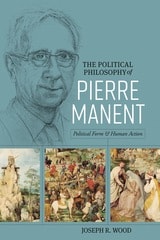
The Political Philosophy of Pierre Manent
Political Form and Human ActionJoseph Wood
Catholic University of America Press, 2024
The Political Poe
Michael Blouin
University of Iowa Press, 2026

The Political Power of the Word
Press and Oratory in Nineteenth-century Latin AmericaEdited by Ivan Jaksic
University of London Press, 2002
The Political State of New Jersey
Edited by Gerald M. Pomper
Rutgers University Press, 1986
A major theme of this book is the emergence of the state government as a significant factor in New Jersey political life. Only recently has the state, as opposed to local or private institutions, become a dominant influence. This trend is evident in the political culture and political parties, the legislature, the governor's office and the courts, the state's finances, and in the agencies for education, environmental protection, and economic development.
The Political Sublime
Michael J. Shapiro
Duke University Press, 2018

The Political Testament of Cardinal Richelieu
The Significant Chapters and Supporting SelectionsTranslated by Henry Bertram Hill
University of Wisconsin Press, 1964
The Political Theory of The Federalist
David F. Epstein
University of Chicago Press, 1986
In The Political Theory of “The Federalist,” David F. Epstein offers a guide to the fundamental principles of American government as they were understood by the framers of the Constitution. Epstein here demonstrates the remarkable depth and clarity of The Federalist’s argument, reveals its specifically political (not merely economic) view of human nature, and describes how and why the American regime combines liberal and republican values.
“While it is a model of scholarly care and clarity, this study deserves an audience outside the academy. . . . David F. Epstein’s book is a fine demonstration of just how much a close reading can accomplish, free of any flights of theory or fancy references.”—New Republic
“Epstein’s strength lies in two aspects of his own approach. One is that he reads the text with uncommon closeness and sensitivity; the other is an extensive knowledge of the European political thought which itself forms an indispensable background to the minds of the authors.”—Times Literary Supplement
The Political Thought of Abdullah Öcalan
Kurdistan, Women's Revolution and Democratic ConfederalismAbdullah Öcalan
Pluto Press, 2017
Bringing together Öcalan’s ideas in one slim volume for the first time, The Political Thought of Abdullah Öcalan contains a selection of his most influential writings over his lifetime. These ideas can be read in light of Öcalan’s continuing legacy during the ongoing revolution and the battle against conservatism and religious extremism. As the political situation in Syria intensifies, this book offers a timely and essential introduction for anyone wanting to come to grips with his political ideas on the Kurdish question, gender, Democratic Confederalism, and nationalism.
The Political Use of Racial Narratives
School Desegregation in Mobile, Alabama, 1954-97Richard A. Pride
University of Illinois Press, 2002
Exploring who benefits and who pays when different narratives are accepted as true, Pride offers a step-by-step account of how Mobile's culture changed each time a new and more forceful narrative was used to justify inequality. More than a retelling of Mobile's story of desegregation, The Political Use of Racial Narratives promotes the value of rhetorical and narrative analysis in the social sciences and history.

The Political and Social Theory of Max Weber
Collected EssaysWolfgang J. Mommsen
University of Chicago Press, 1989
The Politics
Aristotle
University of Chicago Press, 1984
This new translation of one of the fundamental texts of Western political thought combines strict fidelity to Aristotle's Greek with a contemporary English prose style. Lord's intention throughout is to retain Aristotle's distinctive style.
The accompanying notes provide literary and historical references, call attention to textual problems, and supply other essential information and interpretation. A glossary supplies working definitions of key terms in Aristotle's philosophical-political vocabulary as well as a guide to linguistic relationships that are not always reflected in equivalent English terms. Lord's extensive Introduction presents a detailed account of Aristotle's life in relation to the political situation and events of his time and then discusses the problematic character and history of Aristotle's writings in general and of the Politics in particular. Lord also outlines Aristotle's conception of political science, tracing its relation to theoretical science on the one hand and to ethics on the other. In conclusion, he briefly traces the subsequent history and influence of the Politics up to modern times.
"Lord's translation is clearly the best available."—Claremont Review

The Politics and Challenges of Achieving Health Equity
Alan B. Cohen, Colleen M. Grogan, and Jedediah Horwitt, special issue editors
Duke University Press, 2017
Articles in this issue address the historical, legal, and political contexts of health equity in the United States. Contributors examine the role of the courts in shaping health equity; document the importance of political discourse in framing health equity and establishing agendas for action; look closely at particular policies to reveal current challenges and the potential to achieve health equity in the future; and examine policies in both health and nonhealth domains, including state Medicaid programs, the use of mobile technology, and education and immigration policies. The issue concludes with a commentary on the future of health equity under the Trump administration and an analysis of how an ACA repeal would impact health equity.
Contributors. Alan B. Cohen, Keon L. Gilbert, Daniel Q. Gillion, Colleen M. Grogan, Mark A. Hall, Jedediah N. Horwitt, Tiffany D. Joseph, Alana M.W. LeBron, Julia F. Lynch, Jamila D. Michener, Vanessa Cruz Nichols, Francisco Pedraza, Isabel M. Perera, Rashawn Ray, Jennifer D. Roberts, Sara Rosenbaum, Sara Schmucker, Abigail A. Sewell, Deborah Stone, Keith Wailoo
The Politics of American Jews
Herbert F. Weisberg
University of Michigan Press, 2019
Jewish voting is distinctive and paradoxical. Stereotypes about the voting habits of American Jews include that they vote at unusually high levels, that they’re liberal, that they vote for Democratic candidates without regard to their self-interest, and that Israel is their most important issue. Not only are all of those claims wrong, but they obscure aspects of Jews’ voting behavior that are much more interesting.
The Politics of American Jews uncovers new perspectives on Jews’ political choices by analyzing the unprecedented amount of survey data that is now available, including surveys that permit contrasting the voting of Jews with that of comparable non-Jews. The data suggest several mysteries about Jewish voting. While more Jews are Democrats than are liberals, there has not been a previous exploration of why more politically conservative Jews are not Republicans.
A fresh picture of Jews’ political behaviors shows that Jews are no longer politically monolithic. They vote on the basis of their self-interest and their values, but not all Jews share the same self-interest or the same values. While most Jews have incorporated being Democratic and liberal into their political DNA, growing divisions in their ranks suggest a mutation could occur.

The Politics of Annihilation
A Genealogy of GenocideBenjamin Meiches
University of Minnesota Press, 2019
How did a powerful concept in international justice evolve into an inequitable response to mass suffering?
For a term coined just seventy-five years ago, genocide has become a remarkably potent idea. But has it transformed from a truly novel vision for international justice into a conservative, even inaccessible term? The Politics of Annihilation traces how the concept of genocide came to acquire such significance on the global political stage. In doing so, it reveals how the concept has been politically contested and refashioned over time. It explores how these shifts implicitly impact what forms of mass violence are considered genocide and what forms are not.
Benjamin Meiches argues that the limited conception of genocide, often rigidly understood as mass killing rooted in ethno-religious identity, has created legal and political institutions that do not adequately respond to the diversity of mass violence. In his insistence on the concept’s complexity, he does not undermine the need for clear condemnations of such violence. But neither does he allow genocide to become a static or timeless notion. Meiches argues that the discourse on genocide has implicitly excluded many forms of violence from popular attention including cases ranging from contemporary Botswana and the Democratic Republic of Congo, to the legacies of colonial politics in Haiti, Canada, and elsewhere, to the effects of climate change on small island nations.
By mapping the multiplicity of forces that entangle the concept in larger assemblages of power, The Politics of Annihilation gives us a new understanding of how the language of genocide impacts contemporary political life, especially as a means of protesting the social conditions that produce mass violence.
The Politics of Attention
How Government Prioritizes ProblemsBryan D. Jones and Frank R. Baumgartner
University of Chicago Press, 2005
Analyzing fifty years of data, Jones and Baumgartner's book is the first study of American politics based on a new information-processing perspective. The authors bring together the allocation of attention and the operation of governing institutions into a single model that traces public policies, public and media attention to them, and governmental decisions across multiple institutions.
The Politics of Attention offers a groundbreaking approach to American politics based on the responses of policymakers to the flow of information. It asks how the system solves, or fails to solve, problems rather than looking to how individual preferences are realized through political action.
The Politics of Authenticity
First-Personal Truths and Democratic ClaimsNina Hagel
University of Chicago Press, 2026
A qualified defense of authenticity claims in contemporary politics.
On both the Left and Right, we see a range of political claims cast in terms of authenticity, from transgender persons seeking recognition of who they truly are to religious business owners requesting exemptions from antidiscrimination laws. For claimants, what is often at stake is an inner self that would be harmed if changed or concealed. At the same time, many scholars are skeptical of authenticity claims, with some worrying that they are too nebulous and inward-looking and others fearing that they contain too much anti-democratic potential. There is also the added difficulty of determining when and on what grounds to accept a claim of authenticity.
Nina Hagel argues that while invoking authenticity has serious risks, it remains a crucial democratic resource. Through an engagement with canonical and contemporary political theorists, and an analysis of current political struggles centering on authenticity, Hagel advances a defense of authenticity’s democratic potential, alongside a practice for interpreting and invoking such claims. While one might assume that this perspective clashes with the post-modern view that there is no true self outside of politics and history, Hagel puts forward a non-essentialist understanding of authenticity that emphasizes subject formation and emancipation. Hagel argues that authenticity claims best support democracy when they collectively steward, rather than overcome, the social powers that shape our identities. We ignore authenticity claims at our peril, since the objects of such claims are the norms and practices that make us who we are.
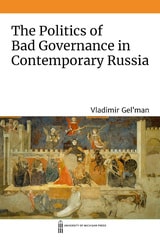
The Politics of Bad Governance in Contemporary Russia
Vladimir Gel'man
University of Michigan Press, 2022
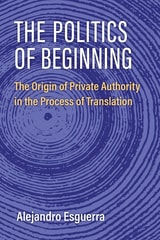
The Politics of Beginning
The Origin of Private Authority in the Process of TranslationAlejandro Esguerra
University of Michigan Press, 2025
2026 APSA Jeffrey Friedman Best Book on Ideas, Knowledge, and Politics Award Winner
The Politics of Beginning traces the formation of the Forest Stewardship Council (FSC), now the most authoritative private organization for forestry certification. It starts with recounting the highly politicized forest politics of the late 1980s, when activists protested human rights abuses and deforestation while experimenting with sustainable forestry practices. The book then follows the people who became the founding members of the Forest Stewardship Council. By using live audio recordings of the FSC founding assembly in 1993, this book provides an in-depth analysis of a constitutional moment for private authority in world politics.
To explore how timber merchants, Indigenous communities, and social and environmental NGOs engaged in private institution-making, Alejandro Esguerra works with the concept of translation developed in Actor-Network Theory—a process in which knowledge about governance is continuously recontextualized—and introduces it to International Relations theory. He develops a dramaturgical methodology with metaphors of theatre such as stage, script, and performance. This methodology can be used to analyze the ways in which activists and others translate knowledge about governance and the practices of inclusion and exclusion that appear during this process. The environmental crisis requires a transformation in the ways societies value and govern human–nature relations, and The Politics of Beginning reveals the conditions under which even formerly antagonistic actors start developing a common political project.
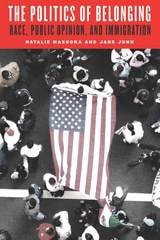
The Politics of Belonging
Race, Public Opinion, and ImmigrationNatalie Masuoka and Jane Junn
University of Chicago Press, 2013