Results by title
4743 books match the query 'Religion' and 1168 start with t
Tolerance and Risk
How U.S. Liberalism Racializes MuslimsMitra Rastegar
University of Minnesota Press, 2021
How apparently positive representations of Muslims in U.S. media cast Muslims as a racial population
Portrayals of Muslims as the beneficiaries of liberal values have contributed to the racialization of Muslims as a risky population since the September 11 attacks. These discourses, which hold up some Muslims as worthy of tolerance or sympathy, reinforce an unstable good Muslim/bad Muslim binary where any Muslim might be moved from one side to the other. In Tolerance and Risk, Mitra Rastegar explores these discourses as a component of the racialization of Muslims—where Muslims are portrayed as a highly diverse population that nevertheless is seen to contain within it a threat that requires constant vigilance.
Tolerance and Risk brings together several case studies to examine the interrelation of representations of Muslims abroad and in the United States. These include human-interest stories and opinion polls of Muslim Americans, media representations of education activist Malala Yousafzai, LGBTQ activist discourses, local New York controversies surrounding Muslim-led public projects, and social media discourses of the Syrian refugee crisis. Tolerance and Risk demonstrates how representations of tolerable or sympathetic Muslims produce them as a population with distinct characteristics, capacities, and risks, and circulate standards by which the trustworthiness or threat of individual Muslims must be assessed.
Tolerance and Risk examines the ways that discourses of liberal rights, including feminist and LGBTQ rights discourses, are mobilized to racialize Muslims as uncivilized, even as they garner sympathy and identification with some Muslims.
Tolkien, Philosopher of War
Graham McAleer
Catholic University of America Press, 2024
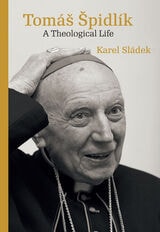
Tomáš Špidlík
A Theological LifeKarel Sládek
Karolinum Press, 2020
By the conclusion, we see Špidlík’s most mature ideas and his forming of a theology of beauty; Špidlík spent his final years in Rome, living and working at the Centro Aletti’s renowned art studio, where he put his mind to observing the theology of art for an understanding of music, film, literature, and iconography.
Torah
Irmtraud Fischer
SBL Press, 2011
This volume is the first in The Bible and Women series. It presents a history of the reception of the Bible as embedded in Western cultural history with a special focus on the history of women and issues of gender. It introduces the series, explaining the choice of the Hebrew canon in connection with the Christian tradition and preparing the way for a changed view of women throughout the series. The contributors explore the gendered significance of the canonical writings as well as the process of their canonization and the social-historical background of ancient Near Eastern women’s lives, both of which play key roles in the series. Turning to the Pentateuch, essays address a variety of texts and issues still relevant today, such as creation and male-female identity in the image of God, women’s roles in the genealogies of the Pentateuch and in salvation history, the rights and responsibilities of women according to the Hebrew Bible's legal and ritual texts, and how archaeology and iconography can illustrate the texts of the Torah. Contributors include Sophie Démare-Lafont, Dorothea Erbele-Küster, Karin Finsterbusch, Irmtraud Fischer, Mercedes García Bachmann, Thomas Hieke, Carol Meyers, Mercedes Navarro Puerto, Jorunn Økland, Ursula Rapp, Donatella Scaiola, Silvia Schroer, Jopie Siebert-Hommes, and Adriana Valerio.
Torah Today
A Renewed Encounter with ScriptureBy Pinchas H. Peli
University of Texas Press, 2005
The central element of Jewish worship is the yearly cycle of reading the first five books of the Bible, the Five Books of Moses, called the Torah in Hebrew. Torah Today, a compilation of fifty-four essays that grew out of Pinchas Peli's Torah column in the Jerusalem Post, comments upon the weekly readings from the Torah. Written in a wonderfully clear style, each essay brings the reader closer to the rich spiritual world of Torah as it confronts the challenges of modern society. This reissue of Torah Today, with a new preface by Rabbi Harold M. Schulweis, makes this classic work available to a new generation of Bible students.
Torah
Functions, Meanings, and Diverse Manifestations in Early Judaism and ChristianityWilliam M. Schniedewind
SBL Press, 2022
The present volume explores the ever-evolving understandings and diverse manifestations of the Hebrew notion of torah in early Jewish and Christian literature and the different roles torah played within those communities, whether in Judea or in the Hellenistic and early Roman diaspora. This collection of essays is purposefully wide-ranging, with contributors exploring and rethinking some of the most basic scholarly assumptions and preconceptions about the nature of torah in light of new critical approaches and methodologies. Contributors include Gabriele Boccaccini, Francis Borchardt, Calum Carmichael, Federico Dal Bo, Lutz Doering, Oliver Dyma, Paula Fredriksen, Robert G. Hall, Magnar Kartveit, Anne Kreps, David Lambert, Michael Legaspi, Jason A. Myers, Juan Carlos Ossandón Widow, Anders Klostergaard Petersen, Patrick Pouchelle, Jeremy Punt, Michael L. Satlow, Joachim Schaper, William Schniedewind, Elisa Uusimäki, Jacqueline Vayntrub, Jonathan Vroom, James W. Watts, Benjamin G. Wright III, and Jason M. Zurawski.
Tormented Master
A Life of Rabbi Nahman of BratslavWritten by Arthur E. Green
University of Alabama Press, 1979
“If Hasidism begins in the life-enhancing spirituality of the Baal Shem Tov, it concludes in the tortuous, elitist and utterly fascinating career of Nahman of Bratslav (1722–1810) whose biography and teaching Arthur Green has set forth in his comprehensive, moving, and subtle study, Tormented Master.
“Arthur Green has managed to lead us through the thickets of the Bratslaver discourse with a grace and facility thus far unequaled in the English language literature on Hasidism. Tormented Master is a model of clarity and percipience, balancing awed respect and honor for its subject with a ruthless pursuit of documented truth. . . . Tormented Master is sufficiently open to the agonies of religion in general and the issues of modern religion in particular to make Nahman a thinker utterly relevant to our time.
“Nahman of Bratslav is unique in the history of Judaism, Green emphasizes, for having made the individual’s quest for intimacy with God the center of the religious way. He was a Kierkegaard before his time, believing in the utter abandon of the life of faith and the risk of paradoxicality. . . . He was, more than all others, the predecessor of Kafka, whose tales, like Nahman’s, have no explicit key and rankle, flush and irritate the spirit, compelling us—even in our failure to understand—to acknowledge their potency and challenge.”
—New York Times
Toward a Latino/a Biblical Interpretation
Francisco Lozada Jr.
SBL Press, 2017
Engage an interdisciplinary approach
In Toward a Latino/a Biblical Interpretation Francisco Lozada Jr. explores the complex and diverse issues related to Latino/a biblical interpretation. After laying the theoretical foundation, he offers three sample readings of biblical texts to lead readers through the intricacy of interpretation that has historically and culturally surrounded understanding what it means to do Latino/a biblical interpretation. Throughout, Lozada attempts to work out various strategies that Latinos/as have employed to read biblical texts. He argues that Latino/a biblical interpretation is concerned with identity and belongingness with a goal of transforming/liberating the Latino/a community.
Features
- An introduction to what it means to do Latino/a biblical interpretation
- A demonstration of three different reading strategies (correlation, dialogical, and ideological) that Latinos/as employ in reading biblical texts
- An exploration of whether one has to be Latino/a to do Latino/a biblical interpretation
Toward a Theology of the Septuagint
Stellenbosch Congress on the Septuagint, 2018Johann Cook
SBL Press, 2020
Innovative Septuagint research from an international group of scholars
Toward a Theology of the Septuagint: Stellenbosch Congress on the Septuagint, 2018 focuses on the question of whether it is appropriate and possible to formulate a theology of the Septuagint. Nineteen English and German essays examine Old Testament, New Testament, and extrabiblical texts from a variety of methodological perspectives to demonstrate that such a theology is indeed necessary and possible.
Features
Toward an Islamic Theology of Nonviolence
In Dialogue with René GirardAdnane Mokrani
Michigan State University Press, 2022
Tractates on the Gospel of John 112–24; Tractates on the First Epistle of John
Saint Augustine
Catholic University of America Press, 1988
Tractates on the Gospel of John 11–27
Saint Augustine
Catholic University of America Press, 1988
Tractates on the Gospel of John 1–10
Saint Augustine
Catholic University of America Press, 1988
Tractates on the Gospel of John 28–54
Saint Augustine
Catholic University of America Press, 1988
Tractates on the Gospel of John 55–111
Saint Augustine
Catholic University of America Press, 1988
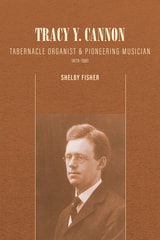
Tracy Y. Cannon
Tabernacle Organist and Pioneering Musician, 1879-1961Fisher, Shelby
Signature Books, 2026
Tracy Y. Cannon guided the musical voice of Mormonism from its provincial roots at the turn of the twentieth century into a state of maturity by the end of his career in 1960. Cannon served as Salt Lake Tabernacle organist from 1905 until 1930, accompanying some of the first radio broadcasts of Music and the Spoken Word. Under his leadership, the McCune School of Music and Art became a cultural hub, offering accredited music degrees as well as community enrichment activities, influencing Utah’s next generation of music educators, composers, leaders, and policymakers. But perhaps his most lasting legacy was his work with the General Music Committee of the Church of Jesus Christ of Latter-day Saints, through which he oversaw the creation of two hymnals, many anthem books, organ anthologies, method books, and an expansive organist and chorister education program.
Cannon’s musical tastes—dignified, refined, reverent, and heavily influenced by Northern European tradition—became the norm for Latter-day Saint congregations for generations. Through his multifaceted career, this brief biography explores the evolution of Latter-day Saint hymnody, “art music,” cultural taste, and music education during the first half of the twentieth century.
Trading Futures
A Theological Critique of Financialized CapitalismFilipe Maia
Duke University Press, 2022
Tradition And Belief
Religious Writing in Late Anglo-Saxon EnglandClara A. Lees
University of Minnesota Press, 1999
Looks at early religious texts and their influence on medieval literature and culture.
Looks at early religious texts and their influence on medieval literature and culture.
In this major study of Anglo-Saxon religious texts-sermons, homilies, and saints’ lives written in Old English-Clare A. Lees reveals how the invention of preaching transformed the early medieval church, and thus the culture of medieval England. By placing Anglo-Saxon prose within a social matrix, her work offers a new way of seeing medieval literature through the lens of culture.To show how the preaching mission of the later Anglo-Saxon church was constructed and received, Lees explores the emergence of preaching from the traditional structures of the early medieval church-its institutional knowledge, genres, and beliefs. Understood as a powerful rhetorical, social, and epistemological process, preaching is shown to have helped define the sociocultural concerns specific to late Anglo-Saxon England.The first detailed study of traditionality in medieval culture, Tradition and Belief is also a case study of one cultural phenomenon from the past. As such-and by concentrating on the theoretically problematic areas of history, religious belief, and aesthetics-the book contributes to debates about the evolving meaning of culture.ISBN 0-8166-3002-X Cloth £34.50 $49.95xxISBN 0-8166-3003-8 Paper £14.00 $19.95x232 Pages 5 7/8 x 9 NovemberMedieval Cultures Series, volume 19Translation inquiries: University of Minnesota Press
Tradition and Innovation
English and German Studies on the SeptuagintMartin Rösel
SBL Press, 2018
Explore the opportunities and challenges of Septuagint studies
Recent research into the Septuagint has revealed numerous examples of modifications of the meaning of the Hebrew text in the course of its translation into Greek. This collection of essays by one of the leading scholars on the Septuagint shows how complex the translation of individual books was, provides reasons for differences between the Hebrew and Greek Bibles, and paves the way for a theology of the Septuagint. Articles introduce the field of Septuagint studies, the problem of the Letter of Aristeas, and the Hellenistic environment and the hermeneutics of Hellenistic Judaism.
Features:
- A methodological discussion of whether and how a theology of the Septuagint can be written
- Essays introducing the field of Septuagint studies and its Hellenistic environment and the hermeneutics of Hellenistic Judaism
- Fifteen English and German essays covering twenty-five years of Septuagint research
Tradition and the Rule of Faith in the Early Church
Ronnie J. Rombs
Catholic University of America Press, 2011

Tradition in Act
Development and Its Counterfeits After NewmanReinhard Hütter
Catholic University of America Press, 2027
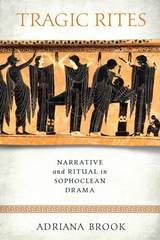
Tragic Rites
Narrative and Ritual in Sophoclean DramaAdriana E. Brook
University of Wisconsin Press, 2018
Employing both modern ritual theory and Aristotle's Poetics, Brook exposes the deep structural analogies between ritual and narrative, the parallels between mistakes in ritual and deviations from the expected in the plot, and the relationship between ritual content and dramatic closure.
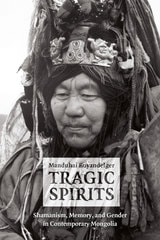
Tragic Spirits
Shamanism, Memory, and Gender in Contemporary MongoliaManduhai Buyandelger
University of Chicago Press, 2013
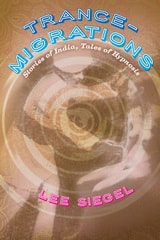
Trance-Migrations
Stories of India, Tales of HypnosisLee Siegel
University of Chicago Press, 2014
Even if you can’t read this with a partner—and I stress that you certainly ought to—you will still be in rich company. There is Shambaraswami, an itinerant magician, hypnotist, and storyteller to whom villagers turn for spells that will bring them wealth or love; José-Custodio de Faria, a Goan priest hypnotizing young and beautiful women in nineteenth-century Parisian salons; James Esdaile, a Scottish physician for the East India Company in Calcutta, experimenting on abject Bengalis with mesmerism as a surgical anesthetic; and Lee Siegel, a writer traveling in India to learn all that he can about hypnosis, yoga, past life regressions, colonialism, orientalism, magic spells, and, above all, the power of story. And then there is you: descending through these histories—these tales within tales, trances within trances, dreams within dreams—toward a place where the distinctions between reverie and reality dissolve.
Here the world within the book and that in which the book is read come startlingly together. It’s one of the most creative works we have ever published, a dazzling combination of literary prowess, scholarly erudition, and psychological exploration—all tempered by warm humor and a sharp wit. It is informing, entertaining, and, above all, mesmerizing.
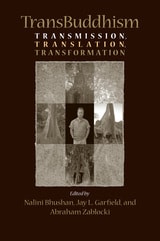
TransBuddhism
Transmission, Translation, and TransformationNalini Bhushan
University of Massachusetts Press, 2009
The chapters in the first section explore the transmission of Buddhism to the West, ranging from the writings of one of its earliest western interpreters, the Wesleyan missionary R. Spence Hardy, to the globalization of Tibetan Buddhist reincarnation, to the development and practice of Buddhism within the American prison system. The concluding chapter of this section presents a case study of a Japanese Buddhist temple in Oregon that ultimately died out—an example of a transmission that failed.
The second section looks at the complex issues that arise in the translation of Buddhist terms, texts, and concepts from one language or cultural milieu to another. Two chapters examine the challenges confronted by those who translate Buddhist texts—one exploring the contemporary translation of Tibetan Buddhism, the second analyzing an exchange of poetry in medieval Japan. The other two chapters describe the translation of Buddhist ideas into new cultural domains in America, specifically film and sports.
The final section presents case studies in the transformation of Buddhism which is resulting from its new global interconnections. Topics include the role of women in transforming Buddhist patriarchy, Buddhist-Freudian dialogue in relationship to mourning, and the interplay between Buddhism and the environmental movement.
The book also includes images created by the noted artist Meridel Rubenstein which frame the individual chapters within a nonverbal exploration of the themes discussed.
In addition to the editors, contributors include Mark Blum, Mario D'Amato, Sue Darlington, Elizabeth Eastman, Connie Kassor, Tom Rohlich, Judith Snodgrass, Jane Stangl, and Karma Lekshe Tsomo.

Transacting as Art, Design and Architecture
A Non-Commercial MarketEdited by Marsha Bradfield, Cinzia Cremona, Amy McDonnell, and Eva Sajovic
Intellect Books, 2021
The essays in this volume apply an experimental ethos to collaborative cultural production. Expanding the fields of art, design, and architectural research, contributors provide critical reflection on collaborative practice-based research. The volume builds on a pop-up market hosted by the London-based arts cluster Critical Practice that sought to creatively explore existing structures of evaluation and actively produce new ones. Assembled by lead editor Marsha Bradfield, the essays contextualize the event within London’s long history of marketplaces, offer reflections from the stallholders, and celebrate its value system, particularly its critique of econometrics. A glossary rounds off the text and opens up the publication as a resource.
Transcendence and History
The Search for Ultimacy from Ancient Societies to PostmodernityGlenn Hughes
University of Missouri Press, 2020
Transcendental Heresies
Harvard and the Modern American Practice of UnbeliefDavid Faflik
University of Massachusetts Press, 2020
At a moment when the requirements of belief and unbelief were being negotiated in unexpected ways, transcendentalism allowed for a more creative approach to spiritual questions. Interrogating the movement's alleged atheistic underpinnings, David Faflik contends that transcendentalism reconstituted the religious sensibilities of 1830s and 1840s New England, producing a dynamic and complex array of beliefs and behaviors that cannot be categorized as either religious or nonreligious. Rather than “the latest form of infidelity,” as one contemporary described it, adherents viewed their unconventional and distinct spiritual practices as a modern religion.
Transcendental Heresies draws on an expansive antebellum archive of period commentary and writings by transcendentalism's practitioners, including Ralph Waldo Emerson, Henry David Thoreau, Theodore Parker, Margaret Fuller, and the women of transcendentalism's second and third waves. From Boston to Concord to the heady environs of Harvard, the species of unbelief they practiced multiplied the religious possibilities of the era, expressing misgivings about traditional notions of divinity, flouting religion's customary forms, and ultimately encouraging spiritual questioning.
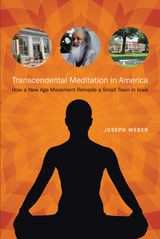
Transcendental Meditation in America
How a New Age Movement Remade a Small Town in IowaJoseph Weber
University of Iowa Press, 2014
The Indian spiritual entrepreneur Maharishi Mahesh Yogi took the West by storm in the 1960s and ’70s, charming Baby Boomers fed up with war and social upheaval with his message of meditation and peace. Heeding his call, two thousand followers moved to tiny Fairfield, Iowa, to set up their own university on the campus of a failed denominational college. Soon, they started a school for prekindergarten through high school, allowing followers to immerse themselves in Transcendental Meditation from toddlerhood through PhDs.
Although Fairfield’s longtime residents were relieved to see that their new neighbors were clean-cut and respectably dressed—not the wild-haired, drug-using hippies they had feared—the newcomers nevertheless quickly began to remake the town. Stores selling exotic goods popped up, TM followers built odd-looking homes that modeled the guru’s rules for peace-inspiring architecture, and the new university knocked down a historic chapel, even as it erected massive golden-domed buildings for meditators. Some newcomers got elected—and others were defeated—when they ran for local and statewide offices. At times, thousands from across the globe visited the small town.
Yet Transcendental Meditation did not always achieve its aims of personal and social tranquility. Suicides and a murder unsettled the meditating community over the years, and some followers were fleeced by con men from their own ranks. Some battled a local farmer over land use and one another over doctrine. Notably, the world has not gotten more peaceful.
Today the guru is dead. His followers are graying, and few of their children are moving into leadership roles. The movement seems rudderless, its financial muscle withering, despite the efforts of high-profile supporters such as filmmaker David Lynch and media magnate Oprah Winfrey. Can TM reinvent itself? And what will be the future of Fairfield itself? By looking closely at the transformation of this small Iowa town, author Joseph Weber assesses the movement’s surprisingly potent effect on Western culture, sketches out its peculiar past, and explores its possible future.
Transcendentalism and the Cultivation of the Soul
Barry M. Andrews
University of Massachusetts Press, 2017
Transcendentalist Hermeneutics
Institutional Authority and the Higher Criticism of the BibleRichard A. Grusin
Duke University Press, 1991
In the ongoing revision of American literary history, this traditional reading of the supposed anti-institutionalism of the Transcendentalists has been duly detailed and continually supported. Richard A. Grusin challenges both traditional and revisionist interpretations with detailed contextual studies of the hermeneutics of Ralph Waldo Emerson, Henry David Thoreau, and Theodore Parker. Informed by the past two decades of critical theory, Grusin examines the influence of the higher criticism of the Bible—which focuses on authorship, date, place of origin, circumstances of composition, and the historical credibility of biblical writings—on these writers. The author argues that the Transcendentalist appeal to the authority of the “self” is not an appeal to a source of authority independent of institutions, but to an authority fundamentally innate.
Transcending Gender Ideology
A Philosophy of Sexual DifferenceAntonio Malo
Catholic University of America Press, 2020
Transformation of American Catholic Sisters
Lora Quinonez
Temple University Press, 1993
Transformation of the Mormon Culture Region
Ethan R. Yorgason
University of Illinois Press, 2010
Transformations in Translation
Comparing Qumran Aramaic Job and Old Greek JobAlun Morton Thomas
SBL Press, 2026
Transformed in Christ
John S. Grabowski
Catholic University of America Press, 2017
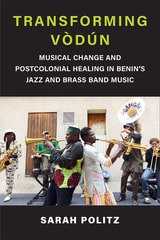
Transforming Vòdún
Musical Change and Postcolonial Healing in Benin's Jazz and Brass Band MusicSarah Politz
University of Michigan Press, 2023
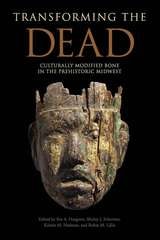
Transforming the Dead
Culturally Modified Bone in the Prehistoric MidwestEve A. Hargrave
University of Alabama Press, 2015
Revealing how the dead continued to shape the spiritual and social worlds of prehistoric North America.
Transforming the Dead is a collection of essays that examines culturally modified human bones and their roles as “cultural and ritual objects” among prehistoric Eastern Woodland cultures. Previous scholarship has explored the role of human body parts in Native American cultures as trophies of war and revered ancestors. This collection discusses new evidence that human elements were also important components of daily and ritual activities across the Eastern Woodlands. The contributors to this volume discuss each case study within the unique regional and temporal contexts of the material, rather than seeking universal answers to how these objects were used.
Most research addressing modified human bone has focused on cut marks and trauma associated with warfare, trophy taking, and burial practices. The editors and contributors of Transforming the Dead document the varied and often overlooked ways that human bone was intentionally modified through drilling, incising, cutting, and polishing for utilitarian, ornamental, spiritual, or ritual use. Examples include bracelets and gorgets to be worn, as well as musical rasps, pipe stems, masks, and protective talismans. The form and function of these objects are not unusual; their construction from the remains of “another” sets them apart.
Through a flexible but systematic analysis of the archaeological record, the contributors bring into focus how the careful selection, modification, and retention of particular bones or body parts of an individual after death offer insights into concepts of personhood, the body, life, and death among the prehistoric Native Americans in the Midwest.
Transgender, Intersex, and Biblical Interpretation
Teresa Hornsby
SBL Press, 2016
A call for “trans literacy” within biblical scholarship
In this volume Hornsby and Guest introduce readers to terms for the various identities of trans people and how the Bible can be an affirmation of those deemed sexually other by communities. This book offers readings of well known (e.g., Gen 1; Revelation) and not so well known (2 Sam 6; Jer 38) narratives to illustrate that the Bible has been translated and interpreted with a bias that makes heterosexuality and a two sex, two gender system natural, and thus divinely ordained. The authors present examples that show gender was never a binary, and in the Bible gender and sex are always dynamic categories that do, and must, transition.
Features:
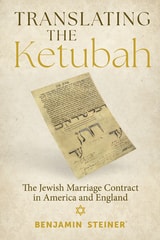
Translating the Ketubah
The Jewish Marriage Contract in America and EnglandBenjamin Steiner
University of Alabama Press, 2025
A groundbreaking exploration of the Jewish marriage contract and its evolution in English translation
Translating the Ketubah offers a fresh perspective on the ketubah, the Jewish marriage contract. Traditionally composed in Aramaic, ketubot have been examined in other books within the frameworks of Jewish law and Jewish art. Here, however, Benjamin Steiner shows how translations of the ketubah into English helped Jews adapt to changing social and economic circumstances across more than two centuries.
Steiner uses ketubot to trace the intricate relationship between religious law and secular law, the changing status of women within and outside Judaism, and the complex desire of Jews to be both authentically Jewish and fully acculturated. Steiner further shows how ketubah translation aided Jews to achieve different cultural goals. It has been used to uphold rabbinic law in communities where religious affiliation was voluntary to ensure women's economic security. It has also facilitated socialization with non-Jews and addressed perceived crises within the Jewish family.
Through a nuanced analysis of ketubah translations from England and various regions of the United States from the late eighteenth century to the present, Steiner offers a detailed look at how Jews have adapted ancient tradition to meet the challenges and opportunities of different historical contexts. His work sheds new light on the rich history of American and British Jewry.
Translation Technique and Literary Structures in Greek Isaiah 13
1–14:23Matthew J. Albanese
SBL Press, 2025
Transmitting Jewish History
Yosef Hayim Yerushalmi in Conversation with Sylvie Anne GoldbergYosef Hayim Yerushalmi and Sylvie Anne Goldberg
Brandeis University Press, 2021
Scholar Yosef Hayim Yerushalmi (1932–2009) possessed a stunning range of erudition in all eras of Jewish history, as well as in world history, classical literature, and European culture. What Yerushalmi also brought to his craft was a brilliant literary style, honed by his own voracious reading from early youth and his formative undergraduate studies. This series of interviews paints a revealing portrait of this giant of history, bringing together exceptional material on Yerushalmi’s personal and intellectual journeys that not only attests to the astonishing breakthrough of the issues of Jewish history into “general history,” but also offers profound insight into being Jewish in today's world.

Transnational Political Islam
Religion, Ideology and PowerEdited by Azza Karam
Pluto Press, 2003
Political Islam, to be distinguished from Islam as a culture or a religion, and from Islamic Fundamentalism, is an increasingly important feature of the western political scene. The ideologies of Political Islam reflect the fact that some of their adherents live and work within a Western socio-political context.
Although Political Islam has been widely written about in Muslim countries, very little has been published the West, and this book attempts to redress that imbalance.
With a range of outstanding contributors that includes academics and human rights advocates this book tackles the diversity of Islamist thinking and practice in various Western countries and explores their transnational connections in both East and West.
The book analyses developments in Islamist thinking and activities, and their connections to the latest global political and economic trends, and discusses future evolutions of the ideology and its manifestations.
Trauma and the Failure of History
Kings, Lamentations, and the Destruction of JerusalemDavid Janzen
SBL Press, 2019
A theoretical and exegetical exploration of trauma in the Hebrew Bible
David Janzen discusses the concepts of history and trauma and contrasts the ways historians and trauma survivors grapple with traumatic events, a contrast embodied in the very different ways the books of Kings and Lamentations react to the destruction of Jerusalem. Janzen’s study warns that explanations in histories will tend to silence the voices of trauma survivors, and it challenges traditional approaches that sometimes portray the explanations of traumatic events in biblical literature as therapeutic for victims.
Features:
- Exploration of history as a narrative explanation that creates a past readers can recognize to be true
- Examination of how trauma results in a failure of victims to fully experience or remember traumatic events.
- A case for why the past is a construction of cultures and historians
Travail In An Arab Land
Samuel Romanelli
University of Alabama Press, 1989
During a return voyage to Italy in 1786, he became stranded in Gibraltar for an extended time which depleted his funds, and his economic circumstances forced him to join a merchant travelling to Morocco. Through misadventure in Morocco, he lost his passport and was retained in that country for four years, the story of which forms Travail in an Arab Land, first published in 1792 in Berlin. The book is a firsthand account of the author’s adventures during the four years he was stranded in Sharifan Morocco between 1787 and 1790.
Treatise on Human Nature
The Complete Text (Summa Theologiae I, Questions 75-102)Thomas Aquinas
St. Augustine's Press, 2010
St. Thomas Aquinas’s Treatise on Human Nature occupies questions 75-102 of Part 1 of the Summa Theologiae. It contains St. Thomas’s most mature statement of his philosophical and theological anthropology, i.e., his account of what human beings are and of their origin as distinctive creatures made in the image of God. This translation, moreover, is the only complete edition of all the material St. Thomas envisaged as being part of the Treatise.
The treatise begins with two long and complex questions on the metaphysical status of the human soul and its relation to the human organism. Here St. Thomas tries to show how the human being is both an animal and an animal who transcend the other animals. In doing so he marks out a distinctive Christian/Aristotelian conceptual space between “materialist” accounts of human nature that reduce human beings to mere collections of physical or chemical or biological components and “dualistic” accounts of human nature, such as those propounded by Plato and, later on, Descartes, that identify human beings with their immaterial souls.
The next thirteen questions deal with the powers of the soul, especially those higher intellective powers of understanding and willing that distinguish human beings from the other animals. Here we are given a philosophical framework for the findings of the human sciences.
Finally, the last thirteen questions have to do with human origins, the creation of the first man and first woman, the state of our first parents, and their status as beings created in the image of God. In essence, this is St. Thomas’s philosophically attuned commentary on the parts of Genesis 1–2 that deal specifically with the creation of the human species. These thirteen questions, though an integral part of the Treatise, are not included in other translations of the Treatise on Human Nature.
Treatise on Law
The Complete TextThomas Aquinas
St. Augustine's Press, 2009
St. Thomas’s account of law is firmly embedded within a general moral theory that begins with a rich conception of human flourishing, i.e., the good for human beings (Questions 1–5). This good consists, first and foremost, in our ultimate and intimate union with the Persons of the Blessed Trinity – a union that in our present state we can grasp intellectively and pursue affectively only with God’s supernatural assistance. It is within this framework that we order our loves and pursue the more proximate goals they open up to us as human beings in this life. Given the appropriate goals, the next question is how we can get from where we are, in the grips of the consequences of Original Sin, to where we want to be. The answer is: by means of (a) human actions that are good, i.e., rightly ordered toward our ultimate end and (b) the habits that these actions either engender or flow from. In analyzing human actions (Questions 6–21) and their relation to the passions (Questions 22–48), St. Thomas gives a general account of what he calls the ‘intrinsic principles’ of human actions and their associated habits – both virtues (Questions 49–70) and vices (Questions 71–89). It is only then that he turns to what he calls the ‘extrinsic principles’ of good human actions, viz., law (Questions 90–108) and grace (Questions 109–114).
According to St. Thomas, law, far from supplanting virtue as a basic principle of action, serves as an independent principle of action that complements virtue and is itself capable of being factored into practical deliberation. The reason is that all of God’s
precepts, prohibitions, and punishments are aimed at promoting the good of the whole universe and, more particularly, the good for human beings, both individually and within the various forms of social life. Because of this, law serves as both a restraint on bad actions and a spur to good action, i.e., a restraint on actions that take us away from virtue and genuine human flourishing and a spur to actions that promote virtue and flourishing.
There are many benefits of having the whole treatise rather than just the first few questions, as has been the standard practice in previous editions of the Treatise on Law. To mention just a few of these benefits, the question on the moral precepts of the Old Law (question 100) helps to illuminate in many different ways the earlier questions on natural law and human law (questions 94–97). Again, the questions on the ceremonial and judicial precepts of the Old Law (questions 101–105) demon-strate in depth the symbiotic relationship that St. Thomas takes to obtain between the Old Testament and the New Testament. The questions on the New Law provide an introduction to the Christian way of life that will be described in incomparable detail in the Second Part of the Second Part, the bulk of which is structured around the treatment of the three theological virtues and the four cardinal virtues.
Treatises
Saint Cyprian
Catholic University of America Press, 1958
Treatises on Marriage and Other Subjects
Saint Augustine
Catholic University of America Press, 1999
Treatises on Noah and David
Brian P. St. Ambrose
Catholic University of America Press, 2020
The first treatise presents Noah as a model just man, as Ambrose pairs the literal and the higher or spiritual meaning of the Genesis flood narrative to address topics ranging from the Genesis narrative to Stoic ethics to the Incarnation. In his defense of David to the emperor Theodosius, Ambrose ties David’s sin and repentance to his own close reading of Psalm 51(50), David’s plea for himself in his famous “Miserere.” While the authenticity of the third treatise included in the volume, the Second Apology of David, has long been challenged, recent scholarship suggests that it transmits Ambrose’s own preaching, which applies the lessons of David’s life to the situation of gentile unbelievers, Jews, and the church; even if it is the work of a later imitator, the Second Apology is a compelling and systematic treatment of the David’s sin and repentance as relevant to Christian morality and doctrine.
The three treatises, previously unavailable in English translation, broaden our understanding of exegesis in the Latin West and our interpretation of Ambrose as preacher and exegete.