Results by title
8113 books match the query 'Literary Criticism' and 1818 start with t
The Saving Lie
Harold Bloom and DeconstructionAgata Bielik-Robson
Northwestern University Press, 2011
Bloom is indeed a party of one, a truly strong poet of his own mode of religious-literary criticism, who, in a typically Emersonian manner, makes his own circumstances and sheds influences by incorporating them into his idiosyncratic theory.In this unprecedented full-length study on Harold Bloom, Agata Bielik-Robson explores the many facets of Bloom’s critical writings and career. In his work, she argues, Bloom draws on a variety of disparate traditions—Judaism, gnosis, Romanticism, American pragmatism, and Freudianism, but also, especially recently, Victorian aestheticism—that comprise a dialectical, difficult whole in a constant quarrel with itself. Yet, this is precisely the image of "life-in-antithesis," which constitutes Bloom’s highest speculative achievement, she observes. The Saving Lie brings all these "Blooms" together and, despite their own tendencies toward dissociation, lets them speak unisono: in one almost harmonious voice that will clearly utter the principles of a new speculative position—Bloom’s antithetical vitalism. This study of Bloom and his contributions will not soon be surpassed.
The Saving Line
Benjamin, Adorno, and the Caesuras of HopeMárton Dornbach
Northwestern University Press, 2021
Walter Benjamin and Theodor Adorno both turned to canonical literary narratives to determine why the Enlightenment project was derailed and how this failure might be remedied. The resultant works, Benjamin’s major essay on Goethe’s Elective Affinities and Adorno’s meditation on the Odyssey in Dialectic of Enlightenment, are centrally concerned with the very act of narration. Márton Dornbach’s groundbreaking book reconstructs a hitherto unnoticed, wide-ranging dialogue between these foundational texts of the Frankfurt School.
At the heart of Dornbach’s argument is a critical model that Benjamin built around the concept of caesura, a model Adorno subsequently reworked. Countering an obscurantism that would become complicit in the rise of fascism, the two theorists aligned moments of arrest in narratives mired in unreason. Although this model responded to a specific historical emergency, it can be adapted to identify utopian impulses in a variety of works.
The Saving Line throws fresh light on the intellectual exchange and disagreements between Benjamin and Adorno, the problematic conjunction of secular reason and negative theology in their thinking, and their appropriations of ancient and modern legacies. It will interest scholars of philosophy and literature, critical theory, German Jewish thought, classical reception studies, and narratology.

The Scandal of the Fabliaux
R. Howard Bloch
University of Chicago Press, 1986
By showing how the medieval poet's obsession with the outrageous, the low, and the lewd was intimately bound to poetry, Bloch forces a revision of traditional approaches to Old French literature. His final chapter, on castration anxiety, fetishism, and the comic, links the fabliaux with the development of modern notions of the self and makes a case for the medieval roots of our own sense of humor.
The Scarlet Mob of Scribblers
Rereading Hester PrynneJamie Barlowe
Southern Illinois University Press, 2000
Jamie Barlowe finds it bitterly ironic that in literary criticism of The Scarlet Letter, a major American novel about a woman, the voices of female critics have been virtually excluded.
Barlowe examines the causes and consequences of the continuing disregard for women's scholarship. To that end, she chronicles The Scarlet Letter's critical reception, analyzes the history of Hester Prynne as a cultural icon in literature and film, rereads the canonized criticism of the novel, and offers a new reading of Hawthorne's work by rescuing marginalized interpretations from the alternative canon of women critics.
Despite the fervent protestations of scholars that women and minorities are no longer excluded from the arena of academic debate, Barlowe's investigation reveals that mainstream scholarship on The Scarlet Letter—studied as models by generations of students and teachers—remains male-dominated in its comprising population and in its attitudes and practices, which function as the source of its truth-claims. Rather than celebrating the minimal handouts of the academy to women and minorities—and of the culture that nurtures and supports the academy's continuing discrimination—Barlowe constructs a case study that reveals the "rather pitiful state of affairs at the close of the twentieth century."
By interrogating canonized assumptions, Barlowe charts new directions for Hawthorne studies and American literary studies. Through this exposé of ingrained institutional bias, perpetuated myths, and privileged critics, Barlowe provides a refigured perception of the field and state of contemporary literary scholarship.
The Scene of Harlem Cabaret
Race, Sexuality, PerformanceShane Vogel
University of Chicago Press, 2009
Harlem’s nightclubs in the 1920s and ’30s were a crucible for testing society’s racial and sexual limits. Normally tacit divisions were there made spectacularly public in the vibrant, but often fraught, relationship between performer and audience. The cabaret scene, Shane Vogel contends, also played a key role in the Harlem Renaissance by offering an alternative to the politics of sexual respectability and racial uplift that sought to dictate the proper subject matter for black arts and letters. Individually and collectively, luminaries such as Duke Ellington, Lena Horne, Langston Hughes, Claude McKay, Wallace Thurman, and Ethel Waters expanded the possibilities of blackness and sexuality in America, resulting in a queer nightlife that flourished in music, in print, and on stage.
Deftly combining performance theory, literary criticism, historical research, and biographical study, The Scene of Harlem Cabaret brings this rich moment in history to life, while exploring the role of nightlife performance as a definitive touchstone for understanding the racial and sexual politics of the early twentieth century.
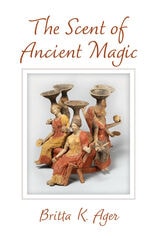
The Scent of Ancient Magic
Britta K. Ager
University of Michigan Press, 2022
The Scent of Ancient Magic explores the complex interconnection of scent and magic in the Greco-Roman world between 800 BCE and CE 600, drawing on ancient literature and the modern study of the senses to examine the sensory depth and richness of ancient magic. Author Britta K. Ager looks at how ancient magicians used scents as part of their spells, to put themselves in the right mindset for an encounter with a god or to attack their enemies through scent. Ager also examines the magicians who appear in ancient fiction, like Medea and Circe, and the more metaphorical ways in which their spells are confused with perfumes and herbs. This book brings together recent scholarship on ancient magic from classical studies and on scent from the interdisciplinary field of sensory studies in order to examine how practicing ancient magicians used scents for ritual purposes, how scent and magic were conceptually related in ancient literature and culture, and how the assumption that strong scents convey powerful effects of various sorts was also found in related areas like ancient medical practices and normative religious ritual.
The Scent of the Gods
Fiona Cheong
University of Illinois Press, 2010

The Schlemiel as Metaphor, Revised and Enlarged Edition
Studies in Yiddish and American Jewish FictionSanford Pinsker
Southern Illinois University Press, 1991
The certainty that deep down we are all schlemiels is perhaps what makes America love an inept ball team or a Woody Allen who unburdens his neurotic heart in public.
In this unique, revised history of the schlemiel, Sanford Pinsker uses psychological, linguistic, and anecdotal approaches, as well as his considerable skills as a spritely storyteller, to trace the schlemiel from his beginnings in the Old Testament through his appearance in the nineteenth-century literature of Mendele Mocher Seforim and Sholom Aleichem to his final development as the beautiful loser in the works of Isaac Bashevis Singer, Bernard Malamud, Saul Bellow, Philip Roth, and Woody Allen. Horatio Alger might have once been a good emblem of the American sensibility, but today Woody Allen’s anxious, bespectacled punin (face) seems closer, and truer, to our national experience. His urban, end-of-the-century anxieties mirror—albeit in exaggeration—our own.
This expanded study of the schlemiel is especially relevant now, when scholarship of Yiddish and American Jewish literature is on the increase. By sketching the family tree of that durable anti-hero the schlemiel, Pinsker proves that Jewish humor is built upon the very foundations of the Jewish experience. Pinsker shows the evolution of the schlemiel from the comic butt of Yiddish jokes to a literary figure that speaks to the heart of our modern problems, and he demonstrates the way that Yiddish humor provides a sorely needed correction, a way of pulling down the vanities we all live by.
The Scholar's Art
Literary Studies in a Managed WorldJerome McGann
University of Chicago Press, 2006
Of particular interest to McGann is the demise of public discourse about poetry. That poetry has become recondite is, to his mind, at once a problem for how scholars do their work and a general cultural emergency. The Scholar’s Art asks what could be gained by reimagining the way scholars have codified the literary and cultural history of the past two hundred years and goes on to provide a series of case studies that illustrate how scholarly method can help bring about such reimaginings. McGann closes with a discussion of technology’s ability to harness the reimagination of cultural memory and concludes with exemplary acts of critical reflection.
Astute observation from one of America’s most bracing and original commentators on the place of literature in twenty-first century culture, The Scholar’s Art proposes new ways—cultural, philological, and technological—to reimagine our literary past and future.
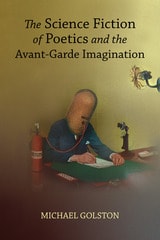
The Science Fiction of Poetics and the Avant-Garde Imagination
Michael Golston
University of Alabama Press, 2024
This insightful, playful monograph from Golston does exactly what it advertises: modeling poetics based on how poetry (and some parallel artistic endeavors) has filtered through a century-plus of science fiction. This is not a book about science fiction in and of itself, but it is a book about the resonances of science-fiction tropes and ideas in poetic language.
The germ of Golston’s project is a throwaway line in Robert Smithson’s Entropy and the New Monuments about how cinema supplanted nature as inspiration for many of his fellow artists: “The movies give a ritual pattern to the lives of many artists, and this induces a kind of ‘low budget’ mysticism, which keeps them in a perpetual trance.” Golston charts how the demotic appeal of sci-fi, much like that of the B-movie, cross-pollinated into poetry and other branches of the avant garde.
Golston creates what he calls a “regular Rube Goldberg machine” of a critical apparatus, drawing on Walter Benjamin, Roman Jakobson, and Gilles Deleuze. He starts by acknowledging that, per the important work of Darko Suvin to situate science fiction critically, the genre is premised on cognitive estrangement. But he is not interested in the specific nuts and bolts of science fiction as it exists but rather how science fiction has created a model not only for other poets but also for musicians and landscape artists.
Golston’s critical lens moves around quite a bit, but he begins with familiar enough subjects: Edgar Rice Burroughs, Mina Loy, William S. Burroughs. From there he moves into more “alien” terrain: Ed Dorn’s long poem Gunslinger, the discombobulated work of Clark Coolidge. Sun Ra, Ornette Coleman, and Jimi Hendrix all come under consideration. The result of Golston’s restless, rich scholarship is the first substantial monograph on science fiction and avant-garde poetics, using Russian Formalism, Frankfurt School dialectics, and Deleuzian theory to show how the avant-garde inherently follows the parameters of sci fi, in both theme and form.
The Science of Character
Human Objecthood and the Ends of Victorian RealismS. Pearl Brilmyer
University of Chicago Press, 2022
In 1843, the Victorian philosopher John Stuart Mill called for the establishment of a new science, “the science of the formation of character.” Although Mill’s proposal failed as scientific practice, S. Pearl Brilmyer maintains that it found its true home in realist fiction of the period, which employed the literary figure of character to investigate the nature of embodied experience. Bringing to life Mill’s unrealized dream of a science of character, novelists such as George Eliot, Thomas Hardy, and Olive Schreiner turned to narrative to explore how traits and behaviors in organisms emerge and develop, and how aesthetic features—shapes, colors, and gestures—come to take on cultural meaning through certain categories, such as race and sex. Engaged with materialist science and philosophy, these authors transformed character from the liberal notion of the inner truth of an individual into a materially determined figuration produced through shifts in the boundaries between the body’s inside and outside. In their hands, Brilmyer argues, literature became a science, not in the sense that its claims were falsifiable or even systematically articulated, but in its commitment to uncovering, through a fictional staging of realistic events, the laws governing physical and affective life. The Science of Character redraws late Victorian literary history to show how women and feminist novelists pushed realism to its aesthetic and philosophical limits in the crucial span between 1870 and 1920.
The Scope of History
Studies in the Historiography of Alfonso el SabioCharles F. Fraker
University of Michigan Press, 1996
In his introduction the author addresses the place of Alfonso's work in its own time, giving the reader a notion of what other works in the genre were like and how they differ. The connecting thread running through these chapters is a continuing focus on the art of the compiler. Medieval historical compilations are by definition scissors-and-paste jobs, stringing older texts together to tell new, different stories. But the Alfonsine editors bend the rules: in the short run they make their work yield the themes they think important, and in the long run they build a literary monument of impressive architecture.
Charles F. Fraker is Professor Emeritus in Romance Languages, University of Michigan.
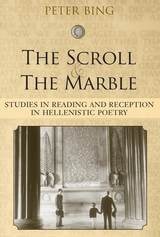
The Scroll and the Marble
Studies in Reading and Reception in Hellenistic PoetryPeter Bing
University of Michigan Press, 2010
---Benjamin Acosta-Hughes, Ohio State University
While people of previous ages relied on public performance as their chief means of experiencing poetry, the Hellenistic age developed what one may term a culture of reading. This was the first era in which poets consciously shaped their works with an eye toward publication and reception not just on the civic stage but in several media---in performance, on inscribed monuments, in scrolls. The essays in Peter Bing's collection explore how poetry accommodated various audiences and how these audiences in turn experienced the text in diverse ways. Over the years, Bing's essays have focused on certain Hellenistic authors and genres---particularly on Callimachus and Posidippus and on epigram. His themes, too, have been broadly consistent. Thus, although the essays in The Scroll and the Marble span some twenty years, they offer a coherent vision of Hellenistic poetics as a whole.
Peter Bing is Professor of Classics at Emory University and editor, most recently, of the Companion to Hellenistic Epigram: Down to Philip (coedited with Jon Steffen Bruss).
Jacket illustration: Film still from Mr. Smith Goes to Washington, directed by Frank Capra, Columbia Pictures 1939. Courtesy of Sony Pictures.
The Sea as Mirror
Essayings in and against Philosophy as HistoryWu Yi
Diaphanes, 2021
These include philosophical texts drawn from a constellation of historical topoi at the critical moments of their encounter with the maritime: Plato and Euripedes’s work from fifth-century Athens; Augustus and Plautus’s writings from republican and early imperial Rome; Shakespeare’s creations from Elizabethan England; Kant and Rousseau’s texts from enlightenment continental Europe; and the thinking of Husserl and Heidegger from interwar Germany of the twentieth century. For each historical topos, Yi juxtaposes different representations of and responses to the maritime through the reading of a philosophical text vis-à-vis the reading of a literary text. In so doing, she lays bare the deep political and moral ambiguity attributed to the ocean in Western philosophical and literary imaginaries.
The Search for Origins in the Twentieth-Century Long Poem
Sumerian, Homeric, Anglo-SaxonJOE W. MOFFETT
West Virginia University Press, 2007
In this new, scholarly text—an ambitious study of contemporary poetics—Joe W. Moffett deciphers the twentieth-century long poem, searching for a better understanding of why long-poem writers are preoccupied with a search for origins.
Moffett focuses on issues like postcolonialism, nation, modernism, and postmodernism. He conceptualizes his theories by using what he calls “originiary moments”: historical periods or specific events from which a poet contends our culture descends. These moments enlighten and inspire the modern poet to use origin or “source” as a way to examine present culture and social conditions. The poems also encourage modern readers to question, revise, and repudiate. Moffett organizes his argument by arranging specific examples into three categories of originary moments: Sumerian, Homeric, and Anglo-Saxon.
According to Moffett, the long poem is appealing because it “lacks strict conventions that govern other genres.” Using a wide variety of poems to support his arguments, Moffett asks many stimulating questions and also provides provocative answers.
Questions of when and where It All Began have been off the critical agenda for some time now, embargoed by poststructuralism. Undeterred, Joe Moffett boldly revisits the search for cultural origins, which preoccupied major poets throughout the twentieth century. Capacious in his scope, eclectic in his choices, Moffett rounds up unusual subjects, including long poems by Armand Schwerner, Derek Walcott, Geoffrey Hill, and Judy Grahn, with excursions into Charles Olson, Seamus Heaney, and others. Nowhere will you find clearer, more intelligent, or better-informed readings of these poems than Moffett’s.
The Second Seedtime
Notebooks, 1980–94Philippe Jaccottet
Seagull Books, 2017
One of Europe’s finest contemporary poets, Jaccottet is a writer of exacting attention. Through keen observations of the natural world, art, literature, and music, and reflections on the human condition, Jaccottet opens his readers’ eyes to the transcendent in everyday life. The Second Seedtime is a collection of “things seen, things read, and things dreamed.” The volume continues the project Jaccottet began three decades earlier in his first volume of notebooks, Seedtime. Here, again, he gathers flashes of beauty dispersed around him like seeds that may blossom into poems or moments of inspiration. He returns, insistently, to such literary touchstones as Dante, Montaigne, Góngora, Goethe, Kierkegaard, Hölderlin, Michaux, Hopkins, Brontë, and Dickinson, as well as musical greats including Bach, Monteverdi, Purcell, and Schubert. The Second Seedtime is the vivid chronicle of one man’s passionate engagement with the life of the mind, the spirit, and the natural world.
The Secret Life Of John C. Van Dyke
Selected LettersDavid W. Teague
University of Nevada Press, 1997
The author of The Desert, the book that made the American landscape accessible to the mainstream mind, was much less like his fellow environmental prophets John Muir and Henry David Thoreau than he would have had us believe. Van Dyke claimed to have wandered "alone on horseback for thousands of miles through the American Southwest and northern Mexico," as readers of The Desert—now in the millions since the book was published in 1901—were told. He did not. In The Secret Life of John C. Van Dyke, Teague and Wild unmask the desert saint with Van Dyke’s own recently discovered letters. These letters depict a privileged, patrician, and pampered member of the upper-class. His incriminating correspondence reveals that he saw most of the desert from plush railroad cars and grand hotel rooms. In the introduction, the editors clear up many misconceptions scholars currently hold about Van Dyke’s ecological principles, about his outdoorsmanship, and about his trip through the desert itself. As the centennial of the publication of The Desert approaches, this lively collection of letters helps set the record straight. The John C. Van Dyke unveiled in The Secret Life is a more varied character than we had supposed—still worthy of much admiration for his remarkable accomplishments, but still mysterious, and not the man we thought him to be.
The Secret Life of Things
Animals, Objects, and It-Narratives in Eighteenth-Century EnglandMark Blackwell
Bucknell University Press, 2023
Published by Bucknell University Press.
Distributed worldwide by Rutgers University Press.
The Secret Marriage of Sherlock Holmes and Other Eccentric Readings
Michael Atkinson
University of Michigan Press, 1998
"Atkinson demonstrates a love and knowledge of the Holmes stories. . . I would recommend The Secret Marriage of Sherlock Holmes enthusiastically to any lover of the Canon who is prepared to have their perceptions widened."
The Secret War
Treason, Espionage, and Modern FictionEva Horn
Northwestern University Press, 2013
The Secret War marks a new direction in the cultural history and theory of intelligence gathering and state secrecy in the twentieth and early twenty-first centuries. While historical truth remains hidden from the public, Eva Horn finds in political fiction, which serves as both an indicator and a tool, a means to analyze political secrets. Starting with a general theory of treason and military intelligence as a specific type of political knowledge, the book charts the history of intelligence gathering from 1900 to 9/11. The Secret War analyzes literary and cinematic depictions of espionage from Rudyard Kipling and T. E. Lawrence to John Le Carré and Steven Spielberg. Horn considers these fictional accounts against the historical development of Western secret services from their inception in World War I to their struggle against current terrorist networks. The Secret War shows the crucial part fictions play in shaping conflicts, constructing “the enemy,” and deciding political strategies.
The Secret of Secrets
The East Slavic VersionEdited by W.F. Ryan and Moshe Taube
University of London Press, 2019
The Secret of Secrets
The Scholarly Career of a Pseudo-Aristotelian Text in the Latin Middle AgesSteven J. Williams
University of Michigan Press, 2003
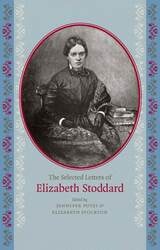
The Selected Letters of Elizabeth Stoddard
Jennifer Putzi
University of Iowa Press, 2012
As scholars of epistolarity have recently argued, letters provide more than just a biographical narrative; they also should be understood as aesthetic performances themselves. The correspondence provides a sense of Stoddard as someone who understood letter writing as a distinct and important literary genre, making this collection particularly well suited for new conceptualizations of the epistolary genre.
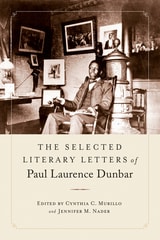
The Selected Literary Letters of Paul Laurence Dunbar
Edited by Cynthia C. Murillo and Jennifer M. Nader
University of Alabama Press, 2021
Discovering Paul Laurence Dunbar's personal and literary life through 250 of his transcribed and annotated letters.
Paul Laurence Dunbar (1873–1906) was arguably the most famous African American poet, novelist, and dramatist at the turn of the twentieth century and one of the earliest African American writers to receive national recognition and appreciation. Scholars have taken a renewed interest in Dunbar but much is still unknown about this once-famous African American author’s life and literary efforts. Dunbar’s letters to various editors, friends, benefactors, scholars, and family members are crucial to any critical or theoretical understanding of his journey as a writer. His literary correspondence, in particular, records the development of an extraordinary figure whose work reached a broad readership in his lifetime, but not without considerable cost.
The Selected Literary Letters of Paul Laurence Dunbar is a collection of 250 letters, transcribed and annotated, that reveal the personal and literary life of one of the most highly regarded African American writers and intellectuals. Editors Cynthia C. Murillo and Jennifer M. Nader highlight Dunbar not just as a determined author and master of rhetoric, but also as a young, sensitive, thoughtful, keenly intelligent, and talented writer who battled depression, alcoholism, and tuberculosis as well as rejection and racism. Despite Dunbar’s personal struggles, his literary letters disclose that he was full of hopes and dreams coupled with the resolve to flourish as a writer—at almost any cost, even when it caused controversy.
Taken together, Dunbar’s letters depict his concerted effort to succeed as an author within an overtly racist literary culture, among sharp divides within the African American intellectual community, and in opposition to the demands of popular public tastes—often dictated by the demands of publishers. This wide-ranging selection of Dunbar’s most relevant literary letters will serve to correct many matters of conjecture about Dunbar’s life, writing, and choices by supplying factual evidence to counter speculation, assumption, and incomplete information.
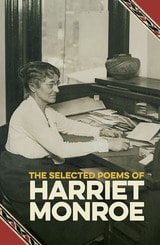
The Selected Poems of Harriet Monroe
Harriet Monroe, edited by Kevin McMullen
Southern Illinois University Press, 2026
Unearthing the overlooked poet behind Poetry magazine
Harriet Monroe, whose work as the visionary founding editor of Poetry magazine profoundly shaped the development of American poetry in the 20th century, was a vital and prolific poet in her own right. This volume showcases the sweeping breadth of Monroe’s poetic talents.
Monroe lived through a period of immense change and global conflict, from the American Civil War, through World War I and the Great Depression, up to the first stirrings of the second Great War. Through her poetry, Monroe confronted major issues, critiquing war, the impact of industrialization on the arts, and inequality, while championing women’s rights and environmental conservation—issues that remain pressingly relevant today. Monroe’s three collections of poetry, as well as her own “selected poems” volume, have all long been out of print. This book, then, represents the first appearance of many of these poems in more than 100 years. This selection includes meditations on modern technology and globalization in the early 20th century, love lyrics, hymns to the deserts of the American West, feminist reflections on gender and motherhood, and more. The volume also includes a number of poems that have never before been published, drawing on manuscripts found in Monroe’s papers at the University of Chicago Library.
Students at the University of Nebraska–Lincoln, under the guidance of Kevin McMullen, project manager of the Walt Whitman Archive, selected these poems to capture the range and breadth of Monroe’s styles and poetic interest. The poems, along with an extensive critical introduction and explanatory notes, establish Monroe’s place as an important and overlooked Modernist poet from the Midwest.
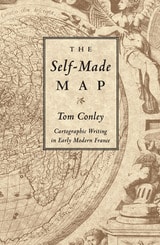
The Self-Made Map
Cartographic Writing in Early Modern FranceTom Conley
University of Minnesota Press, 2011
Conley traces the explosion of interest in mapmaking that occurred with the discovery of the New World, and discusses the commensurate rise of what he defines as cartographic writing-writing that "holds, penetrates, delineates, and explores space." Considering the works of such writers as Rabelais, Montaigne, and Descartes, Conley provides a "navigation" through the printed page, revealing the emerging values of Renaissance France. In his examination of the placing of words, letters, and graphic elements in books, he exposes the playful and sometimes enigmatic relation between spatial organization and text.
Conley also exposes the ideological exercise inherent in mapmaking, arguing that Renaissance cartography is inseparably bound up with the politics of the era. He undertakes close readings of maps and illustrations, discussing the necessity of viewing Renaissance maps in the context of their typographic layout, graphic reproduction, and literary and ideological import.
Richly illustrated throughout, The Self-Made Map combines studies of art, geography, history, literature, and printing to show a clear historical transformation, along the way linking geographical discoveries, printing processes, and political awareness. Conley's provocative analysis discloses how early modern printed literature and cartography worked together to crystallize broader issues engaging the then emergent status of cultural identity, nation, and individuality.
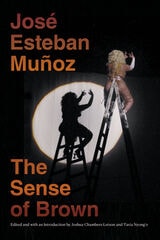
The Sense of Brown
José Esteban Muñoz. Edited and with an Introduction by Joshua Chambers-Letson and Tavia Nyong'o
Duke University Press, 2020

The Senses of Nonsense
Alison Rieke
University of Iowa Press, 1992
The Senses of Walden
An Expanded EditionStanley Cavell
University of Chicago Press, 1992
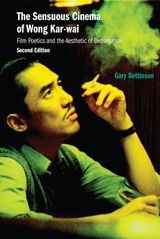
The Sensuous Cinema of Wong Kar-wai
Film Poetics and the Aesthetic of Disturbance, Second EditionGary Bettinson
Hong Kong University Press, 2025
The widely acclaimed films of Wong Kar-wai are characterized by their sumptuous yet complex visual and sonic style. This study of Wong’s filmmaking techniques uses a poetics approach to examine how form, music, narration, characterization, genre, and other artistic elements work together to produce certain effects on audiences. Bettinson argues that Wong’s films are permeated by an aesthetic of sensuousness and “disturbance” achieved through techniques such as narrative interruptions, facial masking, opaque cuts, and other complex strategies. The effect is to jolt the viewer out of complete aesthetic absorption. Each of the chapters focuses on a single aspect of Wong’s filmmaking.
This tenth-anniversary edition of The Sensuous Cinema of Wong Kar-wai includes a substantial new afterword bringing the story of Wong’s career up to date (including reflections on the Mainland Chinese drama Blossoms Shanghai). Bettinson revisits and extends the arguments of the first edition, surveys the recent key debates on Wong’s filmmaking, and introduces fresh lines of critical investigation. The book will appeal to all who are interested in authorship and aesthetics in film studies, to scholars in Asian studies, media, and cultural studies, and to anyone with an interest in Hong Kong cinema in general, and Wong’s films in particular.

The Servant's Hand
English Fiction from BelowBruce W. Robbins
Duke University Press, 1993
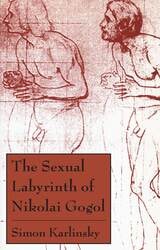
The Sexual Labyrinth of Nikolai Gogol
Simon Karlinsky
University of Chicago Press, 1992
"A brilliant new biography that will long be prized for its illuminating psychological insights into Gogol's actions, its informative readings of his fiction and drama, and its own stylistic grace and vivacity."—Edmund White, Washington Post Book World
The Sexuality of History
Modernity and the Sapphic, 1565-1830Susan S. Lanser
University of Chicago Press, 2014
In The Sexuality of History, Susan S. Lanser shows how intimacies between women became harbingers of the modern, bringing the sapphic into the mainstream of some of the most significant events in Western Europe. Ideas about female same-sex relations became a focal point for intellectual and cultural contests between authority and liberty, power and difference, desire and duty, mobility and change, order and governance. Lanser explores the ways in which a historically specific interest in lesbians intersected with, and stimulated, systemic concerns that would seem to have little to do with sexuality. Departing from the prevailing trend of queer reading whereby scholars ferret out hidden content in “closeted” texts, Lanser situates overtly erotic representations within wider spheres of interest. The Sexuality of History shows that just as we can understand sexuality by studying the past, so too can we understand the past by studying sexuality.
The Shadow and the Act
Black Intellectual Practice, Jazz Improvisation, and Philosophical PragmatismWalton M. Muyumba
University of Chicago Press, 2009
Though often thought of as rivals, Ralph Ellison, James Baldwin, and Amiri Baraka shared a range of interests, especially a passion for music. Jazz, in particular, was a decisive influence on their thinking, and, as The Shadow and the Act reveals, they drew on their insights into the creative process of improvisation to analyze race and politics in the civil rights era. In this inspired study, Walton M. Muyumba situates them as a jazz trio, demonstrating how Ellison, Baraka, and Baldwin’s individual works form a series of calls and responses with each other.
Muyumba connects their writings on jazz to the philosophical tradition of pragmatism, particularly its support for more freedom for individuals and more democratic societies. He examines the way they responded to and elaborated on that lineage, showing how they significantly broadened it by addressing the African American experience, especially its aesthetics. Ultimately, Muyumba contends, the trio enacted pragmatist principles by effectively communicating the social and political benefits of African Americans fully entering society, thereby compelling America to move closer to its democratic ideals.
The Shapes of Fancy
Reading for Queer Desire in Early Modern LiteratureChristine Varnado
University of Minnesota Press, 2020
Exploring forms of desire unaccounted for in previous histories of sexuality
What can the Renaissance tell us at our present moment about who and what is “queer,” as well as the political consequences of asking? In posing this question, The Shapes of Fancy offers a powerful new method of accounting for ineffable and diffuse forms of desire, mining early modern drama and prose literature to describe new patterns of affective resonance.
Starting with the question of how and why readers seek traces of desire in texts from bygone times and places, The Shapes of Fancy demonstrates a practice of critical attunement to the psychic and historical circulations of affect across time within texts, from texts to readers, and among readers. Closely reading for uncharted desires as they recur in early modern drama, witchcraft pamphlets, and early Atlantic voyage narratives and demonstrating how each is structured by qualities of secrecy, impossibility, and excess, Christine Varnado follows four “shapes of fancy”: the desire to be used to others’ ends; indiscriminate, bottomless appetite; paranoid self-fulfilling suspicion; and melancholic longings for impossible transformations and affinities. These affective dynamics go awry in atypical and perverse ways. In other words, argues Varnado, these modes of feeling are recognizable on the page or stage as “queer” because of how, and not by whom, they are expressed.
This new theorization of desire expands the notion of queerness in literature, decoupling the literary trace of queerness from the binary logics of same-sex versus opposite-sex and normative versus deviant that have governed early modern sexuality studies. Providing a set of methods for analyzing affect and desire in texts from any period, The Shapes of Fancy stages an impassioned defense of the inherently desirous nature of reading, making a case for readerly investment and identification as vital engines of meaning making and political insight.
The Shattered Mirror
Representations of Women in Mexican LiteratureBy María Elena de Valdés
University of Texas Press, 1998
Popular images of women in Mexico—conveyed through literature and, more recently, film and television—were long restricted to either the stereotypically submissive wife and mother or the demonized fallen woman. But new representations of women and their roles in Mexican society have shattered the ideological mirrors that reflected these images. This book explores this major change in the literary representation of women in Mexico.
María Elena de Valdés enters into a selective and hard-hitting examination of literary representation in its social context and a contestatory engagement of both the literary text and its place in the social reality of Mexico. Some of the topics she considers are Carlos Fuentes and the subversion of the social codes for women; the poetic ties between Sor Juana Inés de la Cruz and Octavio Paz; questions of female identity in the writings of Rosario Castellanos, Luisa Josefina Hernández, María Luisa Puga, and Elena Poniatowska; the Chicana writing of Sandra Cisneros; and the postmodern celebration—without reprobation—of being a woman in Laura Esquivel's Like Water for Chocolate.
The Shell and the Kernel
Renewals of Psychoanalysis, Volume 1Nicolas Abraham and Maria Torok
University of Chicago Press, 1994
A landmark collection of the best work of two major figures in the study of psychoanalysis and literature
Central to their approach is a general theory of psychic concealment, a poetics of hiding. Whether in a clinical setting or a literary text, they search out the unspeakable secret as a symptom of devastating trauma revealed only in linguistic or behavioral encodings. Their view of trauma provides the linchpin for new psychic and linguistic structures such as the "transgenerational phantom," an undisclosed family secret handed down to an unwitting descendant, and the intra-psychic secret or "crypt," which entombs an unspeakable but consummated desire. Throughout, Abraham and Torok seek to restore communication with those intimate recesses of the mind which are, for one reason or another, denied expression.
Classics of French theory and practice, the essays in volume one include four previously uncollected works by Maria Torok. Nicholas Rand supplies a substantial introductory essay and commentary throughout. Abraham and Torok's theories of fractured meaning and their search for coherence in the face of discontinuity and disruption have the potential to reshape not only psychoanalysis but all disciplines concerned with issues of textual, oral, or visual interpretation.
The Shiga Hero
William F. Sibley
University of Chicago Press, 1979
Sibley unifies Shiga's sparse, fragmented narratives by reconstructing the cyclical biography of this imaginary hero. Through an analysis of Shiga's psychoanalytic and mythopoetic approach to fiction, Sibley develops a useful model for the study of personal writers.
In recreating the life of Shiga's hero, Sibley uncovers a close link between the fictional hero and Shiga himself. Sibley finds an important part of Shiga's purpose as a writer was to "psychoanalyze" himself by projecting various personal problems onto this fictional alter ego.
Ten newly translated stories complement Sibley's analysis of Shiga's work. In this second part of the book, one encounters Shiga's hero at various stages of development: as a child facing the early loss of his mother and an uneasy relationship with his cold, distant father; as an adolescent encountering death and punishment; and as an adult searching for solace in solitary contemplation of life. Shiga renders these experiences through a highly textured prose and symbolic vocabulary. Sibley's integral text makes this major Japanese writer accessible to readers of English for the first time in a fascinating and original way.
The Ship of Virtuous Ladies
Symphorien Champier
Iter Press, 2018
The Shock of the Ancient
Literature and History in Early Modern FranceLarry F. Norman
University of Chicago Press, 2011
The cultural battle known as the Quarrel of the Ancients and Moderns served as a sly cover for more deeply opposed views about the value of literature and the arts. One of the most public controversies of early modern Europe, the Quarrel has most often been depicted as pitting antiquarian conservatives against the insurgent critics of established authority. The Shock of the Ancient turns the canonical vision of those events on its head by demonstrating how the defenders of Greek literature—rather than clinging to an outmoded tradition—celebrated the radically different practices of the ancient world.
At a time when the constraints of decorum and the politics of French absolutism quashed the expression of cultural differences, the ancient world presented a disturbing face of otherness. Larry F. Norman explores how the authoritative status of ancient Greek texts allowed them to justify literary depictions of the scandalous. The Shock of the Ancient surveys the diverse array of aesthetic models presented in these ancient works and considers how they both helped to undermine the rigid codes of neoclassicism and paved the way for the innovative philosophies of the Enlightenment. Broadly appealing to students of European literature, art history, and philosophy, this book is an important contribution to early modern literary and cultural debates.

The Short Fiction of Edgar Allan Poe
AN ANNOTATED EDITIONEdited by Stuart Levine and Susan Levine
University of Illinois Press, 1990

The Short Novels of John Steinbeck
Critical Essays with a Checklist to Steinbeck CriticismJackson J. Benson, ed.
Duke University Press, 1990
The essays examine the six most popular short novels—Tortilla Flat, The Red Pony, Of Mice and Men, The Moon Is Down, Cannery Row, and The Pearl—in addition to the three usually thought of as less successful—Burning Bright, Sweet Thursday, and The Short Reign of Pippin IV. Because most of Steinbeck’s short novels were adapted and presented as plays or screenplays, many of the essays deal with dramatic or film versions of the short novels as well as with the fiction. The collection concludes with a comprehensive checklist of criticism of the short novels.
Contributors. Richard Astro, Jackson J. Benson, Carroll Britch, John Ditsky, Joseph Fontenrose, Warren French, Robert Gentry, Mimi Reisel Gladstein, William Goldhurst, Tetsumaro Hayashi, Robert S. Hughes Jr., Howard Levant, Clifford Lewis, Peter Lisca, Anne Loftis, Charles R. Metzger, Michael J. Meyer, Robert E. Morsberger, Louis Owens, Roy S. Simmonds, Mark Spilka, John Timmerman
The Sign in Music and Literature
Edited by Wendy Steiner
University of Texas Press, 1981
The notion of semiotics as a universal language that can encompass any object of perception makes it the focus of a revolutionary field of inquiry, the semiotics of art. This volume represents a unique gathering of semiotic approaches to art: from Saussurian linguistics to transformational grammar, from Prague School aesthetics to Peircean pragmatism, from structuralism to poststructuralism.
Though concerned specifically with the semiotics of music and literature, the essays reveal the breadth of semiotics’ interdisciplinary appeal, involving specialists in musicology, ethnomusicology, jazz performance, literary criticism, poetics, aesthetics, rhetoric , linguistics, dance, and film. The diversity of authorial training and approach makes this collection a dramatic demonstration of the on-going debates in the field.
In many ways the semiotics of art is the testing ground of sign theory as a whole, and work in this subject is as vital to the interests of theoretical semioticians as to students of the arts. It is to both these interests that this volume is addressed.
The Sign of the Cannibal
Melville and the Making of a Postcolonial ReaderGeoffrey Sanborn
Duke University Press, 1998
Sanborn focuses on the representations of cannibalism in three of Melville’s key texts—Typee, Moby-Dick, and “Benito Cereno.” Drawing on accounts of Pacific voyages from two centuries and virtually the entire corpus of the post-Enlightenment discourse on cannibalism, he shows how Melville used his narratives to work through the ways in which cannibalism had been understood. In so doing, argues Sanborn, Melville sought to move his readers through stages of possible responses to the phenomenon in order to lead them to consider alternatives to established assumptions and conventions—to understand that in the savage they see primarily their own fear and fascination. Melville thus becomes a narrator of the postcolonial encounter as he uncovers the dynamic of dread and menace that marks the Western construction of the “non-savage” human.
Extending the work of Slavoj Zizek and Homi Bhabha while providing significant new insights into the work of Melville, The Sign of the Cannibal represents a breakthrough for students and scholars of postcolonial theory, American literary history, critical anthropology, race, and masculinity.
The Silent Crossing
Pascal Quignard
Seagull Books, 2013
A haunting homage to life and liberty, to society and solitude, and to the binding and unbinding that constitute the weft of our lives.
The Single Life
Unpatriarchal Manhoods in English Renaissance LiteratureJordan Windholz
University of Alabama Press, 2025
Exploring the Varied Roles of Bachelors during the Renaissance
What if the Renaissance bachelor wasn’t just a social outlier but a literary lens through which early modern masculinity reveals its cracks? In The Single Life: Unpatriarchal Manhoods in English Renaissance Literature, Jordan Windholz examines the overlooked and often subversive roles played by never-married men in shaping gender, sexuality, and social order.
Windholz challenges conventional views on gender and sexuality, identifying five archetypes of bachelorhood that complicate our understanding of patriarchal success: the chaste youth, the journeyman bachelor, the true gallant, the incel scholar, and the unmarried eunuch. These figures don’t conform to ideals of marriage, legacy, or economic productivity, but they also weren’t merely left behind. Instead, they served to define what early modern society valued by embodying what it resisted. Windholz shows how Renaissance texts constructed, contained, and occasionally celebrated these “unpatriarchal manhoods.”
By examining the intersections of sexuality, labor, gentility, emotion, and gender, the book provides a nuanced understanding of how single men both upheld and resisted patriarchal norms. Each chapter offers a detailed analysis of literary texts, blending historical and literary analysis with feminist and queer theory. The first study of its kind, Windholz’s work is essential reading for anyone interested in Renaissance literature, gender studies, or those looking to understand the margins of masculinity and the meanings of singledom—then and now.
The Siren and the Seashell
And Other Essays on Poets and PoetryBy Octavio Paz
University of Texas Press, 1976
Octavio Paz has long been known for his brilliant essays as well as for his poetry. Through the essays, he has sought to confront the tensions inherent in the conflict between art and society and to achieve a unity of their polarities. The Siren and the Seashell is a collection of Paz’s essays, focusing on individual poets and on poetry in general. The first five poets he treats are Latin American: Sor Juana Inés de la Cruz, Rubén Darío, José Juan Tablada, Ramón López Velarde, and Alfonso Reyes. Then there are essays on Robert Frost, e. e. cummings, Saint-John Perse, Antonio Machado, and Jorge Guillén. Finally, there are Paz’s reflections on the poetry of solitude and communion and the literature of Latin America. Each essay is more than Paz’s impressions of one person or issue; each is the occasion for a wider discussion of cultural, historical, psychological, and philosophical themes. The essays were selected from Paz’s writing between 1942 and 1965 and provide an overview of the development of his thinking and an exploration of the ideas central in his works.
The Sixties, Center Stage
Mainstream and Popular Performances in a Turbulent DecadeEdited by James M. Harding and Cindy Rosenthal
University of Michigan Press, 2017
The Skin of Meaning
Collected Literary Essays and TalksAaron Shurin
University of Michigan Press, 2016
The Sky Is Our Song
The "Phaenomena" of AratusAratus
University of Chicago Press, 2025
A poetic guide to the heavens, the Phaenomena of Aratus—dating from around 270 BCE—was widely known across the ancient world, second only in fame to the works of Homer. Beginning with an invocation to Zeus, the poem describes the constellations of the northern and southern skies, the celestial sphere, and weather signs. Aratus’s vivid work offered a complete handbook of astronomy, constellations, and weather, and this treatise on the night sky was later translated or adapted by luminaries including Cicero, Virgil, and Ovid. The Phaenomena remained popular throughout the Renaissance and had more than sixty printed editions by the early seventeenth century, but its fame has faded in the modern world.
With this edition, renowned translator and amateur astronomer Stanley Lombardo renders Aratus’s poem in reader-friendly vernacular English verse. Complete with endnotes, an accessible introduction, and astronomically accurate illustrations, The Sky Is Our Song brings this master poet’s celebration of the sky to a twenty-first-century audience, inviting new readers to follow Aratus on a visual journey through star signs, moon phases, weather phenomena, and all wonders of the heavens.