Results by title
476 books match the query 'Criticism' and 119 start with t
The World Is Gone
Philosophy in Light of the PandemicGregg Lambert
University of Minnesota Press, 2021
Part personal memoir, part philosophical reflection and written in the midst of the pandemic in 2021, The World Is Gone employs the Robinson Crusoe fable to launch an existential investigation of the effects of extreme isolation, profound boredom, nightly insomnia, and the fear of madness associated with the loss of a world populated by others.
Forerunners: Ideas First is a thought-in-process series of breakthrough digital publications. Written between fresh ideas and finished books, Forerunners draws on scholarly work initiated in notable blogs, social media, conference plenaries, journal articles, and the synergy of academic exchange. This is gray literature publishing: where intense thinking, change, and speculation take place in scholarship.
The Writer in the Well
On Misreading and Rewriting LiteratureGary Weissman
The Ohio State University Press, 2016
Rethinking the methods and goals of literary analysis, Weissman’s study redefines the nature of authorial intention and reconceives literary interpretation as a writing-based practice. By integrating writing pedagogy with older and newer schools of thought—from psychoanalytic, reader-response, and poststructuralist theories to rhetorical narrative theory and cognitive literary studies—and bridging the fields of literary studies, composition and rhetoric, and creative writing, The Writer in the Well argues that the richest understanding of a literary work lies in probing how it has been misinterpreted and reconceived and offers a new “writer-response theory.”
This highly accessible and thought-provoking book, which includes the full text of Sher’s “The Man in the Well,” is designed to engage scholars, teachers, students, and avid readers of literature.

The Yale Critics
Deconstruction in AmericaJonathan Arac, Wlad Godzich, and Wallace Martin, Editors
University of Minnesota Press, 1983
The Yale Critics was first published in 1983. Minnesota Archive Editions uses digital technology to make long-unavailable books once again accessible, and are published unaltered from the original University of Minnesota Press editions.
A heated debate has been raging in North America in recent years over the form and function of literature. At the center of the fray is a group of critics teaching at Yale University—Harold Bloom, Geoffrey Hartman, Paul de Man, and J. Hillis Miller—whose work can be described in relation to the deconstructive philosophy practiced by French philosopher Jacques Derrida. For over a decade the Yale Critics have aroused controversy; most often they are considered as a group, to be applauded or attacked, rather than as individuals whose ideas merit critical scrutiny. Here a new generation of scholars attempts for the first time a serious, broad assessment of the Yale group. These essays appraise the Yale Critics by exploring their roots, their individual careers, and the issues they introduce.
Wallace Martin's introduction offers a brilliant, compact account of the Yale Critics and of their relation to deconstruction and the deconstruction to two characteristically Anglo-American enterprises; Paul Bove explores the new criticism and Wlad Godzich the reception of Derrida in America. Next come essays giving individual attention to each of the critics: Michael Sprinker on Hartman, Donald Pease on Miller, Stanley Corngold on de Man, and Daniel O'Hara on Bloom. Two essays then illuminate "deconstruction in America" through a return to modern continental philosophy: Donald Marshall on Maurice Blanchot, and Rodolphe Gasche on Martin Heidegger. Finally, Jonathan Arac's afterword brings the volume together and projects a future beyond the Yale Critics.
Throughout, the contributors aim to provide a balanced view of a subject that has most often been treated polemically. While useful as an introduction, The Yale Critics also engages in a serious critical reflection on the uses of the humanities in American today.

Theatricality Beyond Disciplines
Amin Erfani
Intellect Books, 2025
In Theatricality Beyond Disciplines, Amin Erfani expands the concept of theatricality beyond the stage, tracing its destabilizing power through literature, psychoanalysis, media, and philosophy. Drawing on Artaud’s vision of theater as an unpredictable, contagious force—what he called “the return of the repressed”—the book rejects the Aristotelian idea of theater as a space of healing. Instead, it frames it as an unsettling intervention into systems of power and meaning.
Through close readings of Artaud, Genet, Novarina, Koltès, and theorists like Freud, Barthes, and Derrida, Erfani reveals how theatricality operates primarily in the aural rather than the visual mode, inciting paranoia, psychic contamination, and ruptures in language. A provocative challenge to disciplinary boundaries, this book suits any student or scholar interested in examining the relationship between theater and theoretical discourse, posing theatricality as a site of radical otherness and transformation.
Themes out of School
Effects and CausesStanley Cavell
University of Chicago Press, 1988
Fantasies of film and television and literature, flashes across the landscape of literary theory, philosophical discourse, and French historiography give Cavell his starting points in these twelve essays. Here is philosophy in and out of "school," understood as a discipline in itself or thought through the works of Shakespeare, Molière, Kierkegaard, Thoreau, Brecht, Makavejev, Bergman, Hitchcock, Astaire, and Keaton.
Theory Aside
Jason Potts and Daniel Stout, eds.
Duke University Press, 2014
Contributors. Ian Balfour, Karen Beckman, Pheng Cheah, Frances Ferguson, William Flesch, Anne-Lise François, Mark B. N. Hansen, Simon Jarvis, Heather Love, Natalie Melas, Jason Potts, Elizabeth A. Povinelli, Eve Kosofsky Sedgwick, Jordan Alexander Stein, Daniel Stout, Irene Tucker

Theory Now and Then
J. Hillis Miller
Duke University Press, 1991
Included here are review essays on other theorists’ work: the Geneva Circle including Georges Poulet; Joseph Riddel, Edward Said, Meyer Abrams; and the critics of the “Yale School,” such as Jacques Derrida and others, Paul De Man, Geoffrey Hartman, and Harold Bloom, with whom Miller was associated. Exemplary readings of the theorists themselves, and of texts by Milton, Shelley, Wordsworth, Emerson, George Eliot, Nietzsche, Wallace Stevens, and William Carlos Williams punctuate these essays.
Theory and Practice of Sociocriticism
Thl Vol 53Edmond CrosTranslated by Jerome SchwartzForeword by Jurgen Link and Ursula Link-Heer
University of Minnesota Press, 1988
Theory and Practice of Sociocriticism was first published in 1988. Minnesota Archive Editions uses digital technology to make long-unavailable books once again accessible, and are published unaltered from the original University of Minnesota Press editions.
Edmond Cros is a leading French Hispanicist whose work is unique in Continental theory because it brings Spanish and Mexican texts into current literary debates, which have so far centered mainly on the French and German traditions. Equally distinctive is the nature of his work, which Cros terms sociocriticism. Unlike most sociological approaches to literature, which leave the structure of texts untouched, sociocriticism aims to prove that the encounter with "ideological traces," and with antagonistic tensions between social classes, is central to any reading of texts. Cros's method distinguishes between the "semiotic and "ideological" elements within a text, and involves the patient, exacting reconstruction of the concrete text from these elements, a process that enables the sociocritic to interpret its fault lines, its internal contradictions - in the end , its irreducibly social nature.
As its title suggests, Theory and Practice of Sociocriticism is structured in two parts. Its opening chapters analyze sociological theories of discourse, including those of Foucault, Bakhtin, and Goldman; in the second part, Cros applies theory to practice in readings of specific works: the film Scarface, contemporary Mexican poetry and prose (Octavio Paz, Carlos Fuentes), and the picaresque novel of the Spanish Golden Age. In their foreword, Jurgen Link and Ursula Link-Heer differentiate sociocriticism from other social approaches to literature and show how Cros's method works in specific textual readings. They emphasize his resistance to the reductive modes and "misreadings" that dominate much of contemporary theory.
Edmond Cros is a professor of literary theory and Hispanic studies at the Universite Paul Valery in Montpellier, France, and Andrew W. Mellon Professor of Hispanic Studies at the University of Pittsburgh. Jurgen Link teaches at the Ruhr-Universitat Bochum and Ursula Link-Heer at the Universitat Siegen, both in West Germany.
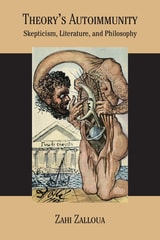
Theory’s Autoimmunity
Skepticism, Literature, and PhilosophyZahi Zalloua
Northwestern University Press, 2018
Openness to change comes with risks, and the self-protective temptation to immunize oneself or one's community against these risks is strong. Yet without such risks, without openness to otherness, no encounter with the new, with difference, can ever take place. Without autoimmunity, theory becomes stagnant and programmatic, unable to receive and respond to the other or the event, to address, revise, and produce new meanings.
Taking up the challenge of thinking theory as skepticism, with and against philosophy, this study turns to literature as an interlocutor, investigating the ways theory, like the literary works of Montaigne, Baudelaire, Stendhal, Morrison, or Duras, declines to put on the interpretive brakes, to stop reading at a point of understanding. Undoing and remaking itself, theory—those critical interpretive practices that revel in the creation and proliferation of meaning—becomes autoimmune.

Thinking Across the American Grain
Ideology, Intellect, and the New PragmatismGiles Gunn
University of Chicago Press, 1992
major contribution to the current revival of pragmatism in
America by showing how it provides the most critically
resilient and constructive response to the intellectual
challenges of postmodernism.
Gunn reclaims and refurbishes elements of the pragmatic
tradition that either have been lost or have undergone
important changes and shows how newer critical approaches
have strong roots in the pragmatic tradition. For Gunn,
pragmatism is no longer concerned solely with the nature of
knowledge and the meaning of truth. Because of its
insistence on critical self-awareness, its opposition to
closed systems of thought, and its concern with the ethical,
political, and practical contexts of ideas, pragmatism offers
a blueprint for performing intellectual work in a world
without absolutes. The world Gunn's pragmatism recognizes is
one of multiple truths, unstable interpretations, and
competing interests.
After critically reexamining the nature and scope of the
pragmatic legacy, Gunn explores the way pragmatism
successfully responds to conceptual and methodological
controversies, from the rebirth of ideology, the spread of
interdisciplinarity, and the development of the new
historicism, to the revolt against theory, the erosion of
public discourse, and the problematics of American civil
religion. Drawing throughout on the work of William James,
Henry James, Sr., John Dewey, Kenneth Burke, W. E. B. Du
Bois, Richard Poirier, Stanley Cavell, Clifford Geertz, Frank
Lentricchia, Richard Rorty, Richard J. Bernstein, and
others, Gunn shows that pragmatism, because it offers a way
of thinking across the categories of modern intellectual
specializations, is located at the intersection of these
critical, and often competitive, discourses. The postmodern
challenge for the pragmatist thinker is not only how to
render these different discourses conversible with one
another, but how to turn the salient insights of each into
elements of a new democratic and critical public culture, one
able to counter the twin threats of ideology and solipsism.
Giles Gunn is one of our most acclaimed contemporary critics,
and this broad and ambitious book is certain to become one of
the central works in the current revival of critical
pragmatism and cultural studies.
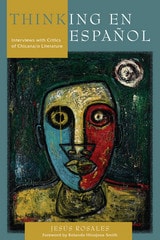
Thinking en español
Interviews with Critics of Chicana/o LiteratureJesús Rosales; Foreword by Rolando Hinojosa-Smith
University of Arizona Press, 2014
The twelve critics interviewed for this project share certain characteristics. For each one, Mexico plays an essential role in his or her personal and academic background, and each is bilingual and bicultural, having received formal literary education in Spanish graduate programs. As products of the working class, each scholar here shares a sense of social consciousness and commitment that lends an urgency to their desire to promote Chicano literature and culture at the local, regional, national, and international levels. They serve as a source of inspiration and commitment for future generations of scholars of Chicano literature and leave a lasting legacy of their own.
Thinking en español legitimizes Chicana/o criticism as an established discipline, and documents the works of some of the most important critics of Chicano literature at the turn of the twentieth and into the twenty-first century. This timely book immortalizes literary historical figures and documents the trajectory of Chicano criticism.
Thinking with Tolstoy and Wittgenstein
Expression, Emotion, and ArtHenry W. Pickford
Northwestern University Press, 2015
In this highly original interdisciplinary study incorporating close readings of literary texts and philosophical argumentation, Henry W. Pickford develops a theory of meaning and expression in art intended to counter the meaning skepticism most commonly associated with the theories of Jacques Derrida.
Pickford arrives at his theory by drawing on the writings of Wittgenstein to develop and modify the insights of Tolstoy’s philosophy of art. Pickford shows how Tolstoy’s encounter with Schopenhauer’s thought on the one hand provided support for his ethical views but on the other hand presented a problem, exemplified in the case of music, for his aesthetic theory, a problem that Tolstoy did not successfully resolve. Wittgenstein’s critical appreciation of Tolstoy’s thinking, however, not only recovers its viability but also constructs a formidable position within contemporary debates concerning theories of emotion, ethics, and aesthetic expression.
Thomas De Quincey
British Rhetoric's Romantic TurnLois Peters Agnew
Southern Illinois University Press, 2012
This wide-ranging volume gives proper attention to the views on rhetoric and style set forth by British literary figure Thomas De Quincey (1785–1859), whose contributions to the history of rhetoric are often overlooked. Lois Peters Agnew presents an overview of this theorist’s life and provides cultural context for his time and place, with particular emphasis on the significance of his rhetoric as both an alternative strain of rhetorical history and a previously unrealized example of rhetoric’s transformation in nineteenth-century Britain.
Agnew presents an extensive discussion of De Quincey’s ideas on rhetoric, his theory and practice of conversation, his theory of style and its role in achieving rhetoric’s dialogic potential, and his strategic use of humor and irony in such works as Confessions of an English Opium Eater. Synthesizing previous treatments of De Quincey’s rhetoric and connecting his unusual perspectives on language to the biographical details of his life, Agnew helps readers understand his intellectual development while bringing to light the cultural contexts that prompted radical changes in the ways nineteenth-century British intellectuals conceived of the role of language and the imagination in public and private discourse.
Agnew presents an alternative vision of rhetoric that departs from many common assumptions about rhetoric’s civic purpose and offers insights into the topic of rhetoric and technological change. The result is an accessible and thorough explanation of De Quincey’s complex ideas on rhetoric and the first work to fully show the reach of his ideas across multiple texts written during his lifetime.
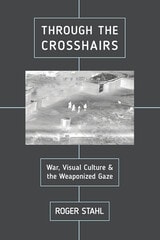
Through the Crosshairs
War, Visual Culture, and the Weaponized GazeStahl, Roger
Rutgers University Press, 2018
Through the Crosshairs traces the genealogy of this weapon’s-eye view across a wide range of genres, including news reports, military public relations images, action movies, video games, and social media posts. As he tracks how gun-camera footage has spilled from the battlefield onto the screens of everyday civilian life, Roger Stahl exposes how this raw video is carefully curated and edited to promote identification with military weaponry, rather than with the targeted victims. He reveals how the weaponized gaze is not only a powerful propagandistic frame, but also a prime site of struggle over the representation of state violence.
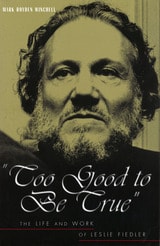
Too Good to Be True
The Life and Work of Leslie FiedlerMark Royden Winchell
University of Missouri Press, 2002
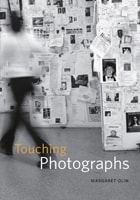
Touching Photographs
Margaret Olin
University of Chicago Press, 2012
Photography does more than simply represent the world. It acts in the world, connecting people to form relationships and shaping relationships to create communities. In this beautiful book, Margaret Olin explores photography’s ability to “touch” us through a series of essays that shed new light on photography’s role in the world.
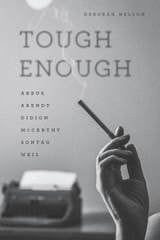
Tough Enough
Arbus, Arendt, Didion, McCarthy, Sontag, WeilDeborah Nelson
University of Chicago Press, 2017
Tough Enough traces the careers of these women and their challenges to the pre-eminence of empathy as the ethical posture from which to examine pain. Their writing and art reveal an adamant belief that the hurts of the world must be treated concretely, directly, and realistically, without recourse to either melodrama or callousness. As Deborah Nelson shows, this stance offers an important counter-tradition to the familiar postwar poles of emotional expressivity on the one hand and cool irony on the other. Ultimately, in its insistence on facing reality without consolation or compensation, this austere “school of the unsentimental” offers new ways to approach suffering in both its spectacular forms and all of its ordinariness.
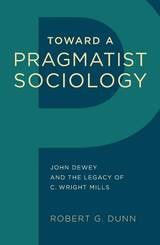
Toward a Pragmatist Sociology
John Dewey and the Legacy of C. Wright MillsRobert G. Dunn
Temple University Press, 2018
In Toward a Pragmatist Sociology, Robert Dunn explores the relationship between the ideas of philosopher and educator John Dewey and those of sociologist C. Wright Mills in order to provide a philosophical and theoretical foundation for the development of a critical and public sociology. Dunn recovers an intellectual and conceptual framework for transforming sociology into a more substantive, comprehensive, and socially useful discipline.
Toward a Pragmatist Sociology argues that Dewey and Mills shared a common vision of a relevant, critical, public sociology dedicated to the solution of societal problems. Dunn investigates the past and present state of the discipline, critiquing its dominant tendencies, and offering historical examples of alternatives to conventional sociological approaches.
By stressing the similar intellectual and moral visions of both men, Toward a Pragmatist Sociology provides an original treatment of two important American thinkers whose work offers a conception and model of a sociology with a sense of moral and political purpose and public relevance. It should liberate future sociologists and others to regard the discipline as not only a science but an intellectual, moral, and political enterprise.
Turin 1564-1680
Urban Design, Military Culture, and the Creation of the Absolutist CapitalMartha D. Pollak
University of Chicago Press, 1991