Results by title
744 books match the query 'Culture' and 154 start with t
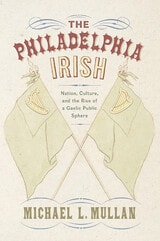
The Philadelphia Irish
Nation, Culture, and the Rise of a Gaelic Public SphereMichael L. Mullan
Rutgers University Press, 2021
Using Jurgen Habermas’s concept of a public sphere, the author reveals how the Irish constructed a plebian “counter” public of Gaelic meaning through various mechanisms of communication, the ethnic press, the meeting rooms of Irish societies, the consumption of circulating pamphlets, oratory, songs, ballads, poems, and conversation.
Settled in working class neighborhoods of vast spatial separation in an industrial city, the Irish resisted a parochialism identified with neighborhood and instead extended themselves to construct a vibrant, culturally engaged network of Irish rebirth in Philadelphia, a public of Gaelic meaning.
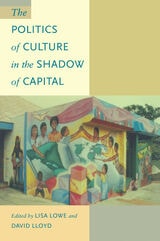
The Politics of Culture in the Shadow of Capital
Lisa Lowe and David Lloyd, eds.
Duke University Press, 1997
Reworking Marxist critique, these essays on Asia, Latin America, the Caribbean, North America, and Europe advance a new understanding of "cultural politics" within the context of transnational neocolonial capitalism. This perspective contributes to an overall critique of traditional approaches to modernity, development, and linear liberal narratives of culture, history, and democratic institutions. It also frames a set of alternative social practices that allows for connections to be made between feminist politics among immigrant women in Britain, women of color in the United States, and Muslim women in Iran, Egypt, Pakistan, and Canada; the work of subaltern studies in India, the Philippines, and Mexico; and antiracist social movements in North and South America, the Caribbean, and Europe. These connections displace modes of opposition traditionally defined in relation to the modern state and enable a rethinking of political practice in the era of global capitalism.
Contributors. Tani E. Barlow, Nandi Bhatia, Dipesh Chakrabarty, Chungmoo Choi, Clara Connolly, Angela Davis, Arturo Escobar, Grant Farred, Homa Hoodfar, Reynaldo C. Ileto, George Lipsitz, David Lloyd, Lisa Lowe, Martin F. Manalansan IV, Aihwa Ong, Pragna Patel, José Rabasa, Maria Josefina Saldaña-Portillo, Jaqueline Urla
The Politics of Research
Edited by E. Ann Kaplan and George Levine
Rutgers University Press, 1997
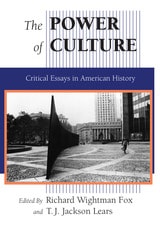
The Power of Culture
Critical Essays in American HistoryEdited by Richard Wightman Fox and T. J. Jackson Lears
University of Chicago Press, 1993
More and more scholars are turning to cultural history in order to make sense of the American past. This volume brings together nine original essays by some leading practitioners in the field. The essays aim to exhibit the promise of a cultural approach to understanding the range of American experiences from the seventeenth century to the present.
Expanding on the editors' pathbreaking The Culture of Consumption, the contributors to this volume argue for a cultural history that attends closely to language and textuality without losing sight of broad configurations of power that social and political history at its best has always stressed. The authors here freshly examine crucial topics in both private and public life. Taken together, the essays shed new light on the power of culture in the lives of Americans past and present.

The Quaker Community on Barbados
Challenging the Culture of the Planter ClassLarry Gragg
University of Missouri Press, 2009
Gragg has conducted meticulous research on two continents to re-create the Barbados Quaker community. Drawing on wills, censuses, and levy books along with surviving letters, sermons, and journals, he tells how the Quakers sought to implement their beliefs in peace, simplicity, and equality in a place ruled by a planter class that had built its wealth on the backs of slaves. He reveals that Barbados Quakers were a critical part of a transatlantic network of Friends and explains how they established a “counterculture” on the island—one that challenged the practices of the planter class and the class’s dominance in island government, church, and economy.
In this compelling study, Gragg focuses primarily on the seventeenth century when the Quakers were most numerous and active on Barbados. He tells how Friends sought to convert slaves and improve their working and living conditions. He describes how Quakers refused to fund the Anglican Church, take oaths, participate in the militia, or pay taxes to maintain forts—and how they condemned Anglican clergymen, disrupted their services, and wrote papers critical of the established church. By the 1680s, Quakers were maintaining five meetinghouses and several cemeteries, paying for their own poor relief, and keeping their own records of births, deaths, and marriages. Gragg also tells of the severe challenges and penalties they faced for confronting and rejecting the dominant culture.
With their civil disobedience and stand on slavery, Quakers on Barbados played an important role in the early British Empire but have been largely neglected by scholars. Gragg’s work makes their contribution clear as it opens a new window on the seventeenth- and eighteenth-century Atlantic world.
The Question of the Commons
The Culture and Ecology of Communal ResourcesEdited by Bonnie J. McCay and James M. Acheson
University of Arizona Press, 1987
The Renewal of Cultural Studies
Edited by Paul Smith
Temple University Press, 2011
Cultural Studies, once a burgeoning academic field, developed into a discipline in which just about any cultural text, object or event could be studied. The Renewal of Cultural Studies offers a panoramic view of the field, its assumptions, and its methodologies. Editor Paul Smith and thirty contributors map out new directions that will redefine and sustain the field of cultural studies.
In twenty-seven original essays, cultural studies is examined in relation to other disciplines—history, anthropology, literature, media, and American studies. The discipline is reviewed in the context of globalization, in relation to topics such as war, public policy, and labor, its pedagogy and politics, and in Marxist, feminist, and environmentalist contexts.
Smith wants to establish theoretical and methodological common ground among cultural studies scholars. Providing a “state of the discipline,” The Renewal of Cultural Studies asks, “What can and should the field of Cultural Studies be doing now?”
The Revival of Pragmatism
New Essays on Social Thought, Law, and CultureMorris Dickstein, ed.
Duke University Press, 1998
As the twenty-five intellectuals who take part in this discussion show, pragmatism has become a complex terrain on which a rich variety of contemporary debates have been played out. Contributors such as Richard Rorty, Stanley Cavell, Nancy Fraser, Robert Westbrook, Hilary Putnam, and Morris Dickstein trace pragmatism’s cultural and intellectual evolution, consider its connection to democracy, and discuss its complex relationship to the work of Emerson, Nietzsche, and Wittgenstein. They show the influence of pragmatism on black intellectuals such as W. E. B. Du Bois, explore its view of poetic language, and debate its effects on social science, history, and jurisprudence. Also including essays by critics of the revival such as Alan Wolfe and John Patrick Diggins, the volume concludes with a response to the whole collection from Stanley Fish.
Including an extensive bibliography, this interdisciplinary work provides an in-depth and broadly gauged introduction to pragmatism, one that will be crucial for understanding the shape of the transformations taking place in the American social and philosophical scene at the end of the twentieth century.
Contributors. Richard Bernstein, David Bromwich, Ray Carney, Stanley Cavell, Morris Dickstein, John Patrick Diggins, Stanley Fish, Nancy Fraser, Thomas C. Grey, Giles Gunn, Hans Joas, James T. Kloppenberg, David Luban, Louis Menand, Sidney Morgenbesser, Richard Poirier, Richard A. Posner, Ross Posnock, Hilary Putnam, Ruth Anna Putnam, Richard Rorty, Michel Rosenfeld, Richard H. Weisberg, Robert B. Westbrook, Alan Wolfe

The Russian Archipelago at War Against Ukraine
Culture and Contexts 2022–2025Tomáš Glanc
Karolinum Press, 2026
The first sustained cultural analysis of Russia at war that reveals how art, artists, and institutions become actors in conflict.
This book was conceived in wartime, and war stands at its center. It proceeds through an analysis of cultural phenomena and processes that, in one way or another, originated in Russia and bear on the present situation—regardless of where their actors may now reside.
Through a series of case studies, The Russian Archipelago at War Against Ukraine traces how war has entered the realm of art—literature, the visual arts, theater, film, and beyond—and examines the ways in which culture itself becomes a participant in war. What emerges are narratives of resistance and protest, of persecution and prohibition, and emergent forms of underground, but also postures of indifference, resignation, and compliance, including overt loyalty to and support for the ideology and practice of war, its perpetrators, and its objectives.
Underlying this content is a more unsettling question: what aesthetic, cultural-political, moral, and intellectual challenges, consequences, and perhaps even fragile hopes does the horror of war contain?
The Senses of Democracy
Perception, Politics, and Culture in Latin AmericaBy Francine R. Masiello
University of Texas Press, 2018
In The Senses of Democracy, Francine R. Masiello traces a history of perceptions expressed in literature, the visual arts, politics, and history from the start of the nineteenth century to the present day. A wide transnational landscape frames the book along with an original and provocative thesis: when the discourse on democracy is altered—when nations fall into crisis or the increased weight of modernity tests minds and nerves—the representation of our sensing bodies plays a crucial role in explaining order and rebellion, cultural innovation, and social change.
Taking a wide arc of materials—periodicals, memoirs, political proclamations, and travel logs, along with art installations and fiction—and focusing on the technologies that supplement and enhance human perception, Masiello looks at the evolution of what she calls “sense work” in cultural texts, mainly from Latin America, that wend from the heights of romantic thought to the startling innovations of modernism in the early twentieth century and then to times of posthuman experience when cyber bodies hurtle through globalized space and human senses are reproduced by machines. Tracing the shifting debates on perceptions, The Senses of Democracy offers a new paradigm with which to speak of Latin American cultural history and launches a field for the comparative study of bodies, experience, pleasure, and pain over the continental divide. In the end, sense work helps us to understand how culture finds its location.

The Seventies Now
Culture as SurveillanceStephen Paul Miller
Duke University Press, 1999
The concept of surveillance and its attendant social ramifications have been powerful agents in U.S. culture for many decades, but in describing how during the 1970s Americans learned to “survey” themselves, Miller shines surprising new light on such subjects as the women’s movement, voting rights enforcement, the Ford presidency, and environmental legislation. He illuminates the significance of what he terms “microperiods” and analyzes relevant themes in many of the decade’s major films—such as The Deer Hunter, Network, Jaws, Star Wars, and Apocalypse Now—and in the literature of writers including John Ashbery, Toni Morrison, Adrienne Rich, and Sam Shepard. In discussing the reverberations of the 1969 Stonewall riots, technological innovations, the philosophy of Michel Foucault, and a host of documents and incidents, Miller shows how the 1970s marked an important period of transition, indeed a time of many transitions, to the world we confront at the end of the millennium.
The Seventies Now will interest students and scholars of cultural studies, American history, theories of technology, film and literature, visual arts, and gay and lesbian studies.

The Sign of the Burger
Mcdonald'S And The Culture Of PowerJoe Kincheloe
Temple University Press, 2002
"I didn't want to remain a hick from the mountains... In my cultural naivete I saw McDonald's as a place somehow where modern culture capital could be dispensed. Keeping these memories in mind as years later I monitored scores of conversations about the Golden Arches in the late 1990's, it became apparent that McDonald's is still considered a marker of a modern identity."
So begins a complicated journey into the power of one of the most recognizable signs of American capitalism: The Golden Arches. The Sign of the Burger examines how McDonald's captures our imagination: as a shorthand for explaining the power of American culture; as a symbol of the strength of consumerism; as a bellwether for the condition of labor in a globalized economy; and often, for better or worse, a powerful educational tool that often defines the nature of culture for hundreds of millions the world over.
While many books have offered simple complaints of the power of McDonald's, Joe Kincheloe explores the real ways McDonald's affects us. We see him as a young boy in Appalachia, watching the Golden Arches going up as the—hopeful—arrival of the modern into his rural world. And we travel with him around the world to see how this approach of the modern affects other people, either through excitement or through attempts at resisting McDonald's power, often in unfortunate ways. Through it all, Kincheloe makes clear, with lucidity and depth, the fact that McDonald's growth will in many ways determine both the nature of accepting and protesting its ever-expanding presence in our global world.
postamble();
The Sociology of Culture
Raymond Williams
University of Chicago Press, 1995
"A historical analysis of the social organization of culture in terms of its institutions and formations. Insisting that the term sociology of culture implies a convergence of interests and methods, Williams draws from a broad range of examples: Greek drama, Celtic bards, the Pre-Raphaelites, Bloomsbury and modern copyright laws, among others."—Library Journal
Raymond Williams (1921-87) was professor of drama at Cambridge University. His many books include Marxism and Literature, Keywords, Country and the City, and Culture and Society.

The Soviet Jewish Bookshelf
Jewish Culture and Identity Between the LinesMarat Grinberg
Brandeis University Press, 2022
In The Soviet Jewish Bookshelf, Marat Grinberg argues that in an environment where Judaism had been all but destroyed, and a public Jewish presence routinely delegitimized, reading uniquely provided many Soviet Jews with an entry to communal memory and identity. The bookshelf was both a depository of selective Jewish knowledge and often the only conspicuously Jewish presence in their homes. The typical Soviet Jewish bookshelf consisted of a few translated works from Hebrew and numerous translations from Yiddish and German as well as Russian books with both noticeable and subterranean Jewish content. Such volumes, officially published, and not intended solely for a Jewish audience, afforded an opportunity for Soviet Jews to indulge insubordinate feelings in a largely safe manner. Grinberg is interested in pinpointing and decoding the complex reading strategies and the specifically Jewish uses to which the books on the Soviet Jewish bookshelf were put. He reveals that not only Jews read them, but Jews read them in a specific way.
The Spectacular State
Culture and National Identity in UzbekistanLaura L. Adams
Duke University Press, 2010
Adams draws on her observations and interviews conducted with artists, intellectuals, and bureaucrats involved in the production of Uzbekistan’s national culture. These elites used globalized cultural forms such as Olympics-style spectacle to showcase local, national, and international aspects of official culture. While these state-sponsored extravaganzas were intended to be displays of Uzbekistan’s ethnic and civic national identity, Adams found that cultural renewal in the decade after Uzbekistan’s independence was not so much a rejection of Soviet power as it was a re-appropriation of Soviet methods of control and ideas about culture. The public sphere became more restricted than it had been in Soviet times, even as Soviet-era ideas about ethnic and national identity paved the way for Uzbekistan to join a more open global community.
The Sports Revolution
How Texas Changed the Culture of American AthleticsBy Frank Andre Guridy
University of Texas Press, 2021
The story of Texas’s impact on American sports culture during the civil rights and second-wave feminist movements, this book offers a new understanding of sports and society in the state and the nation as a whole.
In the 1960s and 1970s, America experienced a sports revolution. New professional sports franchises and leagues were established, new stadiums were built, football and basketball grew in popularity, and the proliferation of television enabled people across the country to support their favorite teams and athletes from the comfort of their homes. At the same time, the civil rights and feminist movements were reshaping the nation, broadening the boundaries of social and political participation. The Sports Revolution tells how these forces came together in the Lone Star State.
Tracing events from the end of Jim Crow to the 1980s, Frank Guridy chronicles the unlikely alliances that integrated professional and collegiate sports and launched women’s tennis. He explores the new forms of inclusion and exclusion that emerged during the era, including the role the Dallas Cowboys Cheerleaders played in defining womanhood in the age of second-wave feminism. Guridy explains how the sexual revolution, desegregation, and changing demographics played out both on and off the field as he recounts how the Washington Senators became the Texas Rangers and how Mexican American fans and their support for the Spurs fostered a revival of professional basketball in San Antonio. Guridy argues that the catalysts for these changes were undone by the same forces of commercialization that set them in motion and reveals that, for better and for worse, Texas was at the center of America’s expanding political, economic, and emotional investments in sport.

The State of Islam
Culture and Cold War Politics in PakistanSaadia Toor
Pluto Press, 2011
The State of Islam tells the story of Pakistan through the lens of the Cold War, and more recently the War on Terror, to shed light on the domestic and international processes behind the global rise of militant Islam.
Unlike existing scholarship on nationalism, Islam and the state in Pakistan, which tends to privilege events in a narrowly-defined ‘political’ realm, Saadia Toor highlights the significance of cultural politics in Pakistan from its origins to the contemporary period. This extra dimension allows Toor to explain how the struggle between Marxists and liberal nationalists was influenced and eventually engulfed by the agenda of the religious right.
Timely and unique, this book is a must for anyone who wants to understand the roots of modern Pakistan and the likely outcome of current power struggles in the country.
The Struggle For Meaning
Reflections on Philosophy, Culture, and Democracy in AfricaPaulin J. Hountondji
Ohio University Press, 2002
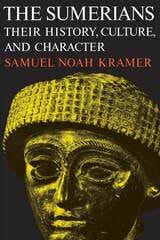
The Sumerians
Their History, Culture, and CharacterSamuel Noah Kramer
University of Chicago Press, 1963
The Sumerians, the pragmatic and gifted people who preceded the Semites in the land first known as Sumer and later as Babylonia, created what was probably the first high civilization in the history of man, spanning the fifth to the second millenniums B.C. This book is an unparalleled compendium of what is known about them.
In this classic work, Samuel Noah Kramer communicates his enthusiasm for his subject as he outlines the history of the Sumerian civilization and describes their cities, religion, literature, education, scientific achievements, social structure, and psychology. Finally, he considers the legacy of Sumer to the ancient and modern world.
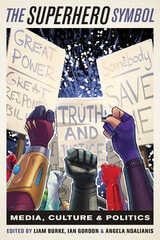
The Superhero Symbol
Media, Culture, and PoliticsLiam Burke
Rutgers University Press, 2020
It is hard to imagine a time when superheroes have been more pervasive in our culture. Today, superheroes are intellectual property jealously guarded by media conglomerates, icons co-opted by grassroots groups as a four-color rebuttal to social inequities, masks people wear to more confidently walk convention floors and city streets, and bulletproof banners that embody regional and national identities. From activism to cosplay, this collection unmasks the symbolic function of superheroes.
Bringing together superhero scholars from a range of disciplines, alongside key industry figures such as Harley Quinn co-creator Paul Dini, The Superhero Symbol provides fresh perspectives on how characters like Captain America, Iron Man, and Wonder Woman have engaged with media, culture, and politics, to become the “everlasting” symbols to which a young Bruce Wayne once aspired.
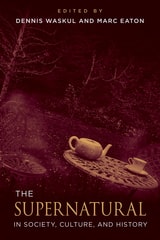
The Supernatural in Society, Culture, and History
Dennis Waskul and Marc Eaton
Temple University Press, 2018
In the twenty-first century, as in centuries past, stories of the supernatural thrill and terrify us. But despite their popularity, scholars often dismiss such beliefs in the uncanny as inconsequential, or even embarrassing. The editors and contributors to The Supernatural in Society, Culture, and History have made a concerted effort to understand encounters with ghosts and the supernatural that have remain present and flourished. Featuring folkloric researchers examining the cultural value of such beliefs and practices, sociologists who acknowledge the social and historical value of the supernatural, and enthusiasts of the mystical and uncanny, this volume includes a variety of experts and interested observers using first-hand ethnographic experiences and historical records.
The Supernatural in Society, Culture, and History seeks to understand the socio-cultural and socio-historical contexts of the supernatural. This volume takes the supernatural as real because belief in it has fundamentally shaped human history. It continues to inform people’s interpretations, actions, and identities on a daily basis. The supernatural is an indelible part of our social world that deserves sincere scholarly attention.
Contributors include: Janet Baldwin, I'Nasah Crockett, William Ryan Force, Rachael Ironside, Tea Krulos, Joseph Laycock, Stephen L. Muzzatti, Scott Scribner, Emma Smith, Jeannie Banks Thomas, and the editors
The Task of Cultural Critique
Teresa L. Ebert
University of Illinois Press, 2008
Through groundbreaking analyses of cultural texts, Ebert questions the contemporary Derridian dogma that asserts "the future belongs to ghosts." Events-to-come are not spectral, she contends, but the material outcome of global class struggles. Not "hauntology" but history produces cultural practices and their conflictive representations--from sexuality, war, and consumption to democracy, torture, globalization, and absolute otherness. With close readings of texts from Proust and Balzac to "Chick Lit," from Lukács, de Man, Deleuze, and Marx to Derrida, Žižek, Butler, Kollontai, and Agamben, the book opens up new directions for cultural critique today.
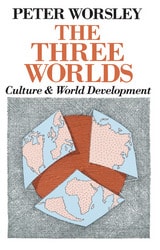
The Three Worlds
Culture and World DevelopmentPeter Worsley
University of Chicago Press, 1984
Peter Worsley first considers existing theories of development, synthesizing the Marxist approach with that of social anthropologists and identifying culture—in the sense of a shared set of values—as the key element missing in more traditional approaches to the sociology of development. Worsley then examines successive forms of rural organization, develops a new definition of the urban poor, considers the relation of ethnicity and nationalism to social class and to each other, and, finally, discusses the nature of the three worlds implied in the term Third World.

The Tomato in America
Early History, Culture, and CookeryAndrew F. Smith
University of Illinois Press, 1994
In this first concerted study of the tomato in America, Andrew F. Smith separates myth from historical fact, beginning with the Salem, New Jersey, man who, in 1820, allegedly attracted spectators from hundreds of miles to watch him eat a tomato on the courthouse steps (the legend says they expected to see him die a painful death). Later, hucksters such as Dr. John Cook Bennett and the Amazing Archibald Miles peddled the tomato's purported medicinal benefits. The competition was so fierce that the Tomato Pill War broke out in 1838.
The Tomato in America traces the early cultivation of the tomato, its infiltration of American cooking practices, the early manufacture of preserved tomatoes and ketchup (soon hailed as "the national condiment of the United States"), and the "great tomato mania" of the 1820s and 1830s. The book also includes tomato recipes from the pre-Civil War period, covering everything from sauces, soups, and main dishes to desserts and sweets.
Now available for the first time in paperback, The Tomato in America provides a piquant and entertaining look at a versatile and storied figure in culinary history.

The Translations of Nebrija
Language, Culture, and Circulation in the Early Modern WorldByron Ellsworth Hamann
University of Massachusetts Press, 2015
Tracing the global influence of Nebrija's dictionary, Byron Ellsworth Hamann, in this interdisciplinary, deeply researched book, connects pagan Rome, Muslim Spain, Aztec Tenochtitlan, Elizabethan England, the Spanish Philippines, and beyond, revealing new connections in world history. The Translations of Nebrija re-creates the travels of people, books, and ideas throughout the early modern world and reveals the adaptability of Nebrija's text, tracing the ways heirs and pirate printers altered the dictionary in the decades after its first publication. It reveals how entries in various editions were expanded to accommodate new concepts, such as for indigenous languages in the Americas—a process with profound implications for understanding pre-Hispanic art, architecture, and writing. It shows how words written in the margins of surviving dictionaries from the Americas shed light on the writing and researching of dictionaries across the early modern world.
Exploring words and the dictionaries that made sense of them, this book charts new global connections and challenges many assumptions about the early modern world.
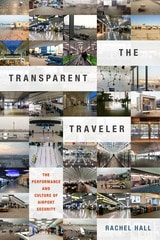
The Transparent Traveler
The Performance and Culture of Airport SecurityRachel Hall
Duke University Press, 2015
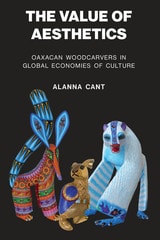
The Value of Aesthetics
Oaxacan Woodcarvers in Global Economies of CultureBy Alanna Cant
University of Texas Press, 2019
Unlike many other handicrafts in the Mexican state of Oaxaca, which have long cultural and historical trajectories, Oaxacan woodcarving began in the second half of the twentieth century and has always been done for the commercial market. In The Value of Aesthetics, Alanna Cant explores how one family’s workshop in the village of San Martín Tilcajete has become the most critically and economically successful, surpassing those of neighbors who use similar materials and techniques. The dominance of this family is tied to their ability to produce a new aesthetic that appeals to three key “economies of culture”: the tourist market for souvenirs, the national market for traditional Mexican artesanías, and the international market for indigenous art.
Offering a new analytical model by which anthropologists can approach visual aesthetics and conceptualize the power of artworks as socially active objects, The Value of Aesthetics shows how aesthetic practices produce and redefine social and political relationships. By investigating the links between aesthetics and issues of production, authorship, ownership, and identity, Cant shows aesthetic change to be a process that ultimately repackages everyday life into commodified objects in Oaxaca.

The Winning Side
Why the Culture of Death Is DyingCharles E. Rice
St. Augustine's Press, 0
The Word Unheard
Legacies of Anti-Semitism in German Literature and CultureMartha B. Helfer
Northwestern University Press, 2011
The publication of Martha B. Helfer’s The Word Unheard: Legacies of Anti-Semitism in German Literature and Culture marks a stunningly original new direction in the interpretation of canonical works of eighteenth- and nineteenth-century German literature.
Between 1749 and 1850—the formative years of the so-called Jewish Question in Germany—the emancipation debates over granting full civil and political rights to Jews provided the topical background against which all representations of Jewish characters and concerns in literary texts were read. Helfer focuses sharply on these debates and demonstrates through close readings of works by Gotthold Lessing, Friedrich Schiller, Achim von Arnim, Annette von Droste- Hülshoff, Adalbert Stifter, and Franz Grillparzer how disciplinary practices within the field of German studies have led to systematic blind spots in the scholarship on anti-Semitism to date.
While all the authors discussed are well known and justly celebrated, the particular works addressed represent an effective mix of enduring classics and less recognized, indeed often scandalously overlooked, texts whose consideration leads to a reevaluation of the author’s more mainstream oeuvre. Although some of the works and authors chosen have previously been noted for their anti-Semitic proclivities, the majority have not, and some have even been marked by German scholarship as philo-Semitic—a view that The Word Unheard undertakes not so much to refute as to complicate, and in the process to question not only these texts but also the deafness of the German scholarly tradition. With implications that reach into many disciplines, The Word Unheard will be a foundational study for all scholars of modern Germany.
The Work of Culture
Symbolic Transformation in Psychoanalysis and AnthropologyGananath Obeyesekere
University of Chicago Press, 1990
The World Sixties Made
Politics And Culture In Recent Americaedited by Van Gosse and Richard Moser
Temple University Press, 2003
The World Turned
Essays on Gay History, Politics, and CultureJohn D Emilio
Duke University Press, 2002
In this collection of essays, D’Emilio brings his historian’s eye to bear on these profound changes in American society, culture, and politics. He explores the career of Bayard Rustin, a civil rights leader and pacifist who was openly gay a generation before almost everyone else; the legacy of radical gay and lesbian liberation; the influence of AIDS activist and writer Larry Kramer; the scapegoating of gays and lesbians by the Christian Right; the gay-gene controversy and the debate over whether people are "born gay"; and the explosion of attention focused on queer families. He illuminates the historical roots of contemporary debates over identity politics and explains why the gay community has become, over the last decade, such a visible part of American life.

The World of Elizabeth Inchbald
Essays on Literature, Culture, and Theatre in the Long Eighteenth CenturyDaniel J. Ennis
University of Delaware Press, 2022
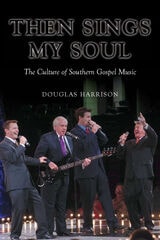
Then Sings My Soul
The Culture of Southern Gospel MusicDouglas Harrison
University of Illinois Press, 2012

Theorizing Global Order
The International, Culture and GovernanceEdited by Gunther Hellmann
Campus Verlag, 2018
Thinking About Dementia
Culture, Loss, and the Anthropology of SenilityLeibing, Annette
Rutgers University Press, 2006
Bringing together essays by nineteen respected scholars, this volume approaches dementia from a variety of angles, exploring its historical, psychological, and philosophical implications. The authors employ a cross-cultural perspective that is based on ethnographic fieldwork and focuses on questions of age, mind, voice, self, loss, temporality, memory, and affect.
Taken together, the essays make four important and interrelated contributions to our understanding of the mental status of the elderly. First, cross-cultural data show that the aging process, while biologically influenced, is also culturally constructed. Second, ethnographic reports raise questions about the diagnostic criteria used for defining the elderly as demented. Third, case studies show how a diagnosis affects a patient's treatment in both clinical and familial settings. Finally, the collection highlights the gap that separates current biological understandings of aging from its cultural meanings.
As Alzheimer's disease and other forms of dementia continue to command an ever-increasing amount of attention in medicine and psychology, this book will be essential reading for anthropologists, social scientists, and health care professionals.

Thinking Orthodox in Modern Russia
Culture, History, ContextEdited by Patrick Lally Michelson and Judith Deutsch Kornblatt
University of Wisconsin Press, 2014
Volume editors Patrick Lally Michelson and Judith Deutsch Kornblatt provide a historical overview of Russian Orthodox thought and a critical essay on the current state of scholarship about religious thought in modern Russia. The contributors explore a wide range of topics, including Orthodox claims to a unique religious Enlightenment, contests over authority within the Russian Church, tensions between faith and reason in academic Orthodoxy, the relationship between sacraments and the self, the religious foundations of philosophical and legal categories, and the effect of Orthodox categories in the formation of Russian literature.
This New Yet Unapproachable America
Lectures after Emerson after WittgensteinStanley Cavell
University of Chicago Press, 2013
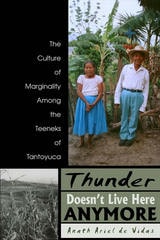
Thunder Doesn't Live Here Anymore
The Culture of Marginality Among the Teeneks of TantoyucaAnath Ariel de Vidas
University Press of Colorado, 2004
However, as Anath Ariel de Vidas argues in this masterful ethnography, this self-denigration - added to the absence among the Teeneks of emblematic Indian features such as traditional costumes, agricultural rituals, specific ceremonies, or systems of religious cargos or offices - are not synonymous with collective anomie. Rather, as Ariel de Vidas demonstrates, their seeming ontological acceptance of a marginal social and economic condition is - in its own peculiar way - a language of indigenous resistance.
Time, Work, and Culture in the Middle Ages
Jacques Le Goff
University of Chicago Press, 1980
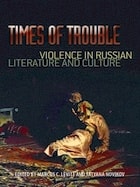
Times of Trouble
Violence in Russian Literature and CultureEdited by Marcus C. Levitt and Tatyana Novikov
University of Wisconsin Press, 2007
From the country that has added to our vocabulary such colorful terms as "purges," "pogroms," and "gulag," this collection investigates the conspicuous marks of violence in Russian history and culture.
Russians and non-Russians alike have long debated the reasons for this endemic violence. Some have cited Russia's huge size, unforgiving climate, and exposed geographical position as formative in its national character, making invasion easy and order difficult. Others have fixed the blame on cultural and religious traditions that spurred internecine violence or on despotic rulers or unfortunate episodes in the nation's history, such as the Mongol invasion, the rule of Ivan the Terrible, or the "Red Terror" of the revolution. Even in contemporary Russia, the specter of violence continues, from widespread mistreatment of women to racial antagonism, the product of a frustrated nationalism that manifests itself in such phenomena as the wars in Chechnya.
Times of Trouble is the first in English to explore the problem of violence in Russia. From a variety of perspectives, essays investigate Russian history as well as depictions of violence in the visual arts and in literature, including the works of Fyodor Dostoevsky, Isaac Babel, Mikhail Lermontov, and Nina Sadur. From the Mongol invasion to the present day, topics include the gulag, genocide, violence against women, anti-Semitism, and terrorism as a tool of revolution.

Tiny Publics
A Theory of Group Action and CultureGary Alan Fine
Russell Sage Foundation, 2012
Toward a Sociology of the Trace
Herman Gray
University of Minnesota Press, 2010
The contributors utilize empirically based studies of social policy, political economy, and social institutions to offer a new way of looking at the creation of meaning, representation, and memory. They scrutinize subjects such as narratives in the U.S. coal industry's change from digging mines to removing mountaintops; war-related redress policies in post-World War II Japan; views of masculinity linked to tequila, Pancho Villa, and the Mexican Revolution; and the politics of subjectivity in 1970s political violence in Thailand.
Contributors: Sarah Banet-Weiser, U of Southern California; Barbara A. Barnes, U of California, Berkeley; Marie Sarita Gaytán; Avery F. Gordon, U of California, Santa Barbara; Tanya McNeill, U of California, Santa Cruz; Sudarat Musikawong, Willamette U; Akiko Naono, U of Kyushu; Rebecca R. Scott, U of Missouri.

Towards Defining the Prairies
Region, Culture, and HistoryRobert Wardhaugh
University of Manitoba Press, 2001
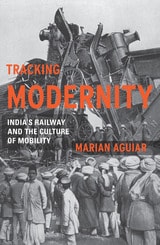
Tracking Modernity
India’s Railway and the Culture of MobilityMarian Aguiar
University of Minnesota Press, 2010
Since the colonial period in India, the railway has been idealized as a rational utopia—a moving box in which racial and class differences might be amalgamated under a civic, secular, and public order. Aguiar charts this powerful image into the postcolonial period, showing how the culture of mobility exposes this symbol of reason as surprisingly dynamic and productive. Looking in turn at the partition of India, labor relations, rituals of travel, works of literature and film, visual culture, and the Mumbai train bombings of 2006, Aguiar finds incongruities she terms “counternarratives of modernity” to signify how they work both with and against the dominant rhetoric. Revealing railways as a microcosm of tensions within Indian culture, Aguiar demonstrates how their representations have challenged prevailing ideas of modernity.
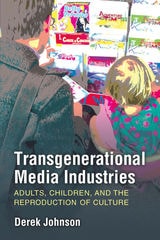
Transgenerational Media Industries
Adults, Children, and the Reproduction of CultureDerek Johnson
University of Michigan Press, 2019
Derek Johnson presents an innovative perspective that looks beyond the simple category of “kids’ media” to consider how entertainment industry strategies invite producers and consumers alike to cross boundaries between adulthood and childhood, professional and amateur, new media and old. Revealing the social norms, reproductive ideals, and labor hierarchies on which such transformations depend, he identifies the lines of authority and power around which legacy media institutions like television, comics, and toys imagine their futures in a digital age. Johnson proposes that it is not strategies of media production, but of media reproduction, that are most essential in this context. To understand these critical intersections, he investigates transgenerational industry practice in television co-viewing, recruitment of adult comic readers as youth outreach ambassadors, media professionals’ identification with childhood, the branded management of adult fans of LEGO, and the labor of child YouTube video creators. These dynamic relationships may appear to disrupt generational and industry boundaries alike. However, by considering who media industries empower when generating the future in these reproductive terms and who they leave out, Johnson ultimately demonstrates how their strategies reinforce existing power structures.
This book makes vital contributions to media studies in its fresh approach to the intersections of adulthood and childhood, its attention to the relationship between legacy and digital media industries, and its advancement of dialogue between media production and consumption researchers. It will interest scholars in media industry studies and across media studies more broadly, with particular appeal to those concerned about the current and future reach of media industries into our lives.
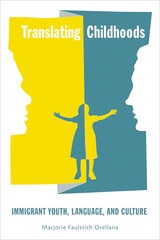
Translating Childhoods
Immigrant Youth, Language, and CultureOrellana, Marjorie Faulstich
Rutgers University Press, 2009
Skilled in two vernaculars, children shoulder basic and more complicated verbal exchanges for non-English speaking adults. Readers hear, through children's own words, what it means be "in the middle" or the "keys to communication" that adults otherwise would lack. Drawing from ethnographic data and research in three immigrant communities, Marjorie Faulstich Orellana's study expands the definition of child labor by assessing children's roles as translators as part of a cost equation in an era of global restructuring and considers how sociocultural learning and development is shaped as a result of children's contributions as translators.

Transnational Asia Pacific
Gender, Culture, and the Public SphereEdited by Shirley Geok-lin Lim, Larry E. Smith, and Wimal Dissanayake
University of Illinois Press, 1999
The most complete survey to date of the vibrant strands of this music and its colorful practitioners, Mountains of Music delineates a unique culture where music and music making are part of an ancient and treasured heritage. The sly humor, strong faith, clear regional identity, and musical convictions of these performers draw the reader into families and communities bound by music from one generation to another. For devotees as well as newcomers to this infectiously joyous and heartfelt music, Mountains of Music captures the strength of tradition and the spontaneous power of living artistry.
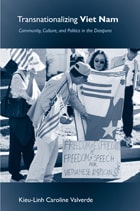
Transnationalizing Viet Nam
Community, Culture, and Politics in the DiasporaKieu-Linh Caroline Valverde
Temple University Press, 2013
Vietnamese diasporic relations affect—and are directly affected by—events in Viet Nam. In Transnationalizing Viet Nam, Kieu-Linh Caroline Valverde explores these connections, providing a nuanced understanding of this globalized community. Valverde draws on 250 interviews and almost two decades of research to show the complex relationship between Vietnamese in the diaspora and those back at the homeland.
Arguing that Vietnamese immigrant lives are inherently transnational, she shows how their acts form virtual communities via the Internet, organize social movements, exchange music and create art, find political representation, and even dissent. Valverde also exposes how generational, gender, class, and political tensions threaten to divide the ethnic community.
Transnationalizing Viet Nam paints a vivid picture of the complex political and personal allegiances that exist within Vietnamese America and shape the relations between this heterogeneous community and its country of origin.
In the series Asian American History and Culture, edited by Sucheng Chan, David Palumbo-Liu, Michael Omi, K. Scott Wong, and Linda Trinh Võ
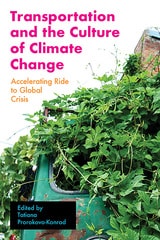
Transportation and the Culture of Climate Change
Accelerating Ride to Global CrisisTatiana Prorokova-Konrad
West Virginia University Press, 2020
The essays in Transportation and the Culture of Climate Change cover an eclectic range of subject matter, from the association of bicycles with childhood to the songs of Bruce Springsteen, but are united in a central conviction: “Transport is a considerable part of our culture that is as hard to transform as it is for us to stop using fossil fuels—but we do not have an alternative.”