Results by title
715 books match the query 'Ethnic relations' and 128 start with t
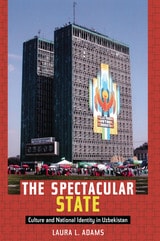
The Spectacular State
Culture and National Identity in UzbekistanLaura L. Adams
Duke University Press, 2010
Adams draws on her observations and interviews conducted with artists, intellectuals, and bureaucrats involved in the production of Uzbekistan’s national culture. These elites used globalized cultural forms such as Olympics-style spectacle to showcase local, national, and international aspects of official culture. While these state-sponsored extravaganzas were intended to be displays of Uzbekistan’s ethnic and civic national identity, Adams found that cultural renewal in the decade after Uzbekistan’s independence was not so much a rejection of Soviet power as it was a re-appropriation of Soviet methods of control and ideas about culture. The public sphere became more restricted than it had been in Soviet times, even as Soviet-era ideas about ethnic and national identity paved the way for Uzbekistan to join a more open global community.

The Struggle for Inclusion
Muslim Minorities and the Democratic EthosElisabeth Ivarsflaten and Paul M. Sniderman
University of Chicago Press, 2022
Notwithstanding the turbulence and violence of the last decade over issues of immigration and of Muslims in the West, the results of this study demonstrate that the largest number of citizens in contemporary liberal democracies are more open to inclusion of Muslims than has been recognized. Not less important, the book reveals limits on inclusion that follow from the friction between liberal democratic values. This pioneering work thus brings to light both pathways to progress and polarization traps.

The Subtenant / To Outwit God
Hanna Krall
Northwestern University Press, 1992
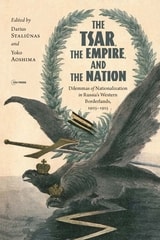
The Tsar, The Empire, and The Nation
Dilemmas of Nationalization in Russia's Western Borderlands, 1905-1915Darius Staliunas
Central European University Press, 2021
This collection of essays addresses the challenge of modern nationalism to the tsarist Russian Empire. First appearing on the empire’s western periphery this challenge, was most prevalent in twelve provinces extending from Ukrainian lands in the south to the Baltic provinces in the north, as well as to the Kingdom of Poland.
At issue is whether the late Russian Empire entered World War I as a multiethnic state with many of its age-old mechanisms run by a multiethnic elite, or as a Russian state predominantly managed by ethnic Russians. The tsarist vision of prioritizing loyalty among all subjects over privileging ethnic Russians and discriminating against non-Russians faced a fundamental problem: as soon as the opportunity presented itself, non-Russians would increase their demands and become increasingly separatist.
The authors found that although the imperial government did not really identify with popular Russian nationalism, it sometimes ended up implementing policies promoted by Russian nationalist proponents. Matters addressed include native language education, interconfessional rivalry, the “Jewish question,” the origins of mass tourism in the western provinces, as well as the emergence of Russian nationalist attitudes in the aftermath of the first Russian revolution.

The Un-Americans
Jews, the Blacklist, and Stoolpigeon CultureJoseph Litvak
Duke University Press, 2009
Litvak traces the outlines of comic cosmopolitanism in a series of performances in film and theater and before HUAC, performances by Jewish artists and intellectuals such as Zero Mostel, Judy Holliday, and Abraham Polonsky. At the same time, through an uncompromising analysis of work by informers including Jerome Robbins, Elia Kazan, and Budd Schulberg, he explains the triumph of a stoolpigeon culture that still thrives in the America of the early twenty-first century.

The University Against Itself
The NYU Strike and the Future of the Academic Workplaceedited by Monika Krause, Mary Nolan, Michael Palm and Andrew Ross
Temple University Press, 2008
All of the contributors were either participants in the NYU strike -- graduate students, faculty, and organizers -- or are nationally recognized as writers on academic labor. They are deeply troubled by the ramifications of corporatizing universities. Here they spell out their concerns, offering lessons from one historic strike as well as cautions about the future of all universities.
Contributors include: Stanley Aronowitz, Barbara Bowen, Andrew Cornell, Ashley Dawson, Stephen Duncombe, Steve Fletcher, Greg Grandin, Adam Green, Kitty Krupat, Gordon Lafer, Micki McGee, Sarah Nash, Cary Nelson, Matthew Osypowski, Ed Ott, Ellen Schrecker, Susan Valentine, and the editors.

The Visual Afterlife of Abdelkader Bennahar
Robert Desjarlais
Duke University Press, 2025
The Wombs of Women
Race, Capital, FeminismFrançoise Vergès
Duke University Press, 2020
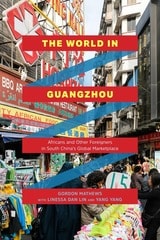
The World in Guangzhou
Africans and Other Foreigners in South China’s Global MarketplaceGordon Mathews, Linessa Dan Lin, and Yang Yang
University of Chicago Press, 2017
Through detailed ethnographic portraits, Mathews reveals a world of globalization based on informality, reputation, and trust rather than on formal contracts. How, he asks, can such informal relationships emerge between two groups—Chinese and sub-Saharan Africans—that don't share a common language, culture, or religion? And what happens when Africans move beyond their status as temporary residents and begin to put down roots and establish families?
Full of unforgettable characters, The World in Guangzhou presents a compelling account of globalization at ground level and offers a look into the future of urban life as transnational connections continue to remake cities around the world.
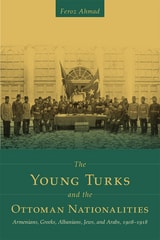
The Young Turks and the Ottoman Nationalities
Armenians, Greeks, Albanians, Jews, and Arabs, 1908–1918Feroz Ahmad
University of Utah Press, 2014
Ahmad holds that nationalism was introduced into the Ottoman Empire during the French Revolution, providing kindling for the struggles that later emerged. Setting the stage with this nineteenth-century background, Ahmad then examines each Ottoman nationality in the wake of the restoration of the Ottoman constitution in 1908. Officially known as the Committee of Union and Progress (CUP), the Young Turks made up a nationalist political party that ruled the Ottoman Empire from 1908 until the end of World War I. Ahmad illuminates the relationships and conflicts between the Young Turks and the Greek, Armenian, Albanian, Jewish, and Arab ethnic groups during this period. Placing these nationalities in their historical context, he shows their relationships not only to the Young Turks but also to one anotherno other single book has attempted to look closely at all of these connections.
Anyone interested in understanding the roots of current-day relations in the Balkans and Middle East will find this book very informative. Clearly organized and written, the book will enlighten both readers and scholars.
The making of exile cultures
Iranian television in Los AngelesHamid. Naficy
University of Minnesota Press, 1993

This Happy Land
The Jews of Colonial and Antebellum CharlestonJames William Hagy
University of Alabama Press, 1993
Threatening Others
Nicaraguans and the Formation of National Identities in Costa RicaCarlos Sandoval-Garcia
Ohio University Press, 2004
During the last two decades, a decline in public investment has undermined some of the national values and institutions of Costa Rica. The resulting sense of dislocation and loss is usually projected onto Nicaraguan “immigrants.”
Threatening Others: Nicaraguans and the Formation of National Identities in Costa Rica explores the representation of the Nicaraguan “other” in the Costa Rican imagery. It also seeks to address more generally why the sense of national belonging constitutes a crucial identification in contemporary societies. Interdisciplinary and based on extensive fieldwork, it looks critically at the “exceptionalism” that Costa Ricans take for granted and view as a part of their national identity.
Carlos Sandoval-García argues that Nicaraguan immigrants, once perceived as a “communist threat,” are now victims of an invigorated, racialized politics in which the Nicaraguan nationality has become an offense in itself.
Threatening Others is a deeply searching book that will interest scholars and students in Latin American studies and politics, cultural studies, and ethnic studies.
Through the Sands of Time
A History of the Jewish Community of St. Thomas, U.S. Virgin IslandsJudah M. Cohen
Brandeis University Press, 2012

Tight Knit
Global Families and the Social Life of Fast FashionElizabeth L. Krause
University of Chicago Press, 2018
Krause offers a revelatory look into how families involved in the fashion industry are coping with globalization based on longterm research in Prato, the historic hub of textile production in the heart of metropolitan Tuscany. She brings to the fore the tensions—over value, money, beauty, family, care, and belonging—that are reaching a boiling point as the country struggles to deal with the same migration pressures that are triggering backlash all over Europe and North America. Tight Knit tells a fascinating story about the heterogeneity of contemporary capitalism that will interest social scientists, immigration experts, and anyone curious about how globalization is changing the most basic of human conditions—making a living and making a life.
To Come to the Land
Immigration and Settlement in 16th-Century Eretz-IsraelAbraham David, translated by Dena Ordan
University of Alabama Press, 1999
To Come to the Land makes available in English a vast body of research,
previously available only in Hebrew, on the early history of the land now
known as Israel.
Abraham David here focuses on the Spanish and Portuguese Jews who fled
the Iberian Peninsula during the 16th century, tracing the beginnings of
Sephardic influence in the land of Israel.
After the Ottoman Turks conquered Syria, Palestine, and Egypt in 1516,
the Ottoman regime, unlike their Mamluk predecessors, encouraged economic
development and settlement throughout the region. This openness to immigration
offered a solution to the crisis Iberian Jews were undergoing as a result
of their expulsion from Spain and the forced conversions in Portugal. Within
a few years of the Ottoman conquest, Jews of Spanish extraction, many of
them clustered in urban areas, dominated the Jewish communities of Eretz-Israel.
In this carefully researched study, David examines the lasting impression
made by these enterprising Jewish settlers on the commercial, social, and
intellectual life of the area under early Ottoman rule. Of particular interest
is his examination of the cities of Jerusalem and Safed and David's succinct
biographies of leading Jewish personalities throughout the region.
This first English translation of a ground-breaking Hebrew work provides
a comprehensive overview of a significant chapter in the history of Israel
and explores some of the factors that brought to it the best minds of the
age. Essential for scholars of late Medieval Jewish history, To Come to
the Land will also be an important resource for scholars of intellectual
history, as it provides background crucial to an understanding of the intellectual
flourishing of the period.

Toward the Final Solution
A History of European RacismGeorge L. Mosse, With a critical introduction by Christopher R. Browning
University of Wisconsin Press, 2020
Tracking King Tiger
Reies López Tijerina and the FBIJosé Angel Gutiérrez
Michigan State University Press, 2019
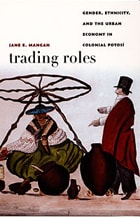
Trading Roles
Gender, Ethnicity, and the Urban Economy in Colonial PotosíJane E. Mangan
Duke University Press, 2005
Drawing on wills and dowries, judicial cases, town council records, and royal decrees, Mangan brings alive the bustle of trade in Potosí. She examines quotidian economic transactions in light of social custom, ethnicity, and gender, illuminating negotiations over vendor locations, kinship ties that sustained urban trade through the course of silver booms and busts, and credit practices that developed to mitigate the pressures of the market economy. Mangan argues that trade exchanges functioned as sites to negotiate identities within this colonial multiethnic society. Throughout the study, she demonstrates how women and indigenous peoples played essential roles in Potosí’s economy through the commercial transactions she describes so vividly.

Transatlantic Scots
Edited by Celeste Ray, foreword by James Hunter
University of Alabama Press, 2005
Transatlantic Scots is a multidisciplinary collection that studies the regional organization and varied expressions of the Scottish Heritage movement in the Canadian Maritimes, the Great Lakes, New England, and the American South. From diverse perspectives, authorities in their fields consider the modeling of a Scottish identity that distances heritage celebrants from prevalent visions of whiteness. Considering both hyphenated Scots who celebrate centuries-old transmission of Scottish traditions and those for whom claiming or re-claiming a Scottish identity is recent and voluntary, this book also examines how diaspora themes and Highland imagery repeatedly surface in regional public celebrations and how traditions are continually reinvented through the accumulation of myths. The underlying theoretical message is that ethnicity and heritage survive because of the flexibility of history and tradition.
This work is a lasting contribution to the study of ethnicity and identity, the renegotiation of history and cultural memory into heritage, and the public performance and creation of tradition.
Transformation and Trouble
Crime, Justice and Participation in Democratic South AfricaDiana Gordon
University of Michigan Press, 2006
Crime is one of the major challenges to any new democracy. Violence often increases after the lifting of authoritarian control, or in the aftermath of regime change. But how can a fledgling democracy fight crime without violating the fragile rights of its citizens? In Transformation and Trouble, accomplished theorist and criminal justice scholar Diana Gordon critically examines South Africa's efforts to strike the perilous balance between democratic participation and social control.
South Africa has made great progress in pursuing the Western ideals of participatory justice and due process. Yet Gordon finds that popular concerns about crime have fostered the growth of a punitive criminal justice system that undermines the country's rights-oriented political culture. Transformation and Trouble calls for South Africa to reaffirm its commitment to public empowerment by reforming its criminal justice system-an approach, she argues, that would strengthen the country's new democracy.
"An eloquent, critical, but ultimately optimistic, analysis of the democratization of crime and justice in post-apartheid South Africa."
--Bill Dixon, School of Criminology, Education, Sociology and Social Work, Keele University
"A must read for understanding contemporary South Africa's agonizing dilemmas as it struggles to reconcile crime control with democratic values."
--Jerome H. Skolnick, New York University School of Law
"Gordon's vast experience with criminal justice illuminates her cautionary tale of the search for a new way in south Africa."
--Paul Chevigny, New York University
Diana Gordon is Professor Emerita of Political Science and Senior Research Scholar, City University of New York.
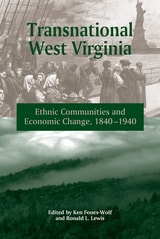
Transnational West Virginia
Ethnic Communities and Economic Change, 1840 - 1940KEN FONES-WOLF
West Virginia University Press, 2002
West Virginia is one of the most homogeneous states in the nation, with among the lowest ratios of foreign-born and minority populations among the states. But as this collection of historical studies demonstrates, this state was built by successive waves of immigrant labors, from the antebellum railroad builders to the twentieth-century coal miners. Transnational West Virginia offers a new understanding of how laborers and their communities shape a region's history. Transnational West Virginia includes essays and studies on immigrant networks, such as Irish workers along the B&O Railroad, Wheeling Germans in the Civil War era, Swiss immigration to West Virginia, and European Jews in Southern West Virginia. This work also covers Belgian glassworkers in West Virginia, black migration to Southern West Virginia, Italians in the Upper Kanawha Valley, Italian immigration to Marion County, Wheeling Iron and the Welsh, West Virginia and immigrant labor to 1920, Monongalia miners between the World Wars, and West Virginia rubber workers in Akron. Transnational West Virginia is the first volume in the West Virginia and Appalachia series, which is under the general editorship of West Virginia University Stuart and Joyce Robbins Chair of History Ronald L. Lewis. Kenneth Fones-Wolf, Associate Professor of History at WVU, also helped edit this collection of essays by ten distinguished scholars.
Travail In An Arab Land
Samuel Romanelli
University of Alabama Press, 1989
During a return voyage to Italy in 1786, he became stranded in Gibraltar for an extended time which depleted his funds, and his economic circumstances forced him to join a merchant travelling to Morocco. Through misadventure in Morocco, he lost his passport and was retained in that country for four years, the story of which forms Travail in an Arab Land, first published in 1792 in Berlin. The book is a firsthand account of the author’s adventures during the four years he was stranded in Sharifan Morocco between 1787 and 1790.

Tropical Zion
General Trujillo, FDR, and the Jews of SosúaAllen Wells
Duke University Press, 2009
Why did a dictator admit these desperate refugees when so few nations would accept those fleeing fascism? Eager to mollify international critics after his army had massacred 15,000 unarmed Haitians, Trujillo sent representatives to Évian, France, in July, 1938 for a conference on refugees from Nazism. Proposed by FDR to deflect criticism from his administration’s restrictive immigration policies, the Évian Conference proved an abject failure. The Dominican Republic was the only nation that agreed to open its doors. Obsessed with stemming the tide of Haitian migration across his nation’s border, the opportunistic Trujillo sought to “whiten” the Dominican populace, welcoming Jewish refugees who were themselves subject to racist scorn in Europe.
The Roosevelt administration sanctioned the Sosúa colony. Since the United States did not accept Jewish refugees in significant numbers, it encouraged Latin America to do so. That prodding, paired with FDR’s overriding preoccupation with fighting fascism, strengthened U.S. relations with Latin American dictatorships for decades to come. Meanwhile, as Jewish organizations worked to get Jews out of Europe, discussions about the fate of worldwide Jewry exposed fault lines between Zionists and Non-Zionists. Throughout his discussion of these broad dynamics, Wells weaves vivid narratives about the founding of Sosúa, the original settlers and their families, and the life of the unconventional beach-front colony.

Tuberculosis and the Politics of Exclusion
A History of Public Health and Migration to Los AngelesAbel, Emily K.
Rutgers University Press, 2007
Winner of the 2008 Arthur J. Viseltear Prize from the American Public Health Association and Nominated for the 2008 William H. Welch Medal, AAHM
Though notorious for its polluted air today, the city of Los Angeles once touted itself as a health resort. After the arrival of the transcontinental railroad in 1876, publicists launched a campaign to portray the city as the promised land, circulating countless stories of miraculous cures for the sick and debilitated. As more and more migrants poured in, however, a gap emerged between the city’s glittering image and its dark reality.
Emily K. Abel shows how the association of the disease with “tramps” during the 1880s and 1890s and Dust Bowl refugees during the 1930s provoked exclusionary measures against both groups. In addition, public health officials sought not only to restrict the entry of Mexicans (the majority of immigrants) during the 1920s but also to expel them during the 1930s.
Abel’s revealing account provides a critical lens through which to view both the contemporary debate about immigration and the U.S. response to the emergent global tuberculosis epidemic.

Turn-of-the-Century Photographs from San Diego, Texas
By Ana Carolina Castillo Crimm and Sara R. Massey
University of Texas Press, 2003
Situated in the South Texas borderlands some fifty miles west of Corpus Christi, San Diego was a thriving town already a hundred years old at the turn of the twentieth century. With a population that was 90 percent Mexican or Mexican American and 10 percent Anglo, the bicultural community was the seat of Duval County and a prosperous town of lumberyards, banks, mercantile stores, and cotton gins, which also supplied the needs of area ranchers and farmers. Though Anglos dominated its economic and political life, San Diego was culturally Mexican, and Mexican Americans as well as Anglos built successful businesses and made fortunes.
This collection of nearly one hundred photographs from the estate of amateur photographer William Hoffman captures the cosmopolitan town of San Diego at a vibrant moment in its history between 1898 and 1909. Grouped into the categories women and their jobs, local homes, men and their businesses, children at school and church, families and friends, and entertainment about town, the photos offer an immediate visual understanding of the cultural and economic life of the community, enhanced by detailed captions that identify the subjects and circumstances of the photos. An introductory historical chapter constitutes the first published history of Duval County, which was one of the most important areas of South Texas in the early twentieth century.
Twenty-First Century Color Lines
Multiracial Change in Contemporary Americaedited by Andrew Grant-Thomas and Gary Orfield, foreword by Christopher Edley, Jr.
Temple University Press, 2008
The result of work initiated by the Harvard Civil Rights Project, this collection provides an excellent overview of the contemporary racial and ethnic terrain in the United States. The well-respected contributors to Twenty-First Century Color Lines combine theoretical and empirical perspectives, answering fundamental questions about the present and future of multiracialism in the United States: How are racial and ethnic identities promoted and defended across a spectrum of social, geopolitical and cultural contexts? What do two generations of demographic and social shifts around issues of race look like “on the ground?” What are the socio-cultural implications of changing demographics in the U.S.? And what do the answers to these questions portend for our multiracial future?
This illuminating book addresses issues of work, education, family life and nationality for different ethnic groups, including Asians and Latinos as well as African Americans and whites. Such diversity, gathered here in one volume, provides new perspectives on ethnicity in a society marked by profound racial transformations.
Contributors: Luis A. Avilés, Juan Carlos Martínez-Cruzado, Nilanjana Dasgupta, Christina Gómez, Gerald Gurin, Patricia Gurin, Anthony Kwame Harrison, Maria-Rosario Jackson, John Matlock, Nancy McArdle, John Mollenkopf, john a. powell, Doris Ramírez, David Roediger, Anayra Santory-Jorge, Jiannbin Lee Shiao, Mia H. Tuan, Katrina Wade-Golden and the editors.
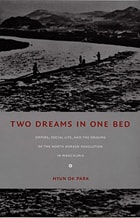
Two Dreams in One Bed
Empire, Social Life, and the Origins of the North Korean Revolution in ManchuriaHyun Ok Park
Duke University Press, 2005
Drawing on a rich archive of Korean, Japanese, and Chinese sources, Park describes how Koreans negotiated the contradictory demands of national and colonial powers. She demonstrates that the dynamics of global capitalism led the Chinese and Japanese to pursue capitalist expansion while competing for sovereignty. Decentering the nation-state as the primary analytic rubric, her emphasis on the role of global capitalism is a major innovation for understanding nationalism, colonialism, and their immanent links in social space.
Through a regional and temporal comparison of Manchuria from the late nineteenth century until 1945, Park details how national and colonial powers enacted their claims to sovereignty through the regulation of access to land, work, and loans. She shows that among Korean migrants, the complex connections among Chinese laws, Japanese colonial policies, and Korean social practices gave rise to a form of nationalism in tension with global revolution—a nationalism that laid the foundation for what came to be regarded as North Korea’s isolationist politics.