Results by title
775 books match the query 'Germany' and 174 start with t
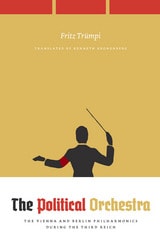
The Political Orchestra
The Vienna and Berlin Philharmonics during the Third ReichFritz Trümpi
University of Chicago Press, 2016
Trümpi looks first at the decades preceding National Socialist rule, when the competing orchestras, whose rivalry mirrored a larger rivalry between Berlin and Vienna, were called on to represent “superior” Austro-German music and were integrated into the administrative and social structures of their respective cities—becoming vulnerable to political manipulation in the process. He then turns to the Nazi period, when the orchestras came to play a major role in cultural policies. As he shows, the philharmonics, in their own unique ways, strengthened National Socialist dominance through their showcasing of Germanic culture in the mass media, performances for troops and the general public, and fictional representations in literature and film. Accompanying these propaganda efforts was an increasing politicization of the orchestras, which ranged from the dismissal of Jewish members to the programming of ideologically appropriate repertory—all in the name of racial and cultural purity.
Richly documented and refreshingly nuanced, The Political Orchestra is a bold exploration of the ties between music and politics under fascism.

The Politics of Free Markets
The Rise of Neoliberal Economic Policies in Britain, France, Germany, and the United StatesMonica Prasad
University of Chicago Press, 2006
In The Politics of Free Markets, a comparative-historical analysis of the development of neoliberal policies in these four countries,Monica Prasad argues that neoliberalism was made possible in the United States and Britain not because the Left in these countries was too weak, but because it was in some respects too strong. At the time of the oil crisis in the 1970s, American and British tax policies were more punitive to business and the wealthy than the tax policies of France and West Germany; American and British industrial policies were more adversarial to business in key domains; and while the British welfare state was the most redistributive of the four, the French welfare state was the least redistributive. Prasad shows that these adversarial structures in the United States and Britain created opportunities for politicians to find and mobilize dissatisfaction with the status quo, while the more progrowth policies of France and West Germany prevented politicians of the Right from anchoring neoliberalism in electoral dissatisfaction.

The Politics of Military Force
Antimilitarism, Ideational Change, and Post-Cold War German Security DiscourseFrank A. Stengel
University of Michigan Press, 2020
The Politics of Sociability
Freemasonry and German Civil Society, 1840-1918Stefan-Ludwig Hoffmann
University of Michigan Press, 2007
An ambitious, original work, The Politics of Sociability is Stefan-Ludwig Hoffmann's exploration of the social and political significance of Freemasonry in German history. Drawing on de Tocqueville's theory that without civic virtue there is no civil society, and that civic virtue unfolds only through the social interaction between citizens, Hoffmann examines the critical link between Freemasonry and the evolution of German civil society in the late nineteenth century. The practice of Masonic sociability reflected an enlightened belief in the political significance of moral virtue for civil society, indeed, for humanity. Freemasons' self-image as civilizing agents, acting in good faith and with the unimpeachable idea of universal brotherhood, was contradicted not only by their heightened sense of exclusivity; Freemasons unintentionally exacerbated nineteenth-century political conflicts---for example, between liberals and Catholics, or Germans and French---by employing a universalist language.
Using a wealth of archival sources previously unavailable, Stefan-Ludwig Hoffmann shows how Freemasonry became a social refuge for elevated and liberal-minded bourgeois men who felt attracted to its secret rituals and moral teachings. German Freemasons sought to reform self and society but, Hoffmann argues, ultimately failed to balance modern politics with a cosmopolitan ethos. Hoffmann illuminates a capacious history of the political effects of Enlightenment concepts and practices in a century marked by nationalism, social discord, and religious conflict.
Stefan-Ludwig Hoffmann is Assistant Professor of Modern History at Ruhr-University Bochum. The German edition of this book, Die Politik der Geselligkeit: Freimaurerlogen in der deutschen Bürgergesellschaft, 1840-1918 (Vandenhoeck & Ruprecht, 2000), won the Association of German Historians' 2002 Hedwig Hintze Prize for Best First Book.
Tom Lampert was born in Boston in 1962 and grew up in northern California. He received a BA in political science from Stanford University (1986) and a PhD in government from Cornell (1998). His book, Ein einziges Leben (Hanser Verlag 2001) was published as One Life by Harcourt in 2004, which he translated himself. Lampert has worked as a freelance translator since 1998. He currently lives in Bad Kreuznach, Germany.
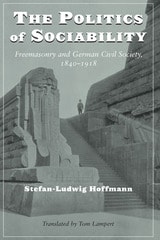
Cover Image: Monument of the Battle of the Nations in Leipzig, erected between 1898 and 1913 by German Freemasons, Barbarossa-Head by Christian Behrens, located next to the stairs leading to the monument. The German mythical figure of the Kaiser Barbarossa is depicted as a sphinx, which in Masonic symbolism protects the Masonic secret from profanation. Courtesy of the Deutsche Bücherei, Leipzig.
"This is an exemplary study of the role of Freemasonry in the German Bürgergesellschaft (civil society) of the nineteenth and early twentieth centuries, concise, comprehensive, and well written. It combines social profiling with a careful examination of contemporary concepts in a long-term diachronic study, based on an impressive amount of primary material. . . . Hoffmann's empirically and methodologically convincing study is not only a major contribution to our understanding of Freemasonry in the German Bürgergesellschaft. It also reflects the complex social and political transformation of German society in the nineteenth century and the difficulties contemporaries faced in responding to it."
---German History
"Hoffmann's arguments are theoretically informed, supported by a wealth of archival sources. . . . Indeed, in many ways this is the best combination of painstaking social history and well-argued Begriffsgeschichte (conceptual history). . . . One of the great virtues of this book is that Hoffmann does not shy away from the contradictions in the Freemasons' rhetoric and actions. Such contradictions, in fact, are key to the Mason's importance, because they force us to rethink some of our assumptions about Imperial Germany. . . . This is an important book that encourages us to rethink many of our characterizations of the German Kaiserreich and our assumptions about civil society."
---Central European History
"Based on a rich variety of sources. . . . Hoffmann explores the evolving relationship between Freemasonry and the monarchy, state, and church, and he also scrutinizes the internal practices and discourse of these notoriously secretive and cosmopolitan societies. . . . Hoffmann engages fruitfully with a wide historiography covering themes such as masculinity and racism, he dissects the complex attitude of Freemasonry to Jews and Catholics, and he scrutinizes the attacks of its conservative, clerical, and antisemitic critics."
---Journal of Modern History

The Politics of Women's Suffrage
Local, National and International DimensionsEdited by Alexandra Hughes-Johnson and Lyndsey Jenkins
University of London Press, 2021
In the United Kingdom, the question of women’s suffrage represented the most substantial challenge to the constitution since 1832, seeking not only to expand but to redefine definitions of citizenship and power. At the same time, it was inseparable from other urgent contemporary political debates—the Irish question, the decline of the British Empire, the Great War, and the increasing demand for workers’ rights.
This collection positions women’s suffrage as central to, rather than separate from, these broader political discussions, demonstrating how they intersected and were mutually constitutive. In particular, this collection pays close attention to the issues of class and Empire which shaped this era. It demonstrates how campaigns for women’s rights were consciously and unconsciously played out, impacting attitudes to motherhood, spurring the radical “birth-strike” movement, and burgeoning communist sympathies in working-class communities around Britain and beyond.
The Postwar Transformation of Germany
Democracy, Prosperity and NationhoodJohn S. Brady, Beverly Crawford, and Sarah Elise Wiliarty, Editors
University of Michigan Press, 1999
The Power of Intellectuals in Contemporary Germany
Edited by Michael Geyer
University of Chicago Press, 2001
This new collection of essays considers the demise of the GDR and its impact on the place of intellectuals in Germany today. Distinguished contributors from Germany, Austria, and the United States survey aspects of high and low culture, including the current nostalgia for East German film, the demise of the GDR rock scene, the pivotal role of East German poets, the consolidation and privatization of German media, and the frightening new resurgence of right-wing violence. The result is a timely volume that charts Germany's rocky transition from one world to another.
Contributors:
Mitchell G. Ash
Simone Barck
David Bathrick
John Borneman
Dorothea Dornhof
Michael Geyer
Andreas Graf
Dietrich Hohmann
Andreas Huyssen
Konrad Jarausch
Alexander Kluge
Loren Kruger
Martina Langermann
Siegfried Lokatis
Patricia Anne Simpson
Frank Trommler
Katie Trumpener
The Practical Imagination
The German Sciences of State in the Nineteenth CenturyDavid F. Lindenfeld
University of Chicago Press, 1997
Lindenfeld argues that these sciences of state developed a technique of deliberation on practical issues such as tax policy and welfare, that serves as a model for contemporary administrations.
The Queer Art of History
Queer Kinship after FascismJennifer V. Evans
Duke University Press, 2023
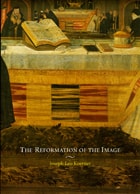
The Reformation of the Image
Joseph Leo Koerner
University of Chicago Press, 2004
But if words—not iconic images—showed the way to salvation, why didn't religious imagery during the Reformation disappear along with indulgences? The answer, according to Joseph Leo Koerner, lies in the paradoxical nature of Protestant religious imagery itself, which is at once both iconic and iconoclastic. Koerner masterfully demonstrates this point not only with a multitude of Lutheran images, many never before published, but also with a close reading of a single pivotal work—Lucas Cranach the Elder's altarpiece for the City Church in Wittenberg (Luther's parish). As Koerner shows, Cranach, breaking all the conventions of traditional Catholic iconography, created an entirely new aesthetic for the new Protestant ethos.
In the Crucifixion scene of the altarpiece, for instance, Christ is alone and stripped of all his usual attendants—no Virgin Mary, no John the Baptist, no Mary Magdalene—with nothing separating him from Luther (preaching the Word) and his parishioners. And while the Holy Spirit is nowhere to be seen—representation of the divine being impossible—it is nonetheless dramatically present as the force animating Christ's drapery. According to Koerner, it is this "iconoclash" that animates the best Reformation art.
Insightful and breathtakingly original, The Reformation of the Image compellingly shows how visual art became indispensable to a religious movement built on words.
The Repression of Psychoanalysis
Otto Fenichel and the Political FreudiansRussell Jacoby
University of Chicago Press, 1986

The Rest Is Slander
Five StoriesThomas Bernhard
Seagull Books, 2022
“The cold increases with the clarity,” said Thomas Bernhard while accepting a major literary prize in 1965. That clarity was the postwar realization that the West’s last remaining cultural reference points were being swept away by the ever-greater commodification of humankind. Collecting five stylistically transitional tales by Bernhard, all of which take place in sites of extreme cold, this volume extends that bleak vision of the master Austrian storyteller.
In “Ungenach,” the reluctant heir of an enormous estate chooses to give away his legacy to an assortment of oddballs as he discovers the past of his older brother, who was murdered during a career in futile colonialist philanthropy. In “The Weatherproof Cape,” a lawyer tries to maintain a sense of familial solidarity with a now-dead client with the help of an unremarkable piece of clothing. “Midland in Stilfs” casts a jaundiced eye on the laughable efforts of a cosmopolitan foreigner to attain local authenticity on a moribund Alpine farmstead. In “At the Ortler,” two middle-aged brothers—one a scientist, the other an acrobat—meditate on their unusual career paths while they climb a mountain to reclaim a long-abandoned family property. And in “At the Timberline,” the unexpected arrival of a young couple in a mountain village leads to the discovery of a scandalous crime that casts a shadow on the personal life of the policeman investigating it.
The Rise of the Research University
A SourcebookEdited by Louis Menand, Paul Reitter, and Chad Wellmon
University of Chicago Press, 2017
The editors focus on the development of American universities such as Cornell, Johns Hopkins, Harvard, and the Universities of Chicago, California, and Michigan. Looking to Germany, they translate a number of seminal sources that formulate the shape and purpose of the university and place them next to hard-to-find English-language texts that took the German university as their inspiration, one that they creatively adapted, often against stiff resistance. Enriching these texts with short but insightful essays that contextualize their importance, the editors offer an accessible portrait of the early research university, one that provides invaluable insights not only into the historical development of higher learning but also its role in modern society.
The Romantic Conception of Life
Science and Philosophy in the Age of GoetheRobert J. Richards
University of Chicago Press, 2002
Integrating Romantic literature, science, and philosophy with an intimate knowledge of the individuals involved—from Goethe and the brothers Schlegel to Humboldt and Friedrich and Caroline Schelling—Richards demonstrates how their tempestuous lives shaped their ideas as profoundly as their intellectual and cultural heritage. He focuses especially on how Romantic concepts of the self, as well as aesthetic and moral considerations—all tempered by personal relationships—altered scientific representations of nature. Although historians have long considered Romanticism at best a minor tributary to scientific thought, Richards moves it to the center of the main currents of nineteenth-century biology, culminating in the conception of nature that underlies Darwin's evolutionary theory.
Uniting the personal and poetic aspects of philosophy and science in a way that the German Romantics themselves would have honored, The Romantic Conception of Life alters how we look at Romanticism and nineteenth-century biology.

The Ruin Dwellers
Progress and Its Discontents in the West German CountercultureJake P. Smith
University of Chicago Press, 2025
The Ruin Dwellers takes readers into the urban spaces of youth revolts during the 1970s and ’80s in West Germany and elsewhere in western and central Europe. Whereas earlier generations of leftist activists were primarily oriented toward the utopian future, participants in the youth movements of the 1970s and ’80s developed a more complex set of temporal practices that sought to scramble the borders between the past, present, and future.
Examining a rich corpus of radical texts and practices, historian Jake P. Smith shows that squatters and their leftist allies in this period engaged in social, cultural, and aesthetic experiments with modes of autonomous living. Smith brings to life the real and imagined landscapes conjured in squatted houses and street protests; in art, dress, music, graffiti, and film; and in philosophical, poetic, and political texts. In so doing, he offers an eye-opening look at anarchic world-making practices that found new ways of imagining an emancipated future through inhabiting the fractured past.

The Saxon War
Bruno of Merseburg
Catholic University of America Press, 2022
The Science of the Swastika
Bernard Mees
Central European University Press, 2008

The Search for Medieval Music in Africa and Germany, 1891-1961
Scholars, Singers, MissionariesAnna Maria Busse Berger
University of Chicago Press, 2020
The book unfolds in three parts. Busse Berger starts with the origins of comparative musicology circa 1900, when early proponents used ideas from comparative linguistics to test whether parallels could be drawn between nonwestern and medieval European music. She then turns to youth movements of the era—the Wandervogel, Jugendmusikbewegung, and Singbewegung—whose focus on joint music making influenced many musicologists. Finally, she considers case studies of Protestant and Catholic mission societies in what is now Tanzania, where missionaries—many of them musicologists and former youth-group members—extended the discipline via ethnographic research and a focus on local music and communities. In highlighting these long-overlooked transnational connections and the role of global music in early musicology, Busse Berger shapes a fresh conception of music scholarship during a pivotal part of the twentieth century.
The Secret Protocol
The Molotov-Ribbentrop Pact and the Falsification of HistoryAntonella Salomoni, Translated by Antony Shugaar
University of Wisconsin Press, 2025
From the moment of the secret protocol’s inception—and the near-instantaneous rumors of its existence—it generated friction and competing narratives. The document became public during the Nuremberg trials, but the USSR declared it a fabrication evidencing the West’s willingness to falsify history. It continues to be relevant to the reconfiguration of history currently advanced by Vladimir Putin. By centering the rumors, accusations, and propaganda the pact precipitated, Salomoni illuminates how political actors can use and abuse history, how they create and disseminate truths and falsehoods, and how they can blur the boundary between facts and fictions even in the glaring face of black-and-white documentation.
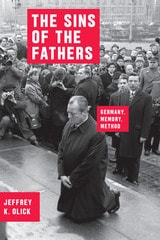
The Sins of the Fathers
Germany, Memory, MethodJeffrey K. Olick
University of Chicago Press, 2016
Nowhere has this precarious balance been more potent, or important, than in the Federal Republic of Germany, where the devastation and atrocities of two world wars have weighed heavily in virtually every moment and aspect of political life. The Sins of the Fathers confronts that difficulty head-on, exploring the variety of ways that Germany’s leaders since 1949 have attempted to meet this challenge, with a particular focus on how those approaches have changed over time. Jeffrey K. Olick asserts that other nations are looking to Germany as an example of how a society can confront a dark past—casting Germany as our model of difficult collective memory.

The Social Politics of Medieval Diplomacy
Anglo-German Relations (1066-1307)Joseph P. Huffman
University of Michigan Press, 2000

The Song Is Over
A Jewish Girl in DresdenHenny Brenner
University of Alabama Press, 2010
The Sounds of Ethnicity
Listening to German North America, 1850 - 1914Barbara Lorenzkowski
University of Manitoba Press, 2010
The Sovereigns
A Jewish Family in the German CountrysideEric Lucas
Northwestern University Press, 2001
But anti-Semites, under the protection of the Nazi regime, began to settle old scores, and targeted the economically successful rural Jews. New laws stripped Jewish meat dealers of their rights, and Aryan competitors eagerly forced them aside. That was only the beginning. In the Holocaust that followed, some members of the family escaped. Others did not.
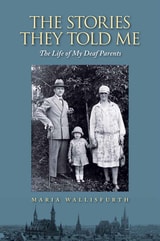
The Stories They Told Me
The Life of My Deaf ParentsMaria Wallisfurth
Gallaudet University Press, 2017
Despite their dissimilar backgrounds and the political circumstances that roiled their lives, the author’s parents showed great love for each other and their only daughter. The Stories They Told Me is a richly detailed document of time and place and a rare account of deaf lives during this era.
The Strange and Terrible Visions of Wilhelm Friess
The Paths of Prophecy in Reformation EuropeJonathan Green
University of Michigan Press, 2014
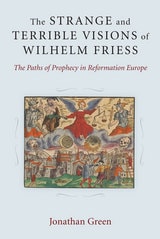
Dutch scholars have recognized that Frans Fraet was executed for printing a prognostication by Willem de Vriese, but this prognostication was thought to be lost. A few scholars of sixteenth-century German apocalypticism have briefly noted the prophecies of Wilhelm Friess but have not studied them in depth. The Strange and Terrible Visions of Wilhelm Friess is the first to connect de Vriese and Friess, as well as recognize the prophecy of Wilhelm Friess as an adaptation of a French version of theVademecum of Johannes de Rupescissa, making these pamphlets by far the most widespread source for Rupescissa’s apocalyptic thought in Reformation Germany. The book explains the connection between the first and second prophecies of Wilhelm Friess and discovers the Calvinist context of the second prophecy and its connection to Johann Fischart, one of the most important German writers of the time.
Jonathan Green provides a study of how textual history interacts with print history in early modern pamphlets and proposes a model of how early modern prophecies were created and transmitted. The Strange and Terrible Visions of Wilhelm Friess makes important contributions to the study of early modern German and Dutch literature, apocalypticism and confessionalization during the Reformation, and the history of printing in the sixteenth century.
The Strategy of Life
Teleology and Mechanics in Nineteenth-Century German BiologyTimothy Lenoir
University of Chicago Press, 1989
Strongly influenced by Immanuel Kant, the biologists' approach combined a sophisticated teleology with mechanistic theories and sparked bitter controversies with the rival programs, mechanistic reductionism and Darwinism. Although temporarily eclipsed by these two approaches, the morphological tradition, Lenoir argues, was not vanquished in the field of scientific debate. It contributed to pathbreaking research in areas such as comparative anatomy, embryology, paleontology, and biogeography.
The Streets of Europe
The Sights, Sounds, and Smells That Shaped Its Great CitiesBrian Ladd
University of Chicago Press, 2020
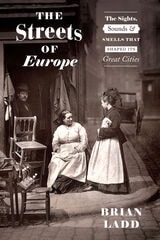
Merchants’ shouts, jostling strangers, aromas of fresh fish and flowers, plodding horses, and friendly chatter long filled the narrow, crowded streets of the European city. As they developed over many centuries, these spaces of commerce, communion, and commuting framed daily life. At its heyday in the 1800s, the European street was the place where social worlds connected and collided.
Brian Ladd recounts a rich social and cultural history of the European city street, tracing its transformation from a lively scene of trade and crowds into a thoroughfare for high-speed transportation. Looking closely at four major cities—London, Paris, Berlin, and Vienna—Ladd uncovers both the joys and the struggles of a past world. The story takes us up to the twentieth century, when the life of the street was transformed as wealthier citizens withdrew from the crowds to seek refuge in suburbs and automobiles. As demographics and technologies changed, so did the structure of cities and the design of streets, significantly shifting our relationships to them. In today’s world of high-speed transportation and impersonal marketplaces, Ladd leads us to consider how we might draw on our history to once again build streets that encourage us to linger.
By unearthing the vivid descriptions recorded by amused and outraged contemporaries, Ladd reveals the changing nature of city life, showing why streets matter and how they can contribute to public life.

The Summers
Ronya Othmann, translated by Gary Schmidt
University of Wisconsin Press, 2023
Leyla’s sexual awakening proves far less traumatic than her growing disenchantment with her German classmates and friends, who appear completely indifferent to the fate of her Yazidi community. Thoughtful and poignant, The Summers addresses issues of gender, sexuality, cultural difference, politics, and identity. Othmann draws readers into multiple worlds, ultimately revealing the hopes and dreams that bind us all together when forces threaten to tear us apart.
The Symphony Concert in Nazi Germany
Neil Gregor
University of Chicago Press, 2025
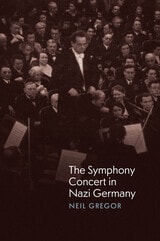
In the years after the Nazis came to power in January 1933 and throughout the Second World War, all aspects of life in Germany changed. Despite the social and political upheaval, gentile citizens continued to attend concerts. In this book, historian Neil Gregor surveys how the classical concert scene was impacted in Nazi Germany. Taking the perspective of the audience, rather than institutions or performers, Gregor delves into the cultural lives of ordinary Germans under conditions of dictatorship. Did the ways in which Germans heard music in the period change? Did a Nazi way of listening emerge?
For audiences, Gregor shows, changes to the concert experience were small and often took place around the edges. This, combined with the preserved idea of the concert hall as a space of imagined civility and cultivation, led many concertgoers and music lovers to claim after the war that their field and their practice had been innocent—a place to retreat from the vicious violence and racism of the Nazi regime. Drawing on untapped archival sources, The Symphony Concert in Nazi Germany reveals that the true history was one of disruption but also of near seamless adaptation. Through countless small acts, the symphony concert was reframed within the languages of strident nationalism, racism, and militarism to ensure its place inside the cultural cosmos of National Socialist Germany.
The Tango Player
Christoph Hein
Northwestern University Press, 1994

The Terezín Album of Mariánka Zadikow
Annotated by Debórah Dwork
University of Chicago Press, 2008
An imprisoned bookbinder wrote these words in a small blank book that he had secretly crafted from pilfered materials at the Terezín (Theresienstadt) concentration camp in September 1944. He presented the album to a fellow prisoner, twenty-one-year-old Marianka Zadików. Over the next several months, as the Nazis pressed forward with mass deportations from Terezín to Auschwitz, Marianka began to collect inscriptions and sketches from her fellow inmates.
Marianka Zadików’salbum, presented here in a facsimile edition, is a poignant document from the last months of the Holocaust. The words and images inscribed here—by children and grandparents, factory workers and farmhands, professionals and intellectuals, musicians and artists—reflect both joy and trepidation. They include passages of remembered verse, lovingly executed drawings, and hurried farewells on the eve of transport to Auschwitz. The great German-Jewish scholar Rabbi Leo Baeck, one of the elders of the camp, offers Marianka an inscription about Jewish self-discovery, and participants in Terezín’s now-famous musical performances fill several pages with musical annotation.
Facing-page translations render the book’s multitude of languages into English, while historical and biographical notes give details, where known, of the fates of those whose words are recorded here. An introduction by acclaimed Holocaust scholar Debórah Dwork tells the story of the Terezín camp and how Marianka and her family fared while imprisoned there.
The array of voices and the glimpses into individual lives afforded us by The Terezín Album make it an arresting reminder of the sustaining power of care, community, and hope amid darkness.
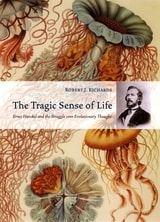
The Tragic Sense of Life
Ernst Haeckel and the Struggle over Evolutionary ThoughtRobert J. Richards
University of Chicago Press, 2008
Prior to the First World War, more people learned of evolutionary theory from the voluminous writings of Charles Darwin’s foremost champion in Germany, Ernst Haeckel (1834–1919), than from any other source, including the writings of Darwin himself. But, with detractors ranging from paleontologist Stephen Jay Gould to modern-day creationists and advocates of intelligent design, Haeckel is better known as a divisive figure than as a pioneering biologist. Robert J. Richards’s intellectual biography rehabilitates Haeckel, providing the most accurate measure of his science and art yet written, as well as a moving account of Haeckel’s eventful life.
The Translated Jew
German Jewish Culture outside the MarginsLeslie Morris
Northwestern University Press, 2018
The Translated Jew brings together an eclectic set of literary and visual texts to reimagine the transnational potential for German Jewish culture in the twenty-first century. Departing from scholarship that has located the German Jewish text as an object that can be defined geographically and historically, Leslie Morris challenges national literary historiography and redraws the maps by which transnational Jewish culture and identity must be read.
Morris explores the myriad acts of translation, actual and metaphorical, through which Jewishness leaves its traces, taking as a given the always provisional nature of Jewish text and Jewish language. Although the focus is on contemporary German Jewish literary cultures, The Translated Jew also turns its attention to a number of key visual and architectural projects by American, British, and French artists and writers, including W. G. Sebald, Anne Blonstein, Hélène Cixous, Ulrike Mohr, Daniel Blaufuks, Paul Celan, Raymond Federman, and Rose Ausländer.
In thus realigning German Jewish culture with European and American Jewish culture and post-Holocaust aesthetics, this book explores the circulation of Jewishness between the United States and Europe. The insistence on the polylingualism of any single language and the multidirectionality of Jewishness are at the very center of The Translated Jew.
The Trial of the Germans
An Account of the Twenty-two Defendants before the International Military Tribunal at NurembergEugene Davidson
University of Missouri Press, 1997
The "definitive one-volume study of Nuremberg," The Trial of the Germans is now available in paperback. An astute observer of the Nuremberg trial, Eugene Davidson has struggled with the issues it raised: Was it a necessary response to the heinous crimes of the Third Reich? How were Germany and the Germans capable of such extraordinary evil? Was the trial just, given the claims that the defendants were simply serving their country, doing as they had been told to do? And if not just, was it nonetheless necessary as a warning to prevent future crimes against humanity? Davidson's approach to these and other large questions of justice is made through examination of each of the defendants in the trial. His reluctant, but firm, conclusion is: "In a world of mixed human affairs where a rough justice is done that is better than lynching or being shot out of hand, Nuremberg may be defended as a political event if not as a court." Some sentences may have seemed too severe, but none was harsher than the punishments meted out to innocent people by the regime these men served. "In a certain sense," says Davidson, "the trial succeeded in doing what judicial proceedings are supposed to do: it convinced even the guilty that the verdict against them was just."
Faulty as the trial was from the legal point of view, a catharsis of the pent-up emotions of millions of people had to be provided and a record of what had taken place duly preserved for whatever use later generations would make of it.
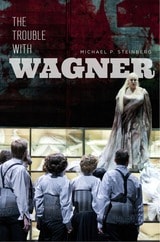
The Trouble with Wagner
Michael P. Steinberg
University of Chicago Press, 2018
Drawing on decades of engagement with Wagner and of experience teaching opera across disciplines, The Trouble with Wagner is packed with novel insights for experts and interested readers alike.
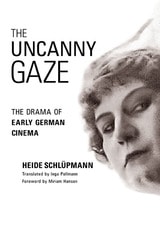
The Uncanny Gaze
The Drama of Early German CinemaHeide Schlupmann. Translated by Inga Pollmann. Foreword by Miriam Hansen.
University of Illinois Press, 2010
Heide Schlüpmann's classic study of early German cinema was published in German as Unheimlichkeit des Blicks: Das Drama des Frühen deutschen Kinos in 1990. For the first time in English, this translation makes available her feminist examination of German cinema and Germany in the sociopolitical context of Wilhelmine society. By examining then-unknown pre-World War I narrative films, this study paints a picture of the conflicted early years of the German cinema. During this period cinema and film production were able to develop independently from the cultural bourgeoisie and relied on those forces excluded from high "culture": technology, business, performers, showmen, and actors. In cinema, the dime novel and kitsch were exhibited for all, and the internationalism of modernity prevailed over the prevailing nationalism of the period.
Featuring a foreword by film scholar Miriam Hansen and a new afterword by Schlüpmann, this volume performs a critical perusal of film commentary and offers an in-depth look at little-known films in early German cinema.
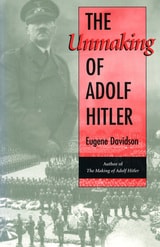
The Unmaking of Adolf Hitler
Eugene Davidson
University of Missouri Press, 2003
Available only in the USA and Canada.
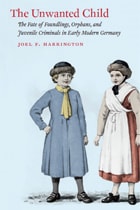
The Unwanted Child
The Fate of Foundlings, Orphans, and Juvenile Criminals in Early Modern GermanyJoel F. Harrington
University of Chicago Press, 2009
The baby abandoned on the doorstep is a phenomenon that has virtually disappeared from our experience, but in the early modern world, unwanted children were a very real problem for parents, government officials, and society. The Unwanted Child skillfully recreates sixteenth-century Nuremberg to explore what befell abandoned, neglected, abused, or delinquent children in this critical period.
Joel F. Harrington tackles this question by focusing on the stories of five individuals. In vivid and poignant detail, he recounts the experiences of an unmarried mother-to-be, a roaming mercenary who drifts in and out of his children’s lives, a civic leader handling the government’s response to problems arising from unwanted children, a homeless teenager turned prolific thief, and orphaned twins who enter state care at the age of nine. Braiding together these compelling portraits, Harrington uncovers and analyzes the key elements that link them, including the impact of war and the vital importance of informal networks among women. From the harrowing to the inspiring, The Unwanted Child paints a gripping picture of life on the streets five centuries ago.
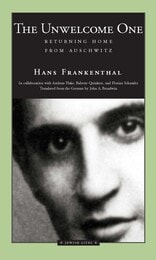
The Unwelcome One
Returning Home from AuschwitzHans Frankenthal
Northwestern University Press, 2003
The Utility of Splendor
Ceremony, Social Life, and Architecture at the Court of Bavaria, 1600-1800Samuel John Klingensmith
University of Chicago Press, 1993
Drawing on a broad range of sources, including building documents, correspondence, diaries, and court regulations, Klingensmith investigates the intricacies of Bavarian court practice and shows that Versailles was only one among several influences on German palace planning. Klingensmith offers a cogent, detailed understanding of the relations between architectural spaces and the ceremonial, social, and private life that both required and used them. Handsomely illustrated with photographs and plans, The Utility of Splendor will appeal to anyone interested in how life was lived among the nobility during the last centuries of the old regime.
Samuel John Klingensmith (1949-1986) was assistant professor of art history at Tulane University.
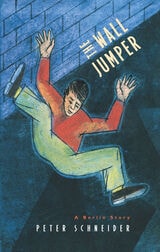
The Wall Jumper
A Berlin StoryPeter Schneider
University of Chicago Press, 1998
When the Berlin Wall was still the most tangible representation of the Cold War, Peter Schneider made this political and ideological symbol into something personal, that could be perceived on a human level, from more than one side. In Schneider's Berlin, real people cross the Wall not to defect but to quarrel with their lovers, see Hollywood movies, and sometimes just because they can't help themselves—the Wall has divided their emotions as much as it has their country. This unforgettable novel, originally published in 1982, takes us back to a time when the Cold War seemed to have no end in sight and the Wall loomed over everyday life on both sides of Berlin.

The War against Catholicism
Liberalism and the Anti-Catholic Imagination in Nineteenth-Century GermanyMichael B. Gross
University of Michigan Press, 2005
---Helmut Walser Smith, Vanderbilt University
"A marvelously original account of how the Kulturkampf emerged from the cultural, social, and gendered worlds of German liberalism. While not neglecting the 1870s, Gross's analysis directs historians' attention to the under-researched 1850s and 1860s-decades in which liberals' anti-Catholic arguments were formulated against a backdrop of religious revival, democratic innovation, national ambition, and the articulation of new roles for women in society, politics, and the church. The drama of these decades resonates in every chapter of Gross's fine study."
---James Retallack, University of Toronto
"Michael Gross has put the culture back into the Kulturkampf! Integrating social and political analysis with illuminating interpretations of visual and linguistic evidence, Gross explores the work of religious cleavage in defining German national identity. An emerging women's movement, liberal virtues, and Catholic difference come together to explain why, in a century of secularization, Germany's Catholics experienced a religious revival, and why its liberals responded with enmity and frustration. Vividly written and a pleasure to read, this groundbreaking study offers real surprises."
---Margaret Lavinia Anderson, University of California, Berkeley
An innovative study of the relationship between the two most significant, equally powerful, and irreconcilable movements in Germany, Catholicism and liberalism, in the decades following the 1848 Revolution.
After the defeat of liberalism in the Revolution of 1848, and in the face of the dramatic revival of popular Catholicism, German middle-class liberals used anti-Catholicism to orient themselves culturally in a new age. Michael B. Gross's study shows how anti-Catholicism and specifically the Kulturkampf, the campaign to break the power of the Catholic Church, were not simply attacks against the church nor were they merely an attempt to secure state autonomy. Gross shows that the liberal attack on Catholicism was actually a complex attempt to preserve moral, social, political, and sexual order during a period of dramatic pressures for change.
Gross argues that a culture of anti-Catholicism shaped the modern development of Germany including capitalist economics, industrial expansion, national unification, and gender roles. He demonstrates that images of priests, monks, nuns, and Catholics as medieval, backward, and sexually deviant asserted the liberal middle-class claim to social authority after the Revolution of 1848. He pays particular attention to the ways anti-Catholicism, Jesuitphobia, and antimonastic hysteria were laced with misogyny and expressed deeper fears of mass culture and democracy in the liberal imagination. In doing so, he identifies the moral, social, and cultural imperatives behind the Kulturkampf in the 1870s.
By offering a provocative reinterpretation of liberalism and its relationship to the German anti-Catholic movement, this work ultimately demonstrates that in Germany, liberalism itself contributed to a culture of intolerance that would prove to be a serious liability in the twentieth century. It will be of particular interest to students and scholars of culture, ideology, religion, and politics.

The War in Their Minds
German Soldiers and Their Violent Pasts in West GermanySvenja Goltermann
University of Michigan Press, 2017
Originally published in German as Die Gesellschaft der Uberlebenden, The War in Their Minds examines hitherto unused source material—psychiatric medical files of soldiers—to make clear how difficult it was for the soldiers and their families to readjust to normal, everyday life. Goltermann allows these testimonies of violence, guilt, justification, and helplessness speak for themselves and sensitively explores how the pension claims of returning soldiers were to compete with the claims of the Holocaust victims to compensation.
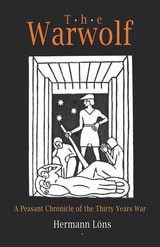
The Warwolf
A Peasant Chronicle of the Thirty Years WarHermann Lons
Westholme Publishing, 2006
The Thirty Years War, fought between 1618 and 1648, was a ruthless struggle for political and religious control of central Europe. Engulfing most of present-day Germany, the war claimed at least ten million lives. The lengthy conflict was particularly hard on the general population, as thousands of undisciplined mercenaries serving Sweden, Spain, France, the Netherlands, and various German principalities, robbed, murdered, and pillaged communities; disease spread out of control and starvation became commonplace. In The Warwolf, Hermann Löns's acclaimed historical novel, the tragedy and horrors of war in general, and these times in particular are revealed. The Warwolf, based on the author's careful research, traces the life of Harm Wulf, a land-owning peasant farmer of the northern German heath who realizes after witnessing the murder of neighbours and family at the hands of marauding troops that he has a choice between compromising his morals or succumbing to inevitable torture and death. Despite his desire for peace, Wulf decides to band with his fellow farmers and live like "wolves," fiercely protecting their isolated communities from all intruders. Löns's brilliant portrayal of the two sides faced by any person in a moral crisis—in Harm Wulf's case, whether to kill or be killed—continues to resonate. Originally published in 1910 and still in print in Germany, The Warwolf is available for first time in English.
The Weimar Origins of Rhetorical Inquiry
David L. Marshall
University of Chicago Press, 2020
The Word Unheard
Legacies of Anti-Semitism in German Literature and CultureMartha B. Helfer
Northwestern University Press, 2011
The publication of Martha B. Helfer’s The Word Unheard: Legacies of Anti-Semitism in German Literature and Culture marks a stunningly original new direction in the interpretation of canonical works of eighteenth- and nineteenth-century German literature.
Between 1749 and 1850—the formative years of the so-called Jewish Question in Germany—the emancipation debates over granting full civil and political rights to Jews provided the topical background against which all representations of Jewish characters and concerns in literary texts were read. Helfer focuses sharply on these debates and demonstrates through close readings of works by Gotthold Lessing, Friedrich Schiller, Achim von Arnim, Annette von Droste- Hülshoff, Adalbert Stifter, and Franz Grillparzer how disciplinary practices within the field of German studies have led to systematic blind spots in the scholarship on anti-Semitism to date.
While all the authors discussed are well known and justly celebrated, the particular works addressed represent an effective mix of enduring classics and less recognized, indeed often scandalously overlooked, texts whose consideration leads to a reevaluation of the author’s more mainstream oeuvre. Although some of the works and authors chosen have previously been noted for their anti-Semitic proclivities, the majority have not, and some have even been marked by German scholarship as philo-Semitic—a view that The Word Unheard undertakes not so much to refute as to complicate, and in the process to question not only these texts but also the deafness of the German scholarly tradition. With implications that reach into many disciplines, The Word Unheard will be a foundational study for all scholars of modern Germany.
The Work of Music
Labor and Creativity in Germany's Long Nineteenth CenturyCelia Applegate
University of Wisconsin Press, 2025
The Worker
Dominion and FormErnst Jünger, Edited by Laurence Paul Hemming, Translated from the German by Bogdan Costea and Laurence Paul Hemming
Northwestern University Press, 2018
Martin Heidegger considered Jünger “the only genuine follower of Nietzsche,” singularly providing “an interpretation which took shape in the domain of that metaphysics which already determines our epoch, even against our knowledge; this metaphysics is Nietzsche's doctrine of the ‘will to power.’” In The Worker, Jünger examines some of the defining questions of that epoch: the nature of individuality, society, and the state; morality, justice, and law; and the relationships between freedom and power and between technology and nature.
This work, appearing in its entirety in English translation for the first time, is an important contribution to debates on work, technology, and politics by one of the most controversial German intellectuals of the twentieth century. Not merely of historical interest, The Worker carries a vital message for contemporary debates about world economy, political stability, and equality in our own age, one marked by unsettling parallels to the 1930s.
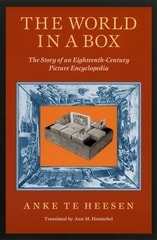
The World in a Box
The Story of an Eighteenth-Century Picture EncyclopediaAnke te Heesen
University of Chicago Press, 2002
As Anke te Heesen demonstrates, Stoy and his world in a box epitomized the Enlightenment concern with the creation and maintenance of an appropriate moral, intellectual, and social order. The box, and its images from nature, myth, and biblical history, were intended to teach children how to collect, store, and order knowledge. te Heesen compares the Academy with other aspects of Enlightenment material culture, such as commercial warehouses and natural history cabinets, to show how the kinds of collecting and ordering practices taught by the Academy shaped both the developing middle class in Germany and Enlightenment thought. The World in a Box, illustrated with a multitude of images of and from Stoy's Academy, offers a glimpse into a time when it was believed that knowledge could be contained and controlled.