Results by title
1947 books match the query 'Music' and 315 start with t
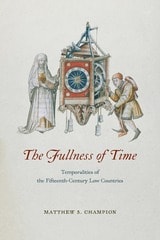
The Fullness of Time
Temporalities of the Fifteenth-Century Low CountriesMatthew S. Champion
University of Chicago Press, 2017
The Fullness of Time asks how the passage of time in the Low Countries was ordered by the rhythms of human action, from the musical life of a cathedral to the measurement of time by clocks and calendars, the work habits of a guildsman to the devotional practices of the laity and religious orders. Through a series of transdisciplinary case studies, it explores the multiple ways that objects, texts and music might themselves be said to engage with, imply, and unsettle time, shaping and forming the lives of the inhabitants of the fifteenth-century Low Countries. Champion reframes the ways historians have traditionally told the history of time, allowing us for the first time to understand the rich and varied interplay of temporalities in the period.
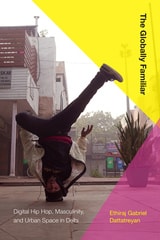
The Globally Familiar
Digital Hip Hop, Masculinity, and Urban Space in DelhiEthiraj Gabriel Dattatreyan
Duke University Press, 2020
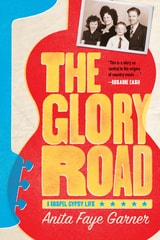
The Glory Road
A Gospel Gypsy LifeAnita Faye Garner
University of Alabama Press, 2021
“This is a story central to the origins of country music: the marriage of Saturday night and Sunday morning, and the literal marriage of two musicians, sometimes at odds with each other creatively and personally.” —Rosanne Cash
An essential memoir of music, memory, and the American South.
Anita Faye Garner grew up in the South—just about every corner of it. She and her musical family lived in Texarkana, Bossier City, Hot Springs, Jackson, Vicksburg, Hattiesburg, Pascagoula, Bogalusa, Biloxi, Gulfport, New Orleans, and points between, picking up sticks every time her father, a Pentecostal preacher known as “Brother Ray,” took over a new congregation.
In between jump-starting churches, Brother Ray took his wife and kids out on the gospel revival circuit as the Jones Family Singers. Ray could sing and play, and “Sister Fern” (Mama) was a celebrated singer and songwriter, possessed of both talent and beauty. Rounding out the band were the young Garner (known as Nita Faye then) and her big brother Leslie Ray. At all-day singings and tent revivals across the South, the Joneses made a joyful noise for the faithful and loaded into the car for the next stage of their tour.
But growing up gospel wasn’t always joyous. The kids practically raised and fended for themselves, bonding over a shared dislike of their rootless life and strict religious upbringing. Sister Fern dreamed of crossing over from gospel to popular music and recording a hit record. An unlikely combination of preacher’s wife and glamorous performer, she had the talent and presence to make a splash, and her remarkable voice brought Saturday night rock and roll to Sunday morning music. Always singing, performing, and recording at the margins of commercial success, Sister Fern shared a backing band with Elvis Presley and wrote songs recorded by Johnny Cash and many other artists.
In her touching memoir The Glory Road, Anita Faye Garner re-creates her remarkable upbringing. The story begins with Ray’s attempts to settle down and the family’s inevitable return to the gospel circuit and concludes with Sister Fern’s brushes with stardom and the family’s journey west to California where they finally landed—with some unexpected detours along the way. The Glory Road carries readers back to the 1950s South and the intersections of faith and family at the very roots of American popular music.
For more information about the book and Anita Garner, visit www.thegloryroad.com or www.anitagarner.com
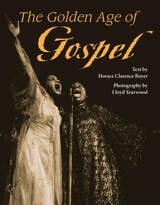
The Golden Age of Gospel
Text by Horace Clarence BoyerPhotography by Lloyd Yearwood
University of Illinois Press, 1995
Skillfully blending music history and social context, Boyer traces the development of gospel from its earliest beginnings through the Golden Age (1945-55) and into the 1960s when gospel entered the concert hall. He introduces dozens of the genre's most gifted contributors, from Thomas A. Dorsey and Mahalia Jackson to the Soul Stirrers and Aretha Franklin, evoking their distinctive styles and distinguishing among the characteristic sounds of gospel music in Chicago, Philadelphia, Detroit, St. Louis, and other locations.
Capturing the essence of a thrilling performance tradition, The Golden Age of Gospel clearly establishes gospel's importance as an authentic American art form and a musical statement of profound belief.
The Gostling Manuscript
Compiled by John Gostling
University of Texas Press, 1977
The rare and beautiful Gostling Manuscript is a primary source for the anthems of Henry Purcell and other major composers of the English Restoration period. Listed as missing since its sale to an anonymous buyer in 1935, the manuscript was eventually discovered in the Humanities Research Center at the University of Texas at Austin. This facsimile edition of the Gostling Manuscript (sometimes referred to by scholars as the "W. Kennedy Gostling Manuscript") made the document available to a wide audience for the first time in its history.
The anthems in this volume were assembled by the Reverend John Gostling, a celebrated bass soloist and an assiduous collector of the contemporary music of his day. His musical taste and editorial judgment, not to mention his skill as a copyist, were excellent. The Gostling Manuscript, completed around 1706, is considered essential for collating and editing some of the best anthems of the period. These sixty-four pieces, fair-copied in full score, include seventeen by Purcell; twenty-four by John Blow; four each by William Turner, Pelham Humfrey, and Jeremiah Clark; three each by Matthew Locke and Thomas Tudway; one by both William Child and Francis Pigott; and three arrangements by Henry Aldrich of anthems by Carissimi, Byrd, and Wise.
Gostling appended inscriptions to many of the pieces, giving the date and circumstances of composition, notes of considerable value to the musical historian. This folio-size facsimile edition will serve not only as an invaluable anthology but also as a unique and singularly helpful source of information about English musical life in the late seventeenth and early eighteenth centuries.
The foreword by Franklin B. Zimmerman provides a brief history of the Gostling Manuscript.
The Great Beyond
Art in the Age of AnnihilationPhilip D. Beidler
University of Alabama Press, 2022
Essays mapping how modern art confronts mortality in an age of war and annihilation.
While much about modernism remains up for debate, there can be no dispute about the connection between modernist art and death. The long modern moment was and is an age of war, genocide, and annihilation. Two world wars killed perhaps as many as 100 million people, through combat, famine, holocaust, and ghastly attacks on civilians. The ongoing COVID-19 pandemic is the fifth global pandemic since 1918, with more than a half-million American deaths and counting.
It can hardly come as a surprise, then, that many of the touchstones of modernism reflect on death and devastation. In Philip D. Beidler’s exploration of the modernist canon, he illuminates how these singular voices looked extinction in the eye and tried to reckon with our finitude—and their own. The Great Beyond: Art in the Age of Annihilation catalogs through lively prose an eclectic selection of artists, writers, and thinkers. In 16 essays, Beidler takes nuanced and surprising approaches to well-studied figures—the haunting sculpture by Saint-Gaudens commissioned by Henry Adams for his late wife; Luchino Visconti’s adaptation of Mann’s Death in Venice; and the author’s own long fascination with Beckett’s Waiting for Godot.
The threads and recurring motifs that emerge through Beidler’s analysis bridge the different media, genres, and timeframes of the works under consideration. Protomodernists Crane and Twain connect with near-contemporary voices like Sebald and Morrison. Robert MacFarlane’s 21st-century nonfiction about what lies underneath the earth echoes the Furerbunker and the poetry of Gertrud Kolmar. Learned but lively, somber but not grim, The Great Beyond is not a comfortable read, but it is in a way comforting. In tracing how his subjects confronted nothingness, be it personal or global, Beidler draws a brilliant map of how we see the end of the road.
The Great Machines
Poems and Songs from the Age of the American RailroadRobert Hedin
University of Iowa Press, 1996
Here, for the first time, is a feast for anyone who has ever been beguiled by the trains that formerly thrummed through the landscapes of our lives. This entertaining and evocative anthology presents the amazing variety of poems and songs written about the American railroad in the last century and a half. Comprised of selections from both oral and written traditions, the volume celebrates the historical and cultural significance of this marvel of engineering skills. Hedin's anthology allows all readers, from the most avid railroad buff to anyone who has fond memories of train travel, to enjoy the romance of trains.
The Great Orchestrator
Arthur Judson and American Arts ManagementJames M. Doering
University of Illinois Press, 2013
The Great Woman Singer
Gender and Voice in Puerto Rican MusicLicia Fiol-Matta
Duke University Press, 2017
The Guide to Classic Recorded Jazz
Samuel F., Jr. Piazza
University of Iowa Press, 1995
The Guitar
Tracing the Grain Back to the TreeChris Gibson and Andrew Warren
University of Chicago Press, 2021
Guitars inspire cult-like devotion: an aficionado can tell you precisely when and where their favorite instrument was made, the wood it is made from, and that wood’s unique effect on the instrument’s sound. In The Guitar, Chris Gibson and Andrew Warren follow that fascination around the globe as they trace guitars all the way back to the tree. The authors take us to guitar factories, port cities, log booms, remote sawmills, Indigenous lands, and distant rainforests, on a quest for behind-the-scenes stories and insights into how guitars are made, where the much-cherished guitar timbers ultimately come from, and the people and skills that craft those timbers along the way.
Gibson and Warren interview hundreds of people to give us a first-hand account of the ins and outs of production methods, timber milling, and forest custodianship in diverse corners of the world, including the Pacific Northwest, Madagascar, Spain, Brazil, Germany, Japan, China, Hawaii, and Australia. They unlock surprising insights into longer arcs of world history: on the human exploitation of nature, colonialism, industrial capitalism, cultural tensions, and seismic upheavals. But the authors also strike a hopeful note, offering a parable of wider resonance—of the incredible but underappreciated skill and care that goes into growing forests and felling trees, milling timber, and making enchanting musical instruments, set against the human tendency to reform our use (and abuse) of natural resources only when it may be too late. The Guitar promises to resonate with anyone who has ever fallen in love with a guitar.
The Haydn Economy
Music, Aesthetics, and Commerce in the Late Eighteenth CenturyNicholas Mathew
University of Chicago Press, 2022
In this far-reaching work of music history and criticism, Nicholas Mathew reimagines the world of Joseph Haydn and his contemporaries, with its catastrophic upheavals and thrilling sense of potential. In the process, Mathew tackles critical questions of particular moment: how we tell the history of the European Enlightenment and Romanticism; the relation of late eighteenth-century culture to incipient capitalism and European colonialism; and how the modern market and modern aesthetic values were—and remain—inextricably entwined.
The Haydn Economy weaves a vibrant material history of Haydn’s career, extending from the sphere of the ancient Esterházy court to his frenetic years as an entrepreneur plying between London and Vienna to his final decade as a venerable musical celebrity, during which he witnessed the transformation of his legacy by a new generation of students and acolytes, Beethoven foremost among them. Ultimately, Mathew asserts, Haydn’s historical trajectory compels us to ask what we might retain from the cultural and political practices of European modernity—whether we can extract and preserve its moral promise from its moral failures. And it demands that we confront the deep histories of capitalism that continue to shape our beliefs about music, sound, and material culture.
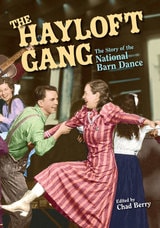
The Hayloft Gang
The Story of the National Barn DanceEdited by Chad Berry
University of Illinois Press, 2007
The Hayloft Gang draws on the colorful commentary of performers and former listeners to analyze the National Barn Dance, its audience, and its impact. Contributors trace the history of barn dance radio, explore the paradox of a foundational country music program broadcast from a major city, investigate notions of authenticity in the presentation of country music and entertainment, and delve into provocative issues raised by the barn dance phenomenon.
Contributors: Chad Berry, Michael T. Bertrand, Lisa Krissoff Boehm, Don Cusic, Wayne W. Daniel, Loyal Jones, Kristine M. McCusker, Stephen Parry, Susan Smulyan, Paul L. Tyler, and Michael Ann Williams.
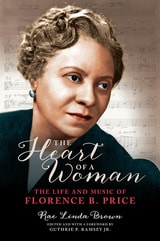
The Heart of a Woman
The Life and Music of Florence B. PriceRae Linda Brown. Edited and with a Foreword by Guthrie P. Ramsey Jr.
University of Illinois Press, 2020
Book Prize Winner of the International Alliance for Women in Music of the 2022 Pauline Alderman Awards for Outstanding Scholarship on Women in Music
The Heart of a Woman offers the first-ever biography of Florence B. Price, a composer whose career spanned both the Harlem and Chicago Renaissances, and the first African American woman to gain national recognition for her works.
Price's twenty-five years in Chicago formed the core of a working life that saw her create three hundred works in diverse genres, including symphonies and orchestral suites, art songs, vocal and choral music, and arrangements of spirituals. Through interviews and a wealth of material from public and private archives, Rae Linda Brown illuminates Price's major works while exploring the considerable depth of her achievement. Brown also traces the life of the extremely private individual from her childhood in Little Rock through her time at the New England Conservatory, her extensive teaching, and her struggles with racism, poverty, and professional jealousies. In addition, Brown provides musicians and scholars with dozens of musical examples.
The Honky Tonk on the Left
Progressive Thought in Country MusicMark Allan Jackson
University of Massachusetts Press, 2018
Bringing together a wide spectrum of cultural critics, The Honky Tonk on the Left takes on this conservative stereotype and reveals how progressive thought has permeated country music from its beginnings to the present day. The original essays in this collection analyze how diverse performers, including Fiddlin' John Carson, Webb Pierce, Loretta Lynn, Johnny Cash, O. B. McClinton, Garth Brooks, and Uncle Tupelo, have taken on such issues as government policies, gender roles, civil rights, prison reform, and labor unrest. Taking notice of the wrongs in their eras, these musicians worked to address them in song and action, often with strong support from fans.
In addition to the volume editor, this collection includes work by Gregory N. Reish, Peter La Chapelle, Stephanie Vander Wel, Charles L. Hughes, Ted Olson, Nadine Hubbs, Stephanie Shonekan, Stephen A. King, P. Renee Foster, Tressie McMillan Cottom, Travis D. Stimeling, and Jonathan Silverman.
The Hours Are Long, But the Pay Is Low
A Curious Life in Independent MusicRob Miller
University of Illinois Press, 2025
Rob Miller arrived in Chicago wanting to escape the music industry. In short order, he co-founded a trailblazing record label revered for its artist-first approach and punk take on country, roots, and so much else. Miller’s gonzo memoir follows a music fan’s odyssey through a singular account of Bloodshot Records, the Chicago scene, and thirty years as part of a community sustaining independent artists and businesses.
Hilarious and hundred-proof, The Hours Are Long, But the Pay Is Low delivers a warm-hearted yet clear-eyed account of loving and living music on the edge, in the trenches, and without apologies.
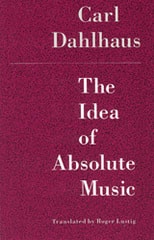
The Idea of Absolute Music
Carl Dahlhaus
University of Chicago Press, 1989
"Essential reading for anyone interested in the larger intellectual framework in which Romantic music found its place, a framework that to a remarkable degree has continued to shape our image of music."—Robert P. Morgan, Yale University
Carl Dahlhaus (1928-1989) is the author of a highly influential body of works on the foundations of music history and aesthetics.
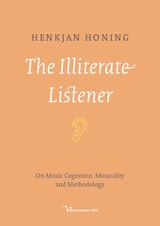
The Illiterate Listener
On Music Cognition, Musicality and MethodologyHenkjan Honing
Amsterdam University Press, 2011
In this essay Henkjan Honing makes a case for ‘illiterate listening’, the human ability to discern, interpret and appreciate musical nuances already from day one, long before a single word has been uttered, let alone conceived. It is the preverbal and preliterate stage that is dominated by musical listening.
See also the download version.
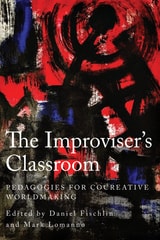
The Improviser's Classroom
Pedagogies for Cocreative WorldmakingEdited by Daniel Fischlin and Mark Lomanno
Temple University Press, 2024
Demonstrating how improvisation can inform scenes of teaching and learning, this volume also outlines how improvisatory techniques offer powerful, if not vital, tools for producing connection, creativity, accompaniment, reciprocity, meaningful revelation, and lifelong curiosity.
The Improviser's Classroom champions activist pedagogies and the public work essential for creating communities bound together by reciprocal care and equity.
Contributors: Sibongile Bhebhe, Judit Csobod, Michael Dessen, jashen edwards, Kate Galloway, Tomie Hahn, Petro Janse van Vuuren, Lauren Michelle Levesque, George Lipsitz, Rich Marsella, Tracy McMullen, Hafez Modirzadeh, Ed Sarath, Joe Sorbara, Jesse Stewart, Ellen Waterman, Carey West, and the editors
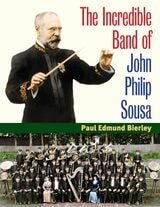
The Incredible Band of John Philip Sousa
Paul E. Bierley
University of Illinois Press, 2010
John Philip Sousa (1854-1932) is an American icon. Most famous for his military marches, the composer-bandmaster led a disciplined group of devoted musicians on numerous American tours and around the world, shaping a new cultural landscape. Paul E. Bierley documents every aspect of the "March King's" band: its history, its star performers, its appearances on recordings and radio, and the problems they faced on their 1911 trip around the world. Enhanced by more than 120 images and photographs, The Incredible Band of John Philip Sousa also contains six statistical appendixes detailing where the band played, a complete list of musicians, instrumentation of the band, program listings, and a discography
The Inspiration Machine
Computational Creativity in Poetry and JazzEitan Y. Wilf
University of Chicago Press, 2023
In The Inspiration Machine, Eitan Y. Wilf explores the transformative potentials that digital technology opens up for creative practice through three ethnographic cases, two with jazz musicians and one with a group of poets. At times dissatisfied with the limitations of human creativity, these artists do not turn to computerized algorithms merely to execute their preconceived ideas. Rather, they approach them as creative partners, delegating to them different degrees of agentive control and artistic decision-making in the hopes of finding inspiration in their output and thereby expanding their own creative horizons.
The algorithms these artists develop and use, however, remain rooted in and haunted by the specific social predicaments and human shortfalls that they were intended to overcome. Experiments in the digital thus hold an important lesson: although Wilf’s interlocutors returned from their adventures with computational creativity with modified, novel, and enriched capacities and predilections, they also gained a renewed appreciation for, and at times a desire to re-inhabit, non-digital creativity. In examining the potentials and pitfalls of seemingly autonomous digital technologies in the realm of art, Wilf shows that computational solutions to the real or imagined insufficiencies of human practice are best developed in relation to, rather than away from, the social and cultural contexts that gave rise to those insufficiencies, in the first place.

The Intellect Handbook of Popular Music Methodologies
Edited by Mike Dines, Shara Rambarran, and Gareth Dylan Smith
Intellect Books, 2025
The Intellect Handbook of Popular Music Methodologies attempts a comprehensive overview of methodological approaches within the field of popular music studies. Alongside contributions from key thinkers already established in popular music studies, the strength of the collection lies in its inclusion of many new and emerging writers in the field. Therefore, the collection incorporates a wide range of practitioners, pedagogues, and academics from across the disciplines, and thus draws from a diversity of methodological approaches. As a result, this will be the first comprehensive handbook of popular music methodologies.
The Italian Opera Singers in Mozart's Vienna
Dorothea Link
University of Illinois Press, 2022
Authoritative and insightful, The Italian Opera Singers in Mozart's Vienna offers a singular look at a musical milieu and a key to addressing the performance-practice problem of how to cast the Mozart roles today.
The Jazz Barn
Music Inn, the Berkshires, and the Place of Jazz in American LifeJohn Gennari
Brandeis University Press, 2025
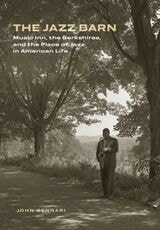
This is a book about what happened in the 1950s in a barn, an icehouse, and a greenhouse in the verdant Berkshire Hills of western Massachusetts. Against the backdrop of McCarthyism, the civil rights movement, the expansion of the Afro-Caribbean diaspora, and postwar cultural tourism, two New Yorkers bought part of a sprawling estate in Lenox, where they converted an old barn and other outbuildings into an inn that could host musical performances and seminars. The Berkshire Music Barn went on to host jazz greats like Duke Ellington, Dave Brubeck, and Billie Holiday, as well as jazz roundtables grounded in folkloric approaches to the music.
The Jazz Barn explores the cultural significance of venues like the Berkshire Music Barn and later the Lenox School of Jazz to tell a surprising story about race, culture, and place. John Gennari explores how a predominantly white New England town became a haven for African American musicians, and reveals the Berkshires as an important incubator not just of American literature and classical music but also of the Modern Jazz Quartet and Ornette Coleman’s “new thing.” The Berkshire Music Barn became a crucial space for the mainstreaming of jazz. By the late 1950s, the School of Jazz was an epicenter of the genre’s avant-garde.
Richly illustrated with the photographs of Clemens Kalischer among others, The Jazz Barn demonstrates that the locations where jazz is played and heard indelibly shape the music and its meanings.
The Jazz Republic
Music, Race, and American Culture in Weimar GermanyJonathan O. Wipplinger
University of Michigan Press, 2017
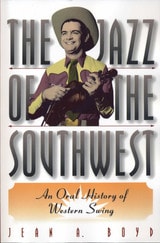
The Jazz of the Southwest
An Oral History of Western SwingBy Jean A. Boyd
University of Texas Press, 1998
They may wear cowboy hats and boots and sing about "faded love," but western swing musicians have always played jazz! From Bob Wills and the Texas Playboys to Asleep at the Wheel, western swing performers have played swing jazz on traditional country instruments, with all of the required elements of jazz, and some of the best solo improvisation ever heard.
In this book, Jean A. Boyd explores the origins and development of western swing as a vibrant current in the mainstream of jazz. She focuses in particular on the performers who made the music, drawing on personal interviews with some fifty living western swing musicians. From pioneers such as Cliff Bruner and Eldon Shamblin to current performers such as Johnny Gimble, the musicians make important connections between the big band swing jazz they heard on the radio and the western swing they created and played across the Southwest from Texas to California.
From this first-hand testimony, Boyd re-creates the world of western swing-the dance halls, recording studios, and live radio shows that broadcast the music to an enthusiastic listening audience. Although the performers typically came from the same rural roots that nurtured country music, their words make it clear that they considered themselves neither "hillbillies" nor "country pickers," but jazz musicians whose performance approach and repertory were no different from those of mainstream jazz. This important aspect of the western swing story has never been told before.
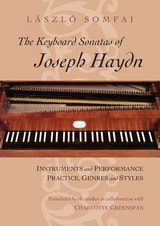
The Keyboard Sonatas of Joseph Haydn
Instruments and Performance Practice, Genres and StylesLászló Somfai
University of Chicago Press, 1995
Laszlo Somfai begins with a thorough study of Haydn's keyboard instruments and their development. After recommending instruments appropriate for modern use, he discusses performance practice and style, explains the peculiarities of Haydn's manuscripts in the context of eighteenth-century notation, and provides specific suggestions for playing ornaments, improvising, slurring, and dynamics. He also investigates Haydn's sonata genres within their historical context and discusses the problems of establishing a chronology of their composition. Finally, Somfai analyzes the organization and style of each musical form. The book includes an index listing the sonatas by date of first publication, and an extensive bibliography.
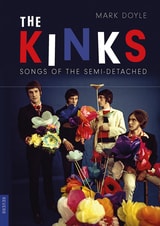
The Kinks
Songs of the Semi-DetachedMark Doyle
Reaktion Books, 2020
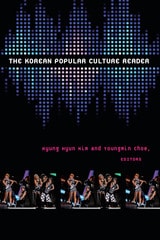
The Korean Popular Culture Reader
Kyung Hyun Kim and Youngmin Choe, eds.
Duke University Press, 2014
Contributors. Jung-hwan Cheon, Michelle Cho, Youngmin Choe, Steven Chung, Katarzyna J. Cwiertka, Stephen Epstein, Olga Fedorenko, Kelly Y. Jeong, Rachael Miyung Joo, Inkyu Kang, Kyu Hyun Kim, Kyung Hyun Kim, Pil Ho Kim, Boduerae Kwon, Regina Yung Lee, Sohl Lee, Jessica Likens, Roald Maliangkay, Youngju Ryu, Hyunjoon Shin, Min-Jung Son, James Turnbull, Travis Workman
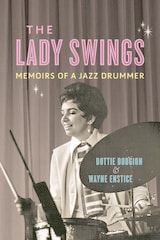
The Lady Swings
Memoirs of a Jazz DrummerDottie Dodgion and Wayne Enstice
University of Illinois Press, 2021
Vivid and always entertaining, The Lady Swings tells Dottie Dodgion's story with the same verve and straight-ahead honesty that powered her playing.
A Variety Best Music Book of 2021
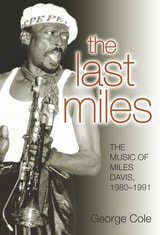
The Last Miles
The Music of Miles Davis, 1980-1991George Cole
University of Michigan Press, 2007
“Cole does for Miles’s late work what Ian MacDonald’s Revolution in the Head does for the Beatles, examining each album in meticulous detail.”
—Time Out
“As with any good musical biography, Cole . . . made me think again about those albums such as Siesta, You’re Under Arrest, and The Man with the Horn that are now stashed in my attic.”
—London Times
“In the flurry of books since [Miles Davis’s] death, none has dealt in depth with the music of this period. Music writer George Cole fills this gap. . . . a rich and rewarding read.”
—Gazette (Montreal)
“A fascinating book.”
—Mojo
“A singular look into the last stage of Davis’s long, somewhat checkered career gained from various sources, which at the same time gives a picture of the modern music business.”
—Midwest Book Review
“There are large chunks of fresh material here. . . . Fill[s] in quite a few gaps and dismisses blanket condemnations of [Miles’s] pop phase.”
—Jazzwise
“Thank you for telling it like it was!”
—Randy Hall, singer and guitarist
“Very moving, emotional material.”
—Gordon Meltzer, Miles’s last road manager and executive producer of Doo-Bop
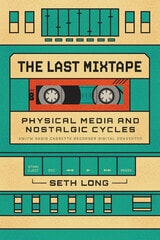
The Last Mixtape
Physical Media and Nostalgic CyclesSeth Long
University of Chicago Press, 2025
Obsolescence makes the heart grow fonder, at least in the case of the mixtape. Not all technologies are so lucky. Some (say, wax cylinders) fade almost completely from cultural memory. A lucky few pass into metaphor: we still “hang up” our smartphones, “cut” film, and “patch” computer code. As digital streaming completes the obsolescence of physical media, what will become of the humble cassette?
In The Last Mixtape, Seth Long offers a microhistory of music curation, anchored by the cassette, from which he explores the meanings of obsolescence, ownership, nostalgia, and the speed of cultural change. A moving meditation on our relationship with music, memory, and curation in the digital century, Long ultimately calls for a return to the media ecology represented by the mixtape: a world in which media is cheap and abundant but tactile and meaningfully engaged.

The Late Great Johnny Ace and the Transition from R&B to Rock 'n' Roll
James M. Salem
University of Illinois Press, 1999
Johnny Ace's crooning style and stirring ballads made him the first postwar African American artist to cross over to a white audience. After a string of R&B hits, Ace released the million-selling "Pledging My Love," a song headed to the top of the charts when the singer accidentally shot himself in his dressing room between sets at a show.
James M. Salem captures the enigmatic, captivating, and influential R&B legend. Venturing from raucous Beale Street to Houston's vibrant Fourth Ward, Salem places Johnny Ace within a multifaceted world of postwar rhythm and blues that included B. B. King, Johnny Otis, Big Mama Thornton, and Gatemouth Brown. Salem also examines how entrepreneur Don D. Robey and his wife Evelyn Johnson promoted Ace to the top of the charts. Yet fame, as always, had a price. Ace's tours on the Chitlin' Circuit meant endless one-night stands and a grueling schedule that kept him on the road 340 days per year.
Comprehensive and filled with anecdotes, The Late Great Johnny Ace and the Transition from R&B to Rock 'n' Roll tells the story of the star who fused black and white styles and changed American popular music forever.
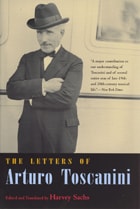
The Letters of Arturo Toscanini
Arturo Toscanini
University of Chicago Press, 2006
“This is a major contribution to our understanding of Toscanini and of several entire eras of late nineteenth- and twentieth-century musical life, especially the almost improvisatory looseness of opera in Italy, the glamour of European festivals, and the concert life of the United States. It’s also a wonderful, sometimes downright salacious read.”—New York Times
“Toscanini’s large, cranky humanity comes alive throughout his letters, as it does in his best recordings.”—New York Review of Books
“Edited with scrupulous care and wide-ranging erudition.”—Wall Street Journal
“Sachs has served the conductor well . . . by editing this generously annotated and unprecedentedly revealing collection of letters that were written, usually in haste and often in fury, over the course of seventy years.”—Washington Post
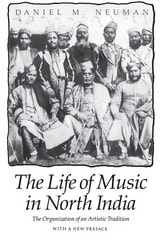
The Life of Music in North India
The Organization of an Artistic TraditionDaniel M. Neuman
University of Chicago Press, 1990
Drawing primarily from fieldwork performed in Delhi in 1969-71—from interviewing musicians, learning and performing on the Indian fiddle, and speaking with music connoisseurs—Neuman examines the cultural and social matrix in which Hindustani music is nurtured, listened and attended to, cultivated, and consumed in contemporary India. Through his interpretation of the impact that modern media, educational institutions, and public performances exert on the music and musicians, Neuman highlights the drama of a great musical tradition engaging a changing world, and presents the adaptive strategies its practitioners employ to practice their art. His work has gained the distinction of introducing a new approach to research on Indian music, and appears in this edition with a new preface by the author.
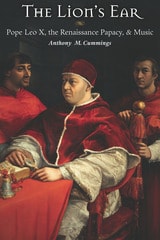
The Lion's Ear
Pope Leo X, the Renaissance Papacy, and MusicAnthony M. Cummings
University of Michigan Press, 2022
For centuries, the Renaissance papacy has been celebrated for its generous patronage of the arts. Pope Leo X, son of the legendary Lorenzo "the Magnificent" de'Medici, is widely understood to be one of the greatest patrons of music in European history, and one of the emblematic figures of the Italian Renaissance.
The Lion's Ear is the first full-length scholarly treatment of the musical patronage of a Renaissance pope and provides an evocative picture of the musical life of the pre-Reformation papacy. The various uses of music in early modern Rome---music for public festivals, such as carnival; for the liturgical ceremonies of the Sistine Chapel; to accompany daily dining and festive banqueting; for the celebration of saints' feast days; and for theatrical performances---are vividly described and analyzed and give a detailed understanding of the place of music in the life of one of its most important early modern benefactors.
Anthony M. Cummings takes an interdisciplinary approach to his subject matter, bringing together the history of music, art, philosophy, and ecclesiastical history to locate the music in its broadest and deepest contexts. Through materials such as diplomatic correspondence, the book aims to reconstruct the atmosphere of the musical life in Leo X's court, presenting the subject matter in a way that will appeal to scholars and students of musicology and early modern history.
Art historians, ecclesiastical historians, and specialists from many other disciplines have long produced scholarly findings useful for understanding the pre-Reformation papacy, its alliance with the Italian Renaissance, and the extraordinary artistic legacy of that alliance. Anthony M. Cummings complements that scholarship with his thorough and imaginative account of music's relationship with that vibrant and fascinating culture, the first by a specialist in the musical life of early modern Europe.
The Lived Experience of Improvisation
In Music, Learning and LifeSimon Rose
Intellect Books, 2017
The Lived Experience of Improvisation draws on an analysis of interviews with highly regarded improvisers, including Roscoe Mitchell, Pauline Oliveros, and George Lewis. Simon Rose also exploits his own experience as a musician and teacher, making a compelling case for bringing back improvisation from the margins. He argues that improvisation is a pervasive aspect of being human and that it should be at the heart of our teaching and understanding of the world.
The Lost Paradise
Andalusi Music in Urban North AfricaJonathan Glasser
University of Chicago Press, 2016
Through a historical and ethnographic account of the Andalusi music of Algiers, Tlemcen, and their Algerian and Moroccan borderlands since the end of the nineteenth century, Glasser shows how anxiety about Andalusi music’s disappearance has emerged from within the practice itself and come to be central to its ethos. The result is a sophisticated examination of musical survival and transformation that is also a meditation on temporality, labor, colonialism and nationalism, and the relationship of the living to the dead.

The Lucca Choirbook
Lucca, Archivio di Stato, MS 238; Lucca, Archivio Arcivescovile, MS 97; Pisa, Archivo Arcivescovile, Biblioteca Maffi, Cartella 11/IIIEdited and with an Introduction and Inventory by Reinhard Strohm
University of Chicago Press, 2009
More than forty years ago in the state archives of Lucca, Italy, musicologist Reinhard Strohm noticed that bindings on some of the books were unusual: they consisted of the pages of a centuries-old music manuscript. In the following years, Strohm worked with the archivists to remove these leaves and reassemble as much as possible of the original manuscript, a major cultural recovery now known as The Lucca Choirbook.
The recovered volume comprises what remains of a gigantic cathedral codex commissioned in Bruges around 1463 and containing English, Franco-Flemish, and Italian sacred music of the fifteenth century—including works by the celebrated composers Guillaume Du Fay and Henricus Isaac.
This facsimile of the choirbook includes all the known leaves, ordered according to their proper placement in the original codex. In the introduction, Strohm tells the fascinating story of this choirbook, identifying its early users and reconstructing its travel from Bruges to Lucca.
The Lucidarium of Marchetto of Padua
A Critical Edition, Translation, and CommentaryEdited by Jan W. Herlinger
University of Chicago Press, 1985
"An almost archetypal example of unpretentious and honest scholarship."—Alejandro Enrique Planchart, Journal of the American Musicological Society
The Madrigals of Michelangelo Rossi
Michelangelo Rossi
University of Chicago Press, 2002
In his extensive introduction, Mann considers in detail the biographical, cultural, and stylistic milieu in which the madrigals were written. The scholarly edition of the music, based on a thorough examination of all the known sources, includes a complete critical commentary.
Mann's work on Rossi's madrigals has already helped revive interest in them. In 1998 a CD recording of Book I appeared on the Virgin label, performed by Il Complesso Barocco under the direction of Alan Curtis, and based on this critical edition.
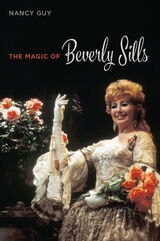
The Magic of Beverly Sills
Nancy Guy
University of Illinois Press, 2015
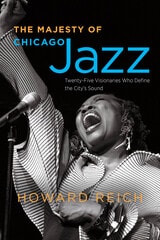
The Majesty of Chicago Jazz
Twenty-Five Visionaries Who Define the City's SoundHoward Reich
University of Chicago Press, 2026
The first book to trace the vast influence of Chicago jazz from its origins to today—from Louis Armstrong and Jelly Roll Morton to Anita O’Day, Herbie Hancock, and the AACM.
Author and Chicago native Howard Reich gives readers a front-row seat to the history of Chicago jazz as it roared forth in jazz clubs, concert halls, and festivals. Reich covered Chicago jazz for more than thirty years as the Chicago Tribune’s staff critic, and in this collection, he argues that jazz as an art form is inconceivable without Chicago. Carefully choosing from among his thousands of articles on jazz, Reich highlights twenty-five of the most important Chicago jazz artists who pushed the art form forward.
The Majesty of Chicago Jazz begins with two New Orleans visionaries who achieved their artistic pinnacles in Chicago in the Roaring Twenties: Jelly Roll Morton and Louis Armstrong. In the decades that followed, Chicago produced an uninterrupted line of innovators: revolutionaries Ahmad Jamal and Sun Ra, iconoclasts Von Freeman and Fred Anderson, populists Herbie Hancock and Ramsey Lewis, chameleons Patricia Barber and Kurt Elling, and the breakthrough band of the Association for the Advancement of Creative Musicians (AACM), among others. Reich offers two pieces on each of the book’s twenty-five visionaries, including profiles, reviews, appreciations, and obituaries. The book concludes with a beginner-friendly discography, perfect for those looking to listen along.
The Majesty of Chicago Jazz is captivating for jazz newcomers and aficionados alike—all are guaranteed to learn something surprising here. With a musician’s ear and a journalist’s expertise, Reich offers listeners a valuable guide to the groundbreaking jazz that has come out of Chicago, a city that remains a fertile breeding ground for musical experimentation.
The Makers of the Sacred Harp
David Warren Steel with Richard H. Hulan
University of Illinois Press, 2010
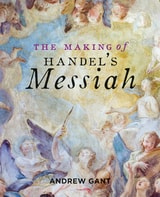
The Making of Handel’s Messiah
Andrew Gant
Bodleian Library Publishing, 2020
Placing Handel’s best-known work in the context of its times, this vivid account charts the composer’s working relationship with his librettist, the gifted but demanding Charles Jennens, and looks at Handel’s varied and evolving company of singers together with his royal patronage. Through examination of the original composition manuscript and Handel’s own conducting score, held in the Bodleian Library’s collection, The Making of Handel’s Messiah sheds new light on the piece’s construction, performance, and reception. Exploring the complex history of one of the most successful pieces of choral music of all time, this volume examines issues around the performance of sacred texts in a non-sacred context, particularly Handel’s collaboration with the men and boys of the Chapel Royal. This book also explores the later reception and performance history of the piece, including the festival performance attended by Haydn, the massed-choir tradition of the Victorian period, and today’s “come-and-sing” events.
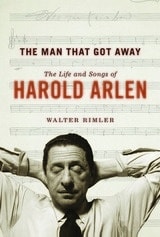
The Man That Got Away
The Life and Songs of Harold ArlenWalter Rimler
University of Illinois Press, 2018
A cantor's son, Arlen believed his music was from a place outside himself, a place that also sent tragedy. When his wife became mentally ill and was institutionalized he turned to alcohol. It nearly killed him. But the beautiful songs kept coming: "Blues in the Night," "My Shining Hour," "Come Rain or Come Shine," and "The Man That Got Away."
Walter Rimler drew on interviews with friends and associates of Arlen and on newly available archives to write this intimate portrait of a genius whose work is a pillar of the Great American Songbook.
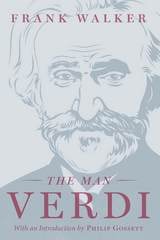
The Man Verdi
Frank Walker
University of Chicago Press, 1982
“Walker focuses on some of the more significant people in Verdi’s life and carefully scrutinizes his relationships with them. His wife, Giuseppina Strepponi; his student and amanuensis, Emanuele Muzio; the conductor who first fully understood Verdi’s mature art, Angelo Mariani; the great prima donna, Teresa Stolz; the incomparable librettist and friend of his old age, Arrigo Boito—each passes before our eyes in Walker’s meticulous reconstruction. As we learn more about them, we learn more about Verdi. We see him through the eyes of his closest friends, we watch his daily activities, his daily thoughts, his habits, his warmth, his domestic tyranny. The myth dissolves and a human being stands before us.”—Philip Gossett, from the introduction
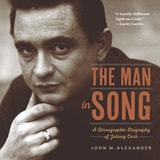
The Man in Song
A Discographic Biography of Johnny CashJohn M. Alexander
University of Arkansas Press, 2018
There have been many books written about Johnny Cash, but The Man in Song is the first to examine Cash’s incredible life through the lens of the songs he wrote and recorded. Music journalist and historian John Alexander has drawn on decades of studying Cash’s music and life, from his difficult depression-era Arkansas childhood through his death in 2003, to tell a life story through songs familiar and obscure. In discovering why Cash wrote a given song or chose to record it, Alexander introduces readers anew to a man whose primary consideration of any song was the difference music makes in people’s lives, and not whether the song would become a hit.
The hits came, of course. Johnny Cash sold more than fifty million albums in forty years, and he holds the distinction of being the only performer inducted into the Rock and Roll Hall of Fame, the Country Music Hall of Fame, the Songwriters Hall of Fame, and the Gospel Music Hall of Fame. The Man in Song connects treasured songs to an incredible life. It explores the intertwined experience and creativity of childhood trauma. It rifles through the discography of a life: Cash’s work with the Tennessee Two at Sam Phillips’s Sun Studios, the unique concept albums Cash recorded for Columbia Records, the spiritual songs, the albums recorded live at prisons, songs about the love of his life, June Carter Cash, songs about murder and death and addiction, songs about ramblers, and even silly songs.
Appropriate for both serious country and folk music enthusiasts and those just learning about this musical legend, The Man in Song will appeal to a fan base spanning generations. Here is a biography for those who first heard “I Walk the Line” in 1956, a younger generation who discovered Cash through songs like his cover of Trent Reznor’s “Hurt,” and everyone in between.
The Many Meanings of Mina
Popular Music Stardom in Post-War ItalyRachel Haworth
Intellect Books, 2022
Mina—or Anna Maria Mazzini—is an Italian popular music icon whose sixty-year career has come to represent a range of diverse meanings. She is one of the best-loved popular music stars in Italy and abroad, with a large fan base across Europe, Asia, and South America. Her career began in the late 1950s and reached its peak in the 1960s and 1970s. Despite having retired from public appearances in the late 1970s, Mina remains iconic to this day. Her star status is exemplary of how stardom is constructed and what it reveals about the society from which it springs. This book explores Mina’s star image and iconic status, tracing the process by which she has come to embody a revelation of the values and ideals of contemporary Italian society.
The Meaning of Music
Leo Samama
Amsterdam University Press, 2016
Musician Leo Samama discusses these and many other questions while shaping a vibrant picture of music's importance in human lives both past and present. What is remarkable is that music is recognised almost universally as a type of language that we can use to wordlessly communicate. We can hardly shut ourselves off from music, and considering its primal role in our lives, it comes as no surprise that few would ever want to. Able to transverse borders and appeal to the most disparate of individuals, music is both a tool and a gift, and as Samama shows, a unifying thread running throughout the cultural history of mankind.