Results by title
704 books match the query 'Political Process' and 156 start with t
The Propaganda Model Today
Filtering Perception and AwarenessJoan Pedro-Carañana, Daniel Broudy and Jeffery Klaehn
University of Westminster Press, 2018
While the individual elements of the propaganda system (or filters) identified by the Propaganda Model (PM) – ownership, advertising, sources, flak and anti-communism – have previously been the focus of much scholarly attention, their systematisation in a model, empirical corroboration and historicisation have made the PM a useful tool for media analysis across cultural and geographical boundaries.
Despite the wealth of scholarly research Herman and Chomsky’s work has set into motion over the past decades, the PM has been subjected to marginalisation, poorly informed critiques and misrepresentations. Interestingly, while the PM enables researchers to form discerning predictions as regards corporate media performance, Herman and Chomsky had further predicted that the PM itself would meet with such marginalisation and contempt.
In current theoretical and empirical studies of mass media performance, uses of the PM continue, nonetheless, to yield important insights into the workings of political and economic power in society, due in large measure to the model’s considerable explanatory power.

The Provisional IRA
From Insurrection to ParliamentTommy McKearney
Pluto Press, 2011
This book analyses the underlying reasons behind the formation of the Provisional Irish Republican Army (IRA), its development, where this current in Irish republicanism is at present and its prospects for the future.
Tommy McKearney, a former IRA member who was part of the 1980 hunger strike, challenges the misconception that the Provisional IRA was only, or even wholly, about ending partition and uniting Ireland. He argues that while these objectives were always the core and headline demands of the organisation, opposition to the old Northern Ireland state was a major dynamic for the IRA’s armed campaign. As he explores the makeup and strategy of the IRA he is not uncritical, examining alternative options available to the movement at different periods, arguing that its inability to develop a clear socialist programme has limited its effectiveness and reach.
This authoritative and engaging history provides a fascinating insight into the workings and dynamics of a modern resistance movement.
The Public Service Media and Public Service Internet Manifesto
Christian Fuchs and Klaus Unterberger
University of Westminster Press, 2021
This book presents the collectively authored Public Service Media and Public Service Internet Manifesto and accompanying materials.The Internet and the media landscape are broken. The dominant commercial Internet platforms endanger democracy. They have created a communications landscape overwhelmed by surveillance, advertising, fake news, hate speech, conspiracy theories, and algorithmic politics. Commercial Internet platforms have harmed citizens, users, everyday life, and society. Democracy and digital democracy require Public Service Media. A democracy-enhancing Internet requires Public Service Media becoming Public Service Internet platforms – an Internet of the public, by the public, and for the public; an Internet that advances instead of threatens democracy and the public sphere. The Public Service Internet is based on Internet platforms operated by a variety of Public Service Media, taking the public service remit into the digital age. The Public Service Internet provides opportunities for public debate, participation, and the advancement of social cohesion.
Accompanying the Manifesto are materials that informed its creation: Christian Fuchs’ report of the results of the Public Service Media/Internet Survey, the written version of Graham Murdock’s online talk on public service media today, and a summary of an ecomitee.com discussion of the Manifesto’s foundations.
The Manifesto can be signed by visiting http://bit.ly/signPSManifesto
The Quality of Divided Democracies
Minority Inclusion, Exclusion, and Representation in the New EuropeLicia Cianetti
University of Michigan Press, 2019
The Race to 270
The Electoral College and the Campaign Strategies of 2000 and 2004Daron R. Shaw
University of Chicago Press, 2006
The Electoral College has played an important role in presidential politics since our nation’s founding, but surprisingly little information exists about precisely how it affects campaign strategy. Daron R. Shaw, a scholar who also worked as a strategist in both Bush-Cheney campaigns, has written the first book to go inside the past two presidential elections and reveal how the race to 270 was won—and lost.
Shaw’s nonpartisan study lays out how both the Democrats and the Republicans developed strategies to win decisive electoral votes by targeting specific states and media markets. Drawing on his own experience with Republican battle plans, candidate schedules, and advertising purchases—plus key contacts in the Gore and Kerry camps—Shaw goes on to show that both sides used information on weekly shifts in candidate support to reallocate media buys and schedule appearances. Most importantly, he uses strikingly original research to prove that these carefully constructed plans significantly affected voters’ preferences and opinions—not in huge numbers, but enough to shift critical votes in key battlegrounds.
Bridging the gap between those who study campaigns and those who conduct them, The Race to 270 will provide political scientists and practitioners alike with fresh insights about the new strategies that stem from one of our oldest institutions.
The Racial Logic of Politics
Asian Americans and Party CompetitionThomas P. Kim
Temple University Press, 2006
The Reasoning Voter
Communication and Persuasion in Presidential CampaignsSamuel L. Popkin
University of Chicago Press, 1991
"Professor Popkin has brought V.O. Key's contention that voters are rational into the media age. This book is a useful rebuttal to the cynical view that politics is a wholly contrived business, in which unscrupulous operatives manipulate the emotions of distrustful but gullible citizens. The reality, he shows, is both more complex and more hopeful than that."—David S. Broder, The Washington Post
The Regional Roots of Russia's Political Regime
William M. Reisinger and Bryon J. Moraski
University of Michigan Press, 2017
By analyzing successive federal elections, Reisinger and Moraski show that regions that led the way in delivering votes in Putin’s favor were those that had been both more independent and more authoritarian during the Yeltsin era. These authoritarian enclaves under Yeltsin became models of behavior in the Putin regime, which prized deferential election results. Other regions were quick to follow this lead, functioning during Putin’s ascendancy as “swing states.” Still, Russia’s regimes continued to exhibit regime diversity, with democratic enclaves resisting the push to become cogs in the Kremlin’s electoral authoritarian wheel.
While motivated by scholarly questions about authoritarianism, democracy, and the influence of subnational forces on national regime trajectories, Reisinger and Moraski also consider policy-relevant questions.
The Republican Party of Texas
A Political HistoryBy Wayne Thorburn
University of Texas Press, 2021
On July 4, 1867, a group of men assembled in Houston to establish the Republican Party of Texas. Combatting entrenched statewide support for the Democratic Party and their own internal divisions, Republicans struggled to gain a foothold in the Lone Star State, which had sided with the Confederacy and aligned with the Democratic platform. In The Republican Party of Texas, Wayne Thorburn, former executive director of the Texas GOP, chronicles over one hundred and fifty years of the defeats and victories of the party that became the dominant political force in Texas in the modern era.
Thorburn documents the organizational structure of the Texas GOP, drawing attention to prominent names, such as Harry Wurzbach and George W. Bush, alongside lesser-known community leaders who bolstered local support. The 1960s and 1970s proved a watershed era for Texas Republicans as they shored up ideological divides and elected the first Republican governor and more state senators and congressional representatives than ever before. From decisions about candidates and shifting allegiances and political stances, to race-based divisions and strategic cooperation with leaders in the Democratic Party, Thorburn unearths the development of the GOP in Texas to understand the unique Texan conservatism that prevails today.
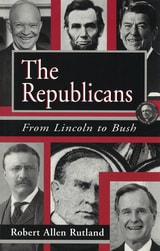
The Republicans
From Lincoln to BushRobert Allen Rutland
University of Missouri Press, 1996
The Republican party has always been fascinating to those who subscribe to its principles, as well as to those who take an alternative stand on the issues. In The Republicans: From Lincoln to Bush, Robert Allen Rutland has brought a clear and concise understanding of this political party to the general reader. The book is a lucid and fast-paced overview of the Republican party from its beginnings in the 1850s through the 1994 congressional elections, which saw the Democratic domination of the House and Senate come to an abrupt end.
In a crisp, highly readable style, Rutland begins by explaining how the "obnoxious" Kansas-Nebraska Act of 1854 overturned the Missouri Compromise, inflamed the North, and caused the collapse of the Whig and American parties. The result was the birth of the Republican party, whose purpose was to oppose the Democrats and stop the spread of slavery. Abraham Lincoln was elected the first Republican president in 1860.
The Republicans suggests that a major shift in voting strength took place twice during the twentieth century, first in the New Deal years, and again after 1968 when the GOP made an appeal to southern voters and finally took control of the area that had previously been dominated by the Democrats. With the 1980 election of Ronald Reagan as the fortieth president of the United States, the Republicans gained support from many first-time voters, middle-class whites, and labor unions-- groups not previously expected to vote Republican. In the companion volume, The Democrats: From Jefferson to Clinton, Rutland provides an honest and straightforward assessment of the strengths and weaknesses of Democratic presidents. Here he presents an evenhanded look at the good and not-so-good Republicans. By skillfully using stories and anecdotes from various administrations to enliven this narrative of political history, Rutland gives Republicans and Democrats alike a deeper appreciation for the two-party system.
The Responsibilities of Democracy
John Major and Nick Clegg
Haus Publishing, 2019
Amid pressing questions about the nature and limits of democracy, both in Britain and beyond, The Responsibilities of Democracy provides a clear-eyed perspective shared by two former politicians. Two central figures of the British political establishment, John Major and Nick Clegg, share their thoughts on where democracy is heading and how it can survive in the twenty-first century. Offering his perspective as a former prime minister, Major writes of the qualities on which a healthy democracy depends and expresses his deep concerns about the declining decorum of political exchange. Clegg brings a counter-perspective in discussing the ways in which political language has always involved trading insults and argues that echo chambers, although now more sophisticated, are nothing new. Compromise, Clegg insists, is not betrayal, but is instead the very substance of our politics and our democracy. The Responsibilities of Democracy explores the overall health of UK democracy, giving a balanced analysis of its values and flaws. It is also a clarion call to the electorate and politicians to nurture and protect the precious values on which democracy depends.
The Rise of Trump
America's Authoritarian SpringMatthew C. MacWilliams
Amherst College Press, 2016
The Rise of the West in Presidential Elections
Jennifer L Robinson
University of Utah Press, 2010
The Rise of the West in Presidential Elections explores the changing role of the region in national elections. The prominence of Nevada as an early caucus state and Denver acting as the host city of the 2008 Democratic National Convention, as well as increased candidate visitation and media expenditure, point to the rising importance of the region, an importance that political candidates will increasingly need to recognize. The book examines the political advantages and barriers to the creation of a regional primary for western states, a move that could further change the influence of the West on the national agenda and highlight western issues and values.
The contributors to The Rise of the West in Presidential Elections analyze the process of nominating presidential candidates, review the issues that make western states a united region unique in the political process, and explore the changing political dynamics in the nation that enable these changes. The book will be of interest to every citizen looking to learn more about the primary process, as well as to the political junkie more focused on the nuances of political maneuvering between states jockeying for position at the front of the election process.
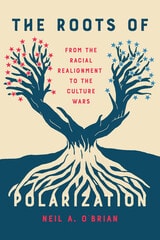
The Roots of Polarization
From the Racial Realignment to the Culture WarsNeil A. O'Brian
University of Chicago Press, 2024
A deeply researched account of how battles over civil rights in the 1960s shaped today’s partisan culture wars.
In the late twentieth century, gay rights, immigration, gun control, and abortion debates all burst onto the political scene, scrambling the parties and polarizing the electorate. Neil A. O’Brian traces the origins of today’s political divide on these issues to the 1960s when Democrats and Republicans split over civil rights. It was this partisan polarization over race, he argues, that subsequently shaped partisan fault lines on other culture war issues that persist to this day.
Using public opinion data dating to the 1930s, O’Brian shows that attitudes about civil rights were already linked with a range of other culture war beliefs decades before the parties split on these issues—and much earlier than previous scholarship realized. Challenging a common understanding of partisan polarization as an elite-led phenomenon, The Roots of Polarization argues politicians and interest groups, jockeying for power in the changing party system, seized on these preexisting connections in the mass public to build the parties’ contemporary coalitions.
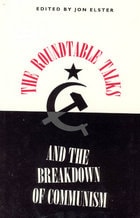
The Roundtable Talks and the Breakdown of Communism
Edited by Jon Elster
University of Chicago Press, 1996
These essays capture the historical circumstances of these countries—their traditions, customs, and the balance of influence between competing factions—that often took precedence over constitutional ideals. In five country-specific reports, senior scholars provide detailed accounts of the talks in Bulgaria, Poland, Hungary, Czechoslovakia, and the German Democratic Republic. Also included is an essay on the political factors underlying the failure of negotiations between reform groups and the Chinese regime, providing an illuminating counterpoint to the path taken in Eastern Europe.
This book is an invaluable resource for scholars of constitutional design and democratization and for specialists in Eastern Europe.

The Roundtable Talks of 1989
The Genesis of Hungarian DemocracyAndrás Bozóki
Central European University Press, 2002
This is the first book in English which provides comprehensive analysis and documentary history on the Roundtable talks, the major event of the “negotiated revolution” of Hungary. These negotiations occurred during the summer months of 1989 between the representatives of the Communist Party, the Opposition Roundtable, and the so-called Third Side (which brought some pro-Communist satellite organizations together).
The authors offer much more than just a detailed account on the negotiations: they also put the process of constitutional revolution into a comparative and historical perspective. They believe that the Roundtable Talks amounted to much more than just a sideshow and in fact they constituted the hub of the revolutionary transformation.
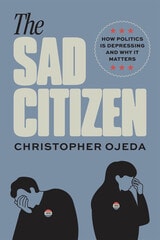
The Sad Citizen
How Politics Is Depressing and Why It MattersChristopher Ojeda
University of Chicago Press, 2025
For many citizens, politics is depressing. How has this come to be the norm? And, how is it influencing democracy?
From rising polarization to climate change, today’s politics are leaving many Western democracies in the throes of malaise. While anger, anxiety, and fear are loud emotions that powerfully activate voters, depression is quiet, demobilizing, and less visible as a result. Yet its pervasiveness is cause for concern: after all, democracy should empower citizens.
In The Sad Citizen, Christopher Ojeda draws on wide-ranging data from the United States and beyond to explain how politics is depressing, why this matters, and what we can do about it. Integrating insights from political science, sociology, psychology, and other fields, The Sad Citizen exposes the unhappy underbelly of contemporary politics and offers fresh ideas to strengthen democracy and help citizens cope with the stress of politics.
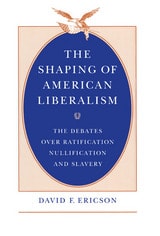
The Shaping of American Liberalism
The Debates over Ratification, Nullification, and SlaveryDavid F. Ericson
University of Chicago Press, 1993
Focusing on three critical debates in American history—the debate between Anti-Federalists and Federalists over the ratification of the Constitution; the debate between the national republicans and the states-rights republicans over the nullification of the tariff; and the Lincoln-Douglas debates over slavery and pluralist democracy—Ericson shows that republicanism, rather than being opposed to liberalism, is in fact an offshoot of it. His descriptions of republicanism and pluralism represent the poles of an evolving tradition of liberal ideas in America: the former championing the claims of the public sphere, general welfare, and civic virtue; the latter protecting the rights of the individual to liberty, property, and privacy.
Republicanism and pluralism are therefore more properly understood as two sets of competing ideas that evolved from common roots. Ericson concludes that although republican themes persist in American politics, the profound transformations brought about by the Civil War made the ascendancy of pluralism virtually inevitable.
This highly original discussion of the relation between liberalism and republicanism—the central concern of much of the recent scholarship in American political thought—will be important reading for those interested in American politics, history, and culture.

The Sit-Ins
Protest and Legal Change in the Civil Rights EraChristopher W. Schmidt
University of Chicago Press, 2018
The Sit-Ins tells the story of the student lunch counter protests and the national debate they sparked over the meaning of the constitutional right of all Americans to equal protection of the law. Christopher W. Schmidt describes how behind the now-iconic scenes of African American college students sitting in quiet defiance at “whites only” lunch counters lies a series of underappreciated legal dilemmas—about the meaning of the Constitution, the capacity of legal institutions to remedy different forms of injustice, and the relationship between legal reform and social change. The students’ actions initiated a national conversation over whether the Constitution’s equal protection clause extended to the activities of private businesses that served the general public. The courts, the traditional focal point for accounts of constitutional disputes, played an important but ultimately secondary role in this story. The great victory of the sit-in movement came not in the Supreme Court, but in Congress, with the passage of the Civil Rights Act of 1964, landmark legislation that recognized the right African American students had claimed for themselves four years earlier. The Sit-Ins invites a broader understanding of how Americans contest and construct the meaning of their Constitution.
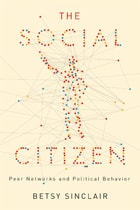
The Social Citizen
Peer Networks and Political BehaviorBetsy Sinclair
University of Chicago Press, 2012
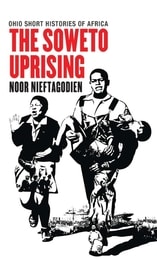
The Soweto Uprising
Noor Nieftagodien
Ohio University Press, 2015
The Soweto uprising was a true turning point in South Africa’s history. Even to contemporaries, it seemed to mark the beginning of the end of apartheid. This compelling book examines both the underlying causes and the immediate factors that led to this watershed event. It looks at the crucial roles of Black Consciousness ideology and nascent school-based organizations in shaping the character and form of the revolt. What began as a peaceful and coordinated demonstration rapidly turned into a violent protest when police opened fire on students. This short history explains the uprising and its aftermath from the perspective of its main participants, the youth, by drawing on a rich body of oral histories.

The Spectacle of Women
Imagery of the Suffrage Campaign 1907-14Lisa Tickner
University of Chicago Press, 1988
The Strategy of Campaigning
Lessons from Ronald Reagan and Boris YeltsinKiron K. Skinner, Serhiy Kudelia, Bruce Bueno de Mesquita, and Condoleezza Rice
University of Michigan Press, 2010
The Strategy of Campaigning explores the political careers of Ronald Reagan and Boris Yeltsin, two of the most galvanizing and often controversial political figures of our time. Both men overcame defeat early in their political careers and rose to the highest elected offices in their respective countries.
The authors demonstrate how and why Reagan and Yeltsin succeeded in their political aspirations, despite—or perhaps because of—their apparent “policy extremism”: that is, their advocacy of policy positions far from the mainstream. The book analyzes the viability of policy extremism as a political strategy that enables candidates to forge new coalitions and outflank conventional political allegiances.
Bruce Bueno de Mesquita is Julius Silver Professor and Director of the Alexander Hamilton Center for Political Economy at New York University and a Senior Fellow at the Hoover Institution.
Condoleezza Rice is on a leave of absence from Stanford University, where she was a Professor of Political Science and a Senior Fellow at the Hoover Institution. She is currently serving as U.S. Secretary of State.
The Struggle for Hegemony in Pakistan
Fear, Desire and Revolutionary HorizonsAasim Sajjad-Akhtar
Pluto Press, 2022
The collapse of neoliberal hegemony in the western world following the financial crash of 2007-8 and subsequent rise of right-wing authoritarian personalities has been described as a crisis of 'the political' in western societies. But the crisis must be seen as global, rather than focusing on the west alone.
Pakistan is experiencing rapid financialization and rapacious capture of natural resources, overseen by the country's military establishment and state bureaucracy. Under their watch, trading and manufacturing interests, property developers and a plethora of mafias have monopolized the provision of basic needs like housing, water and food, whilst also feeding conspicuous consumption by a captive middle-class.
Aasim Sajjad-Akhtar explores neoliberal Pakistan, looking at digital technology in enhancing mass surveillance, commodification and atomization, as well as resistance to the state and capital. Presenting a new interpretation of our global political-economic moment, he argues for an emancipatory political horizon embodied by the 'classless' subject.
The Struggle for Water
Politics, Rationality, and Identity in the American SouthwestWendy Nelson Espeland
University of Chicago Press, 1998
In the 1970s, the three groups most intimately involved in the Orme Dam—younger Bureau of Reclamation employees committed to "rational choice" decision making, older Bureau engineers committed to the dam, and the Yavapai community—all found themselves and their values transformed by their struggles. Wendy Nelson Espeland lays bare the relations between interests and identities that emerged during the conflict, creating a contemporary tale of power and colonization, bureaucracies and democratic practice, that asks the crucial question of what it means to be "rational."
The Timeline of Presidential Elections
How Campaigns Do (and Do Not) MatterRobert S. Erikson and Christopher Wlezien
University of Chicago Press, 2012
The Transfiguring Sword
The Just War of the Women's Social and Political UnionCheryl R. Jorgensen-Earp
University of Alabama Press, 1997
Provides a new understanding of the recurrent rhetorical need to employ conservative rhetoric in support of a radical cause
The Women’s Social and Political Union, the militant branch of the English women’s suffrage movement, turned to arson, bombing, and widespread property destruction as a strategy to achieve suffrage for women. Because of its comparative rarity, terrorist violence by reform (as opposed to revolutionary) movements is underexplored, as is the discursive rhetoric that accompanies this violence. Largely because of the moral stance that drives such movements, the need to justify violence is greater for the reformist than for the revolutionary terrorist. The burden of rhetorical justification falls even more heavily on women utilizing violence, an option generally perceived as open only to men.The militant suffragettes justified their turn to limited terrorism by arguing that their violence was part of a “just war.” Appropriating the rhetoric of a just war in defense of reformist violence allowed the suffragettes to exercise a traditional rhetorical vision for the sake of radical action. The concept of a just war allowed a spinning out of a fantasy of heroes, of a gallant band fighting against the odds. It challenged the imagination of the public to extend to women a heroic vision usually reserved for men and to accept the new expectations inherent in that vision. By incorporating the concept of a just war into their rhetoric, the WSPU leaders took the most conventional justification that Western tradition provides for the use of violence and adapted it to meet their unique circumstance as women using violence for political reform.
This study challenges the common view that the suffragettes’ use of military metaphors, their vilification of the government, and their violent attacks on property were signs of hysteria and self-destruction. Instead, what emerges is a picture of a deliberate, if controversial, strategy of violence supported by a rhetorical defense of unusual power and consistency.
The Transnational Politics of Asian Americans
edited by Christian Collet and Pei-te Lien, foreword by Don Nakanishi
Temple University Press, 2009
As America’s most ethnically diverse foreign-born population, Asian Americans can puzzle political observers. This volume’s multidisciplinary team of contributors employ a variety of methodologies— including quantitative, ethnographic, and historical—to illustrate how transnational ties between the U.S. and Asia have shaped, and are increasingly defining, Asian American politics in our multicultural society.
Original essays by U.S.- and Asian-based scholars discuss Cambodian, Chinese, Filipino, Indian, Japanese, Korean, and Vietnamese communities from Boston to Honolulu. The volume also shows how the grassroots activism of America's "newest minority" both reflects and is instrumental in broader processes of political change throughout the Pacific. Addressing the call for more global approaches to racial and ethnic politics, contributors describe how Asian immigrants strategically navigate the hurdles to domestic incorporation and equality by turning their political sights and energies toward Asia. These essays convincingly demonstrate that Asian American political participation in the U.S. does not consist simply of domestic actions with domestic ends.
Contributors include: Eiichiro Azuma, Augusto Espiritu, Hiroko Furuya, Peter Kiang, Ikumi Koakutsu, Michel Laguerre, Sangay Mishra, Hiromi Monobe, Shirley Tang, Tritia Toyota, Janelle Wong, and the editors.
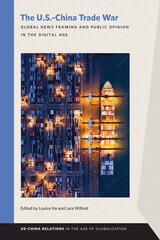
The U.S.–China Trade War
Global News Framing and Public Opinion in the Digital AgeLouisa Ha
Michigan State University Press, 2022
The Vitality of Democracy
Gisela Stuart
Haus Publishing, 2022
In The Vitality of Democracy, British-German politician Gisela Stuart argues for the urgency of expanded participation in the democratic process and considers the risks democracy currently faces. Although democracy is rife with difficult choices, she shows that if the people do not appreciate what makes this system work, they risk losing it. While no individual holds the answers, democracy allows for power to change hands, giving opportunities for different sides to have a chance at improving government for all.
Stuart reflects on challenges to British democracy since the mid-2010s. With the United Kingdom exiting the European Union and facing an overwhelming pandemic, restrictions to civil liberties were imposed that may have been unimaginable in the past. It is time to pause and reflect on the serious challenges currently posed to democracy and to the ability of the people to take part.
The Vote
Bush, Gore, and the Supreme CourtEdited by Cass R. Sunstein and Richard A. Epstein
University of Chicago Press, 2001
The contributors to this volume were highly visible in the national media while the controversy raged, and here they present fully fleshed-out arguments for the positions they promoted on the airwaves. Readers will find in The Vote equally impassioned defenses for and indictments of the Court's actions, and they will come to understand the practical and theoretical implications of the Court's ruling in the realms of both law and politics. No doubt a spate of books will appear on the 2000 presidential election, but none will claim as distinguished a roster of contributors better qualified to place these recent events in their appropriate historical, legal, and political contexts.
Leading constitutional scholars render their verdicts on the 2000 presidential election controversy
Contributors:
Richard A. Epstein
Elizabeth Garrett
Samuel Issacharoff
Pamela S. Karlan
Michael W. McConnell
Frank I. Michelman
Richard H. Pildes
Richard A. Posner
David A. Strauss
Cass R. Sunstein
John Yoo
An earlier electronic edition of The Vote was available on the University of Chicago Press Web site.
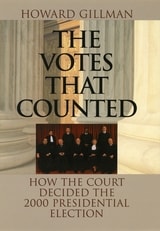
The Votes That Counted
How the Court Decided the 2000 Presidential ElectionHoward Gillman
University of Chicago Press, 2001
Lively and authoritative, the book documents how the participants, the press, the academic community, and the public responded during these tension-filled thirty-six days. Gillman also provides a serious yet accessible overview of the legal strategies and debates-from briefs and oral arguments to final decisions. However, in explaining the behavior of courts, he moves beyond an analysis of law to also take into account the influences of partisanship, judicial ideology, and broader political and historical contexts.
Appropriately, Gillman pays special attention to the judges whose behavior generated the most controversy—the battling justices of the Florida and United States Supreme Courts. After carefully reviewing the arguments for and against their decisions, he concludes that the five justices behind the Bush v. Gore decision acted outside what should be considered the acceptable boundaries of judicial power. Gillman ends with an analysis of why they chose such an unprecedented course of action and an assessment of whether their partisan intervention will have any lasting effect on the Supreme Court's reputation and authority.
The Wartime President
Executive Influence and the Nationalizing Politics of ThreatWilliam G. Howell, Saul P. Jackman, and Jon C. Rogowski
University of Chicago Press, 2013
For the first time, William G. Howell, Saul P. Jackman, and Jon C. Rogowski systematically analyze the question. Congress, they show, is more likely to defer to the president’s policy preferences when political debates center on national rather than local considerations. Thus, World War II and the post-9/11 wars in Afghanistan and Iraq significantly augmented presidential power, allowing the president to enact foreign and domestic policies that would have been unattainable in times of peace. But, contrary to popular belief, there are also times when war has little effect on a president’s influence in Congress. The Vietnam and Gulf Wars, for instance, did not nationalize our politics nearly so much, and presidential influence expanded only moderately.
Built on groundbreaking research, The Wartime President offers one of the most significant works ever written on the wartime powers presidents wield at home.
The Way We Vote
The Local Dimension of American SuffrageAlec C. Ewald
Vanderbilt University Press, 2009
The book shows that local electoral variation has endured through dramatic changes in American political and constitutional structure, and that such variation is the product of a clear, repeated developmental pattern, not simple neglect or public ignorance. Legal materials, statutes and Congressional debates, state constitutional-convention proceedings, and the records of contested Congressional elections illuminate a long record of federal and state intervention in American electoral mechanics. Lawmakers have always understood that a certain level of disorder characterizes U.S. national elections, and have responded by exercising their authority over suffrage practices--but only in limited ways, effectively helping to construct our triply-governed electoral system.
The West Bank Wall
Unmaking PalestineRay Dolphin
Pluto Press, 2006
Israel claims it is a security measure to protect Israeli citizens from terrorist attacks. Opponents point to the serious impact on the rights of Palestinians, depriving them of their land, mobility and access to health and educational services.
This book explores the Palestinian experience of the Wall in their international context. What are the real intentions behind the Israeli security argument? Is it a means of securing territory permanently through an illegal annexation of East Jerusalem? The West Bank Wall is a cutting account of the impact of the wall and how it affects prospects of a future peace in the Middle East.
The Whips
Building Party Coalitions in CongressC. Lawrence Evans
University of Michigan Press, 2018
The party whips are essential components of the U.S. legislative system, responsible for marshalling party votes and keeping House and Senate party members in line. In The Whips, C. Lawrence Evans offers a comprehensive exploration of coalition building and legislative strategy in the U.S. House and Senate, ranging from the relatively bipartisan, committee-dominated chambers of the 1950s to the highly polarized congresses of the 2000s. In addition to roll call votes and personal interviews with lawmakers and staff, Evans examines the personal papers of dozens of former leaders of the House and Senate, especially former whips. These records allowed Evans to create a database of nearly 1,500 internal leadership polls on hundreds of significant bills across five decades of recent congressional history.
The result is a rich and sweeping understanding of congressional party leaders at work. Since the whips provide valuable political intelligence, they are essential to understanding how coalitions are forged and deals are made on Capitol Hill.
The Wild East
Criminal Political Economies in South AsiaEdited by Barbara Harriss-White and Lucia Michelutti
University College London, 2019
The Will of the Many
How the Alterglobalisation Movement is Changing the Face of DemocracyMarianne Maeckelbergh
Pluto Press, 2009
Never before has the idea of democracy enjoyed the global dominance it holds today, but neoliberalism has left the practice of democracy in deep crisis.
Marianne Maeckelbergh argues that the most promising model for global democracy is not coming from traditional political parties or international institutions, but from the global networks of resistance to neoliberal economics, known collectively as the Alter-globalisation movement. Through extensive ethnography of decision-making practices within these movements, Maeckelbergh describes an alternative form of global democracy in the making.
Perfect for activists and students of political anthropology, this powerful and enlightening book offers radical changes.
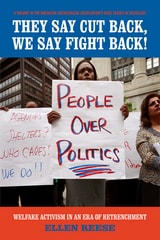
They Say Cutback, We Say Fight Back!
Welfare Activism in an Era of RetrenchmentEllen Reese
Russell Sage Foundation, 2012

Think Tanks in America
Thomas Medvetz
University of Chicago Press, 2012
Thinker, Faker, Spinner, Spy
Corporate PR and the Assault on DemocracyEdited by David Miller and William Dinan
Pluto Press, 2007
Written by leading activists and writers, this book reveals the secrets of the PR trade including deception, the use of fake 'institutes', spying and dirty tricks. The impact can be devastating -- when the public is denied access to the truth, the results are rising inequality and environmental catastrophe.
Exposing the misdeeds of famous companies including Coca Cola, British Aerospace, Exxon and Monsanto, and revealing information about the covert funding of various apparently independent thinks tanks and institutes, the authors offer a guide to campaigns that can help us roll back corporate power and resist deceptive PR.
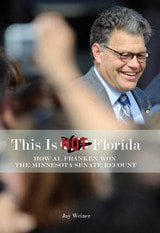
This Is Not Florida
How Al Franken Won the Minnesota Senate RecountJay Weiner
University of Minnesota Press, 2010
This Is Not Florida is the behind-the-scenes saga of the largest, longest, and most expensive election recount in American history. Reporter Jay Weiner covered the entire recount process-for which he was honored with Minnesota's most prestigious journalism award-following every bizarre twist and turn and its many colorful personalities. Based on daily reporting as well as interviews with more than forty campaign staffers and other participants in the recount, This Is Not Florida dives into the motivations of key players in the drama, including the exploits of Franken's lead attorney Marc Elias, some of the mistakes made by Coleman advisers, and how the Franken team's devotion to data collection helped Franken win the recount by a mere 312 votes.
In a fascinating, blow-by-blow account of the historic recount that captivated people nationwide, Jay Weiner gets inside campaign war rooms and judges' chambers and takes the reader from the uncertainties of Election Night 2008, through the controversial State Canvassing Board and a grueling eight-week trial, to an appeal to Minnesota's Supreme Court, and finally to Al Franken's long-awaited and emotional swearing-in.
This Is Not Florida presents an important and unforgettable moment in political history that proved that it's never really over until it's actually over
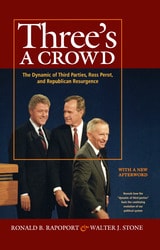
Three's a Crowd
The Dynamic of Third Parties, Ross Perot, and Republican ResurgenceRonald B. Rapoport and Walter J. Stone
University of Michigan Press, 2011
---Paul Herrnson, Director, Center for American Politics and Citizenship Professor, Department of Government and Politics, University of Maryland
"Powerfully persuasive in its exhaustive research, Three's a Crowd may surprise many by revealing the long- ignored but pivotal impact of Perot voters on every national election since 1992."
---Clay Mulford, Jones Day and General Counsel to the 1992 Perot Presidential Campaign and to the Reform Party.
"Rapaport and Stone have written an engaging and important book. They bring fresh perspectives, interesting data, and much good sense to this project. Three's a Crowd is fundamentally about political change, which will, in turn, change how scholars and pundits think of Ross Perot in particular, and third parties in general."
---John G. Geer, Professor of Political Science at Vanderbilt University and Editor of The Journal of Politics
"The definitive analysis of the Perot movement, its role in the 1994 GOP victory, and the emergence of an enduring governing majority."
---L. Sandy Maisel, Director, Goldfarb Center for Public Affairs, Colby College
Three's a Crowd begins with the simple insight that third parties are creatures of the American two-party system, and derive their support from the failures of the Democratic and Republican parties.
While third parties flash briefly in the gaps left by those failures, they nevertheless follow a familiar pattern: a sensation in one election, a disappointment in the next. Rapoport and Stone conclude that this steep arc results from one or both major parties successfully absorbing the third party's constituency. In the first election, the third party raises new issues and defines new constituencies; in the second, the major parties move in on the new territory. But in appropriating the third party's constituents, the major parties open themselves up to change. This is what the authors call the "dynamic of third parties."
The Perot campaign exemplified this effect in 1992 and 1996. Political observers of contemporary electoral politics missed the significance of Perot's independent campaign for the presidency in 1992. Rapoport and Stone, who had unfettered-and unparalleled-access to the Perot political machine, show how his run perfectly embodies the third-party dynamic. Yet until now no one has considered the aftermath of the Perot movement through that lens.
For anyone who seeks to understand the workings of our stubbornly two-party structure, this eagerly awaited and definitive analysis will shed new light on the role of third parties in the American political system.
Through the Grapevine
Socially Transmitted Information and Distorted DemocracyTaylor N. Carlson
University of Chicago Press, 2024
An enlightening examination of what it means when Americans rely on family and friends to stay on top of politics.
Accurate information is at the heart of democratic functioning. For decades, researchers interested in how information is disseminated have focused on mass media, but the reality is that many Americans today do not learn about politics from direct engagement with the news. Rather, about one-third of Americans learn chiefly from information shared by their peers in conversation or on social media. How does this socially transmitted information differ from that communicated by traditional media? What are the consequences for political attitudes and behavior?
Drawing on evidence from experiments, surveys, and social media, Taylor N. Carlson finds that, as information flows first from the media then person to person, it becomes sparse, more biased, less accurate, and more mobilizing. The result is what Carlson calls distorted democracy. Although socially transmitted information does not necessarily render democracy dysfunctional, Through the Grapevine shows how it contributes to a public that is at once underinformed, polarized, and engaged.
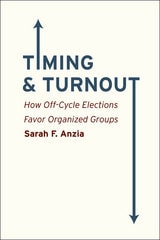
Timing and Turnout
How Off-Cycle Elections Favor Organized GroupsSarah F. Anzia
University of Chicago Press, 2013
The low turnout for off-cycle elections, Anzia argues, increases the influence of organized interest groups like teachers’ unions and municipal workers. While such groups tend to vote at high rates regardless of when the election is held, the low turnout in off-cycle years enhances the effectiveness of their mobilization efforts and makes them a proportionately larger bloc. Throughout American history, the issue of election timing has been a contentious one. Anzia’s book traces efforts by interest groups and political parties to change the timing of elections to their advantage, resulting in the electoral structures we have today. Ultimately, what might seem at first glance to be mundane matters of scheduling are better understood as tactics designed to distribute political power, determining who has an advantage in the electoral process and who will control government at the municipal, county, and state levels.
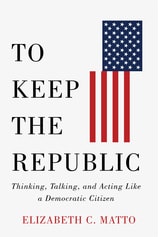
To Keep the Republic
Thinking, Talking, and Acting Like a Democratic CitizenElizabeth C. Matto
Rutgers University Press, 2024
To Keep the Republic is a wake-up call about the responsibilities that come with being a citizen in a participatory democracy. It describes the many ways that individuals can make a difference on both local and national levels—and explains why they matter. Political scientist Elizabeth C. Matto highlights the multiple facets of democratic citizenship, identifies American democracy’s sometimes competing values and ideals, and explains how civic engagement can take various forms, including political conversation. Combining political philosophy with concrete suggestions for how to become a more engaged citizen, To Keep the Republic reminds us that democracy is not a spectator sport; it only works when we get off the sidelines and enter the political arena to make our voices heard.
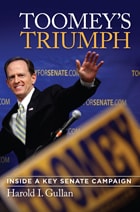
Toomey's Triumph
Inside a Key Senate CampaignHarold Gullan
Temple University Press, 2012
The 2010 Pennsylvania Senate election provided high drama from the earliest days of its primary campaigns right through Election Day. After long-time incumbent Arlen Specter was eliminated, the race boiled down to two fresh faces—Pat Toomey and Joe Sestak. Their battle constitutes a microcosm of the political divide that characterizes contemporary American politics.
Veteran writer Hal Gullan obtained special access to the Toomey campaign early on. Toomey's Triumph offers both that inside look and a Philadelphian's reflections of a riveting election. Gullan's astute month-by-month narrative distills the events of the year-long battles through the high drama and the day-to-day of grassroots organizing and campaigning. He describes how the candidates appear, what they say, and how the media pundits respond to their various gambits. He provides wry observations on the efficacy of each candidate's campaign ads and strategies, and he analyzes the up-and-down polls.
Toomey's Triumph provides an engaging chronicle of a critical campaign.
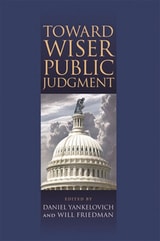
Toward Wiser Public Judgment
Daniel Yankelovich
Vanderbilt University Press, 2011
In his lead chapter, Dan Yankelovich urges us to move away from a "misleading model of public opinion" that "dominates the expert culture of our society, including journalists, scientists, business leaders, scholars, professional experts, and political leaders." He and the other contributors (Will Friedman, Keith Melville, Robert Kingston, Alison Kadlec, Steven A. Rosell, and Heidi Gantwerk) describe methods used by organizations like Public Agenda, National Issues Forums, and Viewpoint Learning, Inc., to advance the public's learning curve through various forms of civic engagement, education, dialogue and deliberation.
They provide case studies of education reform in Bridgeport, Connecticut, and math and science initiatives in the Kansas City area, and examples of programs that have focused on issues ranging from energy and health care to US-Muslim relations. One chapter is a dialogue between Yankelovich and Friedman.
While our political culture resonates to the public's desire for a stronger voice, it fails to ensure that this voice reflects anything more than the spin, spectacle, and excessive partisanship that dominate today's public discourse. Toward Wiser Public Judgment offers insights and strategies to counteract these troubling trends.
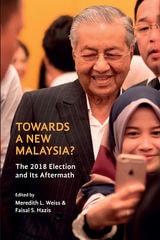
Towards a New Malaysia?
The 2018 Election and Its AftermathMeredith L. Weiss and Faizal S. Hazis
National University of Singapore Press, 2020
After the election, many Malaysians were optimistic about the possibility of a more representative, accountable, participatory, and equitable polity, but Meredith L. Weiss and Faisal S. Hazis do not see GE14 as a clear harbinger of full-on liberalization. While the political aftermath of the election continues to play out, the authors provide a clarion call for deeper, more critical, more comparative research on Malaysia’s politics. They upend commonly held beliefs about Malaysian politics and bring forward lesser-known theories, and they suggest agendas for empirically interesting, theoretically relevant further research. They also point to the broader insights Malaysia’s experience provides for the study of elections and political change in one-party dominant states around the world.
Tracks on the Trail
Popular Music, Race, and the US PresidencyDana Gorzelany-Mostak
University of Michigan Press, 2023
From Bill Clinton playing his saxophone on The Arsenio Hall Show to Barack Obama referencing Jay-Z’s song “Dirt Off Your Shoulder,” politicians have used music not only to construct their personal presidential identities but to create the broader identity of the American presidency. Through music, candidates can appear relatable, show cultural competency, communicate values and ideas, or connect with a specific constituency. On a less explicit level, episodes such as Clinton’s sax-playing and Obama’s shoulder brush operate as aural and visual articulations of race and racial identity. But why do candidates choose to engage with race in this manner? And why do supporters and detractors on YouTube and the Twittersphere similarly engage with race when they create music videos or remixes in homage to their favorite candidates?
With Barack Obama, Ben Carson, Kamala Harris, and Donald Trump as case studies, Tracks on the Trail: Popular Music, Race, and the US Presidency sheds light on the factors that motivate candidates and constituents alike to articulate race through music on the campaign trail and shows how the racialization of sound intersects with other markers of difference and ultimately shapes the public discourse surrounding candidates, popular music, and the meanings attached to race in the 21st century. Gorzelany-Mostak explores musical engagement broadly, including official music in the form of candidate playlists and launch event setlists, as well as unofficial music in the form of newly composed campaign songs, mashups, parodies, and remixes.