Results by title
22279 books match the query 'Social Science' and 4007 start with t

Teachers and Testing
David A. Goslin
Russell Sage Foundation, 1967
Teachers on the Waves of Transformation
School Culture Before and After 1989Dana Moree
Karolinum Press, 2020
Teachers on the Waves of Transformation aims to answer this question through the lens of education. With careful exploratory research at two schools in a small town in central Bohemia, anthropologist Dana Moree follows the fates of two generations of teachers at the schools. Through interviews with teachers, school administrators, and the students’ parents, Moree focuses on the relationships, values, shared stories, and symbolic and ritual worlds that create the culture of the schools. Teachers on the Waves of Transformation offers a unique perspective of cultural flux as witnessed in the classroom.
Teaching "Race" with a Gendered Edge
Brigitte Hipfl
Central European University Press, 2012
Teaching Black History to White People
By Leonard N. Moore
University of Texas Press, 2021
Leonard Moore has been teaching Black history for twenty-five years, mostly to white people. Drawing on decades of experience in the classroom and on college campuses throughout the South, as well as on his own personal history, Moore illustrates how an understanding of Black history is necessary for everyone.
With Teaching Black History to White People, which is “part memoir, part Black history, part pedagogy, and part how-to guide,” Moore delivers an accessible and engaging primer on the Black experience in America. He poses provocative questions, such as “Why is the teaching of Black history so controversial?” and “What came first: slavery or racism?” These questions don’t have easy answers, and Moore insists that embracing discomfort is necessary for engaging in open and honest conversations about race. Moore includes a syllabus and other tools for actionable steps that white people can take to move beyond performative justice and toward racial reparations, healing, and reconciliation.
Teaching Fear
How We Learn to Fear Crime and Why It MattersNicole E. Rader
Temple University Press, 2023
Where do lessons of “stranger danger” and safety come from—and do they apply differently for women? A gender-fear paradox shows that although women are less likely to be victims of most crimes (sexual assault aside), their fear of crime is greater. Moreover, girls and women—especially White women—are taught to fear the wrong things and given impossible tools to prevent victimization. In Teaching Fear, Nicole Rader zooms in on the social learning process, tracing the ways that families, schools, and the media have become obsessed with crime myths, especially regarding girls and women.
Based on in-depth research and family studies, Rader reveals the dubious and dangerous origins of many of the most prominent safety guidelines that teach young girls to be more afraid of crime. These guidelines carry over to adulthood, influencing women’s behaviors and the way they order their worlds, with dangerous consequences. As women teach their learned behavior and conditioned fear to others, gendered crime myths are recirculated from generation to generation, making them a staple in our society.
Teaching Fear includes suggestions for taking precautionary measures and crime prevention strategies. Rader also provides guidance for instilling safety values and demonstrating how we can “teach fear better” to break this cycle and truly create greater security.
Teaching Gender with Libraries and Archives
Sara De Jong
Central European University Press, 2014
Teaching Gloria E. Anzaldúa
Pedagogy and Practice for Our Classrooms and CommunitiesEdited by Margaret Cantú-Sánchez, Candace de León-Zepeda, Norma E. Cantú
University of Arizona Press, 2020
Gloria Evangelina Anzaldúa—theorist, Chicana, feminist—famously called on scholars to do work that matters. This pronouncement was a rallying call, inspiring scholars across disciplines to become scholar-activists and to channel their intellectual energy and labor toward the betterment of society. Scholars and activists alike have encountered and expanded on these pathbreaking theories and concepts first introduced by Anzaldúa in Borderlands/La frontera and other texts.
Teaching Gloria E. Anzaldúa is a pragmatic and inspiring offering of how to apply Anzaldúa’s ideas to the classroom and in the community rather than simply discussing them as theory. The book gathers nineteen essays by scholars, activists, teachers, and professors who share how their first-hand use of Anzaldúa’s theories in their classrooms and community environments.
The collection is divided into three main parts, according to the ways the text has been used: “Curriculum Design,” “Pedagogy and Praxis,” and “Decolonizing Pedagogies.” As a pedagogical text, Teaching Gloria E. Anzaldúa also offers practical advice in the form of lesson plans, activities, and other suggested resources for the classroom. This volume offers practical and inspiring ways to deploy Anzaldúa’s transformative theories with real and meaningful action.
Contributors
Carolina E. Alonso
Cordelia Barrera
Christina Bleyer
Altheria Caldera
Norma E. Cantú
Margaret Cantú-Sánchez
Freyca Calderon-Berumen
Stephanie Cariaga
Dylan Marie Colvin
Candace de León-Zepeda
Miryam Espinosa-Dulanto
Alma Itzé Flores
Christine Garcia
Patricia M. García
Patricia Pedroza González
María del Socorro Gutiérrez-Magallanes
Leandra H. Hernández
Nina Hoechtl
Rían Lozano
Socorro Morales
Anthony Nuño
Karla O’Donald
Christina Puntasecca
Dagoberto Eli Ramirez
José L. Saldívar
Tanya J. Gaxiola Serrano
Verónica Solís
Alexander V. Stehn
Carlos A. Tarin
Sarah De Los Santos Upton
Carla Wilson
Kelli Zaytoun
Teaching History in the Digital Age
T. Mills Kelly
University of Michigan Press, 2013
Teaching History in the Digital Age serves as a guide for practitioners on how to fruitfully employ the transformative changes of digital media in the research, writing, and teaching of history. T. Mills Kelly synthesizes more than two decades of research in digital history, offering practical advice on how to make best use of the results of this synthesis in the classroom and new ways of thinking about pedagogy in the digital humanities.
Teaching Other Voices
Women and Religion in Early Modern EuropeEdited by Margaret L. King and Albert Rabil Jr.
University of Chicago Press, 2007

Teaching Slavery
New Approaches to Britain's Colonial PastKatie Donington, Abdul Mohamud, Robin Whitburn, and Nicholas Draper
University College London, 2023
This groundbreaking book combines the latest academic research on Britain’s involvement in colonial slavery with innovative thinking on teaching “difficult histories” in the classroom. It addresses three main shortcomings in how slavery is taught in British secondary schools: insufficient teacher training in both historical content and pedagogy; a shortage of high-quality, research-informed teaching resources; and a lack of published guidance to support ethical and effective classroom engagement. Offering educators both historical and pedagogical approaches to discussing slavery, it examines key themes of race, gender, resistance, and abolition through illuminating historical examples.

Teaching U.S. History through Sports
Edited by Brad Austin and Pamela Grundy
University of Wisconsin Press, 2022
Teaching U.S. History through Sports provides strategies for incorporating sports into any U.S. history curriculum. Drawing upon their own classroom experiences, the authors suggest creative ways to use sports as a lens to examine a broad range of historical subjects, including Puritan culture, the rise of Jim Crow, the Cold War, the civil rights movement, and the women's movement. Essays focus on the experiences of African American women, working-class southerners, Latinos, and members of LGBTQ communities, as well as topics including the controversy over Native American mascots and the globalization of U.S. sports.
Teaching Working Class
Sherry Lee Linkon
University of Massachusetts Press, 1999
Teaching Writing through the Immigrant Story
Heather Ostman
Utah State University Press, 2021
Each of the chapters recognizes the prevalence of immigrant students in writing classrooms across the United States—including foreign-born, first- and second-generation Americans, and more—and the myriad opportunities and challenges those students present to their instructors. These contributors have seen the validity in the stories and experiences these students bring to the classroom—evidence of their lifetimes of complex learning in both academic and nonacademic settings. Like thousands of college-level instructors in the United States, they have immigrant stories of their own. The immigrant “narrative” offers a unique framework for knowledge production in which students and teachers may learn from each other, in which the ordinary power dynamic of teacher and students begins to shift, to enable empathy to emerge and to provide space for an authentic kind of pedagogy.
By engaging writing and literature teachers within and outside the classroom, Teaching Writing through the Immigrant Story speaks to the immigrant narrative as a viable frame for teaching writing—an opportunity for building and articulating knowledge through academic discourse. The book creates a platform for immigration as a writing and literary theme, a framework for critical thinking, and a foundation for significant social change and advocacy.
Contributors: Tuli Chatterji, Katie Daily-Bruckner, Libby Garland, Silvia Giagnoni, Sibylle Gruber, John Havard, Timothy Henderson, Brennan Herring, Lilian Mina, Rachel Pate, Emily Schnee, Elizabeth Stone
Teaching about Race and Racism in the College Classroom
Notes from a White ProfessorCyndi Kernahan
West Virginia University Press, 2019
Teaching about race and racism can be a difficult business. Students and instructors alike often struggle with strong emotions, and many people have robust preexisting beliefs about race. At the same time, this is a moment that demands a clear understanding of racism. It is important for students to learn how we got here and how racism is more than just individual acts of meanness. Students also need to understand that colorblindness is not an effective anti-racism strategy.
In this book, Cyndi Kernahan argues that you can be honest and unflinching in your teaching about racism while also providing a compassionate learning environment that allows for mistakes and avoids shaming students. She provides evidence for how learning works with respect to race and racism along with practical teaching strategies rooted in that evidence to help instructors feel more confident. She also differentiates between how white students and students of color are likely to experience the classroom, helping instructors provide a more effective learning experience for all students.
Teaching against Violence
The Reassessing ToolboxInez Testoni
Central European University Press, 2014
Teaching and Learning in Bilingual Classrooms
New ScholarshipKristin J. Mulrooney
Gallaudet University Press, 2014
After extensive SoTL training, the GSTLI professors reviewed interaction in their respective classrooms. Through meticulous study of class videos and written assignments in three General Studies Requirements courses for first-year students, the teachers learned how to ensure connecting with students who have a variety of language differences and communication methods.
The other professors assessed bottlenecks in classes on the linguistic structure of ASL, and on criminal justice. The linguistics professor identified the bottleneck as the students’ inability to conceptualize the interrelationship between definitions and examples, a fundamental skill to scientific thinking. In the criminal justice class, the professor saw the need to guide students through linguistic bottlenecks by providing materials in both ASL and English. The successes of the GSTLI presented in this unique volume can benefit other teachers by better preparing them to meet the needs of bilingual diverse learners in more effective ways.
Teaching and Transformation in Popular Confucian Literature of the Late Qing
Katherine L. Alexander
University of Michigan Press, 2025
Yu’s works complicate the picture of socio-moral reform, particularly the Confucian mission of jiaohua (teaching and transformation). Though he viewed the disasters of the late Qing as the natural consequence of jiaohua’s failure to compete against socially disruptive media, such as vernacular fiction and theatrical productions, he also wanted reformers to engage closely with these genres. Yu became a vocal advocate of teaching with moral vernacular literature that he believed met commoners at their level. He emphasized the hope that by writing, printing, and performing such texts, every member of his audience could be transformed into teachers themselves, restoring society from the bottom up.
Teaching with Tenderness
Toward an Embodied PracticeBecky Thompson
University of Illinois Press, 2017
Teaching with Tenderness follows in the tradition of bell hooks's Teaching to Transgress and Paulo Freire's Pedagogy of the Oppressed, inviting us to draw upon contemplative practices (yoga, meditation, free writing, mindfulness, ritual) to keep our hearts open as we reckon with multiple injustices. Teaching with tenderness makes room for emotion, offers a witness for experiences people have buried, welcomes silence, breath and movement, and sees justice as key to our survival. It allows us to rethink our relationship to grading, office hours, desks, and faculty meetings, sees paradox as a constant companion, moves us beyond binaries; and praises self and community care.
Tenderness examines contemporary challenges to teaching about race, gender, class, nationality, sexuality, religion, and other hierarchies. It examines the ethical, emotional, political, and spiritual challenges of teaching power-laden, charged issues and the consequences of shifting power relations in the classroom and in the community. Attention to current contributions in the areas of contemplative practices, trauma theory, multiracial feminist pedagogy, and activism enable us to envision steps toward a pedagogy of liberation. The book encourages active engagement and makes room for self-reflective learning, teaching, and scholarship.
Teaching with Tension
Race, Resistance, and Reality in the ClassroomEdited by Philathia Bolton, Cassander L. Smith, and Lee Bebout
Northwestern University Press, 2019
Drawing together personal reflection, pedagogical strategies, and critical theory, Teaching with Tension offers concrete examinations that will foster student learning. The essays are organized into three thematic sections: "Teaching in Times and Places of Struggle" examines the dynamics of teaching race during the current moment, marked by neoconservative politics and twenty-first century freedom struggles. "Teaching in the Neoliberal University" focuses on how pressures and exigencies of neoliberalism (such as individualism, customer-service models of education, and online courses) impact the way in which race is taught and conceptualized in college classes. The final section, "Teaching How to Read Race and (Counter)Narratives," homes in on direct strategies used to historicize race in classrooms comprised of millennials who grapple with race neutral ideologies. Taken together, these sections and their constitutive essays offer rich and fruitful insight into the complex dynamics of contemporary race and ethnic studies education.
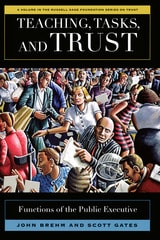
Teaching, Tasks, and Trust
Functions of the Public ExecutiveJohn Brehm
Russell Sage Foundation, 2008

Team Chemistry
The History of Drugs and Alcohol in Major League BaseballNathan Corzine
University of Illinois Press, 2016
- In 1889, Pud Galvin tried a testosterone-derived "elixir" to help him pile up some of his 646 complete games.
- Sandy Koufax needed Codeine and an anti-inflammatory used on horses to pitch through his late-career elbow woes.
- Players returning from World War II mainstreamed the use of the amphetamines they had used as servicemen.
- Vida Blue invited teammates to cocaine parties, Tim Raines used it to stay awake on the bench, and Will McEnaney snorted it between innings.

Teamsters Metropolis
Ryan Patrick Murphy
University of Michigan Press, 2025
Teamsters Metropolis argues that the union achieved unprecedented organizing success in the immediate postwar period precisely because its members defied bourgeois cultural standards. They wore overly flamboyant clothes, instigated jarringly violent confrontations, used aliases, extorted money, flouted the law, and often blended friendship, sex, and love in a way that challenged the boundaries of heteronormativity. Perhaps no one exemplified this freedom more than Jimmy Hoffa, who delivered better pay and worker conditions to marginal workers while also using coercive tactics, embezzling money, and colluding with the Mafia. Rather than impeding the union’s growth, unruly organizing, illicit business techniques, and dissident cultural practices appealed to prospective members and offered an opportunity to circumvent some of the suburban regulations, helping the International Brotherhood of Teamsters become the largest U.S. union of the mid-twentieth century.

Tear Down the Walls
White Radicalism and Black Power in 1960s RockPatrick Burke
University of Chicago Press, 2021
Technical Knowledge in American Culture
Science, Technology, and Medicine Since the Early 1800sEdited by Hamilton Cravens, Alan I Marcus, and David M. Katzman
University of Alabama Press, 1996
Addresses the relationships between what modern-day experts say to each other and to their constituencies
Technical Knowledge in American Culture is an interdisciplinary volume that brings together leading historians to investigate how science, technology, and medicine have shaped—and been shaped by—American intellectual and cultural traditions since the early nineteenth century. Rather than treating science and technology simply as products of social forces, the contributors examine them as forms of knowledge with their own internal logics, debates, and authority structures. The book asks a central question: how do experts—scientists, engineers, physicians—communicate with one another and with broader audiences, and how does that communication influence American society?
The volume is organized into three major sections, each anchored in a distinct historical moment: Part I: The Rise of Democratic Culture, 1800–1870; Part II: The Age of Hierarchy, 1870–1920; and Part III: Toward an Infinity of Dimensions (20th Century). Across its essays, the book argues that technical knowledge is not just a tool of progress—it is a cultural force shaped by communication, interpretation, and authority. By focusing on case studies rather than sweeping narratives, the volume reveals how expertise operates in practice and how it influences broader debates about science, society, and public trust.
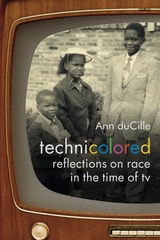
Technicolored
Reflections on Race in the Time of TVAnn duCille
Duke University Press, 2018
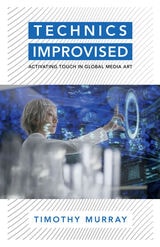
Technics Improvised
Activating Touch in Global Media ArtTimothy Murray
University of Minnesota Press, 2022
Seeing new media art as an entry point for better understanding of technology and worldmaking futures
In this challenging work, a leading authority on new media art examines that curatorial and aesthetic landscape to explore how art resists and rewires the political and economic structures that govern technology. How do inventive combinations of artistic and theoretical improvisation counter the extent to which media art remains at risk, not just from the quarantines of a global pandemic but also from the very viral and material conditions of technology? How does global media art speak back to the corporate closures of digital euphoria as clothed in strategies of digital surveillance, ecological deprivation, and planned obsolescence? In Technics Improvised, Timothy Murray asks these questions and more.
At the intersection of global media art, curatorial practice, tactical media, and philosophy, Murray reads a wide range of creative performances and critical texts that envelop artistic and digital materials in unstable, political relations of touch, body, archive, exhibition, and technology. From video to net art and interactive performance, he considers both canonical and unheralded examples of activist technics that disturb the hegemony of biopolitical/digital networks by staging the very touch of the unsettling discourse erupting from within. In the process, critical dialogues emerge between a wide range of artists and theorists, from Hito Steyerl, Ricardo Dominguez, Joan Jonas, Isaac Julien, Ryoji Ikeda, and Shadi Nazarian to Gilles Deleuze, Jean-Luc Nancy, Elizabeth Povinelli, Jean-François Lyotard, Erin Manning, Achille Mbembe, and Samuel Weber.
Brilliantly conceived and argued and eloquently written, Technics Improvised points the way to how artistic and theoretical practice can seize on the improvisational accidents of technics to activate creativity, thought, and politics anew.

Techniques of Pleasure
BDSM and the Circuits of SexualityMargot Weiss
Duke University Press, 2012

Techno-Negative
A Long History of Refusing the MachineThomas Dekeyser
University of Minnesota Press, 2026
A radical history of technology told through acts of resistance, not progress
The history of technology is often told as a history of progress, moving optimistically and inevitably from one emancipatory invention to the next. Techno-Negative turns this story on its head, taking us on a journey to the critical junctures where people have pointedly rejected and tried to undo, rather than adopt, new technologies. Beginning with Archimedes’s decision to destroy his own war machines, this book explores the will to negate technology as a deep—but persistently condemned—current in history.
As he presents a new theory of technological power, Thomas Dekeyser argues that technologies, never neutral, operate as “ontological policing,” drawing the boundaries of humanness as they are unequally leveraged by select groups. Looking beyond the Luddites to medieval monks banning tools, seventeenth-century loom burners, revolutionary lantern smashers, and computer arsonists, Dekeyser shows how people have long recognized and resisted the machine as a violent, sometimes deadly force implicated in defining who counts as human and whose lives (and ways of life) are worth saving.
Against the ubiquitous demands to reform or accelerate technological “advancement” that have failed to disrupt our present, Dekeyser proposes a spirited alternative: abolition. He challenges us to rethink the terms of our technological present and future. In a time when Big Tech grows increasingly enmeshed with authoritarian control, Techno-Negative is a conceptual declaration, and source of inspiration, for those searching for a new paradigm of technological politics.
Retail e-book files for this title are screen-reader friendly.
Techno-Orientalism 2.0
New Intersections and InterventionsDavid S. Roh
Rutgers University Press, 2025
Techno-Orientalism
Imagining Asia in Speculative Fiction, History, and MediaRoh, David S.
Rutgers University Press, 2015
Technocrats of the Imagination
Art, Technology, and the Military-Industrial Avant-GardeJohn Beck and Ryan Bishop
Duke University Press, 2020
Technocreep and the Politics of Things Not Seen
Neda Atanasoski and Nassim Parvin, editors
Duke University Press, 2025
Contributors. Neda Atanasoski, Katherine Bennett, Iván Chaar López, Sushmita Chatterjee, Hayri Dortdivanlioglu, Sanaz Haghani, Jacob Hagelberg, Jennifer Hamilton, Antonia Hernández, Marjan Khatibi, Tamara Kneese, Erin McElroy, Vernelle A. A. Noel, Jessica Olivares, Nassim Parvin, Beth Semel, Renee Shelby, Tanja Wiehn
Technoculture
Constance Penley
University of Minnesota Press, 1991

Technological Democracy
Bureaucracy and Citizenry in the German Energy DebateCarol J. Hager
University of Michigan Press, 1995
Technological Perspectives on Behavioral Change
Michael Brian Schiffer
University of Arizona Press, 1992
Technological Shortcuts to Social Change
Amitai Etzioni
Russell Sage Foundation, 1973

Technological Sovereignty
Resisting Racial and Informational CapitalismSara Schoonmaker
University of Illinois Press, 2027
Sara Schoonmaker illuminates the system’s inner workings by examining technology-related struggles in global trade, COVID-19 vaccines, the Internet, and use of personal data. The World Trade Organization and other neoliberal institutions protect corporate power while limiting access to important tools. Schoonmaker’s analysis explores a hopeful alternative that allows communities and nations to assert more control over the technologies they need. As she shows, state-centered policies have the potential to improve access to technology by challenging corporate power. At the same time, nonproprietary approaches like free software and community broadband encourage the knowledge-sharing needed to create fair systems that resist ongoing exploitation.
Ambitious and timely, Technological Sovereignty draws on a wide-ranging group of voices to offer a roadmap for a more just digital future.
Technological Visions
Hopes And Fears That Shape New TechnologiesMarita Sturken
Temple University Press, 2004
Technologies of Public Persuasion
An Accidental Issue, Volume 15Dilip Parameshwar Gaonkar and Elizabeth A. Povinelli, eds.
Duke University Press, 0
The contributors explore topics ranging from the use of cell phones by middle-class Filipinos in the civilian-backed overthrow of President Joseph Estrada to a media reported "hint" from Alan Greenspan that impacted and altered economic reality through speculation. An essay investigates the politics surrounding the formation and use of Indonesian as a self-consciously modern language designed to reconstitute the social and political identities of its speakers. A photo-essay depicts graffiti on abandoned school buildings as a communicative medium. "Crimes of Substitution: Detection in the Late Soviet Society" looks at late-Soviet detective fiction, censorship strategies, and Soviet semiotics to show how Soviet citizens subverted dictated modes of behavior and challenged the symbolic order of Soviet society. One contributor examines how performance and ethnolinguistic practices become techniques for spatially and socially locating identity.
Contributors. Alberta Arthurs, Dilip Parameshwar Gaonkar, Michael Kaplan, Webb Keane, Patrick Mullen, Serguei Oushakine, Elizabeth A. Povinelli, Vicente L. Rafael, Christopher Schneider, Michael Silverstein, Amanda Weidman
Technologies of Suspicion and the Ethics of Obligation in Political Asylum
Bridget M. Haas
Ohio University Press, 2019
Across the globe, migration has been met with intensifying modes of criminalization and securitization, and claims for political asylum are increasingly met with suspicion. Asylum seekers have become the focus of global debates surrounding humanitarian obligations, on the one hand, and concerns surrounding national security and border control, on the other. In Technologies of Suspicion and the Ethics of Obligation in Political Asylum, contributors provide fine-tuned analyses of political asylum systems and the adjudication of asylum claims across a range of sociocultural and geopolitical contexts.
The contributors to this timely volume, drawing on a variety of theoretical perspectives, offer critical insights into the processes by which tensions between humanitarianism and security are negotiated at the local level, often with negative consequences for asylum seekers. By investigating how a politics of suspicion within asylum systems is enacted in everyday practices and interactions, the authors illustrate how asylum seekers are often produced as suspicious subjects by the very systems to which they appeal for protection.
Contributors: Ilil Benjamin, Carol Bohmer, Nadia El-Shaarawi, Bridget M. Haas, John Beard Haviland, Marco Jacquemet, Benjamin N. Lawrance, Rachel Lewis, Sara McKinnon, Amy Shuman, Charles Watters
Technologies of the Gendered Body
Reading Cyborg WomenAnne Balsamo
Duke University Press, 1996
Technologies of the Gendered Body combines close readings of popular texts—such as Margaret Atwood’s novel The Handmaid’s Tale, the movie Pumping Iron II: The Women, cyberpunk magazines, and mass media—with analyses of medical literature, public policy documents, and specific technological practices. Balsamo describes the ways in which certain biotechnologies are ideologically shaped by gender considerations and other beliefs about race, physical abilities, and economic and legal status. She presents a view of the conceptual system that structures individuals’ access to and participation in these technologies, as well as an overview of individuals’ rights and responsibilities in this sometimes baffling area. Examining the ways in which the body is gendered in its interactions with new technologies of corporeality, Technologies of the Gendered Body counters the claim that in our scientific culture the material body has become obsolete. With ample evidence that the techno-body is always gendered and marked by race, this book sets the stage for a renewed feminist engagement with contemporary technological narratives.
Technology Assessment
A Feminist PerspectiveJanine Marie Morgall
Temple University Press, 1993
How well does technology assessment (TA) relate to women's lives? If women are underrepresented in the long-term research and development process that leads to scientific advancements, how can TA understand technology aimed at women? It can't, claims the author of Technology Assessment: A Feminist Perspective.
A relative new field, TA examines the social aspect of technology and provides information critical to decision making, policy development, safety standards, and avoiding litigation. Until gender analysis is introduced into all assessments of new technologies, Janine Marie Morgall argues, TA can't evaluate technology's impact upon women.
Morgall investigates two areas of technology that affect women's lives: productive (clerical work) and reproductive (health care). Case studies of clerical workers and health care recipients illustrate gender-specify effects of technology ranging from word processors to treatments for infertility. These studies convincingly demonstrate that TA encourages innovations without questioning their effects on women. Issues of dominance, control, and conflicting values emerge from Morgall's feminist perspective and support her call for gender analysis of new technologies.
In the series Labor and Social Change, edited by Paula Rayman and Carmen Sirianni.
Technology and Choice
Readings from Technology and CultureEdited by Marcel C. LaFollette and Jeffrey K. Stine
University of Chicago Press, 1991
Through historical accounts that span centuries and national boundaries, exploring the complexity of a nuclear power plant and the apparent simplicity of an electrical plug, the contributors to this volume dramatically illustrate the push and pull between technology and society. General topics addressed include:
- Regulation of private industry
- Social acceptance of commercial innovation
- Negative perceptions of the "Technological Age"
- Cultural and artistic features of technology
These essays were originally published in the journal Technology and Culture

Technology and Desire
The Transgressive Art of Moving ImagesEdited by Rania Gaafar and Martin Schulz
Intellect Books, 2014
The spectral realm at the boundaries of images incessantly reveals a desire to see beyond the visible and its medium: screens, frames, public displays, and projection sites in an art context. The impact of new media on art and film has influenced the material histories and performances (be they in theory or practice) of images across the disciplines. Digital technologies have not only shaped post-cinematic media cultures and visual epistemologies, but they are behind a growing shift towards a new realism in theory, art, film, and in the art of the moving image in particular. Technology and Desire examines the performative ontologies of moving images across the genealogies of media and their aesthetic agency in contemporary media and video art, CGI, painting, video games, and installations. Drawing on cultural studies, media and film theory as well as art history to provide exemplary evidence of this shift, this book has as its central theme the question of whether images are predicated upon transgressing the boundaries of their framing—and whether in the course of their existence they develop a life of their own.

Technology and the Character of Contemporary Life
A Philosophical InquiryAlbert Borgmann
University of Chicago Press, 1987
Technology and the Resilience of Metropolitan Regions
Edited by Michael E. Pagano
University of Illinois Press, 2015
In this new collection, Michael A. Pagano curates engagement with such questions by public intellectuals, stakeholders, academics, policy analysts, and citizens. Each essay explores issues related to the impact and opportunities technology provides in government and citizenship, health care, workforce development, service delivery to citizens, and metropolitan growth. As the authors show, rapidly emerging technologies and access to such technologies shape the ways people and institutions interact in the public sphere and private marketplace. The direction of metropolitan growth and development, in turn, depends on access to appropriate technology scaled and informed by the individual, household, and community needs of the region.
Contributors include Randy Blankenhorn, Bénédicte Callan, Jane Fountain, Sandee Kastrul, Karen Mossberger, Dan O'Neil, Michelle Russell, Alfred Tatum, Stephanie Truchan, Darrel West, and Howard Wial.

Technopharmacology
Joshua Neves
University of Minnesota Press, 2022
Exploring networked technologies and bioeconomy and their links to biotechnologies, pharmacology, and pharmaceuticals
Being on social media, having pornography or an internet addiction, consciousness hacking, and mundane smartness initiatives are practices embodied in a similar manner to the swallowing of a pill. Such close relations of media technologies to pharmaceuticals and pharmacology is the focus of this book. Technopharmacology is a modest call to expand media theoretical inquiry by attending to the biological, neurological, and pharmacological dimensions of media and centers on emergent affinities between big data and big pharma.
Technoscientific Imaginaries
Conversations, Profiles, and MemoirsEdited by George E. Marcus
University of Chicago Press, 1995
In these penetrating essays, twenty-four distinguished contributors from a broad range of fields present the voices of the scientists themselves—through interviews, conversations, and memoirs. We hear from Lithuanian physicists who discuss science after Communism and their own fantasies about what Western science is; a Japanese-American woman struggling with her ambivalence over designing nuclear weapons; political activists in India who examine relations among science, environmental politics, and government ideology in the aftermath of the Bhopal disaster; and many others, including biologists, physicians, corporate researchers, and scientists working with virtual reality and other cutting-edge technologies.
The contributors to this volume are Mario Biagioli, Maria E. Carson, Gary Lee Downey, Joseph Dumit, Michael M. J. Fischer, Mary-Jo DelVecchio Good, Hugh Gusterson, Diana L. L. Hill, James Holston, Herbert C. Hoover, Jr., Gudrun Klein, Leszek Koczanowicz, Irene Kuter, Kim Laughlin, Rita Linggood, George E. Marcus, Kathryn Milun, Livia Polanyi, Christopher Pound, Simon Powell, Paul Rabinow, Kathleen Stewart, Allucquere Rosanne Stone, and Sharon Traweek.

Teen Mothers--Citizens or Dependents?
Ruth Horowitz
University of Chicago Press, 1994
"Rich vignettes reveal the complexities of teenage mothers' lives, particularly the disjuncture between classroom and street identities, 'inside' and 'outside.' . . . Original and illuminating as well as timely."—Sharon Thompson, Women's Review of Books
"Horowitz offers insights that should be considered in the debate over welfare reform. . . . Teen Mothers . . . places Horowitz's results in the context of major theories about the role of welfare in the U.S. and offers a microlevel critique of the implicit assumptions and probable consequences of each theory's approach to welfare reform."—Booklist

Teenage Dreams
Girlhood Sexualities in the U.S. Culture WarsCharlie Jeffries
Rutgers University Press, 2022