Results by title
22279 books match the query 'Social Science' and 4007 start with t
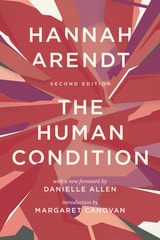
The Human Condition
Second EditionHannah Arendt
University of Chicago Press, 2018
The twenty-first century has seen a resurgence of interest in the political thinker Hannah Arendt, “the theorist of beginnings,” whose work probes the logics underlying unexpected transformations—from totalitarianism to revolution.
A work of striking originality, The Human Condition is in many respects more relevant now than when it first appeared in 1958. In her study of the state of modern humanity, Hannah Arendt considers humankind from the perspective of the actions of which it is capable. The problems Arendt identified then—diminishing human agency and political freedom, the paradox that as human powers increase through technological and humanistic inquiry, we are less equipped to control the consequences of our actions—continue to confront us today. This new edition, published to coincide with the sixtieth anniversary of its original publication, contains Margaret Canovan’s 1998 introduction and a new foreword by Danielle Allen.
A classic in political and social theory, The Human Condition is a work that has proved both timeless and perpetually timely.
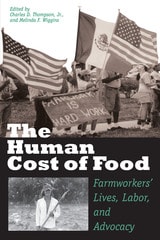
The Human Cost of Food
Farmworkers' Lives, Labor, and AdvocacyEdited by Charles D. Thompson, Jr., and Melinda F. Wiggins
University of Texas Press, 2002
Finding fresh fruits and vegetables is as easy as going to the grocery store for most Americans—which makes it all too easy to forget that our food is cultivated, harvested, and packaged by farmworkers who labor for less pay, fewer benefits, and under more dangerous conditions than workers in almost any other sector of the U.S. economy. Seeking to end the public's ignorance and improve workers' living and working conditions, this book addresses the major factors that affect farmworkers' lives while offering practical strategies for action on farmworker issues.
The contributors to this book are all farmworker advocates—student and community activists and farmworkers themselves. Focusing on workers in the Southeast United States, a previously understudied region, they cover a range of issues, from labor organizing, to the rise of agribusiness, to current health, educational, and legal challenges faced by farmworkers. The authors blend coverage of each issue with practical suggestions for working with farmworkers and other advocates to achieve justice in our food system both regionally and nationally.
The Human Meaning of Social Change
Angus and Converse, Philip E. Campbell
Russell Sage Foundation, 1972
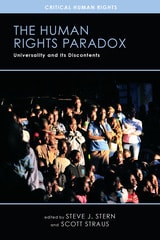
The Human Rights Paradox
Universality and Its DiscontentsEdited by Steve J. Stern and Scott Straus
University of Wisconsin Press, 2014
The Human Rights Paradox is the first book to fully embrace this contradiction and reframe human rights as history, contemporary social advocacy, and future prospect. In case studies that span Africa, Latin America, South and Southeast Asia, and the United States, contributors carefully illuminate how social actors create the imperative of human rights through relationships whose entanglements of the global and the local are so profound that one cannot exist apart from the other. These chapters provocatively analyze emerging twenty-first-century horizons of human rights—on one hand, the simultaneous promise and peril of global rights activism through social media, and on the other, the force of intergenerational rights linked to environmental concerns that are both local and global. Taken together, they demonstrate how local struggles and realities transform classic human rights concepts, including “victim,” “truth,” and “justice.”
Edited by Steve J. Stern and Scott Straus, The Human Rights Paradox enables us to consider the consequences—for history, social analysis, politics, and advocacy—of understanding that human rights belong both to “humanity” as abstraction as well as to specific people rooted in particular locales.

The Human in Bits
Graphical Computers, Black AbstractionsKris Cohen
Duke University Press, 2025
The Human in This Place
American Literatures of LynchingJennifer D. Ryan-Bryant
University of Massachusetts Press, 2027
Tracing how resistance to lynching violence generated some of the most innovative writing in American literature
On March 9, 1892, three Black men were murdered in Memphis. The violence moved Ida B. Wells to begin writing against lynching; in doing so, she helped ignite a literary tradition that would transform American literature. The dual presence of lynching violence and activist resistance gave rise to a dynamic body of African American writing that grapples with the contradictions inherent to a democracy whose citizens enslaved others.
In The Human in This Place, Jennifer Ryan-Bryant ties central moments in the history of American lynching to the emergence of new literary genres. Focusing on Jim Crow segregation, anti-lynching activism, the murder of Emmett Till, Civil Rights and Black Power organizing, and modern police brutality, Ryan-Bryant identifies the unique formal elements and themes that characterize literary responses to sustained social violence and political resistance. The new genres she identifies—including the socialist novel, the Emmett Till poem, and the anti-epic catalogue—reveal art's resistance and response to unchecked mob violence.
The Human in This Place recognizes that lynchings occupy a uniquely disturbing space in American life: simultaneously legal and extralegal, public and private, individual and communal. The literatures of lynching investigate the ethical slippage endemic to American national identity and articulate the joyous expression that resistance makes possible.
The Humane Metropolis
People and Nature in the 21st-Century CityRutherford H. Platt
University of Massachusetts Press, 2006
Four-fifths of Americans now live in the nation's sprawling metropolitan areas, and half of the world's population is now classified as “urban.” As cities become the dominant living environment for humans, there is growing concern about how to make such places more habitable, more healthy and safe, more ecological, and more equitable—in short, more “humane.”
This book explores the prospects for a more humane metropolis through a series of essays and case studies that consider why and how urban places can be made greener and more amenable. Its point of departure is the legacy of William H. Whyte (1917-1999), one of America's most admired urban thinkers. From his eyrie high above Manhattan in the offices of the Rockefeller Brothers Fund, Whyte laid the foundation for today's “smart growth” and “new urbanist” movements with books such as The Last Landscape (1968). His passion for improving the habitability of cities and suburbs is reflected in the diverse grassroots urban design and regreening strategies discussed in this volume.
Topics examined in this book include urban and regional greenspaces, urban ecological restoration, social equity, and green design. Some of the contributors are recognized academic experts, while others offer direct practical knowledge of particular problems and initiatives. The editor's introduction and epilogue set the individual chapters in a broader context and suggest how the strategies described, if widely replicated, may help create more humane urban environments.
In addition to Rutherford H. Platt, contributors to the volume include Carl Anthony, Thomas Balsley, Timothy Beatley, Eugenie L. Birch, Edward J. Blakely, Colin M. Cathcart, Steven E. Clemants, Christopher A. De Sousa, Steven N. Handel, Peter Harnik, Michael C. Houck, Jerold S. Kayden, Albert LaFarge, Andrew Light, Charles E. Little, Anne C. Lusk, Thalya Parilla, Deborah E. Popper, Frank J. Popper, Mary V. Rickel, Cynthia Rosenzweig, Robert L. Ryan, Laurin N. Sievert, Andrew G. Wiley-Schwartz, and Ann Louise Strong.
Included in the back of the book is a DVD of a 22-minute film created by Ted White, which serves as a companion to the text.

The Hundreds
Lauren Berlant and Kathleen Stewart
Duke University Press, 2019
The Hungry Soul
Eating and the Perfecting of Our NatureLeon R. Kass M.D.
University of Chicago Press, 1999
"Kass is a distinguished and graceful writer. . . . It is astonishing to discover how different is our world from that of the animals, even in that which most evidently betrays that we too are animals—our need and desire for food."—Roger Scruton, Times Literary Supplement
"Yum."—Miss Manners
The Hunters or the Hunted?
An Introduction to African Cave TaphonomyC. K. Brain
University of Chicago Press, 1981
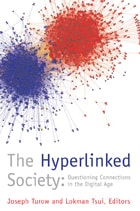
The Hyperlinked Society
Questioning Connections in the Digital AgeJoseph Turow and Lokman Tsui, Editors
University of Michigan Press, 2008
"Links" are among the most basic---and most unexamined---features of online life. Bringing together a prominent array of thinkers from industry and the academy, The Hyperlinked Society addresses a provocative series of questions about the ways in which hyperlinks organize behavior online. How do media producers' considerations of links change the way they approach their work, and how do these considerations in turn affect the ways that audiences consume news and entertainment? What role do economic and political considerations play in information producers' creation of links? How do links shape the size and scope of the public sphere in the digital age? Are hyperlinks "bridging" mechanisms that encourage people to see beyond their personal beliefs to a broader and more diverse world? Or do they simply reinforce existing bonds by encouraging people to ignore social and political perspectives that conflict with their existing interests and beliefs?
This pathbreaking collection of essays will be valuable to anyone interested in the now taken for granted connections that structure communication, commerce, and civic discourse in the world of digital media.
"This collection provides a broad and deep examination of the social, political, and economic implications of the evolving, web-based media environment. The Hyperlinked Society will be a very useful contribution to the scholarly debate about the role of the internet in modern society, and especially about the interaction between the internet and other media systems in modern society."
---Charles Steinfield, Professor and Chairperson, Department of Telecommunication, Information Studies, and Media, Michigan State University
Joseph Turow is Robert Lewis Shayon Professor at the Annenberg School for Communication, University of Pennsylvania. He was named a Distinguished Scholar by the National Communication Association and a Fellow of the International Communication Association in 2010. He has authored eight books, edited five, and written more than 100 articles on mass media industries. His books include Niche Envy: Marketing Discrimination in the Digital Age and Breaking up America: Advertisers and the New Media World.
Lokman Tsui is a doctoral candidate at the Annenberg School for Communication, University of Pennsylvania. His research interests center on new media and global communication.
Cover image: This graph from Lada Adamic's chapter depicts the link structure of political blogs in the United States. The shapes reflect the blogs, and the colors of the shapes reflect political orientation---red for conservative blogs, blue for liberal ones. The size of each blog reflects the number of blogs that link to it.
digitalculturebooks is an imprint of the University of Michigan Press and the Scholarly Publishing Office of the University of Michigan Library dedicated to publishing innovative and accessible work exploring new media and their impact on society, culture, and scholarly communication. Visit the website at www.digitalculture.org.

The Hypersexuality of Race
Performing Asian/American Women on Screen and SceneCeline Parreñas Shimizu
Duke University Press, 2007
Shimizu combines theoretical and textual analysis and interviews with artists involved in various productions. She complicates understandings of the controversial portrayals of Asian female sexuality in the popular Broadway musical Miss Saigon by drawing on ethnographic research and interviews with some of the actresses in it. She looks at how three Hollywood Asian/American femme fatales—Anna May Wong, Nancy Kwan, and Lucy Liu—negotiate representations of their sexuality; analyzes 1920s and 1930s stag films in which white women perform as sexualized Asian characters; and considers Asian/American women’s performances in films ranging from the stag pornography of the 1940s to the Internet and video porn of the 1990s. She also reflects on two documentaries depicting Southeast Asian prostitutes and sex tourism, The Good Woman of Bangkok and 101 Asian Debutantes. In her examination of films and videos made by Asian/American feminists, Shimizu describes how female characters in their works reject normative definitions of race, gender, and sexuality, thereby expanding our definitions of racialized sexualities in representation.

The Hysteric's Revenge
French Women Writers at the Fin de SiecleRachel Mesch
Vanderbilt University Press, 2006
This book argues, however, that the fear of sexual abandon--though real--veiled an even more insidious fear: that women might be capable of intellectual equality with men and thus pose a threat to the most basic structures of French patriarchal society. In demonstrating the pervasiveness of this anxiety through analysis of nineteenth-century medical texts, literary criticism, and fiction, The Hysteric's Revenge brings into relief a critical relationship between the female mind and body that is essential to understanding the discursive position of the turn-of-the-century woman writer.
The novels presented here confront this mind/body problem through a wide variety of styles and genres that challenge conventional fin-de-siecle notions of femininity. From the compelling autobiography of Liane de Pougy--one of Paris's most renowned courtesans--to Colette's frank discussions of female pleasure in one of her early novels, to the violent creativity of Rachilde's androgynous heroine, Mesch demonstrates how both canonical and non-canonical writers promoted women's intellectual authority through the development of a sexual counter-discourse. In engaging the relationship between women's minds and bodies, these novels challenge the conclusions of a century of doctors who sought to prove a physiological basis for female intellectual inferiority. At the same time, they point the way towards later French feminists who sought to subvert patriarchal structures through literary explorations of sexuality.

The I in Team
Sports Fandom and the Reproduction of IdentityErin C. Tarver
University of Chicago Press, 2017
Why in the world, Tarver asks, would anyone care about how well a total stranger can throw a ball, or hit one with a bat, or toss one through a hoop? Because such activities and the massive public events that surround them form some of the most meaningful ritual identity practices we have today. They are a primary way we—as individuals and a collective—decide both who we are who we are not. And as such, they are also one of the key ways that various social structures—such as race and gender hierarchies—are sustained, lending a dark side to the joys of being a sports fan. Drawing on everything from philosophy to sociology to sports history, she offers a profound exploration of the significance of sports in contemporary life, showing us just how high the stakes of the game are.
The IQ Mythology
Class, Race, Gender, and InequalityElaine Mensh and Harry Mensh
Southern Illinois University Press, 1991
Ever since Alfred Binet carried out a 1904 commission from France’s minister of public instruction to devise a means for deciding which pupils should be sent to what would now be called special education classes, IQ scores have been used to label and track children. Those same scores have been cited as "proof" that different races, classes, and genders are of superior and inferior intelligence.
The Menshes make clear that from the beginning IQ tests have been fundamentally biased. Offered as a means for seeking solutions to social problems, the actual measurements have been used to maintain the status quo. Often the most telling comments are from the test-makers themselves, whether Binet ("little girls weak in orthography are strong in sewing and capable in the instruction concerning housekeeping; and, all things considered, this is more important for their future") or Wigdor and Garner ("naive use of intelligence tests . . . to place children of linguistic or racial minority status in special education programs will not be defensible in court").
Among the disturbing facts that the authors share is that there is mounting political pressure for more tests and testing despite a court trial in which the judge stated that "defendants’ expert witnesses, even those clearly affiliated with the companies that devise and distribute the standardized intelligence tests, agreed, with one exception, that we cannot truly define, much less measure, intelligence." The testing firms have responded to this carefully orchestrated need with new products that extend even to the IQ testing of three-month-old infants. The authors stress that, if the testers prevail, there is little doubt that these and similar tests would be used "ad infinitum to justify superior and inferior education along class and racial lines."

The Ice Bucket Challenge
Pete Frates and the Fight against ALSCasey Sherman and Dave Wedge
University Press of New England, 2017
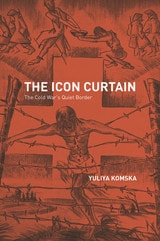
The Icon Curtain
The Cold War's Quiet BorderYuliya Komska
University of Chicago Press, 2015
Yuliya Komska transports readers to the western edge of the Bohemian Forest, one of Europe’s oldest borderlands, where in the 1950s civilians set out to shape the so-called prayer wall. A chain of new and repurposed pilgrimage sites, lookout towers, and monuments, the prayer wall placed two long-standing German obsessions, forest and border, at the heart of the century’s most protracted conflict. Komska illustrates how civilians used the prayer wall to engage with and contribute to the new political and religious landscape. In the process, she relates West Germany’s quiet sylvan periphery to the tragic pitch prevalent along the Iron Curtain’s better-known segments.
Steeped in archival research and rooted in nuanced interpretations of wide-ranging cultural artifacts, from vandalized religious images and tourist snapshots to poems and travelogues, The Icon Curtain pushes disciplinary boundaries and opens new perspectives on the study of borders and the Cold War alike.
The Iconoclastic Imagination
Image, Catastrophe, and Economy in America from the Kennedy Assassination to September 11Ned O'Gorman
University of Chicago Press, 2015
In The Iconoclastic Imagination, Ned O’Gorman approaches each of these moments as an image of icon-destruction that give us distinct ways to imagine social existence in American life. He argues that the Cold War gave rise to crises in political, aesthetic, and political-aesthetic representations. Locating all of these crises within a “neoliberal imaginary,” O’Gorman explains that since the Kennedy assassination, the most powerful way to see “America” has been in the destruction of representative American symbols or icons. This, in turn, has profound implications for a neoliberal economy, social philosophy, and public policy. Richly interwoven with philosophical, theological, and rhetorical traditions, the book offers a new foundation for a complex and innovative approach to studying Cold War America, political theory, and visual culture.
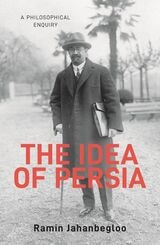
The Idea of Persia
A Philosophical EnquiryRamin Jahanbegloo
Gingko, 2026
This book explores the idea of Persia as a means of investigating the soul of the fascinating nation.
In 1721, the French philosopher Montesquieu posed the question “Comment peut-on être persan?” ("How can one be Persian?") in the title to his famous Persian Letters. After centuries of invasion, murder, destruction, authoritarian rule, decay of political theory, and increasing dissolution in Iran’s politics, this volume is an investigation into what the answer to that question might be today.
The Idea of Persia explores the notion of what it is to be Persian, but not as it has been constituted in the past with reference to the political experience of antiquity, nor as an affirmation of the secular-rational project of modernity. Rather, the book examines the question of what it is to be Persian against the backdrop of centuries in which a common, plural subjectivity of Persian-ness has been continually delayed by those who, with or without ideologies, believed in politics only as a means of ruling or of being ruled without laws or citizenship.
The historical battle for social and political freedoms is still underway in Iran. As the nation wrestles with the possibility of an extended period of political, social, and cultural decline, it is a timely moment to return to the perspective embodied in the enlightened thinking of figures such as the writer and three times prime minister of Iran Mohammed Ali Foroughi (1877–1942) and his vision of a country possessing rational and moral capabilities, and to a possible renaissance of social and political institutions.
The idea of Persia as it is presented here sees hope in the future as the means by which Iranians may liberate themselves from the duality of heroes and saints and remake their political mentality while staying true to an age-old idea of Persia and to freedom as an essential virtue.
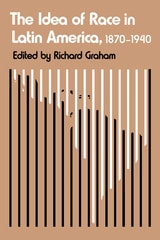
The Idea of Race in Latin America, 1870-1940
Edited and with an introduction by Richard Graham
University of Texas Press, 1990
From the mid-nineteenth century until the 1930s, many Latin American leaders faced a difficult dilemma regarding the idea of race. On the one hand, they aspired to an ever-closer connection to Europe and North America, where, during much of this period, "scientific" thought condemned nonwhite races to an inferior category. Yet, with the heterogeneous racial makeup of their societies clearly before them and a growing sense of national identity impelling consideration of national futures, Latin American leaders hesitated. What to do? Whom to believe?
Latin American political and intellectual leaders' sometimes anguished responses to these dilemmas form the subject of The Idea of Race in Latin America. Thomas Skidmore, Aline Helg, and Alan Knight have each contributed chapters that succinctly explore various aspects of the story in Brazil, Argentina, Cuba, and Mexico. While keenly alert to the social and economic differences that distinguish one Latin American society from another, each author has also addressed common issues that Richard Graham ably draws together in a brief introduction. Written in a style that will make it accessible to the undergraduate, this book will appeal as well to the sophisticated scholar.
The Idea of a Free Press
The Enlightenment and Its Unruly LegacyDavid Copeland
Northwestern University Press, 2006
The rise of a free press was, in many ways, a legacy of the Reformation and Enlightenment. Copeland describes a discourse centered on questions of religion--a discussion that the government, with all its religious authority, could not suppress because of the belief that the ability to reason for oneself was God-given. In this account we see how the debate moved from religion to the purely political sphere, and how, through the increased use of the printing press, it was opened to a multiplicity of voices and opinions. Spanning nearly four centuries in Britain and America, Copeland's book reveals how the tension between government control and the right to debate public affairs openly ultimately led to the idea of a free press; in doing so, it documents an intellectual development of unparalleled relevance and importance to the history of journalism.
The Identity Dilemma
Social Movements and Collective IdentityAidan McGarry
Temple University Press, 2015
The editors and contributors to this pathbreaking volume examine how collective identities can provide powerful advantages but also generate conflicts. The various chapters help to develop our understanding of collective identity from how strategic identities are developed for protest groups to how stigmatized groups negotiate identity dilemmas.
Ultimately, The Identity Dilemma contributes a new strategic approach to understanding social movements that highlights the choices and tensions that groups inevitably face in articulating their ideas and interests.
Contributors include: Marian Barnes, Cristina Flesher Fominaya, Umut Korkut, Elzbieta Korolczuk, John Nagle, Clare Saunders, Neil Stammers, Marisa Tramontano, Huub Van Baar, and the editors.

The Idols of ISIS
From Assyria to the InternetAaron Tugendhaft
University of Chicago Press, 2020
Beginning with the Islamic State’s claim that the smashed objects were idols of the “age of ignorance,” Aaron Tugendhaft questions whether there can be any political life without idolatry. He then explores the various roles Mesopotamian sculpture has played in European imperial competition, the development of artistic modernism, and the formation of Iraqi national identity, showing how this history reverberates in the choice of the Mosul Museum as performance stage. Finally, he compares the Islamic State’s production of images to the ways in which images circulated in ancient Assyria and asks how digitization has transformed politics in the age of social media. An elegant and accessibly written introduction to the complexities of such events, The Idols of ISIS is ideal for students and readers seeking a richer cultural perspective than the media usually provides.
The Ills of Aid
An Analysis of Third World Development PoliciesEberhard Reusse
University of Chicago Press, 2002
Very few critiques of foreign development aid have approached the subject from the perspectives of organizational, rural, or epistemic sociology. The Ills of Aid combines all three, and points toward fundamental solutions: more direct accountability to the primary funding base—the international taxpayer—and the privatization of aid. Learned, pragmatic, and important, The Ills of Aid is essential reading for all in the field.Organization, other international and bilateral development programs, and development financing institutions. His field experience embraces more than forty countries.
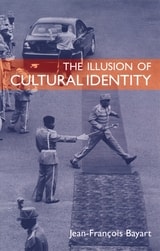
The Illusion of Cultural Identity
Jean-François Bayart
University of Chicago Press, 2005
In this highly sophisticated book, Bayart shows that the very idea of cultural identity prevents us from grasping the cultural dimensions of political action and economic development. Identities, he argues, are fluid, never homogeneous, and sometimes invented. Political repertoires are instead created through imagined, highly ambiguous aspects of culture—what he calls "imaginaires." For instance, the long beards worn by men in some fundamentalist groups are thought to be key to their core identities and thus assumed to be in conflict with modern values. These beards, however, do not stand in the way of the men's use of technology or their embrace of capitalism—an example Bayart uses to demonstrate the equivocality of cultural identity. The theoretical implications of Bayart's analysis emerge from a fascinating collection of historical examples that often surprise and always instruct.
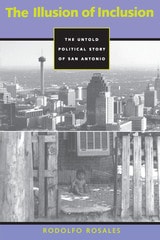
The Illusion of Inclusion
The Untold Political Story of San AntonioBy Rodolfo Rosales
University of Texas Press, 2000
To many observers, the 1981 election of Henry Cisneros as mayor of San Antonio, Texas, represented the culminating victory in the Chicano community's decades-long struggle for inclusion in the city's political life. Yet, nearly twenty years later, inclusion is still largely an illusion for many working-class and poor Chicanas and Chicanos, since business interests continue to set the city's political and economic priorities.
In this book, Rodolfo Rosales offers the first in-depth history of the Chicano community's struggle for inclusion in the political life of San Antonio during the years 1951 to 1991, drawn from interviews with key participants as well as archival research. He focuses on the political and organizational activities of the Chicano middle class in the context of post-World War II municipal reform and how it led ultimately to independent political representation for the Chicano community. Of special interest is his extended discussion of the role of Chicana middle-class women as they gained greater political visibility in the 1980s.
The Immensity of Being Singular
Approaching Migrant Lives in São Paulo through ResonanceSimone Toji
HAU, 2023
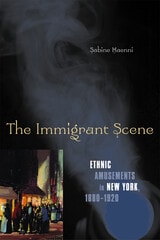
The Immigrant Scene
Ethnic Amusements in New York, 1880–1920Sabine Haenni
University of Minnesota Press, 2008
Explores the relationship between immigrant and national culture
Yiddish melodramas about the tribulations of immigration. German plays about alpine tourism. Italian vaudeville performances. Rubbernecking tours of Chinatown. In the New York City of the late nineteenth and early twentieth centuries, these seemingly disparate leisure activities played similar roles: mediating the vast cultural, demographic, and social changes that were sweeping the nation’s largest city.
In The Immigrant Scene, Sabine Haenni reveals how theaters in New York created ethnic entertainment that shaped the culture of the United States in the early twentieth century. Considering the relationship between leisure and mass culture, The Immigrant Scene develops a new picture of the metropolis in which the movement of people, objects, and images on-screen and in the street helped residents negotiate the complexities of modern times. In analyzing how communities engaged with immigrant theaters and the nascent film culture in New York City, Haenni traces the ways in which performance and cinema provided virtual mobility—ways of navigating the socially complex metropolis—and influenced national ideas of immigration, culture, and diversity in surprising and lasting ways.
The Impact of College Diversity
Struggles and Successes at Age 30Elizabeth Aries
Temple University Press, 2023
The Impact of College Diversity details how exposure to diversity in college helped shape Black and white graduates process issues of economic and racial privilege and inequality at age 30. She investigates how college diversity experiences also facilitate the attainment of upward social mobility in lower-income students and the role that mobility played in their relationships with family and friends in their home communities. Aries further examines how interactions with peers of another race and class influenced development of citizenship skills and civic engagement, as well as Black students’ ability to cope with the challenges they faced in the professional world.
Aries concludes her study with a discussion of why elite colleges have been beneficial in promoting upward mobility in lower-income students, and the importance of achieving equity and inclusion in making diversity initiatives successful.

The Impact of Touch in Dance Movement Psychotherapy
A Body–Mind Centering ApproachKaty Dymoke
Intellect Books, 2021
In this book, dance movement psychotherapist Katy Dymoke presents an in-depth case study of work with a client with a profound learning disability. The research stems from a postdoctoral thesis sponsored by the United Kingdom’s National Health Service, where Dymoke was employed at the time of the clinical outcomes relayed in this work. The volume includes transcripts of the session content; descriptions of how incidents of touch were initiated and undertaken within the process; subsequent categorizations of the incidents of touch as self-directed, passive, or reciprocal; and commentary and discussion of the therapeutic process. As we see, the incidents of touch contribute to the client’s process of mental distress, trauma, lack of capacity, and more. Finally, Dymoke includes sections on the ethical issues of this work in the NHS, on doing research with such a client group, and on the theoretical models that emerged.
The Imperial Style of Inquiry in Twentieth-Century China
The Emergence of New ApproachesDonald J. Munro
University of Michigan Press, 1996
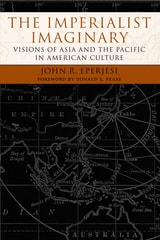
The Imperialist Imaginary
Visions of Asia and the Pacific in American CultureJohn Eperjesi
Dartmouth College Press, 2014
The Importance of Elsewhere
The Globalist Humanist TouristRandy Malamud
Intellect Books, 2018
The Impossibility of Muslim Boyhood
Shenila Khoja-Moolji
University of Minnesota Press, 2024
How the construction of Muslim boys as proto-terrorists is integral to the story of American racial capitalism
How do we understand an incident where a five-year-old Muslim boy arrives at Dulles airport and is preemptively detained as a “threat”? To answer that question, Shenila Khoja-Moolji examines American public culture, arguing that Muslim boyhood has been invented as a threat within an ideology that seeks to predict future terrorism. Muslim boyhood bridges actual past terrorism and possible future events, justifying preemptive enclosure, surveillance, and punishment. Even in the occasional reframing of individual Muslim boys as innocent, Khoja-Moolji identifies a pattern of commodity antiracism, through which elites buy public goodwill but leave intact the collective anti-Muslim notion that fuels an expanding carceral and security state. Framing Muslim boyhood as a heuristic device, she turns to a discussion of Hindutva ideology in India to show how Muslim boyhood may be resituated in global contexts.

The Impossible Reversal
A History of How We PlayPeter D. McDonald
University of Minnesota Press, 2026
Tracing the cultural history of play—from Fluxus to SimCity
Games and gamified activities have become ubiquitous in many adults’ lives, and play is widely valued for fostering creativity, community, growth, and empathy. But how did we come to our current understanding of what it means to play? The Impossible Reversal charts the transformation of notions of playfulness beginning in the second half of the twentieth century, when a legion of artists, academics, and engineers developed new ways of theorizing, structuring, and designing ludic activity.
Through examples ranging from experimental Fluxus games to corporate role-playing exercises and from the Easy Bake Oven to Tetris, The Impossible Reversal presents four styles of playfulness characteristic of the “era of designed play”: the impossible reversal, which puts a player in a seemingly hopeless scenario they must upend with a tiny gesture; expending the secret, which involves silly rules that gain an obscure power and require players to embrace failure; simulated freedom, a satiric criticism of the ordinary world; and oblique repetition, a way of playing that stumbles toward unimaginable outcomes through simple, meaningless, and endlessly iterated acts.
A unique genealogical account of play as both concept and practice, The Impossible Reversal illuminates how playfulness became essential for understanding cultural, technical, and economic production in the United States.
Retail e-book files for this title are screen-reader friendly with images accompanied by short alt text and/or extended descriptions.
The Impossible Woman
Television, Feminism, and the FutureKristen Hoerl
Rutgers University Press, 2026
The Impotence Epidemic
Men's Medicine and Sexual Desire in Contemporary ChinaEverett Yuehong Zhang
Duke University Press, 2015
The Impracticality of Practical Research
A History of Contemporary Sciences of Change That ConserveThomas S. Popkewitz
University of Michigan Press, 2020
There is an alluring desire that research should lead us to find the practical knowledge that enables people to live a good life in a just and equitable society. This desire haunted the 19th century emergence of the social sciences as a discipline, then became more pronounced in the postwar mobilizations of research. Today that desire lives on in the international assessments of national schools and in the structure of professional education, both of which influence government modernization of schools and also provide for people’s well-being. American policy thus reflects research in which reforms are verified by “scientific, empirical evidences” about “what works” in experiments, and “will work” therefore in society.
The book explores the idea that practical and useful knowledge changes over time, and shows how this knowledge has been (re)visioned in contemporary research on educational reform, instructional improvement, and professionalization. The study of science draws on a range of social and cultural theories and historical studies to understand the politics of science, as well as scientific knowledge that is concerned with social and educational change. Research hopes to change social conditions to create a better life, and to shape people whose conduct embodies these valued characteristics—the good citizen, parent, or worker. Yet this hope continually articulates the dangers that threaten this future. Thomas Popkewitz explores how the research to correct social wrongs is paradoxically entangled with the inscription of differences that ultimately hamper the efforts to include.

The Imprint of Another Life
Adoption Narratives and Human PossibilityMargaret Homans
University of Michigan Press, 2015
The Imprint of Another Life: Adoption Narratives and Human Possibilityaddresses a series of questions about common beliefs about adoption. Underlying these beliefs is the assumption that human qualities are innate and intrinsic, an assumption often held by adoptees and their families, sometimes at great emotional cost. This book explores representations of adoption—transracial, transnational, and domestic same-race adoption—that reimagine human possibility by questioning this assumption and conceiving of alternatives.
Literary scholar Margaret Homans examines fiction making’s special relationship to themes of adoption, an “as if” form of family making, fabricated or fictional instead of biological or “real.” Adoption has tended to generate stories rather than uncover bedrock truths. Adoptive families are made, not born; in the words of novelist Jeanette Winterson, “adopted children are self-invented because we have to be.” In attempting to recover their lost histories and identities, adoptees create new stories about themselves. While some believe that adoptees cannot be whole unless they reconnect with their origins, others believe that privileging biology reaffirms hierarchies (such as those of race) that harm societies and individuals. Adoption is lived and represented through an irresolvable tension between belief in the innate nature of human traits and belief in their constructedness, contingency, and changeability. The book shows some of the ways in which literary creation, and a concept of adoption as a form of creativity, manages this tension.
The texts examined include fiction (e.g., classic novels such as Silas Marner, What Maisie Knew, and Beloved); memoirs by adoptees, adoptive parents, and birthmothers; drama, documentary films, advice manuals, social science writing; and published interviews with adoptees, parents, and birth parents. Along the way the book tracks the quests of adoptees who, whether or not they meet their original families, must construct their own stories rather than finding them; follows transnational adoptees as they return, hopes held high, to Korea and China; looks over the shoulders of a generation of girls adopted from China as they watch Disney’s iconic Mulan, with its alluring story of destiny written on the skin; and listens to birthmothers as they struggle to tell painful secrets held for decades.
This book engages in debates within adoption studies, women’s and gender studies, transnational studies, and ethnic studies; it will appeal to literary scholars and critics, including specialists in memoir or narrative theory, and to general readers interested in adoption and in race.

The Improbable First Century of Cosmopolitan Magazine
James Landers
University of Missouri Press, 2010
The Impure Imagination
Toward A Critical Hybridity In Latin American WritingJoshua Lund
University of Minnesota Press, 2006
In this pathbreaking work, Joshua Lund offers a thoughtful critique of hybridity by reading contemporary theories of cultural mixing against their historical precursors. The Impure Imagination is the first book to systematically analyze today’s dominant theories in relation to earlier, narrative manifestations of hybridity in Latin American writing, with a particular focus on Mexico and Brazil.
Generally understood as the impurification of standard or canonized forms, hybridity has historically been embraced as a basic marker of Latin American regional identity and as a strategy of resistance to cultural imperialism. Lund contends that Latin American theories and narratives of hybridity have been, and continue to be, underwritten by a structure of colonial power. Here he provides an informed critique and cogent investigation of this connection, its cultural effects, and its political implications. Using the emergence of hybridity as an analytical frame for thinking about culture in the Americas, Lund examines the contributions of influential thinkers, including Néstor García Canclini, Homi Bhabha, Jacques Derrida, Giorgio Agamben, Jorge Luis Borges, Antonio Candido, and many others.
Distinguished by its philosophical grounding and underpinned with case studies, The Impure Imagination employs postcolonial theory and theories of race as it explores Latin American history and culture. The result is an original and interrogative study of hybridity that exposes surprising—and unsettling—similarities with nationalistic discourses.
Joshua Lund is assistant professor of Spanish at the University of Pittsburgh. His essays have appeared in A Contracorriente, Race & Class, Cultural Critique, and the Journal of Latin American Cultural Studies.
The Inattention Economy
How Women of Color Built the InternetLisa Nakamura
University of Minnesota Press, 2026
Revealing the unheralded contributions of women of color to the foundation and development of the digital economy
The Inattention Economy challenges the widespread myth that the internet was born from the labor of a handful of white male entrepreneurs, recovering the uncredited and unpaid contributions of women of color. Focusing on three key inflection points in computing—the microchip era of the 1960s and ’70s, the rise of social media in the 2000s, and A.I.-fueled virtual reality in the 2020s—Lisa Nakamura illuminates these women’s instrumental roles in building new technologies and making them coherent to users.
From the Navajo women who manufactured the first semiconductor circuits in New Mexico to Tila Tequila, the queer Vietnamese American refugee who became the first true internet influencer in the MySpace age, to Black virtual reality creators, Nakamura highlights how women’s gendered and racialized identities have uniquely positioned them to mediate the development and proliferation of new technologies. She exposes how these women have been structurally excluded from racial capitalism’s benefits while their labor is considered as exploitable and inexhaustible as that of machines. Confronting this injustice, she focuses our attention on their work, which undergirds and makes possible the platforms ingrained in our daily lives.
Arguing for both recognition and material compensation for these women’s labor, The Inattention Economy is a powerful counterhistory of Silicon Valley and a persuasive call to imagine a different kind of internet.
Retail e-book files for this title are screen-reader friendly with images accompanied by short alt text and/or extended descriptions.
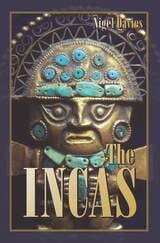
The Incas
Nigel Davies
University Press of Colorado, 1995
In this classic work, Nigel Davies offers a clear view into Inca political history, economy, governance, religion, art, architecture, and daily life. The Incas has become a classic in its many years in print; readers and scholars interested in ancient American cultures will relish this paperback edition.
The Inclusion Marathon
On Diversity and Equity in the WorkplaceZoë Papaikonomou
Amsterdam University Press, 2023
In The Inclusion Marathon, Kauthar Bouchallikht and Zoë Papaikonomou interview 41 practitioners and researchers about their knowledge and experience within the field of diversity, equity and inclusion in the Netherlands. These experts discuss different approaches and the bumps and barriers they come across. The Inclusion Marathon is a revealing book exploring the persistent lack of diversity and equity within many organisations. At the same time, it is a constructive, concrete guide to how organisations may become more diverse, equitable and inclusive.
The Inclusion Marathon is an extensive English summary of the Dutch book De inclusiemarathon.
The Inconstancy of the Indian Soul
The Encounter of Catholics and Cannibals in 16-century BrazilEduardo Viveiros de Castro
Prickly Paradigm Press, 2011
In the mid-sixteenth century, Jesuit missionaries working in what is now Brazil were struck by what they called the inconstancy of the people they met, the indigenous Tupi-speaking tribes of the Atlantic coast. Though the Indians appeared eager to receive the Gospel, they also had a tendency to forget the missionaries’ lessons and “revert” to their natural state of war, cannibalism, and polygamy. This peculiar mixture of acceptance and rejection, compulsion and forgetfulness was incorrectly understood by the priests as a sign of the natives’ incapacity to believe in anything durably.
In this pamphlet, world-renowned Brazilian anthropologist Eduardo Viveiros de Castro situates the Jesuit missionaries’ accounts of the Tupi people in historical perspective, and in the process draws out some startling and insightful implications of their perceived inconstancy in relation to anthropological debates on culture and religion.
The Inconvenient Indian
A Curious Account of Native People in North AmericaThomas King
University of Minnesota Press, 2013
In The Inconvenient Indian, Thomas King offers a deeply knowing, darkly funny, unabashedly opinionated, and utterly unconventional account of Indian–White relations in North America since initial contact. Ranging freely across the centuries and the Canada–U.S. border, King debunks fabricated stories of Indian savagery and White heroism, takes an oblique look at Indians (and cowboys) in film and popular culture, wrestles with the history of Native American resistance and his own experiences as a Native rights activist, and articulates a profound, revolutionary understanding of the cumulative effects of ever-shifting laws and treaties on Native peoples and lands.
Suffused with wit, anger, perception, and wisdom, The Inconvenient Indian is at once an engaging chronicle and a devastating subversion of history, insightfully distilling what it means to be “Indian” in North America. It is a critical and personal meditation that sees Native American history not as a straight line but rather as a circle in which the same absurd, tragic dynamics are played out over and over again. At the heart of the dysfunctional relationship between Indians and Whites, King writes, is land: “The issue has always been land.” With that insight, the history inflicted on the indigenous peoples of North America—broken treaties, forced removals, genocidal violence, and racist stereotypes—sharpens into focus. Both timeless and timely, The Inconvenient Indian ultimately rejects the pessimism and cynicism with which Natives and Whites regard one another to chart a new and just way forward for Indians and non-Indians alike.

The Incredible Scream Machine
A History of the Roller CoasterRobert Cartmell
University of Wisconsin Press, 1987
The Indecent Screen
Regulating Television in the Twenty-First CenturyChris, Cynthia
Rutgers University Press, 2019
The Independence of the Media and its Regulatory Agencies
Shedding New Light on Formal and Actual Independence against the National ContextEdited by Wolfgang Schulz, Peggy Valcke, and Kristina Irion
Intellect Books, 2013
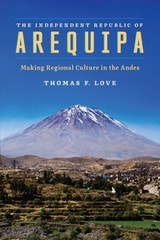
The Independent Republic of Arequipa
Making Regional Culture in the AndesBy Thomas F. Love
University of Texas Press, 2017
Arequipa, Peru’s second largest city, has the most intense regional culture in the central Andes. Arequipeños fiercely conceive of themselves as exceptional and distinctive, yet also broadly representative of the nation’s overall hybrid nature—a blending of coast (modern, “white”) and sierra (traditional, “indigenous”). The Independent Republic of Arequipa investigates why and how this regional identity developed in a boom of cultural production after the War of the Pacific (1879–1884) through the mid-twentieth century.
Drawing on decades of ethnographic fieldwork, Thomas F. Love offers the first anthropological history of southwestern Peru’s distinctive regional culture. He examines both its pre-Hispanic and colonial altiplano foundations (anchored in continuing pilgrimage to key Marian shrines) and the nature of its mid-nineteenth century “revolutionary” identity in cross-class resistance to Lima’s autocratic control of nation-building in the post-Independence state. Love then examines Arequipa’s early twentieth-century “mestizo” identity (an early and unusual case of “browning” of regional identity) in the context of raging debates about the “national question” and the “Indian problem,” as well as the post-WWII development of extravagant displays of distinctive bull-on-bull fighting that now constitute the very performance of regional identity. Love’s research reveals that Arequipa’s “traditional” local culture, symbolically marked by populist, secular, and rural elements, was in fact a project of urban-based, largely middle-class cultural entrepreneurs, invented to counter continuing Limeño autocratic power, marked by nostalgia, and anxious about the inclusion of the nation’s indigenous majority as full modern citizens.