Results by title
8812 books match the query 'Political Science' and 1911 start with t

The Universal Declaration of Human Rights and the Challenge of Religion
Johannes Morsink
University of Missouri Press, 2017
Repulsed by evil Nazi practices and desiring to create a better world after the devastation of World War II, in 1948 the UN General Assembly adopted the Universal Declaration of Human Rights (UDHR). Because of the secular imprint of this text, it has faced a series of challenges from the world’s religions, both when it was crafted and in subsequent political and legal struggles.
The book mixes philosophical, legal, and archival arguments to make the point that the language of human rights is a valid one to address the world’s disputes. It updates the rationale used by the early UN visionaries and makes it available to twenty-first-century believers and unbelievers alike. The book shows how the debates that informed the adoption of this pivotal normative international text can be used by scholars to make broad and important policy points.
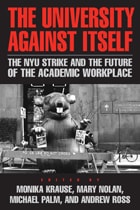
The University Against Itself
The NYU Strike and the Future of the Academic Workplaceedited by Monika Krause, Mary Nolan, Michael Palm and Andrew Ross
Temple University Press, 2008
All of the contributors were either participants in the NYU strike -- graduate students, faculty, and organizers -- or are nationally recognized as writers on academic labor. They are deeply troubled by the ramifications of corporatizing universities. Here they spell out their concerns, offering lessons from one historic strike as well as cautions about the future of all universities.
Contributors include: Stanley Aronowitz, Barbara Bowen, Andrew Cornell, Ashley Dawson, Stephen Duncombe, Steve Fletcher, Greg Grandin, Adam Green, Kitty Krupat, Gordon Lafer, Micki McGee, Sarah Nash, Cary Nelson, Matthew Osypowski, Ed Ott, Ellen Schrecker, Susan Valentine, and the editors.
The University and Social Justice
Struggles Across the GlobeAziz Choudry
Pluto Press, 2020
Whether calling for the decommodification or the decolonization of education, many of these struggles have attempted to draw on (and in turn, resonate with) longer histories of popular resistance, broader social movements and radical visions of a fairer world. In this critical collection, Aziz Choudry, Salim Vally and a host of international contributors bring grounded, analytical accounts of diverse struggles relating to higher education into conversation with each other.
Featuring contributions written by students and staff members on the frontline of struggles from 12 different countries, including Canada, Chile, France, India, Mexico, Nigeria, Occupied Palestine, the Philippines, South Africa, Turkey, the UK and the USA, the book asks what can be learned from these movements' strategies, demands and visions.
The University and the People
Envisioning American Higher Education in an Era of Populist ProtestScott M. Gelber
University of Wisconsin Press, 2011
The University and the People chronicles the influence of Populism—a powerful agrarian movement—on public higher education in the late nineteenth century. Revisiting this pivotal era in the history of the American state university, Scott Gelber demonstrates that Populists expressed a surprising degree of enthusiasm for institutions of higher learning. More fundamentally, he argues that the mission of the state university, as we understand it today, evolved from a fractious but productive relationship between public demands and academic authority.
Populists attacked a variety of elites—professionals, executives, scholars—and seemed to confirm academia’s fear of anti-intellectual public oversight. The movement’s vision of the state university highlighted deep tensions in American attitudes toward meritocracy and expertise. Yet Populists also promoted state-supported higher education, with the aims of educating the sons (and sometimes daughters) of ordinary citizens, blurring status distinctions, and promoting civic engagement. Accessibility, utilitarianism, and public service were the bywords of Populist journalists, legislators, trustees, and sympathetic professors. These “academic populists” encouraged state universities to reckon with egalitarian perspectives on admissions, financial aid, curricula, and research. And despite their critiques of college “ivory towers,” Populists supported the humanities and social sciences, tolerated a degree of ideological dissent, and lobbied for record-breaking appropriations for state institutions.
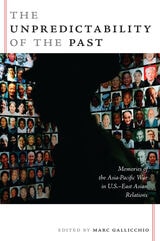
The Unpredictability of the Past
Memories of the Asia-Pacific War in U.S.-East Asian RelationsMarc Gallicchio, ed.
Duke University Press, 2007
The contributors interpret mass media sources, museum displays, monuments, film, and literature, as well as the archival sources traditionally used by historians. They explore how American ideas about Japanese history shaped U.S. occupation policy following Japan’s surrender in 1945, and how memories of the Asia-Pacific War influenced Washington and Tokyo policymakers’ reactions to the postwar rise of Soviet power. They investigate topics from the resurgence of Pearl Harbor images in the U.S. media in the decade before September 11, 2001, to the role of Chinese war museums both within China and in Chinese-Japanese relations, and from the controversy over the Smithsonian Institution’s Enola Gay exhibit to Japanese tourists’ reactions to the USS Arizona memorial at Pearl Harbor. One contributor traces how a narrative commemorating African Americans’ military service during World War II eclipsed the history of their significant early-twentieth-century appreciation of Japan as an ally in the fight against white supremacy. Another looks at the growing recognition and acknowledgment in both the United States and Japan of the Chinese dimension of World War II. By focusing on how memories of the Asia-Pacific War have been contested, imposed, resisted, distorted, and revised, The Unpredictability of the Past demonstrates the crucial role that interpretations of the past play in the present.
Contributors. Marc Gallicchio, Waldo Heinrichs, Haruo Iguchi, Xiaohua Ma, Frank Ninkovich, Emily S. Rosenberg, Takuya Sasaki, Yujin Yaguchi, Daqing Yang
The Unruly Dead
Spirits, Memory, and State Formation in Timor-LesteLia Kent
University of Wisconsin Press, 2024
With generous, careful ethnography and incisive analysis, Kent challenges comfortable, linear narratives of transitional justice and argues that this memory work is reshaping the East Timorese social and political order—a process in which the dead are active, and sometimes disruptive, participants. Community ties and even the landscape itself are imbued with their presence and demands, and the horrific scale of mass death in recent times—at least a third of the population perished during the Indonesian occupation—means Timor-Leste’s dead have real, significant power in the country’s efforts to remember, recover, and reestablish itself.
The Unsteady March
The Rise and Decline of Racial Equality in AmericaPhilip A. Klinkner and Rogers M. Smith
University of Chicago Press, 1999
"[An] unflinching portrait of the leviathan of American race relations. . . . This important book should be read by all who aspire to create a more perfect union."—Publishers Weekly, starred review
"Could it be that our unswerving belief in the power of our core values to produce racial equality is nothing but a comforting myth? That is the main argument put forth by Philip Klinkner and Rogers Smith . . . The Unsteady March is disturbing because it calls into question our cherished national belief and does so convincingly. . . . [It] is beautifully written, and the social history it provides is illuminating and penetrating."—Aldon Morris, American Journal of Sociology
Winner of the Horace Mann Bond Award of the W.E.B. Du Bois Institute for Afro-American Research at Harvard University.
The Unvarnished Doctrine
Locke, Liberalism, and the American RevolutionSteven M. Dworetz
Duke University Press, 1990
The Unwanted
European Refugees From 1St World WarMichael Marrus
Temple University Press, 2001

The Upright Farmer
Racial Capitalism and Agricultural Modernization in Burkina FasoJessie K. Luna
Duke University Press, 2026
The Uprooted
The Refugee in World HistoryAndreas Kossert
Rutgers University Press, 2027
In his new book, Andreas Kossert—the renowned expert on emigration and expulsion in the twentieth century and author of the bestselling Cold Home—places the early twenty-first-century refugee movement in a wider historical context. Movingly told and interwoven with personal accounts, The Uprooted: The Refugee in World History reveals the existential experiences of uprootedness and hostility that go hand in hand with losing one's homeland and explains why refugees and displaced persons have always found it so difficult to settle into a new country. Whether they have come from East Prussia, Syria, or India, refugees are agents of world history—and with this book Kossert gives them a voice.
The Urban Voter
Group Conflict and Mayoral Voting Behavior in American CitiesKaren M. Kaufmann
University of Michigan Press, 2004
The Victorians in the Rearview Mirror
Simon Joyce
Ohio University Press, 2007
When Margaret Thatcher called in 1979 for a return to Victorian values such as hard work, self-reliance, thrift, and national pride, Labour Party leader Neil Kinnock responded that “Victorian values” also included “cruelty, misery, drudgery, squalor, and ignorance.”
The Victorians in the Rearview Mirror is an in-depth look at the ways that the twentieth century reacted to and reimagined its predecessor. It considers how the Victorian inheritance has been represented in literature, politics, film, and visual culture; the ways in which modernists and progressives have sought to differentiate themselves from an image of the Victorian; and how conservatives (and some liberals) have sought to revive elements of nineteenth-century life. Nostalgic and critical impulses combine to fix an understanding of the Victorians in the popular imagination.
Simon Joyce examines heritage culture, contemporary politics, and the “neo-Dickensian” novel to offer a more affirmative assessment of the Victorian legacy, one that lets us imagine a model of social interconnection and interdependence that has come under threat in today’s politics and culture.
Although more than one hundred years have passed since the death of Queen Victoria, the impact of her time is still fresh. The Victorians in the Rearview Mirror speaks to diverse audiences in literary and cultural studies, in addition to those interested in visual culture and contemporary politics, and situates detailed close readings of literary and cinematic texts in the context of a larger argument about the legacies of an era not as distant as we might like to think.
The Victorious Counterrevolution
The Nationalist Effort in the Spanish Civil WarMichael Seidman
University of Wisconsin Press, 2011
This groundbreaking history of the Spanish Civil War (1936–39) examines, for the first time in any language, how General Francisco Franco and his Nationalist forces managed state finance and economic production, and mobilized support from elites and middle-class Spaniards, to achieve their eventual victory over Spanish Republicans and the revolutionary left.
The Spanish Nationalists are exceptional among counter-revolutionary movements of the twentieth century, Michael Seidman demonstrates, because they avoided the inflation and shortages of food and military supplies that stymied not only their Republican adversaries but also their counter-revolutionary counterparts—the Russian Whites and Chinese Nationalists. He documents how Franco’s highly repressive and tightly controlled regime produced food for troops and civilians; regular pay for soldiers, farmers, and factory workers; and protection of property rights for both large and small landowners. These factors, combined with the Nationalists’ pro-Catholic and anti-Jewish propaganda, reinforced solidarity in the Nationalist zone.
Seidman concludes that, unlike the victorious Spanish Nationalists, the Russian and Chinese bourgeoisie were weakened by the economic and social upheaval of the two world wars and succumbed in each case to the surging revolutionary left.
The View from Prague
The Expectations of World Leaders at the Dawn of the 21st CenturyJirí Musil
Central European University Press, 2007
The View from the Helm
Leading the American University during an Era of ChangeJames J. Duderstadt
University of Michigan Press, 2009
Widely regarded as one of the most active and publicly engaged university presidents in modern academia, Duderstadt—who led the University of Michigan from 1988 to 1996—presided over a period of enormous change, not only for his institution, but for universities across the country. His presidency was a time of growth and conflict: of sweeping new affirmative-action and equal-opportunity programs, significant financial expansion, and reenergized student activism on issues from apartheid to codes of student conduct.
Under James Duderstadt’s stewardship, Michigan reaffirmed its reputation as a trailblazer among universities. Part memoir, part history, part commentary, The View from the Helm extracts general lessons from his experiences at the forefront of change in higher education, offering current and future administrators a primer on academic leadership and venturing bold ideas on how higher education should be steered into the twenty-first century.
The Village and the Class War
Anti-Kulak Campaign in Estonia 1944-49Anu Mai Kõll
Central European University Press, 2013
The Violence of Austerity
Edited by David Whyte and Vickie Cooper
Pluto Press, 2017
In The Violence of Austerity, David Whyte and Vickie Cooper bring together the passionate voices of campaigners and academics to show that rather than stimulating economic growth, austerity policies have led to a dismantling of the social systems that operated as a buffer against economic hardship. Chapters from major contributors—including Danny Dorling, Mary O’Hara and Rizwaan Sabir—show how austerity is a form of institutional violence more socially harmful and far-reaching than other more politicized and publicized forms of violence, such as terrorism or gun violence. Contributors expose highly significant cases of this institutional violence driven by public sector cuts: police attacks on the homeless, violent evictions of the rented sector, risks faced by people on workfare, and more. The Violence of Austerity is a devastating, authoritative study of the myriad ways austerity policies harm people in Britain that will resonate with anyone concerned with the increasing power of the political elite and the future of social welfare.
The Virtual Point of Freedom
Essays on Politics, Aesthetics, and ReligionLorenzo Chiesa
Northwestern University Press, 2016

The Visual Afterlife of Abdelkader Bennahar
Robert Desjarlais
Duke University Press, 2025
The Vital Realities for 2020 and Beyond
Writings on Water Wars, Nuclear Devastation, Endless War, Economic Revolution, and Surveillance Versus FreedomRoger Armbrust
Parkhurst Brothers, Inc., 2019
The Vitality of Democracy
Gisela Stuart
Haus Publishing, 2022
In The Vitality of Democracy, British-German politician Gisela Stuart argues for the urgency of expanded participation in the democratic process and considers the risks democracy currently faces. Although democracy is rife with difficult choices, she shows that if the people do not appreciate what makes this system work, they risk losing it. While no individual holds the answers, democracy allows for power to change hands, giving opportunities for different sides to have a chance at improving government for all.
Stuart reflects on challenges to British democracy since the mid-2010s. With the United Kingdom exiting the European Union and facing an overwhelming pandemic, restrictions to civil liberties were imposed that may have been unimaginable in the past. It is time to pause and reflect on the serious challenges currently posed to democracy and to the ability of the people to take part.
The Voices of Need
From Petition to Patient in Early Massachusetts, 1730–1820Angela M. Keysor
University of Massachusetts Press, 2027
Revealing how people in need advocated for and negotiated their own care until the development of standardized medicine
The Voices of Need uncovers how men and women in Charlestown, Massachusetts, who turned to municipal authorities for aid, actively shaped how their need was understood and addressed. Through a close examination of Charlestown’s care networks, Angela Keysor shows how town selectmen relied on sufferers themselves to articulate what would relieve their distress, while local women—paid by town authorities—provided hands-on care in homes and neighborhoods. These networks flourished in the early and mid-eighteenth century, but their flexibility and responsiveness were increasingly strained by crisis and change. A devastating smallpox epidemic in 1763, followed by racialized debates over belonging after the legal end of enslavement in Massachusetts in 1783, exposed the limits of community-based care.
After the American Revolution, rising numbers of aid requests prompted town officials to reorganize care through a contract system in which paid caregivers attended to multiple dependents at once. As care became centralized and standardized, the space for individuals to define their own needs—and to influence how those needs were met—steadily narrowed. By 1819, with the founding of Massachusetts General Hospital, sufferers were fully redefined as patients, expected to submit to professional authority rather than participate in decisions about their own care.
Tracing this transition from negotiated assistance to institutional medicine, The Voices of Need illuminates a largely forgotten history of agency among the poor and infirm. In doing so, Keysor challenges conventional narratives of early American health care and shows how the rise of standardized medicine fundamentally reshaped the meaning of need, care, and authority.
The Voluntary City
Choice, Community, and Civil SocietyDavid T. Beito, Peter Gordon, and Alexander Tabarrok, Editors
University of Michigan Press, 2002
The Vote
Bush, Gore, and the Supreme CourtEdited by Cass R. Sunstein and Richard A. Epstein
University of Chicago Press, 2001
The contributors to this volume were highly visible in the national media while the controversy raged, and here they present fully fleshed-out arguments for the positions they promoted on the airwaves. Readers will find in The Vote equally impassioned defenses for and indictments of the Court's actions, and they will come to understand the practical and theoretical implications of the Court's ruling in the realms of both law and politics. No doubt a spate of books will appear on the 2000 presidential election, but none will claim as distinguished a roster of contributors better qualified to place these recent events in their appropriate historical, legal, and political contexts.
Leading constitutional scholars render their verdicts on the 2000 presidential election controversy
Contributors:
Richard A. Epstein
Elizabeth Garrett
Samuel Issacharoff
Pamela S. Karlan
Michael W. McConnell
Frank I. Michelman
Richard H. Pildes
Richard A. Posner
David A. Strauss
Cass R. Sunstein
John Yoo
An earlier electronic edition of The Vote was available on the University of Chicago Press Web site.
The Votes That Counted
How the Court Decided the 2000 Presidential ElectionHoward Gillman
University of Chicago Press, 2001
Lively and authoritative, the book documents how the participants, the press, the academic community, and the public responded during these tension-filled thirty-six days. Gillman also provides a serious yet accessible overview of the legal strategies and debates-from briefs and oral arguments to final decisions. However, in explaining the behavior of courts, he moves beyond an analysis of law to also take into account the influences of partisanship, judicial ideology, and broader political and historical contexts.
Appropriately, Gillman pays special attention to the judges whose behavior generated the most controversy—the battling justices of the Florida and United States Supreme Courts. After carefully reviewing the arguments for and against their decisions, he concludes that the five justices behind the Bush v. Gore decision acted outside what should be considered the acceptable boundaries of judicial power. Gillman ends with an analysis of why they chose such an unprecedented course of action and an assessment of whether their partisan intervention will have any lasting effect on the Supreme Court's reputation and authority.
The WPA Guide to 1930s Alabama
Harvey H. Jackson, III
University of Alabama Press, 2000
A fascinating time capsule, this classic guide captures Alabama at a critical moment in its history between the Great Depression and World War II and its aftermath.
The WPA guide to Alabama provides a unique snapshot of 1930s Alabama life and culture. Like the other state guides in the WPA's American Guide Series, it features essays on history, economy, people, folkways, education, and other characteristics of the state, as well as general information about the towns and cities. Fifteen suggested automobile tours encourage visitors and residents to explore every corner of the state, from the Gulf Coast to the Black Belt and the Tennessee Valley, from bayous to farmlands to mountain gorges.
When it was first published in 1941, the guide went far to dispel the myth of an Alabama consisting only of cotton fields, magnolias, and plantation houses by highlighting the vibrant university life in Tuscaloosa, the modern industrial activity in Birmingham, the informality of politics in Montgomery, the cultural diversity in Alabama's port city, Mobile, and the small town life in Huntsville before it became home to the space industry. The book includes a calendar of annual events, census data, and a wealth of information useful to the traveling public of the time and enlightening to readers today. The guide lists radio stations, buses, railroads, and highways as they existed before the advent of television, interstates, and malls.
Harvey Jackson's fascinating introduction assesses the guide as a historical document and recounts the involved and sometimes controversial process by which it was researched and written. Project directors struggled to make the guide palatable to its public while still addressing such issues as poverty and race relations and recognizing the state's diversity and its rich folk culture. The result makes for compelling reading for general readers and historians alike.
The WTO as an International Organization
Edited by Anne O. Krueger
University of Chicago Press, 1997
"[T]his book is a tour de force, with consistently fine papers by leading experts, and it is worthy of any bookshelf." —Joel P. Trachtman, American Journal of International Law
"This latest conference volume from the National Bureau of Economic Research is likely to be the definitive reference work on the WTO for years to come. . . . Specialists and non-specialists alike will gain a great deal from a careful reading of this impressive volume." —John Ravenhill, Australian Journal of Political Science
"For anyone who is interested in the further development of the rule system for the world economy, this book is a must." —Horst Siebert, Review of World Economics
The Wages of History
Emotional Labor on Public History's Front LinesAmy M. Tyson
University of Massachusetts Press, 2013
Although many who are drawn to such work initially see it as a privilege—an opportunity to connect with the public in meaningful ways through the medium of history—the realities of the job almost inevitably alter that view. Not only do interpreters make considerable sacrifices, both emotional and financial, in order to pursue their work, but their sense of special status can lead them to avoid confronting troubling conditions on the job, at times fueling tensions in the workplace.
This case study also offers insights—many drawn from the author's seven years of working as an interpreter at Fort Snelling—into the way gendered roles and behaviors from the past play out among the workers, the importance of creative autonomy to historical interpreters, and the ways those on public history's front lines both resist and embrace the site's more difficult and painful histories relating to slavery and American Indian genocide.
The War Ledger
A. F. K. Organski and Jacek Kugler
University of Chicago Press, 1980
The authors find such well-known theories as the balance of power and collective security systems inadequate to explain how conflict erupts in the international system. Their rigorous empirical analysis proves that the power-transition theory, hinging on economic, social, and political growth, is more accurate; it is the differential rate of growth of the two most powerful nations in the system—the dominant nation and the challenger—that destabilizes all members and precipitates world wars.
Predictions of who will win or lose a war, the authors find, depend not only on the power potential of a nation but on the capability of its political systems to mobilize its resources—the "political capacity indicator." After examining the aftermath of major conflicts, the authors identify national growth as the determining factor in a nation's recovery. With victory, national capabilities may increase or decrease; with defeat, losses can be enormous. Unexpectedly, however, in less than two decades, losers make up for their losses and all combatants find themselves where they would have been had no war occurred.
Finally, the authors address the question of nuclear arsenals. They find that these arsenals do not make the difference that is usually assumed. Nuclear weapons have not changed the structure of power on which international politics rests. Nor does the behavior of participants in nuclear confrontation meet the expectations set out in deterrence theory.
The War in Ukraine’s Donbas
Origins, Contexts, and the FutureDavid R. Marples
Central European University Press, 2022
This collective work analyzes the ongoing conflict in Ukraine, providing a coherent picture of Ukraine and Eastern Europe in the period 2013–2020. Giving voice to different social groups, scholarly communities and agencies relevant to Ukraine’s recent history, The War in Ukraine's Donbas goes beyond simplistic media interpretations that limit the analysis to Vladimir Putin and Russian aims to annex Ukraine. Instead, the authors identify the deeper roots linked to the autonomy and history of Donbas as a region. The contributions explore local society and traditions and the alienation from Ukraine caused by the events of Euromaidan, which saw the removal of the Donetsk-based president Viktor Yanukovych. Other chapters address the refugee crisis, the Minsk Accords in 2014 and the impact of the new president Volodymyr Zelensky and his efforts to bring the war to an end by negotiations among Russia, Ukraine, France, and Germany.
The book concludes with four proposals for a durable peace in Donbas: territorial power-sharing; the conversion of rebels into legitimate political parties; amnesty for all participants of the armed conflict; and a transitional period of several years until political institutions are fully re-established.
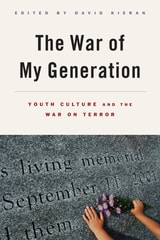
The War of My Generation
Youth Culture and the War on TerrorKieran, David
Rutgers University Press, 2015
The War of My Generation is the first essay collection to focus specifically on how the terrorist attacks and their aftermath have shaped these new generations of Americans. Drawing from a variety of disciplines, including anthropology, sociology, cultural studies, and literary studies, the essays cover a wide range of topics, from graphic war images in the classroom to computer games designed to promote military recruitment to emails from parents in the combat zone. The collection considers what cultural factors and products have shaped young people's experience of the 9/11 attacks, the wars that have followed, and their experiences as emerging citizen-subjects in that moment. Revealing how young people understand the War on Terror—and how adults understand the way young people think—The War of My Generation offers groundbreaking research on catastrophic events still fresh in our minds.
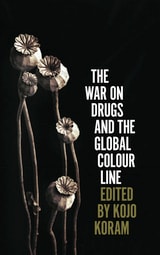
The War on Drugs and the Global Colour Line
Edited by Kojo Koram
Pluto Press, 2019
While laws prohibiting the production, sale and use of particular drugs are presented as politically neutral and objective, this collection reveals the racist impact of the War on Drugs across multiple continents and in numerous situations. From racialised drugs policing at festivals in the UK to the necropolitical wars in Juarez, Mexico and from the exchange of drug policing programs between the United States and Israel to the management of black bodies in Brazil, this collection proves that the regulation of drugs and race is an international, and intentional, disaster.
Pushing forward the debate and activism led by groups such as Black Lives Matter and calling for radical changes in drug policy legislation and prison reform, both nationally and internationally, this collection cuts deep and rings true for all people fighting racism today.
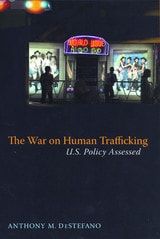
The War on Human Trafficking
U.S. Policy AssessedAnthony M. DeStefano
Rutgers University Press, 2008
The public's understanding of human trafficking is comprised of terrible stories like these, which the media covers in dramatic, but usually short-lived bursts. The more complicated, long-term story of how policy on trafficking has evolved has been largely ignored. In The War on Human Trafficking, Anthony M. DeStefano covers a decade of reporting on the policy battles that have surrounded efforts to abolish such practices, helping readers to understand the forced labor of immigrants as a major global human rights story.
DeStefano details the events leading up to the creation of the Trafficking Victims Protection Act of 2000, the federal law that first addressed the phenomenon of trafficking in persons. He assesses the effectiveness of the 2000 law and its progeny, showing the difficulties encountered by federal prosecutors in building criminal cases against traffickers. The book also describes the tensions created as the Bush Administration tried to use the trafficking laws to attack prostitution and shows how the American response to these criminal activities was impacted by the events of September 11th and the War in Iraq.
Parsing politics from practice, this important book gets beyond sensational stories of sexual servitude to show that human trafficking has a much broader scope and is inextricable from the powerful economic conditions that impel immigrants to put themselves at risk.

The Wars inside Chile's Barracks
Remembering Military Service under PinochetLeith Passmore
University of Wisconsin Press, 2020
Relying on unpublished material, testimony, interviews, and field notes, Passmore locates these individuals' narratives of victimhood at the intersection of long-term histories of patriotism, masculinity, and cyclical poverty. These accounts reveal in detail how Pinochet's war against his own citizens—as well as the "almost-wars" with neighboring Peru, Bolivia, and Argentina—were also waged inside Chile's army barracks.
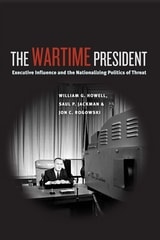
The Wartime President
Executive Influence and the Nationalizing Politics of ThreatWilliam G. Howell, Saul P. Jackman, and Jon C. Rogowski
University of Chicago Press, 2013
For the first time, William G. Howell, Saul P. Jackman, and Jon C. Rogowski systematically analyze the question. Congress, they show, is more likely to defer to the president’s policy preferences when political debates center on national rather than local considerations. Thus, World War II and the post-9/11 wars in Afghanistan and Iraq significantly augmented presidential power, allowing the president to enact foreign and domestic policies that would have been unattainable in times of peace. But, contrary to popular belief, there are also times when war has little effect on a president’s influence in Congress. The Vietnam and Gulf Wars, for instance, did not nationalize our politics nearly so much, and presidential influence expanded only moderately.
Built on groundbreaking research, The Wartime President offers one of the most significant works ever written on the wartime powers presidents wield at home.

The Washington Connection and Third World Fascism
The Political Economy of Human Rights: Volume INoam Chomsky
Pluto Press, 2015
The Washington Dissensus
A Privileged Observer's Perspective on US-Brazil RelationsRubens Barbosa
Vanderbilt University Press, 2014
In this memoir, translated from the Portuguese, Barbosa recounts the most significant regional and global issues that arose, alongside the domestic political conflicts within a divided North American society. Barbosa provides sophisticated analysis of economic relations during these changing times, and also explores the many US misconceptions about Brazil and the Latin American region.
From the privileged post of observation that an ambassadorship in the American capital represents, Barbosa had the exceptional opportunity over a considerable length of time to closely follow relations between Brazil and the United States. He witnessed relations evolve under two governments as they developed distinct foreign policies, which at times led to a breakdown in understanding between the two countries.
The Way We Build
Restoring Dignity to Construction WorkMark Erlich
University of Illinois Press, 2023
Mark Erlich blends long-view history with his personal experience inside the building trades to explain one of our economy’s least understood sectors. Erlich’s multifaceted account includes the dynamics of the industry, the backdrop of union policies, and powerful stories of everyday life inside the trades. He offers a much-needed overview of construction’s past and present while exploring roads to the future.
The Way We Vote
The Local Dimension of American SuffrageAlec C. Ewald
Vanderbilt University Press, 2009
The book shows that local electoral variation has endured through dramatic changes in American political and constitutional structure, and that such variation is the product of a clear, repeated developmental pattern, not simple neglect or public ignorance. Legal materials, statutes and Congressional debates, state constitutional-convention proceedings, and the records of contested Congressional elections illuminate a long record of federal and state intervention in American electoral mechanics. Lawmakers have always understood that a certain level of disorder characterizes U.S. national elections, and have responded by exercising their authority over suffrage practices--but only in limited ways, effectively helping to construct our triply-governed electoral system.
The Way to Hell
Machiavelli for Catastrophic TimesNathan Crick
University of Alabama Press, 2024
An incisive and erudite survey of Machiavelli, the catastrophes of his times and ours, and his counsel for responding to an era of constant crises.
Catastrophe looms. Political, environmental, epidemic, and military crises arrive with increasing frequency. In The Way to Hell, Nathan Crick argues that our perilous times call for the strongest medicine in the Western canon: Machiavelli. Crick reminds contemporary readers about the Florentine master’s advice—that one must learn the road to Hell precisely to avoid taking it.
Like a knowledgeable friend, Crick offers contemporary readers a guide to Machiavelli’s world, work, and warnings. He takes in the sweep of Western history, comparing Machiavelli’s work with ancient sources such as Cicero and Thucydides. And as Machiavelli has never stopped provoking comment, Crick treats readers to a feast of responses to Machiavelli’s work—caustic, learned, and humorous—in the five centuries since he lived.
Including both Machiavelli’s best-known works, The Prince and Discourses on Livy, as well as his personal correspondence and comic plays, Crick asks anew the questions that bedeviled Machiavelli’s beloved Florentine republic: When is force necessary? When are lies justified? Is cruelty defensible? When does social protest slip into violent revolution? What is the correct response to catastrophe?
Like Machiavelli himself, The Way to Hell is witty, stimulating, and challenging. In a world seemingly on the road to Hell, Machiavelli offers an alternative route. His bracing vision exhorts readers to see the dangers in their path and to take action with vigor and determination. Far from a vision of cynicism, Machiavelli offers a beacon of hope for a world that seems on the brink.
The Wealth of (Some) Nations
Imperialism and the Mechanics of Value TransferZak Cope
Pluto Press, 2019
Cope makes the controversial claim that it is because of these conditions that workers in rich countries benefit from higher incomes and welfare systems with public health, education, pensions, and social security. As a result, the internationalism of populations in the Global North is weakened and transnational solidarity is compromised. The only way forward, Cope argues is through a renewed anti-imperialist politics rooted in a firm commitment to a radical labor internationalism.

The Web of Violence
From Interpersonal to GlobalEdited by Jennifer Turpin and Lester Kurtz
University of Illinois Press, 1996
Violence is a topic of concern everywhere--in the media, in churches, in the halls of governments. In every land and in every culture violence is considered by most to be taboo, a last resort. Yet under certain conditions, from the level of the family to the level of nations, violence is used as a mechanism of social control. Various rationalizations thus emerge to distinguish between legitimate and illegitimate violence.
The Web of Violence explores the interrelationship among personal, collective, national, and global levels of violence. This unique collection brings together a number of internationally known contributors to address the genesis and manifestations of violence in the search for a remedy for this confounding social problem.
As the global community becomes more intimate, we must better understand the nature of violence. The Web of Violence supports this aim by examining the dangerous human phenomenon from many perspectives, at different levels, and using multiple methodologies.
Contributors: Robert Jay Lifton, Christopher G. Ellison, John P. Bartkowski, Yuan-Horng Chu, Philip Smith, Robert Elias, Birgit Brock-Utne, Riane Eisler, Johan Galtung
The Weimar Origins of Rhetorical Inquiry
David L. Marshall
University of Chicago Press, 2020
The Welfare State in Transition
Reforming the Swedish ModelEdited by Richard B. Freeman, Robert H. Topel, and Birgitta Swedenborg
University of Chicago Press, 1997
This volume presents ten essays that examine Sweden's economic problems from a U.S. perspective. Exploring such diverse topics as income equalization and efficiency, welfare and tax policy, wage determination and unemployment, and international competitiveness and growth, they consider how Sweden's welfare state succeeded in eliminating poverty and became a role model for other countries. They then reflect on Sweden's past economic problems, such as the increase in government spending and the fall in industrial productivity, warning of problems to come. Finally they review the consequences of the collapse of Sweden's economy in the early 1990s, exploring the implications of its efforts to reform its welfare state and reestablish a healthy economy.
This volume will be of interest to policymakers and analysts, social scientists, and economists interested in welfare states.
The West Bank Wall
Unmaking PalestineRay Dolphin
Pluto Press, 2006
Israel claims it is a security measure to protect Israeli citizens from terrorist attacks. Opponents point to the serious impact on the rights of Palestinians, depriving them of their land, mobility and access to health and educational services.
This book explores the Palestinian experience of the Wall in their international context. What are the real intentions behind the Israeli security argument? Is it a means of securing territory permanently through an illegal annexation of East Jerusalem? The West Bank Wall is a cutting account of the impact of the wall and how it affects prospects of a future peace in the Middle East.
The Western Hemisphere
Its Influence on United States Policies to the End of World War IIBy Wilfrid Hardy Callcott
University of Texas Press, 1968
The Monroe Doctrine, "dollar diplomacy," the policy of the Good Neighbor—these well-known terms indicate the spectrum of the United States's relationships with its neighbors of the Western Hemisphere. Hemisphere thinking in the "Yankee" nation, founded on economic, political, and strategic needs, has come to encompass an appreciation of social and intellectual aspects as a vital part of a unified international unit.
In The Western Hemisphere: Its Influence on United States Policies to the End of World War II, Wilfrid Hardy Callcott traces the rise of this awareness of the essential unity of the Western Hemisphere in international affairs. Although Callcott concentrates on the United States, he discusses all hemisphere countries, and his inclusion of Canada adds an additional dimension to previous studies on the subject.
From the early days of the Republic to the end of World War I, the relations of the United Stales with its neighbors gradually developed from mere curiosity and from on-the-spot decision-making into policy. During the eighteenth century the persons entrusted with United States foreign policy pressed forward with their own country's westward expansion, while they expressed only an academic interest in the affairs of other Western Hemisphere nations from Canada to Brazil.
By the end of the nineteenth century the United States had enthusiastically joined the imperialist nations. Although it soon replaced the use of force with economic controls, its military and economic manipulations naturally generated more fear and antagonism in the neighboring nations than cooperation and sympathy.
After World War I, attention to the hemisphere was fostered by the need for strategic raw materials that were to be found from Canada to South America, and by Old World rivalries and needs that endangered New World interests. Canadian and Latin American views of Europe and the League of Nations became much like those of the United States. The new conditions that arose called forth the Good Neighbor policy to combine economic and strategic values in a complex program that included intellectual, social, and cultural elements. World War II accentuated the new consciousness and compelled recognition of the significance of hemisphere relationships in all of the New World nations.
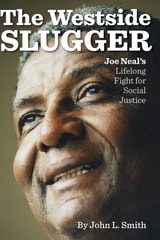
The Westside Slugger
Joe Neal's Lifelong Fight for Social JusticeJohn L. Smith
University of Nevada Press, 2019
Filled with an intense desire for education, he joined the United States Air Force and later graduated from Southern University—studying political science and the law at a time of great upheaval in the racial status quo. As part of a group of courageous men, Neal joined a Department of Justice effort to register the first black voters in Madison Parish.
When Neal moved to southern Nevada in 1963 he found the Silver State to be every bit as discriminatory as his former Louisiana home. As Neal climbed through the political ranks, he used his position in the state senate to speak on behalf of the powerless for more than thirty years. He took on an array of powerful opponents ranging from the Clark County sheriff to the governor of the state, as well as Nevada’s political kingmakers and casino titans. He didn’t always succeed—he lost two runs for governor—but he never stopped fighting. His successes included improved rights for convicted felons and greater services for public education, mental health, and the state’s libraries. He also played an integral role in improving hotel fire safety in the wake of the deadly MGM Grand fire and preserving the pristine waters of Lake Tahoe, which brought him national attention.
Neal lived a life that personified what is right, just, and fair. Pushing through racial and civil rights hurdles and becoming a lifelong advocate for social justice, his dedication and determination are powerful reminders to always fight the good fight and never stop swinging.
The Westside Slugger
Joe Neal's Lifelong Fight for Social JusticeJohn L. Smith
University of Nevada Press, 2019
Filled with an intense desire for education, he joined the United States Air Force and later graduated from Southern University—studying political science and the law at a time of great upheaval in the racial status quo. As part of a group of courageous men, Neal joined a Department of Justice effort to register the first black voters in Madison Parish.
When Neal moved to southern Nevada in 1963 he found the Silver State to be every bit as discriminatory as his former Louisiana home. As Neal climbed through the political ranks, he used his position in the state senate to speak on behalf of the powerless for more than thirty years. He took on an array of powerful opponents ranging from the Clark County sheriff to the governor of the state, as well as Nevada’s political kingmakers and casino titans. He didn’t always succeed—he lost two runs for governor—but he never stopped fighting. His successes included improved rights for convicted felons and greater services for public education, mental health, and the state’s libraries. He also played an integral role in improving hotel fire safety in the wake of the deadly MGM Grand fire and preserving the pristine waters of Lake Tahoe, which brought him national attention.
Neal lived a life that personified what is right, just, and fair. Pushing through racial and civil rights hurdles and becoming a lifelong advocate for social justice, his dedication and determination are powerful reminders to always fight the good fight and never stop swinging.
The Whips
Building Party Coalitions in CongressC. Lawrence Evans
University of Michigan Press, 2018
The party whips are essential components of the U.S. legislative system, responsible for marshalling party votes and keeping House and Senate party members in line. In The Whips, C. Lawrence Evans offers a comprehensive exploration of coalition building and legislative strategy in the U.S. House and Senate, ranging from the relatively bipartisan, committee-dominated chambers of the 1950s to the highly polarized congresses of the 2000s. In addition to roll call votes and personal interviews with lawmakers and staff, Evans examines the personal papers of dozens of former leaders of the House and Senate, especially former whips. These records allowed Evans to create a database of nearly 1,500 internal leadership polls on hundreds of significant bills across five decades of recent congressional history.
The result is a rich and sweeping understanding of congressional party leaders at work. Since the whips provide valuable political intelligence, they are essential to understanding how coalitions are forged and deals are made on Capitol Hill.