Results by title
1048 books match the query 'African American & Black' and 219 start with t
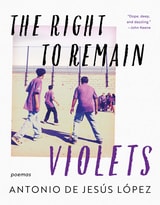
The Right to Remain Violets
poemasAntonio De Jesús López
University of Arizona Press, 2027
The Right to Remain Violets is an electrifying poetry collection that reimagines the language of policing, public education, and state surveillance to illuminate the lived realities of Black and Brown youth in East Palo Alto—a city shaped by redlining, freeway expansion, and decades of over-policing. Blending documentary poetics with hip-hop cadence and Catholic liturgy, Antonio De Jesús López transforms transcripts, municipal documents, and legal language into a powerful form of witness. These poems trace how children are drafted into systems of surveillance and criminalization, even as they search for joy and solidarity amid Silicon Valley’s contrasts of wealth and dispossession.
Inventive and emotionally resonant, the collection spans sonnets, sestinas, hip-hop, and prayer, insisting that language can both indict and heal. López brings his experiences as an award-winning poet, scholar, and former mayor of East Palo Alto to each poem. At once elegy and refusal, The Right to Remain Violets speaks to readers of documentary poetics, social justice literature, and those who believe in the radical importance of protecting childhood in an America reckoning with itself.
The Rise of the African Novel
Politics of Language, Identity, and OwnershipMukoma Wa Ngugi
University of Michigan Press, 2018
Calling it a major crisis in African literary criticism, Mukoma Wa Ngugi considers key questions around the misreading of African literature: Why did Chinua Achebe’s generation privilege African literature in English despite the early South African example? What are the costs of locating the start of Africa’s literary tradition in the wrong literary and historical period? What does it mean for the current generation of writers and scholars of African literature not to have an imaginative consciousness of their literary past?
This book will become a foundational text in African literary studies, as it raises questions about the very nature of African literature and criticism. It will be essential reading for scholars of African literary studies as well as general readers seeking a greater understanding of African literary history and the ways in which critical consensus can be manufactured and rewarded at the expense of a larger and historical literary tradition.
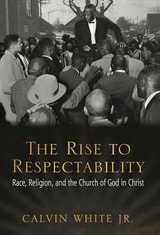
The Rise to Respectability
Race, Religion, and the Church of God in ChristCalvin White
University of Arkansas Press, 2015
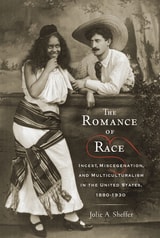
The Romance of Race
Incest, Miscegenation, and Multiculturalism in the United States, 1880-1930Sheffer, Jolie A.
Rutgers University Press, 2013
In the United States miscegenation is not merely a subject of literature and popular culture. It is in many ways the foundation of contemporary imaginary community. The Romance of Race examines the role of minority women writers and reformers in the creation of our modern American multiculturalism.
The national identity of the United States was transformed between 1880 and 1930 due to mass immigration, imperial expansion, the rise of Jim Crow, and the beginning of the suffrage movement. A generation of women writers and reformers—particularly women of color—contributed to these debates by imagining new national narratives that put minorities at the center of American identity. Jane Addams, Pauline Hopkins, Onoto Watanna (Winnifred Eaton), María Cristina Mena, and Mourning Dove (Christine Quintasket) embraced the images of the United States—and increasingly the world—as an interracial nuclear family. They also reframed public debates through narratives depicting interracial encounters as longstanding, unacknowledged liaisons between white men and racialized women that produced an incestuous, mixed-race nation.
By mobilizing the sexual taboos of incest and miscegenation, these women writers created political allegories of kinship and community. Through their criticisms of the nation’s history of exploitation and colonization, they also imagined a more inclusive future. As Jolie A. Sheffer identifies the contemporary template for American multiculturalism in the works of turn-of-the century minority writers, she uncovers a much more radical history than has previously been considered.
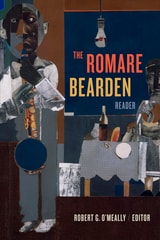
The Romare Bearden Reader
Robert G. O'Meally, editor
Duke University Press, 2019
Contributors. Elizabeth Alexander, Romare Bearden, Mary Lee Corlett, Rachel DeLue, David C. Driskell, Brent Hayes Edwards, Ralph Ellison, Henri Ghent, Farah Jasmine Griffin, Harry Henderson, Kobena Mercer, Toni Morrison, Albert Murray, Robert G. O’Meally, Richard Powell, Richard Price, Sally Price, Myron Schwartzman, Robert Burns Stepto, Calvin Tomkins, John Edgar Wideman, August Wilson
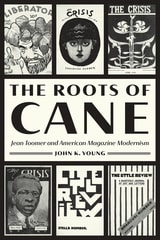
The Roots of Cane
Jean Toomer and American Magazine ModernismJohn K. Young
University of Iowa Press, 2024
Young interweaves a periodical-studies approach to modernism with book history and critical race theory, resituating Toomer’s uneasy place within Black modernism by asking how original readers would have encountered his work. The different contexts in which those audiences were engaging with Toomer’s portraits of racialized identity in the Jim Crow United States, yield often surprising results.
The Scene of Harlem Cabaret
Race, Sexuality, PerformanceShane Vogel
University of Chicago Press, 2009
Harlem’s nightclubs in the 1920s and ’30s were a crucible for testing society’s racial and sexual limits. Normally tacit divisions were there made spectacularly public in the vibrant, but often fraught, relationship between performer and audience. The cabaret scene, Shane Vogel contends, also played a key role in the Harlem Renaissance by offering an alternative to the politics of sexual respectability and racial uplift that sought to dictate the proper subject matter for black arts and letters. Individually and collectively, luminaries such as Duke Ellington, Lena Horne, Langston Hughes, Claude McKay, Wallace Thurman, and Ethel Waters expanded the possibilities of blackness and sexuality in America, resulting in a queer nightlife that flourished in music, in print, and on stage.
Deftly combining performance theory, literary criticism, historical research, and biographical study, The Scene of Harlem Cabaret brings this rich moment in history to life, while exploring the role of nightlife performance as a definitive touchstone for understanding the racial and sexual politics of the early twentieth century.
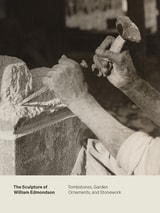
The Sculpture of William Edmondson
Tombstones, Garden Ornaments, and StoneworkMarin R. Sullivan
Vanderbilt University Press, 2021
William Edmondson (1874–1951) was the first African American sculptor to have a one-person exhibition at the Museum of Modern Art. Edmondson started sculpting in his late fifties, after the Nashville Women's Hospital, where he worked as a janitor, closed. During his life he was well known for his yard art, such as whimsical birdbaths and "critters" of real and imaginary provenance, and the grave markers he carved for African American families. His sculptures are now highly sought after by collectors.
The Sculpture of William Edmondson: Tombstones, Garden Ornaments, and Stonework is the first large-scale museum examination of artist William Edmondson's career in over twenty years. Organized by Cheekwood Curator-at-Large Marin R. Sullivan, the exhibition draws upon new scholarship and methodologies to contextualize Edmondson's sculpture, both within the histories of Nashville during the Interwar years and the art histories of modern art in the United States.
Edmondson has largely been confined to narratives that focus on his artistic discovery by white patrons in the 1930s, his work's formal resonance with so-called primitivism and direct carving techniques, and his place in the traditions of African American "outsider" art. This exhibition revisits Edmondson's work within these frameworks, but also seeks to reevaluate his sculpture on its own terms and as part of a comprehensive practice that included the creation of commercial objects rather than strictly fine art.
The exhibition's title references the sign that hung on the outside of Edmondson's studio, advertising what was for sale and on view to the public in his yard, including tombstones, birdbaths, and statuary meant to be used and intended for outdoor rather than gallery display.
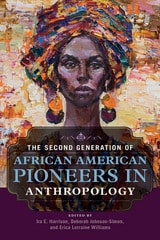
The Second Generation of African American Pioneers in Anthropology
Ira E. Harrison, Deborah Johnson-Simon, Erica Lorraine Williams
University of Illinois Press, 2018

The Second Great Emancipation
The Mechanical Cotton Picker, Black Migration, and How They Shaped the Modern SouthDonald Holley
University of Arkansas Press, 2000
In The Second Great Emancipation, Donald Holley uses statistical and narrative analysis to demonstrate that farm mechanization occurred in the Delta region of Arkansas, Louisiana, and Mississippi after the region’s population of farm laborers moved away for new opportunities. Rather than pushing labor off the land, Holley argues, the mechanical cotton picker enabled the continuation of cotton cultivation in the post-plantation era, opening the door for the civil rights movement, while ushering a period of prosperity into the South.

The Secret Lives of Church Ladies
Deesha Philyaw
West Virginia University Press, 2020
*FINALIST for the 2020 National Book Award for Fiction*
*WINNER of the 2021 PEN/Faulkner Award*
*WINNER of the 2020 Story Prize*
*WINNER of the 2020 L.A. Times Book Prize, Art Seidenbaum Award for First Fiction*
“Beguiling.” —The New Yorker
“Tender, fierce, proudly black and beautiful, these stories will sneak inside you and take root.” —Kirkus Reviews (starred review)
“Triumphant.” —Publishers Weekly
“Cheeky, insightful, and irresistible.” —Ms. Magazine
“This collection marks the emergence of a bona fide literary treasure.” —Minneapolis Star Tribune
“Full of lived-in humanity, warmth, and compassion.” —Pittsburgh Current
The Secret Lives of Church Ladies explores the raw and tender places where Black women and girls dare to follow their desires and pursue a momentary reprieve from being good. The nine stories in this collection feature four generations of characters grappling with who they want to be in the world, caught as they are between the church’s double standards and their own needs and passions.
There is fourteen-year-old Jael, who has a crush on the preacher’s wife. At forty-two, Lyra realizes that her discomfort with her own body stands between her and a new love. As Y2K looms, Caroletta’s “same time next year” arrangement with her childhood best friend is tenuous. A serial mistress lays down the ground rules for her married lovers. In the dark shadows of a hospice parking lot, grieving strangers find comfort in each other.
With their secret longings, new love, and forbidden affairs, these church ladies are as seductive as they want to be, as vulnerable as they need to be, as unfaithful and unrepentant as they care to be, and as free as they deserve to be.

The Selected Literary Letters of Paul Laurence Dunbar
Edited by Cynthia C. Murillo and Jennifer M. Nader
University of Alabama Press, 2021
Discovering Paul Laurence Dunbar's personal and literary life through 250 of his transcribed and annotated letters.
Paul Laurence Dunbar (1873–1906) was arguably the most famous African American poet, novelist, and dramatist at the turn of the twentieth century and one of the earliest African American writers to receive national recognition and appreciation. Scholars have taken a renewed interest in Dunbar but much is still unknown about this once-famous African American author’s life and literary efforts. Dunbar’s letters to various editors, friends, benefactors, scholars, and family members are crucial to any critical or theoretical understanding of his journey as a writer. His literary correspondence, in particular, records the development of an extraordinary figure whose work reached a broad readership in his lifetime, but not without considerable cost.
The Selected Literary Letters of Paul Laurence Dunbar is a collection of 250 letters, transcribed and annotated, that reveal the personal and literary life of one of the most highly regarded African American writers and intellectuals. Editors Cynthia C. Murillo and Jennifer M. Nader highlight Dunbar not just as a determined author and master of rhetoric, but also as a young, sensitive, thoughtful, keenly intelligent, and talented writer who battled depression, alcoholism, and tuberculosis as well as rejection and racism. Despite Dunbar’s personal struggles, his literary letters disclose that he was full of hopes and dreams coupled with the resolve to flourish as a writer—at almost any cost, even when it caused controversy.
Taken together, Dunbar’s letters depict his concerted effort to succeed as an author within an overtly racist literary culture, among sharp divides within the African American intellectual community, and in opposition to the demands of popular public tastes—often dictated by the demands of publishers. This wide-ranging selection of Dunbar’s most relevant literary letters will serve to correct many matters of conjecture about Dunbar’s life, writing, and choices by supplying factual evidence to counter speculation, assumption, and incomplete information.
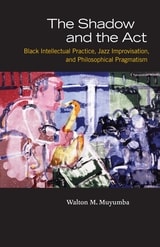
The Shadow and the Act
Black Intellectual Practice, Jazz Improvisation, and Philosophical PragmatismWalton M. Muyumba
University of Chicago Press, 2009
Though often thought of as rivals, Ralph Ellison, James Baldwin, and Amiri Baraka shared a range of interests, especially a passion for music. Jazz, in particular, was a decisive influence on their thinking, and, as The Shadow and the Act reveals, they drew on their insights into the creative process of improvisation to analyze race and politics in the civil rights era. In this inspired study, Walton M. Muyumba situates them as a jazz trio, demonstrating how Ellison, Baraka, and Baldwin’s individual works form a series of calls and responses with each other.
Muyumba connects their writings on jazz to the philosophical tradition of pragmatism, particularly its support for more freedom for individuals and more democratic societies. He examines the way they responded to and elaborated on that lineage, showing how they significantly broadened it by addressing the African American experience, especially its aesthetics. Ultimately, Muyumba contends, the trio enacted pragmatist principles by effectively communicating the social and political benefits of African Americans fully entering society, thereby compelling America to move closer to its democratic ideals.

The Shared World
PoemsVievee Francis
Northwestern University Press, 2021
The latest collection from award-winning poet Vievee Francis, The Shared World imagines the ideas and ideals and spaces of the Black woman. The book delves into inherited memories and restrictions between families, lovers, and strangers and the perception and inconvenient truth of Black woman as mother—with or without child. Francis challenges the ways in which Black women are often dismissed while expected to be nurturing. This raw assemblage of poetic narratives stares down the oppressors from within and writes a new language in the art of taking back the body and the memory. These poetic narratives are brutal in their lyrical blows but tender with the bruised history left behind. “You can’t stop this / song,” she writes. “More hands than yours have closed / around my throat.”
Francis’s lyric gifts are on full display as she probes self-discovery, history, intimacy, and violence. Her voice encompasses humor and gravity, enigma and revelation. What emerges is a realm of intertwined experiences. “The secret to knowing the secret is to speak,” she concludes, “but we too often tell / the stories of no matter and avoid the one story that does matter. / In truth, we are bound by one story, so you’d think by now / we’d tell it, at least to each other.”
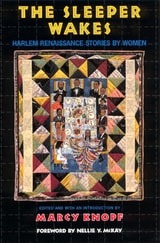
The Sleeper Wakes
Harlem Renaissance Stories by WomenKnopf-Newman, Marcy
Rutgers University Press, 1993
In recent years there has been an explosion of interest in the art and culture of the Harlem Renaissance. Yet this significant collection is the first definitive edition of Harlem Renaissance stories by women. The writers include Gwendolyn Bennett, Jessie Redmon Fauset, Angelina Weld Grimké, Zora Neale Hurston, Nella Larsen, Alice Dunbar-Nelson, and Dorothy West.
Published originally in periodicals such as The Crisis, Fire!!, and Opportunity, these twenty-seven stories have until now been virtually unavailable to readers. These stories are as compelling today as they were in the 1920s and 1930s. In them, we find the themes of black and white racial tension and misunderstanding, economic deprivation, passing, love across and within racial lines, and the attempt to maintain community and uplift the race.
Marcy Knopf's introduction surveys the history of the Harlem Renaissance, the periodicals and books it generated, and describes the rise to prominence of these women writers and their later fall from fame. She also includes a brief biography of each of the writers. Nellie Y. McKay's foreword analyzes the themes and concerns of the stories.
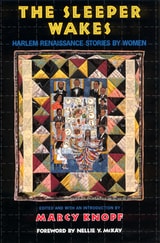
The Sleeper Wakes
Harlem Renaissance Stories by WomenKnopf-Newman, Marcy
Rutgers University Press, 1993
In recent years there has been an explosion of interest in the art and culture of the Harlem Renaissance. Yet this significant collection is the first definitive edition of Harlem Renaissance stories by women. The writers include Gwendolyn Bennett, Jessie Redmon Fauset, Angelina Weld Grimké, Zora Neale Hurston, Nella Larsen, Alice Dunbar-Nelson, and Dorothy West.
Published originally in periodicals such as The Crisis, Fire!!, and Opportunity, these twenty-seven stories have until now been virtually unavailable to readers. These stories are as compelling today as they were in the 1920s and 1930s. In them, we find the themes of black and white racial tension and misunderstanding, economic deprivation, passing, love across and within racial lines, and the attempt to maintain community and uplift the race.
Marcy Knopf's introduction surveys the history of the Harlem Renaissance, the periodicals and books it generated, and describes the rise to prominence of these women writers and their later fall from fame. She also includes a brief biography of each of the writers. Nellie Y. McKay's foreword analyzes the themes and concerns of the stories.
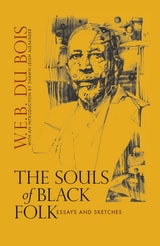
The Souls of Black Folk
Essays and SketchesW.E.B. Du Bois
University of Massachusetts Press, 2018
Unlike Du Bois's more scholarly work, Souls blends narrative and autobiographical essays, and it continues to reach a wide domestic and international readership. This moving homage to black life and culture and its sharp economic and historical critique are more important than ever, resonating with today's unequivocal demand that Black Lives Matter in the twenty-first century.
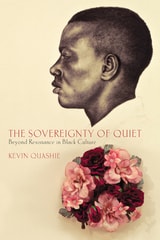
The Sovereignty of Quiet
Beyond Resistance in Black CultureQuashie, Kevin
Rutgers University Press, 2012
The book revisits such iconic moments as Tommie Smith and John Carlos’s protest at the 1968 Mexico City Olympics and Elizabeth Alexander’s reading at the 2009 inauguration of Barack Obama. Quashie also examines such landmark texts as Gwendolyn Brooks’s Maud Martha, James Baldwin’s The Fire Next Time, and Toni Morrison’s Sula to move beyond the emphasis on resistance, and to suggest that concepts like surrender, dreaming, and waiting can remind us of the wealth of black humanity.
The Specter and the Speculative
Afterlives and Archives in the African DiasporaMae G. Henderson
Rutgers University Press, 2024
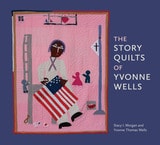
The Story Quilts of Yvonne Wells
Stacy I. Morgan
University of Alabama Press, 2024
The introduction and definitive guide to the work of celebrated folk artist Yvonne Wells, whose vibrant, innovative story quilts address an array of historic, cultural, and religious themes
The Story Quilts of Yvonne Wells is an introduction and definitive guide to the self-taught quilter whose expansive body of work serves as testament to the sweeping tides of American life and Wells’s significance as a major figure within the folk art and art world writ large.
Beginning when she was nearly 40 years old and without formal training, Wells created her first quilt for practical use but was soon hand stitching appliqué figures into bold, original designs that unleashed her voice as a storyteller. Incorporating a wide variety of symbolic materials and unconventional objects—“anything I can stick a needle in”—Wells’s vivid story quilts reveal a fearless and encyclopedic vision ranging from the intimately autobiographical to iconic scenes from African American history, the Bible, Southern culture, and contemporary headlines.
The result of years of close collaboration between Stacy I. Morgan and Wells herself, The Story Quilts of Yvonne Wells is richly illustrated with more than 100 quilts accompanied by narratives about each, told in the artist's own words, and interspersed with in-depth essays documenting Wells’s unique artistic practice and creative journey during her five-decade art career.
The Theater Is in the Street
Politics and Public Performance in 1960s AmericaBradford D. Martin
University of Massachusetts Press, 2004
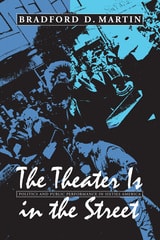
During the 1960s, the SNCC Freedom Singers, The Living Theatre, the Diggers, the Art Workers Coalition, and the Guerrilla Art Action Group fused art and politics by staging unexpected and uninvited performances in public spaces. Through their activism and the response it provoked, art, theater, and politics began to converge and assume a new visibility in everyday life. While their specific political visions varied, these groups shared the impulse to stage performances and actions publicly—"in the streets"—eschewing museums, theaters, and other conventional halls of culture. Bradford D. Martin offers detailed portraits of each of these groups and examines why they embraced public performance as a vehicle to express and advance their politics.
At a time when the New Left and the counterculture were on the rise, these artists reflected the decade's political and cultural radicalism and helped to define a new aesthetic. Civil rights activists mobilized singing in the struggle for desegregation, introducing a vibrant musical form into the public space. The Living Theatre culminated an arduous quest to mesh artistic and political goals, leading audiences from theaters into the streets to begin the “beautiful nonviolent anarchist revolution.” The Diggers playfully engaged San Francisco's counterculture in politics with their carnivalesque public actions. The Art Workers Coalition and the Guerrilla Action Art Group sought to disrupt the conventional art world, mounting protests in and around New York City museums.
By questioning the values and assumptions that separated art from politics, these groups not only established public performance as a legitimate aesthetic but also provided a new creative vocabulary for future generations of artists. Their continued involvement with the women's liberation movement, rural communes, and political street theater into the 1970s and beyond challenges the popular myth that activists disengaged from politics after the 1960s.
The Trouble with Sauling Around
Conversion in Ethnic American Autobiography, 1965-2002Madeline R. Walker
University of Iowa Press, 2011
The Truth That Never Hurts
Writings on Race, Gender, and FreedomSmith, Barbara
Rutgers University Press, 2000
Smith’s essay “Toward a Black Feminist Criticism,” is often cited as a major catalyst in opening the field of black women’s literature. Pieces about racism in the women’s movement, black and Jewish relations, and homophobia in the Black community have ignited dialogue about topics that few other writers address. The collection also brings together topical political commentaries on the 1968 Chicago convention demonstrations; attacks on the NEA; the Anita Hill–Clarence Thomas Senate hearings; and police brutality against Rodney King and Abner Louima. It also includes a never-before-published personal essay on racial violence and the bonds between black women that make it possible to survive.
The United States Governed by Six Hundred Thousand Despots
A True Story of SlaveryJohn Swanson Jacobs
University of Chicago Press, 2024
For one hundred and sixty-nine years, a first-person slave narrative written by John Swanson Jacobs—brother of Harriet Jacobs—was buried in a pile of newspapers in Australia. Jacobs’s long-lost narrative, The United States Governed by Six Hundred Thousand Despots, is a startling and revolutionary discovery. A document like this—written by an ex-slave and ex-American, in language charged with all that can be said about America outside America, untampered with and unedited by white abolitionists—has never been seen before. A radical abolitionist, sailor, and miner, John Jacobs has a life story that is as global as it is American. Born into slavery, by 1855 he had fled both the South and the United States altogether, becoming a stateless citizen of the world and its waters. That year, he published his life story in an Australian newspaper, far from American power and its threats. Unsentimental and unapologetic, Jacobs radically denounced slavery and the state, calling out politicians and slaveowners by their names, critiquing America’s founding documents, and indicting all citizens who maintained the racist and intolerable status quo.
Reproduced in full, this narrative—which entwines with that of his sister and with the life of their friend Frederick Douglass—here opens new horizons for how we understand slavery, race, and migration, and all that they entailed in nineteenth-century America and the world at large. To truly reckon with the lives of John Jacobs is to see with new clarity that in 1776, America embarked on two experiments at once: one in democracy, the other in tyranny.
The United States Governed by Six Hundred Thousand Despots
A True Story of Slavery; A Rediscovered Narrative, with a Full BiographyJohn Swanson Jacobs
University of Chicago Press, 2024
For one hundred and sixty-nine years, a first-person slave narrative written by John Swanson Jacobs—brother of Harriet Jacobs—was buried in a pile of newspapers in Australia. Jacobs’s long-lost narrative, The United States Governed by Six Hundred Thousand Despots, is a startling and revolutionary discovery. A document like this—written by an ex-slave and ex-American, in language charged with all that can be said about America outside America, untampered with and unedited by white abolitionists—has never been seen before. A radical abolitionist, sailor, and miner, John Jacobs has a life story that is as global as it is American. Born into slavery, by 1855, he had fled both the South and the United States altogether, becoming a stateless citizen of the world and its waters. That year, he published his life story in an Australian newspaper, far from American power and its threats. Unsentimental and unapologetic, Jacobs radically denounced slavery and the state, calling out politicians and slaveowners by their names, critiquing America’s founding documents, and indicting all citizens who maintained the racist and intolerable status quo.
Reproduced in full, this narrative—which entwines with that of his sister and with the life of their friend Frederick Douglass—here opens new horizons for how we understand slavery, race, and migration, and all that they entailed in nineteenth-century America and the world at large. The second half of the book contains a full-length, nine-generation biography of Jacobs and his family by literary historian Jonathan Schroeder. This new guide to the world of John Jacobs will transform our sense of it—and of the forces and prejudices built into the American project. To truly reckon with the lives of John Jacobs is to see with new clarity that in 1776, America embarked on two experiments at once: one in democracy, the other in tyranny.

The Unruly Voice
Rediscovering Pauline Elizabeth HopkinsEdited by John Cullen Gruesser
University of Illinois Press, 1996
The work and times of the Black writer, editor, and intellectual
John Cullen Gruesser edits essays that explore the literary and journalistic career of Pauline Elizabeth Hopkins. A Black woman writer at the turn of the twentieth century, Hopkins worked as the unacknowledged editor-in-chief of the Colored American Magazine but also wrote short fiction, novels, nonfiction articles, and a play believed to be the first by a Black woman. Versatile and politically committed, she was fired when her strong editorial stands and non-conciliatory politics offended the new owner of Colored American Magazine.
A rare examination of an overlooked figure in Black letters, The Unruly Voice explores Hopkins’s writing and her significance for contemporary readers.
Contributors: Elizabeth Ammons; Kristina Brooks; Lois Lamphere Brown; C. K. Doreski; John Cullen Gruesser; Jennie A. Kassanoff; Kate McCullough; Nelly Y. McKay; and Cynthia D. Schrager
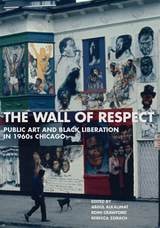
The Wall of Respect
Public Art and Black Liberation in 1960s ChicagoEdited by Abdul Alkalimat, Romi Crawford, and Rebecca Zorach
Northwestern University Press, 2017
The Wall of Respect received national critical acclaim when it was unveiled on the side of a building at Forty-Third and Langley in Chicago’s Bronzeville neighborhood. Painters and photographers worked side by side on the mural's seven themed sections, which featured portraits of Black heroes and sheroes, among them John Coltrane, Nina Simone, Billie Holiday, Malcolm X, Muhammad Ali, and W. E. B. Du Bois. The Wall became a platform for music, poetry, and political rallies. Over time it changed, reflecting painful controversies among the artists as well as broader shifts in the Civil Rights and Black Liberation Movements.
At the intersection of African American culture, politics, and Chicago art history, The Wall of Respect offers, in one keepsake-quality work, an unsurpassed collection of images and essays that illuminate a powerful monument that continues to fascinate artists, scholars, and readers in Chicago and across the United States.

The War on the Social Factory
The Struggle for Community Safety in the Silicon ValleyAnnie Paradise
Northwestern University Press, 2024
A collective ethnography of grassroots mobilizations for community safety across the Silicon Valley
This is a narrative of struggle and solidarity and a collective toolkit for grassroots opposition to militarization, policing, and ongoing conditions of war in the current conjuncture of racial patriarchal capitalism. Grassroots researcher Annie Paradise presents here a collective ethnography of the mothers and community matriarchs whose children have been murdered by police across the San Francisco Bay Area as they develop and practice autonomous, creative forms of resistance.
The War on the Social Factory: The Struggle for Community Safety in the Silicon Valley maps local families’ struggles to reclaim their households and their communities—to create a social infrastructure of care, justice, and safety outside state- and market-determined modes of “security.” Practices such as sustained vigil, testimony, and the production and circulation of insurgent knowledges are shown here to be part of interconnected justice efforts to demilitarize and decarcerate communities in the face of the multiple forms of violence enacted under late racial patriarchal capitalism. Paradise examines the expanding carceral processes of enclosure, criminalization, dispossession, expropriation, and disposability that mark the neoliberal "security” regime across the Silicon Valley and offers counter-counterinsurgent strategies and practices of co-generative, dynamic resistance.
The Way of the Earth
PoemsMatthew Shenoda
Northwestern University Press, 2022
The Way of the Earth is the fourth collection from award-winning poet Matthew Shenoda. In this, his most personal collection to date, he explores the temporal and fleeting nature of human life and the earth we inhabit. Through ruminations on the intersections of culture and ecology, the death of loved ones, and the growing inequities in our midst, Shenoda explores what it means to be a person both grounded to the earth and with a yearning beyond it. Memories of landscapes and histories echo throughout the sensations of the present: the sight of egrets wading in the marshes, the smell of the ocean, a child’s hand nestled in a warm palm. “Time never goes back,” Shenoda writes, “but the imagination must.”
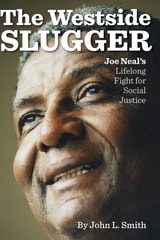
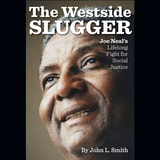
The Westside Slugger
Joe Neal's Lifelong Fight for Social JusticeJohn L. Smith
University of Nevada Press, 2019
Filled with an intense desire for education, he joined the United States Air Force and later graduated from Southern University—studying political science and the law at a time of great upheaval in the racial status quo. As part of a group of courageous men, Neal joined a Department of Justice effort to register the first black voters in Madison Parish.
When Neal moved to southern Nevada in 1963 he found the Silver State to be every bit as discriminatory as his former Louisiana home. As Neal climbed through the political ranks, he used his position in the state senate to speak on behalf of the powerless for more than thirty years. He took on an array of powerful opponents ranging from the Clark County sheriff to the governor of the state, as well as Nevada’s political kingmakers and casino titans. He didn’t always succeed—he lost two runs for governor—but he never stopped fighting. His successes included improved rights for convicted felons and greater services for public education, mental health, and the state’s libraries. He also played an integral role in improving hotel fire safety in the wake of the deadly MGM Grand fire and preserving the pristine waters of Lake Tahoe, which brought him national attention.
Neal lived a life that personified what is right, just, and fair. Pushing through racial and civil rights hurdles and becoming a lifelong advocate for social justice, his dedication and determination are powerful reminders to always fight the good fight and never stop swinging.
The Westside Slugger
Joe Neal's Lifelong Fight for Social JusticeJohn L. Smith
University of Nevada Press, 2019
Filled with an intense desire for education, he joined the United States Air Force and later graduated from Southern University—studying political science and the law at a time of great upheaval in the racial status quo. As part of a group of courageous men, Neal joined a Department of Justice effort to register the first black voters in Madison Parish.
When Neal moved to southern Nevada in 1963 he found the Silver State to be every bit as discriminatory as his former Louisiana home. As Neal climbed through the political ranks, he used his position in the state senate to speak on behalf of the powerless for more than thirty years. He took on an array of powerful opponents ranging from the Clark County sheriff to the governor of the state, as well as Nevada’s political kingmakers and casino titans. He didn’t always succeed—he lost two runs for governor—but he never stopped fighting. His successes included improved rights for convicted felons and greater services for public education, mental health, and the state’s libraries. He also played an integral role in improving hotel fire safety in the wake of the deadly MGM Grand fire and preserving the pristine waters of Lake Tahoe, which brought him national attention.
Neal lived a life that personified what is right, just, and fair. Pushing through racial and civil rights hurdles and becoming a lifelong advocate for social justice, his dedication and determination are powerful reminders to always fight the good fight and never stop swinging.
The White Trash Menace and Hemispheric Fiction
Ramón E. Soto-Crespo
The Ohio State University Press, 2020
The Wolf at the End of the Block
A PlayIke Holter
Northwestern University Press, 2020
A modern-day neo-noir, The Wolf at the End of the Block remixes several different genres to present a new kind of thriller that is socially conscious, relentlessy suspenseful, and bitingly funny. Praised for its power and grace, the play is one of Holter’s most unforgettable.
The Wolf at the End of the Block is one of seven plays in Holter’s Rightlynd Saga, set in Chicago’s fictional fifty-first ward. The other plays in the cycle are Rightlynd, Exit Strategy, Sender, Prowess, Red Rex, and Lottery Day.

The World Before Racism
An Art StoryLisa E. Farrington
The Artist Book Foundation, 2025
Utilizing works of art as a primary source, Lisa Farrington's research in The World Before Racism conclusively answers the questions: Who invented racism? When? And why?
The term racism is understood to mean that race is the principal determinant of specific human traits and capacities and that due to racial differences, one race is inherently superior to all others. Over time, racism has commonly referenced the notion that the White race is superior to all others, fostering prejudice and discrimination. In The World Before Racism: An Art Story, author and art historian Lisa Farrington meticulously examines the intersection of art, history, and race, using original works of art as primary source materials to support her premise that racism is a construct, invented in the mid-1700s, to support the financial, political, and religious structures of European colonialism.
Using art from ancient Egypt, classical Greece, and the Roman Empire, through Medieval Europe and the colonization of the New World, to the art of the present day—sources that cannot be easily altered, edited, or selectively translated—Farrington expertly examines the intricate interplay between the Black and White races, how they saw and understood each other over the centuries. The artworks serve as powerful voices, precisely conveying the artist’s intended messages. The goal of The World Before Racism is to present irrefutable evidence that the ideology of racism is unfounded, unsupported, unjustified, and destined to fade away like so many other archaic and erroneous ideas.

The World Is Round
PoemsNikky Finney
Northwestern University Press, 2013
The World Is Round, Nikky Finney’s third volume of poetry, collects the wisps of memory we carry with us throughout our earthly lives and weaves them into deft and nuanced poems that emphasize understanding the cycles of life. The settings offer a view into the kaleidoscope of human experience: the sweetness and shock of family life, the omnipresent wash of memory, and the ebullience of warm Southern air. The World Is Round carries with it an implicit challenge—to the author as a poet, and to the reader as a fellow human—to see the characters and details and events of our lives with clarity, fearlessness, and love. The result is poems that range the gamut of human reach and resilience, fury and frailty. The poet’s vision of community requires understanding and tolerance from every breathing soul. Finney illuminates the cruelties of the sometimes gawking, narrow-minded world and makes a plea for compassion inspired by our common humanity.
The World That the Shooter Left Us
Cyrus Cassells
Four Way Books, 2022
In the aftermath of the Stand Your Ground killing of his close friend’s father, poet Cassells explores, in his most fearless book to date, the brutality, bigotry, and betrayal at the heart of current America. Taking his cue from the Civil Rights and Vietnam War era poets and songwriters who inspired him in his youth, Cassells presents The World That the Shooter Left Us, a frank, bulletin-fierce indictment of unraveling democracy in an embattled America, in a world still haunted by slavery, by Guernica, Hiroshima, and the Holocaust, by climate catastrophe, by countless battles, borders, and broken promises—adding new grit, fire, and luster to his forty-year career as a dedicated and vital American poet.
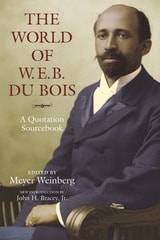
The World of W.E.B. Du Bois
A Quotation SourcebookMeyer Weinberg
University of Massachusetts Press, 2012
Meyer Weinberg created The World of W.E.B. Du Bois to provide a short journey through Du Bois's views on virtually all aspects of twentieth-century life. More than one thousand quotations from his published writings and correspondence are included, arranged into twenty topical chapters. Each quotation begins with a heading designed to summarize its main theme. A subject index provides additional access to the ideas of this complex figure.
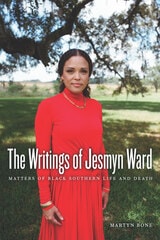
The Writings of Jesmyn Ward
Matters of Black Southern Life and DeathMartyn Bone
University of Iowa Press, 2025
Martyn Bone thoughtfully examines key themes running throughout Ward’s writing: Black life in the U.S. South; the legacies of slavery and segregation; neoliberalism as the contemporary form of capitalism; environmental crisis in the Anthropocene; and human-animal relations. Bone also connects Ward’s work to major figures in the U.S. literary canon, with particular focus on William Faulkner, Zora Neale Hurston, and Toni Morrison.
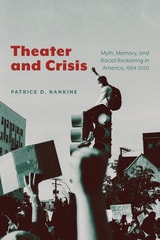
Theater and Crisis
Myth, Memory, and Racial Reckoning in America, 1964-2020Patrice D. Rankine
Lever Press, 2024
Rather than approaching the problem of racial reckoning through history, where periodization and progress are dominant narratives, Theater and Crisis argues that myth and memory allow for better theorization about recurring events from the past, their haunting, and what these apparent ghosts ask of us. Building on the study of myth as active, processual storytelling, Rankine acknowledges that it grounds and orients groups toward significant events. Theater and Crisis aligns narratives about Emmett Till, Trayvon Martin, and George Floyd, among others, with ancient, mythic figures such as Christ, Dionysus, Oedipus, and Moses. As living and verbal visitations, these stories performed on stage encode the past through their epiphanies in the present, urging audiences toward shared meaning.
Rankine traces the cyclical hauntings of race through the refiguring of mythic stories across the past 75 years in the plays of James Baldwin, Ntozake Shange, Antoinette Nwandu, and many more, and in response to flashpoints in US racial history, such as the 1955 lynching of Emmett Till, the upheavals of the 1960s and 1970s, the wars on drugs and crime, and the continued violence against and disenfranchisement of Black people into the twenty-first century. Theater and Crisis explores the appearance of myth on the American stage and showcases the ongoing response by the theatrical establishment to transform the stage into a space for racial reckoning. This timely book is essential reading for scholars of theater studies, classics, and American studies.
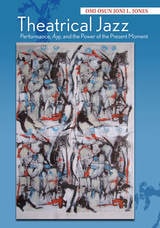
Theatrical Jazz
Performance, À??, and the Power of the Present MomentOmi Osun Joni L. Jones
The Ohio State University Press, 2015
Theatrical Jazz examines how artists are made and how artists make art. In charting their overlapping artistic genealogies, the book also discusses the work of veteran artists Aishah Rahman, Robbie McCauley, Sekou Sundiata, Ntozake Shange, and Erik Ehn, as well as the next generation of theatrical jazz innovators, Grisha Coleman, Walter Kitundu, Florinda Bryant, and Zell Miller III. Using autocritography as a primary methodology, the author draws on her role as performer, collaborator, audience/witness, and dramaturg in theatrical jazz, and her experiences with Yoruba spiritual traditions, to excavate the layers and nuances of this performance form. Jones’s use of performative writing, a blend of intellectual, artistic, and sensory experiences, allows scholars and students not only to read but also to “hear” the principles of theatrical jazz on the page.

There's Nothing Left for You Here
Allegra Solomon
Four Way Books, 2025
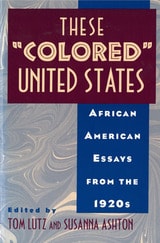
These Colored United States
African American Essays from the 1920sLutz, Tom
Rutgers University Press, 1996
"This series of essays from a crucial journal of the Harlem Renaissance epitomizes the diversity of middle-class African American intellectual culture of the 1920s, while the headnotes and introduction deftly articulate the complex social and institutional matrix from which the series emerged."––George Hutchinson, University of Tennessee, author of The Harlem Renaissance in Black and White
Originally published in The Messenger, “the most vibrant and controversial black journal in the nation” at the time, these essays represent an unexamined chapter in African American cultural history and provide a unique overview of social and cultural life during this crucial decade for race relations in the United States. While most scholarly attention on African American culture in the 1920s has focused on life in the major East Coast cities or the South, these essays are written by a highly diverse, eclectic group of African American writers from thirty different states, charged with assessing African American life in their home state. Socialists and pro-business writers, cultural nationalists and assimilationists, fiction writers, sociologists, theater critics, representatives of the New Negro group, the NAACP, and the union movement, and a series of idiosyncratic, nonaligned writers help give a full sense of the diversity of African American intellectual and cultural life in the 1920s.
Amont the essayists are Anita Scott Coleman, WIlliam H. Ferris, Alice Dunbar-Nelson, Charles S. Johnson, E. Franklin Frazier, Theophilus Lewis, Wallace Thurman, Roy Wilkins, George Schuyler, and Mamie Elaine Francis. The focus on the actual lived experience of African Americans across the nation provides copious materials for cultural study unavailable in any other collection.
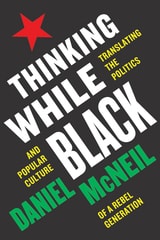
Thinking While Black
Translating the Politics and Popular Culture of a Rebel GenerationDaniel McNeil
Rutgers University Press, 2023
Listen along with this Spotify playlist inspired by the book!
For copyright reasons, this book is available in the U.S.A only.
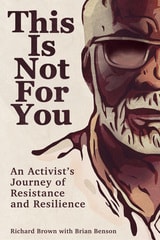
This Is Not For You
An Activist's Journey of Resistance and ResilienceRichard Brown
Oregon State University Press, 2021
The book finds Brown approaching his eightieth birthday and reflecting on his life. As he recalls his childhood in 1940s Harlem, his radicalization in the newly desegregated Air Force, and his decades of activism in one of America’s whitest cities, he questions how much longer he’ll do this work, and he wonders who, if anyone, will take his place.
This is a book about how and why to become an engaged, activist citizen, and how activists can stay grounded, no matter how deeply they immerse themselves in the work. It also offers an intimate, firsthand look at policing: what policing is and could be, how civilians can have a say, and how police can and should be responsive to and inclusive of civilian voices. This Is Not For You speaks on every page about being Black in America: about Black pride; Black history, art, and culture; and the experience of resisting white supremacy. It also stands as a much-needed counternarrative to Portlandia, telling a different story about the city and who has shaped it.
Over fifty percent of royalties earned on this book will be donated to organizations working on behalf of Black Portlanders.
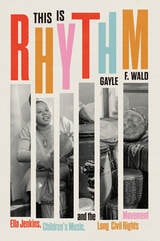
This Is Rhythm
Ella Jenkins, Children’s Music, and the Long Civil Rights MovementGayle F. Wald
University of Chicago Press, 2025
Ella Jenkins was one of the most influential musicians of the twentieth century. Her songs “You’ll Sing a Song and I’ll Sing a Song” and “Who Fed the Chickens?” are classics in the world of children’s music. In a career spanning more than sixty years, she recorded forty albums, won a lifetime-achievement Grammy, and became the best-selling individual artist in the history of Smithsonian Folkways Records, the independent label that played a significant role in the 1960s folk revival movement and introduced listeners to Woody Guthrie and Pete Seeger. During her remarkable career, Jenkins joined forces with twentieth-century luminaries such as Odetta, Big Bill Broonzy, Armando Peraza, Bayard Rustin, and Fred Rogers. Despite her wide-reaching influence on children’s music, Ella Jenkins’s sonic civil rights activism isn’t widely known today.
Based on dozens of interviews and access to Ella Jenkins’s personal archives, Gayle F. Wald’s This Is Rhythm shares how Jenkins, a “rhythm specialist” with no formal musical training, became the most prolific and significant American children’s musician of the twentieth century, creating a beloved catalog of songs grounded in values of community-building, antiracism, and cultural pluralism. Wald traces how the daughter of southern migrants translated the music of her own Black girlhood on the South Side of Chicago into a form of civil rights activism—a musical education that empowered children by introducing them to Black history, African diasporic rhythms, and a participatory, community-centered approach to music. Wald also discusses how, beginning in 1961, Jenkins built a life with a female partner who supported her materially and emotionally. Although Jenkins did not talk publicly about her sixty-three-year relationship, she opened up to Wald, offering insight into how a “private” Black woman in the public eye negotiated sexuality in an era before gay and lesbian liberation movements. Throughout her career, her innovative music found its way into thousands of community centers, classrooms, and concert venues, and her “call-and-response” method has influenced and empowered generations of children and adults.
A beautifully written tribute to Ella Jenkins’s legacy, this biography illustrates her impact on children’s music and expands our understanding of folk music’s relationship with social justice. Jenkins used music to build a new world in which children—and adults—are encouraged to listen to each other’s distinct rhythms.
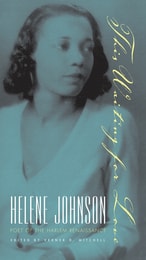
This Waiting for Love
Helene Johnson, Poet of the Harlem RenaissanceVerner D. Mitchell
University of Massachusetts Press, 2000
This volume brings together all of the known poetry and a selection of correspondence by an enormously talented but underappreciated poet of the Harlem Renaissance. Cousin of novelist Dorothy West and friend of Zora Neale Hurston, Helene Johnson (1905–1995) first gained literary prominence when James Weldon Johnson and Robert Frost selected three of her poems for prizes in a 1926 competition. During the late 1920s and early 1930s her poetry appeared in various small magazines, such as the Saturday Evening Quill, Palms, Opportunity, and Harlem. In 1933 Johnson married, and two years later her last published poem, “Let Me Sing My Song,” appeared in Challenge, the journal West had founded to revive the spirit of the Harlem Renaissance.
In his well-researched introduction, Verner D. Mitchell reconstructs Johnson's life, the details of which have long been veiled from public view, and places her in the context of a vital literary tradition. In addition to discussing her relationship with West, Hurston, and other black women writers, he explores the distinctive, at times radical, qualities of her work. Ever willing to defy the genteel conventions that governed women's writing, Johnson wrote poems on erotic themes and engaged the aesthetic, gender, and racial politics of her time.
Cheryl A. Wall's foreword also celebrates Johnson's talent, particularly the ease with which she moved among various verse forms—from the rigor of the sonnet to the improvisational creativity of free black vernacular. “An unexpected and most welcome gift,” This Waiting for Love, Wall writes, is “an enduring tribute” to “the vibrant poetry of Helene Johnson.”
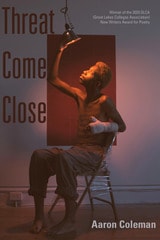
Threat Come Close
Aaron Coleman
Four Way Books, 2018
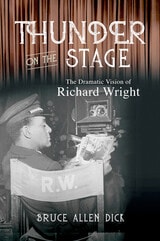
Thunder on the Stage
The Dramatic Vision of Richard WrightBruce Allen Dick
University of Illinois Press, 2024
Drawing on decades of research and interviews with Wright’s family and Wright scholars, Bruce Allen Dick uncovers the theatrical influence on Wright’s oeuvre--from his 1930s boxing journalism to his unpublished one-acts on returning Black GIs in WWII to his unproduced pageant honoring Vladimir Lenin. Wright maintained rewarding associations with playwrights, writers, and actors such as Langston Hughes, Theodore Ward, Paul Robeson, and Lillian Hellman, and took particular inspiration from French literary figures like Jean-Paul Sartre. Dick’s analysis also illuminates Wright’s direct involvement with theater and film, including the performative aspects of his travel writings; the Orson Welles-directed Native Son on Broadway; his acting debut in Native Son’s first film version; and his play “Daddy Goodness,” a satire of religious charlatans like Father Divine, in the 1930s.
Bold and original, Thunder on the Stage offers a groundbreaking reinterpretation of a major American writer.

Thunderclouds in the Forecast
A NovelClarence Major
Northwestern University Press, 2021
When Ray’s train is delayed in Lorena, a Gold Rush outpost turned college town, he meets Alice. Together they embark on a romance that tempts him to stay. By the time Ray arrives in San Francisco, Scotty has abandoned his bartending job, his rented room, and his scant belongings and skipped town with a married woman from Lorena. Now Ray has more than one reason to return.
A preeminent American writer who thrives on reinvention, Major returns with an unforgettable exploration of life on the brink of sweeping change. With spare prose and subtle poignancy, Thunderclouds in the Forecast probes love, loyalty, and belonging. As Toni Morrison wrote, “Clarence Major has a remarkable mind and the talent to match.”
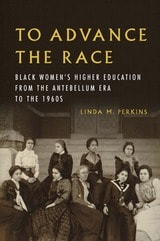
To Advance the Race
Black Women's Higher Education from the Antebellum Era to the 1960sLinda M. Perkins
University of Illinois Press, 2024
A first of its kind history, To Advance the Race is an enlightening look at African American women and their multi-generational commitment to the ideal of education as a collective achievement.