Results by title
5159 books match the query 'Biography' and 934 start with t

The Ceramic Career of M. Louise McLaughlin
Anita J. Ellis
Ohio University Press, 2003
In 1877 the thirty-year-old artist Mary Louise McLaughlin wrote China Painting, the first manual on the subject in the United States written by a woman for women. Extremely successful, it is now accepted as the book that launched the china painting movement in America.
When in 1898 McLaughlin decided to produce porcelain, the most difficult of ceramics, she showed the determination and exactitude that were her trademarks. Already renowned as a ceramicist, she became the first to produce studio porcelain in America and the first to discover the technique for decorating under the glaze. Her work was welcomed with enthusiasm in New York and Paris.
Despite the enormous influence of Mary Louise McLaughlin on the history of American ceramics, Anita Ellis’s The Ceramic Career of M. Louise McLaughlin is the first definitive study dedicated to her accomplishments.
Anita Ellis depicts the many challenges McLaughlin encountered in pursuit of her ultimately successful career. Not the least of these was her rivalry with the formidable Maria Longworth Nichols, fellow Cincinnatian and founder of the Rookwood Pottery Company. Another was that of being a woman in the arts: her primary goal had been to paint portraits on canvas, but Victorian society did not afford opportunities in what was considered a male sphere.
Replete with historic photos and color illustrations of many of McLaughlin’s works, The Ceramic Career of M. Louise McLaughlin is a tribute to a woman artist who rose to one of the most esteemed positions in her field.
The Changing Face of Economics
Conversations with Cutting Edge EconomistsDavid Colander, Richard P. F. Holt, and J. Barkley Rosser, Jr.
University of Michigan Press, 2004
The interviews and commentary together demonstrate that economics is currently undergoing a fundamental shift in method and is moving away from traditional neoclassical economics into a dynamic set of new methods and approaches. These new approaches include work in behavioral economics, experimental economics, evolutionary game theory and ecological approaches, complexity and nonlinear dynamics, methodological analysis, and agent-based modeling.
David E. Colander is Professor of Economics, Middlebury College.
J. Barkley Rosser, Jr., is Professor of Economics and Kirby L. Kramer Jr. Professor of Business Administration, James Madison University.
Richard P. F. Holt is Professor of Churchill Honors and Economics, Southern Oregon University.
The Chippewa
Biography of a Wisconsin WaterwayRichard D. Cornell
Wisconsin Historical Society Press, 2017
The Choice
Converts to Judaism Share Their StoriesArnine Cumsky Weiss and Carol Weiss Rubel
University of Scranton Press, 2010
In The Choice, Arnine Cumsky Weiss and Carol Weiss Rubel present the stories of forty-five converts to Judaism. These reflective narratives demonstrate that no two converts’ experiences are alike, yet most share some common characteristics: a spiritual uneasiness, fear, doubt, and a gradual development of spiritual and intellectual understanding and acceptance of conversion. The stories in The Choice will be a source of inspiration and affirmation for anyone who is struggling with a conversion decision or knows someone who is.
The Choosing
A Rabbi's Journey from Silent Nights to High Holy DaysMyers, Andrea
Rutgers University Press, 2011
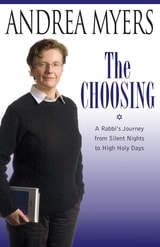
A young Lutheran girl grows up on Long Island, New York. She aspires to be a doctor, and is on the fast track to marriage and the conventional happily-ever-after. But, as the Yiddish saying goes, "Man plans, and God laughs." Meet Andrea Myers, whose coming-of-age at Brandeis, conversion to Judaism, and awakening sexual identity make for a rich and well-timed life in the rabbinate.
In The Choosing, Myers fuses heartwarming anecdotes with rabbinic insights and generous dollops of humor to describe what it means to survive and flourish on your own terms. Portioned around the cycle of the Jewish year, with stories connected to each of the holidays, Myers draws on her unique path to the rabbinate--leaving behind her Christian upbringing, coming out as a lesbian, discovering Judaism in college, moving to Israel, converting, and returning to New York to become a rabbi, partner, and parent.
Myers relates tales of new beginnings, of reinventing oneself, and finding oneself. Whether it's a Sicilian grandmother attempting to bake hamantaschen on Purim for her Jewish granddaughter, or an American in Jerusalem saving a chicken from slaughter during a Rosh Hashanah ritual, Myers keeps readers entertained as she reflects that spirituality, goodness, and morality can and do take many forms. Readers will enthusiastically embrace stories of doors closing and windows opening, of family and community, of integration and transformation. These captivating narratives will resonate and, in the author's words, "reach across coasts, continents, and generations."
The Chronicle of Le Murate
Sister Giustina Niccolini
Iter Press, 2011
The Chronicler of Barsetshire
A Life of Anthony TrollopeR. H. Super
University of Michigan Press, 1990
The Churches of Christ in the 20th Century
Homer Hailey's Personal Journey of FaithDavid Edwin Harrell
University of Alabama Press, 2002
The story of one of this country's major religious movements is told through the spiritual odyssey of one of its prominent spokesmen.
When Homer Hailey sparked controversy within Churches of Christ congregations over his stand on divorce and remarriage, he spoke to a movement already sundered. Historian David Edwin Harrell tells Hailey's story as a means of presenting the larger drama of faith and feuding within those churches.
A nondenominational movement of autonomous congregations, Churches of Christ have been among the fastest-growing religious bodies in the 20th century. Throughout the movement's history, church leaders debated issues ranging from missionary societies to the use of instrumental music in worship. Although some disagreements affected only the ties between congregations, others led to the creation of three distinct groups calling themselves Churches of Christ identified by their sociological and theological positions.
This book shows how the story of the Churches of Christ is reflected by Homer Hailey, a preacher, educator, and author whose life puts in perspective the personal journeys traveled by members in this century. Writing from the perspective of the non-institutional wing within the movement, Harrell avoids mainstream biases to describe the various dissenting views as fully and fairly as possible.
Combining institutional history and biography, Harrell's book is the first to bring the story of the Churches of Christ to century's end. It provides new insight into how this movement realigned itself and shows how one man's career reflected a century of spiritual growth and change for the church as a whole.
The Cinema of Yakov Protazanov
F. Booth Wilson
Rutgers University Press, 2024
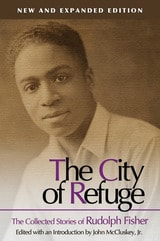
The City of Refuge [New and Expanded Edition]
The Collected Stories of Rudolph FisherRudolph Fisher, Edited & Intro by John McCluskey, Jr.
University of Missouri Press, 2008
A definitive collection of Fisher’s short stories, The City of Refuge offers vibrant tales that deal with the problems faced by newcomers to the city, ancestor figures who struggle to instill a sense of integrity in the young, problems of violence and vengeance, and tensions of caste and class. This anthology has now been expanded to include seven previously unpublished stories that take up such themes as marital infidelity and passing for black and also relate the further adventures of Jinx and Bubber, the comic duo who appeared in Fisher’s two novels.
This new edition also includes two unpublished speeches and the popular article “The Caucasian Storms Harlem,” describing the craze for black music and dance. John McCluskey’s introduction has been updated to place the additional works within the context of Fisher’s career while situating his oeuvre within the broader context of American writing during the twenties.
Fisher recognized the dramatic and comic power in African American folklore and music and frequented Harlem’s many cabarets, speakeasies, and nightclubs, and at the core of his work is a strong regard for music as context and counterpoint. The City of Refuge now better captures the sounds of the city experience by presenting all of Fisher’s known stories. It offers a portrait of Harlem unmatched in depth and range by Fisher’s contemporaries or successors, celebrating, as Booklist noted, “the complexity of black urban life in its encounter with the dangers and delights of the city.” This expanded edition adds new perspectives to that experience and will enhance Fisher’s status for a new generation of readers.
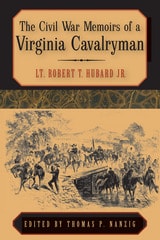
The Civil War Memoirs of a Virginia Cavalryman
Lt. Robert T. Hubard Jr., Edited by Thomas P. Nanzig
University of Alabama Press, 2007
Robert Hubard was an enlisted man and officer of the 3rd Virginia Cavalry in the Army of Northern Virginia (CSA) from 1861 through 1865. He wrote his memoir during an extended convalescence spent at his father’s Virginia plantation after being wounded at the battle of Five Forks on April 1, 1865. Hubard served under such Confederate luminaries as Jeb Stuart, Fitz Lee, Wade Hampton, and Thomas L. Rosser. He and his unit fought at the battles of Antietam, on the Chambersburg Raid, in the Shenandoah Valley, at Fredericksburg, Kelly’s Ford, Chancellorsville, Gettysburg, Bristoe Station, and down into Virginia from the Wilderness to nearly the end of the war at Five Forks.
Hubard was like many of his class and station a son of privilege and may have felt that his service was an act of noblesse oblige. Unlike many of his contemporaries, however, he was a keen observer and a writer of unusual grace, clarity, humor, and intelligence. The editor has fleshed out his memoir by judicious use of Hubard’s own wartime letters, which not only fill in gaps but permit the reader to see developments in the writer’s thinking after the passage of time. Because he was a participant in events of high drama and endured the quotidian life of a soldier, Hubard’s memoir should be of value to both scholars and avocational readers.
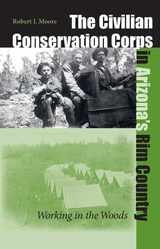
The Civilian Conservation Corps In Arizona's Rim Country
Working In The WoodsRobert J. Moore
University of Nevada Press, 2006
Part of the massive relief effort of Roosevelt’s New Deal, the CCC was created in 1933 to give young men an opportunity to work and make money to help families devastated by the Great Depression, and to participate in forest and conservation projects across the country. In Arizona, thousands of young men, many of them from the industrial Northeast, served in the state’s CCC forest camps. Arizona’s Mogollon Rim is a spectacular expanse of cliffs that slices through half the state, stretching from Sedona eastward to New Mexico. Along with the White Mountains, it includes the largest contiguous forest of ponderosa pine in America. Remote and little-visited in the 1930s, the Rim Country offered copious outlets for the CCC men’s energies: building roads, public campsites, hiking trails, fire lookout towers, and administration buildings; fighting fires; controlling erosion; eliminating vermin; and restoring damaged soils. The CCC enrollees were also given an opportunity to continue interrupted educations, learn useful skills and self-discipline, participate in sports and other leisure activities, and meet local residents. Author Robert J. Moore interviewed a number of CCC veterans who served in the Rim Country, and their stories are part of this book. So too are photographs—many of them from veterans’ personal collections—of Rim Country camps and workers, and such ephemera as camp newspapers. This is an engrossing account of several thousand young men who came to Arizona to escape the misery of the Great Depression, whose work in the woods changed the state, and who in the process were themselves changed. Here is the human face of Arizona’s CCC, the men’s experiences, their work, and their lasting impact on the forests of the Rim Country.
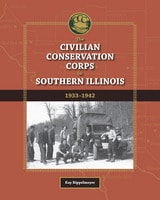
The Civilian Conservation Corps in Southern Illinois, 1933-1942
Kay Rippelmeyer
Southern Illinois University Press, 2015
Drawing on more than thirty years of meticulous research, Kay Rippelmeyer details the Depression-era history of the simultaneous creation of the Civilian Conservation Corps (CCC) and the Shawnee National Forest in southern Illinois. Through the stories of the men who worked in CCC camps devoted to soil and forest conservation projects, she offers a fascinating look into an era of utmost significance to the identity, citizens, wildlife, and natural landscape of the region.
Rippelmeyer outlines the geologic and geographic history of southern Illinois, from Native American uses of the land to the timber industry’s decimation of the forest by the 1920s. Detailing both the economic hardships and agricultural land abuse plaguing the region during the Depression, she reveals how the creation of the CCC under Franklin Delano Roosevelt coincided with the regional campaign for a national forest and how locals first became aware of and involved with the program.
Rippelmeyer mined CCC camp records from the National Archives, newspaper accounts and other correspondence and conducted dozens of oral interviews with workers and their families to re-create life in the camps. An extensive camp compendium augments the volume, featuring numerous photographs, camp locations and dates of operation, work history, and company rosters. Satisfying public curiosity and the need for factual information about the camps in southern Illinois, this is an essential contribution to regional history and a window to the national impact of the CCC.
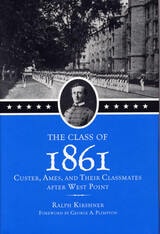
The Class of 1861
Custer, Ames, and Their Classmates after West PointRalph Kirshner
Southern Illinois University Press, 1999
Ralph Kirshner has provided a richly illustrated forum to enable the West Point class of 1861 to write its own autobiography. Through letters, journals, and published accounts, George Armstrong Custer, Adelbert Ames, and their classmates tell in their own words of their Civil War battles and of their varied careers after the war.
Two classes graduated from West Point in 1861 because of Lincoln's need of lieutenants: forty-five cadets in Ames's class in May and thirty-four in Custer's class in June. The cadets range from Henry Algernon du Pont, first in the class of May, whose ancestral home is now Winterthur Garden, to Custer, last in the class of June. “Only thirty-four graduated,” remarked Custer, “and of these thirty-three graduated above me.” West Point's mathematics professor and librarian Oliver Otis Howard, after whom Howard University is named, is also portrayed.
Other famous names from the class of 1861 are John Pelham, Emory Upton, Thomas L. Rosser, John Herbert Kelly (the youngest general in the Confederacy when appointed), Patrick O'Rorke (head of the class of June), Alonzo Cushing, Peter Hains, Edmund Kirby, John Adair (the only deserter in the class), and Judson Kilpatrick (great-grandfather of Gloria Vanderbilt). They describe West Point before the Civil War, the war years, including the Vicksburg campaign and the battle of Gettysburg, the courage and character of classmates, and the ending of the war.
Kirshner also highlights postwar lives, including Custer at Little Bighorn; Custer's rebel friend Rosser; John Whitney Barlow, who explored Yellowstone; du Pont, senator and author; Kilpatrick, playwright and diplomat; Orville E. Babcock, Grant's secretary until his indictment in the "Whiskey Ring"; Pierce M. B. Young, a Confederate general who became a diplomat; Hains, the only member of the class to serve on active duty in World War I; and Upton, "the class genius."
The Class of 1861, which features eighty-three photographs, includes a foreword by George Plimpton, editor of theParis Review and great-grandson of General Adelbert Ames.
The Clays of Alabama
A Planter-Lawyer-Politician FamilyRuth Ketring Nuermberger
University of Alabama Press, 1958
Of unique interest to the student of nineteenth century America is this account of the Alabama Clays, who in their private life were typical of the slaveholding aristocracy of the old South, but as lawyer-politicians played significant roles in state and national politics, in the development of the Democratic party, and in the affairs of the Confederacy.
In the period from 1811 to 1915, the Clays were involved in many of the great problems confronting the South. This study of the Clay family includes accounts of the wartime legislation of the Confederate Congress and the activities of the Confederate Commission in Canada. Equally interesting to many readers will be the intimate view of social life in ante-bellum Washington and the story of the domestic struggles of a plantation family during and after the war, as revealed through the letters of Clement Claiborne Clay and his wife Virginia.
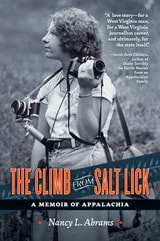
The Climb from Salt Lick
A Memoir of AppalachiaNancy L. Abrams
West Virginia University Press, 2018
The Climb from Salt Lick is the remarkable memoir of an outsider coming into adulthood. It is the story of a unique place and its people from the perspective of a woman who documents its burdens and its beauty, using words and pictures to tell the rich stories of those around her.
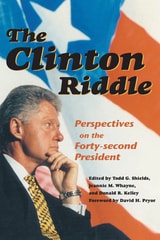
The Clinton Riddle
Perspectives on the Forty-second PresidentTodd G. Shields
University of Arkansas Press, 2004
The Clintons of Arkansas
An Introduction by Those Who Know Them BestErnest Dumas
University of Arkansas Press, 1993
The Collaborator
The Trial and Execution of Robert BrasillachAlice Kaplan
University of Chicago Press, 2000
Was Brasillach in fact guilty of treason? Was he condemned for his denunciations of the resistance, or singled out as a suspected homosexual? Was it right that he was executed when others, who were directly responsible for the murder of thousands, were set free? Kaplan's meticulous reconstruction of Brasillach's life and trial skirts none of these ethical subtleties: a detective story, a cautionary tale, and a meditation on the disturbing workings of justice and memory, The Collaborator will stand as the definitive account of Brasillach's crime and punishment.
A National Book Award Finalist
A National Book Critics Circle Award Finalist
"A well-researched and vivid account."—John Weightman, New York Review of Books
"A gripping reconstruction of [Brasillach's] trial."—The New Yorker
"Readers of this disturbing book will want to find moral touchstones of their own. They're going to need them. This is one of the few works on Nazism that forces us to experience how complex the situation really was, and answers won't come easily."—Daniel Blue, San Francisco Chronicle Book Review
"The Collaborator is one of the best-written, most absorbing pieces of literary history in years."—David A. Bell, New York Times Book Review
"Alice Kaplan's clear-headed study of the case of Robert Brasillach in France has a good deal of current-day relevance. . . . Kaplan's fine book . . . shows that the passage of time illuminates different understandings, and she leaves it to us to reflect on which understanding is better."—Richard Bernstein, The New York Times
The Colonel and The Pacifist
Klancy Clark De Nevers
University of Utah Press, 2004
The Colonel and the Pacifist tells the story of two men caught up in one of the most infamous episodes in American history. While they never met, Bendetsen and Saito’s lives touched tangentially—from their common hometown to their eventual testimony during the 1981 hearings of the Commission on the Wartime Relocation and Internment of Civilians. In weaving together these contrasting stories, Klancy Clark de Nevers not only exposes unknown or little known aspects of World War II history, she also explores larger issues of racism and war that resonate through the years and ring eerily familiar to our post-9/11 ears.
The Communist and the Communist's Daughter
A MemoirJane Lazarre
Duke University Press, 2017
Soon after immigrating to the United States as a young man, Lazarre began a long career as a radical activist, being convicted of sedition, holding leadership positions in the American Communist Party, fighting in the Spanish Civil War, organizing labor unions, testifying in front of the House Un-American Activities Committee, and resisting the FBI’s efforts to recruit him as an informant. Through periods of heroism and deep despair Lazarre never abandoned his ideals or his sustained faith in the fundamental goodness of people.
This is also the story of Jane as she grew up, married an African American civil rights activist, and became a mother and a writer while coming to terms with her father’s legacy. She recounts her arguments with her father over ideology, but also his profound influence on her life. Throughout this poignant and beautifully written work, Jane examines memory, grief, love, and conscience while detailing the sacrifices, humanity, and unwavering convictions of a man who worked tirelessly to create a brighter future for us all.
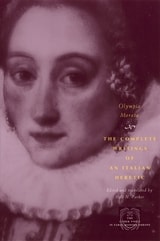
The Complete Writings of an Italian Heretic
Olympia Morata
University of Chicago Press, 2003
A brilliant scholar and one of the finest writers of her day, Olympia Morata (1526-1555) was attacked by some as a "Calvinist Amazon" but praised by others as an inspiration to all learned women. This book publishes, for the first time, all her known writings—orations, dialogues, letters, and poems—in an accessible English translation.
Raised in the court of Ferrara in Italy, Morata was educated alongside the daughters of the nobility. As a youth she gave public lectures on Cicero, wrote commentaries on Homer, and composed poems, dialogues, and orations in both Latin and Greek. She also became a prominent Protestant evangelical, studying the Bible extensively and corresponding with many of the leading theologians of the Reformation. After fleeing to Germany in search of religious freedom, Morata tutored students in Greek and composed what many at the time felt were her finest works—a series of translations of the Psalms into Greek hexameters and sapphics.
Feminists and historians will welcome these collected writings from one of the most important female humanists of the sixteenth century.
The Concubine, the Princess, and the Teacher
Voices from the Ottoman HaremTranslated and edited by Douglas Scott Brookes
University of Texas Press, 2008
In the Western imagination, the Middle Eastern harem was a place of sex, debauchery, slavery, miscegenation, power, riches, and sheer abandon. But for the women and children who actually inhabited this realm of the imperial palace, the reality was vastly different. In this collection of translated memoirs, three women who lived in the Ottoman imperial harem in Istanbul between 1876 and 1924 offer a fascinating glimpse "behind the veil" into the lives of Muslim palace women of the late nineteenth and early twentieth centuries.
The memoirists are Filizten, concubine to Sultan Murad V; Princess Ayse, daughter of Sultan Abdulhamid II; and Safiye, a schoolteacher who instructed the grandchildren and harem ladies of Sultan Mehmed V. Their recollections of the Ottoman harem reveal the rigid protocol and hierarchy that governed the lives of the imperial family and concubines, as well as the hundreds of slave women and black eunuchs in service to them. The memoirists show that, far from being a place of debauchery, the harem was a family home in which polite and refined behavior prevailed. Douglas Brookes explains the social structure of the nineteenth-century Ottoman palace harem in his introduction.
These three memoirs, written across a half century and by women of differing social classes, offer a fuller and richer portrait of the Ottoman imperial harem than has ever before been available in English.
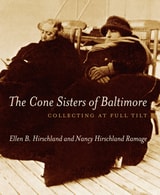
The Cone Sisters of Baltimore
Collecting at Full TiltEllen B. Hirschland
Northwestern University Press, 2008
This richly illustrated biography documents their lives from a unique perspective: that of their great-niece, who wrote this book with her daughter. Ellen B. Hirschland and Nancy Hirschland Ramage delve into Claribel’s and Etta’s world, following the sisters through letters and personal stories as they travel to meet some of the artists whose works would turn their adjoining apartments into a gallery. They bought art by Manet, Gauguin, and Cézanne, as well as of Picasso and Matisse, whom they came to know well. The sisters’ experiences in Paris from 1901 through the 1920s provide an exceptional view of the bright artistic ferment in the city at that time. They were two Victorian women from Baltimore buying avant-garde masterpieces, attending salons with friends Gertrude and Leo Stein, and building a collection that would initially enrage the conservative people around them. Only with time would their keen eyes and unwavering taste prove them right.
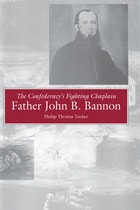
The Confederacy's Fighting Chaplain
Father John B. BannonPhillip Thomas Tucker
University of Alabama Press, 1992
The Confederacy’s Fighting Chaplain is the remarkable story of the Irishman who brought the Bible and his own resourcefulness and daring to both the battlefield and the diplomatic field—a story that has been largely ignored for more than 130 years. The biography of John B. Bannon also chronicles the forgotten Southerners—the Irish immigrants of the Confederacy—whose colorful and crucial role in the Civil War has been seriously neglected.
The Confessions and Correspondence, Including the Letters to Malesherbes
Jean-Jacques Rousseau
Dartmouth College Press, 1998
The Conscience of a Lawyer
Clifford J. Durr and American Civil Liberties, 1899–1975John A. Salmond
University of Alabama Press, 1990
A powerful portrait of principle and protest in the life of a Southern lawyer who stood for civil liberties.
Clifford Judkins Durr was an Alabama lawyer who played an important role in defending activists and other accused of disloyalty during the New Deal and McCarthy eras. His uncompromising commitment to civil liberties and civic decency caused him to often take unpopular positions.
In 1933, Durr moved to Washington to work as a lawyer for the Reconstruction Finance Corporation, a creation of Roosevelt’s new Democratic administration, becoming a dedicated New Dealer in the process. He was then appointed by President Franklin D. Roosevelt to the Federal Communications Commission (FCC), a politically sensitive position as FDR sought to counter the increasing power and concentration of broadcasters, many of whom were opponents of the New Deal. Durr resigned from the FCC in 1948 and after brief employment with the National Farmers Union in Colorado, the Durrs eventually returned to Montgomery, Alabama in the hope of returning to a more prosperous, less controversial life.
Durr continued to practice in Montgomery as counsel for black citizens whose rights had been violated and ultimately, in December, 1955, when police arrested Rosa Parks for refusing to give her bus seat to a white man he stepped in and lent his extensive legal prowess to her case and the continuing quest for civil rights. Closing his firm in 1964 Durr began to lecture in the United States and abroad. He died at his grandfather's farm in 1975.
The Conscience of the University, and Other Essays
By Harry Huntt Ransom
University of Texas Press, 1982
In 1982, a century after the laying of the cornerstone of its first building, the University of Texas was ranked by the New York Times among the best in the nation. No one had more to do with that extraordinary achievement than Harry Huntt Ransom. From 1935 to his death in 1976, he served the University in positions ranging from instructor in English to chancellor of The University of Texas System. In the fifties, sixties, and seventies, he held a succession of administrative posts requiring him to face a myriad of perplexing problems. Among the critical issues calling for analysis and decision in those years were the post-Sputnik pressure for greater emphasis on science and technology, the student revolts during the 1960s, and the defection of growing numbers of university faculty to industry and government.
Harry Huntt Ransom did not merely respond to the problems of the times. He had his own large ambitions for the University of Texas, in particular the improvement of student programs, the development of a vigorous faculty, and—the achievement for which he is best remembered—the building of a world-renowned library.
He was concerned with the role of the university in society, what the university should do and do well, and what it should not do. Always he viewed these matters in broad perspective, and his approach to them was far-sighted and deeply philosophical.
As dean, vice-president, president, and chancellor, Ransom wrote and spoke often on these and other important subjects. Aside from the books that he wrote and edited, he left a prodigious amount of material, some of which had been published in various journals and some of which had been delivered as lectures and addresses and never made available in printed form.
For the last twenty-five years of Ransom's life his wife, Hazel, was his closest companion and confidant. At the urging of Harry's friends, colleagues, and admirers, she undertook the task of sifting through her late husband's papers in an effort to organize and preserve some of the important contributions he had made to the thought and planning that were so instrumental in shaping the University of Texas and higher education in general. In these essays we see the force of reasoning and grace of style for which Ransom was so widely admired. It was he who reminded us that books last longer than buildings. This is a book of lasting importance that Harry Ransom himself might have given us had he lived longer.
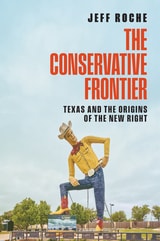
The Conservative Frontier
Texas and the Origins of the New RightJeff Roche
University of Texas Press, 2025
2026 Al Lowman Memorial Prize, Texas State Historical Association (TSHA)
2026 Bonney MacDonald Outstanding Book Award Winner, Center for the Study of the American West at West Texas A&M University (CSAW)
How West Texas business and culture molded the rise of conservatism in the United States.
Much of what we understand as modern American political conservatism was born in West Texas, where today it predominates. How did the people of such a vast region—larger than New England and encompassing big cities like Lubbock and Amarillo, as well as tiny towns from Anson to Dalhart—develop such a uniform political culture? And why and how did it go national?
Jeff Roche finds answers in the history of what he calls cowboy conservatism. Political power players matter in this story, but so do football coaches, newspaper editors, and a breakfast cereal tycoon who founded a capitalist utopia. The Conservative Frontier follows these and other figures as they promoted an ideology grounded in the entrepreneurial and proto-libertarian attitudes of nineteenth-century Texas ranchers, including a fierce devotion to both individualism and small-town notions of community responsibility. This political sensibility was in turn popularized by its association with the mythology and iconography of the cowboy as imagined in twentieth-century mass media. By the 1970s and the rise of Ronald Reagan, Roche shows, it was clear that the cowboy conservatism of West Texas had set the stage for the emergence of the New Right—the more professionalized and tech-savvy operation that dominated national conservative politics for the next quarter century.
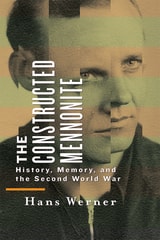
The Constructed Mennonite
History, Memory, and the Second World WarHans Werner
University of Manitoba Press, 2013

The Cornett-Whitley Gang
Violence Unleashed in TexasDavid Johnson
University of North Texas Press, 2019
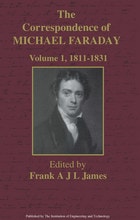
The Correspondence of Michael Faraday
1811-1831, Volume 1Frank A.J.L. James
The Institution of Engineering and Technology, 1991
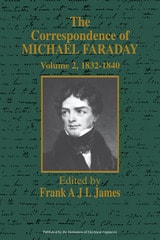
The Correspondence of Michael Faraday
1832-1840, Volume 2Frank A.J.L. James
The Institution of Engineering and Technology, 1993
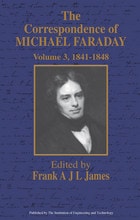
The Correspondence of Michael Faraday
1841-1848, Volume 3Frank A.J.L. James
The Institution of Engineering and Technology, 1996
The Correspondence of Michael Faraday
1849-1855, Volume 4Frank A.J.L. James
The Institution of Engineering and Technology, 1999
The Correspondence of Michael Faraday
1855-1860, Volume 5Frank A.J.L. James
The Institution of Engineering and Technology, 2008
The Correspondence of Michael Faraday
1860-1867, Volume 6Frank A.J.L. James
The Institution of Engineering and Technology, 2011
The Cost of Courage
The Journey of an American CongressmanCarl Elliott
University of Alabama Press, 2001
This deeply moving story chronicles the tenacity and vision that carried Carl Elliott from the hills of northwest Alabama to eight distinguished terms in the United States House of Representatives.
Born in a log cabin on a tenant farm in 1913, Carl Elliott worked his way through The University of Alabama during the Great Depression and was elected to Congress in 1948. With a no-nonsense philosophy of fairness and equal opportunity, he established himself as one of the most effective members of the House of Representatives during the 1950s. He was a progressive Democrat and he fought hard for the dirt farmers and coal miners he grew up with and who sent him to Congress.
In an era when racial segregationists dominated southern politics, Elliott worked with many of the important political leaders of the 20th century, including Presidents Truman, Eisenhower, and Kennedy and powerful House Speaker Sam Rayburn. He was instrumental in passing the National Defense Education Act of 1958, which continues to provide college loans to more than 20 million Americans. But his brave stand against racism and George Wallace in the 1966 Alabama gubernatorial race ruined him professionally (he never returned to elected office) and financially (he cashed in his congressional pension to help fund the campaign). Even as a destitute invalid in his old age, however, Elliott kept his dignity and integrity intact.
The life story of Carl Elliott is full of humor and wry wisdom and explains how he made his way across a stage as big as America, influencing its politics and future, and then emerged, belatedly, as an unsung hero of the fight for civil rights and equality.
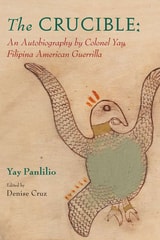
The Crucible
An Autobiography by Colonel Yay, Filipina American GuerrillaCruz, Denise
Rutgers University Press, 2010
On December 8, 1941, as the Pacific War reached the Philippines, Yay Panlilio, a Filipina-Irish American, faced a question with no easy answer: How could she contribute to the war?
In this 1950 memoir, The Crucible: An Autobiography by Colonel Yay, Filipina American Guerrilla, Panlilio narrates her experience as a journalist, triple agent, leader in the Philippine resistance against the Japanese, and lover of the guerrilla general Marcos V. Augustin. From the war-torn streets of Japanese-occupied Manila, to battlegrounds in the countryside, and the rural farmlands of central California, Panlilio blends wry commentary, rigorous journalistic detail, and popular romance.
Weaving together appearances by Douglas MacArthur and Carlos Romulo with dangerous espionage networks, this work provides an insightful perspective on the war. The Crucible invites readers to see new intersections in Filipina/o, Asian American, and American literature studies, and Denise Cruz's introduction imparts key biographical, historical, and cultural contexts to that purpose.
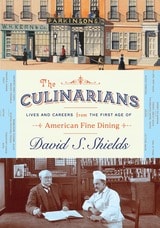
The Culinarians
Lives and Careers from the First Age of American Fine DiningDavid S. Shields
University of Chicago Press, 2017
This fascinating culinarian is John Dabney (1821–1900), who was born a slave, but later built an enterprising catering business. Dabney is just one of 175 influential cooks and restaurateurs profiled by David S. Shields in The Culinarians, a beautifully produced encyclopedic history of the rise of professional cooking in America from the early republic to Prohibition.
Shields’s concise biographies include the legendary Julien, founder in 1793 of America’s first restaurant, Boston’s Restorator; and Louis Diat and Oscar of the Waldorf, the men most responsible for keeping the ideal of fine dining alive between the World Wars. Though many of the gastronomic pioneers gathered here are less well known, their diverse influence on American dining should not be overlooked—plus, their stories are truly entertaining. We meet an African American oyster dealer who became the Congressional caterer, and, thus, a powerful broker of political patronage; a French chef who was a culinary savant of vegetables and drove the rise of California cuisine in the 1870s; and a rotund Philadelphia confectioner who prevailed in a culinary contest with a rival in New York by staging what many believed to be the greatest American meal of the nineteenth century. He later grew wealthy selling ice cream to the masses. Shields also introduces us to a French chef who brought haute cuisine to wealthy prospectors and a black restaurateur who hosted a reconciliation dinner for black and white citizens at the close of the Civil War in Charleston.
Altogether, Culinarians is a delightful compendium of charcuterie-makers, pastry-pipers, caterers, railroad chefs, and cooking school matrons—not to mention drunks, temperance converts, and gangsters—who all had a hand in creating the first age of American fine dining and its legacy of conviviality and innovation that continues today.
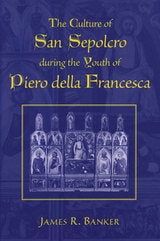
The Culture of San Sepolcro during the Youth of Piero della Francesca
James R. Banker
University of Michigan Press, 2003
Piero della Francesca has remained an enigma because of the contradictions observed in his life and art. Banker's archival research has enabled him to clear away some of the obscurities. This book situates Piero in the earliest social and intellectual worlds within which he moved. Heretofore, writers on Piero have begun his putative formation in Florence in 1439. Banker demonstrates that the young painter's formation began prior to 1439, when he was surrounded by his family and the local artisans' community.
The Culture of San Sepolcro during the Youth of Piero della Francesca integrates social and art history in order to better understand the formation of a Renaissance artist. It will be vital to scholars and historians of the Italian Renaissance city states, as well as to art historians and those interested in the relationship of art and society.
James R. Banker is Professor of History, North Carolina State University.
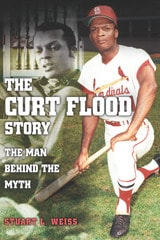
The Curt Flood Story
The Man behind the MythStuart L. Weiss
University of Missouri Press, 2018
Curt Flood, former star center fielder for the St. Louis Cardinals, is a hero to many for selflessly sacrificing his career to challenge the legality of baseball’s reserve system. Although he lost his case before the Supreme Court, he has become for many a martyr in the eventually successful battle for free agency. Sportswriters and fans alike have helped to paint a picture of Flood as a larger-than-life figure, a portrait that, unhappily, cannot stand closer inspection. This book reveals the real Curt Flood—more man than myth.
Flood stirred up a hornet’s nest by refusing to be traded from the Cardinals to the Philadelphia Phillies after the 1969 season, arguing that Major League Baseball’s reserve system reduced him to the status of bondage. Flood decided to resist a system in which his contract could be traded without his consent and in which he was not at liberty to negotiate his services in an open market. Stuart Weiss examines the man behind the decision, exploring the span of Flood’s life and shedding light on his relationships with those who helped shape his determination to sue baseball and providing a new perspective on the lawsuit that found its way to the U.S. Supreme Court.
Although a superb player, Flood was known to be temperamental and sensitive; in suing Major League Baseball he transformed his grievances against the Cardinals front office into an attack on how the business of big-league ball was conducted. Weiss shows that Flood was far from the stereotypical “dumb jock” but was rather a proud, multifaceted black man in a business run by white moguls. By illuminating Flood’s private side, rarely seen by the public, he reveals how Flood misled a gullible press on a regular basis and how his 1971 memoir, The Way It Is, didn’t tell it the way it really was.
Drawing on previously untapped sources, Weiss examines more fully and deeply than other writers the complexities of Flood’s decision to pursue his lawsuit—and demonstrates that the picture of Flood as a martyr for free agency is a myth. He suggests why, of all the players traded or sold through the years, it was Flood who brought this challenge. Weiss also explains how Flood’s battle against the reserve system cannot be understood in isolation from the personal experiences that precipitated it, such as his youth in a dysfunctional home, his troubled first marriage, his financial problems, and his unwavering commitment to the Cardinals.
The Curt Flood Story is a realistic account of an eloquent man who presented a warm, even vulnerable, face to the public as well as to friends, while hiding his inner furies. It shows that Flood was neither a hero nor a martyr but a victim of unique circumstances and his own life.
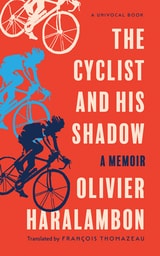
The Cyclist and His Shadow
A MemoirOlivier Haralambon
University of Minnesota Press, 2022
A philosopher and former racing cyclist examines how competitive riders lose their sense of self as they pursue perfect motion and mastery over pain
After ten years as a racing cyclist, riding in up to ninety races a year, Olivier Haralambon became a journalist and philosopher. In The Cyclist and His Shadow, he writes about the world of competitive cycling with rare honesty and self-reflection, exploring it not merely as a sport but as a spiritual and artistic practice, imbued with a mystical quality.
In prose at once poetic and precise, Haralambon depicts the intensity of cycling as physical activity in which the rider’s consciousness becomes inseparable from the instantaneous movements of limbs, the exertion of heart and lungs, and the marshaling and expenditure of energy. He describes riding as an ascetic activity always accompanied by pain that the cyclist can control but never fully eliminate. But cycling for Haralambon is not only suffering but also an addictively pleasurable activity in which the rider’s sense of self dissolves and melds with the bicycle, mind and body exploring the vibrant solitude of the course and limits of human endurance. Engaging in the repetition of ascension and the endless hours immersed in an oceanic interior, cyclists are artists in the vastness of landscape, both interior and exterior.
Published in association with The Cycling Podcast (https://thecyclingpodcast.com), The Cyclist and His Shadow offers an illuminating meditation on what drives cyclists to devote their lives and bodies to training, racing, and even doping. Drawing from personal experience, Haralambon presents cycling as simultaneously physical and creative, technological and mystical, torturous and ecstatic.
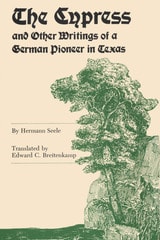
The Cypress and Other Writings of a German Pioneer in Texas
By Hermann Seele
University of Texas Press, 1979
When Hermann Seele anived in New Braunfels in 1845, the raw colony was plagued by poverty, disease, lack of food, and hostile Indians. This personal record of the Germans in Texas shows their evolution from struggling colonists to prosperous citizens.
From his viewpoint of a hardworking yet imaginative pioneer, Seele presents first a history of German immigration and settlement in Texas during the nineteenth century. Next, his autobiographical writings range from a "sentimental recollection" of his first Christmas Eve in Texas to his first day of teaching in New Braunfels, from accounts of the popular singing society to murder and justice along the Comal River. In addition, Seele's romantic novel, The Cypress, is a delightful though improbable tale of a traveling botanist, a chieftain's daughter, and a savage Indian cult.
Hermann Seele—farmer, lawyer, teacher, lay preacher, mayor, state representative, Civil War major, and editor—epitomizes the best of the German immigrants who established their communities as models of respectability and prosperity.
The Dad Rock That Made Me a Woman
Niko Stratis
University of Texas Press, 2025
A memoir-in-essays on transness, dad rock, and the music that saves us.
When Wilco’s 2007 album Sky Blue Sky was infamously criticized as “dad rock,” Niko Stratis was a twenty-five-year-old closeted trans woman working in her dad’s glass shop in the Yukon Territory. As she sought escape from her hypermasculine environment, Stratis found an unlikely lifeline amid dad rock’s emotionally open and honest music. Listening to dad rock, Stratis could access worlds beyond her own and imagine a path forward.
In taut, searing essays rendered in propulsive and unguarded prose, Stratis delves into the emotional core of bands like Wilco and The National, telling her story through the dad rock that accompanied her along the way. She found footing in Michael Stipe’s allusions to queer longing, Radiohead’s embrace of unknowability, and Bruce Springsteen’s very trans desire to “change my clothes my hair my face”—and she found in artists like Neko Case and Sharon Van Etten that the label transcends gender. A love letter to the music that saves us and a tribute to dads like Stratis’s own who embody the tenderness at the genre’s heart, The Dad Rock That Made Me a Woman rejoices in music unafraid to bare its soul.
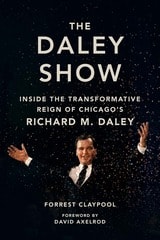
The Daley Show
Inside the Transformative Reign of Chicago's Richard M. DaleyForrest Claypool; Foreword by David Axelrod
University of Illinois Press, 2024
American cities once had mayors who actually governed.
For twenty-two years, Richard M. Daley ran Chicago with the type of authority that is unthinkable today. He reshaped downtown, triggered a jobs boom, delivered the iconic Millennium Park, turned around troubled public schools, and slashed violent crime to 40-year lows. He outfoxed Republican legislators to retain control of O’Hare Airport and expand it into the nation’s premier international aviation hub. Leveraging carefully built national political ties, he sidelined a powerful nemesis to tear down Chicago’s infamous public housing projects.
Rebuilding parts of his father’s legendary political machine through brazen (and illegal) patronage deals, he centralized power to a remarkable degree, cut deals behind closed doors, racked up piles of debt, and made long-term bets whose consequences are still unfolding.
This is not simply a biography. It is a challenge to contemporary urban orthodoxy:
Do cities thrive because of strong, decisive leaders—or despite them?
Through vivid storytelling, this book exposes how Daley consolidated power, aligned business and labor, navigated crises, survived damaging scandals, and imposed discipline on a sprawling city. It dares readers to reconsider what kind of leadership modern American cities truly need.
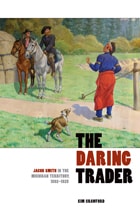
The Daring Trader
Jacob Smith in the Michigan Territory, 1802-1825Kim Crawford
Michigan State University Press, 2012
A fur trader in the Michigan Territory and confidant of both the U.S. government and local Indian tribes, Jacob Smith could have stepped out of a James Fenimore Cooper novel. Controversial, mysterious, and bold during his lifetime, in death Smith has not, until now, received the attention he deserves as a pivotal figure in Michigan’s American period and the War of 1812. This is the exciting and unlikely story of a man at the frontier’s edge, whose missions during both war and peace laid the groundwork for Michigan to accommodate settlers and farmers moving west. The book investigates Smith’s many pursuits, including his role as an advisor to the Indians, from whom the federal government would gradually gain millions of acres of land, due in large part to Smith’s work as an agent of influence. Crawford paints a colorful portrait of a complicated man during a dynamic period of change in Michigan’s history.
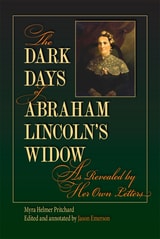
The Dark Days of Abraham Lincoln's Widow, as Revealed by Her Own Letters
Myra Helmer Pritchard, edited and annotated by Jason Emerson
Southern Illinois University Press, 2011
Written in 1927 but barred from timely publication by the Lincoln family, The Dark Days of Abraham Lincoln's Widow, as Revealed by Her Own Letters is based on nearly two dozen intimate letters written between Mary Lincoln and her close friend Myra Bradwell mainly during the former's 1875 incarceration in an insane asylum. By the 1920s most accounts of Mrs. Lincoln focused on her negative qualities and dismissed her as "crazy." Bradwell's granddaughter Myra Helmer Pritchard wrote this distinctly sympathetic manuscript at the behest of her mother, who wished to vindicate Mary Lincoln in the public eye by printing the private correspondence. Pritchard fervently defends Mrs. Lincoln's conduct and sanity, arguing that she was not insane but rather the victim of an overzealous son who had his mother committed.
The manuscript and letters were thought to have been destroyed, but fortunately the Lincolns' family lawyer stored copies in a trunk, where historian Jason Emerson discovered them in 2005. While leaving the manuscript intact, Emerson has enhanced it with an introduction and detailed annotations. He fills in factual gaps; provides background on names, places, and dates; and analyzes Pritchard's interpretations, making clear where she was right and where her passion to protect Mrs. Lincoln led to less than meticulous research and incorrect conclusions. This volume features an easy-to-follow format that showcases Pritchard's text on the left-hand pages and Emerson's insightful annotations on the right-hand pages.
Following one of the most revered and reviled, famous and infamous of the First Ladies, this book provides a unique perspective of Mrs. Lincoln's post-White House years, with an emphasis on her commitment to a sanitarium. Emerson's contributions make this volume a valuable addition to the study of the Lincoln family. This fascinating work gives today's Lincoln enthusiasts the chance to read this intriguing interpretation of the former First Lady that predates nearly every other book written about her.
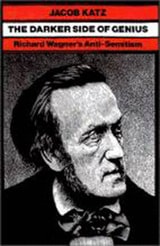
The Darker Side of Genius
Richard Wagner’s Anti-SemitismJacob. Katz
University Press of New England, 2002
The Daughter as Reader
Encounters between Literature and LifePaula Marantz Cohen
University of Michigan Press, 1996