Results by title
808 books match the query 'Drama' and 218 start with t
The Winter's Tale
William Shakespeare
Arizona Center for Medieval and Renaissance Studies, 2023
The Winter’s Tale is one of Shakespeare’s most challenging explorations of redemption and rebirth. Driven by extreme jealousy, Leontes, the King of Sicily, accuses his wife Hermione of infidelity and orders his newborn daughter to be abandoned. Sixteen years later, Leontes must reckon with the consequences of his rash decisions. Tracy Young’s version of The Winter’s Tale transforms the theatergoing experience from Shakespeare’s time to ours. This translation updates Shakespeare’s language, wordplay, and wit to engage audiences the way they would have been engaged in the early modern theater.
This translation of The Winter’s Tale was written as part of the Oregon Shakespeare Festival’s Play On! project, which commissioned new translations of thirty-nine Shakespeare plays. These translations present work from “The Bard” in language accessible to modern audiences while never losing the beauty of Shakespeare’s verse. Enlisting the talents of a diverse group of contemporary playwrights, screenwriters, and dramaturges from diverse backgrounds, this project reenvisions Shakespeare for the twenty-first century. These volumes make these works available for the first time in print—a new First Folio for a new era.

The Witkiewicz Reader
Stanislaw Ignacy Witkiewicz
Northwestern University Press, 1992
The Wolf at the End of the Block
A PlayIke Holter
Northwestern University Press, 2020
A modern-day neo-noir, The Wolf at the End of the Block remixes several different genres to present a new kind of thriller that is socially conscious, relentlessy suspenseful, and bitingly funny. Praised for its power and grace, the play is one of Holter’s most unforgettable.
The Wolf at the End of the Block is one of seven plays in Holter’s Rightlynd Saga, set in Chicago’s fictional fifty-first ward. The other plays in the cycle are Rightlynd, Exit Strategy, Sender, Prowess, Red Rex, and Lottery Day.
The Women of Provincetown, 1915–1922
Cheryl Black
University of Alabama Press, 2001
In this fascinating work, Cheryl Black reveals that, in addition to its role in developing an American tradition of non-commercial theatre, Provincetown has another, largely unacknowledged claim to fame as one of the first theatre companies in America in which women achieved prominence in every area of operation. At a time when women playwrights were rare, women directors rarer, and women scenic designers unheard of, Provincetown’s female members excelled in all of these roles.
In addition to the well-known playwright Susan Gaspell, the company’s female membership included luminaries such poets Edna St. Vincent Millay, Mina Loy, and Djuna Barnes; journalists Louise Bryant and Mary Heaton Vorce; novelists Neith Boyce and Evelyn Scott; and painter Marguerite Zorach. Illuminating a fascinating chapter in the history of one of the world's most picturesque and beloved artist colonies, The Women of Provincetown is an engaging work of social history, offering new insights into the relationship between gender and theatre. This work includes 40 images of the key artists in the book.
The Work of Poverty
Samuel Beckett's Vagabonds and the Theater of CrisisLance Duerfahrd
The Ohio State University Press, 2013
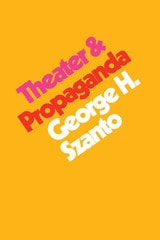
Theater & Propaganda
By George H. Szanto
University of Texas Press, 1978
This original and insightful study explores the points at which theater and propaganda meet. Defining propaganda as a form of "activated ideology," George H. Szanto discusses the distortion of information that occurs in dramatic literature in its stage, film, and television forms.
Szanto analyzes the nature of "integration propaganda," which is designed to render the audience passive and to encourage the acceptance of the status quo, as opposed to "agitation propaganda," which aims to inspire the audience to action. In Szanto's view, most popular western theater is saturated, though usually not intentionally, with integration propaganda. The overall purpose of Theater and Propaganda is twofold: to analyze the nature of integration propaganda so that it becomes visible to western readers as a tool of the dominant class in society, and to examine the manner by which unself-conscious propagandistic methods have saturated dramatic presentation.
In discussing the importance of propaganda within and between technological states, the author examines the seminal work of Jacques Ellul. In this chapter he analyzes the function of integration propaganda in a relatively stable society. The following chapter defines and analyzes three theaters (in the sense of performance) of propaganda: the theater of agitation propaganda, of integration propaganda, and of dialectical propaganda. In this section he uses examples from a variety of plays, movies, and television commercials. In succeeding chapters Szanto discusses the role of integration propaganda in the medieval Wakefield mystery plays and the plays of Samuel Beckett. The appendix, "Contradiction and Demystification," provides a general model that suggests ways of breaking down and overcoming the propagandistic intentions of an artwork and discusses theater's possible role in this breakdown.
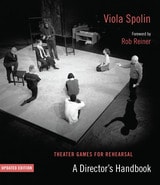
Theater Games for Rehearsal
A Director's Handbook, Updated EditionViola Spolin with a foreword by Rob Reiner
Northwestern University Press, 2010
An updated edition of a key reference text by “the high priestess of improvisational theater”
A major force in the development of American theater, Viola Spolin devised pedagogical techniques that have influenced and inspired legions of actors, improvisers, and directors. Theater Games for Rehearsal: A Director's Handbook, first published in 1985, is a practical application of Spolin's famous method that guides directors and their companies step-by-step through all phases of the rehearsal period.
In Theater Games for Rehearsal, Spolin shows in easy-to-follow detail how her techniques can be used for a variety of theater needs, from selecting performance material, casting, and building a harmonious company to warming up actors, creating stage space, and overcoming opening-night jitters. This new edition, edited by Carol Bleackley Sills, incorporates Spolin's wished-for updates: four important exercises have been added, and instructions presenting her improvisational approach have been clarified throughout. Sidecoaching instructions and game evaluations are boxed and highlighted for on-the-spot reading by the director during rehearsal.
With these additions and improvements, Theater Games for Rehearsal: A Director's Handbook brings Spolin's ideas to a new generation with greater accessibility and excitement. Featuring a new foreword by renowned film director Rob Reiner, the updated edition is mandatory for any theater bookshelf.
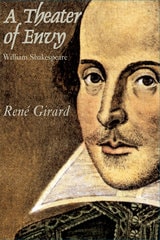
Theater Of Envy
William ShakespeareRene Girard
St. Augustine's Press, 2004
In this ground-breaking work, one of our foremost literary and cultural critics turns to the major figure in English literature, William Shakespeare, and proposes a dramatic new reading of nearly all his plays and poems. The key to A Theater of Envy is Girard's novel reinterpretation of "mimesis." For Girard, people desire objects not for their intrinsic value, but because they are desired by someone else - we mime or imitate their desires. This envy - or "mimetic desire" - he sees as one of the foundations of the human condition.
Bringing such proocative and iconoclastic insights to bear on Shakespeare, Girard reveals the previously overlooked coherence of problem plays like Troilus and Cressida, and makes a convincing argument for elevating A Midsummer Night's Dream from the status of a chaotic comedy to a masterpiece. The book abounds with novel and provocative interpretations: Shakespeare becomes "a prophet of modern advertising," and the threat of nuclear disaster is read in the light of Hamlet. Most intriguing of all, perhaps, is a brief, but brilliant aside in which an entirely new perspective is brought to the chapter on Joyce's Ulysses in which Stephen Dedalus gives a lecture on Shakespeare. In Girard's view only Joyce, perhaps the greatest of twentieth-century novelists, comes close to understanding the greatest of Renaissance playwrights.
Throughout this impressively sustained reading of Shakespeare, Girard's prose is sophisticated, but contemporary, and accessible to the general reader.

Theater after Film
Martin Harries
University of Chicago Press, 2025
In Theater after Film, Martin Harries argues that after 1945, as cinema became omnipresent in popular culture, theater had to respond to cinema’s hegemony. Theater couldn’t break that hegemony, but it could provide a zone of contestation. Theater made film’s domination of the cultural field visible through hyperbole, refusal, and other strategies, thereby unsettling its power. Postwar theatrical experiment, Harries shows, often channeled and represented film’s mass cultural force, while knowing that it could never possess that force. Throughout the book, Harries brings critical theory into contact with theories of performance. Although Theater after Film treats the theatrical work of many figures, its central focus falls on Tennessee Williams, Samuel Beckett, and Adrienne Kennedy. Discussions of these dramatists consider their ways of addressing spectators, the politics of race between film and theater, and the place of the theatrical apparatus. Readings of these central figures in twentieth-century theater exemplify the book’s historical engagement with the media surround that drama confronted. This confrontation, Harries shows, was central to the development of some of the most continually compelling postwar drama.
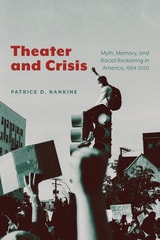
Theater and Crisis
Myth, Memory, and Racial Reckoning in America, 1964-2020Patrice D. Rankine
Lever Press, 2024
Rather than approaching the problem of racial reckoning through history, where periodization and progress are dominant narratives, Theater and Crisis argues that myth and memory allow for better theorization about recurring events from the past, their haunting, and what these apparent ghosts ask of us. Building on the study of myth as active, processual storytelling, Rankine acknowledges that it grounds and orients groups toward significant events. Theater and Crisis aligns narratives about Emmett Till, Trayvon Martin, and George Floyd, among others, with ancient, mythic figures such as Christ, Dionysus, Oedipus, and Moses. As living and verbal visitations, these stories performed on stage encode the past through their epiphanies in the present, urging audiences toward shared meaning.
Rankine traces the cyclical hauntings of race through the refiguring of mythic stories across the past 75 years in the plays of James Baldwin, Ntozake Shange, Antoinette Nwandu, and many more, and in response to flashpoints in US racial history, such as the 1955 lynching of Emmett Till, the upheavals of the 1960s and 1970s, the wars on drugs and crime, and the continued violence against and disenfranchisement of Black people into the twenty-first century. Theater and Crisis explores the appearance of myth on the American stage and showcases the ongoing response by the theatrical establishment to transform the stage into a space for racial reckoning. This timely book is essential reading for scholars of theater studies, classics, and American studies.
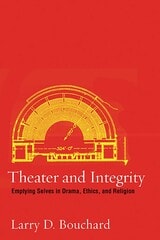
Theater and Integrity
Emptying Selves in Drama, Ethics, and ReligionLarry D Bouchard
Northwestern University Press, 2011
It locates ambiguities in our discourse about integrity, and it delves into conceptions of identity, morality, selfhood, and otherness. Its explorations ask if integrity is less a quality we might possess than a contingent gift that may appear, disappear, and perhaps reappear. Not only does he chart anew the ethical and religious dimensions of integrity, but he also reads closely across the history of theater, from Greek and Shakespearean drama to the likes of Seamus Heaney, T. S. Eliot, Caryl Churchill, Wole Soyinka, Tony Kushner, and Suzan-Lori Parks. His is an approach of juxtaposition and reflection, starting from the perennial observation that theater both criticizes and acknowledges dimensions of drama and theatricality in life.

Theater and Martial Arts in West Sumatra
Randai and Silek of the MinangkabauKirstin Pauka
Ohio University Press, 1998
Randai, the popular folk theater tradition of the Minangkabau ethnic group in West Sumatra, has evolved to include influences of martial arts, storytelling, and folk songs. Theater and Martial Arts in West Sumatra describes the origin, development, and cultural background of randai and highlights two recent developments: the emergence of female performers and modern staging techniques.
This book also explores the indigenous martial arts form silek, a vital part of randai today. The strong presence of silek is illustrated in the martial focus of the stories that are told through randai, in its movement repertoire, and even in its costumes and musical accompaniment. As Kirstin Pauka shows, randai, firmly rooted in silek and Minangkabau tradition, is an intriguing mirror of the Minangkabau culture.
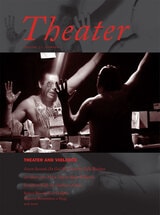
Theater and Violence, Volume 35
Tom Sellar, ed.
Duke University Press, 0
In Theater and Violence, through interviews, play excerpts, and full-length plays—including the first American publication of two major German playwrights and directors—theater artists offer their own narratives for humankind’s violent psychologies. One full-length play, Falk Richter’s Seven Seconds (In God We Trust), probes the mind of an American pilot moments before he releases a bomb on a city below. Another, René Pollesch’s 24 Hours Are Not a Day, humorously explores the ironies and pathologies of globalization after September 11. The issue also includes a commentary on the National Endowment for the Arts’ Shakespeare presentations for the U.S. military; interviews with Russian theater artists on the first anniversary of the Chechen rebels’ siege of a Moscow theater; and Jonathan Kalb’s powerful adaptation of Heiner Müller’s Mauser, set in Tikrit.
Contributors. Josh Fox, Gitta Honegger, Jonathan Kalb, Anna Kohler, James Leverett, Mark Lord, Marlene Norst, René Pollesch, Falk Richter, Yana Ross, Scott Saul, Tom Sellar, Catherine Sheehy, Robert Woodruff
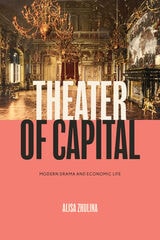
Theater of Capital
Modern Drama and Economic LifeAlisa Zhulina
Northwestern University Press, 2024
Emerging amid the turbulent rise of market finance and wider socioeconomic changes, modern drama enacted vital critiques of art and life under capitalism. Alisa Zhulina shows how fin-de-siècle playwrights such as Henrik Ibsen, August Strindberg, Anton Chekhov, George Bernard Shaw, and Gerhart Hauptmann interrogated the meaning of this newly coined economic concept. Acutely aware of their complicity in the system they sought to challenge, these playwrights staged economic questions as moral and political concerns, using their plays to explore the theories of Adam Smith, Karl Marx and Friedrich Engels, Max Weber, and others within the boundaries of bourgeois theater.
Theater of Capital: Modern Drama and Economic Life reveals the prescient and unsettling visions of life in a new financial and societal reality in now-canonical plays such as A Doll’s House, Miss Julie, and The Cherry Orchard, as well as in lesser-known and long-overlooked works. This wide-ranging study prompts us to reevaluate modern drama and its legacy for the urgent economic and political questions that haunt our present moment.
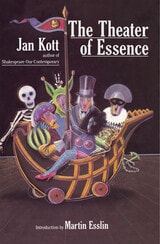
Theater of Essence
Jan Kott
Northwestern University Press, 1986
Theater, War, and Memory in Crisis
Vichy, Algeria, the AftermathJohn Ireland
University of Michigan Press, 2025
Theaters of Translation
Cosmopolitan Vernaculars in Shakespeare's EnglandAndrew S. Keener
University of Alabama Press, 2025
Explores the profound influence of multilingual dictionaries, dialogues, and grammars on English Renaissance playwrights
In Theaters of Translation, Andrew S. Keener offers a fascinating account of the ways that plays by Thomas Kyd, Mary Sidney Herbert, Ben Jonson, and their fellow English contemporaries were shaped by and part of a multilingual Europe where dictionaries, grammars, and language-learning materials circulated widely. He proposes a fresh, multilingual approach to English Renaissance drama that challenges the histories of early modern European languages as sites of national and linguistic cohesion.
Covering the period between 1570 and 1640, when England’s drama and the English language itself were evolving, Keener uses the term “cosmopolitan vernaculars” to examine how nonclassical European languages modeled transnational forms of belonging for playgoers, readers, and authors in Renaissance England. Combining recent contributions to cosmopolitan theory and transnational studies of early modern literature and culture, Keener highlights both the ways in which cosmopolitanism manifests through Europe’s vernacular languages—in print and performance—and the ways languages themselves can exhibit cosmopolitanism for those who encounter them on the page or on the stage.
Theaters of Translation opens up new transnational interpretations of English Renaissance plays and casts fresh light on historical anecdotes, such as Jonson inscribing a copy of Pietro Aretino’s scandalous Italian dialogues or Shakespeare’s First Folio being advertised for sale in Germany before its London publication. It offers much of interest to readers and scholars of Renaissance Europe, early modern drama, and the development of national European languages.
Theatre History Studies 2012, Vol. 32
Edited by Rhona Justice-Malloy
University of Alabama Press, 2012
Penny Farfan / Victor Holtcamp / Lisa Jackson-Schebetta / Richard
L. Poole / Bill Rauch / Thomas Robson / Marlis Schweitzer / Virginia
Scott / Christine Woodworth
Theatre Symposium, Vol. 22
Broadway and Beyond: Commercial Theatre ConsideredDavid S. Thompson
University of Alabama Press, 2014
The eleven contributors to this fascinating collection illuminate many aspects of commercial theatre and how best to examine it. George Pate analyzes the high-stakes implication of a melodramatic legal battle. Christine Woodworth recounts the difficulties encountered by British actresses near the turn of the twentieth century, while Boone J. Hopkins considers newly found images of Margo Jones along with the commercial appeal they represent.
The volume continues with articles that follow developments with ties to commercial theatre, such as the interplay between Broadway companies and regional theatres, musical productions in communist Poland, and the influence of Korean popular culture on theatre and the unique production arrangements that have resulted. Other essays investigate alternative concepts related to commercial themes with regard to audience interaction and the burgeoning world of geek theatre.
Edited by David S. Thompson, this latest publication by the largest regional theatre organization in the United States collects the most current scholarship on theatre history and theory.
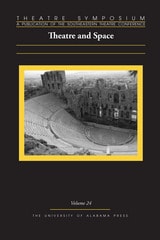
Theatre Symposium, Vol. 24
Theatre and SpaceEdited by Becky K. Becker
University of Alabama Press, 2016
Exploring the dynamic intersections of performance and place.
At a time when so many options exist for access to theatrical entertainments, it is no surprise that theatre practitioners and scholars are often preoccupied with the role of the audience. While space undoubtedly impacts the rehearsal and production processes, its greater significance seems to rest in the impact a specific location has on the audience.
This volume provides diverse viewpoints on theatre and space, as well as its relationship to the audience. Sebastian Trainor and Samuel T. Shanks offer contemporary perspectives on two ancient theatre spaces, while Lisa Marie Bowler describes the Globe Theatre, a replica of the original, as embodying a kind of absence despite its rich link to the past. Focusing on distinctly different periods and settings, both Andrew Gibb and Christine Woodworth describe a politics of space in which specific players gain prestige and power. Chase Bringardner identifies the audience as playing an important role in creating a space for parody in a historic Nashville venue, while Arnab Banerji describes an exhausting process for members of the Bengali group theatre who must continually move from space to space. Finally, Alicia Corts discusses virtual performance spaces and the degree to which participants are able to control their online identities within virtual performances. Bookending these eight essays are Marvin Carlson’s keynote presentation “Whose Space Is It Anyway?” and his closing remarks for the symposium, both of which allude to, and richly explicate, the ultimate arbiters of theatrical space: the audience.
Theatre Symposium, Vol. 30
Theatre and Politicsedited by Chase Bringardner
University of Alabama Press, 2023
Illustrates how theatre’s engagement with politics changes over time
For the thirtieth volume of Theatre Symposium, the editors return to a topic first proposed over twenty years ago in volume 9 (theatre and politics in the twentieth century), reimaged for a broader, more comprehensive time frame. In this volume on theater and politics, scholars explore what constitutes the political, how the political is performed, and how theatre engages with politics over time, drawing on the following framing questions: What is the historical and ongoing role of theatre in framing our ideas and conversations about politics? How do politics and theatre engage one another in an increasingly mediated landscape? From theatrical analysis of the political arena to political analysis of the theatrical stage, discussions of theatre and politics can challenge ethical, theoretical, and artistic considerations of our world.
The current moment presents a compelling opportunity to revisit, revise, and reengage. Certainly, in the twenty-one volumes since volume 9, the political landscape both nationally and internationally has shifted dramatically. The past two years specifically have seen an increase in the already prevalent presence of the political in our daily discourse. The COVID-19 global pandemic and ongoing racial reckonings have further unmoored many systems and structures, requiring action and change. Rather than a moment of pause or passivity, pandemic times have seen an increase in political activity and political discourse on the local, national, and global levels. Within the theatre and performance communities, these calls to action have resulted in movements like #weseeyouWAT and other calls to break down old systems and create new ones, to privilege access for those of the global majority, and to explicitly demand advocacy and activism. Organizations like the Southeastern Theatre Conference (SETC) itself crafted new ethos statements and engaged in the necessary work of boldly foregrounding equity, diversity, inclusion, and accessibility at the center of all its efforts.
The editors and contributors to this volume respond to the immediacy of this moment and the clarion call for change. From Shakespeare to new productions like Alabama Love Stories, presented at Auburn University, contributors grapple with a range of examples, contemporary and historical, and argue with renewed urgency for the importance of intentionally interrogating the interplay of performance and politics. The essays in this volume demonstrate that theatre and performance cannot rise to this moment or even begin to address it without doing that substantial work to clean its own house and create accessible new spaces.
Contributors
Chase Bringardner / Tessa Carr / Lily Climenhaga / Abena Foreman-Trice / Emma Givens / TK Manwill / Boomie Pederson / Royal Shirée / Teresa Simone / Tony Tambasco / Jonathon W. Taylor / Justice von Maur / Patricia Ybarra
Theatre Symposium, Vol. 32
Material Performance and Performing ObjectsKeith Byron Kirk
University of Alabama Press, 2025
A new volume of the longstanding theatre journal, documenting conversations that traverse disciplinary boundaries
Theater Symposium, Volume 32 delves into the collaborative dynamics and ritualistic exchanges within performance during the collective resurgence into a hopeful post-COVID world. This volume’s contributors embark on a journey through the vibrant realm of material performance, with puppetry at the forefront, guiding readers into an expansive landscape of object performance styles and structures. As they navigate this terrain, they pose critical questions that unravel the complexities of object performance analysis and its impact on audiences. Bringing together perspectives from designers, creators, and performers, this volume explores how object performances serve as a medium to engage with the world, fostering synchrony and positive outcomes across a diverse array of artistic practices. Theater Symposium, Volume 32 invites readers to expand their understanding of collaborative practices and the object world, whether it be through the lens of labor or entertainment.
Contributors
Ashley Bellet / Francesca Marie Chilcote / Elisabeth Hostetter / Rebecca Johnson / Kyla Kazuschyk / Keith Byron Kirk / Jesse Njus / Claudia Orenstein / Paulette Richards / Dory Sibley / Echo Sunyata Sibley / Skye Strauss

Theatre for Children in Hospital
The Gift of CompassionPersephone Sextou
Intellect Books, 2016
Theatre for Youth II
More Plays with Mature ThemesEdited Coleman A. Jennings and Gretta Berghammer
University of Texas Press, 2016
When Theatre for Youth: Twelve Plays with Mature Themes was published in 1986, it met a need for plays that could help young people deal with some of the more difficult realities of life. Responding to the sweeping changes in society over the succeeding thirty years, Coleman A. Jennings and Gretta Berghammer have assembled a new collection of plays that reflects not only on themes such as aging, death and dying, friendship, courage, conformity, maturation, sexuality, and struggles with moral judgment but also on gender identity, poverty, diversity, and discrimination.
Theatre for Youth II: More Plays with Mature Themes presents twelve plays, nine of them new to this anthology, that offer a rich variety of original stories (The Tomato Plant Girl, The Arkansaw Bear, Super Cowgirl and Mighty Miracle), compelling adaptations (The Afternoon of the Elves, Broken Hearts, Courage!), historical drama (Mother Hicks, Johnny Tremain), diverse themes (La Ofrenda, The Transition of Doodle Pequeño), friendship (The Selfish Giant), and future societies (With Two Wings). As these plays explore some of the most challenging themes for today’s youth, including the difficulties of single parenthood, divorce, race relations, sexuality, and gender discrimination, they share messages fundamental to us all: open your imagination and dare to dream; embrace life; honor your personal passion, beliefs, and creativity; take a risk; and love with all your heart.
Theatre for Youth Third Space
Performance, Democracy, and Community Cultural DevelopmentStephani Etheridge Woodson
Intellect Books, 2015

Theatre for Youth
Twelve Plays with Mature ThemesEdited by Coleman A. Jennings and Gretta Berghammer
University of Texas Press, 1986
Since the beginning of the theatre-for-youth movement in the United States, the majority of plays written for children have been fairy tales. By the 1960s, however, encouraged by changes in social attitudes toward children, playwrights began to respond to a growing tendency on the parts of both parents and teachers to have children face, rather than avoid, the more difficult truths of existence. Thus children's dramatic literature was opened to new subjects, themes and characters previously considered unsuitable for the young audience.
Theatre for Youth seeks to identify and illustrate this trend by examining twelve plays that deal with mature themes: aging, death and dying, conformity, sexuality, divorce, moral culpability. The plays have been chosen not only for their mature content, but also for their professional integrity, the delicacy with which they handle their subject matter, and their respect for their intended audience.
A foreword by Jed H. Davis, an introduction and summary paragraphs for each play by Jennings and Berghammer, and a lengthy annotated list of suggested plays for further reading or viewing make this volume extremely useful both for directors of children's theatre and for teachers.
Theatre of the Real
Yeats, Beckett, and SondheimGina Masucci MacKenzie
The Ohio State University Press, 2008
Theatre, Time and Temporality
Melting Clocks and Snapped ElasticsDavid Ian Rabey
Intellect Books, 2016
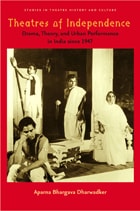
Theatres of Independence
Drama, Theory, and Urban Performance in India since 1947Aparna Bhargava Dharwadker
University of Iowa Press, 2005
The first part of Dharwadker’s study deals with the new dramatic canon that emerged after 1950 and the variety of ways in which plays are written, produced, translated, circulated, and received in a multilingual national culture. The second part traces the formation of significant postcolonial dramatic genres from their origins in myth, history, folk narrative, sociopolitical experience, and the intertextual connections between Indian, European, British, and American drama. The book’s ten appendixes collect extensive documentation of the work of leading playwrights and directors, as well as a record of the contemporary multilingual performance histories of major Indian, Western, and non-Western plays from all periods and genres. Treating drama and theatre as strategically interrelated activities, the study makes post-independence Indian theatre visible as a multifaceted critical subject to scholars of modern drama, comparative theatre, theatre history, and the new national and postcolonial literatures.
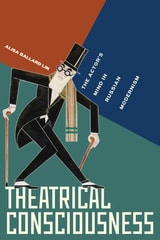
Theatrical Consciousness
The Actor’s Mind in Russian ModernismAlisa Ballard Lin
Northwestern University Press, 2025
Investigating late imperial Russian and early Soviet modernism’s reinvention of the actor
In this wide-ranging study, Alisa Ballard Lin argues that Russian theatrical theory and practice contributed to a broad pre- and postrevolutionary discourse about the mind, profoundly reshaping concepts of consciousness, perception, identity, and the constitution of the subject. Theatrical Consciousness: The Actor’s Mind in Russian Modernism examines efforts in Russian theater—from around the turn of the century through the mid-1930s—to stimulate, train, imagine, and ultimately understand the actor’s, as well as the spectator’s, mind. Discussing key figures of the period, including Nikolai Evreinov, Konstantin Stanislavsky, Vsevolod Meyerhold, and Alexander Tairov, Lin identifies an underappreciated dimension of humanism within Russian modernism: a humanism that resisted the pressures of an increasingly technologized, industrialized, and politicized modernity that challenged the place of the human within it.
Theatrical Gamut
Notes for a Post-Beckettian StageEnoch Brater, Editor
University of Michigan Press, 1995
Theatrical Reality
Space, Embodiment and Empathy in PerformanceCampbell Edinborough
Intellect Books, 2016
Themes out of School
Effects and CausesStanley Cavell
University of Chicago Press, 1988
Fantasies of film and television and literature, flashes across the landscape of literary theory, philosophical discourse, and French historiography give Cavell his starting points in these twelve essays. Here is philosophy in and out of "school," understood as a discipline in itself or thought through the works of Shakespeare, Molière, Kierkegaard, Thoreau, Brecht, Makavejev, Bergman, Hitchcock, Astaire, and Keaton.
Thicker Than Water
Blood, Affinity, and Hegemony in Early Modern DramaLauren Weindling
University of Alabama Press, 2023
Examines the discourses around the role of bloodlines and kinship in the social hierarchies of early modern Europe
“Blood is thicker than water,” goes the old proverb. But do common bloodlines in fact demand special duties or prescribe affections? Thicker than Water examines the roots of this belief by studying the omnipresent discourse of bloodlines and kindred relations in the literature of early modern Europe.
Early modern discourses concerning kinship promoted the idea that similar bloodlines dictated greater love or affinity, stabilizing the boundaries of families and social classes, as well as the categories of ethnicity and race. Literary representations of romantic relationships were instrumental in such conceptions, and Lauren Weindling examines how drama from England, France, and Italy tests these assumptions about blood and love, exposing their underlying political function. Among the key texts that Weindling studies are Shakespeare’s Romeo and Juliet¸ Othello, and The Merchant of Venice, Pierre Corneille’s Le Cid, Giambattista della Porta’s La Sorella and its English analog, Thomas Middleton’s No Wit/Help Like a Woman’s, John Ford’s ’Tis Pity She’s a Whore, and Machiavelli’s La Mandragola.
Each of these plays offers an extreme limit case for early modern notions of belonging and exclusion, through plots of love, courtship, and marriage, including blood feuds and incest. Moreover, they feature the voices of marginalized groups, unprivileged by these metrics and ideologies, and thus offer significant counterpoints to this bloody worldview.
While most critical studies of blood onstage pertain to matters of guilt or violence, Thicker Than Water examines the work that blood does unseen in arbitrating social and emotional connections between persons, and thus underwriting our deepest forms of social organization.
Thinking about the Playwright
Comments from Four DecadesEric Bentley
Northwestern University Press, 1987
This Is My Office and Notes on My Mother’s Decline
Two PlaysAndy Bragen; foreword by Sarah Ruhl
Northwestern University Press, 2022
These plays by Andy Bragen examine the intimacies and shadows that exist between parents and children. In This Is My Office, a guided tour through an empty office becomes the unexpected portal to a forgotten New York and a father’s legacy. This play brings you face-to-face with a narrator who finds his way through doubt, soul-sickness, and doughnut cravings by telling you a story. Not the one he meant to tell, but a richer one about family, redemption, and love.
The autobiographical Notes on My Mother’s Decline evokes the final days of a woman’s life. Late at night, while his baby daughter sleeps, a son takes notes on his mother’s daily life and scenes from their complicated relationship. He is shaping a play, as well as a perspective. Two blocks away, his mother naps, smokes, reads, and drinks coffee. She is shaping her existence within encroaching confines. Bragen plumbs silences and one-sided conversations to ask how we come to know one another as parents and as children. How do we care for those we love, and what does it take to live with—and without—them?
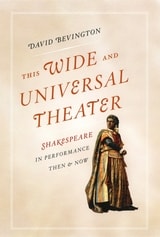
This Wide and Universal Theater
Shakespeare in Performance, Then and NowDavid Bevington
University of Chicago Press, 2007
Many readers first encounter Shakespeare’s plays in a book rather than a theater. Yet Shakespeare was through and through a man of the stage. So what do we lose when we leave Shakespeare the practitioner behind, and what do we learn when we think about his plays as dramas to be performed?
David Bevington answers these questions with This Wide and Universal Theater, which explores how Shakespeare’s plays were produced both in his own time and in succeeding centuries. Making use of historical documents and the play scripts themselves, Bevington brings Shakespeare’s original stagings to life. He explains how the Elizabethan playhouse conveyed a sense of place using minimal scenery, from the Forest of Arden in As You Like It to the tavern in Henry IV, Part I. Moving beyond Shakespeare’s lifetime, Bevington shows the prodigious lengths to which eighteenth- and nineteenth-century companies went to produce spectacular effects, from flying witches in Macbeth to terrifying storms punctuating King Lear. To bring the book into the present, Bevington considers recent productions on both stage and screen, when character and language have taken precedence over spectacle. This volume brings a lifetime of study to bear on a remarkably underappreciated aspect of Shakespeare’s art.
“An eminent Shakespeare scholar and author, Bevington offers a concise, lucid, and unique overview of the history of Shakespeare in various modes of performance, from stage to film to television.”—Choice
“Even veteran Shakespeareans will profit from the varied reminders of how important performance and staging have always been to the interpretation of the plays.”—Renaissance Quarterly
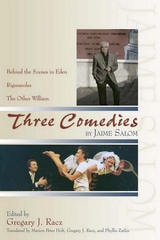
Three Comedies
Behind the Scenes in Eden, Rigamaroles, and The Other WilliamG Racz
University Press of Colorado, 2004
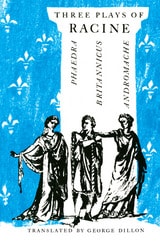
Three Plays of Racine
Phaedra, Andromache, and BritannicusJean Baptiste Racine
University of Chicago Press, 1961
"His literal and flexible blank verse actually forms the nearest thing in English to the longer-measured rhymed couplets of Racine; even an ordinary reading aloud of so faithful a rendering provides something of the experience that Proust described."—Elliott Coleman, Poetry
"A superb introduction . . . flawless translations, infused with poetic fire and charm."—Margaret Carpenter, Norfolk Virginian-Pilot
Three Plays
Dark River, Arthur Aronymus and His Ancestors, and I and IElse Lasker-Schuler
Northwestern University Press, 2005
Famous for her poetry and infamous for her bohemian lifestyle, as well as her association with political radicals, Else Lasker-Schüler (1869–1945) is only now returning to just renown as one of the few women writers within the Expressionist movement of the early twentieth century. These plays-Dark River, Arthur Aronymus and His Ancestors, and I and I-in Jane Curtis's fluid translation, allow readers of English to experience the radically avant-garde style that put Lasker-Schüler on a par with Brecht in her day, as well as the passionate treatment of questions of gender, ethnicity, and sexuality that placed her well ahead of her time. Lasker-Schüler's plays reflect her unusual life among the Berlin Moderns of the 1910s and 20s. The daughter of a well-to-do Jewish banker and builder, Else Schüler gave up her bourgeois existence as a doctor's wife for the artistic, social, and political uncertainties that would characterize the rest of her life. Many of her finest poems and plays were written amidst the cafe society of Berlin, where she knew some of the great expressionist artists of the period. The death of her beloved son in 1927, which led her to intense introspection and reflection on the Jewish tradition, especially mysticism and the Kabbalah, also marked the beginning of Lasker-Schüler's years of tragedy, loss, and dislocation, culminating in her flight from Nazi Germany to Switzerland and then Jerusalem, where she ended her days as an eccentric pauper.
The plays in this volume mark Lasker-Schüler's movement away from the traditional aesthetic canon, revealing a unique formal development from naturalistic expressionist episodes in the lyrical Dark River to a historicizing politicization of the theater in Arthur Aronymous to the forms of montage and "epic" presentations in I and I. A short preface by Inca Molina Rumold places each play in its historical, biographical, and artistic context.
Three Plays
Dividing the Estate, The Trip to Bountiful, and The Young Man from AtlantaHorton Foote
Northwestern University Press, 2008
Three Plays
Melissa Arctic, Orange Flower Water, and The PavilionCraig Wright
Northwestern University Press, 2012
Craig Wright is one of the most widely produced, consistently entertaining playwrights of his generation. The three plays gathered in this volume—Melissa Arctic (winner of the 2005 Helen Hayes Award), Orange Flower Water, and The Pavilion—are all set in the fictional town of Pine City, Minnesota. The plays share a focus on love and relationships and feature a consistent undercurrent of observation and speculation about the nature of time. Melissa Arctic brings Shakespeare’s The Winter’s Tale into the present, retaining the original’s captivating mix of the comic and tragic. A brutally frank exploration of marriage, Orange Flower Water examines the irresistible lure and poisonous effects of unrealistic expectations within love, and portrays the inescapably compromised contours of relationships founded on adultery. The Pavilion, a lyrical and rueful homage to Our Town, is a meditation on dashed dreams and unquenchable hopes, set at a twenty-year high school reunion. In all three plays, Wright shows himself to be one of the most perceptive and engaging playwrights working today.
Three Plays
Rechnitz, The Merchant’s Contracts, Charges (The Supplicants)Elfriede Jelinek
Seagull Books, 2019
In “Rechnitz,” a chorus of messengers reports on the circumstances of the massacre of 180 Jews, an actual historical event that took place near the Austrian/Hungarian border town of Rechnitz. In “The Merchant’s Contracts,” Jelinek brings us a comedy of economics, where the babble and media spin of spectators leave small investors alienated and bearing the brunt of the economic crisis. In “Charges (The Supplicants),” Jelinek offers a powerful analysis of the plight of refugees, from ancient times to the present. She responds to the immeasurable suffering among those fleeing death, destruction, and political suppression in their home countries and, drawing on sources as widely separated in time and intent as up-to-the-minute blog postings and Aeschylus’s “The Supplicants,” Jelinek asks what refugees want, how we as a society view them, and what political, moral, and personal obligations they impose on us.
Thunder on the Stage
The Dramatic Vision of Richard WrightBruce Allen Dick
University of Illinois Press, 2024
Drawing on decades of research and interviews with Wright’s family and Wright scholars, Bruce Allen Dick uncovers the theatrical influence on Wright’s oeuvre--from his 1930s boxing journalism to his unpublished one-acts on returning Black GIs in WWII to his unproduced pageant honoring Vladimir Lenin. Wright maintained rewarding associations with playwrights, writers, and actors such as Langston Hughes, Theodore Ward, Paul Robeson, and Lillian Hellman, and took particular inspiration from French literary figures like Jean-Paul Sartre. Dick’s analysis also illuminates Wright’s direct involvement with theater and film, including the performative aspects of his travel writings; the Orson Welles-directed Native Son on Broadway; his acting debut in Native Son’s first film version; and his play “Daddy Goodness,” a satire of religious charlatans like Father Divine, in the 1930s.
Bold and original, Thunder on the Stage offers a groundbreaking reinterpretation of a major American writer.

Till Day You Do Part Or A Question of Light
Peter Handke
Seagull Books, 2010
Described as an answer to or at least an echo of Samuel Beckett’s Krapp’s Last Tape?, Till Day You Do Part Or A Question of Light, by esteemed Austrian playwright and novelist Peter Handke, is a monologue delivered by the “she” in Beckett’s play. This unnamed female similarly recalls other significant women protagonists in Handke’s own work such as The Left-handed Woman. Handke prefaces the monologue in Till Day You Do PartOr a Question of Light with a description of two stone figures. While the male figure remains “as dead and gone as anyone can,” the female bursts into life, and her monologue gradually focuses on Krapp’s use of pauses and language to dominate the other characters in the Beckett play. Ultimately, however, her complaints and critique of Krapp become a declaration of her love for Krapp or at least an affirmation of their attachment, as the two of them are ultimately bound together, perhaps even inseparable.
Till Day You Do Part Or a Question of Light is Handke at his best, evidencing the great skill, psychological acumen, and vision for which his work has been celebrated.
Timon of Athens
William Shakespeare
Arizona Center for Medieval and Renaissance Studies, 2021
Never performed in Shakespeare’s lifetime, Timon of Athens presents an intriguing puzzle for contemporary audiences. The disjointed plot and many gaps in the story have led scholars to believe it was a collaboration between Shakespeare and Thomas Middleton, a younger writer known for his satires, and productions for decades have faced choices about the most effective way to present the play. In this translation, Cavander acts as a third playwright in this collaborative process. Wrangling the voices of Shakespeare and Middleton on the page, Cavander unveils poetic lines and phrases that have sat stubbornly in the cobwebs, cutting these voices through the time barrier and into the world as we know it.
This translation was written as part of the Oregon Shakespeare Festival’s Play On! project, which commissioned new translations of thirty-nine Shakespeare plays. These translations present the work of "The Bard" in language accessible to modern audiences while never losing the beauty of Shakespeare’s verse. These volumes make these works available for the first time in print—a new First Folio for a new era.
Titus Andronicus
William Shakespeare
Arizona Center for Medieval and Renaissance Studies, 2022
One of Shakespeare’s goriest plays, Titus Andronicus traces the fall of the Andronicus family in ancient Rome. Clinging to the ways of the past, Titus desperately seeks to remain loyal to the throne as his world crumbles around him. Amy Freed’s translation of Titus Andronicus is careful and meticulous, making small but mighty changes in moments that enhance the drama of each scene. Freed’s version gives this extraordinary play an even faster track on which to run.
This translation of Titus Andronicus was written as part of the Oregon Shakespeare Festival’s Play On! project, which commissioned new translations of thirty-nine Shakespeare plays. These translations present work from “The Bard” in language accessible to modern audiences while never losing the beauty of Shakespeare’s verse. Enlisting the talents of a diverse group of contemporary playwrights, screenwriters, and dramaturges from diverse backgrounds, this project reenvisions Shakespeare for the twenty-first century. These volumes make these works available for the first time in print—a new First Folio for a new era.
To Act, To Do, To Perform
Drama and the Phenomenology of ActionAlice Rayner
University of Michigan Press, 1994
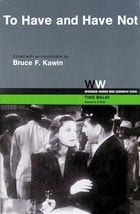
To Have and Have Not
Edited by Bruce F. Kawin; Tino T. Balio, Series Editor
University of Wisconsin Press, 1980
The story of the making of To Have and Have Not (1944) is an exciting and complex one, ranging from the widely reported romance between its stars, Humphrey Bogart and the unknown nineteen-year old Lauren Bacall, to one of the more subtle developments in the wartime alliance between the United States and the Batista regime in Cuba. Bruce F. Kawin's substantial and informed introduction reflects this excitement while explaining the complexities, helping all film scholars, students, and buffs to gain a fuller appreciation of one of Hollywood's most memoriable melodramas.
This is a story also of a collaboration amoung four important writers: Ernest Hemingway, Howard Hawks, Jules Furthman, and William Faulkner.

To the Third Empire
Ibsen’s Early DramaBrian Johnston
University of Minnesota Press, 1980
To the Third Empire was first published in 1980. Minnesota Archive Editions uses digital technology to make long-unavailable books once again accessible, and are published unaltered from the original University of Minnesota Press editions.
Critical acclaim greeted Brian Johnston's 1975 book on Ibsen's final phase, The Ibsen Cycle. Choice called it "the single most provocative and critically exciting books of Ibsen criticism in decades." Johnston now turns his attention to the early works, using the same thematic premise - that the plays follow a clear progression, influenced by the Hegalian aesthetic that pervaded Europe in the mid-nineteenth century. The result is an explanation of the early career that demonstrates both its unity and its essential relation to the realistic cycle that followed. In advancing his argument Johnston provides close readings of ten plays, ranging from Cataline to Emperor and Galilean and including Brand and Peer Gynt. Scholars and students of drama, comparative literature, and Ibsen studies will find To the Third Empire an essential work.