Results by title
1947 books match the query 'Music' and 315 start with t
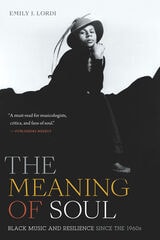
The Meaning of Soul
Black Music and Resilience since the 1960sEmily J. Lordi
Duke University Press, 2020
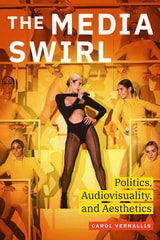
The Media Swirl
Politics, Audiovisuality, and AestheticsCarol Vernallis
Duke University Press, 2023
The Medici Codex of 1518, Volume 1
Historical Introduction and CommentaryEdited by Edward E. Lowinsky
University of Chicago Press, 1968
It is invaluable for transmitting the excellent readings of the repertory of the French Royal Chapel and a number of political motets of great musical and historical interest that reflect events at the French court and are unique to this collection.
Edward E. Lowinsky presents this anthology as part of a series containing critical editions of major sources of fifteenth- and sixteenth-century music in their entirety.
The Medici Codex of 1518, Volume 2
TranscriptionEdited by Edward E. Lowinsky
University of Chicago Press, 1968
It is invaluable for transmitting the excellent readings of the repertory of the French Royal Chapel and a number of political motets of great musical and historical interest that reflect events at the French court and are unique to this collection.
Edward E. Lowinsky presents this anthology as part of a series containing critical editions of major sources of fifteenth- and sixteenth-century music in their entirety.
The Medici Codex of 1518, Volume 3
Facsimile EditionEdited by Edward E. Lowinsky
University of Chicago Press, 1968
It is invaluable for transmitting the excellent readings of the repertory of the French Royal Chapel and a number of political motets of great musical and historical interest that reflect events at the French court and are unique to this collection.
Edward E. Lowinsky presents this anthology as part of a series containing critical editions of major sources of fifteenth- and sixteenth-century music in their entirety.
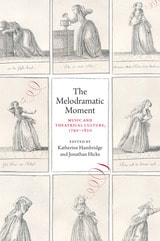
The Melodramatic Moment
Music and Theatrical Culture, 1790–1820Edited by Katherine G Hambridge and Jonathan Hicks
University of Chicago Press, 2018
This anthology proposes to address the sometimes bewilderingly broad understandings of melodrama by insisting on the historical specificity of its genesis on the stage in late-eighteenth-century Europe. Melodrama emerged during this time in the metropolitan centers of London, Paris, Vienna, and Berlin through stage adaptations of classical subjects and gothic novels, and they became famous for their use of passionate expression and spectacular scenery. Yet, as contributors to this volume emphasize, early melodramas also placed sound at center stage, through their distinctive—and often disconcerting—alternations between speech and music. This book draws out the melo of melodrama, showing the crucial dimensions of sound and music for a genre that permeates our dramatic, literary, and cinematic sensibilities today.
A richly interdisciplinary anthology, The Melodramatic Moment will open up new dialogues between musicology and literary and theater studies.
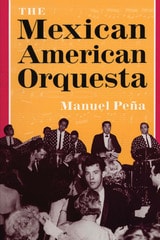
The Mexican American Orquesta
Music, Culture, and the Dialectic of ConflictBy Manuel Peña
University of Texas Press, 1999
The Mexican American orquesta is neither a Mexican nor an American music. Relying on both the Mexican orquesta and the American dance band for repertorial and stylistic cues, it forges a synthesis of the two. The ensemble emerges historically as a powerful artistic vehicle for the expression of what Manuel Peña calls the "dialectic of conflict." Grounded in ethnic and class conflict, this dialectic compels the orquesta and its upwardly mobile advocates to waver between acculturation and ethnic resistance. The musical result: a complex mesh of cultural elements—Mexican and American, working- and middle-class, traditional and contemporary.
In this book, Manuel Peña traces the evolution of the orquesta in the Southwest from its beginnings in the nineteenth century through its pinnacle in the 1970s and its decline since the 1980s. Drawing on fifteen years of field research, he embeds the development of the orquesta within a historical-materialist matrix to achieve the optimal balance between description and interpretation. Rich in ethnographic detail and boldly analytical, his book is the first in-depth study of this important but neglected field of artistic culture.
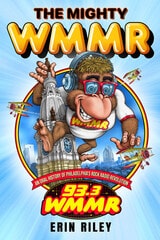
The Mighty WMMR
An Oral History of Philadelphia's Rock Radio RevolutionErin Riley
Temple University Press, 2026
In the early 1980s, the scrappy radio station 93.3 WMMR was on the verge of a major takeover of the Philadelphia airwaves. Erin Riley, who had her finger on the pulse of new artists like Bon Jovi, whose music would define a generation, was hired as the station’s Music Director in 1983.
The Mighty WMMR is Riley’s affectionate and nostalgic oral history of the station’s early years, especially its 1980s heyday, covering everything from the pioneering influence of The Marconi Experiment and the success of The Morning Zoo to how WMMR broke artists like Bruce Springsteen, Billy Joel, and local favorites The Hooters onto the national scene. Featuring anecdotes and memories by beloved on-air personalities including John DeBella, Pierre Robert, and Michael Tearson, Riley chronicles the memorable songs and musicians; concerts, contests, and clubs; and the live broadcasts that marked the height of an unforgettable era in Philadelphia radio.
Riley breezily captures the station’s impact on listeners, which made WMMR a perfect storm of the times, the culture, and the counterculture. The Mighty WMMR is a captivating look back at Philadelphia’s rock history and the station that shaped a city and a generation.
The Migration of Musical Film
From Ethnic Margins to American MainstreamGarcia, Desirée J
Rutgers University Press, 2014
The Migration of Musical Film shows how the folk musical was rooted in the challenges faced by immigrants and migrants who had to adapt to new environments, balancing American individualism with family values and cultural traditions. Uncovering fresh material from film industry archives, Garcia considers how folk musicals were initially marginal productions, designed to appeal to specific minority audiences, and yet introduced themes that were gradually assimilated into the Hollywood mainstream.
No other book offers a comparative historical study of the folk musical, from the first sound films in the 1920s to the genre’s resurgence in the 1970s and 1980s. Using an illustrative rather than comprehensive approach, Garcia focuses on significant moments in the sub-genre and rarely studied films such as Allá en el Rancho Grande along with familiar favorites that drew inspiration from earlier folk musicals—everything from The Wizard of Oz to Zoot Suit. If you think of movie musicals simply as escapist mainstream entertainment, The Migration of Musical Film is sure to leave you singing a different tune.
The Miles Davis Lost Quintet and Other Revolutionary Ensembles
Bob Gluck
University of Chicago Press, 2015
Gluck listens deeply to the uneasy tension between this group’s driving rhythmic groove and the sonic and structural openness, surprise, and experimentation they were always pushing toward. There he hears—and outlines—a fascinating web of musical interconnection that brings Davis’s funk-inflected sensibilities into conversation with the avant-garde worlds that players like Ornette Coleman and John Coltrane were developing. Going on to analyze the little-known experimental groups Circle and the Revolutionary Ensemble, Gluck traces deep resonances across a commercial gap between the celebrity Miles Davis and his less famous but profoundly innovative peers. The result is a deeply attuned look at a pivotal moment when once-disparate worlds of American music came together in explosively creative combinations.
The Mistakes of Yesterday, the Hopes of Tomorrow
The Story of the PrisonairesJohn Dougan
University of Massachusetts Press, 2012
Early in the morning on June 1, 1953, five African American men boarded a van to make the 200-mile trip from Nashville to Memphis for a daylong recording session at the legendary Sun Studios, to be overseen by Sun founder Sam Phillips. One of the two tracks cut that day, “Just Walkin' in the Rain,” would go on to become a regional R&B hit, Sun Records' biggest record of the pre-Elvis era. It would, however, be the group's only hit. They were the Prisonaires, a vocal quintet who had honed their skills while inmates at the Tennessee State Penitentiary in Nashville.
In this book, John Dougan tells the story of the Prisonaires, their hit single, and the afterlife of this one remarkable song. The group and the song itself represent a compelling concept: imprisoned men using music as a means of cultural and personal survival. The song was re-recorded by white singer Johnnie Ray, who made it a huge hit in 1956. Over the years, other singers and groups would move the song further away from its origins, recasting the deep emotions that came from creating music in a hostile, controlled environment.
The story of the Prisonaires, for all of its triumphs, reflects the disappointment of men caught in a paradoxical search for personal independence while fully cognizant of a future consigned to prison. Their brief career and the unusual circumstances under which it flourished sheds light on the harsh realities of race relations in the pre–Civil Rights South. The book also provides a portrait of Nashville just as it was gaining traction as a nationally recognized music center.
The Mormon Tabernacle Choir
A BiographyMichael Hicks
University of Illinois Press, 2015
Drawing on decades of work observing and researching the Mormon Tabernacle Choir, Michael Hicks examines the personalities, decisions, and controversies that shaped "America's choir." Here is the miraculous story behind the Tabernacle's world-famous acoustics, the anti-Mormonism that greeted early tours, the clashes with Church leaders over repertoire and presentation, the radio-driven boom in popularity, the competing visions of rival conductors, and the Choir's aspiration to be accepted within classical music even as Mormons sought acceptance within American culture at large. Everything from Billboard hits to TV appearances to White House performances paved the way for Mormonism's crossover triumph. Yet, as Hicks shows, such success raised fundamental concerns regarding the Choir's mission, functions, and image.
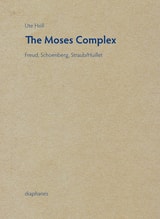
The Moses Complex
Freud, Schoenberg, Straub/HuilletUte Holl
Diaphanes, 2016
In The Moses Complex, Ute Holl analyzes these major works in detail and deep historical context, synthesizing the complex models of resistance to explore the relationships among media, migration, and politics. Since Moses descended from Sinai with the tablets inscribed with the Ten Commandments, new media and new laws have often emerged simultaneously. Liberation, in particular, has been negotiated through many different cultural media, with psychoanalysis, music, and cinema all describing exodus and exile as a process of force. Offering a dynamic and comprehensive political and cultural theory of migration and violence, The Moses Complex speaks equally well to psychoanalytic, musical, and cinematic thinking as it does to our tendency toward violence in the treatment of migrants today.
The Motet Books of Andrea Antico
Edited by Martin Picker
University of Chicago Press, 1987
Andrea Antico was one of the earliest and most important music publishers. Starting in Rome in 1510 and continuing in Venice, Antico produced elegant books of polyphonic music, cut with incredible skill on wood blocks. The repertory he published is central to understanding sixteenth-century music. It includes, for example, many pieces sung regularly in the Sistine Chapel. Since the best-represented composer in Antico's volumes if Jean Mouton, chapel master to the French king, these motet books provide insights into the character of music both at the Vatican and at the French court at the height of the Renaissance.
Martin Picker provides an exemplary edition of the four volumes of motets published by Antico in the early 1520s. His edition includes, in modern notation, all of the contents of these volumes not previously published in the Medici Codex (Monuments of Renaissance Music, Volumes III-V). Picker prefaces his edition with a history of Antico's publishing career and a discussion of each piece and its sources. The list of concordant sources and the discussions of important variants will be of enormous value to Renaissance scholars.
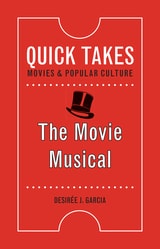
The Movie Musical
Desirée J. Garcia
Rutgers University Press, 2021
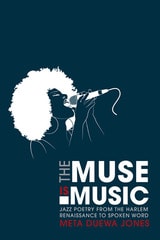
The Muse is Music
Jazz Poetry from the Harlem Renaissance to Spoken WordMeta DuEwa Jones
University of Illinois Press, 2013
This wide-ranging, ambitiously interdisciplinary study traces jazz's influence on African American poetry from the Harlem Renaissance to contemporary spoken word poetry. Examining established poets such as Langston Hughes, Ntozake Shange, and Nathaniel Mackey as well as a generation of up-and-coming contemporary writers and performers, Meta DuEwa Jones highlights the intersections of race, gender, and sexuality within the jazz tradition and its representation in poetry. Applying prosodic analysis to emphasize the musicality of African American poetic performance, she examines the gendered meanings evident in collaborative performances and in the criticism, images, and sounds circulating within jazz cultures.

The Music Diva Spectacle
Camp, Female Performers and Queer Audiences in the Arena Tour ShowConstantine Chatzipapatheodoridis
Intellect Books, 2021
In this original new work, Constantine Chatzipapatheodoridis pulls back the curtain on the production of camp as a queer praxis that constantly feeds the diva-queer culture relationship. By examining the iconography and theatrics of the diva tour show, the author presents a performance studies reading of camp and the culture-sharing process of production and audience reception. Detailed case studies take a close look at popular contemporary performers like Madonna, Kylie Minogue, Beyoncé, and Lady Gaga, and a final section analyzes audience drag in the arena space. Chatzipapatheodoridis also investigates the relationship between camp theory as an academic subject and the figure of the diva as an expression of camp.
A rich and insightful revival of the question of camp in contemporary queer performance, The Music Diva Spectacle seeks to establish how camp is appropriated by the diva and explores how this affects—and is in turn appropriated by—the audience.
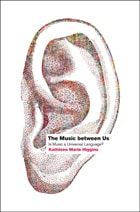
The Music between Us
Is Music a Universal Language?Kathleen Marie Higgins
University of Chicago Press, 2012
The Music of Antonio Carlos Jobim
Peter Freeman
Intellect Books, 2018
In The Music of Antônio Carlos Jobim, one of the first extensive musicological analyses of the Brazilian composer, Peter Freeman examines the music, philosophy, and circumstances surrounding the creation of Jobim’s popular songs, instrumental compositions, and symphonic works. Freeman attempts to elucidate not only the many musical influences that formed Jobim’s musical output, but also the stylistic peculiarities that were as much the product of a gifted composer as the rich musical environment and heritage that surrounded him.
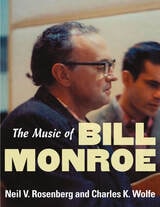
The Music of Bill Monroe
Neil V. Rosenberg and Charles K. Wolfe
University of Illinois Press, 2006
The second part of each chapter presents the discography. Information here includes the session’s place, date, time, and producer; master/matrix numbers, song/tune titles, composer credits, personnel, instruments, and vocals; and catalog/release numbers and reissue data.
The only complete bio-discography of this American musical icon, The Music of Bill Monroe is the starting point for any study of Monroe’s contributions as a composer, interpreter, and performer.
The Music of Brazil
By David P. Appleby
University of Texas Press, 1983
Here is the most comprehensive history of Brazilian music available in English. Concise yet remarkably detailed, it provides professional musicologists and music lovers alike with a clear outline of the major trends, important composers, and currents of thought that have shaped the folk, popular, and art music that are an important part of Brazil's unique cultural heritage.
The Music of Brazil contains over seventy musical examples representing musical idiom and form throughout recent history. A useful glossary introduces the reader to the key terms of Brazilian music, from agogô—a percussion instrument composed of two bells—to xocalho—a wooden or metal rattler.
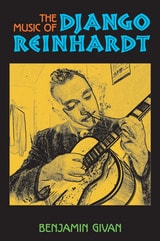
The Music of Django Reinhardt
Benjamin Givan
University of Michigan Press, 2009
"The Music of Django Reinhardt is an impressive contribution to the field of jazz studies. The book offers a penetrating view into the music of one of jazz's most intriguing early figures."
---Keith Waters, coauthor, Jazz: The First Hundred Years
"An important addition to the literature on jazz, Givan's book provides many insights into Reinhardt’s solo building and unorthodox guitar playing; it is richly illustrated with many excellent musical transcriptions."
---Thomas Owens, author of Bebop: The Music and Its Players
"Givan has painstakingly assembled an analytical interpretation of Reinhardt's music that is rigorous, compelling, and illuminating. This book makes a unique contribution to the field of jazz studies and guitar music in general."
---Brian Harker, author of Jazz: An American Journey
When most people think of the great jazz guitarist Django Reinhardt, they conjure up the unusual details of his colorful life: a childhood spent in gypsy encampments outside of Paris; the tragic caravan fire when he was eighteen that rendered his left hand nearly unusable; and his survival during World War II, when gypsies were massacred by the hundreds of thousands. The amazing story of Reinhardt’s life even became the basis for Woody Allen's Sweet and Lowdown.
Yet, it is the music of Django Reinhardt that made him one of the most original guitarists in history. In particular, his partnership with violinist Stéphane Grappelli, in the Quintette du Hot Club de France, brought him international renown and the attention of some of the most important American jazz musicians of the day, including Coleman Hawkins, Benny Carter, and Duke Ellington.
The Music of Django Reinhardt explores the story of the man and his music as never before. Benjamin Givan shows how one of jazz's greatest guitarists created his unparalleled sound. This book is an analytical study of his music, including his process, his improvisational style, and his instrumental technique.
The book features transcriptions from records of the 1920s through the 1950s and includes detailed discussion of selected performances from one of the most important guitarists in history.
Benjamin Givan is Assistant Professor of Music at Skidmore College. His writings on jazz have appeared in scholarly publications such as Current Musicology and the Musical Quarterly, as well as the popular jazz magazine Down Beat. He received his Ph.D. in music theory from Yale University.
The Music of James Tenney
Volume 1: Contexts and ParadigmsRobert Wannamaker
University of Illinois Press, 2021
Robert Wannamaker's monumental two-volume study explores the influential music and ideas of American composer, theorist, writer, performer, and educator James Tenney. Delving into the whole of Tenney's far-ranging oeuvre, Wannamaker provides in-depth, aurally grounded analyses of works linked to the artist's revolutionary theories of musical form, timbre, and harmonic perception.
Volume 1, Contexts and Paradigms, chronologically surveys Tenney's creative development and output. Wannamaker begins each section with biographical, aesthetic, and technical context that illuminates a distinct period in Tenney's career. From there, he analyzes a small number of pieces that illuminate the concerns, characteristics, and techniques that emerged in Tenney's music during that time. Wannamaker supplements the text with musical examples, graphs, and diagrams while also drawing on unpublished material and newly available primary sources to flesh out each work and the ideas that shaped it.
A landmark in experimental music scholarship, The Music of James Tenney is a first-of-its-kind consideration of the experimental music titan and his work.
The Music of James Tenney
Volume 2: A Handbook to the PiecesRobert Wannamaker
University of Illinois Press, 2021
Robert Wannamaker's monumental two-volume study explores the influential music and ideas of American composer, theorist, writer, performer, and educator James Tenney. Delving into the whole of Tenney's far-ranging oeuvre, Wannamaker offers close, aurally grounded analyses of works linked to the artist's revolutionary theories of musical form, timbre, and harmonic perception.
Written as a reference work, Volume 2, A Handbook to the Pieces, presents detailed entries on Tenney's significant post-1959 experimental works (excepting pieces covered in volume 1). Wannamaker includes technical information, an analysis of intentions and goals, graphs and musical examples, historical and biographical context, and thoughts from Tenney and others on specific works. Throughout, he discusses the striking compositional ideas found in Tenney's music and, where appropriate, traces an idea's appearance from one piece to the next to reveal the evolution of the composer's art and thought.
A landmark in experimental music scholarship, The Music of James Tenney is a first-of-its-kind consideration of the experimental music titan and his work.
The Music of Nobuo Uematsu in the Final Fantasy Series
Edited by Richard Anatone
Intellect Books, 2023
Japanese musician and composer Nobuo Uematsu has built his career and reputation on his soundtracks to the enduring Final Fantasy video game series, which are notable for their remarkable cinematic feel. Today Uematsu is one of Japan’s most beloved living composers, credited with inspiring a new generation of classical music fans. This volume, the first book-length study of the music of Uematsu, takes a variety of different analytical approaches to his body of work. It offers readers interested in ludomusicology—the study of and research into video game music—a variety of ways with which to understand Uematsu’s compositional process and the role that video game music has in the overall gaming experience.
The Music of Stones
Sohail Hashmi
Seagull Books, 2025
In The Music of Stones, Sohail Hashmi delves into the intricate history and misconceptions surrounding Islamic architecture and culture. Challenging colonial and orientalist narratives, Hashmi reveals that iconic elements like domes and minarets were not originally part of early Islamic structures but later additions influenced by various cultures, primarily Persian and Turkish. Through engaging anecdotes and thought-provoking theories, Hashmi deconstructs the monolithic view of Islamic culture, emphasizing its rich and diverse heritage shaped by Sufi, Central Asian, and other regional influences. He highlights the importance of historical context and the dangers of oversimplifying complex cultural identities.
The Music of Stones invites readers to reconsider the architectural and cultural legacy of Islam, advocating for a more inclusive and evidence-based understanding that transcends reductive labels and celebrates the richness of its diverse traditions.
The Music of Thought in the Poetry of George Oppen and William Bronk
Henry Weinfield
University of Iowa Press, 2009
From his careful readings of Oppen’s and Bronk’s poetry to his fascinating examination of the letters they exchanged, Weinfield provides important aesthetic, epistemological, and historical insights into their poetry and poetic careers. In bringing together for the first time the work of two of the most important poets of the postwar generation, The Music of Thought not only illuminates their poetry but also raises important questions about American literary history and the categories in terms of which it has generally been interpreted.
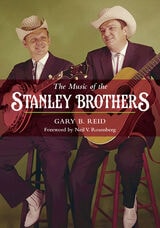
The Music of the Stanley Brothers
Gary B. Reid
University of Illinois Press, 2015
Monumental and indispensable, The Music of the Stanley Brothers provides fans and scholars alike with a guide for immersion in the long career and breathtaking repertoire of two legendary American musicians.
The Musical Comedy Films of Grigorii Aleksandrov
Laughing MattersRimgaila Salys
Intellect Books, 2009
Grigorii Aleksandrov’s musical comedy films, created with composer Isaak Dunaevskii, were the most popular Russian cinema of the 1930s and ’40s. Drawing on studio documents, press materials, and interviews with surviving film crew members, The Musical Comedy Films of Grigorii Aleksandrov presents the untold production history of the films. Salys explores how Aleksandrov’s cinema preserved the paradigms of the American musical, including its comedic tradition, using both to inscribe the foundation myths of the Stalin era in the national consciousness. As the first major study to situate these films in the cultural context of the era, this book will be essential to courses on Russian cinema and Soviet culture.
The Musician as Philosopher
New York’s Vernacular Avant-Garde, 1958–1978Michael Gallope
University of Chicago Press, 2024
The Musician as Philosopher explores the philosophical thought of avant-garde musicians in postwar New York: David Tudor, Ornette Coleman, the Velvet Underground, Alice Coltrane, Patti Smith, and Richard Hell. It contends that these musicians—all of whom are understudied and none of whom are traditionally taken to be composers—not only challenged the rules by which music is written and practiced but also confounded and reconfigured gendered and racialized expectations for what critics took to be legitimate forms of musical sound. From a broad historical perspective, their arresting music electrified a widely recognized social tendency of the 1960s: a simultaneous affirmation and crisis of the modern self.
The Myth of Opportunity
Music, Labor, and Platforms in the Twenty-First CenturyEdiz Ozelkan
Rutgers University Press, 2027
Justin Bieber launched his music career on YouTube in 2007, Lil Nas X’s “Old Town Road” exploded on TikTok in 2019, and Oliver Anthony’s “Rich Men North of Richmond” soared to the top of the Billboard charts just two weeks after its YouTube debut in 2023. These viral successes inspire countless artists to upload music online, fueled by the promise that technology can democratize opportunity, but does this promise hold true?
The Myth of Opportunity: Music, Labor, and Platforms in the Twenty-First Century critically examines the myth of technology as a great equalizer in the music industry. While platforms like Spotify claim to empower artists, the reality is that rewards remain highly unequal. Through macroeconomic analysis and time series methodology, this book investigates how streaming services have reshaped opportunity from a labor perspective across professions, industries, and regions, offering a comprehensive, empirical view on the true impact of digital platforms on cultural production with a focus on music.
The Names of Minimalism
Authorship, Art Music, and Historiography in DisputePatrick Nickleson
University of Michigan Press, 2023
Expanding the place of Jacques Rancière’s philosophy within musicology, Nickleson draws attention to disciplinary practices of guarding compositional authority against artists who set out to undermine it. The book reimagines the canonic artists and works of minimalism as “(early) minimalism,” to show that art music histories refuse to take seriously challenges to conventional authorship as a means of defending the very category “art music.” Ultimately, Nickleson asks where we end up if we imagine the early minimalist project—artists forming bands to perform their own music, rejecting the score in favor of recording, making extensive use of magnetic type as compositional and archival medium, hosting performances in lofts and art galleries rather than concert halls—not as a utopian moment within a 1960s counterculture doomed to fail, but as the beginning of a process with a long and influential afterlife.
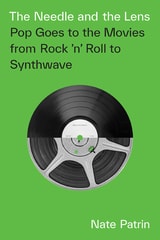
The Needle and the Lens
Pop Goes to the Movies from Rock 'n' Roll to SynthwaveNate Patrin
University of Minnesota Press, 2023
How the creative use of pop music in film—think Saturday Night Fever or Apocalypse Now—has shaped and shifted music history since the 1960s
Quick: What movie do you think of when you hear “The Sounds of Silence”? Better yet, what song comes to mind when you think of The Graduate? The link between film and song endures as more than a memory, Nate Patrin suggests with this wide-ranging and energetic book. It is, in fact, a sort of cultural symbiosis that has mutually influenced movies and pop music, a phenomenon Patrin tracks through the past fifty years, revealing the power of music in movies to move the needle in popular culture.
Rock ’n’ roll, reggae, R&B, jazz, techno, and hip-hop: each had its moment—or many—as music deployed in movies emerged as a form of interpretive commentary, making way for the legitimization of pop and rock music as art forms worthy of serious consideration. These commentaries run the gamut from comedic irony to cheap-thrills excitement to deeply felt drama, all of which Patrin examines in pairings such as American Graffiti and “Do You Want to Dance?”; Saturday Night Fever and “Disco Inferno”; Apocalypse Now and “The End”; Wayne’s World and “Bohemian Rhapsody”; and Jackie Brown and “Didn't I Blow Your Mind This Time?”.
What gives power to these individual moments, and how have they shaped and shifted music history, recasting source material or even stirring wider interest in previously niche pop genres? As Patrin surveys the scene—musical and cinematic—across the decades, expanding into the deeper origins, wider connections, and echoed histories that come into play, The Needle and the Lens offers a new way of seeing, and hearing, these iconic soundtrack moments.
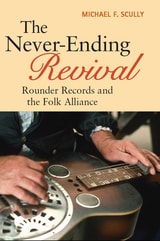
The Never-Ending Revival
Rounder Records and the Folk AllianceMichael F. Scully
University of Illinois Press, 2013
In recent years, there has been an upsurge in interest in "roots music" and "world music," popular forms that fuse contemporary sounds with traditional vernacular styles. In the 1950s and 1960s, the music industry characterized similar sounds simply as "folk music." Focusing on such music since the 1950s, The Never-Ending Revival: Rounder Records and the Folk Alliance analyzes the intrinsic contradictions of a commercialized folk culture. Both Rounder Records and the North American Folk Music and Dance Alliance have sought to make folk music widely available, while simultaneously respecting its defining traditions and unique community atmosphere. By tracing the histories of these organizations, Michael F. Scully examines the ongoing controversy surrounding the profitability of folk music. He explores the lively debates about the difficulty of making commercially accessible music, honoring tradition, and remaining artistically relevant, all without "selling out."
In the late 1950s through the 1960s, the folk music revival pervaded the mainstream music industry, with artists such as Bob Dylan and Joan Baez singing historically or politically informed ballads based on musical forms from Appalachia and the South. In the twenty-first century, the revival continues, and it includes a variety of music derived from Cajun, African American, and Mexican traditions, among many others. Even though the mainstream music industry and media largely ignore the term "folk music," a strong allure based on nostalgia, the desire for community, and a sense of exclusiveness augments an enthusiastic following connected by word-of-mouth, numerous festivals, and the Internet. There are more folk festivals now than there were during the original boom of the 1960s, suggesting that music artists, agents, and record label representatives are striking a successful balance between tradition and profitability. Scully combines rich interviews of music executives and practicing folk musicians with valuable personal experience to reveal how this American subculture remains in a "never-ending revival" based on fluid definitions of folk and folk music.
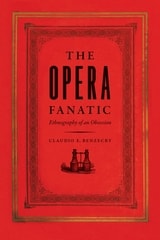
The Opera Fanatic
Ethnography of an ObsessionClaudio E. Benzecry
University of Chicago Press, 2011
Though some dismiss opera as old-fashioned, it shows no sign of disappearing from the world’s stage. So why do audiences continue to flock to it? Given its association with wealth, one might imagine that opera tickets function as a status symbol. But while a desire to hobnob with the upper crust might motivate the occasional operagoer, for hardcore fans the real answer, according to The Opera Fanatic, is passion—they do it for love.
Opera lovers are an intense lot, Claudio E. Benzecry discovers in his look at the fanatics who haunt the legendary Colón Opera House in Buenos Aires, a key site for opera’s globalization. Listening to the fans and their stories, Benzecry hears of two-hundred-mile trips for performances and nightlong camp-outs for tickets, while others testify to a particular opera’s power to move them—whether to song or to tears—no matter how many times they have seen it before. Drawing on his insightful analysis of these acts of love, Benzecry proposes new ways of thinking about people’s relationship to art and shows how, far from merely enhancing aspects of everyday life, art allows us to transcend it.
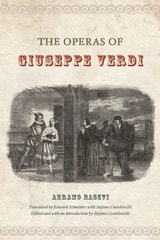
The Operas of Giuseppe Verdi
Abramo Basevi
University of Chicago Press, 2014
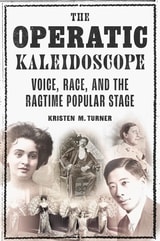
The Operatic Kaleidoscope
Voice, Race, and the Ragtime Popular StageKristen M. Turner
University of Illinois Press, 2026
Turner examines performances ranging from Florenz Ziegfeld’s early Follies to Black vaudeville shows to musical comedies, including everything from celebrity vehicles to obscure productions and overlooked artists. She reveals how opera’s popularity in mass culture illuminates the effects of exclusionary immigration policies, pervasive racial and ethnic inequalities, debates over women’s suffrage, and the imposition of legalized segregation. Performers and creators from many communities—white immigrants, Jewish, Black, and Asian American—strategically deployed operatic allusions and the genre’s characteristic vocal timbre to assert their respectability, challenge stereotypes, and navigate oppressive social structures.
Nuanced and expansive, The Operatic Kaleidoscope explores opera’s role when popular culture grappled with questions of race and citizenship.

The Organ in Manitoba
A History of the Instruments, the Builders, and the PlayersJames B. Hartman
University of Manitoba Press, 1997

The Organs of J.S. Bach
A HandbookChristoph Wolff and Markus Zepf
University of Illinois Press, 2012
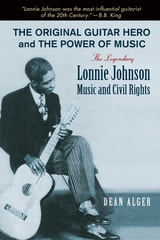
The Original Guitar Hero and the Power of Music
The Legendary Lonnie Johnson, Music, and Civil RightsDean Alger
University of North Texas Press, 2014
The Origins of Cool in Postwar America
Joel Dinerstein
University of Chicago Press, 2017
Through eye-opening portraits of iconic figures, Dinerstein illuminates the cultural connections and artistic innovations among Lester Young, Humphrey Bogart, Robert Mitchum, Billie Holiday, Frank Sinatra, Jack Kerouac, Albert Camus, Marlon Brando, and James Dean, among others. We eavesdrop on conversations among Jean-Paul Sartre, Simone de Beauvoir, and Miles Davis, and on a forgotten debate between Lorraine Hansberry and Norman Mailer over the "white Negro" and black cool. We come to understand how the cool worlds of Beat writers and Method actors emerged from the intersections of film noir, jazz, and existentialism. Out of this mix, Dinerstein sketches nuanced definitions of cool that unite concepts from African-American and Euro-American culture: the stylish stoicism of the ethical rebel loner; the relaxed intensity of the improvising jazz musician; the effortless, physical grace of the Method actor. To be cool is not to be hip and to be hot is definitely not to be cool.
This is the first work to trace the history of cool during the Cold War by exploring the intersections of film noir, jazz, existential literature, Method acting, blues, and rock and roll. Dinerstein reveals that they came together to create something completely new—and that something is cool.
The Oxford American Book of Great Music Writing
Marc Smirnoff
University of Arkansas Press, 2010
To celebrate ten years of Southern music issues, most of which are sold-out or very hard to find, the fifty-five essays collected in this dynamic, wide-ranging, and vast anthology appeal to both music fans and fans of great writing.
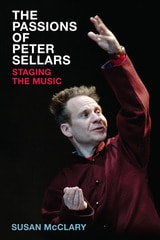
The Passions of Peter Sellars
Staging the MusicSusan McClary
University of Michigan Press, 2019
Many directors leave the musical aspects of opera entirely to the singers and conductor. Sellars, however, immerses himself in the score, and has created a distinctive visual vocabulary to embody musical gesture on stage, drawing on the energies of the music as he shapes characters, ensemble interaction, and large-scale dramatic trajectories. As a leading scholar of gender and music, and the history of opera, Susan McClary is ideally positioned to illuminate Sellars’s goal to address both the social tensions embodied in these operas as well as the spiritual dimensions of operatic performance. McClary considers Sellars’s productions of Mozart’s Le nozze di Figaro, Don Giovanni, and Così fan tutte; Handel’s Theodora; Messiaen’s Saint François d’Assise; John C. Adams’s Nixon in China, The Death of Klinghoffer, El Niño, and Doctor Atomic; Kaija Saariaho’s L’amour de loin, La Passion de Simone, and Only the Sound Remains; Purcell’s The Indian Queen; and Bach’s passions of Saint Matthew and Saint John. Approaching Sellars’s theatrical strategies from a musicological perspective, McClary blends insights from theater, film, and literary scholarship to explore the work of one of the most brilliant living interpreters of opera.
The Philosophy of Improvisation
Gary Peters
University of Chicago Press, 2009
Improvisation is usually either lionized as an ecstatic experience of being in the moment or disparaged as the thoughtless recycling of clichés. Eschewing both of these orthodoxies, The Philosophy of Improvisation ranges across the arts—from music to theater, dance to comedy—and considers the improvised dimension of philosophy itself in order to elaborate an innovative concept of improvisation.
Gary Peters turns to many of the major thinkers within continental philosophy—including Heidegger, Nietzsche, Adorno, Kant, Benjamin, and Deleuze—offering readings of their reflections on improvisation and exploring improvisational elements within their thinking. Peters’s wry, humorous style offers an antidote to the frequently overheated celebration of freedom and community that characterizes most writing on the subject. Expanding the field of what counts as improvisation, The Philosophy of Improvisation will be welcomed by anyone striving to comprehend the creative process.
The Piracy Crusade
How the Music Industry's War on Sharing Destroys Markets and Erodes Civil LibertiesAram Sinnreich
University of Massachusetts Press, 2013
In the decade and a half since Napster first emerged, forever changing the face of digital culture, the claim that “internet pirates killed the music industry” has become so ubiquitous that it is treated as common knowledge. Piracy is a scourge on legitimate businesses and hard-working artists, we are told, a “cybercrime” similar to identity fraud or even terrorism.
In The Piracy Crusade, Aram Sinnreich critiques the notion of “piracy” as a myth perpetuated by today's cultural cartels—the handful of companies that dominate the film, software, and especially music industries. As digital networks have permeated our social environment, they have offered vast numbers of people the opportunity to experiment with innovative cultural and entrepreneurial ideas predicated on the belief that information should be shared widely. This has left the media cartels, whose power has historically resided in their ability to restrict the flow of cultural information, with difficult choices: adapt to this new environment, fight the changes tooth and nail, or accept obsolescence. Their decision to fight has resulted in ever stronger copyright laws and the aggressive pursuit of accused infringers.
Yet the most dangerous legacy of this “piracy crusade” is not the damage inflicted on promising start-ups or on well-intentioned civilians caught in the crosshairs of file-sharing litigation. Far more troubling, Sinnreich argues, are the broader implications of copyright laws and global treaties that sacrifice free speech and privacy in the name of combating the phantom of piracy—policies that threaten to undermine the foundations of democratic society.
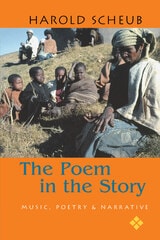
The Poem in the Story
Music, Poetry, and NarrativeHarold Scheub
University of Wisconsin Press, 2002
Fact and fiction meet at the boundaries, the betwixt and between where transformations occur. This is the area of ambiguity where fiction and fact become endowed with meaning, and this is the area—where ambiguity, irony, and metaphor join forces—that Harold Scheub exposes in all its nuanced and evocative complexity in The Poem in the Story.
In a career devoted to exploring the art of the African storyteller, Scheub has conducted some of the most interesting and provocative investigations into nonverbal aspects of storytelling, the complex relationship between artist and audience, and, most dramatically, the role played by poetry in storytelling. This book is his most daring effort yet, an unconventional work that searches out what makes a story artistically engaging and emotionally evocative, the metaphorical center that Scheub calls "the poem in the story." Drawing on extensive fieldwork in southern Africa and decades of experience as a researcher and teacher, Scheub develops an original approach—a blend of field notes, diary entries, photographs, and texts of stories and poems—that guides readers into a new way of viewing, even experiencing, meaning in a story. Though this work is largely focused on African storytelling, its universal applications emerge when Scheub brings the work of storytellers as different as Shakespeare and Faulkner into the discussion.
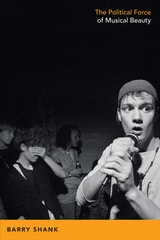
The Political Force of Musical Beauty
Barry Shank
Duke University Press, 2014
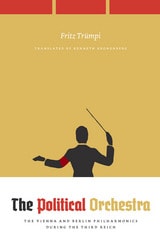
The Political Orchestra
The Vienna and Berlin Philharmonics during the Third ReichFritz Trümpi
University of Chicago Press, 2016
Trümpi looks first at the decades preceding National Socialist rule, when the competing orchestras, whose rivalry mirrored a larger rivalry between Berlin and Vienna, were called on to represent “superior” Austro-German music and were integrated into the administrative and social structures of their respective cities—becoming vulnerable to political manipulation in the process. He then turns to the Nazi period, when the orchestras came to play a major role in cultural policies. As he shows, the philharmonics, in their own unique ways, strengthened National Socialist dominance through their showcasing of Germanic culture in the mass media, performances for troops and the general public, and fictional representations in literature and film. Accompanying these propaganda efforts was an increasing politicization of the orchestras, which ranged from the dismissal of Jewish members to the programming of ideologically appropriate repertory—all in the name of racial and cultural purity.
Richly documented and refreshingly nuanced, The Political Orchestra is a bold exploration of the ties between music and politics under fascism.
The Politics of Vibration
Music as a Cosmopolitical PracticeMarcus Boon
Duke University Press, 2022
The Pop Palimpsest
Intertextuality in Recorded Popular MusicLori Burns and Serge Lacasse, Editors
University of Michigan Press, 2018