Results by title
4917 books match the query 'Philosophy' and 1267 start with t
The British Journal for the Philosophy of Science, volume 76 number 4 (December 2025)
The University of Chicago Press
University of Chicago Press Journals, 2025
The British Journal for the Philosophy of Science, volume 77 number 1 (March 2026)
The University of Chicago Press
University of Chicago Press Journals, 2026
The British Journal for the Philosophy of Science, volume 77 number 2 (June 2026)
The University of Chicago Press
University of Chicago Press Journals, 2026
The British Journal for the Philosophy of Science, volume 77 number 3 (September 2026)
The University of Chicago Press
University of Chicago Press Journals, 2026
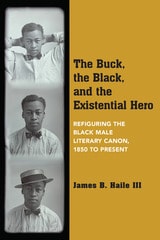
The Buck, the Black, and the Existential Hero
Refiguring the Black Male Literary Canon, 1850 to PresentJames B. Haile III
Northwestern University Press, 2020
The Buck, the Black, and the Existential Hero: Refiguring the Black Male Literary Canon, 1850 to Present combines philosophy, literary theory, and jazz studies with Africana studies to develop a theory of the black male literary imagination. In doing so, it seeks to answer fundamental aesthetic and existential questions: How does the experience of being black and male in the modern West affect the telling of a narrative, the shape or structure of a novel, the development of characters and plot lines, and the nature of criticism itself?
James B. Haile argues that, since black male identity is largely fluid and open to interpretation, reinterpretation, and misinterpretation, the literature of black men has developed flexibility and improvisation, termed the “jazz of life.” Our reading of this literature requires the same kind of flexibility and improvisation to understand what is being said and why, as well as what is not being said and why. Finally, the book attempts to offer this new reading experience by placing texts by well-known authors, such as Frederick Douglass, Ralph Ellison, and Colson Whitehead, in conversation with texts by those who are less well known and those who have, for the most part, been forgotten, in particular, Cecil Brown. Doing so challenges the reader to visit and revisit these novels with a new perspective about the social, political, historical, and psychic realities of black men.
The Burden of Over-representation
Race, Sport, and PhilosophyGrant Farred
Temple University Press, 2018
The Burden of Over-representation artfully explores three curious racial moments in sport: Jackie Robinson’s expletive at a Dodgers spring training game; the transformation of a formality into an event at the end of the 1995 rugby World Cup in South Africa; and a spectral moment at the 2010 FIFA World Cup. Grant Farred examines the connotations at play in these moments through the lenses of race, politics, memory, inheritance and conciliation, deploying a surprising cast of figures in Western thought, ranging from Jacques Derrida and Friedrich Nietzsche to Judith Butler, William Shakespeare, and Jesus-the-Christ. Farred makes connection and creates meaning through the forces at play and the representational burdens of team, country and race.
Farred considers Robinson’s profane comments at black Dodgers fans, a post-match exchange of “thank yous” on the rugby pitch between white South African captain François Pienaar and Nelson Mandela, and being “haunted” by the ghost of Derrida on the occasion of the first FIFA World Cup on African soil. In doing so, The Burden of Over-representation provides a passionate, insightful analysis of the social, political, racial, and cultural consequences of conciliation at key sporting events.
The Burden of Responsibility
Blum, Camus, Aron, and the French Twentieth CenturyTony Judt
University of Chicago Press, 1998
Through the prism of the lives of Leon Blum, Albert Camus, and Raymond Aron, Judt examines pivotal issues in the history of contemporary French society—antisemitism and the dilemma of Jewish identity, political and moral idealism in public life, the Marxist moment in French thought, the traumas of decolonization, the disaffection of the intelligentsia, and the insidious quarrels rending Right and Left. Judt focuses particularly on Blum's leadership of the Popular Front and his stern defiance of the Vichy governments, on Camus's part in the Resistance and Algerian War, and on Aron's cultural commentary and opposition to the facile acceptance by many French intellectuals of communism's utopian promise. Severely maligned by powerful critics and rivals, each of these exemplary figures stood fast in their principles and eventually won some measure of personal and public redemption.
Judt constructs a compelling portrait of modern French intellectual life and politics. He challenges the conventional account of the role of intellectuals precisely because they mattered in France, because they could shape public opinion and influence policy. In Blum, Camus, and Aron, Judt finds three very different men who did not simply play the role, but evinced a courage and a responsibility in public life that far outshone their contemporaries.
"An eloquent and instructive study of intellectual courage in the face of what the author persuasively describes as intellectual irresponsibility."—Richard Bernstein, New York Times
The Call
Eloquence in the Service of TruthCraig R. Smith
Michigan State University Press, 2022
The Calling of Education
"The Academic Ethic" and Other Essays on Higher EducationEdward Shils
University of Chicago Press, 1997
Edward Shils understood the university as a great symphonic conductor comprehends the value of each instrument and section, both separately and in cooperation. The Calling of Education offers Shils's insightful perspective on problems that are no less pressing than when he first confronted them.
Edward Shils (1910-1995) was distinguished service professor in the Committee on Social Thought and the department of sociology at the University of Chicago. Among his many books published by the University of Chicago Press are Portraits: A Gallery of Intellectuals and the three-volume Selected Papers of Edward Shils.
The Case for Contention
Teaching Controversial Issues in American SchoolsJonathan Zimmerman and Emily Robertson
University of Chicago Press, 2017
Zimmerman and Robertson highlight an aspect of American politics that we know all too well: We are terrible at having informed, reasonable debates. We opt instead to hurl insults and accusations at one another or, worse, sit in silence and privately ridicule the other side. Wouldn’t an educational system that focuses on how to have such debates in civil and mutually respectful ways improve our public culture and help us overcome the political impasses that plague us today? To realize such a system, the authors argue that we need to not only better prepare our educators for the teaching of hot-button issues, but also provide them the professional autonomy and legal protection to do so. And we need to know exactly what constitutes a controversy, which is itself a controversial issue. The existence of climate change, for instance, should not be subject to discussion in schools: scientists overwhelmingly agree that it exists. How we prioritize it against other needs, such as economic growth, however—that is worth a debate.
With clarity and common-sense wisdom, Zimmerman and Robertson show that our squeamishness over controversy in the classroom has left our students woefully underserved as future citizens. But they also show that we can fix it: if we all just agree to disagree, in an atmosphere of mutual respect.
The Catholic Enlightenment
A Global AnthologyUlrich L. Lehner
Catholic University of America Press, 2021
The Celebration of Death in Contemporary Culture
Dina Khapaeva
University of Michigan Press, 2017
This book links the mounting demand for images of violent death with dramatic changes in death-related social rituals. It offers a conceptual framework that connects observations of fictional worlds—including The Twilight Saga, The Vampire Diaries, and the Harry Potter series—with real-world sociocultural practices, analyzing the aesthetic, intellectual, and historical underpinnings of the cult of death. It also places the celebration of death in the context of a longstanding critique of humanism and investigates the role played by 20th-century French theory, posthumanism, transhumanism, and the animal rights movement in shaping the current antihumanist atmosphere.
This timely, thought-provoking book will appeal to scholars of culture, film, literature, anthropology, and American and Russian studies, as well as general readers seeking to understand a defining phenomenon of our age.
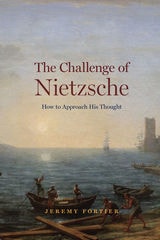
The Challenge of Nietzsche
How to Approach His ThoughtJeremy Fortier
University of Chicago Press, 2020
The Challenge of Nietzsche uses Nietzsche as a guide to Nietzsche, highlighting the fact that Nietzsche equipped his writings with retrospective self-commentaries and an autobiographical apparatus that clarify how he understood his development as an author, thinker, and human being. Fortier shows that Nietzsche used his writings to establish two major character types, the Free Spirit and Zarathustra, who represent two different approaches to the conduct and understanding of life: one that strives to be as independent and critical of the world as possible, and one that engages with, cares for, and aims to change the world. Nietzsche developed these characters at different moments of his life, in order to confront from contrasting perspectives such elemental experiences as the drive to independence, the feeling of love, and the assessment of one’s overall health or well-being. Understanding the tension between the Free Spirit and Zarathustra takes readers to the heart of what Nietzsche identified as the tensions central to his life, and to all human life.
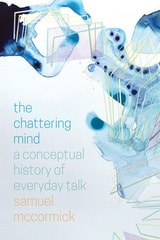
The Chattering Mind
A Conceptual History of Everyday TalkSamuel McCormick
University of Chicago Press, 2020
From Plato’s contempt for “the madness of the multitude” to Kant’s lament for “the great unthinking mass,” the history of Western thought is riddled with disdain for ordinary collective life. But it was not until Kierkegaard developed the term chatter that this disdain began to focus on the ordinary communicative practices that sustain this form of human togetherness.
The Chattering Mind explores the intellectual tradition inaugurated by Kierkegaard’s work, tracing the conceptual history of everyday talk from his formative account of chatter to Heidegger’s recuperative discussion of “idle talk” to Lacan’s culminating treatment of “empty speech”—and ultimately into our digital present, where small talk on various social media platforms now yields big data for tech-savvy entrepreneurs.
In this sense, The Chattering Mind is less a history of ideas than a book in search of a usable past. It is a study of how the modern world became anxious about everyday talk, figured in terms of the intellectual elites who piqued this anxiety, and written with an eye toward recent dilemmas of digital communication and culture. By explaining how a quintessentially unproblematic form of human communication became a communication problem in itself, McCormick shows how its conceptual history is essential to our understanding of media and communication today.
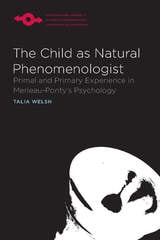
The Child as Natural Phenomenologist
Primal and Primary Experience in Merleau-Ponty's PsychologyTalia Welsh
Northwestern University Press, 2013
Welsh demonstrates Merleau-Ponty’s unique conception of the child’s development as inherently organized, meaningful, and engaged with the world, contrary to views that see the child as largely internally preoccupied and driven by instinctual demands. Welsh finds that Merleau-Ponty’s ideas about human psychology remain relevant in today’s growing field of child studies and that they provide important insights for philosophers, sociologists, and psychologists to better understand the human condition.
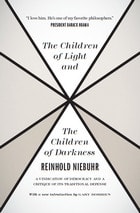
The Children of Light and the Children of Darkness
A Vindication of Democracy and a Critique of Its Traditional DefenseReinhold Niebuhr
University of Chicago Press, 2011
The Children of Light and the Children of Darkness, first published in 1944, is considered one of the most profound and relevant works by the influential theologian Reinhold Niebuhr, and certainly the fullest statement of his political philosophy. Written and first read during the prolonged, tragic world war between totalitarian and democratic forces, Niebuhr’s book took up the timely question of how democracy as a political system could best be defended.
Most proponents of democracy, Niebuhr claimed, were “children of light,” who had optimistic but naïve ideas about how society could be rid of evil and governed by enlightened reason. They needed, he believed, to absorb some of the wisdom and strength of the “children of darkness,” whose ruthless cynicism and corrupt, anti-democratic politics should otherwise be repudiated. He argued for a prudent, liberal understanding of human society that took the measure of every group’s self-interest and was chastened by a realistic understanding of the limits of power. It is in the foreword to this book that he wrote, “Man’s capacity for justice makes democracy possible; but man’s inclination to injustice makes democracy necessary.”

The Children of Time
Causality, Entropy, BecomingRemy Lestienne
University of Illinois Press, 1995
the urbane idiom of a French scholar." -- J. T. Fraser, founder,
International Society for the Study of Time
"This is the book for those of us who couldn't wade completely through
Hawking's A Brief History of Time and now have it collecting dust
on our bookshelves. Well written, thought-provoking, and, most important,
understandable." -- Michael Epstein, analytical spectroscopist/chemist,
National Institute of Standards and Technology
What is time? Does it really pass? These and other fascinating questions
about the nature of time animate a continuing philosophical and scientific
debate. In this popular French book, now available for the first time
in English; my Lestienne moves to make the bewildering concepts
of time accessible--and interesting. He uses Galileo, Newton, Einstein,
and others to demonstrate how the concepts of causality and entropy became
so pervasive that they eventually were substituted for time itself. He
also shows how recent advances in astronomy, particle physics, developmental
life sciences, and the neurosciences are helping to shape a new philosophical
vision of time.
The Christian Philosopher
Cotton MatherEdited, with an Introduction and Notes, by Winton U. Solberg
University of Illinois Press, 1994
Published in 1721 by the prominent Puritan clergyman Cotton Mather, The Christian Philosopher was the first comprehensive book on science to be written by an American. Building on natural theology, Mather demonstrated the harmony between religion and the new science associated with Sir Isaac Newton. His survey of all the known sciences from astronomy and physics to human anatomy presented evidence that both celestial and terrestrial phenomema imply an intelligent designer.
Winton Solberg's introduction places Mather's treatise in its widest historical context. In addition to tracing the origins and sources of Mather's work, Solberg analyzes the book's contents, its reception, and its significance in American intellectual and cultural history. This edition affirms Mather's importance to American thought as a deeply religious intellectual who introduced the Enlightenment to America.
The Christian Philosophy of Jacques Maritain
Jason L.A. West
Catholic University of America Press, 2025
The Christian Structure of Politics
The De Regno of Thomas AquinasWilliam McCormick, SJ
Catholic University of America Press, 2022
The Ciceronian Tradition in Political Theory
Edited by Daniel J. Kapust and Gary Remer
University of Wisconsin Press, 2021
Individual chapters examine the ways thinkers throughout history, specifically Augustine, John of Salisbury, Thomas More, Machiavelli, Montaigne, Hobbes, Locke, Adam Smith, and Edmund Burke, have engaged with and been influenced by Cicero. A final chapter surveys the impact of Cicero’s ideas on political thought in the second half of the twentieth century. By tracing the long reception of these ideas, the collection demonstrates not only Cicero’s importance to both medieval and modern political theorists but also the comprehensive breadth and applicability of his philosophy.
The Cinematic Mode of Production
Attention Economy and the Society of the SpectacleJonathan Beller
Dartmouth College Press, 2006

The Cinematic Sublime
Negative Pleasures, Structuring AbsencesEdited by Nathan Carroll
Intellect Books, 2020
An anthology that applies the concept of the sublime to cinema.
This interdisciplinary volume bridges the disciplines of aesthetics and film studies through an exploration of the cinematic sublime. The works collected here, written by contemporary film scholars and philosophers, apply sublime aesthetics to various film topics and case studies, ranging from early cinema and classical Hollywood to avant-garde film and contemporary digital cinema. Original and wide-ranging, The Cinematic Sublime offers new and exciting insights into how cinema engages with traditional historical and aesthetic discourse, and it will prove a useful resource for both post-graduate students and established scholars interested in the interrelations between film and philosophy.
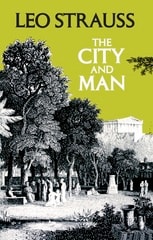
The City and Man
Leo Strauss
University of Chicago Press, 1978
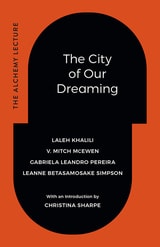
The City of Our Dreaming
The Alchemy LectureLaleh Khalili, V. Mitch McEwen, Gabriela Leandro Pereira, and Leanne Betasamosake Simpson
Duke University Press, 2026
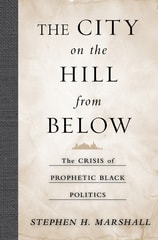
The City on the Hill From Below
The Crisis of Prophetic Black PoliticsAuthored by Stephen Marshall
Temple University Press, 2012
Within the discipline of American political science and the field of political theory, African American prophetic political critique as a form of political theorizing has been largely neglected. Stephen Marshall, in The City on the Hill from Below, interrogates the political thought of David Walker, Frederick Douglass, W. E. B. DuBois, James Baldwin, and Toni Morrison to reveal a vital tradition of American political theorizing and engagement with an American political imaginary forged by the City on the Hill.
Originally articulated to describe colonial settlement, state formation, and national consolidation, the image of the City on the Hill has been transformed into one richly suited to assessing and transforming American political evil. The City on the Hill from Below shows how African American political thinkers appropriated and revised languages of biblical prophecy and American republicanism.
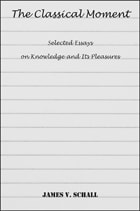
The Classical Moment
Selected Essays on Knowledge and Its PleasuresJames V. Schall
St. Augustine's Press, 2014
The essay is one of the great inventions of the human mind. It can talk about anything and everything. It can be lightsome or solemn. It can be witty or informative. Above all, it is short. It likes the passage in which Socrates told Callicles in the Gorgias to make his answers brief. Yet, we can find in essays things we need and want to know. Aquinas often managed to make the most profound arguments in two paragraphs. Samuel Johnson did the same.
The Classical Moment is, indeed, a collection of “selected essays.” Such a collection is a classical and beloved form of English letters, the literary form most preferred by Schall.
The essays in this book all touch on knowledge and its pleasures. Schall does not tarry on the effort and determination it often takes to say just what we want to say, then say it and know that we have said it. Somehow, when an essay is written, an author simply knows that it is complete, that it is what he wanted to say. He says to himself, “Yes, that is it.” An essayist may well be conscious that when he begins an essay, he really does not know what he will finally say. The writing is the saying. Our writing is our thinking, our thinking-through, our being pleased to know this is it . . . this is the point Schall, one of America’s greatest essayists, makes here.
The “classical moment” is that intense experience of seeing or hearing or encountering some vista, or song, or person that takes us out of ourselves. We are most ourselves somehow when we are most outside of ourselves, seeing what is not ourselves. We are intended to be more than ourselves in being ourselves, to know with others what is the truth, to know what is.
These essays originally appeared in regular columns done in various journals, papers, and on-line sources. One can read them in any order. The order of the author or collector does have a certain “logic,” but each essay is also a whole, something contained within itself.
The unity of an essay collection is found more in a kind enthrallment that comes to us when we deal with the things that are both important and delightful. At bottom, these essays belong together. Aristotle warned us that if we did not delight in the things that are, we would seek our highest pleasures where they are not really found.
We will always seek something to delight in. What civilization is about lies in finding what is really worthy of the capacity of delight that is given to us in our being. The “classical moment” is the perfect phrase that brings us to the threshold of this experience. We have to enter it ourselves, but once inside, we will find so much more than ourselves. And we will rejoice.
The Classrooms All Young Children Need
Lessons in Teaching from Vivian PaleyPatricia M. Cooper
University of Chicago Press, 2009
Teacher and author Vivian Paley is highly regarded by parents, educators, and other professionals for her original insights into such seemingly everyday issues as play, story, gender, and how young children think. In The Classrooms All Young Children Need, Patricia M. Cooper takes a synoptic view of Paley’s many books and articles, charting the evolution of Paley’s thinking while revealing the seminal characteristics of her teaching philosophy. This careful analysis leads Cooper to identify a pedagogical model organized around two complementary principles: a curriculum that promotes play and imagination, and the idea of classrooms as fair places where young children of every color, ability, and disposition are welcome.
With timely attention paid to debates about the reduction in time for play in the early childhood classroom, the role of race in education, and No Child Left Behind, The Classrooms All Young Children Need will be embraced by anyone tasked with teaching our youngest pupils.

The Climate of History in a Planetary Age
Dipesh Chakrabarty
University of Chicago Press, 2021
Chakrabarty argues that we must see ourselves from two perspectives at once: the planetary and the global. This distinction is central to Chakrabarty’s work—the globe is a human-centric construction, while a planetary perspective intentionally decenters the human. Featuring wide-ranging excursions into historical and philosophical literatures, The Climate of History in a Planetary Age boldly considers how to frame the human condition in troubled times. As we open ourselves to the implications of the Anthropocene, few writers are as likely as Chakrabarty to shape our understanding of the best way forward.

The Cognitive Paradigm
Marc De Mey
University of Chicago Press, 1992
"A most stimulating, and intellectually delightful book."—John Goldsmith
"[De Mey] has brought together an unusually wide range of material, and suggested some interesting lines of thought, about what should be an important application of cognitive science: The understanding of science itself."—Cognition and Brain Theory
"It ought to be on the shelf of every teacher and researcher in the field and on the reading list of any student or practitioner seriously interested in how those they serve are likely to set about knowing."—ISIS
The Coherence of Kant's Doctrine of Freedom
Bernard Carnois
University of Chicago Press, 1987
Widely praised when first published in France, The Coherence of Kant's Doctrine of Freedom articulates and interrelates the disparate senses of freedom in Kant's work. Bernard Carnois organizes all Kant's usages into a logical "grammar," isolating and defining the individual meanings and pointing out their implications and limits. In a first step, he shows how Kant's notion of intelligible character makes possible a synthesis of transcendental freedom, as a problematic concept of theoretical reason, and practical freedom, as a fact demonstrated by experience. He then develops the concept of freedom under the rubric of the will's autonomy in the context of the moral law. And finally, Carnois persistently explores the role of negativity in Kant's idea of freedom. For within the magisterial coherence of the system the imperfection of human finitude is inscribed. This introduces the "history" of our freedom—a freedom which posits itself, but then inevitably denies itself, even while preserving the possibility of its regeneration.
The only work in English to consider in detail all of Kant's writings on freedom, this book also introduces French Kant scholars whose works have often been unavailable to English-speaking readers. As both an interpretation of Kant and a trenchant analysis of the relationship between ethical commitments and metaphysical assumptions, it will be a useful addition to moral, religious, and political philosophy as well as to Kant scholarship.
The Collapse of Ancient States and Civilizations
Edited by Norman Yoffee and George L. Cowgill
University of Arizona Press, 1988
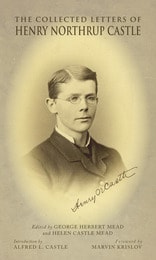
The Collected Letters of Henry Northrup Castle
Henry Northrup Castle
Ohio University Press, 2012
George Herbert Mead, one of America’s most important and influential philosophers, a founder of pragmatism, social psychology, and symbolic interactionism, was also a keen observer of American culture and early modernism. In the period from the 1870s to 1895, Henry Northrup Castle maintained a correspondence with family members and with Mead—his best friend at Oberlin College and brother-in-law—that reveals many of the intellectual, economic, and cultural forces that shaped American thought in that complex era. Close friends of John Dewey, Jane Addams, and other leading Chicago Progressives, the author of these often intimate letters comments frankly on pivotal events affecting higher education, developments at Oberlin College, Hawaii (where the Castles lived), progressivism, and the general angst that many young intellectuals were experiencing in early modern America.
The letters, drawn from the Mead-Castle collection at the University of Chicago, were collected and edited by Mead after the tragic death of Henry Castle in a shipping accident in the North Sea. Working with his wife Helen Castle (one of Henry’s sisters), he privately published fifty copies of the letters to record an important relationship and as an intellectual history of two progressive thinkers at the end of the nineteenth century. American historians, such as Robert Crunden and Gary Cook, have noted the importance of the letters to historians of the late nineteenth century.
The letters are made available here using the basic Mead text of 1902. Additional insights into the connection between Mead, John Dewey, Henry and Harriet Castle, and Hawaii’s progressive kindergarten system are provided by the foundation’s executive director Alfred L. Castle. Marvin Krislov, president of Oberlin College, has added additional comments on the importance of the letters to understanding the intellectual relationship that flourished at Oberlin College.
Published with the support of the Samuel N. and Mary Castle Foundation.
The Collected Works of John Dewey, Index
1882 - 1953John Dewey. Edited by Jo Ann Boydston
Southern Illinois University Press, 1991
This cumulative index to the thirty-seven volumes of The Collected Works of John Dewey, 1882–1953, is an invaluable guide to The Collected Works.
The Collected Works Contents incorporates all the tables of contents of Dewey’s individual volumes, providing a chronological, volume-by-volume overview of every item in The Early Works, The Middle Works, and The Later Works.
The Title Index lists alphabetically by shortened titles and by key words all items in The Collected Works. Articles republished in the collections listed above are also grouped under the titles of those books.
The Subject Index, which includes all information in the original volume indexes, expands that information by adding the authors of introductions to each volume, authors and titles of books Dewey reviewed or introduced, authors of appendix items, and relevant details from the source notes.
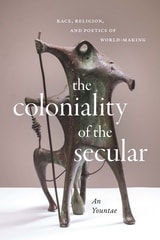
The Coloniality of the Secular
Race, Religion, and Poetics of World-MakingAn Yountae
Duke University Press, 2024
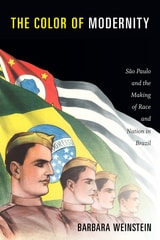
The Color of Modernity
São Paulo and the Making of Race and Nation in BrazilBarbara Weinstein
Duke University Press, 2015
The Comic Self
Toward DispossessionTimothy C. Campbell
University of Minnesota Press, 2023
A provocative and unconventional call to dispossess the self of itself
Challenging the contemporary notion of “self-care” and the Western mania for “self-possession,” The Comic Self deploys philosophical discourse and literary expression to propose an alternate and less toxic model for human aspiration: a comic self. Timothy Campbell and Grant Farred argue that the problem with the “care of the self,” from Foucault onward, is that it reinforces identity, strengthening the relation between I and mine. This assertion of self-possession raises a question vital for understanding how we are to live with each other and ourselves: How can you care for something that is truly not yours?
The answer lies in the unrepresentable comic self. Campbell and Farred range across philosophy, literature, and contemporary comedy—engaging with Socrates, Burke, Hume, Hegel, Marx, Nietzsche, Heidegger, Derrida, Deleuze, and Levinas; Shakespeare, Cervantes, Woolf, Kafka, and Pasolini; and Stephen Colbert, David Chappelle, and the cast of Saturday Night Live. They uncover spaces where the dispossession of self and, with it, the dismantling of the regime of self-care are possible. Arguing that the comic self always keeps a precarious closeness to the tragic self, while opposing the machinations of capital endemic to the logic of self-possession, they provide a powerful and provocative antidote to the tragic self that so dominates the tenor of our times.
The Common Cause
Postcolonial Ethics and the Practice of Democracy, 1900-1955Leela Gandhi
University of Chicago Press, 2014
Reframing the way we think about some of the most consequential political events of the era, Gandhi presents moral imperfectionism as the lost tradition of global democratic thought and offers it to us as a key to democracy’s future. In doing so, she defends democracy as a shared art of living on the other side of perfection and mounts a postcolonial appeal for an ethics of becoming common.
The Common Good of Constitutional Democracy
Essays in Political Philosophy and on Catholic Social TeachingMartin Rhonheimer
Catholic University of America Press, 2013
The Communicative Body
Studies in Communicative Philosophy, Politics, and SociologyJohn O'Neill
Northwestern University Press, 1989
The Community of Rights
Alan Gewirth
University of Chicago Press, 1997
The Company of Words
Hegel, Language, and Systematic PhilosophyJohn McCumber
Northwestern University Press, 1993
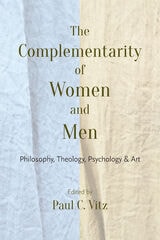
The Complementarity of Women and Men
Philosophy, Theology, Psychology, and ArtPaul C. Vitz
Catholic University of America Press, 2021
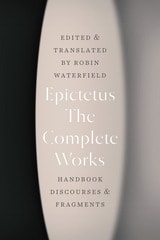
The Complete Works
Handbook, Discourses, and FragmentsEpictetus
University of Chicago Press, 2022
“Some things are up to us and some are not.”
Epictetus was born into slavery around the year 50 CE, and, upon being granted his freedom, he set himself up as a philosophy teacher. After being expelled from Rome, he spent the rest of his life living and teaching in Greece. He is now considered the most important exponent of Stoicism, and his surviving work comprises a series of impassioned discourses, delivered live and recorded by his student Arrian, and the Handbook, Arrian’s own take on the heart of Epictetus’s teaching.
In Discourses, Epictetus argues that happiness depends on knowing what is in our power to affect and what is not. Our internal states and our responses to events are up to us, but the events themselves are assigned to us by the benevolent deity, and we should treat them—along with our bodies, possessions, and families—as matters of indifference, simply making the best use of them we can. Together, the Discourses and Handbook constitute a practical guide to moral self-improvement, as Epictetus explains the work and exercises aspirants need to do to enrich and deepen their lives. Edited and translated by renowned scholar Robin Waterfield, this book collects the complete works of Epictetus, bringing to modern readers his insights on how to cope with death, exile, the people around us, the whims of the emperor, fear, illness, and much more.
CUSTOMER NOTE: THE HARDCOVER IS FOR LIBRARIES AND HAS NO JACKET.
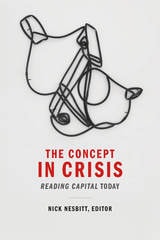
The Concept in Crisis
Reading Capital TodayNick Nesbitt, editor
Duke University Press, 2017
Contributors. Emily Apter, Alain Badiou, Étienne Balibar, Bruno Bosteels, Adrian Johnston, Warren Montag, Fernanda Navarro, Nick Nesbitt, Knox Peden, Nina Power, Robert J. C. Young
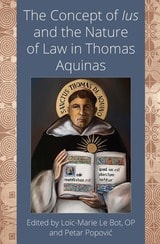
The Concept of <i>Ius</i> and the Nature of Law in Thomas Aquinas
Loic-Marie Le Bot, OP
Catholic University of America Press, 2025
The Concept of Logical Consequence
John Etchemendy
CSLI, 1990
The Concept of Mind
Gilbert Ryle
University of Chicago Press, 2003
The Concept of Political Judgment
Peter J. Steinberger
University of Chicago Press, 1993
Resting his argument on the larger notion of judgment itself, Steinberger develops an original model of how political judgments are made and how we justify calling some of them "good." His systematic analysis of such thinkers as Machiavelli, Kant, Gadamer, Wittgenstein, and Oakeshott introduces an original notion of judgment as "intelligent performance," incorporating both intuition and rational reconstruction.
Steinberger's conclusion—that a coherent political society must also be a judgmental one—flies in the face of much contemporary thinking.
The Concept of the Political
Carl Schmitt
University of Chicago Press, 1996