Results by title
4155 books match the query 'State & Local' and 925 start with t
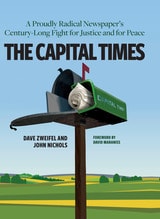
The Capital Times
A Proudly Radical Newspaper’s Century Long Fight for Justice and for PeaceJohn Nichols
Wisconsin Historical Society Press, 2017
As Madison’s Capital Times marks its 100th anniversary in 2017, editors Dave Zweifel and John Nichols recall the remarkable history of a newspaper that served as the tribune of Robert M. La Follette and the progressive movement, earned the praise of Franklin Delano Roosevelt for its stalwart opposition to fascism, battled Joe McCarthy during the "Red Scare," championed civil rights, women’s rights, and LGBTQ rights, opposed the Vietnam War and the invasion of Iraq, and stood with Russ Feingold when he cast the only US Senate vote against the Patriot Act. The Capital Times did not do this from New York or Washington but from the middle of America, with a readership of farmers, factory workers, teachers, and shopkeepers who stood by The Cap Times when the newspaper was boycotted, investigated, and attacked for its determination.
At a point when journalism is under assault, when newspapers struggle to survive, and "old media" struggles to find its way in a digital age, The Capital Times remains unbowed—still living up to the description Lord Francis Williams, the British newspaper editor, wrote 50 years ago: "The vast majority of American papers are as dull as weed-covered ditch-water; vast Saharas of cheap advertising with occasional oases of editorial matter written to bring happiness to the Chamber of Commerce and pain and irritation to none; the bland leading the bland.… Just here and there are a few relics of the old fighting muckraking tradition of American journalism, like The Capital Times of Madison."

The Carter Journals
Time Travels in Early U.S. HistoryShane Phipps
Indiana Historical Society Press, 2014

The Case That Never Dies
The Lindbergh KidnappingLloyd C. Gardner
Rutgers University Press, 2012
Winner of the 2004 New Jersey Studies Academic Alliance Book Award for Scholarly Non-Fiction | Named a 2005 Honor Book by the New Jersey Council for the Humanities
Essential reading for anyone interested in the most famous American crime of the twentieth century
Since its original publication in 2004, The Case That Never Dies has become the standard account of the Lindbergh kidnapping. Now, in a new afterword, historian Lloyd C. Gardner presents a surprise conclusion based on recently uncovered pieces of evidence that were missing from the initial investigation as well as an evaluation of Charles Lindbergh’s role in the search for the kidnappers. Out of the controversies surrounding the actions of Colonel Lindbergh, Norman Schwarzkopf, commander of the New Jersey State Police, and FBI director J. Edgar Hoover, Gardner presents a well-reasoned argument for what happened on the night of March 1, 1932.
The Case That NeverDies places the Lindbergh kidnapping, investigation, and trial in the context of the Depression, when many feared the country was on the edge of anarchy. Gardner delves deeply into the aspects of the case that remain confusing to this day, including Lindbergh’s dealings with crime baron Owney Madden, Al Capone’s New York counterpart, as well as the inexplicable exploits of John Condon, a retired schoolteacher who became the prosecution’s best witness. The initial investigation was hampered by Colonel Lindbergh, who insisted that the police not attempt to find the perpetrator because he feared the investigation would endanger his son’s life. He relented only when the child was found dead.
After two years of fruitless searching, Bruno Richard Hauptmann, a German immigrant, was discovered to have some of the ransom money in his possession. Hauptmann was arrested, tried, and sentenced to death. Throughout the book, Gardner pays special attention to the evidence of the case and how it was used and misused in the trial. Whether Hauptmann was guilty or not, Gardner concludes that there was insufficient evidence to convict him of first-degree murder.
Set in historical context, the book offers not only a compelling read, but a powerful vantage point from which to observe the United States in the 1930s as well as contemporary arguments over capital punishment.
The Cashaway Psalmody
Transatlantic Religion and Music in Colonial CarolinaStephen A. Marini
University of Illinois Press, 2019
Stephen A. Marini, discoverer of The Cashaway Psalmody, offers the fascinating story of the tunebook and its many meanings. From its musical, literary, and religious origins in England, he moves on to the life of Durham Hills; how Carolina communities used the book; and the Psalmody's significance in understanding how ritual song—transmitted via transatlantic music, lyrics, and sacred singing—shaped the era's development. Marini also uses close musical and textual analyses to provide a critical study that offers music historians and musicologists valuable insights on the Pslamody and its period.
Meticulous in presentation and interdisciplinary in scope, The Cashaway Psalmody unlocks an important source for understanding life in the Lower South in the eighteenth century.
The Cast Iron Forest
A Natural and Cultural History of the North American Cross TimbersBy Richard V. Francaviglia
University of Texas Press, 2000
Winner, Friends of the Dallas Public Library Award, Texas Institute of Letters, 2001
A complex mosaic of post oak and blackjack oak forests interspersed with prairies, the Cross Timbers covers a north-south belt of southern Kansas, eastern Oklahoma, and North Central Texas. Home to Native Americans over several thousand years, the Cross Timbers became a barrier to westward expansion in the nineteenth century, until roads and railroads opened it up to farmers and ranchers, coal miners, and modern city developers, all of whom changed its character in far-reaching ways.
This landmark book fully describes the natural environment of the Cross Timbers and the role that people have played in transforming the region. Richard Francaviglia opens with a natural history that discusses the region's geography and geology, vegetation, and climate. He then traces the interaction of people and the landscape, from the earliest Native American inhabitants and European explorers to the developers and residents of today's ever-expanding cities and suburbs. Many historical and contemporary maps and photographs illustrate the text.
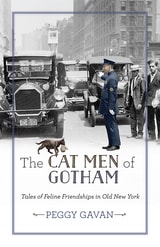
The Cat Men of Gotham
Tales of Feline Friendships in Old New YorkPeggy Gavan
Rutgers University Press, 2019
The nineteenth century was a rough time to be a stray cat in New York City. The city’s human residents dealt with feline overpopulation by gassing unwanted cats or tossing them in rivers. But a few lucky strays were found by a diverse array of men—including firemen, cops, athletes, and politicians—who rescued them from the streets and welcomed them into their homes and hearts.
This book tells the stories of these heroic cat men of Gotham and their beloved feline companions. Not only does it introduce us to some remarkable men, but we get to meet many extraordinary cats as well, from Chinese stowaways prowling the Chelsea Piers to the sole feline survivor of the USS Maine explosion. Among the forty-two profiles, we find many feline Cinderella stories, as humble alley cats achieved renown as sports team mascots, artists’ muses, and even presidential pets.
Sure to appeal to cat fanciers and history fans alike, The Cat Men of Gotham will give you a new appreciation for Old New York and the people and animals who made it their home. As it takes you on a journey through the streets of Manhattan and Brooklyn, it will amuse and astound you with tales of powerful men and their pussycats.
The Center of a Great Empire
The Ohio Country in the Early RepublicAndrew R. L. Cayton
Ohio University Press, 2005
“The people who lived in what became the seventeenth state in the American Union in 1803 were not only at the center of a great empire, they were at the center of the most important historical developments in the revolutionary Atlantic World.”
—From the introduction
Nowhere did the revolutions in politics, commerce, and society in the late eighteenth and early nineteenth centuries occur more quickly or more thoroughly than in the Ohio country. A forested borderland dominated by American Indians in 1780, Ohio was a landscape of farms and towns inhabited by people from all over the world by 1830. The Center of a Great Empire: The Ohio Country in the Early Republic chronicles this dramatic and all-encompassing change.
Andrew R. L. Cayton and Stuart D. Hobbs have assembled an impressive collection of articles by established and rising scholars. They address the conquest of Native Americans, the emergence of a democratic political culture, the origins of capitalism, the formation of public culture, the growth of evangelical Protestantism, the ambiguous status of African Americans, and social life in a place that most regarded as the cutting edge of human history.
For The Center of a Great Empire, distinguished historians of the American nation in its first decades question conventional wisdom. They emphasize contingency rather than inevitability and contention rather than progress. Downplaying the frontier character of Ohio, they offer new interpretations and open new paths of inquiry through investigations of race, education, politics, religion, family, commerce, colonialism, and conquest. As it underscores key themes in the history of the United States, The Center of a Great Empire pursues issues that have fascinated people for two centuries.

The Changing Environment of Northern Michigan
A Century of Science and Nature at the University of Michigan Biological StationKnute J. Nadelhoffer, Alan J. Hogg, Jr., Brian A. Hazlett, editors
University of Michigan Press, 2009
Northern Michigan is undergoing unprecedented changes in land use, climate, resource extraction, and species distributions. For the last hundred years, the University of Michigan Biological Station has monitored these environmental transformations. Stretching 10,000 acres along Burt and Douglas Lakes in the northern Lower Peninsula and 3,200 acres on Sugar Island near Sault Ste. Marie, Michigan, the station has played host to nearly 10,000 students and a steady stream of top scientists in the fields of biology, ecology, geology, archeology, and climatology.
The Changing Environment of Northern Michigan collects essays by some of these scientists, who lead readers on virtual field trips exploring the history of people and science at the station itself, the relations of indigenous people to the land, the geophysical history of the region, characteristics of terrestrial and aquatic ecosystems, key groups of organisms and their relations to local habitats, and perspectives on critical environmental challenges of today and their effects on the region. Accompanying the chapters are color illustrations and photographs that bring the station's pristine setting to life.
Like the station itself, the book provides a solid background for better appreciating the relationships among living and nonliving parts of northern Michigan, for anyone interested in exploring the region's forests, fields, and wetlands; wading or paddling down its rivers; or swimming or floating across its lakes.
Knute J. Nadelhoffer is Director of the University of Michigan Biological Station and Professor of Ecology and Evolutionary Biology at the University of Michigan.
Alan J. Hogg, Jr., teaches science writing at the University of Michigan as a faculty member of the Sweetland Writing Center. His Ph.D. research explored the effects of ozone and nitrogen oxides on University of Michigan Biological Station forests.
Brian A. Hazlett is Professor Emeritus of Zoology at the University of Michigan.
The Changing Face of Inequality
Urbanization, Industrial Development, and Immigrants in Detroit, 1880-1920Olivier Zunz
University of Chicago Press, 1983
The Changing Nature of the Maine Woods
Andrew M. Barton
University of New Hampshire Press, 2012
The Changing Nature of the Maine Woods is both a fascinating introduction to the forests of Maine and a detailed but accessible narrative of the dynamism of these ecosystems. This is natural history with a long view, starting with an overview of the state's geological history, the reemergence of the forest after glacial retreat, and the surprising changes right up to European arrival. The authors create a vivid picture of Maine forests just before the impact of Euro-Americans and trace the profound transformations since settlement.
Ambitious in its geographic range, this book explores how and why Maine forests differ across the state, from the top of Mount Katahdin to the coast. Through groundbreaking research and engaging narratives, the authors assess key ecological forces such as climate change, insects and disease, nonnative organisms, natural disturbance, and changing land use to create a dramatic portrait of Maine forests—past, present, and future.
This book both synthesizes the latest scientific discoveries regarding the changing forest and relates the findings to an educated lay and academic audience.

The Changs Next Door to the Díazes
Remapping Race in Suburban CaliforniaWendy Cheng
University of Minnesota Press, 2013
U.S. suburbs are typically imagined to be predominantly white communities, but this is increasingly untrue in many parts of the country. Examining a multiracial suburb that is decidedly nonwhite, Wendy Cheng unpacks questions of how identity—especially racial identity—is shaped by place. She offers an in-depth portrait, enriched by nearly seventy interviews, of the San Gabriel Valley, not far from downtown Los Angeles, where approximately 60 percent of residents are Asian American and more than 30 percent are Latino. At first glance, the cities of the San Gabriel Valley look like stereotypical suburbs, but almost no one who lives there is white.
The Changs Next Door to the Díazes reveals how a distinct culture is being fashioned in, and simultaneously reshaping, an environment of strip malls, multifamily housing, and faux Mediterranean tract homes. Informed by her interviews as well as extensive analysis of three episodic case studies, Cheng argues that people’s daily experiences—in neighborhoods, schools, civic organizations, and public space—deeply influence their racial consciousness. In the San Gabriel Valley, racial ideologies are being reformulated by these encounters. Cheng views everyday landscapes as crucial terrains through which racial hierarchies are learned, instantiated, and transformed. She terms the process “regional racial formation,” through which locally accepted racial orders and hierarchies complicate and often challenge prevailing notions of race.
There is a place-specific state of mind here, Cheng finds. Understanding the processes of racial formation in the San Gabriel Valley in the contemporary moment is important in itself but also has larger value as a model for considering the spatial dimensions of racial formation and the significant demographic shifts taking place across the national landscape.
The Cherokees of Tuckaleechee Cove
Jon Marcoux
University of Michigan Press, 2012
The Chicago Black Renaissance and Women's Activism
Anne Meis Knupfer
University of Illinois Press, 2006
The book examines various groups of black female activists, including writers and actresses, social workers, artists, school teachers, and women's club members to document the impact of social class, gender, nativity, educational attainment, and professional affiliations on their activism. Together, these women worked to sponsor black history and literature, to protest overcrowded schools, and to act as a force for improved South Side housing and employment opportunities. Knupfer also reveals the crucial role these women played in founding and sustaining black cultural institutions, such as the first African American art museum in the country; the first African American library in Chicago; and various African American literary journals and newspapers. As a point of contrast, Knupfer also examines the overlooked activism of working-class and poor women in the Ida B. Wells and Altgeld Gardens housing projects.

The Chicago Marathon
Andrew Suozzo
University of Illinois Press, 2006
Received the Hal Higdon Journalism Award, recognizing serious journalism about running from the Chicago Area Runners Association (CARA, 2007).
The first book-length study of the city’s great annual contest
In The Chicago Marathon, Andrew Suozzo reveals this citywide ritual as far more than a simple race. Providing a full-spectrum look at the event’s production and participants, Suozzo shows how the elements that comprise the marathon also reflect modern Chicago’s politics, it’s people, and the ways the city engages with the wider world.
The book encompasses all of the forces that come together to make the race the spectacle it has become today. Beginning with a brisk history of the marathon, Suozzo leads readers from its origins in Greek mythology to its modern reality, and also along its rocky road to international prominence. He investigates the roles of sponsorship, small-business support, and the city’s intervention on behalf of the marathon, as well as the alliances the event has forged with the media and charity fundraisers. He also discusses race management and the grassroots support that ultimately make it possible, with a special perspective on the aid station directors and volunteers. Finally, The Chicago Marathon features numerous interviews with the runners themselves, ranging from world-renowned professional athletes to amateurs with diverse backgrounds and abilities.
The Chicago River
A Natural and Unnatural HistoryLibby Hill
Southern Illinois University Press, 2019
This widely acclaimed volume weaves the perspectives of science, engineering, commerce, politics, economics, and the natural world into a chronicle of the river from its earliest geologic history through its repeated adaptations to the city that grew up around it. While explaining the river’s role in massive public works, such as drainage and straightening, designed to address the infrastructure needs of a growing population, Hill focuses on the synergy between the river and the people of greater Chicago, whether they be the tribal cultures that occupied the land after glacial retreat, the first European inhabitants, or more recent residents.
In the first edition, Hill brought together years of original research and the contributions of dozens of experts to tell the Chicago River’s story up until 2000. This revised edition features discussions of disinfection, Asian carp, green strategies, the evolution of the Chicago Riverwalk, and the river’s rejuvenation. It also explores how earlier solutions to problems challenge today’s engineers, architects, environmentalists, and public policy agencies as they address contemporary issues.
Revealing the river to be a microcosm of the uneasy relationship between nature and civilization, The Chicago River offers the tools and knowledge for the city’s residents to be champions on the river’s behalf.
The Chicago River
An Illustrated History and Guide to the River and Its Waterways, Second EditionDavid M. Solzman
University of Chicago Press, 2006
The river is indeed the soul of the city—it runs through the heart of downtown, and it is a vehicle for both pleasure and the industry that keeps Chicago humming. With The Chicago River, Solzman has succeeded in writing an encyclopedic work—at once guidebook and history—that explores the river’s physical character and natural history. Examining the river’s past, contemplating its present, and forecasting its future, Solzman draws on his unparalleled knowledge to point out places of scientific and historic interest—involving everything from infamous murder cases to invasive zebra mussels. The book’s 200 photographs and maps perfectly complement Solzman’s vivid prose, leading readers on a visual journey as sinuous as the river it celebrates—a journey interspersed with plenty of river lore, facts, and literary quotations.
Solzman, a veteran Chicago River tour guide, has also compiled a diverse collection of easy and enjoyable tours for anyone who wants to experience the river by foot, boat, canoe, or car. And he provides an appendix that lists river-related organizations, museums, tours, and riverfront restaurants and clubs.
With practical tips, evocative language, and an astonishing array of anecdotes, TheChicago River is the most comprehensive guide to the river and its waterways, the perfect companion for everyone from the active river enthusiast to the armchair traveler.
The Chief Executive In Texas
A Study in Gubernatorial LeadershipBy Fred Gantt, Jr.
University of Texas Press, 1964
"A Texas governor has only two happy days: the day he is inaugurated and the day he retires."
So spoke Joseph D. Sayers at the beginning of the twentieth century. Now, in an analysis of the Texas governorship by Fred Gantt, Jr., the reader learns why Governor Sayers' remark remains true many years after it was uttered: the office has come to be so demanding that the reader may ask why anyone would want it. Price Daniel described a typical day: "The governor's job is a night-and-day job; I usually get up in the morning about seven and start answering the telephone, and then look over the mail that has come in late the day before. I sign mail before going over to the office and then have interviews most of the day. . . . In the evening at the Mansion I take calls and messages until late in the night."
The Chief Executive in Texas is much more than a book full of interesting facts: It is a discerning political commentary built on a broad historical foundation that places events and persons in a perspective perhaps not previously considered by the reader.
The office of chief executive in other states also is explored, as well as the decline and rise of executive power as it has been limited in various constitutions in Texas and as it has developed through custom. The account of the governor's relationship with the Legislature is historically valuable. Especially interesting to many readers will be the discussions of the political roles of individual Texas governors, whose ranks include "Ma" and "Pa" Ferguson and "Pappy" O'Daniel. These studies are personally revealing, and they attest that polities in Texas apparently can never be dull.
The Chippewa
Biography of a Wisconsin WaterwayRichard D. Cornell
Wisconsin Historical Society Press, 2017
The Chosen Folks
Jews on the Frontiers of TexasBy Bryan Edward Stone
University of Texas Press, 2010
Texas has one of the largest Jewish populations in the South and West, comprising an often-overlooked vestige of the Diaspora. The Chosen Folks brings this rich aspect of the past to light, going beyond single biographies and photographic histories to explore the full evolution of the Jewish experience in Texas.
Drawing on previously unpublished archival materials and synthesizing earlier research, Bryan Edward Stone begins with the crypto-Jews who fled the Spanish Inquisition in the late sixteenth century and then discusses the unique Texas-Jewish communities that flourished far from the acknowledged centers of Jewish history and culture. The effects of this peripheral identity are explored in depth, from the days when geographic distance created physical divides to the redefinitions of "frontier" that marked the twentieth century. The rise of the Ku Klux Klan, the creation of Israel in the wake of the Holocaust, and the civil rights movement are covered as well, raising provocative questions about the attributes that enabled Texas Jews to forge a distinctive identity on the national and world stage. Brimming with memorable narratives, The Chosen Folks brings to life a cast of vibrant pioneers.
The Cincinnati Human Relations Commission
A History, 1943–2013Phillip J. Obermiller
Ohio University Press, 2018
In the summer of 1943, as World War II raged overseas, the United States also faced internal strife. Earlier that year, Detroit had erupted in a series of race riots that killed dozens and destroyed entire neighborhoods. Across the country, mayors and city councils sought to defuse racial tensions and promote nonviolent solutions to social and economic injustices. In Cincinnati, the result of those efforts was the Mayor’s Friendly Relations Committee, later renamed the Cincinnati Human Relations Commission (CHRC).
The Cincinnati Human Relations Commission: A History, 1943–2013, is a decade-by-decade chronicle of the agency: its accomplishments, challenges, and failures. The purpose of municipal human relations agencies like the CHRC was to give minority groups access to local government through internal advocacy, education, mediation, and persuasion—in clear contrast to the tactics of lawsuits, sit-ins, boycotts, and marches adopted by many external, nongovernmental organizations.
In compiling this history, Phillip J. Obermiller and Thomas E. Wagner have drawn on an extensive base of archival records, reports, speeches, and media sources. In addition, archival and contemporary interviews provide first-person insight into the events and personalities that shaped the agency and the history of civil rights in this midwestern city.
The City
Robert E. Park and Ernest W. Burgess
University of Chicago Press, 2019
The City
Robert E. Park and Ernest W. Burgess
University of Chicago Press, 2019
First published in 1925, The City is a trailblazing text in urban history, urban sociology, and urban studies. Its innovative combination of ethnographic observation and social science theory epitomized the Chicago school of sociology. Robert E. Park, Ernest W. Burgess, and their collaborators were among the first to document the interplay between urban individuals and larger social structures and institutions, seeking patterns within the city’s riot of people, events, and influences. As sociologist Robert J. Sampson notes in his new foreword, though much has changed since The City was first published, we can still benefit from its charge to explain where and why individuals and social groups live as they do.
The City Aroused
Queer Places and Urban Redevelopment in Postwar San FranciscoDamon Scott
University of Texas Press, 2023
A history of San Francisco that studies change in the postwar urban landscape in relation to the city's queer culture.
The City Aroused is a lively history of urban development and its influence on queer political identity in postwar San Francisco. By reconstructing the planning and queer history of waterfront drinking establishments, Damon Scott shows that urban renewal was a catalyst for community organizing among racially diverse operators and patrons with far-reaching implications for the national gay rights movement.
Following the exclusion of suspected homosexuals from the maritime trades in West Coast ports in the early 1950s, seamen’s hangouts in the city came to resemble gay bars. Local officials responded by containing the influx of gay men to a strip of bars on the central waterfront while also making plans to raze and rebuild the area. This practice ended when city redevelopment officials began acquiring land in the early 1960s. Aided by law enforcement, they put these queer social clubs out of business, replacing them with heteronormative, desexualized land uses that served larger postwar urban development goals. Scott argues that this shift from queer containment to displacement aroused a collective response among gay and transgender drinking publics who united in solidarity to secure a place in the rapidly changing urban landscape.
The City Moves West
Economic and Industrial Growth in Central West TexasBy Robert L. Martin
University of Texas Press, 1969
Where water supply, railway transportation, and oil reserves have been abundant, towns in central West Texas have prospered; where these resources are few, settlements have maintained only slight growth or disappeared entirely. Supporting his conclusions with profuse statistical evidence, Robert L. Martin traces the economic development of six major towns in the area, all with over 10,000 residents in 1960: Lamesa, Snyder, Sweetwater, Big Spring, Midland, and Odessa.
Ranching brought the first settlers to West Texas in the 1870s and dominated the economy until 1900. In the 1880s farmers began to arrive, and between 1900 and 1930 agricultural production replaced ranching as the most important industry.
With the influx of population came the railroad, and small settlements were established along its route. Those with sufficient water supply prospered and, as counties were organized, became county seats and supply centers for the surrounding agricultural regions.
The land could not support a large agricultural population, and agriculture-related manufactures soon drew population to the towns. However, it was not until the oil discoveries of the 1920's that the modern city emerged. After World War II, oil production and oil-related industries generated great wealth and caused a boom in population growth and urban development. Despite the growth in prosperity, the economy is precariously balanced. Urban centers dependent on oil—an industry of limited life—have matured in an area without sufficient water or agricultural resources to support them. Martin concludes that, without careful planning and a solution to the water problem, these cities could some day become ghost towns on the plains.
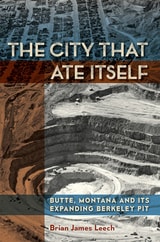
The City That Ate Itself
Butte, Montana and Its Expanding Berkeley PitBrian James Leech
University of Nevada Press, 2018
Brian James Leech provides a social and environmental history of Butte, Montana’s Berkeley Pit, an open-pit mine which operated from 1955 to 1982. Using oral history interviews and archival finds, The City That Ate Itself explores the lived experience of open-pit copper mining at Butte’s infamous Berkeley Pit. Because an open-pit mine has to expand outward in order for workers to extract ore, its effects dramatically changed the lives of workers and residents. Although the Berkeley Pit gave consumers easier access to copper, its impact on workers and community members was more mixed, if not detrimental.
The pit’s creeping boundaries became even more of a problem. As open-pit mining nibbled away at ethnic communities, neighbors faced new industrial hazards, widespread relocation, and disrupted social ties. Residents variously responded to the pit with celebration, protest, negotiation, and resignation. Even after its closure, the pit still looms over Butte. Now a large toxic lake at the center of a federal environmental cleanup, the Berkeley Pit continues to affect Butte’s search for a postindustrial future.
The City in Texas
A HistoryBy David McComb
University of Texas Press, 2015
Texans love the idea of wide-open spaces and, before World War II, the majority of the state’s people did live and work on the land. Between 1940 and 1950, however, the balance shifted from rural to urban, and today 88 percent of Texans live in cities and embrace the amenities of urban culture. The rise of Texas cities is a fascinating story that has not been previously told. Yet it is essential for understanding both the state’s history and its contemporary character.
In The City in Texas, acclaimed historian David G. McComb chronicles the evolution of urban Texas from the Spanish Conquest to the present. Writing in lively, sometimes humorous and provocative prose, he describes how commerce and politics were the early engines of city growth, followed by post–Civil War cattle shipping, oil discovery, lumbering, and military needs. McComb emphasizes that the most transformative agent in city development was the railroad. This technology—accompanied by telegraphs that accelerated the spread of information and mechanical clocks that altered concepts of time—revolutionized transportation, enforced corporate organization, dictated town location, organized space and architecture, and influenced thought. McComb also thoroughly explores the post–World War II growth of San Antonio, Dallas, Fort Worth, Austin, and Houston as incubators for businesses, educational and cultural institutions, and health care centers.
The City, the River, the Bridge
Before and after the Minneapolis Bridge CollapsePatrick Nunnally
University of Minnesota Press, 2011
The City, the River, the Bridge represents another set of responses to the disaster. Stemming from a 2008 University of Minnesota symposium on the bridge collapse and the building of a new bridge, it addresses the ramifications of the disaster from the perspectives of history, engineering, architecture, water science, community-based journalism, and geography. Contributors examine the factors that led to the collapse, the lessons learned from the disaster and the response, the policy and planning changes that have occurred or are likely to occur, and the impact on the city and the Mississippi River. The City, the River, the Bridge demonstrates the University's commitment to issues that concern the community and shares insights on public questions of city building, infrastructure, and design policy.
Contributors: John O. Anfinson; Roberto Ballarini; Heather Dorsey; Thomas Fisher; Minmao Liao; Judith A. Martin; Roger Miller; Mark Pedelty; Deborah L. Swackhamer; Melissa Thompson.
The Civil War in Missouri
A Military HistoryLouis S. Gerteis
University of Missouri Press, 2012
Both the Union and the Confederacy had a vested interest in Missouri throughout the war. The state offered control of both the lower Mississippi valley and the Missouri River, strategic areas that could greatly factor into either side’s success or failure. Control of St. Louis and mid-Missouri were vital for controlling the West, and rail lines leading across the state offered an important connection between eastern states and the communities out west. The Confederacy sought to maintain the Ozark Mountains as a northern border, which allowed concentrations of rebel troops to build in the Mississippi valley. With such valuable stock at risk, Lincoln registered the importance of keeping rebel troops out of Missouri, and so began the conventional battles investigated by Gerteis.
The first book-length examination of its kind, The Civil War in Missouri: A Military History dares to challenge the prevailing opinion that Missouri battles made only minor contributions to the war. Gerteis specifically focuses not only on the principal conventional battles in the state but also on the effects these battles had on both sides’ national aspirations. This work broadens the scope of traditional Civil War studies to include the losses and wins of Missouri, in turn creating a more accurate and encompassing narrative of the nation’s history.
The Civilian Conservation Corps In Arizona's Rim Country
Working In The WoodsRobert J. Moore
University of Nevada Press, 2006
Part of the massive relief effort of Roosevelt’s New Deal, the CCC was created in 1933 to give young men an opportunity to work and make money to help families devastated by the Great Depression, and to participate in forest and conservation projects across the country. In Arizona, thousands of young men, many of them from the industrial Northeast, served in the state’s CCC forest camps. Arizona’s Mogollon Rim is a spectacular expanse of cliffs that slices through half the state, stretching from Sedona eastward to New Mexico. Along with the White Mountains, it includes the largest contiguous forest of ponderosa pine in America. Remote and little-visited in the 1930s, the Rim Country offered copious outlets for the CCC men’s energies: building roads, public campsites, hiking trails, fire lookout towers, and administration buildings; fighting fires; controlling erosion; eliminating vermin; and restoring damaged soils. The CCC enrollees were also given an opportunity to continue interrupted educations, learn useful skills and self-discipline, participate in sports and other leisure activities, and meet local residents. Author Robert J. Moore interviewed a number of CCC veterans who served in the Rim Country, and their stories are part of this book. So too are photographs—many of them from veterans’ personal collections—of Rim Country camps and workers, and such ephemera as camp newspapers. This is an engrossing account of several thousand young men who came to Arizona to escape the misery of the Great Depression, whose work in the woods changed the state, and who in the process were themselves changed. Here is the human face of Arizona’s CCC, the men’s experiences, their work, and their lasting impact on the forests of the Rim Country.
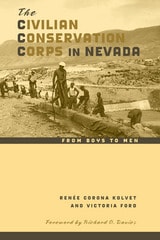
The Civilian Conservation Corps in Nevada
From Boys to MenRenée Corona Kolvet
University of Nevada Press, 2015
The Civilian Conservation Corps in Nevada is the first comprehensive history of the Nevada CCC, a program designed to help the nation get back on its feet, and of the “boys” who did so much to restore Nevada’s lands and resources. The book is based on extensive research in private manuscript collections, unpublished memoirs, CCC inspectors’ reports, and other records. The book also includes period photographs depicting the Nevada CCC and its activities.
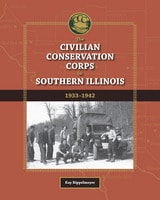
The Civilian Conservation Corps in Southern Illinois, 1933-1942
Kay Rippelmeyer
Southern Illinois University Press, 2015
Drawing on more than thirty years of meticulous research, Kay Rippelmeyer details the Depression-era history of the simultaneous creation of the Civilian Conservation Corps (CCC) and the Shawnee National Forest in southern Illinois. Through the stories of the men who worked in CCC camps devoted to soil and forest conservation projects, she offers a fascinating look into an era of utmost significance to the identity, citizens, wildlife, and natural landscape of the region.
Rippelmeyer outlines the geologic and geographic history of southern Illinois, from Native American uses of the land to the timber industry’s decimation of the forest by the 1920s. Detailing both the economic hardships and agricultural land abuse plaguing the region during the Depression, she reveals how the creation of the CCC under Franklin Delano Roosevelt coincided with the regional campaign for a national forest and how locals first became aware of and involved with the program.
Rippelmeyer mined CCC camp records from the National Archives, newspaper accounts and other correspondence and conducted dozens of oral interviews with workers and their families to re-create life in the camps. An extensive camp compendium augments the volume, featuring numerous photographs, camp locations and dates of operation, work history, and company rosters. Satisfying public curiosity and the need for factual information about the camps in southern Illinois, this is an essential contribution to regional history and a window to the national impact of the CCC.
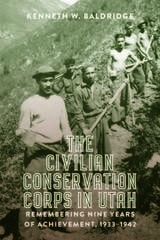
The Civilian Conservation Corps in Utah
Remembering Nine Years of Achievement, 1933-1942Kenneth W. Baldridge
University of Utah Press, 2018
Copublished with the Utah State Historical Society. Affiliated with the Utah Division of State History, Utah Department of Heritage & Arts
“There was a certain magic about sending young men into the woods. It was not so much man against nature as it was man in league with nature against the economic troubles that were then stalking the land.”—from the book
In 1932, unemployment in Utah was about 34 percent. Nearly every state west of the Mississippi River was struggling not only with unemployment but also with drought, erosion, and overgrazing. To solve these serious difficulties, President Franklin D. Roosevelt launched what would become arguably the most popular of his New Deal programs—the Civilian Conservation Corps (CCC). From 1933 to 1942, the CCC employed three million young men on land-improvement projects that are still used today.
In this book, Kenneth Baldridge chronicles the work of the 10,000 men who served at Utah’s 116 CCC camps. With facts and anecdotes drawn from camp newspapers, government files, interviews, letters written by enrollees, and other sources, he situates the CCC within the political climate and details not only the projects but also the day-to-day aspects of camp life. For thirty dollars a month—of which twenty-five was sent home to their folks—these young recruits planted trees; built roads, bridges, dams, and trails; fought fires; battled pests and noxious weeds; and erected cabins, campgrounds, amphitheaters, and reservoirs, and more.
Today the CCC is credited with creating greater public awareness and appreciation of the outdoors. It has also served as a model for the Student Conservation Corps and other youth programs. This volume documents the public good created by the CCC, provides an extensive bibliography, and is illustrated with numerous historic and modern photos.
The Civilian Conservation Corps in Wisconsin
Nature’s Army at WorkJerry Apps
Wisconsin Historical Society Press, 2019
The Clays of Alabama
A Planter-Lawyer-Politician FamilyRuth Ketring Nuermberger
University of Alabama Press, 1958
Of unique interest to the student of nineteenth century America is this account of the Alabama Clays, who in their private life were typical of the slaveholding aristocracy of the old South, but as lawyer-politicians played significant roles in state and national politics, in the development of the Democratic party, and in the affairs of the Confederacy.
In the period from 1811 to 1915, the Clays were involved in many of the great problems confronting the South. This study of the Clay family includes accounts of the wartime legislation of the Confederate Congress and the activities of the Confederate Commission in Canada. Equally interesting to many readers will be the intimate view of social life in ante-bellum Washington and the story of the domestic struggles of a plantation family during and after the war, as revealed through the letters of Clement Claiborne Clay and his wife Virginia.
The Clifton-Morenci Strike
Labor Difficulty in Arizona, 1915–1916James R. Kluger
University of Arizona Press, 1970
Coming at a time when western labor was purging itself of radicalism and recharting its goals, the Clifton-Morenci strike may well have been that "milestone" in organized labor's groping for recognition in the West. Violence did not erupt- this notable absence of bloodshed thereby making the strike unique in that time of industrial turbulence.
Kluger's answer to the question of why and how peace prevailed is significant reading. Strikers and managers hurled charges at each other, but both sides showed restraint when it came to action. When negotiations reached an impasse, Gov. George W. P. Hunt moved to prevent the managers from importing strike-breakers. At the same time, the Department of Labor entered the situation, and the rise in copper prices and loss of wages made a settlement desirable for both sides.
When the mine whistles blew on January 26, 1916, to signal the end of the strike, the repercussions of the events of 1915 were still to be felt. Author Kluger traces how the strike affected working conditions, wages, and the cause of unionism in the district. Overall, he provides insight into feelings concerning the fears of management regarding unionism, and labor's manner of making itself heard during these years.
Western historians, labor historians, and all those concerned with labor relations will recognize the importance of this highly readable work.
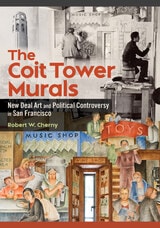
The Coit Tower Murals
New Deal Art and Political Controversy in San FranciscoRobert W. Cherny
University of Illinois Press, 2024
Created in 1934, the Coit Tower murals were sponsored by the Public Works of Art Project (PWAP), the first of the New Deal art programs. Twenty-five master artists and their assistants worked there, most of them in buon fresco, Nearly all of them drew upon the palette and style of Diego Rivera. The project boosted the careers of Victor Arnautoff, Lucien Labaudt, Bernard Zakheim, and others, but Communist symbols in a few murals sparked the first of many national controversies over New Deal art.
Sixty full-color photographs illustrate Robert Cherny’s history of the murals from their conception and completion through their evolution into a beloved San Francisco landmark. Cherny traces and critiques the treatment of the murals by art critics and historians. He also probes the legacies of Coit Tower and the PWAP before surveying San Francisco’s recent controversies over New Deal murals.
An engaging account of an artistic landmark, The Coit Tower Murals tells the full story behind a public art masterpiece.
The Collected Works of Benjamin Hawkins, 1796–1810
Benjamin Hawkins, edited and with an introduction by H. Thomas Foster, II
University of Alabama Press, 2003
In 1795 Benjamin Hawkins, a former US senator and advisor to George Washington, was appointed US Indian agent and superintendent of all the tribes south of the Ohio River. Unlike most other agents, he lived among the Creek Indians for his entire tenure, from 1796 to 1816. Journeying forth from his home on the Flint River in Georgia, he served southeastern Indians as government intermediary during one of the longest eras of peace in the historic period.
Hawkins’s journals provide detailed information about European-Indian relations in the 18th-century frontier of the South. His descriptions of the natural and cultural environment are considered among the best sources for the ethnohistory of the Choctaw, Cherokee, Chickasaw, and, especially, the Creek Indians and the natural history of their territory.
Two previously published bodies of work by Benjamin Hawkins are included here—A Sketch of the Creek Country in the Years 1798 and 1799 and The Letters of Benjamin Hawkins 1796-1806. A third body of work that has never been published, “A Viatory or Journal of Distances” (describing routes and distances of a 3,578-mile journey through parts of Georgia, Alabama, and Mississippi), has been added. Together, these documents make up the known body of Hawkins’ work—his talks, treaties, correspondence, aboriginal vocabularies, travel journals, and records of the manners, customs, rites, and civil polity of the tribes. Hawkins' work provides an invaluable record of the time period.
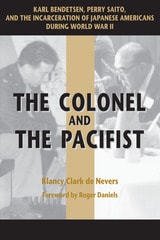
The Colonel and The Pacifist
Klancy Clark De Nevers
University of Utah Press, 2004
The Colonel and the Pacifist tells the story of two men caught up in one of the most infamous episodes in American history. While they never met, Bendetsen and Saito’s lives touched tangentially—from their common hometown to their eventual testimony during the 1981 hearings of the Commission on the Wartime Relocation and Internment of Civilians. In weaving together these contrasting stories, Klancy Clark de Nevers not only exposes unknown or little known aspects of World War II history, she also explores larger issues of racism and war that resonate through the years and ring eerily familiar to our post-9/11 ears.
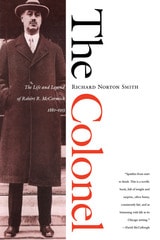
The Colonel
The Life and Legend of Robert R. McCormick, 1880-1955Richard Norton Smith
Northwestern University Press, 2003
This is the acclaimed biography of a giant of American journalism. As editor-publisher of the Chicago Tribune, Robert R. McCormick came to personify his city. Drawing on McCormick's personal papers and years of research, Richard Norton Smith has written the definitive life of the towering figure known as The Colonel.
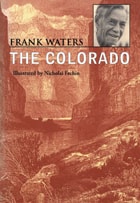
The Colorado
Frank Waters
Ohio University Press, 1985
The vast Colorado River collects water from the highest Rocky Mountain peaks and traverses the widest plateaus, the deepest canyons, and the lowest deserts before emptying into the delta of northern Mexico. This austere land and mighty river resist exploration, settlement, and description. But in the hands of one of the West’s great writers, Frank Waters, the history and lore of its past make irresistible reading and a resounding case for mankind’s respect for the environment.
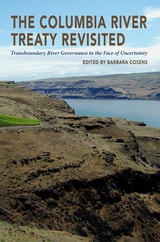
The Columbia River Treaty Revisited
Transboundary River Governance in the Face of UncertaintyEdited by Barbara Cosens
Oregon State University Press, 2012
The Columbia River Treaty Revisited, with contributions from historians, geographers, environmental scientists, and other experts, is intended to facilitate conversation about the impending expiration. It allows the reader, through the close inspection of the Columbia River Basin, to better grasp the uncertainty of water governance. It aids efforts, already underway, to understand changes in the basin since the treaty was passed, to predict future changes, and to determine whether alteration of the treaty is ultimately advisable.
The Columbia River Treaty Revisited will appeal to those interested in water basin management–scholars, stakeholders, and residents of the Columbia River basin alike.
A Project of the Universities Consoritum on Columbia River Governance
The Universities Consortium on Columbia River Governance, with representatives from universities in the U.S. and Canada, formed to offer a nonpartisan platform to facilitate an informed, inclusive, international dialogue among key decision-makers and other interested people and organizations; to connect university research to problems faced within the basin; and to expose students to a complex water resources problem. The Consortium organized the symposium on which this volume is based.

The Combat Zone
Murder, Race, and Boston's Struggle for JusticeJan Brogan
University of Massachusetts Press, 2021
At the end of the 1976 football season, more than forty Harvard athletes went to Boston's Combat Zone to celebrate. In the city's adult entertainment district, drugs and prostitution ran rampant, violent crime was commonplace, and corrupt police turned the other way. At the end of the night, Italian American star athlete Andy Puopolo, raised in the city's North End, was murdered in a stabbing. Three African American men were accused of the crime. His murder made national news and led to the eventual demise of the city's red-light district.
Starting with this brutal murder, The Combat Zone tells the story of the Puopolo family's struggle with both a devastating loss and a criminal justice system that produced two trials with opposing verdicts, all within the context of a racially divided Boston. Brogan traces the contentious relationship between Boston’s segregated neighborhoods during the busing crisis; shines a light on a court system that allowed lawyers to strike potential jurors based purely on their racial or ethnic identity; and lays bare the deep-seated corruption within the police department and throughout the Combat Zone. What emerges is a fascinating snapshot of the city at a transitional moment in its recent past.
The Communist Party in Maryland, 1919-57
Vernon L. Pedersen
University of Illinois Press, 2001
Bolsheviks in Baltimore charts the uneven transformation of Baltimore's fledgling Communists into underground revolutionaries in the 1920s. Pedersen documents the mercurial careers of local organizers, their devotion to the Soviet cause, and their efforts to convert the Party from a hodgepodge of ethnic groups to an effective instrument of class interests. He also tracks the public's changing perception of the Communists, from amused unconcern to alarm, and details how the Ober antisubversive law and the HUAC hearings of the 1950s dismantled the Party from without while planting seeds of paranoia that destroyed it from within.
Behind the public fear of a Communist conspiracy against the U.S. government, Pedersen finds a party fractured by conflicting agendas, ineffectual leadership, and unstable membership. However, he also uncovers new evidence that Communists in the United States, acting on Soviet orders, used their influence in unions and front groups to sway American foreign policy in ways that benefited the Soviet Union. He documents the consolidation of an espionage apparatus in Baltimore and demonstrates that while espionage activities may have involved only a few individuals, all Party members shared an attitude of willing support for the activities of the Soviet Union that made these covert practices possible.
Paying tribute to the fervor and the effort dedicated by the Maryland Communists, often at the expense of their own physical and financial well-being, to a cause that ultimately failed them, Bolsheviks in Baltimore assesses an ambiguous legacy of admirable social vision, haphazard international conspiracy, and fierce internal conflict.
The Confederados
Old South Immigrants in BrazilCyrus B. Dawsey
University of Alabama Press, 1998
The story of exiles from the Confederate South who fled to Brazil after the US Civil War. The collection includes a previously unpublished narrative by an original settler
In the wake of the American Civil War, thousands of disillusioned Southerners sought refuge far from Reconstruction’s reach—many found it in Brazil. The Confederados is a compelling exploration of this little-known migration, tracing the journey of Confederate exiles who forged new lives in the sugarcane fields of São Paulo. Through vivid personal narratives, scholarly essays, and rare archival insights, this volume uncovers the cultural, agricultural, and religious legacy these settlers left behind.
From the harrowing voyage of Sarah Bellona Smith Ferguson to the enduring traditions of the Campo chapel, the book reveals how these Americans shaped—and were shaped by—their Brazilian surroundings. It examines their impact on education, Protestantism, and farming, and how their descendants maintain a distinct identity more than a century later.
Richly illustrated and deeply researched, The Confederados is essential reading for anyone interested in Southern history, diaspora studies, or the global echoes of the Civil War. This is not just a story of exile—it’s a testament to resilience, adaptation, and the enduring ties between two nations.
The Conquest of The Illinois
George Rogers Clark. Foreword by Rand Burnette
Southern Illinois University Press, 2001
Written only a decade after George Rogers Clark’s conquest of Illinois, this firsthand account shows the region as it existed in the 1770s, explains how British occupation affected Kentucky settlers, and exhibits Clark’s enormous diplomatic skills in convincing the French settlers and Indians along the rivers of Illinois that they were better off under the jurisdiction of the Americans rather than the British. In his new foreword to this book, Rand Burnette refers to Clark as a psychologist and an expert in human relations.
Believing the British responsible for Indian raids on the people of Kentucky, Clark determined to capture that area, which was claimed by his home state of Virginia. “His plan, which he presented to Governor Patrick Henry,” Burnette notes, “was to take possession of the Illinois country by defeating the British at Kaskaskia, win the support of the French in that area, and thus control both the Mississippi and the Ohio Rivers. The British support of the Indians, who raided the Kentucky settlements from the Illinois country, would be at an end.”
Clark’s stirring narrative—written between 1789 and 1791 and covering 1773–1779—chronicles the events in the Old Northwest in the second half of the eighteenth century. Life on the frontier was dangerous and uncertain at this time. As Clark points out and Milo Milton Quaife underlines in his footnotes, death came to many at the hands of Indians or in military battles and skirmishes.
First published in 1920 and long out of print, the Quaife edition of Clark’s The Conquest of The Illinois reprinted here is for the modern reader superior to the original. First, Quaife provided an index. Equally important for modern readers, he standardized Clark’s spelling. (Clark had little formal education, and his spelling was even more eccentric than that found in a typical eighteenth-century account.) Finally, Quaife’s footnotes often include biographical sketches of the people in the book.
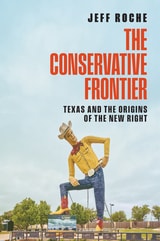
The Conservative Frontier
Texas and the Origins of the New RightJeff Roche
University of Texas Press, 2025
2026 Al Lowman Memorial Prize, Texas State Historical Association (TSHA)
2026 Bonney MacDonald Outstanding Book Award Winner, Center for the Study of the American West at West Texas A&M University (CSAW)
How West Texas business and culture molded the rise of conservatism in the United States.
Much of what we understand as modern American political conservatism was born in West Texas, where today it predominates. How did the people of such a vast region—larger than New England and encompassing big cities like Lubbock and Amarillo, as well as tiny towns from Anson to Dalhart—develop such a uniform political culture? And why and how did it go national?
Jeff Roche finds answers in the history of what he calls cowboy conservatism. Political power players matter in this story, but so do football coaches, newspaper editors, and a breakfast cereal tycoon who founded a capitalist utopia. The Conservative Frontier follows these and other figures as they promoted an ideology grounded in the entrepreneurial and proto-libertarian attitudes of nineteenth-century Texas ranchers, including a fierce devotion to both individualism and small-town notions of community responsibility. This political sensibility was in turn popularized by its association with the mythology and iconography of the cowboy as imagined in twentieth-century mass media. By the 1970s and the rise of Ronald Reagan, Roche shows, it was clear that the cowboy conservatism of West Texas had set the stage for the emergence of the New Right—the more professionalized and tech-savvy operation that dominated national conservative politics for the next quarter century.
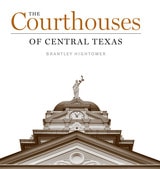
The Courthouses of Central Texas
By Brantley Hightower
University of Texas Press, 2015
The county courthouse has long held a central place on the Texas landscape—literally, as the center of the town in which it is located, and figuratively, as the symbol of governmental authority. As a county’s most important public building, the courthouse makes an architectural statement about a community’s prosperity and aspirations—or the lack of them. Thus, a study of county courthouses tells a compelling story about how society’s relationships with public buildings and government have radically changed over the course of time, as well as how architectural tastes have evolved through the decades.
A first of its kind, The Courthouses of Central Texas offers an in-depth, comparative architectural survey of fifty county courthouses, which serve as a representative sample of larger trends at play throughout the rest of the state. Each courthouse is represented by a description, with information about date(s) of construction and architects, along with a historical photograph, a site plan of its orientation and courthouse square, and two- and sometimes three-dimensional drawings of its facade with modifications over time. Side-by-side drawings and plans also facilitate comparisons between courthouses. These consistently scaled and formatted architectural drawings, which Brantley Hightower spent years creating, allow for direct comparisons in ways never before possible. He also explains the courthouses’ formal development by placing them in their historical and social context, which illuminates the power and importance of these structures in the history of Texas, as well as their enduring relevance today.
The Crable Site, Fulton County, Illinois
A Late Prehistoric Site in the Central Illinois ValleyHale Gilliam Smith
University of Michigan Press, 1951
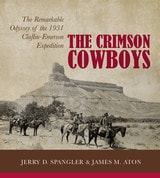
The Crimson Cowboys
The Remarkable Odyssey of the 1931 Claflin-Emerson ExpeditionJerry D. Spangler and James M. Aton
University of Utah Press, 2018
In 1931 a group from Harvard University’s Peabody Museum accomplished something that had never been attempted in the history of American archaeology: a six-week, four-hundred-mile horseback survey of Fremont prehistoric sites through some of the West’s most rugged terrain. The expedition was successful, but a report on the findings was never completed. What should have been one of the great archaeological stories in American history was relegated to boxes and files in the basement of the Peabody Museum at Harvard.
Now, based on over a thousand pages of documents (field journals, correspondence, and receipts) and over four hundred photographs, this book recounts the remarkable day-to-day adventures of this crew of one professor, five students, and three Utah guides who braved heat, fatigue, and the dangerous canyon wilderness to reveal vestiges of the Fremont culture in the Tavaputs Plateau and Uinta Basin areas. To better tell this story, authors Spangler and Aton undertook extensive fieldwork to confirm the sites; their recent photographs and those of the original expedition are shared on these pages. This engaging narrative situates the 1931 survey and its discoveries within the history of American archaeology.
Click here for a podcast with the APEX hour and Jim Aton about The Crimson Cowboys.
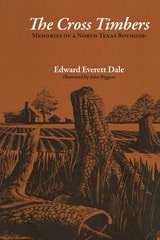
The Cross Timbers
Memories of a North Texas BoyhoodBy Edward Everett Dale
University of Texas Press, 1966
The activities of a young boy on a small farm in the Texas Cross Timbers during the 1880s seem especially distant today. No one can remember the adventure of a sixteen-and-a-half-mile journey, which consumed the greater part of a day; or hurried predawn dressing in a frosty cold loft while the fragrance of a hearty breakfast wafted upward through the floor cracks; or a two-room schoolhouse, where the last half of Friday afternoon was given over to “speaking pieces” or to spelling and ciphering matches.
Through the recollections of Edward Everett Dale we are able to view a pattern of life in rural America now gone forever. For The Cross Timbers is a story which, with but a few minor variations, could have been told about a vast number of small boys on farms cleared from the virgin forests in the timbered regions of many states.
After presenting a brief introduction to the members of the Dale family and the plant, animal, and bird life of the Lower Cross Timbers countryside, the author describes his boyhood of a past century. He tells of his home, its furnishings, and the food served there, as well as the neighbors and relatives who come to visit. We learn of the superstitions, the humorous homespun expressions, the mores of early rural Texans. We hunt and fish with young Master Dale in the thick woods and along the clear creeks. Pioneer life demanded much hard work, but not to the exclusion of a diverting social life—both of which included the youngsters, as the author so graphically relates. Dale tells us also of the religious and secular education of the era, showing the significance of the home in supplementing these two influences.
Anyone reading this volume must be impressed by the great differences in the lifeways of rural children today and of those of the end of the nineteenth century.