Results by title
28167 books match the query 'History' and 6372 start with t
The First World War and Its Aftermath
The Shaping of the Modern Middle EastEdited by T.G. Fraser
Gingko, 2024
In addition to recounting the crucial international politics that drew fierce lines in the sands of the Middle East—a story of intrigue between the British, Russians, Ottomans, North Africans, Americans, and others—the contributors engage topics ranging from the war’s effects on women, the experience of the Kurds, sectarianism, the evolution of Islamism, and the importance of prominent intellectuals like Ziya Gökalp and Michel ‘Aflaq. They examine the dissolution of the Ottoman Empire, the exploitation of notions of Islamic unity and pan-Arabism, the influences of Woodrow Wilson and American ideals on Middle East leaders, and likewise the influence of Vladimir Lenin’s vision of a communist utopia. Altogether, they tell a story of promises made and promises broken, of the struggle between self-determination and international recognition, of centuries-old empires laying in ruin, and of the political poker of the twentieth century that carved up the region, separating communities into the artificial states we know today.
The First and Second Sikh Wars
Reginald George Burton
Westholme Publishing, 2008
The First and Second Sikh Wars of the 1840s were the final battles that secured British domination of the Indian subcontinent for the next century. Noted for both their brutality and sophistication in tactics—with large-scale cavalry clashes, sieges, and artillery and infantry engagements—the wars against the Sikh principalities not only handed control of India to Great Britain, but the defeated Sikh armies ended up becoming some of the most loyal and ablest soldiers of the British Empire. The lessons from these wars also influenced changes in British military policy and strategies, particularly against indigenous peoples. In 1911, the British Army command asked its historical branch in India to prepare a military history of the Sikh Wars. The result, The First and Second Sikh Wars, is a publication rich in detail and analysis and a treasure trove of background information about the British Army in India, Sikh culture at the time, and the battles of Ferozeshah, Aliwal, Chillianwala, and Gujrat. Despite the importance of these wars in the history of both the nineteenth century and the modern era, there are no similar complete narrative accounts of these conflicts available that rely on official records of the period. This facsimile is enhanced by historian Jon Coulston's new introduction and suggestions for further reading.
The Fisher Site
Archaeological, Geological and Paleobotanical Studies at an Early Paleo-Indian Site in Southern Ontario, CanadaPeter L. Storck
University of Michigan Press, 1997
The Fishermen, the Horse, and the Sea
Barbara Joosse
Wisconsin Historical Society Press, 2021
This beautifully illustrated children’s book based on a true story recounts a dramatic rescue on Lake Michigan and introduces young readers to Lester Smith and his family, who founded Port Washington’s long-running and beloved Smith Bros. Fish Shanty. Educational materials including definitions, an illustrated map of Lake Michigan, and short biographies of the story’s featured characters supplement this engaging story for elementary-age readers.
The Fishing Creek Confederacy
A Story of Civil War Draft ResistanceRichard A. Sauers and Peter Tomasak
University of Missouri Press, 2012
Governor Andrew Gregg Curtin of Pennsylvania was a staunch supporter of the Lincoln administration. The commonwealth supplied more than 360,000 white soldiers and 9,000 black soldiers during the conflict. However, there was sustained opposition to the war throughout the state, much of it fanned by the pens of Democratic newspaper editors. Though most opposition was disorganized and spontaneous, other aspects of the antiwar sentiment in the state occasionally erupted as major incidents.
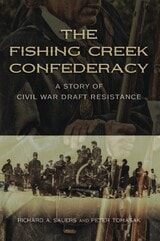
In The Fishing Creek Confederacy, Richard A. Sauers and Peter Tomasak address the serious opposition to the draft in Columbia County, Pennsylvania, in 1864. Egged on by the anti-Lincoln newspaper editors, a number of men avoided the draft and formed ad hoc groups to protect themselves from arrest. The shooting of a Union lieutenant confronting draft evaders in July 1864 resulted in military intervention in the northern townships of the county. The troops arrested more than one hundred men, sending about half of them to a prison fort near Philadelphia. Some of these men were subjected to military trials in Harrisburg, the state capital, that fall and winter. The arrests led to bitter feelings that were slow to die. The military intervention eventually impacted a Pennsylvania gubernatorial election and led to a murder trial.
Sauers and Tomasak describe the draft in Pennsylvania and consider how Columbia County fit into the overall draft process. Subsequent chapters take the reader through the events of the summer of 1864, including the interaction of soldiers and civilians in the county, the prison experiences of the men, and the trials. Later chapters cover the August 1865 Democratic rally at Nob Mountain and the effects of the draft episode after the war was over, including its influence on the 1872 election for governor, the 1891 murder trial, and the formation of the official Democratic version of the events, which has been used by historians ever since.
The Fishing Creek Confederacy is the first book to address this episode and its aftermath in their entirety. Sauers and Tomasak present the story and try to disentangle the often contradictory nature of the sources and how both amateur and professional historians have used them.
The Fishing Line
A History of the Grand Rapids & Indiana RailroadGraydon M. Meints
Michigan State University Press, 2018

The Fixer
Visa Lottery ChroniclesCharles Piot with Kodjo Nicolas Batema
Duke University Press, 2019

The Fixers
Devolution, Development, and Civil Society in Newark, 1960-1990Julia Rabig
University of Chicago Press, 2016
Rabig argues that fixers play dual roles. They support resistance, but also mediation; they fight for reform, but also more radical and far-reaching alternatives; they rally others to a collective cause, but sometimes they broker factions. Fixers reflect longer traditions of organizing while responding to the demands of their times. In so doing, they end up fixing (like a fixative) a new and enduring pattern of activist strategies, reforms, and institutional expectations—a pattern we continue to see today.
The Flag on the Hilltop
Mary Tracy Earle
Southern Illinois University Press, 1989
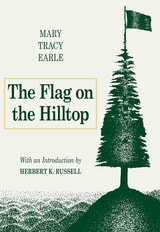
Early in the Civil War, two young brothers boldly flew the Union flag from a tree atop a hill between Makanda and Cobden. This was a towering act of courage in an area teeming with Copperheads.
Theodore and Al Thompson, 18 and 20 years old at the time, raised the flag in defiance of the Knights of the Golden Circle, a secessionist group that operated throughout the Midwest. Controlling its membership through terror, this secret society condemned betrayers to death by torture. The Knights, whose goals included capturing a Union prison and liberating the rebels, triggered the Civil War riot in Charleston, instigated anti-draft movements, and aided Northern deserters.
Theodore Thompson, who later owned much of Makanda, Giant City, and the land that became Southern Illinois University describes the tree as a "tall tulip poplar between 3 and 4 feet in diameter at the trunk and some 60 feet to the first limbs. This noted tree could be seen in some directions 15 or 20 miles away."
The Flash Press
Sporting Male Weeklies in 1840s New YorkPatricia Cline Cohen, Timothy J. Gilfoyle, Helen Lefkowitz Horowitz, in association with the American Antiquarian Society
University of Chicago Press, 2008
The Flash of Capital
Film and Geopolitics in JapanEric Cazdyn
Duke University Press, 2002
Cazdyn focuses on three key moments of historical contradiction: colonialism, post-war reconstruction, and globalization. Considering great classics of Japanese film, documentaries, works of science fiction, animation, and pornography, he brings to light cinematic attempts to come to terms with the tensions inherent in each historical moment—tensions between the colonizer and the colonized, between the individual and the collective, and between the national and the transnational. Paying close attention to political context, Cazdyn shows how formal inventions in the realms of acting, film history and theory, thematics, documentary filmmaking, and adaptation articulate a struggle to solve implacable historical problems. This innovative work of cultural history and criticism offers explanations of historical change that challenge conventional distinctions between the aesthetic and the geopolitical.

The Flavor of Wisconsin
An Informal History of Food and Eating in the Badger StateHarva Hachten
Wisconsin Historical Society Press, 2023
While in many ways the first edition of The Flavor of Wisconsin has stood the test of time very well, food-related culture and business have changed immensely in the twenty-five years since its publication. Well-known regional food expert and author Terese Allen examines aspects of food, cooking, and eating that have changed or emerged since the first edition, including the explosion of farmers' markets; organic farming and sustainability; the "slow food" movement; artisanal breads, dairy, herb growers, and the like; and how relatively recent immigrants have contributed to Wisconsin's remarkably rich food scene.

The Flight Across The Ice
The Escape of the East Prussian HorsesPatricia Clough
Haus Publishing, 2010
The Floating University
Experience, Empire, and the Politics of KnowledgeTamson Pietsch
University of Chicago Press, 2023
In 1926, New York University professor James E. Lough—an educational reformer with big dreams—embarked on a bold experiment he called the Floating University. Lough believed that taking five hundred American college students around the globe by ship would not only make them better citizens of the world but would demonstrate a model for responsible and productive education amid the unprecedented dangers, new technologies, and social upheavals of the post–World War I world. But the Floating University’s maiden voyage was also its last: when the ship and its passengers returned home, the project was branded a failure—the antics of students in hotel bars and port city back alleys that received worldwide press coverage were judged incompatible with educational attainment, and Lough was fired and even put under investigation by the State Department.
In her new book, Tamson Pietsch excavates a rich and meaningful picture of Lough’s grand ambition, its origins, and how it reveals an early-twentieth-century America increasingly defined both by its imperialism and the professionalization of its higher education system. As Pietsch argues, this voyage—powered by an internationalist worldview—traced the expanding tentacles of US power, even as it tried to model a new kind of experiential education. She shows that this apparent educational failure actually exposes a much larger contest over what kind of knowledge should underpin university authority, one in which direct personal experience came into conflict with academic expertise. After a journey that included stops at nearly fifty international ports and visits with figures ranging from Mussolini to Gandhi, what the students aboard the Floating University brought home was not so much knowledge of the greater world as a demonstration of their nation’s rapidly growing imperial power.

The Floating University
Experience, Empire, and the Politics of KnowledgeTamson Pietsch
University of Chicago Press, 2023
This is an auto-narrated audiobook edition of this book.
The Floating University sheds light on a story of optimism and imperialist ambition in the 1920s.In 1926, New York University professor James E. Lough—an educational reformer with big dreams—embarked on a bold experiment he called the Floating University. Lough believed that taking five hundred American college students around the globe by ship would not only make them better citizens of the world but would demonstrate a model for responsible and productive education amid the unprecedented dangers, new technologies, and social upheavals of the post–World War I world. But the Floating University’s maiden voyage was also its last: when the ship and its passengers returned home, the project was branded a failure—the antics of students in hotel bars and port city back alleys that received worldwide press coverage were judged incompatible with educational attainment, and Lough was fired and even put under investigation by the State Department.
In her new book, Tamson Pietsch excavates a rich and meaningful picture of Lough’s grand ambition, its origins, and how it reveals an early-twentieth-century America increasingly defined both by its imperialism and the professionalization of its higher education system. As Pietsch argues, this voyage—powered by an internationalist worldview—traced the expanding tentacles of US power, even as it tried to model a new kind of experiential education. She shows that this apparent educational failure actually exposes a much larger contest over what kind of knowledge should underpin university authority, one in which direct personal experience came into conflict with academic expertise. After a journey that included stops at nearly fifty international ports and visits with figures ranging from Mussolini to Gandhi, what the students aboard the Floating University brought home was not so much knowledge of the greater world as a demonstration of their nation’s rapidly growing imperial power.
The Flock
Mary Austin
University of Nevada Press, 2001
The Floracrats
State-Sponsored Science and the Failure of the Enlightenment in IndonesiaAndrew Goss
University of Wisconsin Press, 2011
Situated along the line that divides the rich ecologies of Asia and Australia, the Indonesian archipelago is a hotbed for scientific exploration, and scientists from around the world have made key discoveries there. But why do the names of Indonesia’s own scientists rarely appear in the annals of scientific history? In The Floracrats Andrew Goss examines the professional lives of Indonesian naturalists and biologists, to show what happens to science when a powerful state becomes its greatest, and indeed only, patron.
With only one purse to pay for research, Indonesia’s scientists followed a state agenda focused mainly on exploiting the country’s most valuable natural resources—above all its major export crops: quinine, sugar, coffee, tea, rubber, and indigo. The result was a class of botanic bureaucrats that Goss dubs the “floracrats.” Drawing on archives and oral histories, he shows how these scientists strove for the Enlightenment ideal of objective, universal, and useful knowledge, even as they betrayed that ideal by failing to share scientific knowledge with the general public. With each chapter, Goss details the phases of power and the personalities in Indonesia that have struggled with this dilemma, from the early colonial era, through independence, to the modern Indonesian state. Goss shows just how limiting dependence on an all-powerful state can be for a scientific community, no matter how idealistic its individual scientists may be.
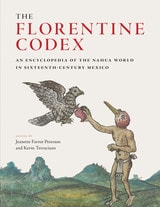
The Florentine Codex
An Encyclopedia of the Nahua World in Sixteenth-Century MexicoEdited by Jeanette Favrot Peterson and Kevin Terraciano
University of Texas Press, 2019
Honorable Mention, 2021 LASA Mexico Humanities Book Prize, Latin American Studies Association, Mexico Section
In the sixteenth century, the Franciscan friar Bernardino de Sahagún and a team of indigenous grammarians, scribes, and painters completed decades of work on an extraordinary encyclopedic project titled General History of the Things of New Spain, known as the Florentine Codex (1575–1577). Now housed in the Biblioteca Medicea Laurenziana in Florence and bound in three lavishly illustrated volumes, the codex is a remarkable product of cultural exchange in the early Americas.
In this edited volume, experts from multiple disciplines analyze the manuscript’s bilingual texts and more than 2,000 painted images and offer fascinating, new insights on its twelve books. The contributors examine the “three texts” of the codex—the original Nahuatl, its translation into Spanish, and its painted images. Together, these constitute complementary, as well as conflicting, voices of an extended dialogue that occurred in and around Mexico City. The volume chapters address a range of subjects, from Nahua sacred beliefs, moral discourse, and natural history to the Florentine artists’ models and the manuscript’s reception in Europe. The Florentine Codex ultimately yields new perspectives on the Nahua world several decades after the fall of the Aztec empire.

The Florida Room
Alexandra T. Vazquez
Duke University Press, 2022

The Florida of the Inca
By Garcilaso de la Vega
University of Texas Press, 1951
Perhaps the most amazing thing of all about Garcilaso de la Vega's epic account of the De Soto expedition is the fact that, although it is easily the first great classic of American history, it had never before received a complete or otherwise adequate English translation in the 346 years which have elapsed since its publication in Spanish. Now the Inca's thrilling narrative comes into its own in the English speaking world.
Hernando de Soto's expedition for the conquest of North America was the most ambitious ever to brave the perils of the New World. Garcilaso tells in remarkably rich detail of the conquistadors' wanderings over half a continent, of the unbelievable vicissitudes which beset them, of the Indians whom they sought to win for King and Church and by whose hands most of them died, of De Soto's death, and of the final pitiful failure of the expedition.
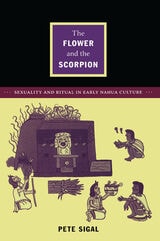
The Flower and the Scorpion
Sexuality and Ritual in Early Nahua CulturePete Sigal
Duke University Press, 2011

The Flowers Along the Way
A MemoirClaudia Castro Luna
Northwestern University Press, 2026
Passionately demonstrating the dormant trauma of political violence and the redemption waiting beyond it
From El Salvador’s lush countryside to the streets of Oakland, California, a young mother wrestles with the intersecting forces of memory, history, and language in order to chart a new path for herself and her growing family. Fleeing political unrest and civil war violence in El Salvador, fourteen-year-old Claudia Castro Luna arrived in the United States with her family in 1981. Two decades later, holding her two-year-old and pregnant with her second child, she survives a public shooting by hiding behind shrubs in front of her house in Oakland. This event unleashes disorienting and traumatic memories, plunging her into a journey of discovery as she grapples with PTSD, recovers family stories, and begins to make sense of all that was torn asunder within her by the experiences of war and emigration. Beauty, longing, fear, and joy entwine in this powerful story of love, self-determination, and the search for home.

The Flowery Death
The Image of Death in the Nahua Songs of Cantares MexicanosKatarzyna Szoblik
University Press of Colorado, 2026
The Flowery Death is a groundbreaking exploration of xochimiquiztli, or “flowery death,” a central concept in the pre-Hispanic Nahua worldview. In the highly militarized societies of the Valley of Mexico, dying in honor of the gods—on the battlefield, in ritual sacrifice, or in childbirth—was not only a social expectation but also a path to spiritual glory. While this idea appears throughout colonial sources, previous studies have relied largely on the writings of Bernardino de Sahagún and other European chroniclers, whose perspectives often simplify or distort Indigenous understandings.
Drawing on the rich oral tradition preserved in the sixteenth-century manuscript Cantares Mexicanos, this book provides one of the first English translations of these songs since John Bierhorst’s 1985 translation. It combines paleographic fidelity, literal English translation, and detailed interpretation, revealing the metaphor- and symbol-rich meanings behind the songs. The book is divided into two interrelated parts: The first reconstructs the Nahua worldview, contextualizing war, death, and sacrifice through myths, chronicles, and visual sources; the second presents selected songs, offering readers the tools to understand their metaphors, historical references, and symbolic language, making the work both a scholarly reference and an accessible guide for students and enthusiasts.
By examining the cultural, religious, and social significance of xochimiquiztli, The Flowery Death provides fresh insights into Nahua ideology, gender roles, and collective memory. It is essential reading for anyone interested in Mesoamerican culture, early colonial history, and the power of Indigenous oral traditions.
The Folds of Parnassos
Land and Ethnicity in Ancient PhokisBy Jeremy McInerney
University of Texas Press, 2000
Independent city-states (poleis) such as Athens have been viewed traditionally as the most advanced stage of state formation in ancient Greece. By contrast, this pioneering book argues that for some Greeks the ethnos, a regionally based ethnic group, and the koinon, or regional confederation, were equally valid units of social and political life and that these ethnic identities were astonishingly durable.
Jeremy McInerney sets his study in Phokis, a region in central Greece dominated by Mount Parnassos that shared a border with the panhellenic sanctuary at Delphi. He explores how ecological conditions, land use, and external factors such as invasion contributed to the formation of a Phokian territory. Then, drawing on numerous interdisciplinary sources, he traces the history of the region from the Archaic age down to the Roman period. McInerney shows how shared myths, hero cults, and military alliances created an ethnic identity that held the region together over centuries, despite repeated invasions. He concludes that the Phokian koinon survived because it was founded ultimately on the tenacity of the smaller communities of Greece.

The Follinglo Dog Book
A Norwegian Pioneer Story from IowaPeder Gustav Tjernagel
University of Iowa Press, 1999
The Follinglo Dog Book both is and is not about dogs. The dogs are certainly here: from Milla to Chip the Third, we encounter a procession of heroic if often unfortunate creatures who, along with their immigrant masters, led a hard life on the nineteenth-century American frontier. However, if you pick up this book thinking it will offer a heartwarming read about canine experiences, you will find yourself reinformed by the way it unfolds.
Instead, these are the stories of a Norwegian pioneer family that came in 1860 to settle the Iowa prairie on a homestead called Follinglo Farm in Story County, Iowa. In the Tjernagels' experience one may read a chronicle of the state, the region, and the nation. Arriving in Iowa in what was still the age of wooden equipment and animal power, the Tjernagels witnessed each successive revolution on the land. They built homes and barns, cultivated the land, and encountered every manner of natural disaster from prairie fires to blizzards. Through all the struggles and setbacks, Peder Gustav Tjernagel's stories sparkle with boyhood pranks and adventures, in which the family dogs frequently play a role.
Readers will discover a wonderful cast of Norwegian relatives and neighbors, including a Herculean uncle, Store Per (Big Pete), who could lift a cow by its horns; a mysterious aunt, Stora Fastero (Big Sister), whose arrival signaled that a baby was soon to be born; and Elling Eilson, the walking Lutheran apostle. And, of course, there are the dogs who shepherd, protect, and even baby-sit the residents of Follinglo Farm.

The Food Lovers' Anthology
A Literary CompendiumEdited by the Bodleian Library
Bodleian Library Publishing, 2014
“He was a bold man that first ate an oyster.”—Jonathan Swift
“There is no love sincerer than the love of food,” wrote George Bernard Shaw in 1903. Poets, novelists, chefs, and gourmands before and after him would seem to agree. Collected in this anthology is a mouthwatering selection of excerpts on the subject of eating, drinking, cooking, and serving food that is guaranteed to whet every reader’s appetite.
Themed sections group together poetry and prose on grapes and bottles, the ideal cuisine, hangover cures, and vivid vignettes about dinner party behavior. There are stories about food fit for kings, a duchess’s “rumblings abdominal,” fine dining, eating abroad, cooking at home, and gastronomic excesses. A section on food and travel features Edmund Hillary’s meal at the summit of Everest, Ernest Shackleton’s dish of penguin in the Antarctic, and Joshua Slocum on the unfortunate effects of cheese and plums while sailing solo around the world. Also on the menu are limericks, short-tempered cooks, recipes, fantasy food, special feasts, iron rations, tips on opening oysters, and the uses and abuses of coffee.
Featuring writers as diverse as Jean Anthelme Brillat-Savarin, Edward Lear, John Keats, Charles Dickens, Maria Edgeworth, and Marcel Proust, garnished with a generous helping of cartoons, this is a perfect gift for foodies, chefs, picnickers, and epicurean explorers.
The Footsteps of Israel
Understanding Jews in Anglo-Saxon EnglandAndrew P. Scheil
University of Michigan Press, 2004
The Forayers
or The Raid of the Dog DaysWilliam Gilmore Simms
University of Arkansas Press, 2003

The Forbidden Worlds of Haruki Murakami
Matthew Carl Strecher
University of Minnesota Press, 2014
In an “other world” composed of language—it could be a fathomless Martian well, a labyrinthine hotel or forest—a narrative unfolds, and with it the experiences, memories, and dreams that constitute reality for Haruki Murakami’s characters and readers alike. Memories and dreams in turn conjure their magical counterparts—people without names or pasts, fantastic animals, half-animals, and talking machines that traverse the dark psychic underworld of this writer’s extraordinary fiction.
Fervently acclaimed worldwide, Murakami’s wildly imaginative work in many ways remains a mystery, its worlds within worlds uncharted territory. Finally in this book readers will find a map to the strange realm that grounds virtually every aspect of Murakami’s writing. A journey through the enigmatic and baffling innermost mind, a metaphysical dimension where Murakami’s most bizarre scenes and characters lurk, The Forbidden Worlds of Haruki Murakami exposes the psychological and mythological underpinnings of this other world. Matthew Carl Strecher shows how these considerations color Murakami’s depictions of the individual and collective soul, which constantly shift between the tangible and intangible but in this literary landscape are undeniably real.
Through these otherworldly depths The Forbidden Worlds of Haruki Murakami also charts the writer’s vivid “inner world,” whether unconscious or underworld (what some Japanese critics call achiragawa, or “over there”), and its connectivity to language. Strecher covers all of Murakami’s work—including his efforts as a literary journalist—and concludes with the first full-length close reading of the writer’s newest novel, Colorless Tsukuru Tazaki and His Years of Pilgrimage.
The Ford Administration and Anglo-American Relations
Re-Valuing an Interim PresidencySteve Marsh, Robert M. Hendershot and Tia Culley
University of Michigan Press, 2026
In the shadow of Watergate and the Vietnam War, Gerald Ford’s presidency has long been dismissed as little more than an interim administration. Yet the administration and its British counterparts worked to manage economic crises, Cold War tensions, and international flashpoints, while also harnessing cultural diplomacy to sustain transatlantic partnership. Drawing on newly declassified archival sources and fresh historical analysis, The Ford Administration and Anglo-American Relations shows how Ford’s years in office (1974–77) were pivotal in reshaping the US–UK special relationship at a moment of global turbulence.
Organized thematically rather than chronologically, the authors examine eight dimensions of Anglo-American relations under Ford: the inheritance of transatlantic tensions from the Nixon era; cultural and societal links beyond the state; the significance of Ford’s personal diplomacy; negotiations over defense and security; transformations in international economic relations and the birth of the G6/G7; cooperation through multilateral institutions such as NATO and the UN; joint management of crises in Cyprus and Rhodesia to the sterling currency crisis; and the cultural diplomacy of the 1976 Bicentennial, when Queen Elizabeth II’s state visit symbolized renewed unity between former adversaries. By highlighting both the challenges and the resilience of Anglo-American ties, this book recasts a neglected presidency as a crucial bridge between the crises of the Nixon years and the celebrated Reagan–Thatcher era. Accessible yet deeply researched, it is a work that will appeal to anyone interested in how two nations, facing uncertainty at home and abroad, turned to multilateral cooperation, culture, and public diplomacy to navigate the upheavals of the 1970s.
The Ford Century in Minnesota
Brian McMahon
University of Minnesota Press, 2016
In 1903, before the Ford Motor Company was even incorporated, Stephen Tenvoorde signed a contract to sell “Fordmobiles” at his bicycle shop in St. Cloud, Minnesota. Four generations later, the Tenvoorde family still operates what is now the oldest Ford dealership in the world. Brian McMahon chronicles how the fortunes of the company and the state became intertwined during that century.
Ford assembled Model T cars in the world’s tallest automobile plant in Minneapolis and a three-story structure in St. Paul—both still standing. These factories quickly became functionally obsolete after the development of the moveable assembly line. The hunt for a new site to build a modern, single-story plant stirred intense rivalry between Minneapolis and St. Paul. Henry Ford took a rare personal interest in the search and selected a 125-acre parcel in St. Paul overlooking the recently built High Dam on the Mississippi River, which allowed for navigation and hydroelectric power. The Twin Cities Assembly Plant would go on to manufacture millions of cars, trucks, tractors, and military vehicles until its closure in 2011.
Henry Ford’s large-scale experiments with every aspect of the industrial economy sent ripples and shockwaves through the lives of Minnesotans—management and assembly line workers, dealers and customers, families and communities. First-person accounts of more than forty retired auto workers share what it was like to work at Ford—from the early years of the Minneapolis plant to the final hours of the Twin Cities Assembly Plant in St. Paul. McMahon documents the company’s transformation—through the Depression, the rise of the United Auto Workers Union, World War II, women joining the workforce, competition from imported cars, globalization, outsourcing, and the closing of the plant.
This publication was made possible in part by the people of Minnesota through a grant funded by an appropriation to the Minnesota Historical Society from the Minnesota Arts and Cultural Heritage Fund. Any views, findings, opinions, conclusions or recommendations expressed in this publication are those of the authors and do not necessarily represent those of the State of Minnesota, the Minnesota Historical Society, or the Minnesota Historic Resources Advisory Committee.
The Foreign Missionary Enterprise at Home
Explorations in North American Cultural HistoryEdited by Daniel H. Bays and Grant Wacker
University of Alabama Press, 2010
This volume is the first to examine at length and in detail the impact of the missionary experience on American cultural, political, and religious history.
This collection of 15 essays provides a fully developed account of the domestic significance of foreign missions from the 19th century through the Vietnam War. U.S. and Canadian missions to China, South America, Africa, and the Middle East have, it shows, transformed the identity and purposes of their mother countries in important ways. Missions provided many Americans with their first significant exposure to non-Western cultures and religions. They helped to establish a variety of new academic disciplines in home universities—linguistics, anthropology, and comparative religion among them. Missionary women helped redefine gender roles in North America, and missions have vitalized tiny local churches as well as entire denominations, causing them to rethink their roles and priorities, both here and abroad. In fact, missionaries have helped define our own national identity by influencing our foreign, trade, military, and immigration policies over the last two centuries.
Topics in the collection range from John Saillant's essay on the missions of free African Americans to Liberia in the 19th century to Grant Wacker's essay on the eventual disillusionment of noted writer Pearl S. Buck. Kathryn T. Long’s essay on the “Auca martyrs” offers a sobering case study of the missionary establishment's power to, in tandem with the evangelical and secular press, create and record the stories of our time. William L. Svelmoe documents the improbable friendship between fundamentalist Bible translator William Cameron Townsend and Mexico’s secular socialist president Lázaro Cárdenas. And Anne Blue Wills details the ways many American groups—black, Protestant, Catholic, and Mormon—sought to convert one another, stead-
fastly envisioning “others” as every bit as “heathen” as those in far-off lands.
The Foreign Missionary Enterprise at Home is an insightful, provocative collection that will stimulate much discussion and debate. It is valuable for academic libraries and seminaries, scholars of religious history and American studies, missionary groups, cultural historians and ethnographers, and political scientists.

The Foreign and Domestic Dimensions of Modern Warfare
Vietnam, Central America, and Nuclear StrategyHoward Mumford Jones
University of Alabama Press, 1988
An exploration of the nuclear arms race and the dangers arising with the advent of “limited warfare”
After the development of the atomic bomb in 1945, Americans became engaged in a "new kind of war" against totalitarianism. Enemies and objectives slipped out of focus, causing political and military aims to mesh as a struggle to contain communism both at home and abroad encompassed civilians as well as soldiers. In matters relating to Vietnam, Central America, and the nuclear arms race, the domestic and foreign dimensions of each issue became inseparable. Policymakers in Washington had to formulate strategies dictated by "limited war" in their search for peace.
Contributors to this volume demonstrate the multifaceted nature of modern warfare. Robert H. Ferrell establishes the importance of studying military history in understanding the post-World War II era. On Vietnam, Colonel Harry G. Summers, Jr., gives an intriguing argument regarding the U. S. Army; George C. Herring examines how America's decisions in 1954 assured deepened involvement; and Captain Mark Clodfelter uncovers new evidence concerning "Linebacker I." On the home front, Robert F. Burk analyzes the impact of the Cold War on the battle for racial justice; Charles DeBenedetti puts forth a challenging interpretation of the antiwar movement; and James C. Schneider provides perspective on the relationship between the Vietnam War and the Great Society. On Central America, two writers downplay communism in explaining the region's troubles. Ralph Lee Woodward, Jr., fits the Nicaraguan revolution in the long span of history, and Thomas M. Leonard shows how the Reagan administration forced Costa Rica to side with the United States's anti-Sandinista policy. Finally, on nuclear strategy, Donald M. Snow offers a thought-provoking assessment of the "star wars" program, and Daniel S. Papp recommends measures to promote understanding among the superpowers.
These essays demonstrate that the making of foreign policy is immensely complicated, not subject to easy solution or to simple explanation. Despite these complexities, the central objective of policymakers remained clear: to safeguard what was perceived as the national interest.

The Forests of Michigan
Donald I. Dickmann and Larry A. Leefers
University of Michigan Press, 2003
No book currently on bookstore shelves explores, as The Forests of Michigan does, the natural history, ecology, management, economic importance, and use of the rich and varied forests that cover about half of the state's 36.3 million acres. The authors look at the forests, where they are, how they got to be, and their present-day usage, using the story of Michigan forests as a backdrop for the state's history, including its archaeology.
The Forests of Michigan explores how the forests came back after the great Wisconsin glacier began to recede over 12,000 years ago, and how they recovered from the onslaught of unrestrained logging and wildfire that, beginning in the mid-1800s, virtually wiped them out. The emphasis of the book is on sustaining for the long term the forests of the state, with a view of sustainability that builds not only upon the lessons learned from native peoples' attitude and use of trees but also on the latest scientific principles of forest ecology and management.
Generously illustrated and written in an engaging style, The Forests of Michigan sees the forest and the trees, offering both education and delight. "As forest scientists," the authors note, "we opted for a hearty serving of meat and potatoes; anyone who reads this book with the intention of learning something will not be disappointed. Nonetheless, we do include some anecdotal desserts, too."
Donald I. Dickmann is Professor of Forestry at Michigan State University and holds a doctorate from the University of Wisconsin. He is the author of The Culture of Poplars. Larry A. Leefers is Associate Professor in the Department of Forestry at Michigan State University. He holds a doctorate from Michigan State University.
The Forge
Thomas S. Stribling
University of Alabama Press, 1985
The first book in T. S. Stribling's award-winning Vaiden Trilogy about life in north Alabama at the onset, during, and after the Civil War
Originally published in 1931, The Forge introduces the Vaiden family, residents of the rural north Alabama of Stribling’s own youth. The Vaidens are a family of white yeoman farmers who scratch out a living in the social and financial shadow of the Lacefields, masters of an opulent plantation nearby.
The novel opens on Alabama’s secession and the onset of the Civil War. It traces the story of Miltiades Vaiden, who enlists in the Confederate army, and explores the ways the Vaidens, Lacefields, and freed slaves attempt to adapt to the collapse of southern society on the home front.
After The Forge, Stribling continued the Vaiden saga in 1932 with The Store, which earned him the Pulitzer Prize. He completed the trilogy in 1934 with The Unfinished Cathedral. Together, the three books paint a portrait of the agrarian South of the mid-nineteenth century, its destruction, and the beginnings of a mercantile future.
The Forge and the Crucible
The Origins and Structure of AlchemyMircea Eliade
University of Chicago Press, 1979
The new edition of The Forge and the Crucible contains an updated appendix, in which Eliade lists works on Chinese alchemy published in the past few years. He also discusses the importance of alchemy in Newton's scientific evolution.
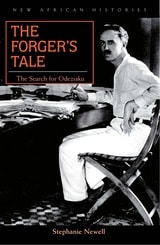
The Forger’s Tale
The Search for OdeziakuStephanie Newell
Ohio University Press, 2006
Between 1905 and 1939 a conspicuously tall white man with a shock of red hair, dressed in a silk shirt and white linen trousers, could be seen on the streets of Onitsha, in Eastern Nigeria. How was it possible for an unconventional, boy-loving Englishman to gain a social status among the local populace enjoyed by few other Europeans in colonial West Africa?
In The Forger’s Tale: The Search for Odeziaku Stephanie Newell charts the story of the English novelist and poet John Moray Stuart-Young (1881–1939) as he traveled from the slums of Manchester to West Africa in order to escape the homophobic prejudices of late-Victorian society. Leaving behind a criminal record for forgery and embezzlement and his notoriety as a “spirit rapper,” Stuart-Young found a new identity as a wealthy palm oil trader and a celebrated author, known to Nigerians as “Odeziaku.”
In this fascinating biographical account, Newell draws on queer theory, African gender debates, and “new imperial history” to open up a wider study of imperialism, (homo)sexuality, and nonelite culture between the 1880s and the late 1930s. The Forger’s Tale pays close attention to different forms of West African cultural production in the colonial period and to public debates about sexuality and ethics, as well as to movements in mainstream English literature.
The Forgotten Army
India's Armed Struggle for Independence 1942-1945Peter Ward Fay
University of Michigan Press, 1995
The Forgotten Frontier
A History of the Sixteenth-Century Ibero-African FrontierAndrew C. Hess
University of Chicago Press, 1978
The sixteenth-century Mediterranean witnessed the expansion of both European and Middle Eastern civilizations, under the guises of the Habsburg monarchy and the Ottoman empire. Here, Andrew C. Hess considers the relations between these two dynasties in light of the social, economic, and political affairs at the frontiers between North Africa and the Iberian peninsula.
The Forgotten Frontier
Colonist and Khoisan on the Cape's Northern Frontier in the 18th CenturyNigel Penn
Ohio University Press, 2006
Traditionally, the Eastern Cape frontier of South Africa has been regarded as the preeminent contact zone between colonists and the Khoi (“Hottentots”) and San (“Bushmen”). But there was an earlier frontier in which the conflict between Dutch colonists and these indigenous herders and hunters was in many ways more decisive in its outcome, more brutal and violent in its manner, and just as significant in its effects on later South African history.
This was the frontier north of Cape Town, where Dutch settlers began advancing into the interior. By the end of the eighteenth century, the frontier had reached the Orange (Gariep) River. The indigenous Khoisan people, after initial resistance, had been defeated and absorbed as an underclass into the colonial world or else expelled beyond it, to regions where new creole communities emerged.
Nigel Penn is a master storyteller who brings a novelist’s sensitivity to plot and character and a command of the archival record to bear in recovering this epic and forgotten story. Filled with extraordinary personalities and memorable episodes, and set in the often harsh landscape of the Western and Northern Cape, The Forgotten Frontier will appeal both to the general reader and to the student of history.
The Forgotten Generation
American Children and World War IILisa L. Ossian
University of Missouri Press, 2021
The Forgotten Kingdom
The Archaeology and History of Northern IsraelIsrael Finkelstein
SBL Press, 2013
A new understanding of the history of the northern kingdom from 1350 B.C.E. to 720 B.C.E.
Beginning with the Canaanite city-states, through the Saulide dynasty, to the fall of Israel, Finkelstein presents the first comprehensive history of Israel integrating the analysis of more than thirty years of archaeological work with interpretation of ancient Near Eastern and biblical texts. Though Judah dominates the pages of the Hebrew Bible and contemporary studies, Israel dominates here as Finkelstein reveals the glory of the Omride dynasty, outlines how the two kingdoms of Israel and Judah developed parallel to one another, and highlights Israel’s transformation from kingdom to foundational idea.
Features:
- Archaeological analysis of the region of the northern kingdom
- Primary and secondary textual analysis from the ancient Near East and the biblical narrative
- Maps, tables, and images
- Discussion of Israel’s legacy
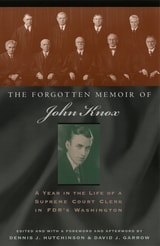
The Forgotten Memoir of John Knox
A Year in the Life of a Supreme Court Clerk in FDR's WashingtonJohn Knox
University of Chicago Press, 2002
When John Frush Knox (1907-1997) wrote these words, he was in the middle of law school, and his attempt at surpassing Pepys—part scrapbook, part social commentary, and part recollection—had already reached 750 pages. His efforts as a chronicler might have landed in a family attic had he not secured an eminent position after graduation as law clerk to Justice James C. McReynolds—arguably one of the most disagreeable justices to sit on the Supreme Court—during the tumultuous year when President Franklin D. Roosevelt tried to "pack" the Court with justices who would approve his New Deal agenda. Knox's memoir instead emerges as a record of one of the most fascinating periods in American history.
The Forgotten Memoir of John Knox—edited by Dennis J. Hutchinson and David J. Garrow—offers a candid, at times naïve, insider's view of the showdown between Roosevelt and the Court that took place in 1937. At the same time, it marvelously portrays a Washington culture now long gone. Although the new Supreme Court building had been open for a year by the time Knox joined McReynolds' staff, most of the justices continued to work from their homes, each supported by a small staff. Knox, the epitome of the overzealous and officious young man, after landing what he believes to be a dream position, continually fears for his job under the notoriously rude (and nakedly racist) justice. But he soon develops close relationships with the justice's two black servants: Harry Parker, the messenger who does "everything but breathe" for the justice, and Mary Diggs, the maid and cook. Together, they plot and sidestep around their employer's idiosyncrasies to keep the household running while history is made in the Court.
A substantial foreword by Dennis Hutchinson and David Garrow sets the stage, and a gallery of period photos of Knox, McReynolds, and other figures of the time gives life to this engaging account, which like no other recaptures life in Washington, D.C., when it was still a genteel southern town.
The Forgotten Network
DuMont and the Birth of American TelevisionDavid Weinstein
Temple University Press, 2006
The Forgotten Sense
Meditations on TouchPablo Maurette
University of Chicago Press, 2018
The Forgotten Sense gives touch its due, addressing it in multifarious ways through a series of six essays. Literary in feel, ambitious in conception, admirable in their range of reference and insight, these meditations address questions fundamental to the understanding of touch: What do we mean when we say that an artwork touches us? How does language affect our understanding of touch? Is the skin the deepest part of the human body? Can we philosophize about a kiss? To aid him in answering these questions, Pablo Maurette recruits an impressive roster of cultural figures from throughout history: Homer, Lucretius, Chrétien de Troyes, Melville, Sir Thomas Browne, Knausgaard, Michel Henry and many others help him unfurl the underestimated importance of the sense of touch and tactile experience.
The resulting book is essay writing at its best—exploratory, surprising, dazzling, a reading experience like no other. You will come away from it with a new appreciation of touch, and a new way of understanding our interactions with the world around us.
The Formation of Christendom
Christopher Dawson
Catholic University of America Press, 2026
The Formation of a Modern Rabbi
The Life and Times of the Viennese Scholar and Preacher Adolf JellinekSamuel Joseph Kessler
SBL Press, 2022
An intellectual biography that critically engages Adolf Jellinek’s scholarship and communal activities
Adolf Jellinek (1821–1893), the Czech-born, German-educated, liberal chief rabbi of Vienna, was the most famous Jewish preacher in Central Europe in the second half of the nineteenth century. As an innovative rhetorician, Jellinek helped mold and define the modern synagogue sermon into an instrument for expressing Jewish religious and ethical values for a new era. As a historian, he made groundbreaking contributions to the study of the Zohar and medieval Jewish mysticism. Jellinek was emblematic of rabbi-as-scholar-preacher during the earliest, formative years of communal synagogues as urban religious space. In a world that was rapidly losing the felt and remembered past of premodern Jewish society, the rabbi, with Jellinek as prime exemplar, took hold of the Sabbath sermon as an instrument to define and mold Judaism and Jewish values for a new world.

The Formative Period in Alabama, 1815-1828
Thomas Abernethy, with an introduction by David T. Morgan
University of Alabama Press, 1995
The Formative Period in Alabama, 1815-1828 is a beautifully crafted history of the evolution of the state written by Thomas Perkins Abernethy in 1922. The work shows how Alabama grew out of the Mississippi Territory and discusses the economic and political development during the years just before and just after Alabama became a state.
The Former “Yugoslavia Tribunal” as Monument of Justice
History, Heritage and Memory of the ICTY and IRMCT in the City of Peace and JusticeRob van der Laarse
Amsterdam University Press, 2025
The Formless Empire
A Short History of Diplomacy and Warfare in Central AsiaChristopher Mott
Westholme Publishing, 2015
Central Asia, a vast region extending from eastern Russia and across Kazakhstan, Uzbekistan, Turkmenistan, Afghanistan, Tajikistan, Kyrgystan, Mongolia, and western China, has its own tradition of foreign policy rooted in the ancient nomadic culture of many of its peoples as well as the region’s distinctive geography. From the thundering hooves of Mongol or Cossack cavalry across the steppes to the clanking of tanks on parade in Moscow or Beijing, elements of this system still cast a shadow on the region at the heart of Earth’s largest continent. By tracing the evolution of Central Asian warfare and diplomacy through a series of historical examples, ranging from the ancient Xiongnu people and medieval Mongol Empire to the fall of the Soviet Union, historian Christopher Mott argues that the original system of informal relationships, indirect rule, and rapid military movement did not entirely fade from the region with the eclipse of the nomadic powers during the Middle Ages. In fact, many states like China, Iran, and Russia had already been influenced by nomadic people, and in so doing adapted their own diplomatic and military policies accordingly. The Formless Empire: A Short History of Diplomacy and Warfare in Central Asia is an engaging study of the nature of non-Western imperialism and great-power strategy. In addition, the book demonstrates that regional histories can show us the variety of political possibilities in the past and how they were adapted to changing circumstances—a point made even more important by the rapid changes facing global security and new forms of empire building.
“Christopher Mott’s extremely erudite and wide-ranging examination of the history of Central Asia shows us that we have been far too narrow-minded and Eurocentric in thinking about power and how the global system changes historically. Given the current interest in ‘caliphates’ we need to reflect on the history of the areas of the world that dance to a different historical drum than we do in the West.” —Andrew John Williams, author of France, Britain, and the United States in the Twentieth Century