Results by title
22279 books match the query 'Social Science' and 4007 start with t
The Middle Works of John Dewey, Volume 12, 1899 - 1924
Essays, Miscellany, and Reconstruction in Philosophy Published during 1920John Dewey. Edited by Jo Ann Boydston
Southern Illinois University Press, 2008
A collection of all of Dewey’s writings for 1920 with the exception of Letters from China and Japan. A Modern Language Association Committee on Scholarly Editions textual edition.
The nineteen items collected here, including his major work, Reconstruction in Philosophy, evolved in the main from Dewey’s travel, touring, lecturing, and teaching in Japan and China. Ralph Ross notes in his Introduction to this volume that Reconstruction in Philosophy is “a radical book . . . a pugnacious book by a gentle man.” It is in this book that Dewey summarizes his version of pragmatism, then called Instrumentalism. For Dewey, the pragmatist, it was people acting on the strength of intelligence modeled on science who could find true ideas, ones “we can assimilate, validate, corroborate, and verify.” Optimism pervades Reconstruction of Philosophy; in keeping with Dewey’s world of open possibilities, the book recognizes that the observation and thought of human striving can make the difference between despair and affirmation of life.
The seven essays on Chinese politics and social tradition that Dewey sent back from the Orient exhibit both the liveliness and the sensitive power of an insightful mind. Set against a backdrop of Japanese hegemony in China, the last days of Manchu imperialism, Europe’s carving of China into concessions, and China’s subsequent refusal to accept the terms of the Treaty of Versailles, the essays were startlingly relevant in this time of Eastern turbulence and change.
At the National University of Peking, Dewey delivered a series of lectures on “Three Contemporary Philosophers: William James, Henri Bergson, and Bertrand Russell.” The James and Bergson lectures are published for the first time in this volume. Dewey chose these philosophers, according to Ralph Ross, because he was trying to show “his oriental audience what he believed and hoped about man and society and was talking about those fellow philosophers who shared the same beliefs and hopes.”
The Middle Works of John Dewey, Volume 15, 1899 - 1924
Journal Articles, Essays, and Miscellany Published in the 1923-1924 PeriodJohn Dewey. Edited by Jo Ann Boydston
Southern Illinois University Press, 2008
Volume 15 in The Middle Works of John Dewey, 1899–1924, series brings together Dewey’s writings for the period 1923–1924. A Modern Language Association Committee on Scholarly Editions textual edition.
Volume 15 completes the republication of Dewey’s extensive writings for the 25-year period included in the Middle Works series. Many facets of Dewey’s interests—politics, philosophy, education, and social concerns—are illuminated by the 40 items from 1923 and 1924.
Inspired by his own convictions and those of his friend Salmon O. Levinson, founder of the American Committee for the Outlawry of War, Dewey’s articles became the keystone of the committee’s campaign to outlaw war. His essay, “Logical Method and Law,” is perhaps the most enduring of Dewey’s writings in this volume. Dewey’s philosophical discussions with Daniel Sommer Robinson, David Wight Prall, Arthur Oncken Lovejoy, and Sterling Power Lamprecht are represented here, as is Dewey’s assessment of the Turkish educational system.
The Middle Works of John Dewey, Volume 2, 1899 - 1924
Journal Articles, Book Reviews, and Miscellany in the 1902-1903 Period, and Studies in Logical Theory and The Child and the CurriculumJohn Dewey
Southern Illinois University Press, 2008
Includes the complete text of Dewey’s Studies in Logical Theory and The Child and the Curriculum.
The Middle Works of John Dewey, Volume 3, 1899 - 1924
Journal Articles, Book Reviews, and Miscellany in the 1903-1906 PeriodJohn Dewey. Edited by Jo Ann Boydston
Southern Illinois University Press, 2008
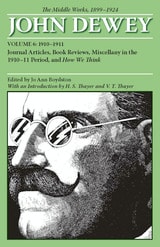
The Middle Works of John Dewey, Volume 6
Journal Articles, Book Reviews, Miscellany in the 1910-1911 Period, and How We ThinkJohn Dewey. Edited by Jo Ann Boydston
Southern Illinois University Press, 2008
William James, remarking in 1909 on the differences among the three leading spokesmen for pragmatism—himself, F. C. S. Schiller, and John Dewey—said that Schiller’s views were essentially “psychological,” his own, “epistemological,” whereas Dewey’s “panorama is the widest of the three.”
The two main subjects of Dewey’s essays at this time are also two of the most fundamental and persistent philosophical questions: the nature of knowledge and the meaning of truth. Dewey’s distinctive analysis is concentrated chiefly in seven essays, in a long, significant, and previously almost unknown work entitled “The Problem of Truth,” and in his book How We Think. As a whole, the 1910–11 writings illustrate especially well that which the Thayers identify in their Introduction as Dewey’s “deepening concentration on questions of logic and epistemology as contrasted with the more pronounced psychological and pedagogical treatment in earlier writings.”
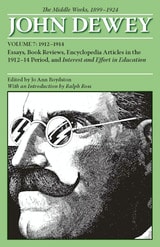
The Middle Works of John Dewey, Volume 7, 1899 - 1924
Essays, Books Reviews, Encyclopedia Articles in the 1912-1914 Period, and Interest and Effort in EducationJohn Dewey. Edited by Jo Ann Boydston
Southern Illinois University Press, 2008
During the three years embraced by Volume 7, Dewey published twenty articles and reviews, one of the articles of monograph-length, “The Psychology of Social Behavior,” one small book, Interest and Effort in Education, and seventy encyclopedia articles.
A salient and arresting feature of the essays is the continuing polemic between Dewey and some of his critics. Ralph Ross, whose perceptive Introduction to the volume provides a broad perspective of the various philosophical controversies in which Dewey was engaged, comments that “when Dewey was pitting himself against important adversaries, his talents as a critic were fully evident.”

The Mighty WMMR
An Oral History of Philadelphia's Rock Radio RevolutionErin Riley
Temple University Press, 2026
In the early 1980s, the scrappy radio station 93.3 WMMR was on the verge of a major takeover of the Philadelphia airwaves. Erin Riley, who had her finger on the pulse of new artists like Bon Jovi, whose music would define a generation, was hired as the station’s Music Director in 1983.
The Mighty WMMR is Riley’s affectionate and nostalgic oral history of the station’s early years, especially its 1980s heyday, covering everything from the pioneering influence of The Marconi Experiment and the success of The Morning Zoo to how WMMR broke artists like Bruce Springsteen, Billy Joel, and local favorites The Hooters onto the national scene. Featuring anecdotes and memories by beloved on-air personalities including John DeBella, Pierre Robert, and Michael Tearson, Riley chronicles the memorable songs and musicians; concerts, contests, and clubs; and the live broadcasts that marked the height of an unforgettable era in Philadelphia radio.
Riley breezily captures the station’s impact on listeners, which made WMMR a perfect storm of the times, the culture, and the counterculture. The Mighty WMMR is a captivating look back at Philadelphia’s rock history and the station that shaped a city and a generation.

The Migrant's Paradox
Street Livelihoods and Marginal Citizenship in BritainSuzanne M. Hall
University of Minnesota Press, 2021
Connects global migration with urban marginalization, exploring how “race” maps onto place across the globe, state, and street
In this richly observed account of migrant shopkeepers in five cities in the United Kingdom, Suzanne Hall examines the brutal contradictions of sovereignty and capitalism in the formation of street livelihoods in the urban margins. Hall locates The Migrant’s Paradox on streets in the far-flung parts of de-industrialized peripheries, where jobs are hard to come by and the impacts of historic state underinvestment are deeply felt.
Drawing on hundreds of in-person interviews on streets in Birmingham, Bristol, Leicester, London, and Manchester, Hall brings together histories of colonization with current forms of coloniality. Her six-year project spans the combined impacts of the 2008 financial crisis, austerity governance, punitive immigration laws and the Brexit Referendum, and processes of state-sanctioned regeneration. She incorporates the spaces of shops, conference halls, and planning offices to capture how official border talk overlaps with everyday formations of work and belonging on the street.
Original and ambitious, Hall’s work complicates understandings of migrants, demonstrating how migrant journeys and claims to space illuminate the relations between global displacement and urban emplacement. In articulating “a citizenship of the edge” as an adaptive and audacious mode of belonging, she shows how sovereignty and inequality are maintained and refuted.

The Migrants Table
Meals And Memories InKrishnendu Ray
Temple University Press, 2004
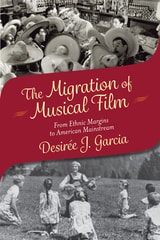
The Migration of Musical Film
From Ethnic Margins to American MainstreamGarcia, Desirée J
Rutgers University Press, 2014
The Migration of Musical Film shows how the folk musical was rooted in the challenges faced by immigrants and migrants who had to adapt to new environments, balancing American individualism with family values and cultural traditions. Uncovering fresh material from film industry archives, Garcia considers how folk musicals were initially marginal productions, designed to appeal to specific minority audiences, and yet introduced themes that were gradually assimilated into the Hollywood mainstream.
No other book offers a comparative historical study of the folk musical, from the first sound films in the 1920s to the genre’s resurgence in the 1970s and 1980s. Using an illustrative rather than comprehensive approach, Garcia focuses on significant moments in the sub-genre and rarely studied films such as Allá en el Rancho Grande along with familiar favorites that drew inspiration from earlier folk musicals—everything from The Wizard of Oz to Zoot Suit. If you think of movie musicals simply as escapist mainstream entertainment, The Migration of Musical Film is sure to leave you singing a different tune.

The Militant Hackwriter
French Popular Literature 1800–1848 and Its Influence, Artistic and PoliticalLucian W. Minor
University of Wisconsin Press, 1975
While Louis XVIII, Charles X, and Louis Philippe ruled in France, a vast majority of politically unenfranchised Frenchmen were developing their own subculture. Only recently literate, they fashioned their own literature. It consisted of two important genres: the popular novel and the melodrama. As we trace these genres from the turn of the nineteenth century until that moment of February 25, 1848, when the Second Republic was declared, we are also led to a detailed scrutiny of the injustices which the immense majority of the French suffered and of the political causes they espoused. The succession of heroes and villains in their literature mirrored accurately the fears and hopes they felt.
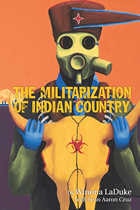
The Militarization of Indian Country
Winona LaDuke
Michigan State University Press, 2013
When it became public that Osama bin Laden’s death was announced with the phrase “Geronimo, EKIA!” many Native people, including Geronimo’s descendants, were insulted to discover that the name of a Native patriot was used as a code name for a world-class terrorist. Geronimo descendant Harlyn Geronimo explained, “Obviously to equate Geronimo with Osama bin Laden is an unpardonable slander of Native America and its most famous leader.” The Militarization of Indian Country illuminates the historical context of these negative stereotypes, the long political and economic relationship between the military and Native America, and the environmental and social consequences. This book addresses the impact that the U.S. military has had on Native peoples, lands, and cultures. From the use of Native names to the outright poisoning of Native peoples for testing, the U.S. military’s exploitation of Indian country is unparalleled and ongoing.
The Military and the Press
An Uneasy TruceMichael Sweeney
Northwestern University Press, 2006
Author Michael S. Sweeney takes a chronological approach, considering freedoms and restraints such as the First Amendment, court decisions, and government and military directives that have affected the press during World Wars I and II, the Korean War, the Vietnam War, and the more recent conflicts. He explores the ongoing themes of wartime censorship and propaganda, as well as operational security in the battle zone. In chapters addressing the recent shift in military strategy in dealing with the press, Sweeney discusses new forms of control--from embedding journalists and discouraging unaccredited "unilaterals" to developing the news agenda through a barrage of briefings, sound bites, and visuals and appeals to patriotism that border on domestic propaganda. With profiles of a few specific journalists--from Richard Harding Davis covering the Spanish-American War to Christiane Amanpour reporting from the conflicts in Bosnia and Iraq--this deft blend of journalistic history and analysis should serve as a call-to-arms to a public not always well served by a military-press standoff.
The Mimetic Brain
Jean-Michel Oughourlian
Michigan State University Press, 2016
Offering up clinical studies and a complete reevaluation of classical psychiatry, Oughourlian explores the interaction among reason, emotions, and imitation and reveals that rivalry—the blind spot in contemporary neuroscientific understandings of imitation—is a misunderstood driving force behind mental illness. Oughourlian’s analyses shake the very foundations of psychiatry as we know it and open up new avenues for both theoretical research and clinical practice.
The Mind of the Slave
The Limits of Ownership in Roman Law and SocietyNicole J. Giannella
University of Michigan Press, 2026
In order to place Roman jurists in conversation with both technical and literary sources, Giannella grounds this study in philology and argues that conceptions of the mind of the slave were at the heart of legal and cultural debates about the nature of slavery and ownership. It also contributes to a wider debate about selfhood and autonomy, since philosophers often used the figure of the slave as a representation of humanity as its limits.

The Mind's Eye
Image and Memory in Writing about TraumaMarian Mesrobian MacCurdy
University of Massachusetts Press, 2007
MacCurdy begins by discussing what trauma is, how traumatic memories are stored and accessed, and how writing affects them. She then focuses on the processes involved in translating traumatic images into narrative form, showing how the same patterns and problems emerge whether the writers are students or professionals. Using examples drawn from the classroom, MacCurdy investigates the beneficial effects of the study of trauma on communities as well as individuals, witnesses as well as writers, and explores the implications of these relationships for the world at large, particularly as they pertain to issues of justice, retribution, and forgiveness.
Throughout the volume the author draws on her own experience as teacher, writer, survivor, and descendant of survivors to explain how one can engage student work on difficult subjects without appropriating the texts or getting lost in the emotions generated by them. She further shows how appropriate safeguards can be put in place to protect both teacher and student writer. The end result of such a pedagogy, MacCurdy demonstrates, is not simply better writers but more integrated people, capable of converting their own losses and griefs into compassion for others.
The Ming Dynasty
Its Origins and Evolving InstitutionsCharles O. Hucker
University of Michigan Press, 1978
The Miniaturists
Barbara Browning
Duke University Press, 2022
The Minjung Art Movement
Decolonization and Democracy in South KoreaSohl Lee
Duke University Press, 2026
The Minor Gesture
Erin Manning
Duke University Press, 2016
The Minor Intimacies of Race
Asian Publics in North AmericaChristine Kim
University of Illinois Press, 2016

The Mirage of a Space between Nature and Nurture
Evelyn Fox Keller
Duke University Press, 2010

The Mirror of Spain, 1500-1700
The Formation of a MythJ. N. Hillgarth
University of Michigan Press, 2000
In the first of the volume's four parts, the author discusses the reasons--geographic, political, and religious--why Spain has proved a hard country to understand. Hillgarth looks at travelers to Spain, from pilgrims to diplomats, spies, exiles, and foreign residents. In its second part, special attention is devoted to the interaction between Christians, Jews, and Muslims, including Jewish and Muslim exiles and secret Jews within Spain.
In its third section, The Mirror of Spain explores reactions to Spain by those who saw it from the outside, the Italians, Dutch, French, and English. One chapter deals with the English, Scottish, and Irish Catholics, who, like the Jewish and Muslim exiles, played a double role in that they were at once "insiders" and outsiders. Finally, Hillgarth attempts to show how two crucial centuries have affected the way Spain has been seen down to the present.
The Mirror of Spain draws on a wide range of sources in different languages. It relies on documents in the Public Record Office and the British Library, the Archivo General de Simancas and the collections of the colleges founded by exiles in Spain, and on major libraries in Venice and Jerusalem. The volume will be of interest to a broad spectrum of scholars--to medievalists, historians of Spain, scholars of political and literary thought, and all those interested in notions of national identity.
J. N. Hillgarth has taught for many years at the University of Toronto and the Pontifical Institute of Mediaeval Studies. He is a Fellow of the British Academy and has received awards and honors from a wide variety of distinguished institutions in Europe and North America.
The Misfit of the Family
Balzac and the Social Forms of SexualityMichael Lucey
Duke University Press, 2003
The Misfit of the Family is a compelling argument that Balzac must be taken seriously as a major inventor and purveyor of new tools for analyzing connections between the sexual and the social. Lucey’s account of the novelist’s deployment of "sexual misfits" to impel a wide range of his most canonical works—Cousin Pons, Cousin Bette, Eugenie Grandet, Lost Illusions, The Girl with the Golden Eyes—demonstrates how even the flexible umbrella term "queer" barely covers the enormous diversity of erotic and social behaviors of his characters. Lucey draws on the thinking of Michel Foucault and Pierre Bourdieu and engages the work of critics of nineteenth-century French fiction, including Naomi Schor, D. A. Miller, Franco Moretti, and others. His reflections on Proust as Balzac’s most cannily attentive reader suggest how the lines of social and erotic force he locates in Balzac’s work continued to manifest themselves in twentieth-century writing and society.

The Miskitu People of Awastara
By Philip A. Dennis
University of Texas Press, 2004
"Most anthropologists who have lived among other people . . . feel a periodic need to go back," writes Philip A. Dennis in the introduction to this book. "Fieldwork gives you a stake in the people themselves, a set of relationships that last the rest of your life . . . and when the time is right, it is important to go back."
Dennis first journeyed to Awastara, a village on the northeastern coast of Nicaragua, during 1978-1979 as a postdoctoral student. He had come to study a culture-bound syndrome in which young women are possessed by devils. In the process, he became fascinated by other aspects of Miskitu culture—turtle fishing, Miskitu Christianity, community development efforts—the whole pattern of Miskitu community life. He also formed deep friendships to carry into the future.
Twenty years later he was able to return and continue his ethnographic work. Utilizing ideas from recent interpretive anthropology and a vivid writing style, Dennis describes food habits, language, health practices, religious beliefs, and storytelling, inviting the reader to experience life in Awastara along with him. Building upon earlier work by Mary Helms, Bernard Nietschmann, Edmund Gordon, and Charles Hale, The Miskitu People of Awastara makes its own original contribution. It is the first full-length study of a coastal Miskitu community north of Puerto Cabezas, contrasting life before and after the war years of the 1980s. It will be a valuable addition to the literature on this indigenous group and should appeal to anthropologists and other social scientists, as well as all readers interested in peoples of the Caribbean coast.
The Missing Links
Formation and Decay of Economic NetworksJames E. Rauch
Russell Sage Foundation, 2007
The Mississippian Emergence
Bruce D. Smith
University of Alabama Press, 2007
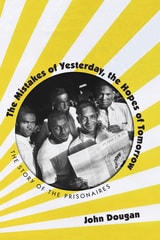
The Mistakes of Yesterday, the Hopes of Tomorrow
The Story of the PrisonairesJohn Dougan
University of Massachusetts Press, 2012
Early in the morning on June 1, 1953, five African American men boarded a van to make the 200-mile trip from Nashville to Memphis for a daylong recording session at the legendary Sun Studios, to be overseen by Sun founder Sam Phillips. One of the two tracks cut that day, “Just Walkin' in the Rain,” would go on to become a regional R&B hit, Sun Records' biggest record of the pre-Elvis era. It would, however, be the group's only hit. They were the Prisonaires, a vocal quintet who had honed their skills while inmates at the Tennessee State Penitentiary in Nashville.
In this book, John Dougan tells the story of the Prisonaires, their hit single, and the afterlife of this one remarkable song. The group and the song itself represent a compelling concept: imprisoned men using music as a means of cultural and personal survival. The song was re-recorded by white singer Johnnie Ray, who made it a huge hit in 1956. Over the years, other singers and groups would move the song further away from its origins, recasting the deep emotions that came from creating music in a hostile, controlled environment.
The story of the Prisonaires, for all of its triumphs, reflects the disappointment of men caught in a paradoxical search for personal independence while fully cognizant of a future consigned to prison. Their brief career and the unusual circumstances under which it flourished sheds light on the harsh realities of race relations in the pre–Civil Rights South. The book also provides a portrait of Nashville just as it was gaining traction as a nationally recognized music center.
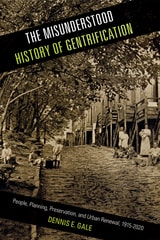
The Misunderstood History of Gentrification
People, Planning, Preservation, and Urban Renewal, 1915-2020Dennis E. Gale
Temple University Press, 2021
The origins of gentrification date back to World War I—only it was sometimes known as “remodeling” then. Dennis Gale’s insightful book, TheMisunderstood History of Gentrification, provides a recontextualization of American gentrification, planning, and policymaking. He argues that gentrification must be understood as an urban phenomenon with historical roots in the very early twentieth century.
Gale uses solid empirical evidence to trace the embryonic revitalization of Georgetown, Greenwich Village, Beacon Hill, and elsewhere back to 1915. He shows how reinvestment and restoration reversed urban decline and revitalized neighborhoods. The Misunderstood History of Gentrification also explains how federal policies such as the Urban Redevelopment Program (later named Urban Renewal), which first emerged in 1949, razed urban slums and created an “urban crisis” that persisted in the 1960s and ‘70s. This situation soon prompted city gentrifiers and historic preservationists to reuse and rehabilitate existing structures.
Within a more expansive historical framework, Gale offers a fresh perspective on and debunks misperceptions about gentrification in America.

The Mixe of Oaxaca
Religion, Ritual, and HealingBy Frank J. Lipp
University of Texas Press, 1991
The Mixe of Oaxaca was the first extensive ethnography of the Mixe, with a special focus on Mixe religious beliefs and rituals and the curing practices associated with them. It records the procedures, design-plan, corresponding prayers, and symbolic context of well over one hundred rituals. Frank Lipp has written a new preface for this edition, in which he comments on the relationship of Mixe religion to current theoretical understandings of present-day Middle American folk religions.
The Moccasin Bluff Site and the Woodland Cultures of Southwestern Michigan
Robert Louis Bettarel and Hale Gilliam Smith
University of Michigan Press, 1973
The Mode of Information
Poststructuralism and Social ContextMark Poster
University of Chicago Press, 1990
The difference, Mark Poster argues, is the profound effect electronic mediation exerts on the very way we perceive ourselves and reality. To help decode the linguistic dimensions of our multiple forms of social interaction, he plays upon Marx's theory of the mode of production—the shift to late capitalism has a parallel in the shift from the mode of production to that of information.
Enlisting poststructuralist theory, he links four modes of communication with four poststructuralists: TV ads with Baudrillard, data bases with Foucault, electronic writing with Derrida, and computer science with Lyotard. Mode of Information points the way to a poststructuralist strategy for writing history, a framework well suited to unearthing structures of domination and the means to their disruption.
"An informed, insightful, provocative account of phenomena that have transformed virtually every area of public and private life on our time."—Robert Anchor, American Historical Review
"The importance of Poster's book is unmistakable for he skillfully negotiates between and juxtaposes two wide theoretical domains—electronically mediated communications and poststructuralist theory—about which much has been written, but hardly with the acumen that he brings to bear in a long-awaited critical rapprochement."—Charles J. Stivale, Criticism
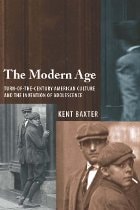
The Modern Age
Turn-of-the-Century American Culture and the Invention of AdolescenceKent Baxter
University of Alabama Press, 2008
The Modern Age examines the discourses that have come to characterize adolescence and argues that commonplace views of adolescents as impulsive, conflicted, and rebellious are constructions inspired by broader cultural anxieties that characterized American society in early-twentieth-century America.
The idea of adolescence, argues Kent Baxter, came into being because it fulfilled specific historical and cultural needs: to define a quickly expanding segment of the population, and to express concerns associated with the movement into a new era. Adolescence—a term that had little currency before 1900 and made a sudden and pronounced appearance in a wide variety of discourses thereafter—is a “modern age” not only because it sprung from changes in American society that are synonymous with modernity, but also because it came to represent all that was threatening about “modern life.”
Baxter provides a preliminary history of adolescence, focusing specifically on changes in the American educational system and the creation of the juvenile justice system that carved out a developmental space between the child and the adult. He looks at the psychological works of G. Stanley Hall and the anthropological works of Margaret Mead and explores what might have inspired their markedly negative descriptions of this new demographic. He examines the rise of the Woodcraft Indian youth movement and its promotion of “red skin” values while also studying the proliferation of off-reservation boarding schools for Native American youth, where educators attempted to eradicate the very “red skin” values promoted by the Woodcraft movement.
Finally Baxter studies reading at the turn of the century, focusing specifically on Horatio Alger (the Ragged Dick series) and Edward Stratemeyer (the Tom Swift, Nancy Drew, and Hardy Boys series) and what those works reveal about the “problem” of adolescence and its solutions in terms of value, both economic and moral.

The Modern British Horror Film
Gerrard, Steven
Rutgers University Press, 2017
Tracking the revitalization of the British horror film industry over the past two decades, media expert Steven Gerrard also investigates why audiences have flocked to these movies. To answer that question, he focuses on three major trends: “hoodie horror” movies responding to fears about Britain’s urban youth culture; “great outdoors” films where Britain’s forests, caves, and coasts comprise a terrifying psychogeography; and psychological horror movies in which the monster already lurks within us.
Offering in-depth analysis of numerous films, including The Descent, Outpost, and The Woman in Black, this book takes readers on a lively tour of the genre’s highlights, while provocatively exploring how these films reflect viewers’ gravest fears about the state of the nation. Whether you are a horror buff, an Anglophile, or an Anglophobe, The Modern British Horror Film is sure to be a thrilling read.
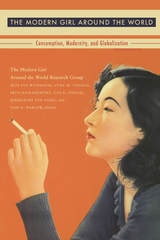
The Modern Girl Around the World
Consumption, Modernity, and GlobalizationThe Modern Girl Around the World Research Group
Duke University Press, 2008
Scholars of history, women’s studies, literature, and cultural studies follow the Modern Girl around the world, analyzing her manifestations in Germany, Australia, China, Japan, France, India, the United States, Russia, South Africa, and Zimbabwe. Along the way, they demonstrate how the economic structures and cultural flows that shaped a particular form of modern femininity crossed national and imperial boundaries. In so doing, they highlight the gendered dynamics of interwar processes of racial formation, showing how images and ideas of the Modern Girl were used to shore up or critique nationalist and imperial agendas. A mix of collaborative and individually authored chapters, the volume concludes with commentaries by Kathy Peiss, Miriam Silverberg, and Timothy Burke.
Contributors: Davarian L. Baldwin, Tani E. Barlow, Timothy Burke, Liz Conor, Madeleine Yue Dong, Anne E. Gorsuch, Ruri Ito, Kathy Peiss, Uta G. Poiger, Priti Ramamurthy, Mary Louise Roberts, Barbara Sato, Miriam Silverberg, Lynn M. Thomas, Alys Eve Weinbaum
The Modern Israeli and Palestinian Diasporas
A Comparative ApproachEdited by Nahum Karlinsky
University of Texas Press, 2024
A comparative study of contemporary Israeli and Palestinian diasporas.
Exilic and diasporic experience have become ubiquitous in recent decades. Jews, lacking a homeland, spread to various parts of the world, making the Jewish diaspora paradigmatic. But after the establishment of Israel in 1948, a different kind of diaspora emerged, as more than a tenth of Israeli citizens have chosen to leave their newly established state and resettle. Meanwhile, about half of all Palestinians, including Palestinian citizens of Israel, now reside in exile, predominantly as a result of the ongoing Palestinian-Israeli conflict.
Recognizing that Israeli-Jewish and Palestinian-Arab societies coexist and are engaged in constant relations, Nahum Karlinsky has assembled an impressive array of contributors to explore these diasporas alongside one another and in dialogue with other diasporic communities. The collected essays cover such topics as Palestinian exiles and diasporas, the demographics of today’s Israeli diaspora, immigrant enterprises, transnationalism and development, the unique place of Israeli Jews in the United States, the literature of Palestinian transnationals, and the emergence of Berlin as a queer Israeli-Jewish immigrant enclave.The Modern Israeli and Palestinian Diasporas challenges and reimagines the very notion of a homeland.
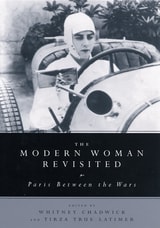
The Modern Woman Revisited
Paris Between the WarsChadwick, Whitney
Rutgers University Press, 2003
The contributions of female artists to the development of literary and artistic modernism in early twentieth century France remain poorly understood. It was during this period that a so-called “modern woman” began occupying urban spaces associated with the development of modern art and modernism’s struggles to define subjectivities and sexualities. Whereas most studies of modernism’s formal innovations and its encouragement of artistic autonomy neglect or omit necessary discussions of gender, race, class, and sexual orientation, the contributors of The Modern Woman Revisited inject these perspectives into the discussion.
Between the two World Wars, Paris served as the setting for unparalleled freedom for expatriate as well as native-born French women, who enjoyed unprecedented access to education and opportunities to participate in public artistic and intellectual life. Many of these women made lasting contributions in art and literature. Some of the artists discussed include Colette, Tamara de Lempicka, Sonia Delaunay, Djuna Barnes, Augusta Savage, and Lee Miller.
Inthis book, an internationally recognized roster of art historians, literary critics, and other scholars offers a nuanced portrait of what it meant to be a modern woman during this decisive period of modernism’s development. Individual essays explore the challenges faced by women in the early decades of the twentieth century, as well as the strategies these women deployed to create their art and to build meaningful lives and careers. The introduction underscores the importance of the contributors’ efforts to engender larger questions about modernity, sexuality, race, and class.
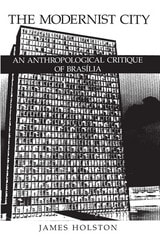
The Modernist City
An Anthropological Critique of BrasiliaJames Holston
University of Chicago Press, 1989
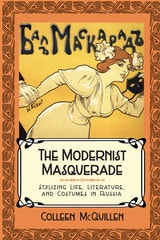
The Modernist Masquerade
Stylizing Life, Literature, and Costumes in RussiaColleen McQuillen
University of Wisconsin Press, 2013
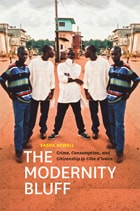
The Modernity Bluff
Crime, Consumption, and Citizenship in Côte d’IvoireSasha Newell
University of Chicago Press, 2012
In Côte d’Ivoire, appearing modern is so important for success that many young men deplete their already meager resources to project an illusion of wealth in a fantastic display of Western imitation, spending far more than they can afford on brand name clothing, accessories, technology, and a robust nightlife. Such imitation, however, is not primarily meant to deceive—rather, as Sasha Newell argues in The Modernity Bluff, it is an explicit performance so valued in Côte d’Ivoire it has become a matter of national pride.
Called bluffeurs, these young urban men operate in a system of cultural economy where reputation is essential for financial success. That reputation is measured by familiarity with and access to the fashionable and expensive, which leads to a paradoxical state of affairs in which the wasting of wealth is essential to its accumulation. Using the consumption of Western goods to express their cultural mastery over Western taste, Newell argues, bluffeurs engage a global hierarchy that is profoundly modern, one that values performance over authenticity—highlighting the counterfeit nature of modernity itself.
The Modernity of Tradition
Political Development in IndiaLloyd I. Rudolph and Susanne Hoeber Rudolph
University of Chicago Press, 1984
Three areas of Indian life are analyzed: social stratification, charismatic leadership, and law. The authors question whether objective historical conditions, such as advanced industrialization, urbanization, or literacy, are requisites for political modernization.
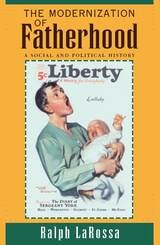
The Modernization of Fatherhood
A Social and Political HistoryRalph LaRossa
University of Chicago Press, 1997
LaRossa explains that during the interwar period the image of the father as economic provider, pal, and male role model, all in one, became institutionalized. Using personal letters and popular magazine and newspaper sources, he explores how the social and economic conditions of the Roaring Twenties and the Great Depression—a period of technical innovation as well as economic hardship—fused these expectations into a cultural ideal. With chapters on the U.S. Children's Bureau, the fathercraft movement, the magazine industry and the development of Parent's Magazine, and the creation of Father's Day, this book is a major addition to the growing literature on masculinity and fatherhood.
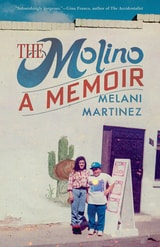
The Molino
A MemoirMelani Martinez
University of Arizona Press, 2024
Set in one of Tucson’s first tamal and tortilla factories, The Molino is a hybrid memoir that reckons with one family’s loss of home, food, and faith.
Weaving together history, culture, and Mexican food traditions, Melani Martinez shares the story of her family’s life and work in the heart of their downtown eatery, El Rapido. Opened by Martinez’s great-grandfather, Aurelio Perez, in 1933, El Rapido served tamales and burritos to residents and visitors to Tucson’s historic Barrio Presidio for nearly seventy years. For the family, the factory that bound them together was known for the giant corn grinder churning behind the scenes—the molino. With clear eyes and warm humor, Martinez documents the work required to prepare food for others, and explores the heartbreaking aftermath of gentrification that forces the multigenerational family business to close its doors.
The Molino is also Martinez’s personal story—that of a young Tucsonense coming of age in the 1980s and ’90s. As a young woman she rejects the work in her father’s popular kitchen, but when the business closes, her world shifts and the family disbands. When she finds her way back home, the tortillería’s iconic mural provides a gateway into history and ruin, ancestry and sacrifice, industrial myth and artistic incarnation—revealing a sacred presence still alive in Tucson.
A must-read for foodies, history lovers, and anyone searching for spiritual truth in the desert, this is a story of belonging and transformation in the borderlands.

The Moment of Racial Sight
A HistoryIrene Tucker
University of Chicago Press, 2012
The Monster with a Thousand Faces
Guises of the Vampire in Myth and LiteratureBrian J. Frost
University of Wisconsin Press, 1989
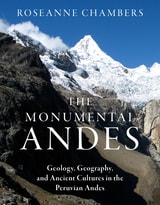
The Monumental Andes
Geology, Geography, and Ancient Cultures in the Peruvian AndesRoseanne Chambers
University of Utah Press, 2024
At once approachable and informative, The Monumental Andes tells the history of the lofty mountains and civilizations that characterize the Central Andes. The book explores many interconnected aspects of ancient Andean life, including climate, topography, agricultural methods, natural hazards, the construction of monumental structures, the creation of sophisticated art objects, and the plant-based hallucinogens and narcotics used in religious rituals. From earthquake-resistant structures to shrines on the tops of active volcanoes, ancient Andeans left behind relics that amaze and inspire today.
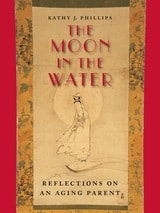
The Moon in the Water
Reflections on an Aging ParentKathy J. Phillips
Vanderbilt University Press, 2008
In a series of moving vignettes, the author begins by describing a particular representation of Water-Moon Kuan Yin, a Buddhist teacher and goddess associated with compassion, who often sits on a precarious overhang or floats on a flimsy petal. Then Kuan Yin steps out of the frame to join the author in the mundane challenges of caring for her father-transferring his health insurance, struggling with a wheelchair van, managing adult diapers, or playing in the fictions of dementia. From perplexed to poignant to funny, the vignettes record the working-class English of a fading but still wise dad, and they find other human versions of Kuan Yin in a doctor who will still make house calls or kind strangers in the street.
The book includes ten illustrations: both classical representations of Kuan Yin and also the author's own drawings, which adapt Kuan Yin in an act of practical spirituality, reading art through life and life through art. Each vignette invites the harried caregiver to take a deep breath and meditate on the trials and joys of caring for an aging parent.
The Moral Economy of the State
Conservation, Community Development, and State-Making in ZimbabweWilliam A. Munro
Ohio University Press, 1998
The Moral Neoliberal
Welfare and Citizenship in ItalyAndrea Muehlebach
University of Chicago Press, 2012
The Moral Property of Women
A History of Birth Control Politics in AmericaLinda Gordon
University of Illinois Press, 2002