Results by title
22279 books match the query 'Social Science' and 4007 start with t
The Northern Titicaca Basin Survey
Huancané-PutinaCharles Stanish, Cecilia Chávez Justo, Karl LaFavre, and Aimée Plourde
University of Michigan Press, 2014
The Northwest Florida Expeditions of Clarence Bloomfield Moore
Clarence Bloomfield Moore
University of Alabama Press, 1999
A Dan Josselyn Memorial Publication
This comprehensive compilation of Moore's archaeological reports on northwest Florida and southern Alabama and Georgia presents the earliest documented investigations of this region.
When Clarence Bloomfield Moore cruised the rivers of Florida in search of prehistoric artifacts a century ago, he laid the groundwork for archaeological investigations to follow. This volume reflects Moore's fieldwork along the northwest Florida coast, the most archaeologically rich area of the state, as well as Southern Alabama and Georgia.
Here readers will share Moore's first look at the area in 1901-1903 and additional observations made in 1918 during what was to be his last field season. Moore's works reveal ceramics, tools, skeletal remains, and exotic artifacts excavated from the earthen mounds and shell middens built by native peoples over the last two millennia.
In the introduction to this edition, David Brose and Nancy Marie White place Moore's investigations within the context of the science, natural history, and antiquarianism of his day. They document what happened to the sites he explored, tell how his findings fit into the body of his research, and explain how those findings should be interpreted in the context of Southeastern culture history and modern archaeological theory.
Moore was the most knowledgeable Southeastern archaeologist of his time; his writings are a benchmark for anyone studying those areas today.
The Nuptial Deal
Same-Sex Marriage and Neo-Liberal GovernanceJaye Cee Whitehead
University of Chicago Press, 2011
The Nursing Clio Reader
Histories of Sex, Reproduction, and JusticeJacqueline D. The Nursing Clio Editorial Collective
Rutgers University Press, 2025
The Nursing Clio Reader answers that call, bringing together essays that examine reproductive health through historical research and personal experience. Featuring both new and classic pieces from the Nursing Clio blog, leading historians of reproductive health provide insights that connect past struggles with today’s ongoing battles over bodies, reproductive rights, and health care. This collection offers intimate, urgent scholarship that speaks to the present moment.
A powerful resource for classrooms and individual readers alike, The Nursing Clio Reader invites reflection on how the past informs current debates, urging us to engage deeply with the history of reproductive justice in a time of unprecedented change, underscoring that indeed "the personal is historical."

The Obama Effect
How the 2008 Campaign Changed White Racial AttitudesSeth K. Goldman
Russell Sage Foundation, 2014
The Obama Phenomenon
Toward a Multiracial DemocracyEdited by Charles P. Henry, Robert L. Allen, and Robert Chrisman
University of Illinois Press, 2011
The Object of Labor
Commodification in Socialist HungaryMartha Lampland
University of Chicago Press, 1995
Exploring the effects of social change thrust upon communities against their will, Lampland examines the history of agrarian labor in Hungary from World War I to the early 1980s. She shows that rural workers had long been subject to strict state policies similar to those imposed by collectivization. Since the values of privatization and individualism associated with capitalism characterized rural Hungarian life both prior to and throughout the socialist period, capitalist ideologies of work and morality survived unscathed in the private economic practices of rural society. Lampland also shows how labor practices under socialism prepared the workforce for capitalism. By drawing villagers into factories and collective farms, for example, the socialist state forced farmers to work within tightly controlled time limits and to calculate their efforts in monetary terms. Indeed, this control and commodification of rural labor under socialism was essential to the transformation to capitalism.
The Obligation Mosaic
Race and Social Norms in US Political ParticipationAllison P. Anoll
University of Chicago Press, 2022
In The Obligation Mosaic, Allison P. Anoll shows that the obligations that bring people into the political world—or encourage them to stay away—vary systematically by race in the United States, with broad consequences for representation. Drawing on a rich mix of interviews, surveys, and experiments with Asian, Black, Latino, and White Americans, the book uncovers two common norms that centrally define concepts of obligation: honoring ancestors and helping those in need. Whether these norms lead different groups to politics depends on distinct racial histories and continued patterns of segregation.
Anoll’s findings not only help to explain patterns of participation but also provide a window into opportunities for change, suggesting how activists and parties might better mobilize marginalized citizens.
The Occasions of Poetry
Essays in Criticism and AutobiographyThom Gunn
University of Michigan Press, 1999
Thom Gunn is well-known as a poet, and increasingly as a literary critic. The Occasions of Poetry includes insightful critical pieces on writers ranging from William Carlos Williams and Gary Snyder to Thomas Hardy and Robert Duncan. "The occasion in all cases," writes Gunn, "is the starting point, only, of a poem, but it should be a starting point to which the poet must in some sense stay true." The first loyalty of a writer who is "true to his occasions," he writes, must be to the facts of experience.
The book includes five autobiographical essays, which combine to form an engaging account of the author's development as a poet and to chronicle some of the most significant literary currents of recent decades, both in England and America.
Thom Gunn, born in England in 1929, has lived in America since 1954. His books include Shelf Life: Essays, Memoirs, and an Interview; The Man with Night Sweats; Collected Poems; and The Passages of Joy. The Occasions of Poetry was originally published by Faber and Faber.
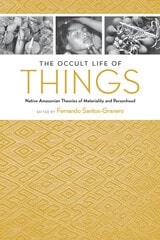
The Occult Life of Things
Native Amazonian Theories of Materiality and PersonhoodEdited by Fernando Santos-Granero
University of Arizona Press, 2009
A view so antithetical to Western thought offers a refreshing perspective on the place and role of objects in human social life—one that has remained under-studied in Amazonian anthropology. In this book, ten scholars re-introduce objects to contemporary studies of animism in order to explore how various peoples envision the lives of material objects: the occult, or extraordinary, lives of “things,” whose personas are normally not visible to lay people.
Combining linguistic, ethnological, and historical perspectives, the contributors draw on a wealth of information gathered from ten Amerindian peoples belonging to seven different linguistic families to identify the basic tenets of what might be called a native Amazonian theory of materiality and personhood. They consider which objects have subjective dimensions and how they are manifested, focusing on three domains regarding Amazonian conceptions of things: the subjective life of objects, considering which things have a subjective dimension; the social life of things, seeing the diverse ways in which human beings and things relate as subjectivities; and the historical life of things, recognizing the fact that some things have value as ritual objects or heirlooms.
These chapters demonstrate how native Amazonian peoples view animals, plants, and things as “subjectivities” possessing agency, intentionality, and consciousness, as well as a composite anatomy. They also show how materiality is intimately linked to notions of personhood, with artifacts classified as natural or divine creations and living beings viewed as cultural or constructed. The Occult Life of Things offers original insights into these elaborate native ontologies as it breaks new ground in Amazonian studies.
The Occupations of Migrants in Ghana
Polly Hill
University of Michigan Press, 1970
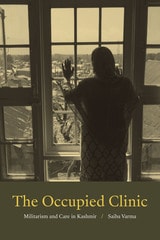
The Occupied Clinic
Militarism and Care in KashmirSaiba Varma
Duke University Press, 2020

The Ocean Is a Wilderness
Atlantic Piracy and the Limits of State Authority, 1688-1856Guy Chet
University of Massachusetts Press, 2014
Chet shows how the traditional focus on the growth of the modern state overlooked the extent to which old attitudes and cultural practices continued to hold sway. Even as the British government extended its naval, legal, and bureaucratic reach, in many parts of the Atlantic world illegal trade was not only tolerated but encouraged. In part this was because Britain's constabulary command of the region remained more tenuous than some have suggested, and in part because maritime insurance and wartime tax policies ensured that piracy and smuggling remained profitable. When Atlantic piracy eventually waned in the early nineteenth century, it had more to do with a reduction in its profitability at port than with forceful confrontation at sea.
Challenging traditional accounts that chronicle forces of civilization taming a wild Atlantic frontier, this book is a valuable addition to a body of borderlands scholarship reevaluating the relationship between the emerging modern state and its imperial frontiers.
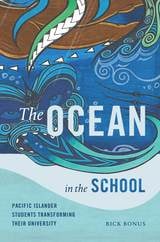
The Ocean in the School
Pacific Islander Students Transforming Their UniversityRick Bonus
Duke University Press, 2020
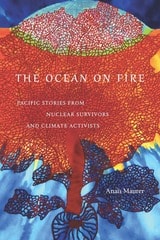
The Ocean on Fire
Pacific Stories from Nuclear Survivors and Climate ActivistsAnaïs Maurer
Duke University Press, 2024

The Ojibwa of Western Canada 1780-1870
Laura Peers
University of Manitoba Press, 1994
The western Ojibwa are descendants of Ojibwa who migrated from around the Great Lakes in the late 18th century. This was an era of dramatic change. Between 1780 and 1870, they survived waves of epidemic disease, the rise and decline of the fur trade, the depletion of game, the founding of non-Native settlement, the loss of tribal lands, and the government's assertion of political control over them. As a people who emerged, adapted, and survived in a climate of change, the western Ojibwa demonstrate both the effects of historic forces that acted upon Native peoples, and the spirit, determination, and adaptive strategies that the Native people have used to cope with those forces. This study examines the emergence of the western Ojibwa within this context, seeing both the cultural changes that they chose to make and the continuity within their culture as responses to historical pressures.
The Ojibwa of Western Canada differs from earlier works by focussing closely on the details of western Ojibwa history in the crucial century of their emergence. It is based on documents to which pioneering scholars did not have access, including fur traders' and missionaries' journals, letters, and reminiscences. Ethnographic and archaeological data, and the evidence of material culture and photographic and art images, are also examined in this well-researched and clearly written history.
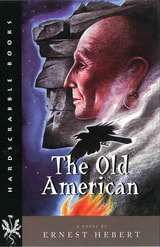
The Old American
A NovelErnest Hebert
Dartmouth College Press, 2001
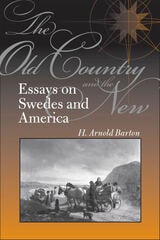
The Old Country and the New
Essays on Swedes and AmericaH. Arnold Barton
Southern Illinois University Press, 2006
Documenting a rich Scandinavian American culture and ethnic perspective
This notable collection of seventeen essays and six editorials by renowned Swedish American historian H. Arnold Barton was compiled from writings published between 1974 and 2005. The result of three decades of extensive research in the United States and Sweden, The Old Country and the New: Essays on Swedes and America, covers Swedish emigration to North America as well as the history and culture of Swedes in their new country.
In this rich mosaic of American ethnicity and cultural history, Barton analyzes the multifaceted Swedish emigration/immigration story. Essays include a survey of the historiography of emigration from the Scandinavian countries and the Scandinavian immigration to North America, Swedish emigration before 1846, and the Eric-Janssonist religious sect and its colony at Bishop Hill, Illinois.
Because Swedish immigrants were highly literate people, they wrote numerous letters describing their experiences to relatives and friends at home. What these letters related—or omitted—is the subject of another essay. Barton discusses Swedish immigrants who returned permanently to their homeland, affecting both the old country and the new. He also traces relations between the United States and Sweden, post—World War II Swedish immigration, and genealogy as history.
Offering a broad Scandinavian American ethnic perspective, The Old Country and the New appeals to both scholars and lay readers. Sixteen illustrations and a complete bibliography of Barton’s publications on Swedish American history and culture enhance the volume.
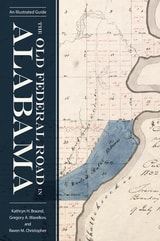
The Old Federal Road in Alabama
An Illustrated GuideKathryn H. Braund, Gregory A. Waselkov, and Raven M. Christopher
University of Alabama Press, 2019
A concise illustrated guidebook for those wishing to explore and know more about the storied gateway that made possible Alabama's development.
Forged through the territory of the Creek Nation by the United States federal government, the Federal Road was developed as a communication artery linking the east coast of the United States with Louisiana. Its creation amplified already tense relationships between the government, settlers, and the Creek Nation, culminating in the devastating Creek War of 1813–1814, and thereafter it became the primary avenue of immigration for thousands of Alabama settlers.
Central to understanding Alabama’s territorial and early statehood years, the Federal Road was both a physical and symbolic thoroughfare that cut a swath of shattering change through the land and cultures it traversed. The road revolutionized Alabama’s expansion, altering the course of its development by playing a significant role in sparking a cataclysmic war, facilitating unprecedented American immigration, and enabling an associated radical transformation of the land itself.
The first half of The Old Federal Road in Alabama: An Illustrated Guide offers a narrative history that includes brief accounts of the construction of the road, the experiences of historic travelers, and descriptions of major changes to the road over time. The authors vividly reconstruct the course of the road in detail and make use of a wealth of well-chosen illustrations. Along the way they give attention to the very terrain it traversed, bringing to life what traveling the road must have been like and illuminating its story in a way few others have ever attempted.
The second half of the volume is divided into three parts—Eastern, Central, and Southern—and serves as a modern traveler’s guide to the Federal Road. This section includes driving tours and maps, highlighting historical sites and surviving portions of the old road and how to visit them.

The Old Land and the New
The Journals of Two Swiss Families in America in the 1820sRobert H. Billigmeier and Fred Altschuler Picard, EditorsTranslated by Robert H. Billigmeier and Fred Altschuler PicardIllustrations by Hans Erni
University of Minnesota Press, 1965
The Old Land and the New was first published in 1965. Minnesota Archive Editions uses digital technology to make long-unavailable books once again accessible, and are published unaltered from the original University of Minnesota Press editions.
These are the journals in English translation of two early Swiss immigrants to America who provided an intriguing picture of life as they saw it in New York, Maryland, Pennsylvania, and Ohio. The book is illustrated with sketches by the Swiss artist, Hans Erni.
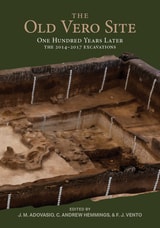
The Old Vero Site (8IR009)
One Hundred Years Later, The 2014 - 2017 ExcavationsJames M. Adovasio, C. Andrew Hemmings, and F. J. Vento
University of Utah Press, 2023
The Old Vero Site details the course of the recent re-excavations of the site while also summarizing the original excavations from a century ago. The volume lays out the sequence and results of the recent project, using new data to conclude that Sellards’s claims are not supported by the evidence. Adovasio, Hemmings, and Vento provide the data to settle the matter definitively: human remains at the site were intrusive from a later time horizon, as critics of the original work had vociferously argued.
The Olympics at the Millennium
Power, Politics, and the GamesEdited by Kay Schaffer
Rutgers University Press, 2000
The Olympics thrill the world with spectacle and drama. They also carry a cultural and social significance that goes beyond the stadium, athletes, and fans. The Games are arenas in which individual and team athletic achievement intersect with the politics of national identity in a global context.
The Olympics at the Millennium offers groundbreaking essays that explore the cultural politics of the Games. The contributors investigate such topics as the emergence of women athletes as cultural commodities, the orchestrated spectacles of the opening and closing ceremonies, and the alternative sport culture offered via the Gay Games. Unforgettable events and decisions are discussed: Native American athlete Jim Thorpe winning—and losing—his two gold medals in 1912. Why America was one of the few countries to actually send Jewish athletes to the “Nazi Olympics.” The disqualification of champion Ewa Klobukowska from competing as a woman, due to chromosomal testing in 1967.
With the 2000 Sydney Games imminent, several essays address concerns with which every host country must contend, such as the threat of terrorism. Highlighting the difficult issues of racism and nationalism, another article explores the efforts of this country’s aboriginal people to define a role for themselves in the 2000 Games, as they struggle with ongoing discrimination. And with the world watching, Sydney faces profound pressure to implement a successful Olympics, as a matter of national pride.

The Olympics that Never Happened
Denver '76 and the Politics of GrowthAdam Berg
University of Texas Press, 2023
A look back at how powerful politicians, business leaders, and a diverse cast of activists used a thwarted Olympics to shape the state of Colorado and the city of Denver.
If you don’t recall the 1976 Denver Olympic Games, it’s because they never happened. The Mile-High City won the right to host the winter games and then was forced by Colorado citizens to back away from its successful Olympic bid through a statewide ballot initiative. Adam Berg details the powerful Colorado regime that gained the games for Denver and the grassroots activism that brought down its Olympic dreams, and he explores the legacy of this milestone moment for the games and politics in the United States.
The ink was hardly dry on Denver’s host agreement when Mexican American and African American urbanites, white middle-class environmentalists, and fiscally concerned local politicians realized opposition to the Olympics provided them new political openings. The Olympics quickly became a platform for taking stands on a range of issues, from conservation to urban livability to the very idea of growth, which for decades had been unquestioned in Colorado. The Olympics That Never Happened argues that hostility to the Olympics galvanized and empowered diverse citizens in a major US city, with long-term ramifications for Colorado and political activism elsewhere. The Olympics themselves were changed forever, compelling organizers to take seriously competing interests from subgroups within their communities.
The Online Advertising Tax
A Digital Policy InnovationChristian Fuchs
University of Westminster Press, 2018
Google and Facebook currently control close to two-thirds of global advertising revenue. While dominating the online advertising market, these two companies have thus far avoided paying adequate taxes.
This CAMRI policy brief presents a new policy innovation, the online advertising tax. Considering the key role of user activity and user data for the value of Google and Facebook’s services, it explains how digital advertising companies’ revenues could be taxed based on the respective country in which targeted users are located.
The author reviews existing policy arguments and policy options and sets out practical steps to ensure that tax avoidance by online advertising companies is mitigated. Furthermore, he illustrates how tax revenues could be used to support public service internet platforms.
The Only Way Out
The Racial and Sexual Performance of EscapeKatherine Brewer Ball
Duke University Press, 2024

The Only Woman in the Room
A Memoir of Japan, Human Rights, and the ArtsBeate Sirota Gordon
University of Chicago Press, 2014
Sirota was born in Vienna, but in 1929 her family moved to Japan so that her father, a noted pianist, could teach, and she grew up speaking German, English, and Japanese. Russian, French, Italian, Latin, and Hebrew followed, and at fifteen Sirota was sent to complete her education at Mills College in California. The formal declaration of World War II cut Gordon off from her parents, and she supported herself by working for a CBS listening post in San Francisco that would eventually become part of the FCC. Translating was one of Sirota’s many talents, and when the war ended, she was sent to Japan as a language expert to help the American occupation forces. When General MacArthur suddenly created a team that included Sirota to draft the new Japanese Constitution, he gave them just eight days to accomplish the task. Colonel Roest said to Beate Sirota, “You’re a woman, why don’t you write the women’s rights section?”; and she seized the opportunity to write into law guarantees of equality unparalleled in the US Constitution to this day.
But this was only one episode in an extraordinary life, and when Gordon died in December 2012, words of grief and praise poured from artists, humanitarians, and thinkers the world over. Illustrated with forty-seven photographs, The Only Woman in the Room captures two cultures at a critical moment in history and recounts, after a fifty-year silence, a life lived with purpose and courage. This edition contains a new afterword by Nicole A. Gordon and an elegy by Geoffrey Paul Gordon.

The Oocyte Economy
The Changing Meaning of Human EggsCatherine Waldby
Duke University Press, 2019
The Open Veins of the Postcolonial
Afrodescendants and RacismsEdited by Inocência Mata and Iolanda Évora
Tagus Press, 2022
The Opera Fanatic
Ethnography of an ObsessionClaudio E. Benzecry
University of Chicago Press, 2011
Though some dismiss opera as old-fashioned, it shows no sign of disappearing from the world’s stage. So why do audiences continue to flock to it? Given its association with wealth, one might imagine that opera tickets function as a status symbol. But while a desire to hobnob with the upper crust might motivate the occasional operagoer, for hardcore fans the real answer, according to The Opera Fanatic, is passion—they do it for love.
Opera lovers are an intense lot, Claudio E. Benzecry discovers in his look at the fanatics who haunt the legendary Colón Opera House in Buenos Aires, a key site for opera’s globalization. Listening to the fans and their stories, Benzecry hears of two-hundred-mile trips for performances and nightlong camp-outs for tickets, while others testify to a particular opera’s power to move them—whether to song or to tears—no matter how many times they have seen it before. Drawing on his insightful analysis of these acts of love, Benzecry proposes new ways of thinking about people’s relationship to art and shows how, far from merely enhancing aspects of everyday life, art allows us to transcend it.
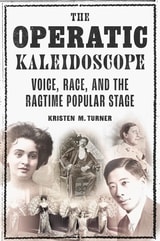
The Operatic Kaleidoscope
Voice, Race, and the Ragtime Popular StageKristen M. Turner
University of Illinois Press, 2026
Turner examines performances ranging from Florenz Ziegfeld’s early Follies to Black vaudeville shows to musical comedies, including everything from celebrity vehicles to obscure productions and overlooked artists. She reveals how opera’s popularity in mass culture illuminates the effects of exclusionary immigration policies, pervasive racial and ethnic inequalities, debates over women’s suffrage, and the imposition of legalized segregation. Performers and creators from many communities—white immigrants, Jewish, Black, and Asian American—strategically deployed operatic allusions and the genre’s characteristic vocal timbre to assert their respectability, challenge stereotypes, and navigate oppressive social structures.
Nuanced and expansive, The Operatic Kaleidoscope explores opera’s role when popular culture grappled with questions of race and citizenship.
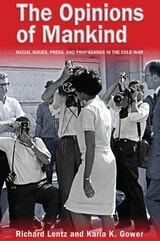
The Opinions of Mankind
Racial Issues, Press, and Propaganda in the Cold WarRichard Lentz and Karla K. Gower
University of Missouri Press, 2011
Throughout this period, the American press provided the foreign media with information about racially charged events in the United States. Such news coverage sometimes put Washington at a disadvantage, making it difficult for government officials to assuage foreign reactions to the injustices occurring on U.S. soil. Yet in other instances, the domestic press helped to promote favorable opinions abroad by articulating themes of racial progress. While still acknowledging racial abuses, these press spokesmen asserted that the situation in America was improving. Such paradoxical messages, both aiding and thwarting the efforts of the U.S. government, are the subject of The Opinions of Mankind: Racial Issues, Press, and Propaganda in the Cold War.
The study, by scholars Richard Lentz and Karla K. Gower, describes and analyzes the news discourse regarding U.S. racial issues from 1946 to 1965. The Opinions of Mankindnot only delves into the dissemination of race-related news to foreign outlets but also explores the impact foreign perceptions of domestic racism had on the U.S. government and its handling of foreign relations during the period. What emerges is an original, insightful contribution to Cold War studies. While other books examine race and foreign affairs during this period of American history, The Opinions of Mankind is the first to approach the subject from the standpoint of press coverage and its impact on world public opinion.
This exhaustively researched and compellingly written volume will appeal to media scholars, political historians, and general readers alike. By taking a unique approach to the study of this period, The Opinions of Mankind presents the workings behind the battles for public opinion that took place between 1946 and 1965.

The Opioid Epidemic and US Culture
Expression, Art, and Politics in an Age of AddictionTravis D. Stimeling
West Virginia University Press, 2020
Written for an audience of people working on the front lines of the opioid crisis, the book is essential reading for social workers, addiction counselors, halfway house managers, and people with opioid use disorder. It will also appeal to the community of scholars interested in understanding how aesthetics shape our engagement with critical social issues, particularly in the fields of literary and film criticism, museum studies, and ethnomusicology.
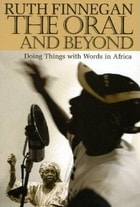
The Oral and Beyond
Doing Things with Words in AfricaRuth Finnegan
University of Chicago Press, 2007
The Oral and Beyond looks simultaneously backwards and forwards, reviewing and critiquing the achievements of scholarship on African oral literature, revisiting issues of perennial contention, and highlighting some of the most interesting new ideas and approaches in the field. Exploring such fundamental questions as how texts and textuality relate to performance, how ideology inflects language, and how traditional forms adapt to modern media and popular culture, Finnegan essentially crafts an intellectual history of her field. At the same time, she propels the ethnography of language forward, bringing the techniques and knowledge developed through her fieldwork in Africa to bear on issues that transcend African studies and reach into the larger world of anthropology and beyond.
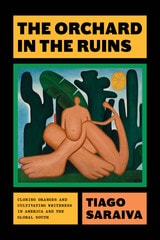
The Orchard in the Ruins
Cloning Oranges and Cultivating Whiteness in America and the Global SouthTiago Saraiva
University of Chicago Press, 2026
Ingeniously connects the history of citrus cultivation to the production and maintenance of whiteness in sites around the world.
In The Orchard in the Ruins, acclaimed historian Tiago Saraiva illuminates the global impact of cloning Californian oranges, a practice that emerged in the aftermath of the great depression of the 1890s. Cloning promised control, uniformity, and resistance to an array of environmental and economic threats. But Californian orchards—white-owned but tended by workers of Chinese, Japanese, Mexican, or Indigenous origin—were also places where plantations and race intertwined. Agricultural anxieties about strains of oranges and their value, Saraiva shows, formed a continuum with anxieties about vanishing whiteness.
The Orchard in the Ruins connects Californian history to other sites of citrus cultivation: South Africa, where concerns about white poverty grew during the early twentieth century; Mandatory Palestine, where orchards were key to Zionist undertakings; colonial Algeria, where French settlers transformed the landscape with European farming techniques; and Brazil, where orchards were cultivated post-abolition. Drawing on local histories as well as the works of John Dewey, J. M. Coetzee, Edward Said, Frantz Fanon, and artist Tarsila do Amaral, Saraiva shows that in each place, orchards grew in the wake of specific historical crises. Orange cultivation was a transnational project in cultivating whiteness, one in which studies of fruits, buds, rootstocks, fungi, and viruses became race-making experiments.
A must-read for anyone interested in the history of science, technology, agriculture, and race, The Orchard in the Ruins reveals a troubled account of science-led attempts to remedy crumbling worlds.
The Organization of Journalism
Market Models and Practice in a Fraying ProfessionPatrick Ferrucci
University of Illinois Press, 2024
Using rich interviews and participant observation, Patrick Ferrucci examines institutions with funding mechanisms that range from traditional mogul ownership and online-only nonprofits to staff-owned cooperatives and hedge fund control. The variations in market models have frayed the tenets of professionalization, with unique work cultures emerging from each organization’s focus on its mission and the implantation of its own processes and ethical guidelines. As a result, the field of American journalism no longer shares uniform newsgathering practices and a common identity, a break with the past that affects what information we consume today and what the press will become tomorrow.
An inside look at a fracturing profession, The Organization of Journalism illuminates the institution’s expanding impact on newsgathering and the people who practice it.
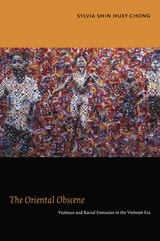
The Oriental Obscene
Violence and Racial Fantasies in the Vietnam EraSylvia Shin Huey Chong
Duke University Press, 2011
The Origin and Development of the Pueblo Katsina Cult
E. Charles Adams
University of Arizona Press, 1991

The Origin of Table Manners
Mythologiques, Volume 3Claude Lévi-Strauss
University of Chicago Press, 1990
"An immense anthropological erudition is here wielded by one of the world's finest minds, and the myths themselves have never been taken more seriously. . . . [Lévi-Strauss] raises issues and then resolves them with the suspenseful cunning of a mystery novelist."—John Updike, New Yorker

The Originals
New York Celtics Invent Modern BasketballMurry Nelson
University of Wisconsin Press, 1999
The Origins of Agriculture
An International PerspectiveEdited by C. Wesley Cowan and Patty Jo Watson
University of Alabama Press, 2006
The eight case studies in this book -- each a synthesis of available knowledge about the origins of agriculture in a specific region of the globe -- enable scholars in diverse disciplines to examine humanity's transition to agricultural societies. Contributors include: Gary W. Crawford, Robin W. Dennell, and Jack R. Harlan.
The Origins of Capitalism and the "Rise of the West"
Eric H. Mielants
Temple University Press, 2008
The Origins of Human Diet and Medicine
Chemical EcologyTimothy Johns
University of Arizona Press, 1990
The domestication of the potato serves as the focus of Timothy Johns’s interdisciplinary study, which forges a bold synthesis of ethnobotany and chemical ecology. The Aymara of highland Bolivia have long used varieties of potato containing potentially toxic levels of glycoalkaloids, and Johns proposes that such plants can be eaten without harm owing to human genetic modification and cultural manipulation. Drawing on additional fieldwork in Africa, he considers the evolution of the human use of plants, the ways in which humans obtain foods from among the myriad poisonous and unpalatable plants in the environment, and the consequences of this history for understanding the basis of the human diet. A natural corollary to his investigation is the origin of medicine, since the properties of plants that make them unpalatable and toxic are the same properties that make them useful pharmacologically.
As our species has adapted to the use of plants, plants have become an essential part of our internal ecology. Recovering the ancient wisdom regarding our interaction with the environment preserves a fundamental part of our human heritage.
Originally published in hardcover as With Bitter Herbs They Shall Eat It: Chemical Ecology and the Origins of Human Diet and Medicine
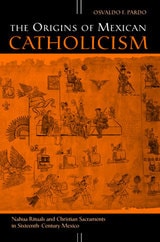
The Origins of Mexican Catholicism
Nahua Rituals and Christian Sacraments in Sixteenth-Century MexicoOsvaldo F. Pardo
University of Michigan Press, 2004
---Fernando Cervantes, Bristol University, UK
"Pardo does an excellent job of balancing and contrasting sixteenth-century Catholic theology with Nahua thought and belief."
---John F. Schwaller, University of Minnesota
At first glance, religious conversion may appear to be only a one-way street. When studying sixteenth-century Mexico, one might assume that colonial coercion was the driving force behind the religious conversion of the native population. But The Origins of Mexican Catholicism shows how Spanish missionaries instead drew on existing native ceremonies in order to make Christianity more accessible to the Nahua population whom they were trying to convert.
Osvaldo F. Pardo explains that religious figures not only shaped native thought, but that indigenous rituals had an impact on the religion itself. This work illustrates the complex negotiations that took place in the process of making the Christian sacraments available to the native peoples, and at the same time, forced the missionaries to reexamine the meaning of their sacraments through the eyes of an alien culture.
For Spanish missionaries, ritual not only became a focus of evangelical concern but also opened a window to the social world of the Nahuas. Missionaries were able to delve into the Nahua's notions of self, emotions, and social and cosmic order. By better understanding the sociological aspects of Nahua culture, Christians learned ways to adequately convey their religion through mutual understanding instead of merely colonial oppression.
Given its interdisciplinary approach, this book will be of interest to specialists in Latin American intellectual and literary history, the history of religion, and anthropology, and to anyone interested in cross-cultural processes.

The Origins of Southwestern Agriculture
R. G. Matson
University of Arizona Press, 1991

The Origins of Violence
Religion, History and GenocideJohn Docker
Pluto Press, 2008
Genocide is commonly understood to be a terrible aberration in human behaviour, performed by evil, murderous regimes such as the Nazis and dictators like Suharto and Pinochet. John Docker argues that the roots of genocide go far deeper into human nature than most people realise.
Genocide features widely in the Bible, the literature of ancient Greece and Rome, and debates about the Enlightenment. These texts are studied in depth to trace the origins of violence through time and across civilisations. Developing the groundbreaking work of Raphaël Lemkin, who invented the term 'genocide', Docker guides us from the dawn of agricultural society, through classical civilisation to the present, showing that violence between groups has been integral to all periods of history.
This revealing book will be of great interest to those wishing to understand the roots of genocide and why it persists in the modern age.

The Origins of the Authoritarian Welfare State in Prussia
Conservatives, Bureaucracy, and the Social Question, 1815-70Hermann Beck
University of Michigan Press, 1997
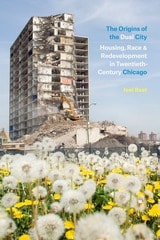
The Origins of the Dual City
Housing, Race, and Redevelopment in Twentieth-Century ChicagoJoel Rast
University of Chicago Press, 2019
The Origins of the Welfare State
Women, Work, and the French RevolutionLisa DiCaprio
University of Illinois Press, 2005
Women workers and the revolutionary origins of the modern welfare state
In May 1790, the French National Assembly created spinning workshops (ateliers de filature) for thousands of unemployed women in Paris. These ateliers disclose new aspects of the process which transformed Old Regime charity into revolutionary welfare initiatives characterized by secularization, centralization, and entitlements based on citizenship. This study is the first to examine women and the welfare state in its formative period at a time when modern concepts of human rights were elaborated.
In The Origins of the Welfare State, Lisa DiCaprio reveals how the women working in the ateliers, municipal welfare officials, and the national government vied to define the meaning of revolutionary welfare throughout the Revolution. Presenting demands for improved wages and working conditions to a wide array of revolutionary officials, the women workers exercised their rights as "passive citizens" capaciously and shaped the meanings of work, welfare, and citizenship. Looking backward to the Old Regime and forward to the nineteenth century, this study explores the interventionist spirit that characterized liberalism in the eighteenth century and serves as a bridge to the history of entitlements in the nineteenth and twentieth centuries.
The Other Air Force
U.S. Efforts to Reshape Middle Eastern Media Since 9/11Sienkiewicz, Matt
Rutgers University Press, 2016
As it seeks to win the hearts and minds of citizens in the Muslim world, the United States has poured millions of dollars into local television and radio programming, hoping to generate pro-American currents on Middle Eastern airwaves. However, as this fascinating new book shows, the Middle Eastern media producers who rely on these funds are hardly puppets on an American string, but instead contribute their own political and creative agendas while working within U.S. restrictions.
The Other Boston Busing Story
What's Won and Lost Across the Boundary LineSusan E. Eaton
Brandeis University Press, 2020