Results by title
18284 books match the query 'United States' and 3764 start with t
The Politics of Trust
Reubin Askew and Florida in the 1970sGordon E. Harvey
University of Alabama Press, 2015
Askew rose to power on a wave of “New South” leadership that hoped to advance the Democratic Party beyond the intransigent torpor of southern politics since the Civil War. He hoped to replace appeals to white supremacy with a vision of a more diverse and inclusive party. Following his election in Florida, other New South leaders such as Georgia’s Jimmy Carter, Arkansas’s Dale Bumpers, and South Carolina’s John C. West all came to power.
Audacious and gifted, Askew was one of six children raised by a single mother in Pensacola. As he worked his way up through the ranks of the state legislature, few in Florida except his constituents knew his name when he challenged Republic incumbent Claude R. Kirk Jr. on a populist platform promising higher corporate taxes. When he won, he inaugurated a series of reforms, including a new 5 percent corporate income tax; lower consumer, property, and school taxes; a review of penal statutes; environmental protections; higher welfare benefits; and workers’ compensation to previously uncovered migrant laborers.
Touting honesty, candor, and transparency, Askew dubbed his administration “government in the sunshine.” Harvey demonstrates that Askew’s success was not in spite of his penchant for bold, sometimes unpopular stances, but rather because his mix of unvarnished candor, sober ethics, and religious faith won the trust of the diverse peoples of his state.
The Politics of Value
Three Movements to Change How We Think about the EconomyJane L. Collins
University of Chicago Press, 2017
Each case shows how the concrete actions of a group of citizens can prompt us to reflect on what is needed for a just and sustainable economic system. In one case, activists raised questions about the responsibilities of business, in the second about the significance of local economies, and in the third about the contributions of the public sector. Through these movements, Jane L. Collins maps a set of cultural conversations about the types of investments and activities that contribute to the health of the economy. Compelling and persuasive, The Politics of Value offers a new framework for viewing economic value, one grounded in thoughtful assessment of the social division of labor and the relationship of the state and the market to civil society.
The Politics of Virtue
Is Abortion Debatable?Elizabeth Mensch and Alan Freeman
Duke University Press, 1993
Returning to the years leading up to Roe v. Wade, Mensch and Freeman detail the role of religion and its relationship to the emerging politics of abortion. Discussing primarily the natural law tradition associated with Catholicism and the Protestant ethical tradition, the authors focus most sharply on the 1960s in which the present terms of the abortion debate were set. In a skillful analysis, they identify a variety of factors that directed and shaped the debate--including, among others, the haunting legacy of Nazism, the moral challenge of the civil rights movement, the "God is dead" discourse, school prayer and Bible reading, Harvey Cox's The Secular City, the Berrigans and Vietnam, the animal rights movement, and the movement of the church-going population away from mainstream Protestant tradition toward evangelical fundamentalism. By criticizing the rhetoric employed by both the "pro-choice" and "pro-life" camps, Mensch and Freeman reveal the extent to which forces on either side of the issue have failed to respond to relevant concerns. Since Roe v. Wade, the authors charge, public debate has seemed to concede the moral high ground to the "pro-life" position, while the "pro-choice" rhetoric has appeared to defend an individual's legal right to do moral wrong. Originally published as a special issue of The Georgia Law Review (Spring 1991), this revised and expanded edition will be welcomed by all those frustrated by the impasse of debates so central to our nation's moral life.
The Politics of Water in Arizona
Dean E. Mann
University of Arizona Press, 1963
The Politics of Western Water
The Congressional Career of Wayne AspinallStephen C. Sturgeon
University of Arizona Press, 2002

The Politics of the Canoe
Bruce Erickson
University of Manitoba Press, 2021

The Politics of the Minimum Wage
Jerold Waltman
University of Illinois Press, 2000
The minimum wage appears to be a standard economic regulatory measure, yet a politics of symbolism more than anything else defines the political contests that periodically erupt over it. Detractors abhor its corruption of market principles, while supporters see it as a measure of society's symbolic commitment to the poor.
Tracing the history of the minimum wage and exposing its inherent contradictions as a political issue, Jerold Waltman proposes an alternative to the economic arguments that now dominate debates over it. Citing overwhelming public support for the minimum wage as evidence of an enduring civic consciousness and humanitarianism, Waltman advocates recasting the discussion in terms of a political economy of citizenship. Such a perspective would focus on the communal value of work, the need for citizens to have a stake in the community, and the effects of economic inequality on the bonds of common citizenship.
Positioning the minimum wage as a fulcrum for the most basic conflict underlying America's unique combination of democracy and a market economy, The Politics of the Minimum Wage shows how a defense of the minimum wage built on a communal sense of responsibility rests on a strong tradition of civic republicanism and strengthens the hope for a truly democratic society.
The Poorhouse
Subsidized Housing in ChicagoDevereux Bowly Jr.
Southern Illinois University Press, 2012
Chicago seems an ideal environment for public housing because of the city’s relatively young age among major cities and well-deserved reputation for technology, innovation, and architecture. Yet The Poorhouse: Subsidized Housing in Chicago shows that the city’s experience on the whole has been a negative one, raising serious questions about the nature of subsidized housing and whether we should have it and, if so, in what form.
Bowly, a native of the city, provides a detailed examination of subsidized housing in the nation’s third-largest city. Now in its second edition, The Poorhouse looks at the history of public housing and subsidized housing in Chicago from 1895 to the present day. Five new chapters that cover the decline and federal takeover of the Chicago Housing Authority, and its more recent “transformation,” which involved the demolition of the CHA family high-rise buildings and in some cases their replacement with low-risemixed income housing on the same sites. Fifty new photos supplement this edition.
Certificate of Excellence from the Illinois State Historical Society, 2013
The Popular Press Companion to Popular Literature
Victor E. Neuburg
University of Wisconsin Press, 1983
The Popular Wobbly
Selected Writings of T-Bone SlimT-Bone Slim
University of Minnesota Press, 2025
The first critical edition of the writings of the prolific radical workers’ newspaper columnist and musician who rode the rails during the Great Depression
The Popular Wobbly brings together a wide selection of writings by T-Bone Slim, the most popular and talented writer belonging to the Industrial Workers of the World (IWW). Slim wrote humorous, polemical pieces, engaging with topics like labor and class injustice, which were mostly published in IWW publications from 1920 until his death in 1942. Although relatively little is known about Slim, editors Owen Clayton and Iain McIntyre coalesce the latest research on this enigmatic character to create a vivid portrait that adds valuable context for the array of writings assembled here.
Known as “the laureate of the logging camps,” Slim also composed numerous songs that have been performed and recorded by Pete Seeger, Utah Phillips, and Candie Carawan, who in 1960 updated Slim’s song “The Popular Wobbly” with Civil Rights–era lyrics. Slim’s witticisms, sayings, and exhortations (“Wherever you find injustice, the proper form of politeness is attack”; “Only the poor break laws—the rich evade them”) were widely discussed among fellow hobos across the “jungle” campfires that dotted the railways, and some even transcribed his commentary on boxcars that traveled the country. Yet despite Slim’s importance and fame during his lifetime, his work disappeared from public view almost immediately after his death.
The Popular Wobbly is the first critical edition of Slim’s work and also a significant contribution to literature about working-class writers, the radical labor movement, and the history and culture of nomadism and precarity. With this publication, Slim’s rediscovered writings can once again inspire artists and activists to march and agitate for a more just and equitable world.

The Port of Houston
A HistoryBy Marilyn McAdams Sibley
University of Texas Press, 1968
Sam Houston's army reached Buffalo Bayou on April 18, 1836, and the ensuing Battle of San Jacinto called attention to the "meandering stream" as a link between the interior of sprawling Texas and the sea.
Early in Texas history, the waterway that would one day be known as the Houston Ship Channel evoked dreams in the minds of the enterprising. How these dreams became realities that surpassed all expectation is the subject of Marilyn McAdams Sibley's The Port of Houston: A History. It is the story of the growth of an unlikely inland port situated at a "tent city" that many Texans thought would die young. It proves, as an early visitor to Houston noted, that future greatness depends not so much on location of port or town as on an enterprising population.
Controversy between dreamers and promoters is a large part of the story. Was Houston or Harrisburg the head of navigation? Was the shallow stream valuable enough to the nation to warrant the costly deep-water dredging? Was Houston or Galveston to command the trade where land and water meet?
As the issues were settled, Houston had spread out to overtake Harrisburg; deep water was achieved in 1914 and was celebrated by ceremonies in which the President of the United States played a part; and Galveston grew into a self-contained island metropolis while Houston became, in the words of Sibley, "the perennial boom town of twentieth-century Texas."
As the Port of Houston continued to grow into a multi-billion-dollar institution serving and served by the cotton, wheat, oil, and space industries, its full economic impact on the city of Houston, the state, and the nation cannot be estimated in dollars and cents. But a glance at the trade statistics in the Appendix alone will give some idea of the world-wide value of this thriving port.
The many interesting illustrations accompanying Mrs. Sibley's story show in graphic terms the growth of a small town on a stream "of a very inconvenient size;—not quite narrow enough to jump over, a little too deep to wade through without taking off your shoes" into an international complex through which almost $4 billion in cargo passed in its fiftieth-anniversary year.

The Portable Radio in American Life
Michael Brian Schiffer
University of Arizona Press, 1991
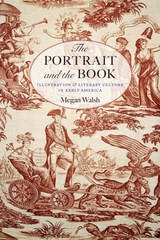
The Portrait and the Book
Illustration and Literary Culture in Early AmericaMegan Walsh
University of Iowa Press, 2017
Illustrations played a key role in American literary culture despite the fact there was little demand for books by American writers. Indeed, most of the illustrated books bought, sold, and shared by Americans were either imported British works or reprinted versions of those imported editions. As a result, in addition to embellishing books, illustrations provided readers with crucial information about the country’s status as a former colony.
Through an examination of readers’ portrait-collecting habits, writers’ employment of ekphrasis, printers’ efforts to secure American-made illustrations for periodicals, and engravers’ reproductions of British book illustrations, Walsh uncovers in late eighteenth-century America a dynamic but forgotten visual culture that was inextricably tied to the printing industry and to the early US literary imagination.
The Positive Case for Negative Campaigning
Kyle Mattes and David P. Redlawsk
University of Chicago Press, 2015
The most comprehensive treatment of negative campaigning to date, The Positive Case for Negative Campaigning uses models, surveys, and experiments to show that much of the seeming dislike of negative campaigning can be explained by the way survey questions have been worded. By failing to distinguish between baseless and credible attacks, surveys fail to capture differences in voters’ receptivity. Voters’ responses, the authors argue, vary greatly and can be better explained by the content and believability of the ads than by whether the ads are negative. Mattes and Redlawsk continue on to establish how voters make use of negative information and why it is necessary. Many voters are politically naïve and unlikely to make inferences about candidates’ positions or traits, so the ability of candidates to go on the attack and focus explicitly on information that would not otherwise be available is crucial to voter education.
The Possessive Investment in Whiteness
How White People Profit from Identity PoliticsGeorge Lipsitz
Temple University Press, 2018
George Lipsitz’s classic book The Possessive Investment in Whiteness argues that public policy and private prejudice work together to create a possessive investment in whiteness that is responsible for the racialized hierarchies of our society. Whiteness has a cash value: it accounts for advantages that come to individuals through profits made from housing secured in discriminatory markets, through the unequal educational opportunities available to children of different races, through insider networks that channel employment opportunities to the friends and relatives of those who have profited most from past and present discrimination, and especially through intergenerational transfers of inherited wealth that pass on the spoils of discrimination to succeeding generations. White Americans are encouraged to invest in whiteness, to remain true to an identity that provides them with structured advantages.
In this twentieth anniversary edition, Lipsitz provides a new introduction and updated statistics; as well as analyses of the enduring importance of Hurricane Katrina; the nature of anti-immigrant mobilizations; police assaults on Black women, the killings of Trayvon Martin, Michael Brown, and Freddie Gray; the legacy of Obama and the emergence of Trump; the Charleston Massacre and other hate crimes; and the ways in which white fear, white fragility, and white failure have become drivers of a new ethno-nationalism.
As vital as it was upon its original publication, the twentieth anniversary edition of The Possessive Investment in Whiteness is an unflinching but necessary look at white supremacy.
The Possessive Investment in Whiteness
How White People Profit from Identity Politics, Revised and Expanded EditionGeorge Lipsitz
Temple University Press, 2006
The Possibility of Popular Justice
A Case Study of Community Mediation in the United StatesSally Engle Merry and Neal Milner, Editors
University of Michigan Press, 1995
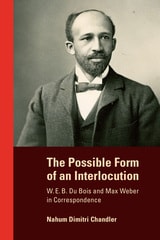
The Possible Form of an Interlocution
W. E. B. Du Bois and Max Weber in CorrespondenceNahum Dimitri Chandler
Duke University Press, 2025
The Post-Cold War Trading System
Who's on First?Sylvia Ostry
University of Chicago Press, 1997
With keen historical awareness, Ostry examines the role of key economic power brokers, particularly the United States, in the reconstruction and reconfiguration of an international economy after World War II. She argues that U.S. policy efforts were so successful that they led to an unprecedented renewal of economic growth, living standards, and education levels in postwar Europe and Japan. Ironically, those same policy successes unintentionally fostered the relative decline of U.S. dominance on the world trade scene as the reduction of trade and investment barriers prompted friction and conflict between different kinds of capitalist systems.
Identifying the historical and legal issues key to postwar trade policy, Ostry has commandingly charted our economic course through the last half of this century and, perhaps, into the next.
"Sylvia Ostry knows this subject as few others do, both as a scholar of international trade issues and a major player in the ongoing negotiations that have created the rules of the trade game. The Post-Cold War Trading System is a fine summary of where we've been and where we ought to be going."—Peter Passell, economic scene columnist for The New York Times
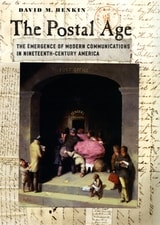
The Postal Age
The Emergence of Modern Communications in Nineteenth-Century AmericaDavid M. Henkin
University of Chicago Press, 2006
Americans commonly recognize television, e-mail, and instant messaging as agents of pervasive cultural change. But many of us may not realize that what we now call snail mail was once just as revolutionary. As David M. Henkin argues in The Postal Age, a burgeoning postal network initiated major cultural shifts during the nineteenth century, laying the foundation for the interconnectedness that now defines our ever-evolving world of telecommunications.
This fascinating history traces these shifts from their beginnings in the mid-1800s, when cheaper postage, mass literacy, and migration combined to make the long-established postal service a more integral and viable part of everyday life. With such dramatic events as the Civil War and the gold rush underscoring the importance and necessity of the post, a surprisingly broad range of Americans—male and female, black and white, native-born and immigrant—joined this postal network, regularly interacting with distant locales before the existence of telephones or even the widespread use of telegraphy. Drawing on original letters and diaries from the period, as well as public discussions of the expanding postal system, Henkin tells the story of how these Americans adjusted to a new world of long-distance correspondence, crowded post offices, junk mail, valentines, and dead letters.
The Postal Age paints a vibrant picture of a society where possibilities proliferated for the kinds of personal and impersonal communications that we often associate with more recent historical periods. In doing so, it significantly increases our understanding of both antebellum America and our own chapter in the history of communications.
The Postgenomic Condition
Ethics, Justice, and Knowledge after the GenomeJenny Reardon
University of Chicago Press, 2017
Drawing on more than a decade of research—in molecular biology labs, commercial startups, governmental agencies, and civic spaces—Reardon demonstrates how the extensive efforts to transform genomics from high tech informatics practiced by a few to meaningful knowledge beneficial to all exposed the limits of long-cherished liberal modes of knowing and governing life. Those in the American South challenged the value of being included in genomics when no hospital served their community. Ethicists and lawyers charged with overseeing Scottish DNA and data questioned how to develop a system of ownership for these resources when their capacity to create things of value—new personalized treatments—remained largely unrealized. Molecular biologists who pioneered genomics asked whether their practices of thinking could survive the deluge of data produced by the growing power of sequencing machines. While the media is filled with grand visions of precision medicine, The Postgenomic Condition shares these actual challenges of the scientists, entrepreneurs, policy makers, bioethicists, lawyers, and patient advocates who sought to leverage liberal democratic practices to render genomic data a new source of meaning and value for interpreting and caring for life. It brings into rich empirical focus the resulting hard on-the-ground questions about how to know and live on a depleted but data-rich, interconnected yet fractured planet, where technoscience garners significant resources, but deeper questions of knowledge and justice urgently demand attention.
The Poverty Law Canon
Exploring the Major CasesMarie A. Failinger and Ezra Rosser, Editors
University of Michigan Press, 2016
Noted legal scholars explain the legal precedent created by each case and set the case within its historical and political context in a way that will assist students and advocates in poverty-related disciplines in their understanding of the implications of these cases for contemporary public policy decisions in poverty programs. Whether the focus is on the clients, on the lawyers, or on the justices, the stories in The Poverty Law Canon illuminate the central legal themes in federal poverty law of the late 20th century and the role that racial and economic stereotyping plays in shaping American law.
The Powell Expedition
New Discoveries about John Wesley Powell's 1869 River JourneyDon Lago
University of Nevada Press, 2017
Lago offers a feast of new and important material about the river trip, and it will significantly rewrite the story of Powell’s famous expedition. This book is not only a major work on the Powell expedition, but on the history of American exploration of the West.
The Powell Papers
A Confidence Man Amok Among the Anglo-American LiteratiHershel Parker
Northwestern University Press, 2011
In 1849—months before the term “confidence man” was coined to identify a New York crook—Thomas Powell (1809–1887), a spherical, monocled, English poetaster, dramatist, journalist, embezzler, and forger, landed in Manhattan. Powell in London had capped a career of grand theft and literary peccadilloes by feigning a suicide attempt and having himself committed to a madhouse, after which he fled England. He had been an intimate of William Wordsworth, Elizabeth Barrett, Robert Browning, Charles Dickens, and a crowd of lesser literary folk.
Thoughtfully bearing what he presented as a volume of Tennyson with a few trifling revisions in the hand of the poet, Powell was embraced by the slavishly Anglophile New York literary establishment, including a young Herman Melville. In two pot-boilers—The Living Authors of England (1849) and The Living Authors of America (1850)—Powell denounced the most revered American author, Washington Irving, for plagiarism; provoked Charles Dickens to vengeful trans-Atlantic outrage and then panic; and capped his insolence by identifying Irving and Melville as the two worst “enemies of the American mind.” For almost four more decades he sniped at Dickens, put words in Melville’s mouth, and survived even the most conscientious efforts to expose him. Long fascinated by this incorrigible rogue, Hershel Parker in The Powell Papers uses a few familiar documents and a mass of freshly discovered material (including a devastating portrait of Powell in a serialized novel) to unfold a captivating tale of skullduggery through the words of great artists and then-admired journalists alike.
The Power Structure of American Business
Beth A. Mintz and Michael Schwartz
University of Chicago Press, 1985
The Power We Need Right Now
Black Sororities and Black Radical Movements of the 1970sAisha A. Upton Azzam
Temple University Press, 2026
There is a long history of sororities such as Alpha Kappa Alpha (AKA) and Delta Sigma Theta (Delta) participating in activism and social justice efforts—from the Civil Rights Movement in the 1960s to Kamala Harris’s recent political campaigns. But radical movements like Black Lives Matter have posed more challenging questions for these organizations.
In The Power We Need Right Now, Aisha Upton Azzam investigates the legacies of AKA and Delta to understand the considerations that weigh on their engagement with present day Black movements. These organizations wield a significant amount of political power to mobilize in support of their causes. The response each sorority has had to movements fifty years apart is strikingly similar—even if their approaches are quite different.
Using a Black feminist theoretical framework, Upton Azzam brings context and meaning to the interactions of these sororities with Black radical movements. She highlights the costs communities bear from sororities’ adherence to respectability and racial uplift ideologies by tracing each sorority’s history and response to emerging Black feminist and Black Power movements during the tumultuous 1970s.
The Power We Need Right Now emphasizes that Black communities still have the ability to wield their political power and influence to further the struggle for Black liberation.
The Power of Culture
Critical Essays in American HistoryEdited by Richard Wightman Fox and T. J. Jackson Lears
University of Chicago Press, 1993
More and more scholars are turning to cultural history in order to make sense of the American past. This volume brings together nine original essays by some leading practitioners in the field. The essays aim to exhibit the promise of a cultural approach to understanding the range of American experiences from the seventeenth century to the present.
Expanding on the editors' pathbreaking The Culture of Consumption, the contributors to this volume argue for a cultural history that attends closely to language and textuality without losing sight of broad configurations of power that social and political history at its best has always stressed. The authors here freshly examine crucial topics in both private and public life. Taken together, the essays shed new light on the power of culture in the lives of Americans past and present.

The Power of Two
A Twin Triumph Over Cystic FibrosisIsabel Byrnes and Anabel Stenzel
University of Missouri Press, 2007
For most people, a diagnosis of cystic fibrosis means the certainty of a life ended too soon. But for twin girls with the disease, what began as a family’s stubborn determination grew into a miracle.
The tragedy of CF has been touchingly recounted in such books as Frank Deford’s Alex: The Life of a Child, but The Power of Two is the first book to portray the symbiotic relationship between twins who share this life-threatening disease through adulthood. Isabel Stenzel Byrnes and Anabel Stenzel tell of their lifelong struggle to pursue normal lives with cystic fibrosis while grappling with the realization that they will die young. Their story reflects the physical and emotional challenges of a particularly aggressive form of CF and tells how the twins’ bicultural heritage—Japanese and German—influenced the way they coped with these challenges.
Born in 1972, seventeen years before scientists discovered the genetic mutation that causes CF, Isabel and Anabel endured the daily regimen of chest percussion, frequent doctor visits, and lengthy hospitalizations. But they tell how, in the face of innumerable setbacks, their deep-seated dependence on each other allowed them to survive long enough to reap the benefits of the miraculous lung transplants that marked a crossroads in their lives: “We have an old life—one of growing up with chronic illness—and a new life—one of opportunities and gifts we have never imagined before.” In this memoir, they pay tribute to the people who shaped their experience.
The Power of Two is an honest and gripping portrayal of day-to-day health care, the impact of chronic illness on marriage and family, and the importance of a support network to continuing survival. It conveys an important message to both popular and professional readers as it addresses key psychosocial issues in chronic illness throughout the sufferer’s lifespan and illuminates the human side of advances in biotechnology.
Even as gene therapy and stem cell research increase the chances for eradicating CF, this stirring account portrays its effects on one family that refused to give up. These two remarkable sisters have much to teach about the power of perseverance—and about the ultimate power of hope.

The Power of the Badge
Sheriffs and Inequality in the United StatesEmily M. Farris and Mirya R. Holman
University of Chicago Press, 2024
A sobering exploration of the near unchecked power of sheriffs in the United States.
Across the United States, more than 3,000 sheriffs occupy a unique position in the US political and legal systems. Elected by voters—usually in low-visibility, noncompetitive elections—sheriffs oversee more than a third of law enforcement employees and control almost all local jails. They have the power to both set and administer policies, and they can imprison, harm, and even kill members of their communities. Yet, they enjoy a degree of autonomy not seen by other political officeholders.
The Power of the Badge offers an unprecedented, data-rich look into the politics of the office and its effects on local communities. Emily M. Farris and Mirya R. Holman draw on two surveys of sheriffs taken nearly a decade apart, as well as election data, case studies, and administrative data to show how a volatile combination of authority and autonomy has created an environment where sheriffs rarely change; elections seldom create meaningful accountability; employees, budgets, and jails can be used for political gains; marginalized populations can be punished; and reforms fail. Farris and Holman also track the increasingly close linkages between sheriffs and right-wing radical groups in an era of high partisanship and intra-federal conflict.
The Power of the Steel-tipped Pen
Reconstructing Native Hawaiian Intellectual HistoryNoenoe K. Silva
Duke University Press, 2017
The Power to Destroy
How Bad Economics Drove America’s DeclineJames K. Galbraith
University of Chicago Press, 2026
Acclaimed economist James K. Galbraith sounds an urgent alarm: how conventional economic ideas and policies are unequipped to account for the most daunting challenges of our geopolitical moment.
Amid a mounting sense of American decline, Americans live with a new kind of dissonance: economists announcing that everything is fundamentally fine. Where growth is steady, unemployment is low, prices are (somewhat) stable, and stocks are high—what’s there to worry about?
The Power to Destroy shows that this dissonance reflects a failure to evolve. James K. Galbraith’s incisive history of economic policy in this century is grounded in the fundamental problem that today’s experts are still deploying tools from all yesterday’s wars: obsolete economic ideas, measures, and doctrines focused on market functioning and crude economic indicators like output and prices. These methods, many of them honed a century ago against a vastly different social landscape, offer little hope in the face of today’s more existential threats.
Such conventional policies, Galbraith argues, are increasingly ill-equipped to counter the daunting challenges of our moment—from inflation to trade sanctions, industrial cold wars, and climate change—and, left unacknowledged, are accelerating the end of the US economy as we know it. Shortcomings include the weak responses to the inflation of 2021-2022; the sanctions war against Russia; the rise of China; the weak and ineffective attempt at industrial revival; and the impending demographic crisis. All have roots in a flawed body of outdated economic thought that has been sustained for ideological rather than practical reasons. They now promise to hinder the United States in the emerging multipolar world.
As Galbraith makes plain, for all the virtues of the market system, governments and their policies make markets possible. The ideas behind the policies—for better or worse—will determine the fate of the US economy—and new and better ideas are urgently needed. The alternative—sticking with economic ideas and policies we know and currently use—brings the power to destroy us all.
The Power to Die
Slavery and Suicide in British North AmericaTerri L. Snyder
University of Chicago Press, 2015
In The Power to Die, Terri L. Snyder excavates the history of slave suicide, returning it to its central place in early American history. How did people—traders, plantation owners, and, most importantly, enslaved men and women themselves—view and understand these deaths, and how did they affect understandings of the institution of slavery then and now? Snyder draws on ships’ logs, surgeons' journals, judicial and legislative records, newspaper accounts, abolitionist propaganda and slave narratives, and many other sources to build a grim picture of slavery’s toll and detail the ways in which suicide exposed the contradictions of slavery, serving as a powerful indictment that resonated throughout the Anglo-Atlantic world and continues to speak to historians today.
The Powers That Be
David Halberstam
University of Illinois Press, 1979
Beginning with FDR's masterful use of radio to establish the sense of a personal, benevolently paternal relationship with the American people and culminating in the discovery and coverage of the Watergate break-in, Halberstam tracks the firm establishment of the media as a potent means of shaping both public opinion and public policy. He tells the story through vivid, intimate portraits of the men, women, and politics behind four key media organizations: CBS and its board chairman William S. Paley; Time magazine and its cofounder Henry Luce; the Washington Post and successive publishers Philip Graham and his wife, Katherine; and the Los Angeles Times and publishers Norman Chandler and his son, Otis.
The Powers of Dignity
The Black Political Philosophy of Frederick DouglassNick Bromell
Duke University Press, 2021

The Powers of War and Peace
The Constitution and Foreign Affairs after 9/11John Yoo
University of Chicago Press, 2005
John Yoo, formerly a lawyer in the Department of Justice, here makes the case for a completely new approach to understanding what the Constitution says about foreign affairs, particularly the powers of war and peace. Looking to American history, Yoo points out that from Truman and Korea to Clinton's intervention in Kosovo, American presidents have had to act decisively on the world stage without a declaration of war. They are able to do so, Yoo argues, because the Constitution grants the president, Congress, and the courts very different powers, requiring them to negotiate the country's foreign policy. Yoo roots his controversial analysis in a brilliant reconstruction of the original understanding of the foreign affairs power and supplements it with arguments based on constitutional text, structure, and history.
Accessibly blending historical arguments with current policy debates, The Powers of War and Peace will no doubt be hotly debated. And while the questions it addresses are as old and fundamental as the Constitution itself, America's response to the September 11 attacks has renewed them with even greater force and urgency.
“Yoo’s theory promotes frank discussion of the national interest and makes it harder for politicians to parade policy conflicts as constitutional crises. Most important, Yoo’s approach offers a way to renew our political system’s democratic vigor.”—David B. Rivkin Jr. and Carlos Ramos-Mrosovsky, National Review
The Powers
A NovelValerie Sayers
Northwestern University Press, 2015
In her inventive novel The Powers, Valerie Sayers, in both realistic and fantastic chapters, transports the reader to an age filled with giants: Dorothy Day and Walker Evans appear beside DiMaggio. The problems they face, from Catholic antisemitism to the challenge of pacifism in the face of overwhelming evil, play out in very public media, among them the photography of Evans and the baseball of DiMaggio. At once magical and familiar, The Powers is a story of witness and moral responsibility that will, like Joe DiMaggio, find some unlikely fans.

The Pox of Liberty
How the Constitution Left Americans Rich, Free, and Prone to InfectionWerner Troesken
University of Chicago Press, 2015
Werner Troesken looks at the history of the United States with a focus on three diseases—smallpox, typhoid fever, and yellow fever—to show how constitutional rules and provisions that promoted individual liberty and economic prosperity also influenced, for good and for bad, the country’s ability to eradicate infectious disease. Ranging from federalism under the Commerce Clause to the Contract Clause and the Fourteenth Amendment, Troesken argues persuasively that many institutions intended to promote desirable political or economic outcomes also hindered the provision of public health. We are unhealthy, in other words, at least in part because our political and legal institutions function well. Offering a compelling new perspective, The Pox of Liberty challenges many traditional claims that infectious diseases are inexorable forces in human history, beyond the control of individual actors or the state, revealing them instead to be the result of public and private choices.

The Practical Handbook of Library Architecture
Creating Building Spaces that WorkFred Schlipf
American Library Association, 2018
The Practice of U.S. Women's History
Narratives, Intersections, and DialoguesEdited by S. Jay Kleinberg, Eileen Boris, and Vicki L. Ruiz
Rutgers University Press, 2008
In the last several decades, U.S. women’s history has come of age. Not only have historians challenged the national narrative on the basis of their rich explorations of the personal, the social, the economic, and the political, but they have also entered into dialogues with each other over the meaning of women’s history itself.
In this collection of seventeen original essays on women’s lives from the colonial period to the present, contributors take the competing forces of race, gender, class, sexuality, religion, and region into account. Among many other examples, they examine how conceptions of gender shaped government officials’ attitudes towards East Asian immigrants; how race and gender inequality pervaded the welfare state; and how color and class shaped Mexican American women’s mobilization for civil and labor rights.

The Pragmatic Mind
Explorations in the Psychology of BeliefMark Bauerlein
Duke University Press, 1997
Bauerlein extracts from Emerson, James, and Peirce an intellectual focus that can be used to advance the broad social and academic reforms that the new pragmatists hail. He claims that, in an effort to repudiate the phony universalism of much contemporary theory, the new generation of theorists has ignored the fact that its visions of pragmatic action are grounded in this "old" school, not just in a way of doing things but also in a way of thinking about things. In other words, despite its inclination to regard psychological questions as irrelevant, Bauerlein shows that the pragmatic method demands a pragmatic mind—that is, a concept of cognition, judgment, habit, and belief. He shows that, in fact, such a concept of mind does exist, in the work of the "old" pragmatists.
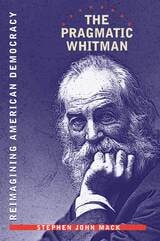
The Pragmatic Whitman
Reimaining American DemocracyStephen John Mack
University of Iowa Press, 2002
In this surprisingly timely book, Stephen Mack examines Whitman’s particular and fascinating brand of patriotism: his far-reaching vision of democracy. For Whitman, loyalty to America was loyalty to democracy. Since the idea that democracy is not just a political process but a social and cultural process as well is associated with American pragmatism, Mack relies on the pragmatic tradition of Emerson, James, Dewey, Mead, and Rorty to demonstrate the ways in which Whitman resides in this tradition.
Mack analyzes Whitman's democratic vision both in its parts and as a whole; he also describes the ways in which Whitman's vision evolved throughout his career. He argues that Whitman initially viewed democratic values such as individual liberty and democratic processes such as collective decision-making as fundamental, organic principles, free and unregulated. But throughout the 1860s and 1870s Whitman came to realize that democracy entailed processes of human agency that are more deliberate and less natural—that human destiny is largely the product of human effort, and a truly humane society can be shaped only by intelligent human efforts to govern the forces that would otherwise govern us.
Mack describes the foundation of Whitman’s democracy as found in the 1855 and 1856 editions of Leaves of Grass, examines the ways in which Whitman’s 1859 sexual crisis and the Civil War transformed his democratic poetics in “Sea-Drift,” “Calamus,” Drum-Taps,and Sequel to Drum-Taps, and explores Whitman’s mature vision in Democratic Vistas, concluding with observations on its moral and political implications today. Throughout, he illuminates Whitman's great achievement—learning that a full appreciation for the complexities of human life meant understanding that liberty can take many different and conflicting forms—and allows us to contemplate the relevance of that achievement at the beginning of the twenty-first century.
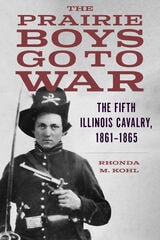
The Prairie Boys Go to War
The Fifth Illinois Cavalry, 1861-1865Rhonda M. Kohl
Southern Illinois University Press, 2013
The regiment’s history unfolds around major events in the Western Theater from 1861 to September 1865, including campaigns at Helena, Vicksburg, Jackson, and Meridian, as well as numerous little-known skirmishes. Although they were led almost exclusively by Northern-born Republicans, the majority of the soldiers in the Fifth Illinois remained Democrats. As Kohl demonstrates, politics, economics, education, social values, and racism separated the line officers from the common soldiers, and the internal friction caused by these cultural disparities led to poor leadership, low morale, disciplinary problems, and rampant alcoholism.
The narrative pulls the Fifth Illinois out of historical oblivion, elucidating the highs and lows of the soldiers’ service as well as their changing attitudes toward war goals, religion, liberty, commanding generals, Copperheads, and alcoholism. By reconstructing the cultural context of Fifth Illinois soldiers, Prairie Boys Go to War reveals how social and economic traditions can shape the wartime experience.

The Prairie Winnows Out Its Own
The West River Country of South Dakota in the Years of Depression and DustNelson, Paula M.
University of Iowa Press, 1996
Between 1900 and 1915, in the last great land rush, over one hundred thousand homesteaders flooded into the west river country of South Dakota, a land noted for its aridity and unpredictable weather, its treelessness, and its endless sky. The settlers of “the last, best west” weathered their first crisis in the severe drought of 1910-1911, which winnowed out many of the speculators and faint of heart; they abandoned their founding hopes of quick success and substituted a new ethos of “next year country”—while this year was hard, next year would be better, an ironic phrase at once optimistic and fatalistic.
“Next year,” however, was in many of those years not better. The collapse of the agricultural economy in the immediate aftermath of the boom years of World War I set in motion a pattern of regional decline amid national prosperity and cultural change: the rise of radio and mass culture increased rural folks' awareness of national trends and tastes, a development which paradoxically increased their own sense of remoteness and isolation. The failure of the farm economy to recover to any substantial degree in the twenties caused a less dramatic but cumulatively greater impact on the west river country's population and prospects—a second great crisis.
The Great Depression and the dustbowl years of the thirties were the greatest test of the west river people. The drought of 1910-1911, heretofore seen as the benchmark of bad times, faded even in the remembrances of the original pioneers in the face of the thirties' relentless drought, grasshoppers, blowing dust, and the accompanying starvation, struggle, and despair. The Depression in the west river country was a blast furnace from which a hardened yet still hopeful people emerged, scathed but undefeated. The Prairie Winnows Out Its Own is the voice of this experience.
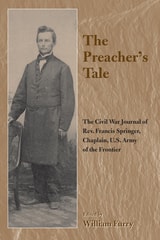
The Preacher's Tale
The Civil War Journal of Rev. Francis Springer, Chaplain, U.S. Army of the FrontierWilliam Furry
University of Arkansas Press, 2001
In the fall of 1861, fifty-one-year-old Rev. Francis Springer enlisted in the Union army. The following spring, Springer, a friend and one-time neighbor to Abraham Lincoln, rode away with the 10th Illinois Cavalry. A witness to the Battle of Prairie Grove (December 1862), Springer was later named post chaplain at Fort Smith, where, in additon to preaching and ministering to the troops, he was placed in charge of refugees—widows, orphans, and contrabands—the displaced victims of virulent guerrilla warfare in Northwest Arkansas. Springer also wrote articles and columns in the Fort Smith New Era under the pseudonym, “Thrifton.” Springer’s honest appraisals of life in the Army of the Frontier make for fascinating reading, and his unique perspective as moralist, educator, and journalist provide new insight into the Civil War and how it was fought in the West. The book includes several never-before published photographs and appendixes which feature accounts of six military executions that Springer participated in as a Union Army chaplain, the hitherto unpublished last letters home of two rebel soldiers condemned and executed at Fort Smith, as well as a eulogy for Abraham Lincoln.
The Preacher’s Tale includes several never before published photographs, and appendixes that contain accounts of six military executions that Springer participated in as a Union Army chaplain, the last letters home of two rebel soldiers condemned and executed at Fort Smith, as well as a eulogy written for Abraham Lincoln.
The Preceramic Horizons of Northeastern Oklahoma
David Albert Baerreis
University of Michigan Press, 1951
The Precious Birthright
Black Leaders and the Fight to Vote in Antebellum Rhode IslandCJ Martin
University of Massachusetts Press, 2024
In 1842, Black Rhode Islanders secured a stunning victory, a success rarely seen in antebellum America: they won the right to vote. Amid heightened public discourse around shifting ideas of race, citizenship, and political rights, they methodically deconstructed the arguments against their enfranchisement, exposing the arbitrariness of the color line in delineating citizenship rights and choosing the perfect moments in which to act forcefully. At the head of this movement, a cohort of prominent business and community members formed an early example of a Black leadership class in the US.
CJ Martin draws upon a wealth of sources—including personal correspondences, government and organizational documents, tax records, and petitions—to argue that Black leaders employed a unique combination of agitation and accommodation to ensure the success of the movement. By investigating their tactics, Martin deepens the story of how race played a crucial role in American citizenship, and by focusing on Black leadership, he relates this history through the people who lived it—who thought, debated, petitioned, and enacted their own liberation. Telling the story of a fight that was as important to the pioneers of interracial democracy as it was for the civil rights activists of the twentieth century, The Precious Birthright provides new insight into the larger story of Black freedom.
The Prehistoric Animal Ecology and Ethnozoology of the Upper Great Lakes Region
Charles Edward Cleland
University of Michigan Press, 1966
The Prehistoric People of the Fort Ancient Culture of the Central Ohio Valley
Louise M. Robbins and Georg K. Neumann
University of Michigan Press, 1972
The Prehistory of the Burnt Bluff Area
Edited by James E. Fitting
University of Michigan Press, 1968

The Prendergast Letters
Correspondence from Famine-Era Ireland, 1840–1850Shelley Barber
University of Massachusetts Press, 2006
Most important, the letters offer a rare contemporary, firsthand account of Ireland's an Gorta Mor, the Great Famine that began with the failure of the potato crop in 1845. Letters written in the months and years following the announcement of the first crop failure provide insight into not only the sufferings of one family but also the response of the community and nation as this crisis transformed Ireland.
James and Elizabeth Prendergast were the parents of six children. Their letters from Milltown, County Kerry, dictated to a scrivener, were posted to sons Thomas and Jeffrey and daughter Julia Riordan and her husband Cornelius, all of whom had emigrated in search of employment to Boston, Massachusetts—a city that would itself be transformed by the famine-era influx of Irish immigrants.
In addition to transcriptions of the forty-eight letters in the collection, this volume includes contextual essays by historian Ruth-Ann Harris and genealogist Marie Daly. The evidence of the letters themselves, along with the contributions of Harris and Daly, demonstrate the ways in which the family of James Prendergast was at once exceptional and typical.