Results by title
935 books match the query 'Ancient' and 221 start with t
Three Comedies
Aristophanes
University of Michigan Press, 1969
Thucydides Book I
A Students' Grammatical CommentaryH. D. Cameron
University of Michigan Press, 2003
Because Book I is not primarily historical narrative, it inevitably proves difficult for inexperienced readers. Despite the convolutions and density of Thucydides' prose style, no authoritative commentary has been published since the early days of the last century. H. D. Cameron is a renowned expert in Greek and comparative grammar and has written this handbook for all levels of classical students and scholars. His commentary authoritatively accounts for the last one hundred years of evolving grammatical and linguistic theory as they apply to the seminal work of Thucydides.
H. D. Cameron is Professor of Greek and Latin and Director of the Great Books Program at the University of Michigan.
Thutmose III
A New BiographyEric H. Cline and David O'Connor, Editors
University of Michigan Press, 2006
Thutmose III was without question one of Egypt's greatest pharaohs. His 54-year reign was packed with momentous events as well as being unusually long. Thutmose III includes an overview of his life, and detailed examinations of civil administration, the religion and cults, the monumental architecture and royal building program, royal tombs and iconography, royal portraiture and ideology, the artistic production, the Northern and Southern campaigns, as well as the Aegean and other foreign visitors to Egypt during Thutmose's time. Finally, the book concludes with a look at the end of his reign and the accession of Amenhotep II.
This extensive treatment of a pivotal figure in the ancient Mediterranean world during the Late Bronze Age will provide a uniquely comprehensive view of one of Egypt's greatest pharaohs and will be of interest to a wide audience, including specialists in Egypt and the Near East, graduate and undergraduate students, and those with a general interest in Egypt.
Eric H. Cline is Associate Professor of Ancient History and Archaeology in the Department of Classical and Semitic Languages and Literatures at George Washington University.
David O'Connor is Lila Acheson Wallace Professor of Ancient Egyptian Art and Archaeology at the New York University Institute of Fine Arts.
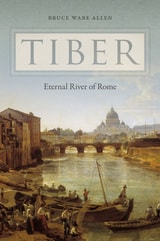
Tiber
Eternal River of RomeBruce Ware Allen
University Press of New England, 2018
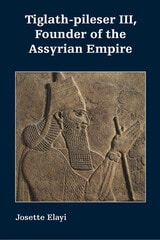
Tiglath-pileser III, Founder of the Assyrian Empire
Josette Elayi
SBL Press, 2022

Tissue of the World
The Nature of Ancient SympathyBrooke Holmes
University of Chicago Press, 0
A multidisciplinary account showing how ancient notions of sympathy changed ways of thinking about interconnectedness.
When we hear the word sympathy today, we tend to imagine the emotional bond between people. But for centuries, sympathy just as commonly brought to mind interdependencies between plants, rocks, and celestial bodies. It explained why magnets attract iron, how the stars influence human destiny, and why one trembles when one is afraid. It implicated human beings in a complex network of loves (sympathies) and hates (antipathies). The ancient notion of sympathy led to ways of thinking about community even beyond the boundaries of the human that continue to influence how we think about life, society, and Nature today.
This book offers the first comprehensive account of ancient sympathy, spanning the fifth century BCE to the third century CE. Tracing connections across works of philosophy, natural history, cosmology, medicine, and literature, Brooke Holmes argues that how people thought about sympathetic communities played a crucial role in shaping the idea of Nature as a webbed, well-ordered whole in the Hellenistic and Roman Imperial Mediterranean. From the scale of the organism to that of the cosmos, this book interrogates the ancient history of a protoecological, antimechanistic conception of Nature, proposing the richly textured thought-world of sympathy as a resource for rethinking and reimagining human and nonhuman communities, the stories we tell about the classical world, and the political and theoretical stakes of vital materialisms.
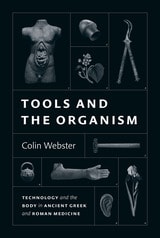
Tools and the Organism
Technology and the Body in Ancient Greek and Roman MedicineColin Webster
University of Chicago Press, 2023
Medicine is itself a type of technology, involving therapeutic tools and substances, and so one can write the history of medicine as the application of different technologies to the human body. In Tools and the Organism, Colin Webster argues that, throughout antiquity, these tools were crucial to broader theoretical shifts. Notions changed about what type of object a body is, what substances constitute its essential nature, and how its parts interact. By following these changes and taking the question of technology into the heart of Greek and Roman medicine, Webster reveals how the body was first conceptualized as an “organism”—a functional object whose inner parts were tools, or organa, that each completed certain vital tasks. He also shows how different medical tools created different bodies.
Webster’s approach provides both an overarching survey of the ways that technologies impacted notions of corporeality and corporeal behaviors and, at the same time, stays attentive to the specific material details of ancient tools and how they informed assumptions about somatic structures, substances, and inner processes. For example, by turning to developments in water-delivery technologies and pneumatic tools, we see how these changing material realities altered theories of the vascular system and respiration across Classical antiquity. Tools and the Organism makes the compelling case for why telling the history of ancient Greco-Roman medical theories, from the Hippocratics to Galen, should pay close attention to the question of technology.
Traces of the Past
Classics between History and ArchaeologyKaren Bassi
University of Michigan Press, 2016
Aimed at classicists, literary scholars, ancient historians, cultural historians, and archaeological theorists, the book combines three areas of research: time as a feature of narrative structure in literary theory; the concept of “the past itself” in the philosophy of history; and the ontological status of material objects in archaeological theory. Each of five central chapters explores how specific protoarchaeological narratives—from the fate of Zeus’ stone in Hesiod’s Theogony to the contest between words and objects in Aristophanes’ Frogs—both expose and attempt to bridge this gap. Throughout, the book serves as a response to Herodotus’ task in writing the Histories, namely, to ensure that “the past deeds of men do not fade with time.”
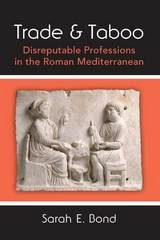
Trade and Taboo
Disreputable Professions in the Roman MediterraneanSarah E. Bond
University of Michigan Press, 2016
In this book, Sarah E. Bond reveals the construction and motivations for these attitudes, and to show how they created inequalities, informed institutions, and changed over time. Additionally, she shows how political and cultural shifts mutated these taboos, reshaping economic markets and altering the status of professionals at work within these markets.
Bond investigates legal stigmas in the form of infamia and other marks of legal disrepute. She expands on anthropological theories of pollution, closely studying individuals who regularly came into contact with corpses and other polluting materials, and considering communication and network formation through the disrepute attached to town criers, or praecones. Ideas of disgust and the language of invective are brought forward looking at tanners. The book closes with an exploration of caste-like systems created in the later Roman Empire. Collectively, these professionals are eloquent about economies and changes experienced within Roman society between 45 BCE and 565 CE.
Trade and Taboo will interest those studying Roman society, issues of historiographical method, and the topic of taboo in preindustrial cultures.
Trade and Taboo
Disreputable Professions in the Roman MediterraneanSarah E. Bond, narrated by Lorelei King
University of Michigan Press, 2016
Tragedy Offstage
Suffering and Sympathy in Ancient AthensBy Rachel Hall Sternberg
University of Texas Press, 2006
Humane ideals were central to the image Athenians had of themselves and their city during the classical period. Tragic plays, which formed a part of civic education, often promoted pity and compassion. But it is less clear to what extent Athenians embraced such ideals in daily life. How were they expected to respond, emotionally and pragmatically, to the suffering of other people? Under what circumstances? At what risk to themselves?
In this book, Rachel Hall Sternberg draws on evidence from Greek oratory and historiography of the fifth and fourth centuries BCE to study the moral universe of the ancient Athenians: how citizens may have treated one another in times of adversity, when and how they were expected to help. She develops case studies in five spheres of everyday life: home nursing, the ransom of captives, intervention in street crimes, the long-distance transport of sick and wounded soldiers, and slave torture. Her close reading of selected narratives suggests that Athenians embraced high standards for helping behavior—at least toward relatives, friends, and some fellow citizens. Meanwhile, a subtle discourse of moral obligation strengthened the bonds that held Athenian society together, encouraging individuals to bring their personal behavior into line with the ideals of the city-state.
Tragic Rites
Narrative and Ritual in Sophoclean DramaAdriana E. Brook
University of Wisconsin Press, 2018
Employing both modern ritual theory and Aristotle's Poetics, Brook exposes the deep structural analogies between ritual and narrative, the parallels between mistakes in ritual and deviations from the expected in the plot, and the relationship between ritual content and dramatic closure.
Transatlantic Subjects
Acts of Migration and Cultures of Transnationalism between Greece and AmericaIoanna Laliotou
University of Chicago Press, 2004
According to Ioanna Laliotou, cultural institutions and practices played an important role in the formation of migrant subjectivities. Reconstructing the cultural history of migration, her book points out the relationship between subjectivity formation and cultural practices and performances, such as publishing, reading, acting, storytelling, consuming, imitating, parading, and traveling. Transatlantic Subjects then locates the development of these practices within key sites and institutions of cultural formation, such as migrant and fraternal associations, educational institutions, state agencies and nongovernmental organizations, mental institutions, coffee shops, the church, steamship companies, banks, migration services, and chambers of commerce.
Ultimately, Laliotou explores the complex and situational entanglements of migrancy, cultural nationalism, and the politics of self. Reading against the grain of hegemonic narratives of cultural and migration histories, she reveals how migrancy produced distinctive forms of sociality during the first half of the twentieth century.
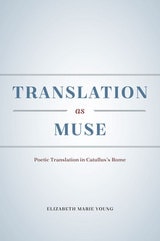
Translation as Muse
Poetic Translation in Catullus's RomeElizabeth Marie Young
University of Chicago Press, 2015
Catullus has long been admired as a poet, but his efforts as a translator have been largely ignored. Young reveals how essential translation is to his work: many poems by Catullus that we tend to label as lyric originals were in fact shaped by Roman translation practices entirely different from our own. By rereading Catullus through the lens of translation, Young exposes new layers of ingenuity in Latin poetry even as she illuminates the idiosyncrasies of Roman translation practice, reconfigures our understanding of translation history, and questions basic assumptions about lyric poetry itself.
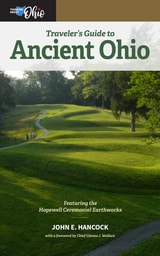
Traveler's Guide to Ancient Ohio
John E. Hancock
Ohio University Press, 2026
Featuring Hopewell Ceremonial Earthworks
Traveler’s Guide to Ancient Ohio is a compact, richly illustrated, and in-depth travel guide to the Indigenous earthwork wonders of southern Ohio—some of the most extraordinary ancient monuments in North America. Featuring the eight newly inscribed UNESCO World Heritage sites, this is the first publication to present these places from a traveler’s perspective, offering deeply informative site descriptions alongside curated routes to historical, scenic, and natural treasures across the region.
Southern Ohio’s landscape is layered with millennia of human history. At its heart are the monumental Adena and Hopewell earthworks—vast ceremonial constructions that reflect the ingenuity and spiritual life of ancient Indigenous cultures. This guide helps readers understand these sites as rewarding architectural experiences, enriched by archaeological, historical, and Indigenous knowledge gathered over three decades of collaborative work.
Organized into eight scenic driving routes—including the World Heritage Route and seven tributary paths—the book connects earthworks with nearby historic towns, nature preserves, waterways, and cultural landmarks. Each route emphasizes two-lane roads and includes road-tested site addresses, with links to local tourism resources for updated travel information.
Introductory sections provide essential context on regional geography, Indigenous cultures, archaeological terminology, and travel logistics. The guide’s focus on on-site appreciation is rare among existing resources, making it invaluable for both pre-visit planning and on-the-ground exploration.
Detailed route and trail descriptions are coordinated with all-new maps, plans, and photographs. The book links to multimedia assets, including animated flyovers that help visualize the earthworks and interview excerpts that deepen interpretive storytelling through Indigenous and interdisciplinary voices.
For first-time visitors and seasoned explorers, Traveler’s Guide to Ancient Ohio offers a fresh, immersive way to experience the region’s ancient wonders and the landscapes that continue to tell their story.
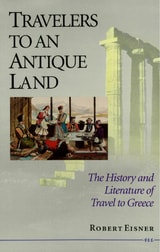
Travelers to an Antique Land
The History and Literature of Travel to GreeceRobert Eisner
University of Michigan Press, 1993
Treason in Roman and Germanic Law
Collected PapersBy Floyd Seyward Lear
University of Texas Press, 1965
"Treason" is a word with many connotations, a word applied to a host of varied offenses throughout the history of humanity. These essays by Floyd Seyward Lear analyze the development of the political theory of treason from its beginning in Roman Law to its transformation in the Germanic custom of the early Middle Ages.
The author has presented treason as a political idea, possessing historical continuity, though varying from age to age as it follows the evolution of political authority itself. These studies trace the shifting emphasis in crimes against the state from acts directed against a central absolutist authority to acts involving the personal relationship of a pledged troth and individual fealty. This is a shift from the concept of majesty in Roman law to the concept of fidelity in Germanic law with the corollary shift from allegiance as an act of deference to allegiance as a token of mutual fidelity.
These ideas are examined chronologically across an interval extending from archaic Roman law to incipiently feudal forms, from which modern theories of treason, allegiance, and sovereignty derive. Contemporary concepts in these political areas can hardly be understood apart from their historical origins. Broadly considered, this work is intended as a contribution to intellectual history.
Further, this collection represents the synthesis of material widely scattered in the primary sources and relevant secondary works. The two concluding bibliographical essays are intended as a general survey of the literature relevant to these studies in Roman and Germanic public law. Descriptive and interpretive works which deal with treason and its allied aspects of political and legal theory are not numerous in the English language.
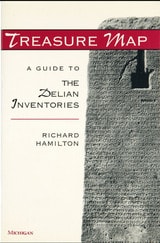
Treasure Map
A Guide to the Delian InventoriesRichard Hamilton
University of Michigan Press, 2015
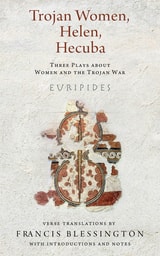
Trojan Women, Helen, Hecuba
Three Plays about Women and the Trojan WarEuripides, Verse translations by Francis Blessington, with introductions and notes
University of Wisconsin Press, 2015
Francis Blessington combines his work as a poet, translator, and teacher of literature and Greek with his theatrical experience to create fresh and faithful verse translations suitable for the stage, the classroom, or the general reader. The three plays are augmented by introductions, notes, and an appendix on elements of Greek tragedy. Blessington glosses historical and mythological terms, identifies Greek themes in the texts, offers literary interpretations, and suggests topics for discussion.
True Names
Vergil and the Alexandrian Tradition of Etymological WordplayJames J. O'Hara
University of Michigan Press, 2016
In this new edition, O’Hara offers more than one hundred new examples, and more than 250 new bibliographical items on etymologizing in Vergil and other ancient authors, especially the other Augustan poets. A substantial new Introduction reflects on the wide scholarly response to the first edition, and it discusses issues in scholarship on etymologizing from the last two decades.
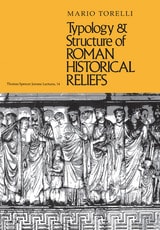
Typology and Structure of Roman Historical Reliefs
Mario Torelli
University of Michigan Press, 1992