Results by title
1677 books match the query 'Archaeology' and 332 start with t
The Museum in the Cultural Sciences
Collecting, Displaying, and Interpreting Material Culture in the Twentieth CenturyEdited by Peter N. Miller
Bard Graduate Center, 2021
The Museum in the Cultural Sciences offers the first full English translations of these articles, which remain influential in conversations about the implications of art, historical, and ethnographic museums. They show how sophisticated the discussion of museums and museum display was in the early twentieth century and how much could be gained from revisiting these reflections today. Accompanied by short commentaries from museum professionals, these articles offer an intervention into and intensification of the current debate about the function and purpose of museums.
The Naomikong Point Site and the Dimensions of Laurel in the Lake Superior Region
Donald E. Janzen
University of Michigan Press, 1968

The Narcissus and the Pomegranate
An Archaeology of the Homeric Hymn to DemeterAnn Suter
University of Michigan Press, 2002
The author analyzes the traditional language of the hymn and Persephone's retelling of her story to Demeter, arguing that the hymn involves an earlier tale of Demeter and Persephone that predates the seventh century. Suter uses anthropological applications to illustrate that the story of Persephone's abduction does not reflect a female initiation rite into adulthood, as has been argued, but rather an hieros gamos. These methodologies point to the conclusion that Persephone was once a powerful goddess in her own right, independent of Hades and of Demeter as well. To test the accuracy of these possibilities, the book next examines evidence from outside the hymn. Other versions of the two myths in the hymn support the idea that these myths--Persephone's abduction and Demeter's nursing of Demophoön--were once separate and were late combined to create a new story. Evidence from the chief archaeological sites, from vase painting and other artistic forms is provided to enhance the argument. Thus the evidence from outside the hymn supports the conclusions of the textual analyses, giving surprising substantiation that the hymn itself commemorates the early days of the worship of the goddesses as a mother/daughter pair.
This book will be of particular interest to scholars of religious history, art history, archaeology, and literature. It is also accessible to the general reader interested in Greek literature, myths, and religion.
Ann Suter is Associate Professor of Classical Studies, University of Rhode Island.

The Native Americans of the Texas Edwards Plateau, 1582-1799
By Maria F. Wade
University of Texas Press, 2003
2003 – Texas Old Missions and Forts Restoration Association Book Award Winner – Texas Catholic Historical Society
2004 – Finalist: Friends of the Dallas Public Library Award for Book Making the Most Significant Contribution to Knowledge – Texas Institute of Letters
The region that now encompasses Central Texas and northern Coahuila, Mexico, was once inhabited by numerous Native hunter-gather groups whose identities and lifeways we are only now learning through archaeological discoveries and painstaking research into Spanish and French colonial records. From these key sources, Maria F. Wade has compiled this first comprehensive ethnohistory of the Native groups that inhabited the Texas Edwards Plateau and surrounding areas during most of the Spanish colonial era.
Much of the book deals with events that took place late in the seventeenth century, when Native groups and Europeans began to have their first sustained contact in the region. Wade identifies twenty-one Native groups, including the Jumano, who inhabited the Edwards Plateau at that time. She offers evidence that the groups had sophisticated social and cultural mechanisms, including extensive information networks, ladino cultural brokers, broad-based coalitions, and individuals with dual-ethnic status. She also tracks the eastern movement of Spanish colonizers into the Edwards Plateau region, explores the relationships among Native groups and between those groups and European colonizers, and develops a timeline that places isolated events and singular individuals within broad historical processes.
The Nature and Status of Ethnobotany, 2nd ed
Edited by Richard I. Ford with a new introduction by Richard I. Ford
University of Michigan Press, 1994
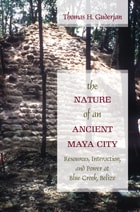
The Nature of an Ancient Maya City
Resources, Interaction, and Power at Blue Creek, BelizeThomas H. Guderjan
University of Alabama Press, 2007
For two millennia, the site now known as Blue Creek in northwestern Belize was a Maya community that became an economic and political center that included some 15,000-20,000 people at its height. Fairly well protected from human destruction, the site offers the full range of city components including monumental ceremonial structures, elite and non-elite residences, ditched agricultural fields, and residential clusters just outside the core. Since 1992, a multi-disciplinary, multi-national research team has intensively investigated Blue Creek in an integrated study of the dynamic structure and functional inter-relationships among the parts of a single Maya city. Documented in coverage by National Geographic, Archaeology magazine, and a documentary film aired on the Discovery Channel, Blue Creek is recognized as a unique site offering the full range of undisturbed architectural construction to reveal the mosaic that was the ancient city. Moving beyond the debate of what constitutes a city, Guderjan’s long-term research reveals what daily Maya life was like.
The Neighborhood as a Social and Spatial Unit in Mesoamerican Cities
Edited by M. Charlotte Arnauld, Linda R. Manzanilla, and Michael E. Smith
University of Arizona Press, 2012
The contributions gathered here provide fieldwork data to document the existence of sociopolitically distinct neighborhoods within ancient Mesoamerican settlements, building upon recent advances in multi-scale archaeological studies of these communities. Chapters illustrate the cultural variation across Mesoamerica, including data and interpretations on several different cities with a thematic focus on regional contrasts. This topic is relatively new and complex, and this book is a strong contribution for three interwoven reasons. First, the long history of research on the “Teotihuacan barrios” is scrutinized and withstands the test of new evidence and comparison with other Mesoamerican cities. Second, Maya studies of dense settlement patterns are now mature enough to provide substantial case studies. Third, theoretical investigation of ancient urbanization all over the world is now more complex and open than it was before, giving relevance to Mesoamerican perspectives on ancient and modern societies in time and space.
This volume will be of interest not only to scholars and student specialists of the Mesoamerican past but also to social scientists and urbanists looking to contrast ancient cultures worldwide.
The Neighbors of Casas Grandes
Medio Period Communities of Northwestern ChihuahuaMichael E. Whalen and Paul E. Minnis
University of Arizona Press, 2009
This volume provides a fascinating and detailed look into the culture of the Casas Grandes area, involving not just the research of the architecture and artifacts left behind but also the ecology of the area. The authors’ research reveals the complex relationship Casas Grandes had with its neighbors, varying from very direct contact with some communities to more indirect links with others. Important internal influences on the area’s development come to light and population sizes throughout the period demonstrate the absorption of the surrounding populations into Casas Grandes as it reached the peak of its power in the region.
New discoveries suggest the need to revise the previously held beliefs about the age of Casas Grandes and the dates of its rise to power. This ancient civilization may have developed as early as 1180 AD. Such breakthroughs provide fresh insight about not only Casas Grandes but the nearby settlements as well. The Neighbors of Casas Grandes is an important and vital piece of primary field research for all those interested in the Southwest’s archaelogy and history. Its contribution to the knowledge of the Casas Grandes region is monumental in helping us better understand the society that once flourished there.
The Neolithic Revolution in the Near East
Transforming the Human LandscapeAlan H. Simmons; foreword by Ofer Bar-Yosef
University of Arizona Press, 2007
Based on more than thirty years of fieldwork, this timely volume examines the Neolithic Revolution in the Levantine Near East and the Mediterranean island of Cyprus. Alan H. Simmons explores recent research regarding the emergence of Neolithic populations, using both environmental and theoretical contexts, and incorporates specific case studies based on his own excavations. In clear and graceful prose, Simmons traces chronological and regional differences within this land of immense environmental contrasts—woodland, steppe, and desert. He argues that the Neolithic Revolution can be seen in a variety of economic, demographic, and social guises and that it lacked a single common stimulus.
Each chapter includes sections on history, terminology, geographic range, specific domesticated species, the composition of early villages and households, and the development of social, symbolic, and religious behavior. Most chapters include at least one case study and conclude with a concise summary. In addition, Simmons presents a unique chapter on the island of Cyprus, where intriguing new research challenges assumptions about the impact and extent of the Neolithic.
The Neolithic Revolution in the Near East conveys the diversity of our Neolithic ancestors, providing a better understanding of the period and the new social order that arose because of it. This insightful volume will be especially useful to Near Eastern scholars and to students of archaeology and the origins of agriculture.
The Northern Titicaca Basin Survey
Huancané-PutinaCharles Stanish, Cecilia Chávez Justo, Karl LaFavre, and Aimée Plourde
University of Michigan Press, 2014
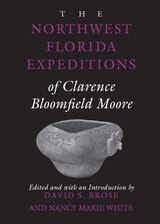
The Northwest Florida Expeditions of Clarence Bloomfield Moore
Clarence Bloomfield Moore
University of Alabama Press, 1999
A Dan Josselyn Memorial Publication
This comprehensive compilation of Moore's archaeological reports on northwest Florida and southern Alabama and Georgia presents the earliest documented investigations of this region.
When Clarence Bloomfield Moore cruised the rivers of Florida in search of prehistoric artifacts a century ago, he laid the groundwork for archaeological investigations to follow. This volume reflects Moore's fieldwork along the northwest Florida coast, the most archaeologically rich area of the state, as well as Southern Alabama and Georgia.
Here readers will share Moore's first look at the area in 1901-1903 and additional observations made in 1918 during what was to be his last field season. Moore's works reveal ceramics, tools, skeletal remains, and exotic artifacts excavated from the earthen mounds and shell middens built by native peoples over the last two millennia.
In the introduction to this edition, David Brose and Nancy Marie White place Moore's investigations within the context of the science, natural history, and antiquarianism of his day. They document what happened to the sites he explored, tell how his findings fit into the body of his research, and explain how those findings should be interpreted in the context of Southeastern culture history and modern archaeological theory.
Moore was the most knowledgeable Southeastern archaeologist of his time; his writings are a benchmark for anyone studying those areas today.
The Occupations of Migrants in Ghana
Polly Hill
University of Michigan Press, 1970
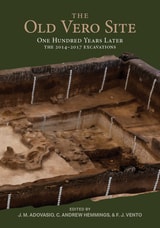
The Old Vero Site (8IR009)
One Hundred Years Later, The 2014 - 2017 ExcavationsJames M. Adovasio, C. Andrew Hemmings, and F. J. Vento
University of Utah Press, 2023
The Old Vero Site details the course of the recent re-excavations of the site while also summarizing the original excavations from a century ago. The volume lays out the sequence and results of the recent project, using new data to conclude that Sellards’s claims are not supported by the evidence. Adovasio, Hemmings, and Vento provide the data to settle the matter definitively: human remains at the site were intrusive from a later time horizon, as critics of the original work had vociferously argued.
The Origin and Development of the Pueblo Katsina Cult
E. Charles Adams
University of Arizona Press, 1991
The Origins of Agriculture
An International PerspectiveEdited by C. Wesley Cowan and Patty Jo Watson
University of Alabama Press, 2006
The eight case studies in this book -- each a synthesis of available knowledge about the origins of agriculture in a specific region of the globe -- enable scholars in diverse disciplines to examine humanity's transition to agricultural societies. Contributors include: Gary W. Crawford, Robin W. Dennell, and Jack R. Harlan.

The Origins of Southwestern Agriculture
R. G. Matson
University of Arizona Press, 1991
The Paleo-Indian Occupation of the Holcombe Beach
James E. Fitting, Jerry DeVisscher and Edward J. Wahla
University of Michigan Press, 1966
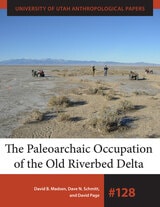
The Paleoarchaic Occupation of the Old River Bed Delta
David B. Madsen, Dave N. Schmitt, and David Page
University of Utah Press, 2015
University of Utah Anthropological Paper No. 128
About 12,000 years ago, a major river ran from the Sevier Basin to the Great Salt Lake, feeding a wetland delta system and creating riparian habitat along its length. But after three thousand years the river dried up and the surrounding lands became more like what we see today. Because the Old River Bed Delta experienced less environmental and human disturbance than other areas, many of the Paleoarchaic sites found there have remained relatively intact—a rare find in the Great Basin. This book presents a comprehensive synthesis of a decade of investigations conducted by research teams working in different parts of the delta and explores questions about how the old riverbed was formed, how its distributary system changed through time, and how these changes affected early foragers. It concludes with an integrated summary and interpretation. Additional material from this study will be available online at UofUpress.com.
Supplementary Material for The Paleoarchaic Occupation of the Old River Bed Delta
Chapter 3 - SDM Trench and Locality Descriptions November
Chapter 3 SDM Individual Channel Images November
Chapter 5 - SDM Additional Lithic Artifact Images
Chapter 6 - SDM Results of XRF and PXRF Analysis
Chapter 6 - SDM Source Assignment Tables
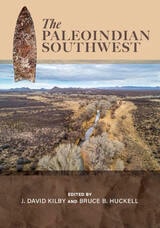
The Paleoindian Southwest
Edited by J. David Kilby and Bruce B. Huckell
University of Utah Press, 2025
The North American Southwest looms large in American archaeology, well known for the agricultural societies that dominated its austere landscape in later times. However, the traces of its earliest occupants, Native American ancestors who shared the ancient landscape with mammoth and giant bison toward the end of the last Ice Age, remain more obscure.
The Paleoindian Southwest provides the first comprehensive overview focused on the earliest human occupants of the Southwest, exploring past investigations, the current state of research, and directions for future discovery. Experts in the field examine individual archaeological sites—some classic and some newly discovered—as well as broader patterns of human behavior across varied regions of both the United States and Mexico. Chapter authors present new and unexpected discoveries, ranging from a gomphothere kill to fossil footprints, pushing the boundaries of the Paleoindian period and investigating nontraditional archaeological data. This collection is a critical resource and landmark volume for those interested in Southwest prehistory, Paleoindian archaeology, and Ice Age human ecology.

The Paleolithic of Siberia
New Discoveries and InterpretationsEdited and Compiled by Anatoli P. Derev'anko: Demitri B. Shimkin and W. Roger Powers (American Editors). Translated by Inna P. Laricheva
University of Illinois Press, 1998
It traces the routes of human migration throughout Eurasia, shows Siberian lithic industries as they evolved from the Early through the Middle and Late Paleolithic, and correlates them with reports from Mongolia, China, Japan, and America.
The Petexbatun Regional Archaeological Project
A Multidisciplinary Study of the Maya CollapseArthur A. Demarest
Vanderbilt University Press, 2006
Then, based on the project's findings, Demarest presents interpretive reconstructions of the linked histories of the Pasion River kingdoms and correlates these interpretations with the variable evidence and culture-histories of other regions of the Classic Maya lowlands. He points out that only through linking such accurate regional culture-histories can we begin to understand the eighth- through tenth-century changes in Classic Maya civilization. The volume describes how the Petexbatun project addressed this challenge in its research design, structure, and large, multicentered zone of study. Building on the previous twenty years of Harvard research in adjacent zones, the Vanderbilt projects succeeded in reconstructing events and processes throughout the Pasion River Valley, the largest single inland trade route of the ancient Maya world.
In its conclusions, this first of the Petexbatun volumes of multidisciplinary studies, evidence, analyses, and interpretations, provides answers to some long-standing questions about the "Classic Maya collapse," as well as a new, preliminary culture-history of the abandonment, decline, or transformation of the Classic Maya kingdoms of the western Peten. It is an exciting preview and summary of a decade of evidence on the debate over the fate of the Classic Maya civilization, one of the great controversies in the history of Pre-Columbian archaeology. VIMA Series #1
The Petroglyphs and Pictographs of Missouri
Carol Diaz-Granados
University of Alabama Press, 1999
This comprehensive guide to the rock art of Missouri presents major design motifs and links those images to Native American beliefs.
Images on rocks depicting birds, serpents, deer, and other designs are haunting reminders of prehistoric peoples. This book documents Missouri's rich array of petroglyphs and pictographs, analyzing the many aspects of these rock carvings and paintings to show how such representations of ritual activities can enhance our understanding of Native American culture.
Missouri is a particularly important site for rock art because it straddles the Plains, the Ozarks, and the Southeast. Carol Diaz-Granados and James Duncan have established a model for analyzing this rock art as archaeological data and have mapped the patterning of fifty-eight major motifs across the state. Of particular importance is their analysis of motifs from Mississippi River Valley sites, including Cahokia.
The authors include interpretive discussions on iconography and ideology, drawing on years of research in the ethnographic records and literature of Native Americans linguistically related to earlier peoples. Their distribution maps show how motifs provide clues to patterns of movement among prehistoric peoples and to the range of belief systems. Rock art is an aspect of the archaeological record that has received little attention, and the art is particularly subject to the ravages of time. By documenting these fragile images, this book makes a major contribution to rock art research in North America.
The Phantom Image
Seeing the Dead in Ancient RomePatrick R. Crowley
University of Chicago Press, 2019
The Postclassic Mesoamerican World
Michael E Smith
University of Utah Press, 2003
Edited by Michael E. Smith and Frances F. Berdan
Anthropology and Archaeology
The past two decades have seen an explosion of research on Postclassic Mesoamerican societies. In this ambitious new volume, the editors and contributors seek to present a complete picture of the middle and late Postclassic period (ca. AD 1100-1500) employing a new theoretical framework.
Mesoamerican societies after the collapse of the great city-states of Tula and Chichen Itza stand out from earlier societies in a number of ways. They had larger regional populations, smaller polities, a higher volume of long-distance trade, greater diversity of trade goods, a more commercialized economy, and new standardized forms of pictorial writing and iconography. The emerging archaeological record reveals larger quantities of imported goods in Postclassic contexts, and ethnohistoric accounts describe marketplaces, professional merchants, and the use of money throughout Mesoamerica by the time of the Spanish conquest. The integration of this commercial economy with new forms of visual communication produced a dynamic world system that reached every corner of Mesoamerica.
Thirty-six focused articles by twelve authors describe and analyze the complexity of Postclassic Mesoamerica. After an initial theoretical section, chapters are organized by key themes: polities, economic networks, information networks, case studies, and comparisons. Covering a region from western Mexico to Yucatan and the southwestern Maya highlands, this volume should be in the library of anyone with a serious interest in ancient Mexico.
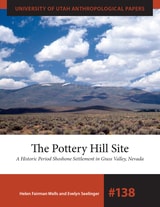
The Pottery Hill Site
A Historic Period Shoshone Settlement in Grass Valley, NevadaHelen Fairman Wells and Evelyn Seelinger
University of Utah Press, 2023
This archaeological study of the interactions between Western Shoshone families and Euro-American ranchers in the late nineteenth century helps fill the gap between what is known regarding Late Prehistoric foragers of the American West and ethnohistoric understanding of Native American peoples of the Great Basin.
Pottery Hill, an archaeological site located in Grass Valley, Nevada, northeast of the historic mining town of Austin, represents a small settlement of Native Americans who lived there in the late 1800s. The Grass Valley Shoshone, whose environment and traditional lifeways were disrupted by the arrival of miners and settlers in the 1860s, found work on the ranches and farms in the valley.
Archaeological fieldwork conducted in the 1970s investigated house remains, hearths, and artifacts. A recent analysis of these data, enhanced by the use of archival documents and oral history, provides new insights into the dynamics of late nineteenth-century life in central Nevada. The Pottery Hill Site addresses a critical period in the history of the Grass Valley Shoshone, who adopted and modified Euro-American artifacts and materials while maintaining important aspects of their traditional culture. It gives readers a deeper understanding of the effects of Euro-American settlement on the Shoshone, the history of the western United States, and the reciprocal impacts of cultural contact.
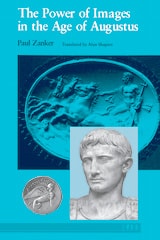
The Power of Images in the Age of Augustus
Paul Zanker; translated by Alan Shapiro
University of Michigan Press, 1990
The Preceramic Horizons of Northeastern Oklahoma
David Albert Baerreis
University of Michigan Press, 1951
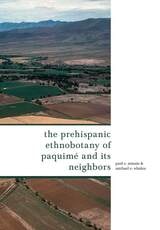
The Prehispanic Ethnobotany of Paquimé and Its Neighbors
Paul E. Minnis and Michael E. Whalen
University of Arizona Press, 2020
This volume is the first large-scale investigation of the prehispanic ethnobotany of this important ancient site and its neighbors. The authors examine ethnobotanical relationships during Medio Period, AD 1200–1450, when Paquimé was at its most influential. Based on two decades of archaeological research, this book examines uses of plants for food, farming strategies, wood use, and anthropogenic ecology. The authors show that the relationships between plants and people are complex, interdependent, and reciprocal. This volume documents ethnobotanical relationships and shows their importance to the development of the Paquimé polity.
How ancient farmers made a living in an arid to semi-arid region and the effects their livelihood had on the local biota, their relations with plants, and their connection with other peoples is worthy of serious study. The story of the Casas Grandes tradition holds valuable lessons for humanity.
The Prehistoric Animal Ecology and Ethnozoology of the Upper Great Lakes Region
Charles Edward Cleland
University of Michigan Press, 1966
The Prehistoric People of the Fort Ancient Culture of the Central Ohio Valley
Louise M. Robbins and Georg K. Neumann
University of Michigan Press, 1972
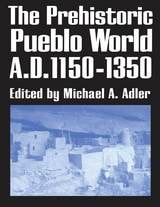
The Prehistoric Pueblo World, A.D. 1150-1350
Edited by Michael A. Adler
University of Arizona Press, 1996
1. "The Great Period": The Pueblo World During the Pueblo III Period, A.D. 1150 to 1350, Michael A. Adler
2. Pueblo II-Pueblo III Change in Southwestern Utah, the Arizona Strip, and Southern Nevada, Margaret M. Lyneis
3. Kayenta Anasazi Settlement Transformations in Northeastern Arizona: A.D. 1150 to 1350, Jeffrey S. Dean
4. The Pueblo III-Pueblo IV Transition in the Hopi Area, Arizona, E. Charles Adams
5. The Pueblo III Period along the Mogollon Rim: The Honanki, Elden, and Turkey Hill Phases of the Sinagua, Peter J. Pilles, Jr.
6. A Demographic Overview of the Late Pueblo III Period in the Mountains of East-central Arizona, J. Jefferson Reid, John R. Welch, Barbara K. Montgomery, and María Nieves Zedeño
7. Southwestern Colorado and Southeastern Utah Settlement Patterns: A.D. 1100 to 1300, Mark D. Varien, William D. Lipe, Michael A. Adler, Ian M. Thompson, and Bruce A. Bradley
8. Looking beyond Chaco: The San Juan Basin and Its Peripheries, John R. Stein and Andrew P. Fowler
9. The Cibola Region in the Post-Chacoan Era, Keith W. Kintigh
10. The Pueblo III Period in the Eastern San Juan Basin and Acoma-Laguna Areas, John R. Roney
11. Southwestern New Mexico and Southeastern Arizona, A.D. 900 to 1300, Stephen H. Lekson
12. Impressions of Pueblo III Settlement Trends among the Rio Abajo and Eastern Border Pueblos, Katherine A. Spielman
13. Pueblo Cultures in Transition: The Northern Rio Grande, Patricia L. Crown, Janet D. Orcutt, and Timothy A. Kohler
14. The Role of Warfare in the Pueblo III Period, Jonathan Haas and Winifred Creamer
15. Agricultural Potential and Carrying Capacity in Southwestern Colorado, A.D. 901 to 1300, Carla R. Van West
16. Big Sites, Big Questions: Pueblos in Transition, Linda S. Cordell
17. Pueblo III People and Polity in Relational Context, David R. Wilcox
Appendix: Mapping the Puebloa
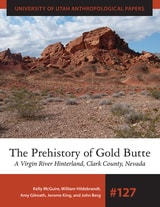
The Prehistory of Gold Butte
A Virgin River Hinterland, Clark County, NevadaKelly R McGuire
University of Utah Press, 2014
The Prehistory of Gold Butte uses a theoretical perspective rooted in human behavior ecology and other foraging models to present the results of one of the largest and most comprehensive archaeological investigations ever undertaken in southern Nevada, involving the systematic survey of more than 31,000 acres, the documentation of more than 377 sites, and the excavation of nine prehistoric sites. Gold Butte—at the crossroads of the Mojave Desert, the Great Basin, and the Colorado Plateau in southern Nevada—has a 12,000-year record of human occupation with archaeological elements that can be traced to all three culture zones.
The Prehistory of the Burnt Bluff Area
Edited by James E. Fitting
University of Michigan Press, 1968
The Protohistoric Pueblo World, A.D. 1275-1600
Edited by E. Charles Adams and Andrew I. Duff
University of Arizona Press, 2004

The Public Trust and the First Americans
Ruthann Knudson
Oregon State University Press, 1995
The Puerto Rican Population
A Study in Human BiologyFrederick P. Thieme
University of Michigan Press, 1959
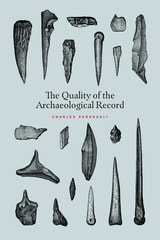
The Quality of the Archaeological Record
Charles Perreault
University of Chicago Press, 2019
In The Quality of the Archaeological Record, Charles Perreault shows that archaeology not only faces a parallel problem, but may also find a model in the rise of paleobiology for a shift in the science and theory of the field. To get there, he proposes a more macroscale approach to making sense of the archaeological record, an approach that reveals patterns and processes not visible within the span of a human lifetime, but rather across an observation window thousands of years long and thousands of kilometers wide. Just as with the fossil record, the archaeological record has the scope necessary to detect macroscale cultural phenomena because it can provide samples that are large enough to cancel out the noise generated by micro-scale events. By recalibrating their research to the quality of the archaeological record and developing a true macroarchaeology program, Perreault argues, archaeologists can finally unleash the full contributive value of their discipline.
The Rape of Mesopotamia
Behind the Looting of the Iraq MuseumLawrence Rothfield
University of Chicago Press, 2009
On April 10, 2003, as the world watched a statue of Saddam Hussein come crashing down in the heart of Baghdad, a mob of looters attacked the Iraq National Museum. Despite the presence of an American tank unit, the pillaging went unchecked, and more than 15,000 artifacts—some of the oldest evidence of human culture—disappeared into the shadowy worldwide market in illicit antiquities. In the five years since that day, the losses have only mounted, with gangs digging up roughly half a million artifacts that had previously been unexcavated; the loss to our shared human heritage is incalculable.
With The Rape of Mesopotamia, Lawrence Rothfield answers the complicated question of how this wholesale thievery was allowed to occur. Drawing on extensive interviews with soldiers, bureaucrats, war planners, archaeologists, and collectors, Rothfield reconstructs the planning failures—originating at the highest levels of the U.S. government—that led to the invading forces’ utter indifference to the protection of Iraq’s cultural heritage from looters. Widespread incompetence and miscommunication on the part of the Pentagon, unchecked by the disappointingly weak advocacy efforts of worldwide preservation advocates, enabled a tragedy that continues even today, despite widespread public outrage.
Bringing his story up to the present, Rothfield argues forcefully that the international community has yet to learn the lessons of Iraq—and that what happened there is liable to be repeated in future conflicts. A powerful, infuriating chronicle of the disastrous conjunction of military adventure and cultural destruction, The Rape of Mesopotamia is essential reading for all concerned with the future of our past.

The Republican Aventine and Rome’s Social Order
Lisa Marie Mignone
University of Michigan Press, 2016
The myth of the “plebeian Aventine” became embedded not only in classical scholarship, but also in modern political and cultural consciousness; it has even been used by modern figures to support their political agenda. Yet The Republican Aventine and Rome’s Social Order makes bold new claims regarding the urban design and social history of ancient Rome and raises a significant question about ancient urbanism and social stability more generally: Did social integration reduce violence in premodern cities and promote urban concord?
The Restoration of the Roman Forum in Late Antiquity
Transforming Public SpaceBy Gregor Kalas
University of Texas Press, 2015
In The Restoration of the Roman Forum in Late Antiquity, Gregor Kalas examines architectural conservation during late antiquity period at Rome’s most important civic center: the Roman Forum. During the fourth and fifth centuries CE—when emperors shifted their residences to alternate capitals and Christian practices overtook traditional beliefs—elite citizens targeted restoration campaigns so as to infuse these initiatives with political meaning. Since construction of new buildings was a right reserved for the emperor, Rome’s upper echelon funded the upkeep of buildings together with sculptural displays to gain public status. Restorers linked themselves to the past through the fragmentary reuse of building materials and, as Kalas explores, proclaimed their importance through prominently inscribed statues and monuments, whose placement within the existing cityscape allowed patrons and honorees to connect themselves to the celebrated history of Rome.
Building on art historical studies of spolia and exploring the Forum over an extended period of time, Kalas demonstrates the mutability of civic environments. The Restoration of the Roman Forum in Late Antiquity maps the evolution of the Forum away from singular projects composed of new materials toward an accretive and holistic design sensibility. Overturning notions of late antiquity as one of decline, Kalas demonstrates how perpetual reuse and restoration drew on Rome’s venerable past to proclaim a bright future.
The Ritual Landscape of Late Precontact Eastern Oklahoma
Archaeology from the WPA Era until Todayby Amanda L. Regnier, Scott W. Hammerstedt, and Sheila Bobalik Savage
University of Alabama Press, 2019
As part of Great Depression relief projects started in the 1930s, the Works Progress Administration (WPA) sponsored massive archaeological projects across Oklahoma. The WPA crews excavated eight mound sites and dozens of nonmound residential sites in the Arkansas River Valley that date between AD 1000 and 1450. These sites are considered the westernmost representations of Mississippian culture in the Southeast.
The results of these excavations were documented in field journals and photographs prepared by the field supervisors and submitted in a series of quarterly reports to WPA headquarters. These reports contain a wealth of unpublished information summarizing excavations at the mound sites and residential sites, including mound profiles, burial descriptions, house maps, artifact tables, and artifact sketches. Of the excavated mound sites, results from only one, Spiro, have been extensively studied and synthesized in academic literature. The seven additional WPA-excavated mound sites—Norman, Hughes, Brackett, Eufaula, Skidgel, Reed, and Lillie Creek—are known to archaeologists outside of Oklahoma only as unlabeled points on maps of mound sites in the Southeast.
The Ritual Landscape of Late Precontact Eastern Oklahoma curates and contextualizes the results of the WPA excavations, showing how they inform archaeological understanding of Mississippian occupation in the Arkansas Valley. Regnier, Hammerstedt, and Savage also relate the history and experiences of practicing archaeology in the 1930s, incorporating colorful excerpts from field journals of the young, inexperienced archaeologists. Finally, the authors update current knowledge of mound and nonmound sites in the region, providing an excellent example of historical archaeology.
The River and the Railroad
An Archaeological History of RenoMary Ringhoff
University of Nevada Press, 2011
The Rock-Art of Eastern North America
Capturing Images and InsightEdited by Carol Diaz-Granados and James R. Duncan
University of Alabama Press, 2004
Showcases the wealth of new research on sacred imagery found in twelve states and four Canadian provinces
In archaeology, rock-art—any long-lasting marking made on a natural surface—is similar to material culture (pottery and tools) because it provides a record of human activity and ideology at that site. Petroglyphs, pictographs, and dendroglyphs (tree carvings) have been discovered and recorded throughout the eastern woodlands of North America on boulders, bluffs, and trees, in caves and in rock shelters. These cultural remnants scattered on the landscape can tell us much about the belief systems of the inhabitants that left them behind.
The Rock-Art of Eastern North America brings together 20 papers from recent research at sites in eastern North America, where humidity and the actions of weather, including acid rain, can be very damaging over time. Contributors to this volume range from professional archaeologists and art historians to avocational archaeologists, including a surgeon, a lawyer, two photographers, and an aerospace engineer. They present information, drawings, and photographs of sites ranging from the Seven Sacred Stones in Iowa to the Bald Friar Petroglyphs of Maryland and from the Lincoln Rise Site in Tennessee to the Nisula Site in Quebec.
Discussions of the significance of artist gender, the relationship of rock-art to mortuary caves, and the suggestive link to the peopling of the continent are particularly notable contributions. Discussions include the history, ethnography, recording methods, dating, and analysis of the subject sites and integrate these with the known archaeological data.

The Roman Community at Table during the Principate, New and Expanded Edition
John F. Donahue
University of Michigan Press, 2017
This expanded edition of Donahue’s work includes significant new material on current trends in food studies, including the archaeology and bioarchaeology of ancient food and drink; an additional collection of inscriptions on public banquets from the Roman West; and an extensive bibliography of scholarship produced in the last ten years. It will be of interest not only to classicists and historians of the ancient world, but also to anthropologists and sociologists interested in food and social group dynamics.
The Sacred Edifices of the Batak of Sumatra
Harley Harris Bartlett
University of Michigan Press, 1934
The Sacred Landscape of the Inca
The Cusco Ceque SystemBy Brian S. Bauer
University of Texas Press, 1998
The ceque system of Cusco, the ancient capital of the Inca empire, was perhaps the most complex indigenous ritual system in the pre-Columbian Americas. From a center known as the Coricancha (Golden Enclosure) or the Temple of the Sun, a system of 328 huacas (shrines) arranged along 42 ceques (lines) radiated out toward the mountains surrounding the city. This elaborate network, maintained by ayllus (kin groups) that made offerings to the shrines in their area, organized the city both temporally and spiritually.
From 1990 to 1995, Brian Bauer directed a major project to document the ceque system of Cusco. In this book, he synthesizes extensive archaeological survey work with archival research into the Inca social groups of the Cusco region, their land holdings, and the positions of the shrines to offer a comprehensive, empirical description of the ceque system. Moving well beyond previous interpretations, Bauer constructs a convincing model of the system's physical form and its relation to the social, political, and territorial organization of Cusco.
The Safford Valley Grids
Prehistoric Cultivation in the Southern Arizona DesertWilliam E. Doolittle
University of Arizona Press, 2004
Between A.D. 750 and 1385, people gathered rocks from the tops of the terraces and rearranged them in grids of varying size and shape, averaging about 4 meters to 5 meters square. The grids captured rainfall and water accumulated under the rocks forming the grids. Agave was planted among the rocks, providing a dietary supplement to the maize and beans that were irrigated on the nearby bottom land, a survival crop when the staple crops failed, and possibly a trade commodity when yields were high. Stunning photographs by Adriel Heisey convey the vastness of the grids across the landscape.
The Sandy Ridge and Halstead Paleo-Indian Sites
Unifacial Tool Use and Gainey Phase Definition in South-Central OntarioLawrence J. Jackson with a foreword by Henry T. Wright and phytolith analysis by Anita Buehrle
University of Michigan Press, 1998
The Sangamo Frontier
History and Archaeology in the Shadow of LincolnRobert Mazrim
University of Chicago Press, 2006
When Abraham Lincoln moved to Illinois’ Sangamo Country in 1831, he found a pioneer community transforming from a cluster of log houses along an ancient trail to a community of new towns and state roads. But two of the towns vanished in a matter of years, and many of the activities and lifestyles that shaped them were almost entirely forgotten. In The Sangamo Frontier, archaeologist Robert Mazrim unearths the buried history of this early American community, breathing new life into a region that still rests in Lincoln’s shadow.
Named after a shallow river that cuts through the prairies of central Illinois, the Sangamo Country—an area that now encompasses the capital city of Springfield and present-day Sangamon County—was first colonized after the War of 1812. For the past fifteen years, Mazrim has conducted dozens of excavations there, digging up pieces of pioneer life, from hand-forged iron and locally made crockery to pewter spoons and Staffordshire teacups. And here, in beautifully illustrated stories of each dig, he shows how each of these small artifacts can teach us something about the lifestyles of people who lived on the frontier nearly two hundred years ago. Allowing us to see past the changed modern landscape and the clichés of pioneer history, Mazrim deftly uses his findings to portray the homes, farms, taverns, and pottery shops where Lincoln’s neighbors once lived and worked.
Drawing readers into the thrill of discovery, The Sangamo Frontier inaugurates a new kind of archaeological history that both enhances and challenges our written history. It imbues today’s landscape with an authentic ghostliness that will reawaken the curiosity of anyone interested in the forgotten people and places that helped shape our nation.
The Saratoga Campaign
Uncovering an Embattled LandscapeEdited by William A. Griswold and Donald W. Linebaugh
University Press of New England, 2016