Results by title
3785 books match the query 'Poetry' and 833 start with t
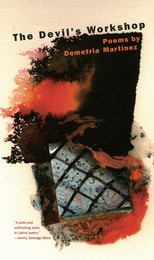
The Devil's Workshop
PoemsDemetria Martínez
University of Arizona Press, 2002
Don't believe it for a minute. In this collection of fifty-three poems, the author of the award-winning novel Mother Tongue explores the themes that have long characterized her writing: the creative and destructive powers of romantic love, the failure of political systems, the spiritual life, and the need to forgive oneself in order to move on with the work of transformation, both social and personal. Through poems that confront mortality even as they demand social justice, Martínez writes of surviving in a culture where traditional values often get lost in the complexities of everyday life. Of nurturing relationships with nieces, nephews, and parents while pondering questions of life and death, love and loss. Of caring for one's own body when "each cough is an underground nuclear explosion, / Unraveling your body’s hard-won peace accord." Martínez cauterizes old wounds inflicted by various agents: death, political repression, betrayal, and of course failed romance: "Don’t bother, I did it / First. Broke my own / Damn heart." Here are "kernels of loneliness too stubborn to grind / Down to blue meal," and the struggle for a renewed sense of self as middle age approaches:
At this age you touch what little sanctity you can muster.
The yearning burns to do more, to do more by hand.
To thread your very life through a needle's eye.
Martínez serves up a heady blend of political and sensual imagery. Her keen observations and compassionate voice lead the reader on a journey of self-exploration, of coping with life's mundanities as well as its heartaches: "I could use a loving word, / A loaf of bread, a rose, / Help with the laundry." Through her unquenchable passion for life, Demetria Martínez leaves the devil’s workshop and brings us closer to an understanding of what is real.
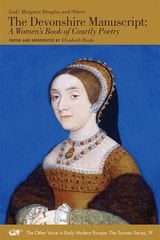
The Devonshire Manuscript
A Women's Book of Courtly PoetryLady Margaret Douglas and Others
Iter Press, 2012
—Jennifer Summit
Professor of English, Stanford University
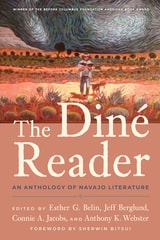
The Diné Reader
An Anthology of Navajo LiteratureEdited by Esther G. Belin, Jeff Berglund, Connie A. Jacobs, and Anthony K. Webster; Foreword by Sherwin Bitsui
University of Arizona Press, 2021
The Diné Reader: An Anthology of Navajo Literature is unprecedented. It showcases the breadth, depth, and diversity of Diné creative artists and their poetry, fiction, and nonfiction prose.This wide-ranging anthology brings together writers who offer perspectives that span generations and perspectives on life and Diné history. The collected works display a rich variety of and creativity in themes: home and history; contemporary concerns about identity, historical trauma, and loss of language; and economic and environmental inequalities.
The Diné Reader developed as a way to demonstrate both the power of Diné literary artistry and the persistence of the Navajo people. The volume opens with a foreword by poet Sherwin Bitsui, who offers insight into the importance of writing to the Navajo people. The editors then introduce the volume by detailing the literary history of the Diné people, establishing the context for the tremendous diversity of the works that follow, which includes free verse, sestinas, limericks, haiku, prose poems, creative nonfiction, mixed genres, and oral traditions reshaped into the written word.
This volume combines an array of literature with illuminating interviews, biographies, and photographs of the featured Diné writers and artists. A valuable resource to educators, literature enthusiasts, and beyond, this anthology is a much-needed showcase of Diné writers and their compelling work. The volume also includes a chronology of important dates in Diné history by Jennifer Nez Denetdale, as well as resources for teachers, students, and general readers by Michael Thompson. The Diné Reader is an exciting convergence of Navajo writers and artists with scholars and educators.
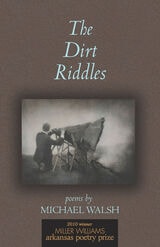
The Dirt Riddles
PoemsMichael Walsh
University of Arkansas Press, 2010
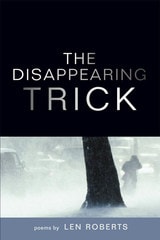
The Disappearing Trick
Len Roberts
University of Illinois Press, 2006
The Disordered Alphabet
Cintia Santana
Four Way Books, 0
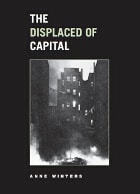
The Displaced of Capital
Anne Winters
University of Chicago Press, 2004
The long-awaited follow-up to The Key to the City—a finalist for the National Book Critics Circle Award in 1986—Anne Winters's The Displaced of Capital emanates a quiet and authoritative passion for social justice, embodying the voice of a subtle, sophisticated conscience.
The "displaced" in the book's title refers to the poor, the homeless, and the disenfranchised who populate New York, the city that serves at once as gritty backdrop, city of dreams, and urban nightmare. Winters also addresses the culturally, ethnically, and emotionally excluded and, in these politically sensitive poems, writes without sentimentality of a cityscape of tenements and immigrants, offering her poetry as a testament to the lives of have-nots. In the central poem, Winters witnesses the relationship between two women of disparate social classes whose friendship represents the poet's political convictions. With poems both powerful and musical, The Displaced of Capital marks Anne Winters's triumphant return and assures her standing as an essential New York poet.
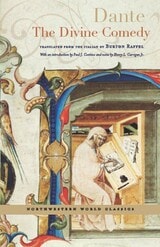
The Divine Comedy
Dante Alighieri; Translated from the Italian by Burton Raffel with an Introduction by Paul J. Contino and notes by Henry L. Carrigan Jr.
Northwestern University Press, 2010
At the midpoint of his life, during Holy Week in 1300, Dante awakes to himself in the middle of a forest so dark that the sun’s light cannot penetrate its gloom. of the wildness and brutality of the woods, Dante cries out for help, and thus begins one of Western literature’s greatest epic journeys.
The Divine Comedy follows Dante the pilgrim—guided by the great Roman poet Virgil, then by the love of his life, Beatrice—as he travels downward through Hell, then upward through Purgatory in order to reach Paradise and witness the love that moves the sun and the stars. Raffel’s translation vividly captures the divine contrapasso, the ultimate case of the punishment the crime, in the Inferno, while fathoming the complexity of the Purgatorio and the ecstasy of the Paradiso.
One of the world’s greatest works of literature, Dante’s Commedia revolutionized poetry and the Italian language. This epic poem was the to be written in the vernacular of the Italian people rather than in Latin. In it, Dante weaves the best of classical literature from Virgil, Statius, Aristotle, and Ovid with staples from the Christian tradition (including the Scriptures, Augustine, and Aquinas), into a colorful medieval tapestry that depicts at once the vividly checkered history of church and empire.
The Dove of the Morning News
PoemsBruce Bond
University of Nevada Press, 2024
In poems both personal and historical, The Dove of the Morning News explores conceptions of collectivity, inflected by each psyche, as a force of both connection and division. In its look at tribalism and systemic cruelty as rooted in shame, dread, and insecurity, the book seeks a better understanding of how power needs, spurred by communities of hatred, weaponize the brain’s tendencies to think in animated figures, caricatures, erasures, or, as in the book’s mediation on vellum, texts written across the bodies of others.
As a lens into contemporary life, the title sequence interrogates the vision of Pierre Teilhard de Chardin, whose sense of our increasingly interwoven cultural conversation figures now as a premonition of the internet. If his hope for the noosphere as a fulfillment of divine promise feels problematic, it nonetheless sees our globe as an organism whose long-term survival depends on the capacity of each to forge friendship across difference, to take the health and integration of the individual as emblematic of the whole.
The Dreamhouse
Tom Sleigh
University of Chicago Press, 1999
Praise for Tom Sleigh:
"Through sheer artistry, Tom Sleigh manages to write . . . in a transcendent way, and without appeal to the metaphysical assumptions transcendence usually requires. The Chain . . . floods darkness with brilliant craft."—Gray Jacobik, Boston Globe
"Tom Sleigh's second book of poems, Waking, is so fine one can hardly do justice to it in a review. . . . Sleigh is nearly as prodigal with his gifts as Yeats."—Liz Rosenberg, New York Times Book Review
The Dumpling Field
Haiku of IssaKobayashi Issa
Ohio University Press, 1991
Kobayashi Issa (1763–1827), long considered among Japan’s four greatest haiku poets (along with Basho, Buson, and Shiki) is probably the best loved. This collection of more than 360 haiku, arranged seasonally and many rendered into English for the first time, attempts to reveal the full range of the poet’s extraordinary life as if it were concentrated within a year. Issa’s haiku are traditionally structured, of seventeen syllables in the original, tonally unified and highly suggestive, yet they differ from those of fellow haikuists in a few important respects. Given his character, they had to. The poet never tries to hide his feelings, and again and again we find him grieving over the lot of the unfortunate – of any and all species.
No poet, of any time or culture, feels greater compassion for his life of creatures. No Buddhist—Issa was to become a monk—acts out the credos of his faith more genuinely. The poet, a devoted follower of Basho, traveled throughout the country, often doing the most menial work, seeking spiritual companionship and inspiration for the thousands of haiku he was to write. Yet his emotional and creative life was centered in his native place, Kashiwabara in the province of Shinano (now Nagano Prefecture), and his severest pain was the result of being denied a place in his dead father’s house by his stepmother and half brother.
By the time he was able to share the house of his beloved father, Issa had experienced more than most the grief of living, and much more was to follow with the death of his wife and their four children. In the face of all he continued to write, celebrating passionately the lives of all that shared the world with him, all creatures, all humans. Small wonder that Issa is so greatly loved by his fellow poets throughout the world, and by poetry lovers of all ages.

The Earliest Witnesses
G.C. Waldrep
Tupelo Press, 2020
The Ecology of Modernism
American Environments and Avant-Garde PoeticsJoshua Schuster
University of Alabama Press, 2015
In his opening passage, Schuster boldly invokes lines from Walt Whitman’s “Crossing Brooklyn Ferry,” which echo as a paean to pollution: “Burn high your fires, foundry chimneys! cast black shadows at nightfall!” Schuster labels this theme “regeneration through pollution” and demonstrates how this motif recurs in modernist compositions. This tolerance for, if not actual exultation of, the by-products of industrialization hindered modernist American artists, writers, and musicians from embracing environmentalist agendas.
Schuster provides specific case studies focusing on Marianne Moore and her connection of fables with animal rights; Gertrude Stein and concepts of nature in her avant-garde poetics; early blues music and poetry and the issue of how environmental disasters (floods, droughts, pestilence) affected black farmers and artists in the American South; and John Cage, who extends the modernist avant-garde project formally but critiques it at the same time for failing to engage with ecology. A fascinating afterword about the role of oil in modernist literary production rounds out this work.
Schuster masterfully shines a light on the modernist interval between the writings of bucolic and nature-extolling Romantics and the emergence of a self-conscious green movement in the 1960s. This rewarding work shows that the reticence of modernist poets in the face of resource depletion, pollution, animal rights, and other ecological traumas is highly significant.
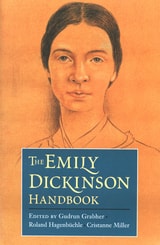
The Emily Dickinson Handbook
Gudrun Grabher
University of Massachusetts Press, 1998
For ease of use, individual essays have been structured as follows:
Each essay provides a historical overview of the relevant issues under scrutiny.
The essays offer detailed discussions of important aspects pertaining of the fields in question.
Unlike encyclopedic entries, each of the several essays reflects the authors own perspective, presenting a distinct point of view, at times a controversial one.
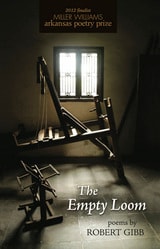
The Empty Loom
PoemsRobert Gibb
University of Arkansas Press, 2012
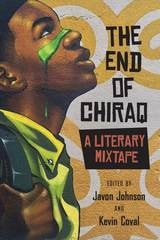
The End of Chiraq
A Literary MixtapeEdited by Javon Johnson and Kevin Coval
Northwestern University Press, 2018
"Chiraq" has come to connote the violence—interpersonal and structural—that many Chicago youth regularly experience. But the contributors to The End of Chiraq show that Chicago is much more than Chiraq. Instead, they demonstrate how young people are thinking and mobilizing, engaged in a process of creating a new and safer world for themselves, their communities, and their city.
In true mixtape fashion, the book is an exercise in "low end theory" that does not just include so-called underground and marginal voices, but foregrounds them. Edited by award-winning poets, writers, and teachers Javon Johnson and Kevin Coval, The End of Chiraq addresses head-on the troublesome relationship between Chicago and Chiraq and envisions a future in which both might be transformed.
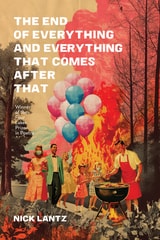
The End of Everything and Everything That Comes after That
Nick Lantz
University of Wisconsin Press, 2024
Mixing sincerity with irony, lyric with vernacular, Lantz’s collisions of style and subject are at their most vibrant in the long sequence at the center of the collection, a series of poems that brilliantly capture the disruption and disorder of our lives during the COVID-19 pandemic in breathless, unpunctuated verse. Depicting the uncanny dissonance of living during and beyond events that feel world ending, this volume reminds us of the ways in which we carry our own traumas and the traumas of history with us in our daily lives.
Life is all gilded frescoes
and Arnold Palmers
at the clubhouse until Titus and his men
pass through with torches,
until Cortés and his men
pass through with torches, until Sherman
and his men and so on,
until men forget
what their hands looked like without torches.
—Excerpt from “Ruin”
The End of the Clockwork Universe
Fleda Brown
Carnegie Mellon University Press, 2025
What does it mean to exist in a universe that refuses to stay still? In The End of the Clockwork Universe, Fleda Brown weaves together the vastness of cosmic discovery with the intimate textures of daily life. Ranging from quarks to catalytic converters, snapping turtles to black holes, these poems trace the mysteries of time and perception, offering a voice both unsentimental and deeply compassionate.
With wry humor and unending curiosity, Brown walks the fine line between knowing and not knowing, between order and entropy. Her poems wander through scientific revelation and personal reflection and capture the quiet astonishment of existence. The End of the Clockwork Universe does not seek to solve life’s uncertainties, but sings to them, leaving behind echoes of resilience and the sheer joy of paying attention.
The Enemy
Rafael Campo
Duke University Press, 2007
The Environmental Unconscious
Ecological Poetics from Spenser to MiltonSteven Swarbrick
University of Minnesota Press, 2023
Bringing psychoanalysis to bear on the diagnosis of ecological crisis
Why has psychoanalysis long been kept at the margins of environmental criticism despite the many theories of eco-Marxism, queer ecology, and eco-deconstruction available today? What is unique, possibly even traumatic, about eco-psychoanalysis? The Environmental Unconscious addresses these questions as it provides an innovative and theoretical account of environmental loss focused on the counterintuitive forms of enjoyment that early modern poetry and psychoanalysis jointly theorize.
Steven Swarbrick urges literary critics and environmental scholars fluent in the new materialism to rethink notions of entanglement, animacy, and consciousness raising. He introduces concepts from psychoanalysis as keys to understanding the force of early modern ecopoetics. Through close readings of Edmund Spenser, Walter Ralegh, Andrew Marvell, and John Milton, he reveals a world of matter that is not merely hyperconnected, as in the new materialism, but porous and off-kilter. And yet the loss these poets reveal is central to the enjoyment their works offer—and that nature offers.
As insightful as it is engaging, The Environmental Unconscious offers a provocative challenge to ecocriticism that, under the current regime of fossil capitalism in which everything solid interconnects, a new theory of disconnection is desperately needed. Tracing the propulsive force of the environmental unconscious from the early modern period to Freudian and post-Freudian theories of desire, Swarbrick not only puts nature on the couch in this book but also renews the psychoanalytic toolkit in light of environmental collapse.
The Epic Catalogue
List Form and Reception from Beowulf to Paradise LostEva von Contzen
The Ohio State University Press, 2026
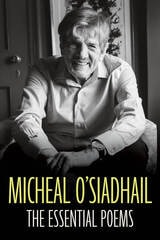
The Essential Poems
Micheal O'Siadhail
Northwestern University Press, 2026
The essential selected works of Ireland’s leading poet, Micheal O’Siadhail
With an illustrious literary career that has spanned over fifty years, renowned poet Micheal O’Siadhail has cemented his place on the international stage. From his debut collection, The Leap Year (1978), to his latest collection, Desire (2023), O’Siadhail captures evolving struggles with love, faith, and humanity. Here, spanning the entirety of his outstanding career, is the essence of his masterful body of work.
The Essential Poems voyages through traditional and innovative poetic forms, investigating love and passion, joy and loss, world-shaping events and personal experiences. O’Siadhail sounds the depths of meaning and evokes wonder, surprise, anguish, and delight. A lyrical meditation on the relationships between humanity and nature, despair and faith, and the richness of courage in the acts of healing completes what proves to be this unforgettable and necessary collection of the inimitable Irish poet.
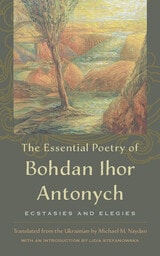
The Essential Poetry of Bohdan Ihor Antonych
Ecstasies and ElegiesBohdan Ihor Antonych (1909-1937)
Bucknell University Press, 2024
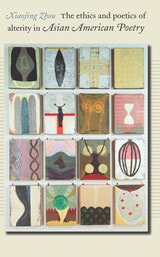
The Ethics and Poetics of Alterity in Asian American Poetry
Xiaojing Zhou
University of Iowa Press, 2006
Poetry by Asian American writers has had a significant impact on the landscape of contemporary American poetry, and a book-length critical treatment of Asian American poetry is long overdue. In this groundbreaking book, Xiaojing Zhou demonstrates how many Asian American poets transform the conventional “I” of lyric poetry—based on the traditional Western concept of the self and the Cartesian “I”—to enact a more ethical relationship between the “I” and its others.
Drawing on Emmanuel Levinas’s idea of the ethics of alterity—which argues that an ethical relation to the other is one that acknowledges the irreducibility of otherness—Zhou offers a reconceptualization of both self and other. Taking difference as a source of creativity and turning it into a form of resistance and a critical intervention, Asian American poets engage with broader issues than the merely poetic. They confront social injustice against the other and call critical attention to a concept of otherness which differs fundamentally from that underlying racism, sexism, and colonialism. By locating the ethical and political questions of otherness in language, discourse, aesthetics, and everyday encounters, Asian American poets help advance critical studies in race, gender, and popular culture as well as in poetry.
The Ethics and Poetics of Alterity is not limited, however, to literary studies: it is an invaluable response to the questions raised by increasingly globalized encounters across many kinds of boundaries.
The Poets
Marilyn Chin, Kimiko Hahn, Myung Mi Kim, Li Young Lee, Timothy Liu, David Mura, and John Yau
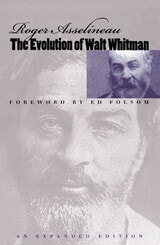
The Evolution of Walt Whitman
Roger Asselineau
University of Iowa Press, 1999
Now, nearly forty years after its original translation into English, Roger Asselineau's complete and magisterial biography of Walt Whitman will remind readers of the complex weave of traditions in Whitman scholarship. It is startling to recognize how much of our current understanding of Whitman was already articulated by Asselineau nearly half a century ago. Throughout its eight hundred pages, The Evolution of Walt Whitman speaks with authority on a vast range of topics that define both Whitman the man and Whitman the mythical personage. Remarkably, most of these discussions remain fresh and relevant, and that is in part because they have been so influential.
In particular, The Evolution of Walt Whitman inaugurated the study of Leaves of Grass as a lifelong work in progress, and it marked the end of the habit of talking about Leaves as if it were a single unified book. Asselineau saw Whitman's poetry “not as a body of static data but as a constantly changing continuum whose evolution must be carefully observed.” Throughout Evolution, Asselineau placed himself in the role of the observer, analyzing Whitman's development with a kind of scientific detachment. But behind this objective persona burned the soul of a risk taker who was willing to rewrite Whitman studies by bravely proposing what was then a controversial biographical source for Whitman's art—his homosexual desires.
The Evolution of Walt Whitman is a reminder that extraordinary works of criticism never exist in and of themselves. In this expanded edition, Roger Asselineau has provided a new essay summarizing his own continuing journey with Whitman. A foreword by Ed Folsom, editor of the Walt Whitman Quarterly, regards Evolution as the genesis of contemporary Whitman studies.

The Example of Edward Taylor
Karl Keller
University of Massachusetts Press, 1975
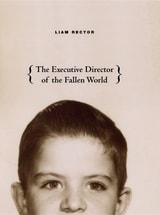
The Executive Director of the Fallen World
Liam Rector
University of Chicago Press, 2006
The Worry of the Far Right
The Reverend Donald Wildmon, executive director
Of the American Family Association in Tupelo,
Mississippi, birthplace of Elvis Presley, he who
Unleashed the libido of a generation, announced today
That he, the Reverend, wanted again an America
In which he could drive his convertible into town,
Park it, leave his keys in the ignition,
And worry only that it might rain,
Rather than worry about Liam Rector.
America—you are on notice. Liam Rector has little patience for “sincere” poetry, spin-doctored politicos, or moral hot air of any kind. The titles of these poems could easily serve as their own warning labels: those with clinical depression or easily triggered violent tendencies should use with caution.
The Executive Director of the Fallen World is fearless and forthright, just the sort of blunt reality check that is missing from so much of contemporary, over-stylized poetry. Rector’s stoicism and slightly murderous sense of humor pervade these poems as he doffs his hat to humility and audacity, taking on America, money, movement, marriages, and general cultural mayhem. The characters and voices in Rector’s poems are, by tragic turns, unflinching, clearly and cleanly bitter, sarcastically East Coast, and lyrical. Writing in tercets throughout, the poet breathes new life into this classic form with skill that might just send some unsuspecting readers over the edge.
As the former executive director of the Association of Writers and Writing Programs and a spirited First Amendment advocate who has sparred on screen with Bill O’Reilly, Liam Rector knows whereof he speaks in The Executive Director of the Fallen World.

The Explosive Expert's Wife
Shara Lessley
University of Wisconsin Press, 2018
The FUTURE PERFECT
A FUGUEEric Pankey
Tupelo Press, 2022
The Fate of Difficulty in the Poetry of Our Time
Edited by Charles Altieri and Nicholas D. Nace
Northwestern University Press, 2017
The essays in this volume include poets writing on the works of a younger generation (Lyn Hejinian on Paolo Javier, Bob Perelman on Rachel Zolf, Roberto Tejada on Rosa Alcalá), influential writers addressing the work of peers (Ben Lerner on Maggie Nelson, Michael W. Clune on Aaron Kunin), critics making imaginative leaps to encompass challenging work (Brian M. Reed on Sherwin Bitsui, Siobhan Philips on Juliana Spahr), and younger scholars coming to terms with poets who continue to govern new poetic experimentation (Joseph Jeon on Myung Mi Kim, Lytle Shaw on Lisa Robertson).
In pairings that are both intuitive (Marjorie Perloff on Craig Dworkin) and unexpected (Langdon Hammer on Srikanth Reddy), The Fate of Difficulty in the Poetry of Our Time illuminates the myriad pathways and strategies for exploring difficult poetry of the present.
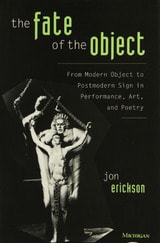
The Fate of the Object
From Modern Object to Postmodern Sign in Performance, Art, and PoetryJon Erickson
University of Michigan Press, 1995
The Fayre Formez of the Pearl Poet
Sandra Pierson Prior
Michigan State University Press, 1996
This book differs from most previous studies of the Pearl poet by treating all of his works as a whole. Prior’s purpose is to identify the underlying poetics of this major body of English poetry. Drawing on both the visual imagery of medieval art (the study includes 18 full-page illustrations) and the verbal imagery of the Bible and other literary sources, Prior shows how the poet’s "fayre formez" are the result of a coherent and self-conscious view of the artist’s craft.
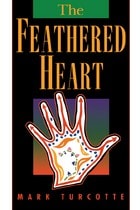
The Feathered Heart
Mark Turcotte
Michigan State University Press, 1998
This revised and expanded edition of The Feathered Heart, Mark Turcotte's celebrated collection of Native American poetry, brings traditional oral culture to print. Torn, painful, vibrant, and full of hope, his poetry weaves together the multilayered and textured fabric of contemporary Native American urban and rural existence. Appropriately, each poem in The Feathered Heart possesses a deeply lyrical quality. Raw emotion echoes in Turcotte's voice, in his verse, in the things he sees. "Ten Thousand Thousand Bones," for example, "a poem about the desecration of Native American burial sites and objects by archeologists," is dedicated "to an ancient woman taken from the Earth near New Lenox, Illinois in the winter 1993/94."
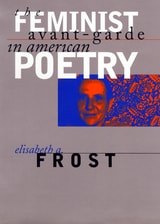
The Feminist Avant-Garde In American Poetry
Elisabeth A. Frost
University of Iowa Press, 2005
The Feminist Avant-Garde in American Poetry offers a historical and theoretical account of avant-garde women poets in America from the 1910s through the 1990s and asserts an alternative tradition to the predominantly male-dominated avant-garde movements. Elisabeth Frost argues that this alternative lineage distinguishes itself by its feminism and its ambivalence toward existing avant-garde projects; she also thoroughly explores feminist avant-garde poets' debts and contributions to their male counterparts.
The Figure of a Man Being Swallowed by a Fish
Joshua Weiner
University of Chicago Press, 2013
The Fin-de-Siècle Poem
English Literary Culture and the 1890sJoseph Bristow
Ohio University Press, 2005
The Fire Landscape
PoemsGary Fincke
University of Arkansas Press, 2008
The Fire Passage
Lisa Wells
Four Way Books, 2025
The Fire Stays in Red
PoemsRonnie Someck
University of Wisconsin Press, 2002
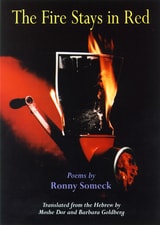
"My mother dreams in Arabic, I dream in Hebrew," says Ronny Someck. Born in 1951, he was uprooted from his native Iraq when he was four. Transplanted to Israel, Someck spent his childhood in a transit camp for new immigrants. There he was surrounded by music, the great singers Umm Kulthum, Farid al Atrash, and Fairuz shouldering up against Elvis Presley and Billie Holiday. No wonder he is so beloved in Israel. In what other poet do we find Tarzan, Marilyn Monroe, and cowboys battling with Rabbi Yehuda Halevi for the hearts and souls of Israelis?
Someck’s poems are rich in slang and distinguished by staccato rhythms, quick cuts, close-ups, and disturbing segues. As in film noir, the sensations are of speed, danger, uncertainty. His distinct Sephardi voice invokes the odors of falafel and schwarma, the army with its supporting cast of recruits and commandos, the bustle of southern Tel Aviv with its small garages, shops, cheap restaurants, its gangs and its Arab workers. He is also the troubadour of the lovelorn, with poems that are hot, erotic, comic, tragic, agape at the wonders of a tear and a tattoo and a snapshot and a bra and a scarecrow.
The First Inhabitants of Arcadia
PoemsChristopher Bursk
University of Arkansas Press, 2006
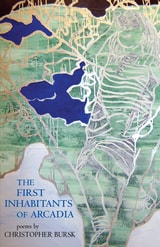
Herman Melville, Matthew Arnold, Sarah Orne Jewett, Dusty Rhodes, and Hoyt Wilhelm skinny-dip and pick up gondoliers and cut figure eights into the ice in Christopher Bursk’s new collection. But the main cast of characters for these poems is the alphabet itself, “the first inhabitants of Arcadia, / now homesick, curious exiles from Eden.” Here are a boy’s first investigations into the nature of language as he studies the backs of baseball cards, and a young man’s infatuation with the “F-word.” The titles sing their lettered songs: “An Ode to j,” “M-m-m Good!” and “O in Trouble.”
Here are “reading lessons,” the author’s exploration of the curses and blessings of the word. It is about the fall from paradise and the gifts that fall makes possible. And over the whole book broods the great lexicographer, Samuel Johnson, that deeply troubled caretaker of the mother tongue. More than an ABC book, this collection asks questions at the very heart of how we understand the world and shows us the glory and silliness at the heart of human life.
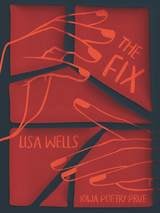
The Fix
Lisa Wells
University of Iowa Press, 2018
Proceeding from Hélène Cixous’s charge to “kill the false woman who is preventing the live one from breathing,” The Fix forges that woman’s reckoning with her violent past, with her sexuality, and with a future unmoored from the trappings of domestic life. These poems of lyric beauty and unflinching candor negotiate the terrain of contradictory desire—often to darkly comedic effect. In encounters with strangers in dive bars and on highway shoulders, and through ekphrastic engagement with visionaries like William Blake, José Clemente Orozco, and the Talking Heads, this book seeks the real beneath the dissembling surface. Here, nothing is fixed, but grace arrives by diving into the complicated past in order to find a way to live, now.
“Woman Seated with Thighs Apart”
Often I am permitted to return to this kitchen
tipsy, pinned to the fridge, to the precise
instant the kiss smashed in.
When the jaws of night are grinding
and the double bed is half asleep
the snore beside me syncs
to the traffic light, pulsing red, ragged up
in the linen curtain.
I leak such solicitous sighs
to asphalt, slicked with black ice, high beams speed
over my body whole
while the drugstore weeps its remedy
in strident neon throbs—
I doubt I’ll make it out.
It’s a cold country. It’s the sting of quarantine.
It’s my own two hands working
deep inside the sheets.
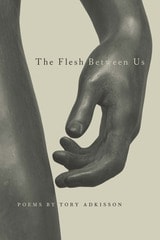
The Flesh Between Us
Tory Adkisson
Southern Illinois University Press, 2021
In The Flesh Between Us the speaker explores our connections to each other, whether they be lovely or painful, static or constantly shifting, or, above all, unavoidable and necessary. Intensely and unapologetically homoerotic in content and theme, The Flesh Between Us sensuously conducts the meetings between strangers, between lovers, between friends and family, between eater and eaten, between the soul and the body that contains it. Pushing the boundaries of what has been traditionally acceptable for gay and erotic content and themes, the poems adapt persona, Greek mythology, Judaism, and classic poetic forms to interrogate the speaker’s relationship to god and faith, to love and sex, to mother and father.
Stark and mythical, the imagery draws from the language of animals and nature. Episodes of kink tangle with creatures of forests and lore. In this tumult, the lines of poetry keep a sense of boundary and distance by the seeming incompatibility of their subjects: daybreak and dissection, human and insect, worship and reality. The touch of irreconcilable bodies, in Adkisson’s language, intimates the precise moment of love. The idea of love moves viscerally through rib, lung, throat, and mouth. The poems show how flesh opens in so many ways, in prayers, in bleeds, in ruts. The flesh, opened, begins to swell. If there is guilt in this, Adkisson’s poems refuse the placid satisfaction of confession. Whatever attachments the reader dares to draw must be made with blade or tongue. The reader must commit to the potential violence narrated by these poems.
The Flight Cage
Rebecca Dunham
Tupelo Press, 2010
Using the metaphor of a “flight cage,” where birds are held captive, as physical manifestation of the space from which her speakers address us, Dunham reinvigorates the persona poem. Instead of “performing” historical figures such as Wollstonecraft, Dorothy Wordsworth, Anna Akhmatova, and Charlotte Perkins Gilman, she invites them to inhabit her, flickering in and out of sight, refusing an easy artifice.
A virtuoso of the phrase and image, Dunham displays a daring range of prosody. Drawing upon Wollstonecraft’s experimental travel narrative, the poet creates a threshold upon which the traditional “crown of sonnets” can be opened to the sudden breakage of collaged text, remaking both the received form and the now-conventional contemporary experimental poem.
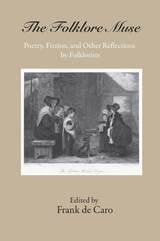
The Folklore Muse
Poetry, Fiction, and Other Reflections by FolkloristsFrank de Caro
Utah State University Press, 2008
Folklore—the inherently creative expression, transmission, and performance of cultural traditions—has always provided a deep well of material for writers, musicians, and artists of all sorts. Folklorists usually employ descriptive and analytical prose, but they, like scholars in other social sciences, have increasingly sought new, creative and reflexive modes of discourse. Many folklorists are also creative writers, some well known as such, and the folk traditions they research often provide shape and substance to their work. This collection of creative writing grounded in folklore and its study brings together some of the best examples of such writing.
Contributors to this collection include Teresa Bergen, John Burrison, Norma E. Cantu, Frank de Caro, Holly Everett, Danusha Goska, Neil R. Grobman, Carrie Hertz, Edward Hirsch, Laurel Horton, Rosan Augusta Jordan, Paul Jordan-Smith, Elaine J. Lawless, Cynthia Levee, Jens Lund, Mary Magoulick, Bernard McCarthy, Joanne B. Mulcahy, Kirin Narayan, Ted Olson, Daniel Peretti, Leslie Prosterman, Jo Radner, Susan Stewart, Jeannie Banks Thomas, Jeff Todd Titon, Libby Tucker, Margaret Yocom, and Steve Zeitlin.
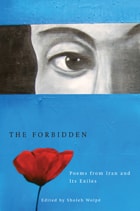
The Forbidden
Poems from Iran and its ExilesSholeh Wolpé
Michigan State University Press, 2012
During the 1979 revolution, Iranians from all walks of life, whether Muslim, Jewish, Christian, socialist, or atheist, fought side-by-side to end one tyrannical regime, only to find themselves in the clutches of another. When Khomeini came to power, freedom of the press was eliminated, religious tolerance disappeared, women’s rights narrowed to fit within a conservative interpretation of the Quran, and non-Islamic music and literature were banned. Poets, writers, and artists were driven deep underground and, in many cases, out of the country altogether. This moving anthology is a testament to both the centuries-old tradition of Persian poetry and the enduring will of the Iranian people to resist injustice. The poems selected for this collection represent the young, the old, and the ancient. They are written by poets who call or have called Iran home, many of whom have become part of a diverse and thriving diaspora.

The Forest
Susan Stewart
University of Chicago Press, 1995
The Forest of Sure Things
Megan Snyder-Camp
Tupelo Press, 2010
The Forest of Sure Things is a layered sequence of poems set in a remote, historic village at the tip of a peninsula on the Northwest Coast, near where Lewis and Clark encountered the Pacific. A pair of newlywed drifters has arrived and settled there, starting the town’s first new family in a hundred years. When their second child is stillborn, the bereft family unravels and un-roots themselves. Megan Snyder-Camp’s poems reveal — like the shoreline exposed by a neap tide — an emotional landscape pressed upon and buckling under the complications of grief and the difficulties of language.
With hypnotic, incantatory phrasing and imagery and an innovative approach to chronology, Snyder-Camp tells the story of the grieving couple, then dramatizes the impact of this enigmatic story on her imagination, her artistic practice, and her own new beginnings in married life and parenthood.
Based in part upon a brief, true story she was told, Snyder-Camp’s mysterious yet uncommonly compelling poetic sequence will draw the reader as if along a current pulling through the book. Acknowledging the importance of Anne Carson’s Autobiography of Red and Italo Calvino’s Invisible Cities, Snyder-Camp has spoken of her fascination with where language frays, as we try and use “story” to create what we remember and see where we are. What happens in a place, or a family, or a body, when time catches, or stops?
The Foundling Wheel
Blas Falconer
Four Way Books, 2012
The Future
Monica Ferrell
Four Way Books, 2026
The Future is a book about time. The tender, vulnerable, and bitingly funny poems of Monica Ferrell's third collection confront the hours as they stream by, our relatively brief lives that feel so long while we are living them, successive generations and the unwinding story of our species, and the bewilderingly vast geological age of the planet. Traveling across eras, through ice ages to the eighteenth century and the modern day of Ozempic and chatbots, these poems also square up to the obscurity of what comes next as they peer forward into time still to come.
At once irreverent yet elegant, sophisticated yet conversational, these poems capture what it means to get by day to day in a 21st century destabilized by ecological collapse, political havoc, and the incursion of technology into our most private and intimate spaces. “Every day I wake up,” Ferrell writes, “and ask, is it today? The volcano?” Restless in their imaginative scope, these poems leap across the world, from the enduring statues at Angkor Wat and Hampi to Alpine meadows contaminated with plastic to a supermarket in Vermont. Without papering over any of the difficulties we face today, Ferrell nonetheless expands our capacity to wonder, especially about the experience of motherhood, how the future keeps finding a way of breaking through.
This book manifests as that impossible, unimaginable collision that annihilates the world as we thought it was and sees it emerge as pure energy. Ferrell includes us in “the bequest of this battered planet, this sweetly belabored thing,” from one generation to the next, reminding us of the genesis contained inside obliteration: “one November night I too once opened my eyes to the bright.”
The Future Will Call You Something Else
Natasha Sajé
Tupelo Press, 2023
—Cyrus Cassells