Results by title
3064 books match the query 'Social conditions' and 510 start with t
The Institutionalization of Islam in Southern Senegal
Intermarriage, Qur'anic Education, and JihadAly Dramé
University of Michigan Press, 2025
Drawing on archival documents, oral history and traditions, travelers’ accounts, the Arabic text Pakao al-Qurano (Holy Book of Pakao), and original ethnography, The Institutionalization of Islam in Southern Senegal demonstrates how these communities reframe the debates about the institutionalization of Islam in Senegambia geographically, chronologically, and thematically.
The Institutions of France under the Absolute Monarchy, 1598-1789, Volume 1
Society and the StateRoland Mousnier
University of Chicago Press, 1979
In a society divided by hierarchical social groups, conflicts among lineages, communities, and districts became inevitable. Aristocratic disdain, ancestral attachment to privileges, and autonomous powers looked upon as rights, made civil unrest, dislocation, and anarchy endemic. Mousnier examines this contention between classes as they faced each other across the institutional barriers of education, religion, economic resources, technology, means of defense and communication, and territorial and family ties. He shows why a monarchical state was necessary to preserve order within this fragmented society.
Though it was intent on ensuring the survival of French society and the public good, the Absolute Monarchy was unable to maintain security, equilibrium, and cooperation among rival social groups. Discussing the feeble technology at its disposal and its weak means of governing, Mousnier points to the causes that brought the state to the limits of its resources. His comprehensive analysis will greatly interest students of the ancien régime and comparativists in political science and sociology as well.

The Institutions of France under the Absolute Monarchy, 1598-1789, Volume 2
The Origins of State and SocietyRoland Mousnier
University of Chicago Press, 1984
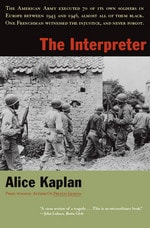
The Interpreter
Alice Kaplan
University of Chicago Press, 2007
No story of World War II is more triumphant than the liberation of France, made famous in countless photos of Parisians waving American flags and kissing GIs as columns of troops paraded down the Champs Élysées. But one of the least-known stories from that era is also one of the ugliest chapters in the history of Jim Crow. In The Interpreter, celebrated author Alice Kaplan recovers this story both as eyewitnesses first saw it, and as it still haunts us today.
The American Army executed 70 of its own soldiers between 1943 and 1946—almost all of them black, in an army that was overwhelmingly white. Through the French interpreter Louis Guilloux’s eyes, Kaplan narrates two different trials: one of a white officer, one of a black soldier, both accused of murder. Both were court-martialed in the same room, yet the outcomes could not have been more different.
Kaplan’s insight into character and setting creates an indelible portrait of war, race relations, and the dangers of capital punishment.
“A nuanced historical account that resonates with today’s controversies over race and capital punishment.” Publishers Weekly
“American racism could become deadly for black soldiers on the front. The Interpreter reminds us of this sad component of a heroic chapter in American military history.” Los Angeles Times
“With elegance and lucidity, Kaplan revisits these two trials and reveals an appallingly separate and unequal wartime U.S. military justice system.” Minneapolis Star Tribune
“Kaplan has produced a compelling look at the racial disparities as they were played out…She explores both cases in considerable and vivid detail.” Sacramento Bee
The Intestines of the State
Youth, Violence, and Belated Histories in the Cameroon GrassfieldsNicolas Argenti
University of Chicago Press, 2007
Beginning his study with a political analysis of youth in the Grassfields from the eighteenth century to the present, Argenti pays special attention to the repeated violent revolts staged by young victims of political oppression. He then combines this history with extensive ethnographic fieldwork in the Oku chiefdom, discovering that the specter of past violence lives on in the masked dance performances that have earned intense devotion from today’s youth. Argenti contends that by evoking the imagery of past cataclysmic events, these masquerades allow young Oku men and women to address the inequities they face in their relations with elders and state authorities today.
The Invention of the Brazilian Northeast
Durval Muniz de Albuquerque Jr.
Duke University Press, 2014
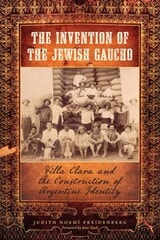
The Invention of the Jewish Gaucho
Villa Clara and the Construction of Argentine IdentityBy Judith Noemí Freidenberg
University of Texas Press, 2009
By the mid-twentieth century, Eastern European Jews had become one of Argentina's largest minorities. Some represented a wave of immigration begun two generations before; many settled in the province of Entre Ríos and founded an agricultural colony. Taking its title from the resulting hybrid of acculturation, The Invention of the Jewish Gaucho examines the lives of these settlers, who represented a merger between native cowboy identities and homeland memories.
The arrival of these immigrants in what would be the village of Villa Clara coincided with the nation's new sense of liberated nationhood. In a meticulous rendition of Villa Clara's social history, Judith Freidenberg interweaves ethnographic and historical information to understand the saga of European immigrants drawn by Argentine open-door policies in the nineteenth century and its impact on the current transformation of immigration into multicultural discourses in the twenty-first century. Using Villa Clara as a case study, Freidenberg demonstrates the broad power of political processes in the construction of ethnic, class, and national identities. The Invention of the Jewish Gaucho draws on life histories, archives, material culture, and performances of heritage to enhance our understanding of a singular population—and to transform our approach to social memory itself.
The Invisible Professor
The Precarious Lives of the New Faculty MajorityNatalie M. Dorfeld
University Press of Colorado, 2023
This edited collection, the first in the Practices & Possibilities series to be published in its Voices from the Field section, offers a rich set of narratives by writing instructors who are serving or have worked in contingent positions. Intended for anyone considering a career in the humanities, The Invisible Professor seeks to reach individuals in three phases of their careers: those thinking of entering the profession, those knee-deep in it and looking for ways to improve conditions, and those who have vacated academic positions for more humane alternative tracks.
As academia comes to a crossroads, with a disheartening shift towards a more disposable business model, multiple solutions are desperately needed. Faculty members in contingent positions are the new faculty majority on college campuses, and they are most likely the first professors students will meet. They deserve respect and a livable wage.
The Iranian Diaspora
Challenges, Negotiations, and TransformationsEdited by Mohsen Mostafavi Mobasher
University of Texas Press, 2018
The Iranian revolution of 1978–1979 uprooted and globally dispersed an enormous number of Iranians from all walks of life. Bitter political relations between Iran and the West have since caused those immigrants to be stigmatized, marginalized, and politicized, which, in turn, has discredited and distorted Iranian migrants’ social identity; subjected them to various subtle and overt forms of prejudice, discrimination, and social injustice; and pushed them to the edges of their host societies. The Iranian Diaspora presents the first global overview of Iranian migrants’ experiences since the revolution, highlighting the similarities and differences in their experiences of adjustment and integration in North America, Europe, Australia, and the Middle East.
Written by leading scholars of the Iranian diaspora, the original essays in this volume seek to understand and describe how Iranians in diaspora (re)define and maintain their ethno-national identity and (re)construct and preserve Iranian culture. They also explore the integration challenges the Iranian immigrants experience in a very negative context of reception. Combining theory and case studies, as well as a variety of methodological strategies and disciplinary perspectives, the essays offer needed insights into some of the most urgent and consequential issues and problem areas of immigration studies, including national, ethnic, and racial identity construction; dual citizenship and dual nationality maintenance; familial and religious transformation; politics of citizenship; integration; ethnic and cultural maintenance in diaspora; and the link between politics and the integration of immigrants, particularly Muslim immigrants.
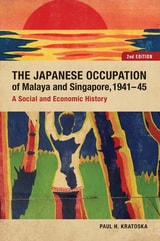
The Japanese Occupation of Malaya and Singapore, 1941-45
A Social and Economic HistoryPaul H. Kratoska
National University of Singapore Press, 2018
Originally published in 1998, The Japanese Occupation of Malaya and Singapore is fully updated with material from newly discovered and recently translated documents and as well as new archival evidence. Kratoska’s work offers a clear depiction of wartime life under foreign occupation, and explains how the legacies of war and occupation shaped the post-war recovery in Malaya and Singapore.
The Journey into Adulthood in Uncertain Times
Robert Crosnoe
Russell Sage Foundation, 2025
Drawing on both quantitative and qualitative survey data over five decades, Crosnoe and Cavanagh find that young adults are, in fact, waiting longer to take on “real” adult roles, such as worker or parent. However, this is not out of a reluctance to grow up. Instead, increased inequality and changes in the economy have forced young people to adapt their lives in new ways. Young adults are now spending more time in school, have more trouble finding their footing in the labor force, and consequently postpone getting married and having children. They also mix and match roles in more complicated ways now than in the past—going back and forth between school and work over longer periods of time or disconnecting parenthood from their romantic relationships. While the period from late teens to mid-twenties does look different now than in the past, the change has been slow and steady rather than a dramatic shift due to social crises. The Great Recession, for example, had a more muted effect on young people’s social and economic attainment and family formation than fears of a lost generation would suggest.
Crosnoe and Cavanagh find that while the panic over young adults today may be somewhat overblown, this conclusion should not obscure some clear concerns. Young adults do struggle with their social and emotional wellbeing. They are more depressed than their counterparts in previous generations, drink less alcohol in ways that suggest less engagement with social life, and express deep distrust of social institutions and the idea of the American Dream. The authors argue that worries about the state of young adulthood today should trigger more reflection about how to support young people rather than how to fix them.
The Journey into Adulthood in Uncertain Times is a comprehensive and illuminating examination of the challenges faced by contemporary young adults.
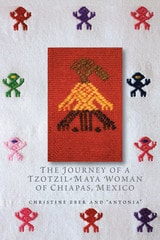
The Journey of a Tzotzil-Maya Woman of Chiapas, Mexico
Pass Well over the EarthBy Christine Eber and “Antonia”
University of Texas Press, 2011
Most recent books about Chiapas, Mexico, focus on political conflicts and the indigenous movement for human rights at the macro level. None has explored those conflicts and struggles in-depth through an individual woman's life story. The Journey of a Tzotzil-Maya Woman of Chiapas, Mexico now offers that perspective in one woman's own words. Anthropologist Christine Eber met "Antonia" in 1986 and has followed her life's journey ever since. In this book, they recount Antonia's life story and also reflect on challenges and rewards they have experienced in working together, offering insight into the role of friendship in anthropological research, as well as into the transnational movement of solidarity with the indigenous people of Chiapas that began with the Zapatista uprising.
Antonia was born in 1962 in San Pedro Chenalhó, a Tzotzil-Maya township in highland Chiapas. Her story begins with memories of childhood and progresses to young adulthood, when Antonia began working with women in her community to form weaving cooperatives while also becoming involved in the Word of God, the progressive Catholic movement known elsewhere as Liberation Theology. In 1994, as a wife and mother of six children, she joined a support base for the Zapatista Army of National Liberation. Recounting her experiences in these three interwoven movements, Antonia offers a vivid and nuanced picture of working for social justice while trying to remain true to her people's traditions.

The Kindness of Strangers
The Abandonment of Children in Western Europe from Late Antiquity to the RenaissanceJohn Boswell
University of Chicago Press, 1998
The Korean-American Dream
Portraits of a Successful Immigrant CommunityJames Flanigan
University of Nevada Press, 2018
In The Korean-American Dream, respected and distinguished business journalist James Flanigan uncovers the struggles and contributions of the people who have made Los Angeles the largest Korean city outside of Seoul.
This intimate account illustrates how Korean immigrants have preserved their culture and history as well as adapted to the American culture of E Pluribus Unum, the radical promise of “out of many, one.” Flanigan shows how Los Angeles emerged as a capital of the Asia Pacific region.
At less than 2 million, Korean Americans are a relatively small group compared to new Americans from China, the Philippines, and India. But with energy and drive, they are building landmarks in New York as well as L.A., lobbying for causes in Washington, founding businesses, heading universities and hospitals, and holding public office in all parts of the U.S.
Flanigan’s compelling narrative told largely through personal interviews provides a front-row seat to the economic, business, and cultural developments of the Korean American Community. At a time of spirited debate about immigration, their energy and ambition serve as a ringing reminder of the promise of the American mosaic.
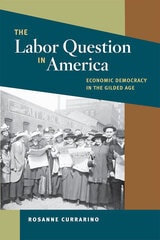
The Labor Question in America
Economic Democracy in the Gilded AgeRoseanne Currarino
University of Illinois Press, 2011
The Laissez-Faire Peasant
Post-Socialist Rural Development in SerbiaJovana Dikovic
University College London, 2025
The Laissez-Faire Peasant: Post-Socialist Rural Development in Serbia subverts conventional wisdom on rural development by shifting the focus from state-led planning to the agency of peasants themselves. Rejecting the notion that rural populations are passive victims of top-down policies, Jovana Dikovic presents a compelling ethnographic study of three Serbian villages, where autonomy and local cooperation drive economic and social resilience. She introduces the concept of the “laissez-faire peasant”—a figure who thrives outside rigid government schemes, shaping rural development on their own terms. By examining the friction between state policies and the everyday strategies of rural communities, Dikovic uncovers how peasant autonomy not only resists external intervention but fosters sustainable and self-sufficient growth.
The first in-depth study of contemporary Serbian peasantry, this book reframes rural life as a site of innovation rather than stagnation. An area of interest for scholars of post-socialist transitions, rural development, and economic anthropology, The Laissez-Faire Peasant provides a new lens on how rural communities survive and adapt in a rapidly changing world.
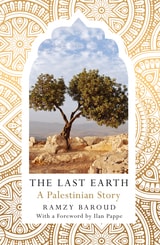
The Last Earth
A Palestinian StoryRamzy Baroud
Pluto Press, 2018
Ordinary Palestinians have rarely narrated their own history. In this groundbreaking book, acclaimed author Ramzy Baroud draws on dozens of interviews to produce vivid, intimate and beautifully written accounts of Palestinian lives - in villages, refugee camps, prisons and cities, in the lands of their ancestors and in exile. Baroud's empathetic and lyrical approach reveals new human dimensions of the Palestinian saga, telling it as it has never before been told.
Against dominant narratives, the last earth reclaims Palestine's past - and present - for all its people.
The Last Half-Century
Societal Change and Politics in AmericaMorris Janowitz
University of Chicago Press, 1978
For Janowitz, social control denotes a society's capacity to regulate itself within a moral framework that transcends simple self-interest. He poses urgent questions: Why has social control been so drastically weakened in our advanced industrial society? And what strategies can we use to strengthen it again?
The expanation rests in part on the changes in social structure which make it more and more complicated for citizens to calculate their political self-interest. At the same time, complex economic and defense problems also strain an already overburdened legislative system, making effective, responsive political rule increasingly difficult.
Janowitz concludes by assessing the response of the social sciences to the pressing problem of social control and asserts that new forms of citizen participation in the government must be found.
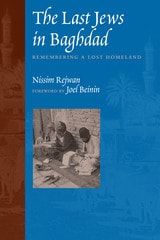
The Last Jews in Baghdad
Remembering a Lost HomelandBy Nissim Rejwan
University of Texas Press, 2004
Once upon a time, Baghdad was home to a flourishing Jewish community. More than a third of the city's people were Jews, and Jewish customs and holidays helped set the pattern of Baghdad's cultural and commercial life. On the city's streets and in the bazaars, Jews, Muslims, and Christians—all native-born Iraqis—intermingled, speaking virtually the same colloquial Arabic and sharing a common sense of national identity. And then, almost overnight it seemed, the state of Israel was born, and lines were drawn between Jews and Arabs. Over the next couple of years, nearly the entire Jewish population of Baghdad fled their Iraqi homeland, never to return.
In this beautifully written memoir, Nissim Rejwan recalls the lost Jewish community of Baghdad, in which he was a child and young man from the 1920s through 1951. He paints a minutely detailed picture of growing up in a barely middle-class family, dealing with a motley assortment of neighbors and landlords, struggling through the local schools, and finally discovering the pleasures of self-education and sexual awakening. Rejwan intertwines his personal story with the story of the cultural renaissance that was flowering in Baghdad during the years of his young manhood, describing how his work as a bookshop manager and a staff writer for the Iraq Times brought him friendships with many of the country's leading intellectual and literary figures. He rounds off his story by remembering how the political and cultural upheavals that accompanied the founding of Israel, as well as broad hints sent back by the first arrivals in the new state, left him with a deep ambivalence as he bid a last farewell to a homeland that had become hostile to its native Jews.

The Last Miner
A Memoir of Alta's Final Mining ExpeditionsDick Fluehe with Dan Schilling
University of Utah Press, 2025
The Last Miner is a captivating memoir chronicling the final days of mining exploration in Utah’s legendary Little Cottonwood Canyon during the 1950s. Through the eyes of Dick Fluehe, the last living miner to traverse these haunted, silver-laden tunnels, readers are immersed in a forgotten world beneath the internationally renowned Alta and Snowbird ski areas. With a knowledge as deep as the mines themselves, Dick recounts tales of collapsed shafts, gloriously jeweled stopes, and colorful personalities, such as “Swingin’ Door,” “Slick,” and “The Bull,” who lived and died pursuing ore.
Edited by New York Times bestselling author Dan Schilling, The Last Miner offers a unique, firsthand account of the treacherous, adventurous, and humorous lives of mid-century miners. Both thrilling and insightful, this memoir is the mining equivalent of a float down the Mississippi with Mark Twain and an unprecedented insight into the history of American West mining.
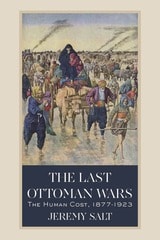
The Last Ottoman Wars
The Human Cost, 1877–1923Jeremy Salt
University of Utah Press, 2019
Jeremy Salt brings to the surface previously ignored facts that disrupt the conventional narrative of an ethno-religious division between Muslim perpetrators and Christian victims of violence. Salt shows instead that all major ethno-religious groups—including Armenians, Turks, Kurds, and Greeks—were guilty of violent acts. The result is a more balanced picture of European involvement in the Ottoman Empire and the Balkans, one that highlights the destructive role of British Prime Minister David Lloyd George and other European leaders grabbing for Ottoman resources up to the end of World War I. The effects of these events are felt to the present day.
This extraordinary story centers not on military campaigns but on ordinary civilians whose lives were disrupted and in many cases destroyed by events over which they had no control. Disease, malnutrition, massacre and inter-communal fighting killed millions of people during the First World War alone. Until now this epic saga of human suffering has remained a story largely untold.
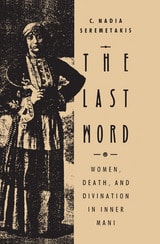
The Last Word
Women, Death, and Divination in Inner ManiC. Nadia Seremetakis
University of Chicago Press, 1991

The Letters and the Law
Legal and Literary Culture in Late Imperial RussiaAnna Schur
Northwestern University Press, 2022
Anna Schur combines historical research and literary analysis to argue that the first generations of Russian trial lawyers shaped their professional identity with an eye to the celebrated figure of the writer and that they considered their own activities to be a form of verbal art. A fuller understanding of writers’ antipathy to the law, Schur contends, must take into account this overlooked cultural backdrop. Laced with the better‑known critique of the lawyer’s legalistic proclivities and lack of moral principle are the writer’s reactions to a whole network of explicit and implicit claims of similarity between the two professions’ goals, methods, and missions that were central to the lawyer’s professional ideal. Viewed in this light, writers’ critiques of the law and lawyers emerge as a concerted effort at protecting literature’s exclusive cultural status in the context of modernization and the rapidly expanding public sphere.
The study draws upon a mix of well-known and rarely studied nineteenth-century authors and texts—with particular attention paid to Fyodor Dostoevsky and Mikhail Saltykov-Shchedrin—and on a wide range of nonliterary sources, including courtroom speeches, guides to forensic oratory, legal treatises, and specialized press.
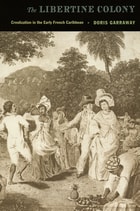
The Libertine Colony
Creolization in the Early French CaribbeanDoris Garraway
Duke University Press, 2005
Among the texts Garraway analyzes are missionary histories by Jean-Baptiste Du Tertre, Raymond Breton, and Jean-Baptiste Labat; narratives of adventure and transgression written by pirates and others outside the official civil and religious power structures; travel accounts; treatises on slavery and colonial administration in Saint-Domingue; the first colonial novel written in French; and the earliest linguistic description of the native Carib language. Garraway also analyzes legislation—including the Code noir—that codified slavery and other racialized power relations. The Libertine Colony is both a rich cultural history of creolization as revealed in Francophone colonial literature and an important contribution to theoretical arguments about how literary critics and historians should approach colonial discourse and cultural representations of slave societies.
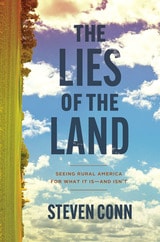
The Lies of the Land
Seeing Rural America for What It Is—and Isn’tSteven Conn
University of Chicago Press, 2023
It seems everyone has an opinion about rural America. Is it gripped in a tragic decline? Or is it on the cusp of a glorious revival? Is it the key to understanding America today? Steven Conn argues that we’re missing the real question: Is rural America even a thing? No, says Conn, who believes we see only what we want to see in the lands beyond the suburbs—fantasies about moral (or backward) communities, simpler (or repressive) living, and what it means to be authentically (or wrongheadedly) American. If we want to build a better future, Conn argues, we must accept that these visions don’t exist and never did.
In The Lies of the Land, Conn shows that rural America—so often characterized as in crisis or in danger of being left behind—has actually been at the center of modern American history, shaped by the same forces as everywhere else in the country: militarization, industrialization, corporatization, and suburbanization. Examining each of these forces in turn, Conn invites us to dispense with the lies and half-truths we’ve believed about rural America and to pursue better solutions to the very real challenges shared all across our nation.
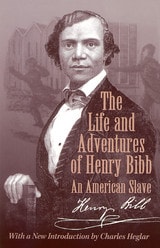
The Life and Adventures of Henry Bibb
An American SlaveHenry Bibb
University of Wisconsin Press, 2001
First published in 1849 and largely unavailable for many years, The Life and Adventures of Henry Bibb is among the most remarkable slave narratives. Born on a Kentucky plantation in 1815, Bibb first attempted to escape from bondage at the age of ten. He was recaptured and escaped several more times before he eventually settled in Detroit, Michigan, and joined the antislavery movement as a lecturer.
Bibb’s story is different in many ways from the widely read Narrative of the Life of Frederick Douglass, An American Slave and Harriet Jacobs’ Incidents in the Life of a Slave Girl. He was owned by a Native American; he is one of the few ex-slave autobiographers who had labored in the Deep South (Louisiana); and he writes about folkways of the slaves, especially how he used conjure to avoid punishment and to win the hearts of women. Most significant, he is unique in exploring the importance of marriage and family to him, recounting his several trips to free his wife and child. This new edition includes an introduction by literary scholar Charles Heglar and a selection of letters and editorials by Bibb.
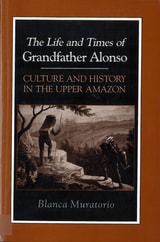
The Life and Times of Grandfather Alonso
Culture and History in the Upper AmazonMuratorio, Blanca
Rutgers University Press, 1991
In Blanca Muratorio's book, we are introduced to Rucuyaya Alonso, an elderly Quichua Indian of the Upper Ecuadorean Amazon. Alonso is a hunter, but like most Quichuas, he has done other work as well, bearing loads, panning gold, tapping rubber trees, and working for Shell Oil. He tells of his work, his hunting, his marriage, his fights, his fears, and his dreams. His story covers about a century because he incorporates the oral tradition of his father and grandfather along with his own memories. Through his life story, we learn about the social and economic life of that region.
Chapters of Alonso's life history and oral tradition alternate with chapters detailing the history of the world around him--the domination of missionaries, the white settlers' expropriation of land, the debt system workers were subjected to, the rubber boom, the world-wide crisis of the 1930s, and the booms and busts of the international oil market. Muratorio explains the larger social, economic, and ideological bases of white domination over native peoples in Amazonia. She shows how through everyday actions and thoughts, the Quichua Indians resisted attacks against their social identity, their ethnic dignity, and their symbolic systems. They were far from submissive, as they have often been portrayed.
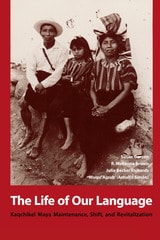
The Life of Our Language
Kaqchikel Maya Maintenance, Shift, and RevitalizationBy Susan Garzon, R. McKenna Brown, Julia Becker Richards, and Wuqu’ Ajpub’
University of Texas Press, 1998
The native Maya peoples of Mexico, Guatemala, Honduras, and Belize have been remarkably successful in maintaining their cultural identity during centuries of contact with and domination by outside groups. Yet change is occurring in all Mayan communities as contact with Spanish-speaking Ladino society increases. This book explores change and continuity in one of the most vital areas of Mayan culture—language use.
The authors look specifically at Kaqchikel, one of the most commonly spoken Mayan languages. Following an examination of language contact situations among indigenous groups in the Americas, the authors proceed to a historical overview of the use of Kaqchikel in the Guatemalan Highlands. They then present case studies of three highland communities in which the balance is shifting between Kaqchikel and Spanish. Wuqu' Ajpub', a native Kaqchikel speaker, gives a personal account of growing up negotiating between the two languages and the different world views they encode. The authors conclude with a look at the Mayan language revitalization movement and offer a scenario in which Kaqchikel and other Mayan languages can continue to thrive.
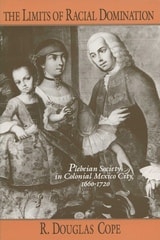
The Limits of Racial Domination
Plebeian Society in Colonial Mexico City, 1660–1720R. Douglas Cope
University of Wisconsin Press, 1994
In this distinguished contribution to Latin American colonial history, Douglas Cope draws upon a wide variety of sources—including Inquisition and court cases, notarial records and parish registers—to challenge the traditional view of castas (members of the caste system created by Spanish overlords) as rootless, alienated, and dominated by a desire to improve their racial status. On the contrary, the castas, Cope shows, were neither passive nor ruled by feelings of racial inferiority; indeed, they often modified or even rejected elite racial ideology. Castas also sought ways to manipulate their social "superiors" through astute use of the legal system. Cope shows that social control by the Spaniards rested less on institutions than on patron-client networks linking individual patricians and plebeians, which enabled the elite class to co-opt the more successful castas.
The book concludes with the most thorough account yet published of the Mexico City riot of 1692. This account illuminates both the shortcomings and strengths of the patron-client system. Spurred by a corn shortage and subsequent famine, a plebeian mob laid waste much of the central city. Cope demonstrates that the political situation was not substantially altered, however; the patronage system continued to control employment and plebeians were largely left to bargain and adapt, as before.
A revealing look at the economic lives of the urban poor in the colonial era, The Limits of Racial Domination examines a period in which critical social changes were occurring. The book should interest historians and ethnohistorians alike.
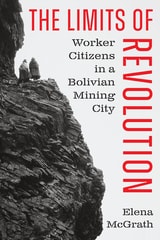
The Limits of Revolution
Worker Citizens in a Bolivian Mining CityElena McGrath
University of Texas Press, 2026
The role of Bolivian mining families in revolution and politics.
In 1952, Bolivia’s Revolutionary Nationalist Movement (MNR) swept into power, promising collective prosperity through class-based nationalism. The heroic symbol of the movement was the worker citizen—the formerly indigenous miner who would fuel economic development in a nationalized mining economy.
The Limits of Revolution explores this history from the worker barrios of the copper mining city of Corocoro. As the state walked back its promises of worker political power at the national level, mining men and women in Corocoro struggled—through protests, court battles, and barfights—to maintain the benefits of worker citizenship locally. After the MNR fell to a military dictatorship in 1964, however, families retreated to defending the nationalized mining company against an increasingly hostile state. In this battle to keep the revolution alive, the expansive potential of worker citizenship disappeared and old racial exclusions resurfaced. Largely forgotten today, Bolivia’s experience of revolution exposes the contradictions of postcolonial nationalism and sheds light on Latin America’s transition from Cold War–era class politics to twenty-first-century Pink Tide politics.
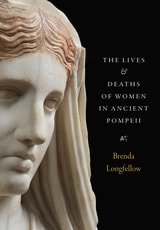
The Lives and Deaths of Women in Ancient Pompeii
Brenda Longfellow
University of Texas Press, 2025
A study of women’s lives in the public sphere of the ancient city of Pompeii.
Pompeii’s well-preserved remains provide a unique opportunity for the close study of ancient lives. Drawing on statues, inscriptions, graffiti, wall paintings, and the architecture of tombs, sanctuaries, houses, and public spaces, The Lives and Deaths of Women in Ancient Pompeii examines the public lives of women in Pompeii. Art historian Brenda Longfellow explores how historical women of all social backgrounds acted in public and exerted agency on behalf of themselves and others, ultimately finding that female initiatives in Pompeii were not only accepted but desired by the community to a greater extent than has previously been recognized.
Longfellow centers her study on a few key women—including the city’s most notable female patron, Eumachia—and uses them to examine female roles in postmortem commemorations, civic patronage and benefactions, commerce, the priesthood, and the home. By following these individuals, Longfellow examines women’s lives in Pompeii in both abstract and concrete ways, allowing readers to better understand their importance to the city and society. The result is a groundbreaking book that foregrounds the agency of women in everyday Pompeii.
The Long Emancipation
Moving toward Black FreedomRinaldo Walcott
Duke University Press, 2021
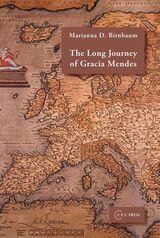
The Long Journey of Gracia Mendes
Marianna D. Birnbaum
Central European University Press, 2003
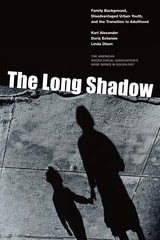
The Long Shadow
Family Background, Disadvantaged Urban Youth, and the Transition to AdulthoodKarl Alexander
Russell Sage Foundation, 2014

The Loop
The “L” Tracks That Shaped and Saved ChicagoPatrick T. Reardon
Southern Illinois University Press, 2021
Every day Chicagoans rely on the loop of elevated train tracks to get to their jobs, classrooms, or homes in the city’s downtown. But how much do they know about the single most important structure in the history of the Windy City? In engagingly brisk prose, Patrick T. Reardon unfolds the fascinating story about how Chicago’s elevated Loop was built, gave its name to the downtown, helped unify the city, saved the city’s economy, and was itself saved from destruction in the 1970s.
This unique volume combines urban history, biography, engineering, architecture, transportation, culture, and politics to explore the elevated Loop’s impact on the city’s development and economy and on the way Chicagoans see themselves. The Loop rooted Chicago’s downtown in a way unknown in other cities, and it protected that area—and the city itself—from the full effects of suburbanization during the second half of the twentieth century. Masses of data underlie new insights into what has made Chicago’s downtown, and the city as a whole, tick.
The Loop features a cast of colorful Chicagoans, such as legendary lawyer Clarence Darrow, poet Edgar Lee Masters, mayor Richard J. Daley, and the notorious Gray Wolves of the Chicago City Council. Charles T. Yerkes, an often-demonized figure, is shown as a visionary urban planner, and engineer John Alexander Low Waddell, a world-renowned bridge creator, is introduced to Chicagoans as the designer of their urban railway.
This fascinating exploration of how one human-built structure reshaped the social and economic landscape of Chicago is the definitive book on Chicago’s elevated Loop.
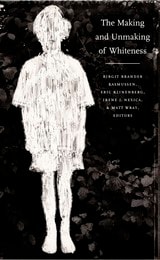
The Making and Unmaking of Whiteness
Birgit Brander Rasmussen, Eric Klinenberg, Irene J. Nexica, and Matt Wray, eds.
Duke University Press, 2001
With essays devoted to theories of racial domination, comparative global racisms, and transnational white identity, the geographical reach of the volume is significant and broad. Dalton Conley writes on “How I Learned to Be White.” Allan Bérubé discusses the intersection of gay identity and whiteness, and Mab Segrest describes the spiritual price white people pay for living in a system of white supremacy. Other pieces examine the utility of whiteness as a critical term for social analysis and contextualize different attempts at antiracist activism. In a razor-sharp introduction, the editors not only raise provocative questions about the intellectual, social, and political goals of those interested in the study of whiteness but assess several of the topic’s major recurrent themes: the visibility of whiteness (or the lack thereof); the “emptiness” of whiteness as a category of identification; and conceptions of whiteness as a structural privilege, a harbinger of violence, or an institutionalization of European imperialism.
Contributors. William Aal, Allan Bérubé, Birgit Brander Rasmussen, Dalton Conley, Troy Duster, Ruth Frankenberg, John Hartigan Jr., Eric Klinenberg, Eric Lott, Irene J. Nexica, Michael Omi, Jasbir Kaur Puar, Mab Segrest, Vron Ware, Howard Winant, Matt Wray
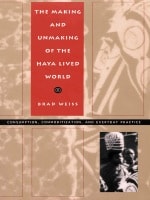
The Making and Unmaking of the Haya Lived World
Consumption, Commoditization, and Everyday PracticeBrad Weiss
Duke University Press, 1996
Grounded in a richly detailed ethnography of Haya practice, Weiss’s analysis considers the symbolic qualities and values embedded in goods and transactions across a wide range of cultural activity: agricultural practice and food preparation, the body’s experience of epidemic disease from AIDS to the infant affliction of “plastic teeth,” and long-standing forms of social movement and migration. Weiss emphasizes how Haya images of consumption describe the relationship between their local community and the global economy. Throughout, he demonstrates that particular commodities and more general market processes are always material and meaningful forces with the potential for creativity as well as disruption in Haya social life. By calling attention to the productive dimensions of this spatial and temporal world, his work highlights the importance of human agency in not only the Haya but any sociocultural order.
Offering a significant contribution to the anthropological theories of practice, embodiment, and agency, and enriching our understanding of the lives of a rural African people, The Making and Unmaking of the Haya Lived World will interest historians, anthropologists, ethnographers, and scholars of cultural studies.
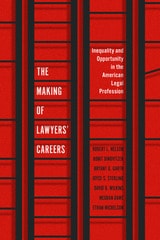
The Making of Lawyers' Careers
Inequality and Opportunity in the American Legal ProfessionRobert L. Nelson, Ronit Dinovitzer, Bryant G. Garth, Joyce S. Sterling, David B. Wilkins, Meghan Dawe, and Ethan Michelson
University of Chicago Press, 2023
An unprecedented account of social stratification within the US legal profession.
How do race, class, gender, and law school status condition the career trajectories of lawyers? And how do professionals then navigate these parameters?
The Making of Lawyers’ Careers provides an unprecedented account of the last two decades of the legal profession in the US, offering a data-backed look at the structure of the profession and the inequalities that early-career lawyers face across race, gender, and class distinctions. Starting in 2000, the authors collected over 10,000 survey responses from more than 5,000 lawyers, following these lawyers through the first twenty years of their careers. They also interviewed more than two hundred lawyers and drew insights from their individual stories, contextualizing data with theory and close attention to the features of a market-driven legal profession.
Their findings show that lawyers’ careers both reflect and reproduce inequalities within society writ large. They also reveal how individuals exercise agency despite these constraints.
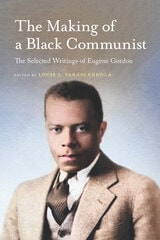
The Making of a Black Communist
The Selected Writings of Eugene GordonLouis J. Parascandola, Editor
University of Massachusetts Press, 2025
Eugene Gordon (1891–1974) was a major writer involved in the development of the burgeoning Black literary scene in Boston in the 1920s, an active player in the Harlem Renaissance, and a longtime member of the Communist Party. Despite his credentials as a reporter, editor, fiction writer, and political activist, he is rarely mentioned in studies of the Harlem Renaissance or Marxist politics. Here, Louis J. Parascandola has pulled together Gordon’s journalism, autobiographical writing, and fiction. This new collection, featuring both previously published pieces from a wide variety of publications as well as material that has never before been published, demonstrates his range and his skill while establishing his importance as a critical voice of his time.
Gordon was born and raised in the South but made his way north at a young age. In Boston, he founded the Saturday Evening Quill Club, an African American literary group that included other notable writers such as Helene Johnson and Dorothy West. He later became editor of and contributor to two major publications coming out of the era: the Messenger and Opportunity: A Journal of Negro Life. As he grew more political, he joined the Communist Party in the 1930s and became editor of and contributor to the New Masses. Scholars looking to research him have struggled to find disparate writings to get a fuller sense of his literary stylings as well as his political commitments. This welcome new volume establishes Gordon as a significant, understudied figure.
The Making of the Mexican Border
The State, Capitalism, and Society in Nuevo León, 1848-1910By Juan Mora-Torres
University of Texas Press, 2001
The issues that dominate U.S.-Mexico border relations today—integration of economies, policing of boundaries, and the flow of workers from south to north and of capital from north to south—are not recent developments. In this insightful history of the state of Nuevo León, Juan Mora-Torres explores how these processes transformed northern Mexico into a region with distinct economic, political, social, and cultural features that set it apart from the interior of Mexico.
Mora-Torres argues that the years between the establishment of the U.S.-Mexico boundary in 1848 and the outbreak of the Mexican Revolution in 1910 constitute a critical period in Mexican history. The processes of state-building, emergent capitalism, and growing linkages to the United States transformed localities and identities and shaped class formations and struggles in Nuevo León. Monterrey emerged as the leading industrial center and home of the most powerful business elite, while the countryside deteriorated economically, politically, and demographically. By 1910, Mora-Torres concludes, the border states had already assumed much of their modern character: an advanced capitalist economy, some of Mexico's most powerful business groups, and a labor market dependent on massive migrations from central Mexico.
The Man-Made City
The Land-Use Confidence Game in ChicagoGerald D. Suttles
University of Chicago Press, 1990
Gerald D. Suttles here offers an irreverent, highly critical guide to both the realities and myths of land-use planning and development in Chicago from 1976 through 1987.
The Marana Community in the Hohokam World
Suzanne K. Fish
University of Arizona Press, 1992
The Mark of Criminality
Rhetoric, Race, and Gangsta Rap in the War-on-Crime EraBryan J. McCann
University of Alabama Press, 2017
In The Mark of Criminality: Rhetoric, Race, and Gangsta Rap in the War-on-Crime Era, Bryan J. McCann argues that gangsta rap should be viewed as more than a damaging reinforcement of an era’s worst racial stereotypes. Rather, he positions the works of key gangsta rap artists, as well as the controversies their work produced, squarely within the law-and-order politics and popular culture of the 1980s and 1990s to reveal a profoundly complex period in American history when the meanings of crime and criminality were incredibly unstable.
At the center of this era—when politicians sought to prove their “tough-on-crime” credentials—was the mark of criminality, a set of discourses that labeled members of predominantly poor, urban, and minority communities as threats to the social order. Through their use of the mark of criminality, public figures implemented extremely harsh penal polices that have helped make the United States the world’s leading jailer of its adult population.
At the same time when politicians like Ronald Reagan, George H. W. Bush, and Bill Clinton and television shows such as COPS and America’s Most Wanted perpetuated images of gang and drug-filled ghettos, gangsta rap burst out of the hip-hop nation, emanating mainly from the predominantly black neighborhoods of South Central Los Angeles. Groups like NWA and solo artists (including Dr. Dre, Snoop Dogg, and Tupac Shakur) became millionaires by marketing the very discourses political and cultural leaders used to justify their war on crime. For these artists, the mark of criminality was a source of power, credibility, and revenue. By understanding gangsta rap as a potent, if deeply imperfect, enactment of the mark of criminality, we can better understand how crime is always a site of struggle over meaning. Furthermore, by underscoring the nimble rhetorical character of criminality, we can learn lessons that may inform efforts to challenge our nation’s failed policies of mass incarceration.
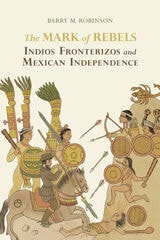
The Mark of Rebels
Indios Fronterizos and Mexican IndependenceBarry M. Robinson
University of Alabama Press, 2016
Explores social and cultural transformations among the indigenous communities of western Mexico, especially the indios fronterizos (Frontier Indians), preceding and during the struggle for independence
In The Mark of Rebels Barry Robinson offers a new look at Mexican Independence from the perspective of an indigenous population caught in the heart of the struggle. During the conquest and settlement of Mexico’s Western Sierra Madre, Spain’s indigenous allies constructed an indio fronterizo identity for their ethnically diverse descendants. These communities used their special status to maintain a measure of autonomy during the colonial era, but the cultural shifts of the late colonial period radically transformed the relationship between these indios fronterizos and their neighbors.
Marshalling an extensive array of archival material from Mexico, the United States, and Spain, Robinson shows that indio fronterizo participation in the Mexican wars of independence grafted into the larger Hidalgo Revolt through alignment with creole commanders. Still, a considerable gulf existed between the aims of indigenous rebels and the creole leadership. Consequently, the privileges that the indios fronterizos sought to preserve continued to diminish, unable to survive either the late colonial reforms of the Spanish regime or creole conceptions of race and property in the formation of the new nation-state.
This story suggests that Mexico’s transition from colony to nation can only be understood by revisiting the origins of the colonial system and by recognizing the role of Spain’s indigenous allies in both its construction and demolition. The study relates events in the region to broader patterns of identity, loyalty, and subversion throughout the Americas, providing insight into the process of mestizaje that is commonly understood to have shaped Latin America. It also foreshadows the popular conservatism of the nineteenth century and identifies the roots of post-colonial social unrest.
This book provides new context for scholars, historians, ethnographers, anthropologists, and anyone interested in the history of Mexico, colonization, Native Americans, and the Age of Revolutions.
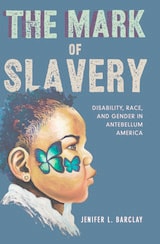
The Mark of Slavery
Disability, Race, and Gender in Antebellum AmericaJenifer L. Barclay
University of Illinois Press, 2021
Time and again, antebellum Americans justified slavery and white supremacy by linking blackness to disability, defectiveness, and dependency. Jenifer L. Barclay examines the ubiquitous narratives that depicted black people with disabilities as pitiable, monstrous, or comical, narratives used not only to defend slavery but argue against it. As she shows, this relationship between ableism and racism impacted racial identities during the antebellum period and played an overlooked role in shaping American history afterward. Barclay also illuminates the everyday lives of the ten percent of enslaved people who lived with disabilities. Devalued by slaveholders as unsound and therefore worthless, these individuals nonetheless carved out an unusual autonomy. Their roles as caregivers, healers, and keepers of memory made them esteemed within their own communities and celebrated figures in song and folklore.
Prescient in its analysis and rich in detail, The Mark of Slavery is a powerful addition to the intertwined histories of disability, slavery, and race.
The Masculine Self in Late Medieval England
Derek G. Neal
University of Chicago Press, 2008
Marshalling a wide array of colorful evidence—including legal records, letters, medical sources, and the literature of the period—Derek G. Neal here plumbs the social and cultural significance of masculinity during the generations born between the Black Death and the Protestant Reformation. He discovers that social relations between men, founded on the ideals of honesty and self-restraint, were at least as important as their domination and control of women in defining their identities. By carefully exploring the social, physical, and psychological aspects of masculinity, The Masculine Self in Late Medieval England offers a uniquely comprehensive account of the exterior and interior lives of medieval men.
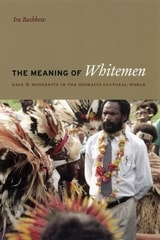
The Meaning of Whitemen
Race and Modernity in the Orokaiva Cultural WorldIra Bashkow
University of Chicago Press, 2006
While Papua New Guinea’s resident white population has been severely reduced due to postcolonial white flight, the whiteman remains a significant racial and cultural other here—not only as an archetype of power and wealth in the modern arena, but also as a foil for people’s evaluations of themselves within vernacular frames of meaning. As Ira Bashkow explains, ideas of self versus other need not always be anti-humanistic or deprecatory, but can be a creative and potentially constructive part of all cultures.
A brilliant analysis of whiteness and race in a non-Western society, The Meaning of Whitemen turns traditional ethnography to the purpose of understanding how others see us.
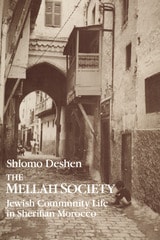
The Mellah Society
Jewish Community Life in Sherifian MoroccoShlomo Deshen
University of Chicago Press, 1989
Shlomo Deshen, author of several books on North African Jewish immigrants to Israel, here turns his attention to the past. Taking as his focus the tension between individualism and communal authority—symbolized by the walls of the mellahs, the Jewish quarters—he applies to traditional Moroccan Jewish society questions of concern to sociologists everywhere regarding political organization, economic activity, religion, and the family.
From such documents as private correspondence, archival photographs, and the legal commentaries of rabbis who served in the Jewish community courts, Deshen draws out details of daily life: disputes between spouses, businessmen, craftsmen, and inheritors; the ramifications of marriage contracts; and claims involving community taxes and extortions by Muslim potentates. Linking this material with recent historical and anthropological studies of the Maghreb, Deshen reconstructs a community about which little has been known and places it squarely within the context of traditional Moroccan society.
Individual chapters deal with relations between Muslims and Jews, the material conditions of Jewish life, and the nature of politics within the mellah. Deshen devotes particular attention to the nature of the Moroccan rabbinate, the sociology of the mellah synagogue, lay community leadership, and the historic role of the Sephardic heritage in Morocco after the expulsion from medieval Spain. His close study of the nature of the extended family in traditional Morocco corrects popular misconceptions.
Originally published in Israel in 1983, now translated and expanded by its author, The Mellah Society draws upon Middle Eastern and Jewish history, textual Judaic studies, and social anthropology to make an original contribution that will interest scholars of the Middle East and North Africa as well as anyone concerned with Jewish history and ethnicity.
The Merits of Women
Wherein Is Revealed Their Nobility and Their Superiority to MenModerata Fonte
University of Chicago Press, 2018
Without help from their wives, men are just like unlit lamps . . .
Just think of them as an unreliable clock that tells you it’s ten o’clock when it’s in fact barely two . . .
A man without a woman is like a fly without a head . . .
These are but a small selection of the quips bandied about at this lively gathering of women. The broad topic at hand is the relative pros and cons of men, and the cases in point range from pick-up artists to locker-room talk, and from double standards to fragile masculinity.
Yet this dialogue unfolds not among ironically misandrist millenials venting at their local dive bar, but rather among sixteenth-century women—variously married, widowed, single, and betrothed—attending a respectable Venice garden party. Written in the early 1590s by Moderata Fonte, pseudonym of the Renaissance poet and writer Modesta Pozzo, this literary dialogue interrogates men and men’s treatment of women, and explores by contrast the virtues of singledom and female friendship. As the women diverge from their theme—discussing everything from astrology to the curative powers of plants and minerals—a remarkable group portrait of wisdom, wit, and erudition emerges.
A new introduction by translator Virginia Cox and foreword by Dacia Maraini situate The Merits of Women in its historical context, written as it was on the cusp of Shakespeare’s heyday, and straddling the centuries between the feminist works of Christine de Pizan and Mary Wollstonecraft. Elegantly presented for a general audience, this is a must-read for baby feminists and “nasty women” alike, not to mention the perfect subtle gift for any mansplaining friend who needs a refresher on the merits of women . . . and their superiority to men.
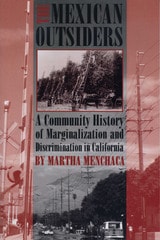
The Mexican Outsiders
A Community History of Marginalization and Discrimination in CaliforniaBy Martha Menchaca
University of Texas Press, 1995
People of Mexican descent and Anglo Americans have lived together in the U.S. Southwest for over a hundred years, yet relations between them remain strained, as shown by recent controversies over social services for undocumented aliens in California. In this study, covering the Spanish colonial period to the present day, Martha Menchaca delves deeply into interethnic relations in Santa Paula, California, to document how the residential, social, and school segregation of Mexican-origin people became institutionalized in a representative California town.
Menchaca lived in Santa Paula during the 1980s, and interviews with residents add a vivid human dimension to her book. She argues that social segregation in Santa Paula has evolved into a system of social apartness—that is, a cultural system controlled by Anglo Americans that designates the proper times and places where Mexican-origin people can socially interact with Anglos.
This first historical ethnographic case study of a Mexican-origin community will be important reading across a spectrum of disciplines, including anthropology, sociology, race and ethnicity, Latino studies, and American culture.