Results by title
5159 books match the query 'Biography' and 934 start with t
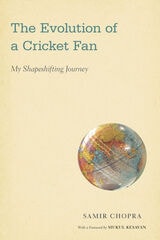
The Evolution of a Cricket Fan
My Shapeshifting JourneySamir Chopra
Temple University Press, 2021
Samir Chopra is an immigrant, a “voluntary exile,” who discovers he can tell the story of his life through cricket, a game that has long been an influence—really, an obsession—for him. In so doing, he reveals how his changing views on the sport mirror his journey of self-discovery. In The Evolution of a Cricket Fan, Chopra is thus able to reflect on his changing perceptions of self, and of the nations and cultures that have shaped his identity, politics, displacement, and fandom.
Chopra’s passion for the sport began as a child, when he rooted for Pakistan and against his native India. When he migrated, he became a fan of the Indian team that gave him a sense of home among the various cultures he encountered in North America and Australia. This “shapeshifting” exposes the rift between the Old and the New world, which Chopra acknowledges is “cricket’s greatest modern crisis.” But it also illuminates the identity dilemmas of post-colonial immigrants in the Indian diaspora.
Chopra’s thoughts about the sport and its global influence are not those of a player. He provides access to the inner world of the global cricket fan navigating the world that colonial empire wrought and that cricket continues to connect and animate. He observes that the Indian cricket team carries many burdens—not only must they win cricket matches, but their style of play must generate a pride that assuages generations of wounds inflicted by history. And Chopra must navigate where he stands in that history.
The Evolution of a Cricket Fan shows Chopra’s own wins and losses as his life takes new directions and his fandom changes allegiances.
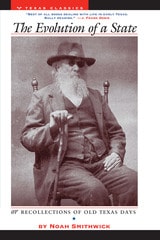
The Evolution of a State, or, Recollections of Old Texas Days
By Noah Smithwick
University of Texas Press, 1983
"I was but a boy in my nineteenth year, and in for adventure when I started out from Hopkinsville, Kentucky, with all my worldly possessions, consisting of a few dollars in money, a change of clothes, and a gun, of course, to seek my fortune in this lazy man's paradise."
Noah Smithwick was an old man, blind and near his ninetieth year, when his daughter recorded these words. He had stayed on in "paradise"—Texas—from 1827 to 1861, when his opposition to secession took him to California. The Evolution of a State is his story of these "old Texas days."
A blacksmith and a tobacco smuggler, Noah Smithwick made weapons for the Battle of Concepción, and he fought in that battle. With Hensley's company, he chased the Mexican army south of the Rio Grande after the Battle of San Jacinto. Twice he served with the Texas Rangers. In quieter times, he was a postmaster and justice of the peace in little Webber's Prairie.
Eyewitness to so much Texas history, Smithwick recounts his life and adventures in a simple, straightforward style, with a wry sense of humor. His keen memory for detail—what the people wore, what they ate, how they worked and played— vividly evokes the sights, sounds, and smells of the frontier.
First published in part by the Dallas Morning News, Smithwick's recollections gained such popularity that they were published in book form, as The Evolution of a State, in 1900. This new edition of a Texas classic makes widely available for the first time in many years this "best of all books dealing with life in early Texas."
The Experience of Modernity
Chinese Autobiography of the Early Twentieth CenturyJanet Ng
University of Michigan Press, 2003
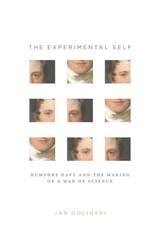
The Experimental Self
Humphry Davy and the Making of a Man of ScienceJan Golinski
University of Chicago Press, 2016
In The Experimental Self, Golinski argues that Davy’s life is best understood as a prolonged process of self-experimentation. He follows Davy from his youthful enthusiasm for physiological experiment through his self-fashioning as a man of science in a period when the path to a scientific career was not as well-trodden as it is today. What emerges is a portrait of Davy as a creative fashioner of his own identity through a lifelong series of experiments in selfhood.
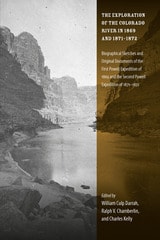
The Exploration of the Colorado River in 1869 and 1871-1872
Biographical Sketches and Original Documents of the First Powell Expedition of 1869 and the Second Powell Expedition of 1871-1872William Culp Darrah
University of Utah Press, 2009
This volume contains the journals of Major John Wesley Powell, George Young Bradley, Walter Henry Powell, and J. C. Sumner. Also included are various letters and notes by the members of the first expedition, and the journal of Francis Marion Bishop from the second expedition. All of the writings offer vivid descriptions of both adventure and of able and energetic scientific field work, and are of enduring interest and importance.
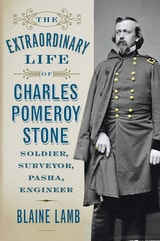
The Extraordinary Life of Charles Pomeroy Stone
Soldier, Surveyor, Pasha, EngineerBlaine Lamb
Westholme Publishing, 2016
In the winter of 1861, as the secession crisis came to a head, an obscure military engineer, Charles Pomeroy Stone, emerged as the rallying point for the defense of Washington, D.C. against rebel attack. He was protector of the newly elected president and right-hand man of the army’s commanding general, General Winfield Scott, under whom he had served with distinction during the Mexican–American War. Nevertheless, with in a year, this same hero sat in a military prison accused of incompetence and possible treason.
Like other Union officers, Stone had the misfortune to run afoul of radical politicians in the nation’s capital who sought to control the war effort by undermining the professional military establishment. Their weapon, the Joint Committee on the Conduct of the War, applied a litmus test of commitment to abolition, loyalty to the Republican Party and battlefield success for the retention and promotion of army commanders. Stone, a Democrat who did not see the conflict as a crusade against slavery, and who lost his only battle, failed on all counts.
Readers of Civil War history know Stone best for his mistreatment at the hands of the Joint Committee.When his name appears, it is almost always in connection with the battle at Ball’s Bluff, Virginia, during which a close associate of Lincoln’s was killed, and its aftermath. His story, however, goes far beyond that engagement. In The Extraordinary Life of Charles Pomeroy Stone: Soldier, Surveyor, Pasha, Engineer that ranges from the Halls of Montezuma to Gold Rush California, and from the pyramids of Egypt to the foot of the Statue of Liberty, historian Blaine Lamb brings to light the many facets of Stone’s remarkable life and career. He weaves into the narrative such characters as Ulysses S. Grant,William Tecumseh Sherman, Abraham Lincoln,Winfield Scott, Alexander von Humboldt, Thaddeus Lowe, Chinese Gordon, Khedive Ismail, and Frederic Auguste Bartholdi. But the center of this tale of nineteenth-century adventure, exploration, war, and intrigue remains Stone himself, a man of honor, steadfast loyalty, and tragic innocence.
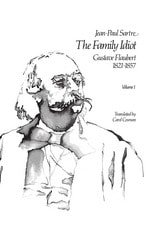
The Family Idiot
Gustave Flaubert, 1821-1857, Volume 1Jean-Paul Sartre
University of Chicago Press, 1981
"A man is never an individual," Sartre writes, "it would be more fitting to call him a universal singular. Summed up and for this reason universalized by his epoch, he in turn resumes it by reproducing himself in it as singularity. Universal by the singular universality of human history, singular by the universalizing singularity of his projects, he requires simultaneous examination from both ends." This is the method by which Sartre examines Flaubert and the society in which he existed.
Now this masterpiece is being made available in an inspired English translation that captures all the variations of Sartre's style—from the jaunty to the ponderous—and all the nuances of even the most difficult ideas. Volume 1 consists of Part One of the original French work, La Constitution, and is primarily concerned with Flaubert's childhood and adolescence.
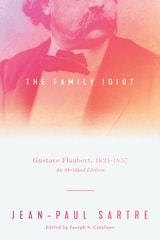
The Family Idiot
Gustave Flaubert, 1821–1857, An Abridged EditionJean-Paul Sartre
University of Chicago Press, 2023
From 1981 to 1994, the University of Chicago Press published a five-volume translation of Jean-Paul Sartre’s The Family Idiot: Gustave Flaubert, 1821-1857, a sprawling masterwork by one of the greatest intellects of the twentieth century. This new volume delivers a compact abridgment of the original by renowned Sartre scholar, Joseph Catalano.
Sartre claimed that his existential approach to psychoanalysis required a new Freud, and in his study of Gustave Flaubert, Sartre becomes that Freud. The work summarizes Sartre’s overarching aim to reveal that human life is a meaningful adventure of freedom. In discussing Flaubert’s work, particularly his classic novel Madame Bovary, Sartre unleashes a fierce critique of modernity as nihilistic and demeaning of human dignity.
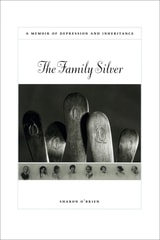
The Family Silver
A Memoir of Depression and InheritanceSharon O'Brien
University of Chicago Press, 2004
A compassionate and engaging writer, O'Brien uses the biographer's methods to understand her family history, weaving the scattered pieces of the past—her mother's memo books, her father's reading journal, family photographs, tombstones, dance cards, hospital records, the family silver—into a compelling narrative. In the lives of her Irish-American relatives she finds that the American values of upward mobility, progress, and the pressure to achieve sparked both desire and depression, following her family through generations, across the sea, from the Irish famine of the 1840s to Harvard Yard in the late 1960s.
"Many people who write stories of depression or other chronic illnesses tell tales of recovery in the upward-mobility sense, the 'once I was ill, but now I am well' formula that we may find appealing, but doesn't match the messiness of our lives," she writes. "Mine is not such a tale. But it is a recovery tale in another sense—a story of salvage, of rescuing stories from silence." Told with humor and honesty, O'Brien's story will captivate all readers who want to know how they, and their families, have been shaped by the past.
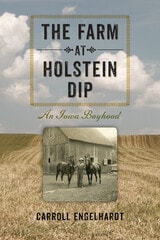
The Farm at Holstein Dip
An Iowa BoyhoodCarroll Engelhardt
University of Iowa Press, 2012
Engelhardt brings us into the world of his fourth-generation farm family, who lived by the family- and faith-based work ethic and concern for respectability they had inherited from their German and Norwegian ancestors. His writing has a particularly Iowa flavor, a style that needs no definition to those who live in the state. Readers will discover the appeal of his wry, humorous, and kind observations and appreciate his well-informed perspective on these transformative American decades.
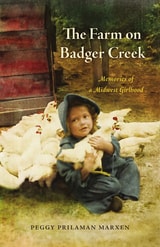
The Farm on Badger Creek
Memories of a Midwest GirlhoodPeggy Prilaman Marxen
Wisconsin Historical Society Press, 2021
The Feel Of Silence
Bonnie Tucker
Temple University Press, 1995

The Female Autograph
Theory and Practice of Autobiography from the Tenth to the Twentieth CenturyEdited by Domna C. Stanton
University of Chicago Press, 1987
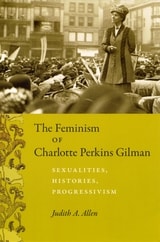
The Feminism of Charlotte Perkins Gilman
Sexualities, Histories, ProgressivismJudith A. Allen
University of Chicago Press, 2009
Famous for her short fiction—most notably “The Yellow Wallpaper”—Charlotte Perkins Gilman also produced a vast body of nonfiction in tandem with her work as a Progressive-era feminist reformer. Rooted in groundbreaking research on Gilman’s extensive correspondence, publications, and speeches, this keenly argued intellectual biography reconstructs her controversial output and the heady context in which she produced it.
Judith Allen provides the first comprehensive assessment of Gilman’s complicated feminism by exploring the renowned writer’s theories of sexuality and evolutionary analyses of androcentric—or male-dominated—culture. These ideas, Allen shows, informed Gilman’s many contributions to the suffrage movement, the fight to abolish regulated prostitution, and efforts to legalize birth control. Restoring a previously overlooked public intellectual to her preeminent place in Progressive-era politics and the history of feminism at home and abroad, Allen’s landmark study provides the fullest account available of Gilman’s consequential life and profoundly influential work.
The Feminism of Uncertainty
A Gender DiaryAnn Snitow
Duke University Press, 2015
The Feminist Memoir Project
Voices from Women's LiberationDuPlessis, Rachel B
Rutgers University Press, 2007
What made these particular women rebel? And what experiences, ideas, feelings, and beliefs shaped their activism? How did they maintain the will and energy to keep such a struggle going for so long, and continuing still?
Memoirs and responses by Kate Millett, Vivian Gornick, Michele Wallace, Alix Kates Shulman, Joan Nestle, Jo Freeman, Yvonne Rainer, Barbara Smith, Ellen Willis, Eve Ensler, Shirley Geok-lin Lim, Roxanne Dunbar, Naomi Weisstein, Alice Wolfson and many more embody the excitement that fueled the movement and the conflicts that threatened it from within. Their stories trace the ways the world has changed.

The Final Mission of Bottoms Up
A World War II Pilot's StoryDennis R. Okerstrom
University of Missouri Press, 2011

The Final Mission
A Boy, a Pilot, and a World at WarElizabeth Hoban and Lt. Col. Henry Supchak
Westholme Publishing, 2012
The Inspiring True Story of a World War II Bomber Pilot Who Saved an Austrian Village—and the Incredible Search Across a Lifetime to Repay That Debt
In July 1944, Lt. Henry Supchak was flying his second-to-last mission over Germany when his B-17 bomber, Priority Gal, was hit by antiaircraft fire, disabling two engines and wounding him in the thigh. He attempted to reach neutral Switzerland, but was forced instead to order his eight crewmen to bail out over Austria. As Supchak prepared to abandon his aircraft he saw that it was on a collision course with an Alpine village. He instinctively got back into his seat, adjusted the controls, and barely escaped before the plane exploded at the base of a mountain. He parachuted into a pasture where a shepherd boy and his aunt stared in disbelief at this “man who fell from the sky.” Almost immediately, German infantry surrounded the pilot and took him away to solitary confinement. Although slightly burned by the exploding aircraft, the boy managed to find out where the wounded pilot was being held and snuck food and water to him before Supchak and his crew were taken away to a notorious prison camp for the rest of the war.
Liberated by Patton’s Third Army in April 1945, Supchak remained in the air force after World War II and even advised Gregory Peck during the filming of Twelve O’Clock High. But he carried deep scars from his war experience. Plagued by flashbacks, Supchak attempted to find closure. Opening up to his family and others about his aircombat missions and internment failed to rid him of the nagging dreams as he had hoped. But an inspired quest to find his former crew members before they all passed away put the pilot on a path of peace. A world away, an Austrian entrepreneur was searching for Supchak, the enemy pilot he had seen fall from the sky as a boy and whom he had never forgotten. Despite incredible odds, the pilot and the boy were able to meet again at the spot where Priority Gal had gone down, in a magical, miraculous reunion of closure. Beautifully written with honesty and emotion, The Final Mission: A Boy, a Pilot, and a World at War is a gripping and uplifting story of forgiveness, reconciliation, and healing from the devastation of war.
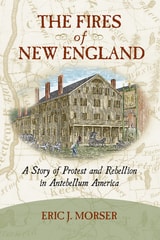
The Fires of New England
A Story of Protest and Rebellion in Antebellum AmericaEric J. Morser
University of Massachusetts Press, 2017
Few people embraced the manifesto and its radical message. Nonetheless, as Eric J. Morser illustrates in this eloquently written and deeply researched book, the address matters because it reveals how commercial, cultural, political, and social changes were remaking the lives of the men who drafted and shared it in the 1830s. Using an imaginative range of sources, Morser artfully reconstructs their moving personal tales and locates them in a grander historical context. By doing so, he demonstrates that even seemingly small stories from antebellum America can help us understand the rich complexities of the era.
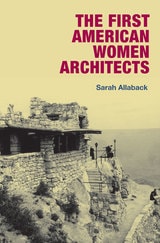
The First American Women Architects
Sarah Allaback
University of Illinois Press, 2007
Organized alphabetically as a reference guide, this volume provides a biographical sketch of each architect's life, education, and professional career, and a list of known works and sources for further research. Many of these remarkable women have never before appeared in any other history, making The First American Women Architects a unique and invaluable reference for students and scholars interested in women's history and architecture. As an instructive record of the legacy of women in architectural history, this book will also serve as a stimulating indicator of the broadening potential for women and other minorities within the field of architecture.
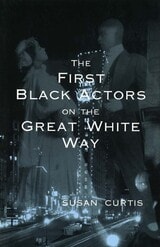
The First Black Actors on the Great White Way
Susan Curtis
University of Missouri Press, 1998
On April 5, 1917, Three Plays for a Negro Theater by Ridgely Torrence opened at the Garden Theatre in New York City. This performance was a monumental event in American stage history. Not only was this the first dramatic production to portray African American life beyond the cliché, it was also the first production on Broadway to feature an all-black cast. The morning after the three plays were performed, newspapers were filled with praise for the cast, crew, and playwright. Audience member W. E. B. Du Bois declared the show "epoch making." Despite such early critical acclaim, Three Plays for a Negro Theater closed before the end of the month and received little attention thereafter.
Why was a nation, so fascinated with firsts, able to forget these black actors and this production so quickly? It is this question that Susan Curtis addresses in The First Black Actors on the Great White Way.
Set against the backdrop of transforming theater conventions in the early 1900s and the war in 1917, this important study relates the stories of the actors, stage artists, critics, and many others—black and white—involved in this groundbreaking production. Curtis explores in great depth both the progress in race relations that led to this production and the multifaceted reasons for its quick demise.
Three Plays for a Negro Theater opened on the eve of the United States' entrance into World War I. Curtis attributes the early closure of the three plays to this coincidence, but she does not settle for so simple an explanation. Rather, she investigates the heightened national self-consciousness that followed the United States' entry into the war. America was ready to "make the world safe for democracy," but it was not fully ready to accept democracy and equality in its own culture.
The First Black Actors on the Great White Way is not simply a study of African American theater and its entrance into American culture. By focusing on a single event at a critical moment in history, Curtis offers a unique glimpse into race relations in early-twentieth-century American society. The experience of these pioneering artists reveals an unexplored aspect of the painfully slow evolution of racial equality.
A remarkable story about people who waged an extraordinary campaign against racism, The First Black Actors on the Great White Way will be of special interest to scholars of American studies, race relations, and cultural history, as well as the general reader.

The First Chouteaus
RIVER BARONS OF EARLY ST. LOUISWilliam E. Foley and C. David Rice
University of Illinois Press, 1983
For more than half a century, Auguste and Pierre Chouteau dominated trade and enterprise in the Mississippi Valley. In their various roles as merchants, Indian traders, bankers, land speculators, governmental advisors, public officials, and community leaders, the Chouteau brothers exerted a tremendous influence on westward expansion. This is the first full account of their lives and illustrious careers.
The First Fifteen
How Asian American Women Became Federal JudgesSusan Oki Mollway
Rutgers University Press, 2022
This book tells the stories of the first fifteen. In the process, it recounts remarkable tales of Asian women overcoming adversity and achieving the American dream, despite being the daughters of a Chinese garment worker, Japanese Americans held in internment camps during World War II, Vietnamese refugees, and penniless Indian immigrants. Yet The First Fifteen also explores how far Asian Americans and women still have to go before the federal judiciary reflects America as a whole.
In a candid series of interviews, these judges reflect upon the personal and professional experiences that led them to this distinguished position, as well as the nerve-wracking political process of being nominated and confirmed for an Article III judgeship. By sharing their diverse stories, The First Fifteen paints a nuanced portrait of how Asian American women are beginning to have a voice in determining American justice.
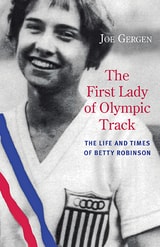
The First Lady of Olympic Track
The Life and Times of Betty RobinsonJoe Gergen
Northwestern University Press, 2014
The 1928 Olympic Games in Amsterdam were the first in which women—over the objections of many, including Pope Pius XI and the founder of the modern Olympics, Baron Pierre de Coubertin—were allowed to run in the marquee track events.
Equally remarkable is the story behind the first female gold medal winner in the 100-meter dash, sixteen-year-old American Betty Robinson. A prodigy running in just her fourth organized meet, Robinson stunned the world, earning special praise from the president of the 1928 American Olympic Committee, General Douglas MacArthur. But Robinson’s triumph soon became tragedy when in 1931 she was involved in a life-threatening plane crash. Unable to assume a sprinter’s crouch, she nevertheless joined fellow pioneer Jesse Owens at the infamous 1936 Berlin Olympics, and achieved further glory on the relay team. Journalist Joe Gergen’s The First Lady of Olympic Track rescues an exceptional figure from obscurity.
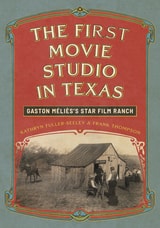
The First Movie Studio in Texas
Gaston Méliès's Star Film RanchKathryn Fuller-Seeley and Frank Thompson
University of Texas Press, 2026
The story of the Star Film Ranch and its pioneering crew, who created the first “authentic” Westerns filmed in Texas.
In 1910, the Méliès Star Film Company of Manhattan set up a moving-picture studio outside San Antonio, the first in Texas. Determined to make the most authentic Westerns possible, the company filmed there for a little over a year. In that brief time, it created more than seventy single-reel films, leaving a lasting mark on moviemaking.
Film historians Kathryn Fuller-Seeley and Frank Thompson return to a moment when on-location filmmaking was emerging as an artform. We meet producer Gaston Méliès, older brother of early-cinema legend Georges Méliès, and his cast and crew of young innovators, old hands, and genuine cowboys—like seventeen-year-old Edith Storey, the tomboy star who helped to ignite modern celebrity culture, and Francis Ford, who learned the art of film directing on the job and mentored his younger brother, Hollywood legend John Ford. The First Movie Studio in Texas traces the company’s trials and accomplishments, its influence on the depiction of race and gender in Western filmmaking, its surviving works, and its crowning achievement: The Immortal Alamo (1911), the earliest cinematic depiction of that famous battle.
Finally recovered from the shadows, the forgotten Méliès brother proves to be one of the key founders of the Western myth on screen.

The First Well
A Bethlehem BoyhoodJabra Ibrahim Jabra
University of Arkansas Press, 1995
The First Woman in the Republic
A Cultural Biography of Lydia Maria ChildCarolyn L. Karcher
Duke University Press, 1998

The Follinglo Dog Book
A Norwegian Pioneer Story from IowaPeder Gustav Tjernagel
University of Iowa Press, 1999
The Follinglo Dog Book both is and is not about dogs. The dogs are certainly here: from Milla to Chip the Third, we encounter a procession of heroic if often unfortunate creatures who, along with their immigrant masters, led a hard life on the nineteenth-century American frontier. However, if you pick up this book thinking it will offer a heartwarming read about canine experiences, you will find yourself reinformed by the way it unfolds.
Instead, these are the stories of a Norwegian pioneer family that came in 1860 to settle the Iowa prairie on a homestead called Follinglo Farm in Story County, Iowa. In the Tjernagels' experience one may read a chronicle of the state, the region, and the nation. Arriving in Iowa in what was still the age of wooden equipment and animal power, the Tjernagels witnessed each successive revolution on the land. They built homes and barns, cultivated the land, and encountered every manner of natural disaster from prairie fires to blizzards. Through all the struggles and setbacks, Peder Gustav Tjernagel's stories sparkle with boyhood pranks and adventures, in which the family dogs frequently play a role.
Readers will discover a wonderful cast of Norwegian relatives and neighbors, including a Herculean uncle, Store Per (Big Pete), who could lift a cow by its horns; a mysterious aunt, Stora Fastero (Big Sister), whose arrival signaled that a baby was soon to be born; and Elling Eilson, the walking Lutheran apostle. And, of course, there are the dogs who shepherd, protect, and even baby-sit the residents of Follinglo Farm.
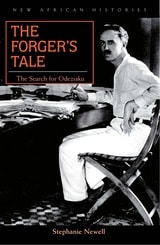
The Forger’s Tale
The Search for OdeziakuStephanie Newell
Ohio University Press, 2006
Between 1905 and 1939 a conspicuously tall white man with a shock of red hair, dressed in a silk shirt and white linen trousers, could be seen on the streets of Onitsha, in Eastern Nigeria. How was it possible for an unconventional, boy-loving Englishman to gain a social status among the local populace enjoyed by few other Europeans in colonial West Africa?
In The Forger’s Tale: The Search for Odeziaku Stephanie Newell charts the story of the English novelist and poet John Moray Stuart-Young (1881–1939) as he traveled from the slums of Manchester to West Africa in order to escape the homophobic prejudices of late-Victorian society. Leaving behind a criminal record for forgery and embezzlement and his notoriety as a “spirit rapper,” Stuart-Young found a new identity as a wealthy palm oil trader and a celebrated author, known to Nigerians as “Odeziaku.”
In this fascinating biographical account, Newell draws on queer theory, African gender debates, and “new imperial history” to open up a wider study of imperialism, (homo)sexuality, and nonelite culture between the 1880s and the late 1930s. The Forger’s Tale pays close attention to different forms of West African cultural production in the colonial period and to public debates about sexuality and ethics, as well as to movements in mainstream English literature.
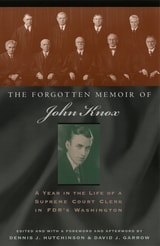
The Forgotten Memoir of John Knox
A Year in the Life of a Supreme Court Clerk in FDR's WashingtonJohn Knox
University of Chicago Press, 2002
When John Frush Knox (1907-1997) wrote these words, he was in the middle of law school, and his attempt at surpassing Pepys—part scrapbook, part social commentary, and part recollection—had already reached 750 pages. His efforts as a chronicler might have landed in a family attic had he not secured an eminent position after graduation as law clerk to Justice James C. McReynolds—arguably one of the most disagreeable justices to sit on the Supreme Court—during the tumultuous year when President Franklin D. Roosevelt tried to "pack" the Court with justices who would approve his New Deal agenda. Knox's memoir instead emerges as a record of one of the most fascinating periods in American history.
The Forgotten Memoir of John Knox—edited by Dennis J. Hutchinson and David J. Garrow—offers a candid, at times naïve, insider's view of the showdown between Roosevelt and the Court that took place in 1937. At the same time, it marvelously portrays a Washington culture now long gone. Although the new Supreme Court building had been open for a year by the time Knox joined McReynolds' staff, most of the justices continued to work from their homes, each supported by a small staff. Knox, the epitome of the overzealous and officious young man, after landing what he believes to be a dream position, continually fears for his job under the notoriously rude (and nakedly racist) justice. But he soon develops close relationships with the justice's two black servants: Harry Parker, the messenger who does "everything but breathe" for the justice, and Mary Diggs, the maid and cook. Together, they plot and sidestep around their employer's idiosyncrasies to keep the household running while history is made in the Court.
A substantial foreword by Dennis Hutchinson and David Garrow sets the stage, and a gallery of period photos of Knox, McReynolds, and other figures of the time gives life to this engaging account, which like no other recaptures life in Washington, D.C., when it was still a genteel southern town.
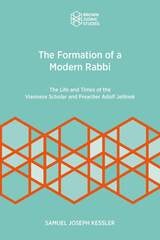
The Formation of a Modern Rabbi
The Life and Times of the Viennese Scholar and Preacher Adolf JellinekSamuel Joseph Kessler
SBL Press, 2022
An intellectual biography that critically engages Adolf Jellinek’s scholarship and communal activities
Adolf Jellinek (1821–1893), the Czech-born, German-educated, liberal chief rabbi of Vienna, was the most famous Jewish preacher in Central Europe in the second half of the nineteenth century. As an innovative rhetorician, Jellinek helped mold and define the modern synagogue sermon into an instrument for expressing Jewish religious and ethical values for a new era. As a historian, he made groundbreaking contributions to the study of the Zohar and medieval Jewish mysticism. Jellinek was emblematic of rabbi-as-scholar-preacher during the earliest, formative years of communal synagogues as urban religious space. In a world that was rapidly losing the felt and remembered past of premodern Jewish society, the rabbi, with Jellinek as prime exemplar, took hold of the Sabbath sermon as an instrument to define and mold Judaism and Jewish values for a new world.
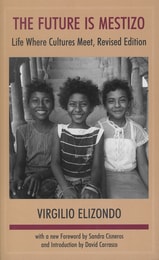
The Future is Mestizo
Life Where Culture Meet, Revised EditionVirgilio Elizondo
University Press of Colorado, 2000
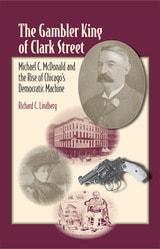
The Gambler King of Clark Street
Michael C. McDonald and the Rise of Chicago's Democratic MachineRichard C. Lindberg with a Foreword by John Miya.
Southern Illinois University Press, 2009
The Gambler King of Clark Street tells the story of a larger-than-life figure who fused Chicago’s criminal underworld with the city’s political and commercial spheres to create an urban machine built on graft, bribery, and intimidation. Lindberg vividly paints the life of the Democratic kingmaker against the wider backdrop of nineteenth-century Chicago crime and politics.
McDonald has long been cited in the published work of city historians, members of academia, and the press as the principal architect of a unified criminal enterprise that reached into the corridors of power in Chicago, Cook County, the state of Illinois, and ultimately the Oval Office. The Gambler King of Clark Street is both a major addition to Chicago’s historical literature and a revealing biography of a powerful and troubled man.
Illinois State Historical Society Scholarly Award, Certificate of Excellence, 2009
Society of Midland Authors Biography Award, 2009

The Gap Years
Climbing, Skiing, and the Journey BackTom French
Brandeis University Press, 2026
At the end of 2019, Tom French retired from a four-decade career in business, determined to return to interests that had defined his youth and see what meaning they still held. One of these interests was mountaineering. Another was adventure travel, with a particular focus on Nepal. A third was cross-country ski racing. Having taken “gap years” between school and university, and again before he started work, he decided to take a gap year before settling into the expectations of retirement. One year turned into three as he rebuilt his athletic strength, competed in cross-country ski marathons, and climbed some of the world’s highest mountains, including two expeditions to Mount Everest. On the first Everest climb, a cyclone forced him to turn around high on the mountain and descend the treacherous Lhotse Face in a blizzard. On the second, he approached the mountain through the remote Makalu Barun region, the first climber ever to do so, and climbed to the summit on a moonlit night.
But this is a book about much more than Everest. It is about beauty and joy found in wild places, about cross-country ski racing and mountaineering more broadly, and—most of all—about a journey to find meaning in life and reconnect with the passions of youth.
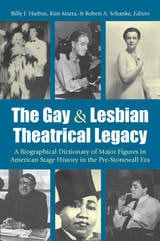
The Gay and Lesbian Theatrical Legacy
A Biographical Dictionary of Major Figures in American Stage History in the Pre-Stonewall EraBilly J. Harbin, Kim Marra, and Robert A. Schanke, Editors
University of Michigan Press, 2005
“A superb tribute to theatrical pioneers—The Gay and Lesbian Theatrical Legacy is required reading for both theatre scholars and gay/lesbian/bisexual history aficionados. A fascinating journey awaits them all in this highly recommended volume.”
—Broadside: Newsletter of the Theatre Library Association
The Gay and Lesbian Theatrical Legacy collects in a single volume biographies of more than one hundred notable figures whose careers flourished in the years before the 1969 Stonewall Riots marked the beginning of the gay and lesbian civil rights movement in the United States. The leading lights in American theater have included innumerable individuals whose sexualities have deviated from prevailing norms, but this history has until recently been largely unwritten and unknown. This book contributessignificantly to the recovery of this history, fashioning a much fuller, more nuanced portrait of American theater as it evolved and shedding light on the influence that sexual desire may have had on professional choices, relationships, and artistic achievements.
The Gay and Lesbian Theatrical Legacy collects biographies and portraits of influential actors, playwrights, composers, directors, designers, dancers, producers, managers, critics, choreographers, and technicians who made their mark on the American theater. Its broad coverage provides an extended glimpse into lives and careers that intersected and into networks of affiliation that made theatrical history and, by extension, social and cultural history.
The late Billy J. Harbin was Professor of Theater, Louisiana State University. Kim Marra is Associate Professor of Theater, University of Iowa. Robert A. Schanke is Professor of Theater Emeritus, Central College, Pella, Iowa.

The Gazer Within
Larry Levis
University of Michigan Press, 2001
David St. John's foreword speaks eloquently of Levis's enduring legacy: "Of the poets of his generation, Larry Levis spoke most powerfully of what it means to be a poet at this historical moment. With the same majesty he brought to his poetry, Larry Levis engaged his readers with the most subtle and disturbing questions of the self to be found in the prose--essays, reviews or interviews--of any contemporary American poet. Broadly international in his scope and deeply personal in his reflections, Levis addressed poetic concerns that are both immediate and timeless. For many of us who struggle with these issues, Larry Levis's prose on poetry stands as some of the most capacious to be found since Randell Jarrell's."
The late Larry Levis was the author of six volumes of poetry. He was Director of the Creative Writing Program, University of Utah; Professor of English, Virginia Commonwealth University; and also taught at the Iowa Writers Workshop.
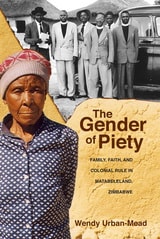
The Gender of Piety
Family, Faith, and Colonial Rule in Matabeleland, ZimbabweWendy Urban-Mead
Ohio University Press, 2015
The Gender of Piety is an intimate history of the Brethren in Christ Church in Zimbabwe, or BICC, as related through six individual life histories that extend from the early colonial years through the first decade after independence. Taken together, these six lives show how men and women of the BICC experienced and sequenced their piety in different ways. Women usually remained tied to the church throughout their lives, while men often had a more strained relationship with it. Church doctrine was not always flexible enough to accommodate expected masculine gender roles, particularly male membership in political and economic institutions or participation in important male communal practices.
The study is based on more than fifteen years of extensive oral history research supported by archival work in Zimbabwe, the United Kingdom, and the United States. The oral accounts make it clear, official versions to the contrary, that the church was led by spiritually powerful women and that maleness and mission-church notions of piety were often incompatible.
The life-history approach illustrates how the tension of gender roles both within and without the church manifested itself in sometimes unexpected ways: for example, how a single family could produce both a legendary woman pastor credited with mediating multiple miracles and a man—her son—who joined the armed wing of the Zimbabwe African People’s Union nationalist political party and fought in Zimbabwe’s liberation war in the 1970s. Investigating the lives of men and women in equal measure, The Gender of Piety uses a gendered interpretive lens to analyze the complex relationship between the church and broader social change in this region of southern Africa.
The Gentleman from Illinois
Stories from Forty Years of Elective Public ServiceAlan J. Dixon
Southern Illinois University Press, 2013
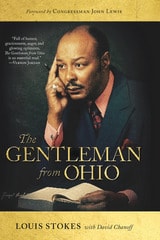
The Gentleman from Ohio
Louis Stokes with David Chanoff with a foreword by Congressman John Lewis
The Ohio State University Press, 2016
Prior to Louis Stokes’s tenure in Congress he served for many years as a criminal defense lawyer and chairman of the Cleveland NAACP Legal Redress Committee. Among the Supreme Court Cases he argued, the Terry “Stop and Frisk” case is regarded as one of the twenty-five most significant cases in the court’s history. The Gentleman from Ohio chronicles this and other momentous events in the life and legacy of Ohio’s first black representative—a man who, whether in law or politics, continually fought for the principles he believed in and helped lead the way for African Americans in the world of mainstream American politics.
The Ghost in the Little House
A Life of Rose Wilder LaneWilliam Holtz
University of Missouri Press, 1995

The Girl in the Yellow Poncho
A MemoirKristal Brent Zook
Duke University Press, 2023
The Girl in the Yellow Poncho is Zook’s coming-of-age tale about what it means to be biracial in America. Throughout, she grapples with in-betweenness while also facing childhood sexual assault, economic insecurity, and multigenerational alcoholism and substance abuse on both the Black and white sides of her family. Her story is one of strong Black women—herself, her cousin, her mother, and her grandmother—and the generational cycles of oppression and survival that seemingly defined their lives.
Setting out on an inner journey that takes her across oceans and continents, Zook tells the story of a little girl who never gives up on love, even long after it seems to have been destroyed. In the end she triumphs, reconciling with her father and mother to create the family of her dreams through forgiveness and sheer force of will. A testament to the power of settling into one’s authentic identity, this book tells a story of a daughter’s lifelong yearning, a mother’s rediscovery of lost love, and the profound power of atonement and faith to heal a broken family.
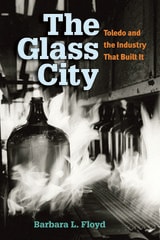
The Glass City
Toledo and The Industry That Built ItBarbara L. Floyd
University of Michigan Press, 2014
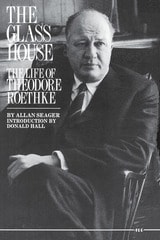
The Glass House
The Life of Theodore RoethkeAllan Seager
University of Michigan Press, 1991
Biographer Allan Seager interviewed a number of Roethke’s friends and fellow writers, and he had access to the voluminous notes the poet left behind. Seager reveals the Theodore Roethke who existed behind the public persona – a complex, self-contradictory, gentle, often disturbed mysterious, and ruthlessly honest man. One of the book’s most moving passages is the defense of the poet’s role within the university, written by a colleague when Roethke was faced with the threat of dismissal. A committed teacher himself, Seager succeeds in doing justice to an often neglected aspect of Roethke’s achievement, his remarkable power as a teacher, and his unusual and committed teaching style.

The Glory Road
A Gospel Gypsy LifeAnita Faye Garner
University of Alabama Press, 2021
“This is a story central to the origins of country music: the marriage of Saturday night and Sunday morning, and the literal marriage of two musicians, sometimes at odds with each other creatively and personally.” —Rosanne Cash
An essential memoir of music, memory, and the American South.
Anita Faye Garner grew up in the South—just about every corner of it. She and her musical family lived in Texarkana, Bossier City, Hot Springs, Jackson, Vicksburg, Hattiesburg, Pascagoula, Bogalusa, Biloxi, Gulfport, New Orleans, and points between, picking up sticks every time her father, a Pentecostal preacher known as “Brother Ray,” took over a new congregation.
In between jump-starting churches, Brother Ray took his wife and kids out on the gospel revival circuit as the Jones Family Singers. Ray could sing and play, and “Sister Fern” (Mama) was a celebrated singer and songwriter, possessed of both talent and beauty. Rounding out the band were the young Garner (known as Nita Faye then) and her big brother Leslie Ray. At all-day singings and tent revivals across the South, the Joneses made a joyful noise for the faithful and loaded into the car for the next stage of their tour.
But growing up gospel wasn’t always joyous. The kids practically raised and fended for themselves, bonding over a shared dislike of their rootless life and strict religious upbringing. Sister Fern dreamed of crossing over from gospel to popular music and recording a hit record. An unlikely combination of preacher’s wife and glamorous performer, she had the talent and presence to make a splash, and her remarkable voice brought Saturday night rock and roll to Sunday morning music. Always singing, performing, and recording at the margins of commercial success, Sister Fern shared a backing band with Elvis Presley and wrote songs recorded by Johnny Cash and many other artists.
In her touching memoir The Glory Road, Anita Faye Garner re-creates her remarkable upbringing. The story begins with Ray’s attempts to settle down and the family’s inevitable return to the gospel circuit and concludes with Sister Fern’s brushes with stardom and the family’s journey west to California where they finally landed—with some unexpected detours along the way. The Glory Road carries readers back to the 1950s South and the intersections of faith and family at the very roots of American popular music.
For more information about the book and Anita Garner, visit www.thegloryroad.com or www.anitagarner.com
The Golden Mountain
The Autobiography of a Korean Immigrant, 1895-1960Easurk Emsen Charr
University of Illinois Press, 1996
At the age of ten and without his parents, Easurk Charr, a convert to Christianity, came to Hawa'ii in 1904 to earn enough money to acquire an education and return to his native Korea as a medical missionary. The Golden Mountain is Charr's story of his early years in Korea, his migration to Hawai'i and the American mainland, and the joys and pain of his life as one of some seven thousand Koreans who migrated to the United States between 1903 and 1905.
First published in 1961, Charr's memoir offers touching insights into the experience of early Korean immigrants. He tells eloquently of how difficult it was for him to become a naturalized citizen, even after serving in the U.S. Army. An introduction by Wayne Patterson provides a broader perspective on both Charr and the Korean immigrant experience.
The Good European
Nietzsche's Work Sites in Word and ImageDavid Farrell Krell and Donald L. Bates
University of Chicago Press, 1997
"A brilliant juxtaposition of life and thought. . . . The sympathy of this pictorial biography is rivaled by few books on Nietzsche."—Charles M. Stang, Boston Book Review
"[A] distinguished addition to the Nietzsche-friendly corpus."—Alain de Botton, Los Angeles Times Book Review
"An odd and oddly endearing record of Nietzsche's travels."—John Banville, New York Review of Books
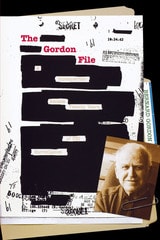
The Gordon File
A Screenwriter Recalls Twenty Years of FBI SurveillanceBy Bernard Gordon
University of Texas Press, 2004
For twenty-six years, the FBI devoted countless hours of staff time and thousands of U.S. taxpayer dollars to the surveillance of an American citizen named Bernard Gordon. Given the lavish use of resources, one might assume this man was a threat to national security or perhaps a kingpin of organized crime—not a Hollywood screenwriter whose most subversive act was joining the Communist Party during the 1940s when we were allied with the USSR in a war against Germany. For this honest act of political dissent, Gordon came to be investigated by the House Committee on Un-American Activities in 1952, blacklisted by the Hollywood film industry, and tailed by the FBI for over two decades.
In The Gordon File, Bernard Gordon tells the compelling, cautionary story of his life under Bureau surveillance. Drawing on his FBI file of over 300 pages, which he obtained under the Freedom of Information Act, he traces how the Bureau followed him from Hollywood to Mexico, Paris, London, Rome, and even aboard a Dutch freighter as he created an unusually successful, albeit uncredited, career as a screenwriter and producer during the blacklist years. Comparing his actual activities during that time to records in the file, he pointedly and often humorously underscores how often the FBI got it wrong, from the smallest details of his life to the main fact of his not being a threat to national security.
Most important, Gordon links his personal experience to the headlines of today, when the FBI is again assuming broad powers to monitor political dissidents it deems a threat to the nation. "Is it possible," he asks, "that books like this will help to move our investigative agencies from the job of blackmailing those who are critical of our imperfect democracy to arresting those who are truly out to destroy us?"
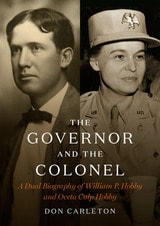
The Governor and the Colonel
A Dual Biography of William P. Hobby and Oveta Culp HobbyBy Don Carleton
University of Texas Press, 2020
William P. “Will” Hobby Sr. and Oveta Culp Hobby were one of the most influential couples in Texas history. Both were major public figures, with Will serving as governor of Texas and Oveta as the first commander of the Women’s Army Corps and later as the second woman to serve in a presidential cabinet. Together, they built a pioneering media empire centered on the Houston Post and their broadcast properties, and they played a significant role in the transformation of Houston into the fourth largest city in the United States. Don Carleton’s dual biography details their personal and professional relationship—defined by a shared dedication to public service—and the important roles they each played in local, state, and national events throughout the twentieth century.
This deeply researched book not only details this historically significant partnership, but also explores the close relationships between the Hobbys and key figures in twentieth-century history, from Texas legends such as LBJ, Sam Rayburn, and Jesse Jones, to national icons, including the Roosevelts, President Eisenhower, and the Rockefellers. Carleton's chronicle reveals the undeniable impact of the Hobbys on journalistic and political history in the United States.
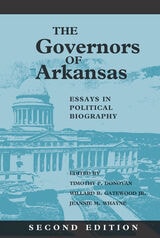
The Governors of Arkansas
Essays in Political BiographyJr. Gatewood
University of Arkansas Press, 1995
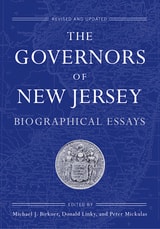
The Governors of New Jersey
Biographical EssaysBirkner, Michael J
Rutgers University Press, 2014
Rogues, aristocrats, and a future U.S. president. These and other governors are portrayed in this revised and updated edition of the classic reference work on the chief executives of New Jersey. Editors Michael J. Birkner, Donald Linky, and Peter Mickulas present new essays on the governors of the last three decades—Brendan T. Byrne, Thomas Kean, James Florio, Christine Todd Whitman, Donald DiFrancesco, James McGreevey, Richard Codey, and Jon Corzine. The essays included in the original edition are amended, edited, and corrected as necessary in light of new and relevant scholarship.
The authors of each governor’s life story represent a roster of such notable scholars as Larry Gerlach, Stanley Katz, Arthur Link, and Clement Price, as well as many other experts on New Jersey history and politics. As a result, this revised edition is a thorough and current reference work on the New Jersey governorship—one of the strongest in the nation.
Also of Interest:
New Jersey Politics and Government
The Suburbs Come of Age
Fourth Edition
Barbara G. Salmore with Stephen A. Salmore
978-0-8135-6139-4 paper $34.95
A volume in the Rivergate Regionals Collection
Me, Governor?
My Life in the Rough-and-Tumble World of New Jersey Politics
Richard J. Codey
978-0-8135-5045-9 cloth $24.95
The Life and Times of Richard J. Hughes
The Politics of Civility
John B. Wefing
978-0-8135-4641-4 cloth $32.50
Governor Tom Kean
From the New Jersey Statehouse to the 911 Commission
Alvin S. Felzenberg
978-0-8135-3799-3 cloth $29.95