Results by title
1993 books match the query 'Latin America' and 392 start with t
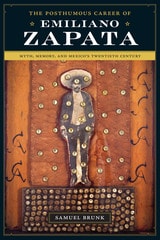
The Posthumous Career of Emiliano Zapata
Myth, Memory, and Mexico's Twentieth CenturyBy Samuel Brunk
University of Texas Press, 2008
Before there was Che Guevara, there was Emiliano Zapata, the charismatic revolutionary who left indelible marks on Mexican politics and society. The sequel to Samuel Brunk's 1995 biography of Zapata, The Posthumous Career of Emiliano Zapata traces the power and impact of this ubiquitous, immortalized figure.
Mining the massive extant literature on Zapata, supplemented by archival documents and historical newspaper accounts, Brunk explores frameworks of myth and commemoration while responding to key questions regarding the regime that emerged from the Zapatista movement, including whether it was spawned by a genuinely "popular" revolution.
Blending a sophisticated analysis of hegemonic systems and nationalism with lively, accessible accounts of ways in which the rebel is continually resurrected decades after his death in a 1919 ambush, Brunk delves into a rich realm of artistic, geographical, militaristic, and ultimately all-encompassing applications of this charismatic icon.
Examining all perspectives, from politicized commemorations of Zapata's death to popular stories and corridos, The Posthumous Career of Emiliano Zapata is an eloquent, engaging portrait of a legend incarnate.
The Postmodernism Debate in Latin America
John Beverley, José Oviedo, and Michael Aronna, eds.
Duke University Press, 1995
This collection explores the Latin American engagement with postmodernism, less to present a regional variant of the concept than to situate it in a transnational framework. Recognizing that postmodernism in Latin America can only inaccurately be thought of as having traveled from an advanced capitalist "center" to arrive at a still dependent neocolonial "periphery," the contributors share the assumption that postmodernism is itself about the dynamics of interaction between local and metropolitan cultures in a global system in which the center-periphery model has begun to break down. These essays examine the ways in which postmodernism not only designates the effects of this transnationalism in Latin America, but also registers the cultural and political impact on an increasingly simultaneous global culture of a Latin America struggling with its own set of postcolonial contingencies, particularly the crisis of its political left, the dominance of neoliberal economic models, and the new challenges and possibilities opened by democratization.
With new essays on the dynamics of Brazilian culture, the relationship between postmodernism and Latin American feminism, postmodernism and imperialism, and the implications of postmodernist theory for social policy, as well as the text of the Declaration from the Lacandon Jungle of the Zapatitista National Liberation Army, this expanded edition of boundary 2 will interest not only Latin Americanists, but scholars in all disciplines concerned with theories of the postmodern.
Contributors. Xavier Albó, José Joaquín Brunner, Fernando Calderón, Enrique Dussel, Néstor García Canclini, Martín Hopenhayn, Neil Larsen, the Latin American Subaltern Studies Group, Norbert Lechner, María Milagros López, Raquel Olea, Aníbal Quijano, Nelly Richard, Carlos Rincón, Silviano Santiago, Beatriz Sarlo, Roberto Schwarz, and Hernán Vidal
The Power of Huacas
Change and Resistance in the Andean World of Colonial PeruBy Claudia Brosseder
University of Texas Press, 2014
Based on extensive archival research, The Power of Huacas is the first book to take account of the reciprocal effects of religious colonization as they impacted Andean populations and, simultaneously, dramatically changed the culture and beliefs of Spanish Christians.
Winner, Award for Excellence in the Study of Religion in the category of Historical Studies, American Academy of Religion, 2015
The role of the religious specialist in Andean cultures of the sixteenth, seventeenth, and eighteenth centuries was a complicated one, balanced between local traditions and the culture of the Spanish. In The Power of Huacas, Claudia Brosseder reconstructs the dynamic interaction between religious specialists and the colonial world that unfolded around them, considering how the discourse about religion shifted on both sides of the Spanish and Andean relationship in complex and unexpected ways. In The Power of Huacas, Brosseder examines evidence of transcultural exchange through religious history, anthropology, and cultural studies. Taking Andean religious specialists—or hechizeros (sorcerers) in colonial Spanish terminology—as a starting point, she considers the different ways in which Andeans and Spaniards thought about key cultural and religious concepts. Unlike previous studies, this important book fully outlines both sides of the colonial relationship; Brosseder uses extensive archival research in Bolivia, Chile, Ecuador, Peru, Spain, Italy, and the United States, as well as careful analysis of archaeological and art historical objects, to present the Andean religious worldview of the period on equal footing with that of the Spanish. Throughout the colonial period, she argues, Andean religious specialists retained their own unique logic, which encompassed specific ideas about holiness, nature, sickness, and social harmony. The Power of Huacas deepens our understanding of the complexities of assimilation, showing that, within the maelstrom of transcultural exchange in the Spanish Americas, European paradigms ultimately changed more than Andean ones.
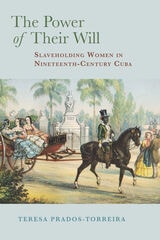
The Power of Their Will
Slaveholding Women in Nineteenth-Century CubaTeresa Prados-Torreira
University of Alabama Press, 2021
CHOICE OUTSTANDING ACADEMIC TITLE, 2022
“This fascinating book explores the unique circumstances of white slaveholding women in 19th-century Cuba and the enslaved peoples they controlled . . .This is a must read for scholars of the Caribbean and the African diaspora. Essential.” —CHOICE
In the early nineteenth century, while abolitionism was rising and the slave trade was declining in the Atlantic world, Spain used this opportunity to massively expand plantation slavery in Cuba. Between 1501 and 1866, more than 778,000 Africans were torn from their homelands and brought to work for the Cuban slaveholding class.
An understudied aspect of Cuban slaveholding society is the role of the white Cuban slave mistress (amas). The Power of Their Will: Slaveholding Women in Nineteenth-Century Cuba illuminates the interaction of female slaveholders and the enslaved during this time. Teresa Prados-Torreira shows, despite the lack of political power in a highly patriarchal society, Cuban women as property owners were instrumental in supporting the long duration of slavery, whether by enforcing the disciplining of the enslaved in the domestic sphere or helping to create the illusion of slavery as a humane institution. Thousands of Creole slaveholding women relied on slaves to lead a comfortable life. Even the subsistence of many poor women depended on the income derived from the hiring out of their enslaved.
In this accessible cultural history, culled from government documents, fiction, newspaper articles, traveler’s accounts, women’s wills, and archival research, Prados-Torreira coalesces a valuable narrative out of the often paradoxical and conflicting stories of the human bonds between the female owner and the enslaved. Narrative chapters, enlivened by vignettes, describe the daily life of slave mistresses in the main cities of Havana and Santiago and other towns, workings of sugar mills and coffee plantations, how slaveholding women coping with slave rebellions and wartime during the Ten Years’ War, and how personal relationships could occasionally affect the balance of power.
The Presidio and Militia on the Northern Frontier of New Spain
A Documentary History, Volume I, 1570-1700Thomas H. Naylor and Charles W. Polzer
University of Arizona Press, 1986
The Presidio and Militia on the Northern Frontier of New Spain
A Documentary History, Volume Two, Part One: The Californias and Sinaloa-Sonora, 1700-1765Edited by Charles W. Polzer and Thomas E. Sheridan
University of Arizona Press, 1997
The Presidio and Militia on the Northern Frontier of New Spain
A Documentary History, Volume Two, Part Two: The Central Corridor and the Texas Corridor, 1700-1765Edited by Diana Hadley, Thomas H. Naylor, and Mardith K. Schuetz-Miller
University of Arizona Press, 1997
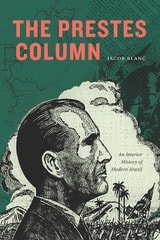
The Prestes Column
An Interior History of Modern BrazilJacob Blanc
Duke University Press, 2024
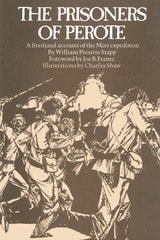
The Prisoners of Perote
By William Preston Stapp
University of Texas Press, 1977
In late 1842, Private William Preston Stapp and about three hundred other citizens of the Republic of Texas took it upon themselves to invade Mexico. They intended to retaliate for a recent Mexican attack on San Antonio and to humiliate President Sam Houston, who had been hesitant to seek revenge.
Stapp provides a closely observed, day-by-day narrative of the disastrous adventure later known as the Mier expedition. While his style might be described as "elegantly restrained" in comparison to the literary excesses of that early Victorian age, Stapp's flair for drama and description makes for colorful reading.
In response to the public outrage prompted by the San Antonio incident, Houston issued a presidential proclamation inviting volunteers for a retaliatory expedition across the Rio Grande. After the bloodless "capture" and pillage of two Mexican border towns, he called the volunteers back home. Most were relieved to comply, but some felt compelled to pursue the honor of the Republic further, and the Mier expedition was launched on December 20, 1842. On the day after Christmas, all save a forty-man camp guard were captured outside of Mier, a few miles across the Mexican border.
The prisoners faced a brutal forced march to Mexico City. Stapp was one of a large group that escaped along the way, became lost in the mountains, and suffered badly from hunger and thirst before recapture. He survived the notorious Black Bean Episode in which 17 of the 176 returned escapees were shot after drawing black beans in a lottery. The Texans were delivered to Perote Prison near Mexico City in September 1843, where a few of them tunneled to freedom and many more died in captivity. Mexico released the last of the prisoners in 1844, and Stapp was among them.
First published in 1845 and later issued in pamphlet form in 1933 by the La Grange Journal, The Prisoners of Perote is a fascinating view of a painful episode in Texas history.
The foreword by Joe B. Frantz provides a perspective on the Texas-Mexico relations during this period "when both countries were shaking down and had not yet found their way." He points out that The Prisoners of Perote provides some clues to the reasons behind the inherent tenseness that exists between Texas and Mexico today.
The Production of Local Knowledge
History and Politics in the Work of René Zavaleta MercadoLuis Tapia Mealla
Seagull Books, 2016
The Provincial Deputation in Mexico
Harbinger of Provincial Autonomy, Independence, and FederalismBy Nettie Lee Benson
University of Texas Press, 1992
Mexico and the United States each have a constitution and a federal system of government. This fact has led many historians to assume that the Mexican system of government, established in the 1820s, is an imitation of the U.S. model. But it is not.
First published in Spanish in 1955 and now translated by the author and amplified with new material, this interpretation of the independence movement tells the true story of Mexico's transition from colonial status to federal state. Benson traces the Mexican government's beginning to events in Spain in 1808–1810, when provincial juntas, or deputations, were established to oppose Napoleon's French rule and govern the provinces of Spain and its New World dominions during the Spanish monarch's imprisonment.
It was the provincial deputation, not the United States federal system, that provided the model for the state legislative bodies that were eventually formed after Mexico won its independence from Spain in 1821. This finding—the result of years of painstaking archival research—strongly confirms the independence of Mexico's political development from U.S. influence. Its importance to a study of Mexican history cannot be overstated.
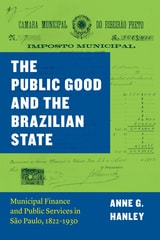
The Public Good and the Brazilian State
Municipal Finance and Public Services in São Paulo, 1822–1930Anne G. Hanley
University of Chicago Press, 2018
In The Public Good and the Brazilian State, Anne G. Hanley assembles an economic history of public revenues as they developed in nineteenth-century Brazil. Specifically, Hanley investigates the financial life of the municipality—a district comparable to the county in the United States—to understand how the local state organized and prioritized the provision of public services, what revenues paid for those services, and what happened when the revenues collected failed to satisfy local needs. Through detailed analyses of municipal ordinances, mayoral reports, citizen complaints, and financial documents, Hanley sheds light on the evolution of public finance and its effect on the early economic development of Brazilian society. This deeply researched book offers valuable insights for anyone seeking to better understand how municipal finance informs histories of inequality and underdevelopment.
The Puerto Rican Population
A Study in Human BiologyFrederick P. Thieme
University of Michigan Press, 1959
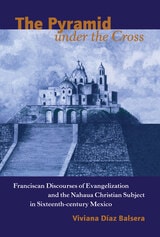
The Pyramid under the Cross
Franciscan Discourses of Evangelization and the Nahua Christian Subject in Sixteenth-century MexicoViviana Díaz Balsera
University of Arizona Press, 2005
The Pyramid under the Cross looks at the epic project of Christianization as well as the limits of the Spanish spiritual colonizers' power to accomplish it. The book focuses on activities of Franciscan missionaries who, as the first religious order to arrive, occupied the most important political and social centers in the Valley of Mexico and set the strategies of evangelization that others would follow. One such activity, the Nahua theater of evangelization, is represented as an exemplary case of the inevitable cultural negotiation involved in the missionary process. The author explores not only the imposition of a Eurocentric worldview upon the Nahua but also the hybridization of this view as the spiritual colonizer attempted to encompass a new non-Western constituency and the latter interpreted Christianity according to its own cultural paradigms.
The book treats a wide range of texts—the Historia eclesiástica indiana, the Confessionario Mayor, the Coloquios de los Doce, and more—both by renowned Franciscan figures such as Gerónimo de Mendieta, Alonso de Molina, Bernardino de Sahagún, and by Nahua grammarians Antonio Valeriano de Azcapotzalco, Andrés Leonardo de Tlatelolco, and others. Díaz Balsera engages the cultural constraints of all the actors in the episodes she relates in order to show how the exchange between them resulted in the appropriation and/or alteration of the Spanish discourses of spiritual domination—sometimes even in their breakdown—and how it brought about the emergence of Nahua Christian subjects that would never fully leave behind their ancient ways of relating to the gods.
The Pyramid under the Cross will be of interest to readers in the areas of Hispanic literatures, history, religion, anthropology, Latin American and cultural studies, and to those working in the field of colonial studies.
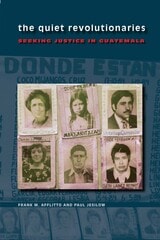
The Quiet Revolutionaries
Seeking Justice in GuatemalaBy Frank M. Afflitto and Paul Jesilow
University of Texas Press, 2007
The last three decades of the twentieth century brought relentless waves of death squads, political kidnappings, and other traumas to the people of Guatemala. Many people fled the country to escape the violence. Yet, at the same moment, a popular movement for justice brought together unlikely bands of behind-the-scenes heroes, blurring ethnic, geographic, and even class lines.
The Quiet Revolutionaries is drawn from interviews conducted by Frank Afflitto in the early 1990s with more than eighty survivors of the state-sanctioned violence. Gathered under frequently life-threatening circumstances, the observations and recollections of these inspiring men and women form a unique perspective on collective efforts to produce change in politics, law, and public consciousness. Examined from a variety of perspectives, from sociological to historical, their stories form a rich ethnography. While it is still too soon to tell whether stable, long-term democracy will prevail in Guatemala, the successes of these fascinating individuals provide a unique understanding of revolutionary resistance.
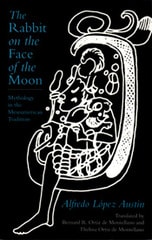
The Rabbit on the Face of the Moon
Mythology in the Mesoamerican TraditionAlfredo Lopez Austin
University of Utah Press, 1996
Eighteen essays provide an accessible, entertaining look into a system of millennia-old legends and beliefs.
Mythology is one of the great creations of humankind. It forms the core of sacred books and reflects the deepest preoccupations of human beings, their most intimate secrets, their glories, and their infamies.
In 1990, Alfredo López Austin, one of the foremost scholars of ancient Mesoamerican thought, began a series of essays about mythology in the Mesoamerican tradition, published in México Indígena. Although his articles were written for general readers, they were also intended to engage specialists. They span a divers subject matter: myths and names, eclipses, stars, left and right, Méxican origins, Aztec incantations, animals, and the incorporation of Christian elements into the living mythologies of Mexico. The title essay relates the Mesoamerican myth explaining why there is a rabbit o the moon’s face to a Buddhist image and suggests the importance of the profound mythical concepts presented by each image.
The eighteen essays in this volume are unified by their basis in Mesoamerican tradition and provide an accessible, entertaining look into a system of millennia-old legends and beliefs.
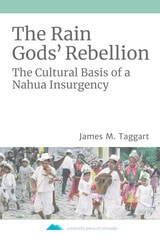
The Rain Gods' Rebellion
The Cultural Basis of a Nahua InsurgencyJames M. Taggart
University Press of Colorado, 2019
The Rain Gods’ Rebellion examines Nahua oral narratives to illuminate the cultural basis of the 1977–1984 rebellion against the local Hispanic elite in Huitzilan de Serdán, Mexico. Drawing from forty years of fieldwork in the region, James M. Taggart traces the sociopolitical role of Nahua rain gods—who took both human and divine forms—back hundreds of years and sheds new light on the connections between social experiences and the Nahua understanding of water and weather in stories. As Taggart shows, Nahua tales of the rain gods’ rebellion anticipated the actual 1977 land invasion in Huitzilan, in which some 200–300 Nahua were killed.
The Rain Gods’ Rebellion reveals how local culture evolves from the expression of unrest to organized insurgency and then into collective memory. Taggart records a tradition of storytelling in which Nahuas radicalized themselves through recounting the rain gods’ stories—stories of the gods organizing and striking with bolts of lightning the companion spirits of autocratic local leaders who worked closely with mestizos. The tales are part of a tradition of resisting the friars’ efforts to convert the Nahuas, Totonacs, Otomi, and Tepehua to Christianity and inspiring nativistic movements against invading settlers.Providing a rare longitudinal look at the cultural basis of this grassroots insurgency, The Rain Gods’ Rebellion offers rare insight into the significance of oral history in forming Nahua collective memory and, by extension, culture. It will be of significance to scholars of Indigenous studies, anthropology, oral history, and violence studies, as well as linguistic anthropologists and sociolinguists.
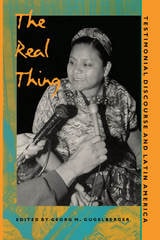
The Real Thing
Testimonial Discourse and Latin AmericaGeorg M. Gugelberger, ed.
Duke University Press, 1996
Although the literature of testimony arose on the margins of institutional power and its ends were in large part political change, the canonization of testimonio by the academic Left has moved it from margin to center, ironically bringing about the institutionalization of its transgressive and counter-hegemonic qualities. Discussing Latin American works ranging from Salvadorian writer Roque Dalton’s Miguel Marmol to I . . . Rigoberta Menchu, a work that earned its author a Nobel Prize, this collection explores how critical writing about testimonio has turned into discourse about the institution of academia, the canon, postmodernism and postcolonialism, and the status of Latin American studies generally.
Contributors. John Beverley, Santiago Colás, Georg M. Gugelberger, Barbara Harlow, Fredric Jameson, Alberto Moreiras, Margaret Randall, Javier Sanjines, Elzbieta Sklodowska, Doris Sommer, Gareth Williams, George Yúdice, Marc Zimmerman
The Reinvention of Mexico in Contemporary Spanish Travel Writing
Jane Hanley
Vanderbilt University Press, 2021
To frame the analysis of contemporary travel writing, author Jane Hanley examines key moments in the history of Mexican-Spanish relations, including the origins of narratives regarding Spaniards' sense of Mexico's similarity to and difference from Spain. This history underpins the discussion of the role of Spanish travelers in their encounters with Mexican peoples and places and their reflection on their own role as communicators of cultural meaning and participants in the tourist economy with its impact—both negative and positive—on places.
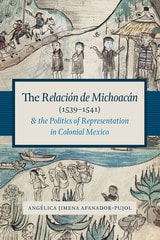
The Relación de Michoacán (1539-1541) and the Politics of Representation in Colonial Mexico
By Angélica Jimena Afanador-Pujol
University of Texas Press, 2015
Through close readings of the painted images in a major sixteenth-century illustrated manuscript, this book demonstrates the critical role that images played in ethnic identity formation and politics in colonial Mexico.
The Relación de Michoacán (1539–1541) is one of the earliest surviving illustrated manuscripts from colonial Mexico. Commissioned by the Spanish viceroy Antonio de Mendoza, the Relación was produced by a Franciscan friar together with indigenous noble informants and anonymous native artists who created its forty-four illustrations. To this day, the Relación remains the primary source for studying the pre-Columbian practices and history of the people known as Tarascans or P’urhépecha. However, much remains to be said about how the Relación’s colonial setting shaped its final form.
By looking at the Relación in its colonial context, this study reveals how it presented the indigenous collaborators a unique opportunity to shape European perceptions of them while settling conflicting agendas, outshining competing ethnic groups, and carving a place for themselves in the new colonial society. Through archival research and careful visual analysis, Angélica Afanador-Pujol provides a new and fascinating account that situates the manuscript’s images within the colonial conflicts that engulfed the indigenous collaborators. These conflicts ranged from disputes over political posts among indigenous factions to labor and land disputes against Spanish newcomers. Afanador-Pujol explores how these tensions are physically expressed in the manuscript’s production and in its many contradictions between text and images, as well as in numerous emendations to the images. By studying representations of justice, landscape, conquest narratives, and genealogy within the Relación, Afanador-Pujol clearly demonstrates the visual construction of identity, its malleability, and its political possibilities.
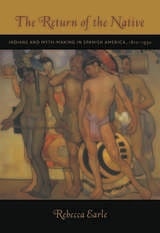
The Return of the Native
Indians and Myth-Making in Spanish America, 1810–1930Rebecca Earle
Duke University Press, 2007
Starting with the anti-Spanish wars of independence in the early nineteenth century, Earle charts the changing importance elite nationalists ascribed to the pre-Columbian past through an analysis of a wide range of sources, including historical writings, poems and novels, postage stamps, constitutions, and public sculpture. This eclectic archive illuminates the nationalist vision of creole elites throughout Spanish America, who in different ways sought to construct meaningful national myths and histories. Traces of these efforts are scattered across nineteenth-century culture; Earle maps the significance of those traces. She also underlines the similarities in the development of nineteenth-century elite nationalism across Spanish America. By offering a comparative study focused on Mexico, Guatemala, Colombia, Peru, Chile, and Ecuador, The Return of the Native illustrates both the common features of elite nation-building and some of the significant variations. The book ends with a consideration of the pro-indigenous indigenista movements that developed in various parts of Spanish America in the early twentieth century.
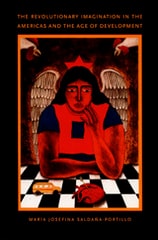
The Revolutionary Imagination in the Americas and the Age of Development
María Josefina Saldaña-Portillo
Duke University Press, 2003
Reading governmental reports, memos, and policies, Saldaña-Portillo traces the arc of development narratives from its beginnings in the 1944 Bretton Woods conference through its apex during Robert S. McNamara's reign at the World Bank (1968–1981). She compares these narratives with models of subjectivity and agency embedded in the autobiographical texts of three revolutionary icons of the 1960s and 1970s—those of Che Guevara, Guatemalan insurgent Mario Payeras, and Malcolm X—and the agricultural policy of the Sandinista National Liberation Front (FSLN). Saldaña-Portillo highlights a shared paradigm of a masculinist transformation of the individual requiring the "transcendence" of ethnic particularity for the good of the nation. While she argues that this model of progress often alienated the very communities targeted by the revolutionaries, she shows how contemporary insurgents such as Rigoberta Menchú, the Zapatista movement, and queer Aztlán have taken up the radicalism of their predecessors to retheorize revolutionary subjectivity for the twenty-first century.
The Revolutionary Imaginations of Greater Mexico
Chicana/o Radicalism, Solidarity Politics, and Latin American Social MovementsBy Alan Eladio Gómez
University of Texas Press, 2016
Bringing to life the stories of political teatristas, feminists, gunrunners, labor organizers, poets, journalists, ex-prisoners, and other revolutionaries, The Revolutionary Imaginations of Greater Mexico examines the inspiration Chicanas/os found in social movements in Mexico and Latin America from 1971 to 1979. Drawing on fifteen years of interviews and archival research, including examinations of declassified government documents from Mexico, this study uncovers encounters between activists and artists across borders while sharing a socialist-oriented, anticapitalist vision. In discussions ranging from the Nuevo Teatro Popular movement across Latin America to the Revolutionary Proletariat Party of America in Mexico and the Peronista Youth organizers in Argentina, Alan Eladio Gómez brings to light the transnational nature of leftist organizing by people of Mexican descent in the United States, tracing an array of festivals, assemblies, labor strikes, clandestine organizations, and public protests linked to an international movement of solidarity against imperialism.
Taking its title from the “greater Mexico” designation used by Américo Paredes to describe the present and historical movement of Mexicans, Mexican Americans, and Chicanas/os back and forth across the US-Mexico border, this book analyzes the radical creativity and global justice that animated “Greater Mexico” leftists during a pivotal decade. While not all the participants were of one mind politically or personally, they nonetheless shared an international solidarity that was enacted in local arenas, giving voice to a political and cultural imaginary that circulated throughout a broad geographic terrain while forging multifaceted identities. The epilogue considers the politics of going beyond solidarity.
The Rights of Nature and the Testimony of Things
Literature and Environmental Ethics from Latin AmericaMark Anderson
Vanderbilt University Press, 2024
Drawing Native Amazonian thought into productive tension with a variety of posthumanist theoretical frameworks—ranging from Derrida’s conceptualization of passive decision and hospitality to biosemiotics, Karen Barad’s theorization of intra-activity, and Isabelle Stengers’ proposal for cosmopolitical diplomacy—Anderson analyzes literary works by Julio Cortázar, Clarice Lispector, José Eustasio Rivera, and Davi Kopenawa that reframe environmental ethics in terms of collective, multispecies work and reciprocal care and politics as a cosmopolitics of friendship rooted in diplomacy across difference. Finally, Anderson examines the points of connection and divergences between Latin American relational ontologies and Euro American posthumanist theories within Indigenous Latin American remodernization projects that reappropriate and repurpose ancestral practices as well as develop new technologies with the goal of forging alternative modernities compatible with a livable future for all species.
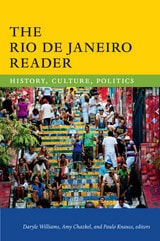
The Rio de Janeiro Reader
History, Culture, PoliticsDaryle Williams, Amy Chazkel, and Paulo Knauss, editors
Duke University Press, 2016
The Rise and Fall of the Paraguayan Republic, 1800–1870
By John Hoyt Williams
University of Texas Press, 1979
Paraguay plays a very small role in the modern world, but for part of the nineteenth century it was a significant regional force. Between 1800 and 1865 it changed from an imperial backwater into a dynamic, dictator-led, financially sound nation. Then came the terrible War of the Triple Alliance, and by 1870 Paraguay had virtually been destroyed.
John Hoyt Williams re-creates the era’s people, places, and events in rich detail and a vigorous style, but this is much more than a mere narrative. His archival research in Paraguay and several other countries enables him to offer new facts and interpretations, correct a number of misapprehensions, and explode a few myths.
He also provides the clearest, most objective portraits available of the three extraordinary men who ruled Paraguay during this time: Dr. José Gaspar de Francia, “El Supremo”; Carlos Antonio López, “the Corpulent Despot”; and López’s flamboyant son Francisco Solano López. Discussions of social, economic, and cultural conditions round out a masterly account of a remarkable historical period.
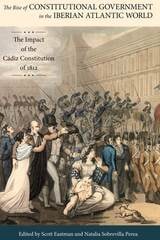
The Rise of Constitutional Government in the Iberian Atlantic World
The Impact of the Cádiz Constitution of 1812Scott Eastman
University of Alabama Press, 2015
Exploring the constitution that transformed governance, citizenship, and political culture across the Hispanic Atlantic world.
In March 1812, while Napoleon’s brother Joseph sat on the throne of Spain and the armies of France occupied much of the country, legislators elected from Spain and its overseas territories met in the Andalusian city of Cádiz. There, as the cornerstone of a government in exile, they drafted and adopted the first liberal constitution in the Hispanic world, a document that became known as the Cádiz Constitution of 1812.
The 1812 Constitution was extremely influential in and beyond Europe, and this collection of essays explores how its enduring legacy not only shaped the history of state-building, elections, and municipal governance in Iberian America, but also affected national identities and citizenship as well as the development of race and gender in the region.
A bold blueprint for governing a global, heterogeneous monarchy, the Constitution represented a rupture with Spain’s Antiguo Régimen (Old Regime) in numerous ways—in the limits it placed on the previously autocratic Bourbon monarchs, in the admission to its governing bodies of deputies from Spain’s American viceroyalties as equals, and in its framers’ vociferous debate over the status of castas (those of mixed ancestry) and slaves. The Rise of Constitutional Government in the Iberian Atlantic World covers these issues and adopts a transatlantic perspective that recovers the voices of those who created a vibrant political culture accessible to commoners and elite alike.
The bicentenary of the Constitution of 1812 offered scholars an excellent moment to reexamine the form and role of constitutions across the Spanish-speaking world. Constitutionalism remains a topic of intense debate in Latin America, while contemporary Spain itself continues to seek ways to balance a strong central government with centripetal forces in its regions, notably the Basque and Catalan provinces. The multifaceted essays compiled here by Scott Eastman and Natalia Sobrevilla Perea both shed new light on the early, liberal Hispanic societies and show how the legacies of those societies shape modern Spain and Latin America.
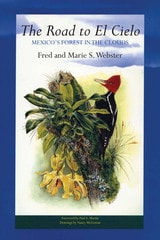
The Road to El Cielo
Mexico's Forest in the CloudsBy Fred and Marie S. Webster
University of Texas Press, 2002
Hidden high in the Sierra de Guatemala mountain range of northeastern Mexico in the state of Tamaulipas is the northernmost tropical cloud forest of the Western Hemisphere. Within its humid oak-sweetgum woodlands, tropical and temperate species of plants and animals mingle in rare diversity, creating a mecca for birders and other naturalists.
Fred and Marie Webster first visited Rancho del Cielo, cloud forest home of Canadian immigrant Frank Harrison, in 1964, drawn by the opportunity to see such exotic birds as tinamous, trogons, motmots, and woodcreepers only 500 miles from their Austin, Texas, home. In this book, they recount their many adventures as researchers and tour leaders from their base at Rancho del Cielo, interweaving their reminiscences with a history of the region and of the struggle by friends from both sides of the border to have some 360,000 acres of the mountain declared an area protected from exploitation—El Cielo Biosphere Reserve. Their firsthand reporting, enlivened with vivid tales of the people, land, and birds of El Cielo, adds an engagingly personal chapter to the story of conservation in Mexico.
The Road to OPEC
United States Relations with Venezuela, 1919-1976By Stephen G. Rabe
University of Texas Press, 1982
On September 10, 1960, Venezuela spearheaded the formation of the Organization of Petroleum Exporting Countries (other original members included Saudi Arabia, Iran, Iraq, and Kuwait). However, in a world abundantly supplied with oil, the United States could and did ignore Venezuelan suggestions that OPEC and the consuming nations work together to control production and to increase prices. Then, in late 1973, OPEC sent shudders throughout the world economy, and an energy crisis struck with full force. Emboldened by the power of their oil cartel, Venezuelan leaders denounced the old economic relationship with the United States, nationalized U.S. oil and steel holdings, and fashioned a foreign economic policy that differed sharply from Washington's.
The Road to OPEC is the story of the fiery debates among U.S. oil companies, the Department of State, and the Venezuelan government over oil policies—clashes that led Venezuela to establish OPEC and to nationalize U.S.-owned properties. In addition, this is the first study of twentieth-century Venezuelan-U.S. relations. Its focus on oil diplomacy is placed within the context of key U.S. policies toward Latin America and such programs as the Open Door, the Good Neighbor, and the Alliance for Progress. The author also provides insight into both the politics of the contemporary energy crisis and the growing split between raw-material producers and their industrial customers.
The Road to OPEC is based on extensive archival research, as well as the author's successful use of the Freedom of Information Act to declassify files of such agencies as the National Security Council and the CIA.
The Royal Treasuries of the Spanish Empire in America
Vol. 1: PeruJohn J. Tepaske and Herbert S. Klein, editors
Duke University Press, 1982
The Royal Treasuries of the Spanish Empire in America
Vol. 2: Upper Peru (Bolivia)John J. Tepaske and Herbert S. Klein, editors
Duke University Press, 1982
The Royal Treasuries of the Spanish Empire in America
Vol. 3: Chile and Rio de la PlataJohn J. Tepaske and Herbert S. Klein, editors
Duke University Press, 1982
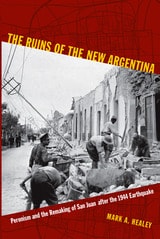
The Ruins of the New Argentina
Peronism and the Remaking of San Juan after the 1944 EarthquakeMark A. Healey
Duke University Press, 2011

The Rule of Law in Latin America
The International Promotion of Judicial ReformEdited by Pilar Domingo and Rachel Sieder
University of London Press, 2001
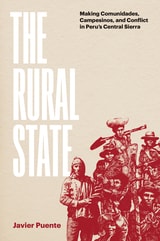
The Rural State
Making Comunidades, Campesinos, and Conflict in Peru's Central SierraJavier Puente
University of Texas Press, 2022
2023 Marysa Navarro Best Book Prize, New England Council of Latin American Studies (NECLAS)
A study of the intersection of rural populations, state formation, and the origins of political conflict in Peru.
On the eve of the twentieth century, Peru seemed like a profitable and yet fairly unexploited country. Both foreign capitalists and local state makers envisioned how remote highland areas were essential to a sustainable national economy. Mobilizing Andean populations lay at the core of this endeavor. In his groundbreaking book, The Rural State, Javier Puente uncovers the surprising and overlooked ways that Peru’s rural communities formed the political nation-state that still exists today.
Puente documents how people living in the Peruvian central sierra in the twentieth century confronted emerging and consolidating powers of state and capital and engaged in an ongoing struggle over increasingly elusive subsistence and autonomies. Over the years, policy, politics, and social turmoil shaped the rural, mountainous regions of Peru until violent unrest, perpetrated by the Shining Path and other revolutionary groups, unveiled the extent, limits, and fractures of a century-long process of rural state formation. Examining the conflicts between one rural community and the many iterations of statehood in the central sierra of Peru, The Rural State offers a fresh perspective on how the Andes became la sierra, how pueblos became comunidades, and how indígenas became campesinos.
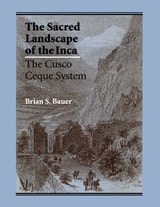
The Sacred Landscape of the Inca
The Cusco Ceque SystemBy Brian S. Bauer
University of Texas Press, 1998
The ceque system of Cusco, the ancient capital of the Inca empire, was perhaps the most complex indigenous ritual system in the pre-Columbian Americas. From a center known as the Coricancha (Golden Enclosure) or the Temple of the Sun, a system of 328 huacas (shrines) arranged along 42 ceques (lines) radiated out toward the mountains surrounding the city. This elaborate network, maintained by ayllus (kin groups) that made offerings to the shrines in their area, organized the city both temporally and spiritually.
From 1990 to 1995, Brian Bauer directed a major project to document the ceque system of Cusco. In this book, he synthesizes extensive archaeological survey work with archival research into the Inca social groups of the Cusco region, their land holdings, and the positions of the shrines to offer a comprehensive, empirical description of the ceque system. Moving well beyond previous interpretations, Bauer constructs a convincing model of the system's physical form and its relation to the social, political, and territorial organization of Cusco.
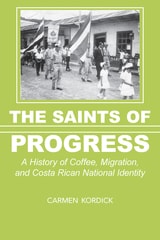
The Saints of Progress
A History of Coffee, Migration, and Costa Rican National IdentityCarmen Kordick
University of Alabama Press, 2019
The Saints of Progress: A History of Coffee, Migration, and Costa Rican National Identity chronicles the development of the Tarrazú Valley, a historically remote—although internationally celebrated—coffee-growing region. Carmen Kordick’s work traces the development of this region from the early nineteenth century to the first decades of the twenty-first century to consider the nation-building process from the margins, while also questioning traditional scholarly works that have reproduced, rather than deconstructed, Costa Rica’s exceptionalist national mythology, which hail Costa Rica as Central America’s “white,” democratic, nonviolent, and egalitarian republic.
In this compelling political, economic, and lived history, Kordick suggests that Costa Rica’s exceptionalist and egalitarian mythology emerged during the Cold War, as revolution, civil war, military dictatorship, and state violence plagued much of Central America. From the vantage point of Costa Rica’s premier coffee-producing region, she examines local, national, and transnational processes. This deeply textured narrative details the inauguration of coffee capitalism, which heightened existing class divisions; a successful armed revolt against the national government, which forged the current political regime; and the onset of massive out-migration to the United States.
Kordick’s research incorporates more than one hundred oral histories and thousands of archival sources gathered in both Costa Rica and the United States to produce a human history of Costa Rica’s past. Her work on the recent past profiles the experiences of migrants in the United States, mostly in New Jersey, where many undocumented Costa Ricans find low-paid work in the restaurant and landscaping sectors. The result is a fine-grained examination of Tarrazú’s development from the 1820s to the present that reshapes traditional understandings of Costa Rica and its national past.
The Sanitation of Brazil
Nation, State, and Public Health, 1889-1930Gilberto Hochman
University of Illinois Press, 2016
The School of the Americas
Military Training and Political Violence in the AmericasLesley Gill
Duke University Press, 2004
Based on her unprecedented level of access to the School of the Americas, Gill describes the School’s mission and training methods and reveals how its students, alumni, and officers perceive themselves in relation to the dirty wars that have raged across Latin America. Assessing the School’s role in U.S. empire-building, she shows how Latin America’s brightest and most ambitious military officers are indoctrinated into a stark good-versus-evil worldview, seduced by consumer society and the “American dream,” and enlisted as proxies in Washington’s war against drugs and “subversion.”
The Scramble for the Amazon and the "Lost Paradise" of Euclides da Cunha
Susanna B. Hecht
University of Chicago Press, 2013
The Search for the Codex Cardona
Arnold J. Bauer
Duke University Press, 2009
Bauer first saw the Codex Cardona in 1985 in the Crocker Nuclear Laboratory at the University of California, Davis, where scholars from Stanford and the University of California were attempting to establish its authenticity. Allowed to gently lift a few pages of this ancient treasure, Bauer was hooked. By 1986, the Codex had again disappeared from public view. Bauer’s curiosity about the Codex and its whereabouts led him down many forking paths—from California to Seville and Mexico City, to the Firestone Library in Princeton, to the Getty Museum in Los Angeles and Christie’s in New York—and it brought him in contact with an international cast of curators, agents, charlatans, and erudite book dealers. The Search for the Codex Cardona is a mystery that touches on issues of cultural patrimony, the workings of the rare books and manuscripts trade, the uncertainty of archives and evidence, and the ephemerality of the past and its remains.
The Second Conquest of Latin America
Coffee, Henequen, and Oil during the Export Boom, 1850-1930Edited by Steven C. Topik and Allen Wells
University of Texas Press, 1997
Between 1850 and 1930, Latin America's integration into the world economy through the export of raw materials transformed the region. This encounter was nearly as dramatic as the conquistadors' epic confrontation with Native American civilizations centuries before. An emphasis on foreign markets and capital replaced protectionism and self-sufficiency as the hemisphere's guiding principles. In many ways, the means employed during this period to tie Latin America more closely to western Europe and North America resemble strategies currently in vogue. Much can be learned from analyzing the first time that Latin Americans embraced export-led growth.
This book focuses on the impact of three key export commodities: coffee, henequen, and petroleum. The authors concentrate on these rather than on national economies because they illustrate more concretely the interaction between the environment, natural and human resources, and the world economy. By analyzing how different products spun complex webs of relationships with their respective markets, the essays in this book illuminate the tensions and contradictions found in the often conflictive relationship between the local and the global, between agency and the not-so-invisible hand. Ultimately, the contributors argue that the results of the "second conquest" were not one-sided as Latin Americans and foreigners together forged a new economic order—one riddled with contradictions that Latin America is still attempting to resolve today.
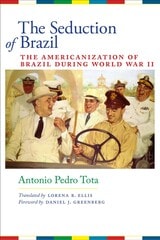
The Seduction of Brazil
The Americanization of Brazil during World War IIBy Antonio Pedro Tota
University of Texas Press, 2009
Following completion of the U.S. air base in Natal, Brazil, in 1942, U.S. airmen departing for North Africa during World War II communicated with Brazilian mechanics with a thumbs-up before starting their engines. This sign soon replaced the Brazilian tradition of touching the earlobe to indicate agreement, friendship, and all that was positive and good—yet another indication of the Americanization of Brazil under way during this period.
In this translation of O Imperialismo Sedutor, Antonio Pedro Tota considers both the Good Neighbor Policy and broader cultural influences to argue against simplistic theories of U.S. cultural imperialism and exploitation. He shows that Brazilians actively interpreted, negotiated, and reconfigured U.S. culture in a process of cultural recombination. The market, he argues, was far more important in determining the nature of this cultural exchange than state-directed propaganda efforts because Brazil already was primed to adopt and disseminate American culture within the framework of its own rapidly expanding market for mass culture. By examining the motives and strategies behind rising U.S. influence and its relationship to a simultaneous process of cultural and political centralization in Brazil, Tota shows that these processes were not contradictory, but rather mutually reinforcing.
The Seduction of Brazil brings greater sophistication to both Brazilian and American understanding of the forces at play during this period, and should appeal to historians as well as students of Latin America, culture, and communications.

The Senses of Democracy
Perception, Politics, and Culture in Latin AmericaBy Francine R. Masiello
University of Texas Press, 2018
In The Senses of Democracy, Francine R. Masiello traces a history of perceptions expressed in literature, the visual arts, politics, and history from the start of the nineteenth century to the present day. A wide transnational landscape frames the book along with an original and provocative thesis: when the discourse on democracy is altered—when nations fall into crisis or the increased weight of modernity tests minds and nerves—the representation of our sensing bodies plays a crucial role in explaining order and rebellion, cultural innovation, and social change.
Taking a wide arc of materials—periodicals, memoirs, political proclamations, and travel logs, along with art installations and fiction—and focusing on the technologies that supplement and enhance human perception, Masiello looks at the evolution of what she calls “sense work” in cultural texts, mainly from Latin America, that wend from the heights of romantic thought to the startling innovations of modernism in the early twentieth century and then to times of posthuman experience when cyber bodies hurtle through globalized space and human senses are reproduced by machines. Tracing the shifting debates on perceptions, The Senses of Democracy offers a new paradigm with which to speak of Latin American cultural history and launches a field for the comparative study of bodies, experience, pleasure, and pain over the continental divide. In the end, sense work helps us to understand how culture finds its location.
The Shape of Inca History
Narrative and Architecture in an Andean EmpireSusan A. Niles
University of Iowa Press, 1999
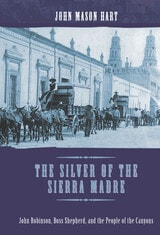
The Silver of the Sierra Madre
John Robinson, Boss Shepherd, and the People of the CanyonsJohn Mason Hart
University of Arizona Press, 2008
The Singer's Needle
An Undisciplined History of PanamáEzer Vierba
University of Chicago Press, 2021
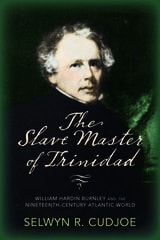
The Slave Master of Trinidad
William Hardin Burnley and the Nineteenth-Century Atlantic WorldSelwyn R. Cudjoe
University of Massachusetts Press, 2018
William Hardin Burnley (1780–1850) was the largest slave owner in Trinidad during the nineteenth century. Born in the United States to English parents, he settled on the island in 1802 and became one of its most influential citizens and a prominent agent of the British Empire. A central figure among elite and moneyed transnational slave owners, Burnley moved easily through the Atlantic world of the Caribbean, the United States, Great Britain, and Europe, and counted among his friends Alexis de Tocqueville, British politician Joseph Hume, and prime minister William Gladstone.
In this first full-length biography of Burnley, Selwyn R. Cudjoe chronicles the life of Trinidad's “founding father” and sketches the social and cultural milieu in which he lived. Reexamining the decades of transition from slavery to freedom through the lens of Burnley's life, The Slave Master of Trinidad demonstrates that the legacies of slavery persisted in the new post-emancipation society.
The Small Matter of Suing Chevron
Suzana Sawyer
Duke University Press, 2022
The Social Conscience of Latin American Writing
By Naomi Lindstrom
University of Texas Press, 1998
A CHOICE Outstanding Academic Book
Literature in Latin America has long been a vehicle for debates over the interpretation of social history, cultural identity, and artistic independence. Indeed, Latin American literature has gained international respect for its ability to present social criticism through works of imaginative creation.
In this comprehensive, up-to-the-minute survey of research and opinion by leading Latin American cultural and literary critics, Naomi Lindstrom examines five concepts that are currently the focus of intense debate among Latin American writers and thinkers. Writing in simple, clear terms for both general and specialist readers of Latin American literature, she explores the concepts of autonomy and dependency, postmodernism, literary intellectuals and the mass media, testimonial literature, and gender issues, including gay and lesbian themes. Excerpts (in English) from relevant literary works illustrate each concept, while Lindstrom also traces its passage from the social sciences to literature.