Results by title
1947 books match the query 'Music' and 315 start with t
The The Theoretical-Practical Elements of Music, Parts III and IV
Francesco Galeazzi Translated with an Introductin and Commentary by Deborah Burton and Gregory W. Harwood
University of Illinois Press, 2012
This volume offers an unprecedented English translation of the second volume of Elementi teorico-practici di musica, with annotations and commentary. The translation is introduced with a study of Galeazzi's life and milieu, the genesis and sources for the Elementi, and its reception through the present day.
The Theater Is in the Street
Politics and Public Performance in 1960s AmericaBradford D. Martin
University of Massachusetts Press, 2004
During the 1960s, the SNCC Freedom Singers, The Living Theatre, the Diggers, the Art Workers Coalition, and the Guerrilla Art Action Group fused art and politics by staging unexpected and uninvited performances in public spaces. Through their activism and the response it provoked, art, theater, and politics began to converge and assume a new visibility in everyday life. While their specific political visions varied, these groups shared the impulse to stage performances and actions publicly—"in the streets"—eschewing museums, theaters, and other conventional halls of culture. Bradford D. Martin offers detailed portraits of each of these groups and examines why they embraced public performance as a vehicle to express and advance their politics.
At a time when the New Left and the counterculture were on the rise, these artists reflected the decade's political and cultural radicalism and helped to define a new aesthetic. Civil rights activists mobilized singing in the struggle for desegregation, introducing a vibrant musical form into the public space. The Living Theatre culminated an arduous quest to mesh artistic and political goals, leading audiences from theaters into the streets to begin the “beautiful nonviolent anarchist revolution.” The Diggers playfully engaged San Francisco's counterculture in politics with their carnivalesque public actions. The Art Workers Coalition and the Guerrilla Action Art Group sought to disrupt the conventional art world, mounting protests in and around New York City museums.
By questioning the values and assumptions that separated art from politics, these groups not only established public performance as a legitimate aesthetic but also provided a new creative vocabulary for future generations of artists. Their continued involvement with the women's liberation movement, rural communes, and political street theater into the 1970s and beyond challenges the popular myth that activists disengaged from politics after the 1960s.
The Theater Will Rock
A History of the Rock Musical, from Hair to HedwigElizabeth L. Wollman
University of Michigan Press, 2010
"A much-needed study of the impact of rock music on the musical theater and its resulting challenges, complexities, failures, and successes. Anyone interested in Broadway will learn a great deal from this book."
---William Everett, author of The Musical: A Research Guide to Musical Theatre
"As Wollman weaves her historical narrative, she compellingly returns to . . . the conflict between the aesthetics and ideologies of rock music and the disciplined and commercial practices of the musical stage."
---Theatre Research International
"This well-written account puts the highs and lows of producing staged rock musicals in New York City into perspective and is well worth reading for the depth of insight it provides."
---Studies in Musical Theatre
Despite the genre’s influence and fame, there are still some critics who claim that the term “rock musical” is an oxymoron. The relationship between rock and the musical theater has been stormy from the start, and even the comparatively recent success of Rent has done little to convince theater producers that rock musicals are anything but highly risky ventures. Elizabeth L. Wollman explores the reasons behind these problematic connections and looks at the socioeconomic forces that underlie aesthetic decisions. She weighs the influence on the rock musical by mass media, sound, and recording technology, and the economic pressures that have affected New York theater in general over the past three decades. Finally, Wollman offers a meditation on the state of the musical, its relation to rock, and, ultimately, its future.
Packed with candid commentary by members of New York's vibrant theater community, The Theater Will Rock traces the rock musical’s evolution over nearly fifty years, in popular productions such as Hair, The Who's Tommy, Jesus Christ Superstar, The Rocky Horror Picture Show, Little Shop of Horrors, Rent, and Mamma Mia!—and in notable flops such as The Capeman.
Elizabeth L. Wollman is Assistant Professor of Music at Baruch College of the City University of New York.
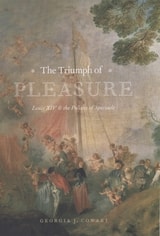
The Triumph of Pleasure
Louis XIV and the Politics of SpectacleGeorgia J. Cowart
University of Chicago Press, 2008
With bold revisionist strokes, Cowart traces this strain of artistic dissent through the comedy-ballets of Jean-Baptiste Lully and Molière, the late operatic works of Lully and the operas of his sons, the opera-ballets of André Campra and his contemporaries, and the related imagery of Antoine Watteau’s well-known painting The Pilgrimage to Cythera. She contends that through a variety of means, including the parody of old-fashioned court entertainments, these works reclaimed traditional allegories for new ideological aims, setting the tone for the Enlightenment. Exploring these arts from the perspective of spectacle as it emerged from the court into the Parisian public sphere, Cowart ultimately situates the ballet and related genres as the missing link between an imagery of propaganda and an imagery of political protest.
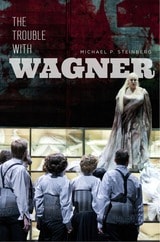
The Trouble with Wagner
Michael P. Steinberg
University of Chicago Press, 2018
Drawing on decades of engagement with Wagner and of experience teaching opera across disciplines, The Trouble with Wagner is packed with novel insights for experts and interested readers alike.
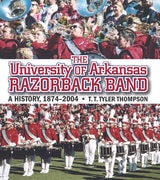
The University of Arkansas Razorback Band
A History, 1874-2004T.T. Tyler Thompson
University of Arkansas Press, 2004
From the small Cadet Band that supported the school’s military department to the “best in sight and sound” Marching Razorbacks that are a staple of the university’s athletic program, the band has provided the soundtrack to the University of Arkansas.
The rich history of the Razorback Band has spanned almost the entire existence of the University of Arkansas. This book documents the distinguished 130-year history of the band from its humble beginnings in 1874 as an adjunct to the military cadet squad to the major college organization that it is today. Both as a supporting player of the military and ROTC programs and of the athletic department, the Razorback Band has provided the spirited musical excitement required through the years, as well as performing concerts on its own for an appreciative student body and community audience with the Concert Band and Wind Ensemble. Add to that the parallel story of the evolution of an exciting basketball and volleyball spirit band—the Hogwild Band—and you have in this lavishly illustrated book the first-ever history of the music makers of the University of Arkansas.
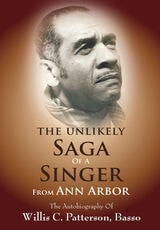
The Unlikely Saga of a Singer from Ann Arbor
The Autobiography of Willis C. Patterson, BassoWillis Patterson
Michigan Publishing Services, 2015
The book’s main character begins his life, similar to a diamond in the rough, and over time evolves into a rare gem at maturity. These pages will reveal how Willis Patterson of Ann Arbor, Michigan developed from somewhat of a lost child in the 1930s into a: sophisticated academician (Ph.D. in Higher Education Administration and Supervision from Wayne State University in Detroit, MI); a superior vocal performer; Voice Department Chair, Fulbright Scholar; esteemed Master Voice Teacher; Choral and Glee Club director extraordinaire; University Leader in the recruitment and retention of Minority students (Voice/Performing/Composition); an established Church Choir Director; and Associate Academic Dean of the School of Music at one of America’s finest universities, the University of Michigan.
This book is about a very humble man of significant stature. Although he was motivated and driven to become the best he could be in his quest for excellence—by kicking open the door of opportunity whenever it was presented (audition ready)—he never forgot his family members or hometown acquaintances.
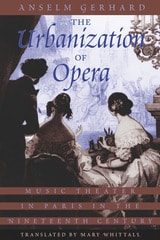
The Urbanization of Opera
Music Theater in Paris in the Nineteenth CenturyAnselm Gerhard
University of Chicago Press, 1998
"An invaluable look at this fascinating genre."—George W. Loomis, Opera News
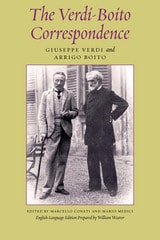
The Verdi-Boito Correspondence
Giuseppe Verdi and Arrigo Boito
University of Chicago Press, 1994
This new edition of the landmark Carteggio Verdi/Boito is at once a valuable resource for all students, teachers, and scholars of opera and a fascinating glimpse of the daily life of European art and artists during the fertile last decades of the 19th century.
Embarking on a 20-year collaboration, Verdi and Boito produced a successful revision of Simon Boccanegra, and two new operas, Otello and Falstaff. They created what many consider to be Verdi's greatest operas, thanks both to Boito's poetry and to his handling of the composer. Here are the day-to-day tasks of creation: poet and composer debating problems of dramatic structure, words, phrases, and meters; altering dialogue as, at the same time, they converse about the wider worlds of art and music. The give and take of artistic creation is rendered fascinatingly.
This edition features a new introduction by Marcello Conati, improvements and updatings to the original edition, and an appendix of undated correspondence. William Weaver's translation is characteristically pitch-perfect; he also provides a short closing sketch of Boito's life after the death of his beloved maestro. Explanatory "linking texts" between the letters create a narrative.
The Vinyl Ain't Final
Hip Hop and the Globalization of Black Popular CultureDipannita Basu and Sidney Lemelle
Pluto Press, 2006
From the front lines of hip hop culture and music in the USA, Britain, France, Japan, Germany, Hawaii, Tanzania, Cuba, Samoa and South Africa, academics, poets, practitioners, journalists, and political commentators explore hip hop -- both as a culture and as a commodity. From the political economy of the South African music industry to the cultural resistance forged by Afro-Asian hip hop, this potent mix of contributors provides a unique critical insight into the implications of hip hop globally and locally. Indispensable for fans of hip hop culture and music, this book will also appeal to anyone interested in cultural production, cultural politics and the implications of the huge variety of forms hip hop encompasses.
Dipa Basu is and Associate Professor of Sociology and Black Studies at Pitzer College, Claremont, California. Her recent publications include 'Sociology of the Color Line' in Peter Ratcliffe, ed. The Politics of Social Science Research: Race, Ethnicity and Social Change (Palgrave Press, 2001).
Sidney Lemelle is an Associate Professor of Black Studies at Pomona College, Claremont, California. He has co-edited with Robin D.G Kelley, Imagining Home: Class, Culture and Nationalism in the African Diaspora (Verso, 1994).
The Viola
Complete Guide for Teachers and StudentsBetsy Mason Barrett
University of Alabama Press, 1996
The second edition is extensively expanded in its graded lists of studies and solos
This book, in its encyclopedic catalog of viola literature in print, and (perhaps most important) in its treatment of the musical and pedagogical aspects of teaching the viola. A work already unique has been augmented in all its major aspects. The excerpts that follow are from reviews of the out-of-print first edition.
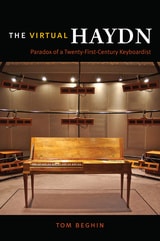
The Virtual Haydn
Paradox of a Twenty-First-Century KeyboardistTom Beghin
University of Chicago Press, 2015
With The Virtual Haydn, Tom Beghin—himself a professional keyboard player—delves deeply into eighteenth-century history and musicology to help us hear a properly complex Haydn. Unusually for a scholarly work, the book is presented in the first person, as Beghin takes us on what is clearly a very personal journey into the past. When a discussion of a group of Viennese sonatas, for example, leads him into an analysis of the contemporary interest in physiognomy, Beghin applies what he learns about the role of facial expressions during his own performance of the music. Elsewhere, he analyzes gesture and gender, changes in keyboard technology, and the role of amateurs in eighteenth-century musical culture.
The resulting book is itself a fascinating, bravura performance, one that partakes of eighteenth-century idiosyncrasy while drawing on a panoply of twenty-first-century knowledge.
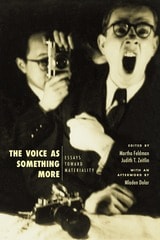
The Voice as Something More
Essays toward MaterialityEdited by Martha Feldman and Judith T. Zeitlin
University of Chicago Press, 2019
Using Mladen Dolar’s influential A Voice and Nothing More as a reference point, The Voice as Something More reorients Dolar’s psychoanalytic analysis around the material dimensions of voices—their physicality and timbre, the fleshiness of their mechanisms, the veils that hide them, and the devices that enhance and distort them. Throughout, the essays put the body back in voice. Ending with a new essay by Dolar that offers reflections on these vocal aesthetics and paradoxes, this authoritative, multidisciplinary collection, ranging from Europe and the Americas to East Asia, from classics and music to film and literature, will serve as an essential entry point for scholars and students who are thinking toward materiality.
The Voice in the Drum
Music, Language, and Emotion in Islamicate South AsiaRichard K. Wolf
University of Illinois Press, 2014
The Voice in the Headphones
David Grubbs
Duke University Press, 2020
The Voice in the Headphones is an experiment in music writing in the form of a long poem centered on the culture of the recording studio. It describes in intricate, prismatic detail one marathon day in a recording studio during which an unnamed musician struggles to complete a film soundtrack. The book extends the form of Grubbs's previous volume Now that the audience is assembled, sharing its goal of musicalizing the language of writing about music. Mulling the insight that “studio is the absence of pushback”—now that no audience is assembled—The Voice in the Headphones details one musician's strategies for applying the requisite pressure to the proceedings, for making it count. The Voice in the Headphones is both a literary work and a meditation on sound recording, delivered at a moment in which the commercial recording studio shades into oblivion. It draws upon Grubbs's own history of several decades as a recording artist, and its location could be described as every studio in which he has set foot.
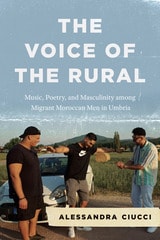
The Voice of the Rural
Music, Poetry, and Masculinity among Migrant Moroccan Men in UmbriaAlessandra Ciucci
University of Chicago Press, 2022
Umbria is known to most Americans for its picturesque rolling hills and medieval villages, but to the many migrant Moroccan men who travel there, Umbria is better known for the tobacco fields, construction sites, small industries, and the outdoor weekly markets where they work. Marginalized and far from their homes, these men turn to Moroccan traditions of music and poetry that evoke the countryside they have left— l-‘arubiya, or the rural. In this book, Alessandra Ciucci takes us inside the lives of Moroccan workers, unpacking the way they share a particular musical style of the rural to create a sense of home and belonging in a foreign and inhospitable nation. Along the way, she uncovers how this culture of belonging is not just the product of the struggles of migration, but also tied to the reclamation of a noble and virtuous masculine identity that is inaccessible to Moroccan migrants in Italy.
The Voice of the Rural allows us to understand the contemporary experiences of migrant Moroccan men by examining their imagined relationship to the rural through sound, shedding new light on the urgent issues of migration and belonging.

The Why of Music
Dialogues in an Unexplored Region of AppreciationDonald N. Ferguson
University of Minnesota Press, 1969
The Why of Music was first published in 1969. Minnesota Archive Editions uses digital technology to make long-unavailable books once again accessible, and are published unaltered from the original University of Minnesota Press editions.
In his many tears of teaching and writing about music Professor Ferguson has given much thought to the question of the why of music — why does music affect us as it does, why are we deeply moved by some music by not by other music, what is it about music that "sends" us, and where does it send us? In this book he explores such questions in depth and provides intriguing answers. The discussions are presented in the form of dialogues between the author and several friends.
As Professor Ferguson explains, the book is intended to take the reader on a guided tour, a tour which follows, in part, the familiar roads of formal music appreciation but which leads more often into byways where, almost hidden by the brilliant Hows that line the more familiar roads, lurks the essential Why of music. He describes this Why as the fertilizing commerce between music and human experience—a portrayal, not of the tangible facts of experience, but of the concern aroused by our encounter with those facts. He explains that while avant-garde abstractionism is concerned only with music as art—a concern too specialized for the general music lover to grasp and too narrow to sustain interest—the Why of enduring music lies in its endeavor to portray experience as it lives in Everyman's mind.
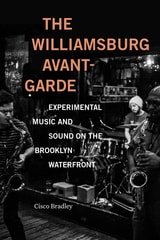
The Williamsburg Avant-Garde
Experimental Music and Sound on the Brooklyn WaterfrontCisco Bradley
Duke University Press, 2023
The Work of Music
Labor and Creativity in Germany's Long Nineteenth CenturyCelia Applegate
University of Wisconsin Press, 2025
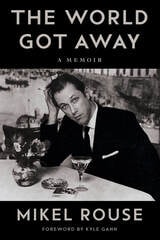
The World Got Away
A MemoirMikel Rouse. Foreward by Kyle Gann
University of Illinois Press, 2024
One of the most innovative composers of his generation, Mikel Rouse is known for a trilogy of operas that includes Dennis Cleveland and a gift for superimposing pop vernaculars onto avant-garde music. This memoir channels Rouse’s high energy personality into an exuberant account of the precarity and pleasures of artistic creation. Raconteur and starving artist, witty observer and acclaimed musician, Rouse emerged from the legendary art world of 1980s New York to build a forty-year career defined by stage and musical successes, inexhaustible creativity, and a support network of famous faces, loyal allies, and high art hustlers. Rouse guides readers through a working artists’ hardscrabble life while illuminating the unromantic truth that a project’s reception may depend on a talented cast and crew but can depend on reliable air conditioning.
Candid and hilarious, The World Got Away is a one-of-a-kind account of a creative life fueled by talent, work, and luck.

The emergence of post-hybrid identities
a comparative analysis of national identity formations in Germany’s hip-hop cultureMarissa Munderloh
University of London Press, 2017
Theatre Symposium, Vol. 9
Theatre and Politics in the Twentieth CenturyJohn C. Countryman
University of Alabama Press, 2001
This collection of essays explores how drama can teach political principles and entertain at the same time.
Political commentary is possible through "variety" theatre, this volume contends. Compiled from the April 2000 Theatre Symposium held on the campus of the University of Tennessee-Knoxville, this collection of essays presents a compelling mix of theoretical and practical viewpoints from a broad diversity of scholars from around the country.
What remains to be learned about the political objectives of Brecht's Lehrstriucke? What political power is resident in the satirical humor of Dario Fo's drama? What can we learn from Mordecai Gorelik's political/artistic philosophy that might inform contemporary practice? What was the impact of political theatre on Broadway between the wars? Is Thornton Wilder's Our Town the play we've always imagined it to be, or does it challenge the politics of its time? What is the role of theatre activism in raising consciousness about gender politics? These are only some of the questions addressed by this lively, informative discussion.
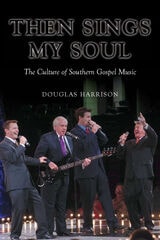
Then Sings My Soul
The Culture of Southern Gospel MusicDouglas Harrison
University of Illinois Press, 2012
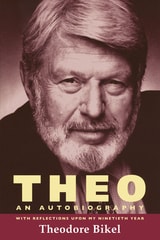
Theo
An AutobiographyTheodore Bikel
University of Wisconsin Press, 2014
In this edition celebrating Bikel’s ninetieth birthday, he looks back in a new chapter at his youth in prewar Vienna, his adolescent years, his continued joy in performing timeless songs, his return to Vienna in recent years, and the active life that keeps him feeling young even after nearly a century of adventure.

Theorizing Music for Antiracist Futures
Key Terms and Critical MethodsEdited by Jade Conlee and Tatiana Koike
University of Michigan Press, 2027
Every day, musicians and teachers use terms like “pitch,” “scale,” and “meter” to describe what music is made of and how it works. But what are the stories behind our musical terminology? Theorizing Music for Antiracist Futures contends that seemingly neutral musical terms are entangled with human histories of oppression and resistance. Bringing together scholars from music theory, ethnomusicology, music history, and popular music studies, the book reads music history alongside critical philosophies of race and ethnic studies to illuminate the power structures that inform musical description and analysis across disciplines. With each chapter focusing on a single musical term, topics covered include: how ancient Greek philosophers used “harmony” to promote peaceful relationships between the ruling class and their subordinates; how sixteenth-century European colonizers perceived Indigenous groups as “dissonant;” and how nineteenth-century scholars measured “pitch” to form now-discredited scientific proof of Europe’s cognitive and musical superiority over its colonized populations. Other chapters take a global perspective, examining theorizations of meter, scale, and musical texture in Japan, Iraq, Malawi, Georgia, and Central Africa. Theorizing Music for Antiracist Futures brings these histories to light and is a crucial volume in creating antiracist futures for music studies.
Theory of African Music, Volume I
Gerhard Kubik
University of Chicago Press, 2010
Taken together, these comprehensive volumes offer an authoritative account of the music of Africa. One of the most prominent experts on the subject, Gerhard Kubik draws on his extensive travels and three decades of study in many parts of the continent to compare and contrast a wealth of musical traditions from a range of cultures.
In the first volume, Kubik describes and examines xylophone playing in southern Uganda and harp music from the Central African Republic; compares multi-part singing from across the continent; and explores movement and sound in eastern Angola. And in the second volume, he turns to the cognitive study of African rhythm, Yoruba chantefables, the musical Kachamba family of Malaŵi, and African conceptions of space and time.
Each volume features an extensive number of photographs and is accompanied by a compact disc of Kubik’s own recordings. Erudite and exhaustive, Theory of African Music will be an invaluable reference for years to come.
Theory of African Music, Volume II
Gerhard Kubik
University of Chicago Press, 2010
In this second volume, Kubik explores a variety of topics, including Yoruba chantefables, the musical Kachamba family of Malawˆ i, and the cognitive study of African rhythm. Drawing on his remarkable ability to make cross-cultural comparisons, Kubik illuminates every facet of the African understanding of rhythm, from timing systems to elementary pulsation. His analysis of tusona ideographs in Luchazi culture leads to an exploration of African space/time concepts that synthesizes his theories of art, rhythm, and culture.
Featuring a large number of photographs and accompanied by a compact disc of Kubik’s own recordings, Theory of African Music, Volume II, will be an invaluable reference for years to come.
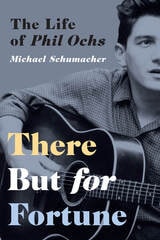
There But for Fortune
The Life of Phil OchsMichael Schumacher
University of Minnesota Press, 2018
The life and influence of singer Phil Ochs
Phil Ochs burst onto the American music scene just as the popularity of folk music was breaking through on the national consciousness. Along with friend and rival Bob Dylan, Ochs wrote some of the most compelling topical music of his time. In There But for Fortune, Michael Schumacher explores the life and career of a singer, songwriter, and political activist whose music resonates today as much as it applied to a divided country a half-century ago. His politically charged songs were covered by Pete Seeger; Joan Baez; Gordon Lightfoot; Peter, Paul and Mary; and a host of others, and such songs as “I Ain’t Marching Anymore” and “The War Is Over” became anthems of the anti–Vietnam War movement. He seemed to be performing everywhere, from concerts on college campuses to huge demonstrations, culminating with an appearance at the Democratic National Convention in Chicago in 1968.
But as this biography illustrates in painstaking detail, Ochs suffered from a dark side that gravely affected his life and music. Diagnosed as manic depressive, he shifted between incredible highs and debilitating lows that ultimately drove him to suicide at age 36. To piece together his life story, Schumacher interviewed Ochs’s friends, family members, and fellow musicians; examined his journals and scrapbooks; and even scrutinized his FBI files. While Phil Ochs’s life might have been plagued by downturn and tragedies, his music is an enduring call to activism and fighting for a better future.
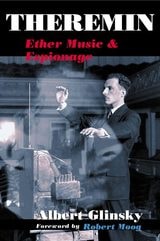
Theremin
Ether Music and EspionageAlbert Glinsky
University of Illinois Press, 2000
A creative genius and prolific inventor, Leon Theremin almost single-handedly launched the field of electronic music in 1920. The theremin--the only musical instrument that is played without being touched--created a sensation worldwide and paved the way for the modern synthesizer. But the otherworldly sound that entranced millions was only part of Theremin's epic life.
As a Soviet scientist, Theremin surrendered his life and work to the service of State espionage. On assignment in Depression-era America, he worked the engines of capitalist commerce while passing data on US industrial technology to the Soviet apparat. Following his sudden disappearance in 1938, Theremin vanished into the top-secret Soviet intelligence machine and was presumed dead for nearly thirty years. Using the same technology that spawned the theremin, he designed bugging devices and a host of other electronic wonders, including an early television and multimedia devices that anticipated performance art and virtual reality by decades.
Albert Glinsky's biography places the inventor at world events stretching from the Russian Revolution through the Cold War to perestroika. Throughout, he spins whimsy and treachery into an astonishing drama of one man's hidden loyalties, mixed motivations, and irrepressibly creative spirit.
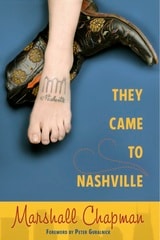
They Came to Nashville
Marshall Chapman
Vanderbilt University Press, 2010
In They Came to Nashville, Chapman records the personal stories of musicians shaping the modern history of music in Nashville, from the mouths of the musicians themselves. The trials, tribulations, and evolution of Music City are on display, as she sits down with influential figures like Kris Kristofferson, Emmylou Harris, and Miranda Lambert, and a dozen other top names, to record what brought each of them to Nashville and what inspired them to persevere. The book culminates in a hilarious and heroic attempt to find enough free time with Willie Nelson to get a proper interview. Instead, she's brought along on his raucous 2008 tour and winds up onstage in Beaumont, Texas singing "Good-Hearted Woman" with Willie.
They Came to Nashville reveals the daily struggle facing newcomers to the music business, and the promise awaiting those willing to fight for the dream.
Co-published with the Country Music Foundation Press
Thinking about Music
An Introduction to the Philosophy of MusicLewis E. Rowell
University of Massachusetts Press, 1983
Examines the nature of music and traces the history of music philosophy from ancient Greece to the twentieth century. Lewis Rowell's Thinking about Music is more than an introduction to the connections between music and other arts, and the philosophical underpinnings of aesthetics.
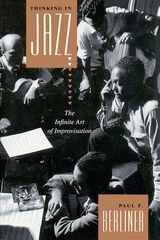
Thinking in Jazz
The Infinite Art of ImprovisationPaul F. Berliner
University of Chicago Press, 1994
The product of more than fifteen years of immersion in the jazz world, Thinking in Jazz combines participant observation with detailed musicological analysis, the author's experience as a jazz trumpeter, interpretations of published material by scholars and performers, and, above all, original data from interviews with more than fifty professional musicians: bassists George Duvivier and Rufus Reid; drummers Max Roach, Ronald Shannon Jackson, and Akira Tana; guitarist Emily Remler; pianists Tommy Flanagan and Barry Harris; saxophonists Lou Donaldson, Lee Konitz, and James Moody; trombonist Curtis Fuller; trumpeters Doc Cheatham, Art Farmer, Wynton Marsalis, and Red Rodney; vocalists Carmen Lundy and Vea Williams; and others. Together, the interviews provide insight into the production of jazz by great artists like Betty Carter, Miles Davis, Dizzy Gillespie, Coleman Hawkins, and Charlie Parker.
Thinking in Jazz overflows with musical examples from the 1920s to the present, including original transcriptions (keyed to commercial recordings) of collective improvisations by Miles Davis's and John Coltrane's groups. These transcriptions provide additional insight into the structure and creativity of jazz improvisation and represent a remarkable resource for jazz musicians as well as students and educators.
Berliner explores the alternative ways—aural, visual, kinetic, verbal, emotional, theoretical, associative—in which these performers conceptualize their music and describes the delicate interplay of soloist and ensemble in collective improvisation. Berliner's skillful integration of data concerning musical development, the rigorous practice and thought artists devote to jazz outside of performance, and the complexities of composing in the moment leads to a new understanding of jazz improvisation as a language, an aesthetic, and a tradition. This unprecedented journey to the heart of the jazz tradition will fascinate and enlighten musicians, musicologists, and jazz fans alike.
Thinking with Sound
A New Program in the Sciences and Humanities around 1900Viktoria Tkaczyk
University of Chicago Press, 2023
When the outside world is silent, all sorts of sounds often come to mind: inner voices, snippets of past conversations, imaginary debates, beloved and unloved melodies. What should we make of such sonic companions? Thinking with Sound investigates a period when these and other newly perceived aural phenomena prompted a far-reaching debate. Through case studies from Paris, Vienna, and Berlin, Viktoria Tkaczyk shows that the identification of the auditory cortex in late nineteenth-century neuroanatomy affected numerous academic disciplines across the sciences and humanities. “Thinking with sound” allowed scholars and scientists to bridge the gaps between theoretical and practical knowledge, and between academia and the social, aesthetic, and industrial domains. As new recording technologies prompted new scientific questions, new auditory knowledge found application in industry and the broad aesthetic realm. Through these conjunctions, Thinking with Sound offers a deeper understanding of today’s second “acoustic turn” in science and scholarship.
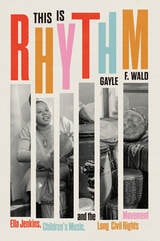
This Is Rhythm
Ella Jenkins, Children’s Music, and the Long Civil Rights MovementGayle F. Wald
University of Chicago Press, 2025
Ella Jenkins was one of the most influential musicians of the twentieth century. Her songs “You’ll Sing a Song and I’ll Sing a Song” and “Who Fed the Chickens?” are classics in the world of children’s music. In a career spanning more than sixty years, she recorded forty albums, won a lifetime-achievement Grammy, and became the best-selling individual artist in the history of Smithsonian Folkways Records, the independent label that played a significant role in the 1960s folk revival movement and introduced listeners to Woody Guthrie and Pete Seeger. During her remarkable career, Jenkins joined forces with twentieth-century luminaries such as Odetta, Big Bill Broonzy, Armando Peraza, Bayard Rustin, and Fred Rogers. Despite her wide-reaching influence on children’s music, Ella Jenkins’s sonic civil rights activism isn’t widely known today.
Based on dozens of interviews and access to Ella Jenkins’s personal archives, Gayle F. Wald’s This Is Rhythm shares how Jenkins, a “rhythm specialist” with no formal musical training, became the most prolific and significant American children’s musician of the twentieth century, creating a beloved catalog of songs grounded in values of community-building, antiracism, and cultural pluralism. Wald traces how the daughter of southern migrants translated the music of her own Black girlhood on the South Side of Chicago into a form of civil rights activism—a musical education that empowered children by introducing them to Black history, African diasporic rhythms, and a participatory, community-centered approach to music. Wald also discusses how, beginning in 1961, Jenkins built a life with a female partner who supported her materially and emotionally. Although Jenkins did not talk publicly about her sixty-three-year relationship, she opened up to Wald, offering insight into how a “private” Black woman in the public eye negotiated sexuality in an era before gay and lesbian liberation movements. Throughout her career, her innovative music found its way into thousands of community centers, classrooms, and concert venues, and her “call-and-response” method has influenced and empowered generations of children and adults.
A beautifully written tribute to Ella Jenkins’s legacy, this biography illustrates her impact on children’s music and expands our understanding of folk music’s relationship with social justice. Jenkins used music to build a new world in which children—and adults—are encouraged to listen to each other’s distinct rhythms.
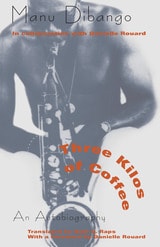
Three Kilos of Coffee
An AutobiographyManu Dibango and Danielle Rouard
University of Chicago Press, 1994
Composer, producer, performer, film score writer and humanitarian for the poor, Manu Dibango defines the "African sound" of modern world music. He has worked with and influenced such artists as Art Blakey, Don Cherry, Herbie Hancock, Harry Belafonte, Paul Simon, and Johnny Clegg. In Africa, he has helped younger musicians, performed benefit concerts, and transcribed for the first time the scores and lyrics of African musicians.
The product of a "mixed marriage" (of different tribes and religions) who owes allegiances to both Africa and Europe, Dibango has always been aware of the ambiguities of his identity. This awareness has informed all of the important events of his life, from his marriage to a white Frenchwoman in 1957, to his creation of an "Afro-music" which joyfully blends blues, jazz, reggae, traditional European and African serenades, highlife, Caribbean and Arabic music. This music addresses the meaning of "Africanness" and what it means to be a Black artist and citizen of the world.
This lively and thoughtful memoir is based on an extensive set of interviews in 1989 with French journalist Danielle Rouard. Richly illustrated with photographs, this book will be a must for readers of jazz biographies, students of African music and ethnomusicology, and all those who are lovers of Manu Dibango's unique artistry and accomplishments.
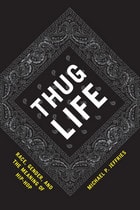
Thug Life
Race, Gender, and the Meaning of Hip-HopMichael P. Jeffries
University of Chicago Press, 2010
Hip-hop has come a long way from its origins in the Bronx in the 1970s, when rapping and DJing were just part of a lively, decidedly local scene that also venerated b-boying and graffiti. Now hip-hop is a global phenomenon and, in the United States, a massively successful corporate enterprise predominantly controlled and consumed by whites while the most prominent performers are black. How does this shift in racial dynamics affect our understanding of contemporary hip-hop, especially when the music perpetuates stereotypes of black men? Do black listeners interpret hip-hop differently from white fans?
These questions have dogged hip-hop for decades, but unlike most pundits, Michael P. Jeffries finds answers by interviewing everyday people. Instead of turning to performers or media critics, Thug Life focuses on the music’s fans—young men, both black and white—and the resulting account avoids romanticism, offering an unbiased examination of how hip-hop works in people’s daily lives. As Jeffries weaves the fans’ voices together with his own sophisticated analysis, we are able to understand hip-hop as a tool listeners use to make sense of themselves and society as well as a rich, self-contained world containing politics and pleasure, virtue and vice.
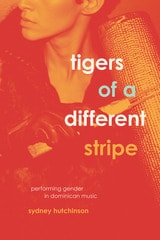
Tigers of a Different Stripe
Performing Gender in Dominican MusicSydney Hutchinson
University of Chicago Press, 2016
Drawing on over a decade of fieldwork in the Dominican Republic and New York among musicians, fans, and patrons of merengue típico—not to mention her own experiences as a female instrumentalist—Hutchinson details a complex nexus of class, race, and artistic tradition that unsettles the typical binary between the masculine and feminine. She sketches the portrait of the classic male figure of the tíguere, a dandified but sexually aggressive and street-smart “tiger,” and she shows how female musicians have developed a feminine counterpart: the tíguera, an assertive, sensual, and respected female figure who looks like a woman but often plays and even sings like a man. Through these musical figures and studies of both straight and queer performers, she unveils rich ambiguities in gender construction in the Dominican Republic and the long history of a unique form of Caribbean feminism.

Tito Puente and the Making of Latin Music
Steven Loza
University of Illinois Press, 1999
He was known as "El Rey"—the king—and he came to epitomize the Latin experience in music, not just to Latinos throughout the United States and Latin America but to a worldwide audience.
Tito Puente and the Making of Latin Music is the first in-depth historical, musical, and cultural look at the career and the influence of a giant of Latin music. Steven Loza brings the man and his music vividly to life through exclusive interviews with Puente and a number of his close associates, including Hilton Ruiz, Ray Santos, Jerry González, Poncho Sanchez, and Joe Conzo, as well as music journalist Max Salazar and former DJ/producer Chico Sesma.
Loza shows how Puente's music evolved in tandem with the crystallization of Latin music into its current compelling mix of Afro-Cuban music, salsa, and Latin jazz. Tracing Puente's innovations as a drummer and a bandleader, Loza defines his influence over the course of half a century on Latin music as well as on other musicians and musical genres. Loza also delineates the social and cultural history of Latin music, exploring questions of nationalism and ethnic expression, the play between musical creation and commercial competition, and the politics of so-called multiculturalism as they bear on Latin music and musicians. The book includes detailed musical analyses and a discography of more than a hundred recordings.
Celebrating a dynamic performer and a genre that is deeply rooted in America's rich ethnic diversity, Tito Puente and the Making of Latin Music reveals all the vibrancy and color of a consummate artist's life, work, and world.
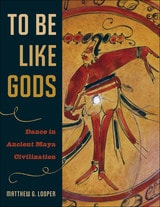
To Be Like Gods
Dance in Ancient Maya CivilizationBy Matthew G. Looper
University of Texas Press, 2009
Winner, Association for Latin American Art Book Award, 2010
The Maya of Mexico and Central America have performed ritual dances for more than two millennia. Dance is still an essential component of religious experience today, serving as a medium for communication with the supernatural. During the Late Classic period (AD 600-900), dance assumed additional importance in Maya royal courts through an association with feasting and gift exchange. These performances allowed rulers to forge political alliances and demonstrate their control of trade in luxury goods. The aesthetic values embodied in these performances were closely tied to Maya social structure, expressing notions of gender, rank, and status. Dance was thus not simply entertainment, but was fundamental to ancient Maya notions of social, religious, and political identity.
Using an innovative interdisciplinary approach, Matthew Looper examines several types of data relevant to ancient Maya dance, including hieroglyphic texts, pictorial images in diverse media, and architecture. A series of case studies illustrates the application of various analytical methodologies and offers interpretations of the form, meaning, and social significance of dance performance. Although the nuances of movement in Maya dances are impossible to recover, Looper demonstrates that a wealth of other data survives which allows a detailed consideration of many aspects of performance. To Be Like Gods thus provides the first comprehensive interpretation of the role of dance in ancient Maya society and also serves as a model for comparative research in the archaeology of performance.
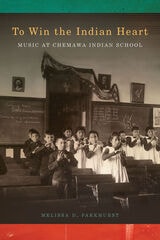
To Win the Indian Heart
Music at Chemawa Indian SchoolMelissa D. Parkhurst
Oregon State University Press, 2014
In To Win the Indian Heart: Music at Chemawa Indian School, Melissa Parkhurst records the history of the school’s musical life. She explores the crucial role music was meant to play in the total transformation of Indian children, and the cultural recovery and resiliency it often inspired instead. Parkhurst chronicles the complex ways in which students, families, faculty, and administrators employed music, both as a tool for assimilation and, conversely, as a vehicle for student resistance—a subject long overlooked in literature on Indian education and the assimilation campaign.
Combining oral histories of Chemawa alumni with archival records of campus life, the book examines the prominent forms of music making at Chemawa—school band, choirs, private lessons, pageants, dance, garage bands, and powwows. Parkhurst traces the trajectory of federal Indian policy, highlighting students’ creative responses and the ways in which music reveals the inherent contradictions in the U.S. government’s assimilation practices.
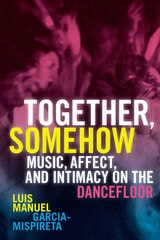
Together, Somehow
Music, Affect, and Intimacy on the DancefloorLuis Manuel Garcia-Mispireta
Duke University Press, 2023
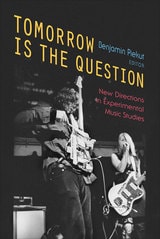
Tomorrow Is the Question
New Directions in Experimental Music StudiesEdited by Benjamin Piekut
University of Michigan Press, 2014
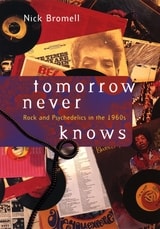
Tomorrow Never Knows
Rock and Psychedelics in the 1960sNick Bromell
University of Chicago Press, 2000
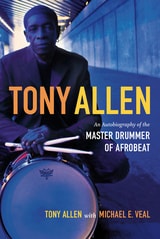
Tony Allen
An Autobiography of the Master Drummer of AfrobeatTony Allen, with Michael E. Veal
Duke University Press, 2013
Allen embraced the drum set, rather than African handheld drums, early in his career, when drum kits were relatively rare in Africa. His story conveys a love of his craft along with the specifics of his practice. It also provides invaluable firsthand accounts of the explosive creativity in postcolonial African music, and the personal and artistic dynamics in Fela's Koola Lobitos and Africa 70, two of the greatest bands to ever play African music.
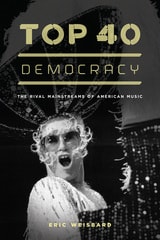
Top 40 Democracy
The Rival Mainstreams of American MusicEric Weisbard
University of Chicago Press, 2014
In Top 40 Democracy, Eric Weisbard studies the evolution of this multicentered pop landscape, along the way telling the stories of the Isley Brothers, Dolly Parton, A&M Records, and Elton John, among others. He sheds new light on the upheavals in the music industry over the past fifteen years and their implications for the audiences the industry has shaped. Weisbard focuses in particular on formats—constructed mainstreams designed to appeal to distinct populations—showing how taste became intertwined with class, race, gender, and region. While many historians and music critics have criticized the segmentation of pop radio, Weisbard finds that the creation of multiple formats allowed different subgroups to attain a kind of separate majority status—for example, even in its most mainstream form, the R&B of the Isley Brothers helped to create a sphere where black identity was nourished. Music formats became the one reliable place where different groups of Americans could listen to modern life unfold from their distinct perspectives. The centers of pop, it turns out, were as complicated, diverse, and surprising as the cultural margins. Weisbard’s stimulating book is a tour de force, shaking up our ideas about the mainstream music industry in order to tease out the cultural importance of all performers and songs.
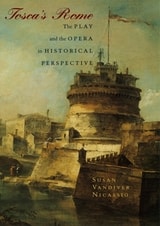
Tosca's Rome
The Play and the Opera in Historical PerspectiveSusan Vandiver Nicassio
University of Chicago Press, 1999
By far the most "historical" opera in the active repertoire, Tosca is set in a very specific time and place: Rome, from June 17 to 18, 1800. But as Nicassio demonstrates, history in Tosca is distorted by nationalism and by the vehement anticlerical perceptions of papal Rome shared by Sardou, Puccini, and the librettists. To provide the historical background necessary for understanding Tosca, Nicassio takes a detailed look at Rome in 1800 as each of Tosca's main characters would have seen it—the painter Cavaradossi, the singer Tosca, and the policeman Scarpia. Finally, she provides a scene-by-scene musical and dramatic analysis of the opera.
"[Nicassio] must be the only living historian who can boast that she once sang the role of Tosca. Her deep knowledge of Puccini's score is only to be expected, but her understanding of daily and political life in Rome at the close of the 18th century is an unanticipated pleasure. She has steeped herself in the period and its prevailing culture-literary, artistic, and musical-and has come up with an unusual, and unusually entertaining, history."—Paul Bailey, Daily Telegraph
"In Tosca's Rome, Susan Vandiver Nicassio . . . orchestrates a wealth of detail without losing view of the opera and its pleasures. . . . Nicassio aims for opera fans and for historians: she may well enthrall both."—Publishers Weekly
"This is the book that ranks highest in my estimation as the most in-depth, and yet highly entertaining, journey into the story of the making of Tosca."—Catherine Malfitano
"Nicassio's prose . . . is lively and approachable. There is plenty here to intrigue everyone-seasoned opera lovers, musical novices, history buffs, and Italophiles."—Library Journal
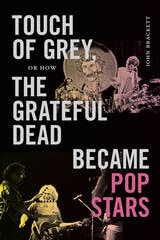
Touch of Grey, or How the Grateful Dead Became Pop Stars
John Brackett
Duke University Press, 2026
Touch of Grey, or How the Grateful Dead Became Pop Stars tells the story of how one song transformed the popular legacy of one of rock’s most iconic musical groups. John Brackett traces the history of the song “Touch of Grey,” beginning with songwriter Robert Hunter’s lyrical sketches and the Grateful Dead’s earliest live arrangements, culminating in the group’s popular renaissance following the release of “Touch of Grey” and the album In the Dark in the summer of 1987. Brackett details how particular recording technologies, notable musical characteristics, modes of attending and listening, and the mechanics of the contemporary music industry shaped this defining moment in the group’s career. Drawing on extensive archival research, Touch of Grey examines how the band and their label worked to produce a hit record, a dynamic music video, and an effective promotional campaign that would propel the Grateful Dead from a group with a devoted cult following to become a pop culture phenomenon.

Tracks on the Trail
Popular Music, Race, and the US PresidencyDana Gorzelany-Mostak
University of Michigan Press, 2023
From Bill Clinton playing his saxophone on The Arsenio Hall Show to Barack Obama referencing Jay-Z’s song “Dirt Off Your Shoulder,” politicians have used music not only to construct their personal presidential identities but to create the broader identity of the American presidency. Through music, candidates can appear relatable, show cultural competency, communicate values and ideas, or connect with a specific constituency. On a less explicit level, episodes such as Clinton’s sax-playing and Obama’s shoulder brush operate as aural and visual articulations of race and racial identity. But why do candidates choose to engage with race in this manner? And why do supporters and detractors on YouTube and the Twittersphere similarly engage with race when they create music videos or remixes in homage to their favorite candidates?
With Barack Obama, Ben Carson, Kamala Harris, and Donald Trump as case studies, Tracks on the Trail: Popular Music, Race, and the US Presidency sheds light on the factors that motivate candidates and constituents alike to articulate race through music on the campaign trail and shows how the racialization of sound intersects with other markers of difference and ultimately shapes the public discourse surrounding candidates, popular music, and the meanings attached to race in the 21st century. Gorzelany-Mostak explores musical engagement broadly, including official music in the form of candidate playlists and launch event setlists, as well as unofficial music in the form of newly composed campaign songs, mashups, parodies, and remixes.

Trans-Global Punk Scenes
The Punk Reader Volume 2Edited by Russ Bestley, Mike Dines, Alastair "Gords" Gordon, and Paula Guerra
Intellect Books, 2021
International in scope and analytical in perspective, the chapters offer insight into the dissemination of punk scenes and their form, structure, and contemporary cultural significance in New Zealand, Indonesia, Singapore, Ireland, South Africa, Mexico, the UK, the US, Siberia, and the Philippines.
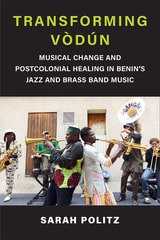
Transforming Vòdún
Musical Change and Postcolonial Healing in Benin's Jazz and Brass Band MusicSarah Politz
University of Michigan Press, 2023