Results by title
1427 books match the query 'Politics' and 382 start with t

The Politics of Religion in an Age of Revival
Studies in Nineteenth-century Europe and Latin AmericaEdited by Austen Ivereigh
University of London Press, 2010
The Politics of Reproduction
Adoption, Abortion, and Surrogacy in the Age of NeoliberalismEdited by Modhumita Roy and Mary Thompson
The Ohio State University Press, 2019
The Politics of Research
Edited by E. Ann Kaplan and George Levine
Rutgers University Press, 1997
The Politics of Resentment
Rural Consciousness in Wisconsin and the Rise of Scott WalkerKatherine J. Cramer
University of Chicago Press, 2016
With The Politics of Resentment, Katherine J. Cramer uncovers an oft-overlooked piece of the puzzle: rural political consciousness and the resentment of the “liberal elite.” Rural voters are distrustful that politicians will respect the distinct values of their communities and allocate a fair share of resources. What can look like disagreements about basic political principles are therefore actually rooted in something even more fundamental: who we are as people and how closely a candidate’s social identity matches our own. Using Scott Walker and Wisconsin’s prominent and protracted debate about the appropriate role of government, Cramer illuminates the contours of rural consciousness, showing how place-based identities profoundly influence how people understand politics, regardless of whether urban politicians and their supporters really do shortchange or look down on those living in the country.
The Politics of Resentment shows that rural resentment—no less than partisanship, race, or class—plays a major role in dividing America against itself.
The Politics of Responsibility
Chad Lavin
University of Illinois Press, 2007
Politics cannot function without responsibility, but there have been serious disagreements about how responsibility is to be understood and huge controversies about how it is to be distributed, rewarded, legislated, and enforced. The liberal notions of personal responsibility that have dominated political thinking in the West for more than a century are rooted in the familiar territory of individual will and causal blame, but these theories have been assailed as no longer adequate to explain or address the political demands of a global social structure. Informed by Marx, Foucault, and Butler, Chad Lavin argues for a "postliberal" theory of responsibility, formulating responsibility as a process that is anchored in a persistent ability to respond, not reproach. Lavin works this formulation through discussions of contemporary political issues such as globalization, police brutality, and abortion.
Rather than assigning individual blame, postliberal responsibility challenges the supposed autonomy of individual subjects by taking structural arguments into account. Lavin concludes that a liberal concept of responsibility gives rise to a moralistic and oppressive approach to social problems, while a postliberal approach highlights a shared responsibility for developing collective solutions to systemic problems. Postliberal responsibility not only suggests more generous and democratic responses to social ills, it also allows us to theorize a greater range of issues that demand political response.
The Politics of Revelation in the English Renaissance
Ester Gilman Richey
University of Missouri Press, 1998
Recognizing that the seventeenth century's volatile debate over apocalyptic interpretation has since become a one-sided discussion, Esther Gilman Richey develops a context that recovers the dynamism so inherent in the writings of the period and provides illuminating details that enhance the prophetic continuum. The Politics of Revelation in the English Renaissance does not ignore the familiar prophetic verse of Spenser and Milton, but it significantly expands the scope of study by examining the interpretations of both men and women who represent a range of ecclesiastical and political perspectives.
Richey rejects Barbara Lewalski's claim that the radical, prophetic writers and metaphysical poets of the seventeenth century drew inspiration from distinct biblical models, the former from the Apocalypse and the latter from the Psalms. Instead she contends that even writers such as Donne and Herbert, whom we have long considered "literary," were in reality using their poetry to participate in the hottest debates of the time.
While the radical writers, such as Spenser and Milton, were immediately responsive to ecclesiastical and political controversies, the conservative, metaphysical poets—Donne, Herbert, and Vaughan—were posing equally politically charged questions: Is the pope Antichrist? Is the Bride of Christ pure? Is the Temple a model of ecclesiastical reform? The writers of the period did not move in divided and distinguished worlds, but in fact constantly responded to one another through poetic and politically charged dialogue.
By drawing from the writings of various individuals, both radical and conformist, male and female, Richey traces the shifting representations of the apocalyptic Bride and Temple over time. Organized chronologically, the chapters of The Politics of Revelation in the English Renaissance reveal the escalating debate among the pacifists, conformists, militants, and feminists. Not only does Richey uncover the prophetic dimension of conformist writers usually described as apolitical and devotional, but she also explores the writings of lesser-known women prophets: Aemilia Lanyer, Mary Cary, Anna Trapnel, and Margaret Fell. In such biblical passages as the apocalyptic "woman clothed with the sun," these early feminists find the authority for their own prophetic speech.
This provocative analysis—at once far-reaching and tightly focused—reveals the complexity of the apocalyptic discourse that transpired among Renaissance writers and poets.
The Politics of Rights
Lawyers, Public Policy, and Political ChangeStuart A. Scheingold
University of Michigan Press, 2004
"Scheingold presents a clear, thoughtful discussion of the ways in which rights can both empower and constrain those seeking change in American society. While much of the writing on rights is abstract and obscure, The Politics of Rights stands out as an accessible and engaging discussion."
-Gerald N. Rosenberg, University of Chicago
"This book has already exerted an enormous influence on two generations of scholars. It has had an enormous influence on political scientists, sociologists, and anthropologists, as well as historians and legal scholars. With this new edition, this influence is likely to continue for still more generations. The Politics of Rights has, I believe, become an American classic."
-Malcolm Feeley, Boalt Hall School of Law, University of California, Berkeley, from the foreword
Stuart A. Scheingold is Professor Emeritus of Political Science at the University of Washington.

The Politics of Same-Sex Marriage
Edited by Craig A. Rimmerman and Clyde Wilcox
University of Chicago Press, 2007
Same-sex marriage emerged in 2004 as one of the hottest issues of the campaign season. But in a severe blow to gay rights advocates, all eleven states that had the issue on the ballot passed amendments banning the practice, and the subject soon dropped off the media’s radar. This pattern of waxing and waning in the public eye has characterized the debate over same-sex marriage since 1996 and the passing of the Defense of Marriage Act. Since then, court rulings and local legislatures have kept the issue alive in the political sphere, and conservatives and gay rights advocates have made the issue a key battlefield in the culture wars.
The Politics of Same-Sex Marriage brings together an esteemed list of scholars to explore all facets of this heated issue, including the ideologies and strategies on both sides of the argument, the public’s response, the use of the issue in political campaigns, and how same-sex marriage fits into the broad context of policy cycles and windows of political opportunity. With comprehensive coverage from a variety of different approaches, this volume will be a vital sourcebook for activists, politicians, and scholars alike.
The Politics of Scale
A History of Rangeland ScienceNathan F. Sayre
University of Chicago Press, 2017
During the late 1880s and early 1890s, a variety of forces—from the Homestead Act of 1862 to the extermination of bison, foreign investment, and lack of government regulation—promoted free-for-all access to and development of the western range, with disastrous environmental consequences. To address the crisis, government agencies turned to scientists, but as Nathan F. Sayre shows, range science grew in a politically fraught landscape. Neither the scientists nor the public agencies could escape the influences of bureaucrats and ranchers who demanded results, and the ideas that became scientific orthodoxy—from fire suppression and predator control to fencing and carrying capacities—contained flaws and blind spots that plague public debates about rangelands to this day. Looking at the global history of rangeland science through the Cold War and beyond, The Politics of Scale identifies the sources of past conflicts and mistakes and helps us to see a more promising path forward, one in which rangeland science is guided less by capital and the state and more by communities working in collaboration with scientists.

The Politics of School Reform, 1870 - 1940
Paul E. Peterson
University of Chicago Press, 1985
Drawing upon rarely examined archival data, Peterson demonstrates that widespread public backing for the common school existed in Atlanta, Chicago, and San Francisco. He finds little evidence of systematic discrimination against white immigrants, at least with respect to classroom crowding and teaching assignments. Instead, his research uncovers solid trade union and other working-class support for compulsory education, adequate school financing, and curricular modernization.
Urban reformers campaigned assiduously for fiscally sound, politically strong public schools. Often they had at least as much support from trade unionists as from business elites. In fact it was the business-backed machine politicians—from San Francisco's William Buckley to Chicago's Edward Kelly—who deprived the schools of funds. At a time when public schools are being subjected to searching criticism and when new educational ideas are gaining political support, The Politics of School Reform, 1870-1940 is a timely reminder of the strength and breadth of those groups that have always supported "free" public schools.
The Politics of Sectarianism in Postwar Lebanon
Bassel Salloukh, Rabie Barakat, Jinan S. Al-Habbal, Lara W. Khattab and Shoghig Mikaelian
Pluto Press, 2015
The Politics of Sectarianism in Postwar Lebanon builds on extensive field work to find the answers to those questions and more. Bassel Salloukh, Lebanon’s leading political scientist, analyses the mix of institutional, clientelist, and discursive practices that sustain the sectarian nature of Lebanon, revealing an expanding sectarian web that occupies ever-more-substantial areas of everyday life in Lebanon. It also highlights the struggles waged by opponents of the system, including women, public sector employees, teachers, students, and NGO-based coalitions, and how their efforts often fail to bear fruit because of sabotage by various systematic forces.
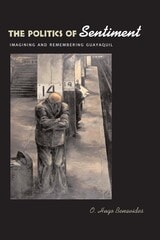
The Politics of Sentiment
Imagining and Remembering GuayaquilBy O. Hugo Benavides
University of Texas Press, 2006
Between 1890 and 1930, the port city of Guayaquil, Ecuador, experienced a liberal revolution and a worker's movement—key elements in shaping the Ecuadorian national identity. In this book, O. Hugo Benavides examines these and other pivotal features in shaping Guayaquilean identity and immigrant identity formation in general in transnational communities such as those found in New York City.
Turn-of-the-century Ecuador witnessed an intriguing combination of transformations: the formation of a national citizenship; extension of the popular vote to members of a traditional underclass of Indians and those of African descent; provisions for union organizing while entering into world market capitalist relations; and a separation of church and state that led to the legalization of secular divorces. Assessing how these phenomena created a unique cultural history for Guayaquileans, Benavides reveals not only a specific cultural history but also a process of developing ethnic attachment in general. He also incorporates a study of works by Medardo Angel Silva, the Afro-Ecuadorian poet whose singular literature embodies the effects of Modernism's arrival in a locale steeped in contradictions of race, class, and sexuality.
Also comprising one of the first case studies of Raymond Williams's hypothesis on the relationship between structures of feeling and hegemony, this is an illuminating illustration of the powerful relationships between historically informed memories and contemporary national life.
The Politics of Skin Tone
African American Experiences, Identity, and AttitudesNicole D. Yadon
University of Chicago Press, 2025
A nuanced examination of the salience of skin tone within African American politics.
Research shows that skin tone is associated with significant differences in life experiences. On average, African Americans with darker skin earn lower wages, suffer worse health outcomes, and endure more negative criminal justice experiences than lighter-skinned African Americans. Nicole D. Yadon conceptualizes skin tone as one facet of the multidimensional construct of race that powerfully influences racialized experiences which, in turn, can influence political identities and attitudes.
Drawing on evidence from one hundred in-depth interviews, multiple surveys, and a survey experiment, The Politics of Skin Tone investigates the political associations of skin tone. Yadon finds that skin tone correlates with political attitudes, particularly on issues where color-based disparities are especially pronounced such as criminal justice. Moreover, a sizable number of African Americans adopt a skin tone-based identity. In an era of shifting racial boundaries and growing color-based discrimination, The Politics of Skin Tone examines the implications for both scholars and policymakers.
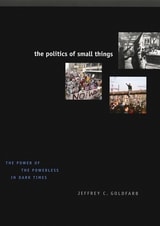
The Politics of Small Things
The Power of the Powerless in Dark TimesJeffrey C. Goldfarb
University of Chicago Press, 2006
In The Politics of Small Things, Jeffrey Goldfarb provides an innovative way for understanding politics, a way of appreciating the significance of politics at the micro level by comparatively analyzing key turning points and institutions in recent history. He presents a sociology of human interactions that lead from small to large: dissent around the old Soviet bloc; life on the streets in Warsaw, Prague, and Bucharest in 1989; the network of terror that spawned 9/11; and the religious and Internet mobilizations that transformed the 2004 presidential election, to name a few. In such pivotal moments, he masterfully shows, political autonomy can be generated, presenting alternatives to the big politics of the global stage and the dominant narratives of terrorism, antiterrorism, and globalization.
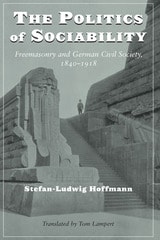
The Politics of Sociability
Freemasonry and German Civil Society, 1840-1918Stefan-Ludwig Hoffmann
University of Michigan Press, 2007
An ambitious, original work, The Politics of Sociability is Stefan-Ludwig Hoffmann's exploration of the social and political significance of Freemasonry in German history. Drawing on de Tocqueville's theory that without civic virtue there is no civil society, and that civic virtue unfolds only through the social interaction between citizens, Hoffmann examines the critical link between Freemasonry and the evolution of German civil society in the late nineteenth century. The practice of Masonic sociability reflected an enlightened belief in the political significance of moral virtue for civil society, indeed, for humanity. Freemasons' self-image as civilizing agents, acting in good faith and with the unimpeachable idea of universal brotherhood, was contradicted not only by their heightened sense of exclusivity; Freemasons unintentionally exacerbated nineteenth-century political conflicts---for example, between liberals and Catholics, or Germans and French---by employing a universalist language.
Using a wealth of archival sources previously unavailable, Stefan-Ludwig Hoffmann shows how Freemasonry became a social refuge for elevated and liberal-minded bourgeois men who felt attracted to its secret rituals and moral teachings. German Freemasons sought to reform self and society but, Hoffmann argues, ultimately failed to balance modern politics with a cosmopolitan ethos. Hoffmann illuminates a capacious history of the political effects of Enlightenment concepts and practices in a century marked by nationalism, social discord, and religious conflict.
Stefan-Ludwig Hoffmann is Assistant Professor of Modern History at Ruhr-University Bochum. The German edition of this book, Die Politik der Geselligkeit: Freimaurerlogen in der deutschen Bürgergesellschaft, 1840-1918 (Vandenhoeck & Ruprecht, 2000), won the Association of German Historians' 2002 Hedwig Hintze Prize for Best First Book.
Tom Lampert was born in Boston in 1962 and grew up in northern California. He received a BA in political science from Stanford University (1986) and a PhD in government from Cornell (1998). His book, Ein einziges Leben (Hanser Verlag 2001) was published as One Life by Harcourt in 2004, which he translated himself. Lampert has worked as a freelance translator since 1998. He currently lives in Bad Kreuznach, Germany.
Cover Image: Monument of the Battle of the Nations in Leipzig, erected between 1898 and 1913 by German Freemasons, Barbarossa-Head by Christian Behrens, located next to the stairs leading to the monument. The German mythical figure of the Kaiser Barbarossa is depicted as a sphinx, which in Masonic symbolism protects the Masonic secret from profanation. Courtesy of the Deutsche Bücherei, Leipzig.
"This is an exemplary study of the role of Freemasonry in the German Bürgergesellschaft (civil society) of the nineteenth and early twentieth centuries, concise, comprehensive, and well written. It combines social profiling with a careful examination of contemporary concepts in a long-term diachronic study, based on an impressive amount of primary material. . . . Hoffmann's empirically and methodologically convincing study is not only a major contribution to our understanding of Freemasonry in the German Bürgergesellschaft. It also reflects the complex social and political transformation of German society in the nineteenth century and the difficulties contemporaries faced in responding to it."
---German History
"Hoffmann's arguments are theoretically informed, supported by a wealth of archival sources. . . . Indeed, in many ways this is the best combination of painstaking social history and well-argued Begriffsgeschichte (conceptual history). . . . One of the great virtues of this book is that Hoffmann does not shy away from the contradictions in the Freemasons' rhetoric and actions. Such contradictions, in fact, are key to the Mason's importance, because they force us to rethink some of our assumptions about Imperial Germany. . . . This is an important book that encourages us to rethink many of our characterizations of the German Kaiserreich and our assumptions about civil society."
---Central European History
"Based on a rich variety of sources. . . . Hoffmann explores the evolving relationship between Freemasonry and the monarchy, state, and church, and he also scrutinizes the internal practices and discourse of these notoriously secretive and cosmopolitan societies. . . . Hoffmann engages fruitfully with a wide historiography covering themes such as masculinity and racism, he dissects the complex attitude of Freemasonry to Jews and Catholics, and he scrutinizes the attacks of its conservative, clerical, and antisemitic critics."
---Journal of Modern History
The Politics of Social Change
From the Sixties to the Present Through the Eyes of a GenerationLarry M. Bartels and Katherine J. Cramer
University of Chicago Press, 2026
How did we get to this point in American politics? Drawing on insights from an unprecedented decades-long study of ordinary Americans’ political lives, this book tells the story of how, why, and when our politics fractured.
Few time periods have been as defined by waves of monumental social change as the United States during the 1960s. Even today, almost sixty years later, the era is often depicted as a triumph of social progress. Yet, as Larry M. Bartels and Katherine J. Cramer show in The Politics of Social Change, it was Americans’ diverse reactions to the milestone events of the time—from the welcoming, to the fiercely resistant, to the largely oblivious—that planted the seeds of our current political turmoil.
Their masterful analysis draws on a unique historical resource: the longest-running systematic tracking of individual Americans’ political attitudes and behavior ever attempted. The study began in 1965 when researchers interviewed hundreds of high school students across the country and then periodically reinterviewed them over the next three decades. Bartels and Cramer supplement this historical record with in-depth interviews with dozens of the original students, painting a detailed picture of the generation’s individual and collective political development. By tracing the responses of the Class of ’65 to major events of their political lifetimes—including the Civil Rights and Women’s Rights movements, the Vietnam War, the shifting role of religion, escalating economic inequality, immigration, and the rise of Donald Trump—Bartels and Cramer shed new light on the evolution of public opinion and the unsteady progress of American democracy.

The Politics of Social Protest
Comparative Perspectives on States and Social MovementsJ. Craig Jenkins and Bert Klandermans, Editors
University of Minnesota Press, 1995
The Politics of Social Protest was first published in 1995. Minnesota Archive Editions uses digital technology to make long-unavailable books once again accessible, and are published unaltered from the original University of Minnesota Press editions.
Bringing together celebrated scholars from diverse traditions and backgrounds, The Politics of Social Protest focuses on the reciprocal relationships among social movements, states, and political parties. The volume is organized around three key questions: Why do citizens resort to the often risky and demanding strategy of using disruptive protest when other channels of political intervention appear to be available? What is the relationship between social protest movements and systems of political representation? And what is the impact of the structure and development of the state on social movements themselves?
Contributors include Ronald Aminzade, University of Minnesota; Paul Burstein, University of Washington; Russell J. Dalton, University of California, Irvine; Donatella della Porta, University of Florence; Henry Dietz, University of Texas, Austin; Rachel L. Einwohner, University of Washington; Steven E. Finkel, University of Virginia; Jerrold D. Green, University of Arizona; Jocelyn Hollander, University of Washington; Hanspeter Kriesi, University of Geneva; Diarmuid Maguire, University of Sydney; Bronislaw Misztal, Indiana University, Fort Wayne; Edward N. Muller, University of Arizona; Michael Nollert, University of Trier; Karl-Dieter Opp, University of Hamburg; Dieter Rucht, Wissenschaftszentrum Berlin; Michael Wallace, Indiana University; and Gadi Wolfsfeld, Hebrew University of Jerusalem.
J. Craig Jenkins is professor of sociology at The Ohio State University. He is the author of The Politics of Insurgency: The Farm Worker Movement of the 1960's (1985).
Bert Klandermans is professor of applied social psychology at Free University in Amsterdam, the Netherlands. He has published widely on social movements in journals such as the American Sociological Review, Sociological Forum, and the European Journal of Social Psychology. He is the editor of the Social Movements, Protest, and Contention series for the University of Minnesota Press.
Copublished with UCL Press, London.
The Politics of Solidarity
Privatisation, Precarious Work and Labour in South AfricaCarmen Ludwig
Campus Verlag, 2019

The Politics of State Feminism
Innovation in Comparative ResearchAuthored by Dorothy E. McBride and Amy G. Mazur
Temple University Press, 2012
The Politics of State Feminism addresses essential questions of women's movement activism and political change in western democracies. The authors—top gender and politics scholars—provide a comparative analysis of the effectiveness of government agencies and women's movements regarding women’s policy issues—if, how, and why they form a kind of state feminism.
The central research questions are examined across five issue areas in thirteen postindustrial democracies in Europe and North America from the 1960s through the early 2000s. The authors explore a range of topics drawn from contemporary theory, interactions between descriptive and substantive representation, and the place of institutions in democratic change.
Using the innovative qualitative and quantitative methods employed by the Research Network on Gender Politics and the State, the authors have developed a new body of theories about the role of state feminism and how it can help further women’s rights.
The Politics of Staying Put
Condo Conversion and Tenant Right-to-Buy in Washington, DCCarolyn Gallaher
Temple University Press, 2016
When cities gentrify, it can be hard for working-class and low-income residents to stay put. Rising rents and property taxes make buildings unaffordable, or landlords may sell buildings to investors interested in redeveloping them into luxury condos.
In her engaging study The Politics of Staying Put, Carolyn Gallaher focuses on a formal, city-sponsored initiative—The Tenant Opportunity to Purchase Act (TOPA)—that helps people keep their homes. This law, unique to the District of Columbia, allows tenants in apartment buildings contracted for sale the right to refuse the sale and purchase the building instead. In the hands of tenants, a process that would usually hurt them—conversion to a condominium or cooperative—can instead help them.
Taking a broad, city-wide assessment of TOPA, Gallaher follows seven buildings through the program’s process. She measures the law’s level of success and its constraints. Her findingshave relevance for debates in urban affairs about condo conversion, urban local autonomy, and displacement.
The Politics of Street Crime
Criminal Process and Cultural ObsessionStuart A. Scheingold
Temple University Press, 1992
Americans find street crime terrifying and repellent. Yet we vicariously seek it out in virtually all of our media: books, newspapers, television, films, and the theatre. Stuart Scheingold confronts this cultural contradiction and asks why street crime is generally regarded in the trivializing and punitive images of cops and robbers that attribute crime to the willful acts of flawed individuals rather than to the structural shortcomings of a flawed society. In his case study of the police and criminal courts in the community he calls "Cedar City," a medium-sized city in the Western United States, Scheingold examines the effects of this cultural contradiction and these punitive predispositions on politics and policy making.
The Politics of Subjectivity in American Foreign Policy Discourses
Ty Solomon
University of Michigan Press, 2015
The Politics of Survival
Marc Abélès
Duke University Press, 2010
Abélès examines the new global politics, which assumes many forms and is enacted by diverse figures with varied sympathies: the officials at meetings of the WTO and the demonstrators outside them, celebrity activists, and online contributors to international charities. He makes an impassioned case that our accounts of globalization need to reckon with the preoccupations and affiliations now driving global politics. The Politics of Survival was first published in France in 2006. This English-language edition has been revised and includes a new preface.
The Politics of Taste
Beatriz González and Cold War AestheticsAna María Reyes
Duke University Press, 2019
The Politics of Toleration in Modern Life
Susan Mendus, ed.
Duke University Press, 1999
How can toleration be fostered in a contentious and tightly populated world? What situations and fears have historically fed attitudes of intolerance? When and how should states intervene? The authors of these essays seek answers to such questions and examine topics such as why certain national groups are especially vulnerable to intolerance and narcissistic fantasies and how the colonial view of intolerant exploitation as an acceptable norm of behavior has been replaced by a drive toward international solidarity. The essays address religious tolerance, the role of toleration in legal contexts, the philosophical justification of tolerance, and the concept of solidarity. Ethnic identity, nationalism, the “goods of conflict,” and the treatment of refugees seeking asylum are discussed as well. While one contributor argues that a moment of genuine tolerance is achieved only when there is a cost involved in the act of tolerating another person’s way of living, another stresses that rational, communal dialogue can only take place if the state is excluded from the discussion, if conflict is recognized as valuable, and if local communities come to consensus about what behavior and discourse is intolerable.
Offering an accessible and engaging commentary on the concept of tolerance, The Politics of Toleration in Modern Life will interest a wide range of readers of philosophy, political science, religion, sociology, and history.
Contributors. George Carey, Christopher Hill, Michael Ignatieff, Helena Kennedy, Alasdair MacIntyre, Susan Mendus, Julia Neuberger, Bernard Williams
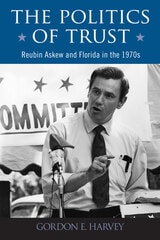
The Politics of Trust
Reubin Askew and Florida in the 1970sGordon E. Harvey
University of Alabama Press, 2015
Askew rose to power on a wave of “New South” leadership that hoped to advance the Democratic Party beyond the intransigent torpor of southern politics since the Civil War. He hoped to replace appeals to white supremacy with a vision of a more diverse and inclusive party. Following his election in Florida, other New South leaders such as Georgia’s Jimmy Carter, Arkansas’s Dale Bumpers, and South Carolina’s John C. West all came to power.
Audacious and gifted, Askew was one of six children raised by a single mother in Pensacola. As he worked his way up through the ranks of the state legislature, few in Florida except his constituents knew his name when he challenged Republic incumbent Claude R. Kirk Jr. on a populist platform promising higher corporate taxes. When he won, he inaugurated a series of reforms, including a new 5 percent corporate income tax; lower consumer, property, and school taxes; a review of penal statutes; environmental protections; higher welfare benefits; and workers’ compensation to previously uncovered migrant laborers.
Touting honesty, candor, and transparency, Askew dubbed his administration “government in the sunshine.” Harvey demonstrates that Askew’s success was not in spite of his penchant for bold, sometimes unpopular stances, but rather because his mix of unvarnished candor, sober ethics, and religious faith won the trust of the diverse peoples of his state.
The Politics of Truth and Other Timely Essays
The Crisis of Civic ConsciousnessEllis Sandoz
St. Augustine's Press, 2016

The Politics of Truth and Other Untimely Essays
The Crisis of Civic ConsciousnessEllis Sandoz
University of Missouri Press, 1999
A fascinating collection of studies, The Politics of Truth and Other Untimely Essays explores the historical and theoretical underpinnings of personal liberty and free government and provides a trenchant analysis of the crisis of civic consciousness endangering both of them today. The book addresses a range of issues in contemporary political philosophy and constitutional theory. These are seen to be all the more urgent in importance because of the surging aspirations for liberty in the wake of the collapse of the Soviet empire and the post-Cold War anomaly of crisis, malaise, and disarray in free government itself in America and in other bastions of modern democracy.
While each essay can stand alone, there is an underlying thematic unity to the collection. The fundamental problem considered throughout is whether and to what extent the fall of communism may mark an epoch in world history. These questions are applied to the East Central European nations struggling to achieve free government and personal liberty. The elements required to identify the preconditions of liberty are addressed and specific attention is given to the terms of institutionalization in the American founding.
Several essays focus on American political thought, with emphasis on the Declaration of Independence and the Constitution. Two elements, in particular, are treated: the jurisprudential and common law background to the American political tradition and the centrality of religion within the unfolding of the American political experiment. Sandoz explores the uncommon alliance of philosophers, statesmen, and evangelists during the nation's founding. This alliance, nurturing communities of persons bound together by their faith and a mutual regard for one another, played a vital role in the establishment of the system of freedom under law.
Sandoz sees the tension between religion and natural law as a constant in the human struggle for freedom. That the preservation of liberty under law is no easy task is acknowledged and addressed as it can be seen in the American founding, in the post-communist struggle of East Central Europe, and in the deepening contemporary crisis of American society. Anyone interested in the "politics" of "truth" will appreciate this volume.
The Politics of Urban Beauty
New York and Its Art CommissionMichele H. Bogart
University of Chicago Press, 2006
Since its founding in 1898, the Art Commission of the City of New York (ACNY) has served as the city’s aesthetic gatekeeper, evaluating all works of art intended for display on city property. And over the years, the commission’s domain has expanded dramatically to include everything from parks and courthouses to trash cans and sidewalks. In ThePolitics of Urban Beauty, Michele H. Bogart argues that this unprecedented authority has made the commission host to some complex negotiations—involving artists, architects, business leaders, activists, and politicians—about not only the role of art in urban design, but also the shape and meaning of the city and its public spaces.
A former vice president of the ACNY, Bogart tells its story here from an insider’s perspective, tracing the commission’s history from its origins as an outgrowth of progressive reform to its role in New York’s reconstruction after 9/11. Drawing on archival correspondence, drawings, and photographs from commission collections, Bogart presents bracing examples of works—ranging from New Deal murals to Louis Kahn’s unbuilt Memorial to Six Million Jewish Martyrs—that illuminate the ACNY’s subtle yet powerful role in shaping New York’s identity.
The Politics of Urban Beauty is thus a fascinating history of a New York art world that paralleled—and sometimes unpredictably intersected with—the more familiar realm of prominent architects, painters, galleries, and museums. Bogart’s fresh view adds a critical dimension to our understanding of “the city beautiful” and makes an important and lively contribution to the study of art history, urban design, and New York City itself.
The Politics of Utopia
A New History of John Law's System, 1695–1795Arnaud Orain
University of Chicago Press, 2024
The Scottish economist John Law has been described as the architect of modern central banking. His “System,” established in Regency France between 1716 and 1720, saw the founding of a bank issuing paper money and the establishment of state commercial and colonial enterprises aimed at consolidating public debt. What at first seemed like financial wizardry, however, resulted in rampant speculation and, ultimately, economic collapse. In The Politics of Utopia, historian Arnaud Orain offers a provocative rereading of this well-known episode.
Starting his story in the seventeenth century, Orain reconstructs the figures and ideas, long predating Law, that anticipated and laid the groundwork for the System, which, he argues, is best understood as a failed social utopia aimed at the total transformation of society. Overturning familiar narratives of this seismic event, this book rewrites a stunning chapter in economic history by dealing with the cultural, colonial, religious, and political dimensions of the (in)famous System up to the French Revolution, revealing new lessons for today’s fraught financial landscape.
The Politics of Value
Three Movements to Change How We Think about the EconomyJane L. Collins
University of Chicago Press, 2017
Each case shows how the concrete actions of a group of citizens can prompt us to reflect on what is needed for a just and sustainable economic system. In one case, activists raised questions about the responsibilities of business, in the second about the significance of local economies, and in the third about the contributions of the public sector. Through these movements, Jane L. Collins maps a set of cultural conversations about the types of investments and activities that contribute to the health of the economy. Compelling and persuasive, The Politics of Value offers a new framework for viewing economic value, one grounded in thoughtful assessment of the social division of labor and the relationship of the state and the market to civil society.
The Politics of Vibration
Music as a Cosmopolitical PracticeMarcus Boon
Duke University Press, 2022
The Politics of Virtue
Is Abortion Debatable?Elizabeth Mensch and Alan Freeman
Duke University Press, 1993
Returning to the years leading up to Roe v. Wade, Mensch and Freeman detail the role of religion and its relationship to the emerging politics of abortion. Discussing primarily the natural law tradition associated with Catholicism and the Protestant ethical tradition, the authors focus most sharply on the 1960s in which the present terms of the abortion debate were set. In a skillful analysis, they identify a variety of factors that directed and shaped the debate--including, among others, the haunting legacy of Nazism, the moral challenge of the civil rights movement, the "God is dead" discourse, school prayer and Bible reading, Harvey Cox's The Secular City, the Berrigans and Vietnam, the animal rights movement, and the movement of the church-going population away from mainstream Protestant tradition toward evangelical fundamentalism. By criticizing the rhetoric employed by both the "pro-choice" and "pro-life" camps, Mensch and Freeman reveal the extent to which forces on either side of the issue have failed to respond to relevant concerns. Since Roe v. Wade, the authors charge, public debate has seemed to concede the moral high ground to the "pro-life" position, while the "pro-choice" rhetoric has appeared to defend an individual's legal right to do moral wrong. Originally published as a special issue of The Georgia Law Review (Spring 1991), this revised and expanded edition will be welcomed by all those frustrated by the impasse of debates so central to our nation's moral life.

The Politics of Water in Arizona
Dean E. Mann
University of Arizona Press, 1963
The Politics of Western Water
The Congressional Career of Wayne AspinallStephen C. Sturgeon
University of Arizona Press, 2002
The Politics of Women's Biology
Hubbard, Ruth
Rutgers University Press, 1990
The Politics of Women's Education
Perspectives from Asia, Africa, and Latin AmericaJill Ker Conway and Susan C. Bourque, Editors
University of Michigan Press, 1995

The Politics of Women's Suffrage
Local, National and International DimensionsEdited by Alexandra Hughes-Johnson and Lyndsey Jenkins
University of London Press, 2021
In the United Kingdom, the question of women’s suffrage represented the most substantial challenge to the constitution since 1832, seeking not only to expand but to redefine definitions of citizenship and power. At the same time, it was inseparable from other urgent contemporary political debates—the Irish question, the decline of the British Empire, the Great War, and the increasing demand for workers’ rights.
This collection positions women’s suffrage as central to, rather than separate from, these broader political discussions, demonstrating how they intersected and were mutually constitutive. In particular, this collection pays close attention to the issues of class and Empire which shaped this era. It demonstrates how campaigns for women’s rights were consciously and unconsciously played out, impacting attitudes to motherhood, spurring the radical “birth-strike” movement, and burgeoning communist sympathies in working-class communities around Britain and beyond.
The Politics of the Artificial
Essays on Design and Design StudiesVictor Margolin
University of Chicago Press, 2002
One of the pioneers of design studies and still one of its most distinguished practitioners, Victor Margolin here offers a timely meditation on design and its study at the turn of the millennium and charts new directions for the future development of both fields. Divided into sections on the practice and study of design, the essays in The Politics of the Artificial cover such topics as design history, design research, design as a political tool, sustainable design, and the problems of design's relation to advanced technologies. Margolin also examines the work of key practitioners such as the matrix designer Ken Isaacs. Throughout the book Margolin demonstrates the underlying connections between the many ways of reflecting on and practicing design. He argues for the creation of an international, interdisciplinary field of design research and proposes a new ethical agenda for designers and researchers that encompasses the responsibility to users, the problems of sustainability, and the complicated questions of how to set boundaries for applying advanced technology to solve the problems of human life.
Opinionated and erudite, Victor Margolin's The Politics of the Artificial breaks fresh ground in its call for a new approach to design research and practice. Designers, engineers, architects, anthropologists, sociologists, and historians will all benefit from its insights.

The Politics of the Canoe
Bruce Erickson
University of Manitoba Press, 2021
The Politics of the Female Body
Postcolonial Women WritersKetu H. Katrak
Rutgers University Press, 2006
Is it possible to simultaneously belong to and be exiled from a community? In Politics of the Female Body, Ketu H. Katrak argues that it is not only possible, but common, especially for women who have been subjects of colonial empires.
Through her careful analysis of postcolonial literary texts, Katrak uncovers the ways that the female body becomes a site of both oppression and resistance. She examines writers working in the English language, including Anita Desai from India, Ama Ata Aidoo from Ghana, and Merle Hodge from Trinidad, among others. The writers share colonial histories, a sense of solidarity, and resistance strategies in the on-going struggles of decolonization that center on the body.
Bringing together a rich selection of primary texts, Katrak examines published novels, poems, stories, and essays, as well as activist materials, oral histories, and pamphlets—forms that push against the boundaries of what is considered strictly literary. In these varied materials, she reveals common political and feminist alliances across geographic boundaries.
A unique comparative look at women’s literary work and its relationship to the body in third world societies, this text will be of interest to literary scholars and to those working in the fields of postcolonial studies and women’s studies.
The Politics of the Malayan Communist Party from 1930 to 1948
David Lockwood
National University of Singapore Press, 2024
By 1946, the Malayan Communist Party (MCP) had become one of the most successful communist parties in Asia. From its foundation in 1930, it had built up a membership in the thousands, mainly among Chinese and Indian workers in Malaya. When the Japanese arrived, the MCP organized the Malayan People’s Anti-Japanese Army (MPAJA), the only effective resistance force. After the War, when the British returned, the Party launched a legal campaign for independence, but by 1948, the MCP had surrendered its achievements and taken many members underground to launch a disastrous, failed insurrection against the British.
To understand these momentous turns of history, a fresh view is required of the Malayan Communist Party as a political actor. The Politics of the Malayan Communist Party from 1930 to 1948 gives a political history of the Party and explains why the MCP self-destructed in 1948. In particular, David Lockwood questions assumptions that post-war politics led inevitably to armed struggle and questions the accepted narrative of Party Chairman Lai Tek's treachery. This is a revisionist history of a period, and political force, that has left a lasting mark on the politics of Malaya and Singapore.

The Politics of the Minimum Wage
Jerold Waltman
University of Illinois Press, 2000
The minimum wage appears to be a standard economic regulatory measure, yet a politics of symbolism more than anything else defines the political contests that periodically erupt over it. Detractors abhor its corruption of market principles, while supporters see it as a measure of society's symbolic commitment to the poor.
Tracing the history of the minimum wage and exposing its inherent contradictions as a political issue, Jerold Waltman proposes an alternative to the economic arguments that now dominate debates over it. Citing overwhelming public support for the minimum wage as evidence of an enduring civic consciousness and humanitarianism, Waltman advocates recasting the discussion in terms of a political economy of citizenship. Such a perspective would focus on the communal value of work, the need for citizens to have a stake in the community, and the effects of economic inequality on the bonds of common citizenship.
Positioning the minimum wage as a fulcrum for the most basic conflict underlying America's unique combination of democracy and a market economy, The Politics of the Minimum Wage shows how a defense of the minimum wage built on a communal sense of responsibility rests on a strong tradition of civic republicanism and strengthens the hope for a truly democratic society.

The Politics of the Opioid Epidemic
Susan L. Moffitt and Eric M. Patashnik, special issue editors
Duke University Press, 0
Contributors. Amanda Abraham, Christina M. Andrews, Clifford S. Bersamira, Andrea Louise Campbell, Sarah E. Gollust, Colleen M. Grogan, Gali Katznelson, Jin Woo Kim, Miriam Laugesen, Joanne M. Miller, Susan L. Moffitt, Evan Morgan, Brendan Nyhan, Eric M. Patashnik, Elizabeth Peréz-Chiqués, Harold A. Pollack, Marie Schenk, Carmel Shachar, Phillip M. Singer, Bikki Tran Smith, Patricia Strach, Paul Testa, Tess Wise, Katie Zuber
The Politics of the Peace Corps and VISTA
T. Zane Reeves
University of Alabama Press, 1988
The author has taken the concept of organizational culture from corporate literature and applied it to two unique government programs the Peace Corps and VISTA. The book traces the ongoing conflict between partisan ideology and the organizational culture formulated during the Kennedy and Johnson years. It follows an often intense struggle between political appointees on one side and career employees, volunteers, and returned volunteers on the other. Political ideologies may vary depending upon which political party controls the presidency, but the contest for control of the agencies continues.
The Politics of the Superficial
Visual Rhetoric and the Protocol of DisplayBrett Ommen
University of Alabama Press, 2016
Ommen argues, for example, that on viewing a billboard, a driver isn’t merely being exposed to a set of commercial messages or exhortations, but rather responding in a self-aware way that differentiates her from her collective associations like Democrat, Republican, rich, poor, Catholic, or Jewish.
By examining graphic design—as a profession, practice, and academic field—as the nexus for understanding visual display in public culture, The Politics of the Superficial develops two arguments about contemporary visual communication practices: first, that the study of visual communication privileges visual content at the expense of other dynamics, such as context; and second, that interpretations focusing on content conceal the most persuasive and subversive dimensions of the visual.
Wide-ranging and stimulating, The Politics of the Superficial ultimately posits that, far from serving as a communal oasis for public imagination, contemporary visual culture offers the possibility for politically engaged communication and persuasion while simultaneously threatening the health of public discourse by atomizing its constituent parts. It will serve as a vital contribution to the field of visual rhetoric.

The Politics of the Trail
Reflexive Mountain Biking along the Frontier of JerusalemOded Löwenheim
University of Michigan Press, 2014
In The Politics of the Trail, Löwenheim confronts this tension by focusing on his encounters with three places along the trail: the separation fence between Israel and the Palestinians; the ruins of the Palestinian village Qalunya, demolished in 1948; and the trail connecting the largest 9/11 memorial site outside of the U.S. with a top-secret nuclear-proof bunker for the Israeli cabinet. He shares the stories of the people he meets along the way and considers how his own subjectivity is shaped by the landscape and culture of conflict. Moreover, he deconstructs, challenges, and resists the concepts and institutions that constitute such a culture and invites conversation about the idea of conflict as a culture.
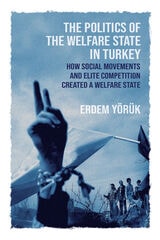
The Politics of the Welfare State in Turkey
How Social Movements and Elite Competition Created a Welfare StateErdem Yörük
University of Michigan Press, 2022

The Portable Queen
Elizabeth I and the Politics of CeremonyMary Hill Cole
University of Massachusetts Press, 1999
In this book, Mary Hill Cole provides a detailed analysis of the progresses. Drawing on royal household accounts, ministerial correspondence, county archives, corporation records, and family papers, she examines the effects of the visits on the queen's household and government, the individual and civic hosts, and the monarchy of the Virgin Queen.
Cole places the progresses in the sixteenth-century world of politics and images, where the queen and her hosts exchanged ceremonial messages that advanced their own agendas. The heart of the progresses was the blend of politics, socializing, and ceremony that enabled the queen to accomplish royal business on the move while satisfying the needs of those courtiers, townspeople, and country residents who welcomed her into their communities.
While all Renaissance monarchs engaged in occasional travel, in Elizabeth's case the progresses provided the settings in which she crafted her royal authority. Although the trips inconvenienced the government and strained her treasury, Elizabeth found power in the turmoil of an itinerant court and in a continuing ceremonial dialogue with her subjects.
The Postcolonial Jewish Question
Colonialism and the Politics of Difference in Postwar FranceMendel Kranz
University of Chicago Press, 2026
A history of how decolonization shaped Jewish political identity in late-twentieth-century France.
In The Postcolonial Jewish Question, Mendel Kranz shows how France’s colonial history fundamentally shaped contemporary debates among Jews in France about racism, discrimination, and minority politics during the late twentieth century. As the wider country confronted the legacies of the Holocaust and the decline of its colonial empire, Jewish thinkers questioned the boundaries of their own political identity and challenged prevailing paradigms of Western universalism. This book traces how prominent and lesser-known thinkers—including Albert Memmi, Emmanuel Levinas, Alain Finkielkraut, and Wladimir Rabi—as well as organizations like the Colloque des intellectuels juifs de langue française engaged with issues of oppression, nationhood, and communal identity, and the ways that colonialism and its afterlives shaped those discussions. Kranz reveals how the Jewish question itself changed shape through confrontations with postcolonial politics. In doing so, he calls for a reassessment of the parameters of the Jewish question amid colonialism’s enduring legacies in the present.